

If you’ve ever admired a quilt and wondered how it all comes together, you’re not alone. Quilting and patchwork are often used interchangeably, but they are actually two different parts of the same creative process.
Quilting is the method of stitching three layers together: the quilt top, batting, and backing.
Patchwork is the process of sewing small pieces of fabric together to create the quilt top design.
In simple terms:
👉 Patchwork builds the design
👉 Quilting holds everything together
If you’re just getting started, most beginners begin with patchwork and then learn basic quilting to finish their project.
What is patchwork?
Patchwork is the art of sewing small pieces of fabric together to create a larger design. These pieces can be squares, triangles, or more complex shapes.
As an Amazon Associate I earn from qualifying purchases. Read more about our affiliate linking policy.
It’s where creativity shines. You choose the colors, patterns, and layout.
Common patchwork styles include:
- Simple grid quilts
- Log cabin blocks
- Flying geese designs
Patchwork becomes the top layer of your quilt.
What is quilting?
Quilting is what turns your patchwork into a finished quilt.
It involves stitching through three layers:
- Quilt top (your patchwork)
- Batting (the soft middle layer)
- Backing fabric
Quilting can be:
- Straight-line stitching
- Free-motion designs
- Hand quilting
This step adds texture, durability, and that cozy quilted look.
Quilts can be functional, or pieces of art. When people think of quilts, they generally think of a bed quilt. Quilts can be any size, from small art pieces like fabric postcards to king-size quilts for beds.
The word ‘quilt’ is both a noun and a verb. As a noun (as in “a quilt”) , it refers to bed covers made from three layers that are stitched together. As a verb (as in “to quilt”), it refers to the process of putting together layers of fabric and stitching them together.
What’s the difference?
Patchwork creates the quilt top. Quilting holds all the layers together.
Which should beginners start with?
Start with patchwork, then learn basic quilting to finish your project.
What you’ll learn
- The difference between quilting and patchwork
- How quilts are constructed
- Which technique to start with as a beginner
- Basic steps to make your first quilt
- Common mistakes to avoid
What are the components of a quilt?
There are three layers of your quilt. The top layer is called the quilt top. It can be a single piece of fabric, which is referred to as a whole cloth quilt, or can use a variety of fabrics pieced to form different designs. When fabrics are pieced together to make the quilt top it is referred to as patchwork.
The middle is batting or wadding. Sometimes flannel is used for a light weight quilt, and sometimes felt is used for art quilts because it lays nice and flat.
The final layer is called the quilt back. The back of a quilt can be one piece of fabric, or multiple pieces. Some quilters use the scraps from their quilt top to piece together their quilt back. Special wide backing fabric is available for larger quilts.
The three layers for a quilt are referred to as a quilt sandwich. The fabrics used for the top and backing are usually cotton fabrics.
The three layers are then sewn together to create a final quilt. They can be sewn with hand quilting or machine quilting to create the finished quilt. Hand quilting is usually done with a running stitch. Machine quilting can be simple straight stitching, or dense quilting to highlight a design.
Quick Start: Make your first simple quilt
You’ll need:
- Cotton fabric (2-3 fabrics – either prints or solids)
- Rotary cutter, ruler and cutting mat, OR a sharp pair of scissors
- Sewing machine
- Batting
- Thread
Basic steps:
- Cut fabric into squares, all the same size
- Sew the squares together (patchwork)
- Layer with batting and backing
- Stitch all of the layers together (quilting)
- Bind the edges
You can complete a small project like a baby quilt in a weekend.
RELATED: How to sandwich a quilt
RELATED: How to bind a quilt
What are some of the styles of quilts?
Quilt styles are generally named for either a technique or the people or region where the quilts were historically made. Here are some of the most popular styles of quilts:
Traditional Quilts

Traditional quilts represent the history and culture of the communities around the world where the quilts were made. From the fabrics used to the stitches and construction methods, traditional quilts highlight the craftsmanship and skill of their makers and are generally utilitarian, providing warmth.
Some of the traditional quilt blocks are the basic four-patch, basic nine-patch, friendship star, pinwheel, and log cabin. Browse through all of our free quilt patterns.
RELATED: Four-patch quilt block
RELATED: Nine-patch quilt block
RELATED: Friendship star quilt block
RELATED: Pinwheel quilt block
RELATED: Log cabin quilt block
Art Quilts

Art quilters use fabric as their medium to create art. Unlike traditional quilts that are made for warmth and functionality, art quilts focus on creativity and visual impact. This art form pushes the boundaries and challenges conventional quilt-making using a variety of techniques and materials. These are intended to be art quilt wall hangings.
Explore a variety of art quilts.
Modern Quilts

Modern quilting has emerged over the past few decades where quilters make a twist to traditional quilt patterns using bold colors and shifting the sizes of the blocks to create a fresh new look to classic patterns.
The Modern Quilt Guild recently updated their definition of modern quilting, focusing on innovation with an emphasis on design and originality. Traditional styles and patterns are often reimagined using asymmetry, color, and scale.
Explore modern quilts for inspiration.
Crazy Quilts

Crazy quilts are made with a variety of fabrics usually on a base fabric. Small pieces of fabric are hand or machine stitched to the base and then heavily embellished with embroidery and/or laces.
RELATED: How to make crazy quilts.
Amish Quilts
Amish quilts hold deep cultural and historical significance in the Amish community. The quilts reflect the core values of simplicity and modesty. The quilts were originally made from scraps left over from making clothing, so early Amish quilts used quite a bit of black fabric. Amish quilts are generally made with solid fabrics.
Civil War Quilts
The Civil War was a significant time in American history, and quilts served as warm bedding but also symbols of patriotism. Scraps of fabric were used to create the quilts that sometimes had special markings that carried secret messages.
One example is that a red center to a log cabin quilt symbolizes the hearth or fire in a home. A yellow center was a welcoming light in the window and a log cabin hanging outside with a black center was meant to communicate a safe place to stop for the Underground Railroad.
Hawaiian Quilts

Hawaiian quilts share the rich cultural heritage and history of Hawaii and the Polynesian Islands. Generally, they are made with solid colors and hand appliquéd.
Landscape Quilts

Landscape quilts are a popular form of textile art that depicts the beauty of natural scenery using textiles. The artist brings the landscape to life with a variety of fabrics, threads, and other techniques. Common scenes are mountains, rivers, and oceans. Different patterns and values of fabric are used to create the landscape.
Medallion Quilts

Medallion quilts are built from the center out featuring a center motif or block. They can have several intricate borders or plain borders.
Baby Quilt

One of the most popular types of quilts are baby quilts! They are quick, fun, and easy to make because they aren’t too big. You can start with a fat quarter bundle or a few different fabrics and have fun trying different patterns.
Quilt Techniques
Quilting is putting pieces of fabric together. There are so many ways to accomplish this simple task! Here are some of the more popular quilt techniques.
Pieced or Patchwork Quilts

Pieced or patchwork quilts are made by sewing pieces of fabric together to form a larger pattern or design. They can be traditional quilts, modern quilts, or Amish quilts. Beginners generally start with a basic four-patch quilt block or nine-patch quilt bloc using fabric patterns or colors to create the design.
Appliqué Quilts

Appliqué quilts are where pieces of fabric are cut and applied on top of a fabric layer. The fabric layer can be a whole cloth or pieced. Appliqué can be done by hand, machine, or use fusible web. The edge of the fabric being appliquéd can be a finished edge or raw edge. Intricate designs can be made with an appliqué technique.
RELATED: Raw edge appliqué tutorial
English Paper Pieced Quilts

English paper piecing (also referred to as EPP) wraps fabric around paper template shapes that then are stitched together to form a design. Common shapes are hexagons (referred to as hexies) and diamonds. These are small pieces, ranging from 1/2-inch to under two-inches creating intricately detailed quilts.
What’s great about an EPP project is it is easy to take with you. All you need are the paper templates, a glue stick, fabric scraps, a needle, and thread.
Learn the basics of English Paper Piecing, learn some EPP tips and tricks, and check out our favorite tools for this portable project.
Foundation Pieced Quilts
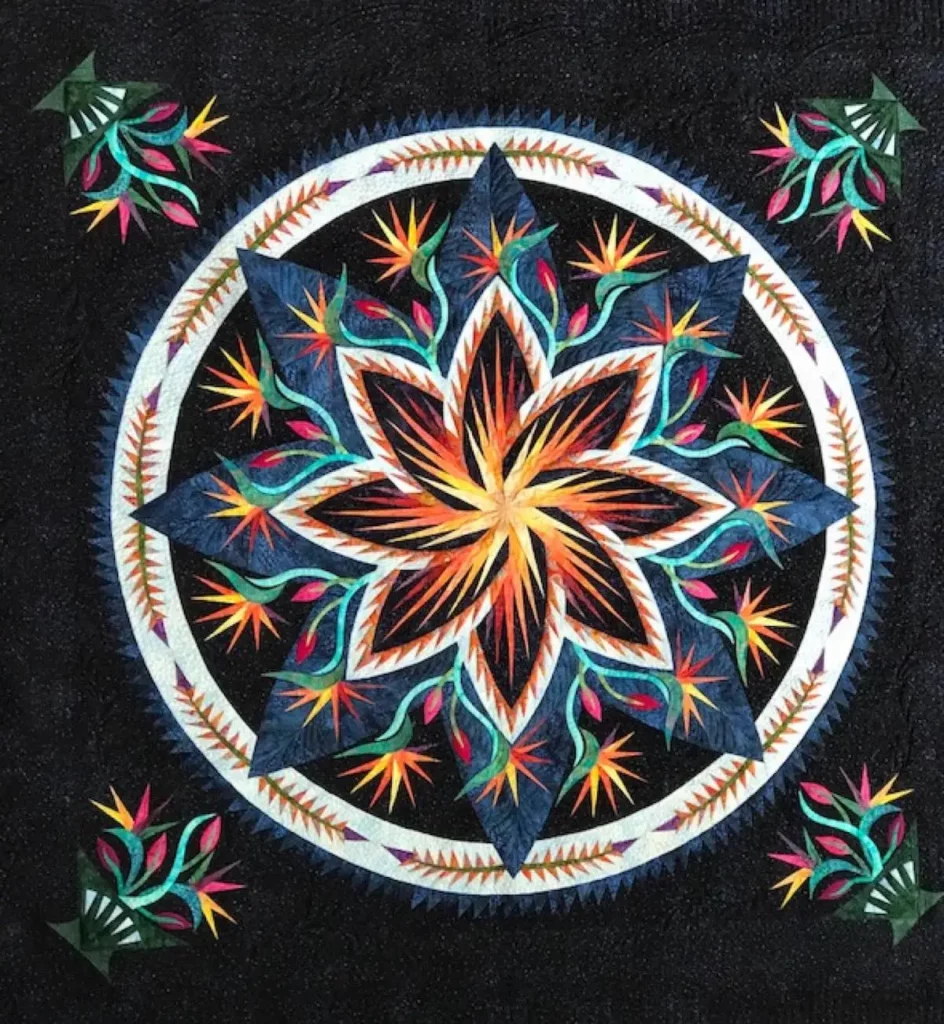
Foundation pieced quilts have a base layer of either fabric or paper that the quilt is built on. Patterns can either be printed or drawn on the base and then fabrics are layered and stitched in a specific order to create a design.
Browse through more foundation pieced quilts. Learn some tips and tricks for foundation piecing.
Freezer Paper Pieced Quilts

Freezer paper can be used to create original and unique quilt patterns. Learn about how to freezer paper piece.
Memory Quilts
Memory quilts are made to celebrate a person or event. T-shirt quilts are popular to remember activities or event. Quilts are also made from clothing of a loved one to wrap yourself in their love when they are gone. Digital photo quilts are becoming popular now that there are many ways to transfer images to fabric.
The common thread for all memory quilts is just that – they bring back great memories of good times with family members or friends.
Rag Quilts
Rag quilts are perfect for beginners. They are generally made with either three layers of quilter’s cotton, flannel or a combination of them. The seams are exposed and ravel with washing making them soft and cuddly.
RELATED: How to make a rag quilt
What supplies do I need to make a quilt?
We’ve rounded up our favorite quilting tools and supplies in a separate article. You can find all of these at your local quilt shop, fabric shops, and online.
One of the modern tools that makes a quilter’s job much easier is a rotary cutter for cutting straight lines.
My most used tool? Other than my sewing machine? My seam ripper! I have several!
You will also need a sewing machine in good working order. You don’t need anything fancy or expensive to get started. A standard sewing machine is fine! There is nothing more frustrating when you are trying to sew and your machine isn’t working properly. If you haven’t used your machine in a while, it would be a good decision to take it to your local sewing machine store and have it cleaned and checked out before you start a project. And, if you need a refresher on how to use your machine, most shops will give you the basics.
If you are looking for a machine for quilting, shop around. You’ll want machine with a standard presser foot, the ability to drop the feed dogs, a darning foot for free motion quilting and a quarter-inch seam allowance foot for piecing your quilt blocks. A walking foot is great for straight line quilting.
Common mistakes beginners make
- Cutting fabric inaccurately
- Skipping pressing seams
- Choosing incorrect fabrics – quilting cottons are best for patchwork
- Quilting layers that shift or bunch
- Starting with a project that’s too large
Frequently asked questions
No. Patchwork is making the quilt top. Quilting is stitching the layers together.
A machine makes it faster, but you can sew and quilt by hand.
A simple square patchwork quilt is the easiest place to start.
Yes. You can quilt a single piece of fabric, but most quilts use patchwork.
Quilting and patchwork work together like puzzle pieces and glue. One creates the design, the other brings it to life.
Start simple. One square, one seam, one stitch at a time. Before long, you’ll have something beautiful—and completely your own.
Learn how to make a quilt with our step-by-step guide for beginners.

