• Skip to main content
  • Skip to secondary menu
  • Skip to footer
Create Whimsy

Create Whimsy

Inspring makers and sharing their stories

  • Quilting
    • How to Quilt
    • Free Quilt Patterns
    • Art Quilts
    • Modern Quilting
    • English Paper Piecing (EPP)
    • Foundation Piecing
    • Crazy Quilting
    • Improv Quilting
    • Easy Quilt Blocks
    • Quilt Tutorials
    • Machine Quilting
    • Hand Quilting
  • Embroidery
    • Hand Embroidery
    • Machine Embroidery
    • Sashiko
    • Embroidery Tutorials
  • Beading
    • Bead Embroidery
    • Off-Loom Bead Weaving
  • Sewing
    • Scrap Fabric Sewing Project Ideas
    • Making Clothes
      • Costumes
    • Bags
    • Babies
  • MORE
    • DIY Gift Ideas
    • Surface Design
      • Eco Printing and Dyeing
    • Appliqué
      • Fusing
    • Jewelry Making
      • Wirework
      • Handmade Bracelets
      • Handmade Necklaces
    • Mixed Media
      • Collage Art
    • Kumihimo
    • Weaving
    • Crochet
    • Knitting
    • DIY Organization
      • Decorative Containers
    • DIY Home Décor
      • DIY Throw Pillows
    • Recycle DIY
    • Felting
    • Crafts
    • Occasions
      • Easter
      • Mothers Day
      • Fathers Day
      • Fourth of July
      • Halloween
      • Thanksgiving
      • Christmas
      • DIY Valentine Ideas
    • Paper Crafting
    • Metalsmithing
    • Painting & Drawing
    • Pottery-Ceramics
    • Toys & Games
    • Sculpture
  • Newsletter Sign Up

English Paper Piecing (EPP)

Category: <span>English Paper Piecing (EPP)</span>

English Paper Piecing (EPP) is a relaxing hand-sewing technique that turns small fabric shapes into beautiful quilts, ornaments, home décor, and wearable art.

Whether you’re stitching your first hexagon or piecing an intricate kaleidoscope quilt, EPP rewards patience with precise points, crisp edges, and a project you can take almost anywhere — no sewing machine required.

Below you’ll find English paper piecing tutorials, beginner guides, basting techniques, supply recommendations, and stories from quilters who’ve made EPP their own.

Learn how to baste paper templates, join shapes with a whipstitch, fussy cut fabric for maximum impact, and turn simple hexies into show-stopping quilts.

Updated July 2026

English Paper Piecing Basics

English Paper Piecing tools

English Paper Piecing Tips: The Complete Beginner’s Guide

English paper piecing (EPP) is one of the easiest ways to sew perfectly matched shapes by hand. By wrapping fabric around paper templates before stitching the pieces together, you can...

How to EPP Hexie Table Topper 6 Square

English Paper Piecing for Beginners: Hexagon Flower Garden Table Topper

English Paper Piecing, often called EPP, is one of the easiest ways to learn hand piecing. By wrapping fabric around paper templates before stitching, you can create perfectly matched shapes...

English Paper Piecing Supplies

English Paper Piecing Supplies: EPP Essentials

English paper piecing, aka EPP, is a unique way to construct quilts by hand. It is an old technique that has new popularity. Often these days, we need a quiet,...

English Paper Pieced (EPP) Ornaments

EPP Moravian Star Tree ornament finshed image 6

How to Make an EPP Moravian Star Ornament

EPP Moravian Star Ornaments made with diamonds are an adaptation of an 1830's geometry lesson. The first known star, made in a German boys' school had 110 points! This version...

EPP Tree-Shaped Ornament with Hexies on Tree

How to Make an EPP Tree-Shaped Ornament with Hexies

With just 10 EPP hexies per side, you can make an English Paper Piecing (EPP) tree-shaped ornament for your Christmas tree. It's a fun tradition to make homemade Christmas ornaments...

Finished EPP Wreath Ornament

How to Make an EPP Wreath Ornament with Hexies

A large English Paper Piecing (EPP) project can seem daunting. But a small project, such as an ornament, lets you try the technique on something easy. And it's something that...

Meet the Quilters

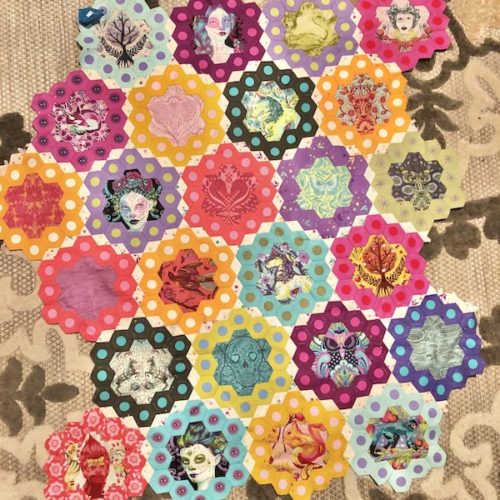
Fussy cut block for English Paper Piecing

Spotlight: Jess Finn, English Paper Piecing Designer

With makers on the move, it's no surprise that the portable technique of English Paper Piecing (EPP) is on the rise, and Jess Finn is at the center of the...

Freeform Embroidery 2 by Jennifer Clouston

Spotlight: Jenny Clouston, Crazy Quilter

Jenny Clouston is happiest and most content when she is stitching by hand: crazy quilting, flower embroidery or English Paper Piecing. In embracing the process, she feeds her creativity and...

Millie on the Lawn quilt

Spotlight: Katja Marek, Quilter and Shop Owner

Having filled her life with creative endeavors since childhood, it's no surprise that Katja Marek creates with fabric for both business and pleasure. Owner of a busy brick-and-mortar quilt shop,...

What is English Paper Piecing?

English paper piecing, often called EPP, is a traditional hand-piecing method that uses paper templates to stabilize fabric shapes while they’re sewn together. Fabric is basted around each paper piece — with thread or a glue pen — then the shapes are joined edge to edge with a simple whipstitch.

The technique dates back hundreds of years and remains popular today because it produces accurate points, crisp edges, and intricate designs without a sewing machine. EPP is especially loved by quilters who enjoy slow, portable, mindful stitching.

A Little EPP History

English paper piecing has roots going back to at least the early 1700s in England, where quilters used scraps of paper — old letters, ledgers, even newspaper — as templates for hexagon patchwork. By the Victorian era, the technique had produced the classic Grandmother’s Flower Garden quilt: rings of hexagons arranged into flower motifs, often set with a contrasting “path” fabric between blocks.

Today’s quilters use precut paper or acrylic templates instead of scrap paper, but the core idea hasn’t changed in 300 years: wrap, baste, whipstitch, repeat.

Why quilters love EPP

English Paper Piecing continues to grow in popularity because it combines creativity with mindful stitching.

Many quilters enjoy EPP because:

  • It is easy to take on trips, appointments, and retreats.
  • Projects can be worked on for a few minutes at a time.
  • Small fabric scraps become beautiful designs.
  • Shapes fit together with impressive precision.
  • It is a relaxing alternative to machine sewing.
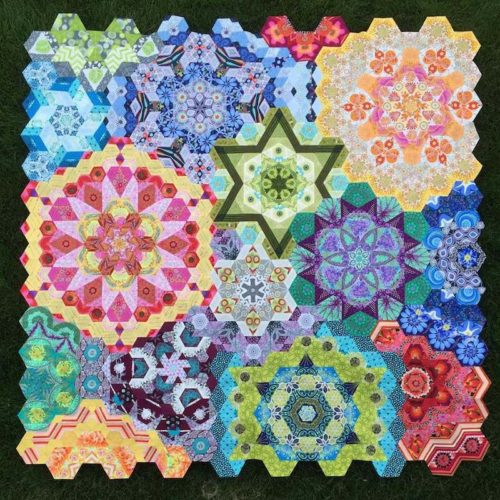
  • Designs range from simple hexagons to complex stars, diamonds, and kaleidoscope patterns.

Whether you enjoy slow stitching or ambitious quilt projects, EPP offers something for every skill level.

Popular English Paper Piecing Shapes

Some of the most common EPP shapes include:

  • Hexagons
  • Diamonds
  • Jewels
  • Clamshells
  • Squares
  • Triangles
  • Pentagons
  • Elongated hexagons

These simple building blocks can be combined into traditional designs such as Grandmother’s Flower Garden, tumbling blocks, stars, rosettes, and modern geometric quilts.

English paper piecing vs. Foundation paper piecing

These two techniques are easy to mix up because they share “paper piecing” in the name — but they work very differently.

English paper piecing uses individual paper templates wrapped in fabric, then whipstitched together entirely by hand. It’s slow, portable, and ideal for hexagons, diamonds, and other precise geometric shapes.

Foundation paper piecing uses a sewing machine to stitch fabric directly onto a printed paper foundation, which is torn away once the block is complete. It’s faster and better suited to blocks with sharp angles, points, or curves that would be difficult to piece by machine any other way.

If you love hand stitching and portability, start with EPP. If you want machine-pieced precision for complex blocks, foundation piecing is worth exploring too — see our guide to foundation paper piecing.

Getting started with English Paper Piecing

New to EPP? You only need a few basic supplies:

  • Fabric scraps or quilting cotton
  • Paper templates
  • Hand-sewing needles
  • Fine thread
  • Small scissors
  • Fabric clips or pins
  • Optional glue pen for basting

Start with a simple hexagon project like a mug rug, ornament, coaster, or mini quilt. Small projects build confidence while teaching the core stitching techniques you’ll use on larger quilts. New here? Start with our Complete Beginner’s Guide.

Thread basting vs. glue basting

New to EPP, you’ll quickly run into a choice: thread basting or glue basting.

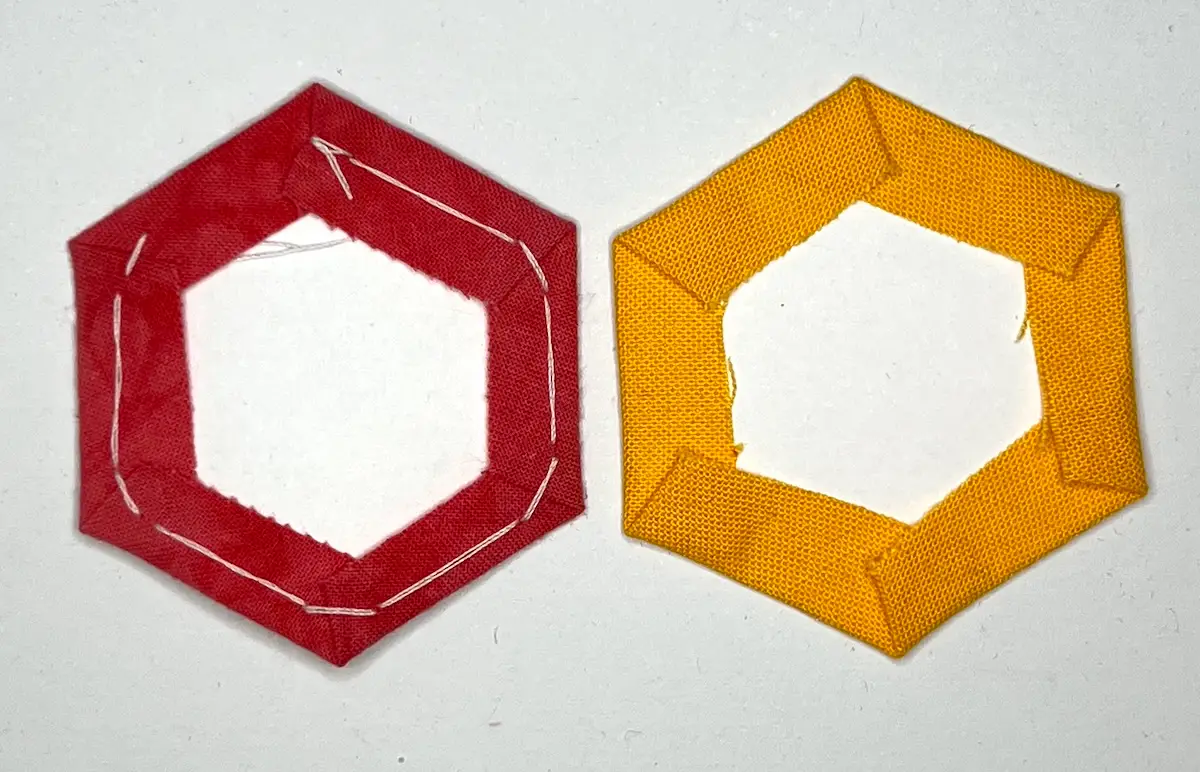
Thread basting is the traditional method — you sew a running stitch through fabric and paper to hold the shape, then remove it once the piece is sewn in. It’s portable, reusable, and doesn’t require special supplies.

Glue basting uses a fabric glue stick or glue pen to tack the fabric to the paper instead of stitching it, which is faster and leaves points extra sharp, especially on small or tricky shapes like diamonds and stars.

Neither method is “correct” — many quilters use both, depending on the project. Thread basting is easier on a plane or in a waiting room; glue basting is faster at the sewing table. Try both on a simple hexagon and see which one feels right in your hands.

From beginner to advanced: An EPP project roadmap

New to EPP? Start with a single hexagon shape — a mug rug, coaster, or ornament lets you learn basting and whipstitching without committing to a full quilt.

Comfortable with hexagons? Try combining shapes into a small table topper or pillow, and experiment with fussy cutting to make your fabric prints do the design work.

Ready for a challenge? Move into diamonds, stars, and multi-shape designs like a Moravian star ornament or a full kaleidoscope quilt — these projects test your point-matching and reward the extra precision.

Troubleshooting common EPP problems

  • Points don’t match up: Check that your paper templates are cut accurately — even a hair’s difference compounds across many pieces. A rotary-cut or laser-cut template set solves this instantly.
  • Fabric puckers around the paper: You may be pulling basting stitches too tight. Baste snug, not tight — the paper should stay flat and crisp.
  • Papers won’t come out easily: Give your seams a light finger-press first, and remove papers from the outer edges of a project last, once seams are secure.
  • Points get fuzzy or frayed: Use fine thread (60–80 wt) and a sharp, thin needle — heavier thread abrades fabric edges over repeated stitching. I really like silk thread by Superior.

Choosing fabric for EPP

Quilting cotton is the standard for EPP because it holds a crease well and doesn’t fray excessively when cut into small shapes. Batiks are a favorite for their tight weave and sharp fold lines.

If you plan to fussy cut, look for fabric with a repeating motif small enough to fit inside your template — florals, novelty prints, and geometric designs all work beautifully.

Meet the quilters behind the hexagons

EPP has a devoted following of quilters who use it for everything from portable travel projects to gallery-worthy art quilts. Read about Jenny Clouston, who turns to English Paper Piecing between embroidery and crazy quilting projects, and explore more maker spotlights for inspiration from quilters who’ve made EPP their own.

More Hand-Piecing Techniques to Explore

Love working by hand? You may also enjoy Hand Quilting or Appliqué — both share EPP’s slow-stitching, portable appeal. If you’re curious how EPP compares to a machine-based approach, see Foundation Piecing.

Frequently asked questions

What is English Paper Piecing?
English paper piecing is a hand-sewing technique that uses paper templates to create accurate fabric shapes. Fabric is wrapped around the paper pieces and basted in place, then the shapes are stitched together by hand with a whipstitch before the papers are removed.

Is English Paper Piecing good for beginners?
Yes. Many beginners start with simple hexagon projects because the technique only requires basic hand-sewing skills and minimal supplies. A mug rug or small coaster is a great first project.
RELATED: Make an EPP mug rug

What supplies do I need for EPP?
Basic supplies include paper templates, fabric, fine thread, hand-sewing needles, small scissors, and either thread or glue for basting.

What shapes can be used in English Paper Piecing?
Hexagons are the most popular shape, but diamonds, jewels, clamshells, triangles, squares, pentagons, and many specialty shapes work well too.

Can I make an entire quilt with EPP?
Absolutely. Many quilters create full-size quilts entirely with English paper piecing. Others use EPP for blocks, borders, appliqué motifs, or smaller standalone projects like ornaments and pillows.

Is English Paper Piecing the same as Foundation Paper Piecing?
No. English paper piecing uses individual paper templates wrapped in fabric and joined by hand. Foundation paper piecing uses a sewing machine to stitch fabric directly onto a printed foundation.
RELATED: How to Foundation Paper Piece

What is fussy cutting in EPP?
Fussy cutting is the process of intentionally placing fabric motifs within a shape so the design lines up or creates a secondary pattern once the pieces are sewn together. See our guide to fussy cutting EPP diamonds.

Should I use thread basting or glue basting?
Both work well — thread basting is reusable and travel-friendly without extra tools, while glue basting is faster but can gum up needles if not glued correctly. Many quilters use both, depending on the project.

How do I remove the papers once a shape is sewn?
Once a shape is fully surrounded by stitching on all sides, gently loosen a few whipstitches near one corner and slide the paper out. Avoid pulling on the fabric directly, which can distort the seam.

Can I travel with an EPP project?
Yes. EPP is one of the most portable quilting techniques, requiring only a small project bag and a few hand-sewing supplies. See our guide to making an EPP travel kit.

How long does it take to finish an EPP quilt?
It depends entirely on size and shape complexity. A small hexagon coaster can be finished in an evening, while a full quilt made of hundreds or thousands of pieces may take months or years of steady stitching. Many quilters treat EPP as an ongoing, portable project rather than a race to the finish.

Do I need special paper for English paper piecing?
You can use printable EPP template sheets, pre-cut paper piece packs, or even cut your own from cardstock. Pre-cut templates save time and ensure consistent sizing, which makes points match more easily.

Can EPP papers be reused?
Yes, as long as they aren’t glued down or damaged. Many quilters carefully remove and reuse thread-basted papers for future projects, especially with sturdy cardstock templates.

What thread should I use for English paper piecing?
A fine thread, generally 60–80 weight, works best for whipstitching EPP pieces together. Thinner thread creates less visible stitching on the front of finished pieces. I like Superior silk threads.

Do you remove the papers when the project is finished?
Usually, yes — once all the surrounding seams are secure, papers are removed and can often be reused. Some quilters leave papers in permanently for structure in items like ornaments, but this is the exception rather than the rule.

More English Paper Piecing (EPP)

Finished right side of the hexies sewn together in red thread with the whipstitch

How to Whipstitch, Beginners Hand Sewing Tutorial

The whipstitch is a hand-sewing stitch that is used for English Paper piecing and to join fabrics for appliqué and closing openings, like sewing the opening to a stuffed animal.…
Make an EPP Mug Rug - EPP Mug Rug with Snack 4

How to Make an English Paper Pieced Mug Rug (Beginner Tutorial)

English paper piecing is one of the most relaxing ways to sew by hand, and a mug rug is the perfect first project. Small enough to finish in an afternoon…
English Paper Piecing tools

English Paper Piecing Tips: The Complete Beginner’s Guide

English paper piecing is a perfect project to take with you on the go, or to keep hands busy on a creative project while watching TV. Use up scraps from…
Freeform Embroidery 2 by Jennifer Clouston

Spotlight: Jenny Clouston, Crazy Quilter

Jenny Clouston is happiest and most content when she is stitching by hand: crazy quilting, flower embroidery or English Paper Piecing. In embracing the process, she feeds her creativity and…
EPP Moravian Star Tree ornament finshed image 6

How to Make an EPP Moravian Star Ornament

EPP Moravian Star Ornaments made with diamonds are an adaptation of an 1830's geometry lesson. The first known star, made in a German boys' school had 110 points! This version…
EPP Moravian Star Tree-1

How to Fussy Cut EPP Diamonds

Design possibilities are bountiful with a simple diamond shape, but the added element of intentional fabric placement adds endless opportunities. Once you learn how to fussy cut EPP diamonds, you…
EPP Tree-Shaped Ornament with Hexies on Tree

How to Make an EPP Tree-Shaped Ornament with Hexies

With just 10 EPP hexies per side, you can make an English Paper Piecing (EPP) tree-shaped ornament for your Christmas tree. If you are new to EPP, this is a…
EPP video game quilt done

Designing, Organizing & Making an EPP Video Game Quilt

Early on in the spring of 2016, I needed a little project to keep my fingers busy while sitting backstage during shows and while riding the bus. Four years and…
White EPP star on tree

How to Make an EPP Star Ornament with Diamonds

A large English Paper Piecing (EPP) project can seem daunting. But a small project, such as an ornament, lets you try the technique on something easy. And it’s something that…

Navigation

1 2 Next

Footer

Learn More

  • About Create Whimsy
  • Work with Us
  • Privacy Policy
  • Terms & Conditions

Browse

  • Occasions

Makers

Spotlight Stories

Copyright © 2026 · Create Whimsy®