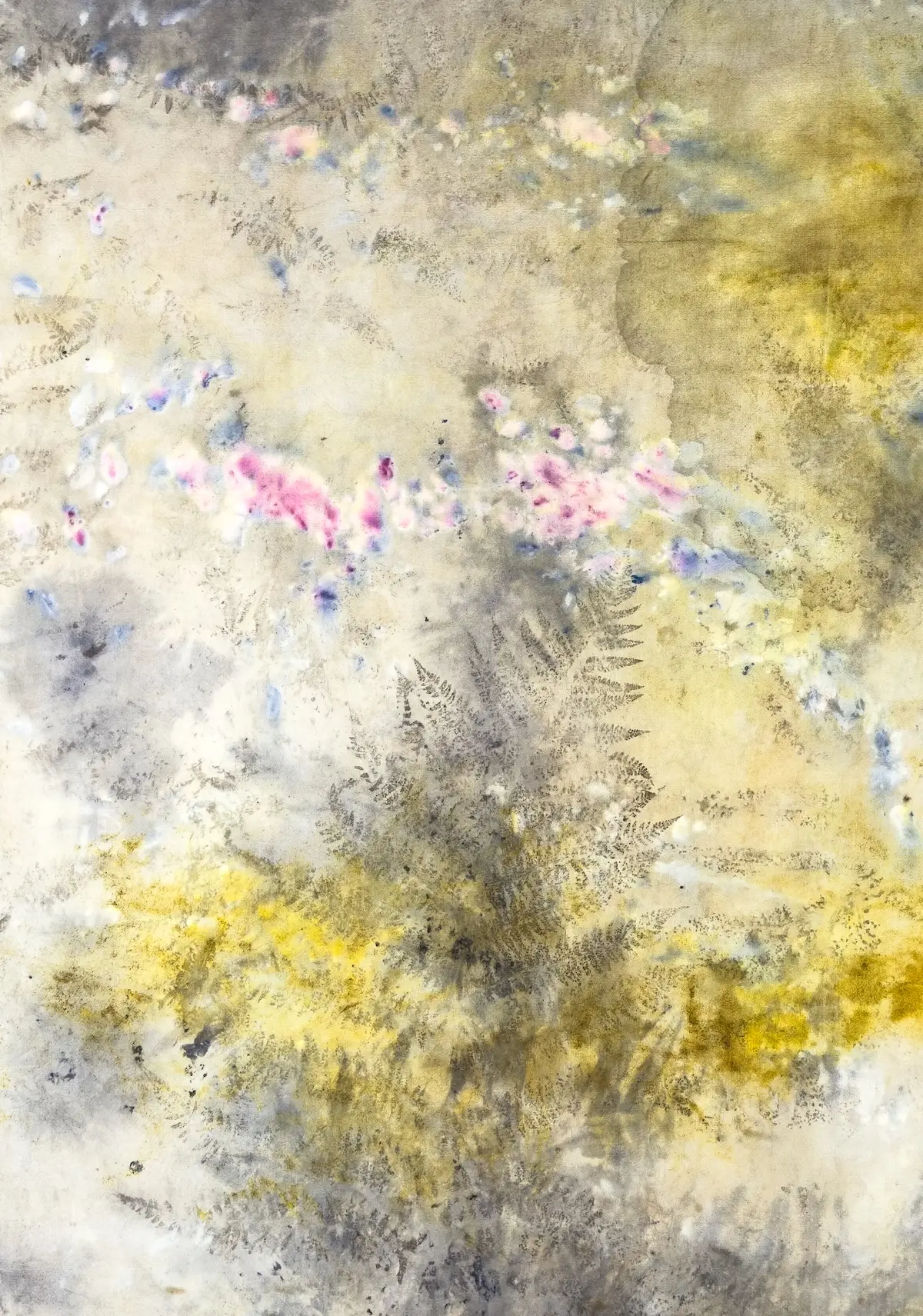
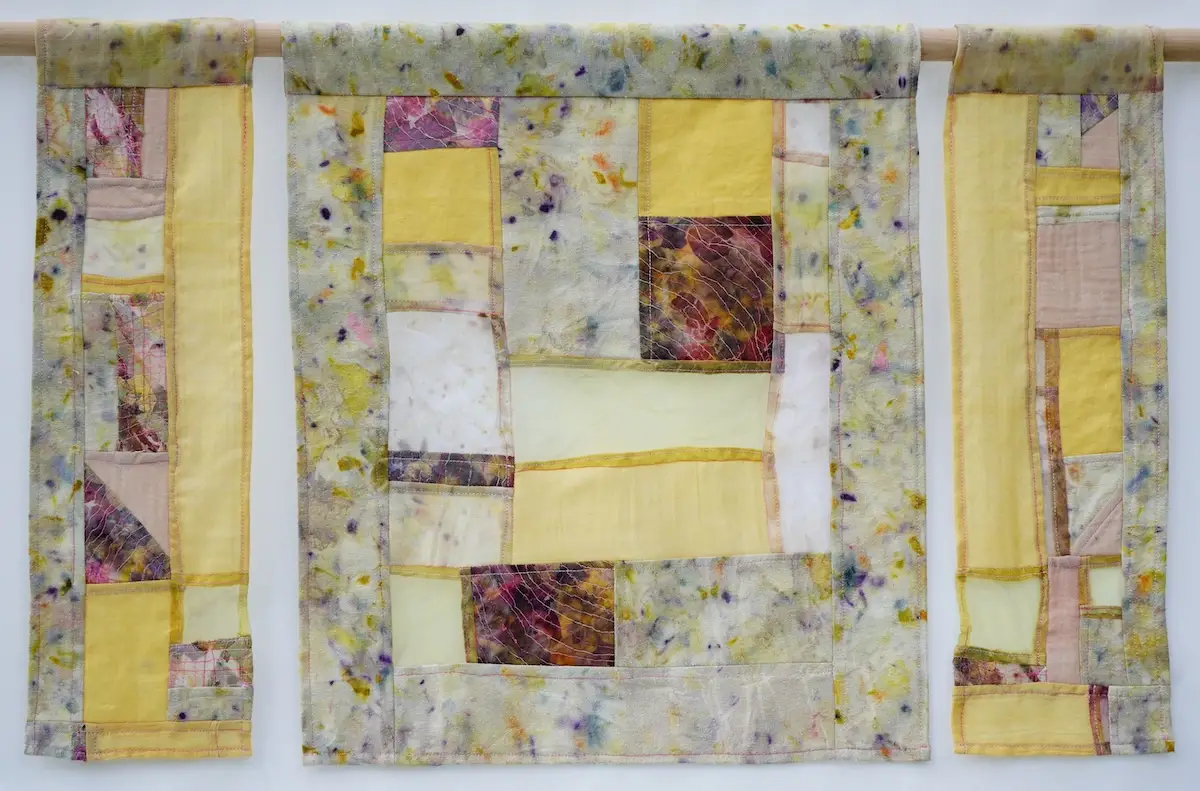
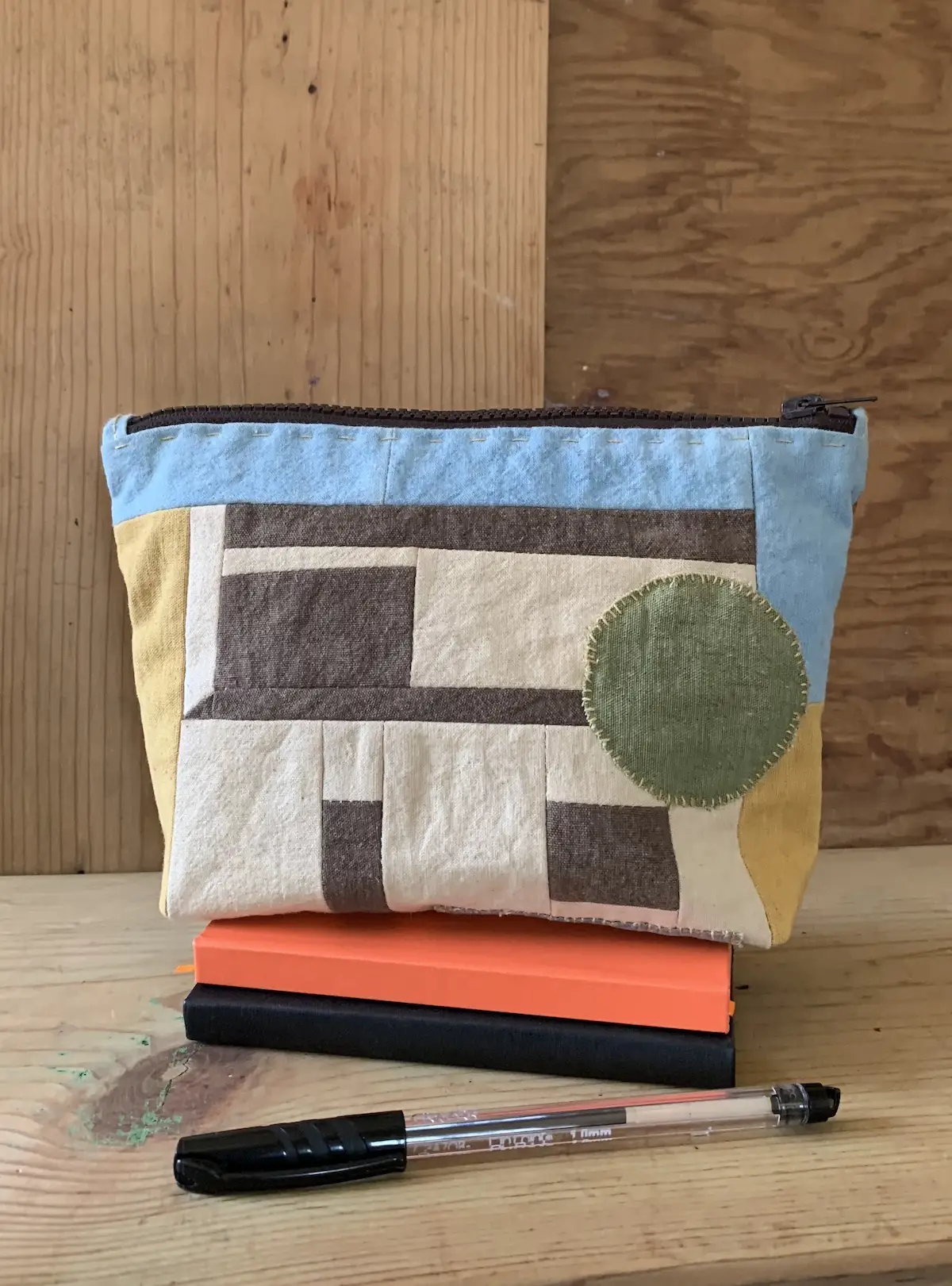
Everything old is new again. Dyeing fabric, yarn, thread and paper has come full circle – from dyed flax found in prehistoric caves to chemical dyes and automated printing to small-batch hand-dyers. Today, hands-on surface designers create their own art cloth with earth-friendly botanical dyes.
Back in the day (waaaay back), all dyes were natural. Leaves, flowers, roots, earth and insects, with the right tweaking, produced a range of beautiful hues. Then in the 19th Century, automation produced more goods. At the same time, modern chemistry produced a broader and more available palette of usable colors.
With that came the ability to better control the results. So when 20th Century fiber artists gravitated to materials dyed in small batches by people rather than machines, hand dyeing gained more practitioners. With the right combination of materials and techniques, an artist could produce “that red” consistently. So hand dyeing – and all forms of surface design – became an art in itself.
Fast-forward to today, the increasing awareness of each person’s impact on the environment sparks artists to experiment with natural dyeing. As a result, they produce colors of incredible depth. Because fiber artists share their discoveries, they continue to broaden the awareness of natural hues available to artists.
Enjoy a taste of eco-dyed color candy and be inspired to create color from nature..