
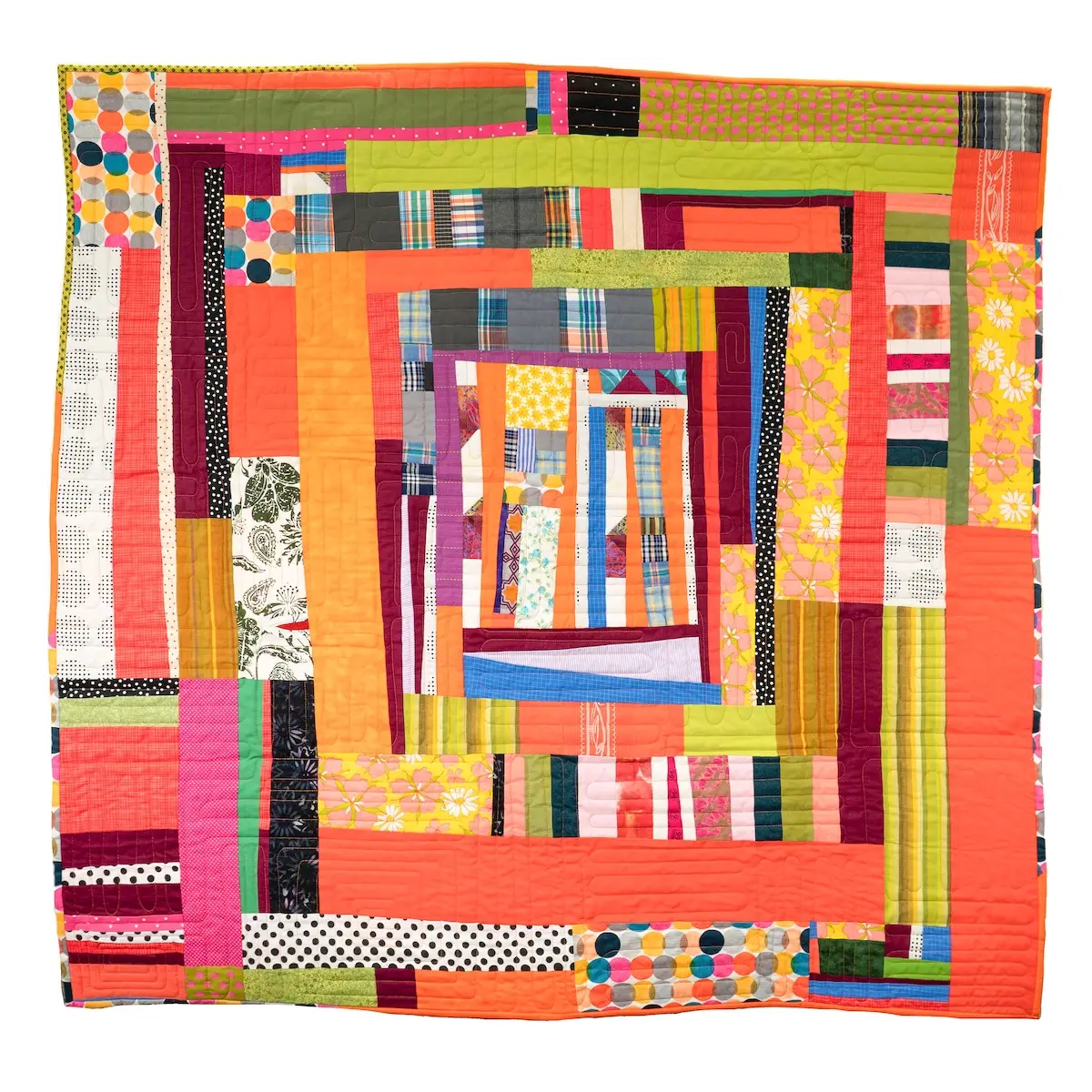
Sarah Atlee believes the best ideas don’t always come with a plan. As an improvisational quilt artist, she lets color, shape, and texture lead the way, creating work that feels thoughtful, playful, and full of life. In this interview, she shares how quilting became her primary creative voice and why trusting the process has shaped both her art and her life.
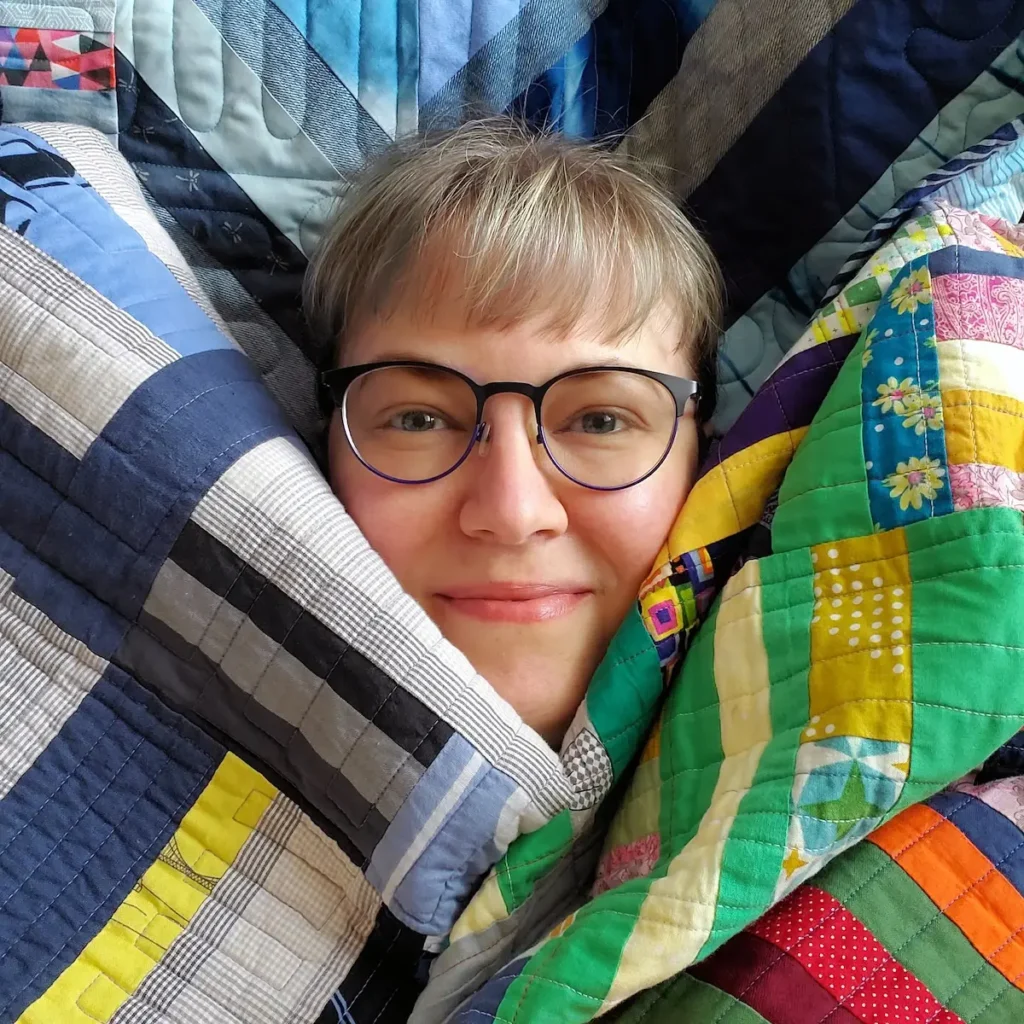
Can you take us back to the beginning—what first pulled you into making art?
Like all of us, I made art as a kid. The difference for me was that I lucked out in three big ways:
- I was born to parents who saw art as a normal thing that normal people do. So they never discouraged me. I grew up surrounded by art, not just on the walls, but in the kitchen cupboards, on the beds, on the floors, even in the bathroom.
- I went to a public high school that had a full arts curriculum. I got to study drawing, painting, printmaking, photography, ceramics, and theater. By the time I went to college I was primed to study art full time.
- I got a full scholarship to college where I began doing just that. I got my BFA in fine arts with a focus on painting.
Was there a moment when you realized art would be an important part of your life?
In the eighth grade, I made a watercolor painting of my shoe. And it really looked like my shoe. I thought, “Huh, I could go somewhere with this.”
As an Amazon Associate I earn from qualifying purchases. Read more about our affiliate linking policy.
How did your path lead you to working in both quilting and painting?
Like I mentioned, I grew up with handmade things all around me. That included paintings and quilts. My family had a sewing machine that got regular use. During the summer between high school and college, I made my first quilt for myself out of old jeans. So all the time I was practicing painting, quilting was there in the background.
Fast forward seventeen years: I moved to Austin, Texas, where I knew nobody. So I Googled “quilting groups Austin” to see if I could connect with people who shared my hobby. (At the time, painting was my job and quilting was my hobby.) That’s when I learned there was this thing called Modern Quilting.
If you have a cat, you know how if you put a box on the floor, the cat just has to get in it? Sometimes inside-the-box thinking can feel so good, like everything is right with the world. I hopped right into the Modern Quilting box. From there, I joined my local chapter of the Modern Quilt Guild, attended my first QuiltCon (literally down the street from where I lived), and made the conscious shift to quilting as my primary medium.
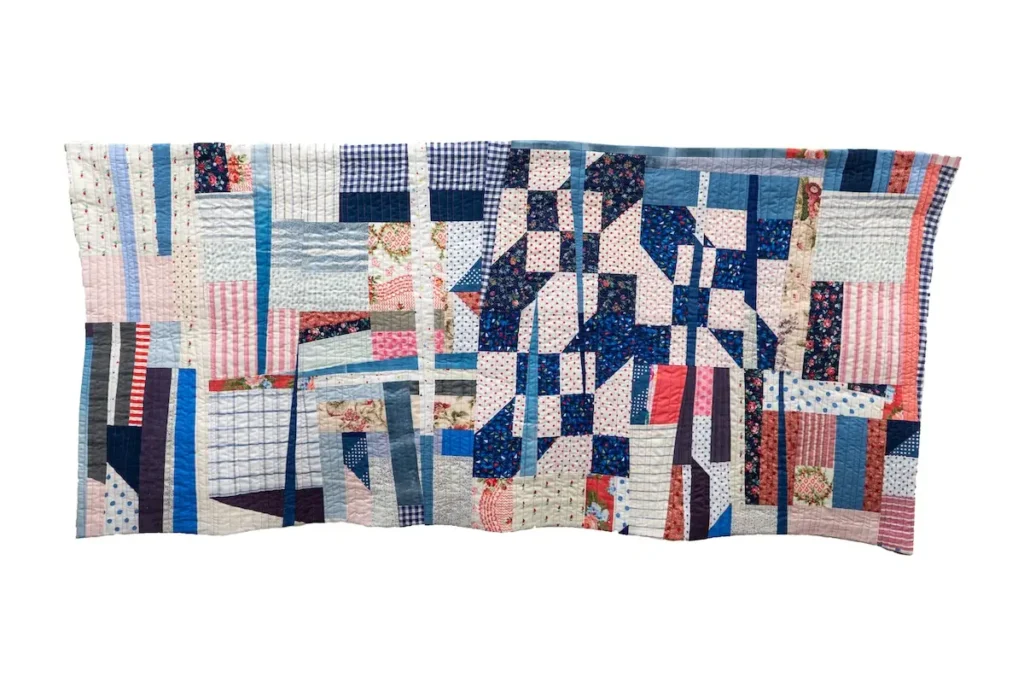
Your work has a strong, recognizable voice—how did that style develop over time?
Style is a direct result of repetition. Do anything a hundred times, and you’ll find your way of doing that thing. My style is also the result of saying Yes a lot. I learned about improvisational quilting from teachers like Sherri Lynn Wood. Improvisational practice taught me to say yes to aesthetic choices, even if I can’t verbally explain them.
I also have a habit of looking for common assumptions and intentionally subverting them. Are my peers making really large work with a saturated palette? My response is to make gray miniatures. (That’s an example from my art school days.)
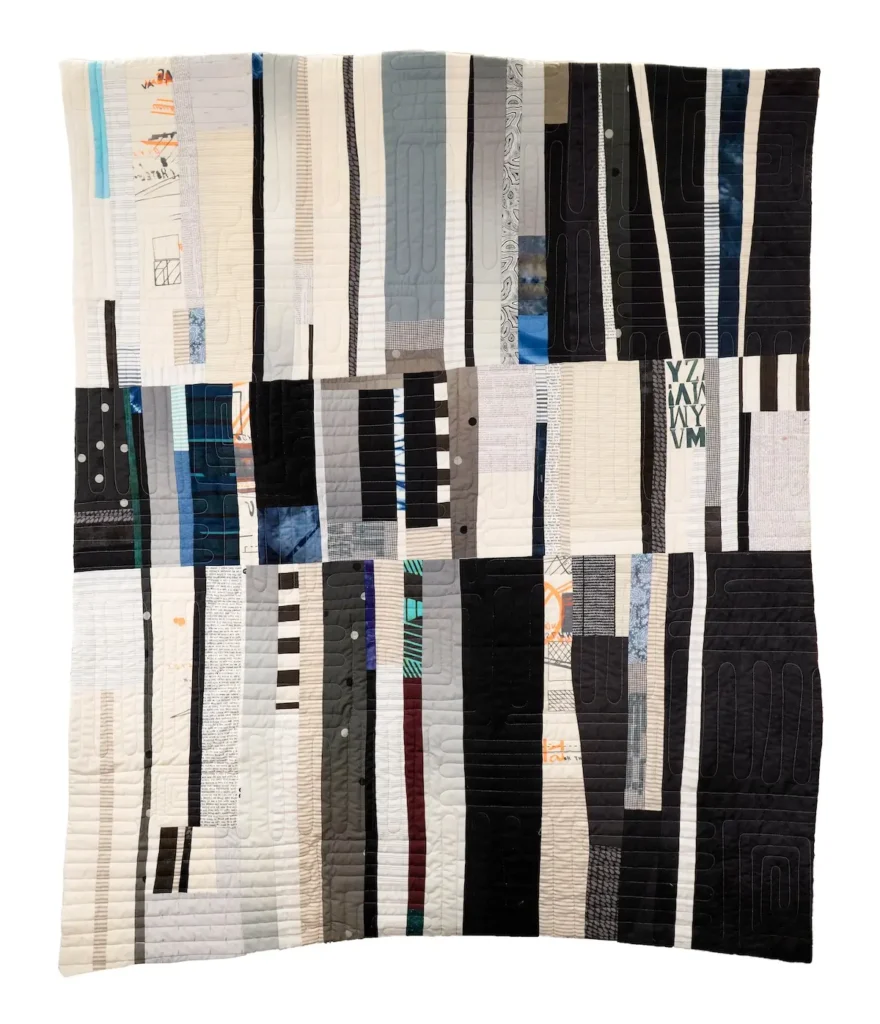
Where do you find inspiration for your work right now?
We’re lucky to live in a time when technology enables connection and sharing between people on a global scale. However, I find that spending a lot of time, say, looking at Instagram really drains my energy. I have to unplug and look within myself. What do I really want to say? What’s inside that wants to come out? How can I express that through color, shape, and texture?
My favorite quilters at the moment are Lela O’Dell, Amanda Nadig, and Julian J. Jones. Outside of quilting, I’m inspired by cartography, Brené Brown, and fantasy novels.
Do your ideas begin with a story, a feeling, or something visual?
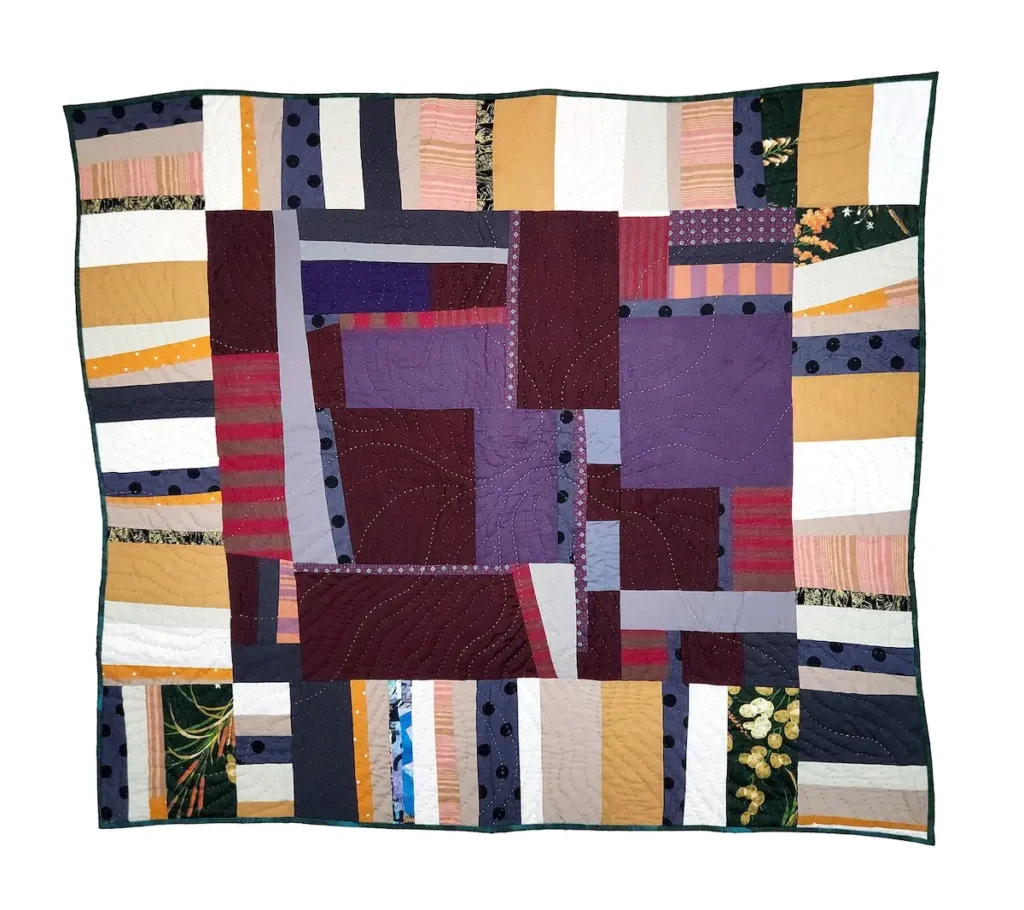
Very often, a quilt starts with a pile of fabrics that want to go together. I let the colors make their own decisions and try to be a good listener.
There may be a motif I want to explore, like stripes or triangles. Sometimes I want to practice a technique, like raw edge applique, or honor a fabric that’s been worn and washed a hundred times.
Since I’m an improv quilter, I don’t want to force a work in progress to be something it isn’t. The meaning of the work reveals itself through the process.
Are you someone who plans things out, or do you prefer to work more intuitively?
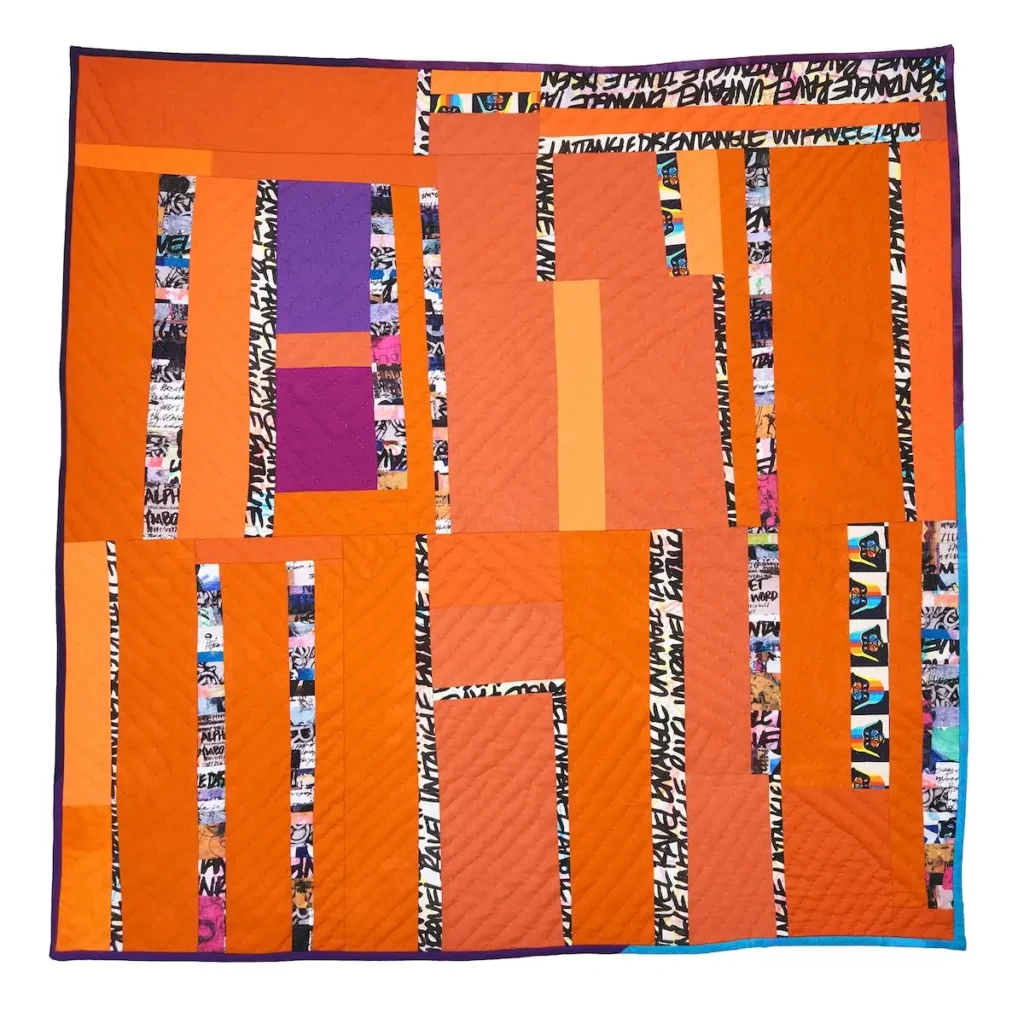
Both. I do a lot of planning around my creative practice so that when I go to the studio, I’m free.
In quilting, I use a design wall to move elements around until they cohere. I work while listening to audiobooks or TV shows because my verbal brain needs a place to park.
Corita Kent taught us to create or analyze, not both. I work at keeping those two mental modes separate.
How do you decide which ideas become paintings and which become quilts?
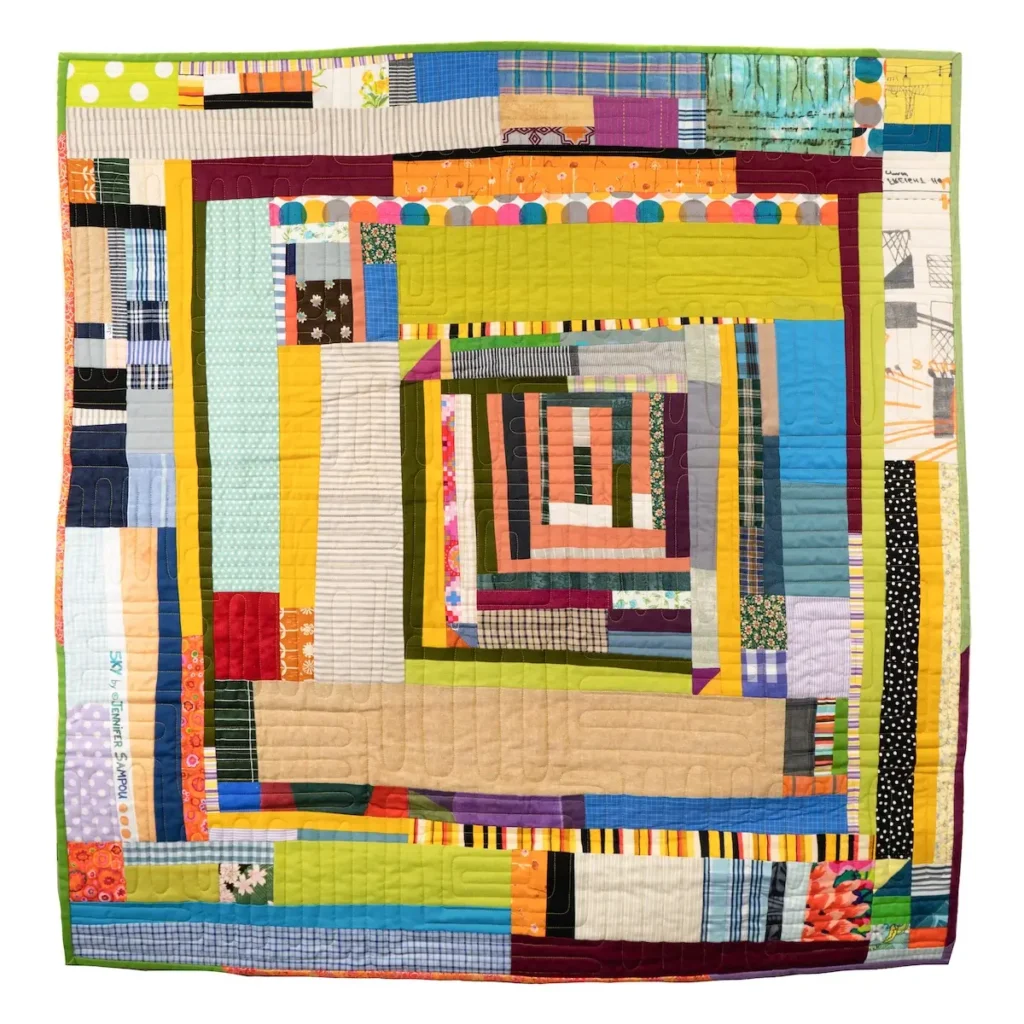
In 2016, I consciously pivoted from painting to quilting, and I’ve done very little painting since then. However, I have an active sketchbook practice which involves ink, watercolor, pencil, crayon, and collage.
These twin paths are directed by the materials, my energy, and what kind of sensory experience I want to have. Do I want to handle something soft or rough? Would I rather make marks with a pencil or a needle? Do I want to create a big rectangle or a little one? What’s stuck in my brain today?
What do you feel each medium allows you to express that the other cannot?
My education as a quote-fine-artist-unquote gave me something specific that many quilters don’t get. Nobody has to convince me that quilts are art. They are. Period.
I’ve never been shy about showing quilts in art venues that regularly show painting, photography, sculpture, etc. I identify as a contemporary artist rather than a modern quilter. I may switch to different media from time to time, but it’s all art.
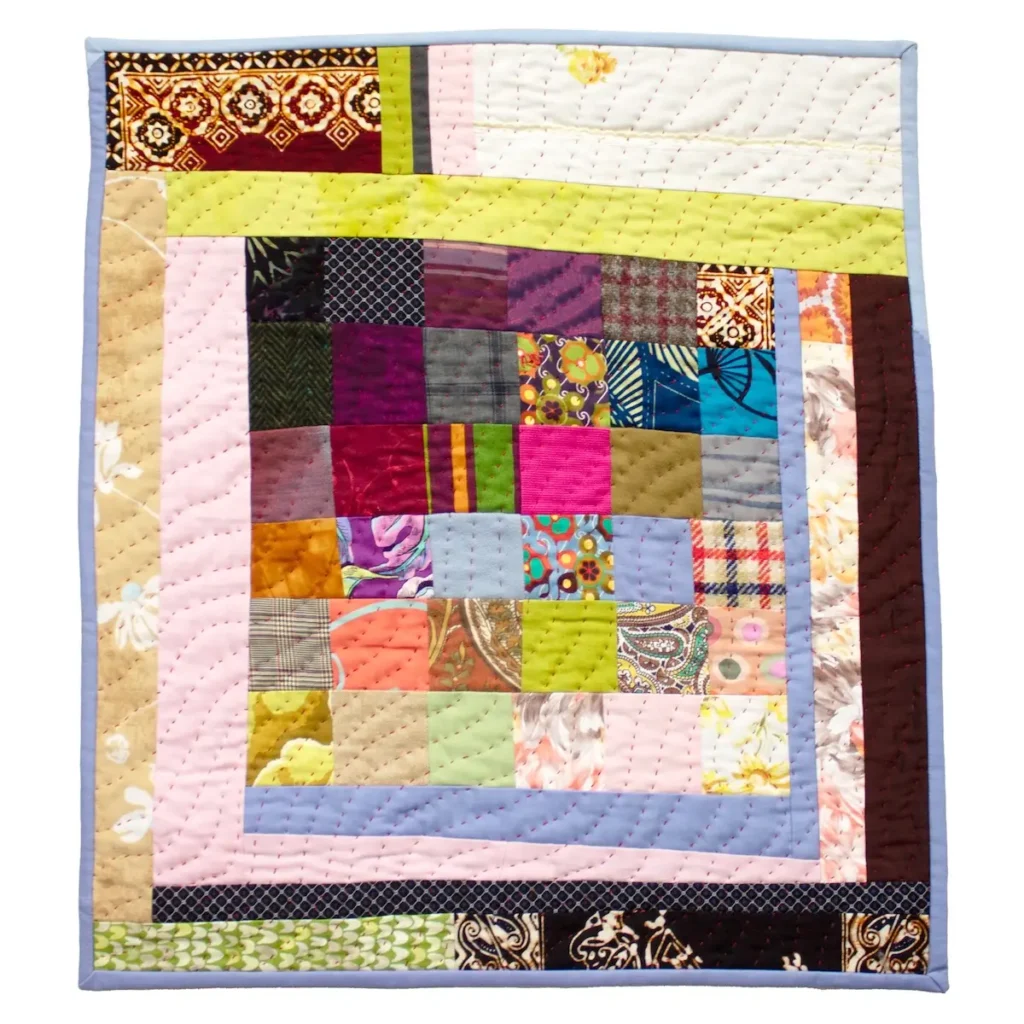
Over the last ten years of a full-time quilting practice, I’ve been surprised by how important texture is. Quilting is particularly suited to experience through touch.
I prioritize making quilts that people can experience with their bodies (and usually they are safe for a washer & dryer). And yet, I miss the sensory experience of pushing colorful goo around with a paintbrush. It just feels good. With paint, I can also layer colors in ways that are nearly impossible with fabric.
What’s something about your process that might surprise people?
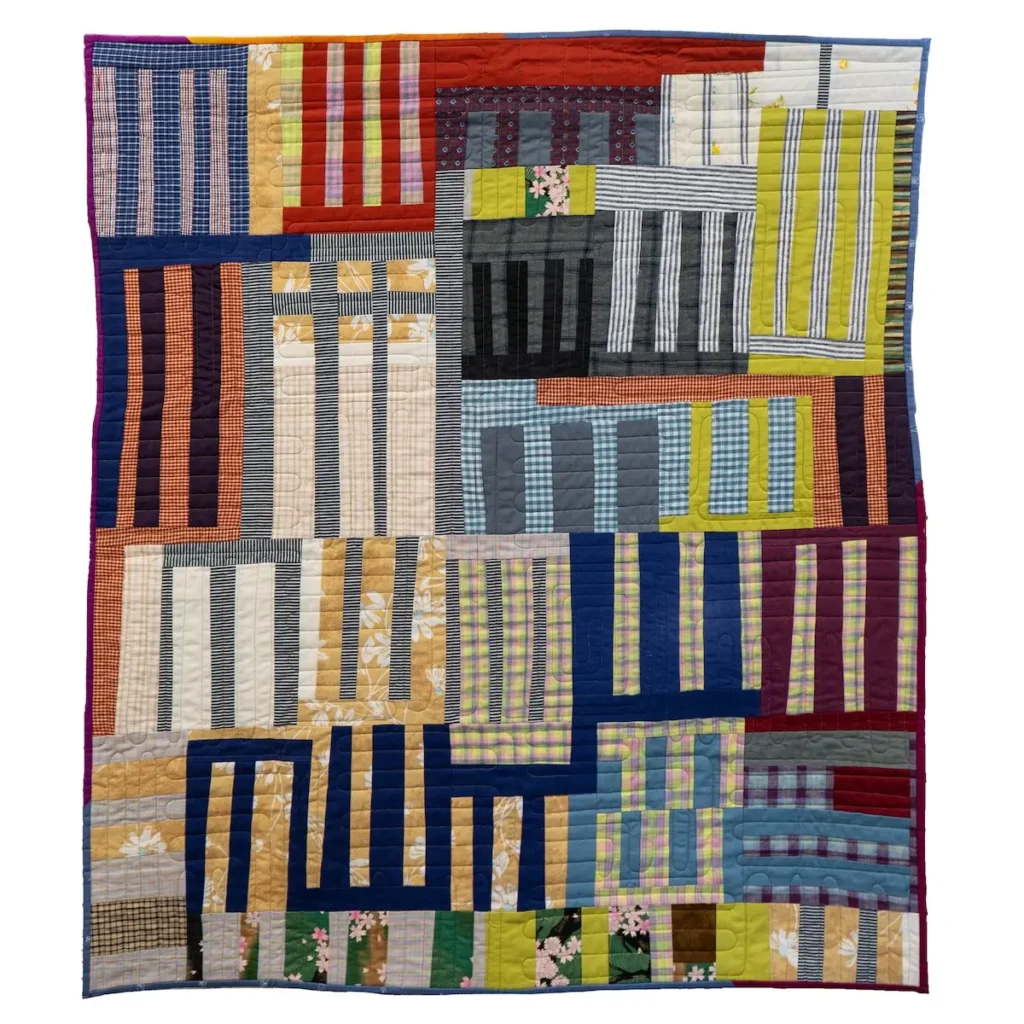
People seeing my work might be surprised by how little planning I do.
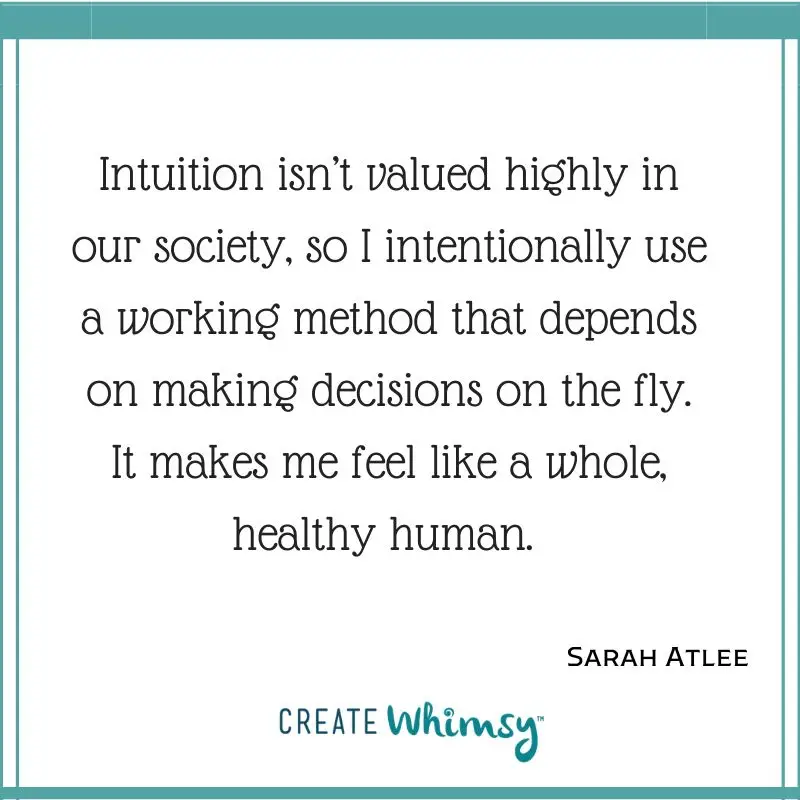
Intuition isn’t valued highly in our society, so I intentionally use a working method that depends on making decisions on the fly. It makes me feel like a whole, healthy human.
Do you ever revisit or rework older ideas in new ways?
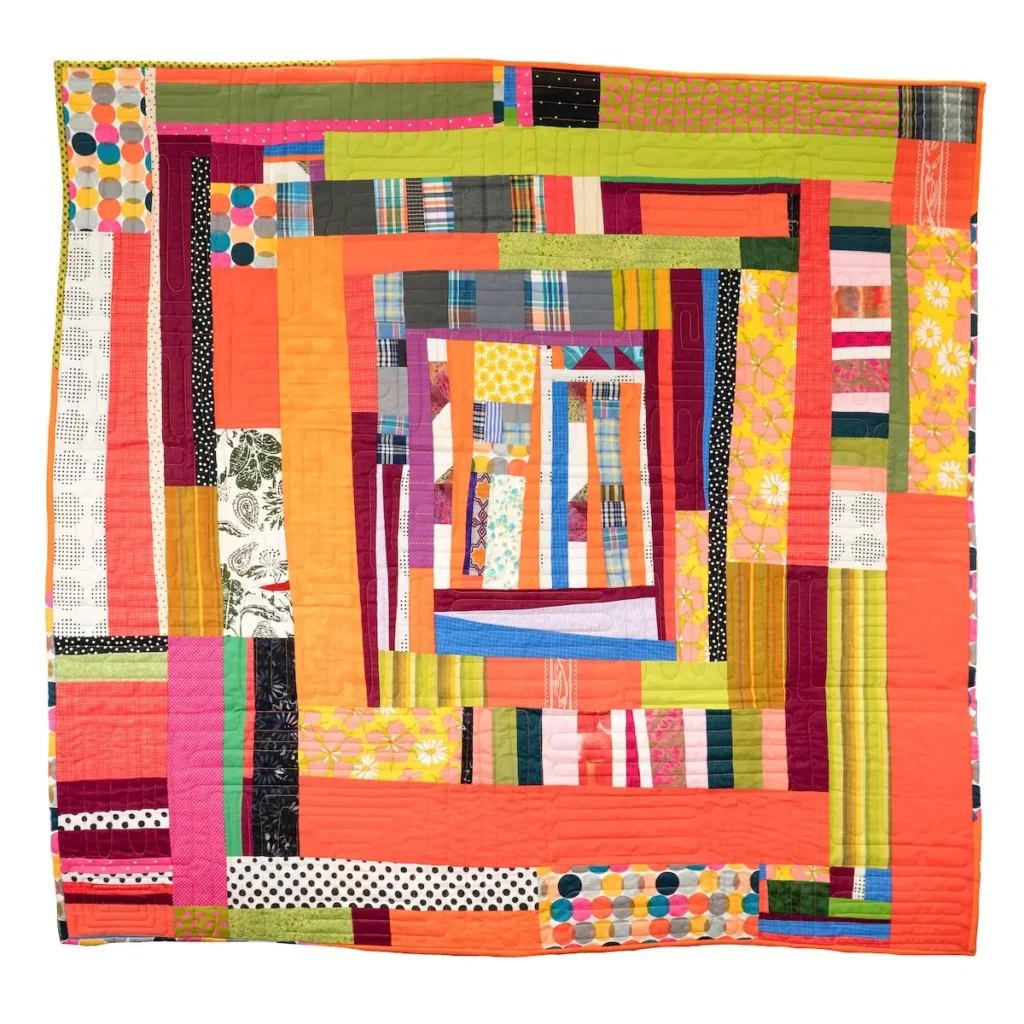
Not every piece comes out the way I’d hoped.
Sometimes I take apart works in progress and end up with a composition that I like better. I have a few finished quilts with hand-dyed fabric that I didn’t fix properly, so those fabrics have faded.
I can bring new energy to those works by cutting them up and reassembling them, adding embellishment, or through other techniques.
How do you balance creativity with the rest of your daily life?
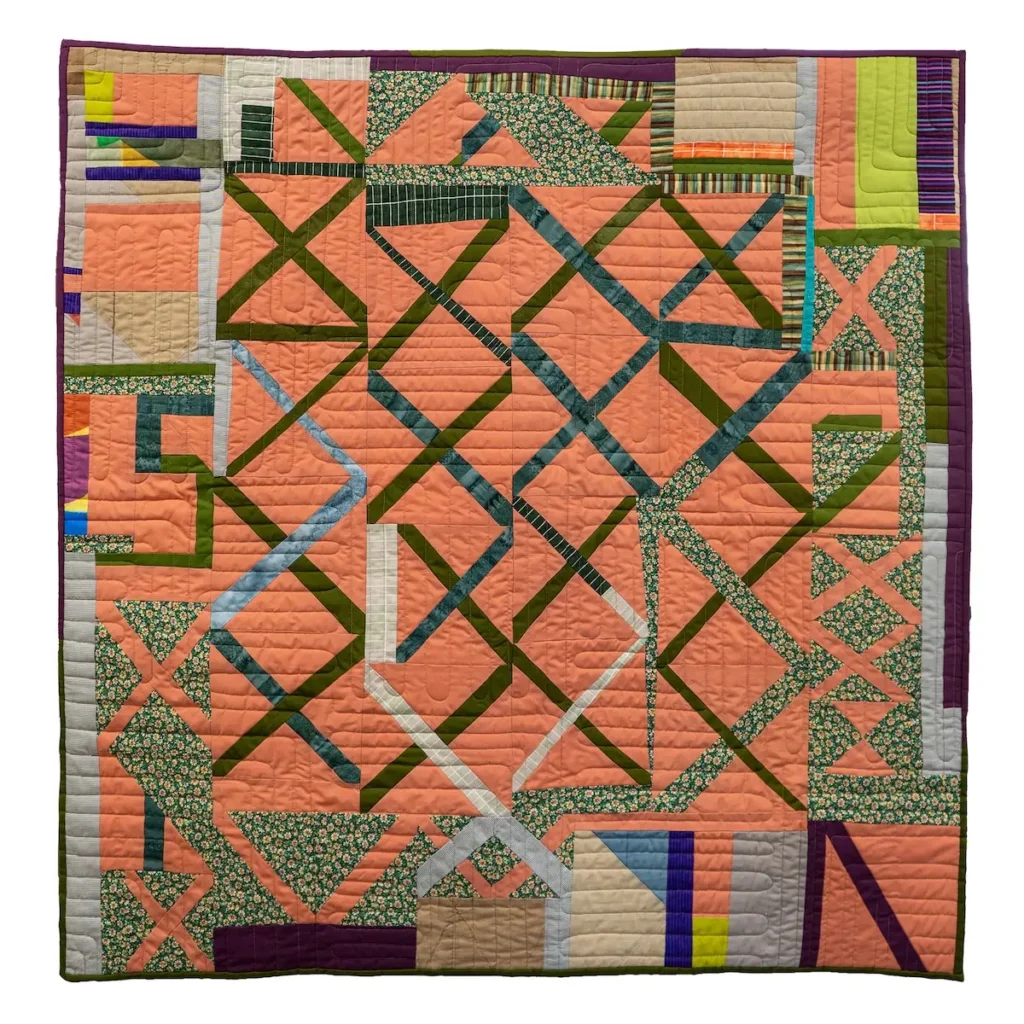
Author Paul Graham makes a very handy distinction between Maker Days and Manager Days. Sometimes I need to focus on the structures that support my creativity: my day job, preparing food, getting health care, spending time with my people, and resting. Those tasks and routines are the hard shell that protects my sweet gooey creative center.
I prefer blocks of several hours to sit at my sewing machine or drawing table. I actually get a lot done in the hours between dinner and bedtime. If I can hand sew or scribble in my sketchbook while sitting on the couch, I”m good for hours!
What advice would you give to someone who wants to explore working in multiple mediums?
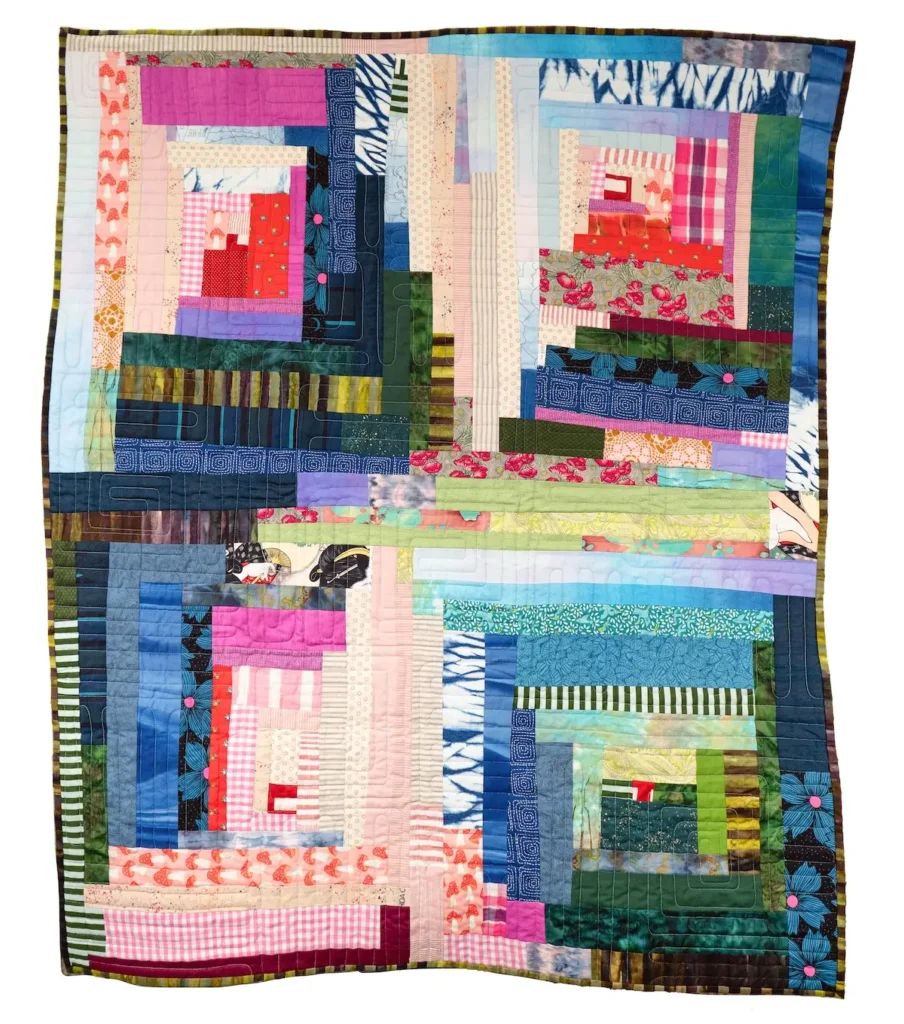
Do it. Working in multiple media is your superpower!
Now, you might get marketing advice telling you to narrow down your oeuvre until it’s as specific as possible. That might be the right way to market your work. But that shouldn’t restrict what you do with your time.
Do all the things you love to do. They will speak to each other in interesting ways.
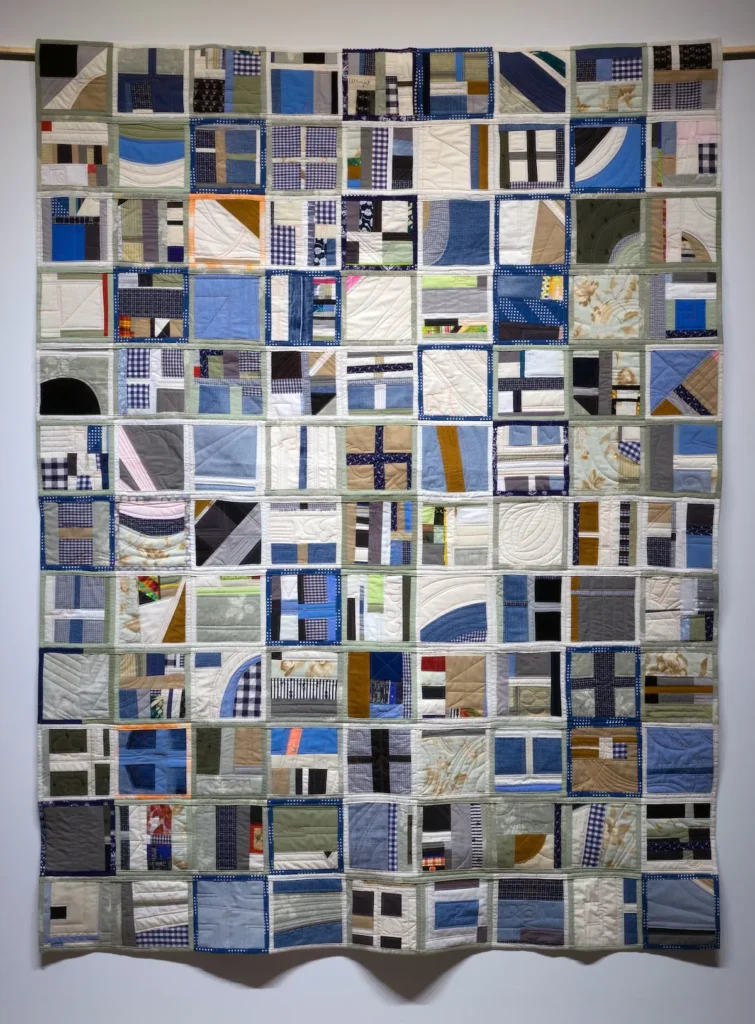
Where can people see your work?
Visitors can see my paintings and quilts at www.sarahatlee.com. If you’re in the Oklahoma City area, you can see my work in person at DNA Galleries and Factory Obscura’s Bonus Track gift shop.
https://dnagalleries.com
https://shop.factoryobscura.com
I also publish a newsletter called The Fold, where I talk about art, sustainability, what I’m reading, and fun things I find on the internet. Folks can sign up for The Fold through my website or at https://buttondown.com/sarahatlee
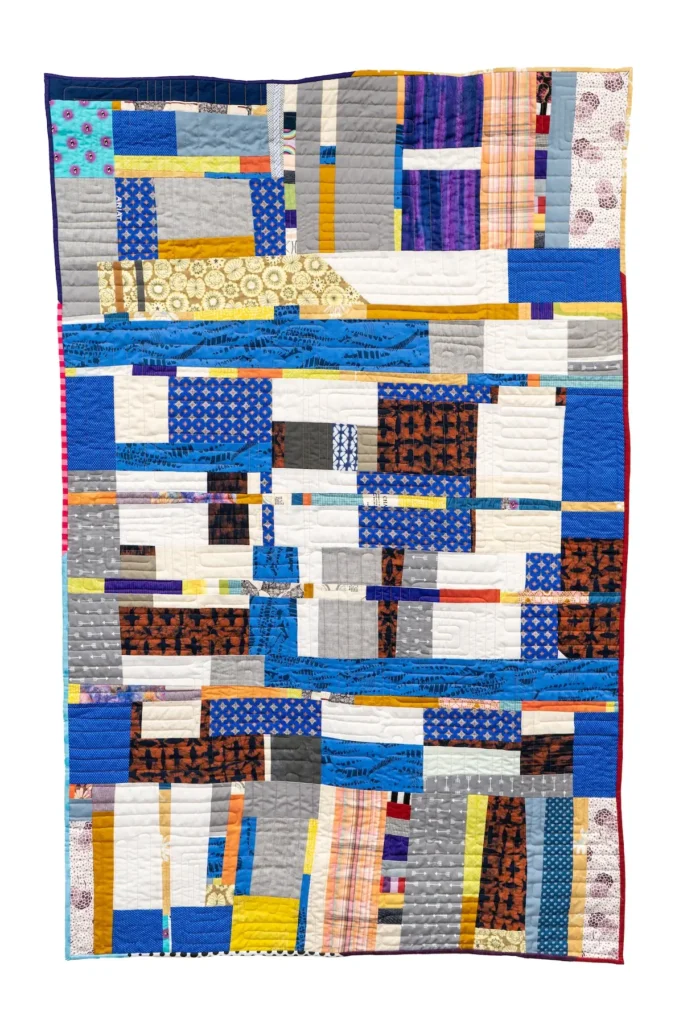
Rapid-Fire Fun:
- Fabric or paint – if you had to choose one for a week? I actually haven’t painted in a long time, so I’d choose paint for a week.
- One word that describes your creative style? A phrase: serious play.
- A place that always sparks ideas? The Myriad Botanical Gardens in Oklahoma City.
- Favorite color right now? Chartreuse.
- What are you excited to explore next? I’d love to find more ways to bring expressive drawing into my fabric work. Amanda Nadig has given me some ideas.
Interview posted August 2026
Explore more art quilt inspiration on Create Whimsy.