
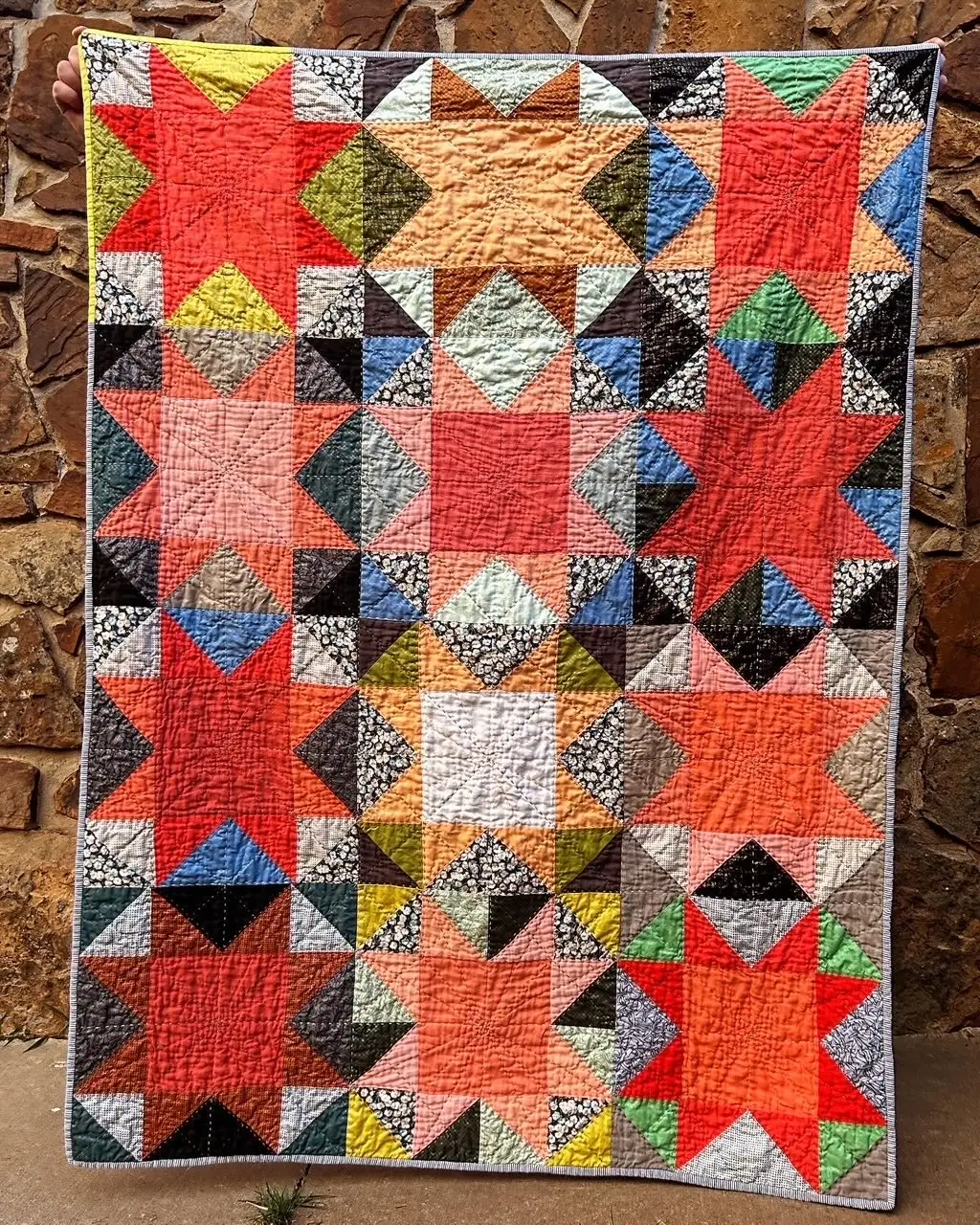
What happens when fabric holds your feelings like a secret diary? Quilt artist Lela O’Dell stitches stories from memory, love, and even heartache, turning scraps into something deeply human.
Her work is honest, a little wild, and full of curiosity, where old textiles get a second life, and every piece asks, “What if?” From grief quilts to cozy gifts for friends, Lela’s creations show how making something with your hands can help you understand your heart.
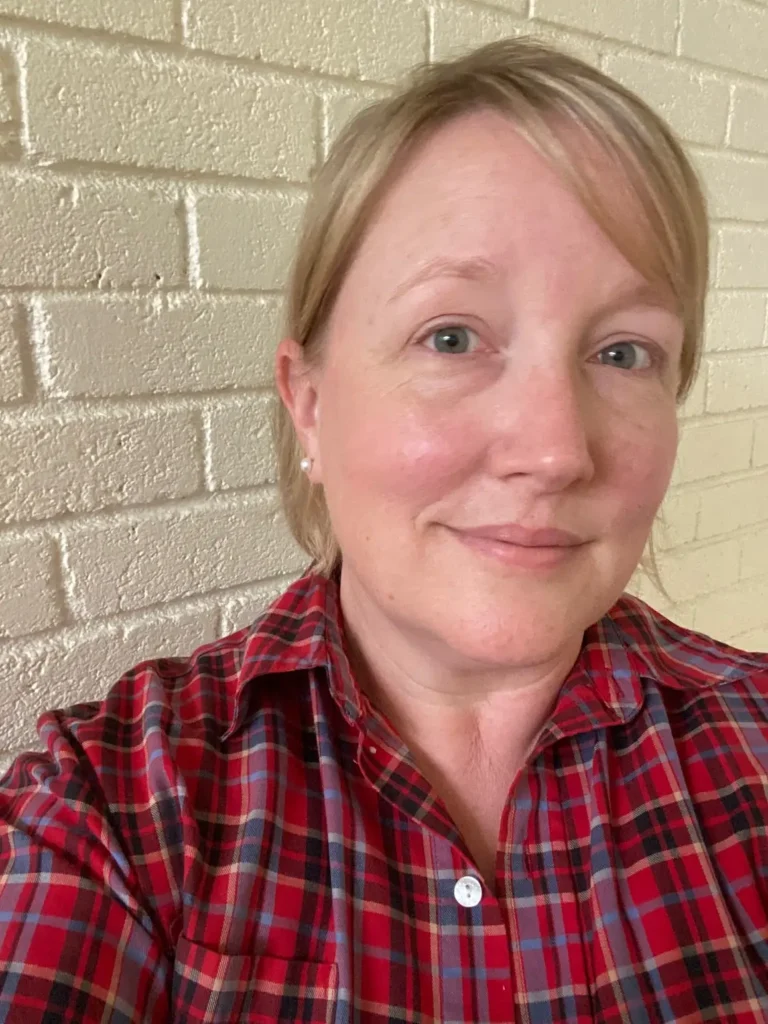
Do you remember the first time you made something and thought, “ This matters to me” ? What was it?
Probably the first time I memorably had the experience of making something personally powerful was in 7th grade. I decorated class folders with collages, adding self-expression and personalization to an otherwise plain utility item. It felt powerful and also vulnerable, a bit too exposing actually, because I eventually stopped using them, but the experience of self-expression through art and the surprising emotions that came along with the process stayed with me.
Similar feelings of being nakedly exposed by my making occurred when I made my Feelings quilt; it gave me heartburn! It wasn’t until the project was completed and my IG postings of my interpretations of specific feelings and my associations with those feelings stopped that the heartburn finally went away. The making of that quilt was deeply personal and mattered more than I cognitively understood. Quilts can be powerful storytelling devices!
As an Amazon Associate I earn from qualifying purchases. Read more about our affiliate linking policy.
When did art shift from something you enjoyed to something you felt called to pursue?
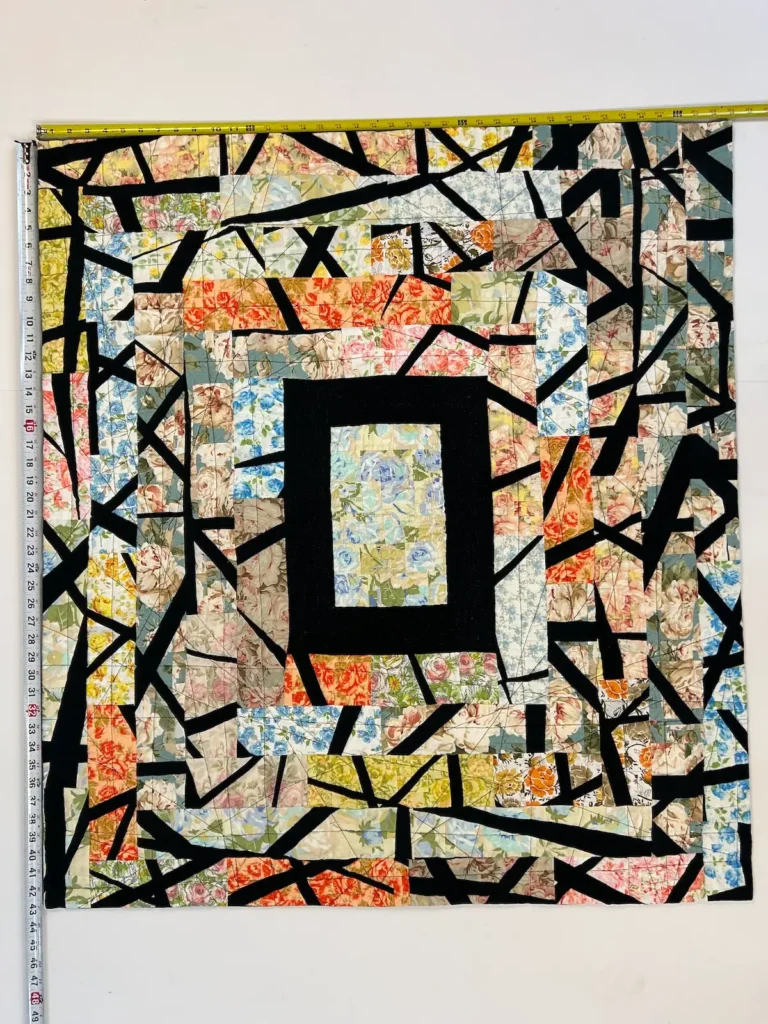
Probably with the years-long process of my grief quilt, “The Last Time I Saw You”, as well as other autobiographical quilts like Eva and Knoxville and a still in process untitled quilt from my first year of quilting. All these quilts were made early on.
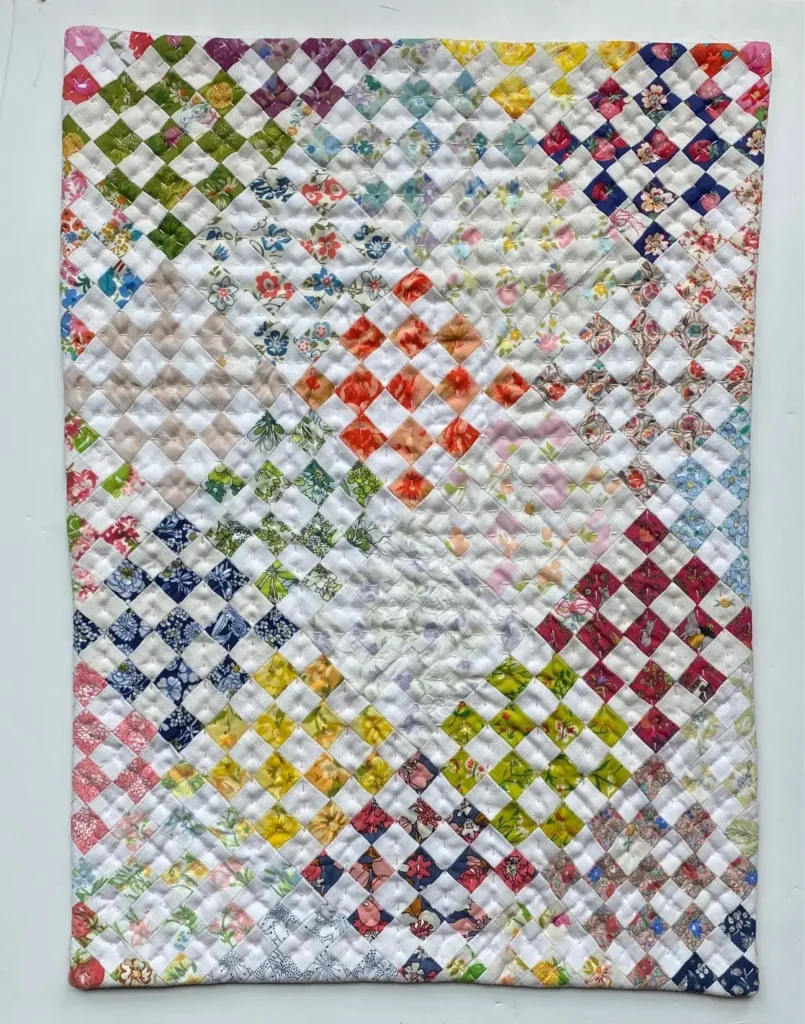
Their making helped me process events, feelings, histories, and new understandings in a way I hadn’t experienced before.
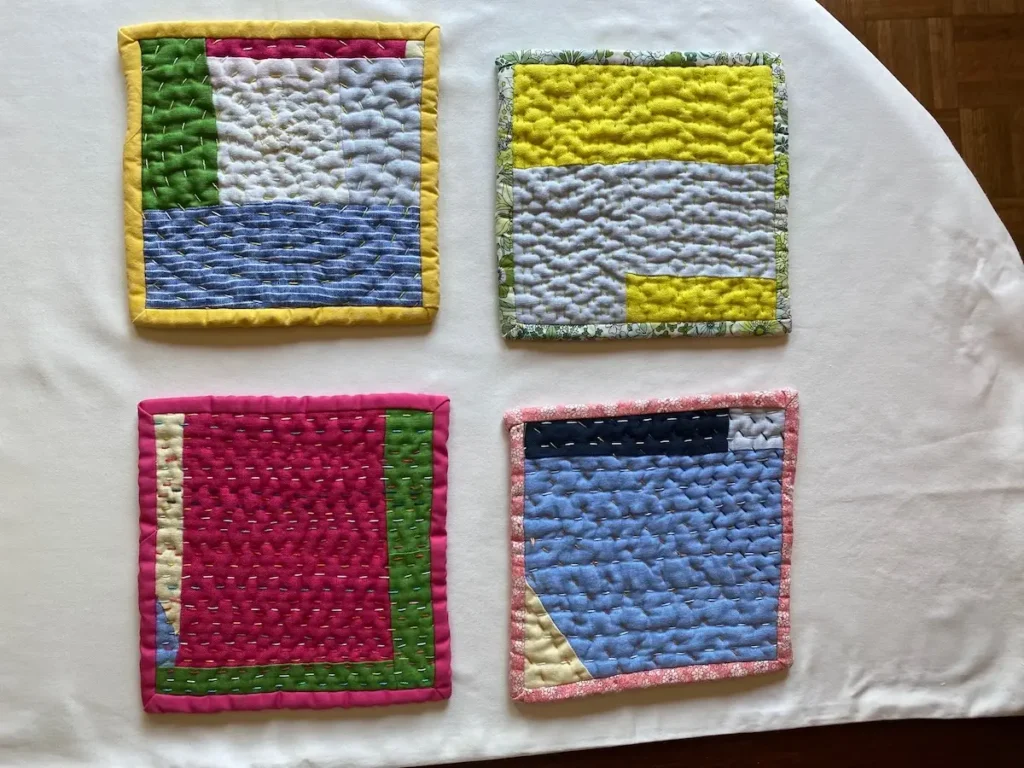
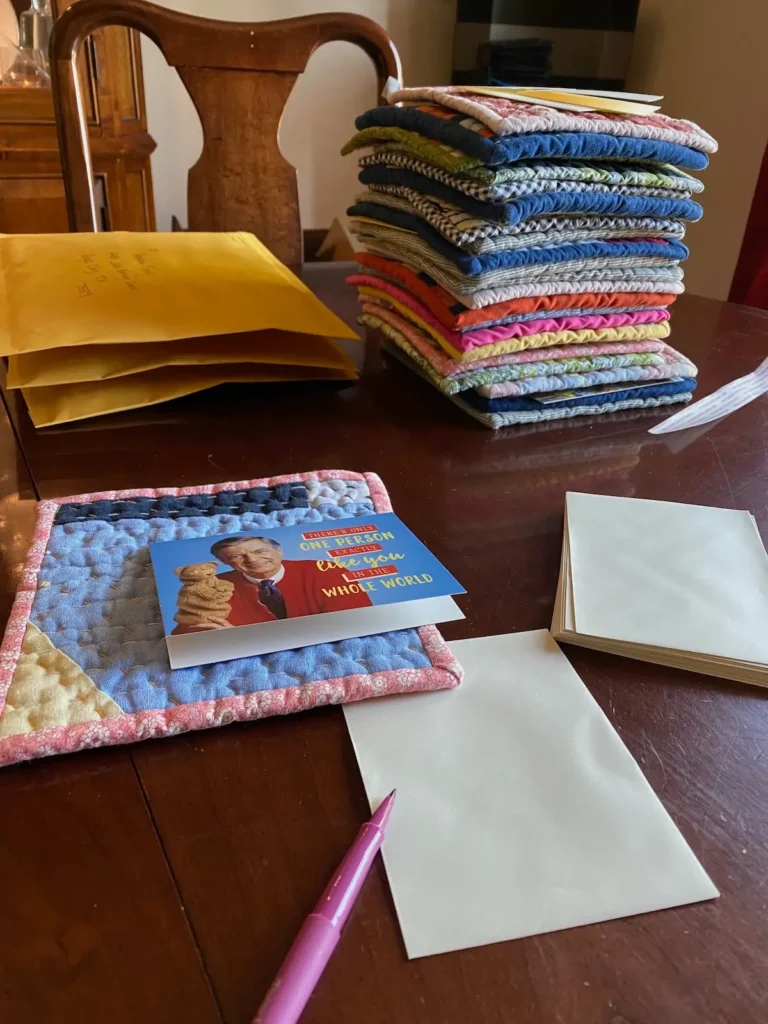
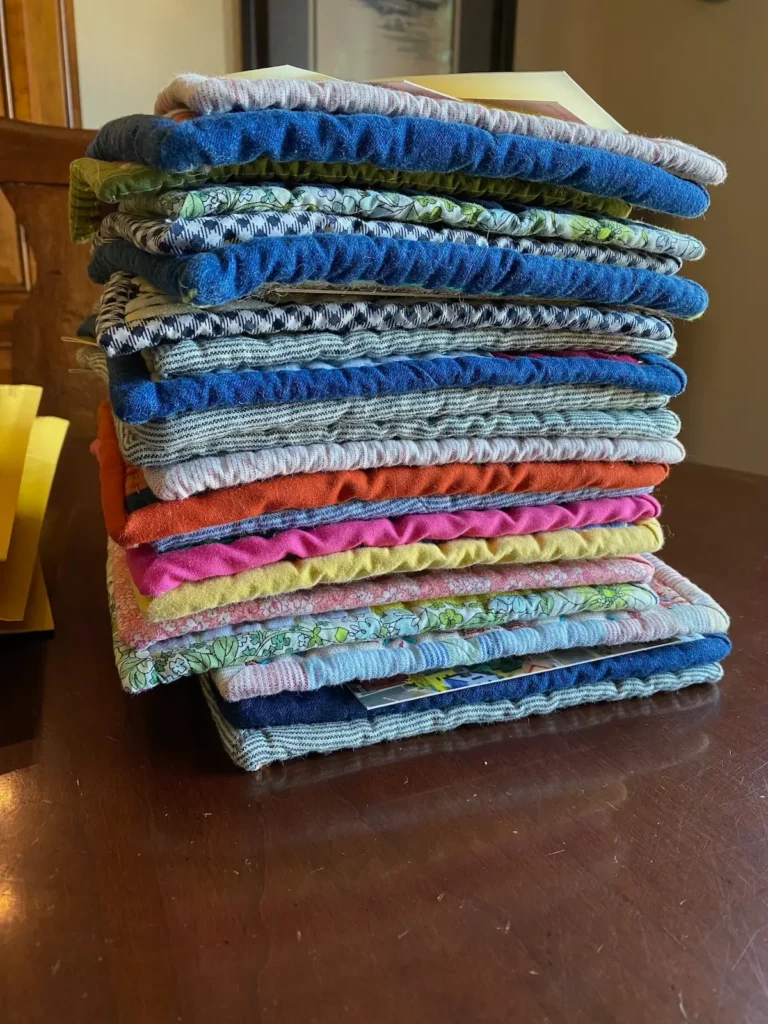
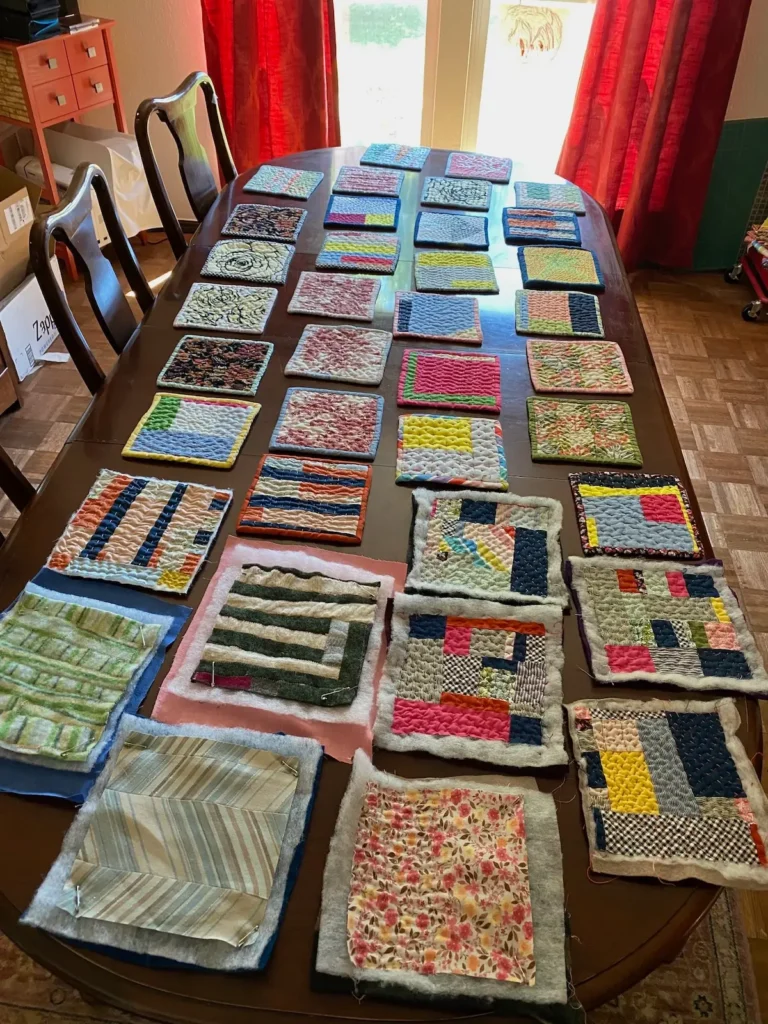
During 2020, when my husband was incapacitated for months with Covid, and I felt very alone and anxious about what the future held, making hand-quilted potholders for friends and family became a vital link to those loved ones, helping me feel less alone.
I wanted to run away, but instead channeled my energy and anxiety into making, which proved to be a powerful therapy. I also gained a lot of confidence in experimenting and using my voice, which is essential. These experiences taught me that the process of quilt-making is a very powerful tool for myself, for self-understanding, expression, and connection.
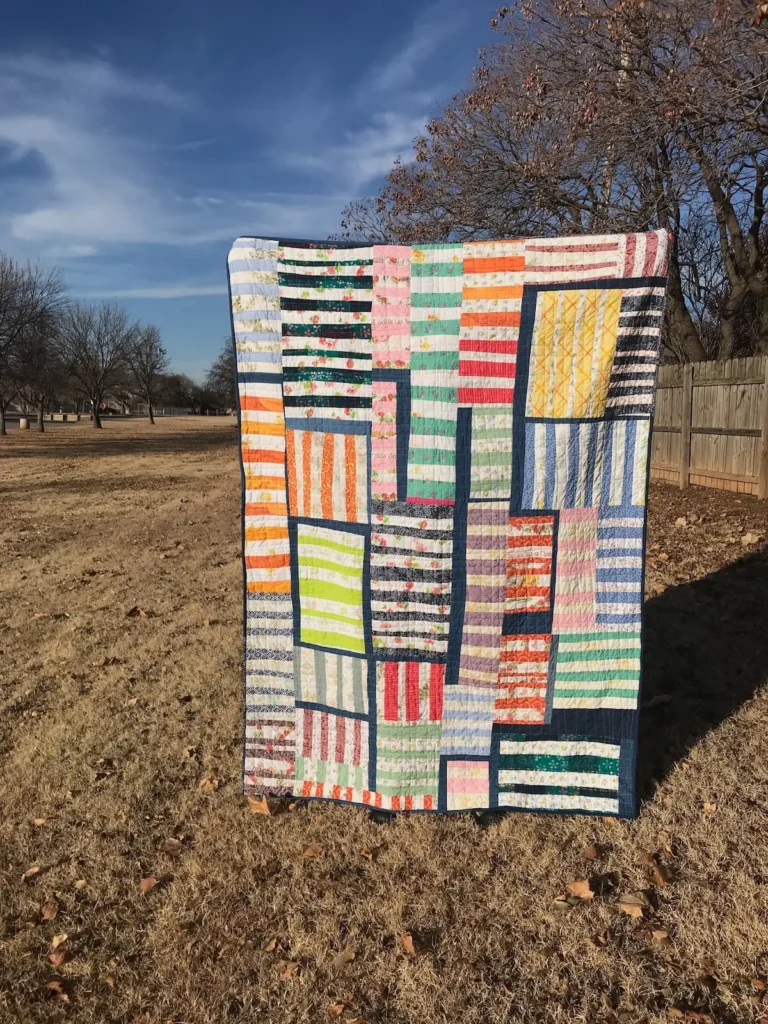
Looking back, can you see hints of your current style in your earlier work?
Yes, the repurposing has always been central, along with the love of simple, imperfect shapes: squares, strips, stripes, log cabins, half-square triangles, all using scraps or a jumble of old and new fabrics. These are all elements I’ve always loved and employed.
Giving unwanted items a beautiful new, useful life has long been a huge part of my making. It was in a thrift store that I noticed the bounty of vintage bed linens and was inspired to find a way to meaningfully use them somehow. It took some years, but I did eventually land on quilting as my way to work with the potential of secondhand textiles. They will always be central to my making.
How would you describe your artistic style today?
Contemporary Folk? Modern Outsider Patchwork? I’m not exactly modern; I’m not that architectural or precise. I’m somewhat improvisational in that my designs are not entirely predetermined, but I do use a lot of patterns and rough ideas of where I want to go.
I’m not quite an art quilter either; my quilts are more utilitarian and patchwork-focused and less pictorial. Sometimes I tell stories with my quilts, sometimes I’m exploring color or specific fabric types like linen, cashmere, corduroy, or cotton gauze, and sometimes I just need to sew.
I’m self-taught and find following patterns stressful.
Where do you usually find inspiration?
From so many places!
My quilt book collection, the images I’ve saved on IG of quilts and color schemes and beautiful patterns and texture, my own collection of fabrics, my lived experience, and often from curiosity about what happens if…???
Was there a turning point when your work started to feel more like you?
For the past few years, I’ve really tried to listen to my own ideas, less what I’ve picked up in workshops or online or in books, and I’ve really tried to lean into what I enjoy, not what an imagined mentor or audience might enjoy. This is challenging work!
Getting into QAQ with Domestic Labor probably kick-started this leaning into self, or at least gave a big dose of validation and then resulting self-confidence that I do have something to say that can resonate with others.
What role does experimentation play in your creative life?
It’s all experimentation!
I want to know how the choices I make, re: batting/backing/quilting/top materials, will all come together, how that particular combination of various decisions will feel, both texturally and visually, in other words, what type of quilt experience will those choices make?
I’m also curious about how exactly I can go about making an interesting, beautiful, or pleasing quilt? Because an interesting quilt is not always beautiful and vice versa.
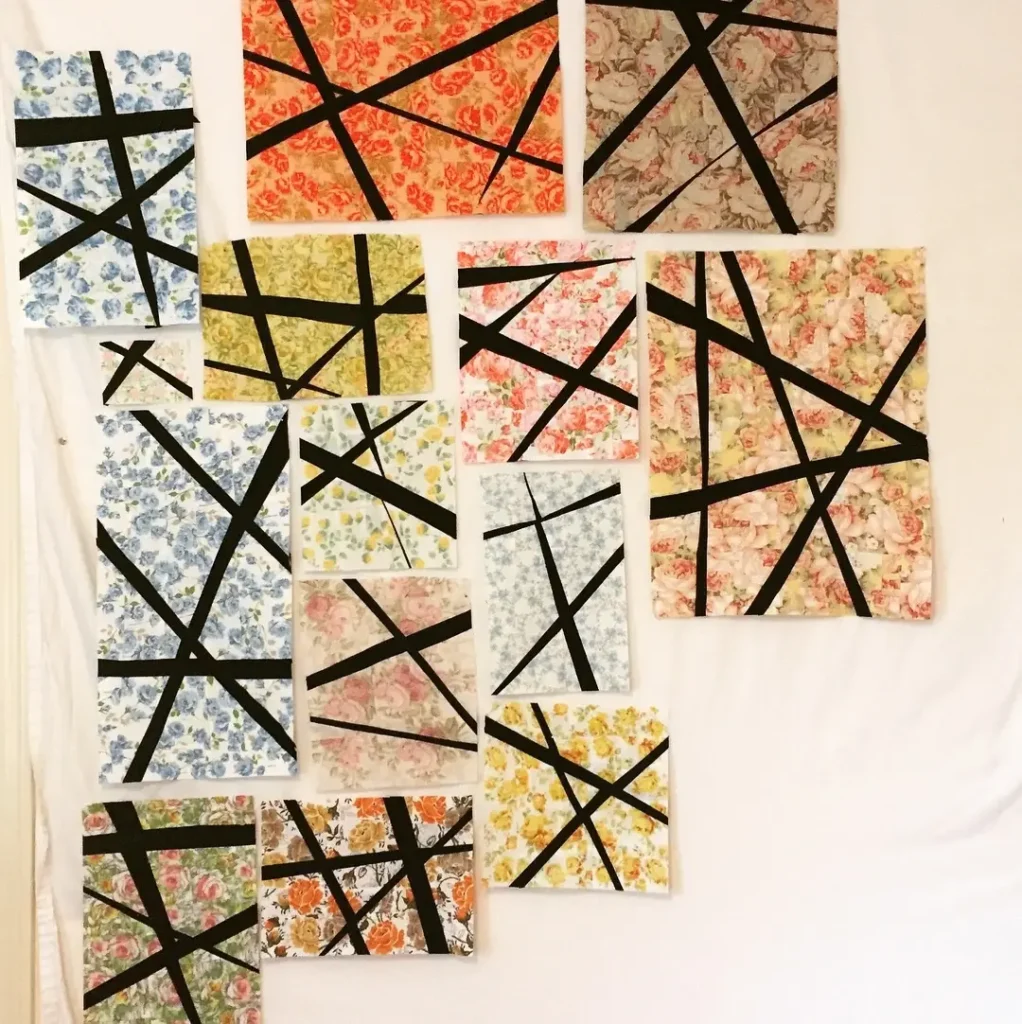
How do I tell a particular story through this particular pile of fabrics? The grief quilt I made about losing my father took years to figure out. I was driven to create in response to passing him in age, and the actual composition took a long while to sort out.
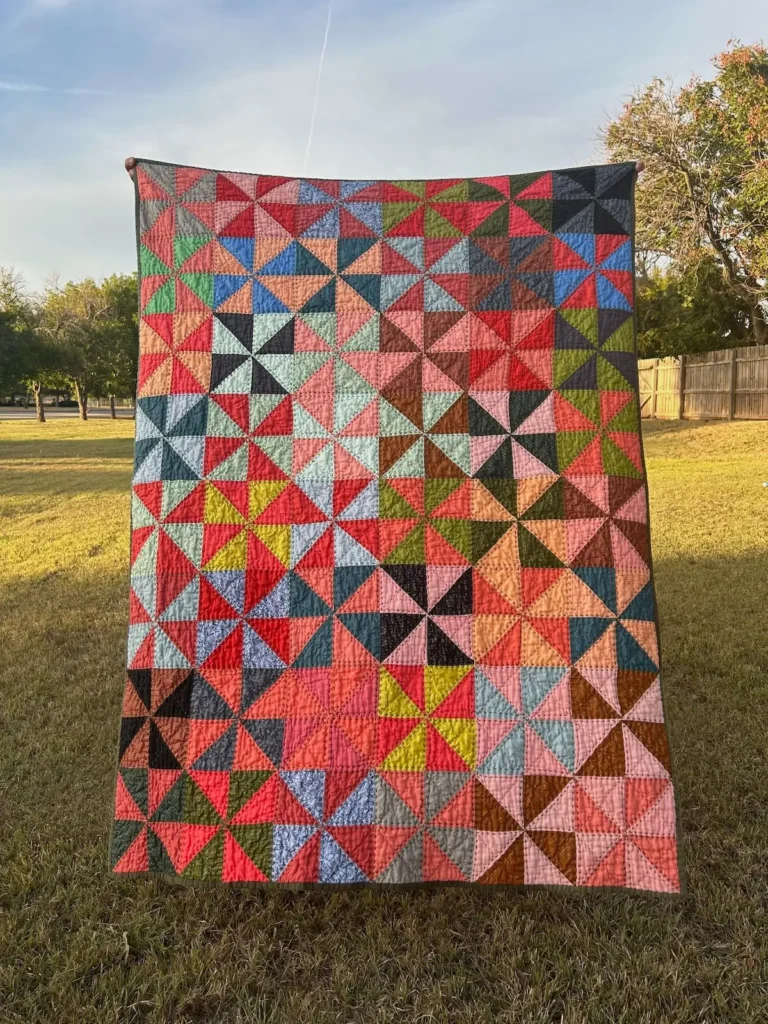
It is a combination of real events and memories from the last time I saw my father and a visual representation of how it feels to mature through life with a one-sided parent/child relationship. I knew I would use vintage rose prints and violent slashing; how those elements were utilized was an unfolding and a large amount of experimentation.
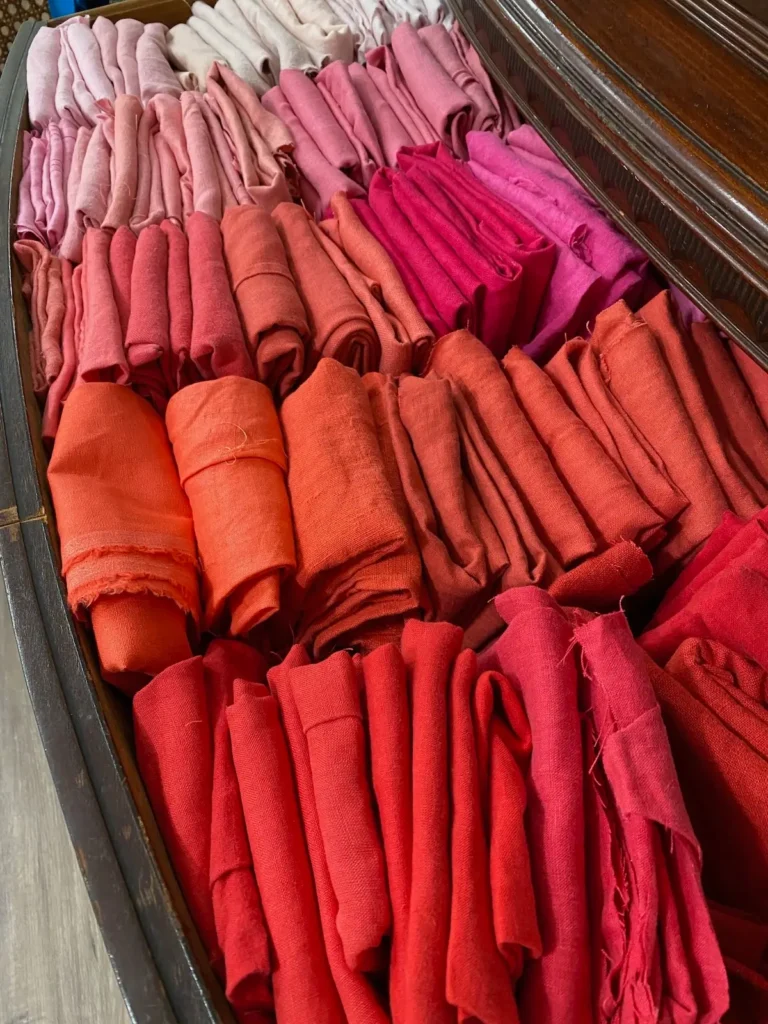
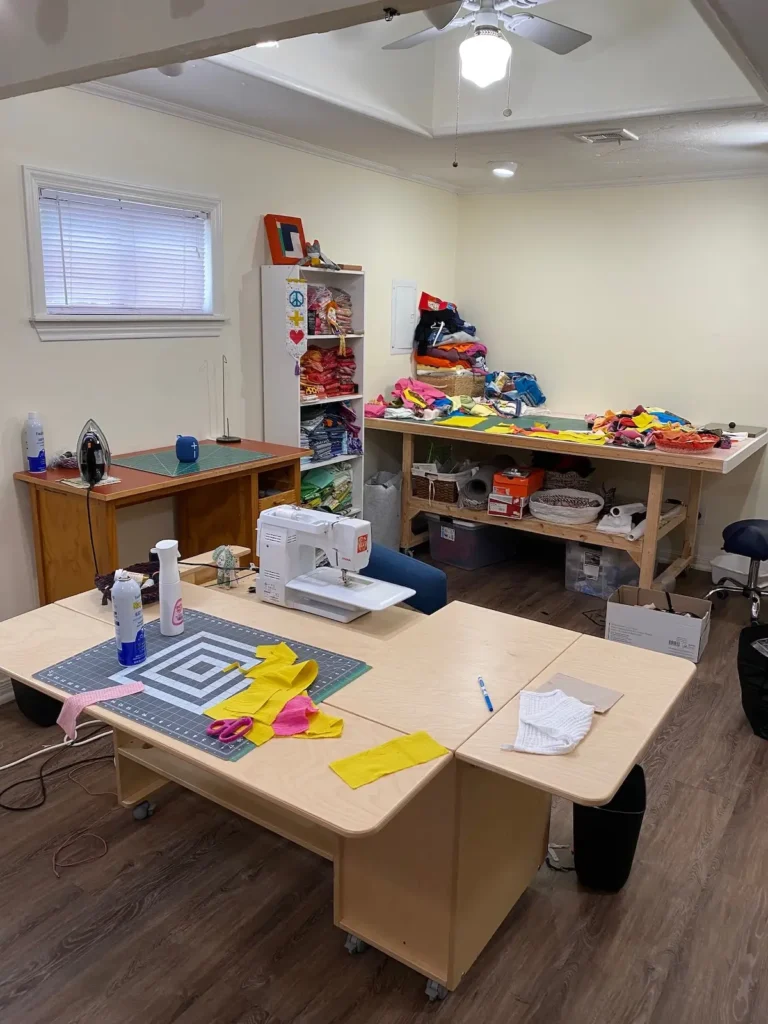
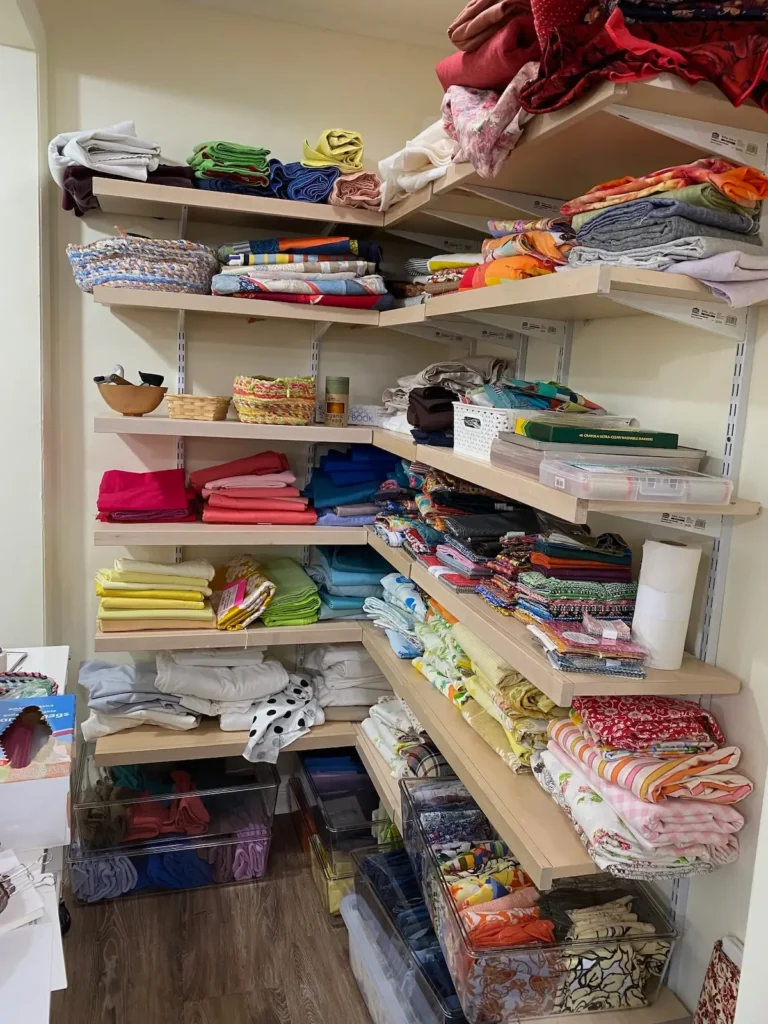
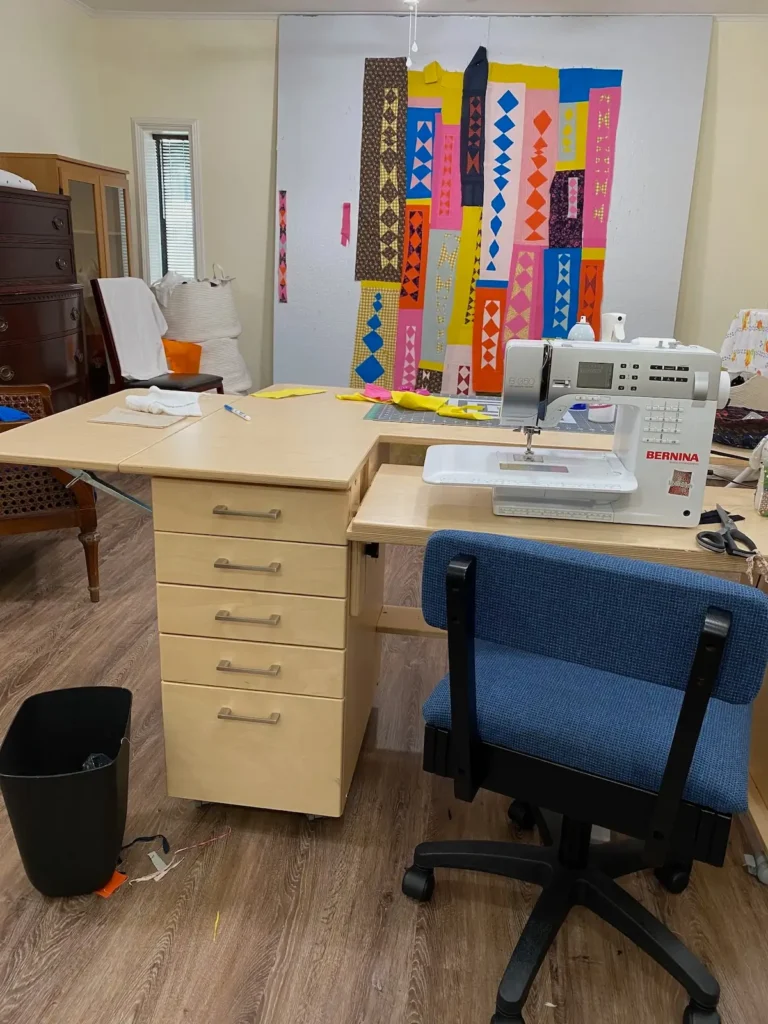
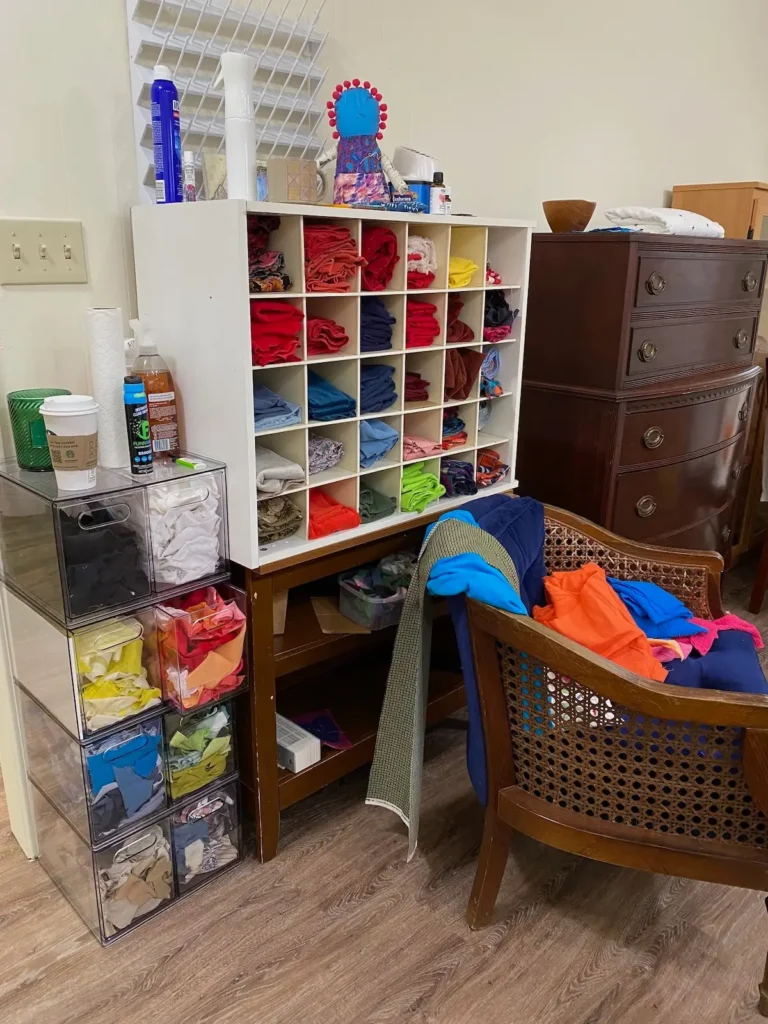
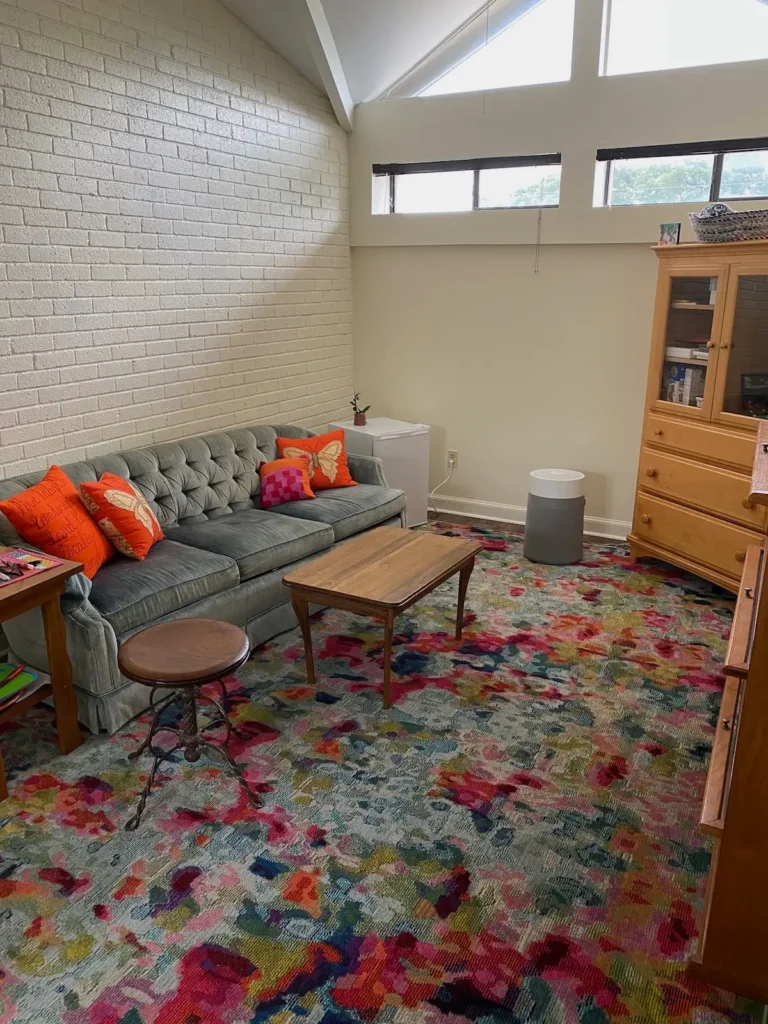
Describe your creative space.
Currently, I’m in a very large (to me) off-site studio that was formerly a chiropractor’s office, then briefly my husband’s business space.
It is 3 main rooms with a few additional storage closets: a large workroom, a lounge, and the old reception room that is currently a storage space. It is an abundance of space and has taken me a long while to settle into.
I’m much more accustomed to squishing into little multipurpose spaces, like the spare room I used to use, or the dining room. So this studio is slowly becoming more me. I’m very grateful to have it, to be able to leave a project and all its mess and know it’ll be just the way it was when I return and won’t be in anyone’s way.
Funny how some things can feel less comfortable even when they tick all the imagined must-have boxes. But I’m getting there. Not having the stolen minutes to sneak in and putz around has definitely changed the way my space looks; it is much more utilitarian and less decorated in this off-site location than it was at home.
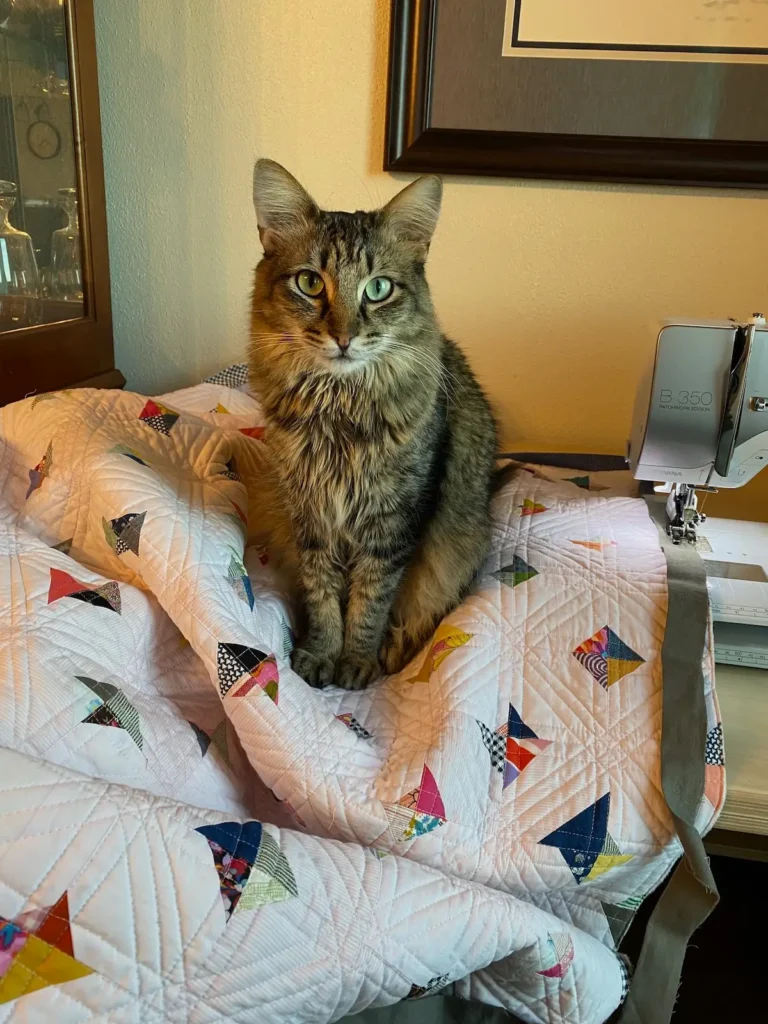
What does a typical day in your studio look like?
After dropping kids off at middle school and having some breakfast, I’ll get to work by 10 a.m. I listen to podcasts and audiobooks as I work, but not when I’m problem-solving. I’ll usually get a good 4 hours of work in before I lose focus or have to switch gears back to family life. I try to be in my studio 2-3 days a week, more or less. Life is messy and unpredictable, which makes flexibility key.
Do you prefer working in long, focused sessions or short bursts of creativity?
It depends!
Short bursts are so rich but can also be frustrating when there’s a desire for a longer session. The off-site studio enables long sessions, but that energy isn’t always on board. I find I miss the stolen short bursts in-between home life, when I’m at the studio, I feel like I need to focus and get down to business; it can be a weird self-inflicted pressure.
Because my creative time is found in and around the busy lives of my family, what time I have does not always match my energy, focus, or preference. It’s all temporary, though!
I recently spent a week at a solo quilting retreat and luxuriated in spending my time exactly as I chose, which ended up being the bulk of the day sewing and the evening doing other things.
Is your studio neat and organized or beautifully chaotic?
So much beautiful chaos!
But only to a point, and then a reset becomes necessary, usually after a few quilts. I can find a lot of inspiration in my piles of offcuts and scraps. The potholders I’ve made come from those scrap piles of cuttings and are wonderful places to experiment. But after a while, the piles become overwhelming, and I need the calm of a clean space.
Do you usually start with a clear plan, or do you discover the piece as you go?
I usually start with at least a bit of a plan and then discover the destination as I go.
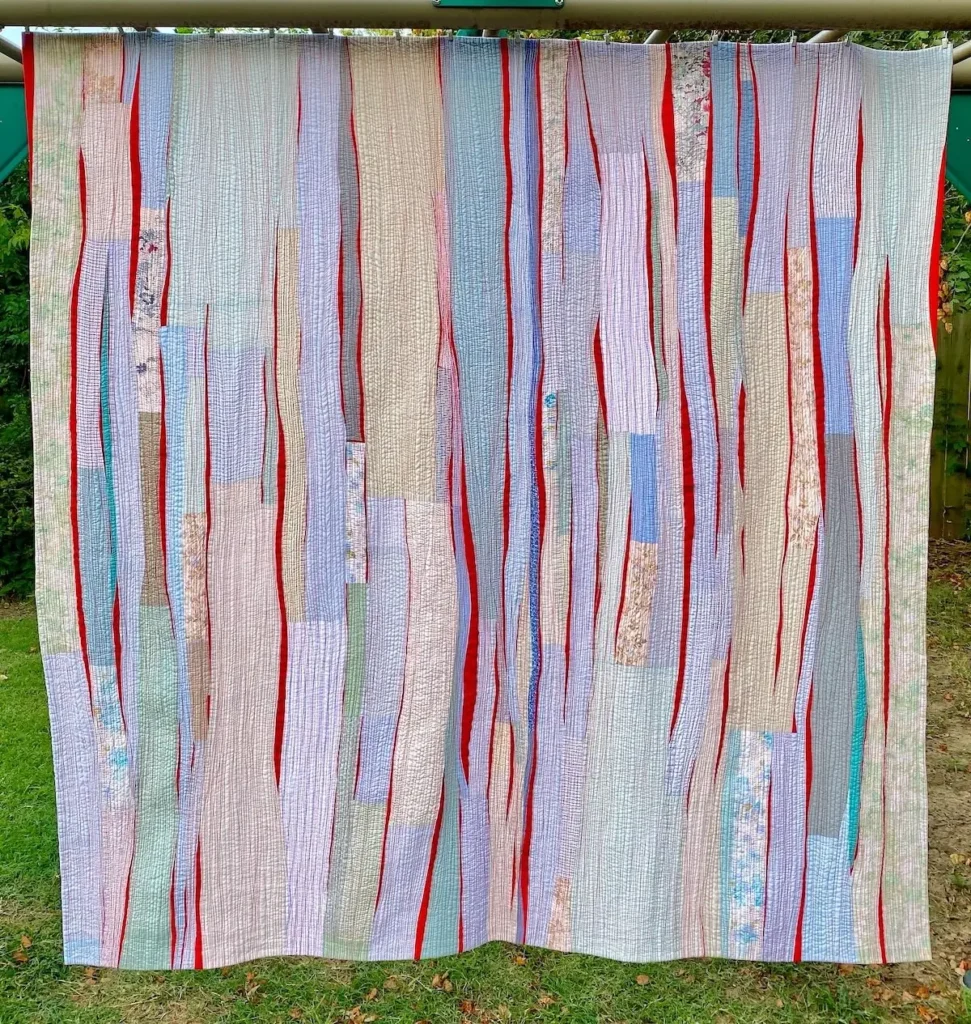
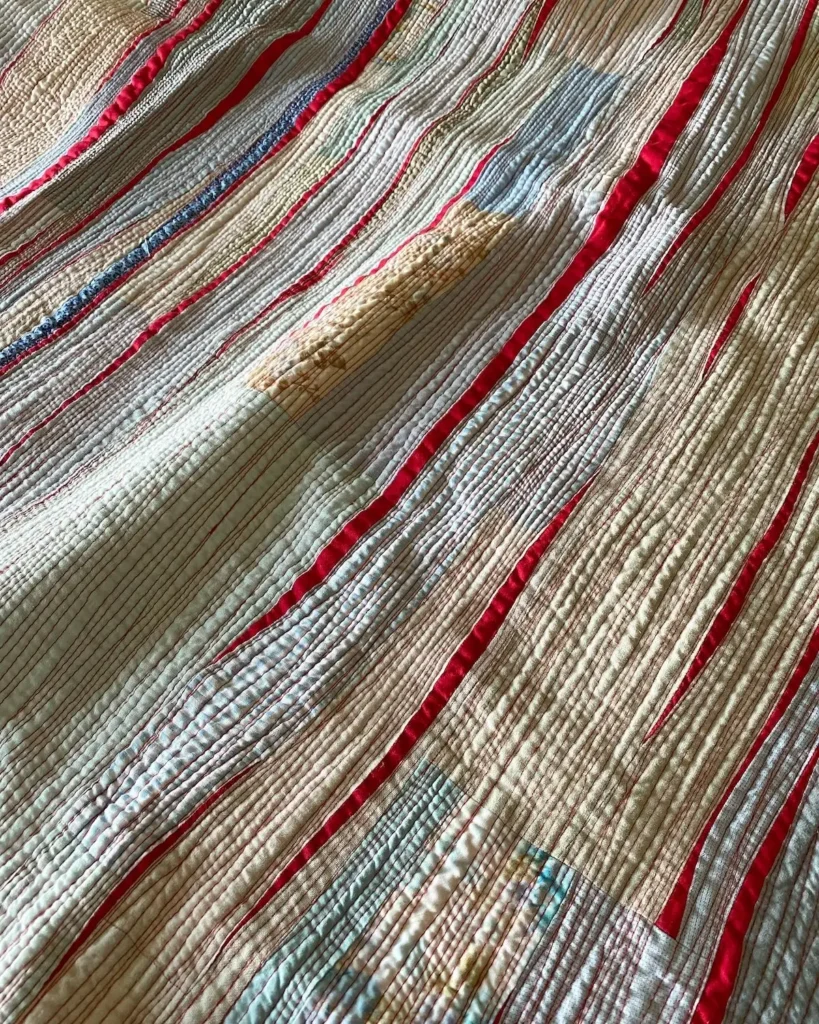
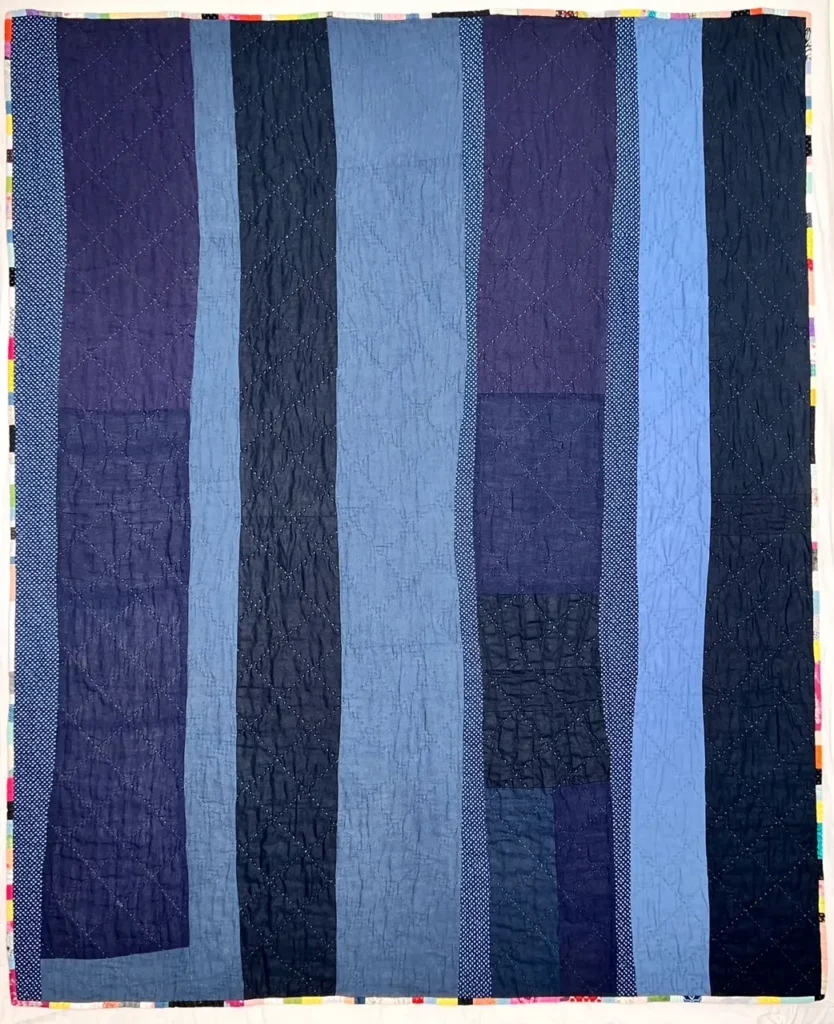
The latest project started with the long-put-off desire to make a quilt mostly with double gauze cotton, along with an urgent need to sew something.
Where a project ends is always a surprise, and that surprise keeps me going. Once I know what a piece will be, it’s easy to lose interest, and the finishing can be drudgery. Unless, of course, the work of the hand quilting is itself a journey of discovery, and then my energy is renewed.
When something isn’t working, how do you problem-solve?
Time is the ultimate solution.
If a piece is extra tricky or frustrating, I’ll put it away until the attachment is lessened and a solution is more easily located.
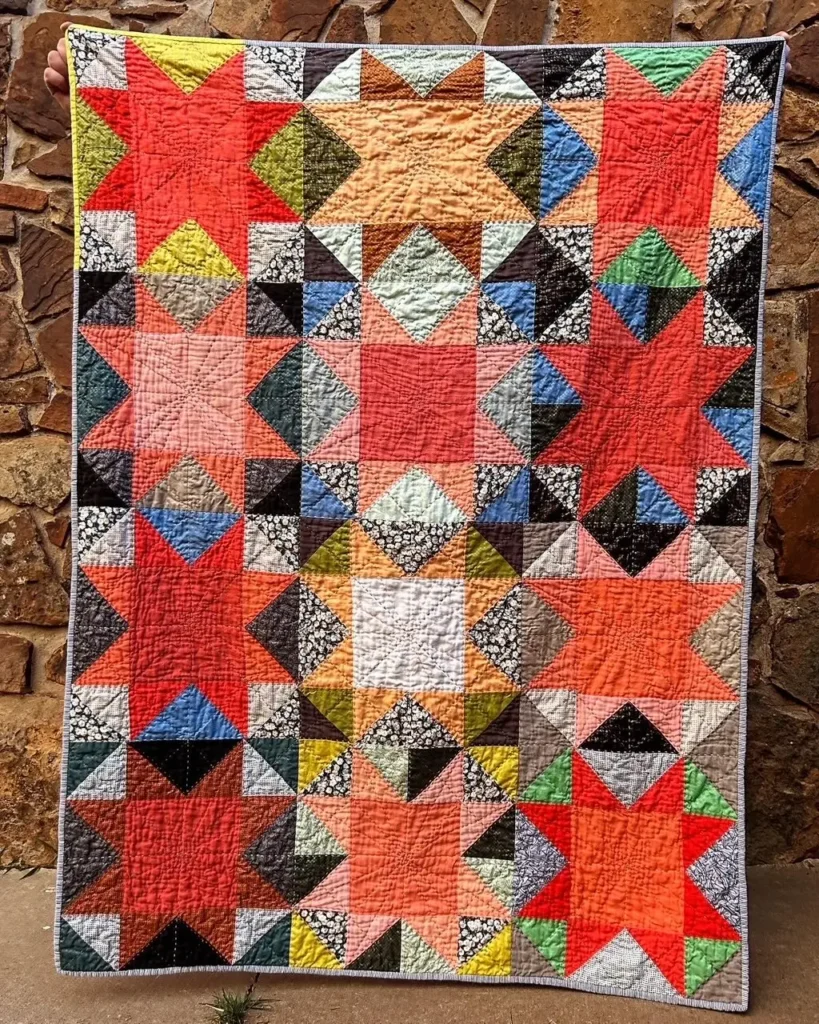
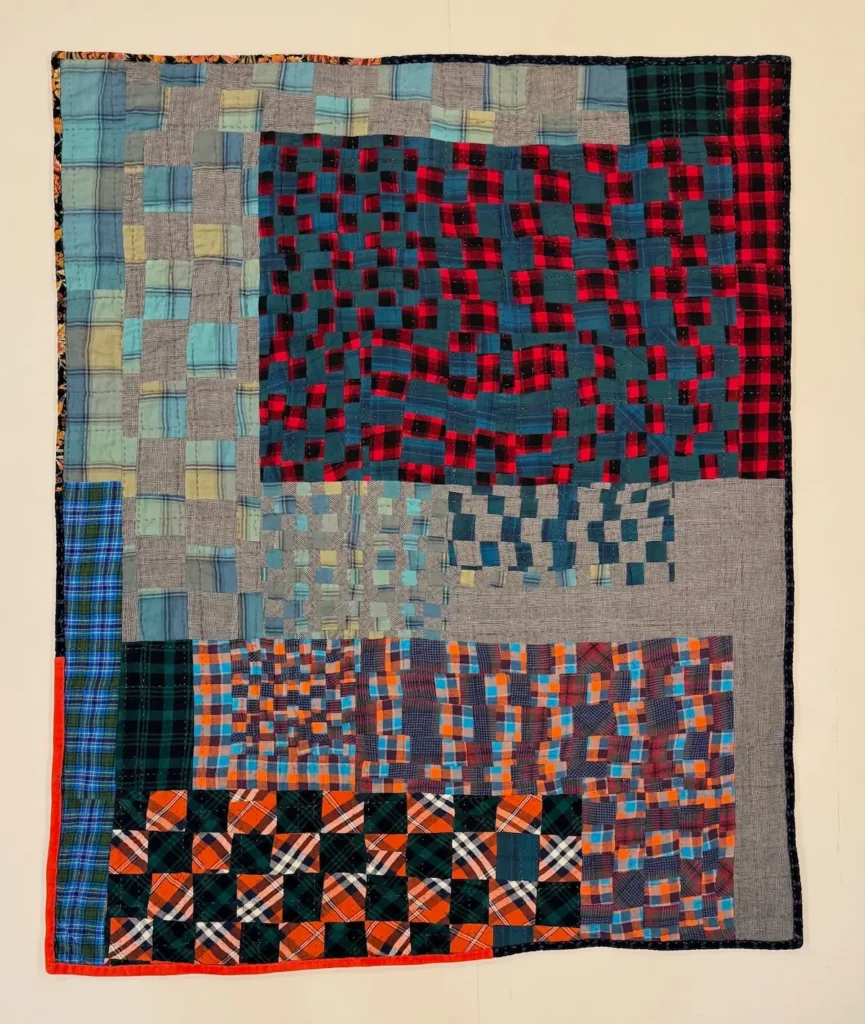
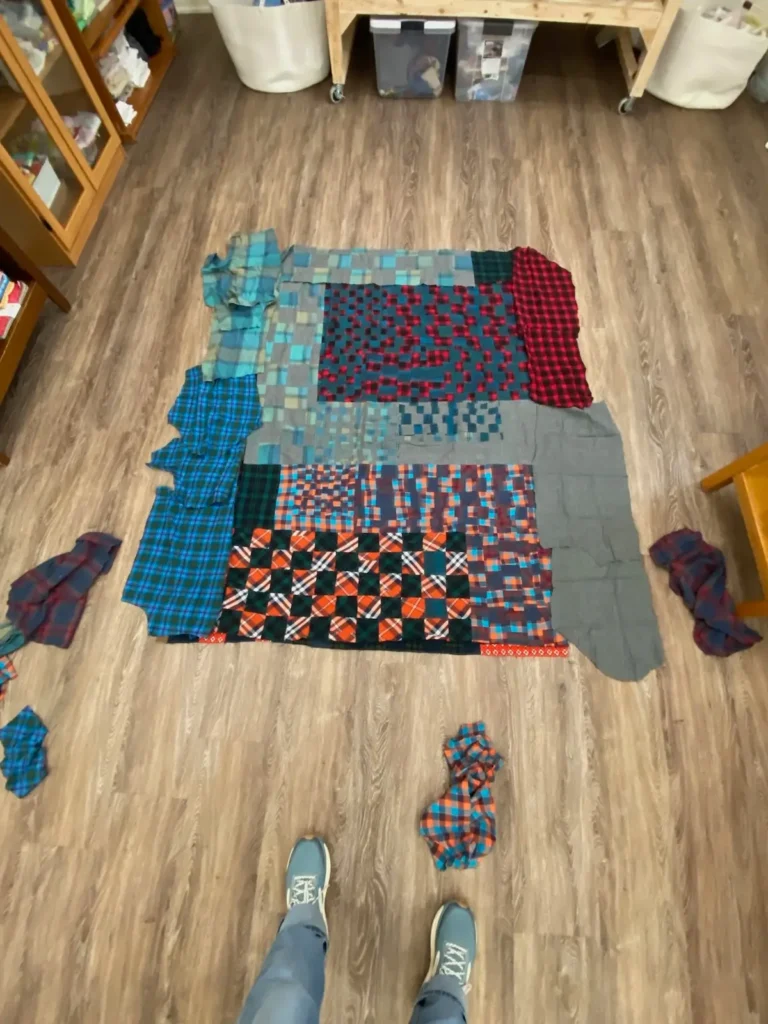
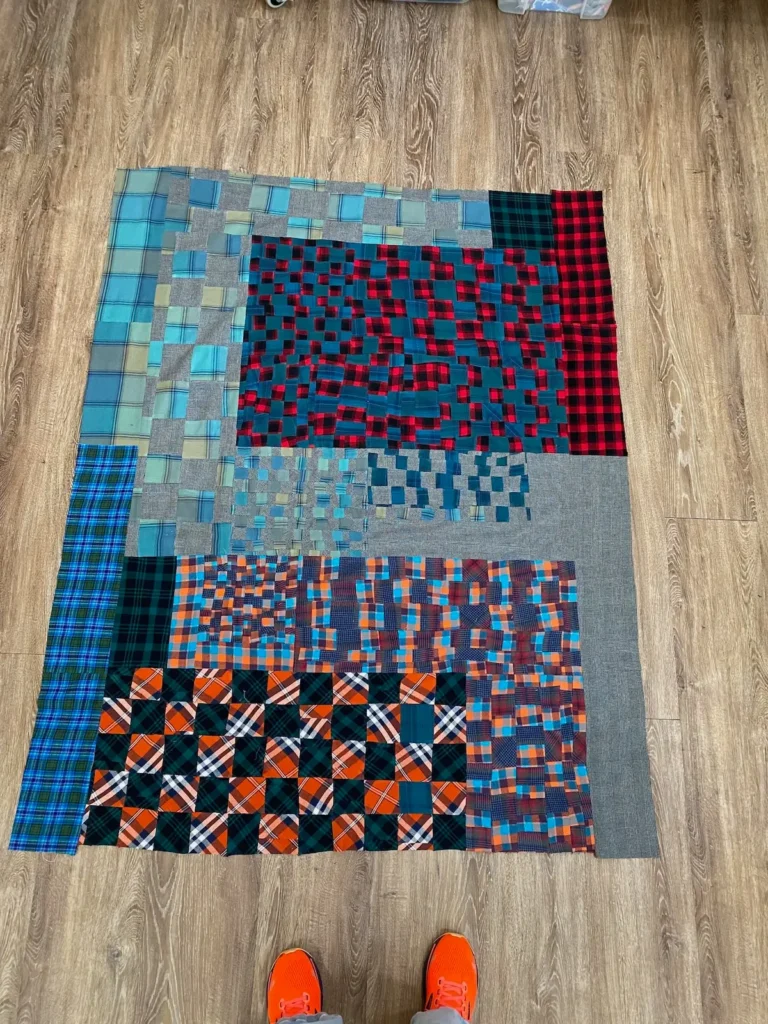
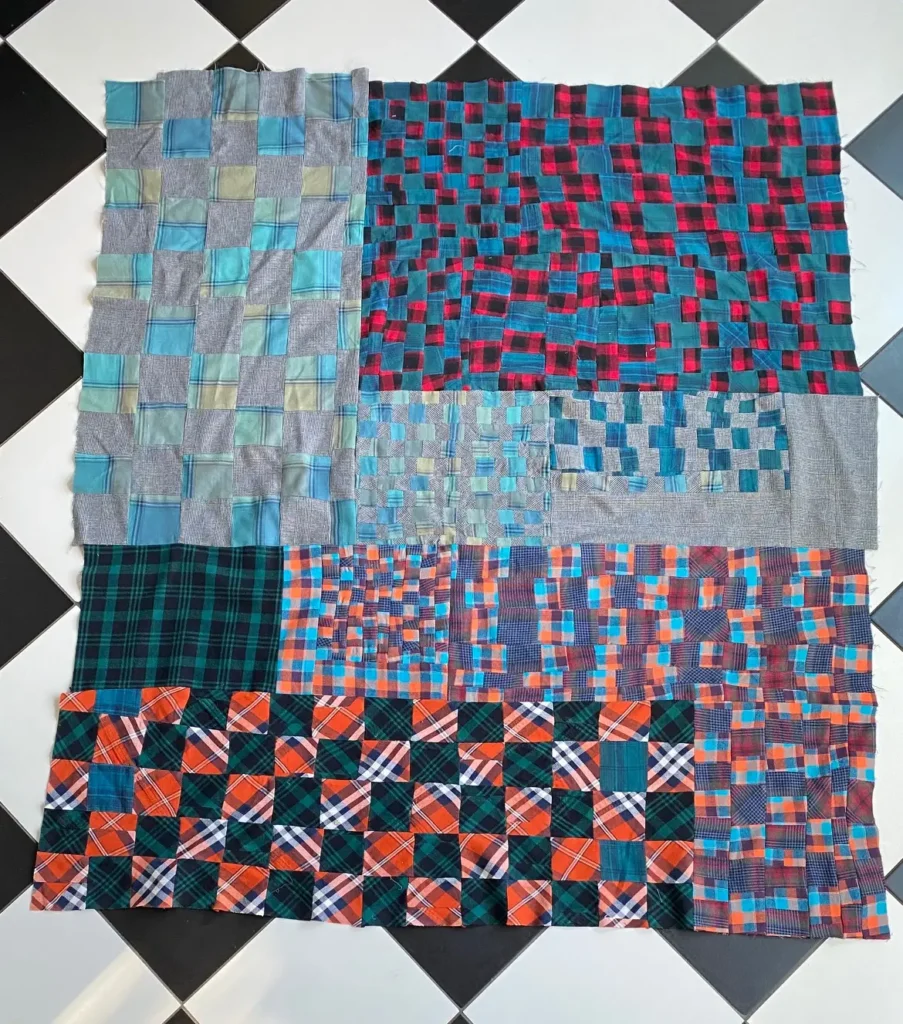
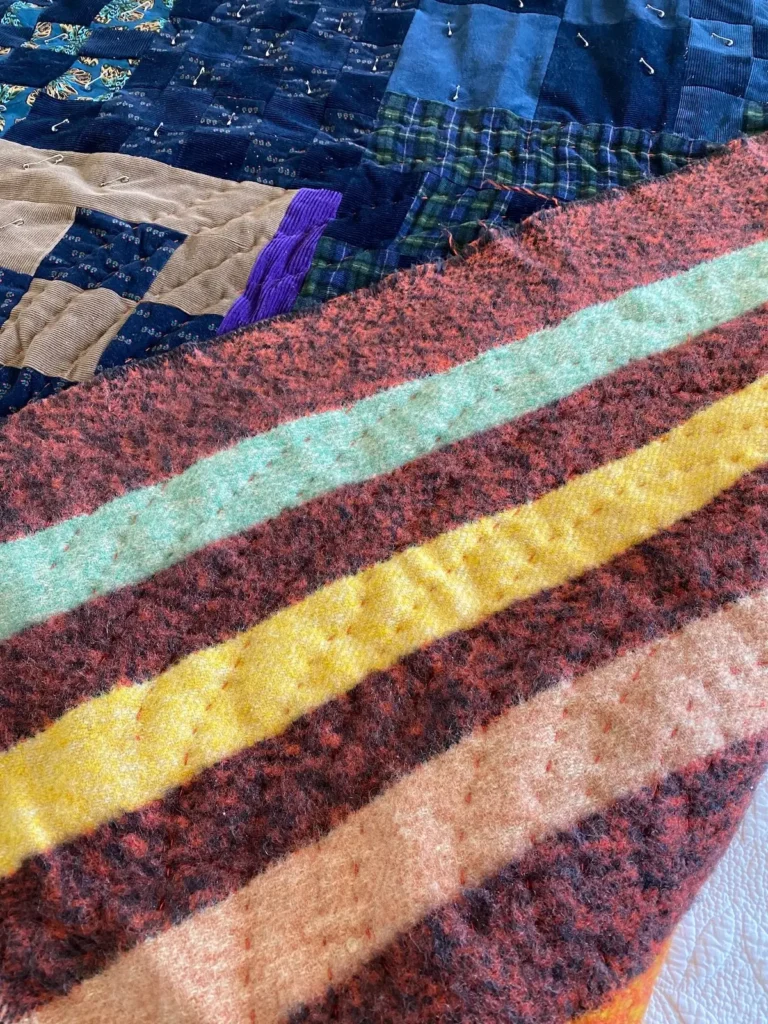
This is what happened with the backside of CheckCheck: the first idea was an experimental bust, and the attachment to that idea was high. So it was put away and slowly returned to it in stages, first to undo the hand stitches, then to gather new materials, then to create a new backside over the course of a few sessions separated by a few years, and then finally to quilt and finish.
All that time was vital to seeing another way forward, and then to finding a solution to a balance problem that occurred during the first sewing session. If I’d forced the solution when my frustration was high, the result would not have been as successful. So time is really helpful. Or I’ll pull fabrics and try out options doggedly until I find a solution, wrecking my studio in the process. Or I’ll consult a few trusted quilt friends. Or some combination of all three.
How do you know when a piece is finished?
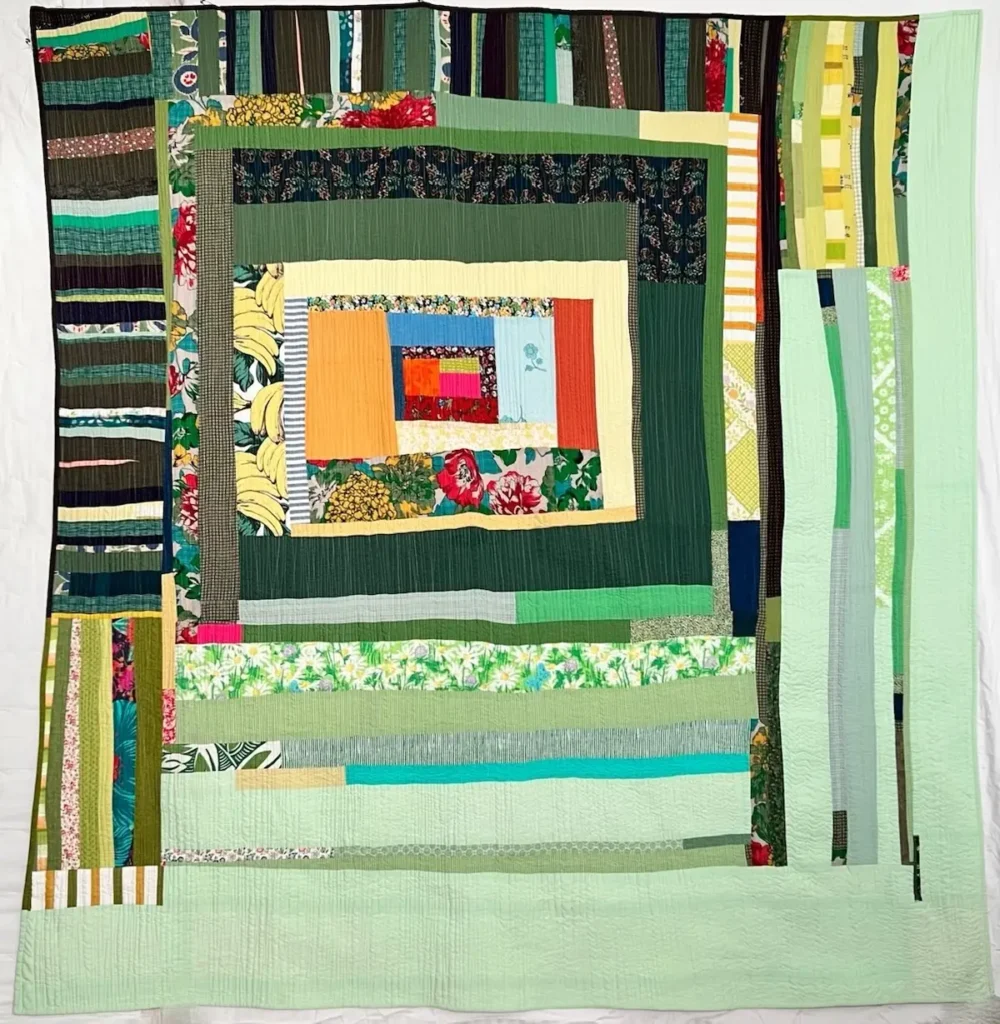
I’ve run out of energy. It clicks and feels complete. The piece is balanced, pleasing, says all I want it to say, or I’ve run out of space or materials. Some combo of all these things informs me a piece is done.
What do you hope people feel when they see your work?
I hope people feel curious when they see my work. I hope people who’ve received gift quilts feel loved. I hope bodies under my quilts feel comforted.
What are some of the joys of living a creative life?
The community!
I feel so privileged to be in community with other creatives, artisans, and quilt makers. The energy in the spaces this community gathers in is so special, so inspiring, and so good for my soul.
What advice would you give someone who wants to start sharing their work publicly?
Be as brave and honest as you can. Lean into you. Only share or write what feels comfortable, but don’t be afraid to share the work, the good, and the journey to good. And remember, it’s all subjective; not everyone will get it. Oh well!
Where can people see your work?
It’s all on Instagram,@odelllela
Someday I’ll have a website! I’ve also been published in Curated Quilts, issue 16, Stripes and in Quilt Folk, Oklahoma, with my husband, Michael O’Dell of Legit Kits. So far in 2026, I’ll have a quilt hanging in the annual Oklahoma Fiber Artists show, Fiberworks, held in Tulsa at Gallery 108 starting in early June.
Rapid-fire fun:
Sketchbook or digital notes? Sometimes sketchbook, never digital, mostly design wall
Favorite color right now? Orange
A place that sparks creativity? My scrap bins
One word that describes your creative life? Nourishing
Interview published May, 2026
Explore more art quilts on Create Whimsy.