
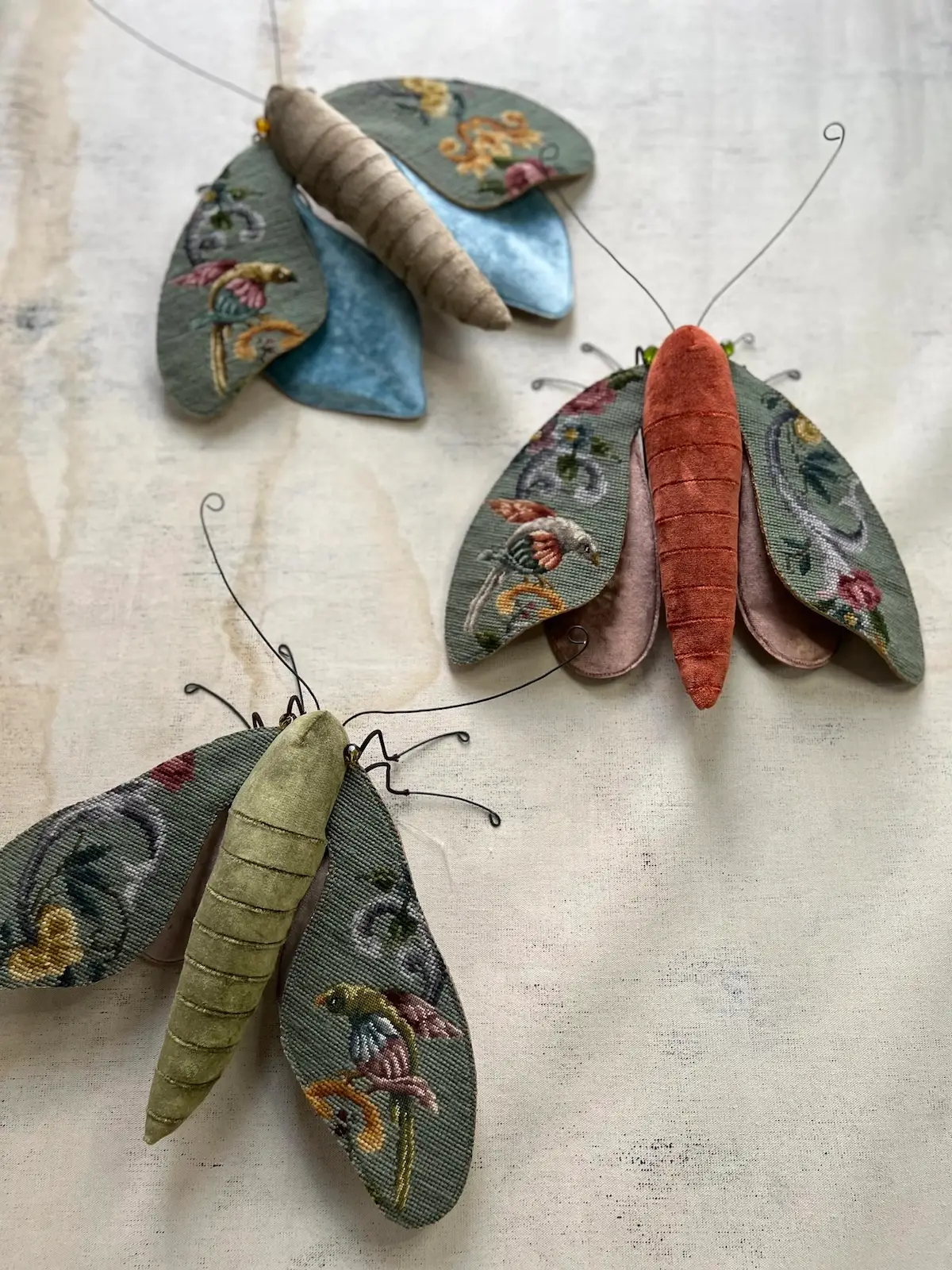
Step inside the richly layered world of Larysa Bernhardt, where vintage textiles, memory, and intuition intertwine into deeply personal storytelling. From Ukrainian summers at her grandmother’s house to a porch studio filled with scraps, moth talismans, and garden views, Larysa shares how fabric is both sanctuary and language.
You’ve been sewing for as long as you can remember. What do you think first drew you to textiles?
Every early summer, my parents would send me to my grandma’s – deep in Ukranian countryside, a small village nestled between old chalky mountains. It was my happiest time – I hated school, I still associate it with winter, grayness, and cold mornings before sunlight.
Grandma’s place was the opposite of that – sunlit riot of colors, ripening apples – we had very early apple varieties that started producing mid June, roosters counting hours, cats on thatched roofs. It was as far from city life as a child can reasonably get.
And there were textiles – everywhere. Everything was covered in layers and layers – beds, walls, floors. Embroideries, lace, tapestries, quilts of every pattern – no one bothered with how it all goes together, so obviously it was perfect.
As an Amazon Associate I earn from qualifying purchases. Read more about our affiliate linking policy.
It felt that if you lay still long enough, all the rugs and runners and blankets would just quietly grow over you – not in a threatening but protecting, cocooning way. Since then, sewing and embroidering was always the way out of darkness for me.
What made you step away from fashion and toward textile art?
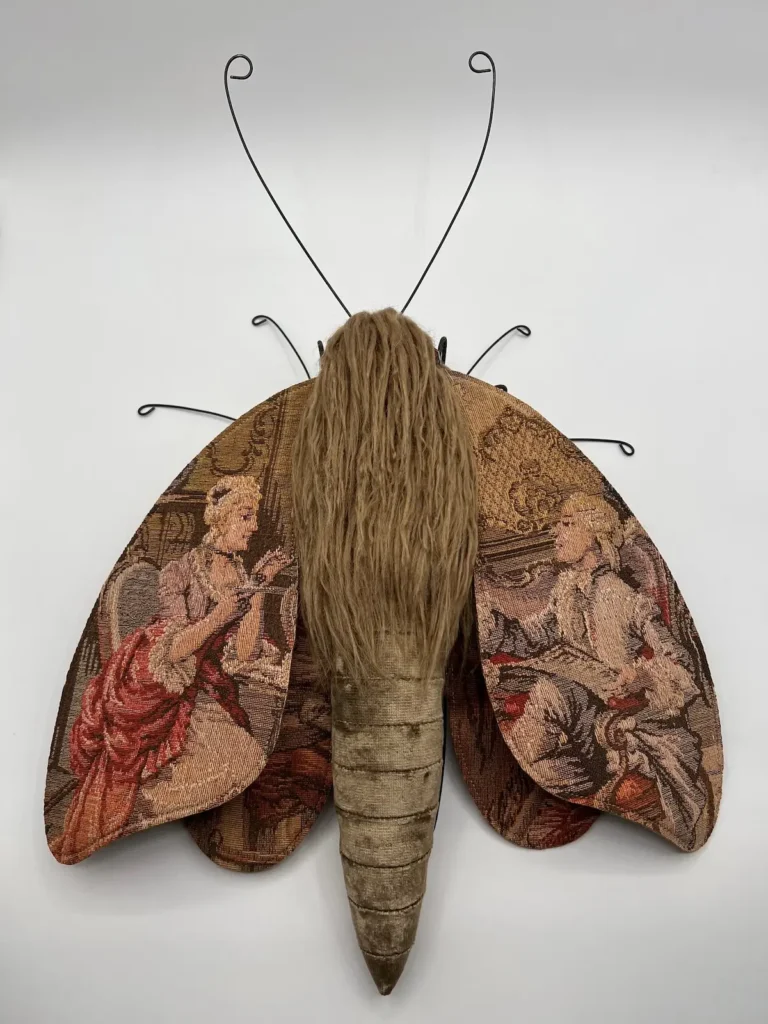
I was disappointed by the disposable nature of the fashion industry. I wanted things I create to last a lifetime, not a season.
Stepping into grandma’s house after a long winter in a city was like seeing dear old friends – same tapestries, same icons in corners of the room with lace adorning time-darkened faces of saints, same blankets, some of them reworked or patched. I wanted this feeling of being surrounded by familiar things.
When I work on a piece i always imagine how it will age, how it would look a hundred, two hundred years from the time it was made. How colors fade or mellow, how beads would lose luster and gain mystery. It dictates all of my choices.
How do you choose the vintage textiles you work with? What draws you to one piece over another?
Love. I am not excited about being such a cliche, but I must fall in love with every piece I bring into my studio.
I stare at things for a long time. I touch them and roll my eyes inside my head to get a better feel for it. I smell it. I am really quite embarrassing to be with in public.
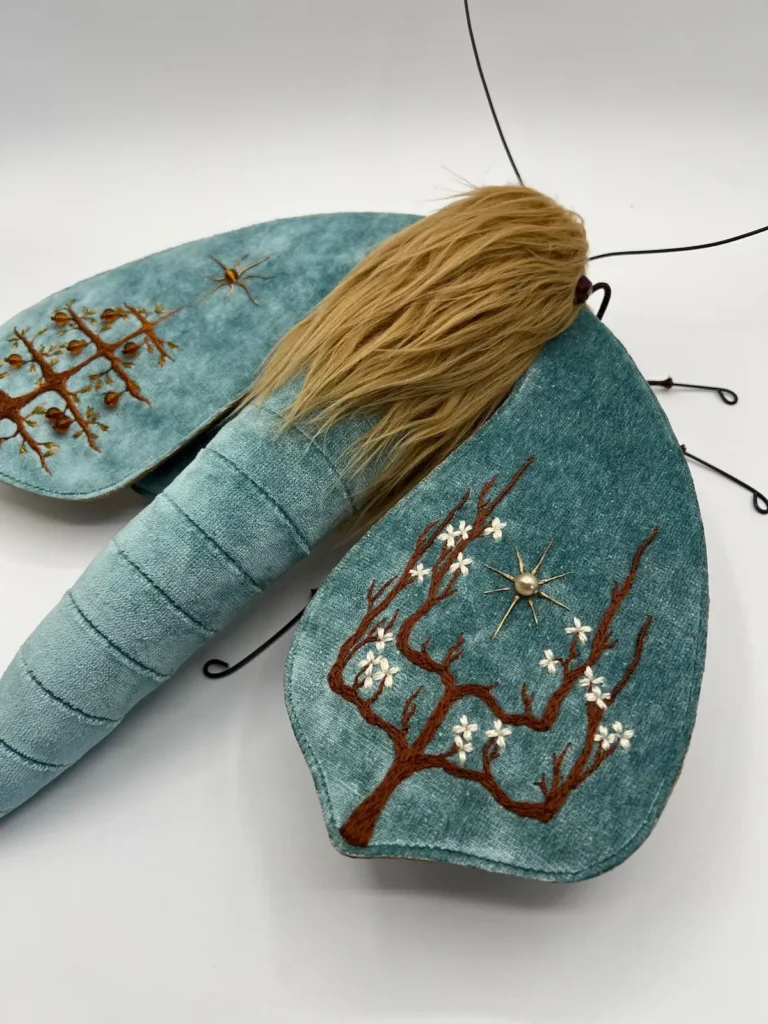
Moths are a rich symbol in your art. What is it about them that captivates you?
I love all living things, even the ones that eat my flowers leaving petals peppered with holes.
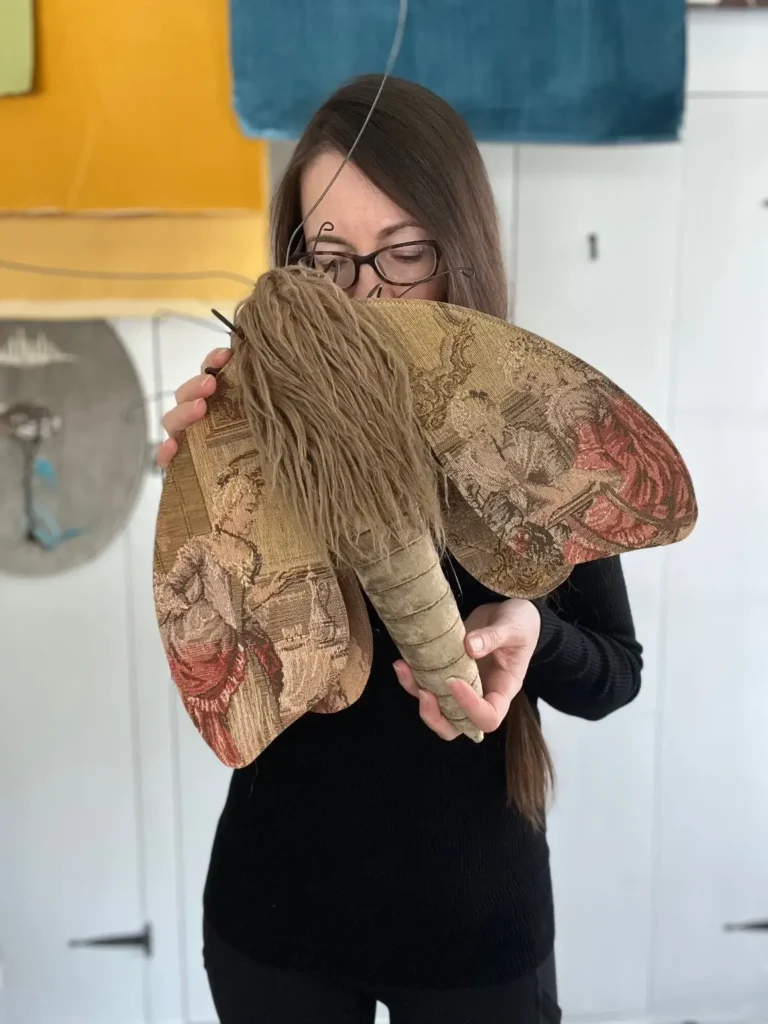
Cloth moths are excluded from this protective “love umbrella”. It’s an archenemy of any textile collector – and I have many, many things cloth moths find highly delectable.
After another panic attack when I took everything out of the studio to shake and examine for moth damage under bright sunlight – after moths been on my mind for days – I sat down at my workplace and thought – what should I make – and the answer was obvious.
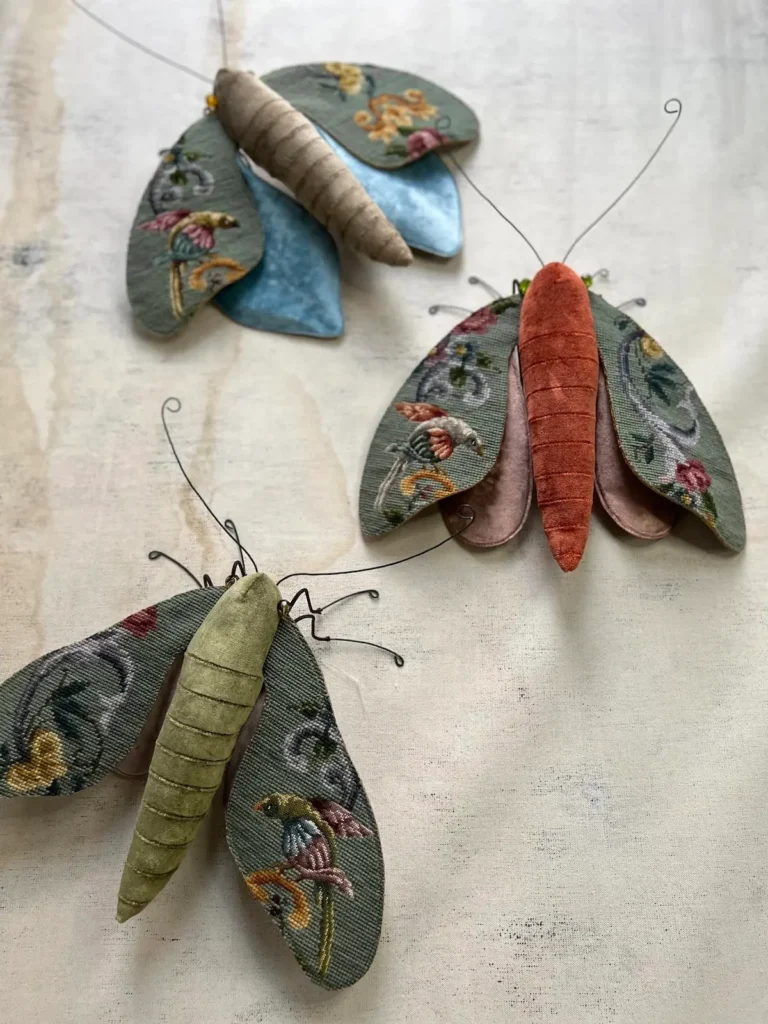
And after making one, I couldn’t stop. Because you know – there is never just one cloth moth. If you see one, you know there are many others lurking somewhere.
Fun fact – I haven’t had to fight cloth moths since then. My first ever made moth is still hanging on the wall above my work table – my talisman and my protector. It was also a fun play of words and meaning, because it is literally a cloth moth, a moth made out of cloth.
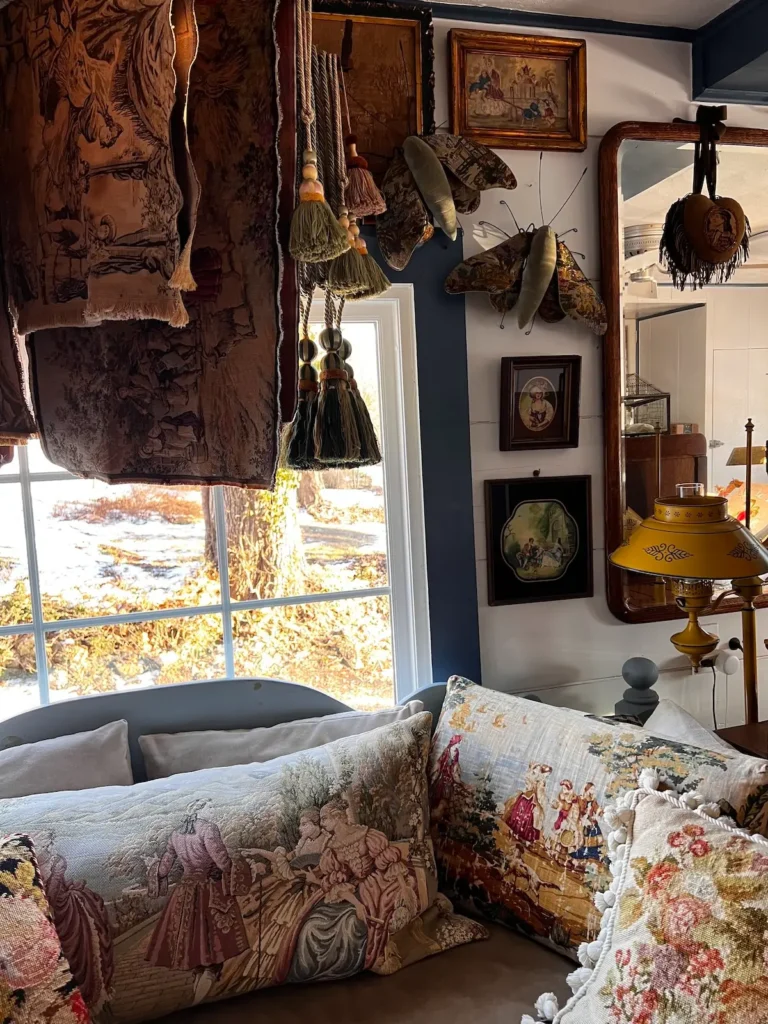
Describe your creative space.
My studio is just a covered porch that was added to a main house in late 1940s.
It is not big, and its size restricts me from becoming too disorganized. It has a daybed and a fireplace, and windows on all sides overlooking the gardens. Walls are hung with embroideries and tapestries, old prototypes of my textile sculptures and gifts from my very talented friends, a daybed piled with needlepointed pillows and handmade throw blankets.
Every drawer is chock-full of textile remnants (I save all scraps), and unfinished works are resting under the glass in the antique department store display case. My dog is at my feet, and my very demanding cockatiel is sleeping or screaming, it depends.
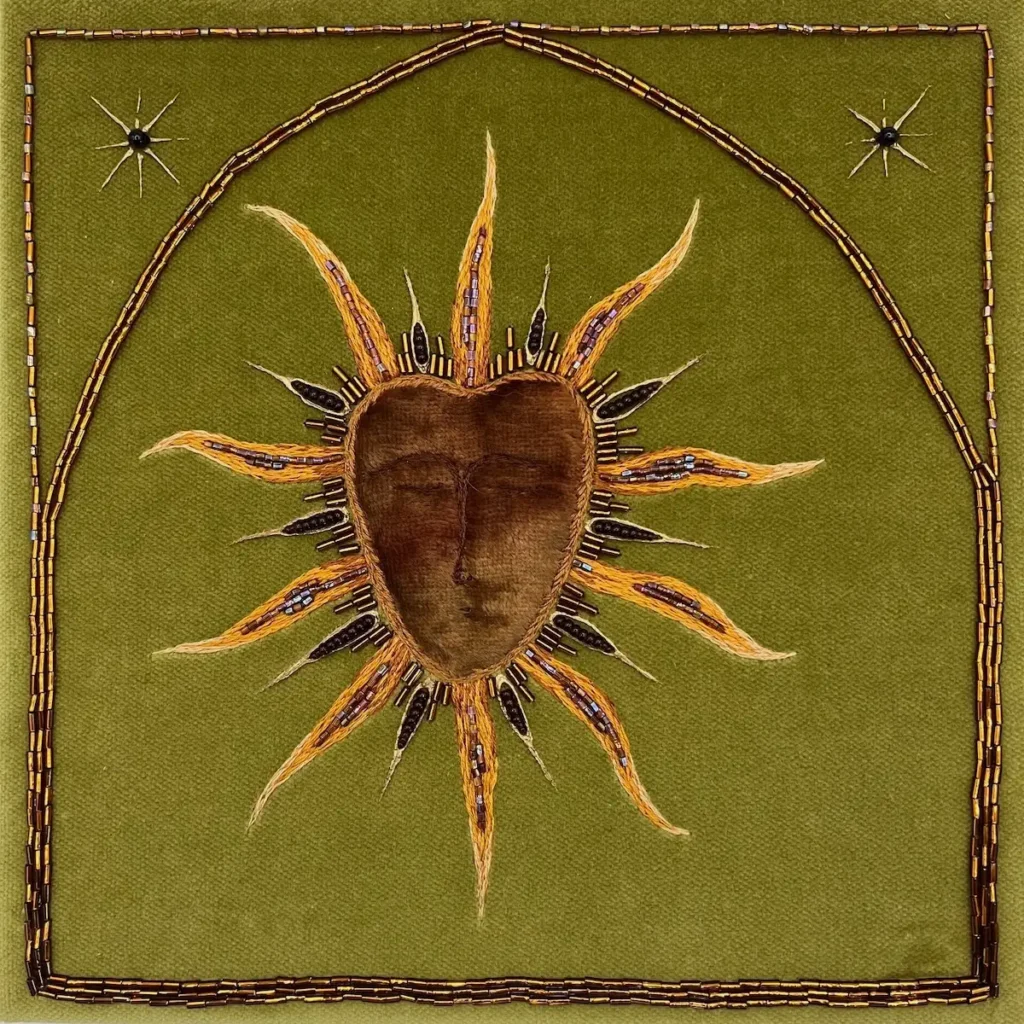
Walk us through a typical day in your studio. What feels sacred or special about that space?
It’s important to know what part of your day you’re at your best and spend that part in a studio, working.
With my schedule revolving around taking care of my special needs daughter, I spend my morning taking care of her needs and getting her ready for the day ahead.
After that i head to my studio and work from 11 in the morning to about 6 in the afternoon. I take breaks – my garden is just outside my door – and I might go work in a garden for an hour or so to clear my head, or pick some tomatoes when in season and pop into the kitchen to make fresh garden pasta for lunch.
Then I am back in a studio for another few hours. This is important to me, I function best when one activity seamlessly flows into the other, when the whole day is a creative process from embroidering to gardening to cooking – all of it part of the whole, none are separated events.
Of course, there is always laundry, but I tend to wait till the pile is so high I can’t see the washing machine anymore.
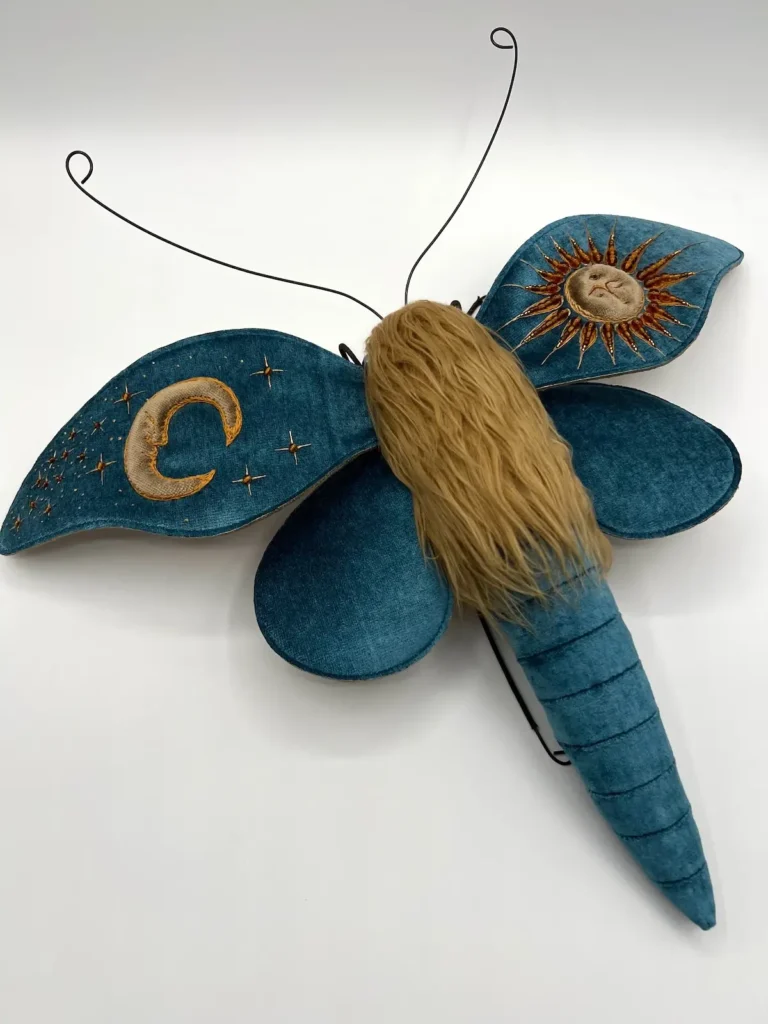
How do you work through a moment when a piece isn’t coming together?
I made an interesting observation years ago. When I am through about third of the work, all the sudden it starts looking strange, silly, with no meaning to it. It happens every time, with every piece.
It’s important to power through it, although maybe not right away. I physically remove myself from the studio.
I go do something else, read a book. Work in the garden. Cook dinner. Deal with a huge pile of laundry in the basement. All the time I remind myself – it happened before, and I’ve got through it, chances are it’ll work out this time too.
When I walk into the studio the next morning, I usually have a solution.
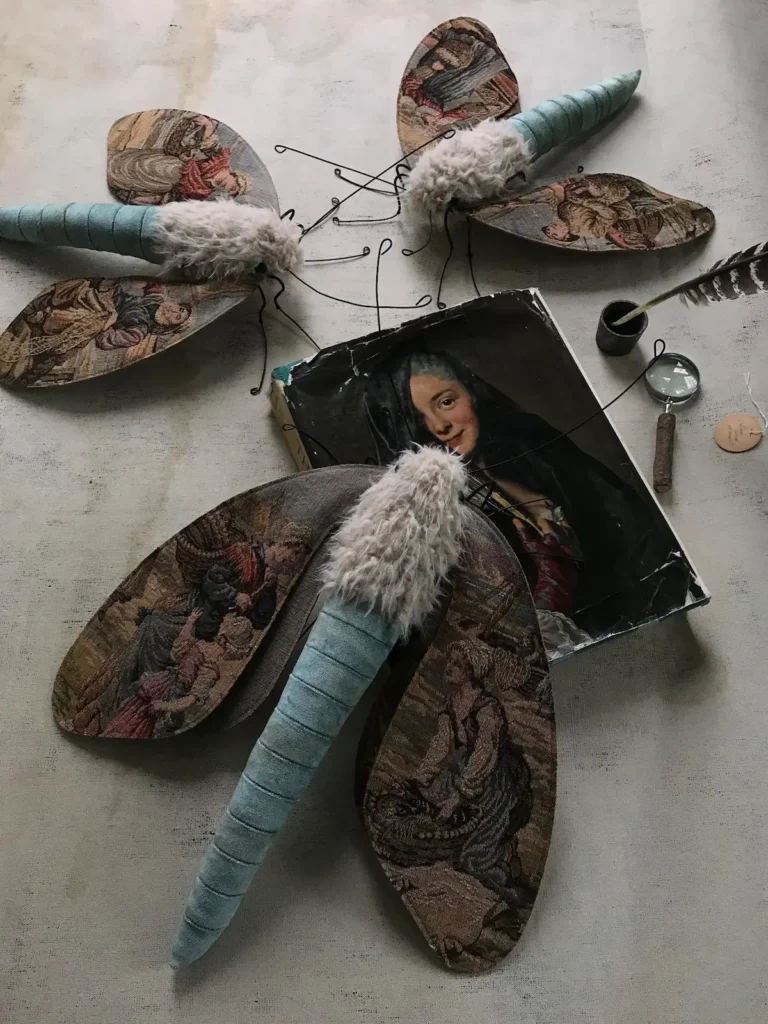
A lot of your pieces feel alive. How much of your process feels intuitive versus intentional?
I start with intentions and sketches, but a few hours into work, it all goes into a trash bin, and I just let things develop the way they please.
It is like my ideas age faster than I can get them on fabric – in an hour, that “great idea” is too old and I’ve got newer, better ones.
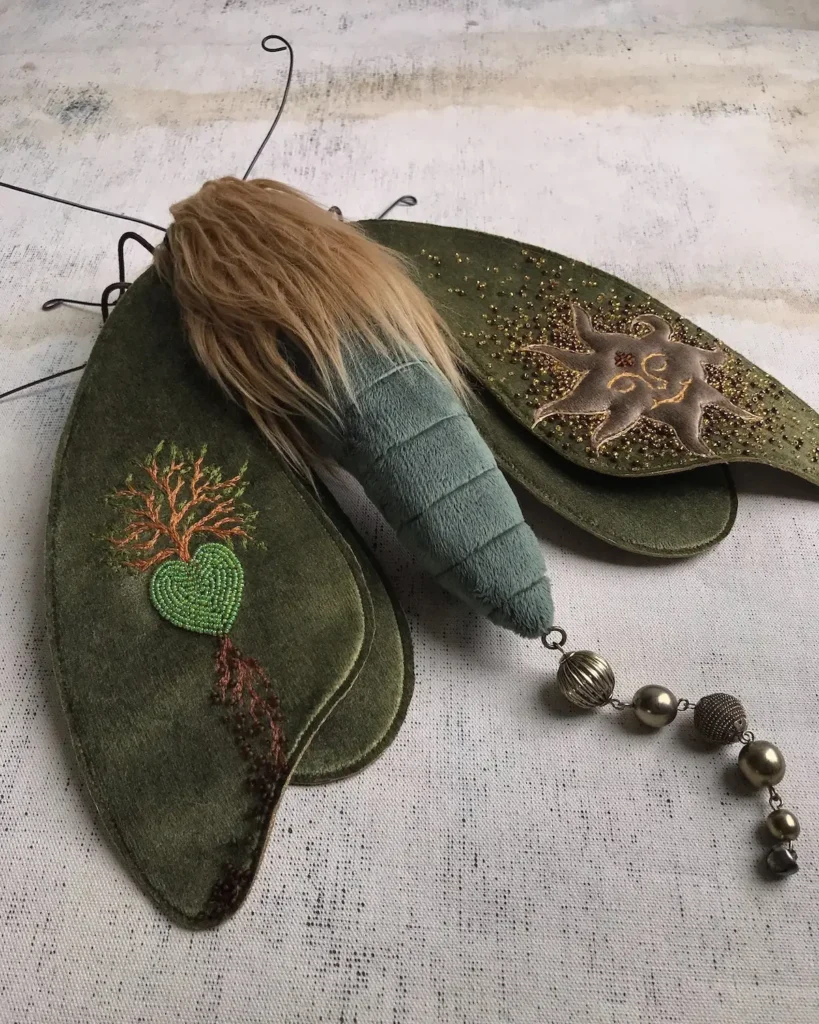
How do you know when a piece is finished?
It’s a feeling.
How has telling stories with textiles shaped your view of art and life?
It’s intertwined. I can’t separate what part of me is an artist and what is everything else; it’s symbiosis. Everything I do – sewing, cooking, writing, gardening – tells the same story, only in different mediums.
Has your sense of identity as an artist shifted over the years?
Oh yes! Backwards. I am more of a child now.
Where can people see your work?
My website is www.larysabernhardt.com, and my Instagram handle @by_larysa_bernhardt. My facebook is Larysa Bernhardt.
I work with several domestic galleries (I reside in the States) – Haven Gallery in Newport, NY, Arch Enemy Arts in Philadelphia, Modern Eden in San Francisco, Nanny Goat Gallery in Petaluma, CA. Internationally, I work with Beinart Gallery in Melbourne, Australia, and Quirky Fox, Hawera, New Zealand. I also have an online shop on my website.
Rapid-Fire Fun:
- Favorite part of the day? Golden hour just before sunset.
- One word that describes how making art makes you feel. Almighty.
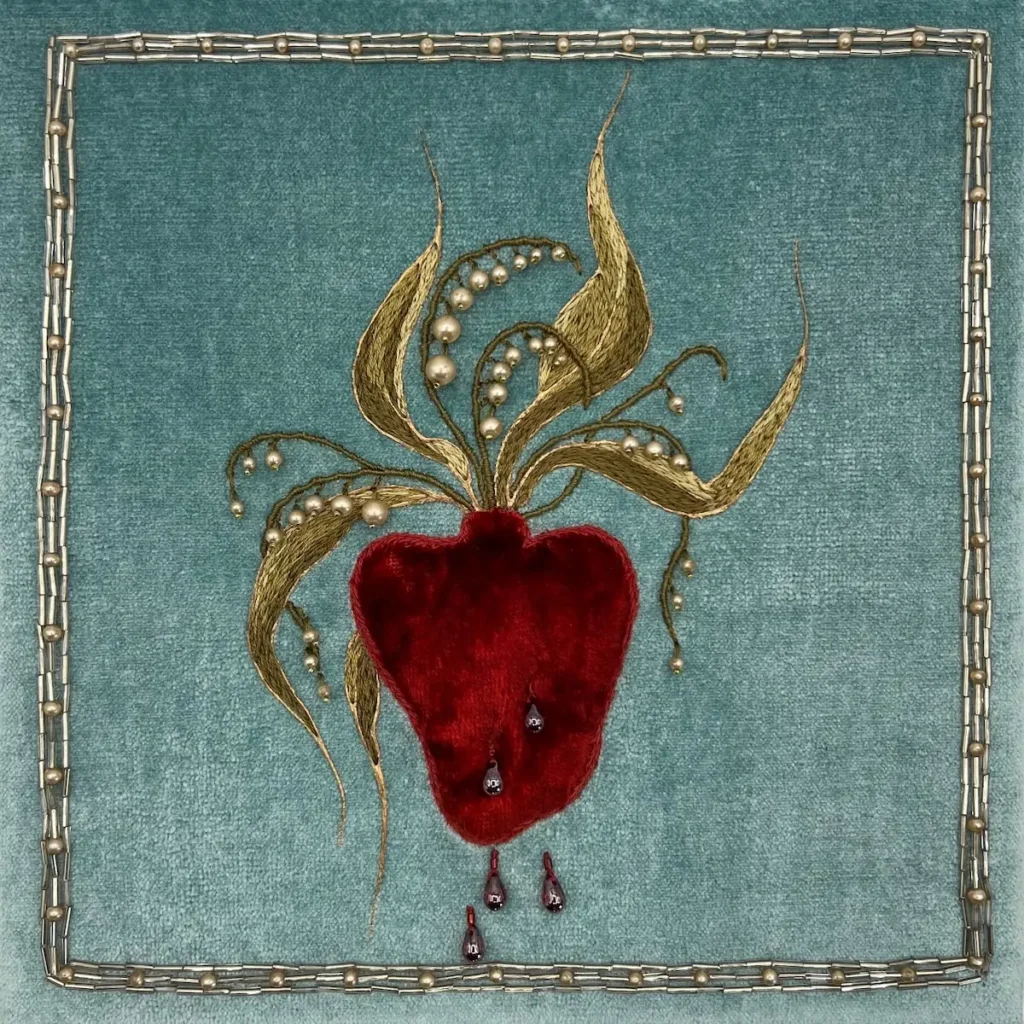
- A color or texture you’re currently obsessed with? I always loved velvet with its rich texture and history. It’s challenging to work with, and you can’t pick out your stitches if you made a mistake, but it is worth the extra effort. Colorwise – I love all colors except red. Red gives me hibbie jibbies – I am still traumatized by my soviet upbringing.
- What do you hope someone feels when they see one of your pieces? “We can be friends and live side by side for the rest of our lives.”
Interview posted February 2026
Browse through more inspiring interviews on Create Whimsy.