
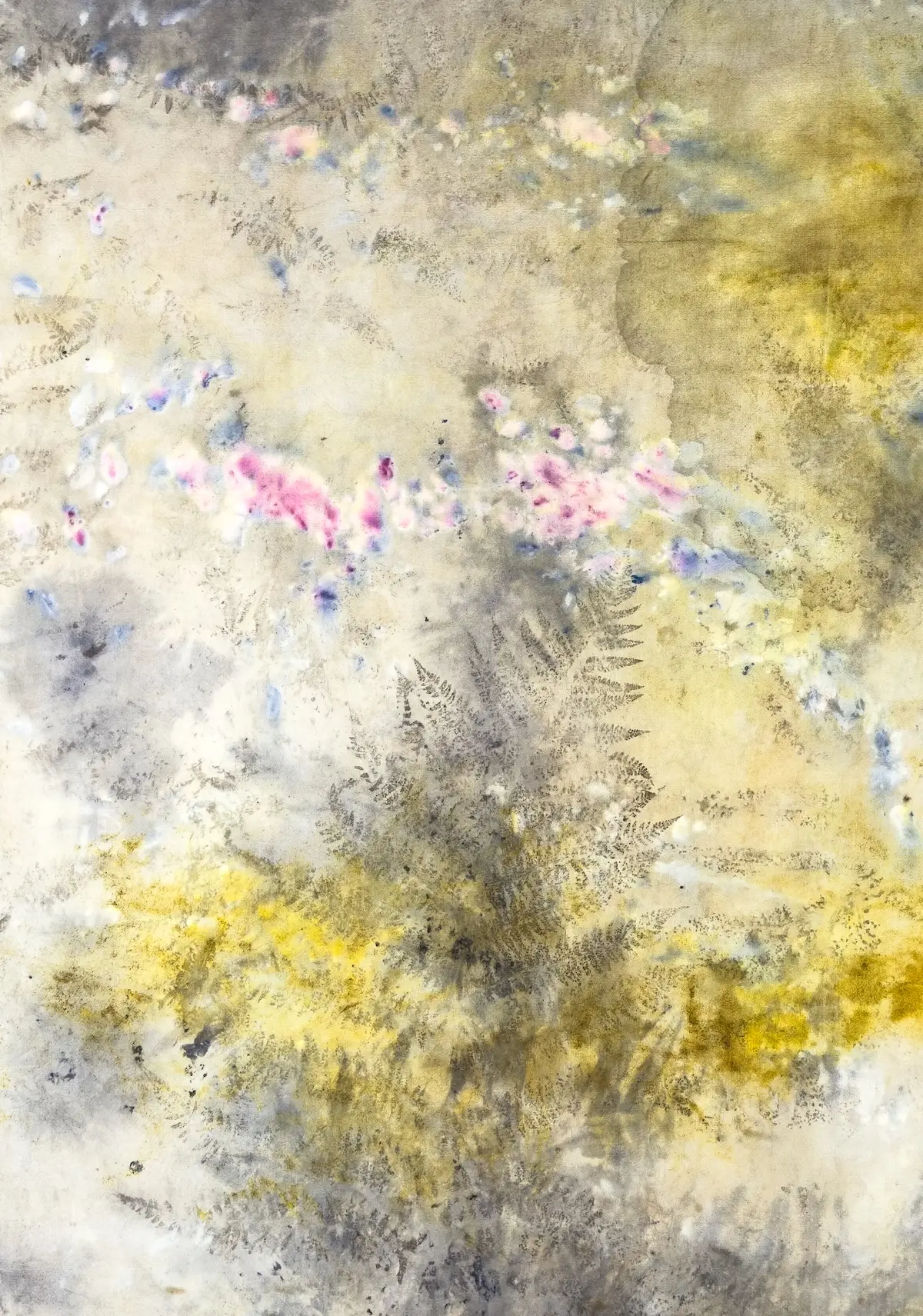
Julie LaForêt finds beauty in the quiet world of the forest. Using leaves, bark, seeds, plants, and natural pigments, she creates art that captures the changing seasons and reminds us to slow down, look closely, and care for nature.
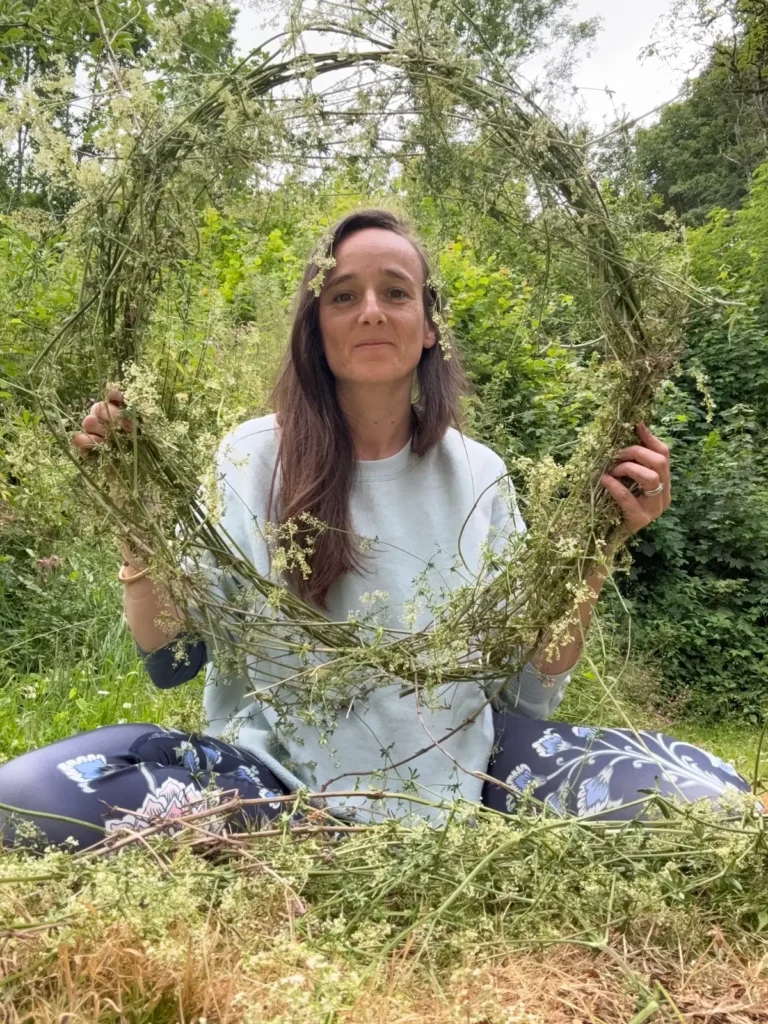
Let’s start at the beginning. What did you love to make or create when you were a child?
I liked to paint and to create Japanese landscapes. Every summer, I would draw and paint because I had time, I have such nice memories of it!
You grew up in the south of France, surrounded by the Garrigue, with its wild spaces and strong colors. What do you remember most about that landscape?
I remember that it’s a sunny landscape, that the weather is nice, and that sunsets are so beautiful. I lived close to Garrigue, it’s been influencing my life here because it was like living very close to nature.
As an Amazon Associate I earn from qualifying purchases. Read more about our affiliate linking policy.
Your path to becoming an artist was not a straight line. You had experiences in business before moving to the forest and developing your art practice. Was there a moment when you knew you needed to make a change?
To be honest, I did not know it, it’s like I had not so many other choices. Indeed, I had some digestive issues (not severe ones but uncomfortable), and I saw that when I was creating, I was feeling better.
It took me three months to understand that maybe I could explore the artistic way. When I chose to follow it, the health issues disappeared.
Do you remember the first piece you made that felt like “this is my art”?
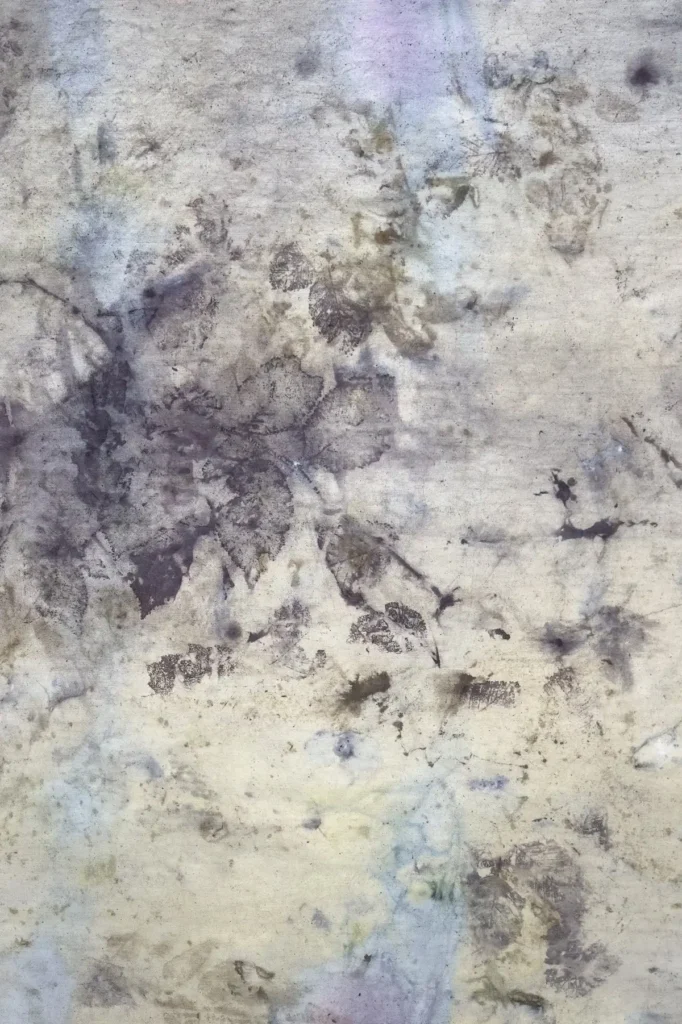
Yes, it’s like it was yesterday! I had printed a maple leaf and after I chose to add onion dyeing and this was it, so perfect!
What does nature teach you that you could not learn anywhere else?
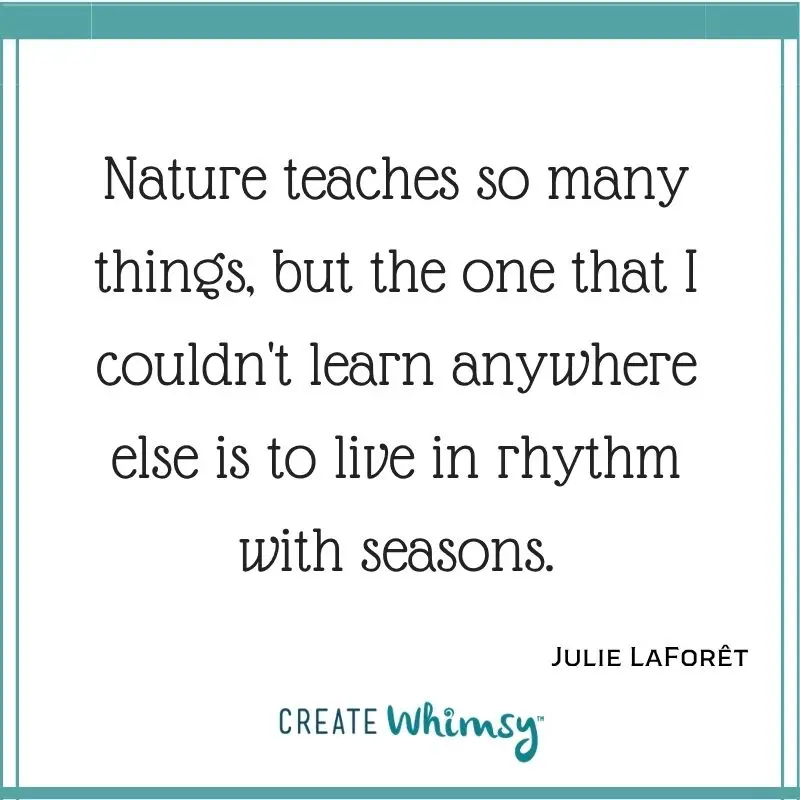
Nature teaches so many things, but the one that I couldn’t learn anywhere else is to live in rhythm with the seasons. It’s so important, and in our lives, we are really disconnected from that simple pace.
Do you ever go into the forest with a plan, or do you prefer to see what the forest offers you that day?
It depends. When I know that a specific vegetation is there, I go out with the will to harvest it.
Sometimes it’s to enjoy the walk and to be surprised. For example, today I was out to catch blackthorn fruits, and I also harvested elderberries, which was not planned at all.
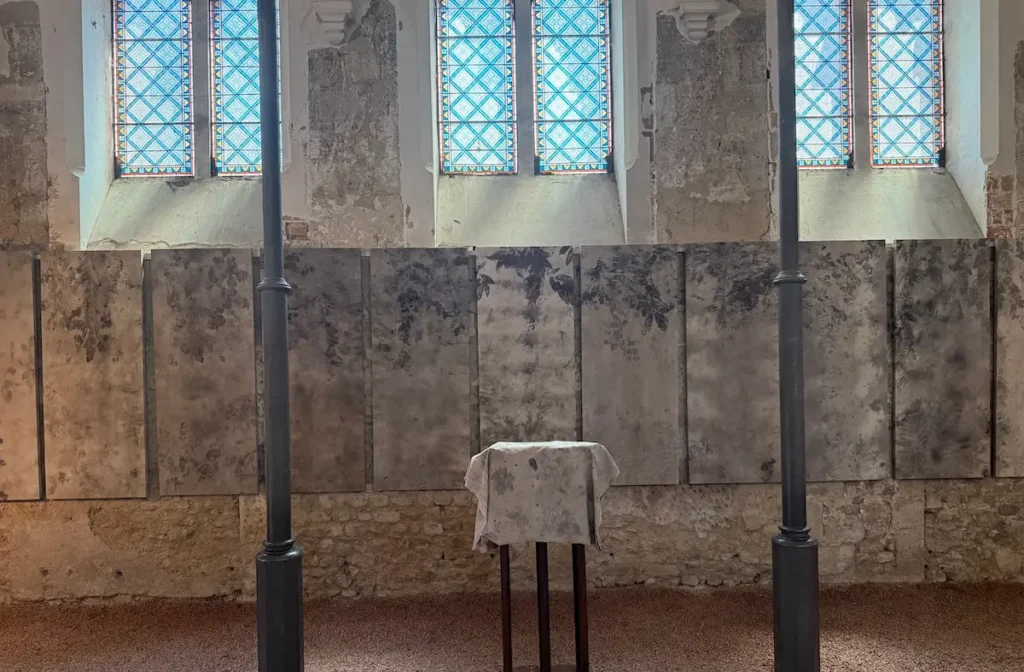
Your work has a strong Japanese influence, including your use of Tataki Zomé. What first drew you to Japanese art and ways of working with natural materials?
I think that Japanese inspiration has been here for so long.
My mum had a children’s book with wonderful illustrations of Asian landscapes. I think it was the beginning.
Now, I could say that I like the culture, the way of living by taking care of nature, by having a slow life. It’s not all the Japanese people, of course, but it’s in their culture. What’s more, I knew I wanted to work with what’s existing.
I did not want to create something by buying things or stuff with chemicals or dangerous products or participating in the consuming mind. I wanted to reuse things. That’s why I chose old fabrics that today are no longer interesting to people and give them another life.
You have written about slowing down and noticing the small changes in the seasons. How has slowing down changed the way you see and make?
It’s been so important! Nature teaches me that.
To be present, to see, to observe, and to respect those rhythms is the base of my life and art. Before, I was so impatient; I wanted to do things fast, to do many things! But living here, I realized that if I took more time, everything would change and at the end, it’s better.
What is something in nature that still surprises you?
Her own rhythm.
It’s wonderful to see how each year has the same season, but it’s always different. There are no 2 similar summers. This year it’s so hot, nature suffers, and last year it was softer.
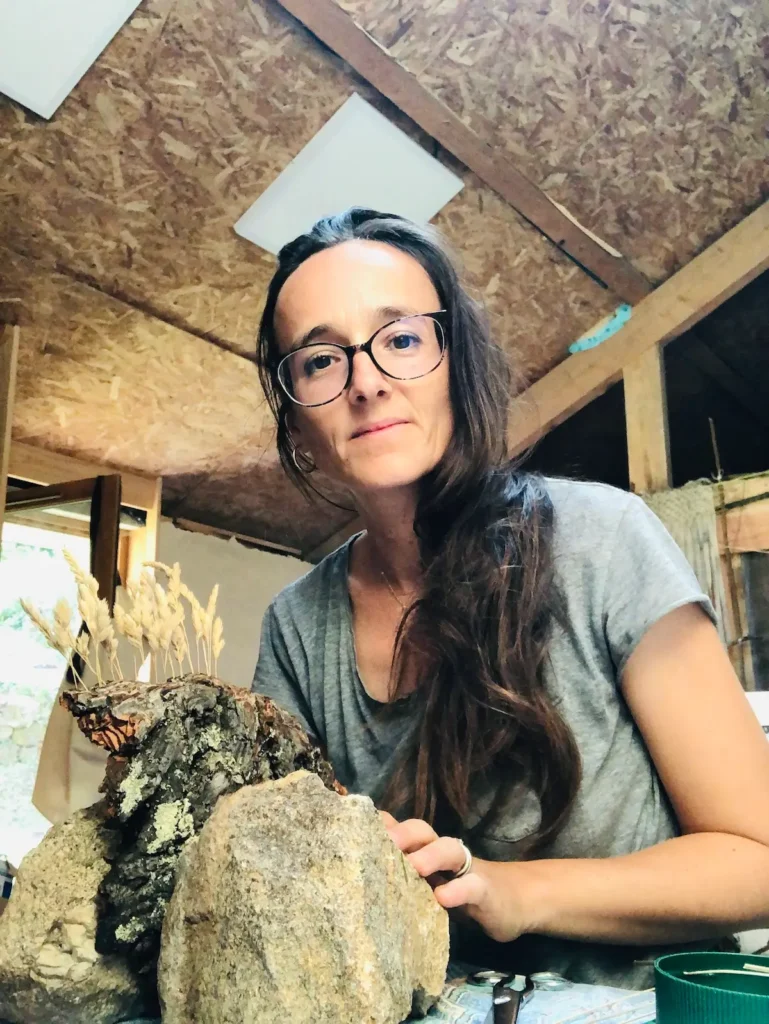
Tell us about your studio in the forest. What is it like to walk into your workspace on an ordinary day?
I am not in my studio every day; it’s more about periods when the weather is cool. When I go into my studio, it’s like time out of time. I open the door, put the light on, and I put on classical music. Take time to see the place.
After, I go outside to harvest material or to start creating. I do art most of the time outside, in front of my studio. I put fabrics on the ground, the vegetal on it, and I make it cook inside. I make so many back and forth between outside and inside. Sometimes I can spend two or three hours inside, working on specific artwork, but it’s more scarce.
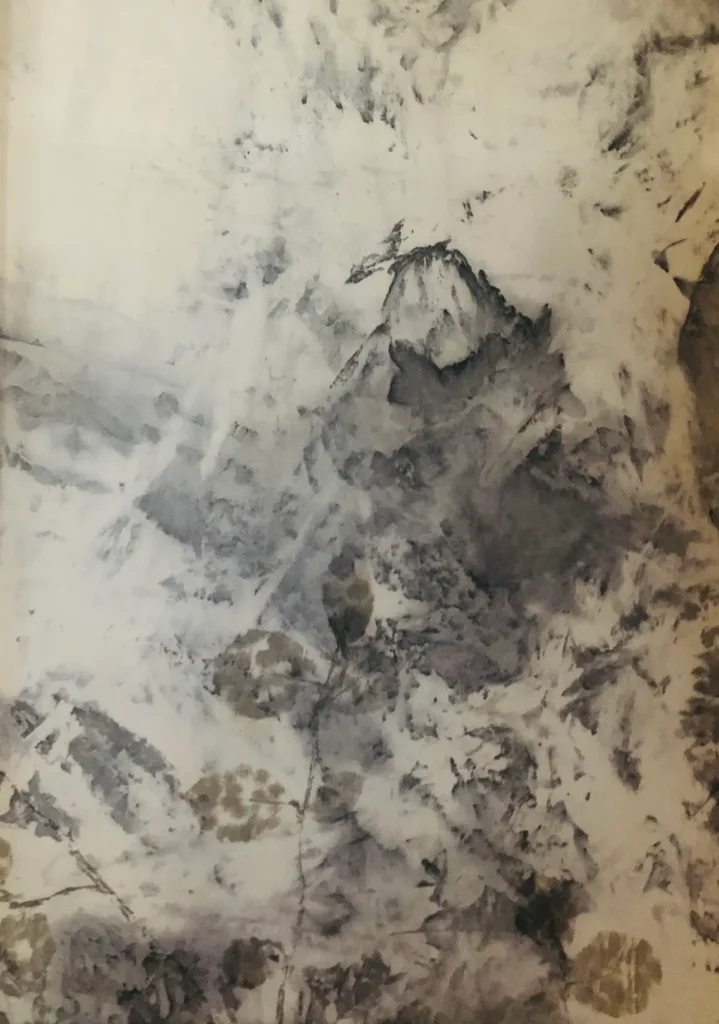
You work with plants, bark, minerals, seeds, dried vegetation, and natural pigments. How do you decide which material belongs in a particular artwork?
It’s the material that guides me. Sometimes it’s obvious, sometimes I have to wait long times to know how to put them in a particular artwork.
Do you have a system for saving and storing your materials, or has your studio become its own little collection of forest treasures?
I do not have a system because my studio is too small so it’s more like a collection. But when I get more space, I would like to put up a system. But to be honest, now I like this collection, and my studio is like a cocoon, a place that takes care of nature.
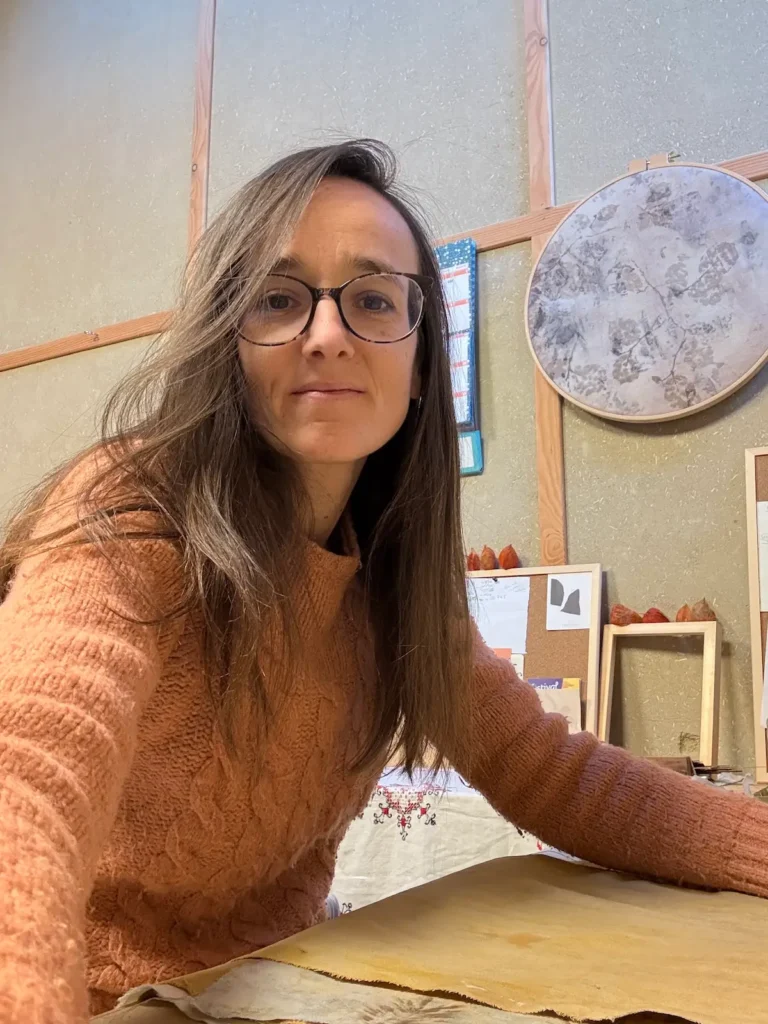
Where does an artwork usually begin for you: with an idea, a material, a place, a season or a feeling?
At the beginning, it starts with material. That’s what guides everything. But now, I am working with an exhibition space, and in that case, the place can guide the process. For instance, for the house of insects,
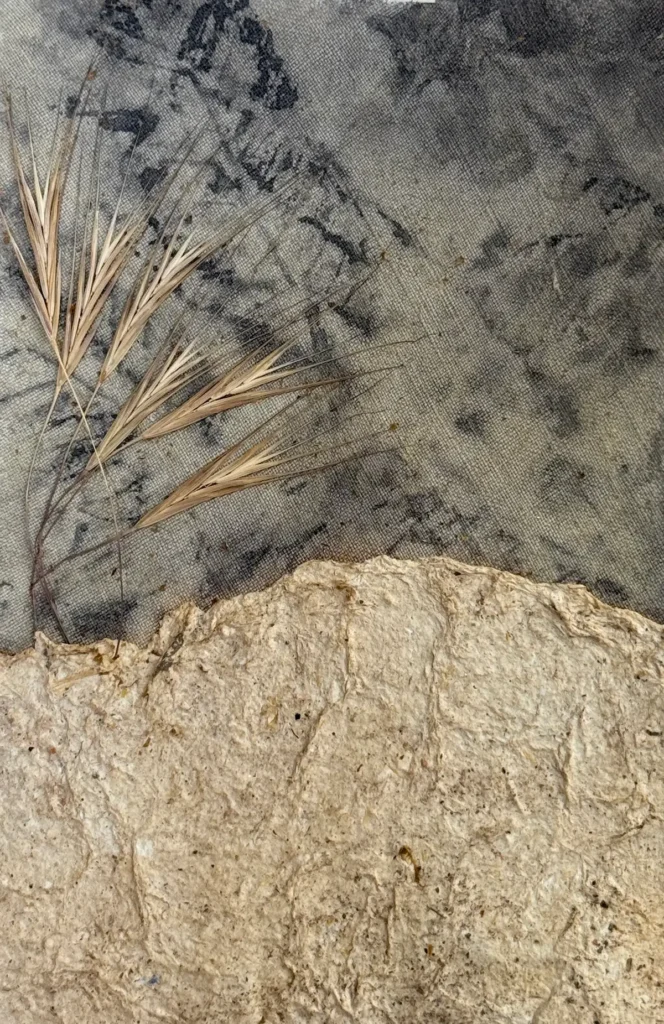
I was inspired by this beautiful place, and I felt that I wanted to work with seeds to show that they are so essential. It’s been a year when I want to work with seeds, I make some artworks already, but I wanted to go deeper.
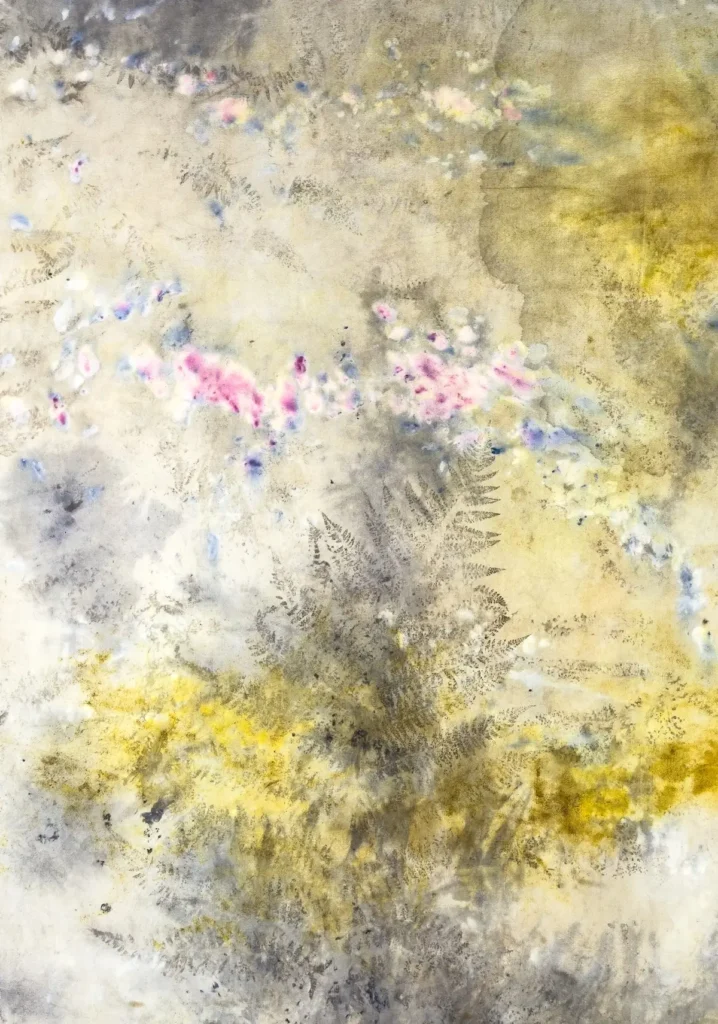
Your work has moved from botanical printing and natural dyeing into paper, sculpture, large-scale pieces and installations. What has pushed you to try new forms?
After more than two years loving working from botanical printing and natural dyeing, I was a bit frustrated. I was seeing many materials that I could not work with. So I followed the material and I went on doing paper, sculptures, etc.
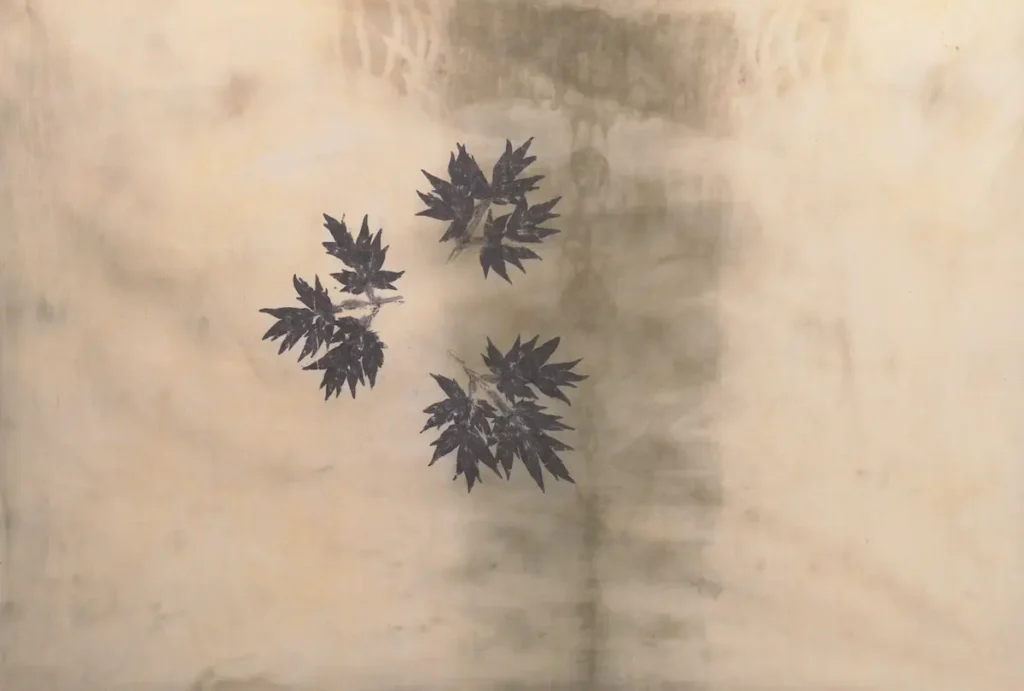
Your art can preserve something that is temporary, such as the mark of a tree or the beauty of a plant. Why is it important to you to leave a trace of something that will eventually change or disappear?
It’s so important because, as we can see, today is changing and won’t be the same in some years and has already been evolving for centuries. My art is a testimony of nature right now.
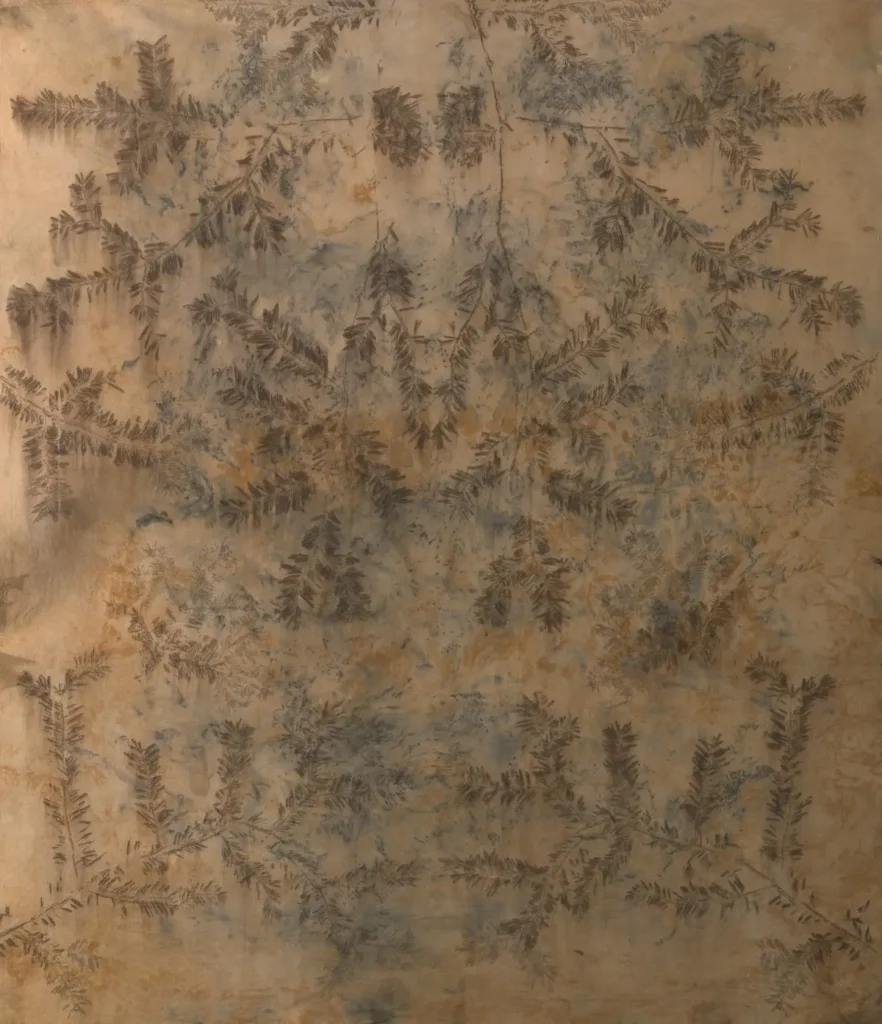
Your art, your life in the forest and your teaching all seem to be connected. Do you think of them as separate parts of your life, or as one practice?
Sure it’s one practice! I am in my home, I see outside trees, I breathe.
Those times are so important, being present to nature and its living. It’s the base and it’s nourishing when I am cooking wild vegetables or when I am in my studio doing art.
Even this summer, we are renovating a part of our place, and it gives me many ideas for my art. Everything is always connected.
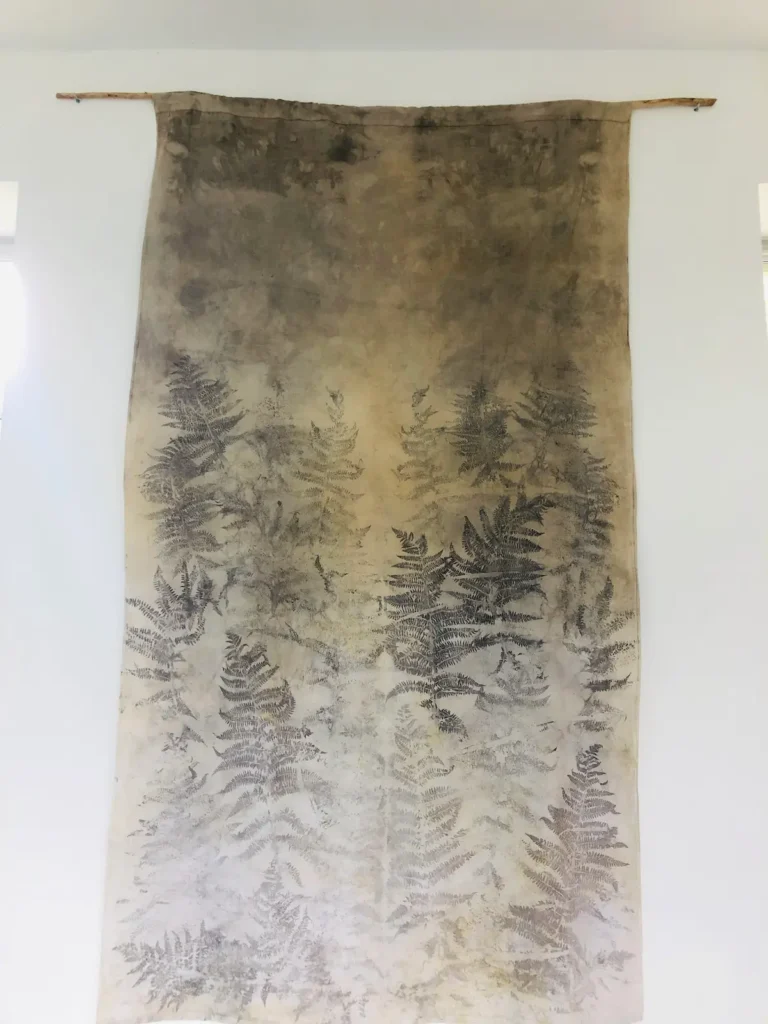
When you look at your work today, what do you think it is really trying to say about life?
It say that I have a natural and simple life connected to nature and that I try to take care of it.
Where can people see your work?
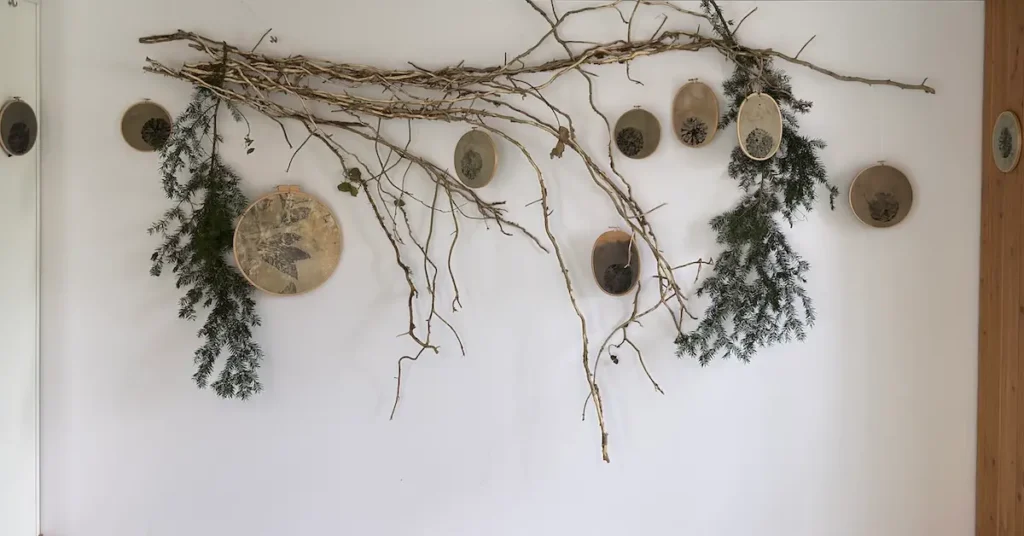
People can see my work in my studio in the forest in France. I have also exhibitions close to Paris (La Celle Saint Cloud in fall season and Insects house in winter) and I will be at the festival Salamandre in Switzerland in October.
Rapid-Fire Fun:
- Favorite season: spring
- Bark or stone? Barks!
- Something in your studio that makes you smile? Ganesh statue
- A plant you wish you could capture forever? Mugwort
- What would you tell the Julie who was just beginning her artistic journey? To keep going, have faith, love nature, and work!
Interview posted August 2026
Explore more ecoprinting inspiration on Create Whimsy.