
What happens when a geneticist with a lifelong connection to textiles brings together generations of family textile innovation, a love of mathematics, and an imagination nurtured by science fiction?
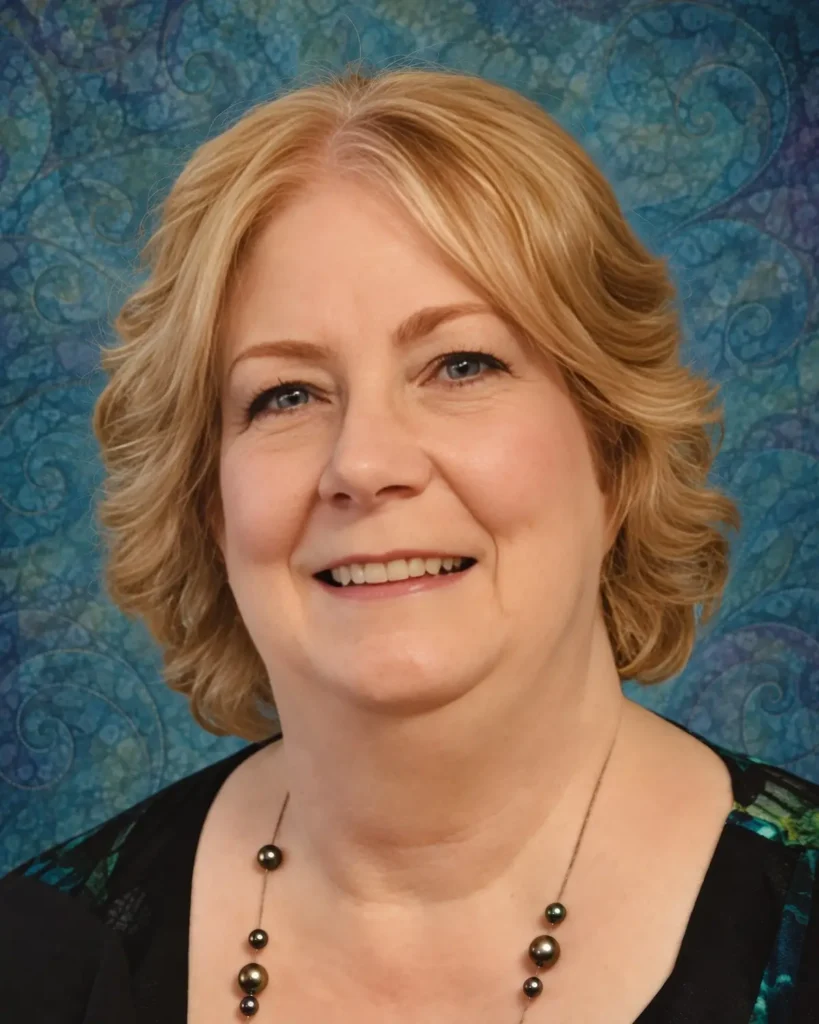
For Karen Kuranda, the result is a body of contemporary textile art exploring science, spirituality, healing, and the human experience. With a PhD in Genetics from Penn State University and a professional career heading up a lab group in biotechnology research, Karen brings scientific curiosity and mathematical precision to the creation of large-scale art quilts.
Combining original digital textile designs, custom fabric printing, machine embroidery, appliqué, and intricate quilting, she creates richly layered visual narratives that invite viewers to look beyond the surface and discover connections to their own experiences.
Textiles have been a part of your family for generations. How has that influenced your journey to become a textile artist?
Textiles have been part of my family for generations, and I have been surrounded by them my entire life.
As an Amazon Associate I earn from qualifying purchases. Read more about our affiliate linking policy.
My great-grandfather managed a woolen mill that produced fine wool fabrics for men’s suiting. My grandfather developed technologies for synthetic yarns, including Sayelle. My father, Roy DeVries, patented sublimation ink transfer technology, and my brother, Bob, is currently president of a digital textile printing plant that uses sublimation printing, direct to-fabric printing, and screenprinting technologies.
My great-grandmother and grandmother were also quilters, and my mother co-owned a graphic design business. Looking back, it seems almost inevitable that I would eventually find my own creative expression through textiles.
What fascinates me is that my artistic practice brings together so many different aspects of my family’s history: fabric, design, printing, technology, and quilting. Today, I combine digital design, custom textile printing, machine embroidery, appliqué, and computerized quilting to create large-scale art quilts.
I don’t see traditional quilting and contemporary technology as opposing approaches. To me, they are part of the same evolving textile tradition. In many ways, my art brings together generations of my family’s textile heritage with my own lifelong interests in science, mathematics, and creative exploration.
Have you always been involved in quilting and other textile arts?
Absolutely! Textiles have been a constant throughout my life. I have always enjoyed quilting, sewing, knitting, and just about every form of textile design I could explore. When my children were small, I sewed their clothes. I knitted, created quilts, and was always interested in learning another technique or finding a new way to work with fabric and thread.
One particularly lovely memory dates back about 25 years, when I helped my daughter’s Brownie troop create a quilt for a children’s charity. All the Brownie troops in the Boston area were invited to design and make quilts for donation. Each girl in our troop created her own fabric square, using permanent fabric markers to draw a completely original design. I then assembled their individual squares into a finished quilt.
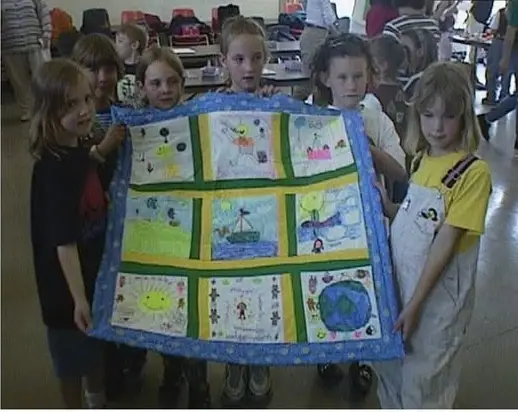
The project culminated in a wonderful gathering where hundreds of Brownies came together in a huge center to display their quilts, admire one another’s creations, and then donate them to the charity. I still have a photograph of our troop proudly holding their finished quilt. My daughter is the little girl on the far right, wearing overalls!
It was such a simple, joyful project, but it captured so much of what I love about quilting: individual creativity, working together, sharing skills, and making something beautiful that can bring comfort to someone else. Looking back, it is especially meaningful to see how textile art has connected the generations of my family, just as it did for my great-grandmother and grandmother before me.
Were you always interested in science and imaginative storytelling?
Absolutely! As a child, I devoured every science fiction book I could get my hands on. I was fascinated by the universe, the possibilities of scientific discovery, and the idea that there might be extraordinary worlds and experiences far beyond our own.
I also wrote constantly. I had piles of notebooks filled with fantastic stories about my travels and adventures across the galaxy. I created entire worlds in my imagination and then explored them through writing.
Looking back, I can see how those childhood interests anticipated so much of my adult life. My fascination with science eventually led me to earn a Ph.D. in Genetics and pursue a career in biotechnology. But the imaginative side of that curious little girl never disappeared.
Today, instead of filling notebooks with stories of imaginary worlds, I create large-scale textile art that explores some of the same questions that fascinated me as a child. What lies beyond what we can see? What connects us to the universe? How much do we truly understand about consciousness and existence?
Science gave me the tools to investigate the physical world. Art gives me the freedom to imagine possibilities beyond the boundaries of what we currently know. In many ways, I am still that little girl traveling across the galaxy, only now I tell my stories through fabric and thread.
How did you find your creative niche? How did your background in genetics influence your journey into art quilting?
I have always been fascinated by mathematics. As a child, I attended a special school on Saturdays for years to study advanced math. I loved the precision, the patterns, and the challenge of solving complicated problems. That same curiosity eventually led me to earn my PhD in Genetics from Penn State University and pursue a career as a research scientist, eventually heading up a lab group in biotechnology research.
To me, genetic research is rather like assembling an enormous puzzle. You begin with questions and individual pieces of information. As you conduct experiments and gather more answers, relationships emerge, patterns become clearer, and eventually you begin to see how the pieces fit together. There is tremendous satisfaction in solving a problem that once seemed impossibly complex.
Then, one day, I saw a quilt that absolutely stopped me in my tracks. I was fascinated by its mathematical complexity. The geometry, precision, patterns, and relationships between individual elements reminded me so much of genetic research. Here was something that brought together my love of textiles, mathematics, and problem-solving in an entirely new way. I was hooked!
I began designing increasingly complicated and detailed quilts. I loved working out intricate patterns, exploring geometric relationships, and figuring out how to bring an ambitious design together with precision. The more complex the challenge, the more I enjoyed it.
Over time, however, something began to change. While I still loved the mathematics and technical challenges of quilting, I wanted my work to communicate something more personal. I wanted to tell stories, explore the questions that fascinated me, and express the experiences and emotions that were part of my life. That desire gradually led me toward large-scale art quilts.
My scientific background and love of mathematics continue to influence how I design and construct my work, but art quilting gives me something beyond the satisfaction of solving a complicated puzzle. It gives me the freedom to express my soul through art.
How has your scientific training influenced your approach to making art?
I genuinely enjoy the mathematical and technical aspects of quilt making. There is an extraordinary amount of precision involved in creating a quilt, particularly when working with large-scale compositions, digital printing, machine embroidery, and computerized quilting. Geometry, scale, registration, stitch density, fabric behavior, and construction all require careful consideration. I find those challenges fascinating.
My scientific training taught me to approach complicated problems systematically, but it also encouraged experimentation and creative thinking. If I can imagine something but do not yet know how to construct it, my inclination is to investigate how it might be possible. I enjoy learning new technologies, developing processes, and discovering ways to push the boundaries of what I can accomplish with textiles.
There is a wonderful relationship between scientific experimentation and artistic exploration. In both, you begin with an idea, investigate possibilities, test approaches, and learn from the results. However, there is one important distinction. In science, I was searching for answers that could be supported by evidence. In art, I have the freedom to explore questions without necessarily arriving at an answer. That freedom is extraordinarily rewarding.
Where do you find inspiration for your designs?
My inspiration comes from many directions, including genetics, mathematics, scientific discovery, spirituality, and personal experiences. I am fascinated by patterns that connect seemingly unrelated things.
Sometimes an idea begins with a scientific concept. Other times, it begins with an emotional experience or a question that has stayed with me. I may spend considerable time researching a subject before I begin developing the visual composition. I enjoy discovering connections between ideas and considering how they might be expressed through fabric and stitch.
I have also been a longtime member of Studio Art Quilt Associates (SAQA), including serving as a regional representative for several years. Through SAQA, I have developed wonderful friendships with artists whose creativity, techniques, and perspectives continually inspire me. These artists have become my “tribe,” a community of extraordinarily talented designers who share a passion for expressing themselves through textile art.
I find tremendous inspiration in seeing how other artists approach their work. We may use very different techniques or explore entirely different subjects, but there is a wonderful sense of connection among people who understand the possibilities of this medium. Being part of that community has encouraged me to continue experimenting, learning, and developing my own artistic voice.
I am particularly drawn to subjects involving consciousness, healing, resilience, transformation, and the connections between individuals and the larger world. My intention is not simply to illustrate a concept. I want the artwork to invite viewers to explore their own thoughts and experiences.
Is there an overarching theme that connects all your work?
I think the strongest connection is my interest in human experience and the relationships between the visible and invisible aspects of our lives. Some of my quilts explore scientific and spiritual questions. Others address personal transformation, healing, or our relationships with one another.
What interests me most is the possibility that art can create a connection between people who have very different experiences. A viewer may not interpret a quilt exactly as I intended. In fact, I find it fascinating when someone discovers a meaning that I had not anticipated.
My work has become increasingly connected to the belief that art carries responsibility as well as an opportunity. Whether I am exploring scientific discoveries, sharing deeply personal experiences, or addressing issues that affect our communities, I want my quilts to give people something to think about and, perhaps, a reason to act.
I cannot control what someone takes away from my artwork, nor would I want to. But I hope that by sharing my own experiences and concerns, I can create opportunities for understanding, connection, and meaningful conversation.
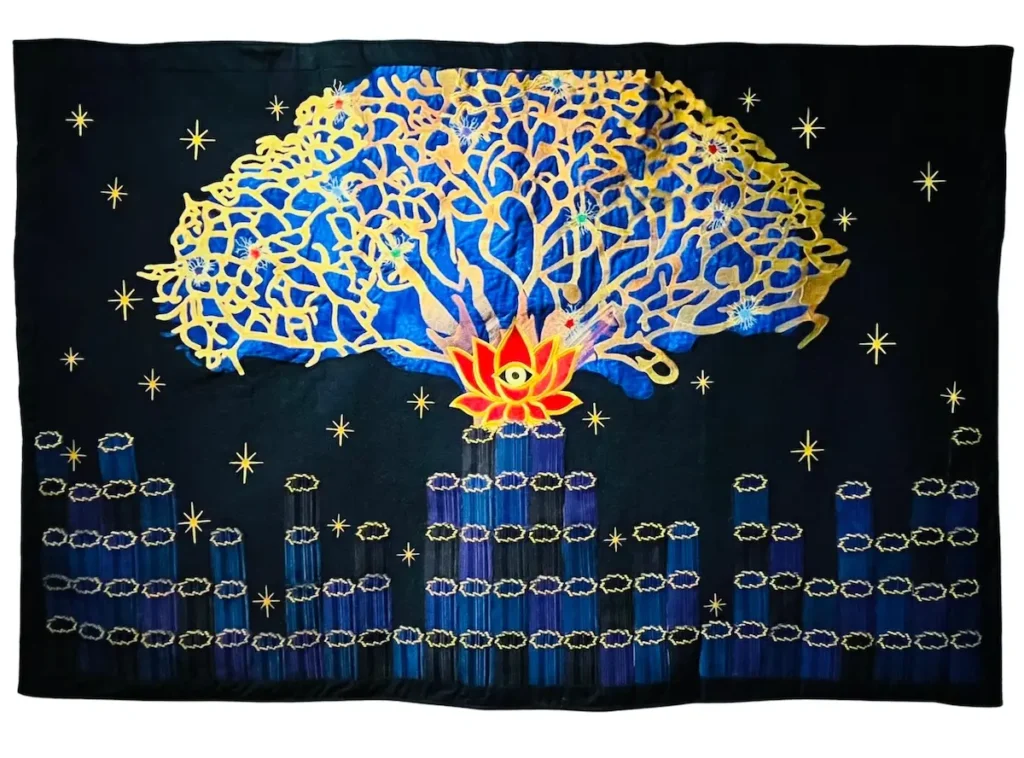
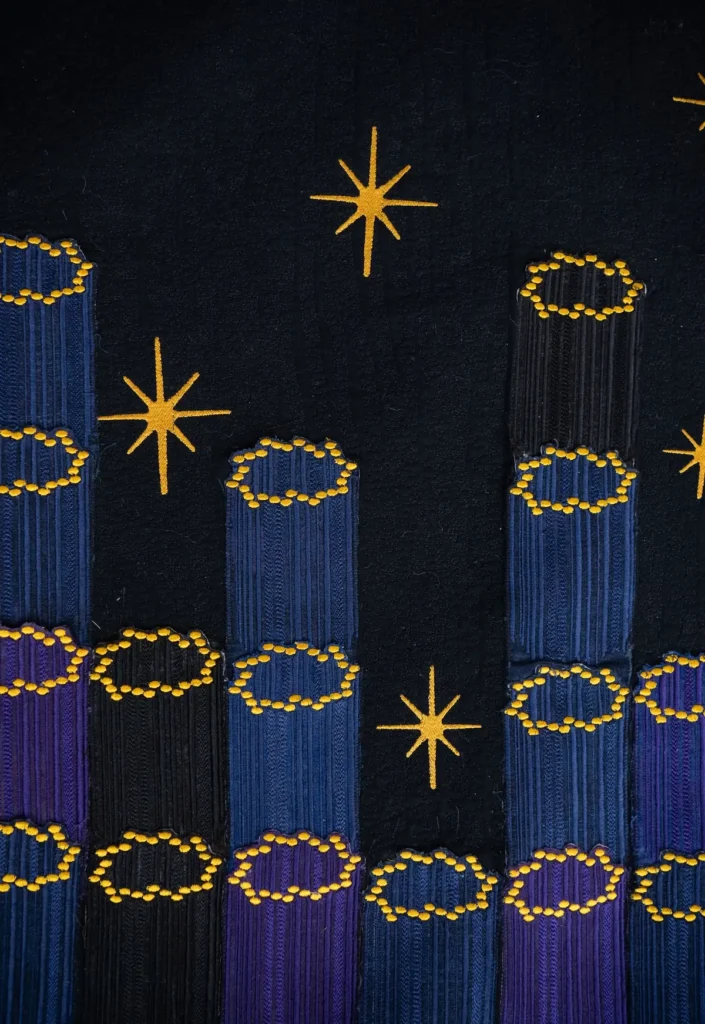
Can you tell us about the inspiration and process behind Awakening: Bridging Science and Spirituality?
Awakening: Bridging Science and Spirituality is particularly representative of the relationship between my scientific background and my artistic interests.
Throughout my career, I studied the physical mechanisms that make life possible. Yet understanding those mechanisms does not necessarily answer the deeper questions we ask about consciousness, meaning, and our place in the universe. I wanted to explore the relationship between scientific understanding and spiritual inquiry without suggesting that one must exclude the other.
The quilt became a visual exploration of connection: between the measurable and the experiential, the individual and the universe, and the things we understand and those that remain mysterious. I am interested in the possibility that different ways of examining our existence can contribute to a richer understanding of what it means to be human.
The finished quilt measures 71 × 48 inches. It is included in Threads of Existence, the touring exhibition presented by Soul Stories, a group of 26 contemporary textile artists. The exhibition debuted at the International Quilt Festival in Houston in 2025 and subsequently traveled to the New England Quilt Museum and the Festival of Quilts in the United Kingdom.
Having the work exhibited internationally has been especially meaningful because the questions it explores are not limited by geography or culture. I hope viewers encounter something in the quilt that resonates with their own experiences and beliefs.
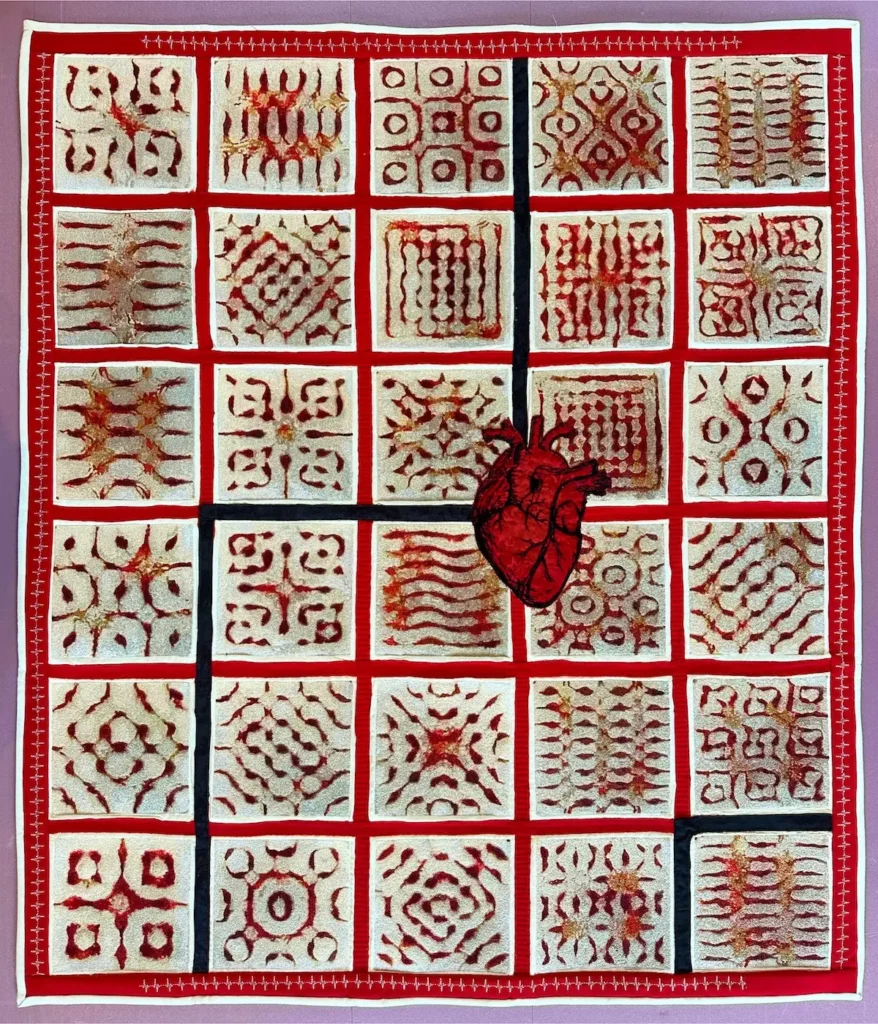
Your quilt Healing Broken Hearts brings together scientific research and a deeply personal experience. Can you tell us about its inspiration and the response it has received?
Healing Broken Hearts (37 × 44 inches) is one of the most personally meaningful quilts I have created.
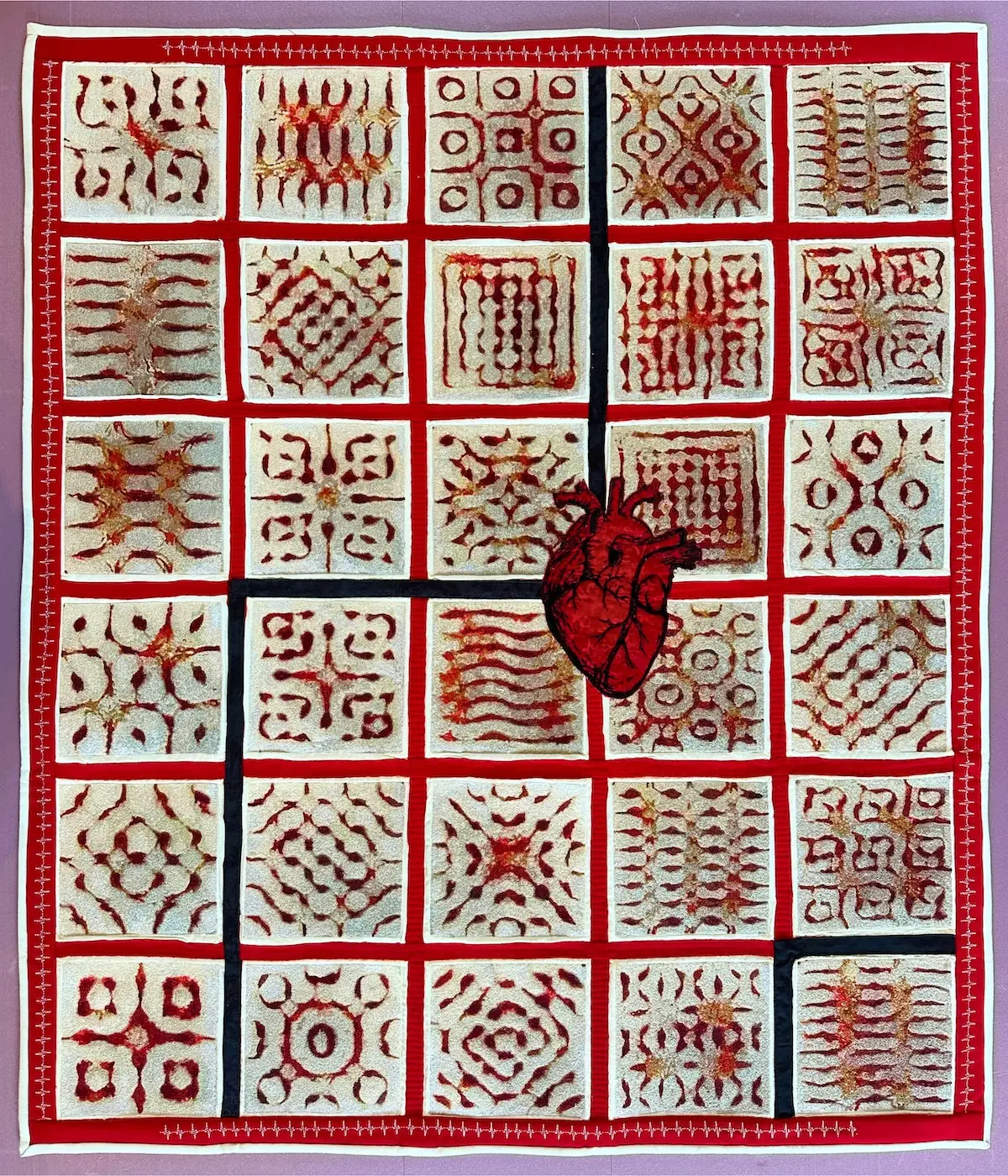
As a scientist and quilter, I was fascinated when I read a research paper by Drs. Wu and Demirci at Stanford University exploring the use of different sound frequencies to influence the patterns in which heart cells grow in laboratory culture. The research investigates how these patterns may help organize cardiac cells into structures that more closely resemble the heart’s natural tissue. This has important implications for cardiac tissue engineering and the possibility of developing replacement tissue to repair damaged hearts.
I was captivated by the extraordinary visual patterns created through these experiments. I contacted one of the two Stanford researchers directly and had the opportunity to speak with him about the research and my artistic concept. He gave me his blessing to create the quilt, which made the project even more meaningful to me.
Each panel in my quilt is an accurate depiction of a real experiment examining how heart cells grow in culture under different sound frequencies. The scientific imagery became the foundation for a work exploring the relationship between sound, cellular organization, healing, and the human heart.
But my connection to this research goes far beyond scientific curiosity. Following a lengthy surgery, I experienced 25 pulmonary emboli. The blood clots traveled through my heart to reach my lungs, and I sustained permanent damage to the walls of my heart. It was a life-changing experience.
When I encountered research exploring the possibility of repairing damaged cardiac tissue, it resonated with me in a profoundly personal way. As a scientist, I understood the importance of the research and the possibilities it might offer. As someone living with the consequences of heart damage, I also understood the hope that such discoveries can represent.
Creating Healing Broken Hearts allowed me to bring those two perspectives together.
Each panel represents a different scientific experiment, but collectively they tell a larger story about the extraordinary relationship between science, sound, the human body, and the possibility of healing.
Every stitch is an intimate connection to the profound harmony between science and the emotional tapestry within. I invite viewers to feel the healing wonder possible through cardiac tissue engineering and to listen to its healing music for the heart.
When Healing Broken Hearts was first exhibited with Sacred Threads at the International Quilt Festival in Houston, I was overwhelmed by the response. My phone filled with text messages and emails from people who had experienced heart problems themselves or had family members living with cardiac conditions. They shared their experiences, their fears, and their hopes.
What moved me most was that the quilt had become something beyond my own personal story. People saw in it possibilities for themselves and for those they loved. That response meant an enormous amount to me.
I created the quilt from a place where scientific curiosity and personal experience intersected. Seeing it bring hope to others has made it one of the most meaningful works of my artistic life.
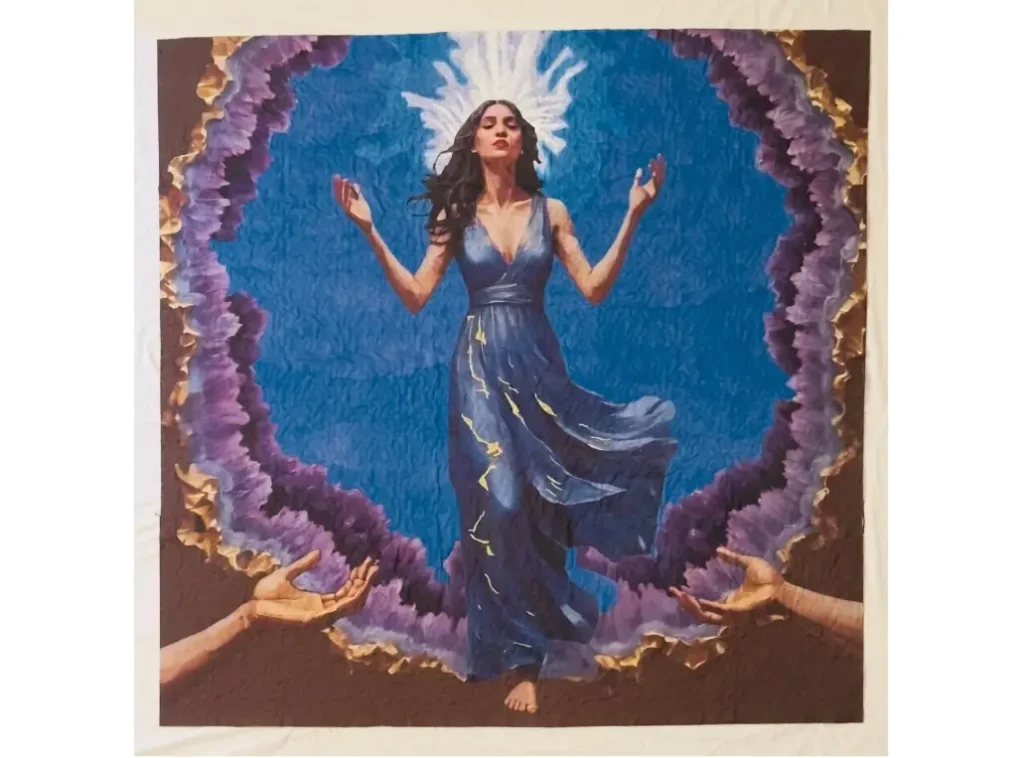
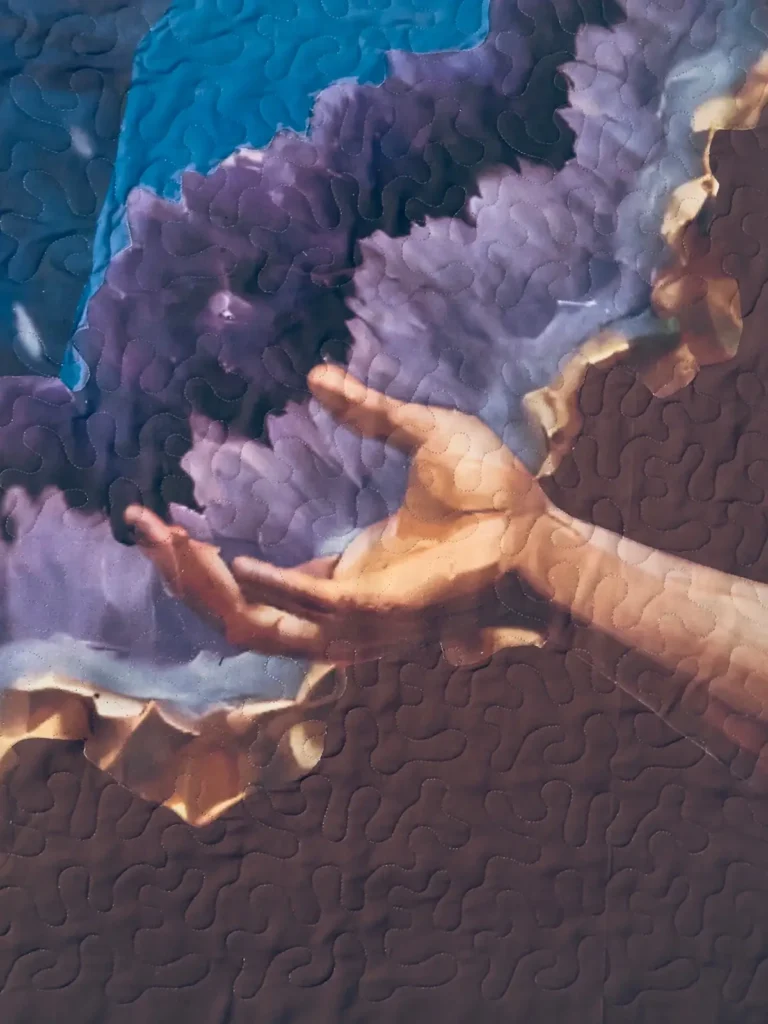
Breaking the Silence is a deeply moving work. What inspired you to create it, and what does its symbolism represent?
Breaking the Silence (60 × 60 inches) was inspired by the prevalence of domestic abuse and the silence that so often surrounds it. There are countless individual stories of women who have experienced fear, isolation, and the loss of their sense of self. I wanted to create a quilt that honors the courage it takes to break that silence, reclaim one’s voice, and begin again.
At the center of the quilt is a woman rising with her arms outstretched, glowing from within. She embodies the journey from erasure to emergence, reclaiming her identity and the freedom to define what she wants her future to become.
Surrounding her is a geode-like halo of purple batiks, symbolizing both the fragility and beauty forged through trauma recovery. Purple, the color of domestic violence awareness, serves as both scar and crown.
Golden embroidered cracks echo kintsugi, the Japanese art of repairing broken pottery with gold. The repairs are not hidden; they become part of the object’s beauty and history. That symbolism is especially meaningful to me. Healing is not necessarily a return to who we were before. It can be the discovery of strength through what we have survived.
Behind the central figure, subtle hands reach upward to lift her. They represent the village of support that helps survivors rise. The hands remind us that while finding one’s voice is an individual journey, the love, encouragement, and support of others can make an extraordinary difference.
I wanted this quilt to acknowledge the difficulty of leaving abuse while focusing on the possibilities that lie beyond it. It is about courage, healing, and the freedom to create a different future. If this quilt helps even one person recognize that there is hope beyond abuse, find the strength to move forward, or understand how important it is to support someone experiencing abuse, then creating it was worth it.
I believe this is exactly what we can accomplish as art quilters. Through our artwork, we can bring attention to difficult subjects, create connections, and offer hope. Art can communicate what words alone cannot, reaching people who may be struggling to find their own words.
Breaking the Silence honors every woman who has left, grieved, and begun again.
It is not a whisper. It is a song.
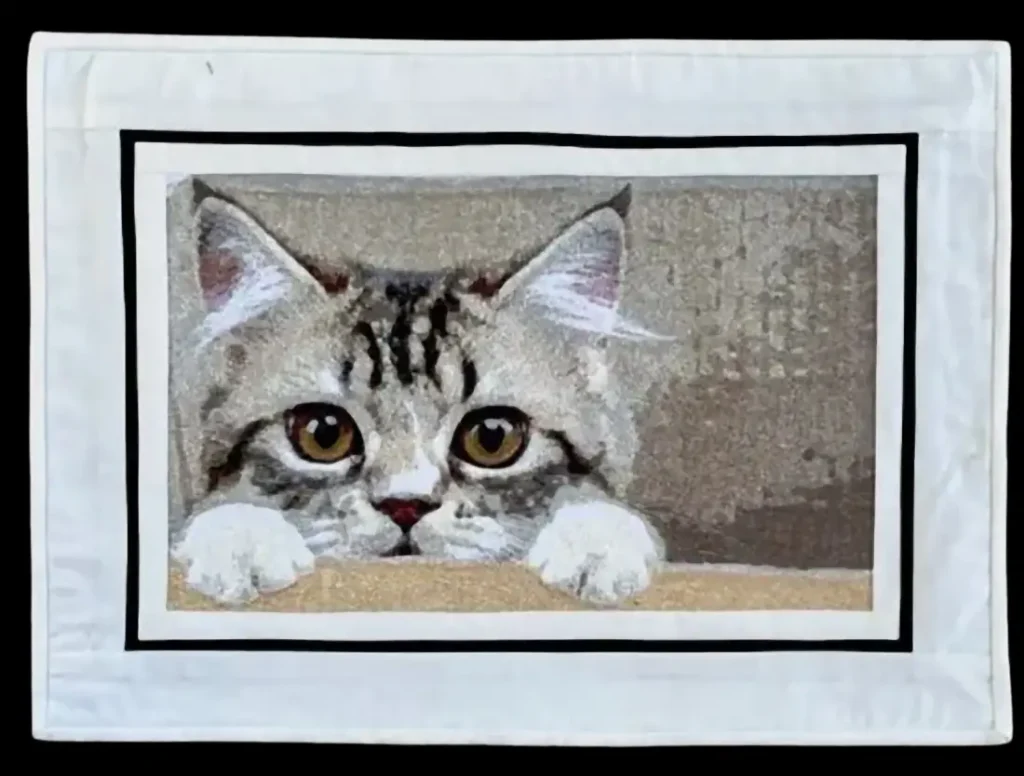
Your work incorporates digital printing, embroidery, appliqué, and quilting. Can you describe how you bring these techniques together?
I love having so many different ways to create a design! I often begin by sketching on paper or drawing with a large graphics tablet connected to my computer. From there, I work in Adobe Photoshop, building my composition in layers so I can experiment with imagery, color, scale, and placement.
Once I have developed the composition, I can have the background digitally printed onto quilter’s cotton. I then build the artwork on that background, adding the individual elements through raw-edge appliqué, embroidery, and quilting.
I also design my own fabrics, which my brother prints for me. He has been tremendously supportive of my work in creating color on fabric, giving me the freedom to develop an entire palette of custom fabrics with exactly the colors, textures, and imagery I need. I can then cut those fabrics into shapes for raw-edge appliqué.
I digitize all the embroidery for my quilts myself, too. Every embroidery design is an original element created specifically for the artwork, allowing me to add texture, detail, and emphasis exactly where I want it. Quilting introduces movement and another layer of meaning.
I love seeing what happens when these techniques come together. The finished quilt becomes something I could not have created through any one technique alone.
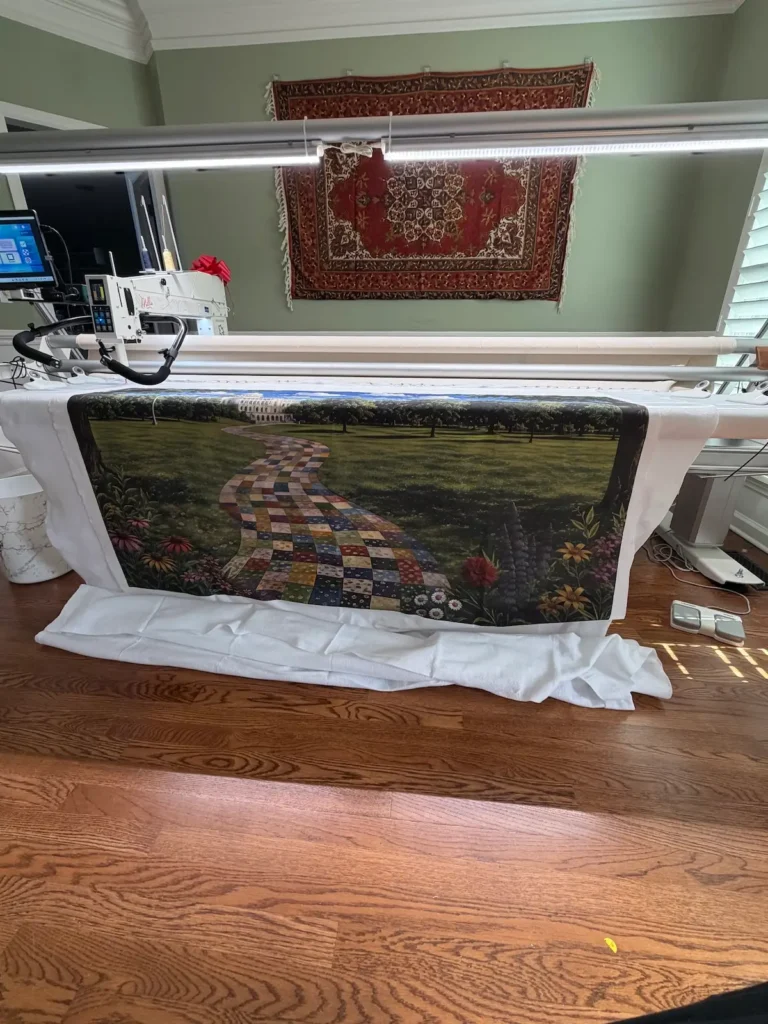
Can you walk us through the creation of a quilt that presented unusual technical challenges?
One recent example is United We Stitch – The Future We Share, a large work measuring 60 × 36 inches.
The quilt places seven diverse children at the center of a democracy they will one day inherit. Holding hands and moving together along a fabric pathway toward the United States Capitol, each child represents a value essential to democratic life: participation, cultural memory, education, service, respect, justice, and inclusion.
I am increasingly concerned about the future of democracy in this country and the responsibility we have toward the children who will inherit it. The children remind me of the importance of fundamental rights, historical truth, the dignity of every person, and the future of democratic institutions.
Through this quilt, I wanted to express both my concern and my hope that we can work together to ensure our children inherit a future grounded in freedom, equality, dignity, and belonging.
The construction required bringing together numerous digital and physical processes. I developed the background composition separately from the children, created individual digital assets, and worked with embroidery and textile printing to produce the elements needed for the quilt.
Because the children were intended for appliqué, their scale and positioning had to be carefully coordinated. The composition also needed to accommodate the additional dimension introduced by stitching. I planned the quilting of the large background before adding the appliqué elements, which required considering how the different stages of construction would interact.
I use an APQS Millie longarm with QuiltPath Pro computerized quilting, so even the quilting process involved considerable planning and precise placement.
Projects like this appeal to both sides of my personality. I love developing the artistic concept, but I also enjoy solving the technical challenges necessary to bring it into existence. There is tremendous satisfaction in seeing something that began as an idea on a computer screen become a large physical work of textile art.
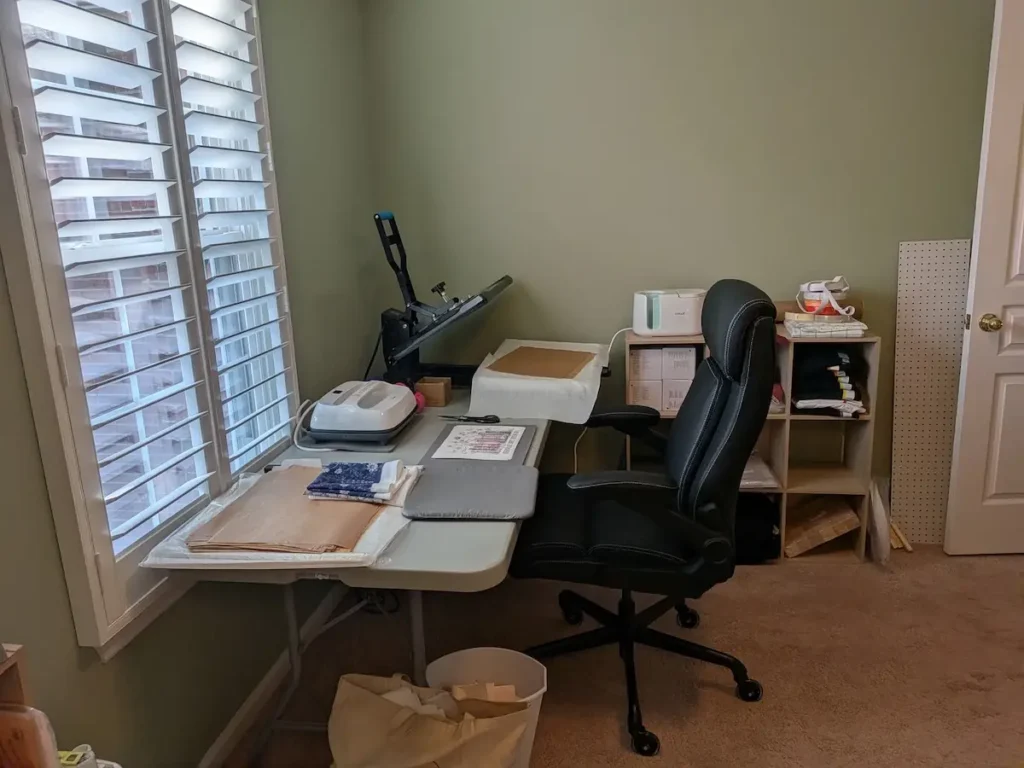
Describe your creative space. How does your environment influence your creativity?
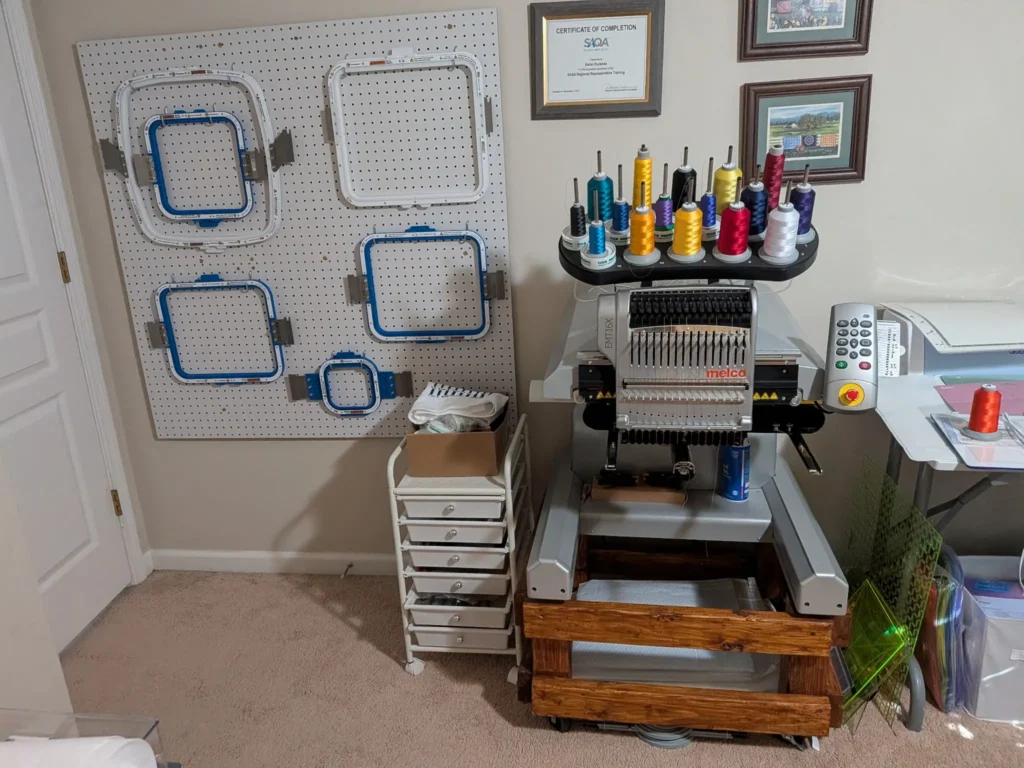
My studio is essentially everywhere in my home! I have three dedicated studio rooms upstairs, while my APQS longarm occupies a large room on the first floor. I also have another sewing area on the first floor. It seems that wherever you go in my house, you are likely to find something related to quilting!
I have commercial embroidery equipment, sewing machines, digital cutters, textile printing equipment, and a ping-pong table that makes a wonderful large work surface when I am assembling big quilts.
My artwork has thoroughly taken over the house, but I love having the space and equipment to move from an idea to a finished quilt. There is always something going on somewhere!
Scraps. Saver? Or be done with them?
Since I design so many of my own custom fabrics, I tend to hang on to the useful pieces!
I keep my fabric scraps organized by color in small containers, making it easy to find just the right piece when I need it. They are particularly useful for appliqué, where a small piece of fabric may be exactly what I need to complete a detail in a larger composition. When you’ve spent time creating a custom fabric, even a small leftover piece can have possibilities!
When it comes to creating, are you more of a planner or an improviser?
Definitely both!
My scientific background encourages planning, and many of the techniques I use require precise preparation. Before beginning a major quilt, I may spend considerable time researching the subject, developing the composition, experimenting with color, and determining how the different elements will be constructed.
When working with large digitally printed compositions and embroidery, some decisions must be made carefully before the materials are produced. However, I also know that the design can change dramatically once it becomes physical.
Colors interact differently on fabrics than they do on a monitor. Embroidery introduces texture and dimension. Quilting can suggest entirely new possibilities. Sometimes an element that seemed essential in the original composition no longer belongs.
I try to approach the technical aspects with discipline while allowing room for artistic discovery. Some of my favorite moments occur when the materials suggest something I had not originally imagined.
How often do you start a new project? Do you work on more than one project at a time?
I almost always have several projects at different stages of development. Some are still in the research and conceptual design stage. Others are in production, involving printing, embroidery, appliqué, or quilting.
Because many of my quilts are large and technically complex, they can require substantial time to complete. Moving between projects gives me an opportunity to continue developing new ideas while working through the more labor-intensive stages of another piece.
I also find that creative ideas rarely arrive in an orderly sequence! Sometimes a concept for a new quilt emerges while I am deeply involved in finishing something entirely different. I try to capture those ideas when they occur, even if I cannot immediately begin working on them.
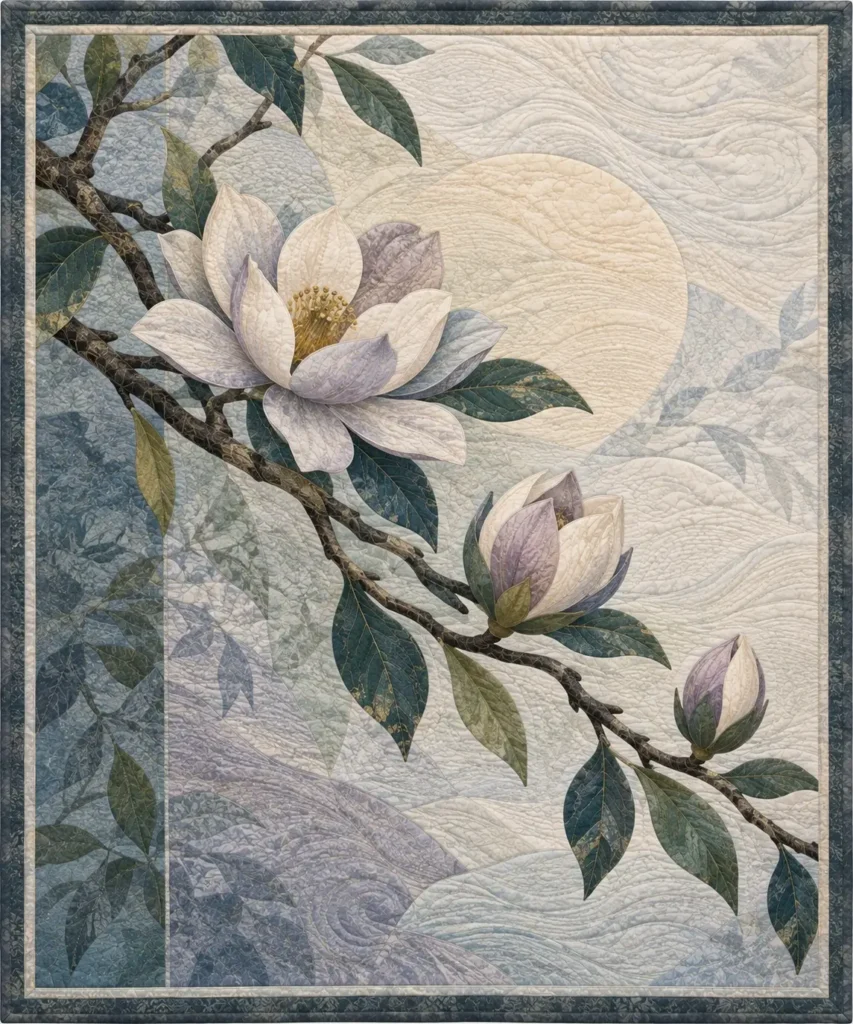
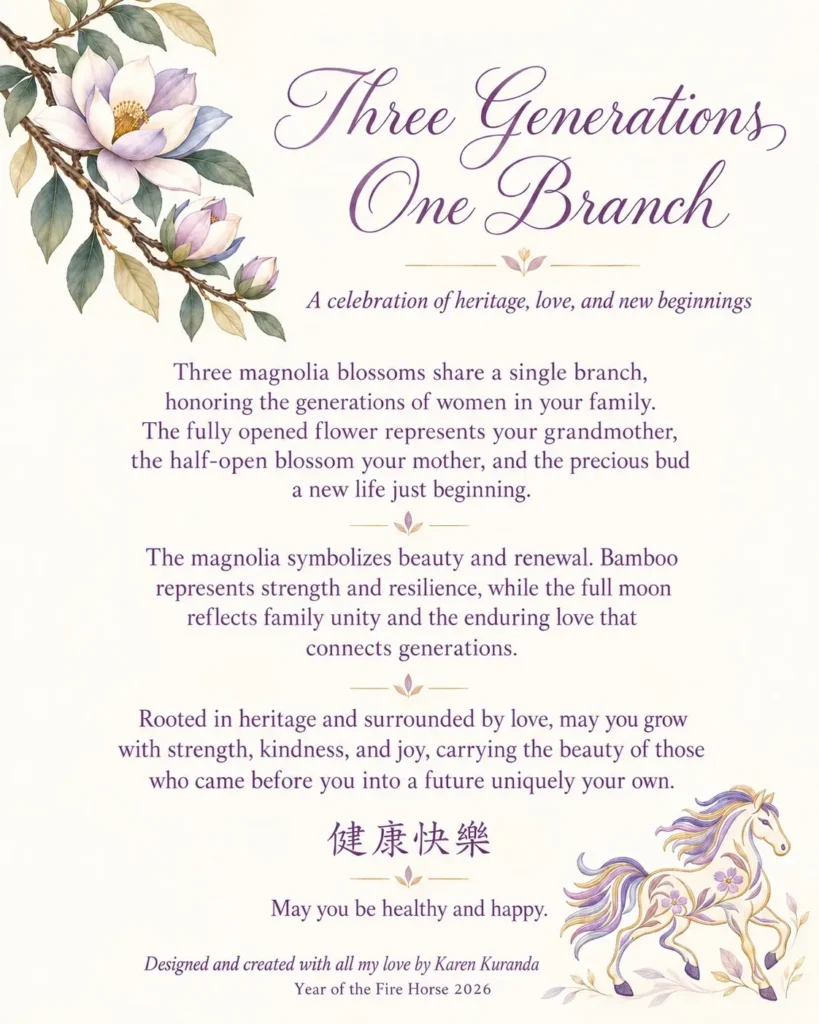
Which part of the creative process is your favorite? Which part is the greatest challenge?
I particularly enjoy the early stages of developing a concept. I love researching a subject, discovering unexpected connections, exploring imagery, and determining how an abstract idea might become a compelling visual composition. There is something exhilarating about the moment when a collection of seemingly unrelated ideas begins to come together.
I also love seeing the transformation from digital imagery into physical fabric and stitch. The greatest challenges are frequently technical, although I must admit that those are often among the most enjoyable parts of the process for me!
Working at a large scale introduces practical considerations involving image resolution, fabric printing, embroidery dimensions, registration, and quilting. Occasionally, I must devise an entirely new approach to construct something I have imagined.
My scientific background has been enormously helpful in that regard. I enjoy solving the mathematical and engineering challenges involved in transforming an artistic concept into a finished quilt.
How has your creativity evolved over the years?
My work has become increasingly focused on storytelling and conceptual exploration. I am less interested in using a technique simply to demonstrate what can be accomplished with it. I want each technique to contribute to the meaning of the artwork.
Digital printing and computerized embroidery have expanded what I can accomplish, particularly with large-scale compositions. At the same time, I have become increasingly interested in exploring subjects that invite conversations about our shared human experiences.
I want my quilts to offer more than visual beauty. I want them to communicate, provoke thought, and create connections between people.
What keeps you motivated and interested in your work?
Curiosity is probably my greatest source of motivation. I have never lost the desire to learn, explore, and experiment. There is always another technique to investigate, another concept to research, or another creative challenge requiring a new solution.
I also find tremendous inspiration in the work of other textile artists. My longtime involvement with Studio Art Quilt Associates (SAQA) has given me a wonderful community of artists who continually challenge and inspire me. Their creativity reminds me how much there is still to explore within contemporary textile art.
I am also a member of Soul Stories, a group of 26 contemporary textile artists whose work explores personal expression, human experience, and the relationship between art and activism. Our touring exhibition, Threads of Existence, brings together our different artistic perspectives.
These artistic communities have become an important part of my life. Working alongside people who share such a passion for textile art encourages me to keep learning, experimenting, and finding new ways to communicate through my work.
How has being part of Soul Stories influenced your artistic journey?
Soul Stories has reinforced something I believe very strongly: art can do more than create something beautiful. It can open conversations, help people understand experiences different from their own, and give a voice to difficult subjects.
Our touring exhibition, Threads of Existence, brings together artists with very different backgrounds, techniques, and stories. My two quilts in the exhibition are Awakening: Bridging Science and Spirituality and Breaking the Silence. One explores the relationship between scientific understanding and spiritual inquiry, while the other addresses domestic abuse and honors the courage of those who reclaim their voices and begin again.
For me, this is where art and activism come together. Whether I am exploring scientific discoveries, the courage required to begin again, or concerns about the future we leave to our children, I want my artwork to encourage people to think, feel, and connect with one another.
A quilt’s life does not end when the last stitch is made. It continues through the people who encounter it, the stories they share, and the conversations that follow.
Do you think creativity is part of human nature, or is it something that must be nurtured and learned?
I believe creativity is fundamentally human, but it needs opportunities to develop. We tend to associate creativity with the arts, yet it is equally important in scientific discovery, engineering, mathematics, and countless aspects of everyday life.
As a scientist, I relied on creativity constantly. Developing a research question, designing an experiment, or finding an unexpected solution requires imagination as well as technical knowledge. Art and science share a willingness to ask, “What if?”
Technical skills can be learned, and the ability to observe and think creatively can be strengthened through practice. I also believe it is important to allow ourselves the freedom to experiment without knowing exactly where the process will lead.
Some of the most interesting discoveries, in both science and art, begin with unexpected results.
What’s the best piece of advice you’ve received?
Nothing is impossible.
That simple philosophy has guided me throughout my life, both as a scientist and as an artist. In scientific research, you frequently encounter problems that initially seem impossible to solve. But with curiosity, persistence, experimentation, and a willingness to approach a problem from a different direction, new possibilities emerge.
I approach my artwork in much the same way. I often imagine something before I know exactly how I will create it. Rather than allowing the technical challenges to limit my vision, I enjoy figuring out how to make it possible.
Sometimes that means learning a new technique, developing a different process, or combining technologies in ways I haven’t tried before. I believe that creativity flourishes when we allow ourselves to imagine beyond what we already know how to accomplish.
What would you most like people to take away from experiencing your artwork?
I hope my work encourages people to look beyond the surface. The things that connect us are often far more profound than the things that separate us.
Through my quilts, I explore questions about our existence, our relationships, our experiences, and the ways we find meaning in our lives. I do not expect every viewer to interpret a work in the same way.
What I hope is that something in the imagery, symbolism, or story will resonate with them personally. If a quilt encourages someone to stop, reflect, or begin a meaningful conversation, that is deeply rewarding.
Where can people see your work?
My artwork can be viewed on my website, www.karenkuranda.com, where I share my quilts, artist statements, and exhibition information.
My work has been exhibited internationally, including at the International Quilt Festival in Houston, the Festival of Quilts in the United Kingdom, Sacred Threads, and the National Quilt Museum in Paducah, Kentucky. Some of my quilts are also held in private collections. I am also a member of Soul Stories, a group of 26 contemporary textile artists. Our touring exhibition, Threads of Existence, explores the human experience through art.
Interview posted October 2026
Explore more art quilting inspiration on Create Whimsy.