
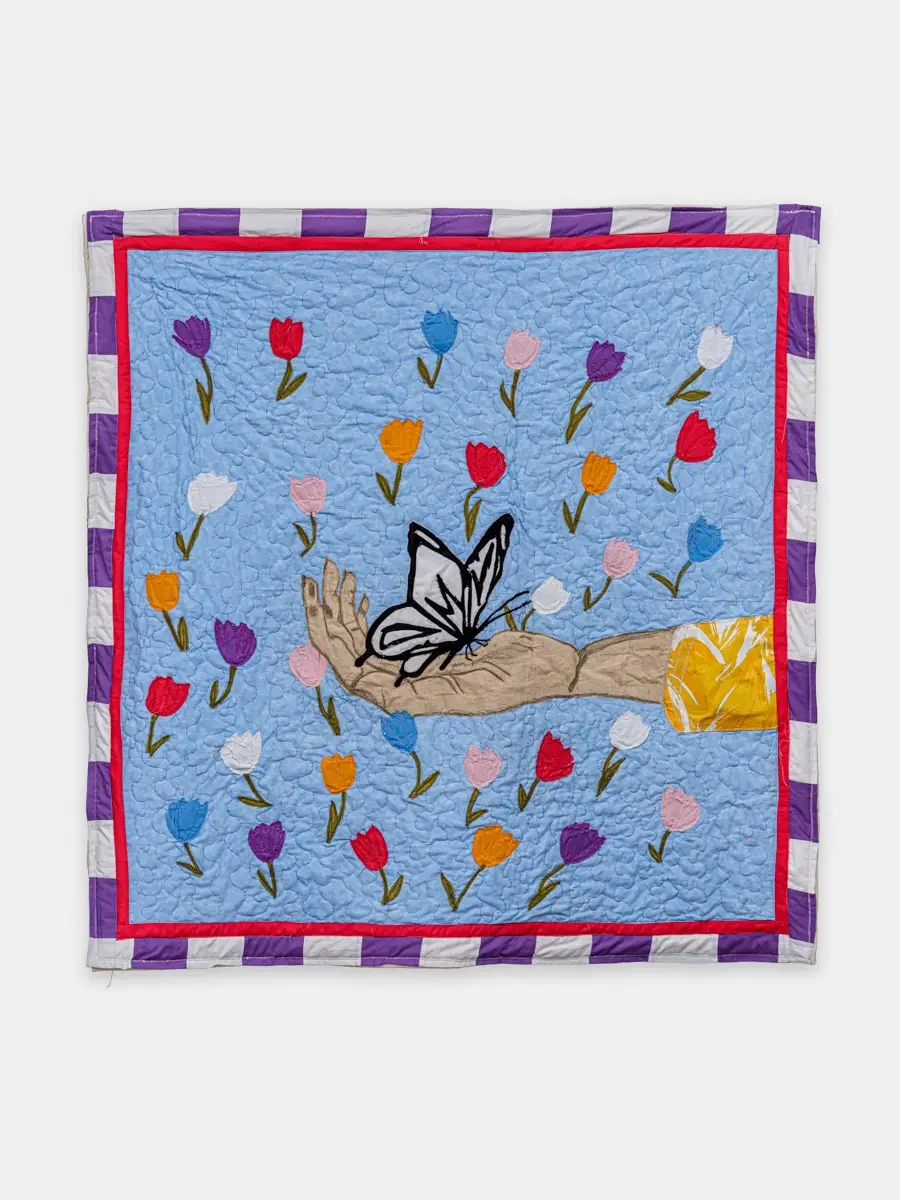
Gary Tyler’s quilts tell powerful stories of family, freedom, and life behind prison walls. His art grew from a love of making things by hand into a way to remember people, share his story, and show the strength of the human spirit.
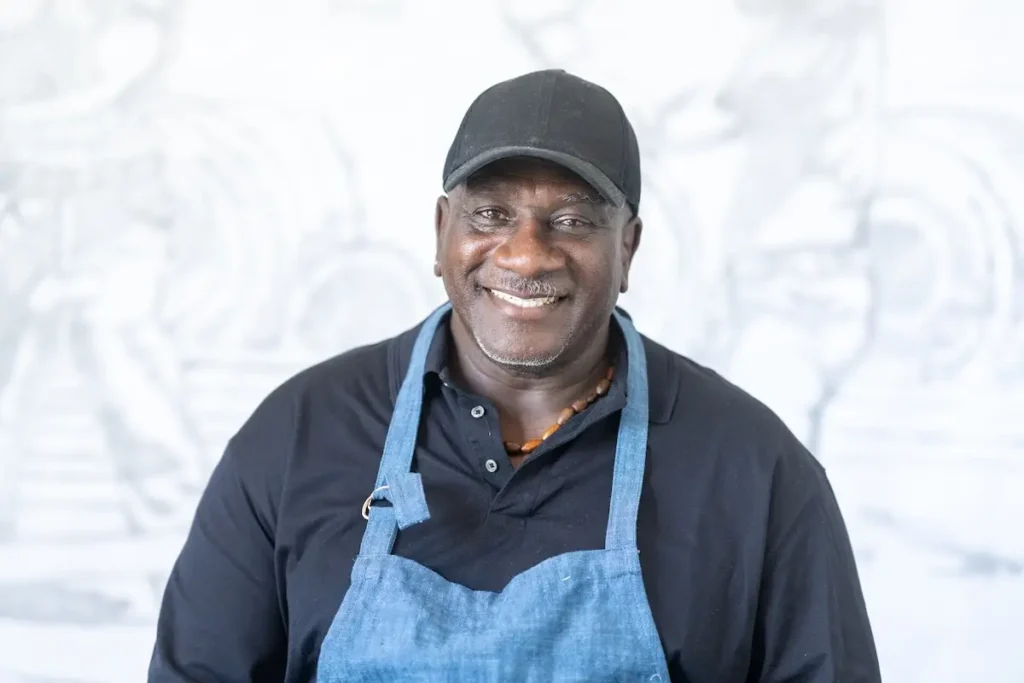
What did you love to make or create when you were a child? Do you remember being drawn to art, fabric, drawing, or making things with your hands?
In elementary school, I made pictures of people running with a dog or swinging. I also cut paper maché stars or planes out of paper. I’d give them to my mother and she kept all of them. But the word “artist” was foreign to me back then. The closest I came to artistry was when my dad taught me how to paint houses.
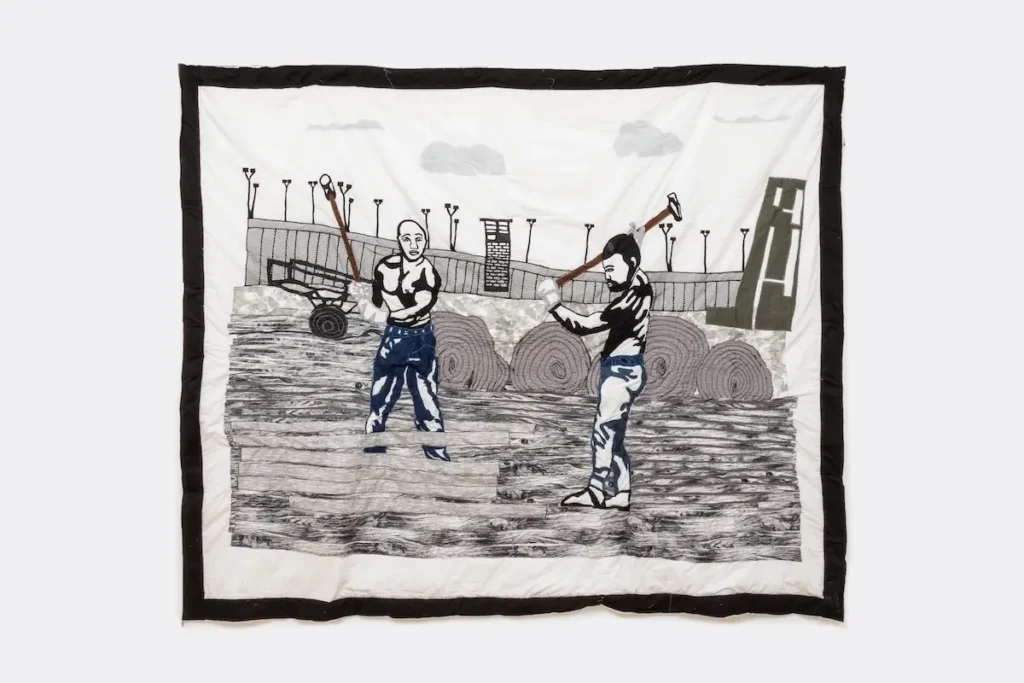
Quilting Fabric, Thread, Paint and Batting
96 x 108 in
Photo Courtesy of the artist and Library Street Collective
Your mother sewed and your grandmother quilted. What do you remember watching them make, and how do you think those early memories stayed with you?
As a child, I remember seeing them in action, my grandmother at an old Sears sewing machine, but I was too active to sit by her side. I remember the quilts she made that we used to cover ourselves.
As an Amazon Associate I earn from qualifying purchases. Read more about our affiliate linking policy.
And I remember how my mother got patterns from the J.C. Penney and Sears catalogues, cut material out and sewed them together into dresses for herself and my sisters. Every time I need fabric today, I see those patterns and they automatically remind me of my mother.
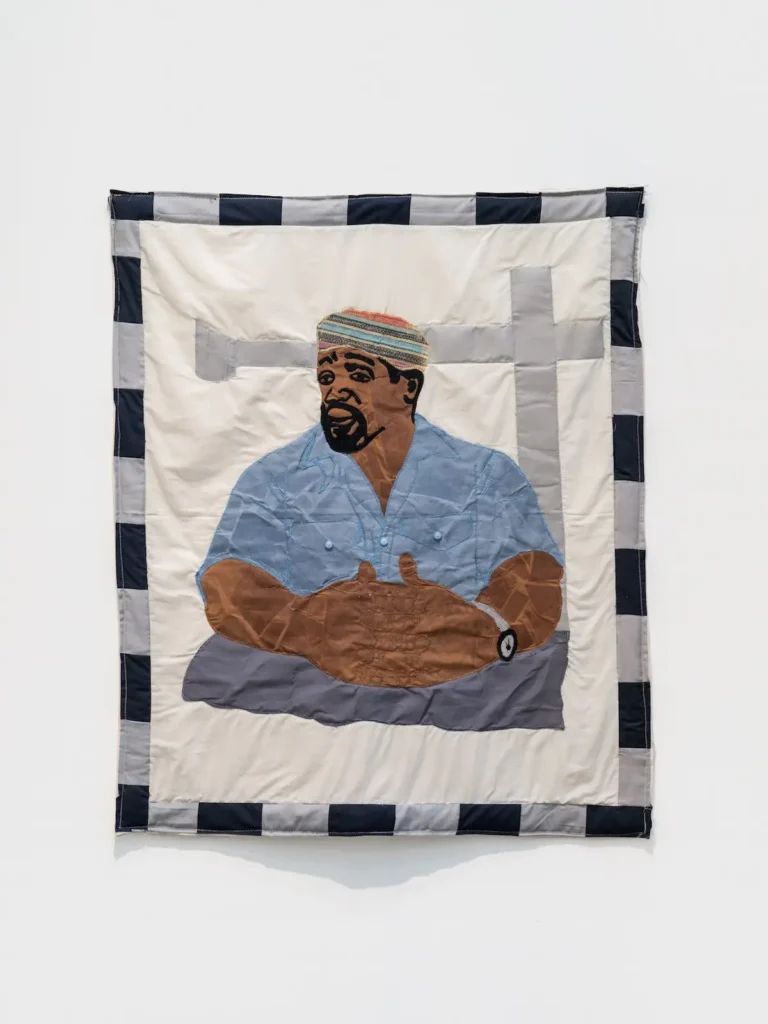
Quilting Fabric, Thread, Paint and Batting
54 x 52 in
Photo Courtesy of the artist and Library Street Collective
You studied graphic arts while incarcerated. What did you learn from studying art that still shows up in your work today?
I got into crafts when I was on death row and saw a guy making jewelry boxes out of matchsticks and picture frames from Camel cigarette packs. I was amazed.
I was sitting in my cell grieving; time is so daunting – you can only read and sleep so much. It made me want to do something like that to pass the time, be creative, give it to my family. I always loved making things there and giving them to my mother.
When I was in the cells, I started making necklaces out of plastic and wooden beads. I so regret that I wasn’t able to be at my mother’s house when she died, because I know she saved all that stuff.
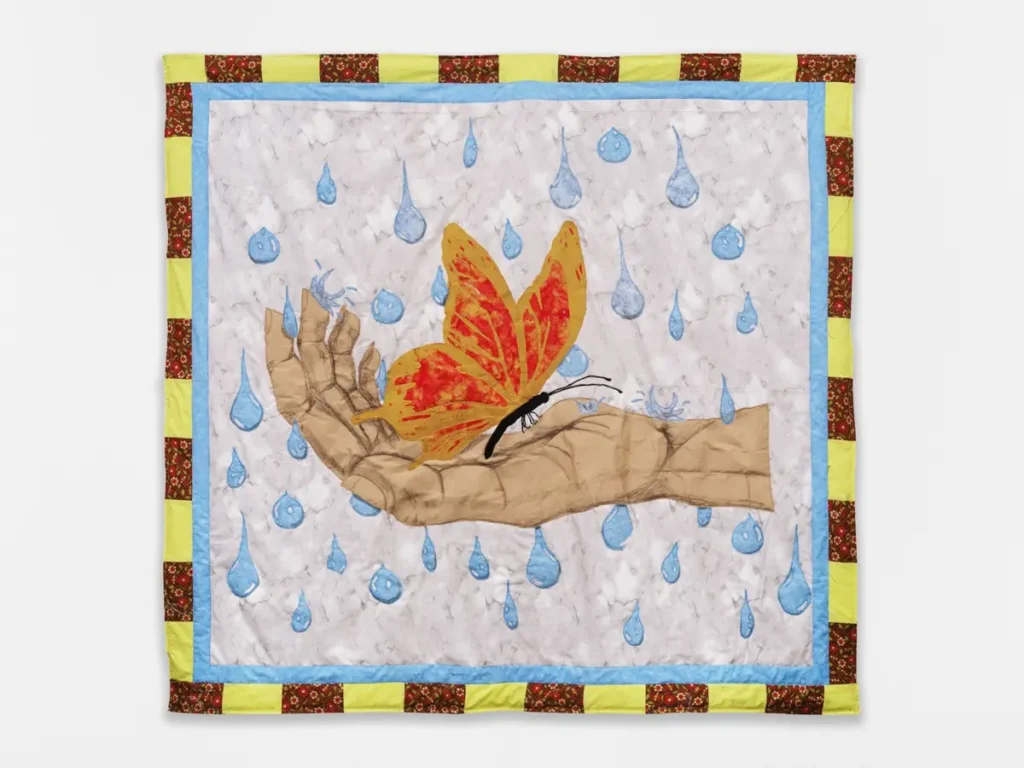
Quilting Fabric, Thread, and Batting
64 x 68 1/4 in
Photo Courtesy of the artist and Official Welcome
You have said that when you discovered quilting, you realized you had found your calling. Do you remember the moment when quilting changed from something you were trying into something you knew you wanted to pursue?
At first I didn’t want to have anything to do with it. I relented because my friend Kenya told me they really needed my help to get the quilts done. I did the parts they asked of me, cutting out pieces and sewing them together.
I realized there had to be more to it than that, and I began experimenting to use more craft, adapt the applique I learned in graphic design to quilting. After that, I felt the sky was the limit.
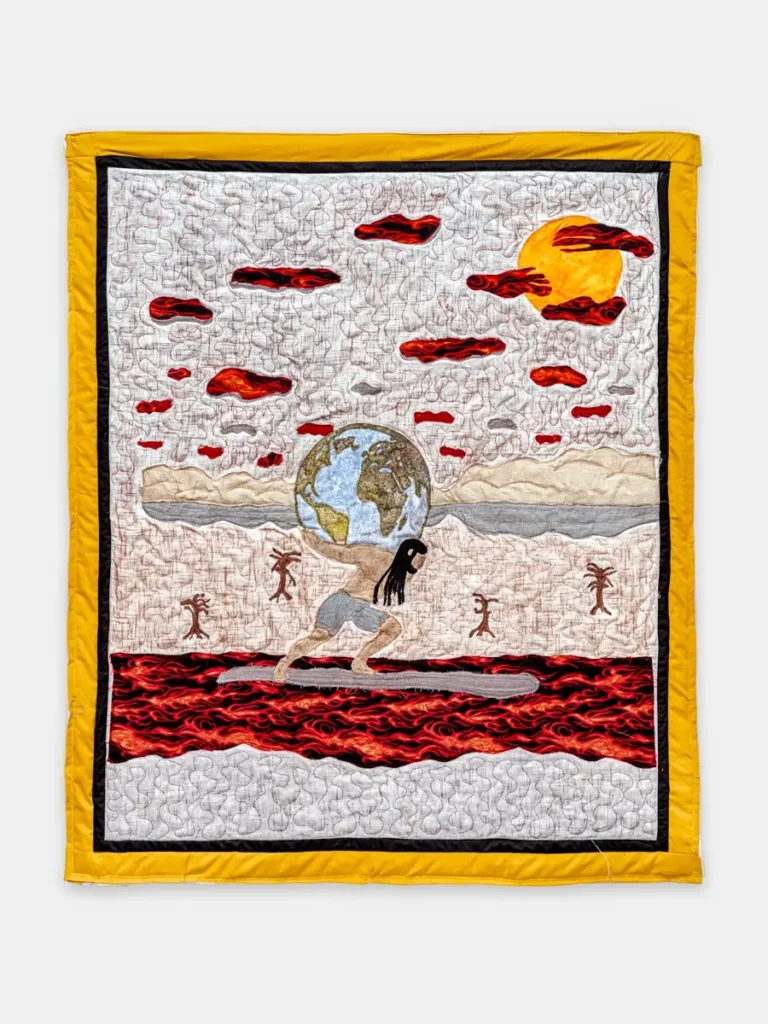
Textile fabric, muslin, charcoal colors, and thread.
47 1/2 x 41 in
Photo Courtesy of the artist and Library Street Collective
Your quilts often tell stories through people, places, and moments. When you begin a new piece, does the story come first or does the image come first?
The image comes first. I build around that image, the time and place, to give it life, body, moving parts.
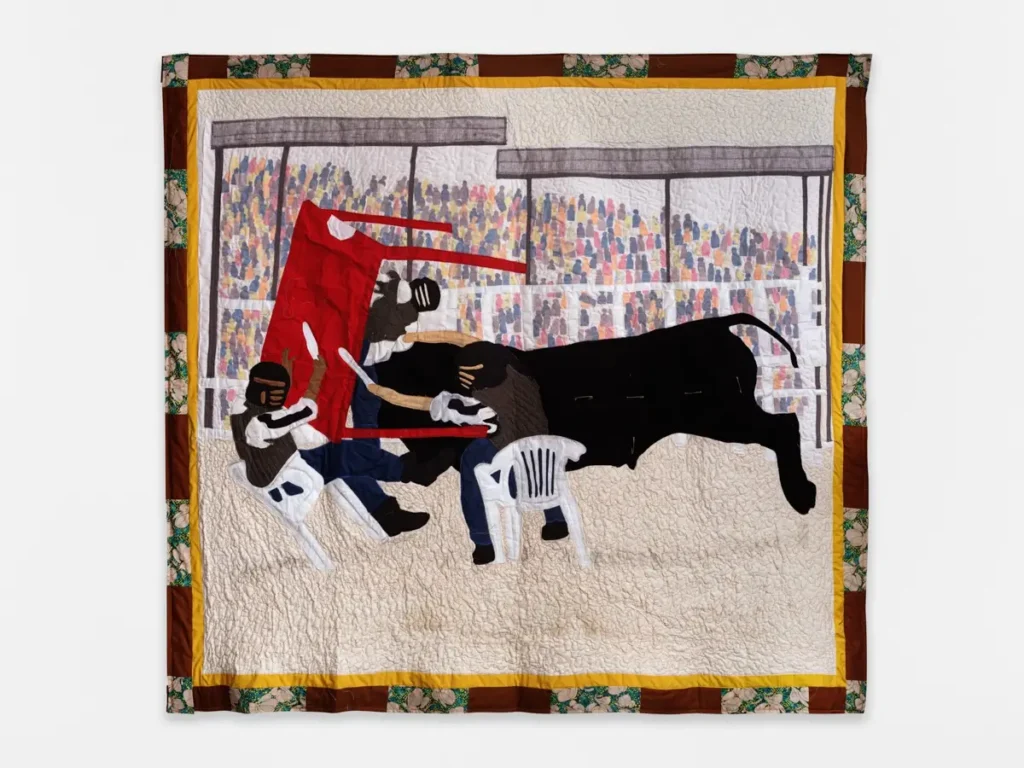
Quilting Fabric, Thread, and Batting
75 1/2 x 82 in
Photo Courtesy of the artist and Official Welcome
Your figures often feel very alive. How do you use fabric, color, shape, and stitching to give a person in a quilt a sense of presence?
I try to be more detailed when doing a figure of a person or animal, to make the piece more present and appealing. I select the colors and stitching that match the clothing to individualize the picture. I tend to use double stitching when I want to bring out the detail of a figure.
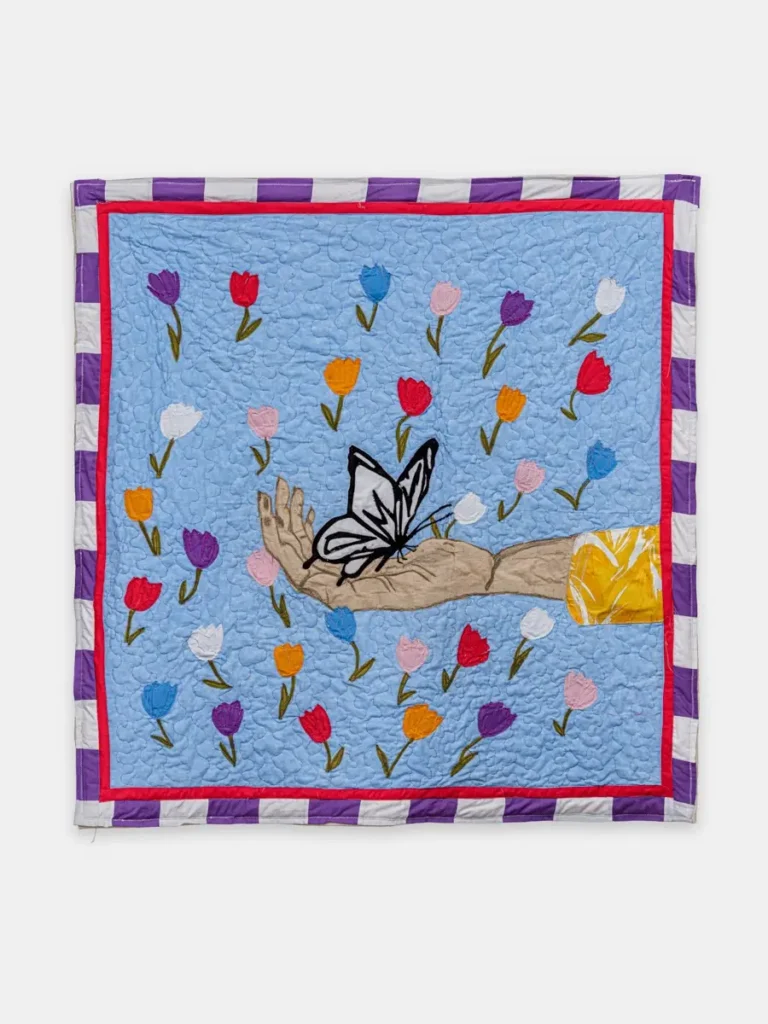
Textile fabric, muslin, yarn, and thread
47 1/2 x 47 1/2 in
Photo Courtesy of the artist and Library Street Collective
Your work can be deeply personal, but it also speaks to larger ideas about justice and human dignity. How do you decide how much of your own story to place inside a piece?
I feel that I’m not the only one who’s going through this vicious cycle of injustice. I try to incorporate everything that’s going on around me and show the memories of people I’ve known.
Some memories you never forget. I want to capitalize on that and give viewers an insight on the life I lived myself and among other incarcerated men.
Sometimes people feel that someone incarcerated is removed from society and they don’t have to think of them again.
But that person is a human being, someone’s child, loved one. If the person were their loved one, they would see that they can never forget that individual.
It’s damning to incarcerate someone for the rest of their life for something like selling weed, or to have victims of a criminal legal system that is corrupt and too often convicts people like me who are innocent.
It’s a crime against humanity to have a system that executes people or sends them away for life as if life is disposable. People can turn their life around and make a contribution to society.
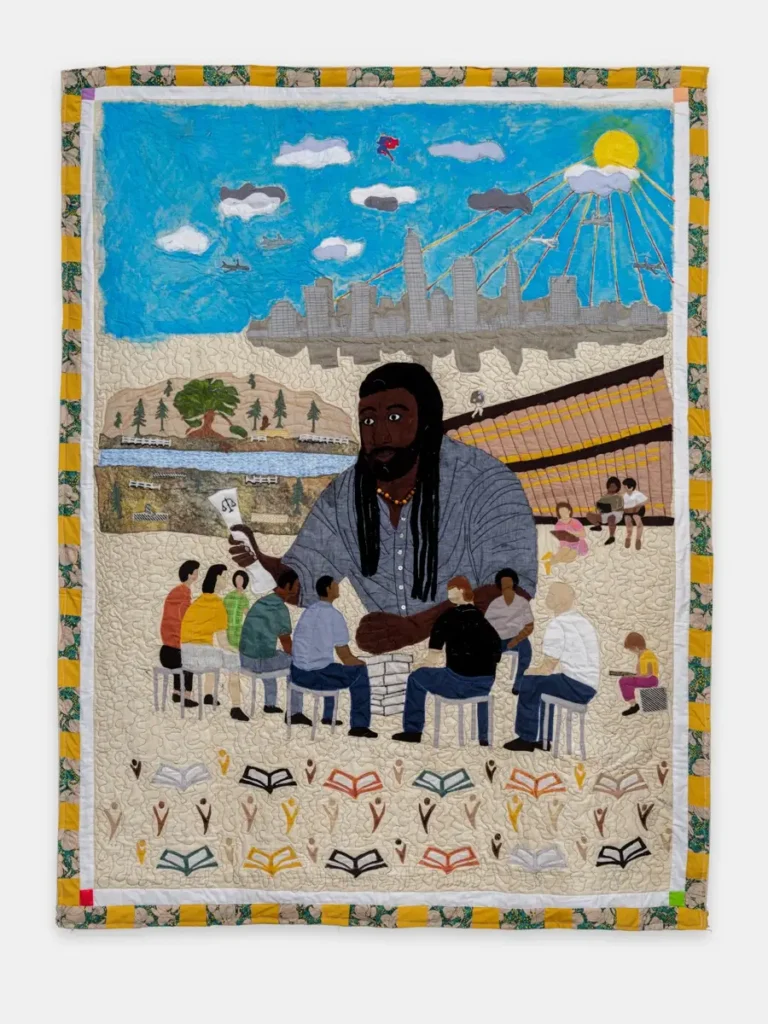
Textile fabric, yarn, fabric paint and thread
91 x 70 1/2 in
Photo Courtesy of the artist and Library Street Collective
Describe your creative space.
My studio is 1300 square feet and is arranged so I can visually see everything, so I can move about.
Sometimes I work on multiple quilts at a time. I consider myself an environmental artist. I pay close attention to everything that goes on around me.
I imagine the wind and nature itself, how it functions and evolves. I try to visualize and create that.
My studio is a replica of the quilting shop we had at Angola.
It had originally been the repair shop for hospice wheelchairs and beds, and became what we called “Stitch in Time.”
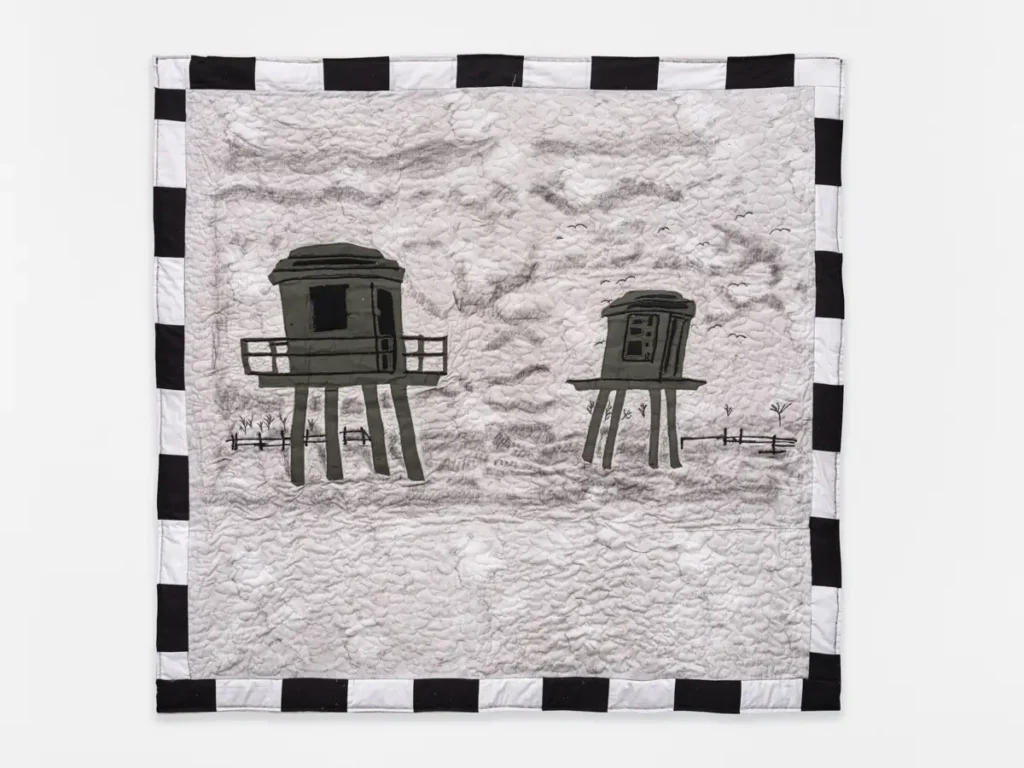
Quilting Fabric, Thread, and Batting
52 x 54 1/2 in
Photo Courtesy of the artist and Official Welcome
After spending more than four decades incarcerated, you had to build a new life and studio after your release. What was it like to return to your art in a completely different world?
As I describe in my memoir, Stitching Freedom, I didn’t start getting back into quilting until almost five years after my release.
I concentrated on getting my life back together. I couldn’t envision establishing a quilting shop out there. But eventually I did, thanks to people I knew who were aware of my quilt work, convinced me to get back into it and helped raise funds for the studio.
It’s very different from when I was at Angola. There we had to scrape for material and rely on other people to get what we needed.
Being free, I have the option and freedom to select the quality material I need and to have access to whatever tools I need. In prison, rotary cutters and scissors could be considered a weapon if it wasn’t in its designated area.
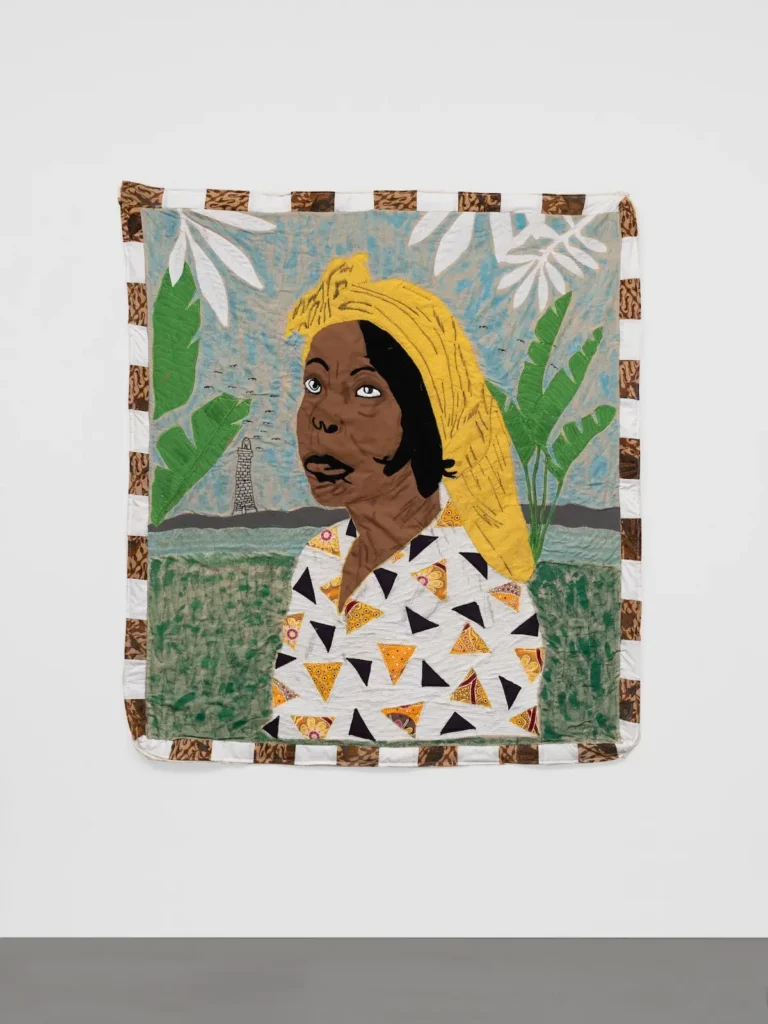
Quilting Fabric, Thread, Paint and Batting 66 x 58 in
Photo Courtesy of the artist and Library Street Collective
Your art has brought you into rooms and conversations that may have seemed very far away when you first picked up a needle. How has your idea of yourself as an artist changed?
Quilting now has brought my artwork to a whole other level.
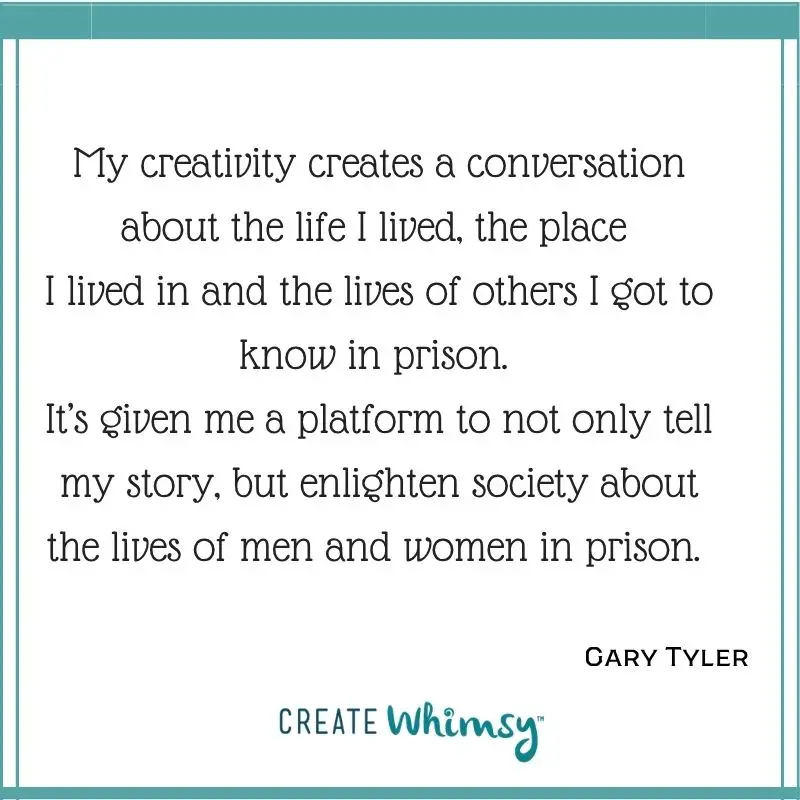
My creativity creates a conversation about the life I lived, the place I lived in and the lives of others I got to know in prison. It’s given me a platform to not only tell my story, but enlighten society about the lives of men and women in prison.
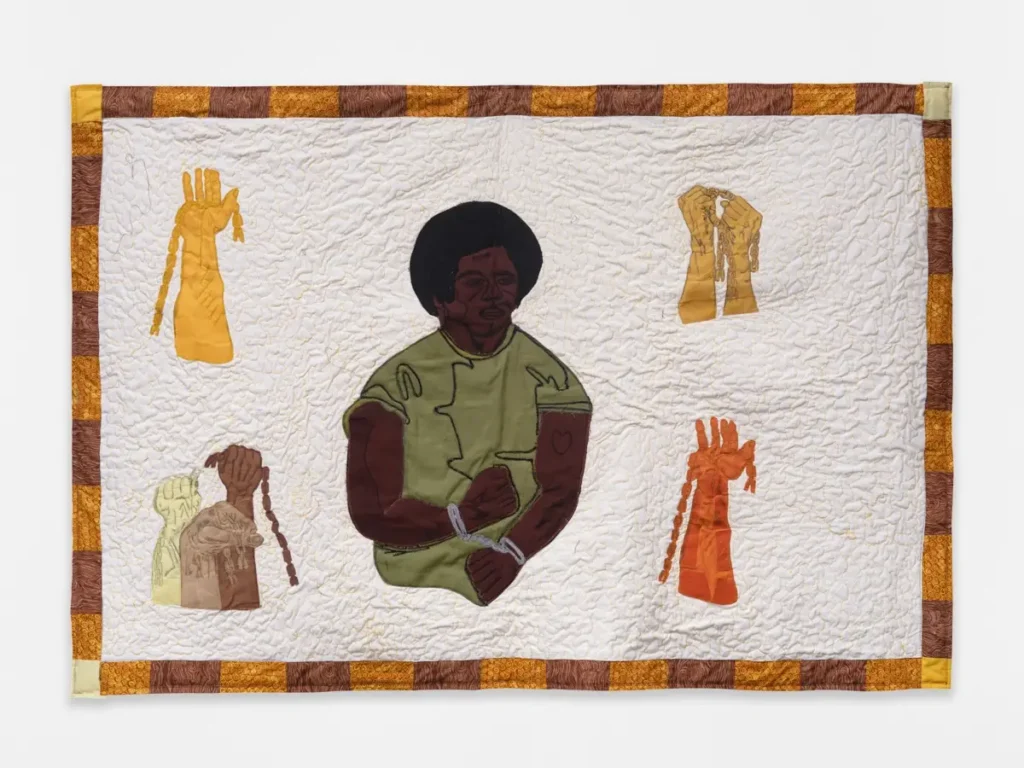
Quilting Fabric, Thread, and Batting
44 1/2 x 65 1/2 in
Photo Courtesy of the artist and Official Welcome
Where can people see your work?
Library Street Collective in Detroit.
The National Museum of African-American History and Culture in Washington, D.C.
The Historic New Orleans Collection.
Santa Monica City Hall (will be in the Santa Monica Museum of Art when the new building is completed]
Grand Rapids, MI Museum of Art [after Oct. 2, 2026]
Cleveland Public Library, Rice Branch [after September 26, 2026]
Kadist Museum in Paris
Rapid-Fire Fun:
- Favorite color to work with? Black
- Quiet studio or music playing? Quiet
- A piece of advice you carry with you? Do the impossible.
- What are you curious about making next? A larger piece designed for a museum.
- What brings you joy today? That I am free.
Interview posted October 2026
Explore more art quilts on Create Whimsy.