
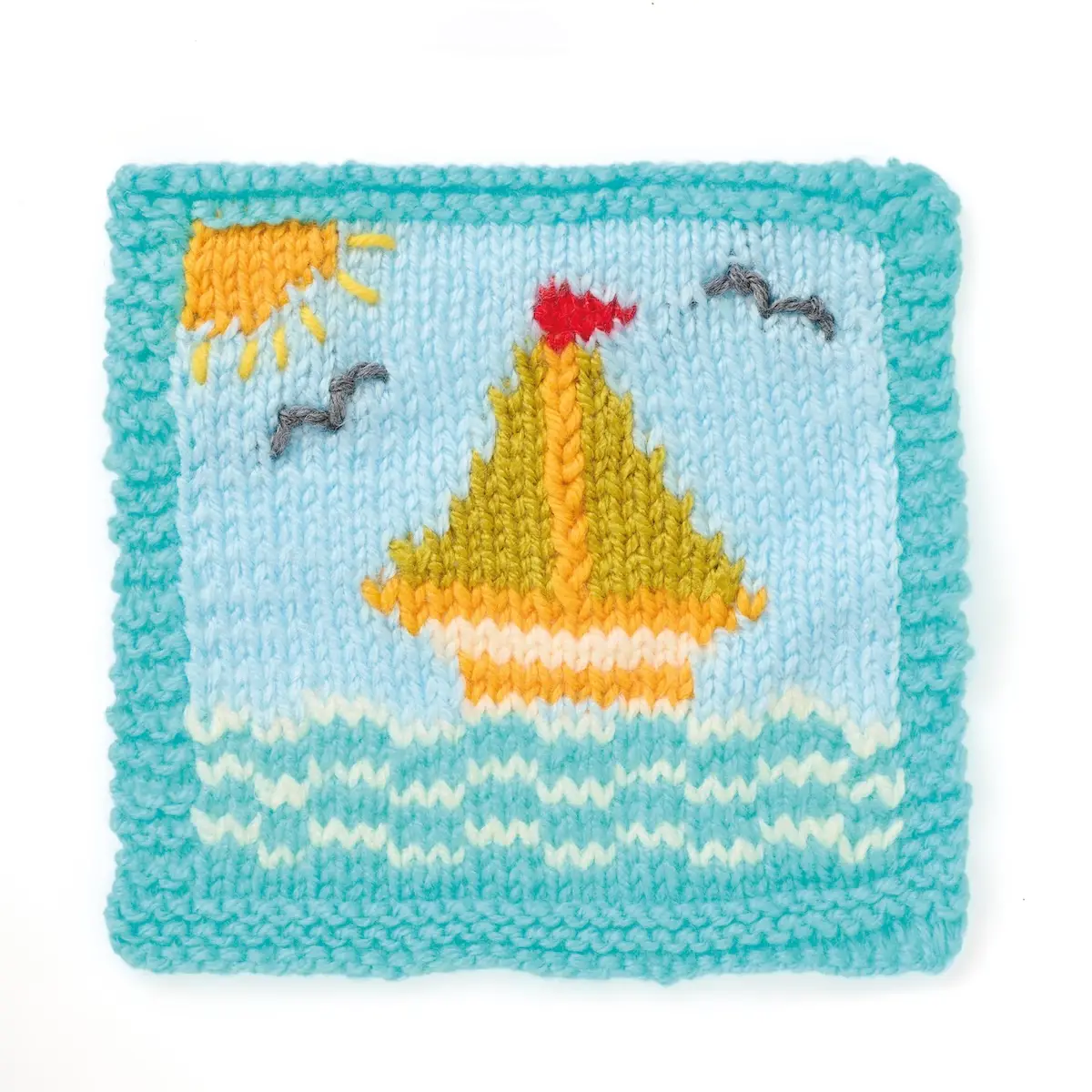
Sian Brown has been designing knitwear for decades, turning simple yarn and stitches into colorful patterns inspired by nature, gardens, and the coast. From her early days designing for high-street stores to her new book of 100 knitting motifs, she shows how a little sketch can grow into something wonderful to wear and enjoy.
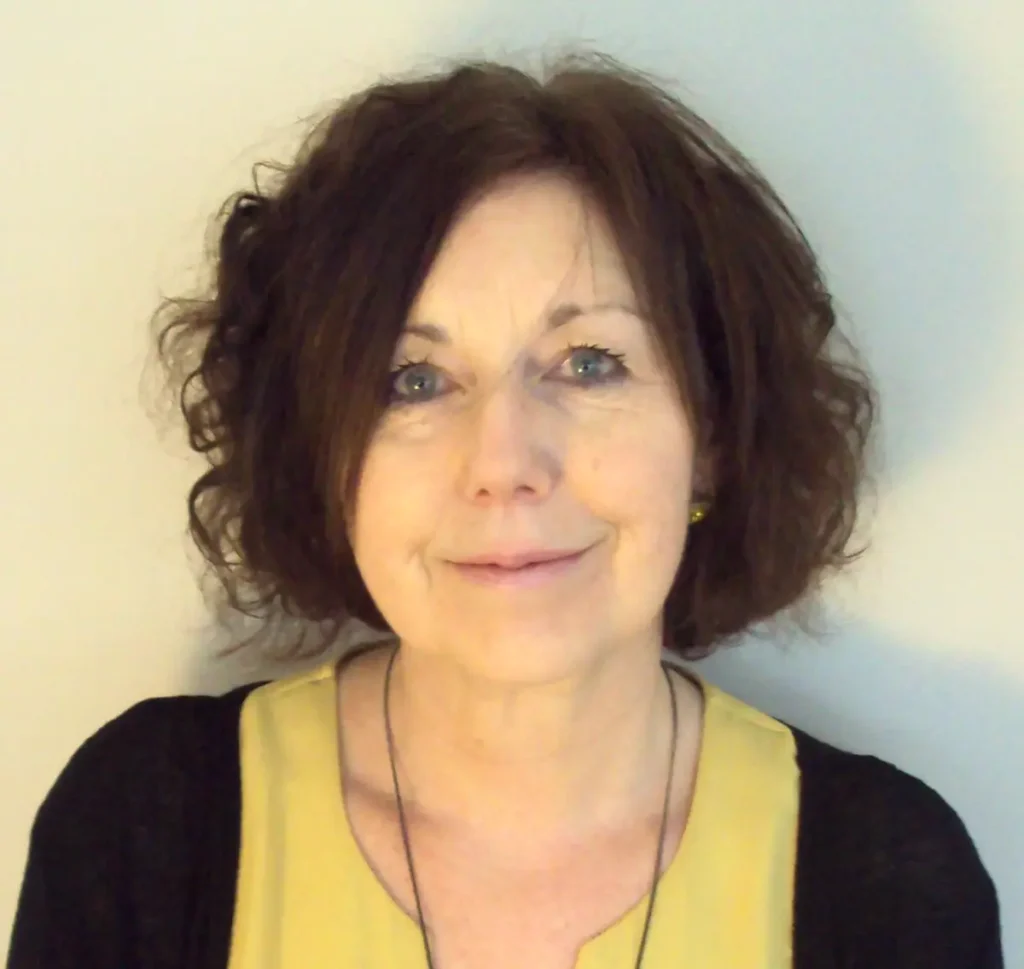
Tell us a bit about how you got started knitting.
Like all children of my age, (early childhood in the 1960s), I leaned the basics of kntting from my mum. I loved making fabric clothes for my dolls, so knitting was an extra skill to learn.
Handmade garments had been popular for decades, and my mum and auntie were always either knitting, doing crochet or sewing. There was still a strong desire not to waste anything, helped by their generation growing up with very little.
I remember my mum going to collect one ball of yarn at the local shop which she had put by to spread the cost when she was knitting a garment.
As an Amazon Associate I earn from qualifying purchases. Read more about our affiliate linking policy.
You studied Fashion and Textiles in Cheltenham. What was it about knitting that caught your attention during those student years?
The course I did was a woven fabric design course, with dyed and printed textiles as a side subject.
A visiting tutor was a knitwear designer, and I found the project that she set really inspiring. The fact that you could create the fabric from scratch and shape it was exciting, and very different from working with ready to to sew fabric.
For my final collection, I did a group of machine knits and one hand knit in very simple shapes, intarsias with embroidery based on Miro’s colourful paintings, after a brief time learning to use a knitting machine and to do machine intarsia.
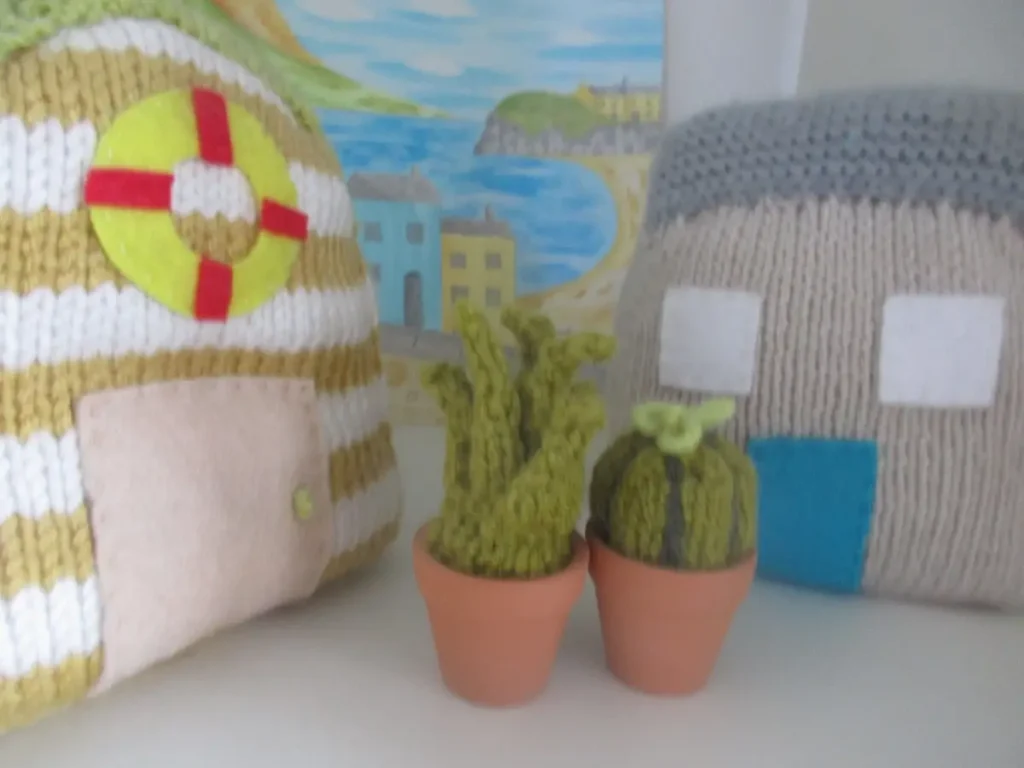
You began your career designing machine-knitted pieces for high-street stores and later moved into handknitting. How did working with machines shape the way you think about knitting by hand?
The first few years of my career in London was as a factory machine knit designer, working for suppliers to the major retailers. I also designed garments for domestic machine knits which were produced on a large scale in some countries.
I worked in various design studios in both large and small companies, including producing machine knit swatches to try out colours and patterns.
The commercial background was good training. You have to learn to appeal to a large number of people, and work within the parameters of production methods, costs, and what the different machines can do.
Presentations to buyers was daunting at first, but I soon got used to them. It was interesting visiting knitting factories both in the UK and abroad. I started adding hand knits to the factory machine knits. Made on a large commercial scale, which a lot of the retailers included in their ranges.
I think the commercial background helped with designing garments with a wide appeal.
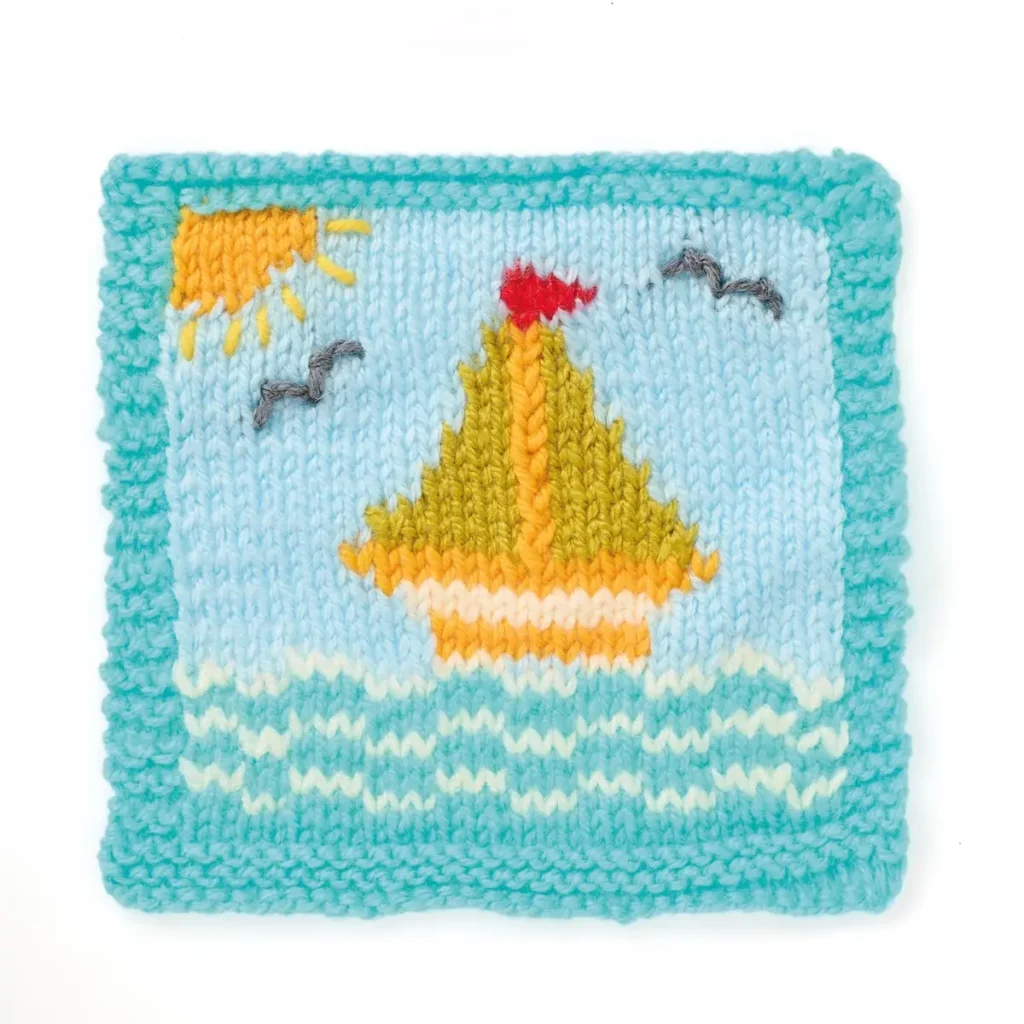
Your designs often have a strong sense of place and nature, from flowers and leaves to coastal and nautical motifs. What kinds of things catch your eye when you are out and about?
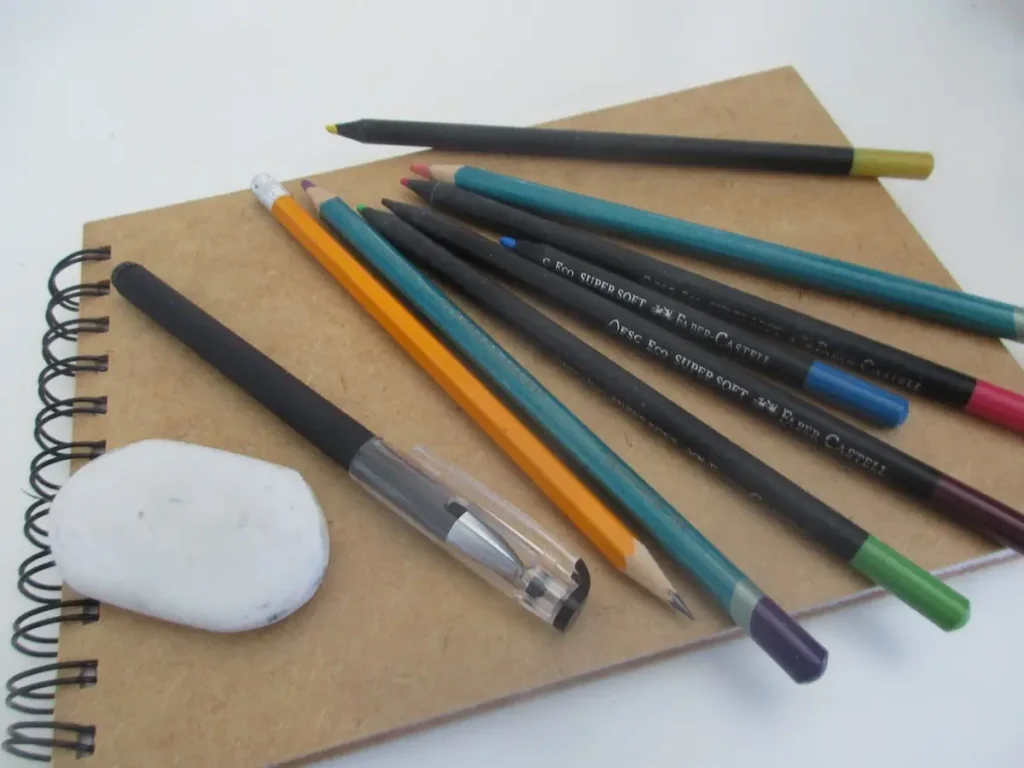
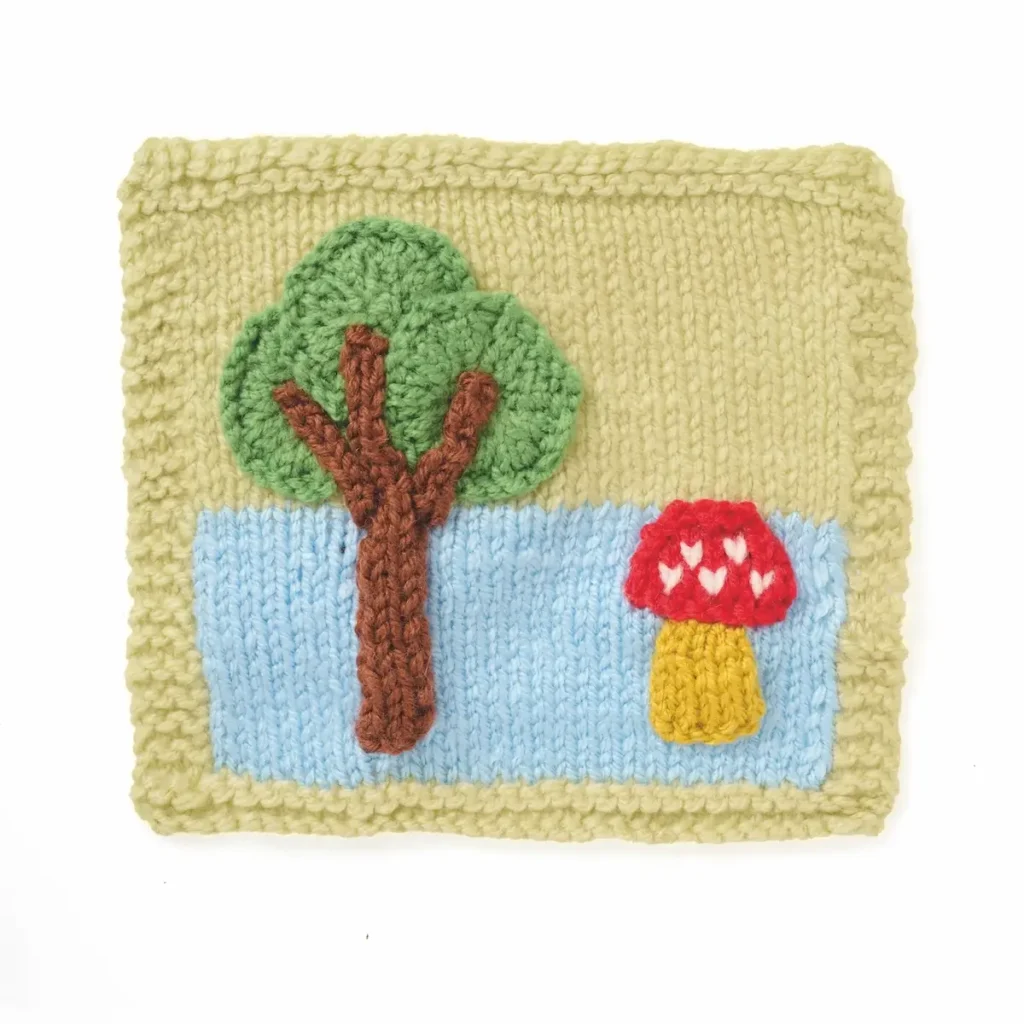
I really love to use motifs in my designs. These could be textured placed motifs, colourwork such as Fair Isle, intarsia, or colour and texture mixed. These might be based on nature, such as gardens, or walks on the coast where we live, which is always a source of inspiration. I always have a small sketchbook and camera with me if I’m out.
When you are looking for an idea, do you start with an image, a color, a stitch, a yarn or something else?
When I’m working on garment designs, the shape comes first, depending on the season. Then the stitch, yarn and colours. Swatches are knitted to see if the stitches in the yarn chosen are working. Home knits have simple shapes and the interest comes in the yarns, texture, stitches and colour.
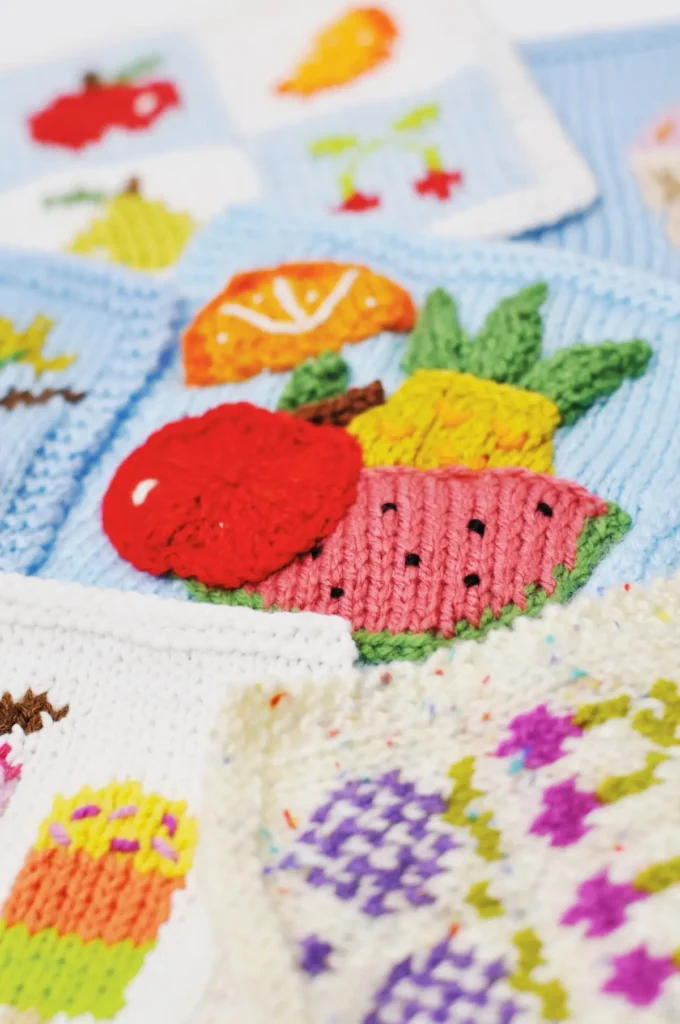
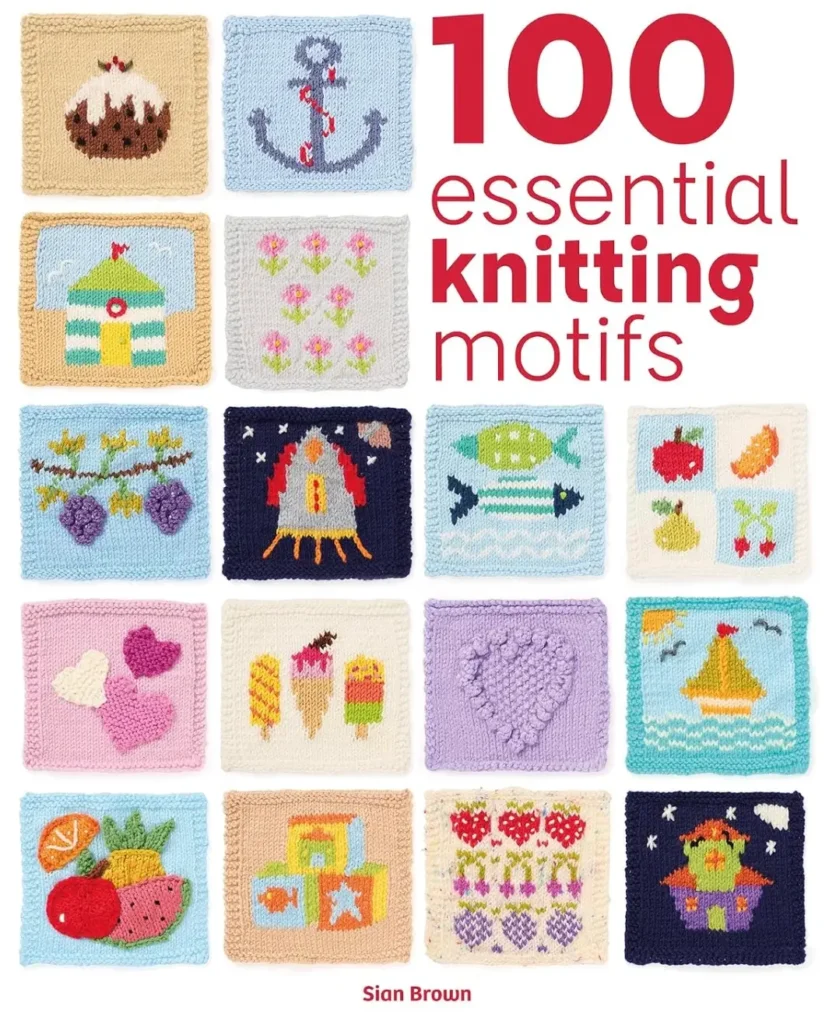
Your new book,100 Essential Knitting Motifs, includes flowers, gardens, the coast, geometric patterns, Fair Isle designs and seasonal motifs. Where do you even begin when you have to choose 100 ideas?
The amount was quite daunting at first.
I broke the designs down into categories such as Fair Isle motifs, all-over Fair Isle, simple texture, lace, cables, intarsia, and appliqué with embroidery. These lend themselves to certain types of designs.
I then did a lot of small sketches and chose an edited group for each category. I also decided to send them in batches of 20, which seemed more manageable, and the knitting could be spread out over a good time frame.
Was there a motif that you knew had to be in the book from the very beginning?
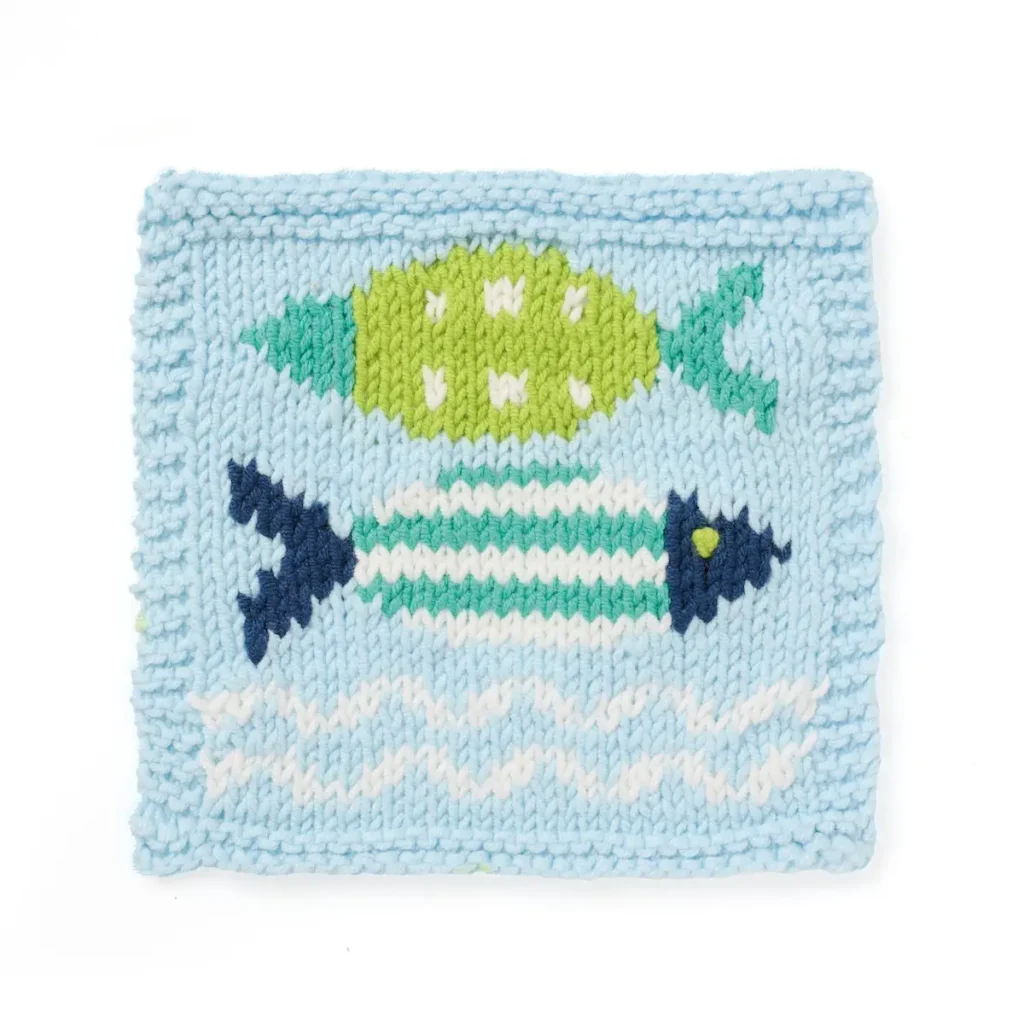
There were some I realy liked from the beginning such as the Apple Orchard, Grapevine, Fish and Waves, Fruit Basket (applique).
Do you sketch your ideas first, or do some designs begin with needles and yarn in your hands?
I always start with a rough sketch with no colour, then add yarn and colour. Some don’t work as well when they are knitted so they are either changed and re worked or not used.
The book includes designs for beginners as well as more detailed lace, cables and colorwork. How do you balance simple designs with motifs that challenge a more experienced knitter?
I tried to do a balance of skills so that it would be useful to a broad range of knitters. Most of the designs tend to be a medium skill level.
What does a typical day of designing look like for you? Is there such a thing as a typical day?
My days have something in common in that I am usually working on projects for magazines and yarn companies, all working to deadlines. The different stages are designing, organising swatches, drawing up the designs, organising the knitting.
I have a pattern writer for garment patterns who also organises a group of knitters. I write the patterns for the home knits and accessories. The last stage is to do the finishing, pressing, sewing up, and any embroidery work that needs doing. I only have very basic knitting skills so my knitters are much better and quicker than I am.
What do you do when a design looks wonderful in your head but refuses to work once you start knitting it?
If swatches have been done before starting a garment, then it is easier to predict how it will look. The garment shapes are usually quite standard.
Sometimes a project is started and has to be changed at the beginning if the knitter or pattern writer is not sure if it is working. At that point, it is usually the stitch that changes or the colours if they don’t look good or show up next to each other.
After so many years of designing, what still makes you excited to pick up your needles?
I have been working as a designer for a few decades.
When I started working in London in the late 1980s, there was a trend for complex, large-scale intarsias like landscapes, which would often take days to do the chart. There must have been some very patient people knitting these commercially.
I’m fortunate to have found something that I thought was really interesting after a few years of trying different things, and have enjoyed my career ever since both as a full time designer and a freelancer. Freelancing was also a good option when I had young children.
It has also given me the chance to travel to places that I would never have been able to go. Although work follows a pattern, every project is different, and there are changing boundaries to work within. I still enjoy my work as much as I always have, which I’m very lucky to be able to say.
What would you tell a knitter who has lots of ideas but is afraid they are not good enough to design something of their own?
For a knitter with ideas but without the confidence to do their own designing, I suggest starting slowly.
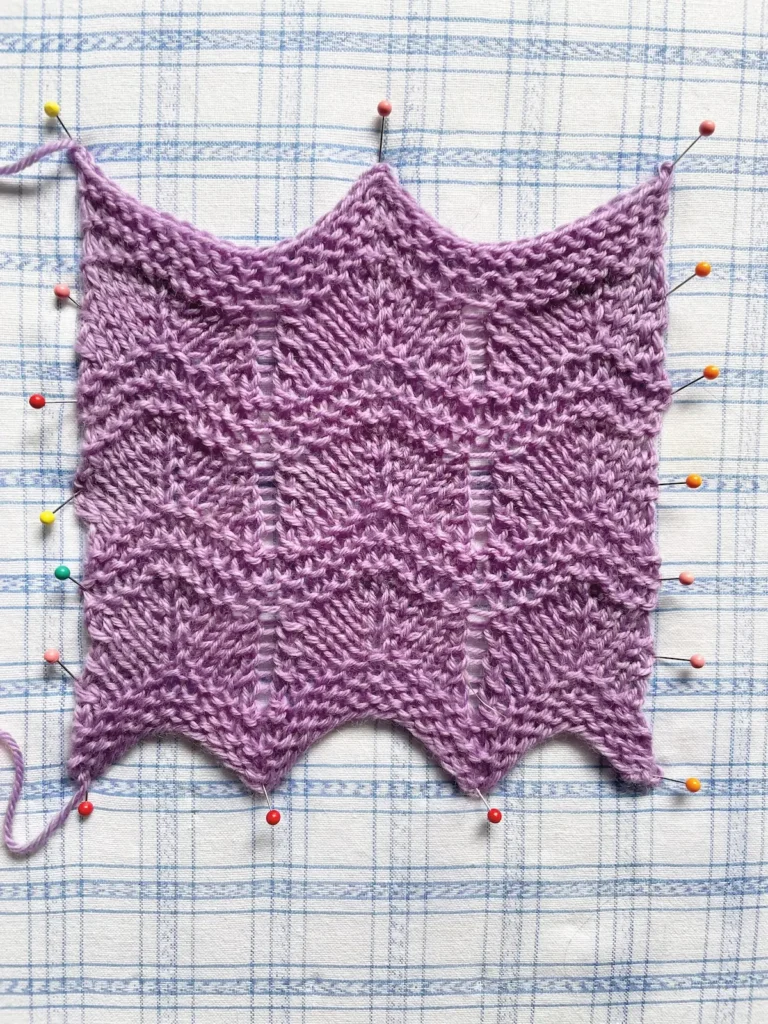
Take an existing pattern, for example, for a garment. If it is an all-over stitch pattern, look for a different one with the same multiple and try that on a swatch. If it works, you can try a new version of the garment.
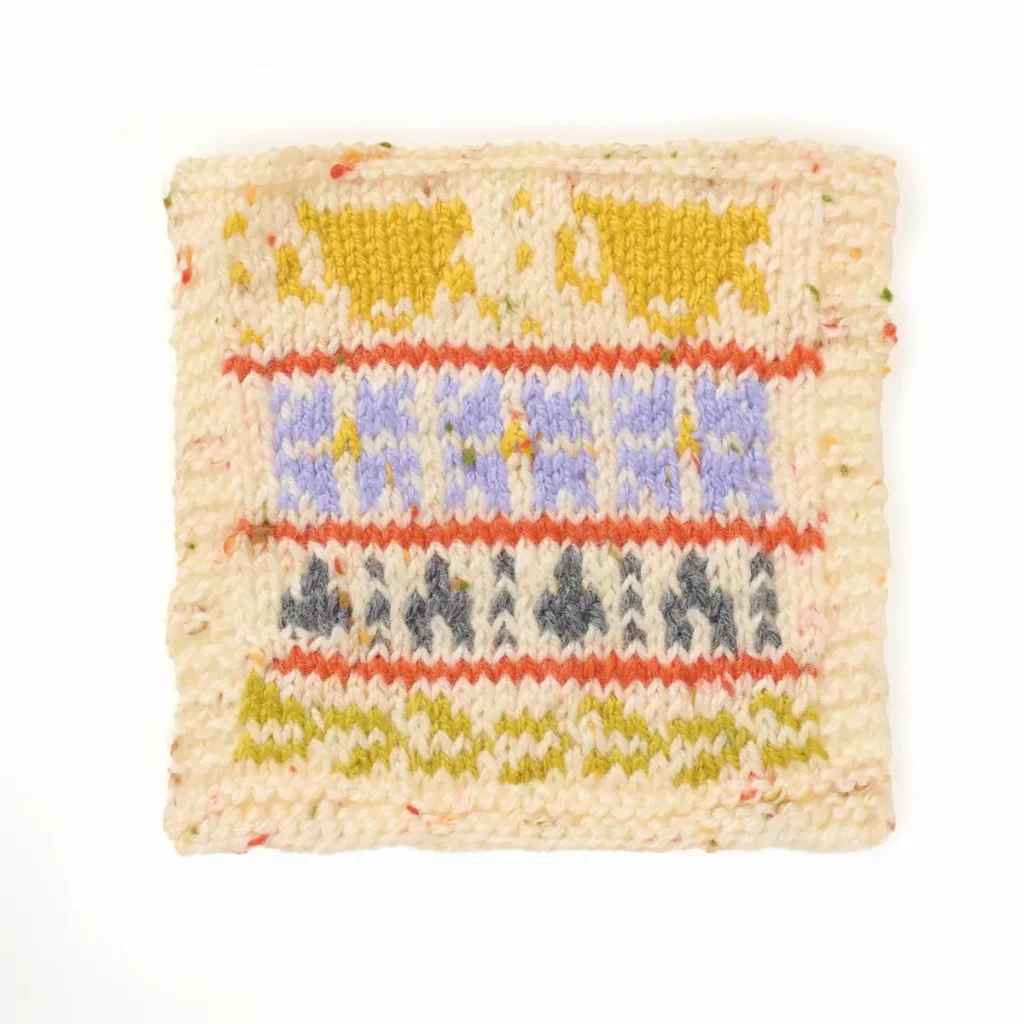
For a part of a garment which has colourwork, such as a Fair Isle border, replace the existing one with a new one with the same repeat, or try one of your own.
The rule is not to have a gap of more than five stitches between sections of the motif. Try a swatch as before.
You can do the same with intarsia motifs and add your own details such as embroidery or beads. Working on smaller projects such as simple home knits will also build up your confidence.
What do you hope someone feels when they finish one of your designs?
I hope that when someone finishes one of my designs, they are pleased with the result, it is a they pictured it, and that it was sworth the effort that they have put into it.
Where can people see your work?
Patterns are available on Ravelry: www.ravelry.com/designers/sian-brown-knitwear-design
Pinterest: pinterest.com/sianb60/
Interview posted October 2026
Explore more knitting projects and inspiration on Create Whimsy.