
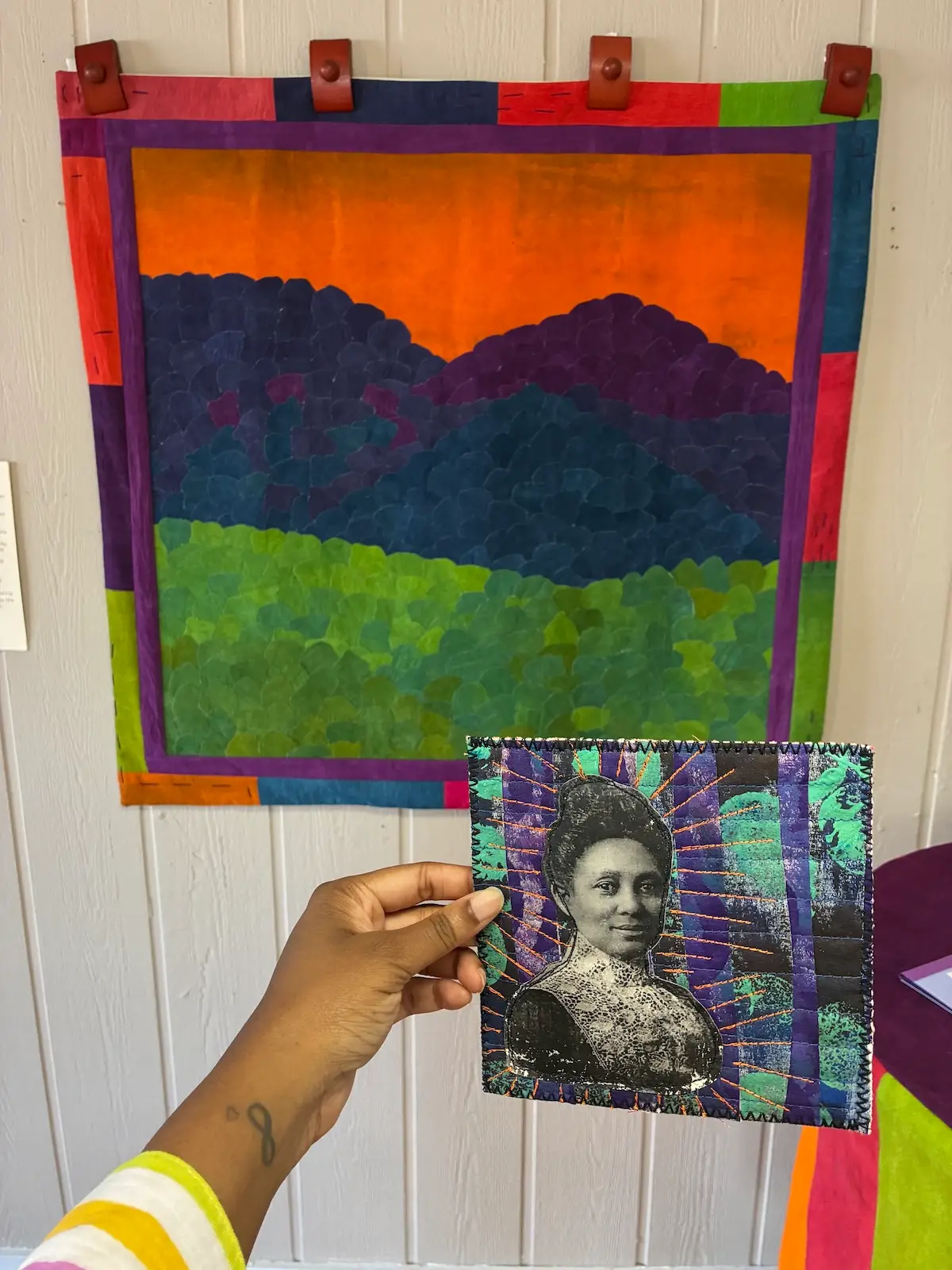
Dr. Jaleesa Wells uses fabric, color, and stories to make history come alive. Through her textiles and art quilts, she brings forward cultural memories, community stories, and the lives of people history has tucked away. Join us as she shares how curiosity, archives, and craft come together in everything she makes.
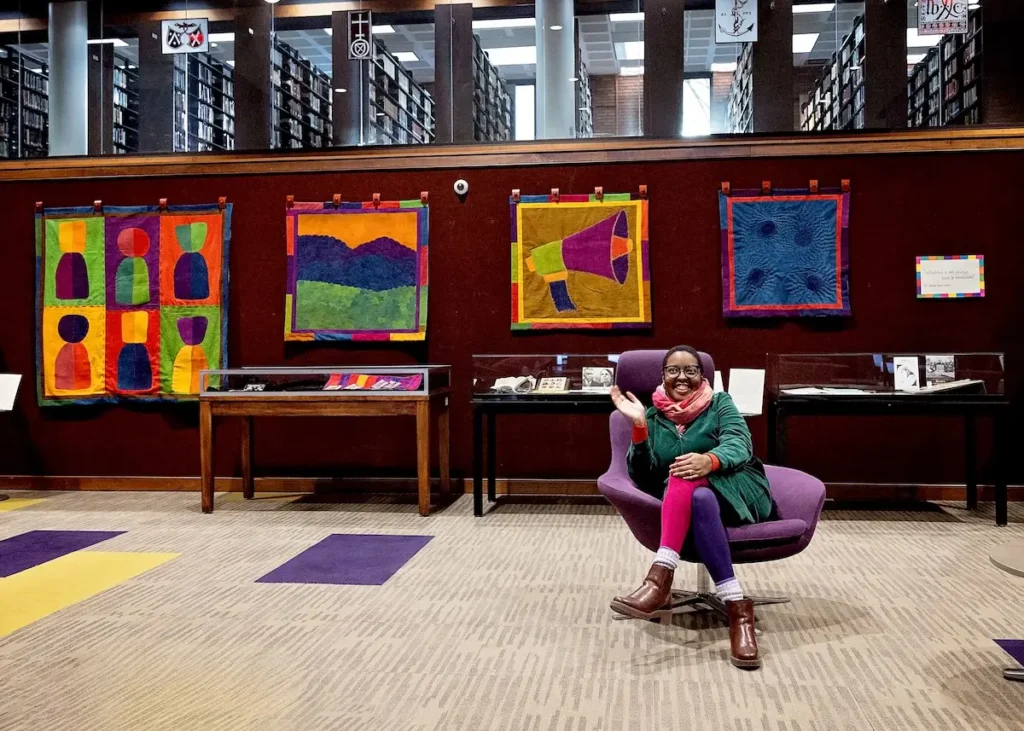
What role did art, craft, or storytelling play in your childhood?
Art, craft, and storytelling were woven into my childhood from the beginning. I spent most of my time making things, like writing little stories, collaging scraps, sewing, folding origami, painting, and coloring. It was the most natural way I knew to express myself.
My teachers nurtured that instinct. In first grade, we were encouraged to draw directly onto our printed poetry readings, to illustrate what we felt in the words. That early merging of text and image stayed with me and still shows up in my work today.
How did your path as both an artist and a scholar begin to take shape?
As an Amazon Associate I earn from qualifying purchases. Read more about our affiliate linking policy.
My artist–scholar path didn’t begin as two separate tracks; it formed from the same early experiences.
Art was how I learned, and learning was always creative. I grew up surrounded by music (I started playing piano at four), and cultural expression was woven into how my family shared stories and connected across communities.
Those formative moments shaped the way I think, make, and research. My scholarship emerged directly from my creative life, as a continuation of how I’ve always understood the world.
Your work centers on memory, storytelling, and community. What first sparked your interest in preserving stories through art?
My interest in preserving stories through art didn’t come from a single spark; it’s simply how I grew up.
Storytelling lived in the objects around us. We’d sit under quilts passed down through the family, listening to each other share memories or reading books together. Those experiences taught me that stories live in materials, in touch, in everyday rituals.
As I’ve gotten older, I’ve come to see those experiences as the roots of my practice, where memory, story, and community were already intertwined together.
What kinds of stories are you most drawn to uncovering?
I’m deeply engaged in rediscovering the breadth of Black American history. And, presently, I’m exploring the connections of history and place rooted in Kentucky, where I call home.
So many of these stories have been made invisible or fragmented over time, and traditional education often leaves them out entirely.
My artistic practice gives me a way to explore these histories in a way that feels natural and intuitive: through making, interpreting, and reconnecting them through creative expression.
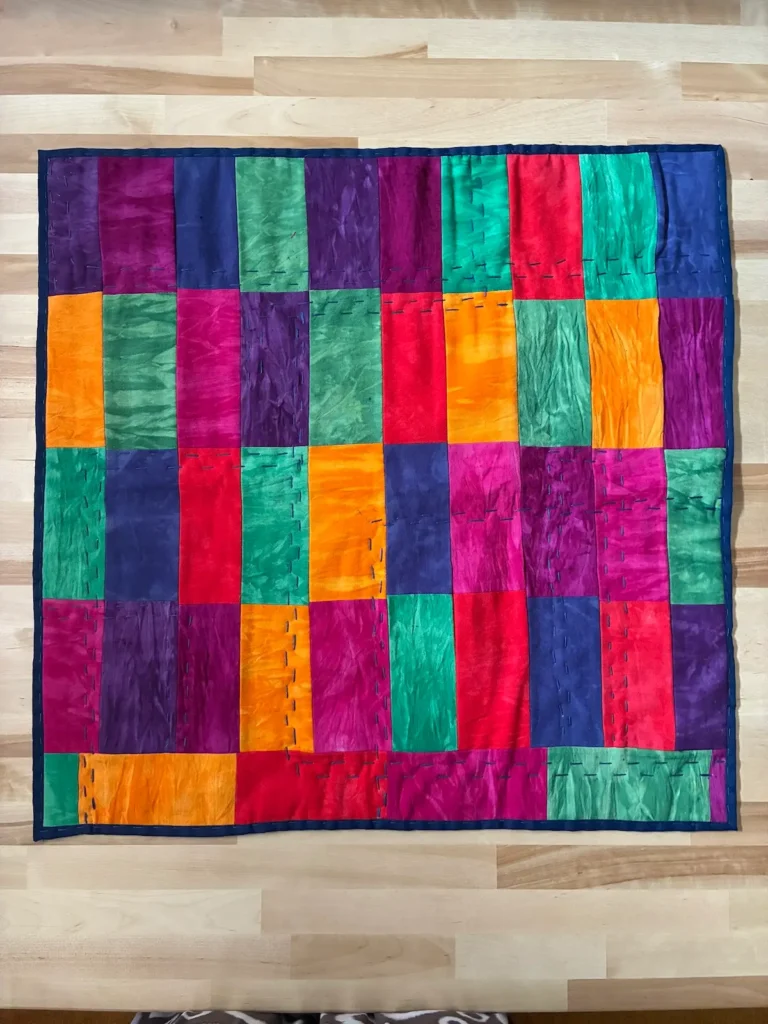
How do you balance honoring history while creating something entirely new?
Honoring history, for me, means bringing it into the present.
My ancestors created quilts to warm and nurture our family, and I honor them by continuing that tradition through my own textile practice. I bring their stories forward by embedding symbolism from their artifacts and historical records into my pieces.
Learning from the past helps me understand the present and envision the future, and that relationship keeps my practice grounded and evolving at the same time.
Describe your creative space.
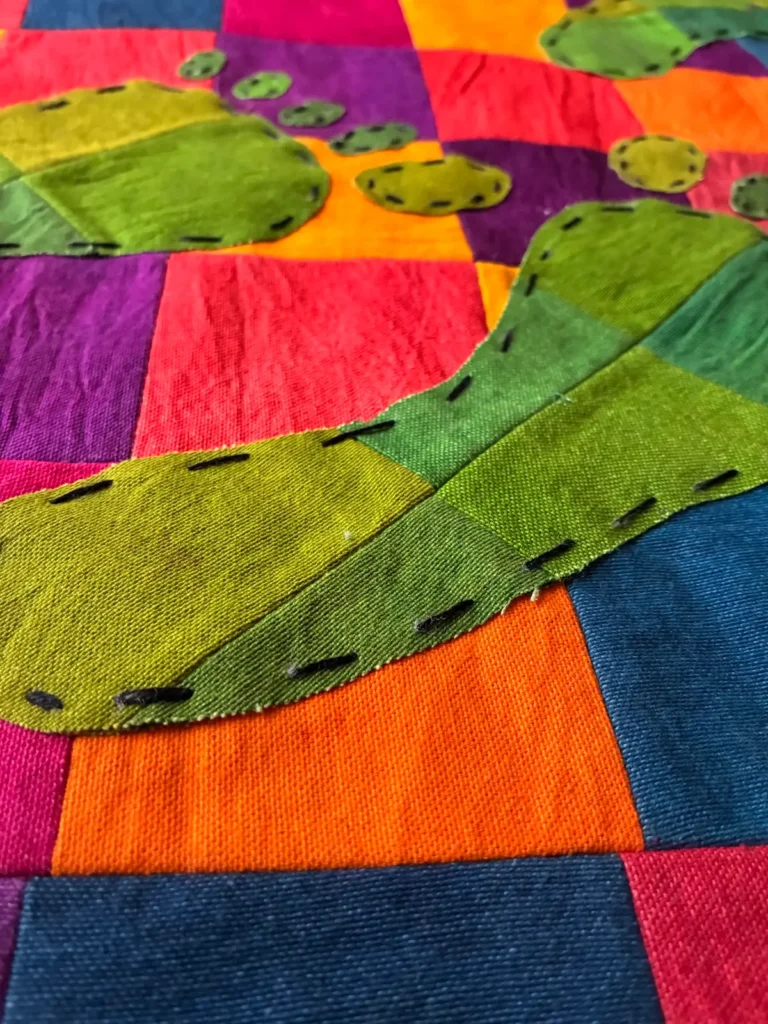
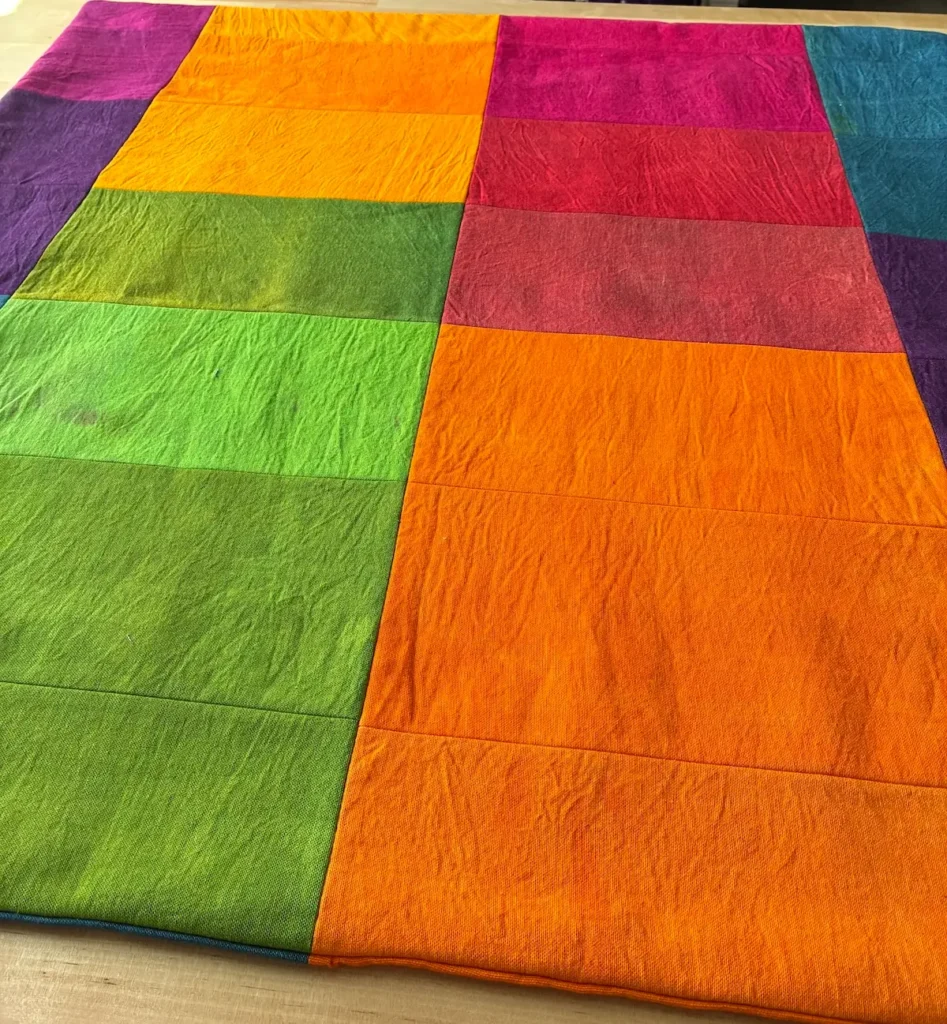
My creative space is a colorful, evolving environment filled with pieces I’ve made and things my husband and I have created together.
It’s a space with abundant natural light and room for me to shape my ideas. I’ve set it up to be flexible, so it can shift depending on what I’m making, but it’s also easy to clear and reset when I’m ready to start a new project or have the clarity of a completely empty table.
Are you someone who likes structure and plans, or do you leave room for surprises?
I live in plurality, so I need both structure and surprise in my practice.
I often have multiple projects moving at different stages, so I rely on structure for the parts of my practice that need to function smoothly.
But I also leave room for spontaneity, especially in the expressive phases where I enjoy discovering something new. Plurality feels natural to me and true to how I create.
Much of your work explores cultural memory and collective histories. What responsibility do you feel as a storyteller?
I see telling the stories of our ancestors as a shared responsibility.
We all are accountable to the past and to make sure the past is understood and has meaning in our present-futures. I make my contribution to that accountability by the discoveries I make and the ways I translate them into symbolism and narrative in my artwork. My hope is to contribute to a collective effort to engage with memory and history.
When did the mountain first emerge as an important symbol in your creative practice?
The mountain became a symbol in my work because it’s part of the landscape I live in, in Berea, KY. Living in the foothills of Appalachia means the landscape is always present, shaping how I think, research, and create. It didn’t feel like the mountain emerged as a symbol; it feels like I emerged from the landscape itself.
Tell us more about the Moving Mountains project.
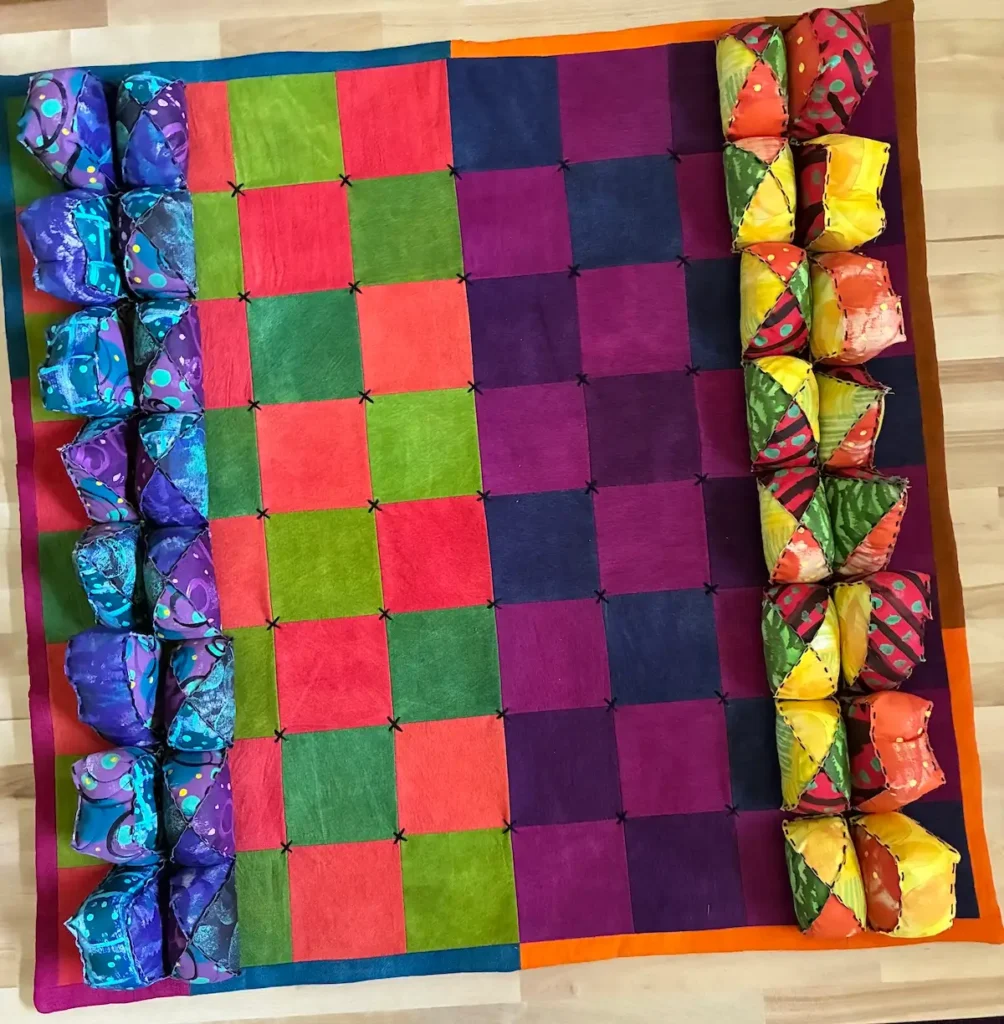
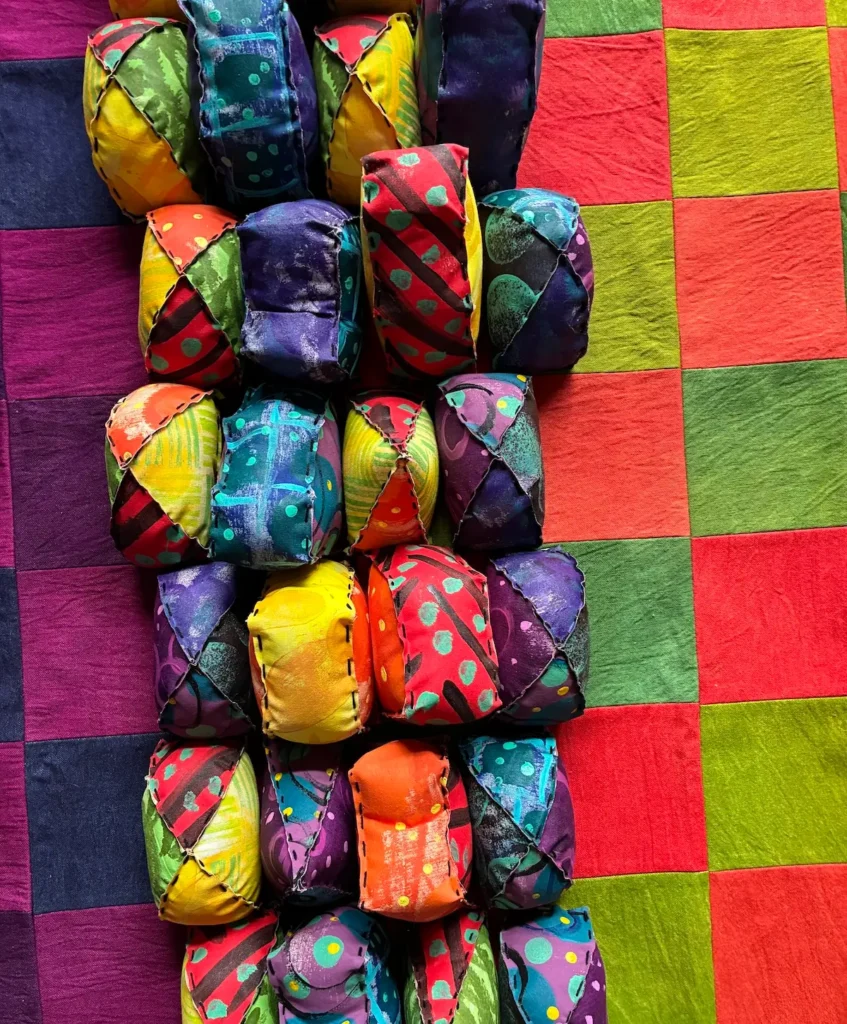
Moving Mountains began as a personal challenge: I wanted to make a chess set as a gift for my husband so he could teach me how to play. As I was designing the pieces, I kept thinking about how many mountain ranges I’ve lived in or near, and how my life has moved between them.
The mountain aesthetic grew naturally from that reflection. Mountains shift slowly and methodically over time, much like a chess game, and that connection helped the project come together both literally and figuratively. There’s more about the project on my website and in my studio zine.
Were there moments during this project when the scale of the history felt overwhelming? How did you keep moving forward?
I didn’t feel overwhelmed by the history in this project. I see history as a collection of small moments, memories, and stories, and I’m energized by discovering them.
Every time I came across something new, it felt like an invitation to keep exploring. That excitement and abundance kept me moving forward.
What conversations do you hope Moving Mountains sparks among viewers?
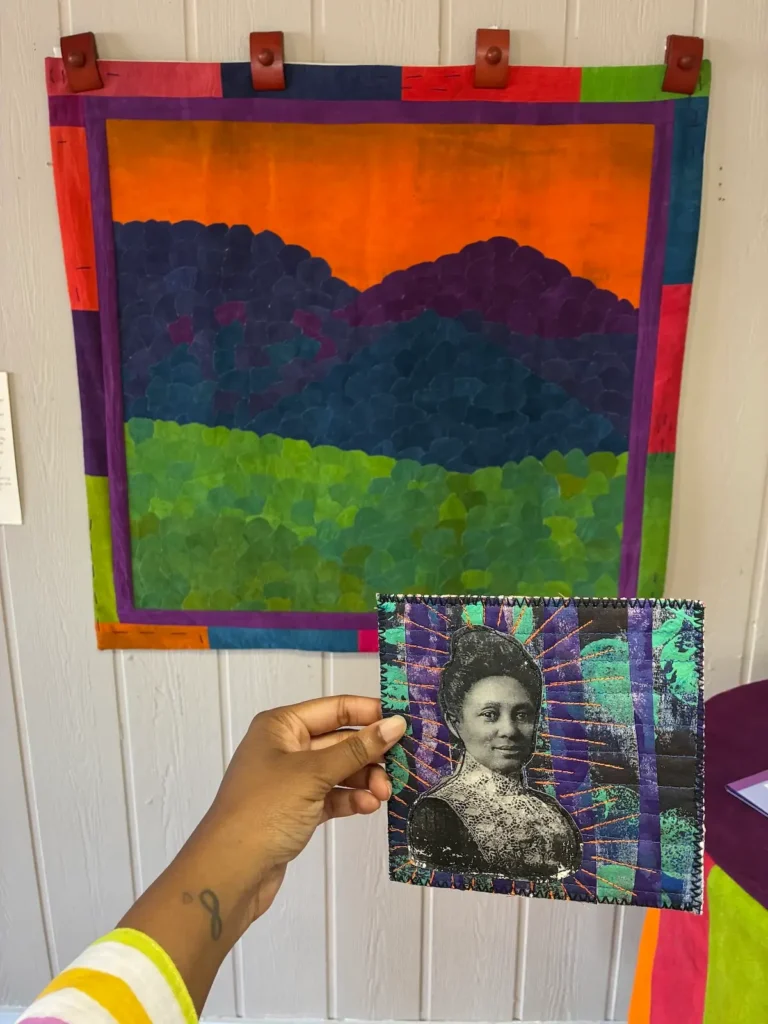
I hope Moving Mountains invites people to consider the movements in their own lives, whether they’re physical, spiritual, or emotional. The project centers on transition and the “in‑the‑meantime” spaces that shape us.
We’re usually focused on where we’re going, but the journey between places holds its own kind of wisdom. I love those transitional moments, and I hope viewers find meaning in them too.
Tell us about your Onyx Patchwork series.
The Onyx Patchwork series is an ongoing, evolving project that began with curiosity: a desire to explore Black American history in my own way and, in that exploration, I felt encouraged by Dr. Carter G. Woodson’s approach to truly see the Black presence in and contributions to American history.
That curiosity led me to a group of Black Americans who, through different paths, eventually converged in Berea, Kentucky, and at Berea College. I spent time with their stories in the Berea College Archives and Special Collections, listening to what those records were sharing with me.
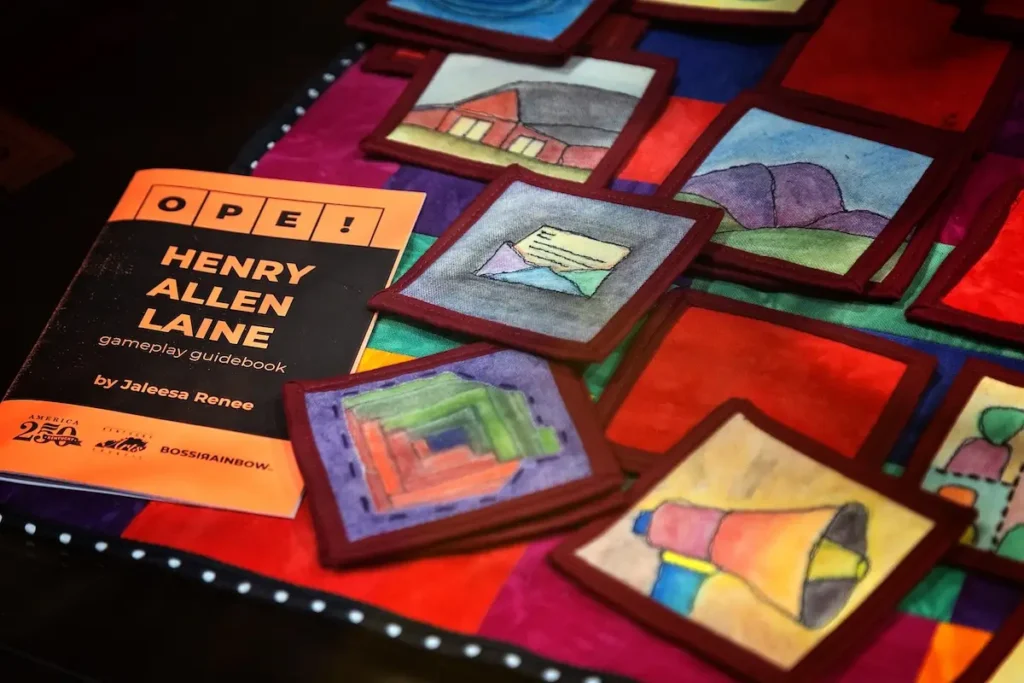
I became too curious not to respond creatively, so I made three quilted memory games inspired by the first three figures I encountered (so far): Julia Britton Hooks, Henry Allen Laine, and Dr. Woodson. Those games evolved into textile art quilts based on shared symbols across the games and made from my hand‑dyed, thread‑illustrated, and hand‑painted fabrics.
As I learned their histories, I found myself re‑learning a textile language that’s been passed down through my family, building new textile surface design skills and processes, and merging generational craft with archival discovery.
The series continues to grow, leading me to sites like Camp Nelson and to the histories of Kentucky’s Black suffragettes and women’s organizations. It’s a project that keeps unfolding as I keep learning.
Why was play an important part of telling these stories?
Play matters because it’s one of the first ways we learn; it isn’t limited by anything except the rules of the game, which people interpret differently anyway. It’s timeless and accessible.
When I created my games and played them with different groups, I loved watching how naturally people’s curiosities sparked. They asked questions, explored histories they didn’t know, or revisited familiar stories from a new perspective and in community.
A Berea College alum who graduated in the 1970s told me she was surprised to be learning something new after all these years, and that moment affirmed how powerful play can be in opening up history.
Creating more than 100 game pieces sounds like a monumental undertaking. What did that process teach you about repetition, labor, and storytelling?
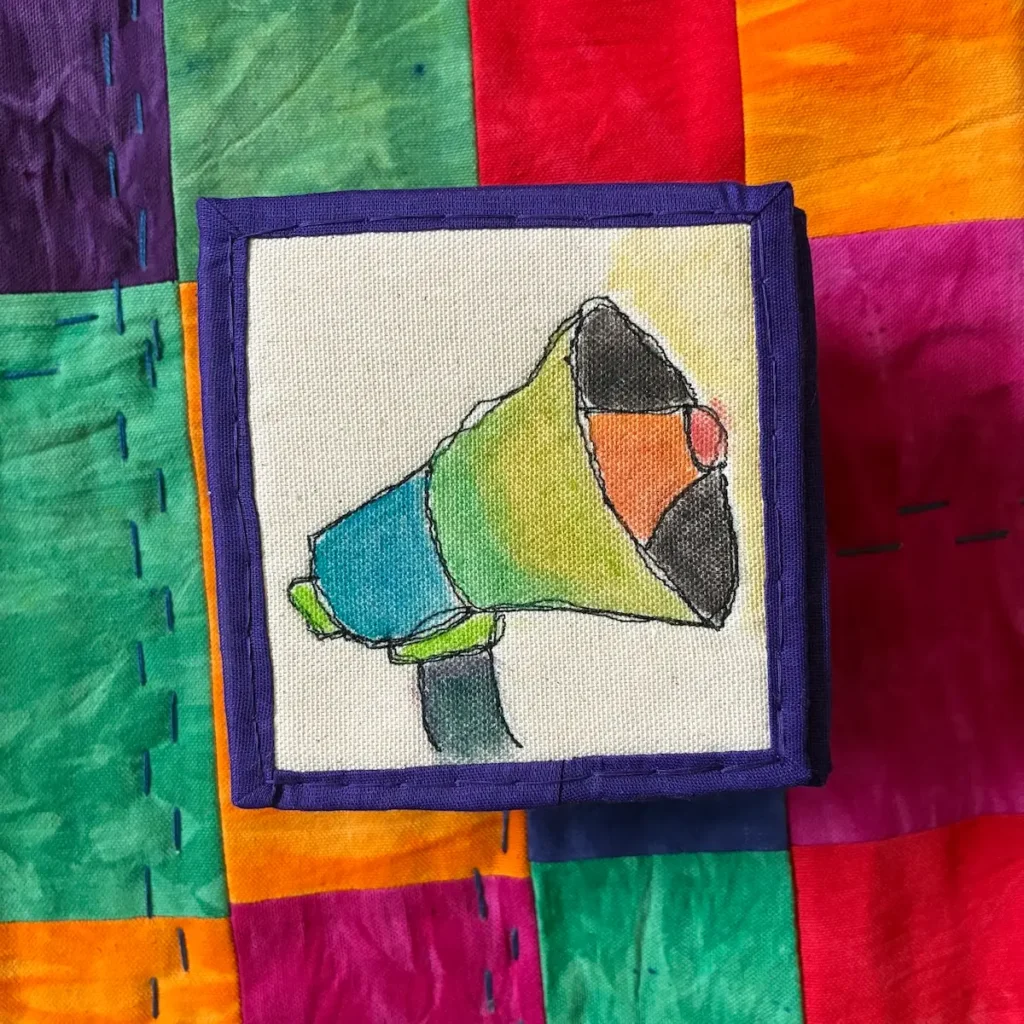
Creating more than 100 game pieces was definitely a monumental process, but in the moment I was absorbed in the puzzle of how to distill a complex history into a single image someone could quickly make a connection.
Simplicity was my goal. That focus on simplicity taught me that repetition lives in the object, not in the story. One symbol can be crafted in infinite ways.
The process showed me that stories can be told through simple imagery and symbolism without needing heavy explanation, and that I can always shift my approach and create again from a new perspective.
It also reminded me how physically demanding making can be, and how important it is to have the right tools so the work stays encouraging rather than exhausting.
Being an artist and maker is abundant; the work expands as far as imagination allows.
What responsibility comes with becoming a steward of stories that have been forgotten, erased, or overlooked?
I feel curiosity, and I feel responsible for sharing what I’m learning.
I see myself as a participant in a larger collective effort, and I want others to feel invited into the process, to be curious, to explore, and to share their own discoveries.
And part of that responsibility, for me, is making sure these stories don’t get held by only a few people or institutions. Forgotten, erased, or overlooked histories stay that way when access is limited.
The responsibility I feel is about opening doors, widening the circle, and encouraging people to trust their own questions enough to follow them. I want to create conditions where more people feel empowered to step in, learn, connect, and contribute.
The responsibility is shared; I’m doing my part by staying curious and making what I learn visible.
If your work could start one conversation in the world right now, what would you hope people talk about?
I hope my work opens doors to many conversations across communities and cultures. I want people to feel curious, to ask questions, to keep seeking answers.
My hope is that my practice and creations expands access so people don’t treat the fragments we learn in traditional education as the whole story.
My work is an invitation to the curiosity we all have inside us, the curiosity we sometimes keep quiet and hidden. I want people to release that curiosity, engage with it, see themselves connected to history and community, and maybe learn something new or revisit a question they’ve carried for a long time.
Where can people see your work?
My work exists in several places. My original art quilts and memory games have been accessioned by the Berea College Archives and are on display there, so you can visit the reading room to see them. I also exhibit work with the Kentucky Guild, and I have pieces traveling across the state. You might find me giving demonstrations at historical or community sites throughout the year, and I’m working toward showing more work internationally. If you can’t make it to those places, you can always engage with my work on my website, bossirainbow.com, in my studio zine, and through my social media links on my site.
Website: https://www.bossirainbow.com/
Studio Zine: https://bossirainbow.substack.com/
Instagram: https://www.instagram.com/bossirainbow/
Rapid Fire Fun
- One word that describes your creative practice? Colorful and loudish.
- Advice you’d give your younger creative self? To my kid self: Your feelings and emotions are the foundation of your imagination; stay attuned to them, embrace them, and follow your intuition.
- To my teen/young adult self: We’re going to do all the things you’re imagining right now and then some; so keep dreaming up big plans for us and for our future.
- What’s bringing you joy right now? Rest is bringing me a lot of joy right now.
Interview posted August 2026
Explore more inspiring interviews on Create Whimsy.