
Deborah Csongradi turns fabric, thread, and a love of nature into beautiful art quilts filled with color, texture, and emotion. From elephants and tigers to birds and landscapes, her work captures the feeling of the moment that inspired her and reminds us to care for the natural world. In this interview, Deborah shares her creative journey, her love of blue, and why making art is such an important part of her life.
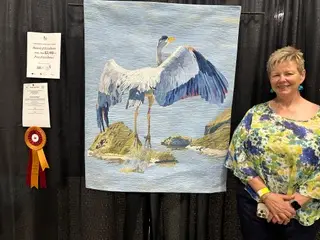
Let’s start at the beginning. What first drew you to quilting and working with fabric? Was there a particular moment when you thought, “This is something I want to explore”?
I guess you could say that I was born into working with fabric.
My Mother was very creative and sewed most of my clothes when I was younger. When I graduated and started my first job, one of the first things I purchased was a sewing machine. I made a lot of my own clothes and decorative things for around the house.
My friend was a quilter and talked me into taking an eight-week sampler quilt class. By the end of the eight weeks, not only had I finished the sampler, but I also made a king-size quilt based on a photo I saw. Needless to say, I was hooked.
As an Amazon Associate I earn from qualifying purchases. Read more about our affiliate linking policy.
Two years and many quilts later, I bought a longarm to make it easier to free-motion quilt larger quilts. When COVID and the lockdown started, I stumbled upon an art quilt class taught by Roxane Lessa via Zoom.
That started me down my art quilt/textile art journey. In that class, I connected with five very talented textile artists from North America and Spain. We decided to meet monthly on Zoom and still do to this day. Members of the group have met up in person at Quilt shows in Houston, Toronto, and Winnipeg.
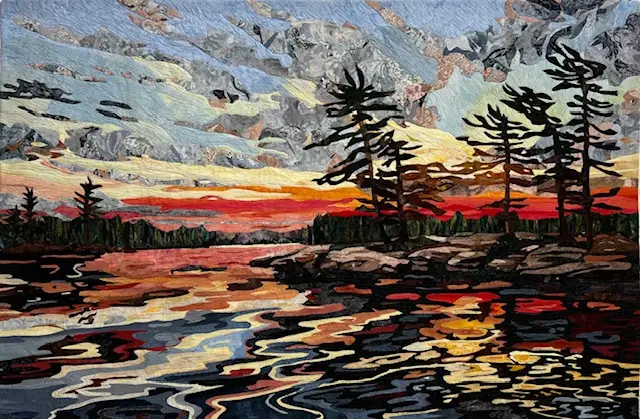
You are also a professional longarm quilter. How did that part of your life develop alongside your own art?
When I bought my longarm, in addition to doing my own quilts, I started volunteering to quilt for various charities.
Eventually, that morphed into my longarm quilting business, Dog House Quilting. In addition to client quilts, I still donate my time to FMQ charity quilts for local guilds to donate to people in need.
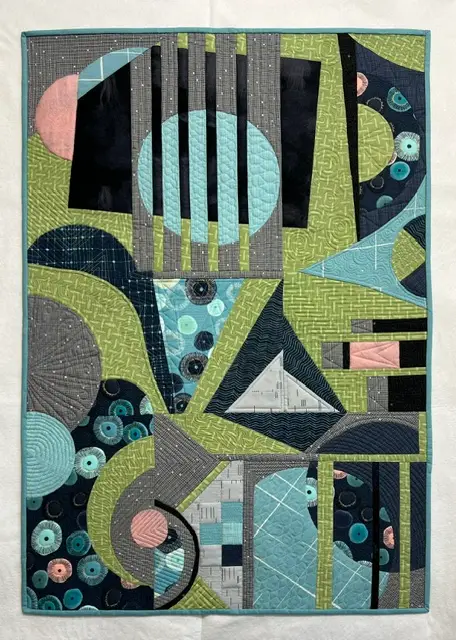
Does quilting for other people change the way you think about your own work, or do you keep those two parts of your creative life separate?
For the most part they are separate but if anything, the work I do on own pieces influences how I approach client quilts.
When you are outside, what catches your eye first: color, light, texture, shape, movement, or something else?
All of the above, but I would say texture and shape are what initially captures my attention.
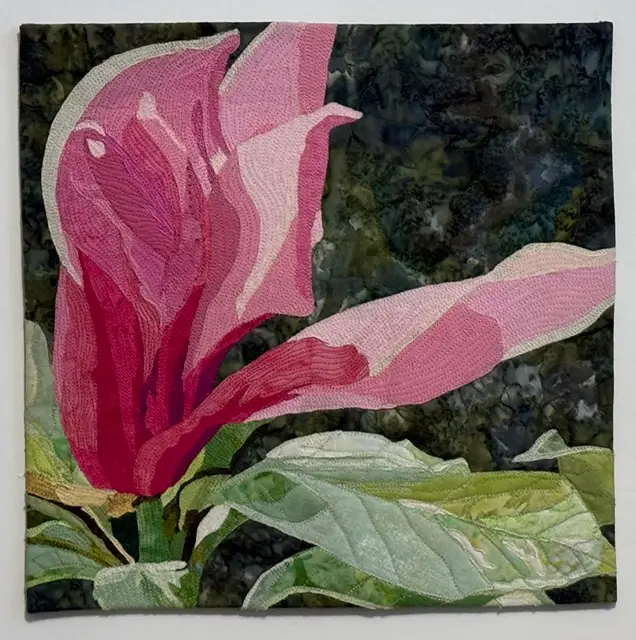
Where do ideas usually begin for you? A photograph? Something you see in nature? A color combination? A feeling? Or does it sometimes arrive from somewhere completely unexpected?
How something makes me feel is a really big part of what inspires me to create. Be it something I see in nature or a photograph. I immediately know if it is something that “speaks” to me and that I want to explore in textiles.
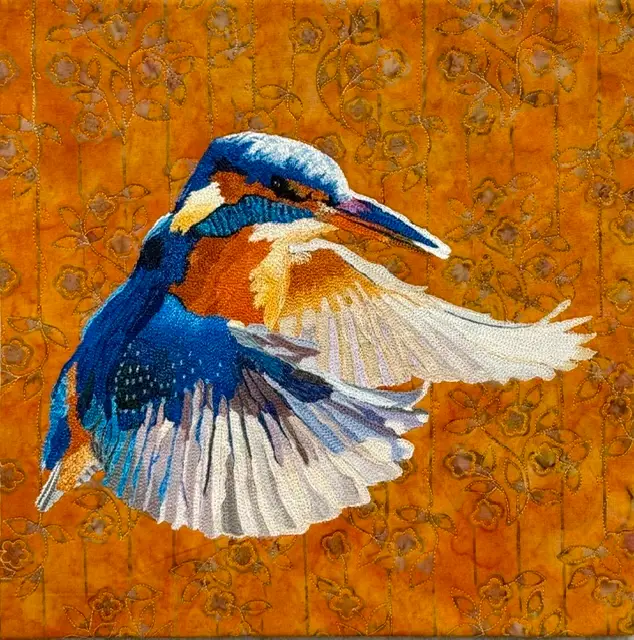
Your work often celebrates nature while also reminding us that the natural world needs our care. How important is that message to you?
Extremely important.
Environmental and animal stewardship is critical because human survival directly depends on the health of our planet’s ecosystems. When we protect nature and wildlife, we secure the essential resources required for human life while fulfilling an ethical duty to other living beings.
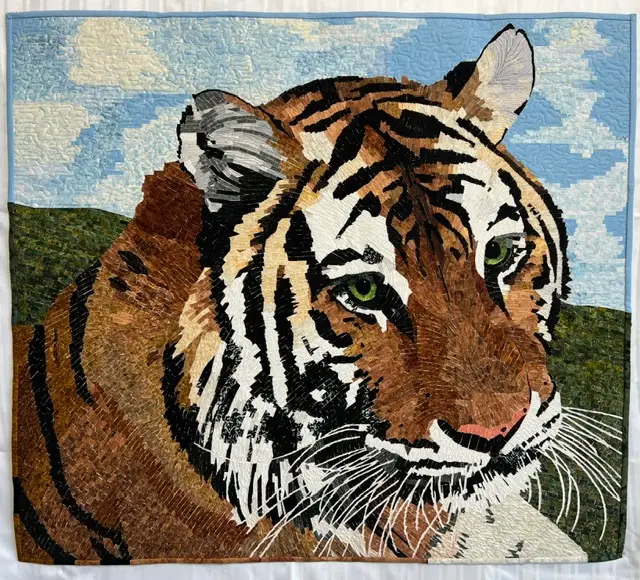
Animals have played an important role in your work, from Lucy the elephant to Taiga the tiger and more recently birds. What do animals give you as an artist that landscapes or flowers don’t?
I have been drawn to animals all my life and feel a deep connection to them. Creating successful textile images of animals is more of a challenge than a landscape for example. If I don’t get the colour or shape of a tree or cloud formation to look exactly like the inspiration photo, no one will know but everyone will notice if the proportions or shape is off on a well known animal.
You spent time volunteering at the Edmonton Valley Zoo, and your relationship with Lucy became the heart of Through Lucy’s Eye. How did that experience change you as a maker?
My time volunteering at the Edmonton Valley Zoo is something that I will cherish for the rest of my life. It was an amazing experience and so rewarding. It certainly gave me a lot of sources of inspiration but I don’t think it changed me as a maker.
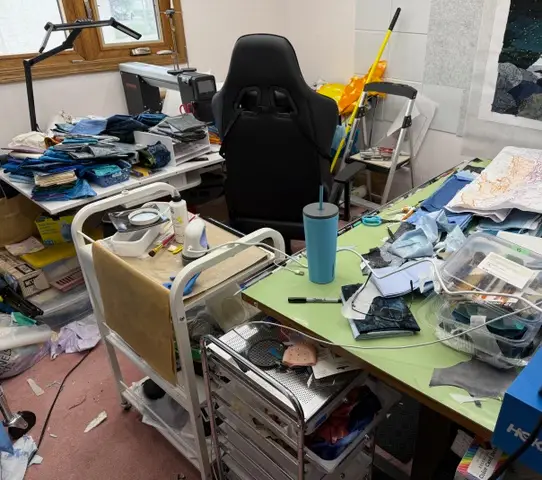
Take us into your studio. What are the fabrics, threads and tools you reach for again and again?
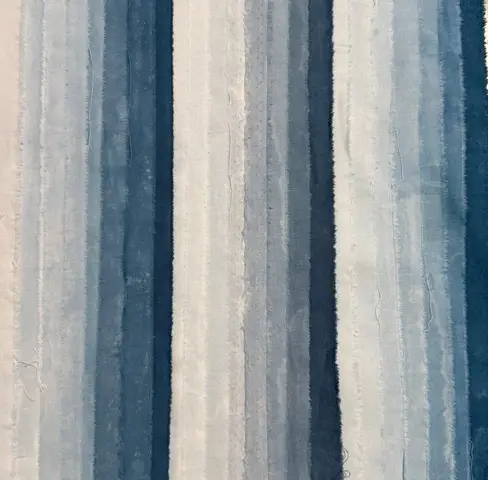
I love using batiks because of the amazing range of hues and values that are available and the I really appreciate the fact that they don’t fray the way regular cotton does. I recently took a batik class and hope to start making my own batiks to use in my work. In the last couple of years I have started dying my own fabrics and I love the challenge of mixing the perfect colour in a range of values and textures.
I primarily use Aurifil 50wt thread. At a quilt show this year, I received the Excellence in Threadwork award which came with the complete 270 spool collection of Aurifil 40wt thread. I am using it on my current piece and I’m really liking it.
I also love Karen Kay Buckley 4” and 6” Perfect Scissors and precision stainless steel anti-static tweezers to help with the tiny pieces of fabric.
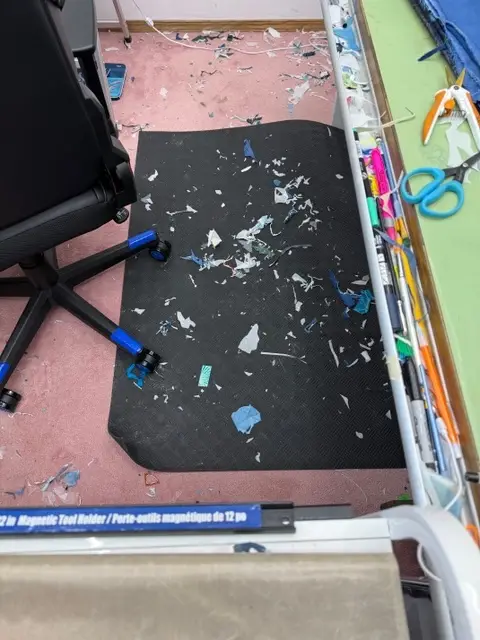
Walk us through the life of one of your pieces. Once you have an idea or image that won’t leave you alone, what happens next?
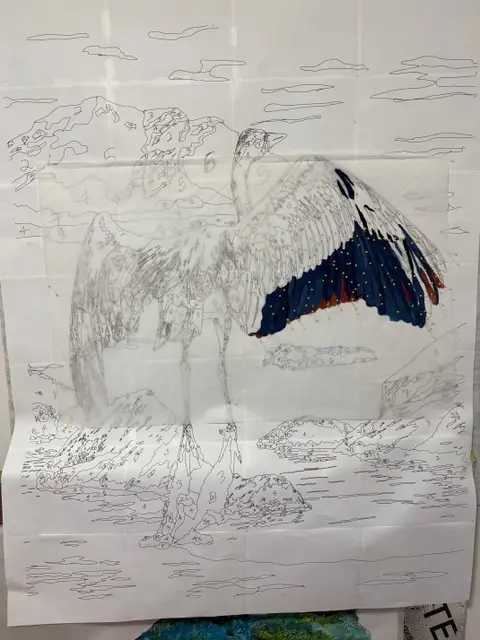
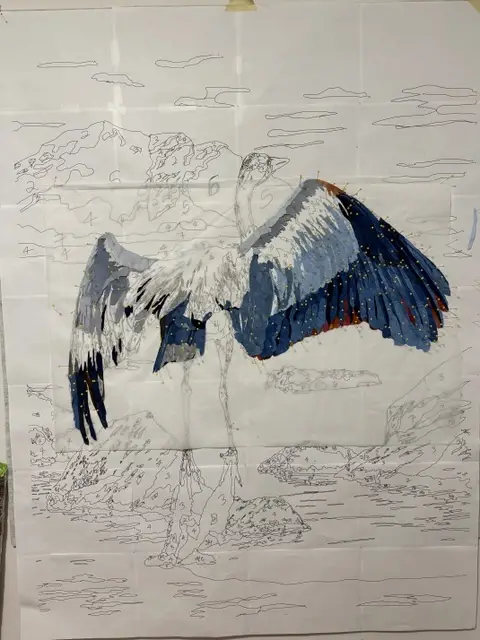
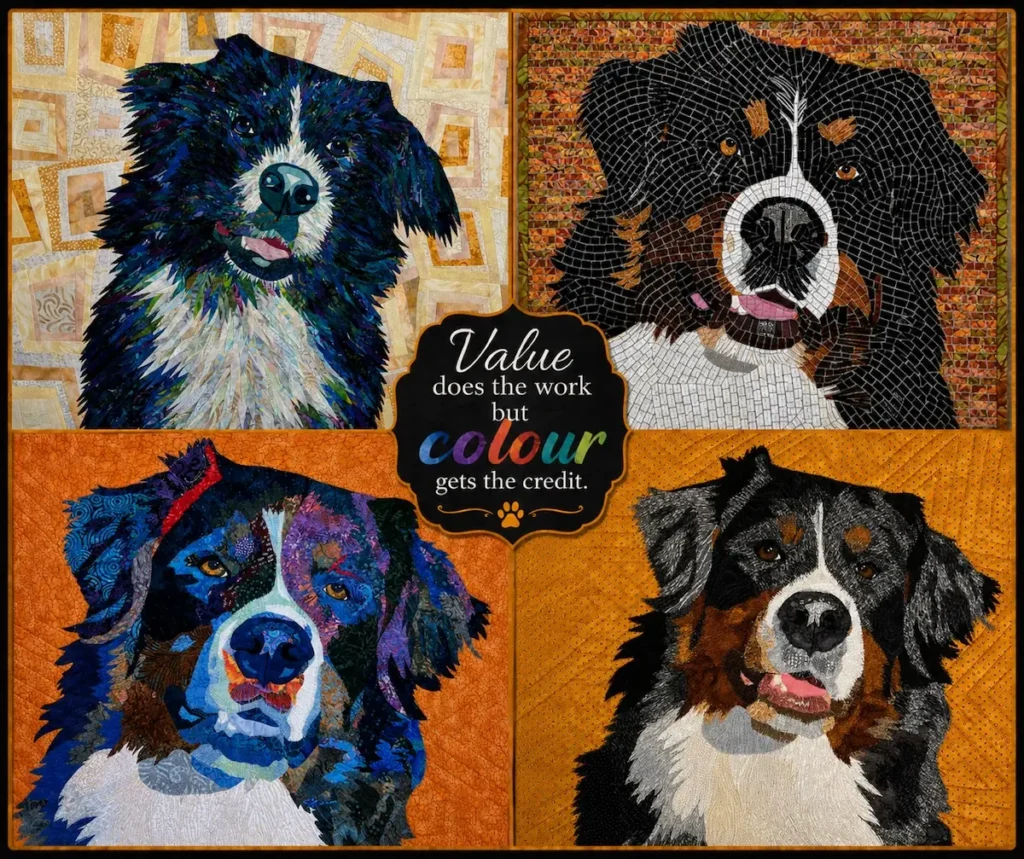
First thing I do is create a pattern on my iPad and figure out the values that I am going to need. The saying “value does the work but colour gets the credit” is so true. It’s value that gives dimension to a subject. If the values are not correct, I will never be able to bring my subject to life.
Do you plan your quilting before you begin, or does the stitching change as you get to know the piece?
I rarely do any planning before I start quilting. It just develops as I make my way through the piece and see what it needs to come to life.
Do you have a favorite part of the process: choosing fabrics, cutting, layering, fusing, appliqué, thread painting, quilting, or finishing? And which part makes you groan a little?
I have a love/hate relationship with most of the processes. For example, when dyeing is going well, it can be so exciting to take the pieces out of the dryer and see that they are the perfect colour. Getting to that perfect colour can be a long and frustrating process. At the end, it is very satisfying to see a large stack of fabric arranged by colour and value just waiting to be cut up and assembled into the final piece.
I definitely have a least favourite task: hand sewing the facing and hanging sleeve onto the back of the finished piece. I procrastinate as long as I can. It takes a looming deadline to light a fire and force me to complete the task.
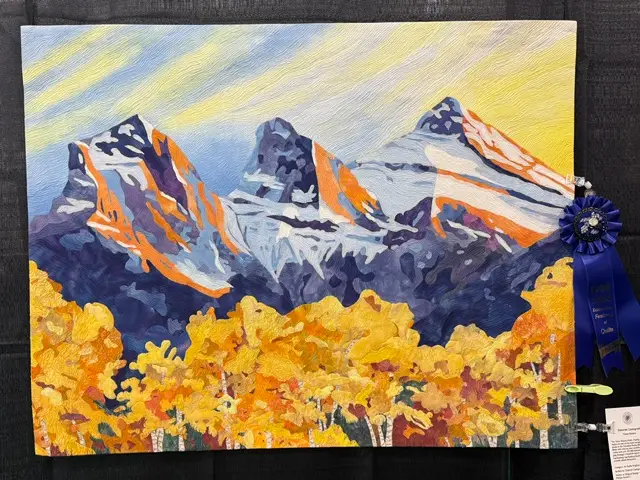
How do you know when a piece is finished? Is there a moment when you look at it and think, “Yes, that’s it,” or is finishing sometimes a matter of finally letting it go?
Sometimes it is really easy. I put the last piece of fabric in place, and it just feels complete.
Other times, there is this feeling that something is not right. I will leave the piece on my design wall for weeks, and sometimes months, until it gets to the place where it feels done.
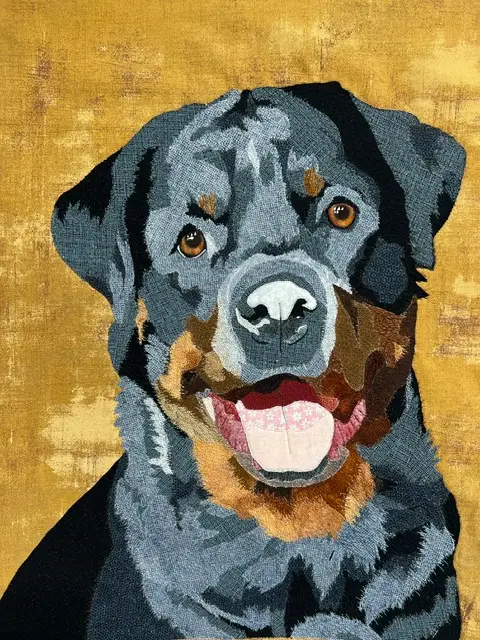
What have you learned about yourself through making art that you might not have learned any other way?
I have learned that I am a much happier person if I have a creative outlet. Especially right now, with all the ugliness going on around us, without this outlet I don’t know how my heart and soul would survive.
When someone stands in front of one of your quilts, what do you hope they feel before they even know what they are looking at?
I hope they feel emotion that I felt when I first saw whatever it was that inspired me to create it.
When you think about the next chapter of your work, what are you curious about? Is there something you haven’t made yet that is quietly calling your name?
I would like create my own textured fabrics using dyeing combined with techniques like batik, gelli-plate printing, experimenting with natural dyes etc.
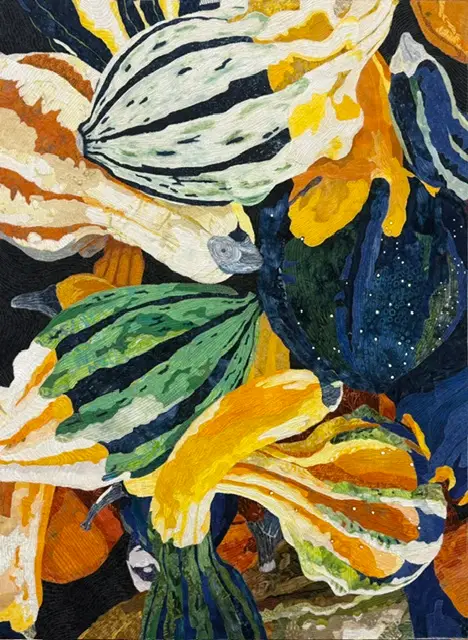
Where can people see your work?
On my website https://deborahcsongradi.com/
- Two pieces will be on display in the juried show at the International Quilt Festival in Houston (Nov 12-15, 2026)
- One piece will be up for auction during the 2026 SAQA Benefit Action Sept 11- Oct 4 https://www.saqa.com/auctionview
- A piece in the 2026 Grand National Fibre Art Exhibition – “Textures of Canada” travelling to various galleries across Canada from June 2026 to June 2027 https://www.grandnationalfibreartexhibition.com/2026texturesofcanada
- Various pieces featured in magazines:
Fiber Art Now (Winter 2024, Winter 2025, Spring 2026)
Quilting Arts (Fall 2025, Winter 2025)
Canadian Quilter (Autumn 2025, Summer 2026, Autumn 2026)
Rapid-Fire Fun:
- Favorite color to work with? I love anything blue
- Big quilt or small quilt? I keep going bigger and bigger
- Messy creative space or tidy creative space? Definitely messy. The only time my studio is neat is when I am not creating.
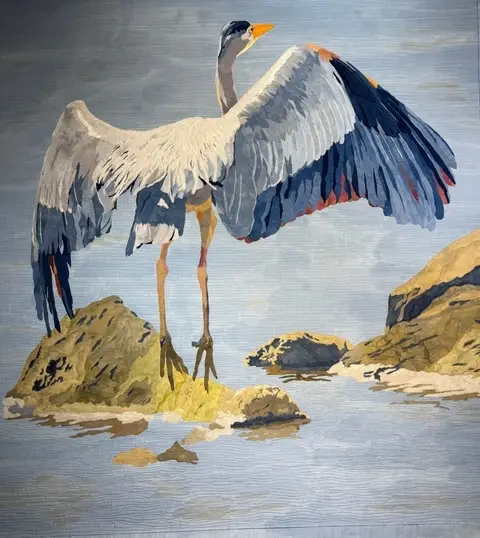
- Favorite piece you have made so far? I think it is always my most recent piece. Threshold of Flight (Blue Heron)
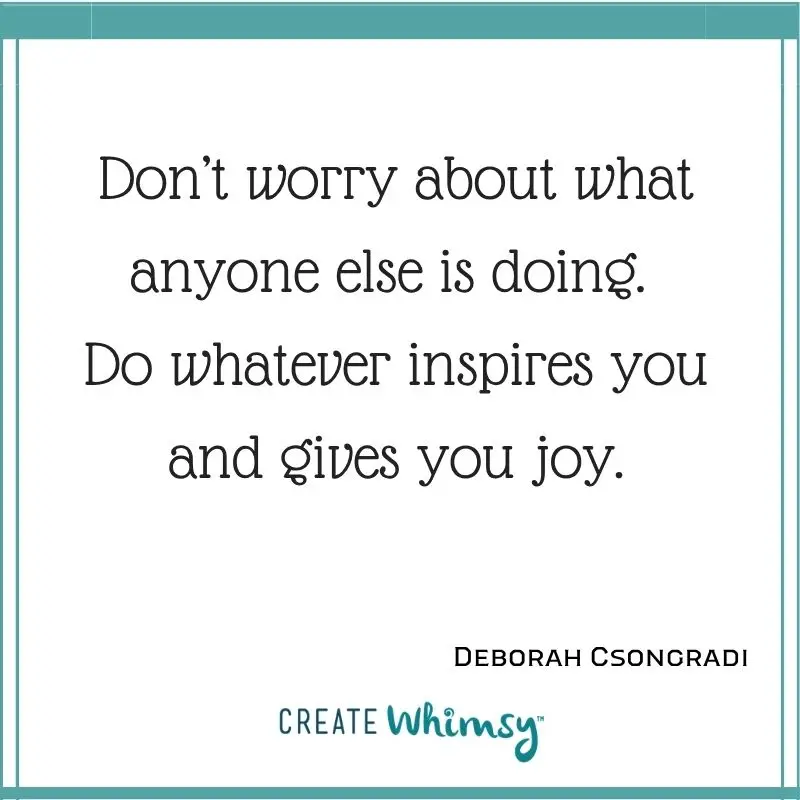
- What is one thing every new art quilter should stop worrying about? Don’t worry about what anyone else is doing. Do whatever inspires you and gives you joy.
- Finish this sentence: “I know a piece is really mine when…” when the piece feels like more than just fabric and thread. The colours, textures and shapes come together in a way that reflects what I saw and how I felt when I first saw what inspired me to create it.
Interview posted August 2026
Explore more art quilts on Create Whimsy.