
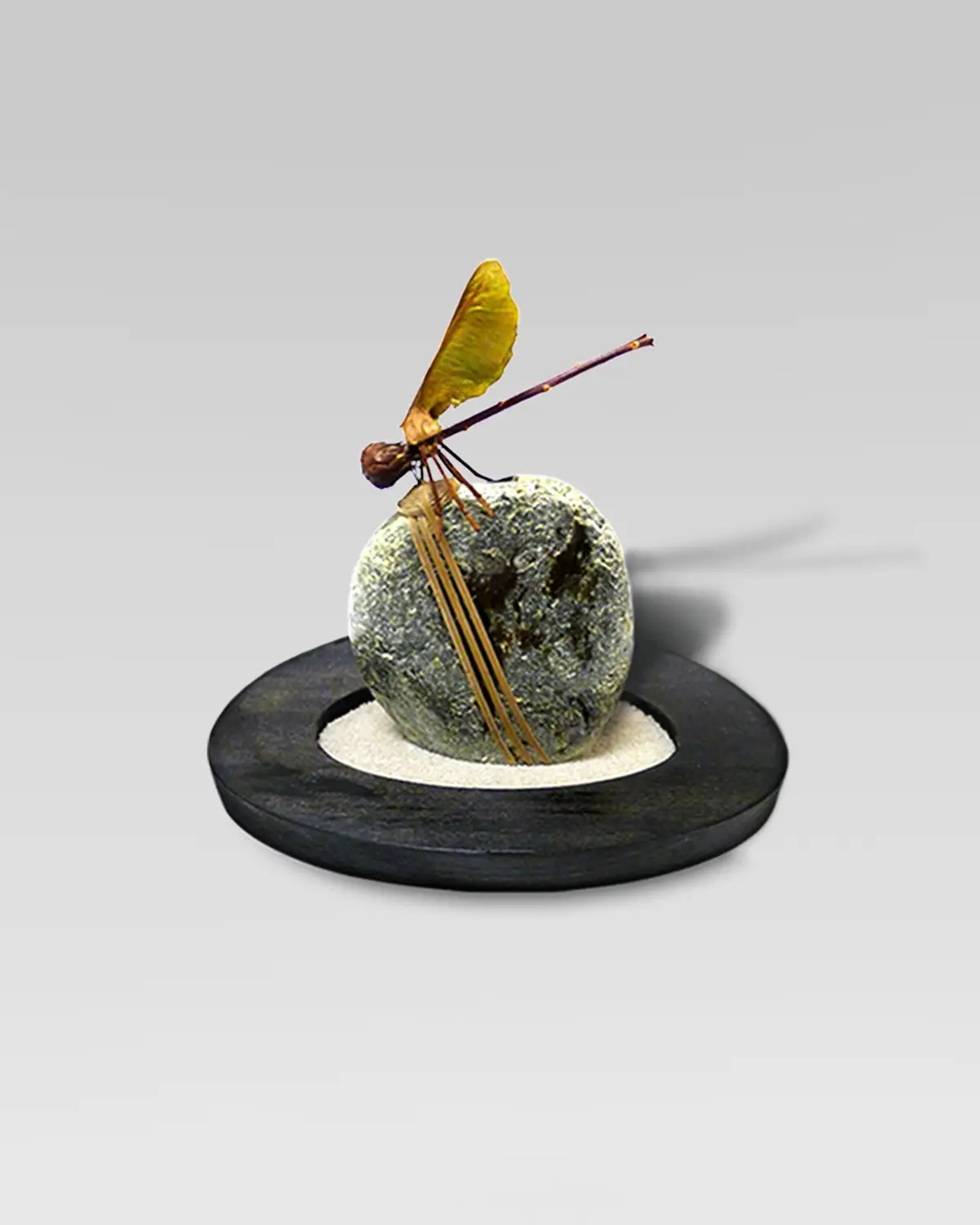
Bonnie Kuhr finds inspiration in nature, found objects, and materials with a past life. Her art moves across fiber, paper, sculpture, photography, and mixed media, often combining beauty with a deeper message about the world around us. In this interview, Bonnie shares how curiosity, research, and a willingness to experiment continue to shape her creative journey.
What did you love to make or create when you were young?
My journey with nature and art began very early. With two siblings, we would explore what surrounded us by going on nature hikes. Even to this day, I find joy in spotting new plants, flowers, and creatures. We were fortunate that our parents never hesitated to let us choose the direction we were taking in life.
When did you first realize that making art could become an important part of your life?
In my early years in school, I would dabble in multiple art classes and would enter my art into the local county fair. Years later, I attended an annual fundraiser at the local Museum of Contemporary Art. At this event, they allowed anyone with or without an art background to create a piece of art that would be donated and auctioned off.
As an Amazon Associate I earn from qualifying purchases. Read more about our affiliate linking policy.
Needless to say, I was hooked right then and there on creating art. I donated to this fundraiser for many years to come.
Your work has moved through photography, altered books, paper, fiber, sculpture and mixed media. What has made you want to keep exploring new forms?
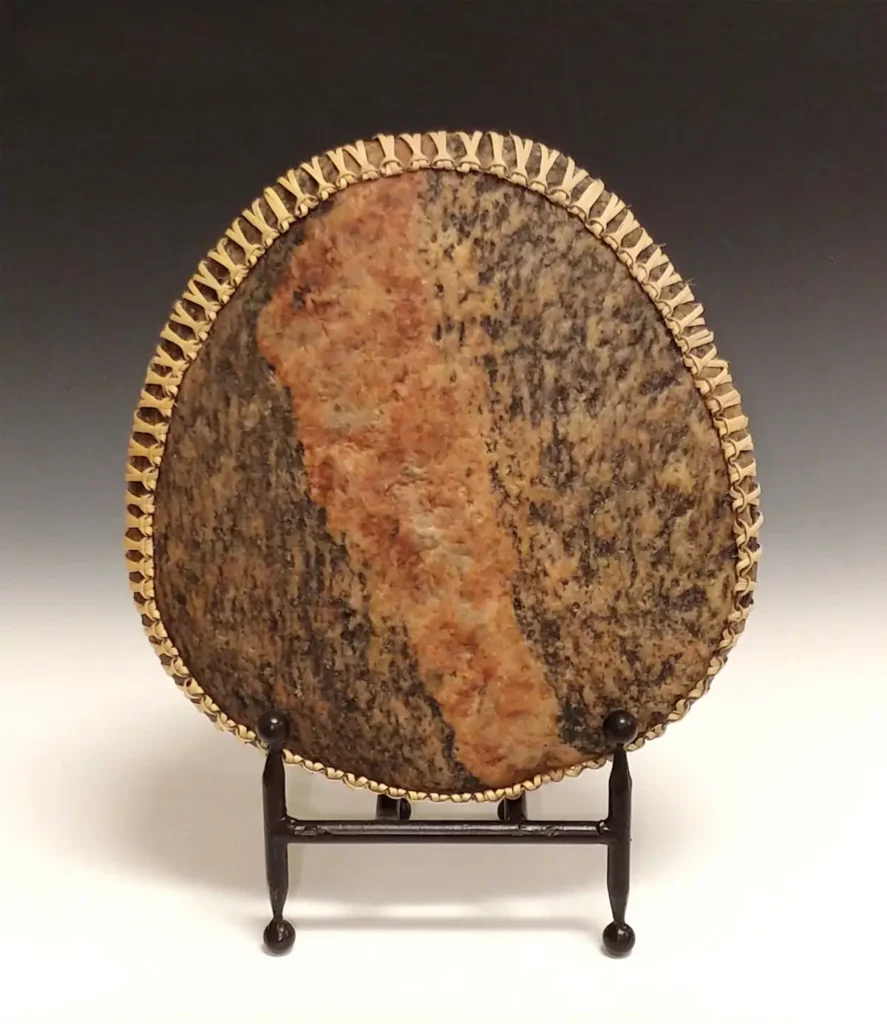
With my full-time commitment to making art, I had a long path exploring techniques, mediums, types of art, and much more. To this day, it still continues. I found my art was gravitating towards using natural fibers and found items. I believe going on those many hikes early in life contributed to this path in art.
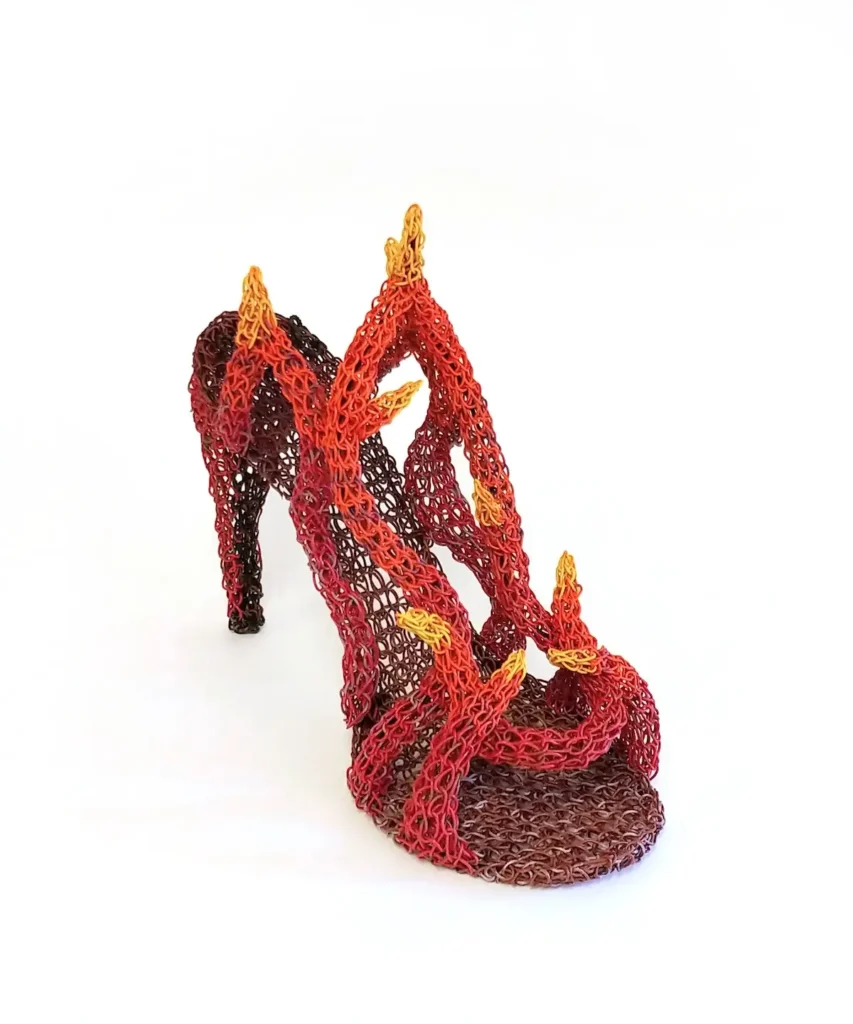
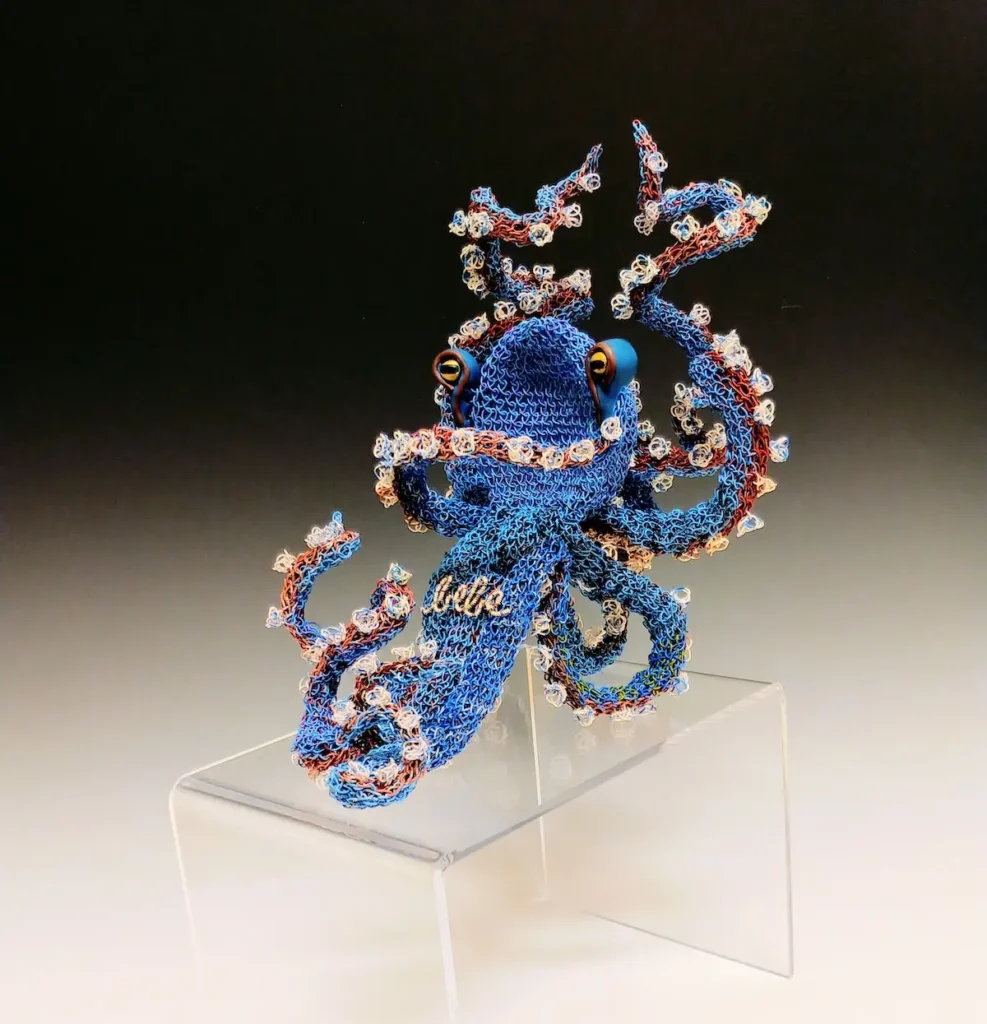
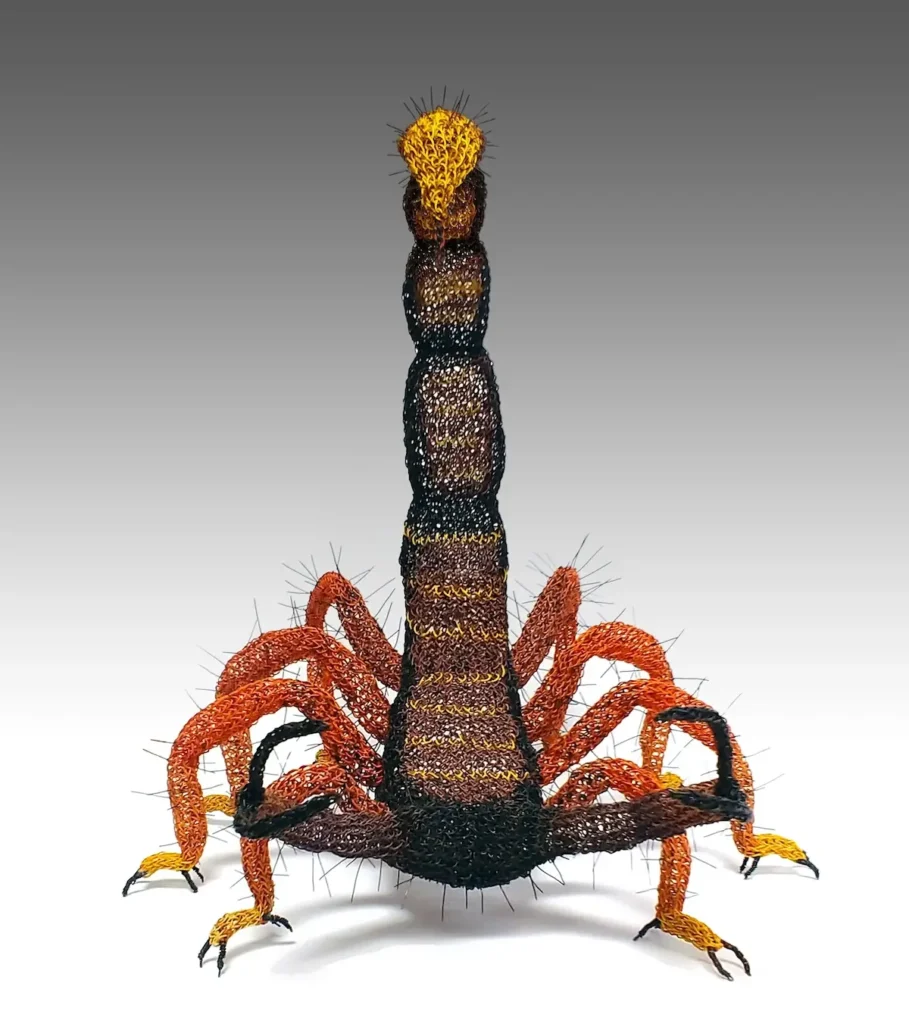
Was there a turning point when you began to see yourself as an artist rather than someone who simply enjoyed making things?
At this point, I wanted to increase my knowledge with a professional education in this arena.
I was fortunate that the local college (College of Marin) offered a four-course credit series called “Fiber Sculpture.” The instructor, Carol Beadle, had been teaching this course since 1988. She was also a faculty member teaching textile arts at California College of the Arts. My first four-unit class confirmed my interest in fiber, and I continued to complete the next three courses in this field.
It was a grueling commitment that required hours of work and research. It turned out to be the best art career choice I made, with many supporting factors. Not only did I learn many new techniques, but I was also exposed to how other artists in the class proceeded with their projects. I must say that the two most important takeaways were how to critique art and how to edit the making of one’s art. In addition, it also opened a large network of fellow artists, along with critique groups and memberships that specialized in fiber art.
When you make art about an issue you care about, what do you hope people feel or think when they see it?
As an artist, I have participated in many shows where I’m able to meet and visit with other artists along with the viewing public.
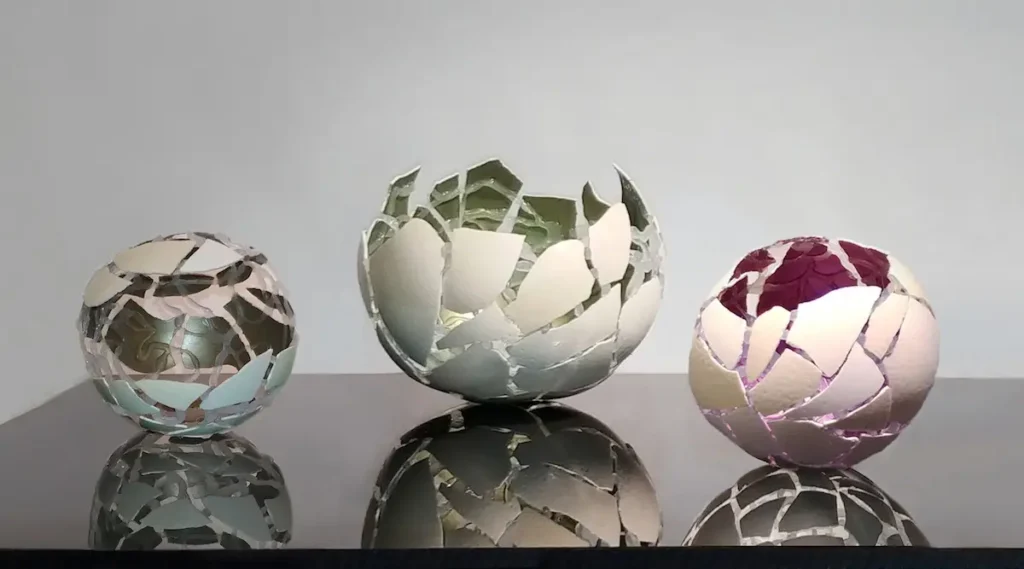
Many of my pieces have a serious theme that might include the effects of climate change or global warming. With these serious topics, I intend to show beauty in my art. In doing so, I want to draw in the viewer to show that with such beauty there can also be a serious message. I often hear comments or have conversations with others about my art. I enjoy hearing and seeing the reactions, regardless if they understand the concept or even if they have their own concept. You could say that this is a part of my affirmation.
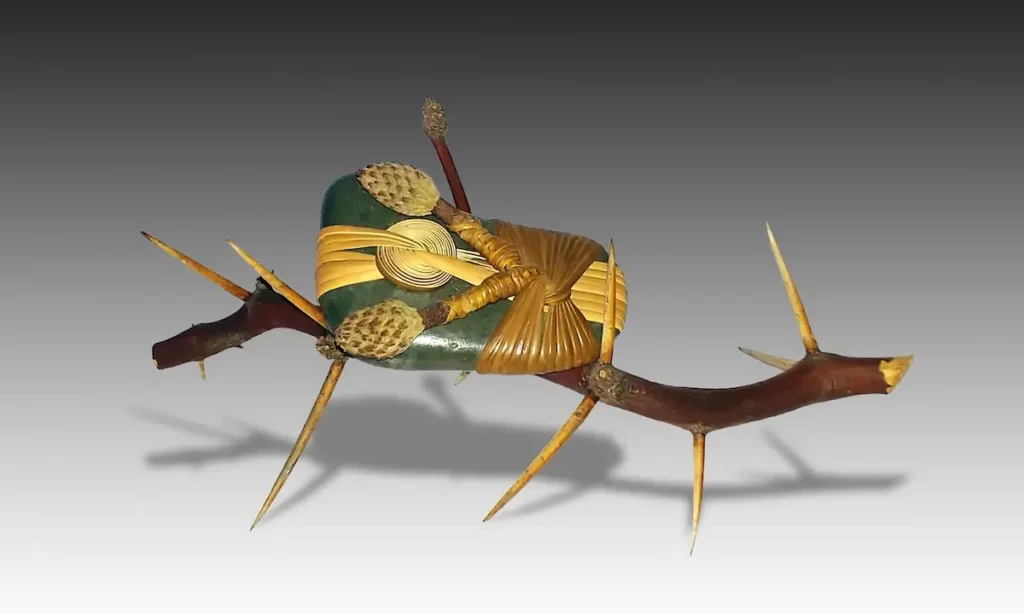
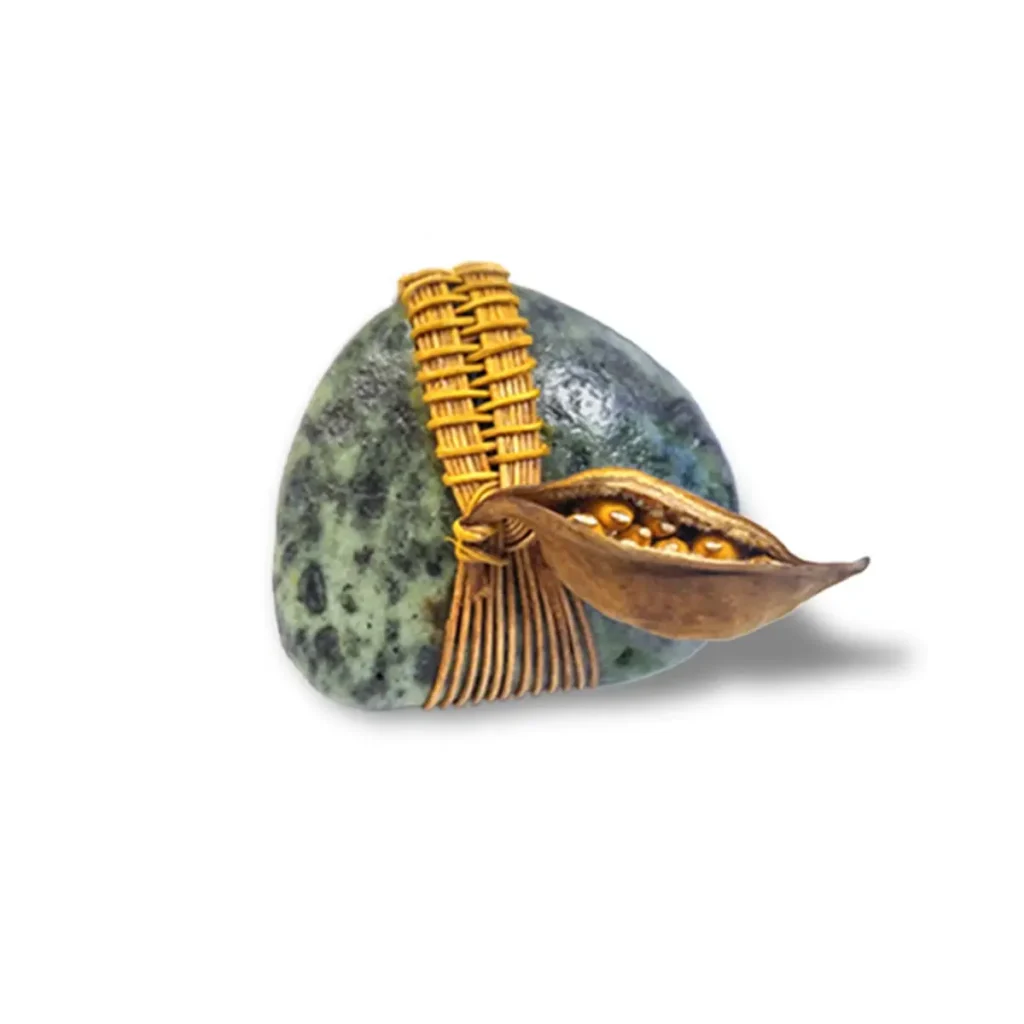
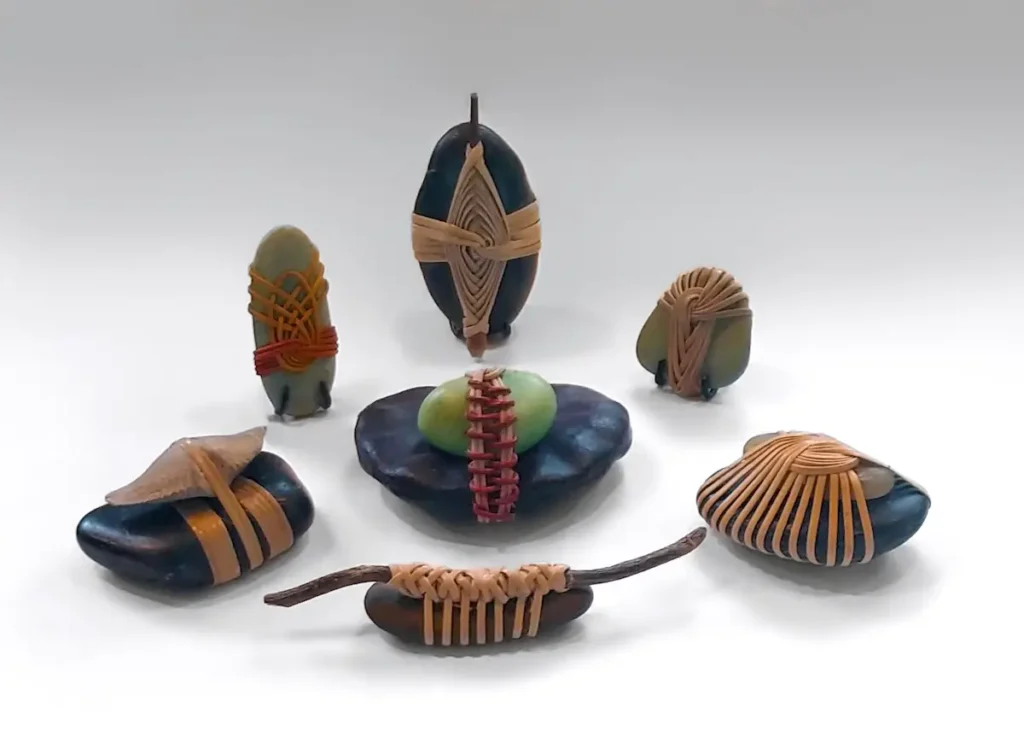
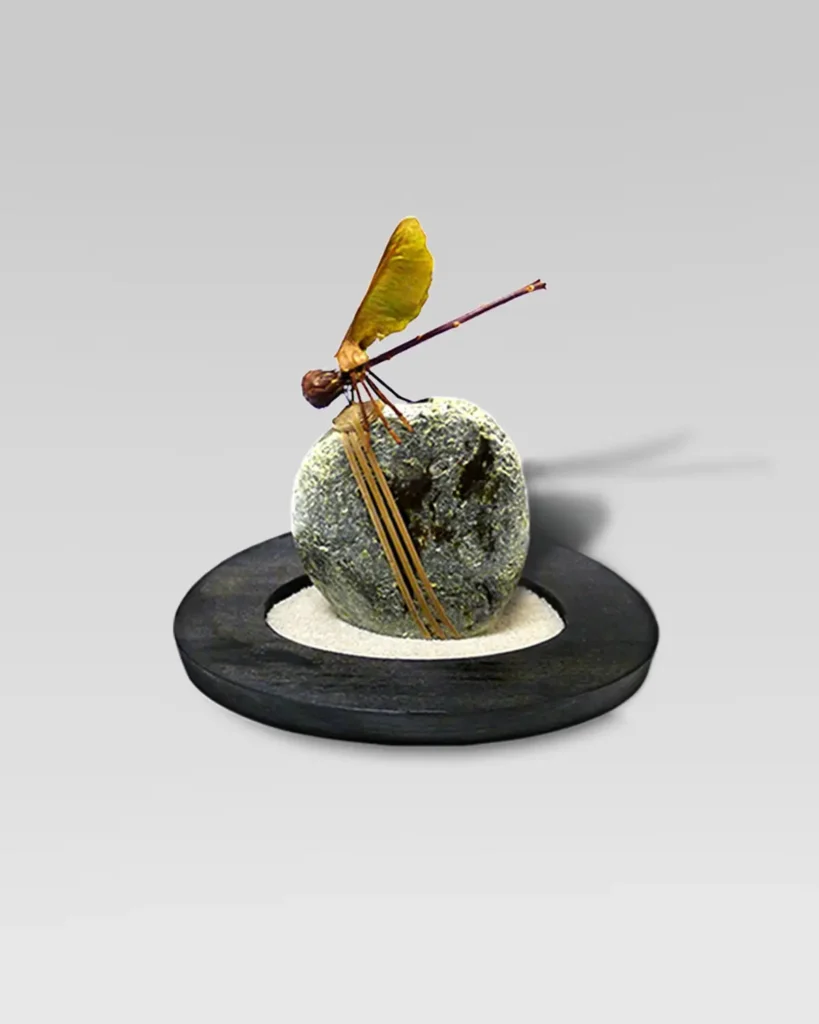
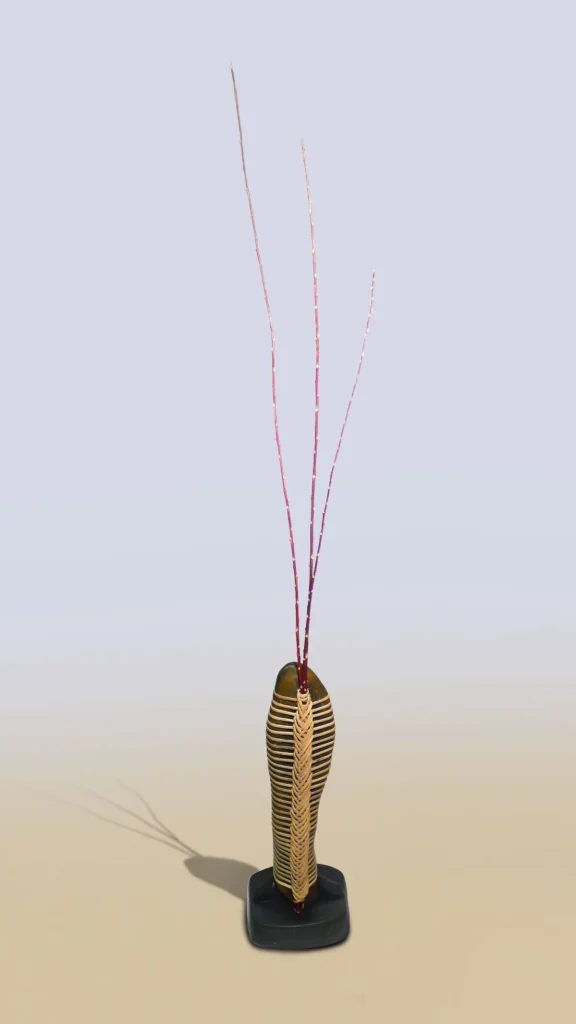
When an idea arrives, what happens next? Do you sketch, gather materials, research, or simply start making?
First, I need a concept; this can come from a subject matter that interests me or even materials that I may have in my studio. Research is also an important part that occurs with all my projects. It ranges from gathering more information on a concept to what materials and techniques to use.
Once a concept has been selected and the initial research completed, my plan begins. Often I sketch or make a maquette of art I want to make. It will depend on whether this creation is a completely new design or a variation of a previous work. I try to use materials that I may already have but also search for others as well.
The majority of my art is three-dimensional, and that alone requires an engineering aspect to make things work. Even with the best plans, there may be a need for adjustments in the making.
When I need to change direction to be able to accomplish a step in the creation of my art, I put on my thinking cap. Needless to say, there are times when I’m at a loss on what to do to make it work. When this happens, I set my work aside for sometimes days or even months at a time. At that point, I work on something else but keep it in the back of my mind what I could do to make it work.
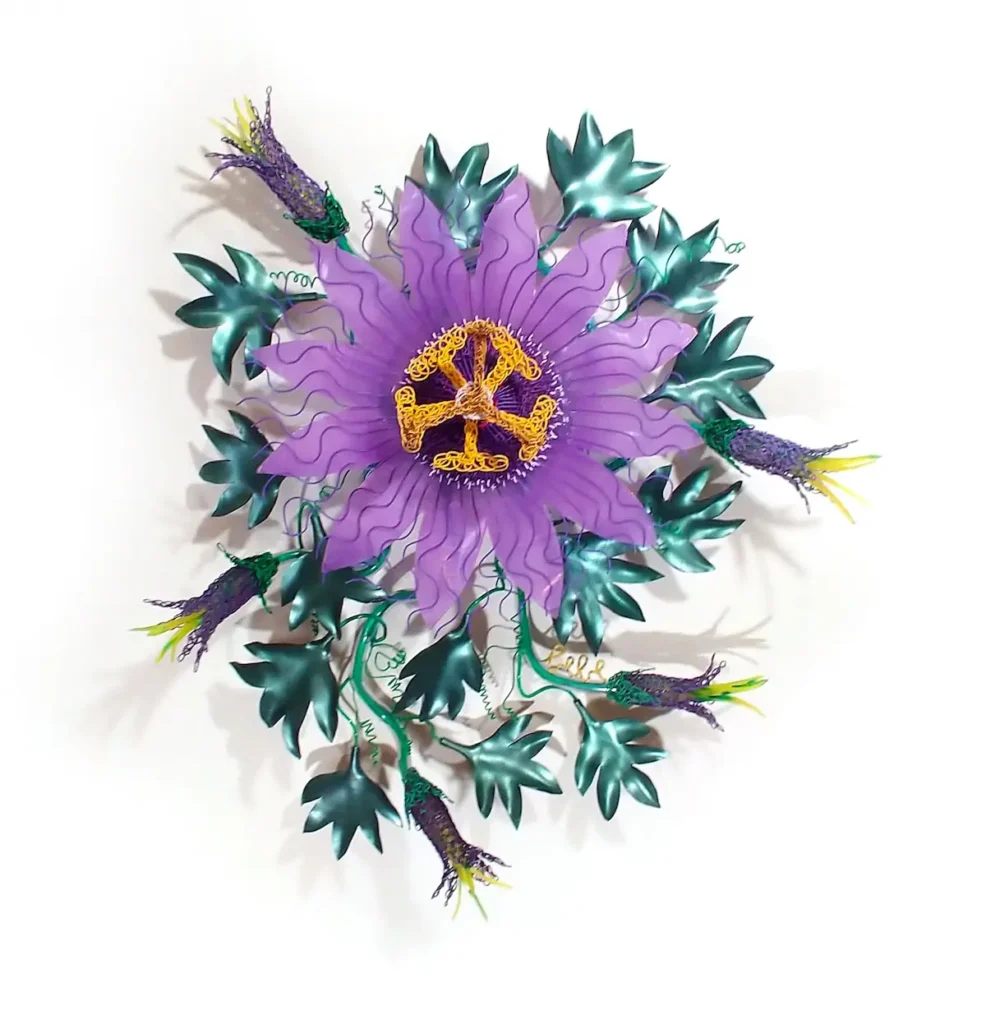
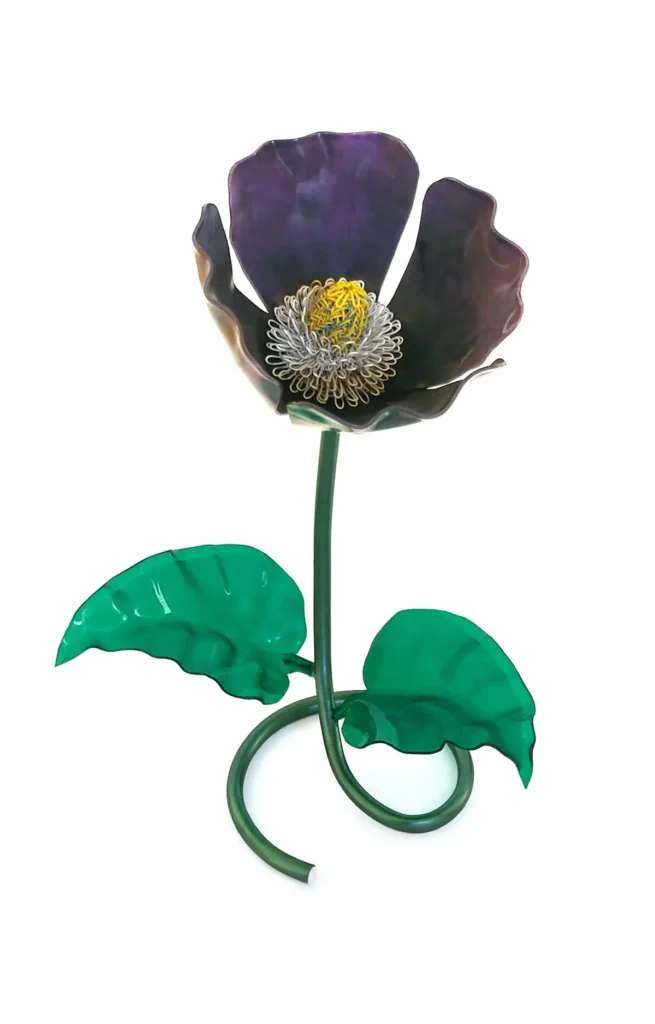
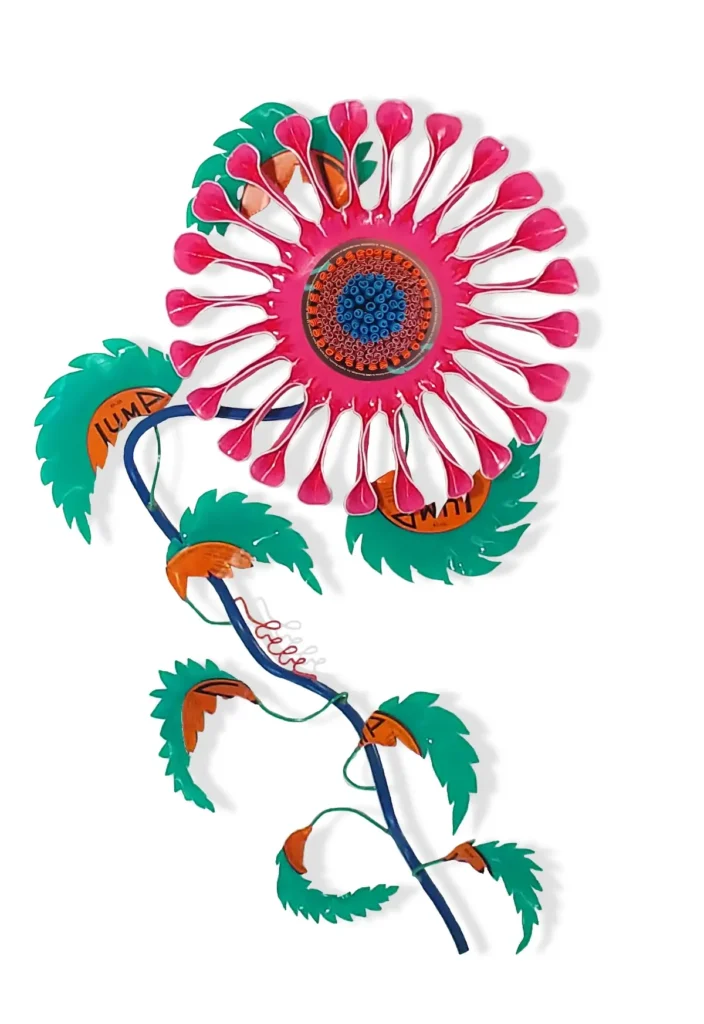
What do you do when a piece doesn’t seem to be working for you?
One thing I have learned is not to give up but also not to let it stop me from future endeavors.
An example of this is in “Regeneration.” I had all the materials in my studio, so I began working on the piece. I wove colored repurposed wire, making pointed branches to simulate the tines of an antler.
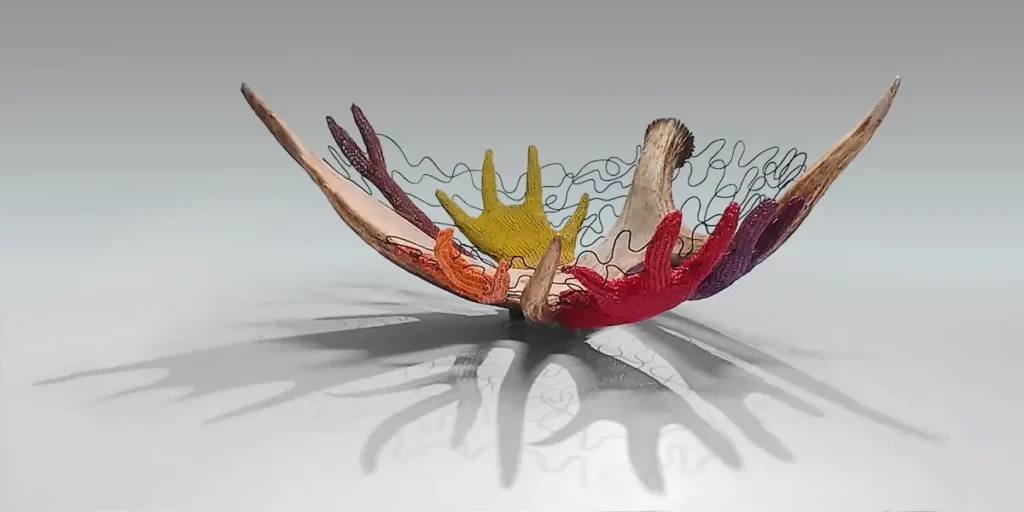
After attaching the branches to the main antler, I thought I was finished, but it just did not work for me. Setting it aside for a month or two, I finally had this idea of using steel wire. I decided to weave the wire freeform between all of the tines. This worked, and the vessel was completed.
To show how I came up with a concept, I’ll use “Regeneration” as an example as well. The moose antler was originally used to showcase my handmade fiber jewelry. No longer making these items to display on the antler, I decided to revisit it to see if I could use it in my art.
In researching antlers on the web, it turns out that they are the fastest-growing bone of any mammal. Biochemists, knowing this, used the antlers in their research and discovered several medical breakthroughs. This research turned out to be a double attribution towards my concept. I give credit to biochemists who spend their lives researching and looking for scientific discoveries. The second attribution was that I have dedicated this piece to my brother, who has his doctorate in biochemistry and works in a university lab researching.
What are some accomplishments in your artistic journey that make you proud?
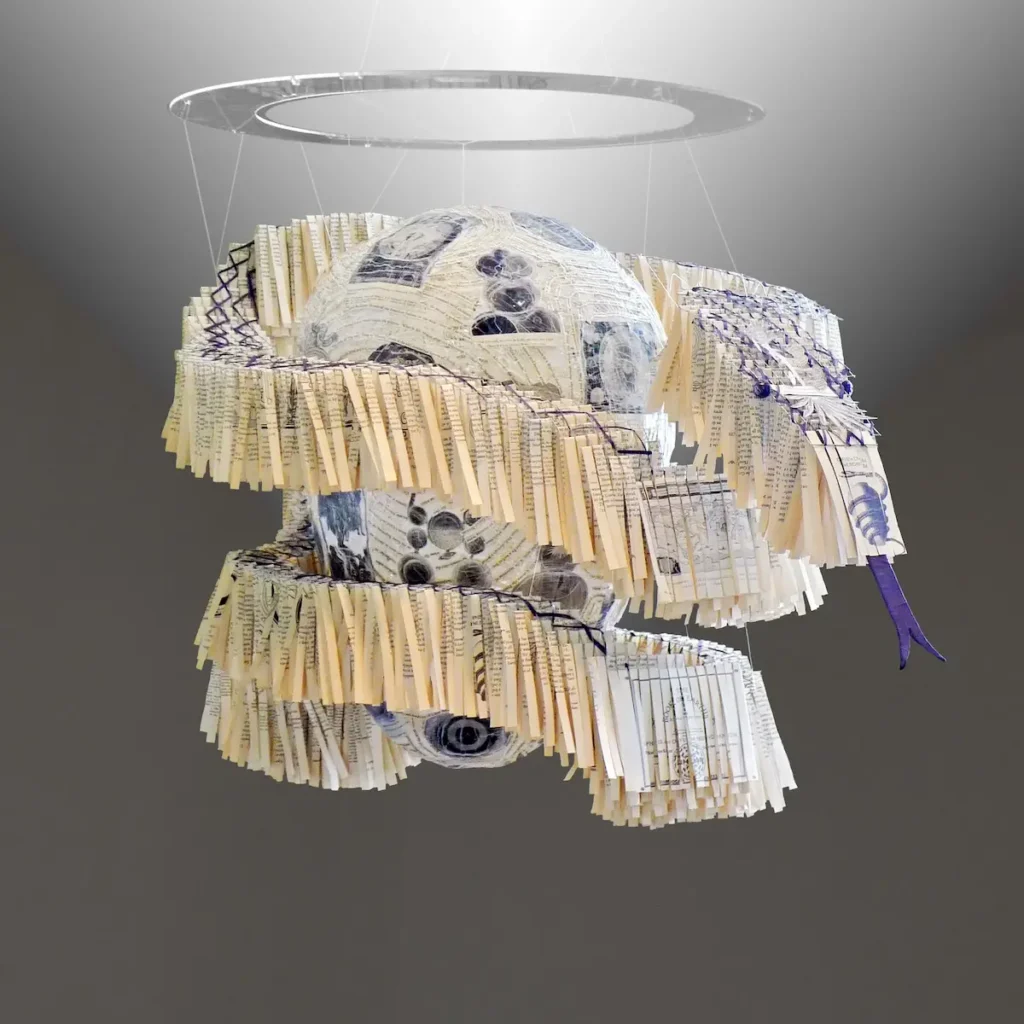
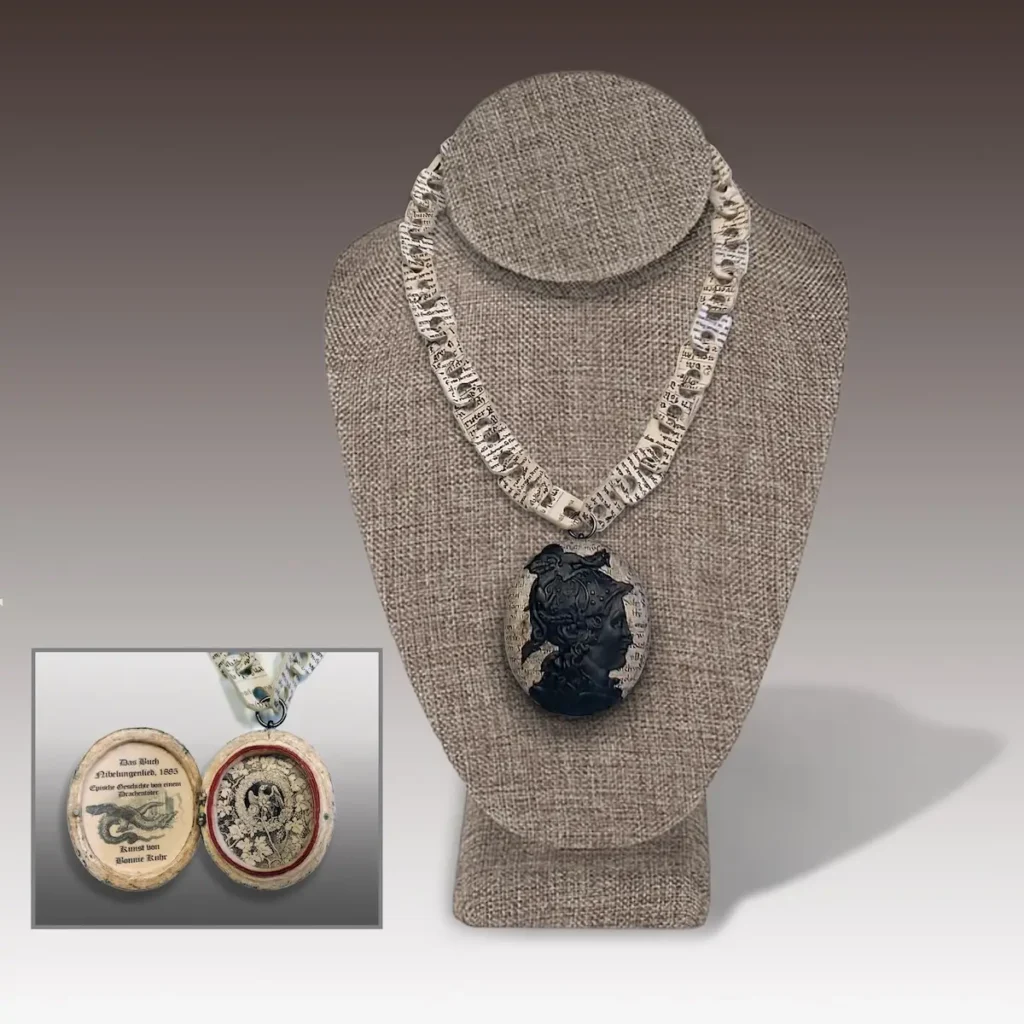
Some of my accomplishments include an international award for my book art “Spirit Messengers,” awarded by Fiber Art Now for excellence in fiber publication.
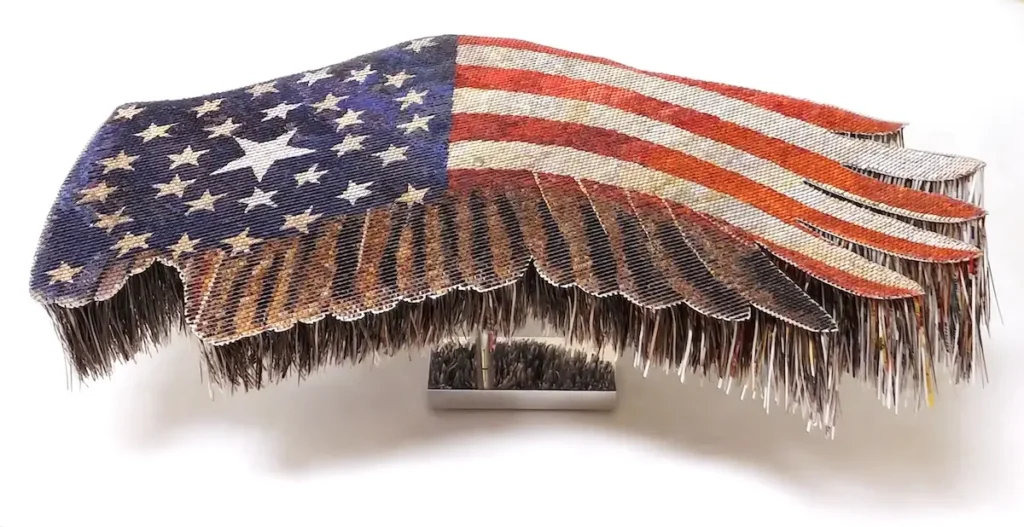
I was commissioned for a book art piece titled “Aquila” for the National Eagle Museum in Wabasha, MN, now on permanent display.
I served as a juror for the Mill Valley Art Festival and have been in various invitational shows. Along with numerous first-place awards, I feel that I’m on the correct path with my accomplishments, but in the end, I make the art for myself and no one else.
If we stopped by your studio today, what would we see you working on?
Currently, I have returned to my book arts series.
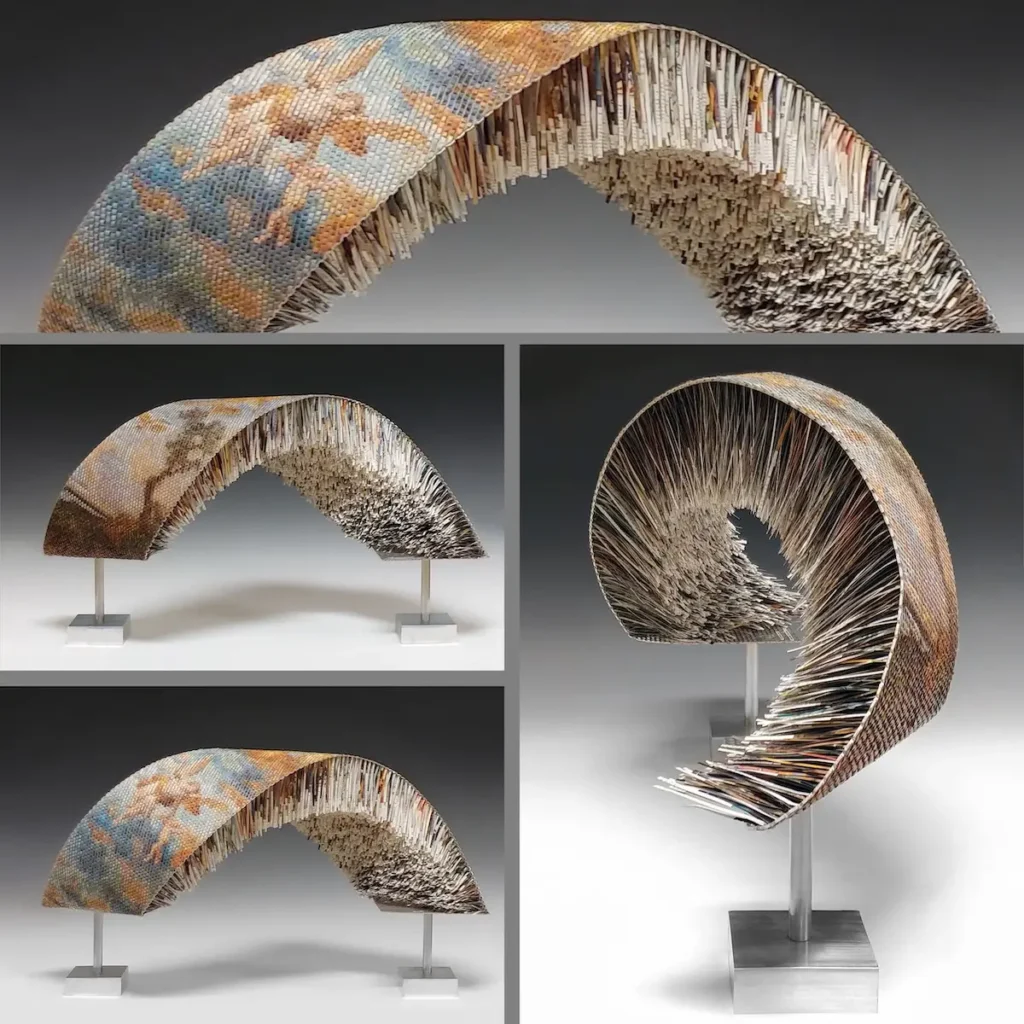
It’s a technique that I have created by transforming traditional needlepointing into a completely different realm. Instead of using the traditional needle, embroidery thread, and canvas, my medium is shredded paper and perforated aluminum.
The perforated aluminum is hand-formed into the desired shape. Next, a book on modern art was selected to shred the color plates. The shredded paper is then individually selected by color and woven into the metal, leaving both ends free.
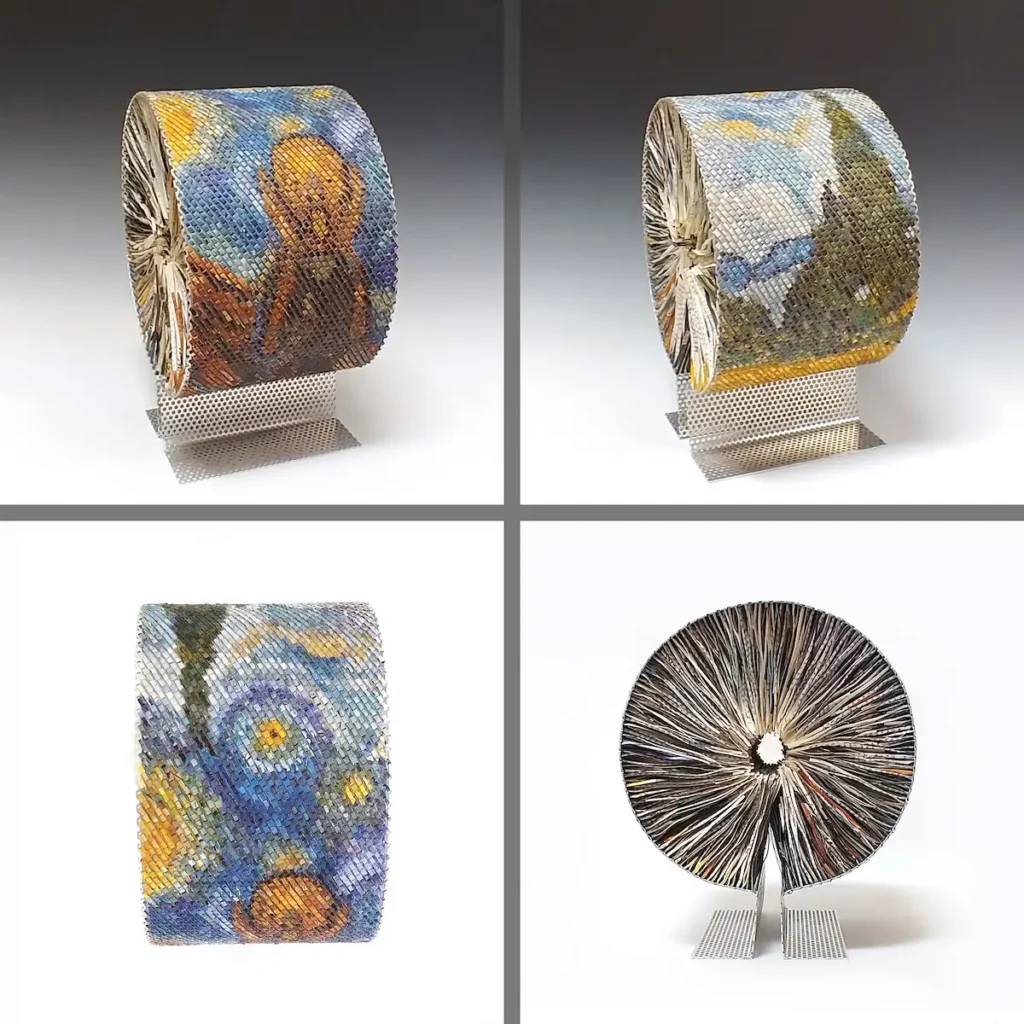
I literally make up the imagery pixel by pixel. This process is then repeated thousands of times. I enjoy this challenge and find it rewarding when a multi-sensory experience is achieved for the viewer.
Where can people see your work?
My studio is located in Novato California (789 Hamilton PKWY, Studio N). It resides at the Novato Arts Center with 60 other artist studios. The environment is an eclectic mix of artist’s mediums that inspires one’s creativity. As a close niche group we often critique each other’s art but mostly celebrate achievements and give thanks for being able to create art.
Website: ArtRocksMe.com
Instagram: bebekuhr
Interview posted September 2026
Explore more multimedia inspiration on Create Whimsy.