

Lauren Weber’s work feels like a walk through a well-loved garden, full of soft color, thoughtful design, and gentle growth. In this interview, she shares how learning to quilt as a child, studying plants, and listening to her customers shaped Garden Girl Studio into what it is today.

Tell us about your childhood. When did you first learn about quilting? How does your upbringing influence your work today?
My mom taught me to quilt when I was seven or eight years old. I started by making simple “bags” – folded fabric with easy seams. Slowly I worked my way up to more technical skills like foundation paper piecing.
What really hooked me was realizing I could make pictures with fabric. I loved working outside traditional quilt blocks and began experimenting with raw-edge appliqué, creating portraits and landscapes.
That curiosity eventually led me to fiber art, which still feels like home to me today.
As an Amazon Associate I earn from qualifying purchases. Read more about our affiliate linking policy.
Your work often feels gentle and botanical. Where do you look for inspiration these days?
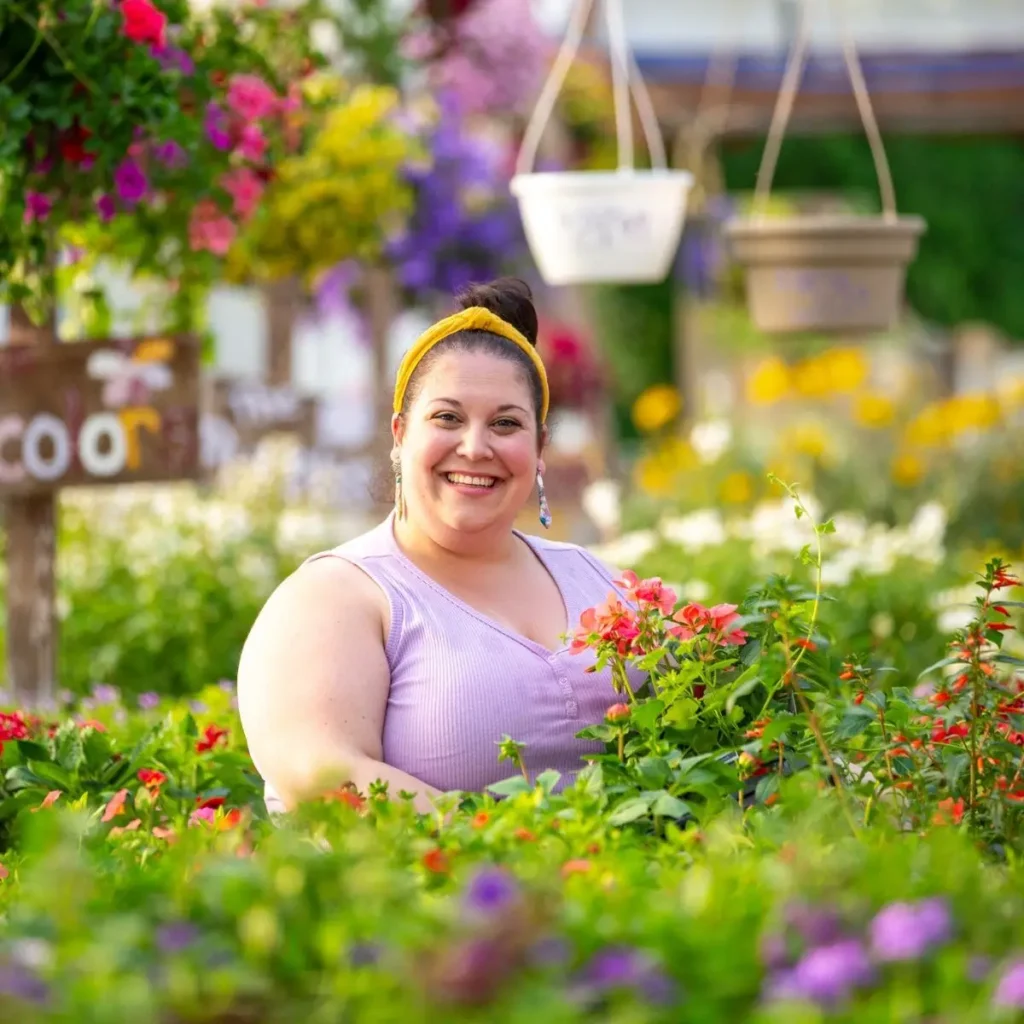
I’m always looking for blooming inspiration. I grew up on a hobby farm, spending a lot of time outside helping my parents in the flower and vegetable gardens. That connection stuck with me.
I went on to study plant science, horticulture, and landscape architecture, and pairing plants with art and design felt like a very natural progression.
These days, I wish I had more time to garden! I’m constantly noticing what’s in bloom whether in my own yard, at local botanical gardens, or just out and about. I’m always snapping photos to bring back to the studio with me, and I absolutely can’t resist picking up fresh flowers from local markets in the summertime.
Nature is an endless source of inspiration for me, from color palettes and textures to the tiniest details!
Tell us how Garden Girl Studio began. What was the very first thing you made that felt like yours?
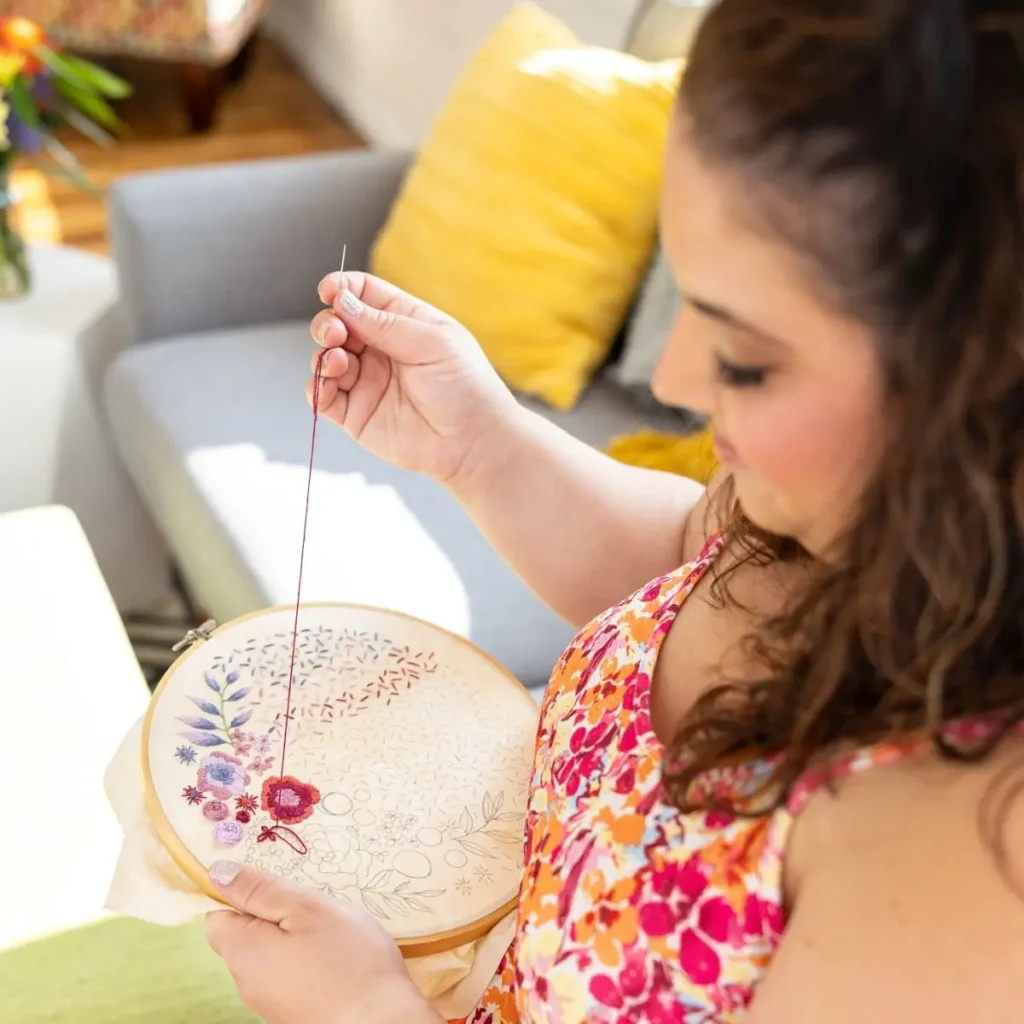
After college, I worked in the horticulture and floral industry for nearly a decade. Like many people, the pandemic pushed me into a major pivot. That’s when Garden Girl Studio was born. I already had a background in design and quilting, so I taught myself fabric design and began learning all about longarm quilting.
One of my biggest “wow, I really did this” moments was seeing my own fabric designs printed for the first time through Spoonflower. Holding something tangible that I had created from start to finish made the whole thing feel real.
How do seasons (spring, winter, fall, summer) change what you make?
This is an interesting question because Garden Girl Studio has a few different creative pillars, from quilting to handmade art.
For example, longarm quilting is very seasonal. I tend to see a big influx of quilts in the spring before local quilt shows, and again leading up to the holidays.
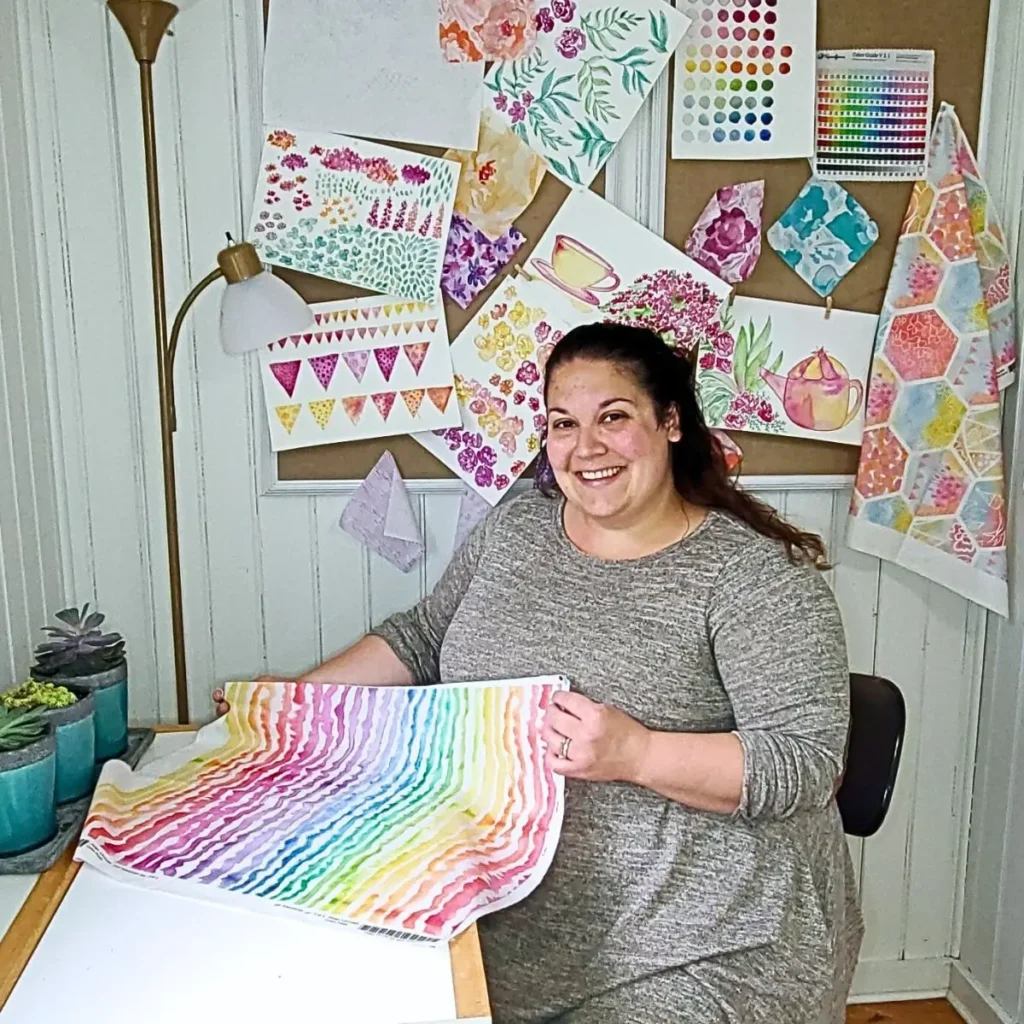
Fabric design happens year-round, though it’s always fun to share seasonal collections as they come together. Fall and winter are my busiest seasons for markets, where I focus heavily on handmade products and in-person events.
Describe your creative space. Where do you do most of your work?
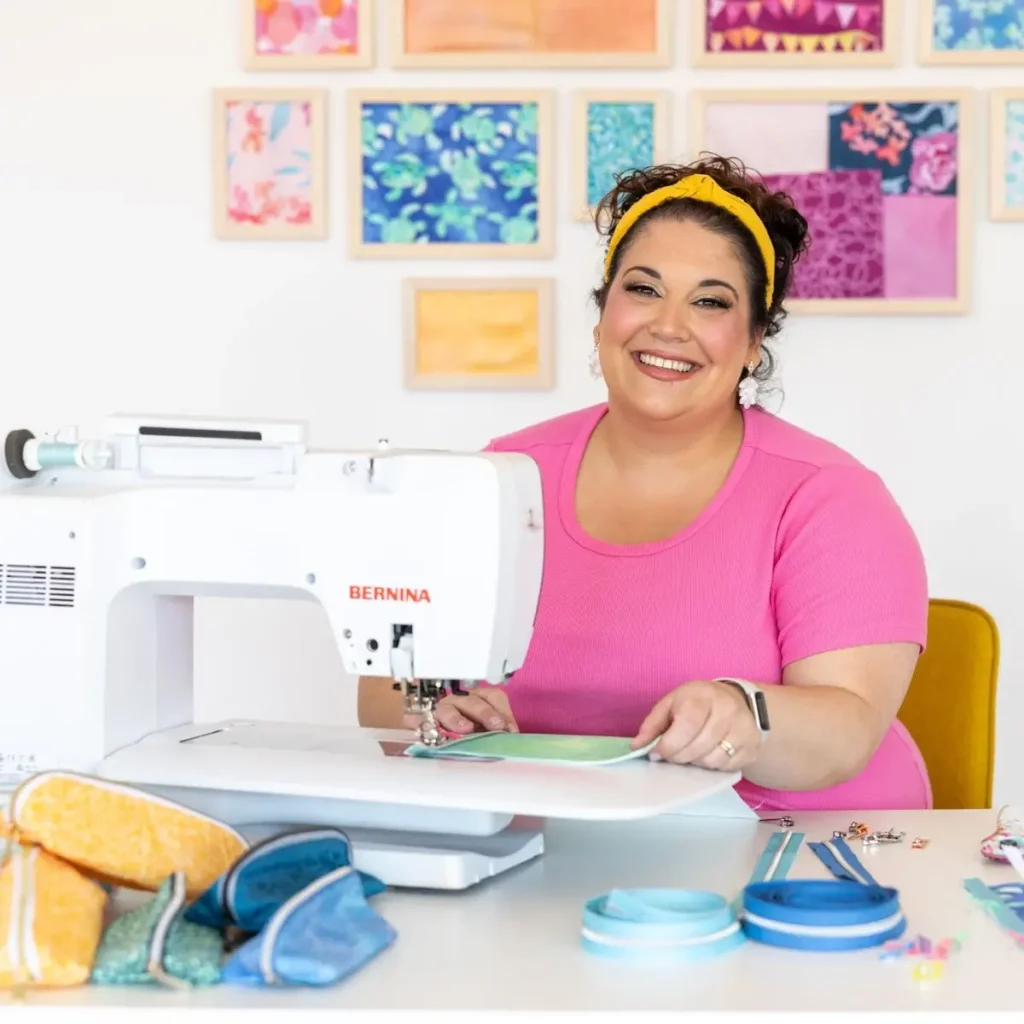
My main studio is tucked into the attic of my home. I have several work areas so I can move around depending on what I’m working on.
I’ve set aside space for a cutting table, sewing/ embroidery machines, and a drawing desk.
I love surrounding myself with bright artwork and, of course, lots and lots of houseplants. It helps the space feel fresh, cheerful, and full of inspiration!
Walk us through a day in your studio. What’s the first thing you do when you sit down to work?
The very first thing I do is grab something to sip – usually tea or coffee, or even water on hot summer days. My studio tends to be pretty warm in the summer time! I wish I could say my workdays look the same, but they really change from week to week.
Lately, I’ve been trying to stick to a loose weekly rhythm, even though something always seems to pop up and shake things around.
Generally speaking, Mondays are for admin and social media planning; Tuesdays and Thursdays are quilting or product production days; Wednesdays are for filming YouTube or Skillshare content and/or marketing; Fridays are for editing, designing new patterns, or catching up. Saturdays are often booked during market season, and Sundays are (hopefully) reserved for rest.
When an idea pops into your head, what are the first three steps you take?
First, I write it down. I have endless notes on my phone because if I don’t capture an idea immediately, I might not remember it again.
Second, I schedule time to plan or research the logistics. That could be the same day or a few months out, depending on how full my plate is.
Third, I implement. If the idea feels viable, I create a plan of action. I’m a big believer in getting one project up and running smoothly before adding more. It’s easy to start a lot of things halfway, but I’d rather build momentum with one solid idea and make sure it’s successful before moving on to my next project.
How do you decide whether a design becomes a quilt, an embroidery, or a print?
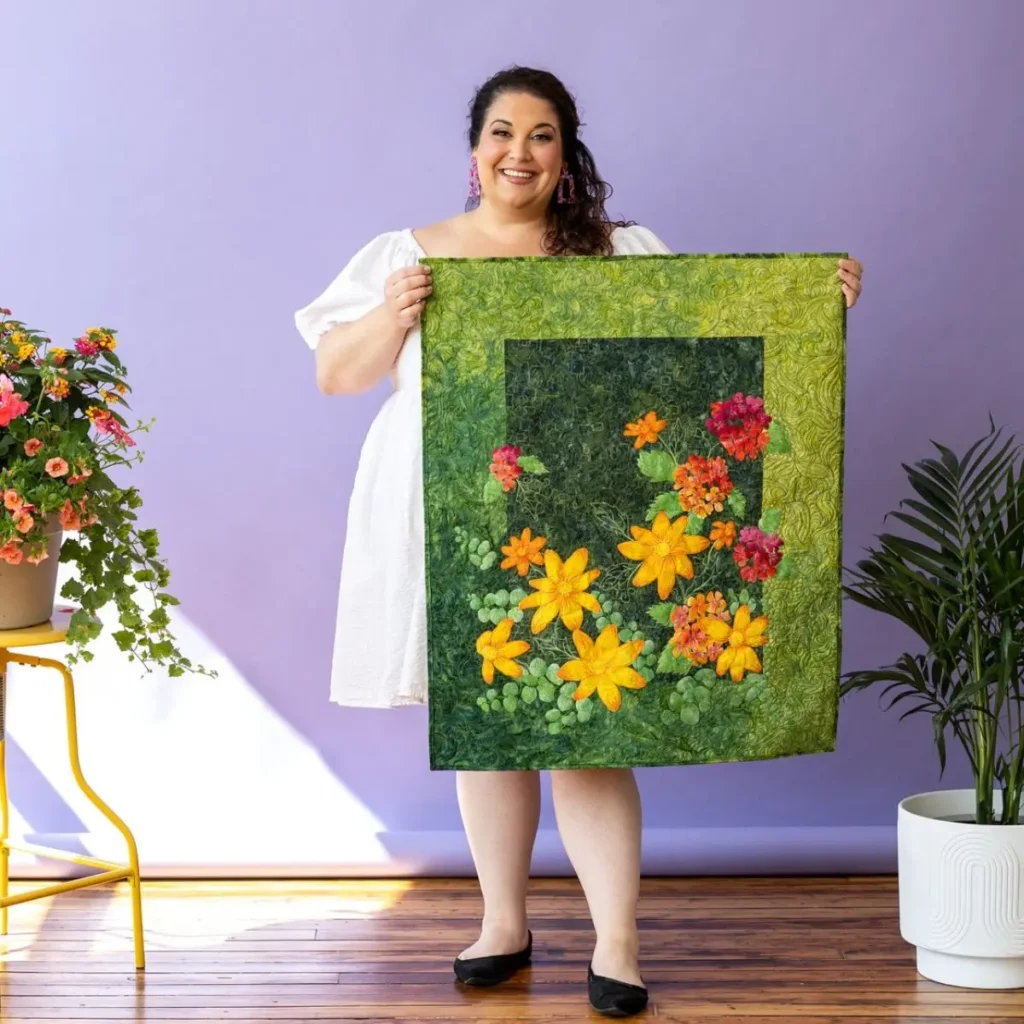
My audience plays a huge role in those decisions. Some of the best feedback I receive comes from in-person events. Markets and pop-ups take a lot of work, but people will absolutely tell you (and show you) what resonates with them.
Quilts, for example, are often big-ticket items, and I’ve learned that my customers gravitate toward baby and family quilts. So when I make a quilt, I keep those themes in mind.
Embroidery tends to be more seasonal or playful – little sparks of joy in stitched form. Embroidered jewelry and ornaments can be swapped around seasonally more easily than wall art. So I can play and experiment more with embroidered work, because it feels less permanent for my customers who just want a fun accessory.


Wall art, on the other hand, needs to feel either evergreen or like a statement piece. It needs to fit within a customer’s vision for their home, office, or wall space.
Ultimately, listening to my customers helps guide what each design wants to become.

Do you plan a piece completely, or do you let it change as you work?
Even when I try to plan everything out, a piece almost always takes a creative turn somewhere along the way. I like setting loose guidelines and then giving myself permission to break the rules once I’m in the creative flow. That’s usually where the magic happens!
Tell us about a time a mistake in the studio led to something better.
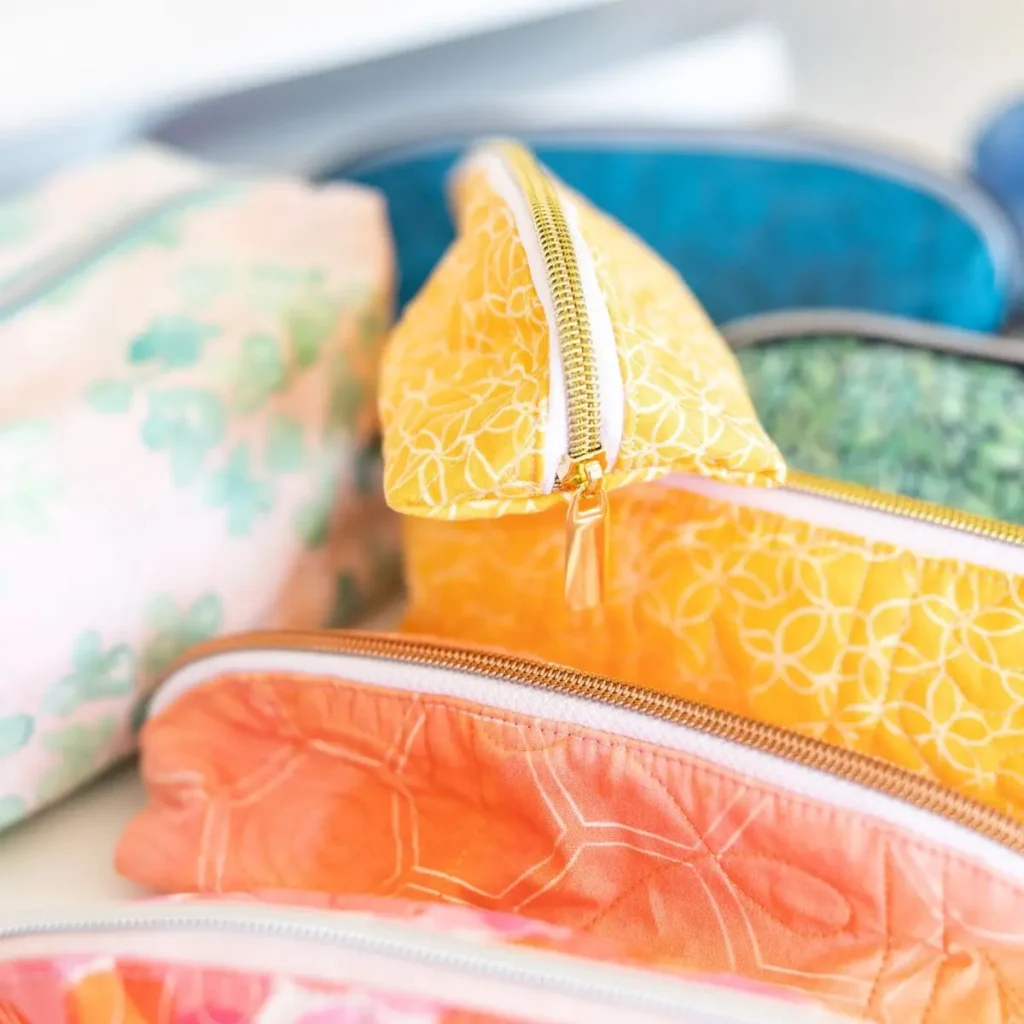
I make cosmetic bags using my fabric designs. When I first started making bags, I accidentally rotated a cutting diagram while cutting folded fabric. That one small mistake completely changed the shape of the bag. Instead of being long and low, it came out taller and fuller.
Luckily, we loved it even more than the original design! Those bags are now affectionately called our “Oopsie Daisy” bags behind the scenes, and they’re still a staple in my shop today.

Have you ever run out of creative energy? What small thing helped you get back to making?
Absolutely. Rest is essential, and sometimes I have to give myself permission to create without thinking about selling the work.
Play is important. When I remove the pressure and let myself experiment just for fun, creativity usually finds its way back.
When a project isn’t working, what’s your go-to reset?
Tea. Always tea, sometimes with a snack. I’ll physically leave my studio, make a cup of tea in a different space, give myself about 30 minutes to reset, and then come back with fresh eyes. That pause almost always helps!

How has being a gardener changed your way of seeing mistakes, growth, and seasons in your art?
Much like a garden, making art (and running a business) is a constant evolution. Things grow, change, and shift with time. Having a background in gardening has helped me understand that not everything happens all at once, and that’s okay.
I often tell workshop attendees that mistakes give a project character. No two flowers are the same, and they’re all beautiful in their own way.
In business, just like in a garden, you can see the strong, established elements that have taken root over time while still planting new seeds each year. Not every seed will take, but some will grow slowly and surprise you later.

Where can people see your work?
You can find my work online at gardengirlstudio.com.
On Instagram, I share handmade products at @gardengirlstudio and artwork and fabric design at @laurenweberart.
My work is also available for in-person shopping at The Copper Easel.
Interview posted December 2025
Browse through more inspiring interviews on Create Whimsy.