
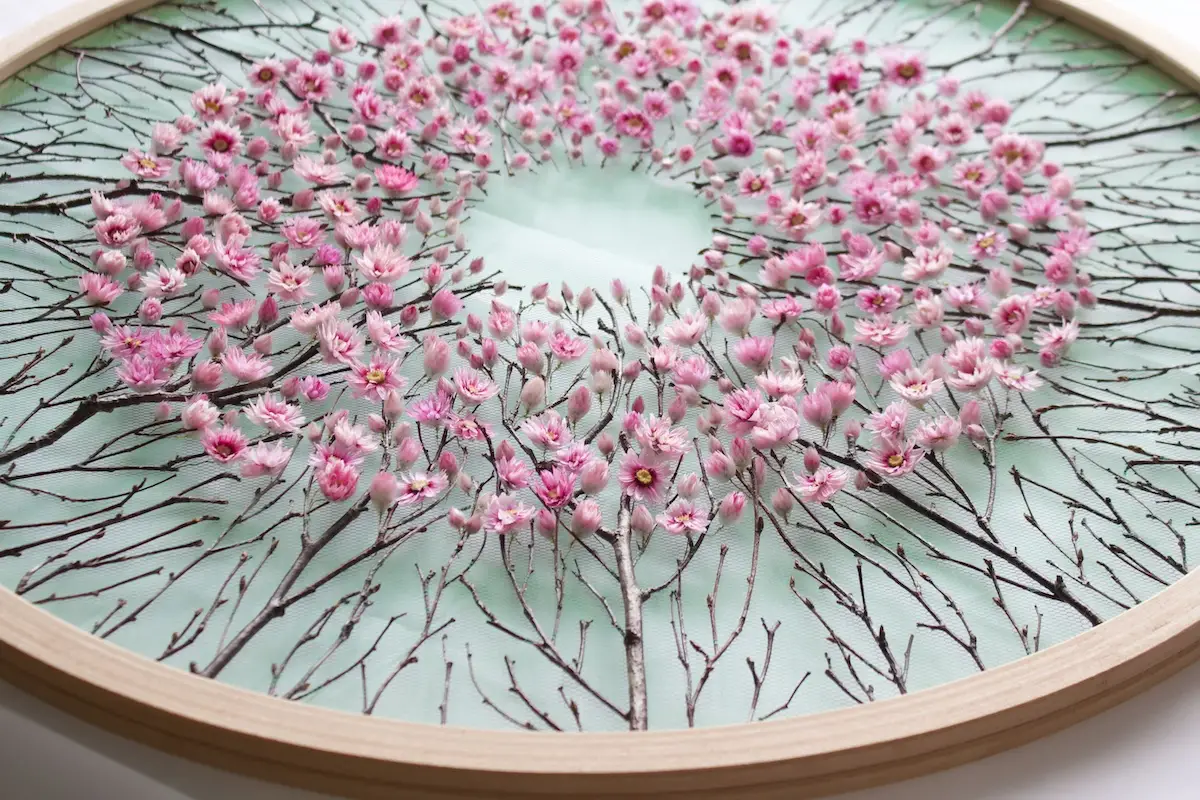
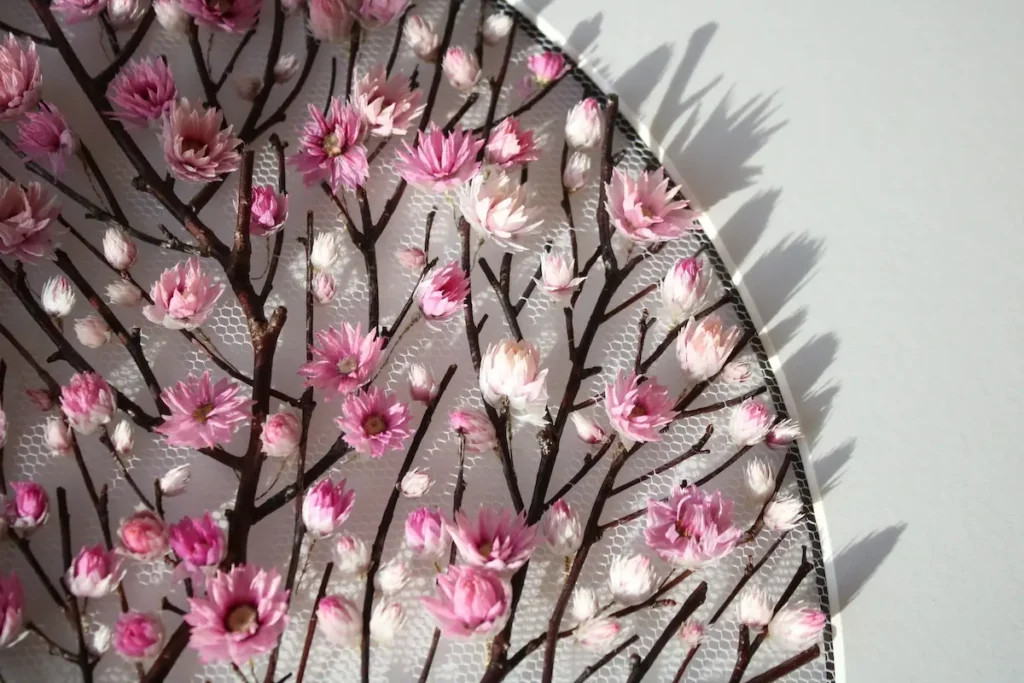
Olga Prinku turns nature into art. Curiosity and experimentation led her to develop a new art form. Her delicate dried-flower embroideries on tulle celebrate the quiet beauty of twigs, seed heads, and blooms.
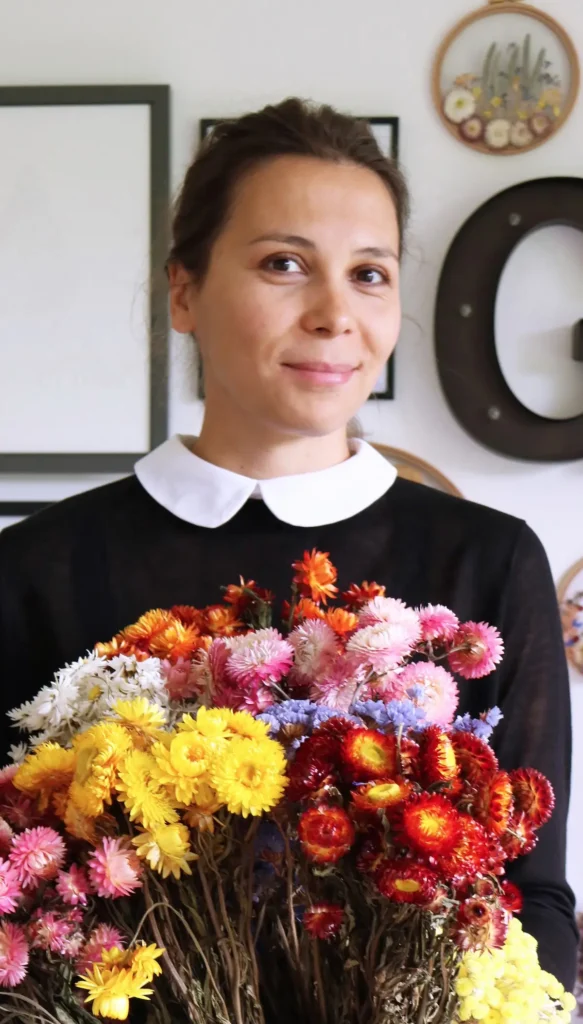
How did you first discover dried-flower embroidery?
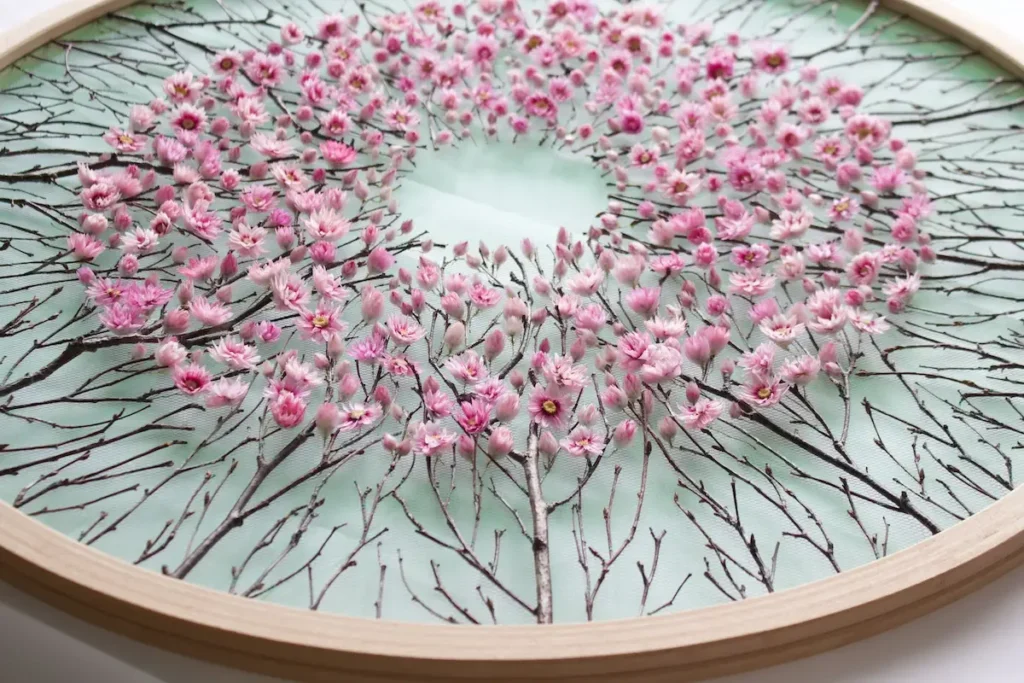
I used to make wreaths as a hobby. One day I used a garden sieve as a frame to hold some foliage in place, poking the stems through the metal mesh. That gave me the idea of wondering whether something similar might work with tulle fabric and flowers. Since then it’s been one long process of experimentation!
Was there one moment you remember when your work felt like “this is mine”?
I think it’s always felt like “mine” in the sense that I’m not aware of anybody having done this kind of thing before. I’ve always felt like I was breaking new ground as I went along and teaching myself through trial and error rather than being able to learn from anyone else.
As an Amazon Associate I earn from qualifying purchases. Read more about our affiliate linking policy.
I think it’s probably more a case of remembering moments where it felt like what I’m doing is work that’s striking a chord with others, like the first time I was approached by a gallery or a publisher to write a book.
Where did your love for nature and using “nature as your thread” come from?
I’ve always enjoyed going for long walks in the countryside, and I’m lucky that where I live in North Yorkshire there’s a lot of beautiful countryside to walk in.
I found that starting to create with natural materials opened my eyes in a new way to the nature around me on those walks. I found myself remembering where different species are growing, so I could forage for them at the right time of year. I started to notice the beauty in common flowers that are often overlooked as weeds, or in seed heads in winter.
Where do you find inspiration for your designs?
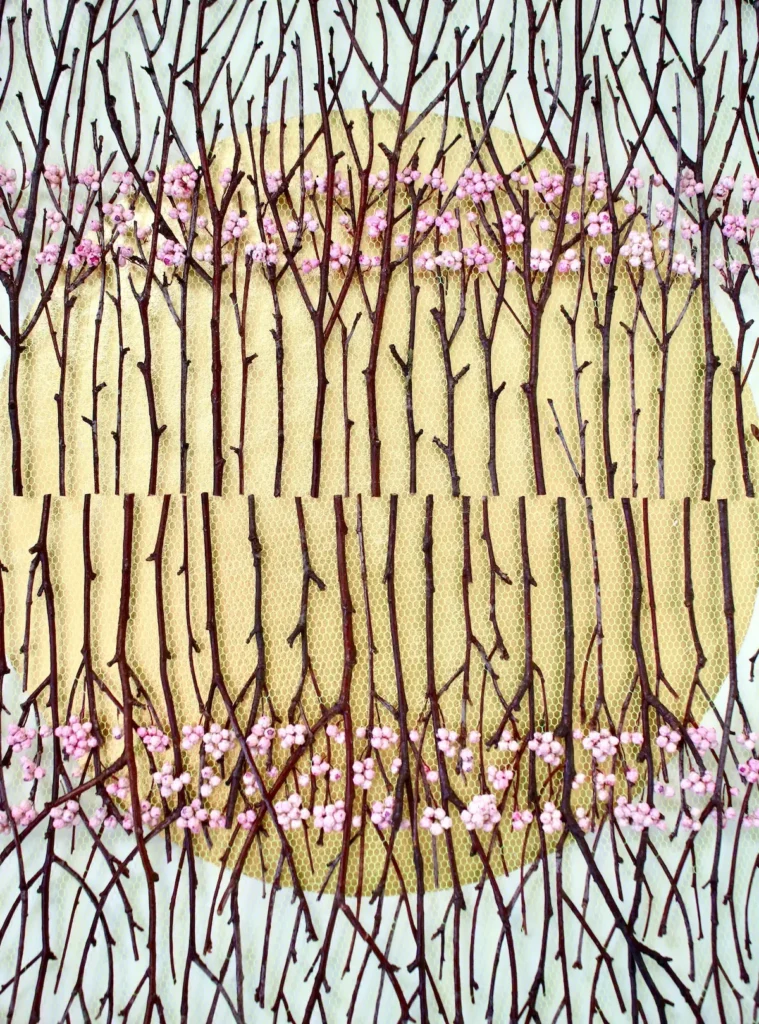
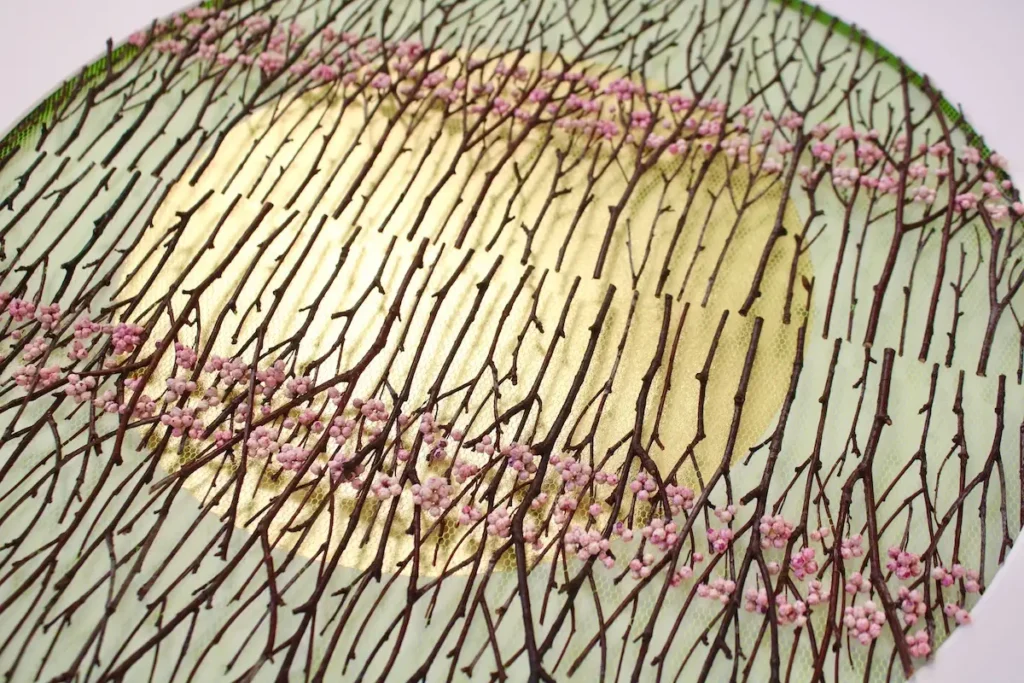
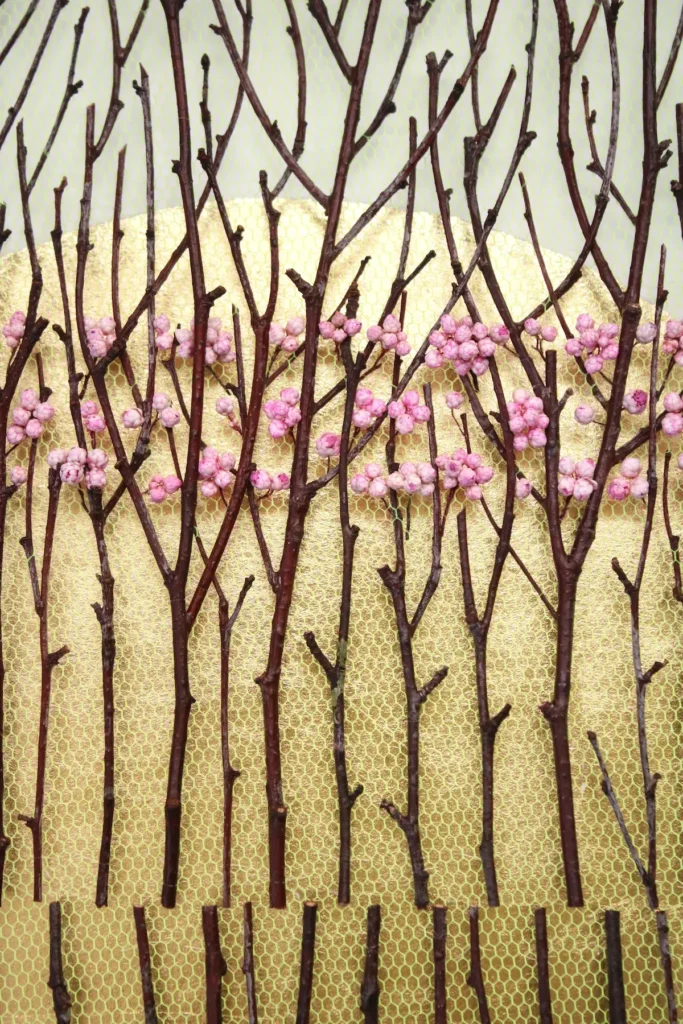
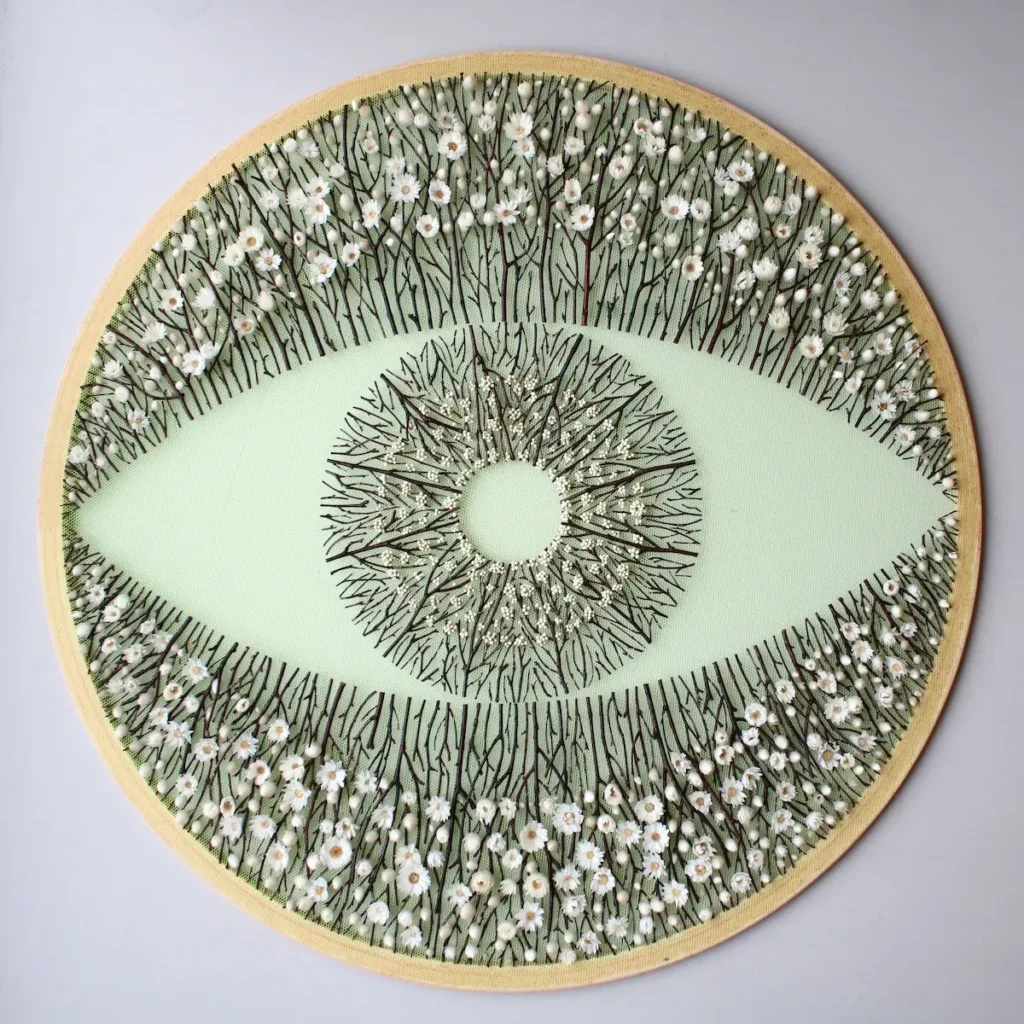
It’s very much from patterns in nature – often I’m trying to deconstruct and reconstruct the patterns I see. This might be pattens you see close-up, like the intricate way that a seed head is constructed. Or it might be on a bigger scale, like the patterns in a canopy when you look up in a forest.
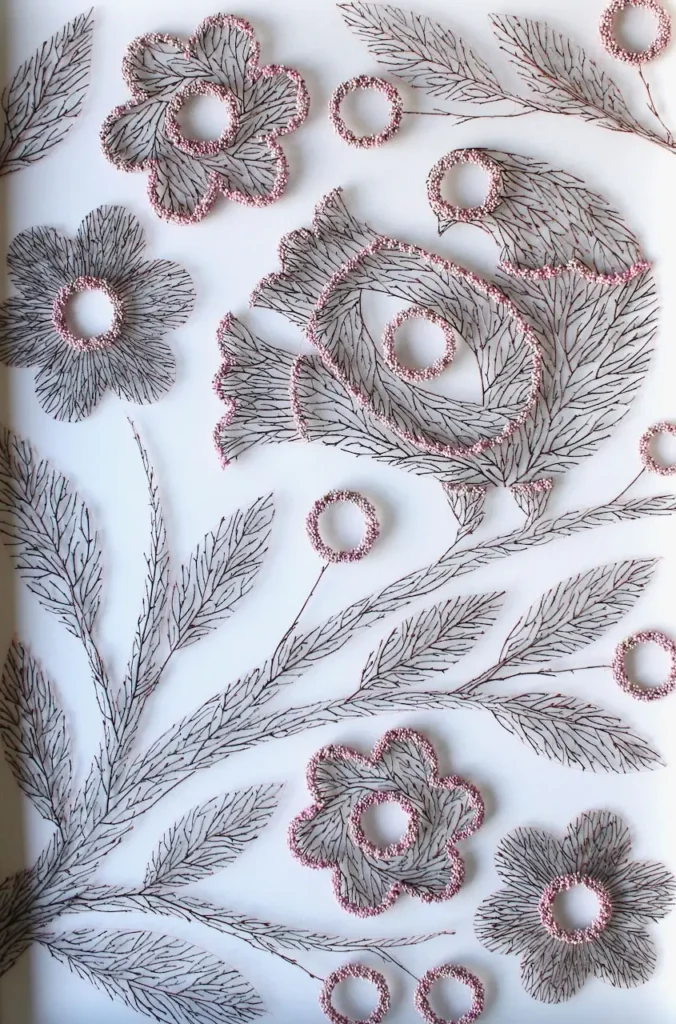
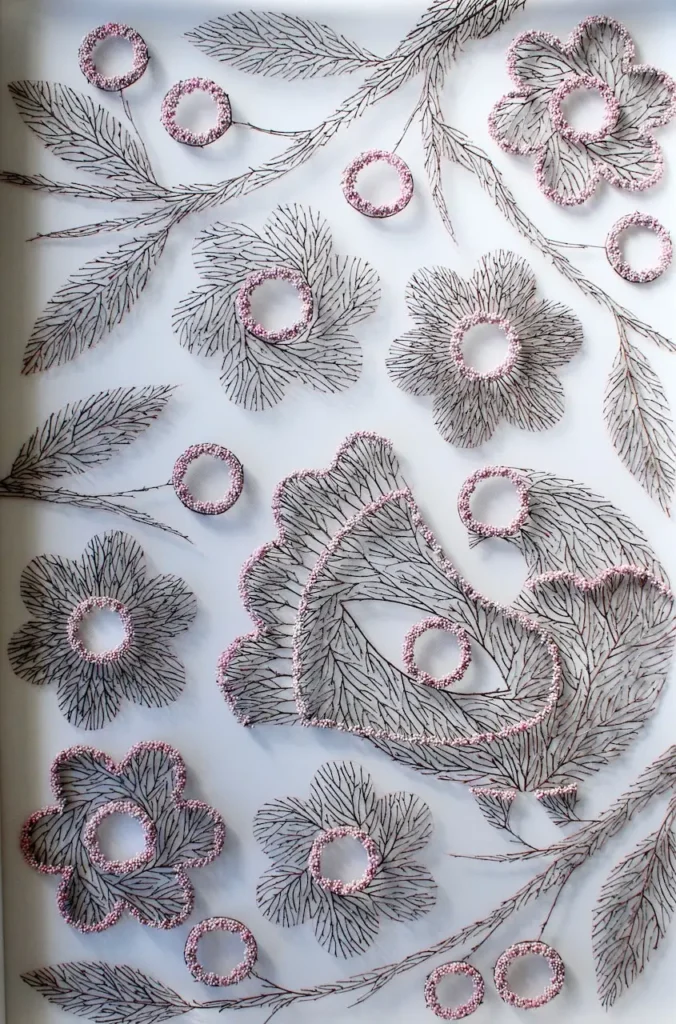
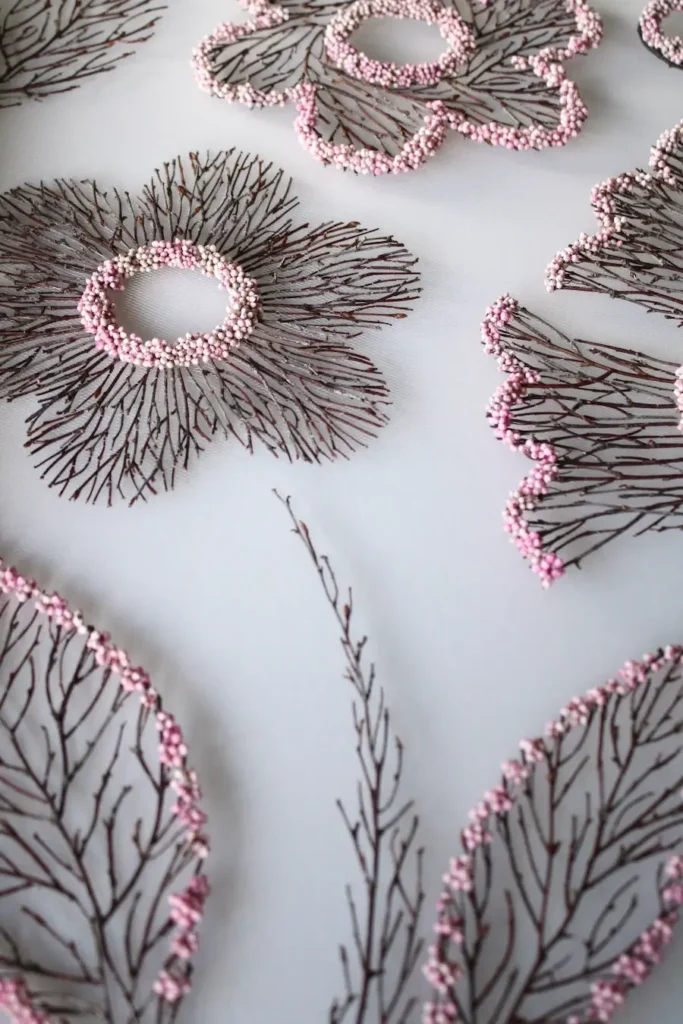
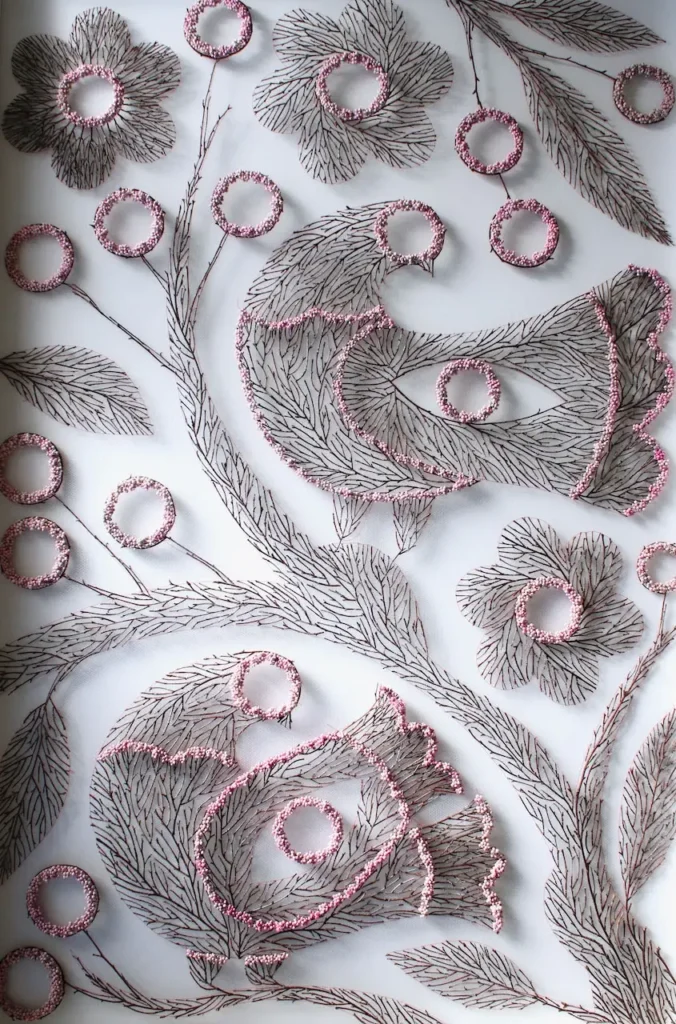
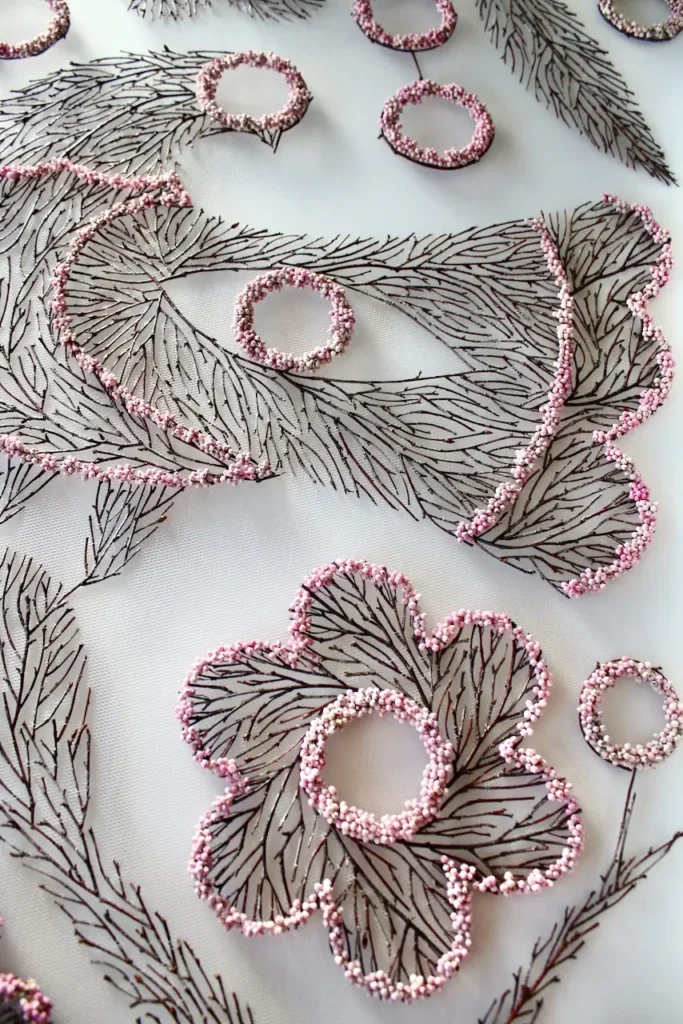
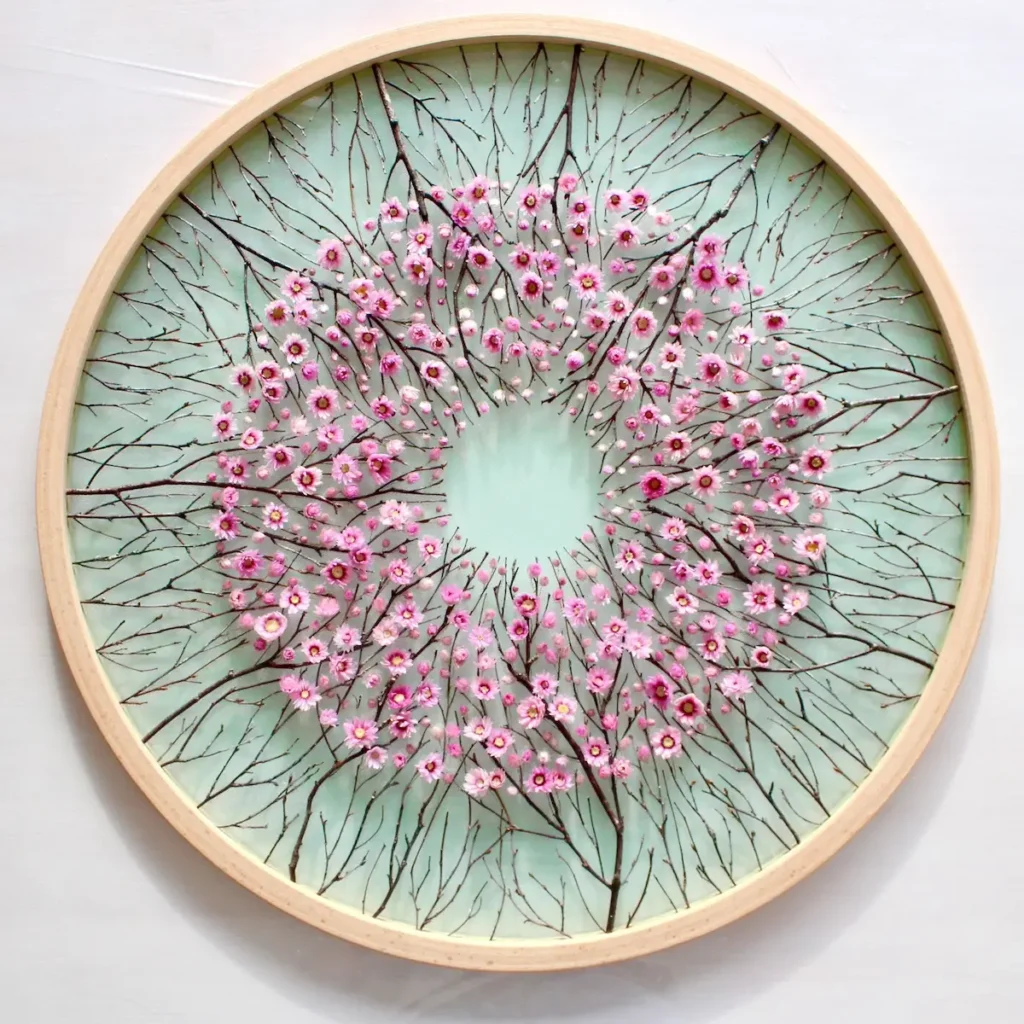
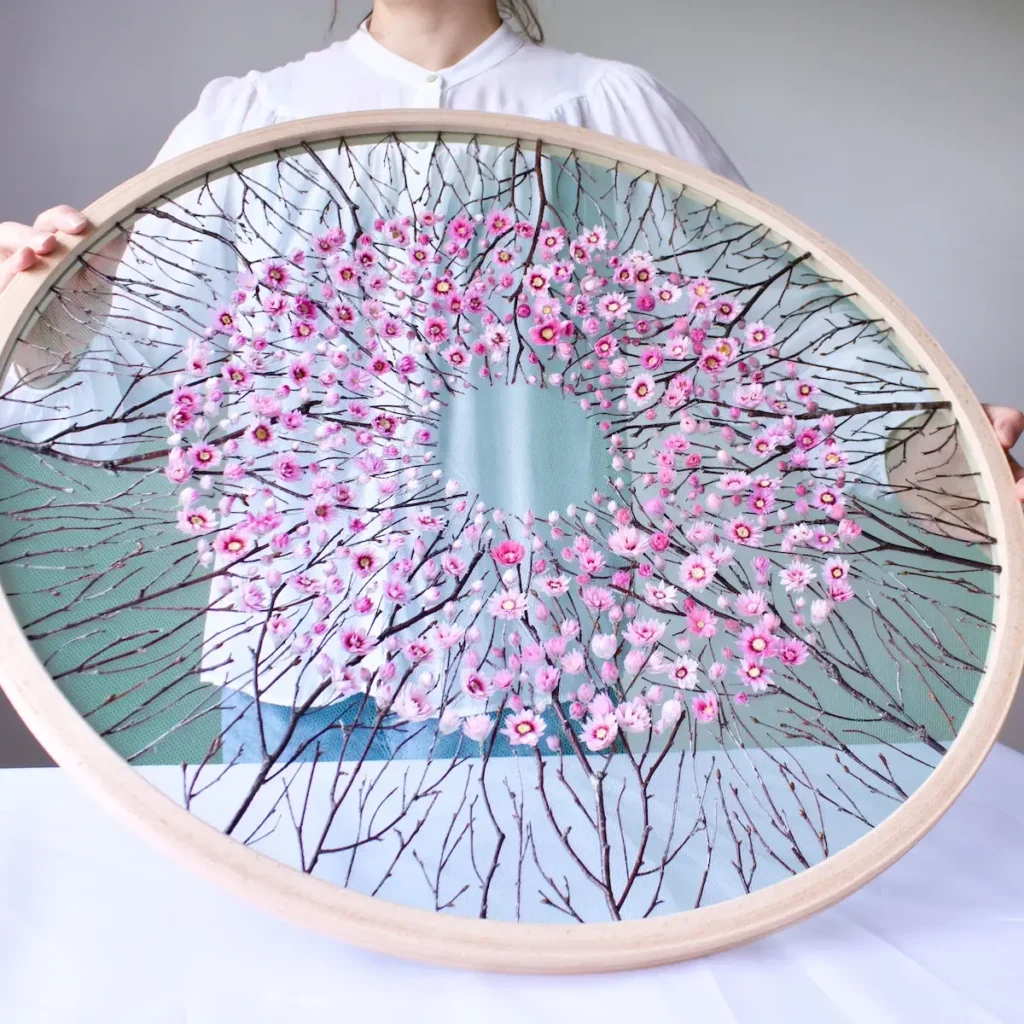
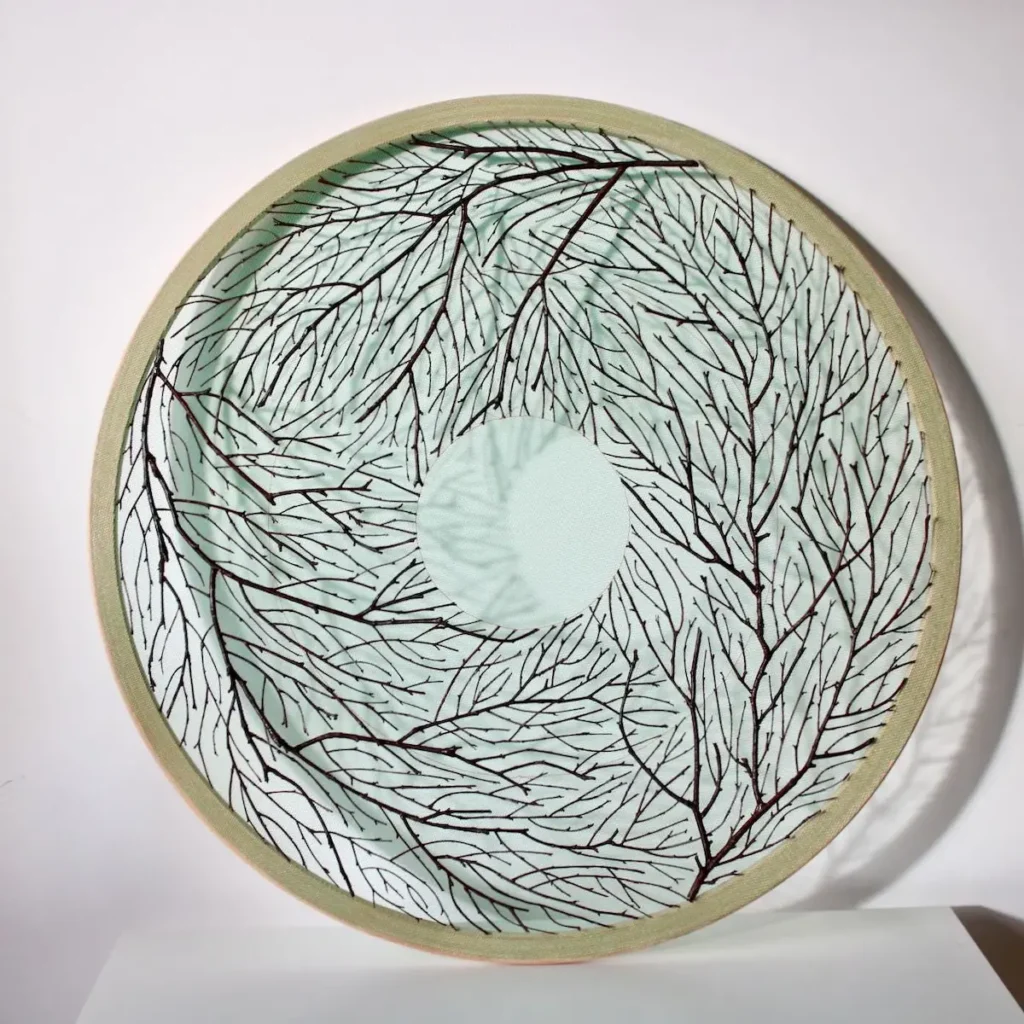
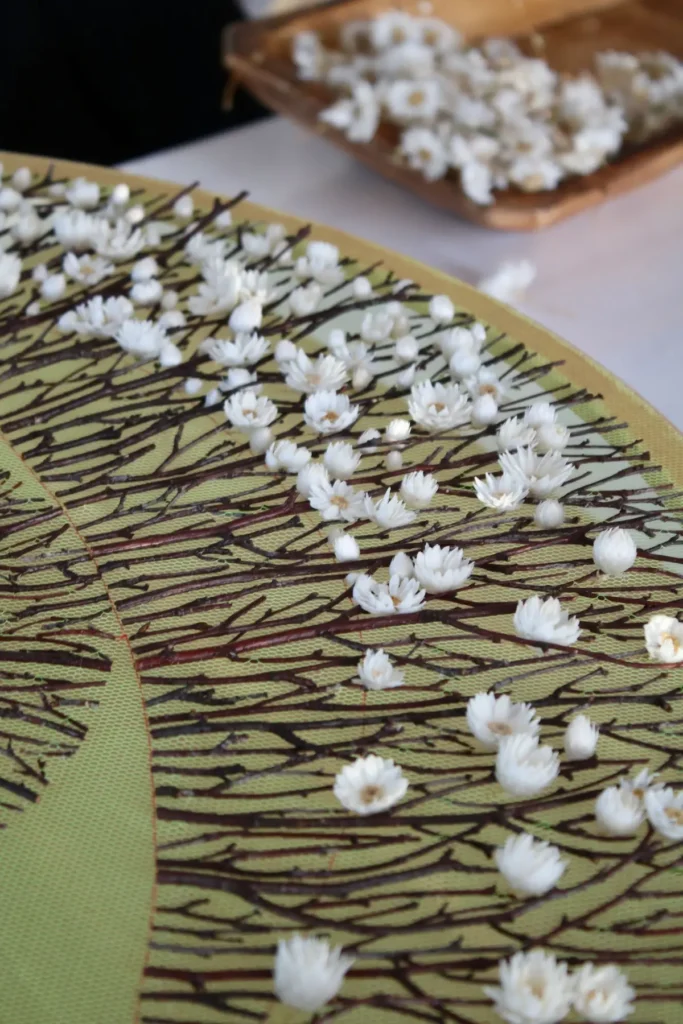
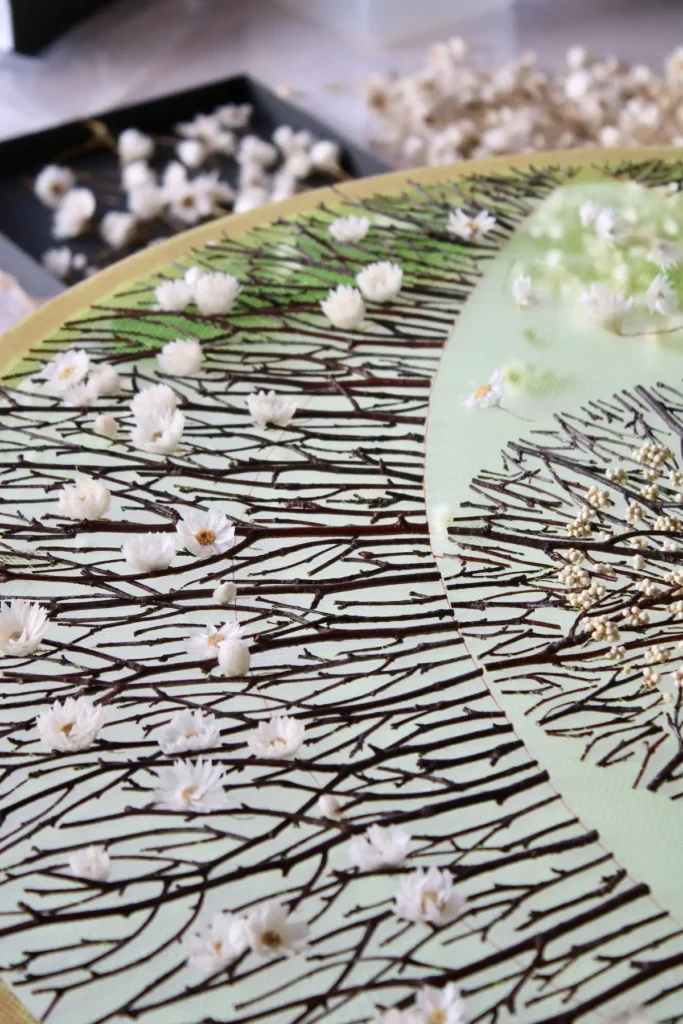
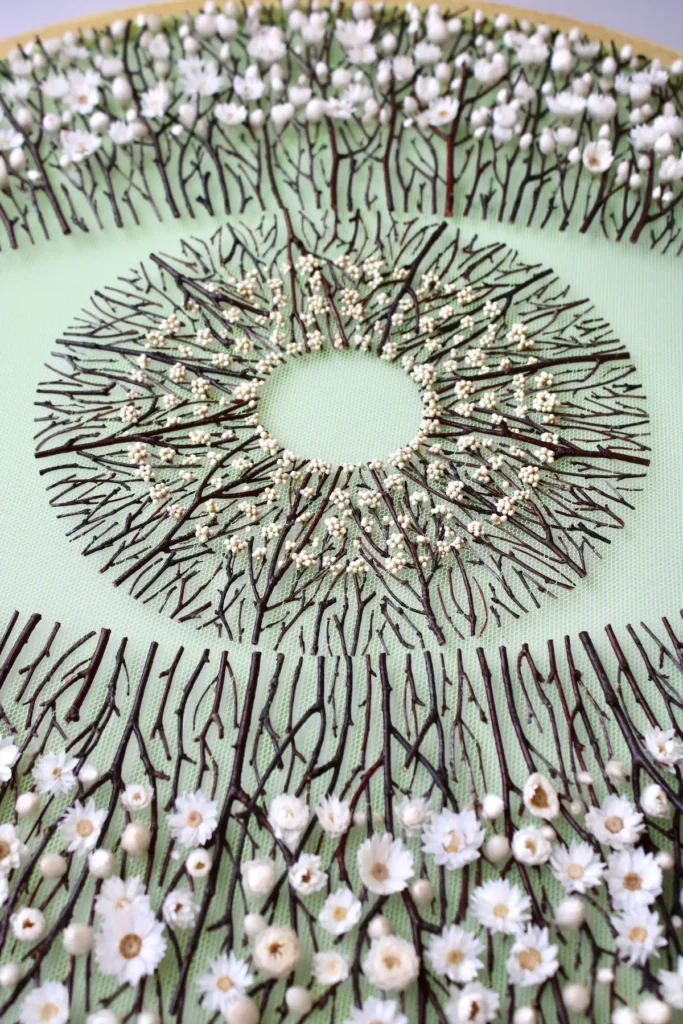
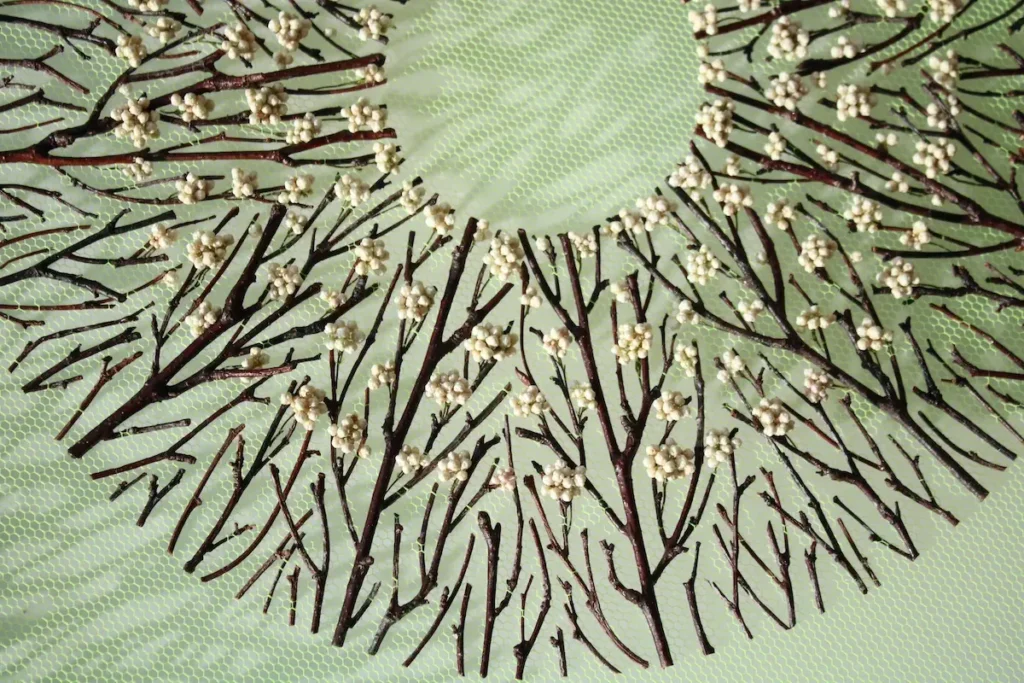
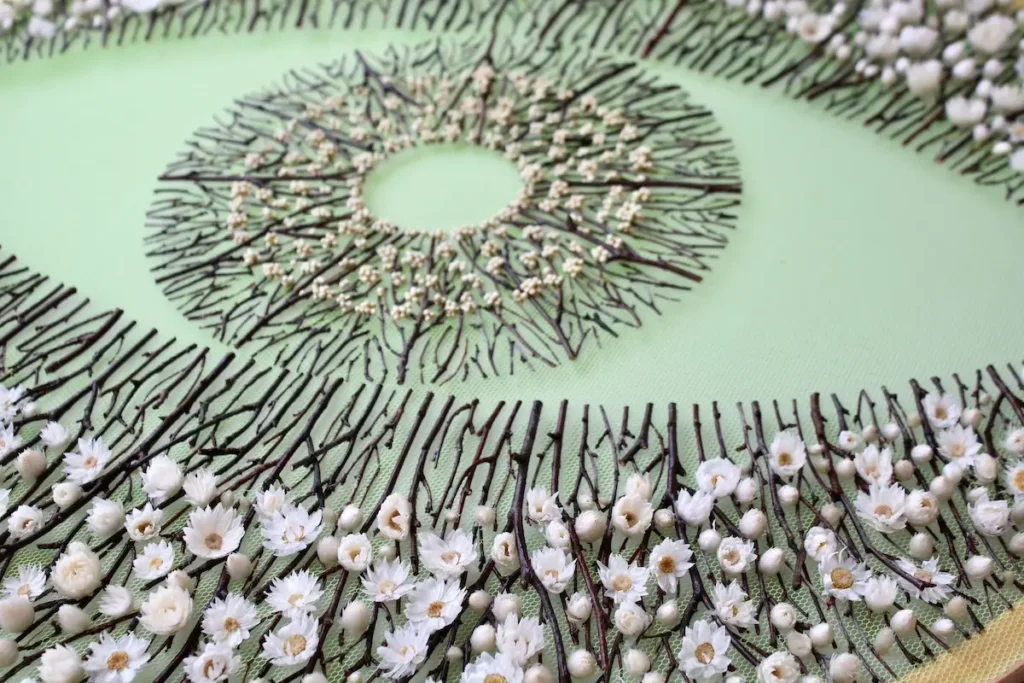
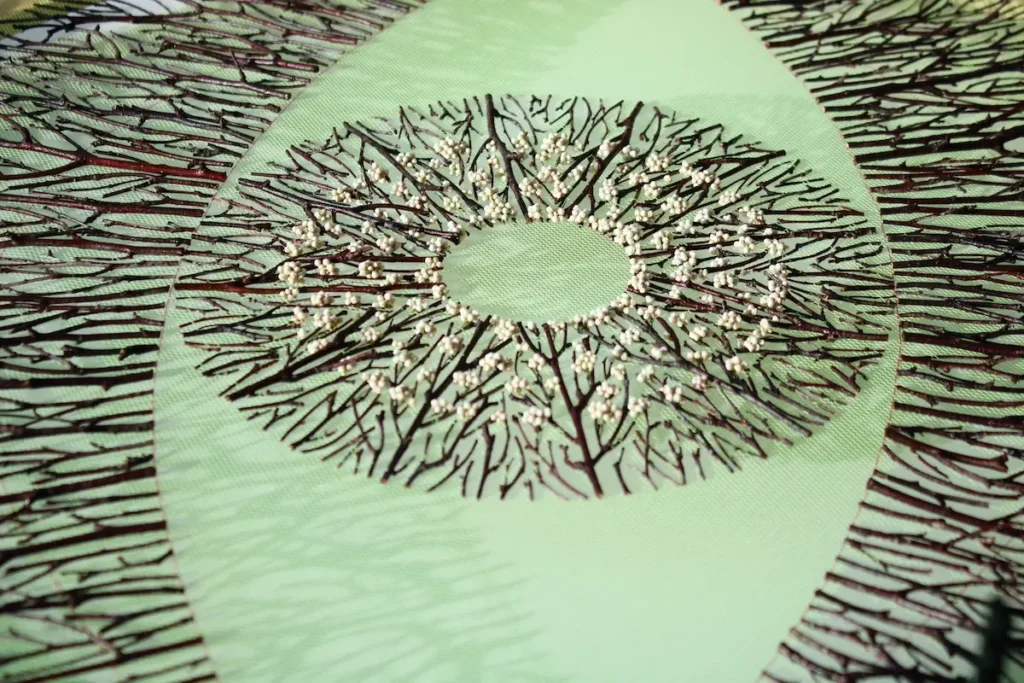
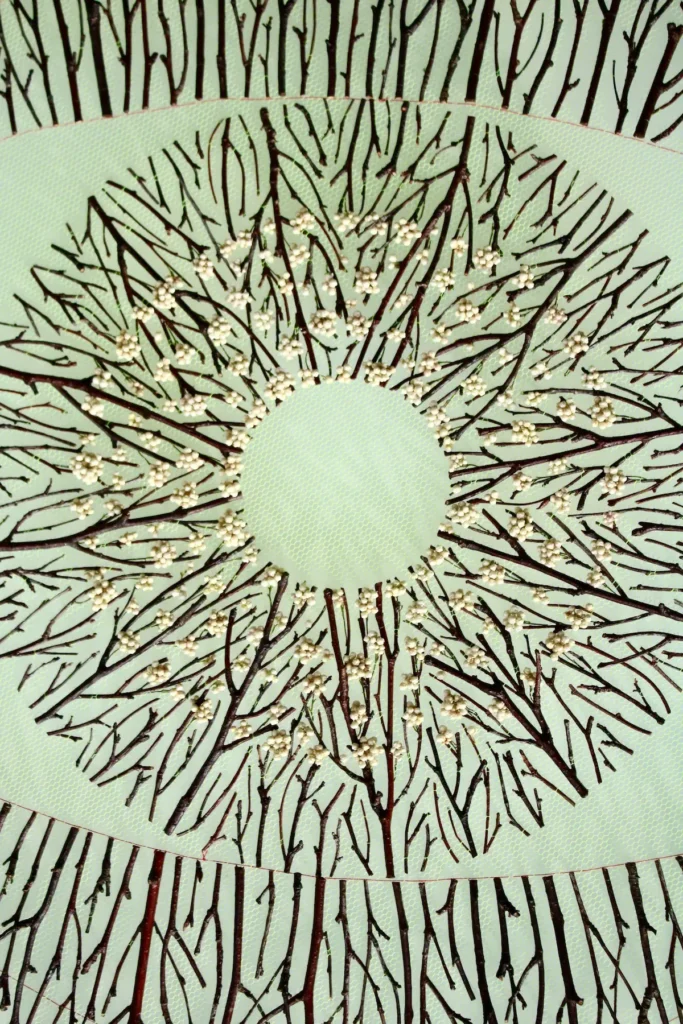
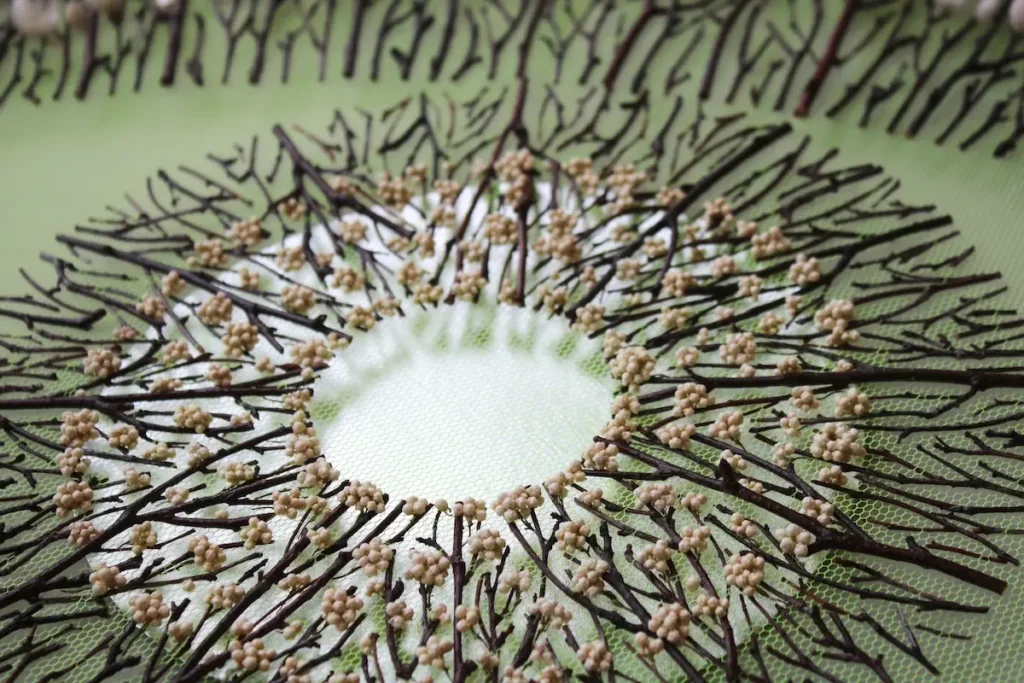
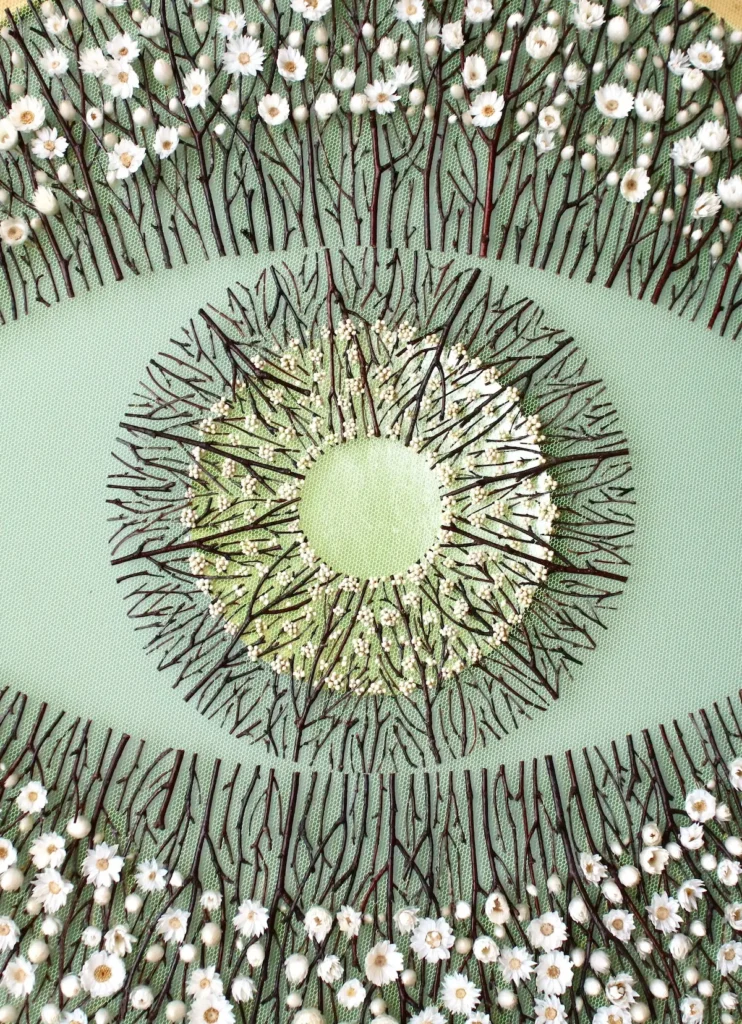
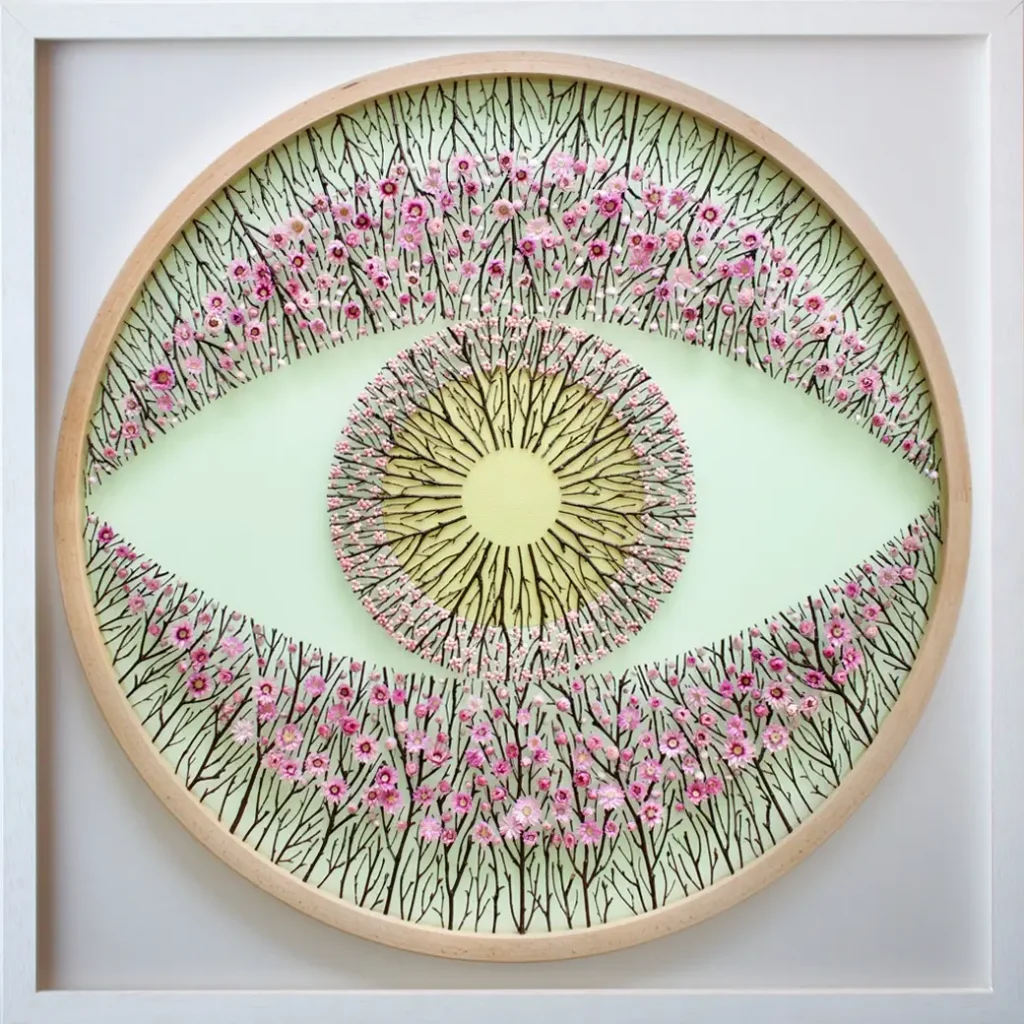
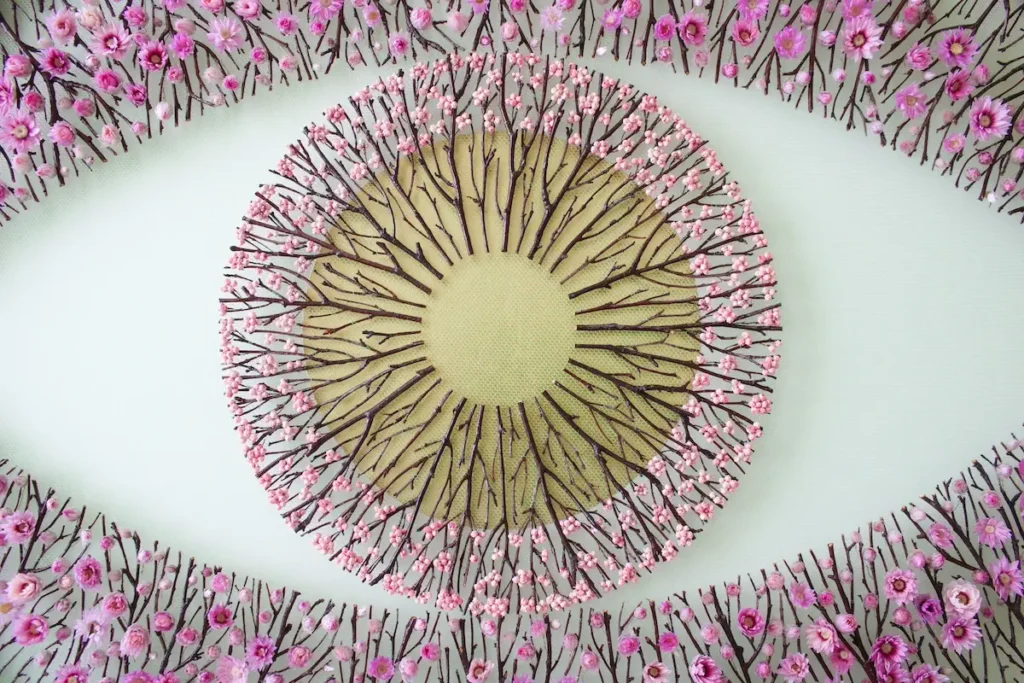
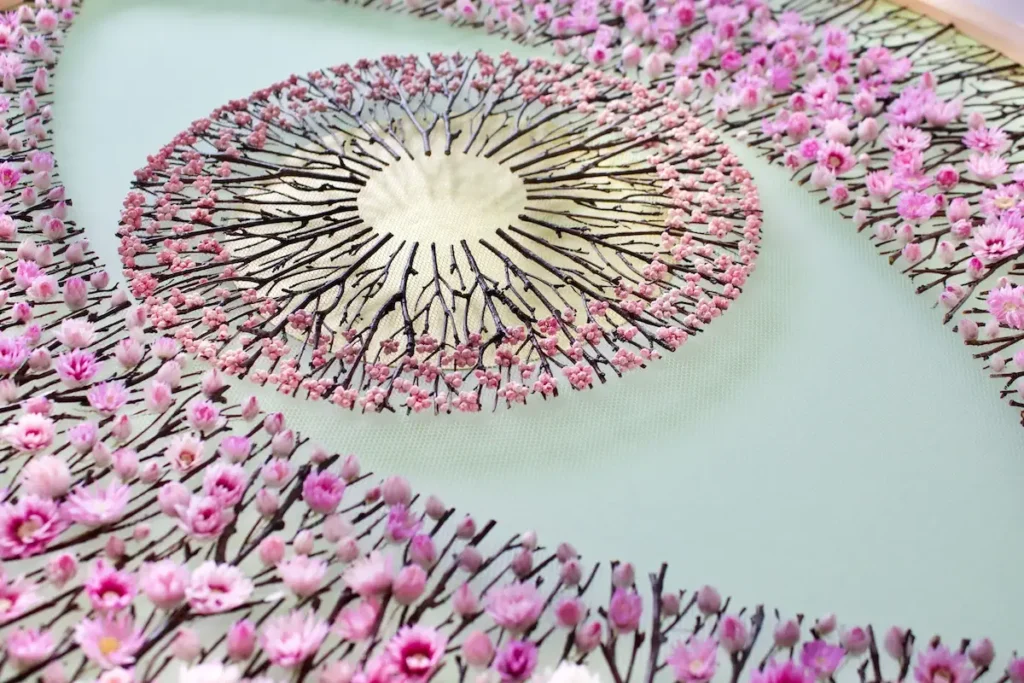
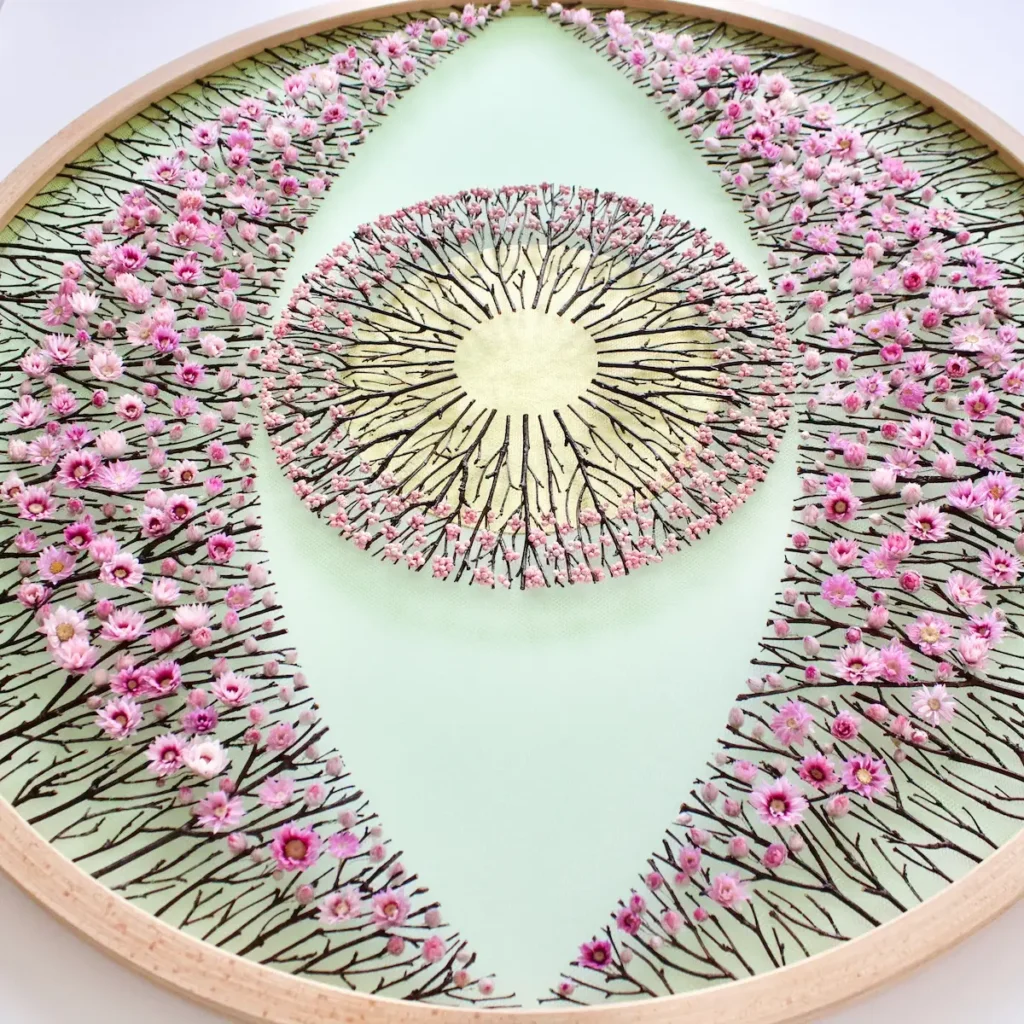
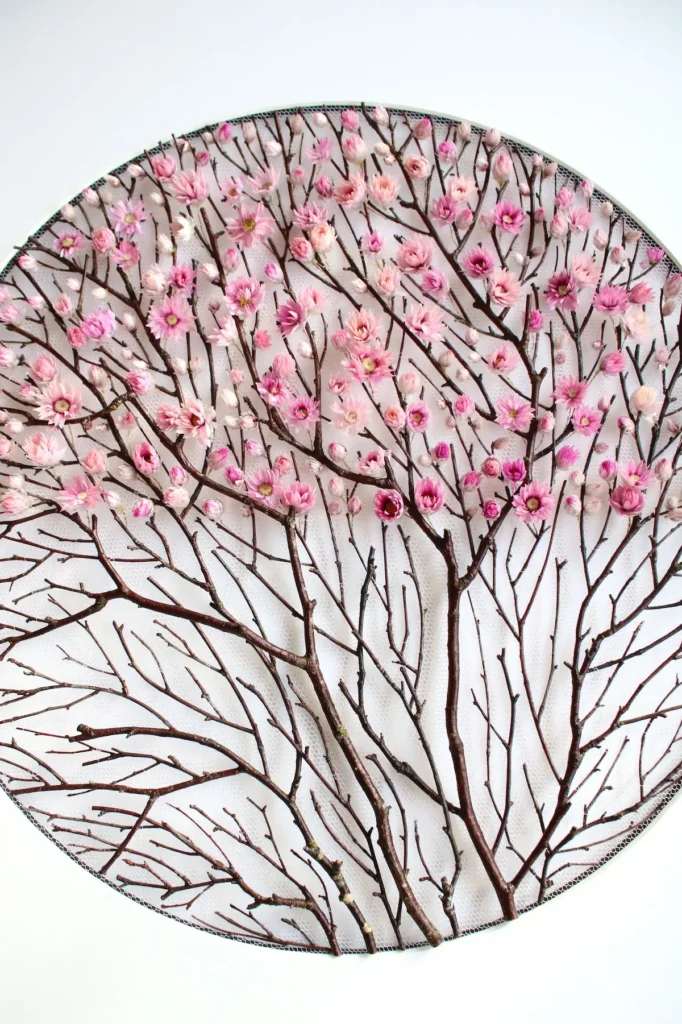
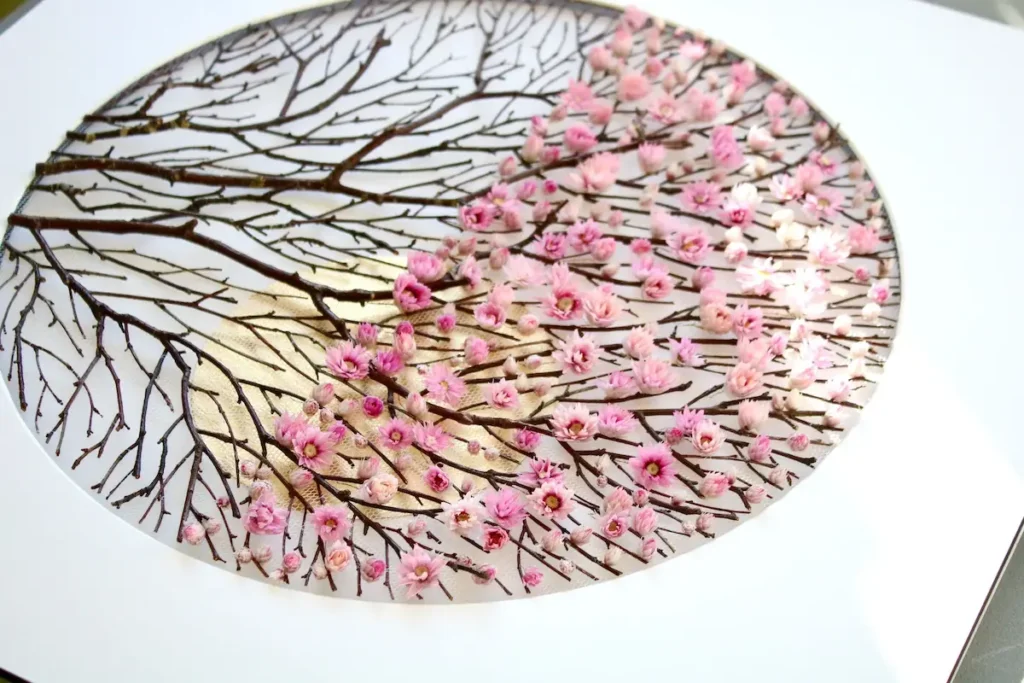
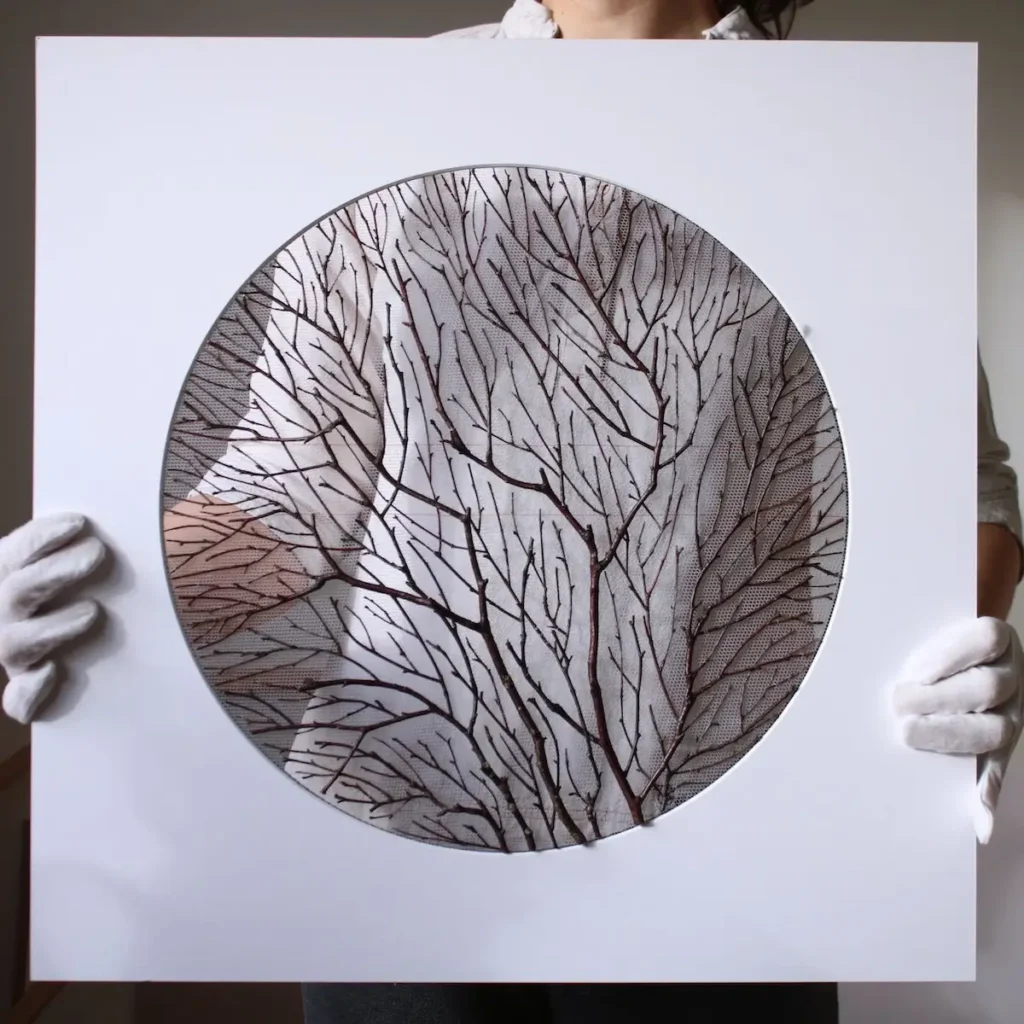
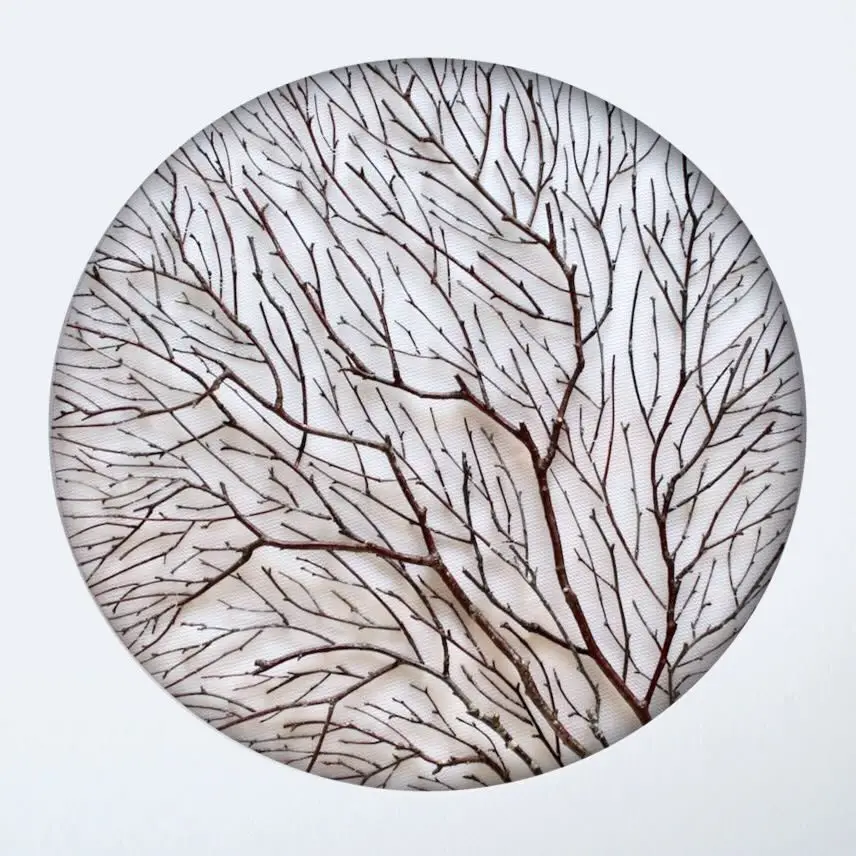
I’ve recently been working on a series I call “Branchscape”, inspired by the vein-like, branching structures you see at all scales in nature, from leaves to trees and rivers and how they shape the landscape.
How does your background in graphic design influence your work?
There’s a direct influence in my series of typographical creations. Typography was always one of my favourite parts of graphic design. I love the contrast between the crisp lines of letter shapes and the organic materials I fill them with.
But more generally I think having studied graphic design helps me to think about things like colour palettes and balancing the negative and positive space in designs.
What are your favorite plant materials to work with and why?
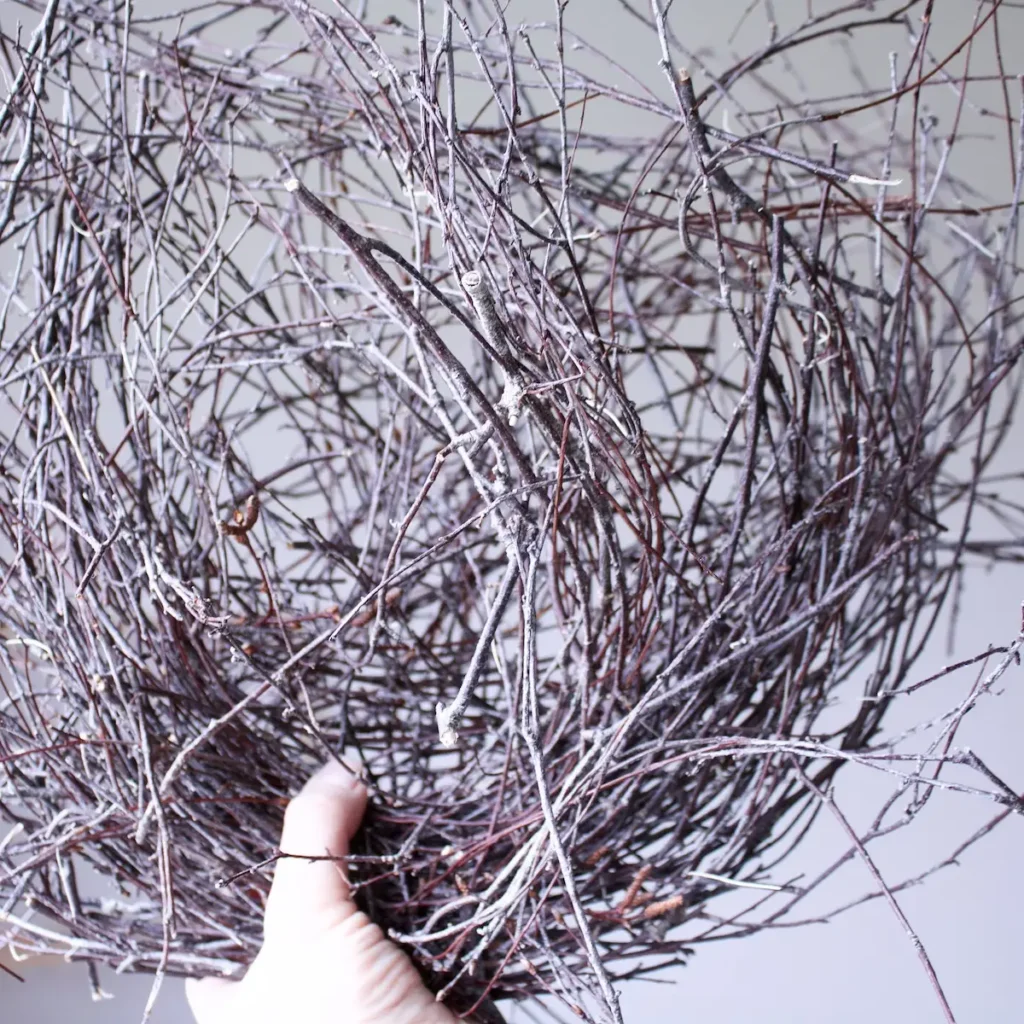
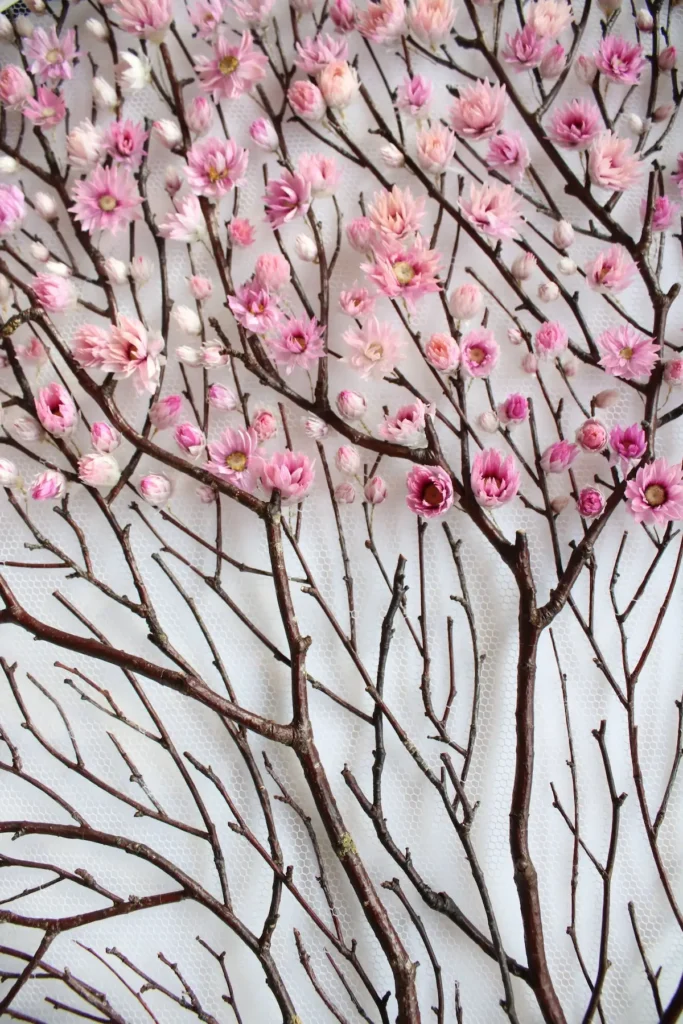
I’ve recently been creating a lot with twigs, most of which come from silver birch trees in my garden. I find it very satisfying to select, trim, and position the twigs to create artworks that mimic their branching patterns in nature to create new forms and shapes.
I also always enjoy creating artworks with organic materials that are often overlooked or forgotten. It’s easy to see the beauty in a wildflower, but it’s not so common to pick up and admire a twig!
Where do you source your flowers — garden, market, growers, foraging? Any rules?
Bits of everything. I grow some plants in my garden, and I work with a local nursery called Dark Star Plants to source plants I wouldn’t be able to grow myself.
I forage from the countryside on walks along public footpaths, but always following the rules of responsible foraging – never taking too much from one place.
There are less obvious opportunities for foraging, too. Sometimes I park in a layby when something has caught my eye, driving past an overgrown verge on a country lane! All these are materials I then dry myself, but I do also buy in ready-dried flowers of varieties that aren’t available locally.
Could you walk us through how one of your pieces comes together? From ideation to completion?
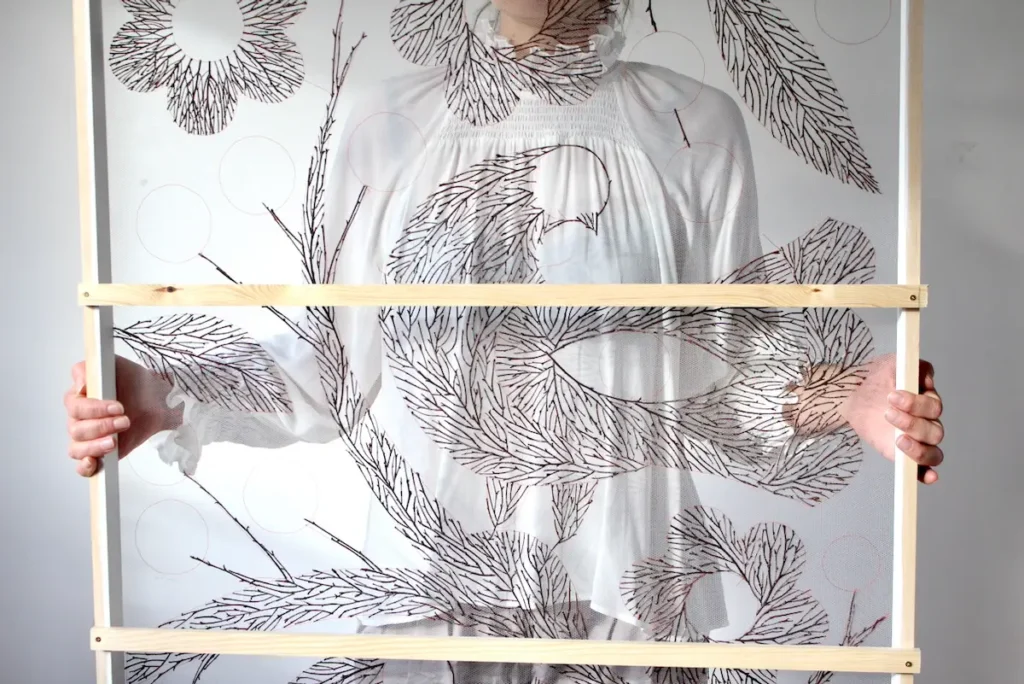
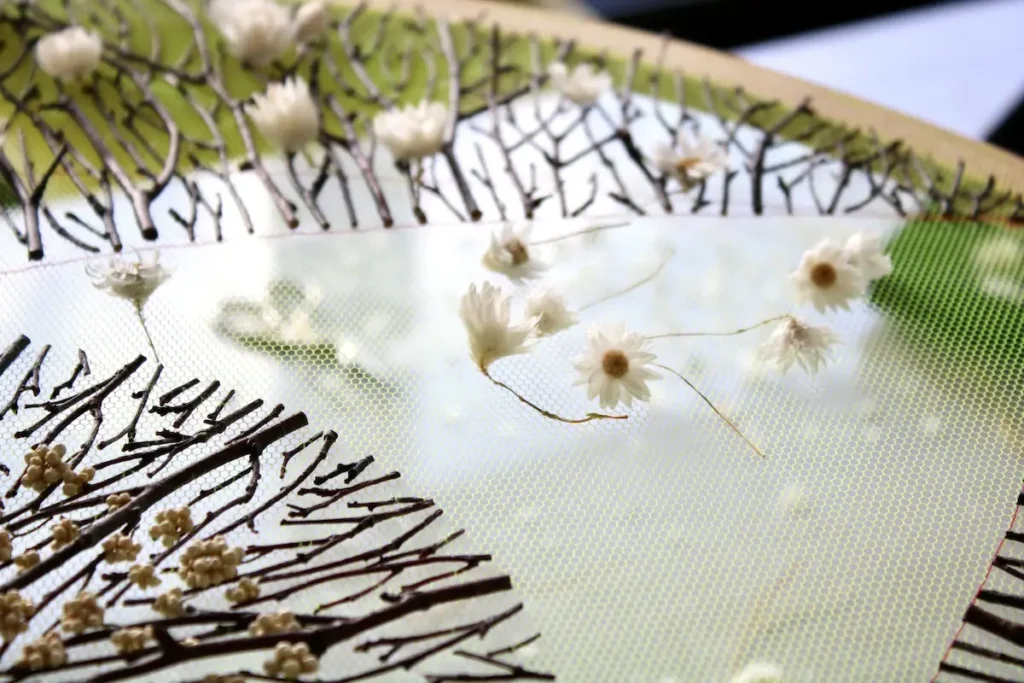
It varies with each piece, but generally I’ll start with an overall idea of the composition I’m looking to achieve and I’ll select and lay out the materials I’m going to create with. There’s always a preparation stage of stretching and securing the tulle fabric over whatever kind of frame I’m using, and sometimes I’ll use thread to stitch guidelines for myself which I then remove as the final step.
Do you plan exact placement or “follow the flowers” as you work?
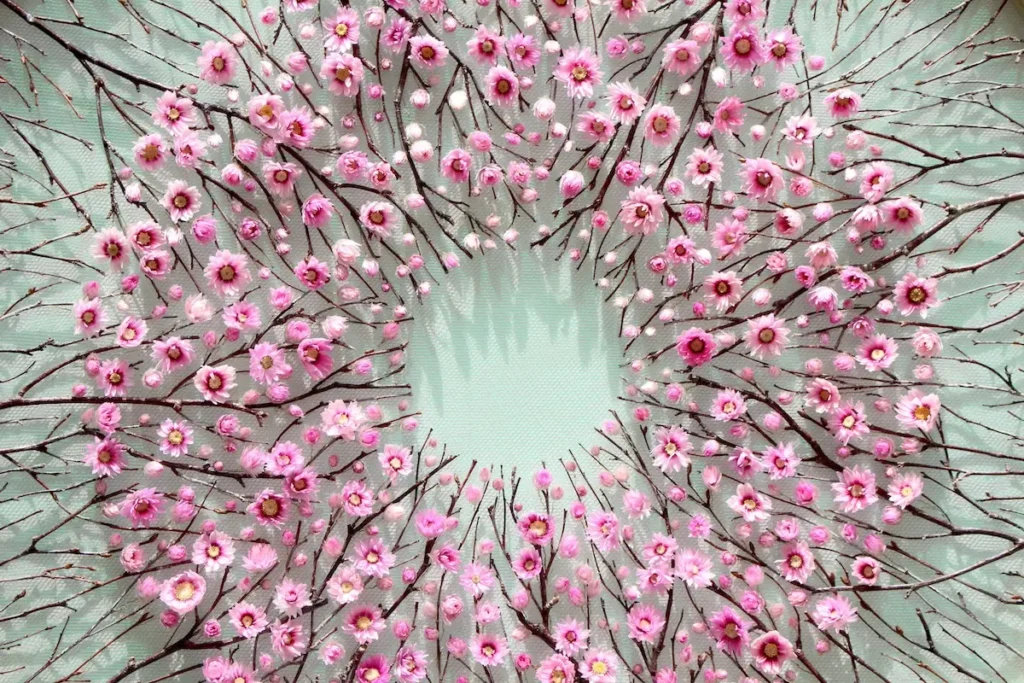
It’s much more a case of “following the flowers”.
I have a general idea of what I want to go where, but I’ll freestyle the details. Sometimes, when the creative process is going well, I get into a state of flow where I almost feel like the flowers themselves are guiding my fingers about where to put them.
How do you scale up from hoops to installations or tapestries?
Compared to a four- or six-inch embroidery hoop, it’s definitely a different kind of challenge to work on tapestries that are a metre across or more.
Part of that challenge is technical – the tension on the tulle fabric can be enough to warp a bigger frame – and partly it’s creative: with a bigger piece there’s more need to plan in advance, and work out how different elements are going to come together into a balanced and harmonious whole.
How have your techniques changed over time?
In a couple of ways. I’m always experimenting with new techniques and ways of preparing and working with different organic materials and attaching them to the fabric. Not all the ideas work out, but the trial and error is a part of the creative process that I really enjoy. I’ve got lots of ideas I still want to explore. But also I feel like I’ve become more expert at each of the techniques over time – everything becomes easier with practice.
Is there a tension between using natural, perishable materials and making lasting art?
I think to a certain extent you have to embrace the fact that change and evolution are a part of nature – bright colours will eventually look less bright, and that’s okay.
That said, I always treat the materials I work with and frame with UV-blocking glass, and I’d always recommend to display them out of direct sunlight and away from direct sources of heat or moisture, for example. I have some early pieces that I made nearly ten years ago that still look basically the same as when I made them.
Can you share a time when a mistake led to something unexpectedly beautiful?
Actually this whole creative endeavour began with a very basic mistake! The very first time I tried experimenting with poking the stems of flowers through tulle fabric, I used fresh flowers – and, of course, when they gradually dried they shrank so gaps appeared, and I realised then that I had to use dried flowers. Looking back it’s so obvious, but I think it just goes to show you shouldn’t be afraid to try new things!
Your work looks so peaceful. Does the process feel meditative to you?
It definitely does. I mentioned earlier the flow state where it feels like the materials are guiding me as to where they want to be placed, and when the creative process is going well it takes me to a calm mental place. I think the interesting thing about working with such fragile materials is that it actually forces you to be calm and attentive and live in the moment – you just can’t rush it, as otherwise you’ll find you’re breaking the delicate stems.
What advice would you give someone new to dried-flower embroidery?
I would say don’t necessarily expect it to feel easy straight away. From teaching workshops, I know that it often takes a while to get a feel for the materials, especially the small flowers with their delicate stems, and that can be frustrating. I’ve also seen how satisfying it can be when everything comes together. It’s definitely a practice that rewards patience and perseverance!
Do you have a favorite starter project from your book, Dried Flower Embroidery, An Introduction to the Art of Flowers on Tulle?
I would say probably the skull. It was a slightly controversial choice – not everyone agreed on including it! But I think it’s a really fun and whimsical project to create.
My inspiration was the Mexican Day of the Dead, but on a deeper level I love the idea of the skull made from natural materials – it’s a reminder that we ourselves are part of nature and all life is transient so enjoy it while you can.
I’ve continued to enjoy creating with skull shapes, and I’m actually working on a skull piece at the moment.
How has being a maker changed the way you see the world?
I think in general it’s made me see beauty in places I wouldn’t have seen it before. I mentioned earlier pulling into a layby to forage in overgrown verges, for example, it wouldn’t have occurred to me before that these aren’t just clumps of weeds, they’re places where you can find really intricate and fascinating works of nature.
I also feel much more in tune with the changing of the seasons. I notice much more the way different plants evolve through the different stages of their life cycle.
What does a typical creative day look like for you?
On a typical day it’s hard to be creative!
There are always so many distractions. It’s actually a treat to be able to set aside a day to do nothing but create. On those days I might start by pottering around the garden, seeing how things are growing and picking anything that’s ready to be dried. I tend to work at my kitchen table, because it has a lot of natural light. Ideally I’ll get into the flow, and the day will be finished before I notice where the time’s gone.
Where can people see your work?
I’m part of a few upcoming exhibitions: the Manchester Art Fair, on the weekend of November 22-23; a new exhibition at the Aga Khan Centre Gallery in London, due to open in December; the London Art Fair in Islington in January; and Contemporary Growth at The Station in Richmond, North Yorkshire, in February. I’ve also recently shipped pieces over to the Mobilia Gallery in Cambridge, Massachussetts, which is the first time I’ll have exhibited on the east coast of the US.
Olga’s website: https://www.prinku.com/
Follow Olga on Instagram: https://www.instagram.com/olgaprinku/?hl=en
Interview posted October 2025
Browse through more hand embroidery inspiration on Create Whimsy.