
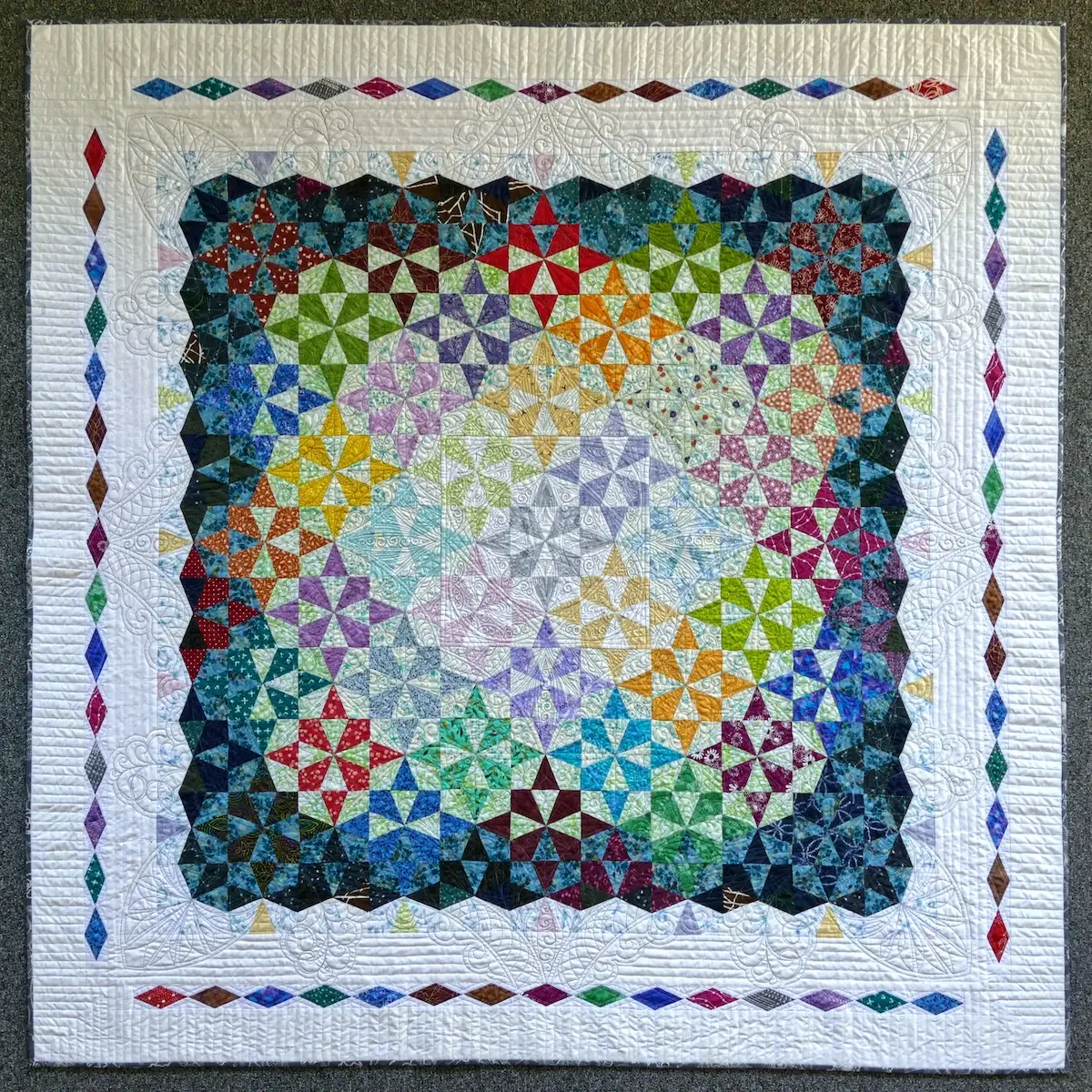
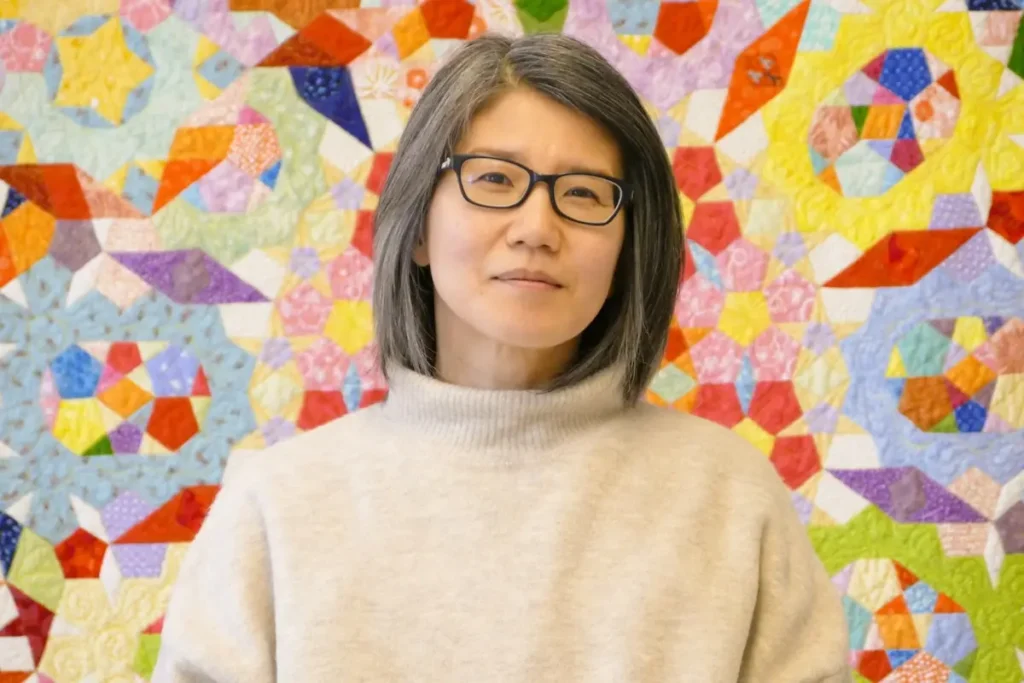
Tomomi McElwee’s quilting journey began with a simple wish to make her daughter’s bedroom feel cozy, but that small project quickly grew into a lifelong creative pursuit. Now based in Ireland, Tomomi blends the thoughtful traditions she grew up with in Japan with the textures, colors, and stories of her life abroad. In this interview, she shares how curiosity, improvisation, and a deep respect for materials shape her vibrant quilts.
Can you take us back to the very beginning—what first sparked your curiosity about quilting?
It’s long time ago now but it all started when my daughter was turning two and getting her own bedroom. I wanted to decorate it with something cosy. An image of having a patchwork quilt on a little bed came my mind.
I had absolutely no idea how to make it, only some images of typical patchwork made with squares, so I just sewed some pieces of fabric together. As you can imagine, it didn’t go well!
After that, I discovered quilt magazines and books. They were more than just squares and had all these intricate patterns. My curiosity grew instantly and I’ve been hooked ever since.
As an Amazon Associate I earn from qualifying purchases. Read more about our affiliate linking policy.
How did moving from Japan to Ireland shape your creative path?
I never thought of becoming a quilter before I came to Ireland. Marrying a great Irish man and having a family here lead me to a different life, including sewing. All these events made me who I am now.
What drew you to keep learning and improving your craft in those early years?
For the quilt making parts, I am fully self taught from books and magazines. I learnt some of the basics in school, like how to sew by hand and use a sewing machine but, for example, I didn’t know English sewing terms. Everything has been trial and error.
There weren’t any shops near me selling fabrics when I started out, never mind quilting cotton. The only materials I had were remnants from a local curtain supplier. My first rotary cutter and mat were from an office supplier. Then, either through magazines or the early days of the internet, I found a little quilt shop only 30 minutes away. I could finally buy a real ruler and proper quilting cottons!
After that, things got a bit easier, and I became more ambitious to try bigger things and learn more difficult skills.
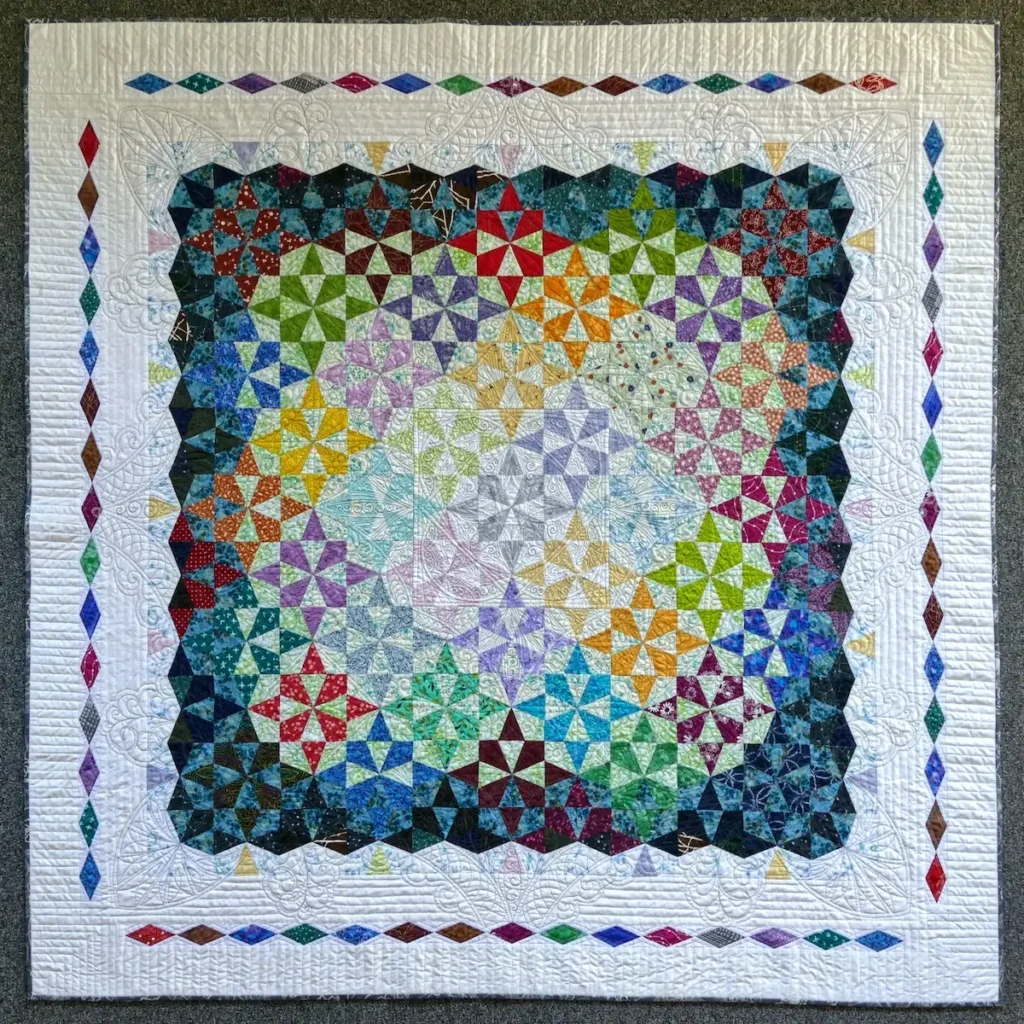
Do you usually start with a clear vision, or does the design unfold as you go?
It depends. When I am working on a more structured patchwork design, I have some idea of the final look before starting. And then I look through the fabrics I have. Quite often, I don’t have the colour I want or enough of the fabrics I want to use. So compromising starts because I want to work with what I have rather than go shopping. It is fun to work with some limitations and solve those problems.
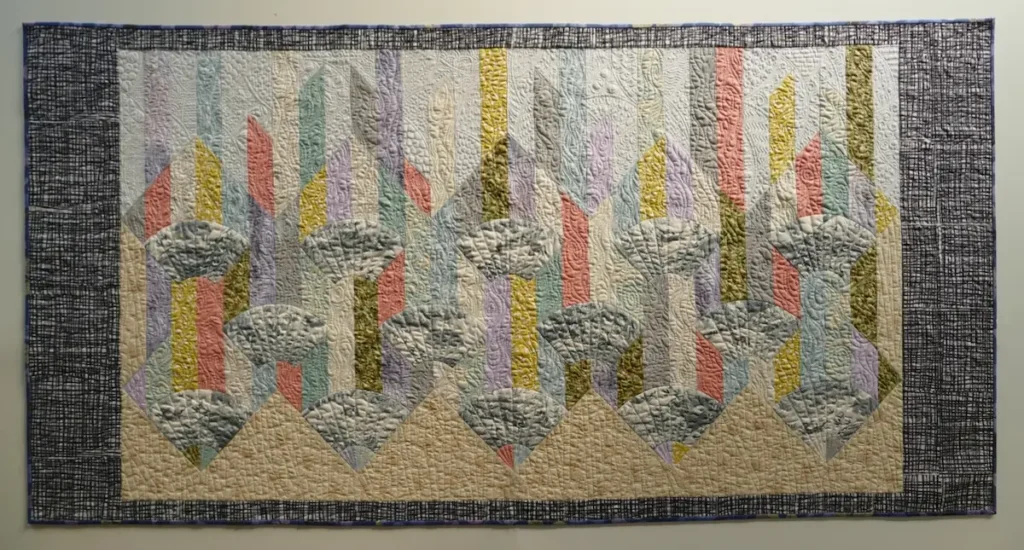
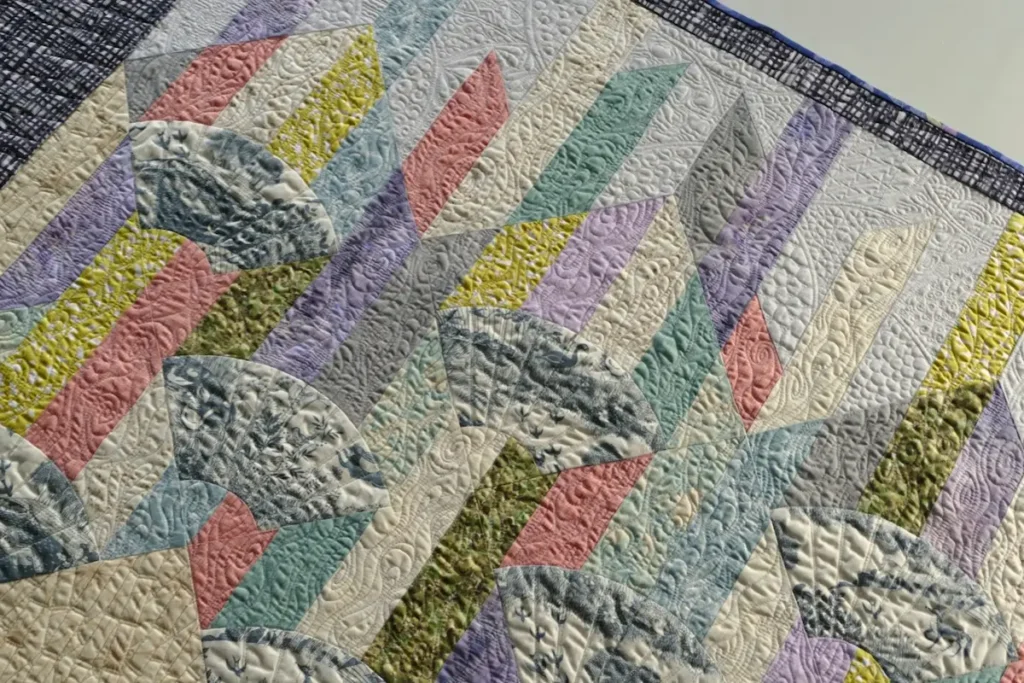
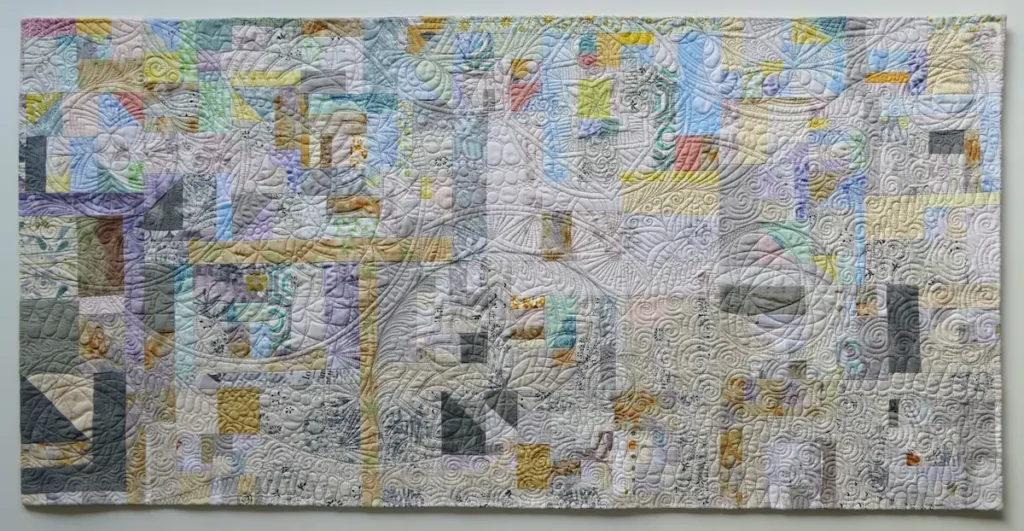
Other times, I pick up one or two particular fabrics and see what comes to mind. This could lead to making blocks or random shapes. In Japan, we say “let the material decide what it wants to be”. Monochromatic fan was started trying to use up one particular fabric, a grey animal print.
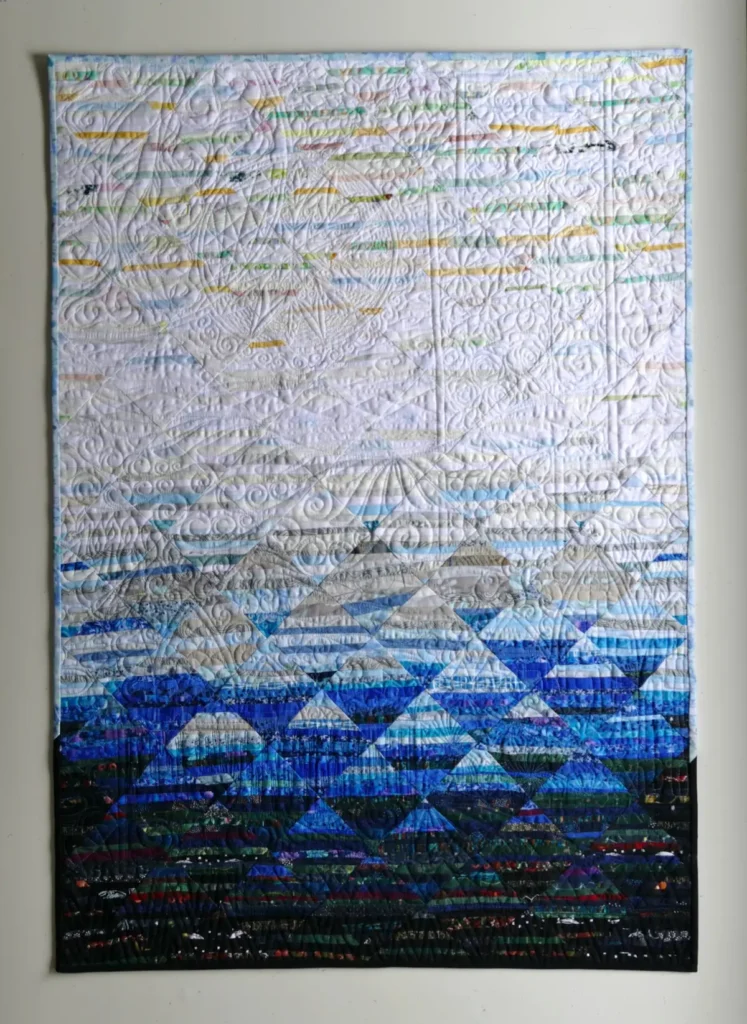
Another way I work is to have some picture in my head, like a blue sky or autumn colour. To create an atmosphere, I piece all sorts of scraps, rather like a mosaic.
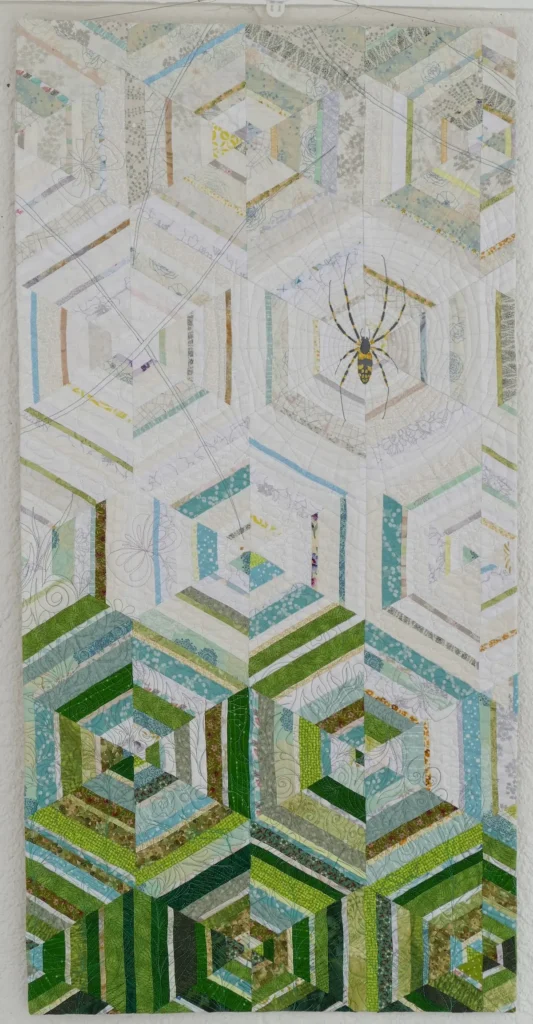
You often work with scraps and unexpected combinations—what excites you about that process?
Growing up in Japan, we were told that everything has soul and meaning, and nothing should be disregarded. That, of course, includes fabrics.
That mindset is deeply embedded in me, and I keep tiny scraps just in case. I pull them out in the hope that some may work and the rest return to the scrap pile again. Eventually, though, they find a place in my quilts. It is very satisfying to find places for scraps, especially for the old ones.
Can you describe a piece that feels especially meaningful to you and why?
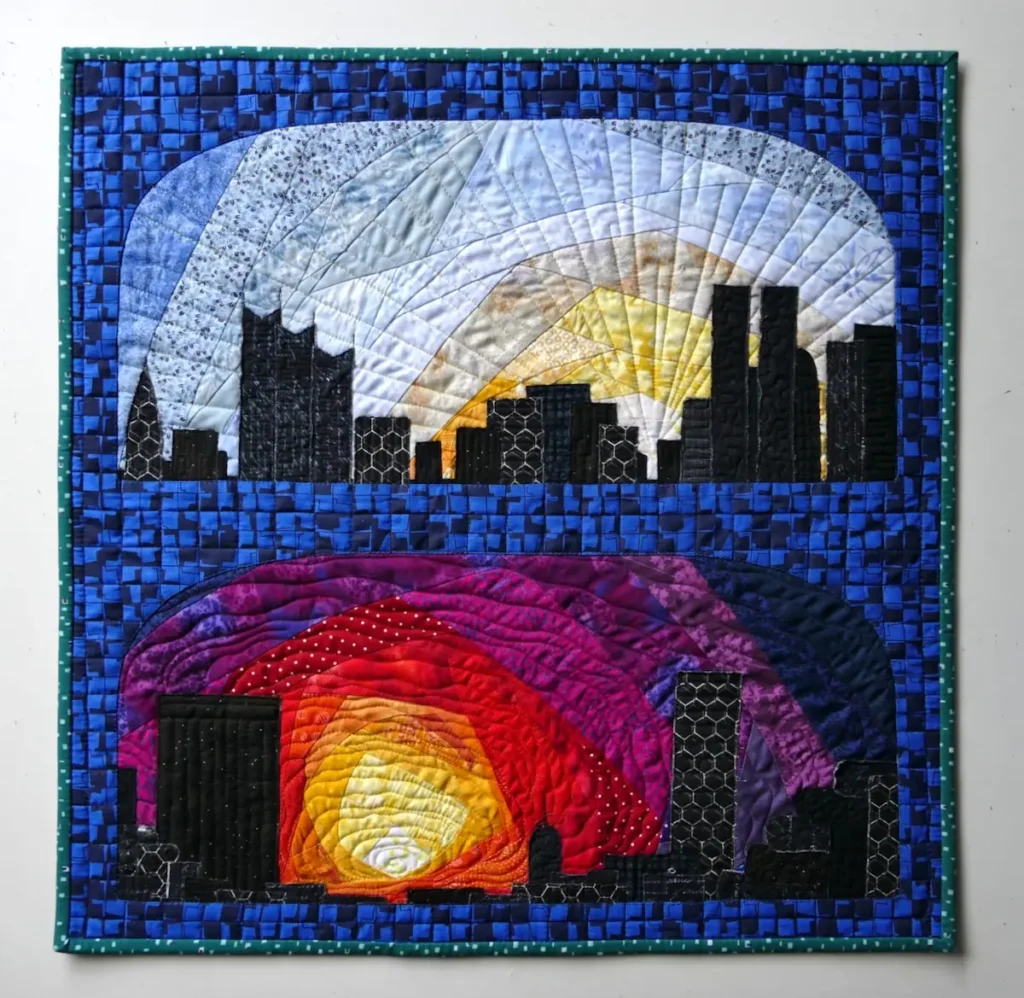
There is a small quilt I made for a national exhibition with the Irish Patchwork Society in 2020 or 2021. The theme was ‘place’, I think. As a Japanese person living in Ireland, I wanted to make a quilt to represent the two countries, one located in the Far East and the other in the West.
The sun rises in the east and sets in the west, so I made silhouettes of two capital cities through sunrise and sunset. (
Describe your creative space.
I am extremely lucky to have a big space for working with quilts. I can pull and spread fabrics as I want and don’t need to clean up every day. It’s also big enough that I can run classes in it and help more people enjoy quilt making.
Do you prefer working on one piece at a time or juggling multiple projects?
I definitely prefer to work on one piece from start to finish. If I don’t work fast enough, I forget what I initially wanted and start to wander off. My concept/feeling changes and the result can be very different.
Having said that, I do have slow projects which take more than a year and make them bit by bit. I do this to keep my hands busy between projects.
How important is texture in your work, and how do you build it through quilting?
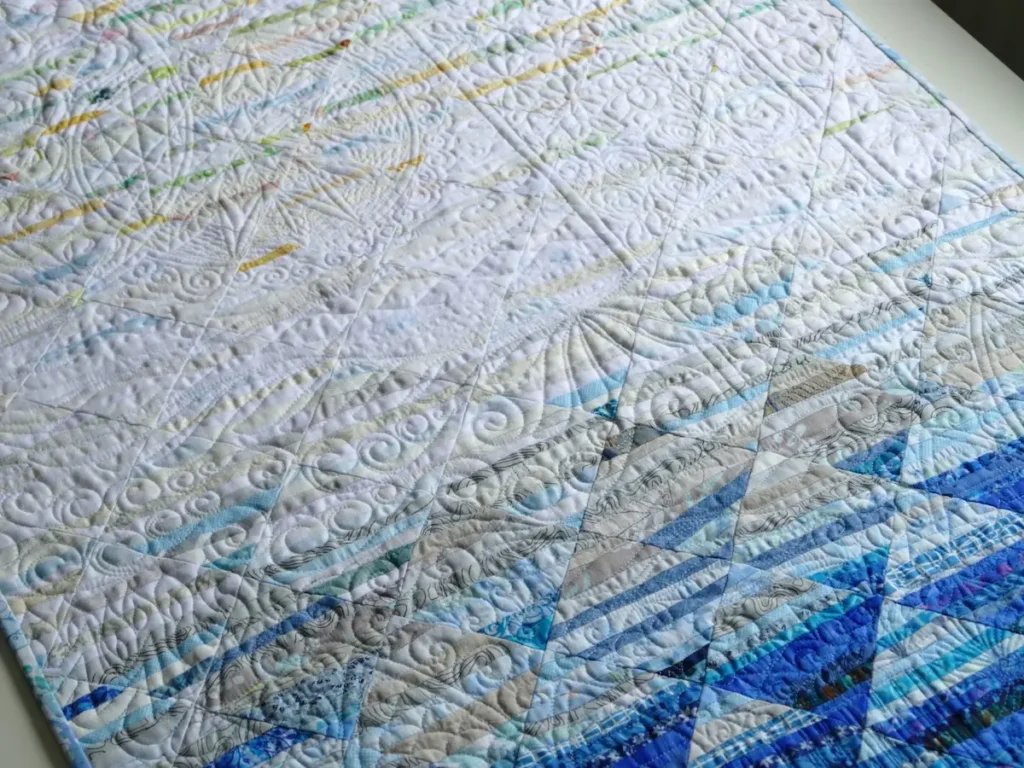
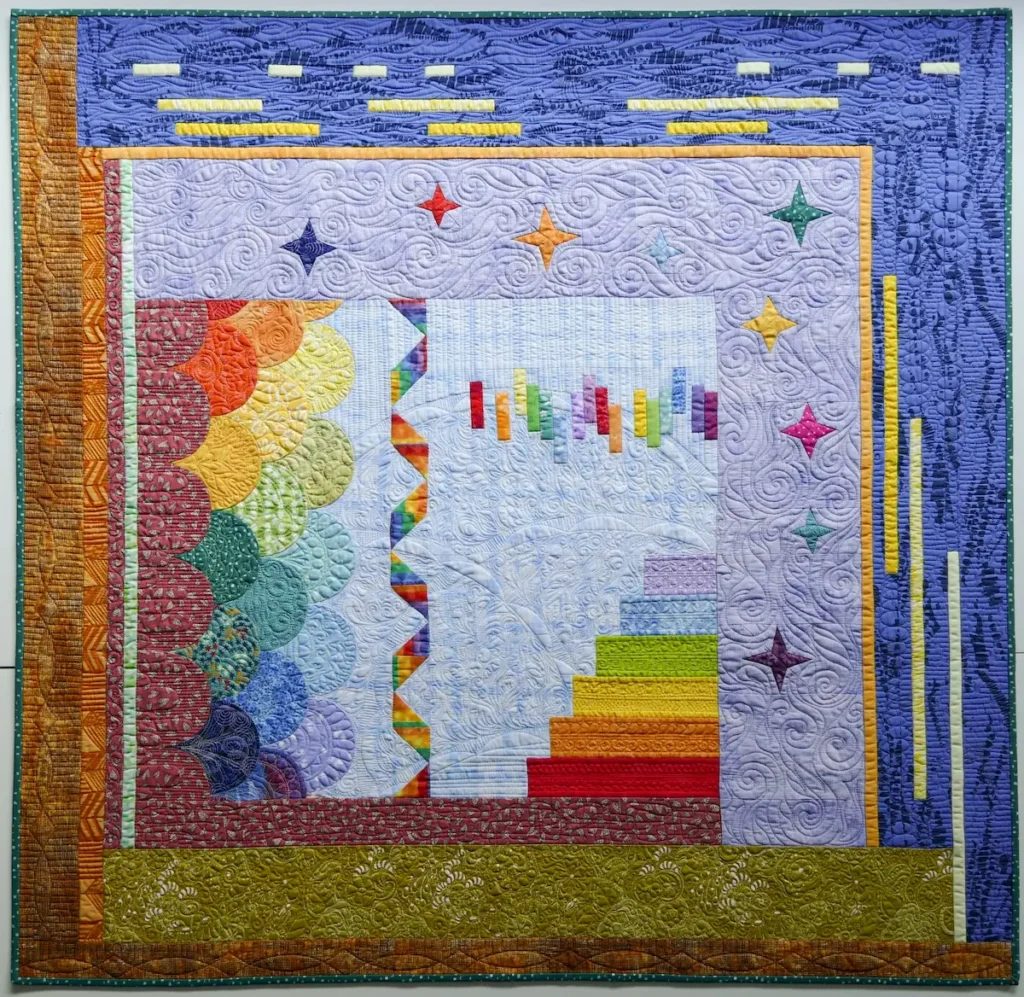
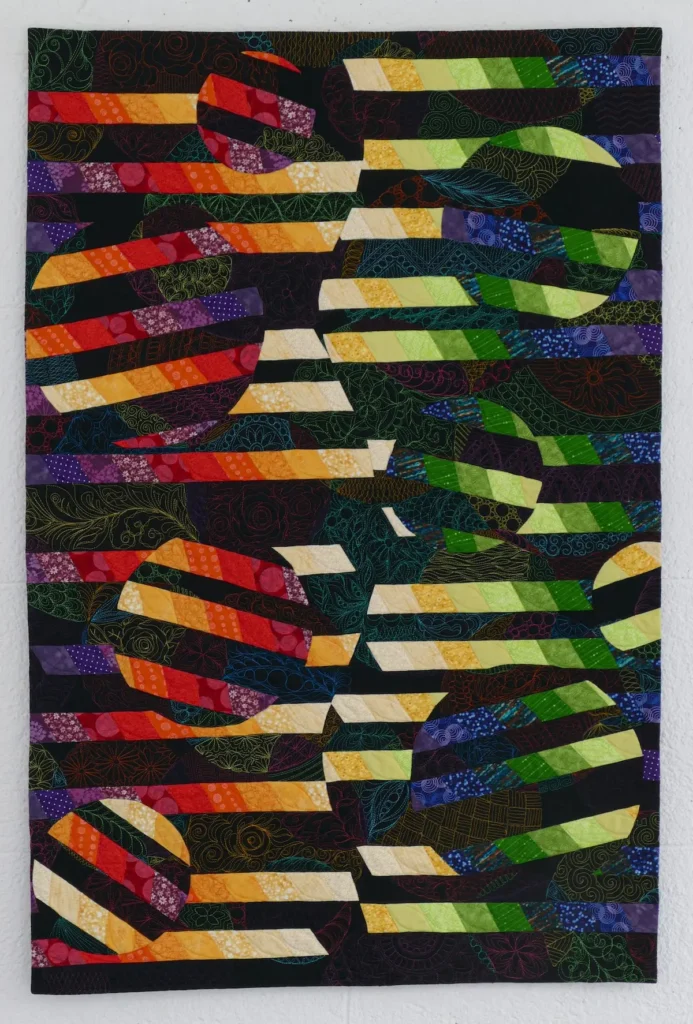
I make quilts because I want to quilt! I love the way quilting changes the way pieces look, from a flat plain field of fabrics to a drama of quilted hills and valleys.
I sometimes like working with patchwork patterns, just following or maybe adapting them. I may not have a clear picture at the start. It’s always like: if I add a line here, what shows up nicely? What quilting design can be added to make it more dramatic? Step by step is my method.
When a piece doesn’t go as planned, how do you decide what to do next?
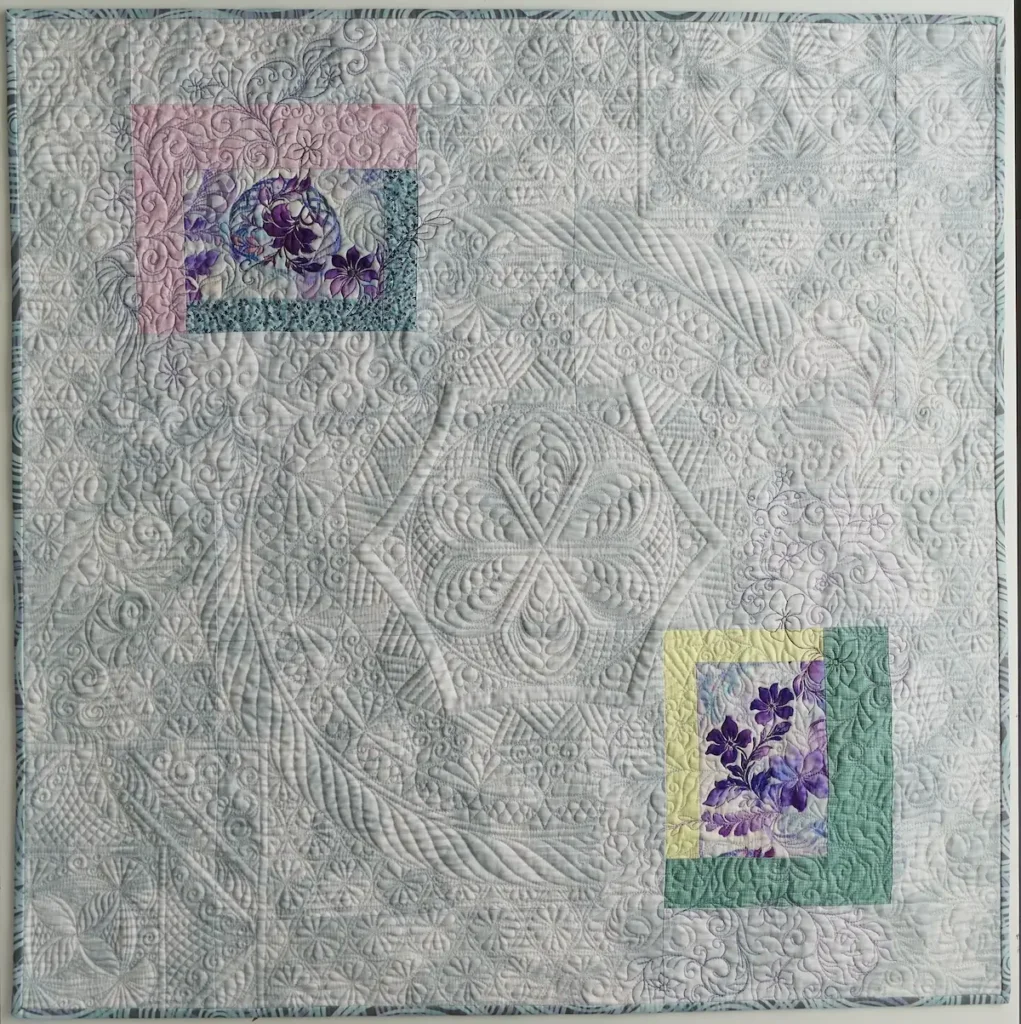
Throw in something that shouldn’t belong to the piece. And add something to bridge those elements. That will create a new story or a direction to bring the piece somewhere different.
How do you balance planning with improvisation in your designs?
At the start, I limit the colour palette. Working within similar colour groups or shades makes life a bit easier. Once it reaches a certain point, I start introducing different colours in order to add interest. Things start to change in unexpected ways.
When improvising, I feel like I don’t need to control everything. Let the fabrics decide what they are going to be. That would be the size or shape of fabrics stitched together.
I step away to see where it’s going and I adjust and change until it feels right, sometimes by adding more and at other times by removing elements.
There may be a lot of wasted steps to get to where I’m happy, but I think that is how life is.
How do you know when a quilt is truly finished?
I leave it overnight and come back the following day and look at it again. I repeat this until I don’t think I can add or change anything anymore. And it’s done.
What inspired you to begin teaching quilting?
It was completely by accident. Someone asked me if I could teach and I took a chance. Now I really enjoy helping people to build new skills.
What have your students taught you over the years?
The importance of enjoying the moment.
It is very easy to be self-critical and compare yourself to other people, especially when learning a new skill. That is not an important part of quilt-making.
Be happy with what you do and enjoy the moment.
What advice would you give to someone who wants to start quilting but feels unsure?
Same as the above. Just jump in!
Where can people see your work?
Website: slaneyquiltingstudio.com
Instagram: https://www.instagram.com/slaneyquiltingstudio/
Flickr: https://www.flickr.com/photos/77385906@N08/
Rapid-Fire Fun:
Scraps or carefully planned fabric pulls? Planned scrap mix.
One tool you can’t live without? If not my sewing machine, then a seam ripper.
A word that describes your quilts? Colourful.
Favorite way to recharge after finishing a big project? Cleaning my studio or cooking.
Interview posted March 2023
Browse through more inspiring art quilts on Create Whimsy.