
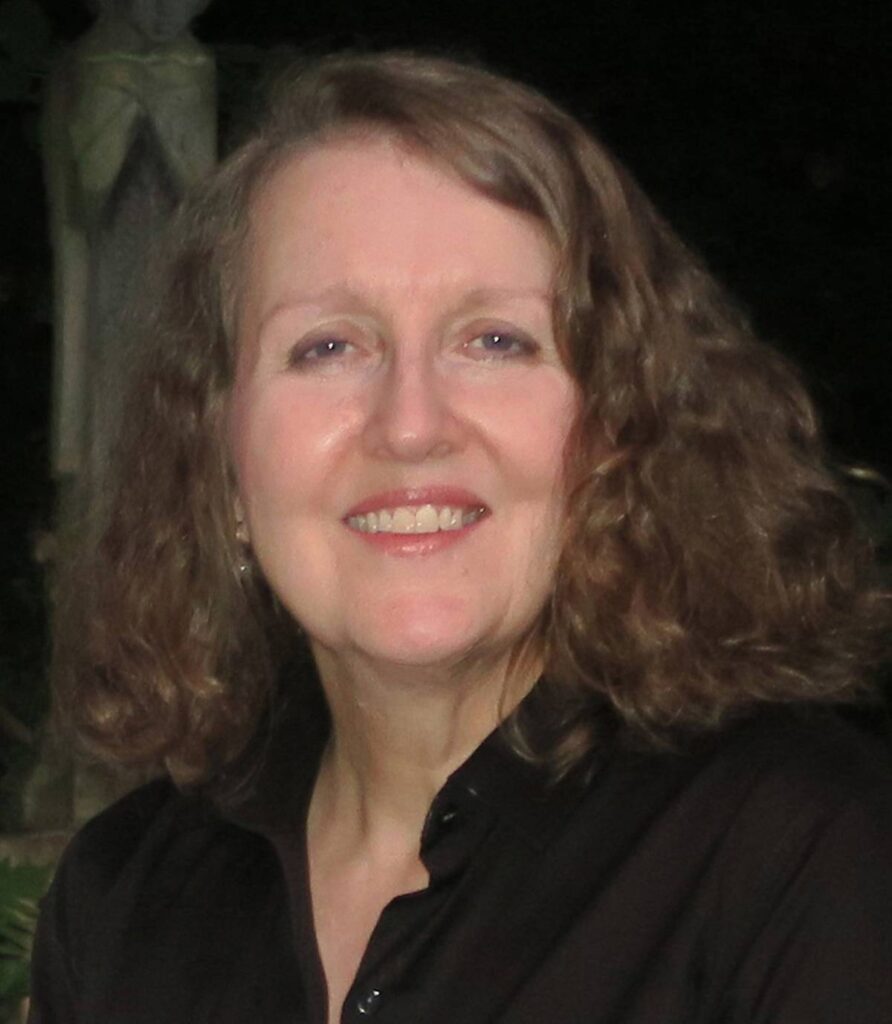
Linda Syverson Guild has been making things since she was a little girl, building dollhouses from cardboard and sewing on her mom’s Featherweight machine.
Today, she combines her love of architecture, quilting, and found objects to create art quilts full of bold design, rich stories, and joyful surprises. In this interview, Linda shares how curiosity, careful planning, and a playful spirit come together in every piece she makes.
Growing up in Nebraska, what were some of your earliest creative memories?
In many ways, I was a typical, curious kid—always wanting to know how things worked. So, between going to the lumber yard or hardware store with my dad and my mom letting me play with her Singer featherweight sewing machine when I was 7. I felt like I had the run of the house and nothing was off limits.
Then, Mom signed me up for 4-H when I turned 8. After that, plenty of time was spent in the kitchen baking or sewing. I was always designing something for my dolls and building homes for them with folding walls, using a kitchen paring knife to cut old cardboard boxes at the age of 10.
As an Amazon Associate I earn from qualifying purchases. Read more about our affiliate linking policy.
Moving outdoors, digging holes in the garden became one of my favorite activities, because so many things happen because of holes in the ground.
You trained as an architect before becoming known for your art quilts. How did that path unfold?
The town I grew up in was filled with incredible architecture that could be touched every day. I was exposed to and recognized architectural design from a very early age, aware that I was going to be an architect by the time I was 7 years old.
We had the Carnegie Library with marble columns in the front foyer, the building was filled with heavy woodwork. Our movie theatres were built in the 1920’s and 1930’s and filled with glorious design details, I enjoyed every moment in both of them.
The business district had terracotta tiles decorating walls and cornices overhead. The fireplace in my kindergarten classroom was composed of terracotta tiles illustrating Mother Goose nursery rhymes.
I grew up across the street from the County Building Inspector; he loved to explore old (abandoned or condemned) farmhouses on the weekends, and there was a period of time when I was invited to go see some of those incredible houses with their wood paneling in the dining rooms and parlors.
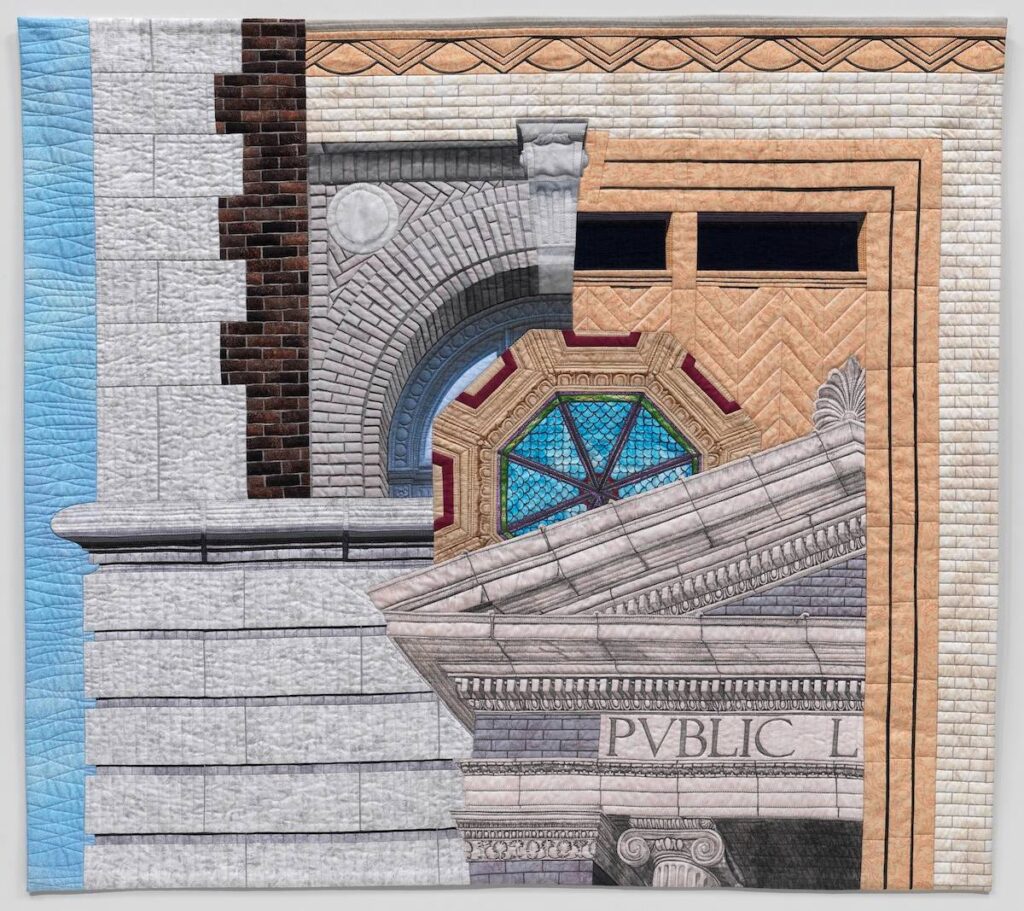
These early memories were the first spark for the Grand Island series that began about 15 years ago and can be seen on my website: https://www.lindasyversonguild.com/nebraska.
Note: my favorite piece from this series is In Service to the Public, the bricks on the four buildings in this piece are all the same size—allowing them to flow together even as the method of their creation is different, pieced, stenciled, and painted, stitched whole cloth, and set into crayon-rendered architectural details. https://www.lindasyversonguild.com/nebraska#/in-service-to-the-public
What first attracted you to quilting and fiber art as a creative medium?
Quilting was always around; it was something that the older women in my family did. Both of my grandmothers quilted and sewed. I slept under a Trip Around the World quilt made by my mother’s aunt using late 1940’s and early 1950’s fabrics, which was a wedding gift to my parents.
My mother made almost all of my clothes, then a couple of my first jobs were as an alteration lady at local department stores—opening well-constructed garments taught me garment construction techniques.
Fiber art has always been part of my life.
What lessons from architecture still guide your work today?
I can draw patterns for just about anything—I love straight lines, pieced or quilted, in my quilts and how quilted lines can look like inked lines.
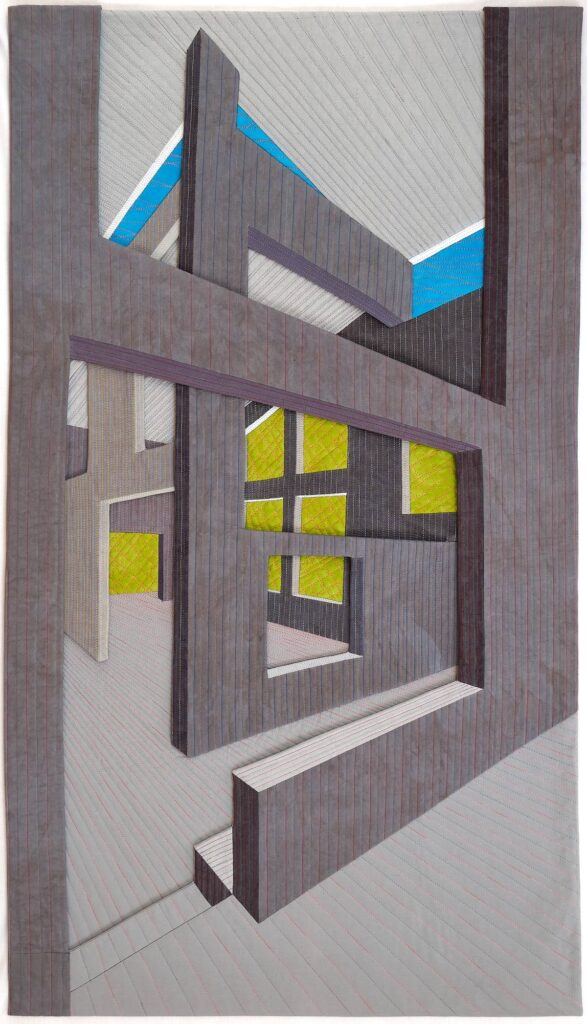
The lessons learned in architecture school influence every part of my fiber design, beginning with the language of design, the art of planning, material selection, and juxtaposition through intricate construction, where I frequently feel like I am standing on my head to achieve results that look like fabric should always be seen with dimensionality, as in The Intrigue of Interaction. https://www.lindasyversonguild.com/architectural#/the-intrigue-of-interaction
How would you describe your artistic voice to someone seeing your work for the first time?
My father always told me to do what I want with intention and purpose.
I play and have a good time when I ‘build’ a new piece. My goal is to bring smiles to the faces of the people who see my art.
When people really stop to have this conversation, I tell them my artistic voice can best be compared to a resonant piece of music that flows through me, and when the rhythm feels good, I am doing something right. I think that some of that resonance can be found in my art.
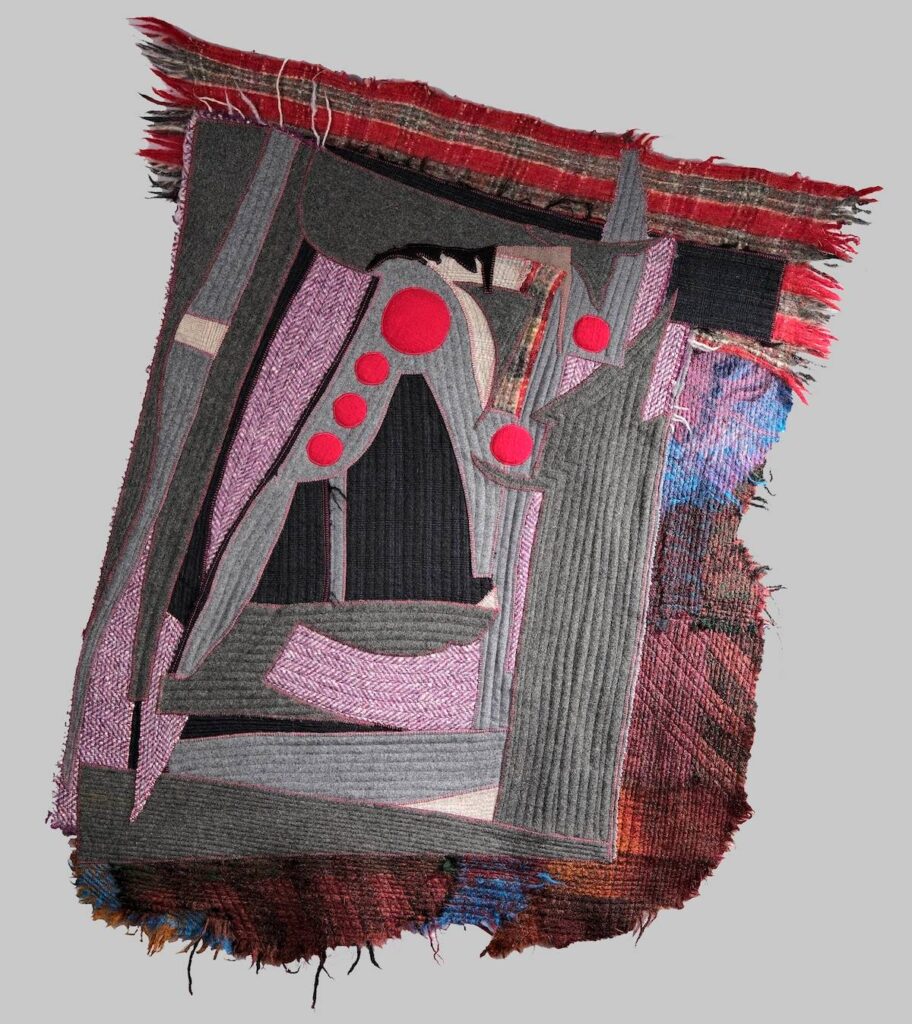
Many of your pieces feel both structured and playful. How do you balance precision with imagination?
You call it imagination, I see it as design, we are both talking about thoughts dancing through our minds.
In architectural school, we were taught to find alternatives for design decisions rather than chasing one direction to the end and finding it unsatisfying. Using this technique in my art, I have blinders-free opportunities to mix and match solutions, resulting in the ability to push a piece lighter or darker in meaning and purpose in a natural manner that feels more like play than work.
I made a piece in 2024 that is a physical description of this activity. It is titled, Gathering Wool at Night: https://www.lindasyversonguild.com/reuse#/gathering-wool-at-night
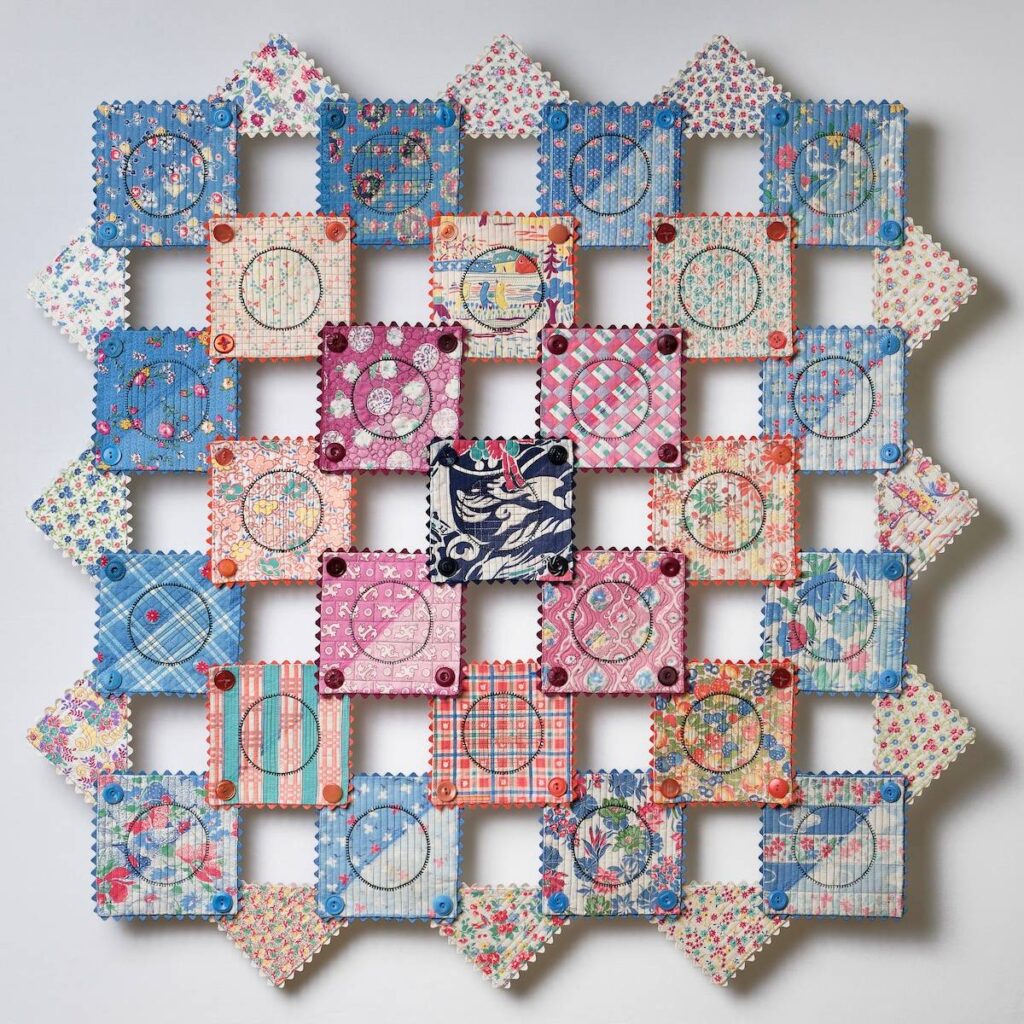
What themes continue to return to your work no matter how much your style evolves?
The aspect of being an architect that many people don’t understand is that my ‘style’ can go almost any direction.
Studying architectural history for at least 4 years influenced my ability to create using different time periods and scales (size and proportions) as parameters for a creative direction.
Saying all of this, my favorite themes are: Art Deco, Art Moderne, circles (see the previous question) and 5” squares. Redefined Comfort and Waste Not – Want Not are examples of my love of squares: https://www.lindasyversonguild.com/reuse#/refined-comfort
https://www.lindasyversonguild.com/reuse#/waste-not-want-not
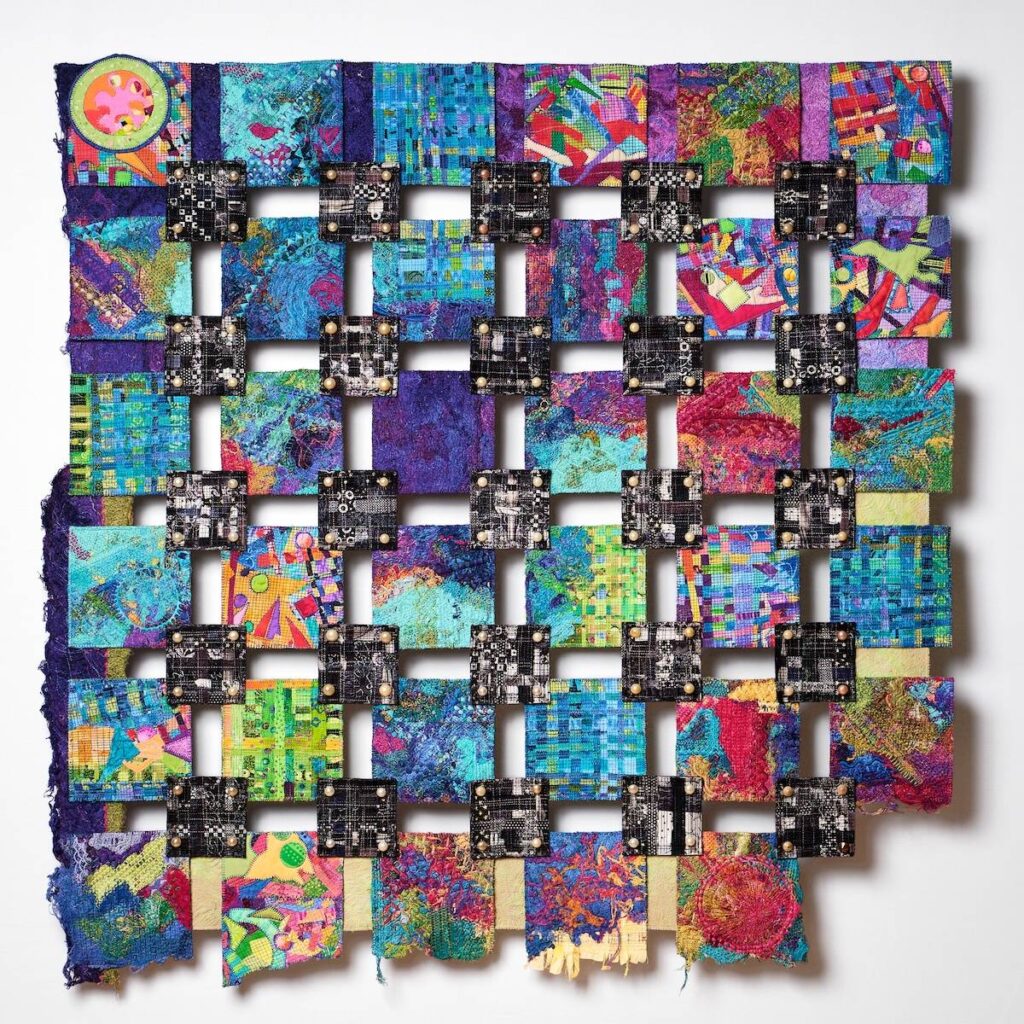
Describe your creative space.
Creative space begins in my head.
My husband (also an architect) and I always said that an architect takes their work home with them. Those thoughts have become intrinsic to my being and are manipulated every day.
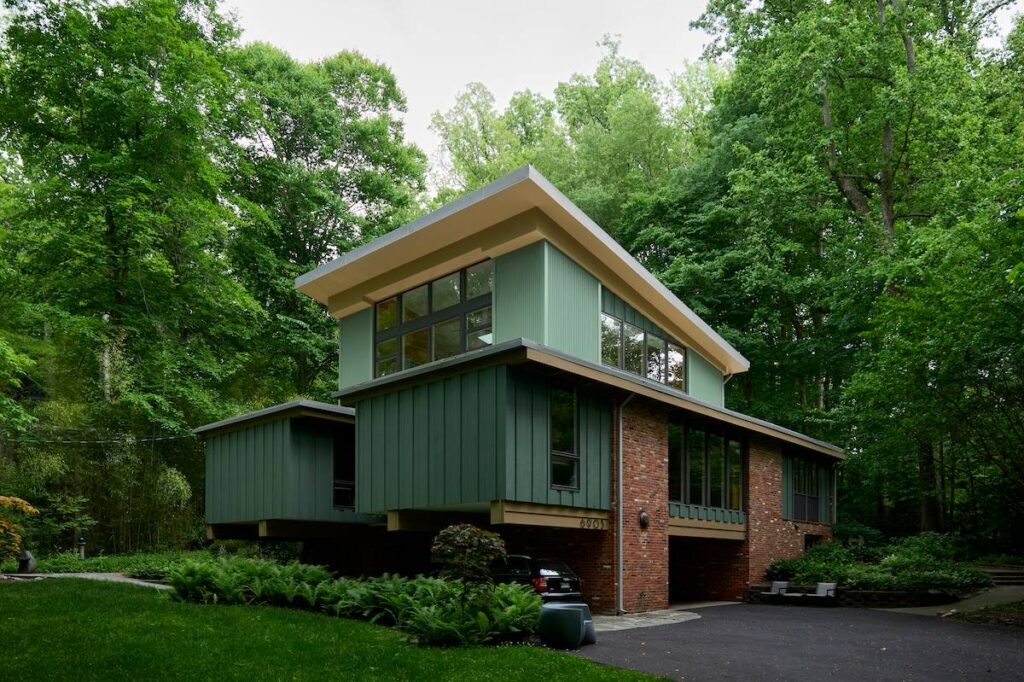
I now have a true studio that we built on the flat roof of our home almost 20 years ago. The studio is approached from the living room below by 17 steps. Everyone who climbs those steps stops on the 13th and feels a release as they are entering a light-filled space completely different from the dark living room below.
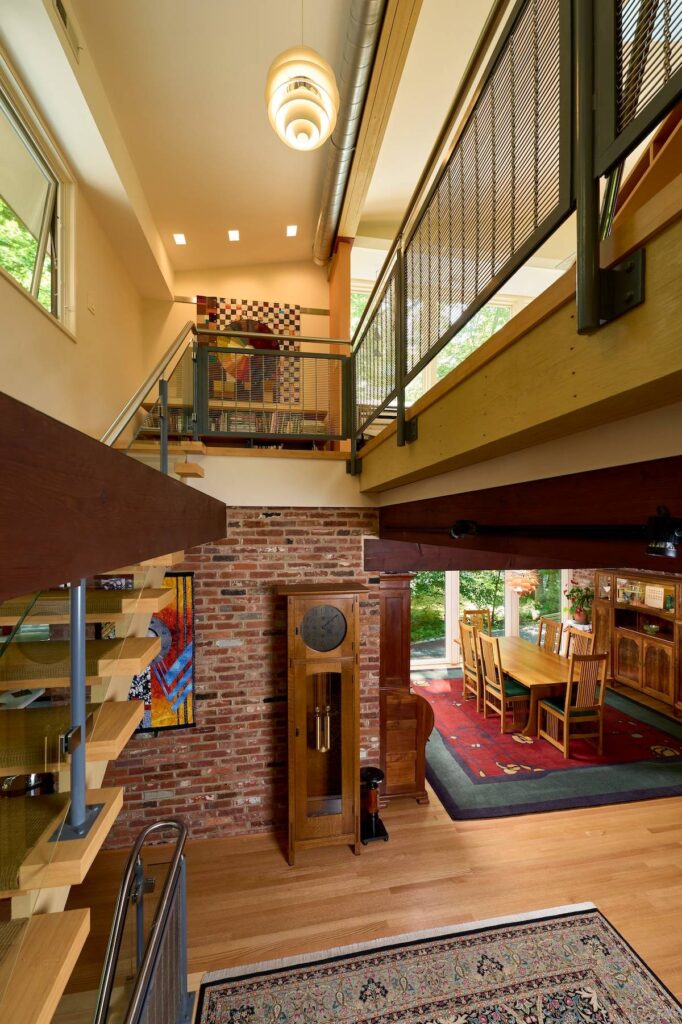
I think of this space as my treehouse tucked into the trees that surround our home. The space is filled with light from morning to sunset—even on cloudy days and is my favorite place in the world.
There are two closets with 1920s Belgian Art Deco stained glass doors, in the corners of the studio that are filled with books, fabric, buttons, zippers, labels, bias tape, rickrack, old clothes, bags of silk saris, Mom’s Singer featherweight and men’s ties and a huge roll of cotton batting on shelves to the eleven-foot ceilings.
The open dry studio space is filled with an old leather sofa, a window seat, tables for layout, and sewing machines. Hidden under one table is a large flat file filled with completed and in-process art.
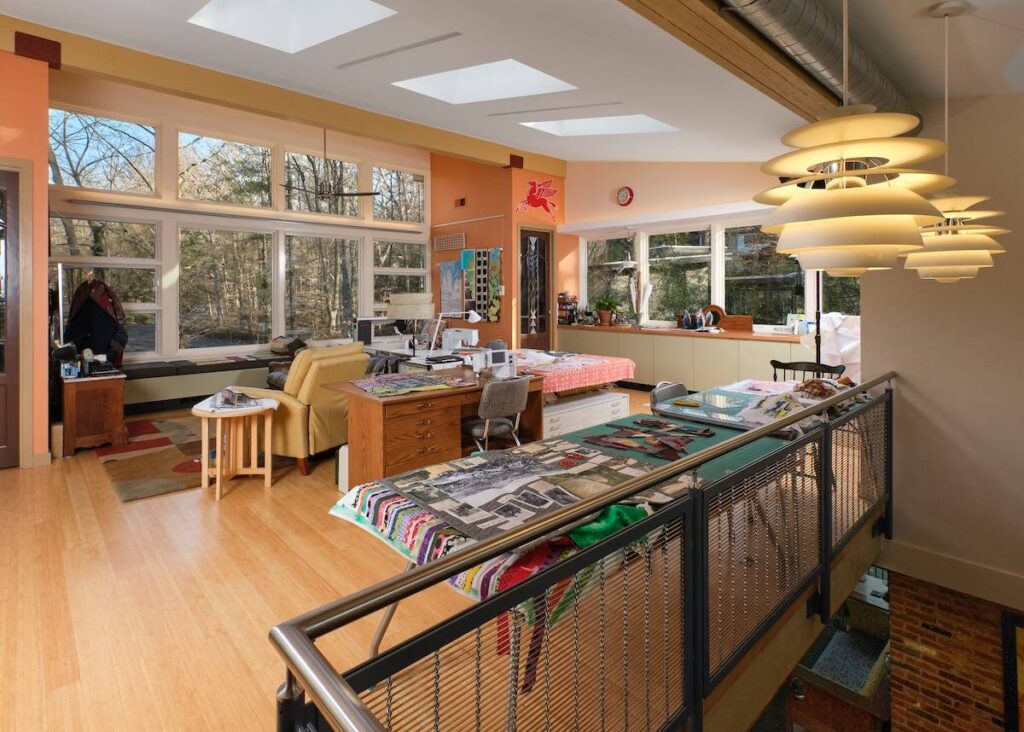
Tucked in a corner near the top of the stairs is my husband’s old drawing table that always has a partially completed drawing on it, rolls of mylar and dog food bags are tucked underneath, and a pair of Cosanti bells (bronze wind chimes designed originally by Paulo Solari in Arizona) are above the table.
It is a happy place to spend creative time, it is shared with our two dogs and anyone who wanders up to take a nap on the sofa.
How organized is your studio? Does your architect’s side keep things orderly, or does creative chaos sometimes take over?
My studio begins every large project with clean surfaces and materials stored; projects begin in parts and tend to spread all over the studio with scraps relegated to the floor. I know when a project is winding down and tabletops reveal themselves once more. This is the time when my thoughts turn to the next big project.
Chaos appears in the middle of this process, which is a sign for me to stop moving forward with the design and settle down to completing the art that is surrounding me.
Are there materials you collect simply because they might become useful someday?
Absolutely!
I am one of those people who picks up trash on the road along a construction site. My pockets have been filled with interesting bits of electrical wiring, numbers that had been on telephone poles or signs, broken jewelry, or old barrettes.
I have canisters filled with beer caps, broken eye glass frames, pressed metal labels, old telephone wire, and computer parts.
Surfaces are festooned with old glass doorknobs, half of a coconut shell, wood brackets that wait for their next opportunity to be part of a display, a metal tree filled with 1940’s Shiny Brite ornaments, ceramic dogs and birds made in 1950’s Japan and 1960’s Mexico.
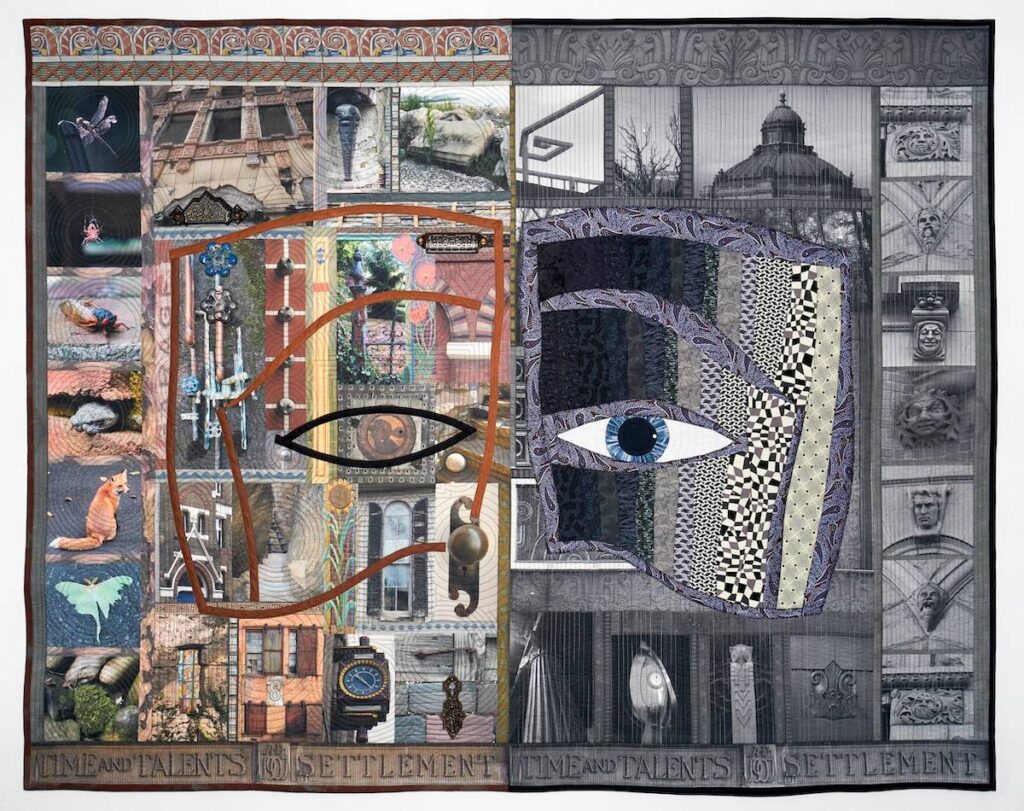
Time and Talents is an example of how a portion of my collection of old metal hardware is displayed on the surface of one of my Cabinets of Curiosity themed quilts.
Your work often includes painted, printed, recycled, and unconventional materials. What excites you about experimenting with materials?
The excitement comes from the conversations that exist between the materials while I wait to see if I have actually created one entity or if ideas and materials have gotten muddled and more than one project is actually developing. This is the point in time to take a break and work on a different project, think different thoughts and a solution always come.
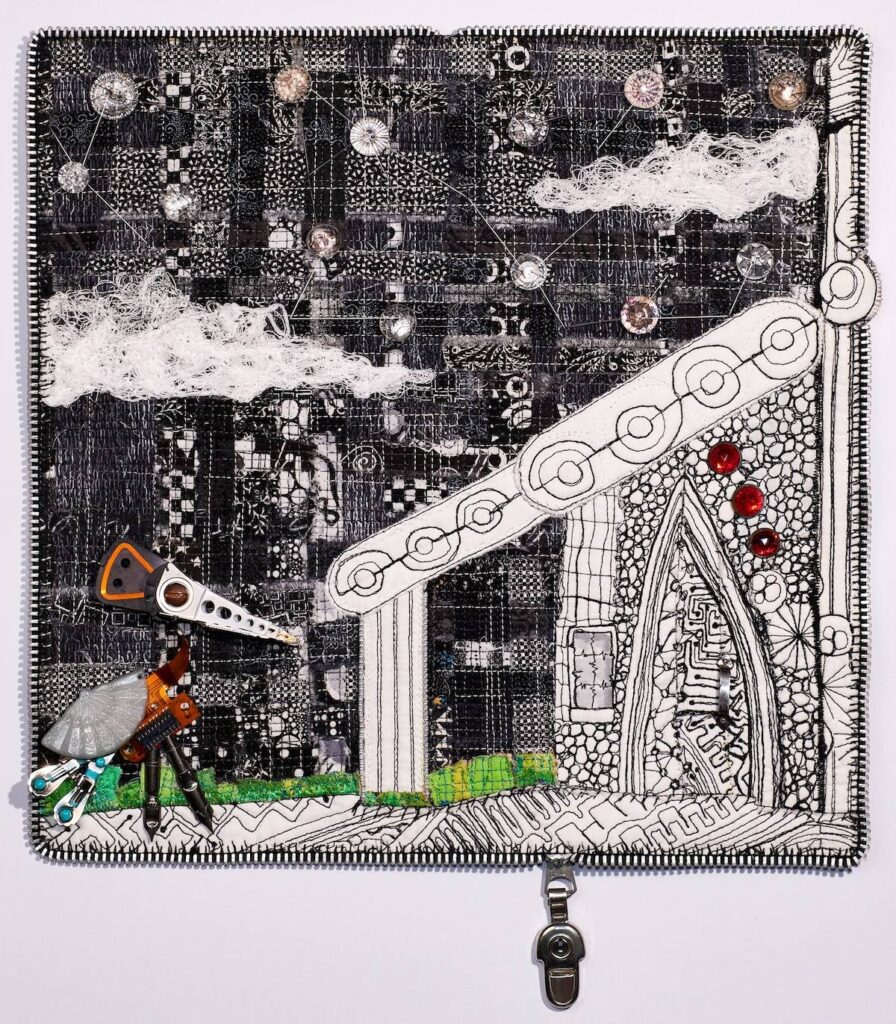
Hard drive readers have become bird heads: https://www.lindasyversonguild.com/saqa#/under-the-thorn-bush and https://www.lindasyversonguild.com/saqa#/dreamland
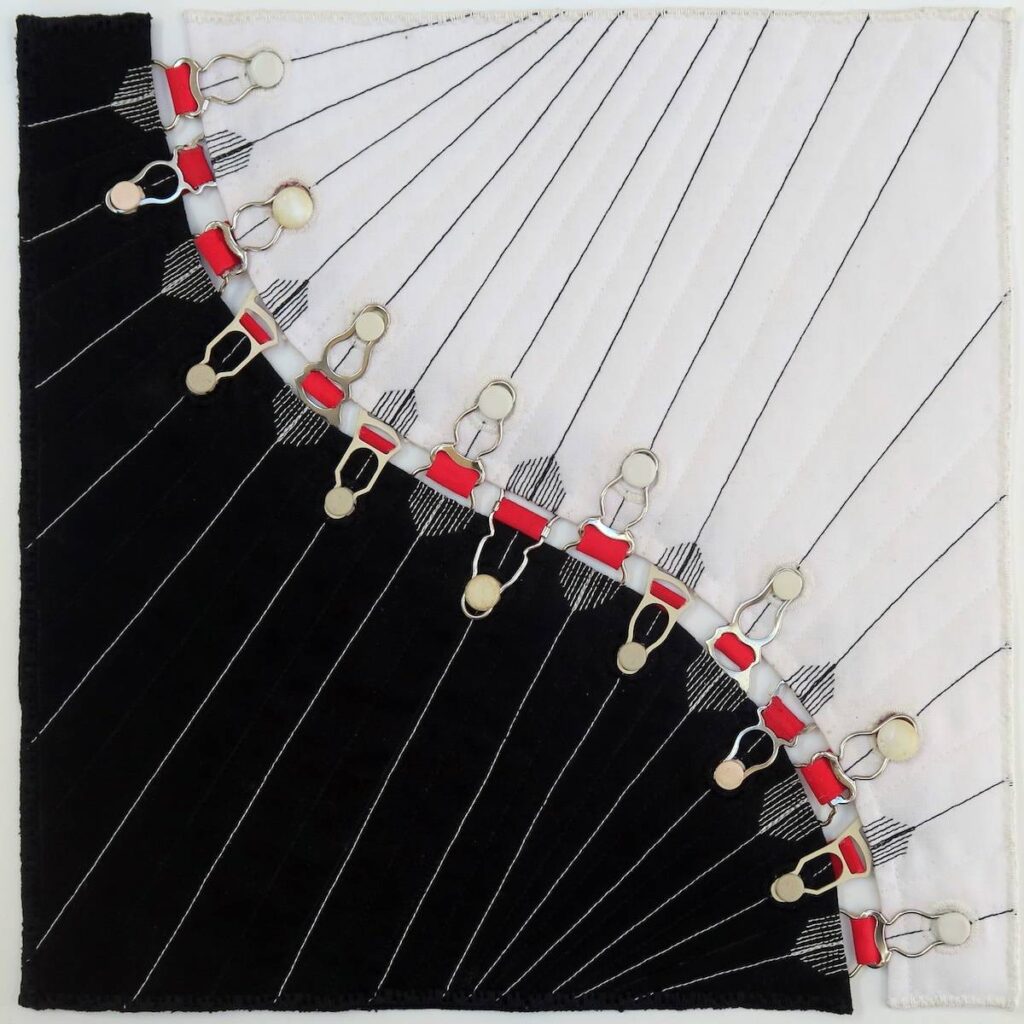
Ladies’ garters hold a yin/yang design together: https://www.lindasyversonguild.com/saqa#/mind-the-gap
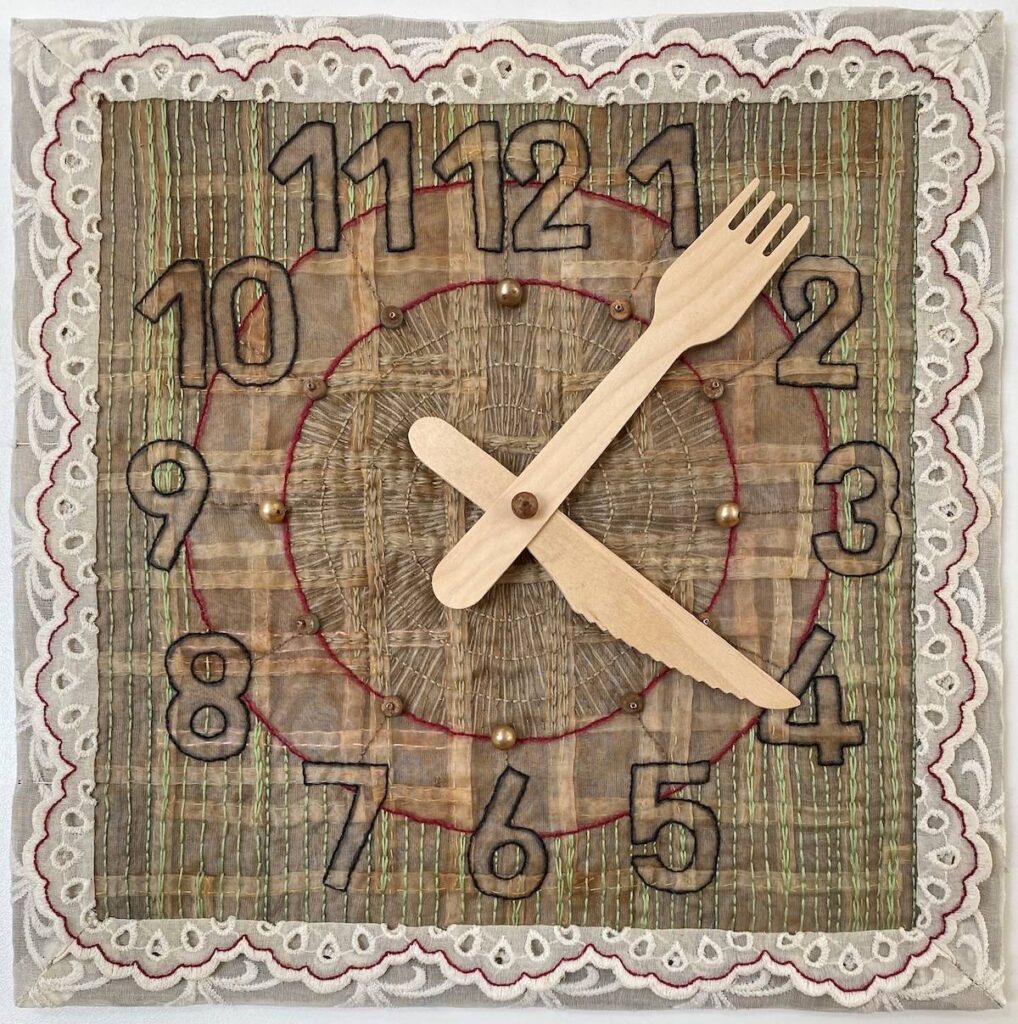
Layers of hand stitched tea bags and bamboo utensils become a clock:
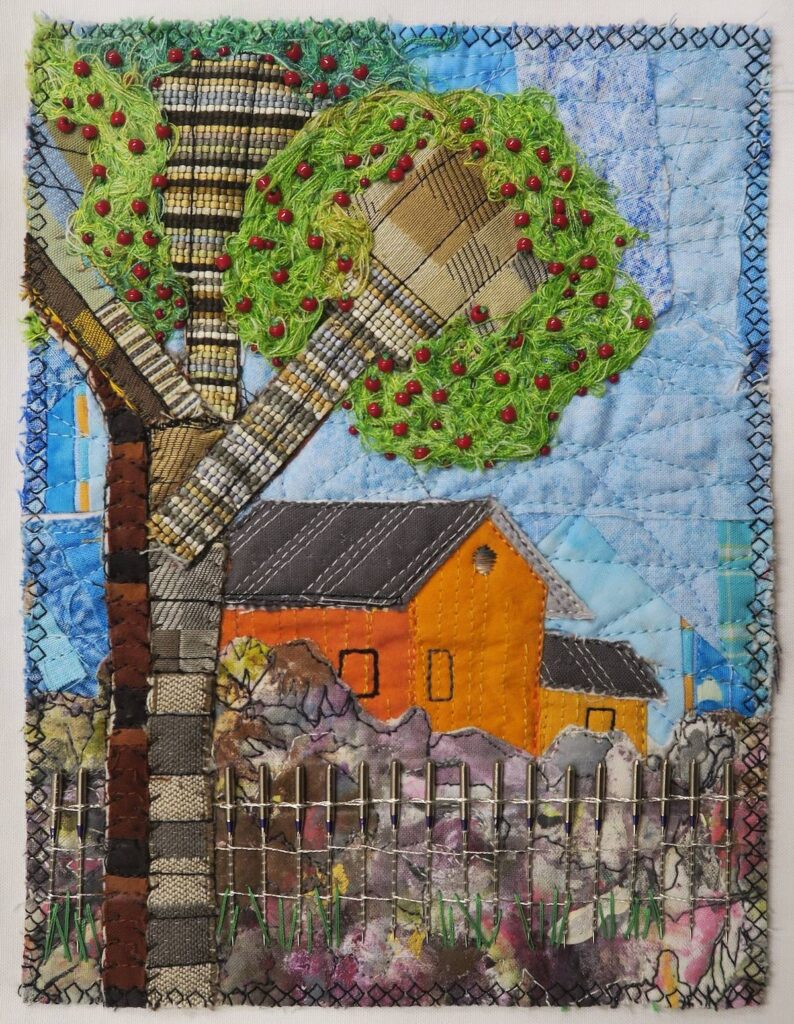
Sewing machine needles become a fence: https://www.lindasyversonguild.com/saqa#/orange-house
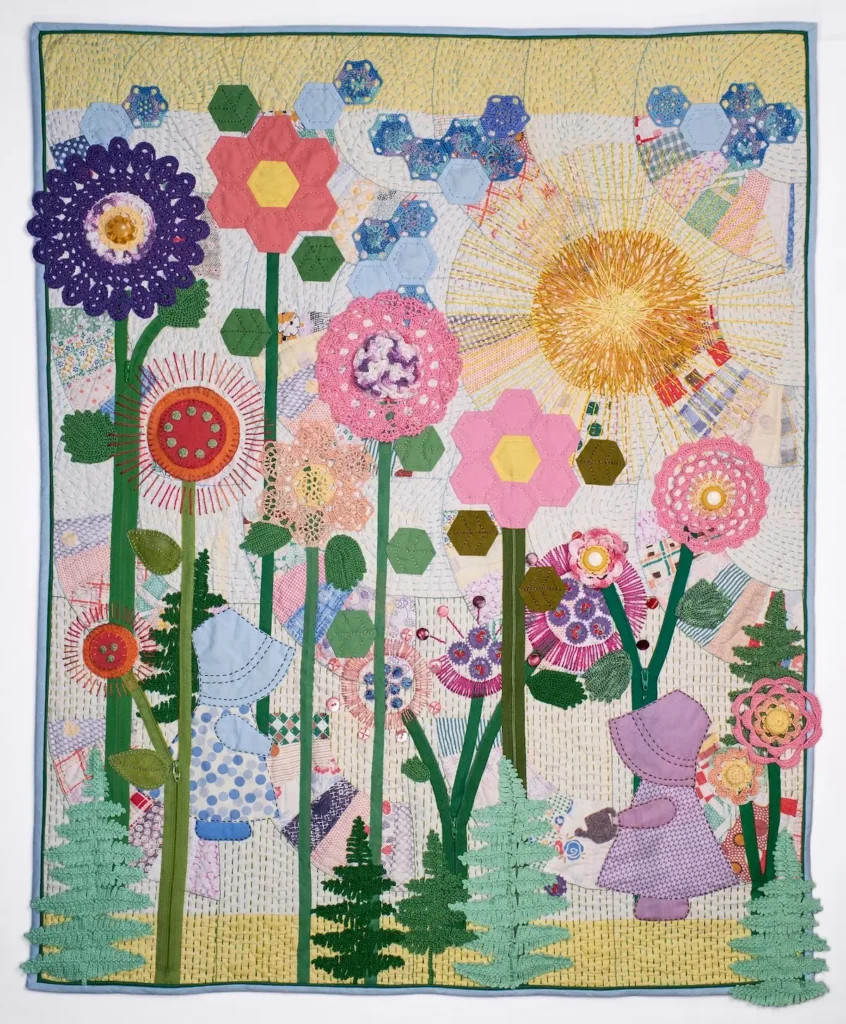
An old quilt decorated with crocheted flowers and fern, Sunbonnet Sue, bias tape and zipper stems becomes, April Showers: https://www.lindasyversonguild.com/reuse#/april-showers
When a new idea arrives, what happens next?
I have a few notebooks and lots of loose paper floating around—not a proper sketchbook. I make lists and architectural thumbnail sketches that will be built upon quickly if I am on a deadline or years later.
I have a developmental mind that spirals back on itself, and each pass on a design is an opportunity to add or remove a portion of the design—this process is frequently compared to the time it takes to have a baby, both are impossible to rush.
Do your quilts begin with a detailed plan or do they evolve as you work?
The architect in me demands that the structure is designed and balanced, beyond that everything is flexible.
Many of your quilts tell stories. How do you recognize when a story is worth turning into a piece of art?
I listen to the stories until they stop playing on a loop in my thoughts or they grow into more than just words—a feeling has to inspire me to move forward. Sadly, there are stories that are best kept hidden. I began telling my youngest daughter a story about another little girl when we waited in the car for her sister to complete piano or religious lessons. Many of them are written down—they paint pictures in the listener’s mind, never becoming art that can be displayed on a wall or a shelf.
What is the most unexpected source of inspiration you’ve ever turned into a quilt?
Books and, at this time, dog food bags:
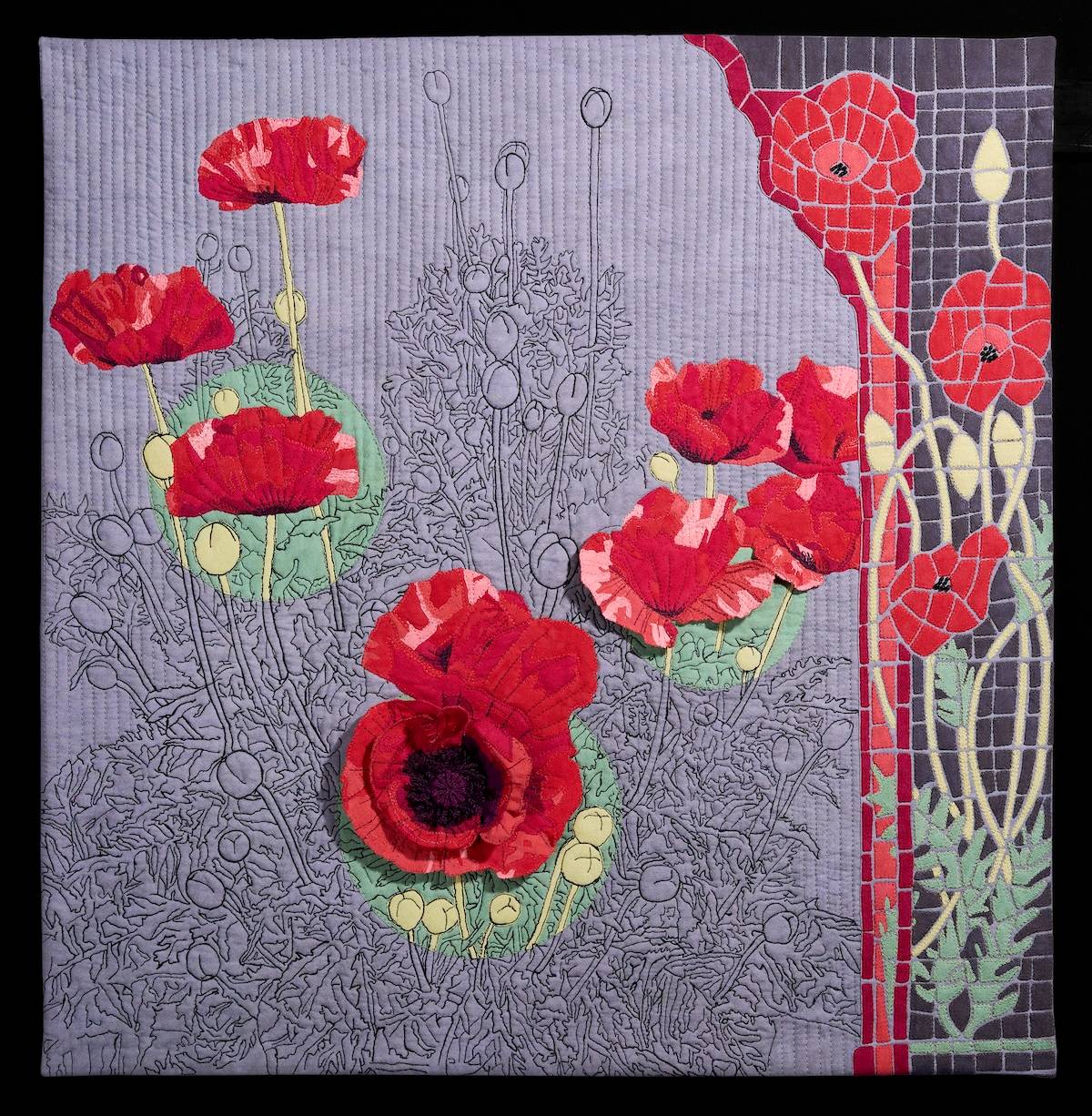
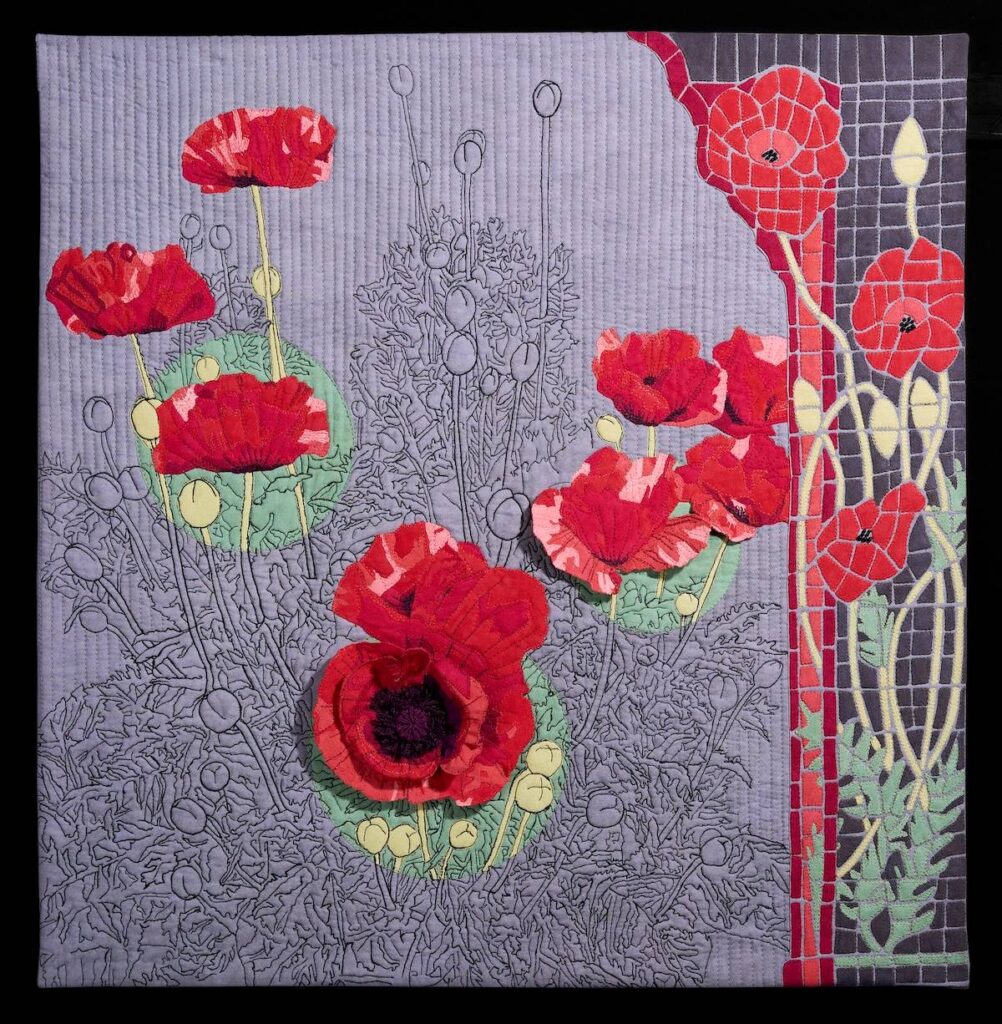
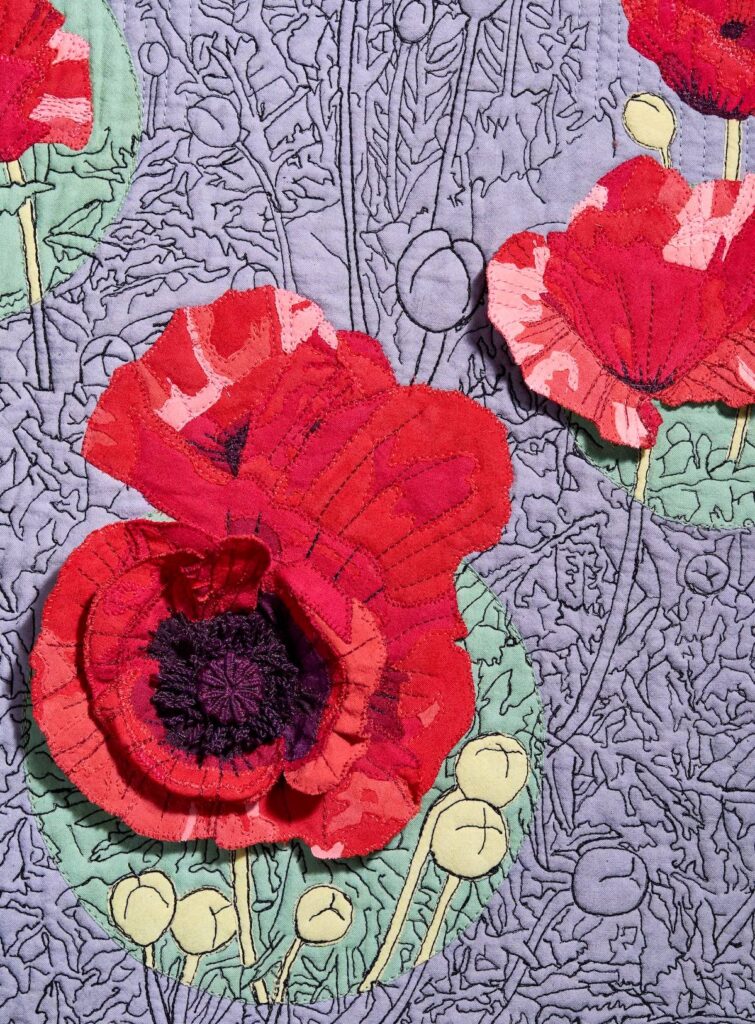
- I was given a book filled with instructions to make buttons as they were made in the late 1800’s and early 1900’s. My favorite is a Dorset button that was restyled to become the center pod of a poppy surrounded by fringe. Which made me need to turn the most prominent poppy into a 3D version of itself in Idaho Poppies. https://www.lindasyversonguild.com/saqa#/idaho-poppies
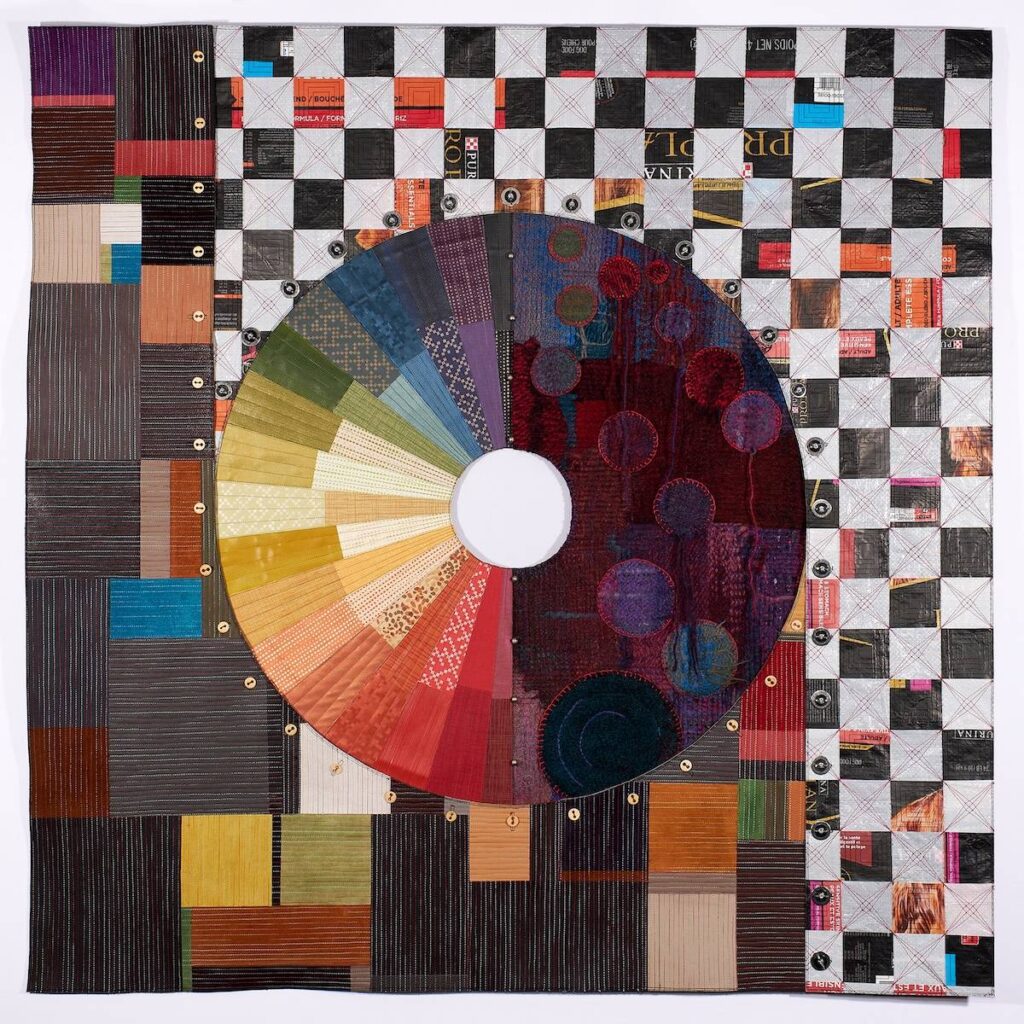
- We have two dogs, which results in a lot of dog food passing through our house, I was so disappointed to learn that the bags have mixed materials and cannot be recycled. I began to look for ways to incorporate them into my art rather than throw them away. They are flat and can be easily stitched when stacked or acting as the center layer in a quilt sandwich that needs to be flat (do not iron or even steam them, their character changes completely). I wove strips of dog food bags which became the man-made half of as square that was a spinoff of a yin/yang relationship in Material Dichotomy: https://www.lindasyversonguild.com/chroma#/material-dichotomy
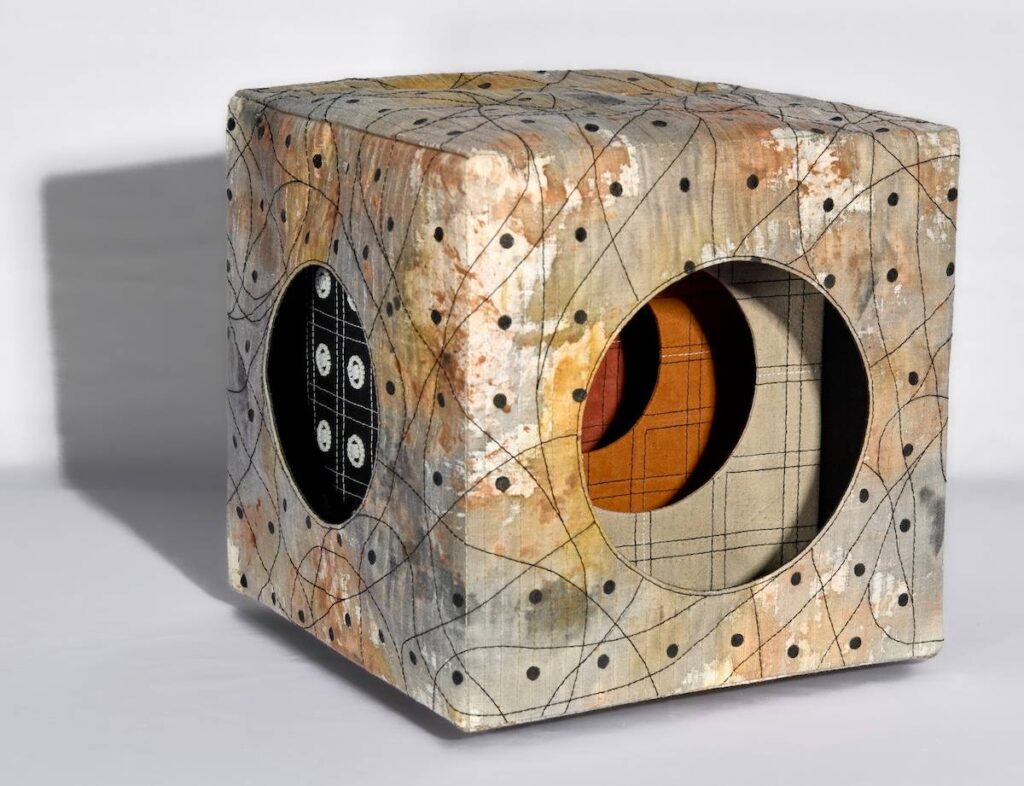
I also created a small 3-D box using the bags as a stiffener in the exterior shell and the internal walls of Circles3: https://www.lindasyversonguild.com/architectural#/circles3
What does being a maker add to your life beyond the finished artwork?
This is one of the best questions anyone has ever asked me!
To finish artwork is an incredible experience. But that is not the real intention behind the words ‘being a maker’. Those words describe the way I live, they describe how I see the world and make me want to protect that world by reusing an unwanted obi, scrap fabrics, and trash found on the street-Points of Entrée: https://www.lindasyversonguild.com/saqa#/points-of-entree
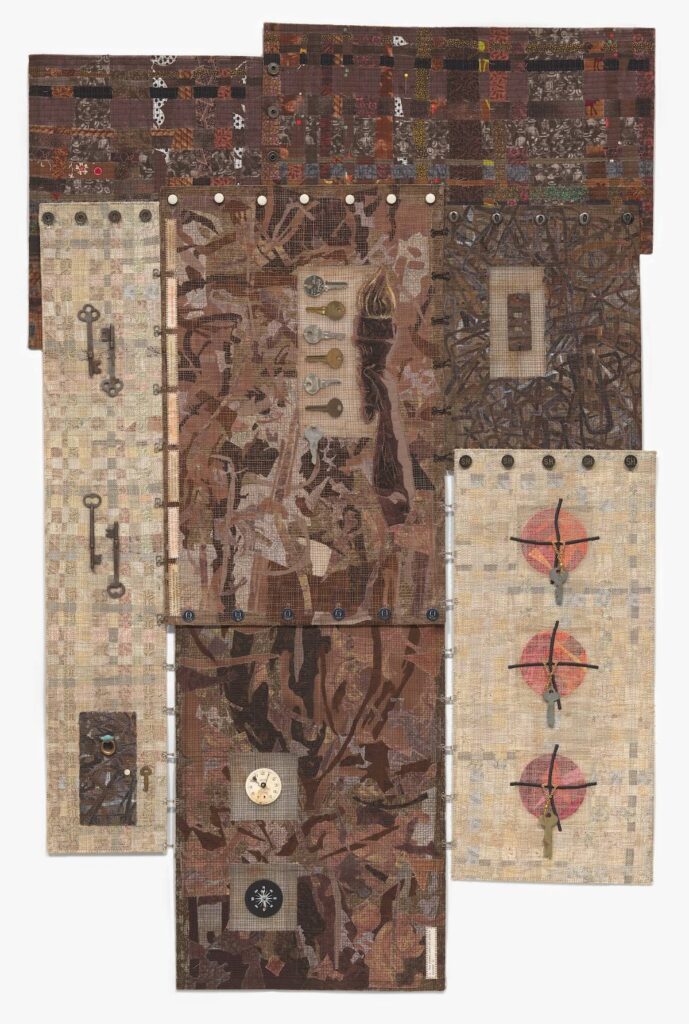
A sun baked quilt-Redefined Comfort, or a pair of bark cloth curtains, window screening, and scraps of faux leather-Corrupted: https://www.lindasyversonguild.com/saqa#/corrupted
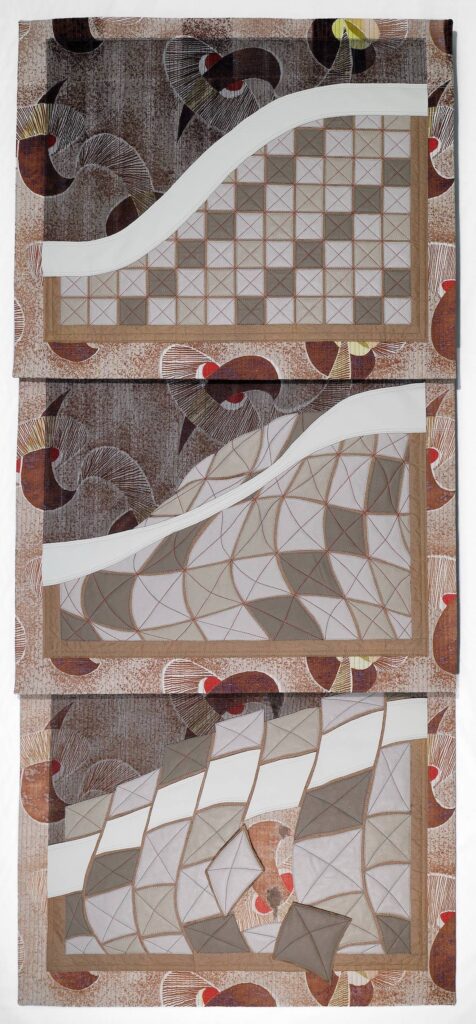
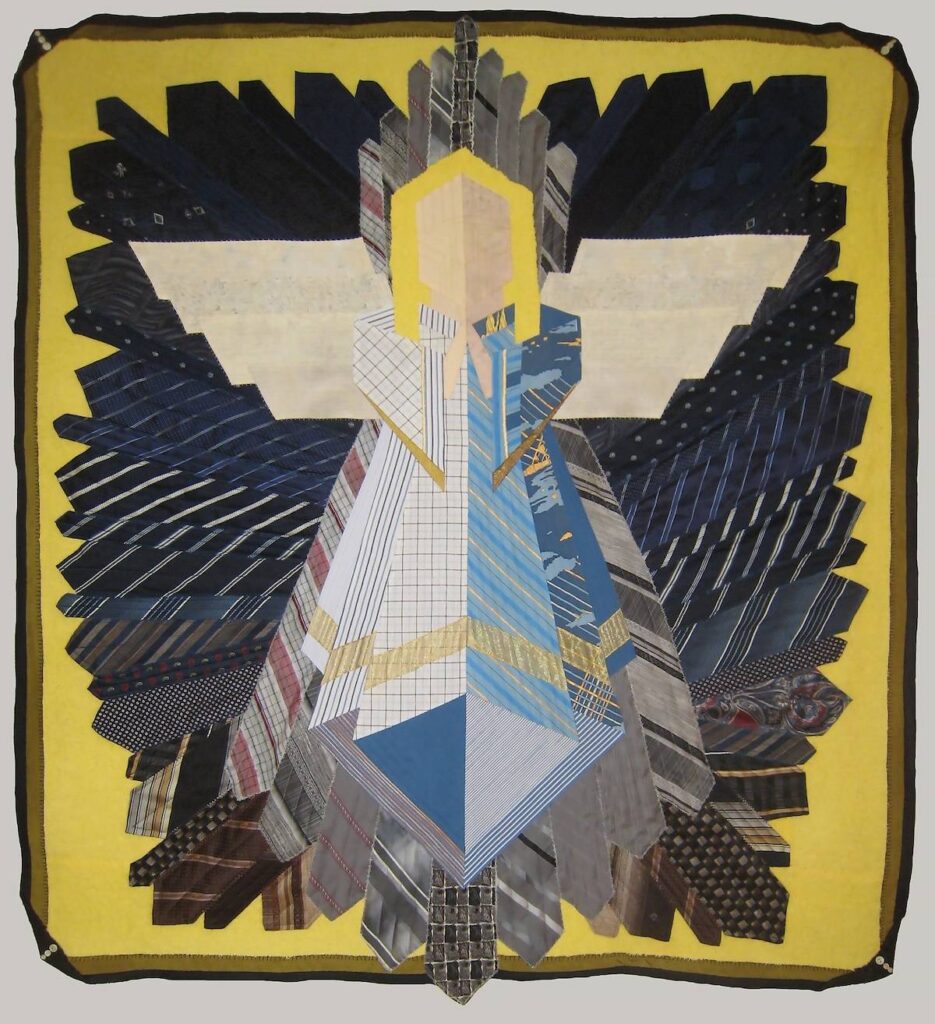
Scraps from a weaver’s floor-Material Dichotomy, or my father’s old yellow terrycloth robe and his ties-Angel We Have Heard on Ties: https://www.lindasyversonguild.com/celebration#/angel-we-have-heard-on-ties
I am a maker and hopeful that my approach to art will affect how other people see the world around them and be a little kinder to that world.
If you could sit down with the young architect who was just beginning her career, what creative advice would you share with her?
You see the world in a way that frustrates most people, it isn’t an easy viewpoint, and you will anger many around you because you see a simple truth that embarrasses many—continue to be honest with yourself, and people will begin to listen and see aspects of the world as you do.
Be grateful for every day that you can create.
Where can people see your work?
Go to my website, https://www.lindasyvesonguild.com
There are two categories: Portfolio, where you can see my art and In Stitches shares places to view my art.
Rapid-Fire Fun:
- One material you can never throw away? Zippers of all types
- Most-used color lately? Black
- One word that describes your work? Attractive in that it draws people to it
- What would you like your quilts to leave behind for future generations? Hope that we did something right and the stories remain
- What are you curious about right now? Is there an age when people stop being curious? What contributes to that?
Interview published July 2026
Explore more fiber art inspiration on Create Whimsy.