
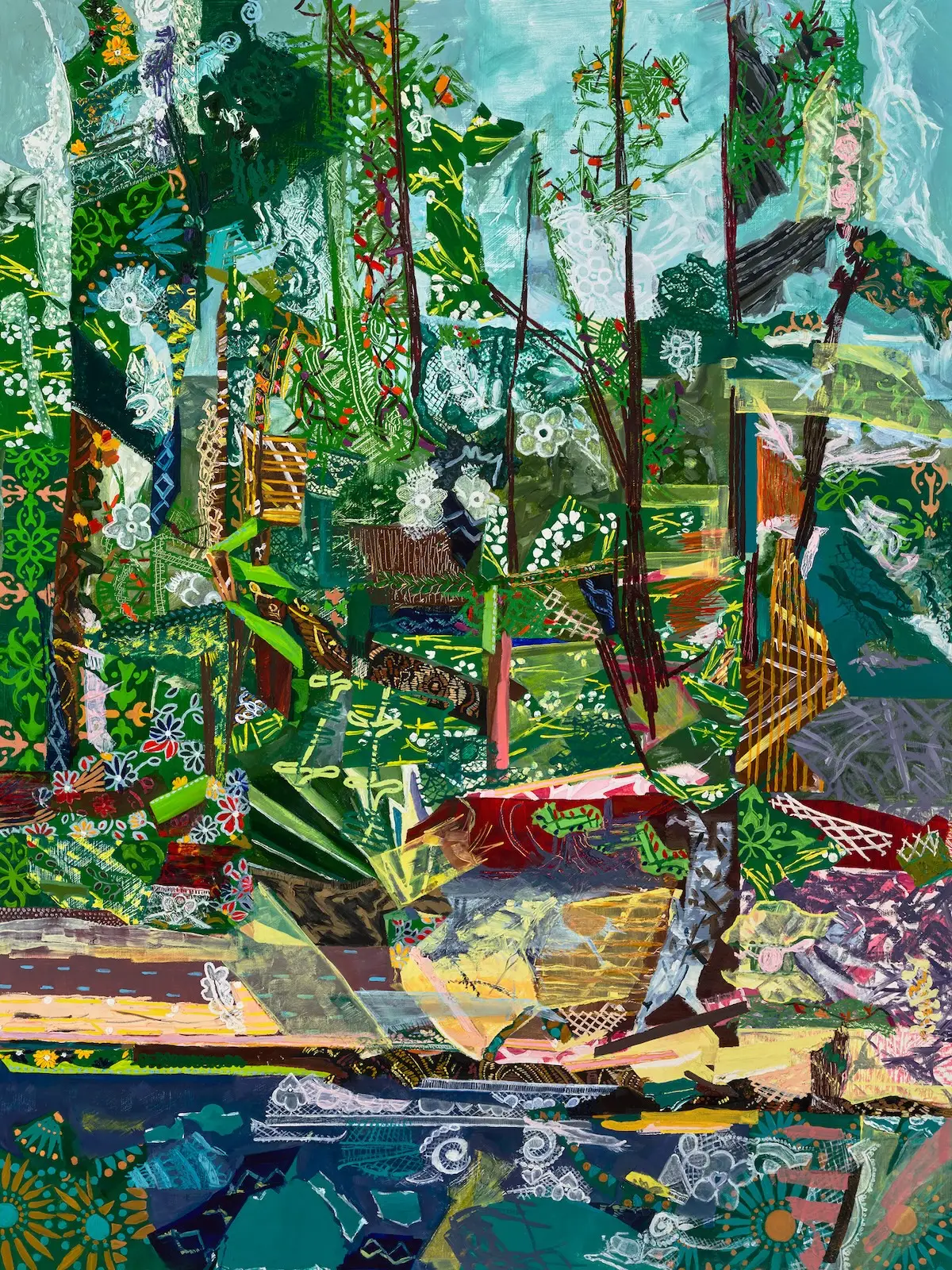
Anastasia Zielinski finds inspiration everywhere, especially in the quiet beauty of nature. Through colorful paintings, layered fiber art, and welcoming art classes, she reminds us to slow down, look closely, and keep our sense of wonder alive. Her joyful approach to making art shows that creativity can help us feel better and see the world in a whole new way.
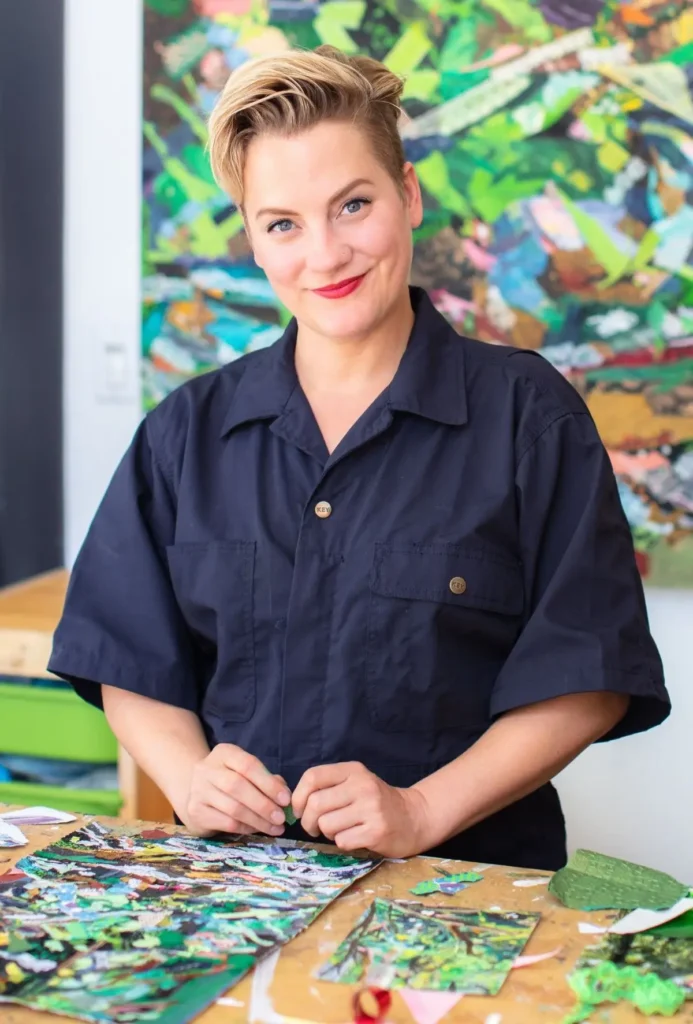
What are some of your very first memories of making art as a child?
Coloring with my sister at our craft table in the kitchen is one of my first memories. I remember her telling me what a good job I did coloring inside the lines.
I also remember arguing with my parents about my kindergarten self-portrait: I insisted those shapes were pockets, not boobs. They were, in fact, boobs.
You work in painting, collage, fiber, installation, and teaching. Did you always enjoy trying many kinds of creative work?
As an Amazon Associate I earn from qualifying purchases. Read more about our affiliate linking policy.
Yes. I have always been open to trying new things and exploring how different materials can help me express myself. Each medium brings its own challenges and rewards.
Teaching, however, was something I was wary of at first. I worried it would take energy away from my own practice. Sometimes it can, but when it is balanced with the rest of my life, teaching can also be deeply rewarding and inspiring.
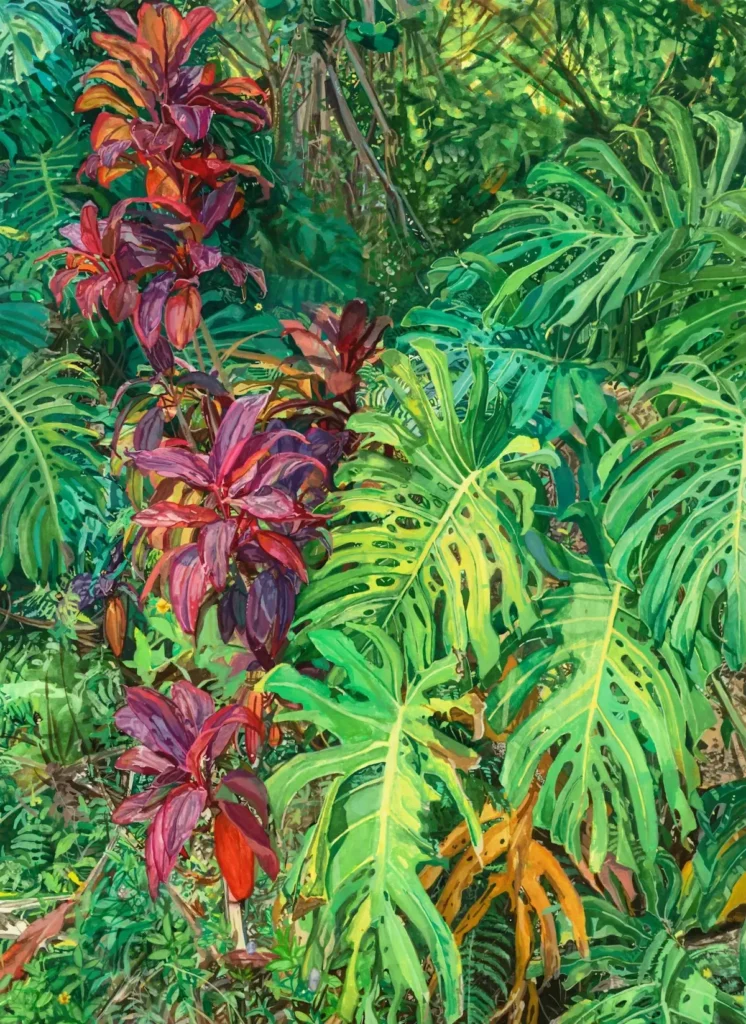
Your art feels full of curiosity and wonder. Do you think that way of seeing the world came naturally to you, or did you have to grow into it?
It comes naturally to me. I have always been interested in the world around me. My childhood adventures growing up in western Washington often ended with pockets full of rocks and other magical bits I found along the way.
When I was young, my dad expressed the importance of maintaining a childlike wonder about the world. I guess you could say I took that to heart.
You’ve shared that your process often begins with walking meditations. What happens in your mind during those walks?
I have a habit of being in my head: ruminating, daydreaming, and letting my thoughts race. When I walk in nature, my mind quiets. I become more aware of sounds and more in tune with the colors around me. I stop ruminating and become quietly present. That kind of presence is rare for me, but it happens when I am moving through nature or working in my studio.
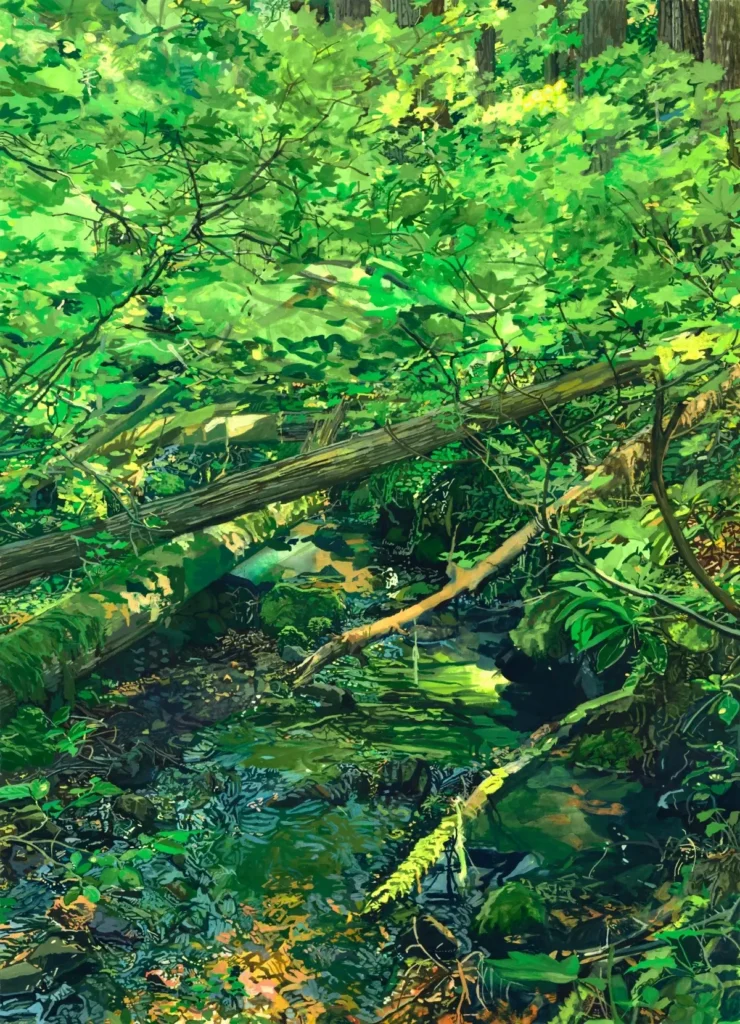
What kinds of details stop you in your tracks when you’re outside?
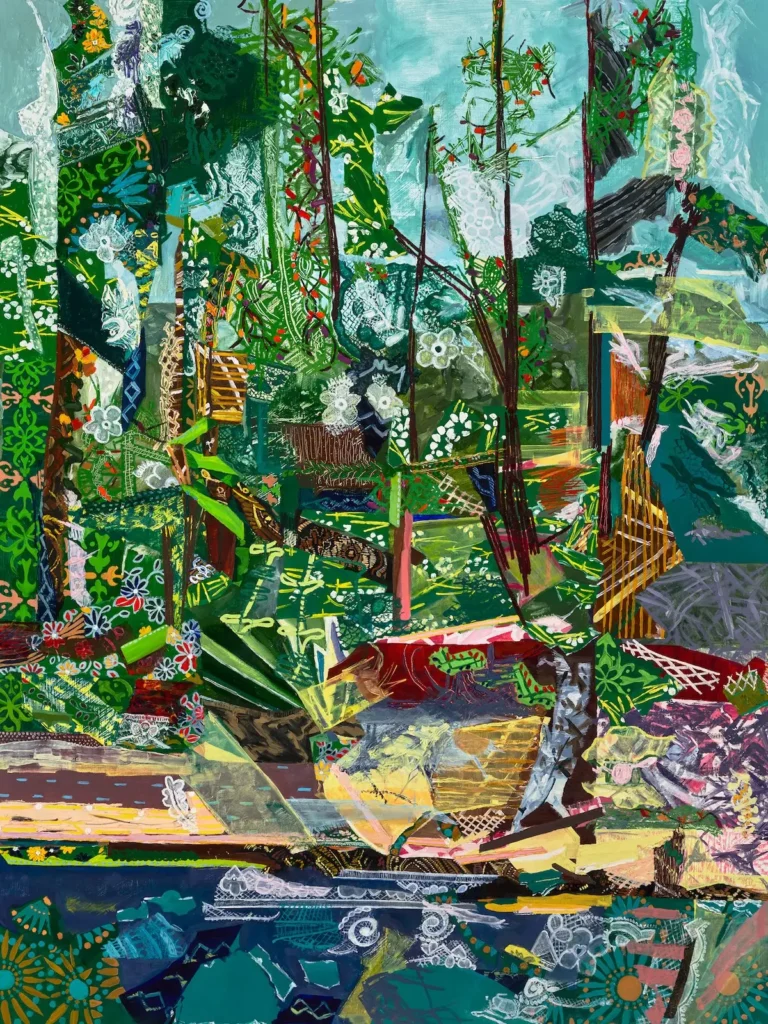
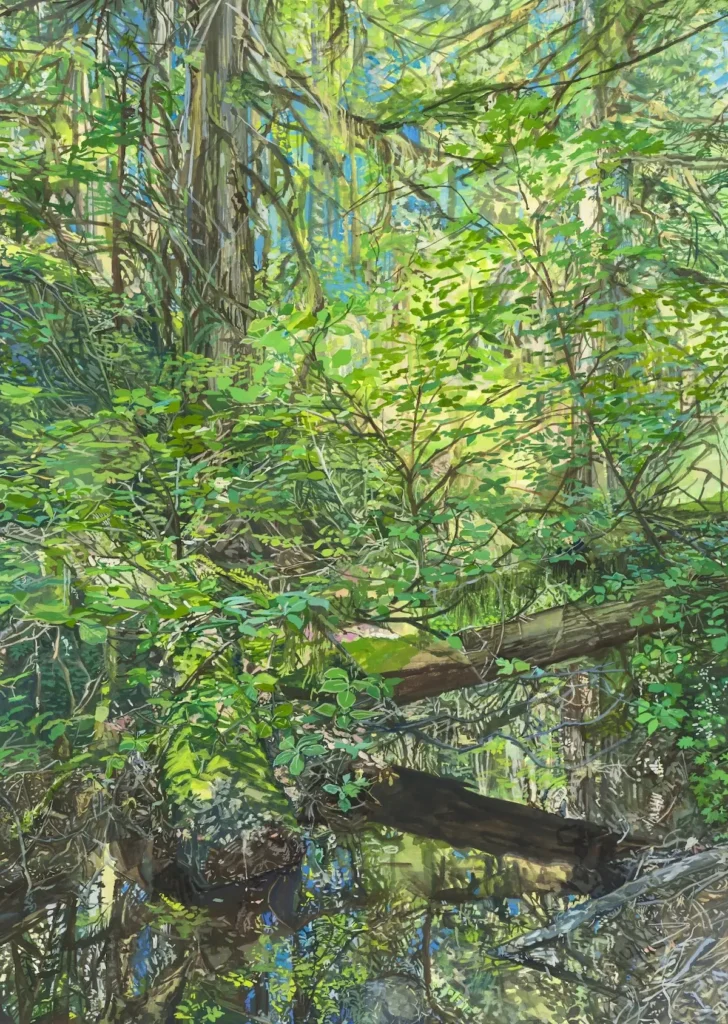
Light filtering through trees. The million shades of green. Pops of color, like pinks, reds, and oranges. Layered textures. Patterns of color and light.
Your work feels joyful but also deeply thoughtful. How do you balance beauty with emotion in your art?
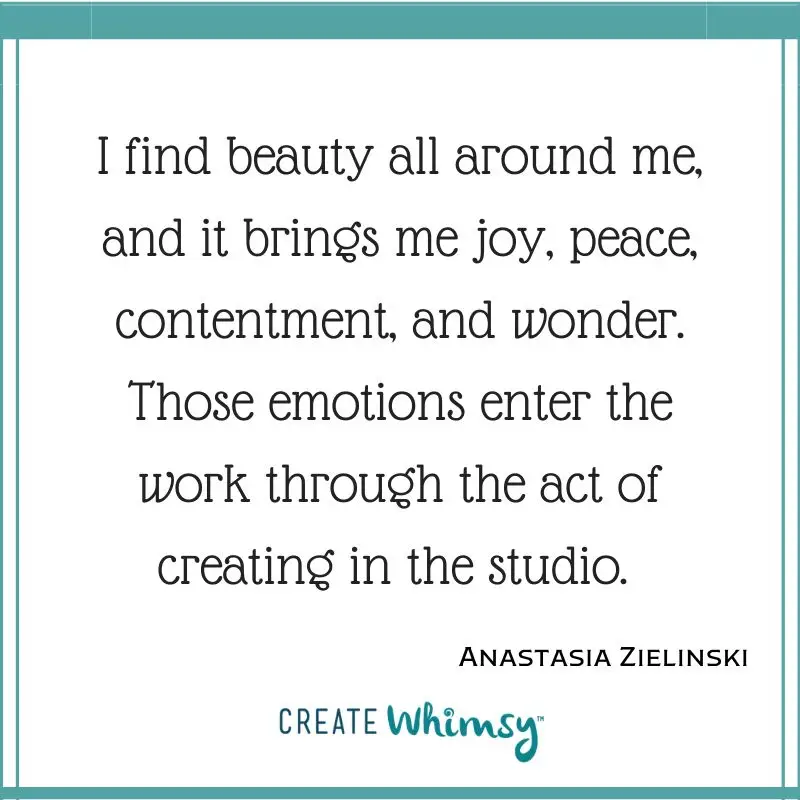
This is not something I think about consciously while I am working. I find beauty all around me, and it brings me joy, peace, contentment, and wonder. Those emotions enter the work through the act of creating in the studio.
Making art is an emotional roller coaster, as any artist will tell you. There is always a moment when the piece you are creating looks terrible. The key is working through that moment. The struggle becomes visible through the energy it creates.
Some of my favorite pieces contain moments of great struggle, which can surprise viewers who assume the process was seamless.
Do certain seasons affect your creativity differently?
Yes. Late spring and summer are times to explore and gather information. Fall is when I feel the most creative; it is usually a time to hunker down and begin ambitious projects. Winter is a time for future planning and reflection.
Describe your creative space.
At the moment, it is way too small. It is a separate interior room tucked into the community studio, FREAK’N ART, that I run. It works well for one piece at a time, but I do not have much room to work on anything bigger than myself, so the space feels a bit constraining.
I have started thinking about searching for a larger studio that would give me ample space to work and move around, not just take a few steps backward. This is the smallest studio I have had in over a decade.
Is your studio usually calm and quiet, or full of energetic chaos and half-finished experiments?
I am in the habit of doing a big clean after I finish a piece. While I am working, especially on a fiber-based collage, the space tends to get a bit cluttered, but it always feels calm and quiet to me.
I do not have many abandoned pieces. I usually start and finish one piece before beginning another, rather than working on multiple pieces at once.
Your work has such rich texture and layers. What excites you most about building surfaces?
They are simply more interesting to me.
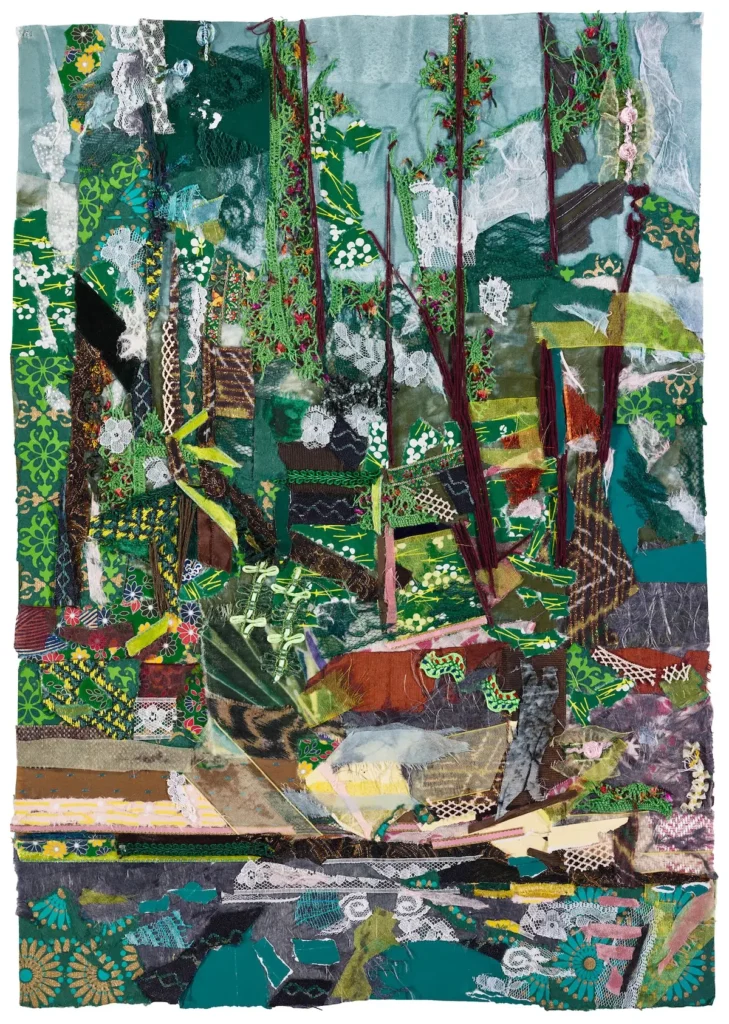
I am not interested in a perfectly smooth painting surface, or in photorealism for that matter. To me, work like that can lack energy and excitement. It takes a great deal of skill, no doubt, but I do not find it captivating.
The more texture and layers a piece has, the more interesting it becomes to me.
I truly believe a good piece of art captures your attention from afar and draws you in. Then it needs to keep your attention.
The key is finding a way to keep people in front of your work, studying it. Imagine working on a painting for hundreds of hours only to have the general public walk by in less than 30 seconds. That is depressing.
Do you plan your compositions carefully, or do you leave room for surprises to appear while you work?
I have a general plan, and then I always leave room for surprises. The work should be able to react to itself and dictate its own direction.
I do not believe in trying to control the entire process. Mistakes often turn into beautiful or interesting moments within a piece.
What is the hardest part of making layered work look balanced instead of overcrowded?
Finding moments of calm, or areas where your eyes can rest, is essential—and it is also the hardest part. You often do not know you have gone too far until you have gone too far.
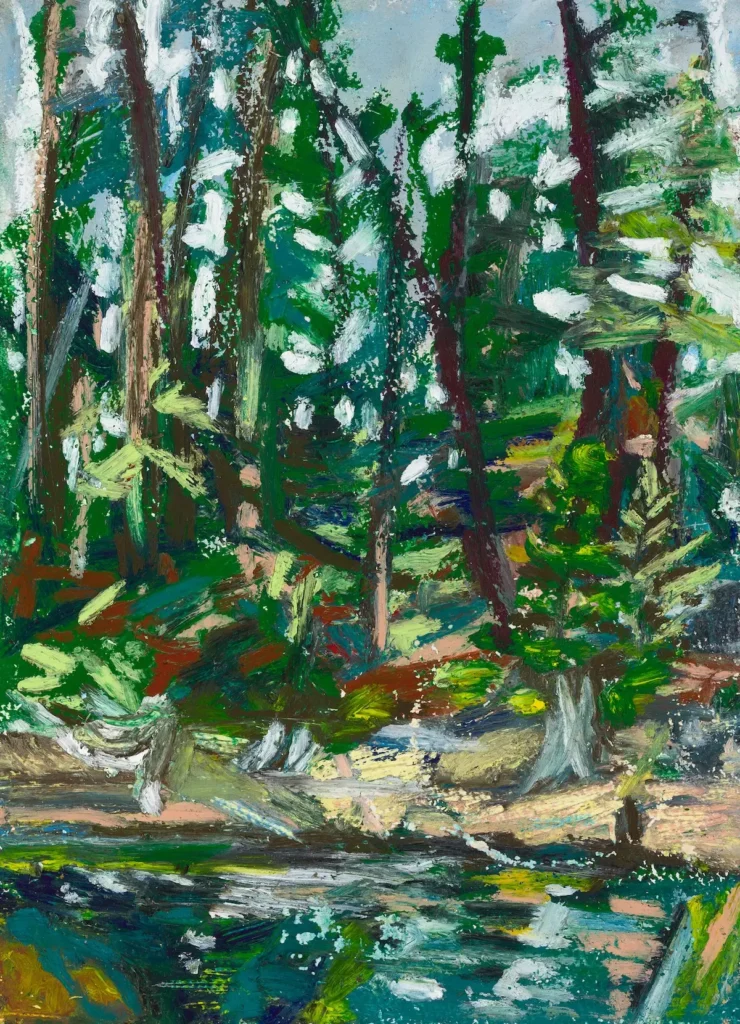
When I work with oil paint, I scrape off almost as much paint as I put on while trying to find that balance. I have also gotten into the habit of taking photos of my work in progress at the end of each painting session so I can study what is working and what is not.
How do you decide a piece is finished and not just whispering, “One more layer…” from across the room?
When it feels finished.
If I think a piece of art is done, I will leave it hanging on my studio wall for at least a week while I prepare for a new piece. When I walk into the studio, it is the first thing I see. If something does not sit right with me during that week, I will change it, but not immediately. I wait to see if it still jumps out at me over the next day or two.
If the piece still feels complete after a week, I drop it off to be professionally photographed. It is officially done then.
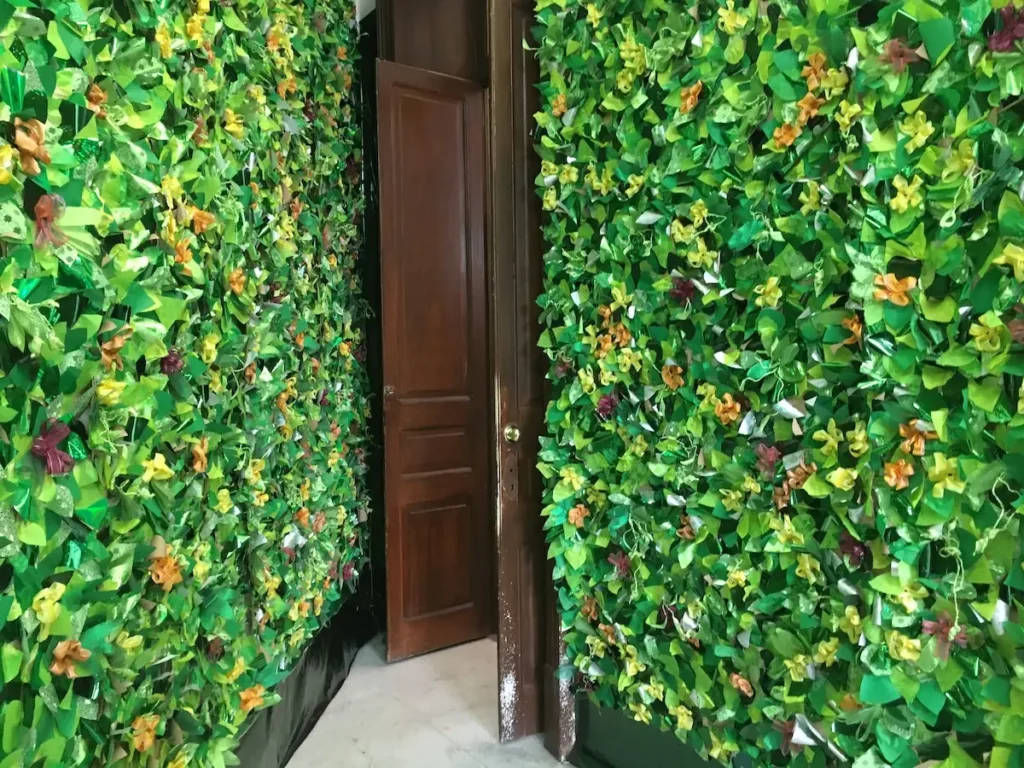
Your career has included exhibitions, residencies, and installations around the world. How have travel and new environments shaped your work?
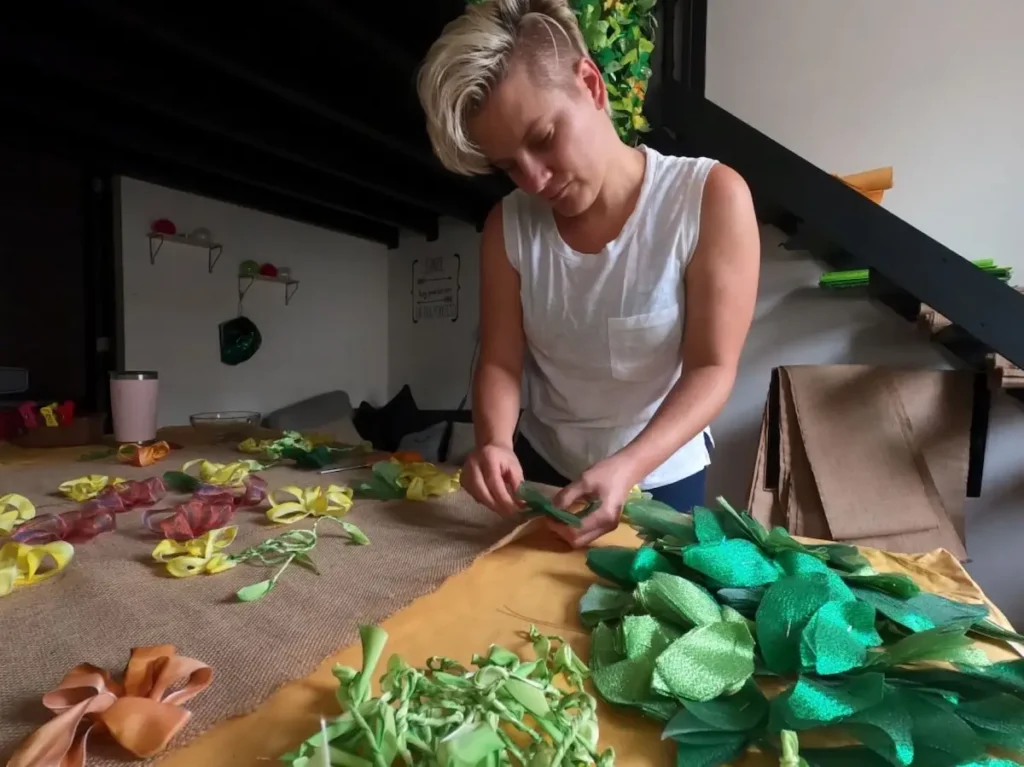
Travel and new environments are visual stimulants. They are the equivalent of having a fresh set of eyes.
You get used to the colors, patterns, and textures around you, and your work can start to feel tired or boring. Travel is a stimulant for my creative soul.
Each new place has its own unique light and color palette, and it also fills me with new ideas, directions, and possibilities for my work.
How has your work changed over the years, both visually and emotionally?
Visually, my work has become more dense.
Since my first painting series after graduating from college, my work has been highly energetic and has often felt visually chaotic. When I was younger and living in New York, that energy translated into skinny vertical paintings with lots of rectangles and blocks. The work has retained some of that energy, but I have found it in a completely different environment.
The challenge now is how to convey the excitement and life of a forest while also transmitting the sense of peace it gives me.
Emotionally, painting puts me into a trance-like state. I do not think; I react while I am actively working. Then I step back and spend time reflecting on what I have done before entering that meditative working state again.
At 43, I have stopped worrying so much about whether I am creating a good or great painting, and I really let the process happen. I was much more rigid in my thinking and my practice when I was younger.
Travel encouraged me to try new things in my work and to worry less about always creating great art. That is impossible, and it is stifling.
You have to create a lot of work to get to the good or great pieces, and you are going to make some duds along the way. My self-worth is no longer tied to it.
I know I am an artist, a good painter, and that I am talented. On occasion, I still surprise myself with what I have created.
I understand and believe that it is okay to have bad days, bad months, or slow years. It is all part of the process. One day and one piece will not define my whole life or the body of work I have created thus far.
Freak’n Art feels less like a business and more like a creative gathering place. What kind of community did you hope to build there?
It so is. It is a business in the most casual way.
I hope to build a welcoming community where all individuals can experiment and express themselves without judgment and with lots of encouragement. I have made some truly wonderful friends through teaching art and hosting other creatives.
We are all about positivity. I am here to be your cheerleader, squash those negative, intrusive thoughts you have about your work, remind you to take a break, eat a snack, and drink some water.
I hope to establish a creative hub here in Central Oregon that supports other artists, gives them a space to share their craft, and encourages anyone, especially those who think they are not artists, to express themselves and try something new.
I know things are going well when the studio is full of laughter and impromptu karaoke.
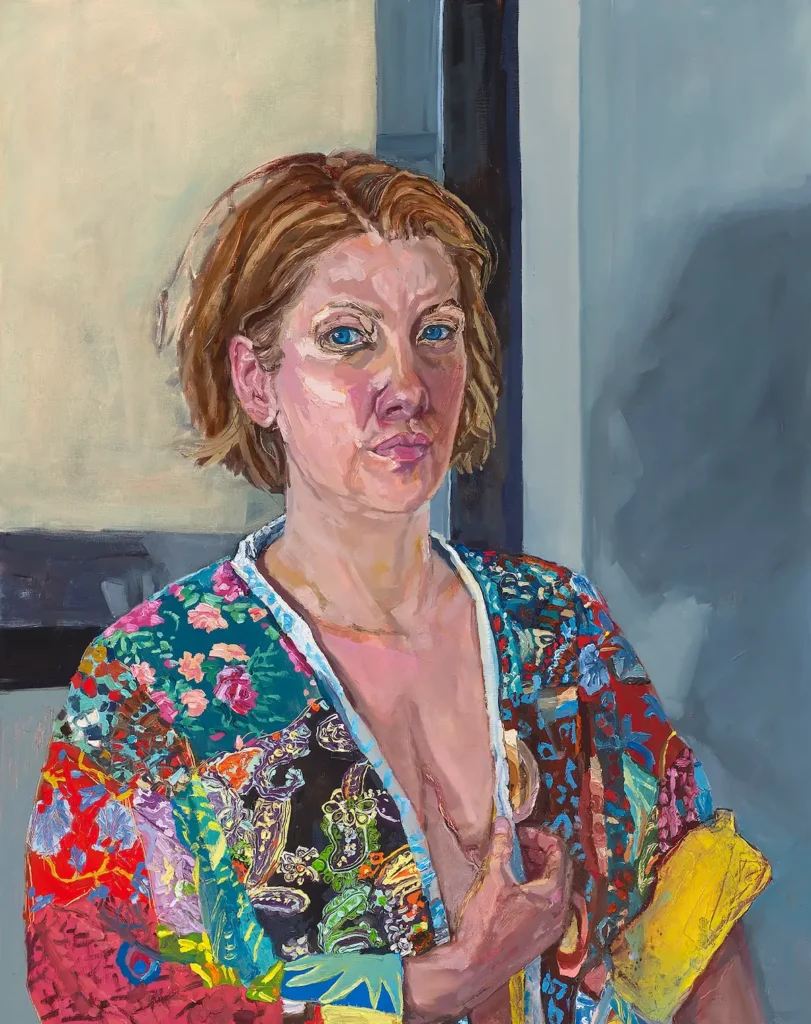
Your studio motto is “Make Art. Feel Better.” What does that phrase mean to you personally?
Everything.
I think it is so important for people to experience and express themselves creatively, whether through music, dance, theater, or visual art.
Art feeds our souls and helps fill our cup with joy and happiness. It is an essential part of life. You do not need to be good at art to benefit from it.
For me personally, I have struggled with depression throughout my life. Art has always helped me work my way out of the valleys: depression, caring for my mom, the deaths of friends and family, and my own cancer diagnosis.
Even if I only show up at the studio to clean, that eventually leads to creating, and before I know it, I start to feel better.
Art has always been there for me.
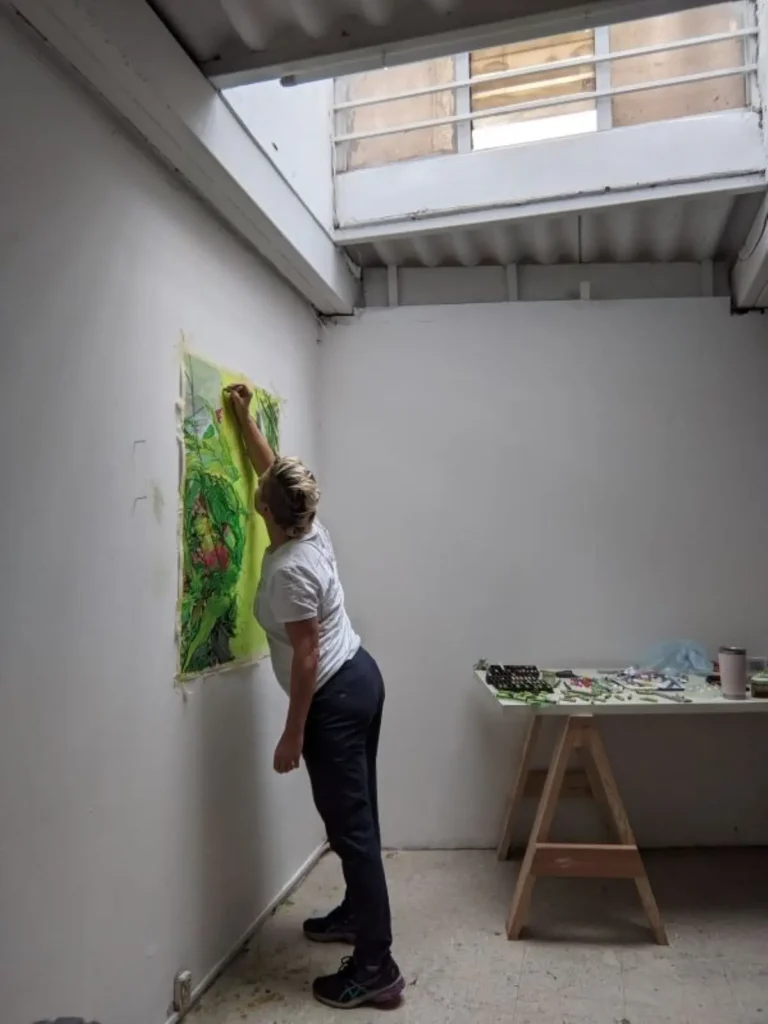
You teach artists of many ages and experience levels. What do beginners often need to hear most?
To eat a snack and take a nap before judging their artwork! No, seriously: learning something new or trying something new can be incredibly frustrating, especially when you expected the experience to feel easier or more like a flow state.
People are so hard on themselves. They will say things like, I am not creative, or I am not good at art.
Art, and creating art, is like anything else: it takes practice. You are training your creative muscle and building the connection between your eye, your brain, and your hand.
I have been practicing art seriously since I was 17, and I am 43 now. That is a lot of years of practice, not a marker you should use to compare yourself to.
Compare your work to your old work. You will be amazed by how far you have come.
Where can people learn about your classes and your art?
FREAKNART.COM, @FREAK_N_ART_BEND (studio)
ANASTASIAZIELINSKI.COM, @FREAK_N_ART (PERSONAL ART)
Rapid-Fire Fun:
What’s one material in your studio you’re obsessed with right now? Oil paint. My original love.
A color you can never stay away from? GREEN
One word that describes your creative life right now? FULL
Sketchbook or digital notes? Both. I sketch by hand, but I keep quick notes in my phone.
A place that sparks creativity? Deep in the woods.
Interview posted July 2026
Explore more inspiring interviews on Create Whimsy.