
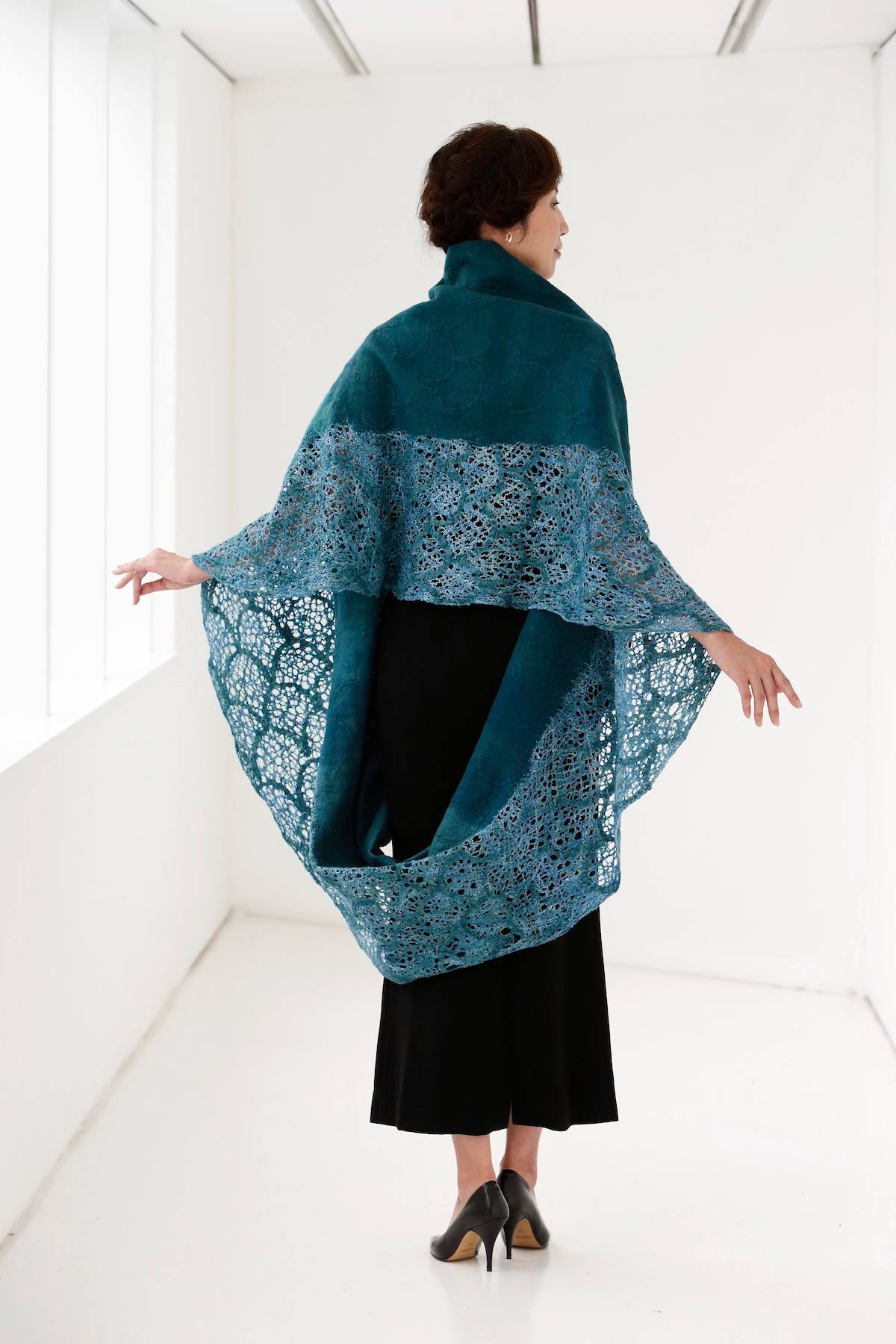
At the foot of the Blackstairs Mountains in Ireland, Leiko Uchiyama turns wool into quiet, beautiful forms that feel alive. Her journey began with a love of sheep in Japan and led her across the world to farms, classrooms, and studios.
Along the way, she discovered the magic of felt, where soft fibers come together to become something strong and lasting. Inspired by nature, color, and even words from her native language, Leiko’s work is thoughtful, calm, and deeply personal. Step inside her world, where simple materials and patient hands create something truly special.
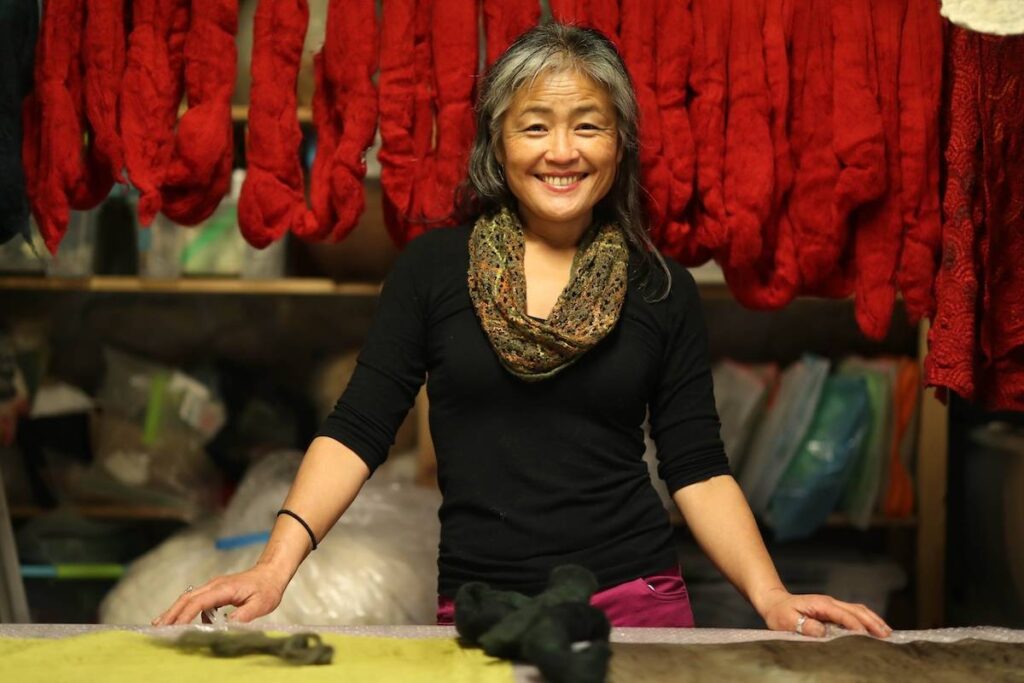
Can you tell us a little about yourself and your creative journey?
I’m a Japanese felt making artist living and creating at the foot of Blackstairs Mountains in Co.Carlow, Ireland.
I studied animal science in Japan. I was fascinated by sheep, especially the wool they produce every year, and the variety of breeds. I took a year off from the university and worked on a sheep farm in New Zealand.
As an Amazon Associate I earn from qualifying purchases. Read more about our affiliate linking policy.
I met Lenore Bray, who taught me how to weave. I also bought my first felt-making book written by Inge Evers in the local book shop where I was working. New Zealand was the place that gave me an opportunity to open many doors I didn’t even know existed. It made me take a nighttime weaving design course after university.
I went back to New Zealand a few years later to undertake a sheep shearing course as the first Japanese!
I was traveling from farm to farm for shearing, demonstration shearing at events and zoos, and sometimes teaching felting, following 10 years or so in Japan.
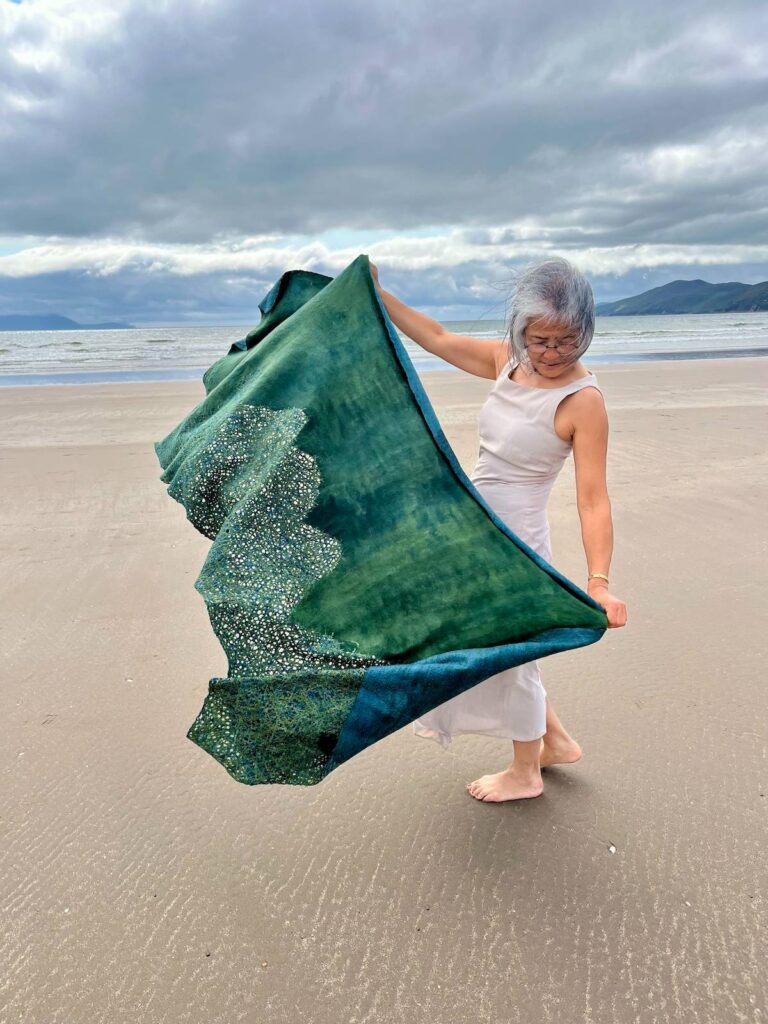
What first drew you to working with felt?
I came across felt making when I was finishing a weaving design course in Tokyo and I was amazed how free it was to make a form and shape.
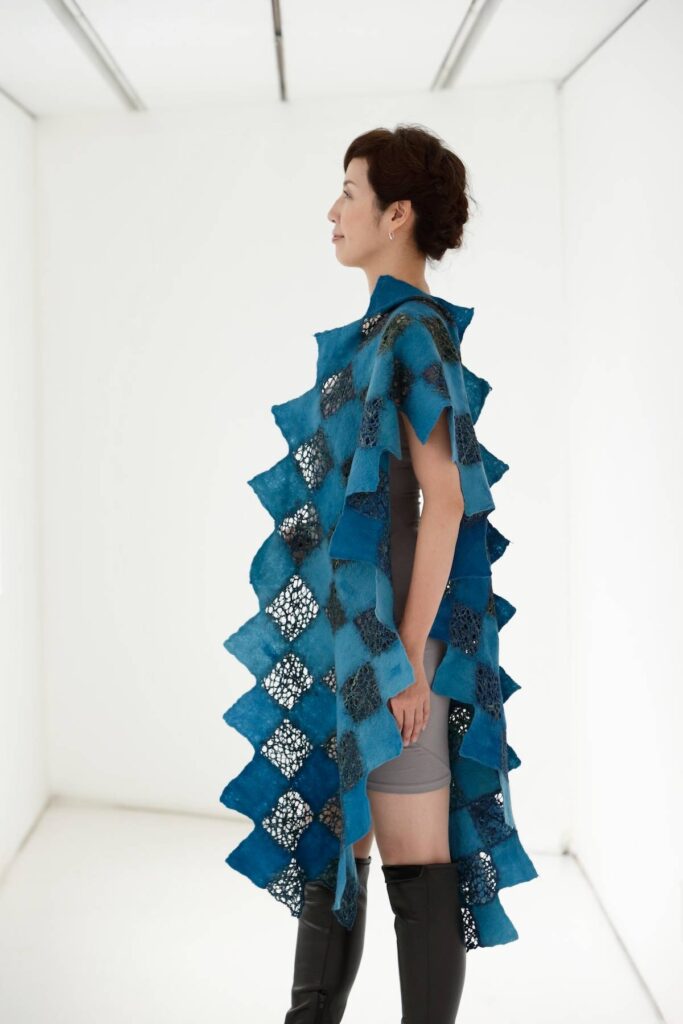
Where do you find inspiration for your pieces?
Colours, textures, and forms I see every day, especially in nature.
I’m also inspired by words, mostly Japanese words, which I’ve been so familiar with, but living away from my own culture gives me a different angle to think about the meaning, origin, and my understanding and usage of the words. I find it fascinating.
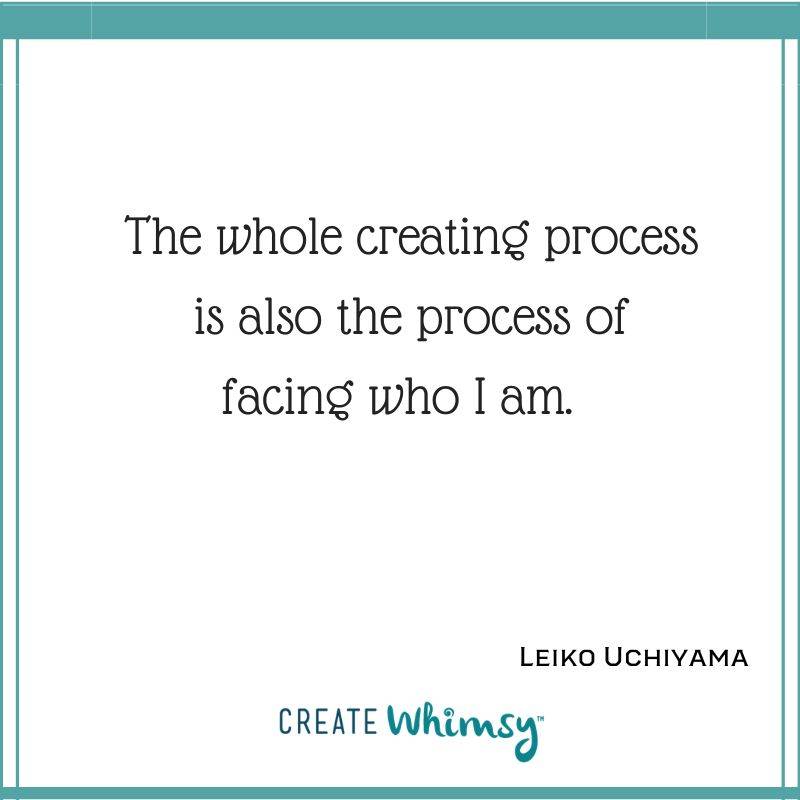
How I see my surroundings and how I’m drawn to words are all based on my own experiences. The whole creating process is also the process of facing who I am.
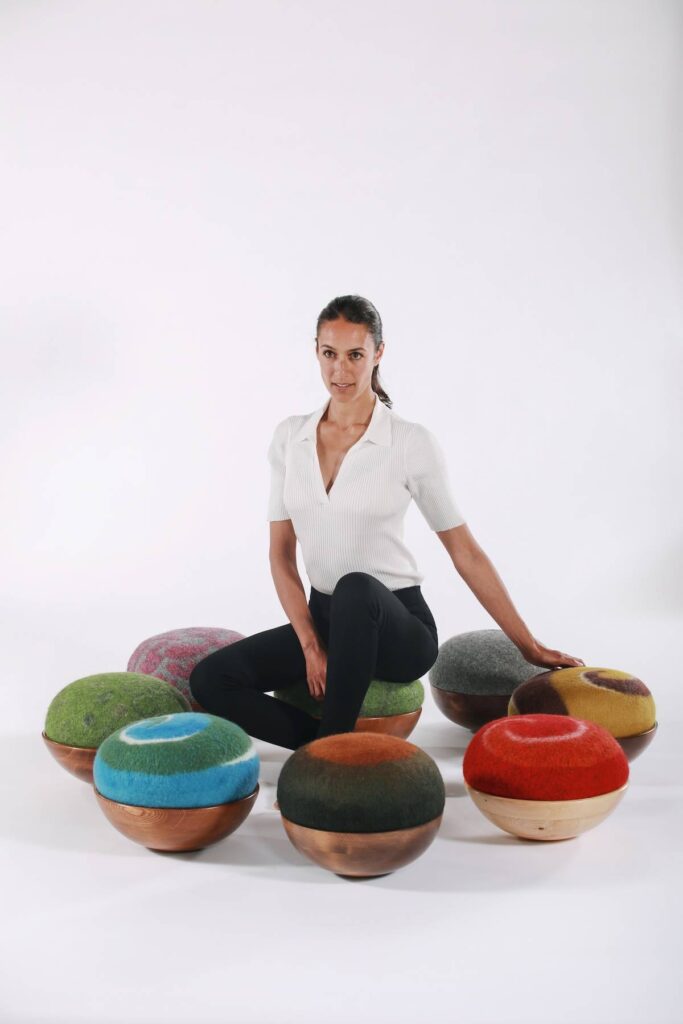
Do you keep a sketchbook or collect ideas in another way?
I don’t draw but I write words and sentences with some lines or forms if necessary.
Describe your creative space.
I wish I had a larger dry space with less dust … But hey, I have my own workshop!
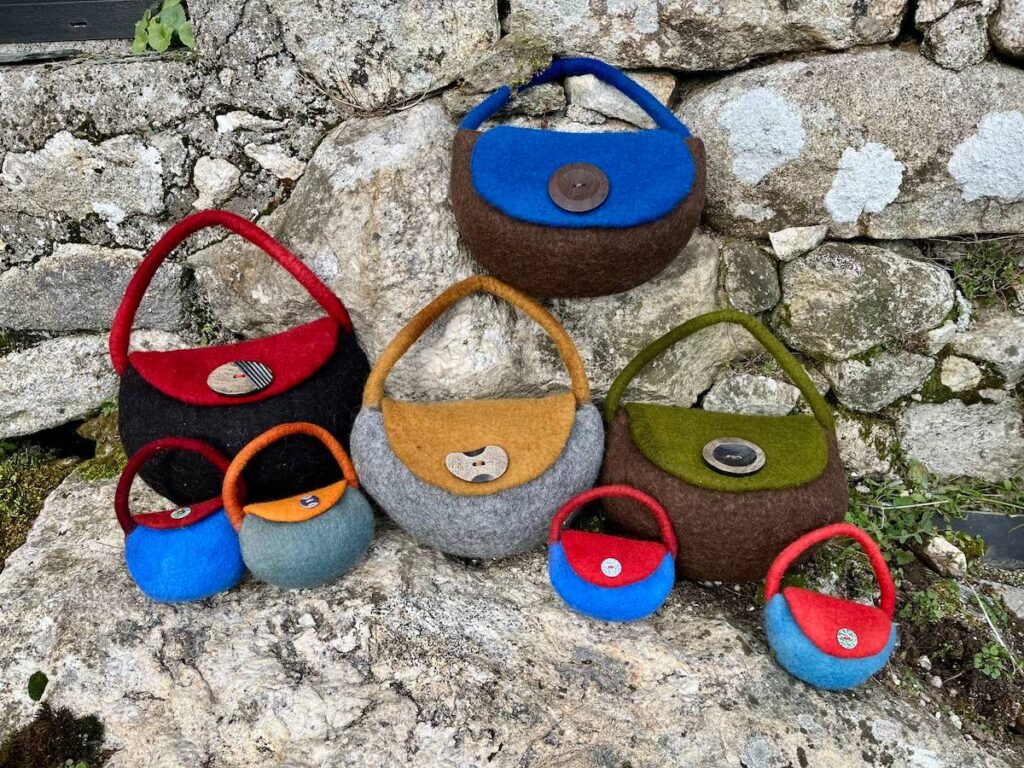
What are your must-have tools or materials when working with felt?
Wool. I use raw fleeces and washed and carded wool. I normally use the fleeces with its natural colour and washed carded top wool to dye my own colours.
Wet felting doesn’t need many tools when you have a great pair of hands and a good spirit!
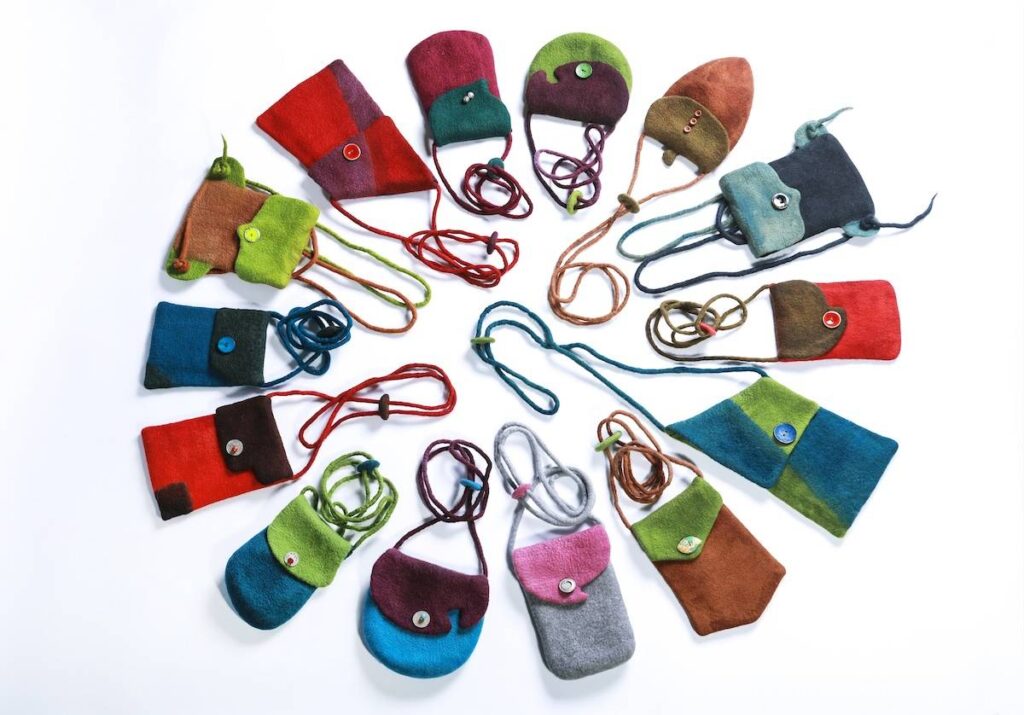
Do you teach?
YES, I love teaching. I’ve taught in over 15 countries, from children to adults, at schools, fibre guilds, textile events, and so on. I love sharing this wonderful felt magic with different people. I teach only face-to-face classes except for lectures. I can take one or two students at my workshop, but I also travel anywhere locally and internationally!
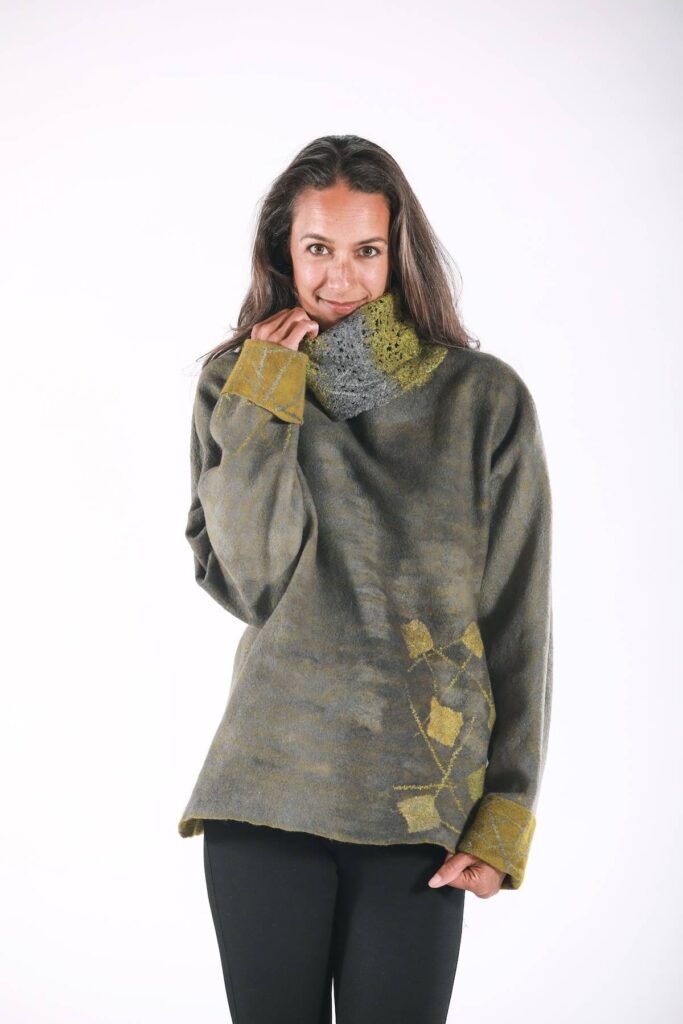
Is there a part of the felting process that feels almost magical to you?
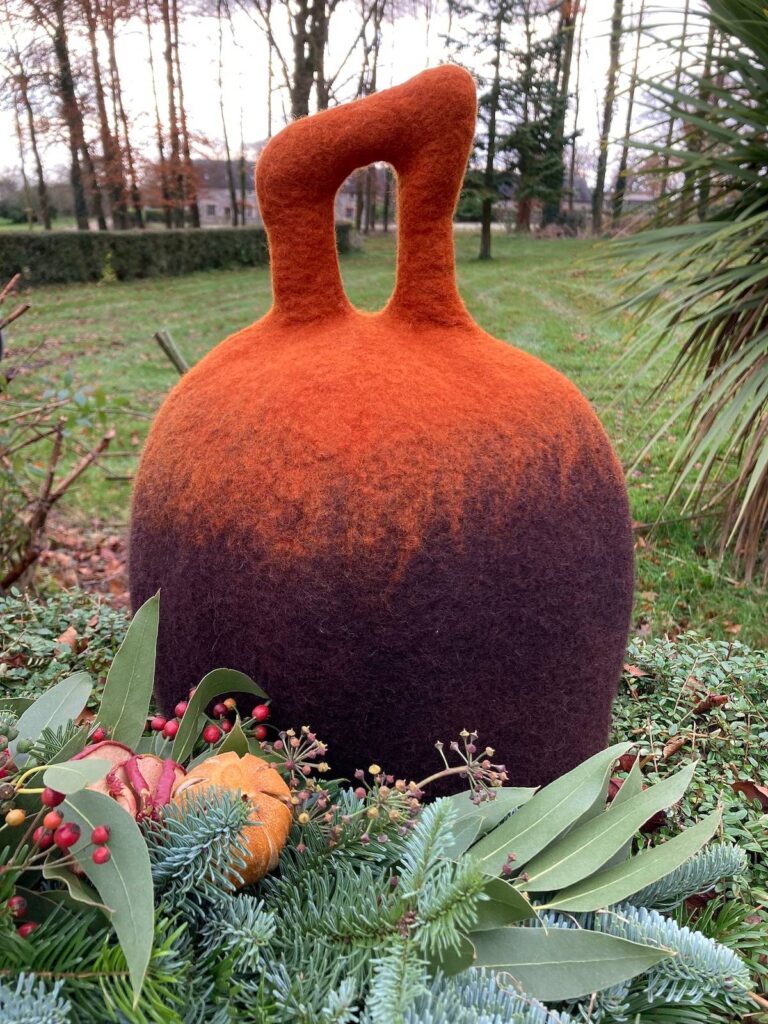
I always love the process of wool fibres marge into a solid felt. Wool fibre has a natural character to felt together and locked each other to create a 2D or 3D structure so that it won’t go back to fibre anymore. The final texture can be very different depending on the type and the amount of wool you use.
Tell us more about your process, starting with an idea and how it evolves into a piece.
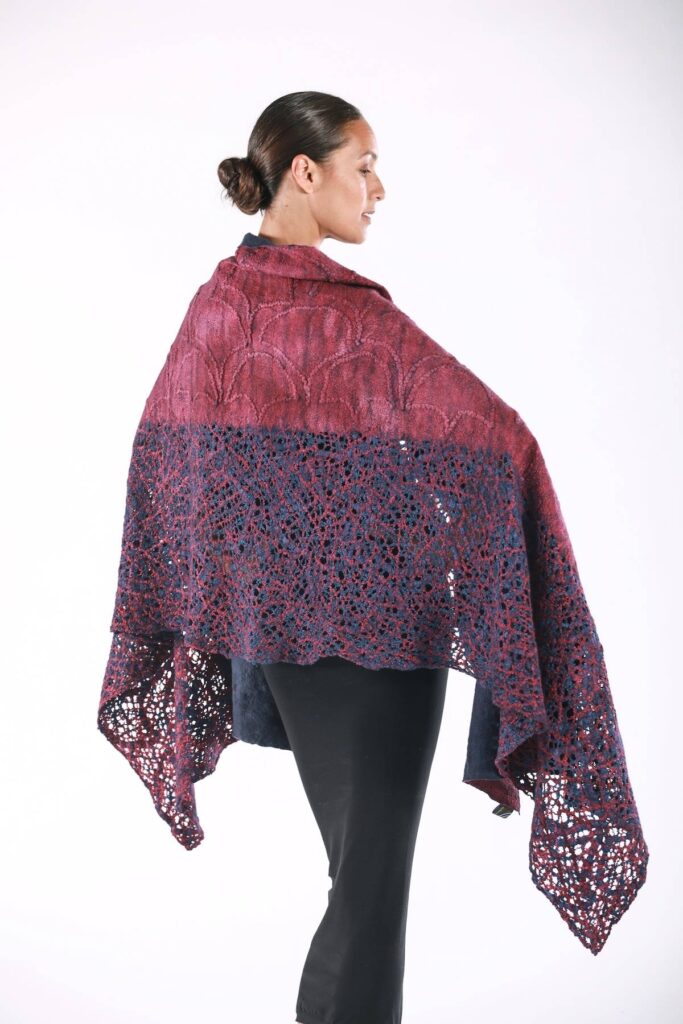
I do make samples to make clear my ideas and to achieve the structure I want, right sizes, weight and quality. While I work on a piece, I normally get the ideas to try next.
Have you ever had a “happy accident” that led to something new?
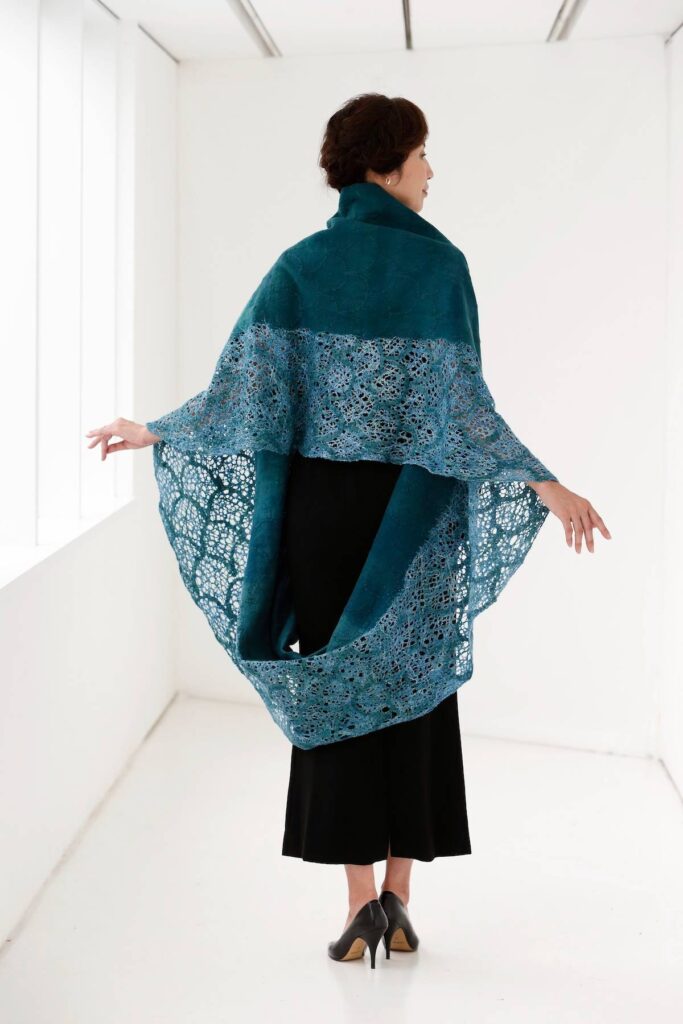
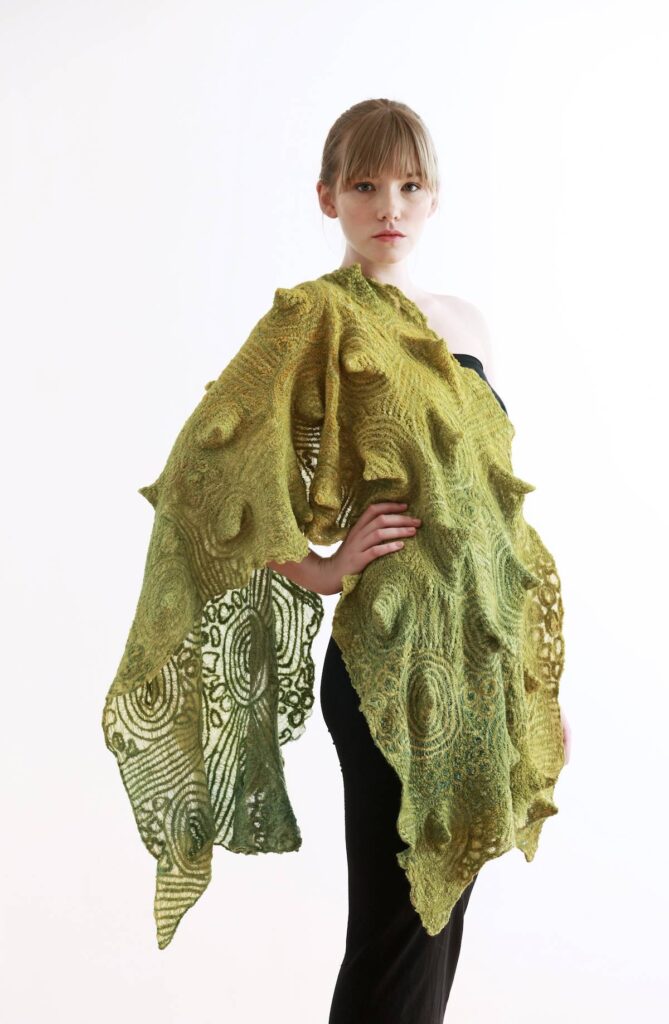
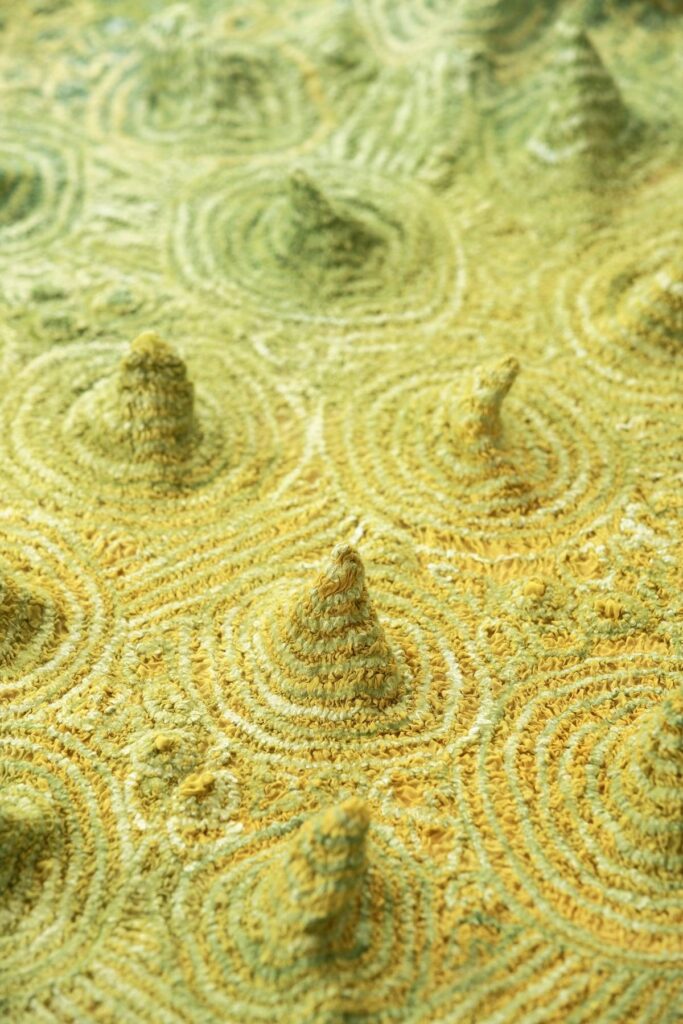
When I was preparing for an exhibition, I discovered very small amount of fibre could change the shape of fine fabric, and it turned to 3D effects. Using fabrics normally saves your time, meaning you can make more pieces, but it was another time-consuming technique discovery…I couldn’t resist trying more of these pieces and I ended up giving an artistic minimalism show…
Do you work on multiple pieces at once or focus on one at a time?
I basically work on one piece at a time.
How has your work changed over the years?
It’s difficult to say but it has been changing as I have been changed. My work reflects myself a lot.
Is there a piece that feels especially important to you? Why?
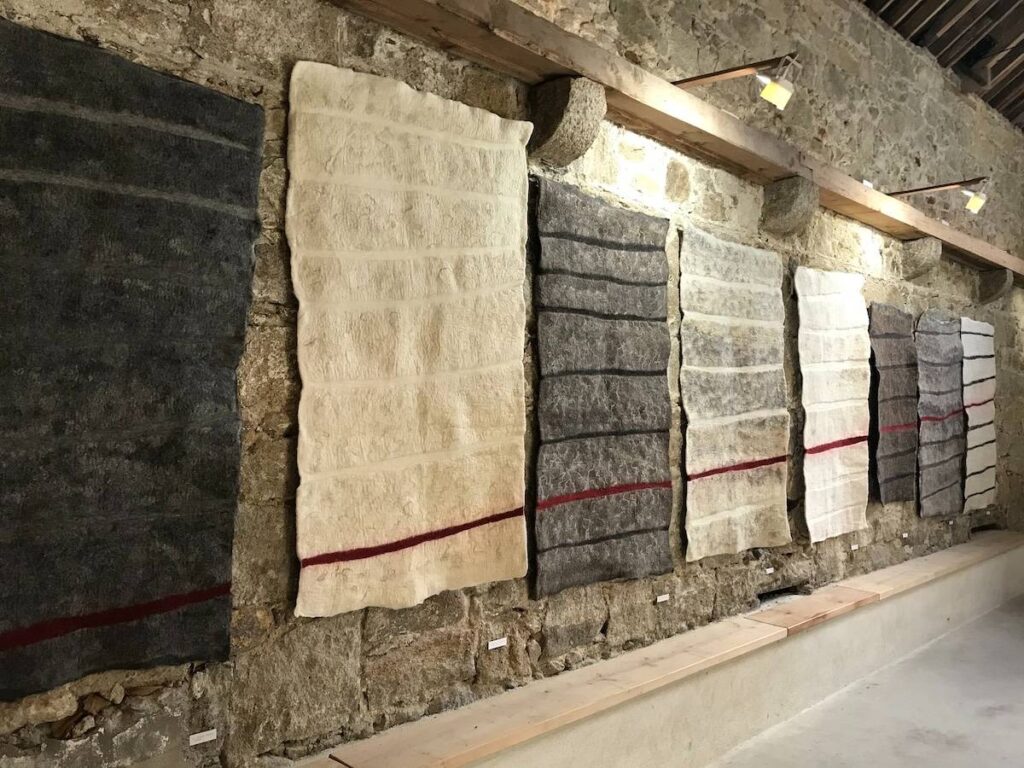
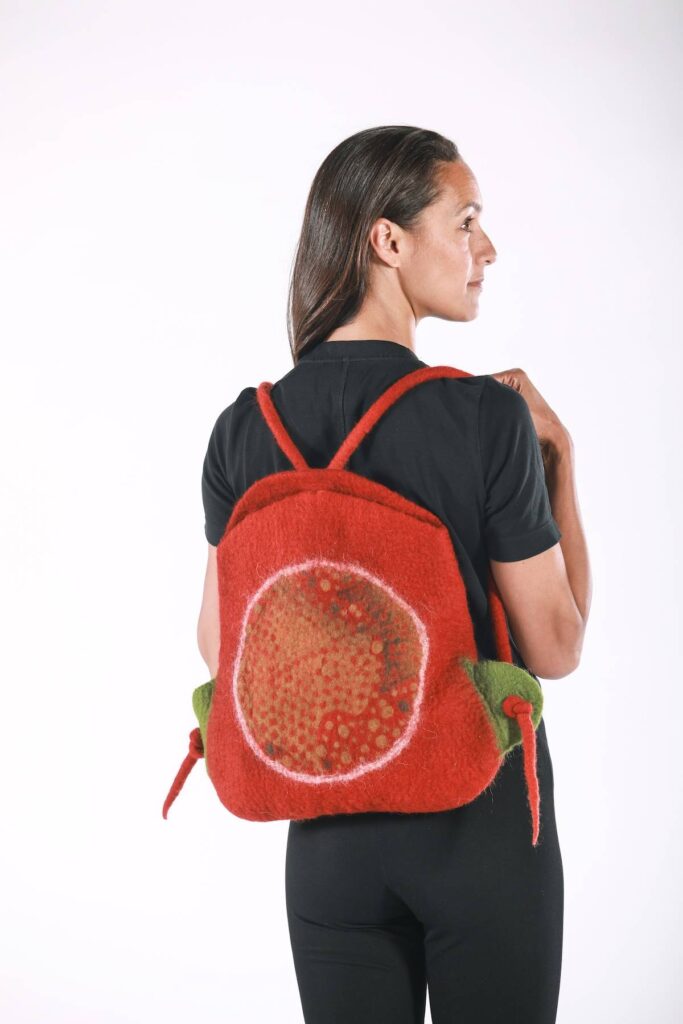
All pieces are very important to me but probably the wall pieces are something reflects more of my inner thoughts and history.
What role does patience play in your practice?
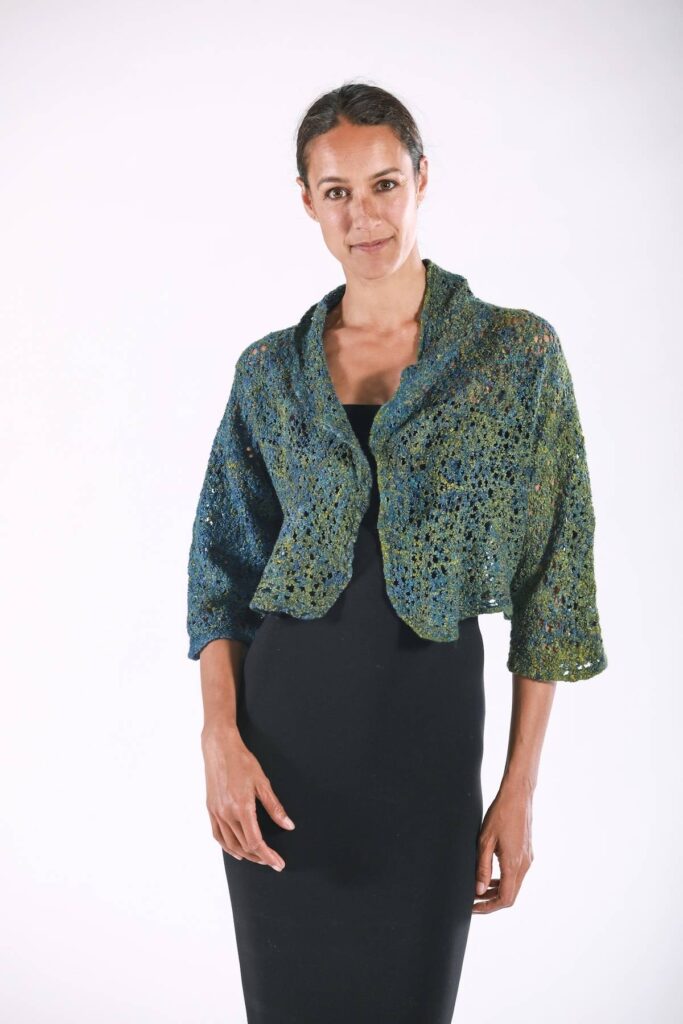
Most of people who took my classes have told me that I have lots of patience to achieve the Pine Needles technique which I invented to make a lacy felt but I just enjoy making them..
When you enjoy doing something, you wouldn’t call it patience but if it starts stressing you, it is the sign to stop!
What advice would you give to someone just starting with felt or fiber art?
Just follow your instinct and search for what you like.
Where can people see your work?
My Instagram, Facebook, and website. I do show them at fairs and exhibitions which I normally announce the details on those platforms. Personal inquiries are always welcome.
Rapid Fire Fun:
- Morning or night maker? Both in summer, night in winter.
- A place that always sparks creative ideas? Nothing particular but I love the landscapes in Ireland.
- Favorite way to recharge after finishing a big project? Going for a walk with Penny the dog. Chatting with friends.
- What does creative joy mean to you? Peace
Interview posted June 2026
Explore more felting inspiration on Create Whimsy