
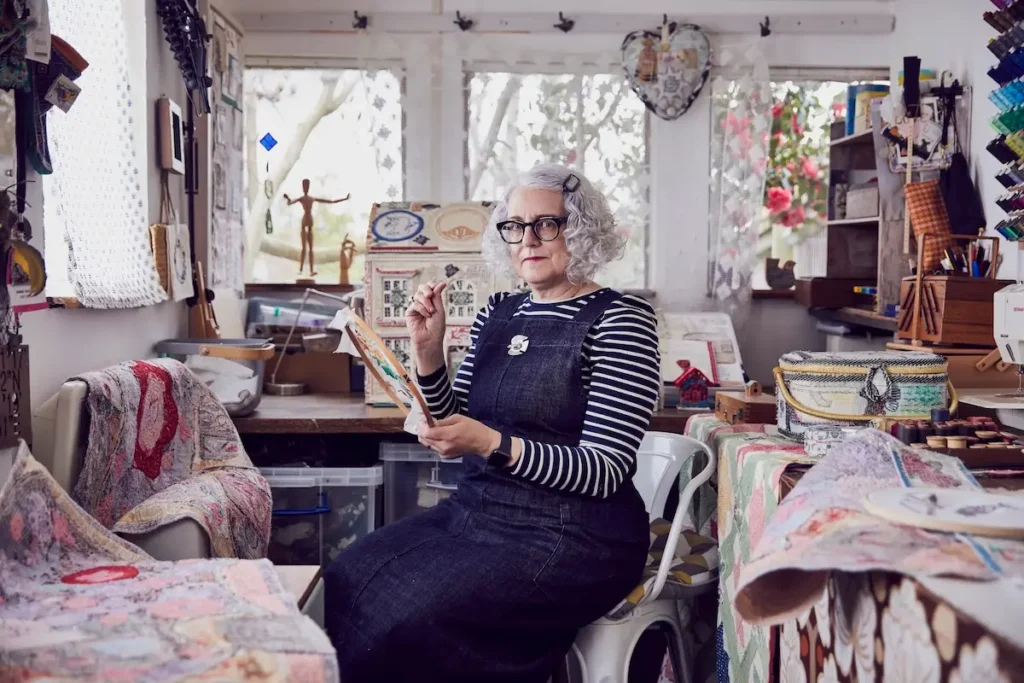
Meet Anne Kelly, a textile artist who turns fabric scraps, vintage treasures, and bits of nature into stitched stories full of hidden surprises. From her cozy garden studio, she layers cloth, thread, and found objects the way a painter layers color, creating art that begs you to look closer. Get ready to peek inside the creative world of someone who believes every scrap of fabric is just waiting for its story to be told!
Was there someone or something in your childhood who encouraged your creativity or helped you see the world differently?
I had an excellent Reception/Kindergarten teacher who made us build a new environment out of found materials, card, boxes and paper every week. That was an eye—opener to a five year old! My Secondary/High School Art teacher was also very encouraging and introduced me to textiles as an art form.
You originally trained in fine art before textiles became your main language. What drew you from photography and printmaking to fabric and stitch?
I grew up in Canada at a time when you couldn’t easily access a Fine Art Textiles course. Unlike the UK which has a large range of multidisciplinary courses, Canada is a smaller (population wise) country and Fine Art courses were more readily available. I incorporated elements of textiles into my work at this level and did further training at Goldsmiths College in London after emigrating to the UK.
As an Amazon Associate I earn from qualifying purchases. Read more about our affiliate linking policy.
Do you remember the first textile piece that made you think, “This is what I want to do”?
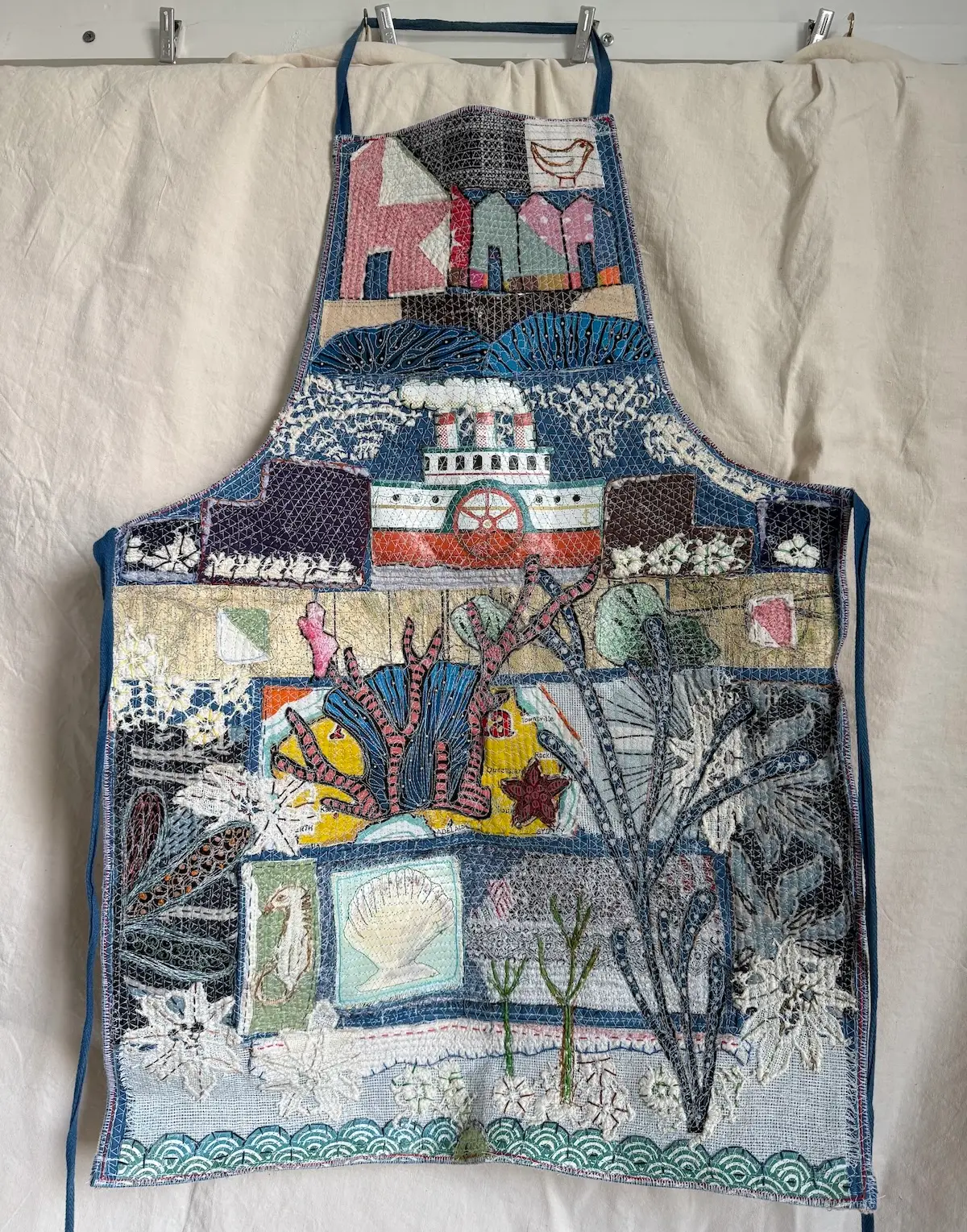
Yes – although I had flashes of recognition along my artistic journey, it wasn’t until I started layering fabrics and overstitching that I felt I had found my true combination of media and technique.
It was a series of garden plants that were very densely stitched, almost like tiles, for a solo exhibition which virtually sold out – so I realised there was an audience for this type of work too.
Travel plays an important role in your work. What do you notice when you visit a new place that other people might overlook?
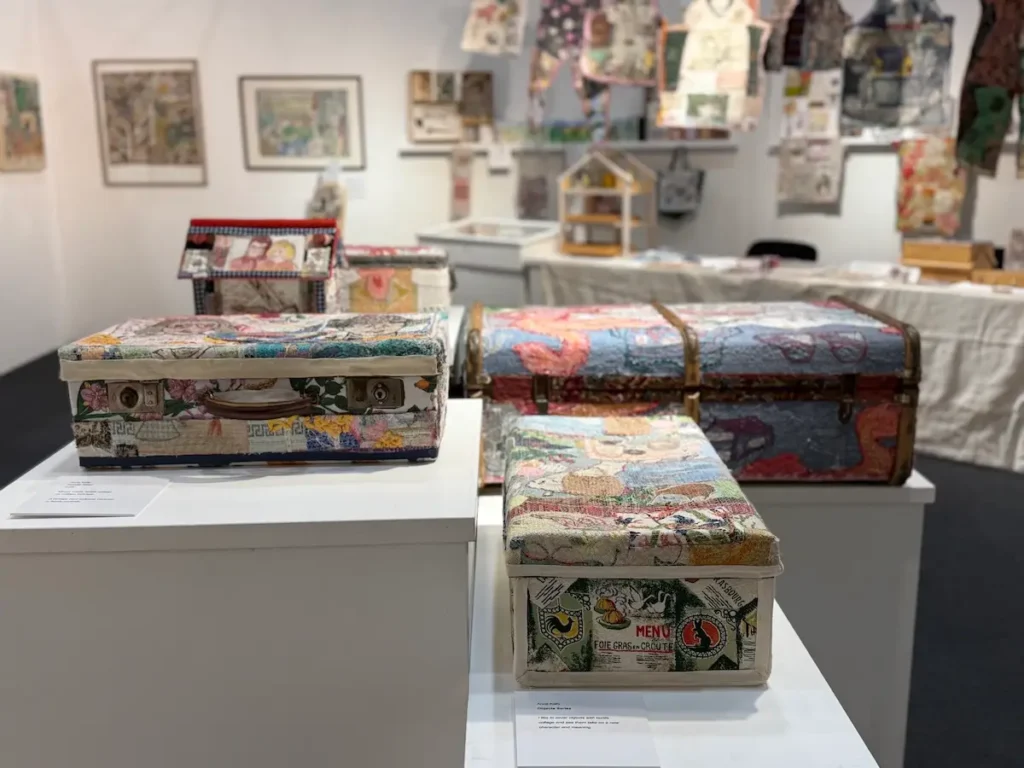
I avoid the touristy places if possible (except art galleries and museums) and seek out everyday neighbourhoods where I am more likely to find charity/thrift shops, and local makers.
You can learn a lot about a country and culture by visiting their supermarkets, post offices, and stationery/art shops.
Nature appears again and again in your textiles. What keeps bringing you back to the natural world?
To quote Marc Chagall ‘Great art picks up where nature ends’.
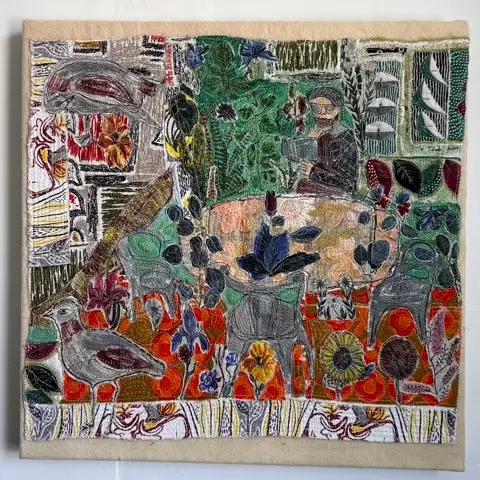
I used this quote in my first solo book ‘Textile Nature’ (Batsford 2016). The natural world is the true teacher and basis from which all art and design begins. Observing the colours, textures and patterns seen in nature can be inspiring and make for some great starting points.
You often include found objects, vintage textiles, and little treasures. What makes you decide that something belongs in your collection?
I collect and am given these items when I teach and travel. They stay in my studio and come out when I may need them later on.
I now seem to be drawn instinctively to items that fit in well with my style and technique. I often find that colours of vintage textiles cluster together and will reappear when I need them.
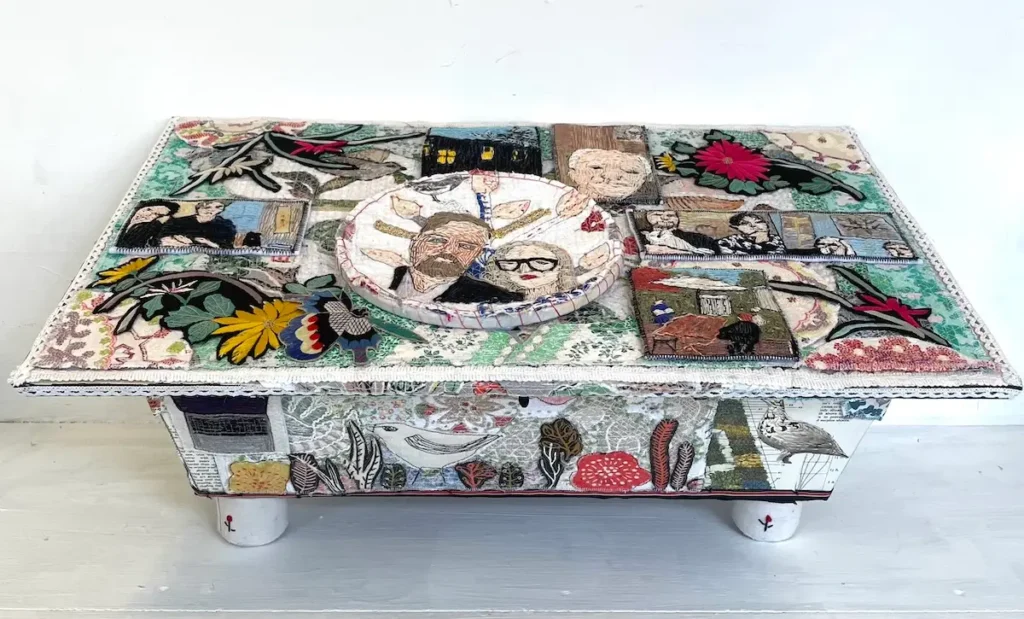
Do you ever pick up something with no idea how you’ll use it, trusting it will find its place later?
I do sometimes but I don’t have a huge studio or storage space, so I tend to keep only things that I know will be useful. They always do come into play at some stage and I enjoy the memories of finding them that come with them.
Describe your creative space
As I mentioned, I have a small free-standing studio in my garden, repurposed from an office space, with water and electricity. I use it as a ‘messy’ creative space where I print, stitch and make. I try to avoid using tech in there except when teaching online.
I am fortunate to be able to work from home, and having a separate space forces you to be disciplined. I also have an office space in the house.
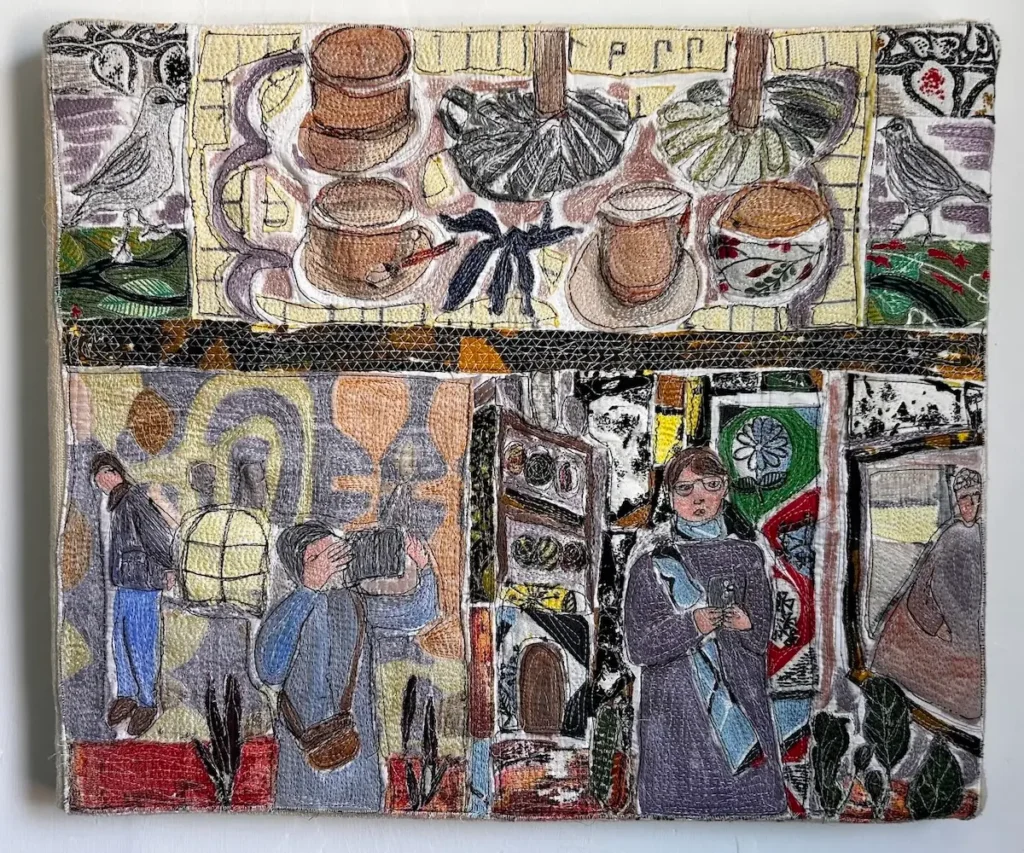
Are you someone who works best with a plan, or do you like to discover the piece as you go?
This depends on the nature of the work. If it is a commission or for a series of work I will use drawings and inspiration boards as a starting point.
For smaller work and spontaneous pieces, I can be inspired by a small scrap of fabric which grows as I progress.
Your work is wonderfully layered. How do you know when you’ve added enough and when it’s time to stop?
I love working with layers and would describe myself as a collagist as well as a textile artist.
When the piece ‘clicks’, it often is because the layers have developed sufficiently to create the textures and colours I am looking for in the piece. This may also be because of additional hand and machine stitching.
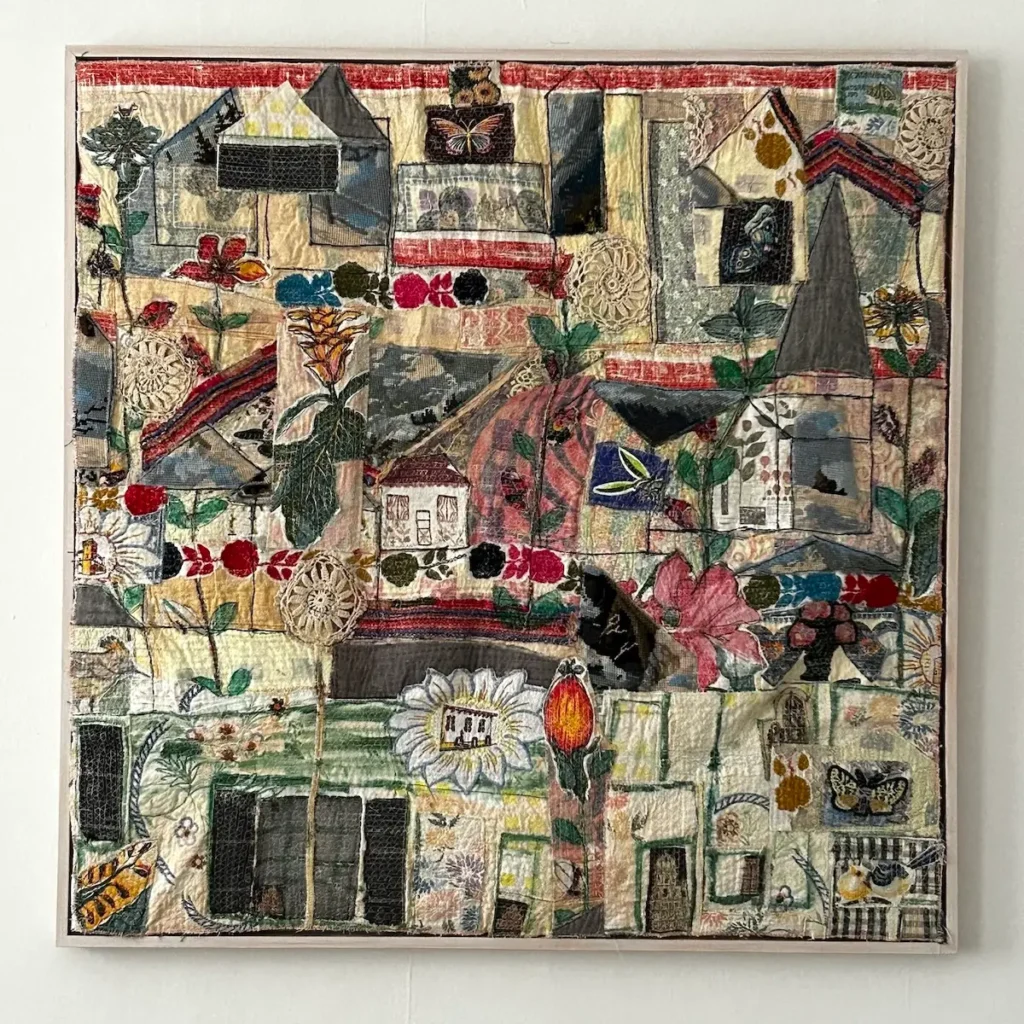
Is your studio neat and organized, or is it filled with inspiring piles waiting to become art?
I am a tidy person, most of the time! It is crucial as I am often working on more than one project at once. However, when I am printing or cutting out fabric, I can be quite messy too! I put prospective pieces together in shoebox lids ready to put together, something I copied from the great collage artist Joseph Cornell.
Your work invites people to look closely and discover tiny surprises. Is that something you think about while you’re making a piece?
I am inspired by artists who use narratives in their work and are able to create ‘small worlds’ within them. I try to add extra elements that add an extra dimension of surprise or connection with the theme. These are often put in with hand and machine stitching towards the end of the process.
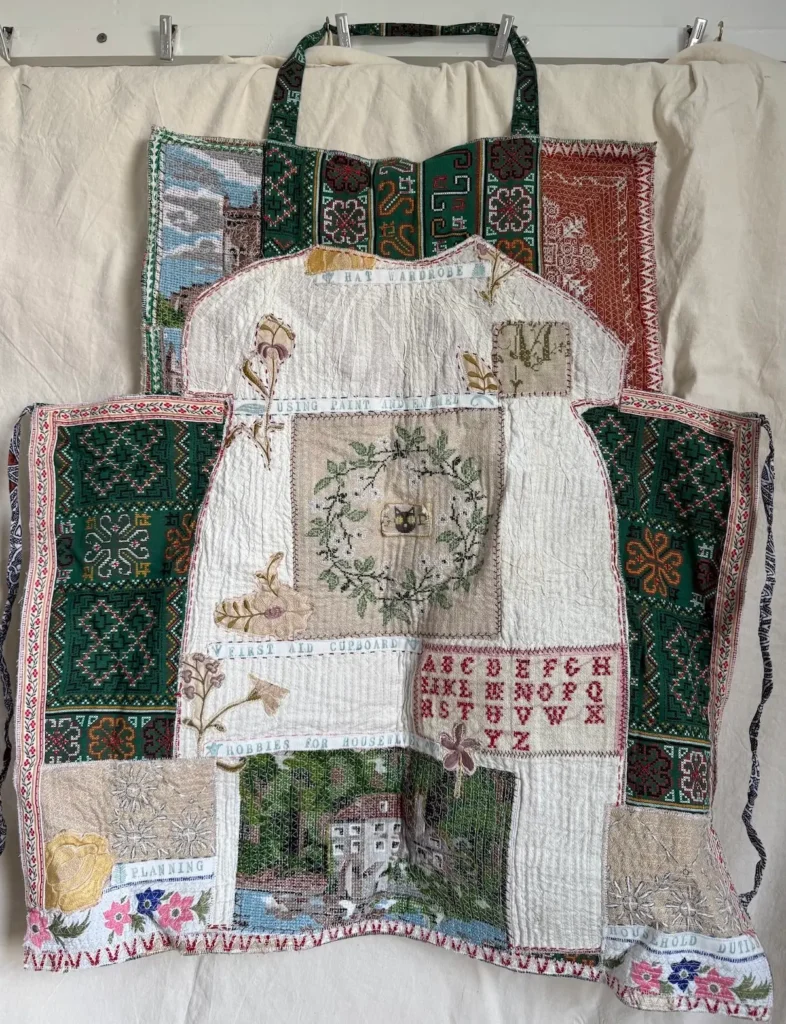
At what point does a collection of materials become a story?
It’s a gradual process and takes time to create a narrative piece. The layering process adds depth and creates a good background for central themes or focal elements. All of this is underscored with a lot of machine and hand stitching to pull it together.
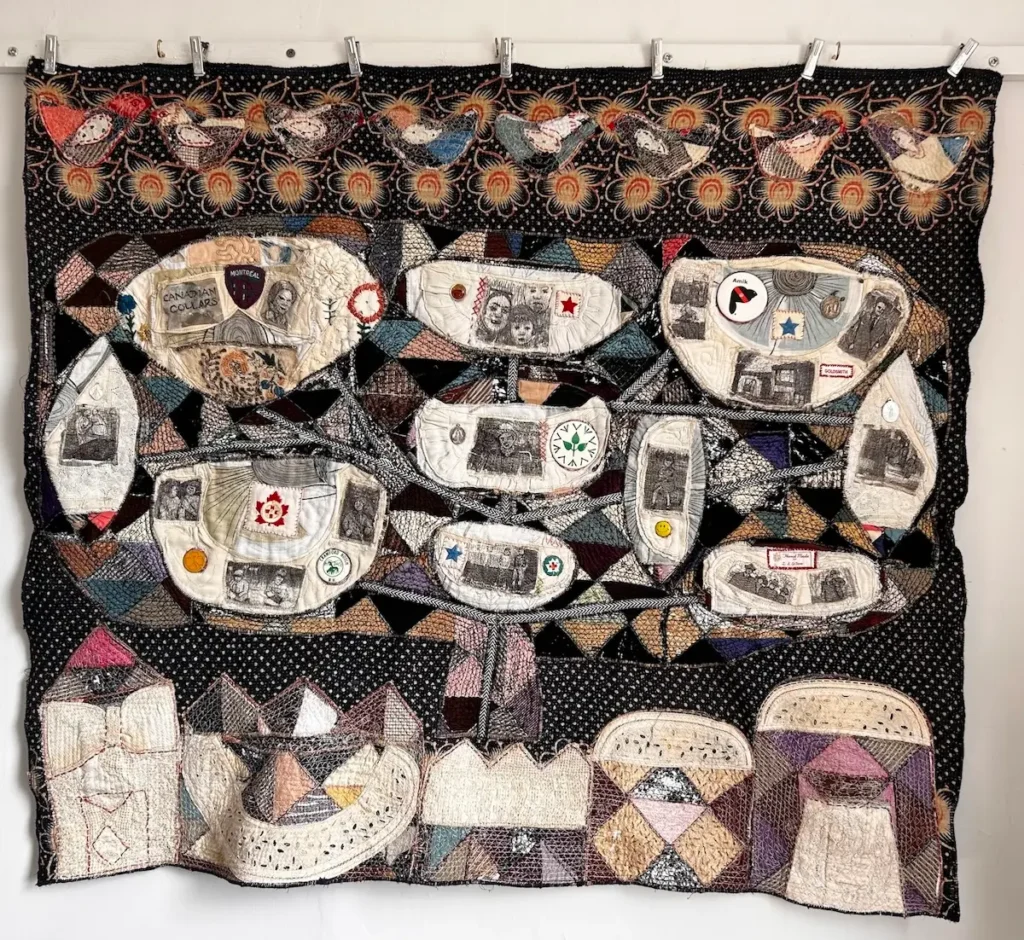
What is the hardest part of creating a new piece?
The hardest part of any creative process is starting! I like to create layered backgrounds which help to speed up the creative process.
I always tell workshop participants to make samples before they begin, especially if they haven’t tried a technique or process before. Anything that takes the pressure off making a start is a good thing!
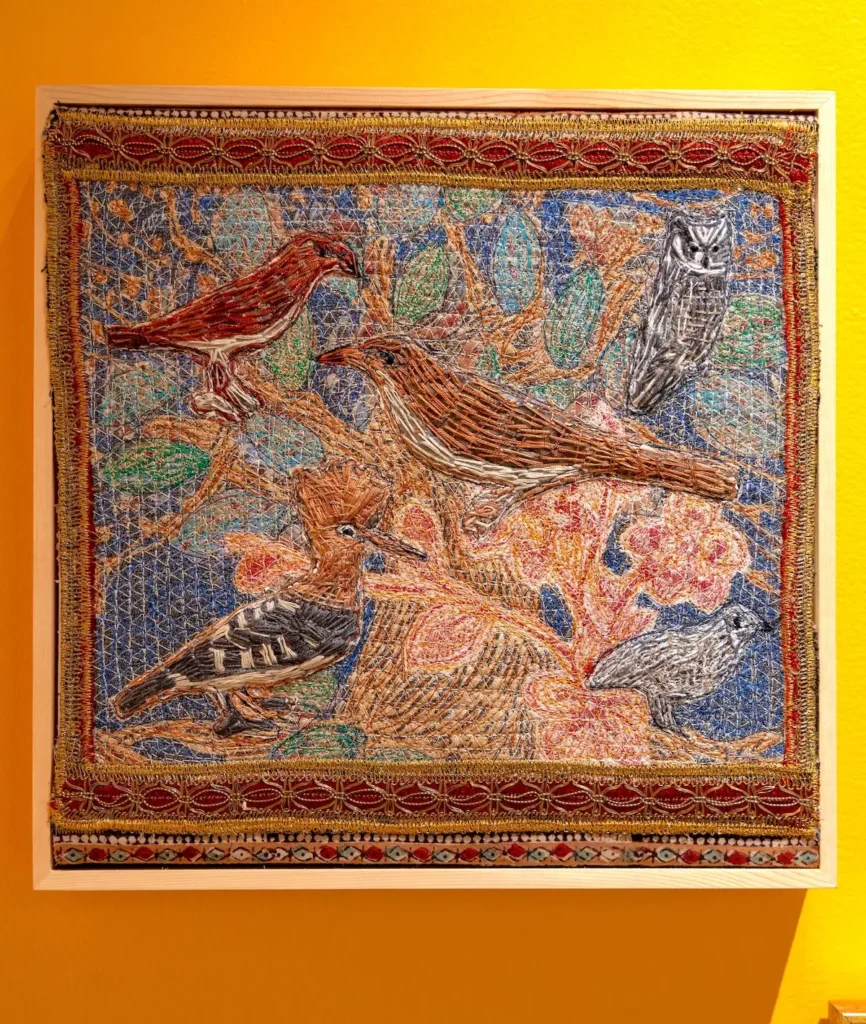
You’ve taught countless workshops. What have your students taught you over the years?
I have learnt so much from my students! The camaraderie and mutual friendship is something I treasure, and I always find out about new ‘hacks’ and equipment from them. I am fortunate to have a group of participants who return to work with me on a regular basis, and this enables an ease and extra layer of attention to their projects, which is really special.
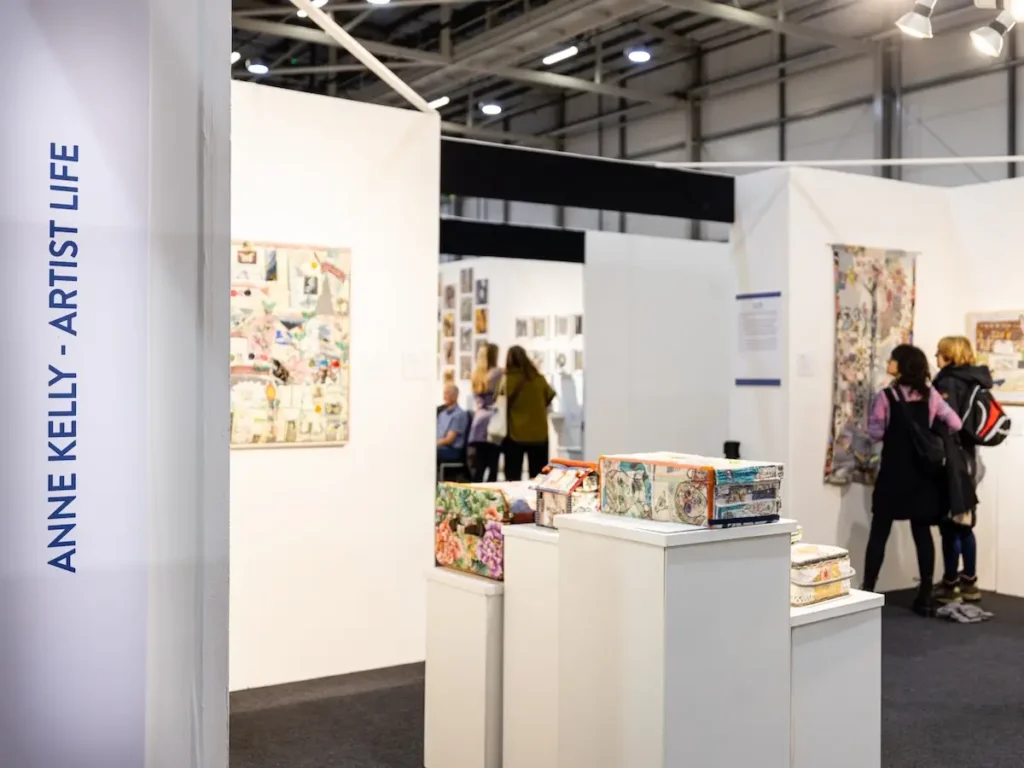
What advice would you give someone just starting out as a textile artist?
Never say no! You never know where something might lead, and some of my greatest collaborations and commissions have come from unexpected sources. When you are starting out, try to see and be involved with as many other makers and institutions as you can, you will learn so much!
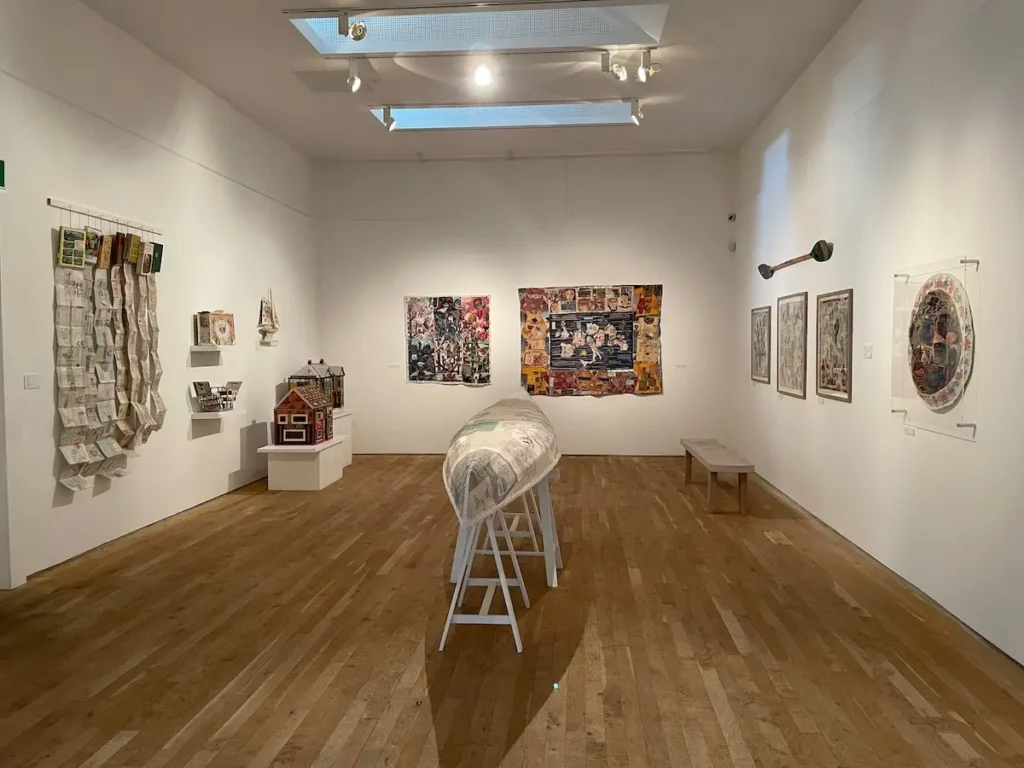
Where can people see your work?
A list of my current and recent exhibitions can be found on https://annekellytextiles.com/news
I have a large solo exhibition ‘Unfinished Journey’ at the Mississippi Valley Textiles Museum in Canada opening on August 8th. https://mvtm.ca/mvtm-event/unfinished-journey-memory-identity-family-by-anne-kelly/
My books are all published by Batsford and every title contains examples of my work. https://www.batsfordbooks.com/contributor/anne-kelly-2/
Books by Anne:
- Abstract Textiles: Color, Shape, and Pattern in Textile Art
- Textile Nature: Textile Techniques and Inspiration from the Natural World
- Textile Portraits: People and Places in Textile Art
- Textile Travels: Capturing World Travel in Cloth
- Textile Folk Art: Design, Techniques and Inspiration in Mixed-Media Textile
Rapid-Fire Fun
A favorite color you’re always drawn to? I like red -a bright red as it can frame and stands out
Mountains, gardens or the seaside? I love the seaside
One word that describes your creative life today? Busy!
Hand stitch or machine stitch? Both
One material you can never resist collecting? Vintage quilt top scraps
Interview posted July 2026
Explore more mixed media inspiration and projects on Create Whimsy.