
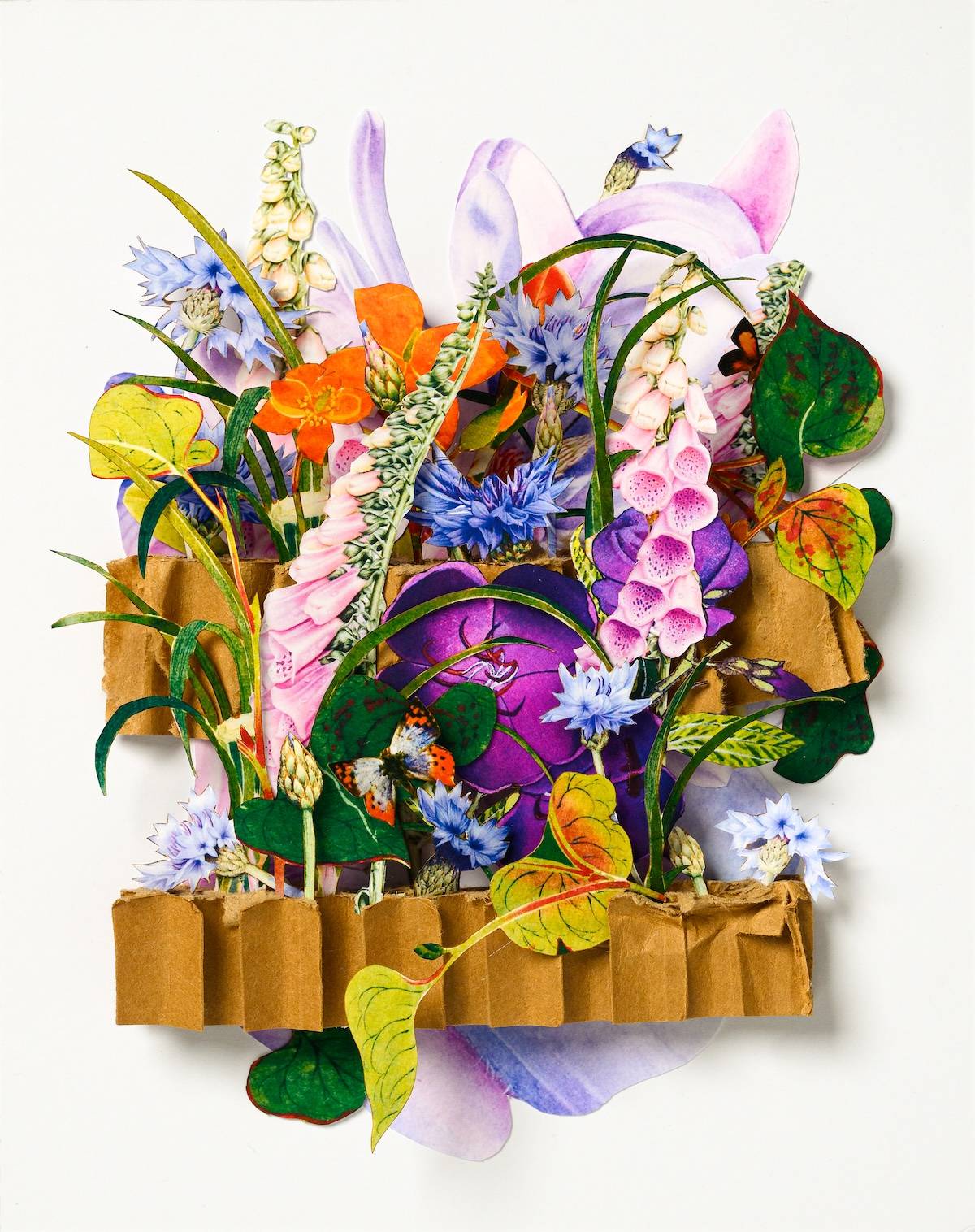
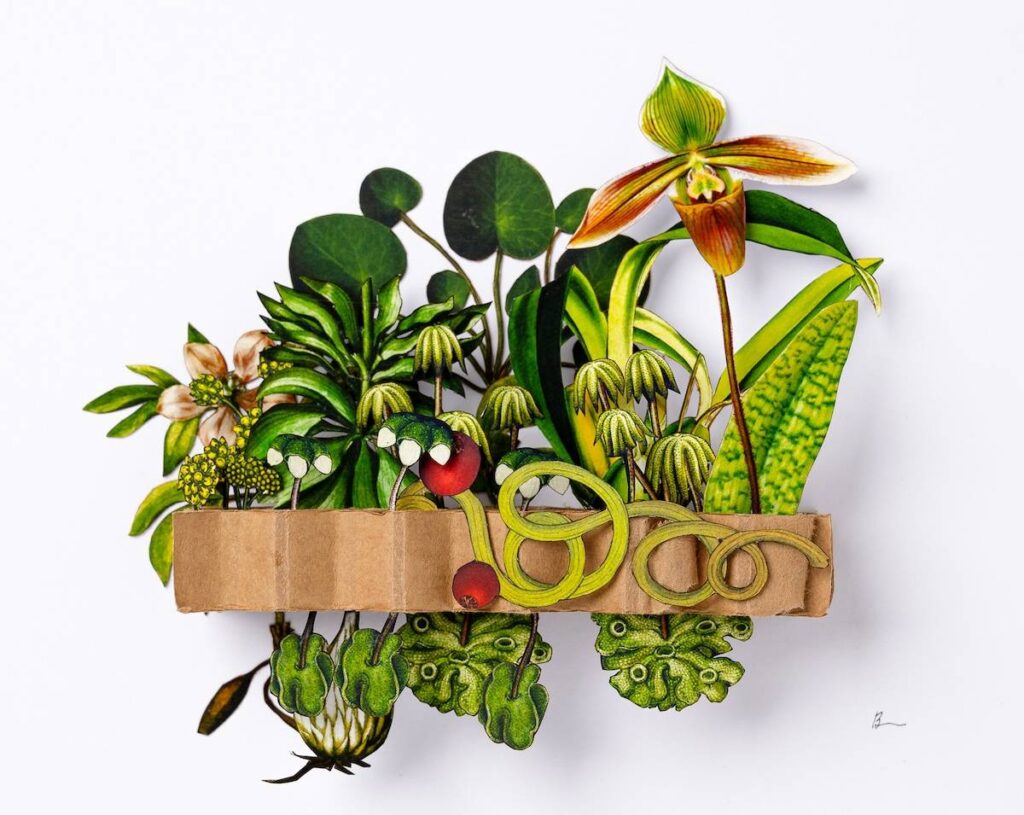
Kim Breit turns simple paper into lush, layered gardens that feel like a quiet walk in the woods. After years of exploring different art forms, she found her voice in hand-cut paper sculptures filled with flowers, butterflies, and hidden details. Her work blends patience, curiosity, and a deep love for nature into something truly special.
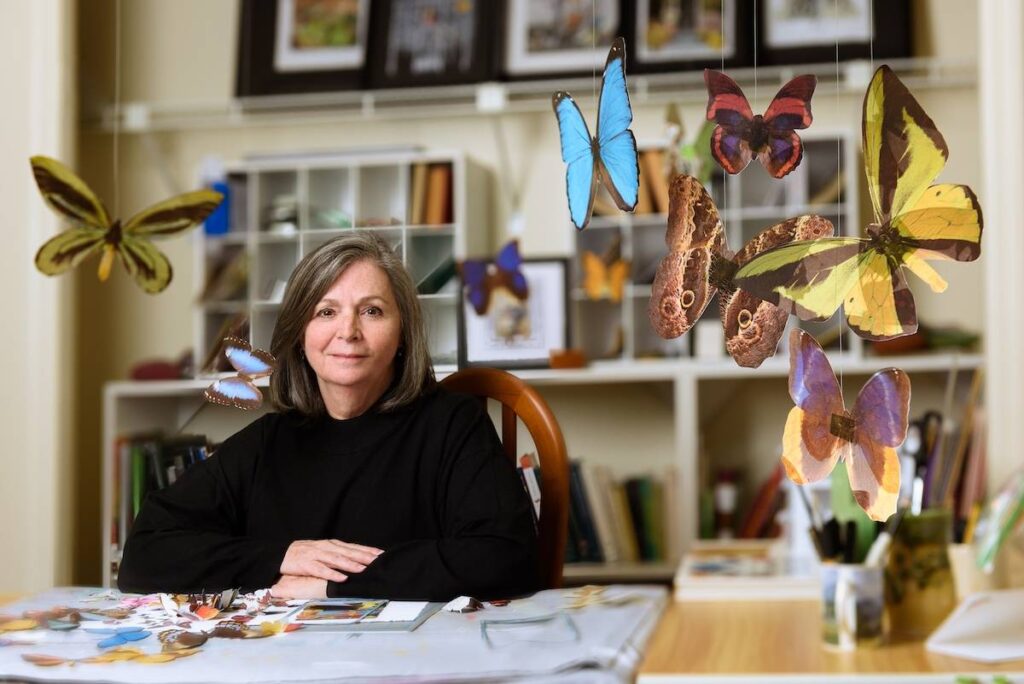
Can you tell us a little about yourself and how you first found your way to making art?
I am a married empty nester and retired NICU nurse living in Pittsburgh, PA.. I have 2 grown children, and when they moved out, I found I had a lot of time on my hands. My husband is a working pediatrician who loves his job, so I wanted to fill all the time I had.
I have always dabbled in a variety of mediums. I painted with acrylic and watercolors. I loved oil and cold wax, knitting , cross stitch, felting wool vessels, but after social media grew popular, I had so much exposure to all different sorts of arts and stumbled onto collage.
What drew you to working with paper as your primary material?
As an Amazon Associate I earn from qualifying purchases. Read more about our affiliate linking policy.
There are so many different ways to use paper, and it’s so available that I started to create 2D collages. Initially, I used magazines primarily because I made collages that told a story. There are so many different images in a magazine which allowed it to go in different directions.
Slowly, my collages evolved, and I started adding depth to a piece to make it appear 3-dimensional. They told a story and looked real to me.
I stumbled into botanicals at an art festival when I noticed that every botanical piece I hung up sold immediately.
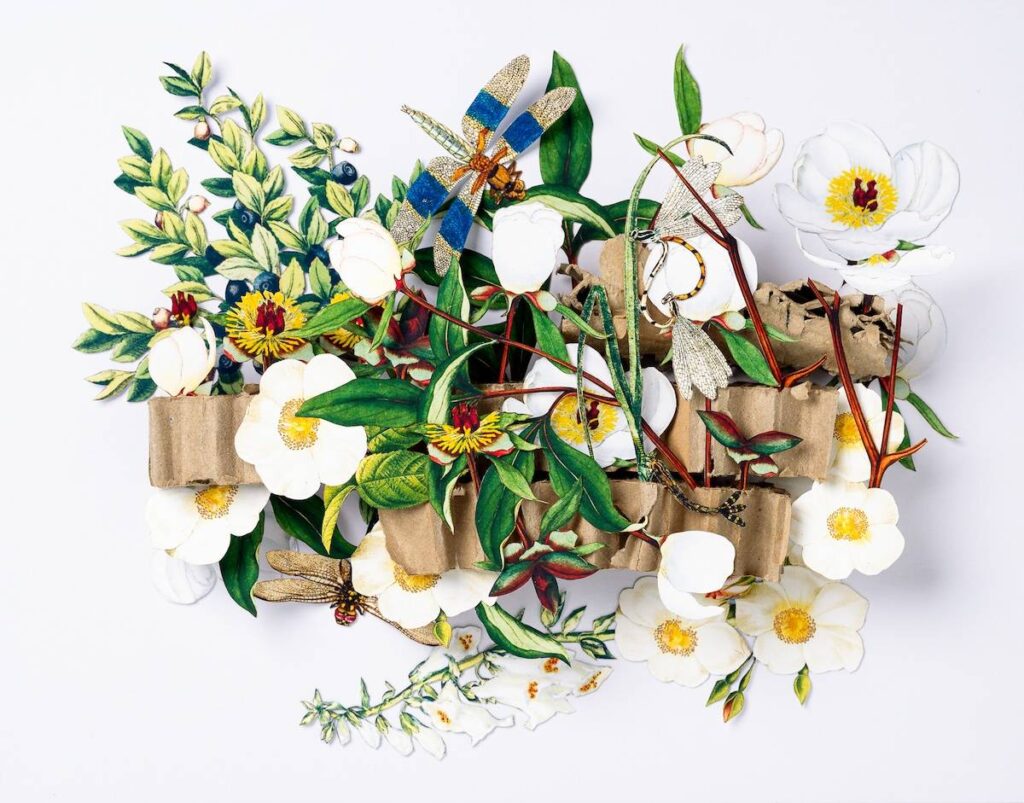
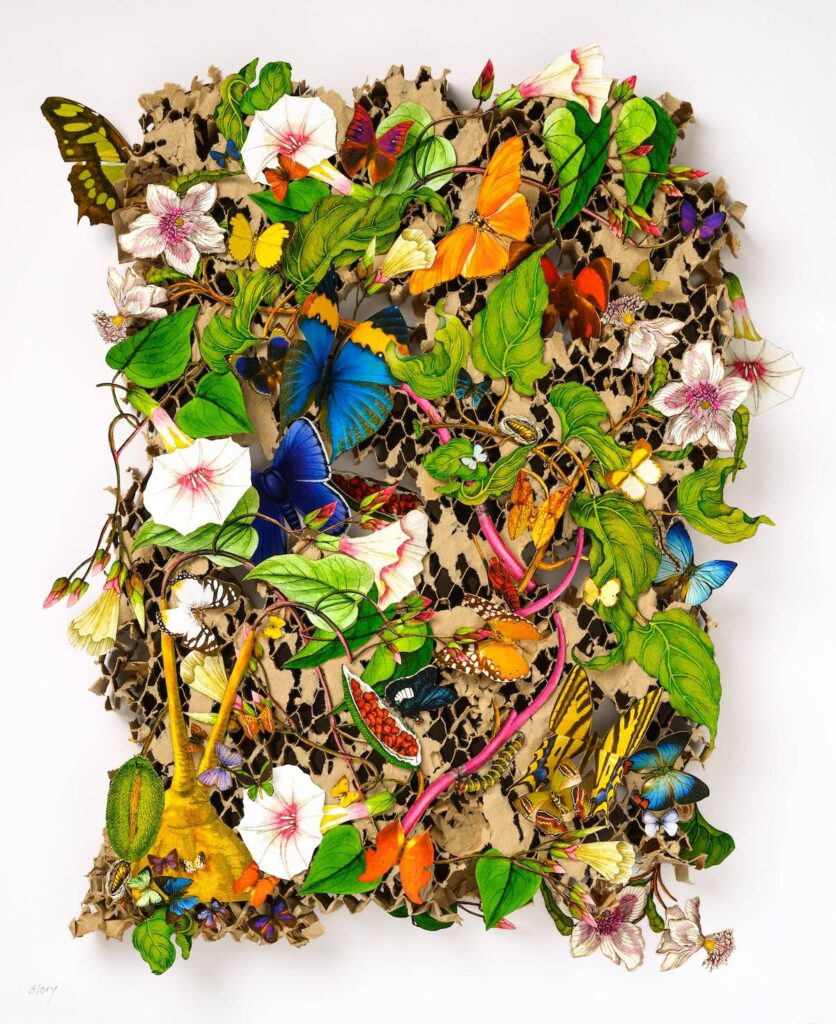
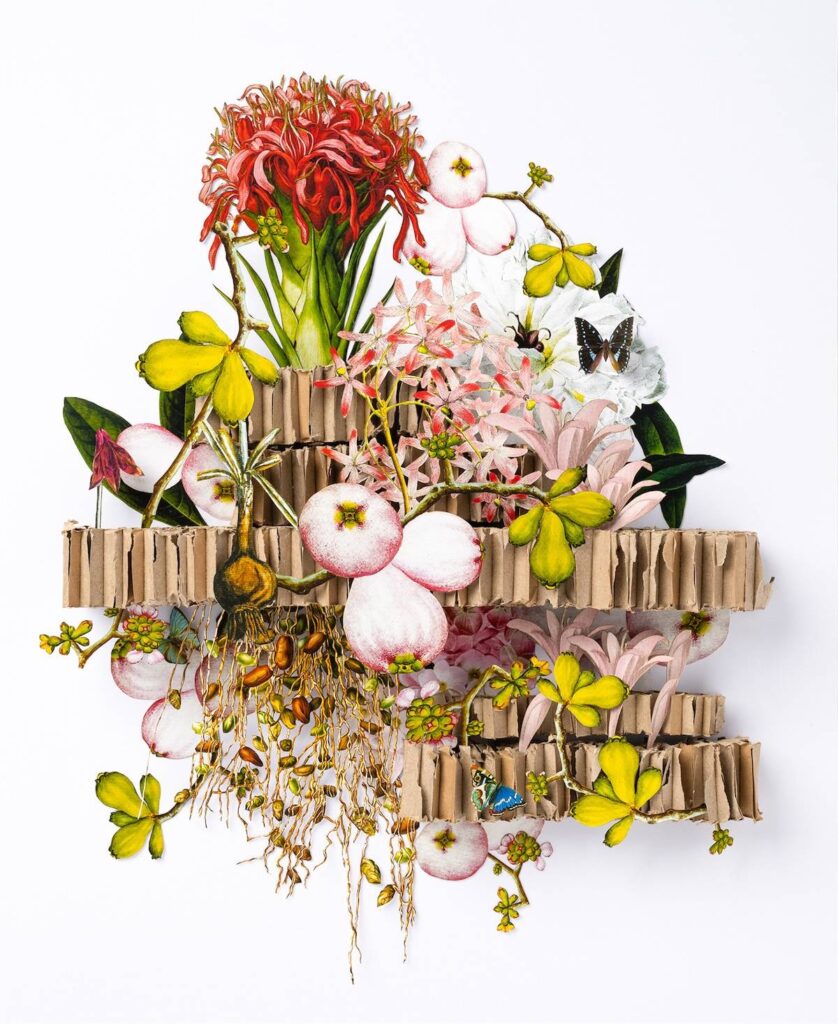
Then I got new bedroom furniture, and the packaging was honeycomb cardboard. I experimented with that primarily because I didn’t like how the elements that I used to create depth could be seen if you looked at the side of the piece. I had a show curator give me a hard time about that aspect, so using the honeycomb was a great solution for me.
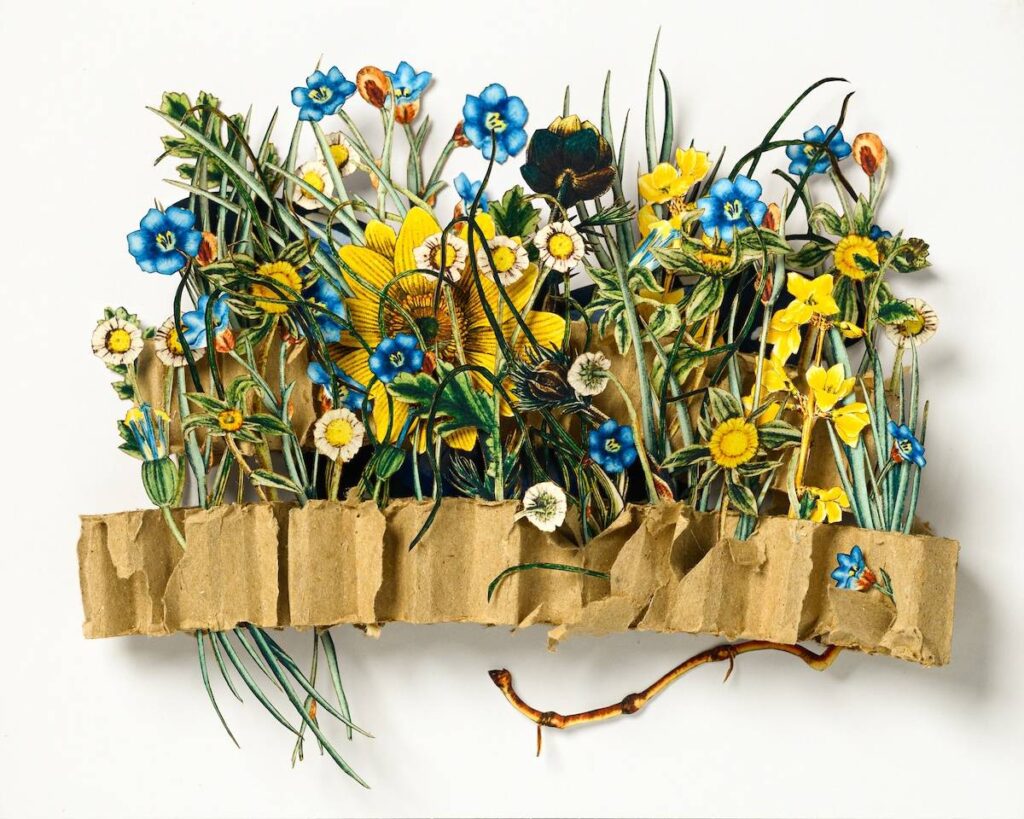
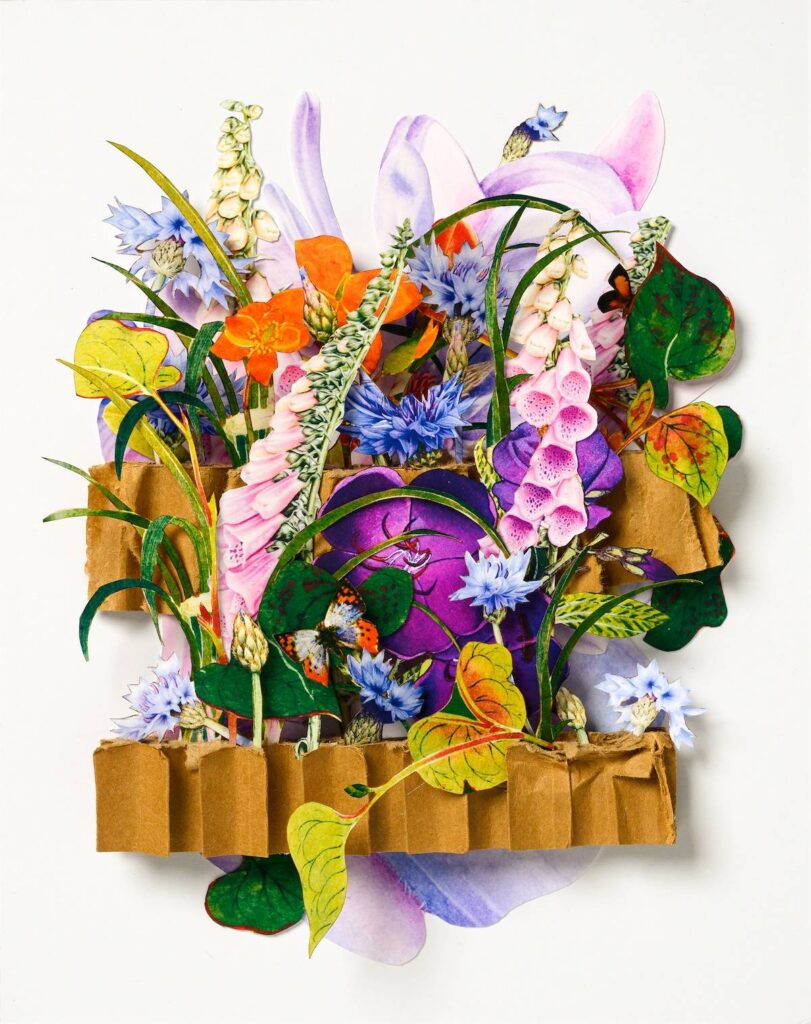
I have a deep love for our environment and worry about its future. So when the cardboard came, it provided built-in 3D elements, and I could easily make botanical pieces. I also had an abundance of cardboard boxes that I layer to create a 3d effect. It allowed the appearance of different botanicals growing behind others. I recently started adding vintage wallpaper as the backdrop to minimize the white mat exposure.
Do you remember the first piece that felt truly like your work?
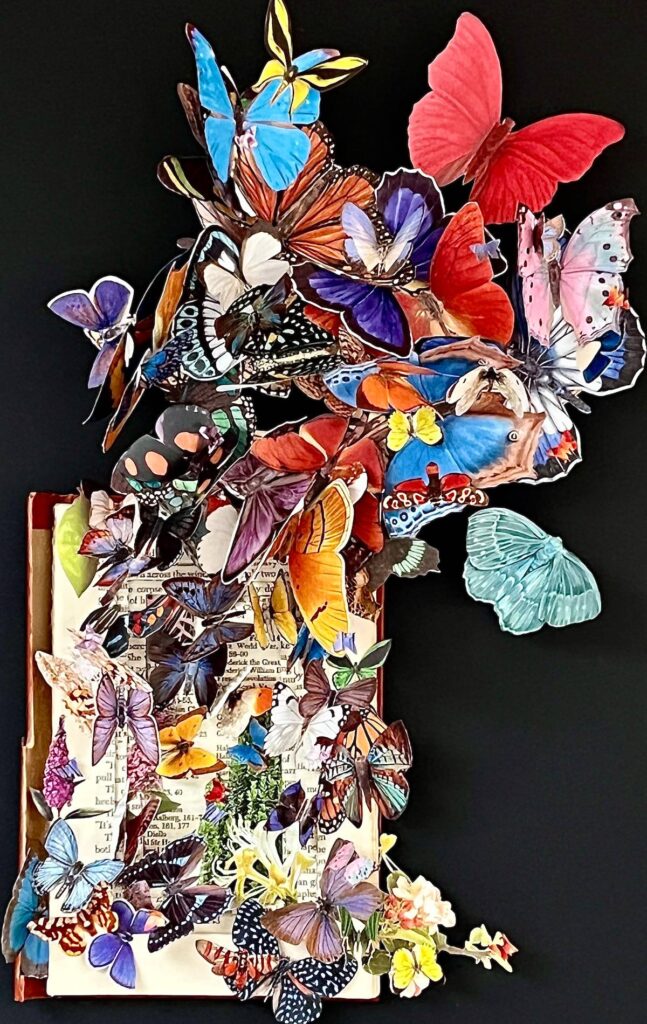
The first piece that I made that felt like it was totally me without any outside influence was actually a tunnel book.
I carved out the inside and filled it with butterflies that were folded in the middle to create depth. The piece grew and had butterflies appearing to fly out of the book. That piece really pushed me to explore paper sculptures.
Tell us a bit more about your process. How does an idea come to life?
When I create a piece, it always begins with imagining what I may see outdoors. I try to make them look as natural and realistic as I can.
My first step is to find the anchor flower. I judge that on the size piece I’ve chosen to work on. So if a flower looks better,larger, then I’ll choose to make an 11×14, particularly if there are a lot of small details that could get lost in a smaller work.
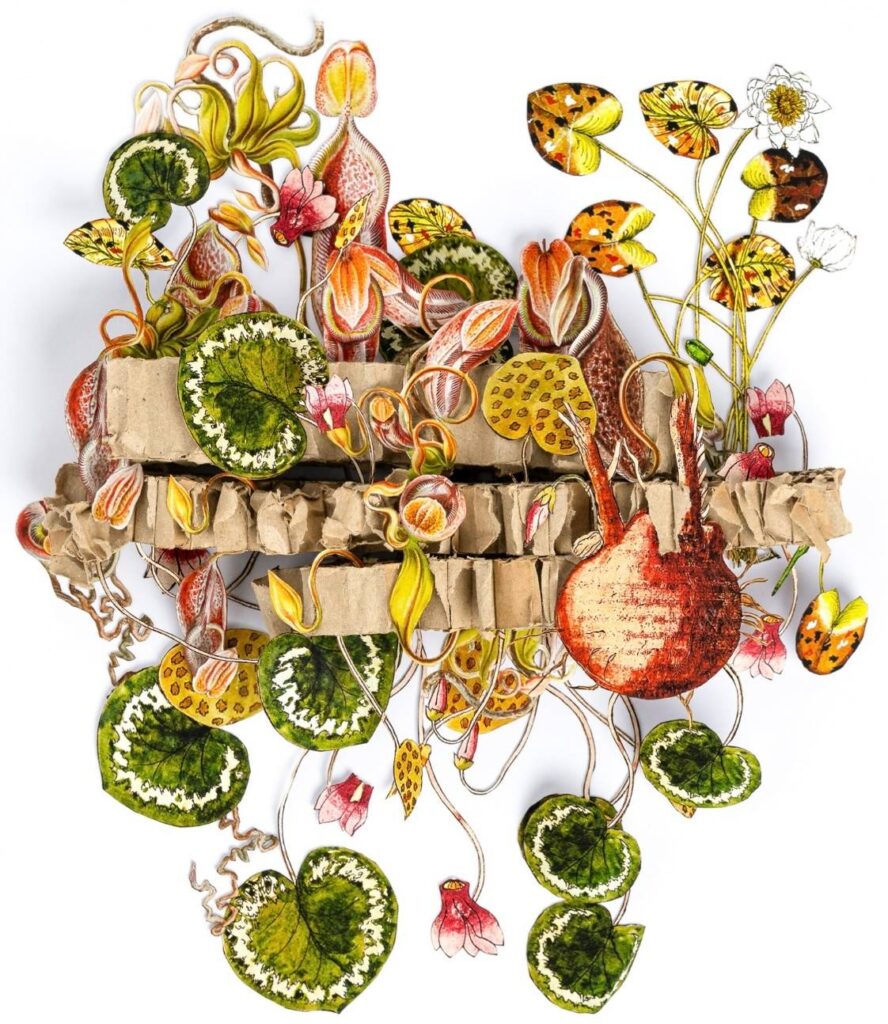
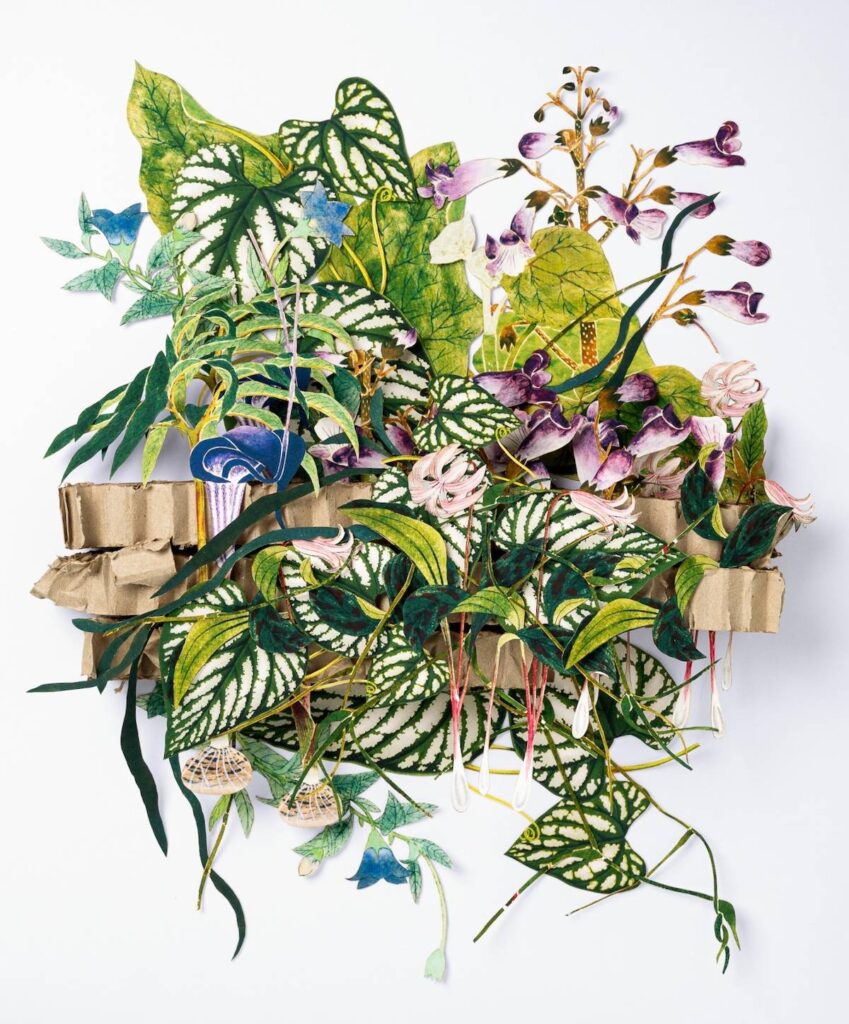
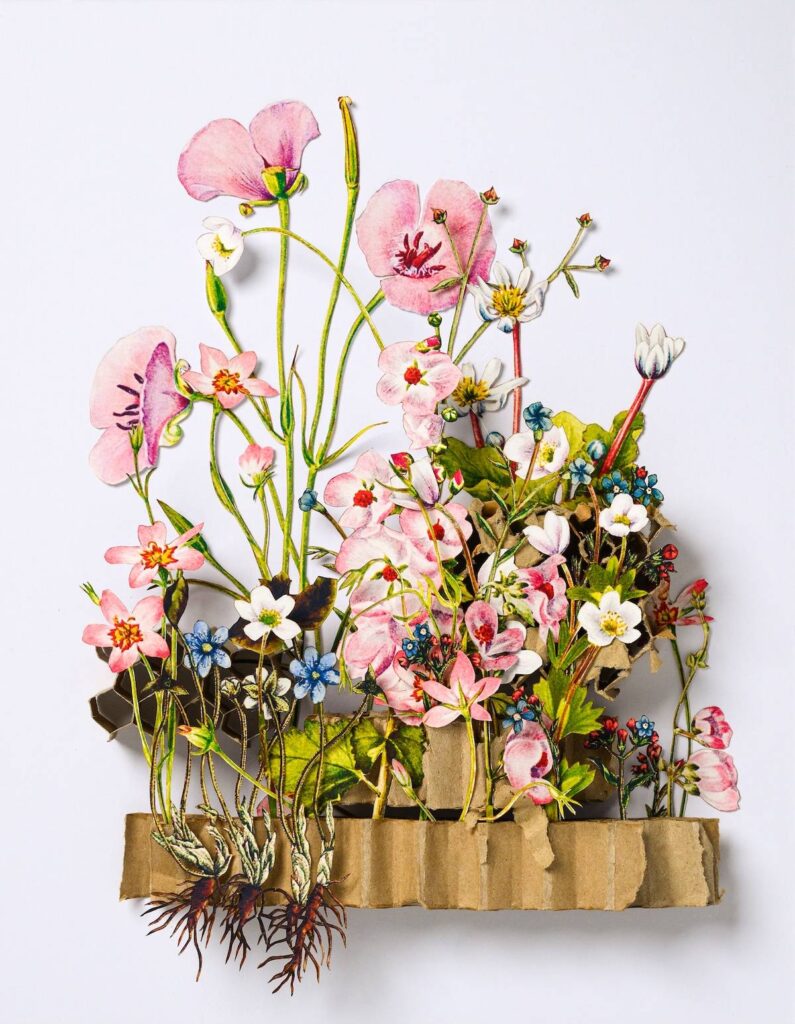
My next step is the color palette. I play around a lot in this step. When I copy the images, I alter only the size, the lightness, and the darkness. I do not use Photoshop in any way. I have a large library of botanical books, so I start leafing through them and choose what I think would work together. I don’t cut any images out of my books. I copy the images onto photo paper and then cut them out and edge each piece so the white doesn’t show.
For my sculptures, I find the white edge distracting, and it takes away from the realism factor. I describe the work as a walk in the woods.
Looking back, how has your work changed over the years?
When I began my work was very different.
They all had themes and characters and stories to tell. The 3D effect came much later, and after that, the subject matter became environmental and not story-based.
I love creating these natural-looking gardens, some with butterflies and birds. Now I’ll hide very small items within the flowers to highlight looking closely at the world around us and discover what is right in front of us.
I also save any sort of interesting packing materials and have recently started using egg cartons.
I’ve started making crepe paper flowers. Originally, the crepe paper flowers were made for my booth for shows to use as decoration in a paper vase. But after making some, I may experiment using them in a sculpture.
Describe your creative space.
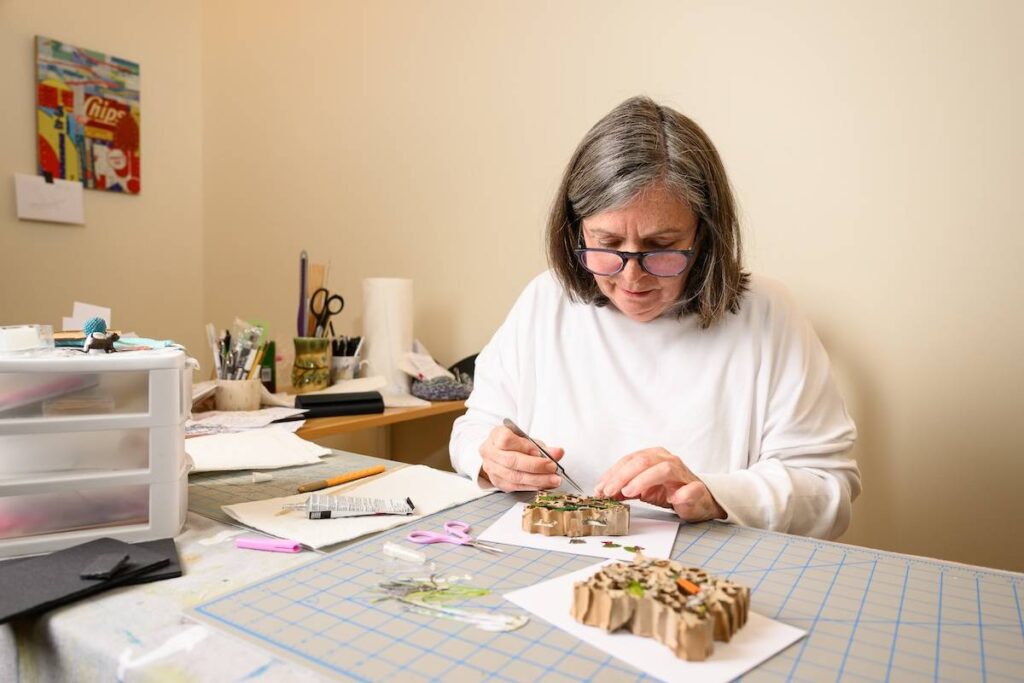
My studio is a bedroom in my house. It’s wonderful to have access 24 hours a day, in good or bad weather.
I have 2 tables that I’ve set up in an L shape. One I cut and glue on, and the other holds all my supplies. I have a table that holds my printer with storage underneath for all the printer supplies.
I have many bookcases. I have 2 freestanding ones, and I also took the doors off of a double closet and fit 2 bookcases inside with 2 cubbyhole units that sit on top of those cases. I also have a futon, but I don’t relax much there. It mostly holds frames and finished pieces.
What are the tools or materials you couldn’t imagine working without?
My favorite cutting tools are the Olfa knife, very tiny scissors, tweezers, paper cutter, printer, clear drying glue, and I can’t do anything without photo paper, cardboard, and botanical books
What surprises people about the process behind your work?
People can’t believe it when I tell them they are hand-cut.
Some have thought they were dried flowers, cut with a Cricut, or digitally created. I have to explain that one work may have elements from 6 different books, all hand cut, and built image by image, taking hours to make, which is a question regularly asked.
Are you someone who likes a tidy workspace or a creative whirlwind of materials?
I’m a retired nurse, so my studio is very tidy. I clean up everything at the end of my workday. Books are put away, and the floor is swept.
I can’t concentrate if there’s a mess around me. The only things that are left out are the “ in process” pieces.
Where does a new piece usually begin: an idea, a sketch, a material, or something else entirely?
When I start a piece, I may have one image in mind, but I like to let it evolve on its own. So my beginning idea is rarely the end product. When I’m convinced a pink flower will work, then I get to the end, and there isn’t one pink flower in the piece, then I know I listened to the piece and didn’t force the creation.
What advice would you give someone who feels called to create but isn’t sure where to begin?
I had an interesting experience at the beginning of my journey with a trusted owner of a gallery. He was having a show and told me not to apply because it was for real artists. While it was very upsetting and I stopped showing at his gallery, it led me to where I am today.
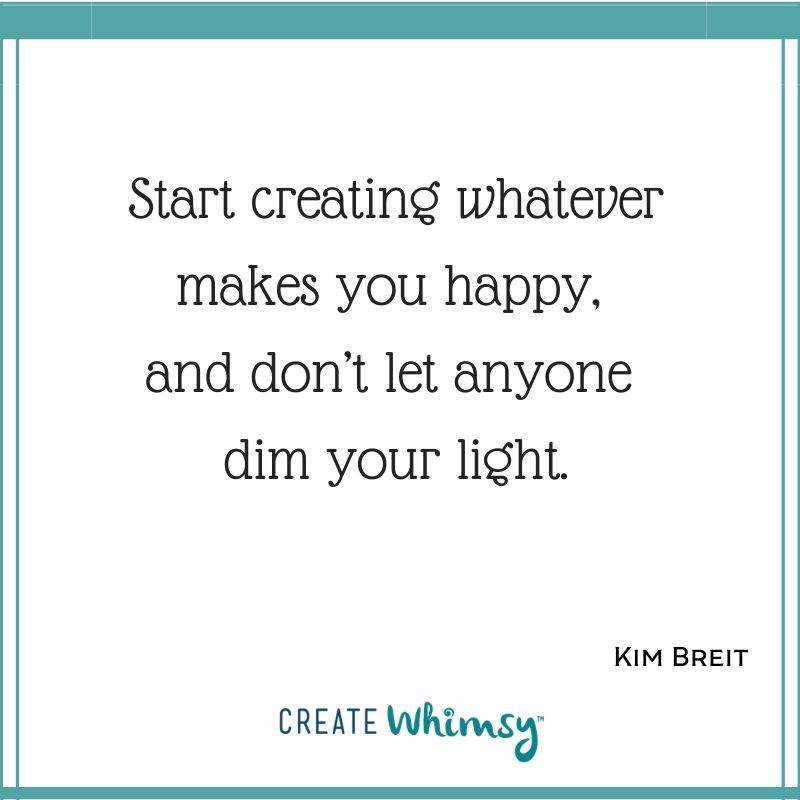
This year, I have shown at the American Craft Council Show, the Smithsonian Craft Show, Ann Arbor Street Art Fair, The Original, Central Pennsylvania Festival of the Arts, The Philadelphia Museum of Art Craft Show, and the Richmond Craft and Design Show. So my advice, based on my journey, is to start creating whatever makes you happy, and don’t let anyone dim your light.
Where can people see your work?
Website: Kimbreitart.com
Instagram: kimbreitart
Facebook: Kimbreitart
Rapid-Fire Fun:
One word that describes your creative process? Experimentation
Interview posted June 2025
Explore more paper art inspiration on Create Whimsy.