
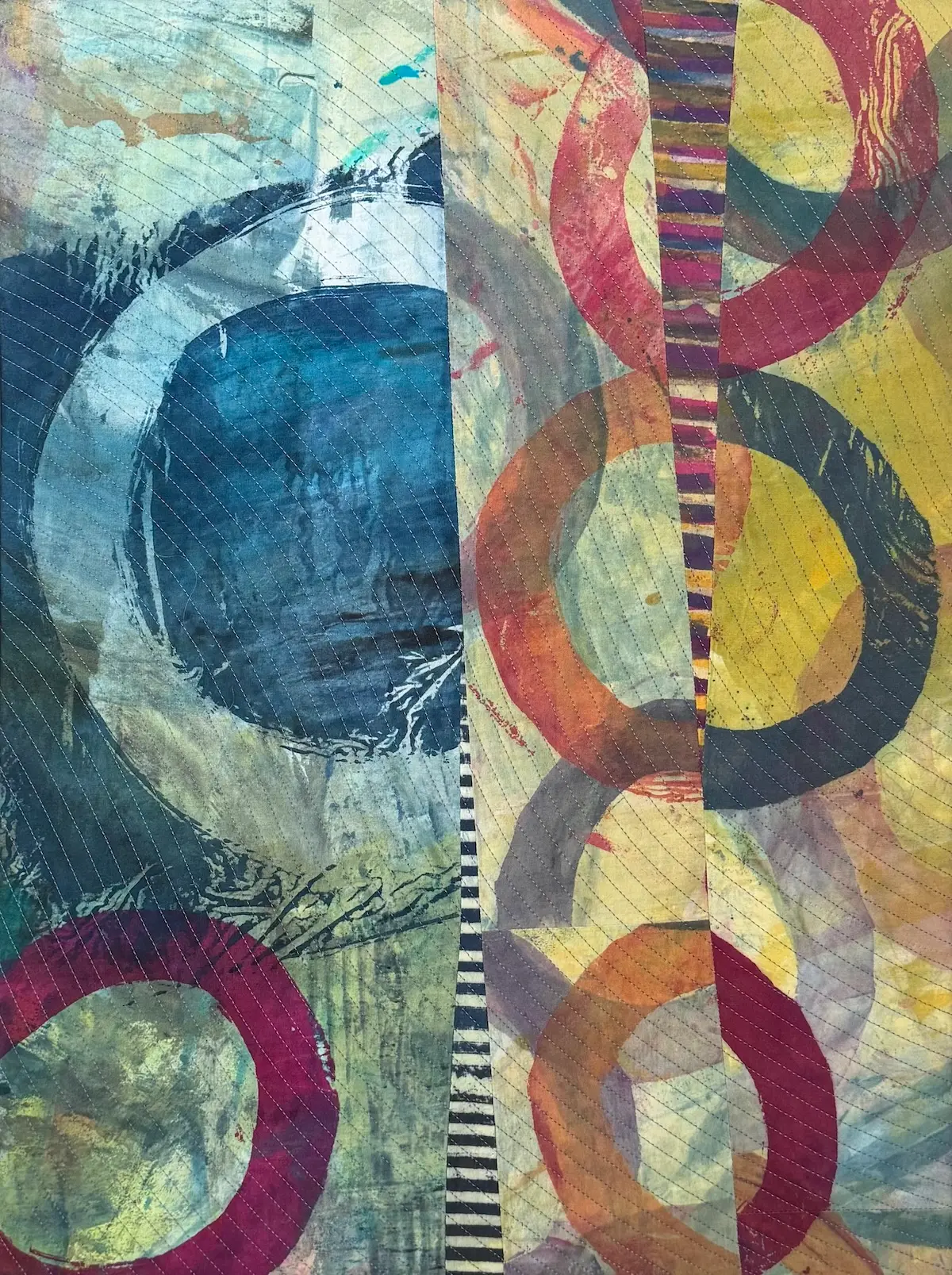
Chris Skowronek Berry brings curiosity, color, and a sense of play to her textile art. Inspired by nature and guided by discovery, she creates hand-dyed fabrics, art quilts, and mixed-media work that invite us to look at the world in new ways.
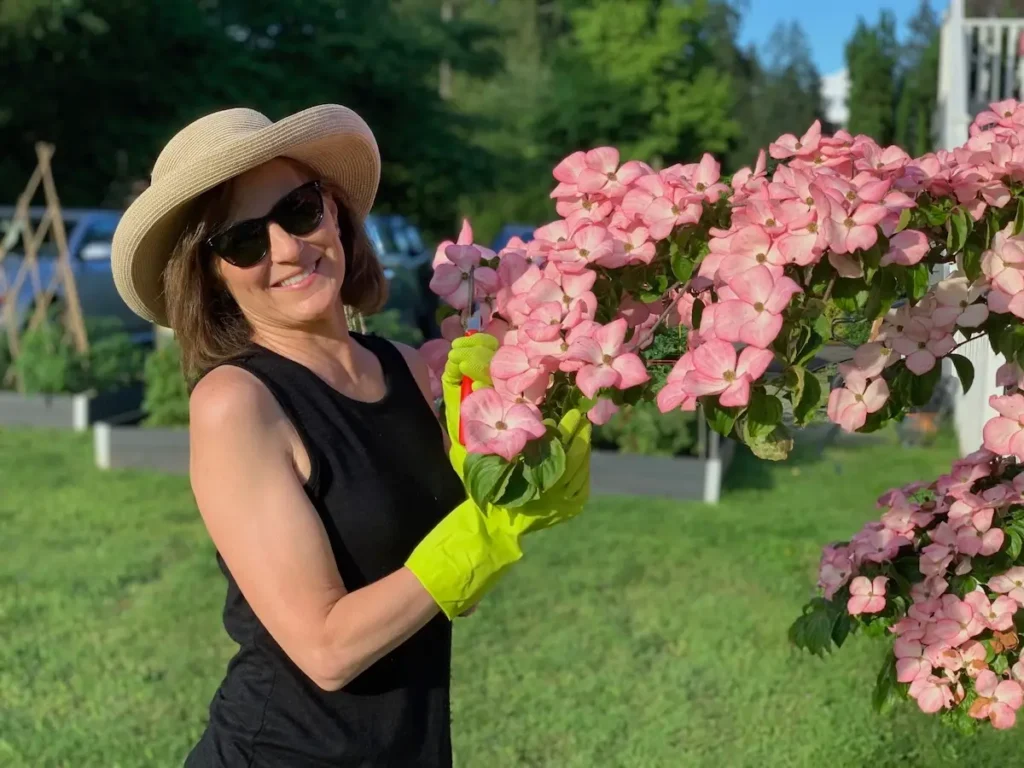
When you were young, what kinds of creative activities captured your imagination?
Growing up, give me art supplies, music, or a dance floor, and I was all in! Luckily, my parents didn’t overschedule their five kids, leaving time for exploration and creative play.
I taught myself guitar, danced at the local ballet studio, and staged summer musicals with neighbor friends. My favorite projects involved turning trash into elaborate creations – like Barbie Dream Houses constructed from orange juice cans and empty shoeboxes, and Halloween costumes crafted from cardboard fridge boxes and tinfoil. In elementary school, I gladly traded outdoor recess for art time.
Was there a particular moment when you realized making art would always be part of your life?
As an Amazon Associate I earn from qualifying purchases. Read more about our affiliate linking policy.
I was only 14 years old when I made a choice that surprised everyone – including myself. My high school offered an intense, four-year Fine Arts Major curriculum. My parents and teachers encouraged me to consider majoring in other traditional subjects. Instead, without a moment of doubt, I said “Yes!” to art and have never regretted the choice.
Although I pursued other studies in college and followed a variety of career paths, the pull to create art never went away. Looking back, I am so grateful to my 14-year-old self for nurturing my creative spirit at a very tender age.
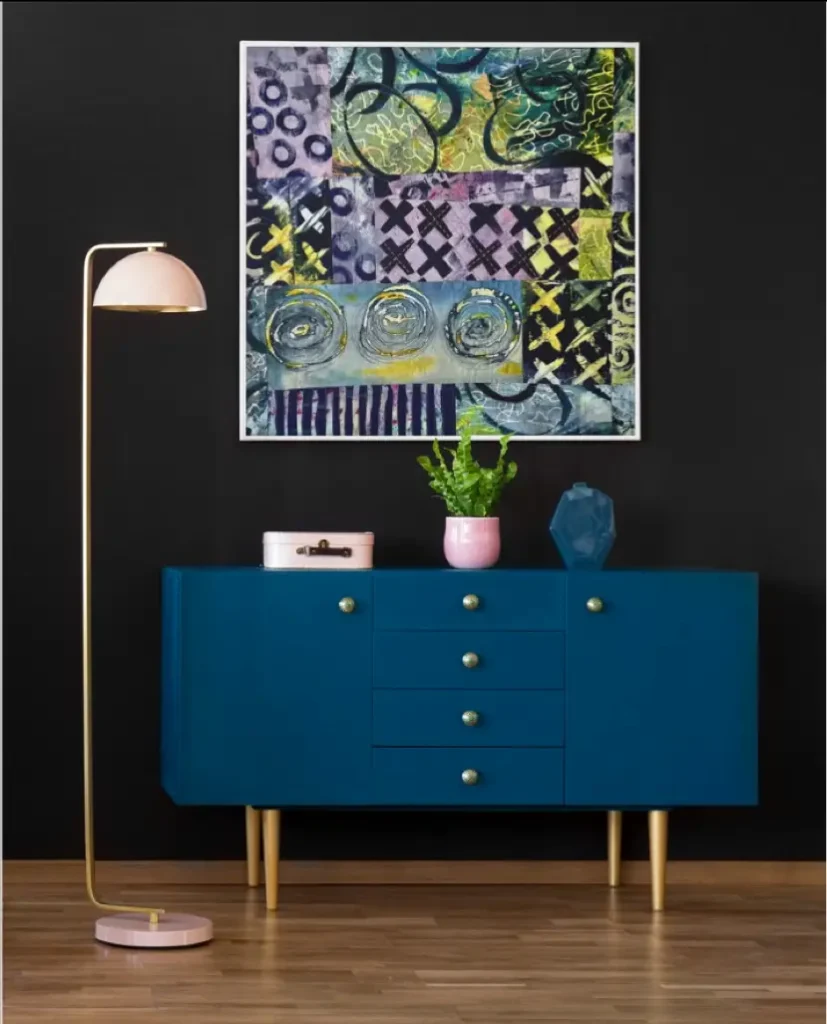
What first attracted you to working with textiles as an artistic medium?
In 2018, I was gifted an art retreat with textile and appliqué artist Chris Roberts-Antieau, an artist I had long admired.
Though I hadn’t sewn in over 40 years, I mustered the courage to attend. Chris is truly magical; her embrace of a “Beginner’s Mind” inspired me to find joy in personal stories and childlike discovery through textiles. She was the perfect mentor at the right time in my life, sparking a passion to experiment with a new, tactile medium.
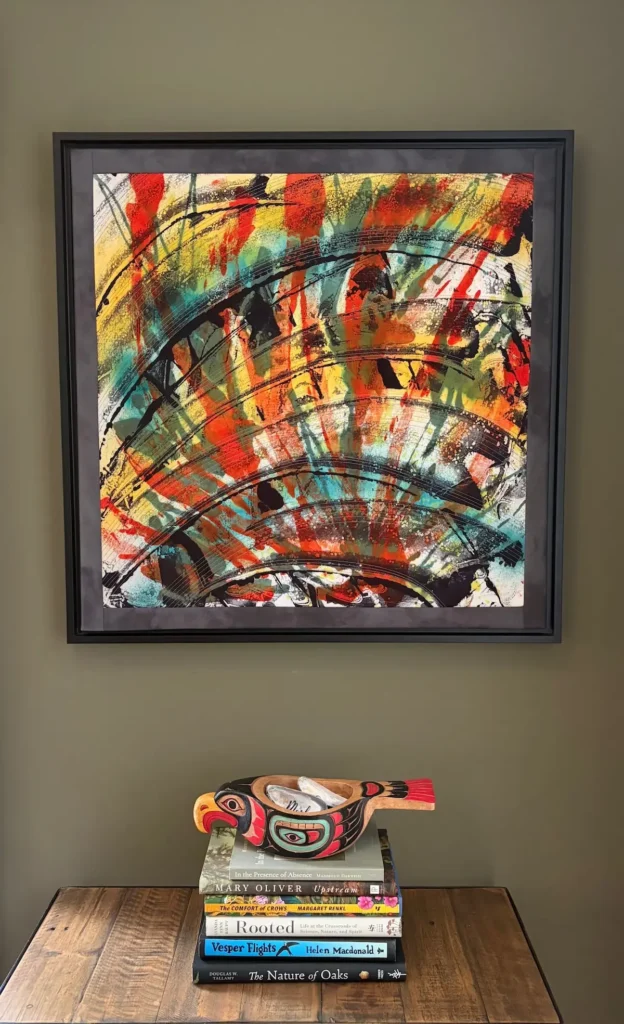
Your work includes art quilts, surface design, and mixed media collage. How did these different interests come together into the work you create today?
My work blends personal passions with a love of variety – I thrive on mixing it all up!
For 30 years, my career path meandered from corporate offices to public gardens and classrooms, with every stop teaching me something vital along the way.
Today, I bring that same curiosity to my studio practice.
For me, artmaking is exploration. I translate ideas into visual forms through diverse mediums: textiles, dyes, paints, collage, and stitch.
The artwork continuously evolves as I test new methods and play with unfamiliar materials. Finding fresh, unexpected connections keeps me engaged every day.
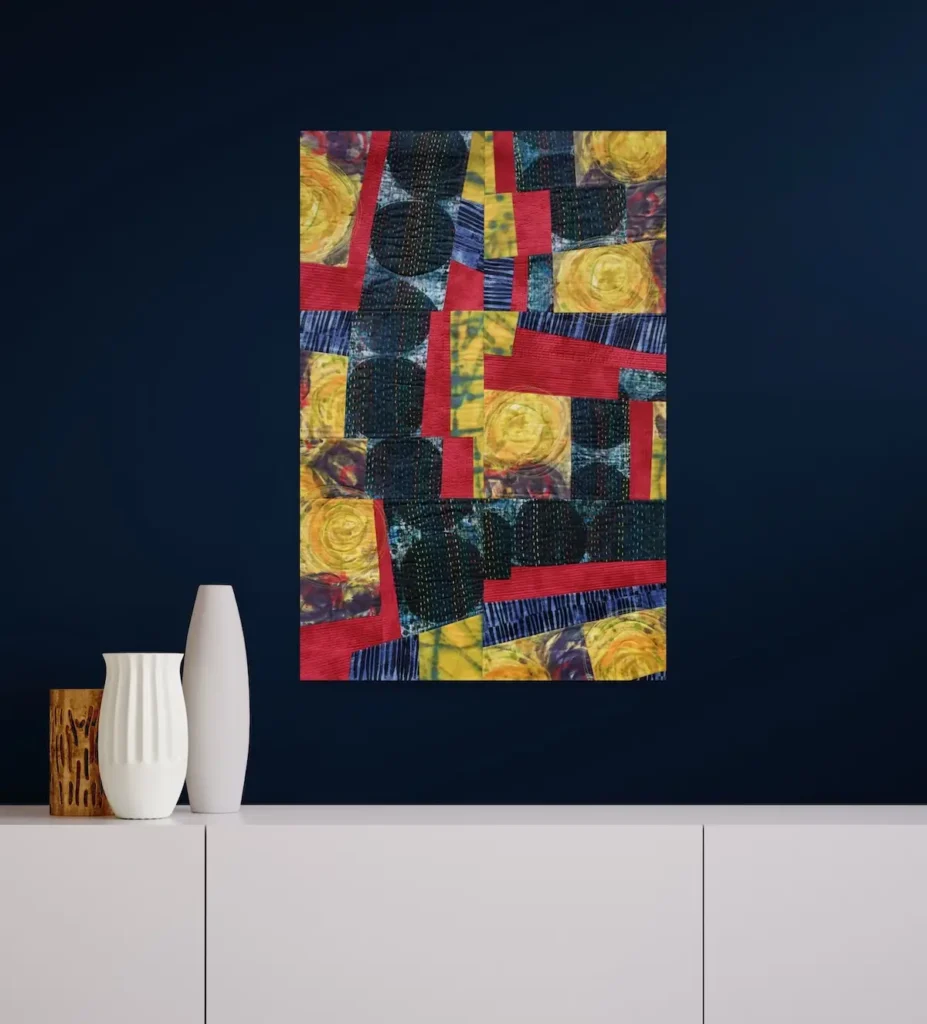
Nature plays a strong role in your work. What is it about the natural world that continues to inspire you?
Hand-dyeing natural fibers is an organic extension of my years as a home gardener, Master Gardener, and former Education Director for the University of Washington Botanic Gardens. Having the Washington Park Arboretum as my daily “office” gave me a hands-on understanding of plant science and a deep appreciation for the remarkable splendor of nature.
The beauty and mystery of the plant lifecycle from seed to harvest continues to guide my creative choices — from color palette and texture to line and shape.
What subjects or themes seem to keep calling you back, even when you explore something new?
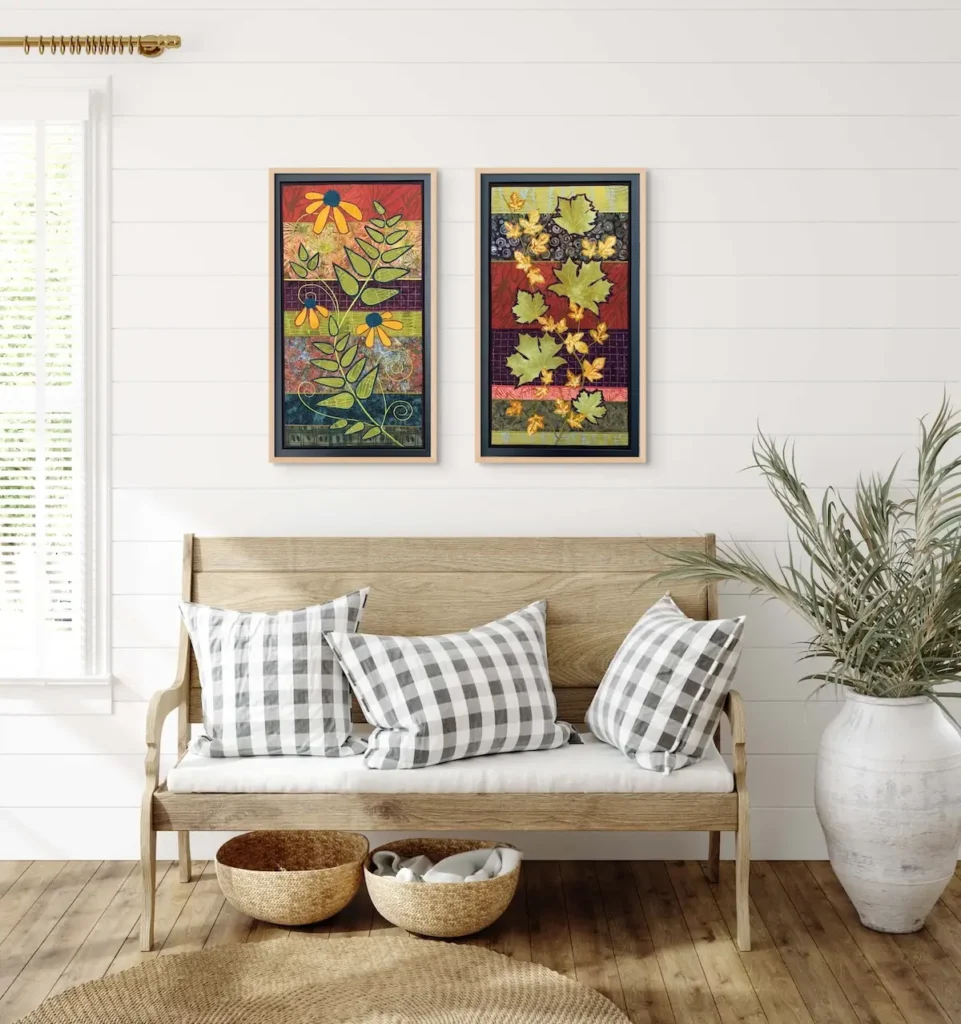
I began my textile journey with representational quilts of botanicals, mainly leaves and flowers.
Today, I lean toward abstraction and improvisation, seeking contrast and harmony in simplified forms.
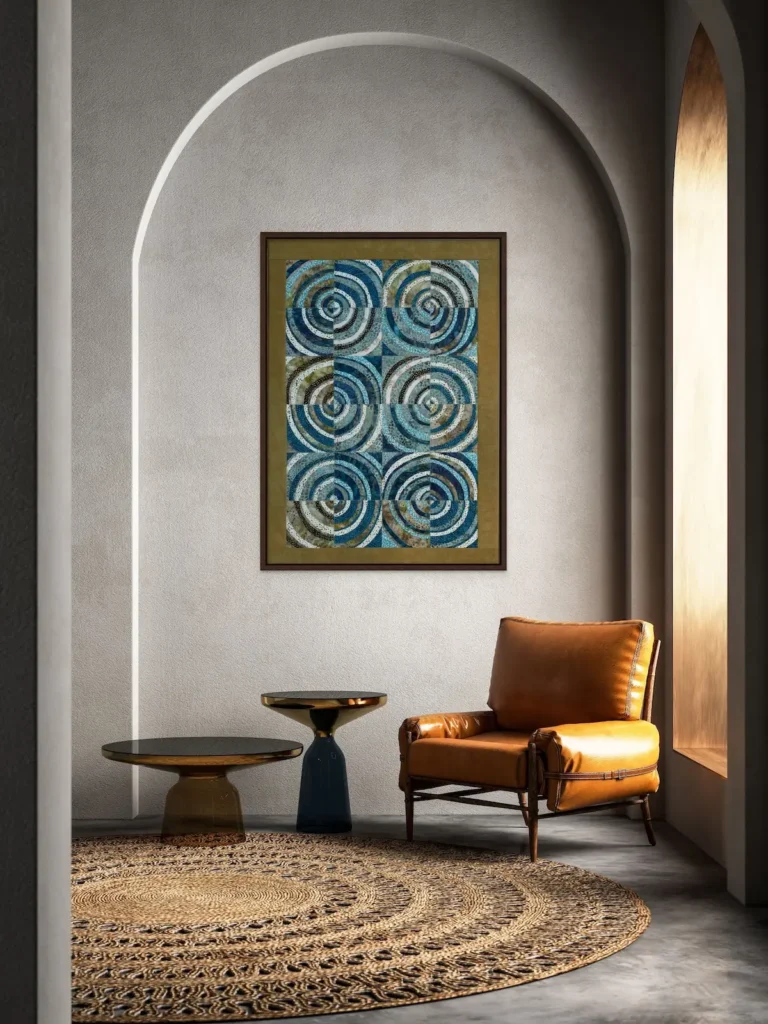
Yet, no matter the subject, three touchstones call me back: grids, circles, and spirals. The grid provides structure, while circles and spirals bring rhythm and movement. These constants always seem to find their way into my work.
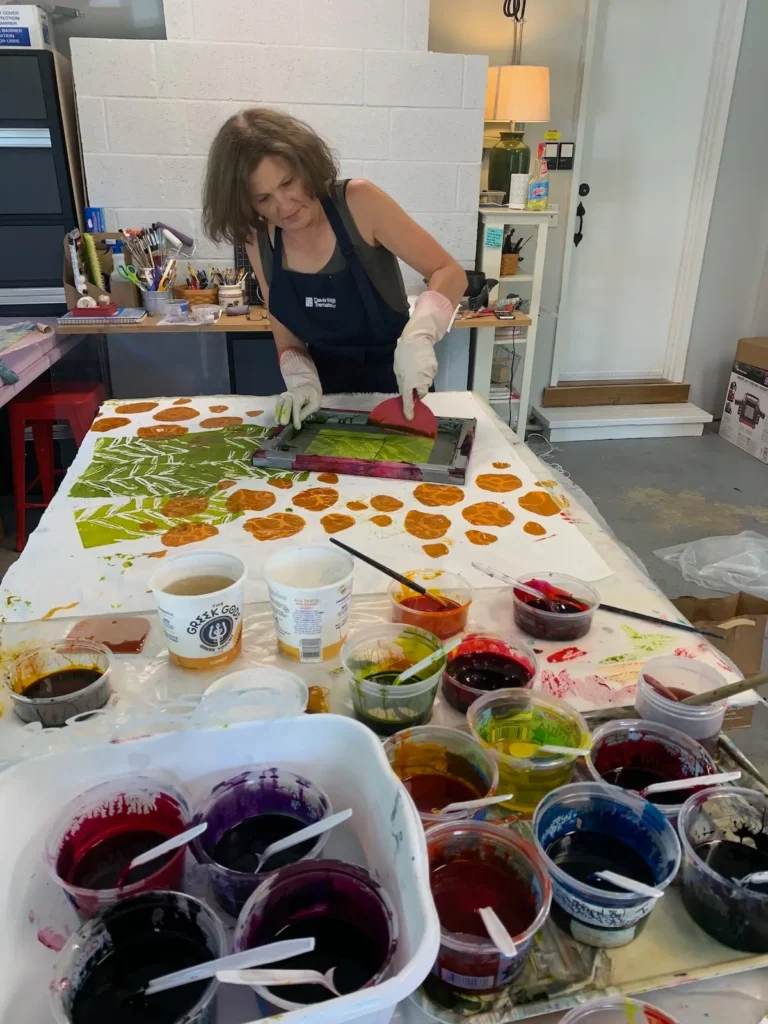
Describe your creative space.
I have two distinct spaces for artmaking – a wet studio and a sewing room – each with a unique personality.
The “wet studio” is located in my garage with a commercial sink and work table for textile dyeing and painting. My sewing room is a cozy space over the garage, formerly my daughters’ playroom. This compact area houses my sewing machine, cutting table, ironing station, and fabric storage.
The sewing room is well-behaved, clean and tidy; the garage is a wild child and generally a disaster zone! I am very grateful for both of these spaces, as they serve my creative needs in their own ways.
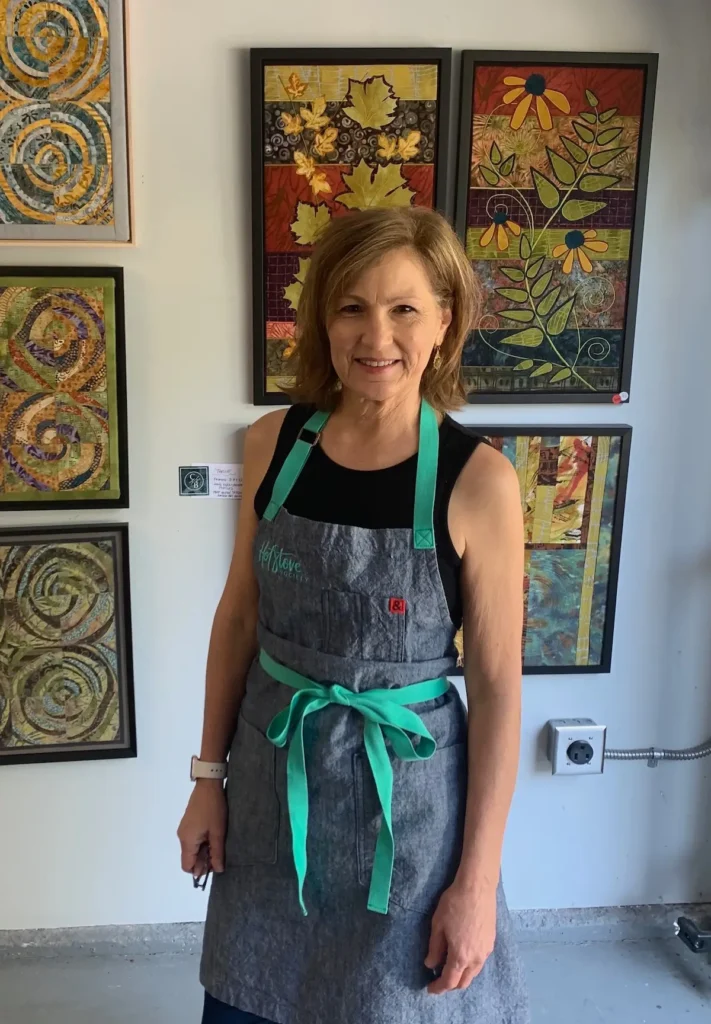
Have any happy accidents led to exciting discoveries in your work?
Are there really any “accidents” in the art studio, or just more possibilities?
Prior to hand-dyeing textiles, I only used commercial fabrics for art quilts. Then, a whim led me to a one-day fabric dyeing class. While helping the instructor clean up, we found a large batch of activated dyes expiring within 24 hours.
She offered them to me on one condition: I had to promise to use them all. I agreed – but lacked white fabric. With the clock ticking, I raced home and raided my linen closet. Every white bedsheet, tablecloth, and napkin was fair game! This sprint against the clock revealed a new and exciting artistic expression.
Today, hand-dyeing and surface design are the foundation of my art quilts.
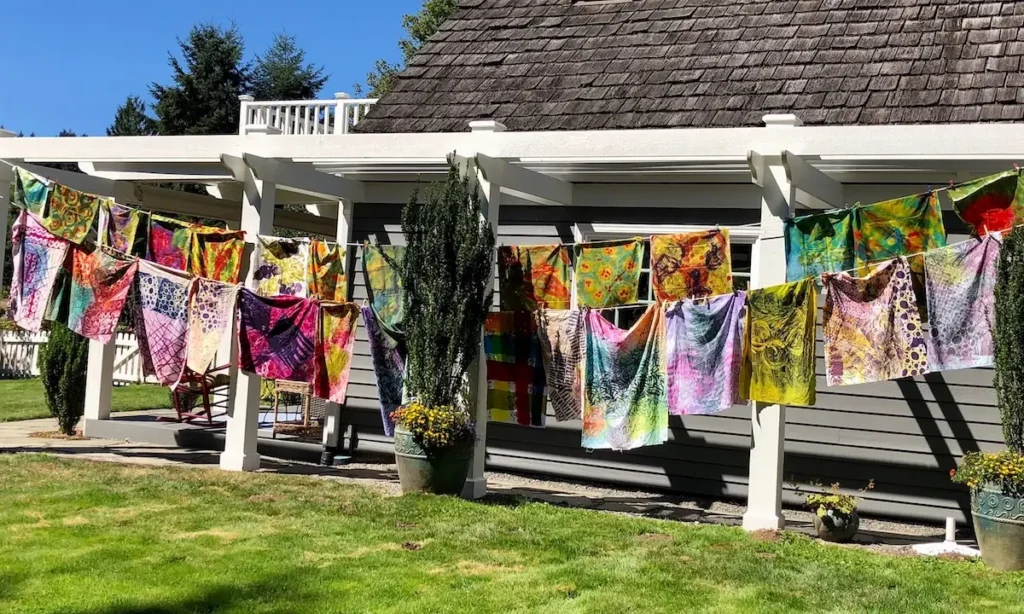
You create your own hand-dyed fabrics. What do you enjoy most about making the cloth before making the artwork?
For me, a blank yard of white cloth holds endless possibilities. I love the process of dyeing fabric as much as figuring out what to do with it after the final rinse.
My garage turns into a messy, playful studio filled with dye pots, music, and movement. I use discarded kitchen tools and recycled objects to scrape colors, stamp shapes, and create marks. Whenever I try to force a “cerebral” composition or a clean print, the magic fades.
The real joy of dyeing fabric comes when I let go and have fun — twirling between the design table and the sink — garage doors flung open and music playing. (Thankfully, my neighbors enjoy my taste in music!)
When you begin a new piece, do you start with a clear vision or allow the work to reveal itself over time?
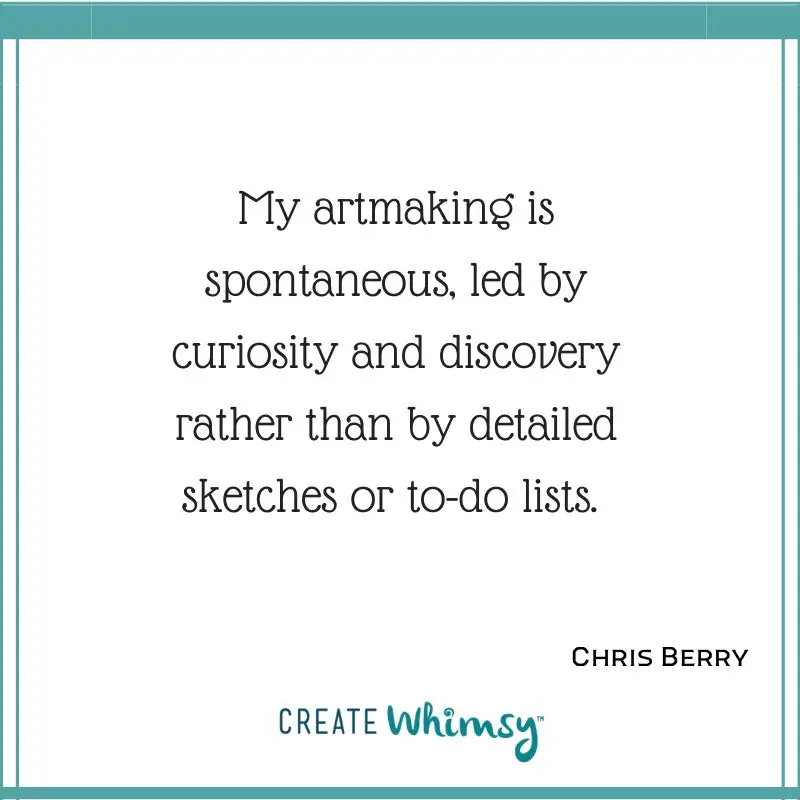
I rarely have a clear vision when I begin a piece, which is interesting as I am highly goal-oriented in other parts of my life. By contrast, my artmaking is spontaneous, led by curiosity and discovery rather than by detailed sketches or to-do lists.
Embracing this organic approach was hard at first, but my art truly thrives on the unexpected. The sudden revelations are the most meaningful part of creating. It was a huge relief to realize and accept that my work is driven by the process, not the final outcome.
What kinds of things do you notice that other people might walk right past?
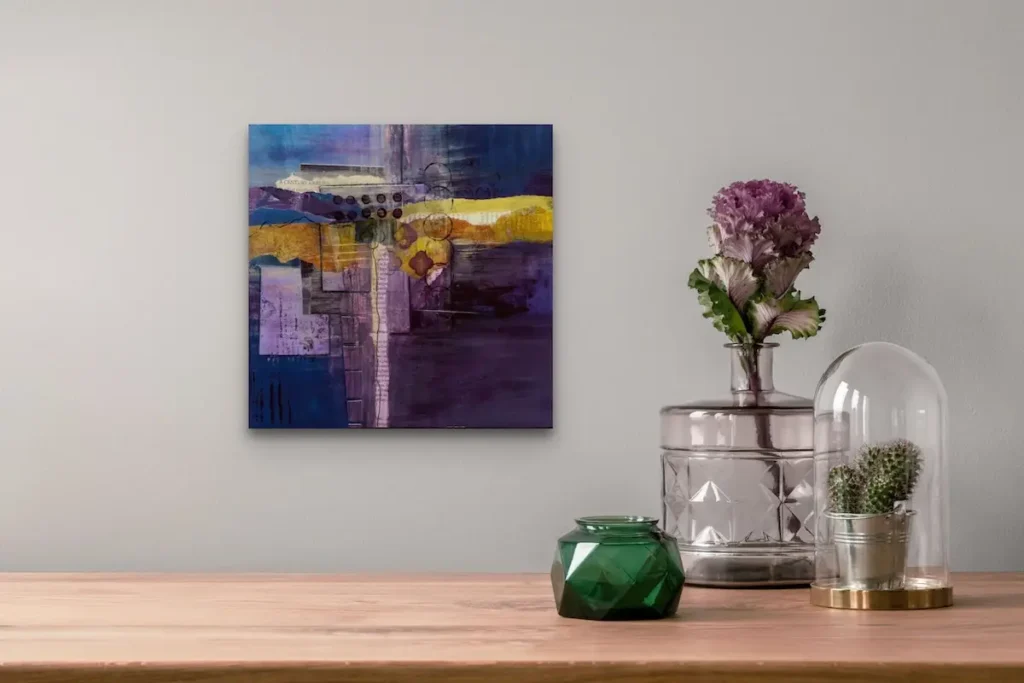
On hikes or neighborhood walks, I notice lines and negative space. Rather than focusing on a big vista or an entire tree, I look at the shape formed by the empty space between branches, the line that appears in twisting vines or the angle of a roofline. I often take photos of these small details to capture them for future art projects.
Are you someone who works on several pieces at once or focuses on one project at a time?
I’m a cross-pollinator!
I love juggling multiple projects at the same time. This approach is both exciting and fruitful, as discoveries in one piece often lead to a breakthrough in an adjacent project, sometimes becoming the genesis of a series.
However, when a piece hits the 75% mark, my focus shifts. My goal-oriented nature kicks in, and I drive that single work across the finish line.
When a piece is not working, how do you decide whether to push through, change direction, or start over?
Sometimes, I just have to let a piece sit.
When fabrics do not play well together, or I hesitate to cut a beloved fabric, I walk away. I never force a finish.
Months later, a world event, a new song lyric, or a poem might inspire the perfect theme. When the “aha moment” arrives, the path clears, and I am off to the races. It is exhilarating when inspiration returns after hitting the pause button on a work-in-progress.
Have you discovered any new artmaking techniques that have recently piqued your interest?
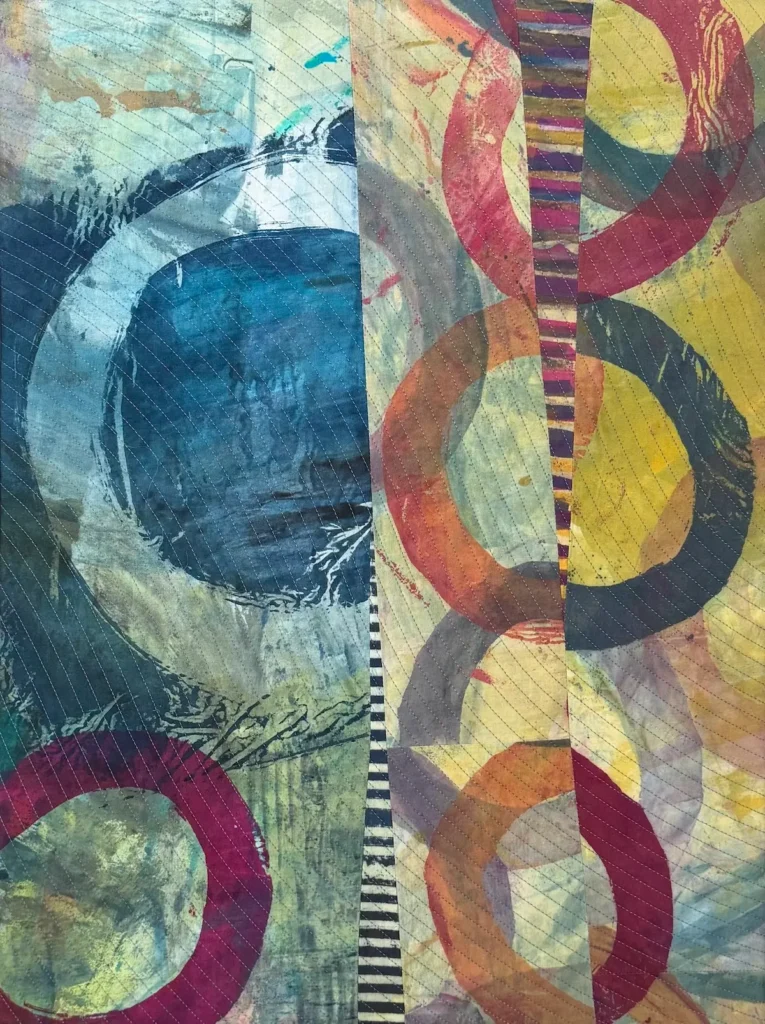
Over the last year, I explored “breakdown printing,” using dried, thickened dyes that dissolve during screen printing, producing subtle color variations and layered, textured marks on textiles.
I have also experimented with botanical printing using a heat press. This method was developed by textile artist and educator Jane Dunnewold. The heat press transfers plant tannins directly onto natural fibers, creating compositions on cotton, silk, linen, and paper using flowers and foliage from my garden.
What do you think has remained constant throughout your creative journey?
Curiosity and discovery
What has changed the most?
Time. Now, I have more unscheduled time to dive deeply into artmaking than earlier in my life when I was parenting and working full-time.
What’s the best advice you’ve received on your creative journey?
Stay open to possibilities.
Where can people see your work?
My website: www.chrisberryartwork.com
Rapid Fire Fun
- One tool you couldn’t live without in the sewing room? A seam ripper
- A place you’d love to visit for creative inspiration? Fabric designer Marcia Derse’s studio
- What’s bringing you joy right now? My grandson, Sam.
Interview posted August 2026
Explore more art quilts and inspiration on Create Whimsy.