
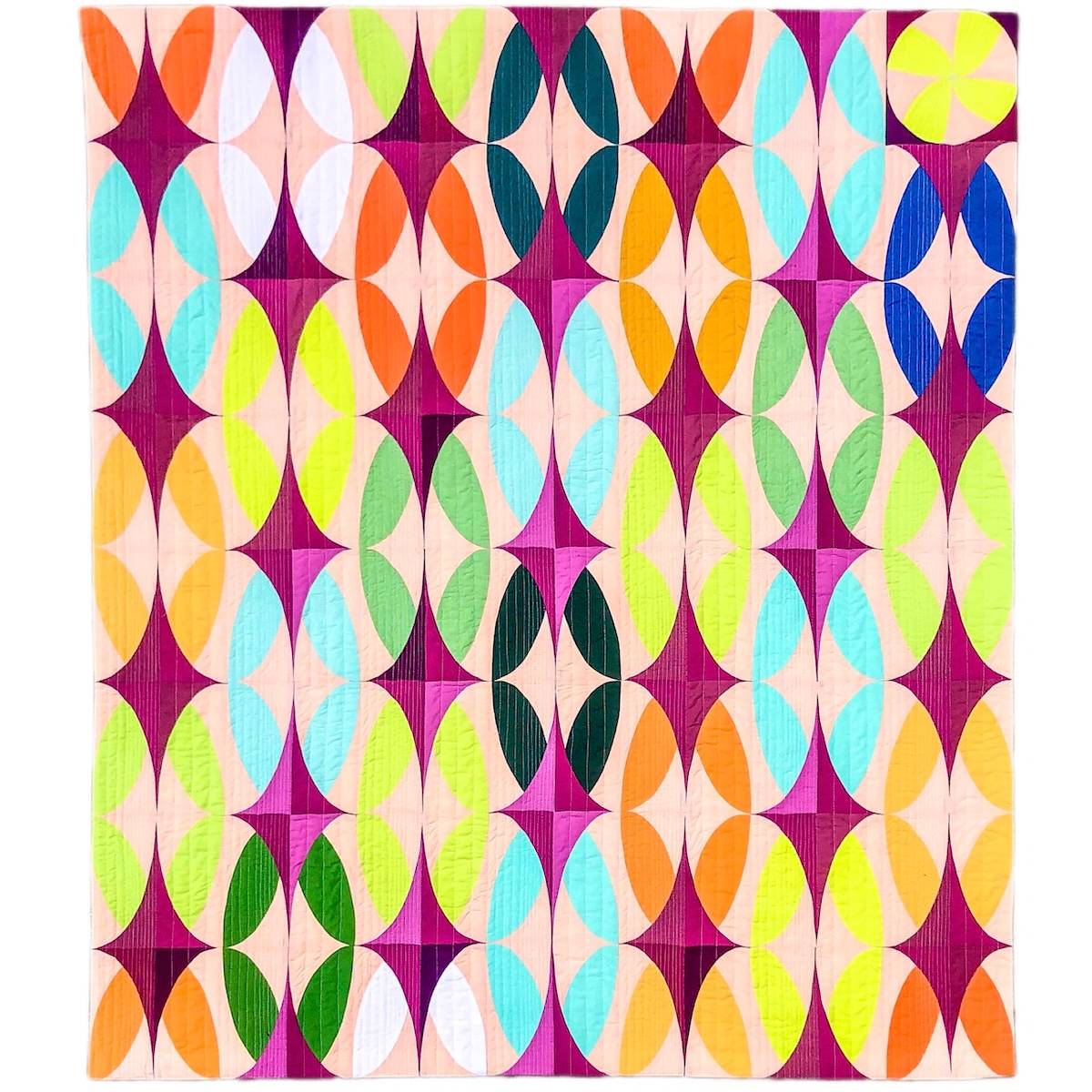
Color, curiosity, and intuition come together in the work of fiber artist Kaitlin Rim. Through scraps, secondhand fabrics, and bold color combinations, she creates quilted pieces that feel both playful and deeply personal. In this interview, Kaitlin shares how trusting her creative instincts helped her find her artistic voice and turn “free time” sewing into a meaningful art practice.
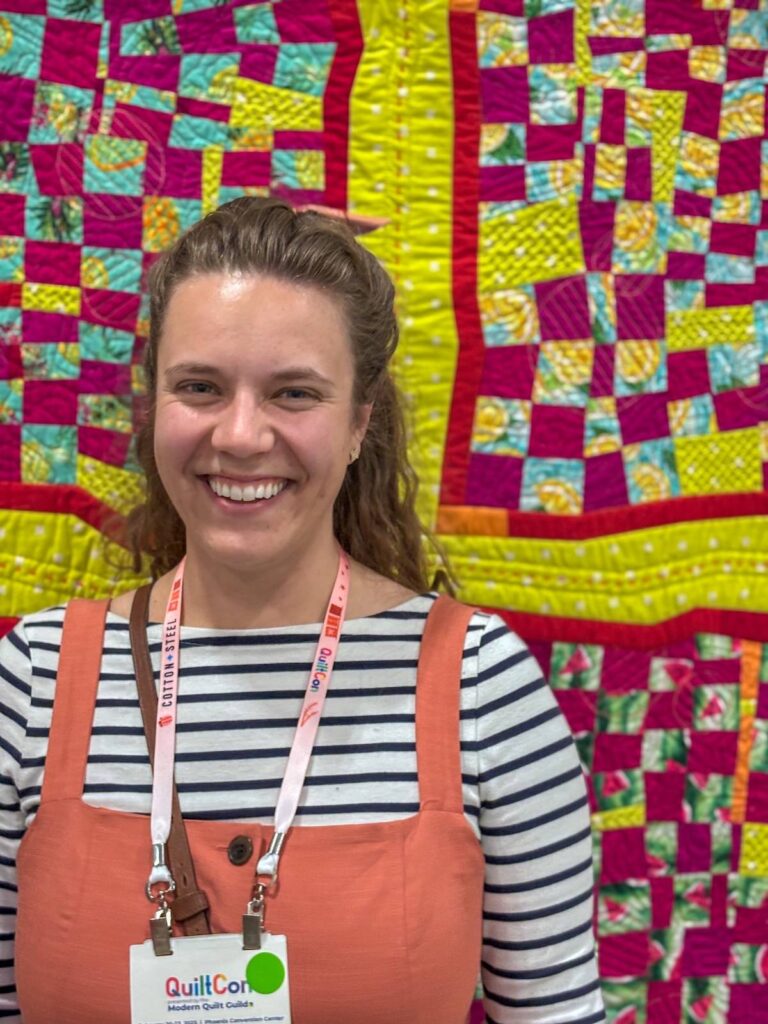
When did you first fall in love with fiber art?
Gosh, there’s so much held in the textiles of our lives.
When I walk through my memories, there’s always a handmade blanket, rug, pillow, pot-holder, you name it, somewhere in view. These functional items are the art of everyday people.
I feel that working with fibers – stitching, weaving, tying – is actively capturing the essence and energy of the maker, literally binding it into the material in an accessible way that’s usually not like other art mediums.
As an Amazon Associate I earn from qualifying purchases. Read more about our affiliate linking policy.
Being surrounded by these everyday objects full of love and intention is such an intimate experience that grounds me still today.
Do you remember the very first piece you made that felt like you?
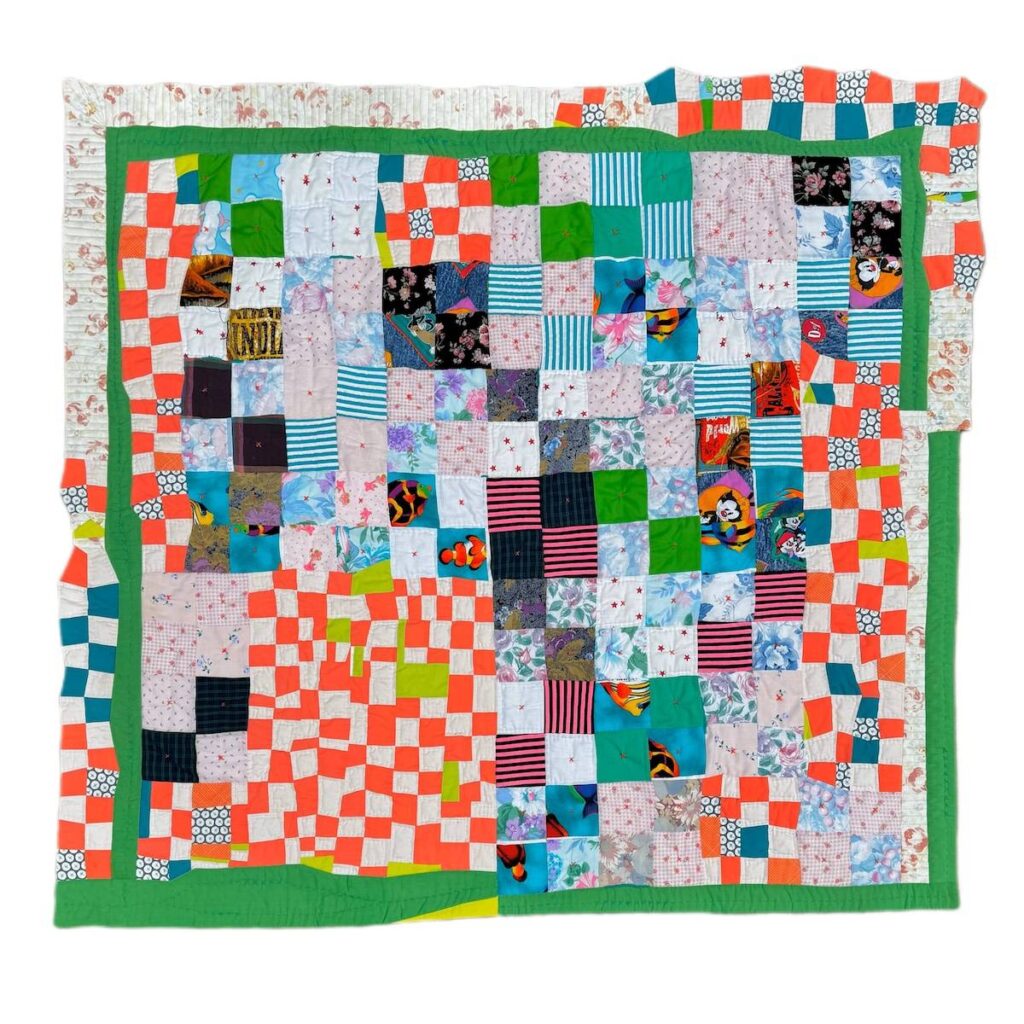
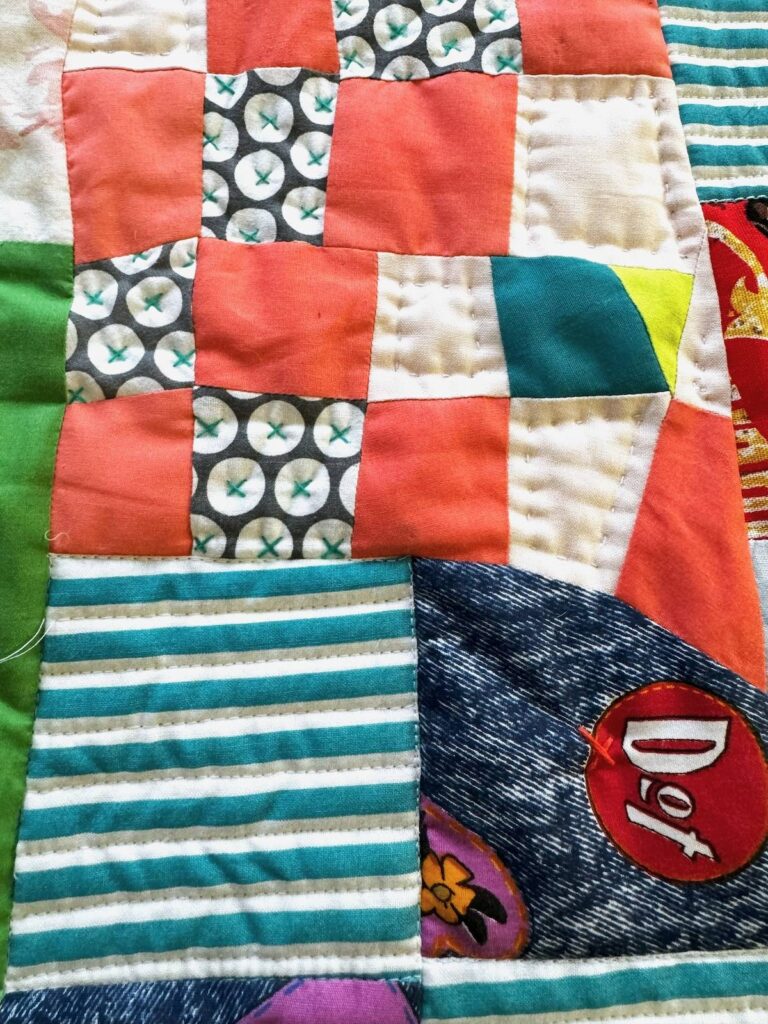
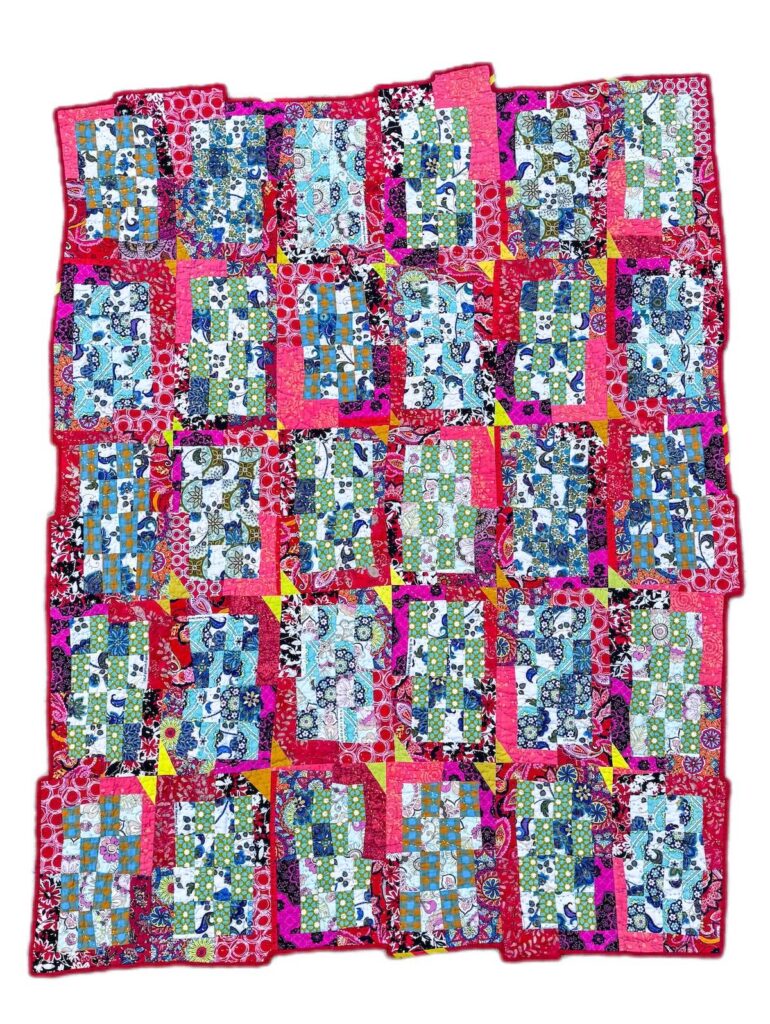
Absolutely – it felt like something essential clicked. It was about two or three years ago I made “Millenial Dream” which was nothing like anything I had made before. Almost the entire time I asked myself “Am I crazy? This is really weird.”
When I asked what others thought, I received similar comments – some hesitation to tell the truth, not quite knowing how to put feedback into words. I now know this work was me challenging the ideas of what others and myself thought was possible or acceptable for quilted textiles.
When I pushed through this self-doubt, there was a relief in understanding how my intuition guided me to make choices and overcome obstacles in my own way. I discovered the intention of choice is always there, even when riding the flow state and not realizing in the moment why you’re making those choices, but trusting them anyway.
How did Free Time Fibers come to life?
During the pandemic, I revisited quilting after a 3-year hiatus during grad school.
I had a full-time remote job where I would sew in small chunks during breaks or after work hours – hence the “free time”. I knew I also didn’t want to restrict myself to quilting since I love most forms of art and wasn’t sure how to define myself yet.
Over the next couple of years, I took a workshop from Jenny Haynes, started designing my own quilts, and completed the Pattern Writing Academy (Alderwood Studio). I thought the obvious next step after designing my own quilts was writing patterns, but I found I liked the creative process more.
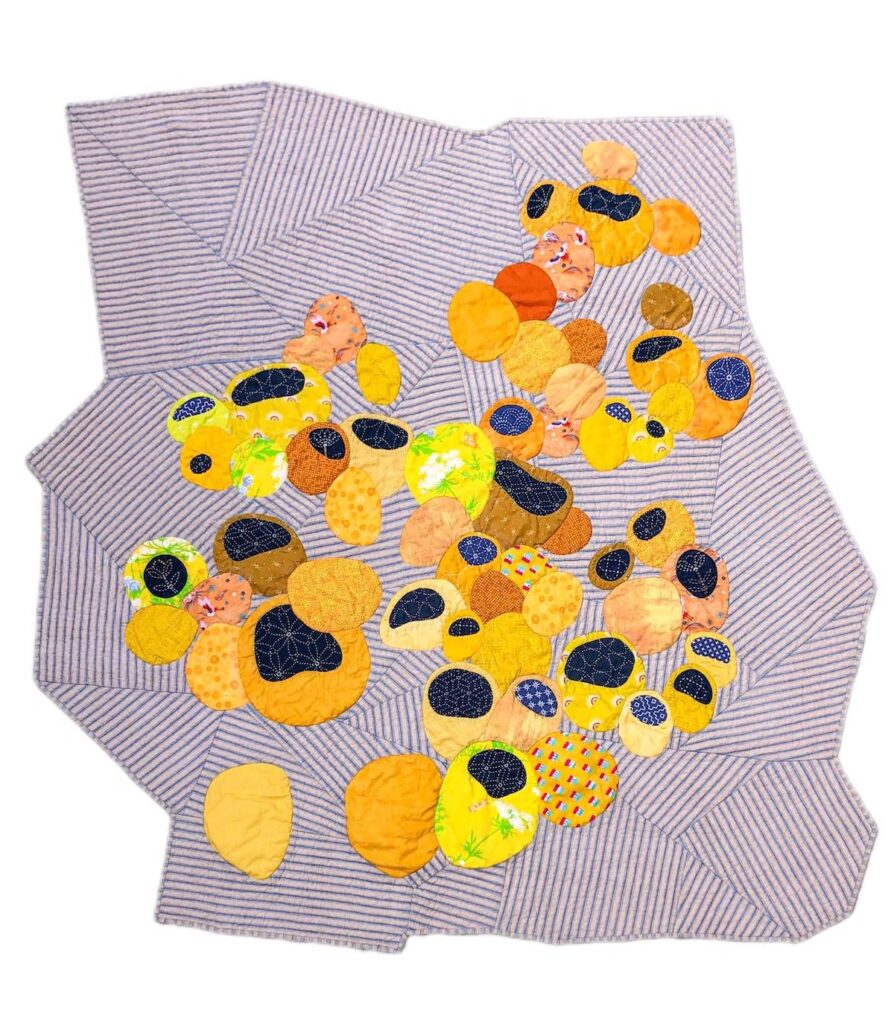
My path to call myself an artist opened up when I stopped focusing my attention on things I thought I “should” be doing as a quilter and started listening to what I wanted to bring to life through fabric.
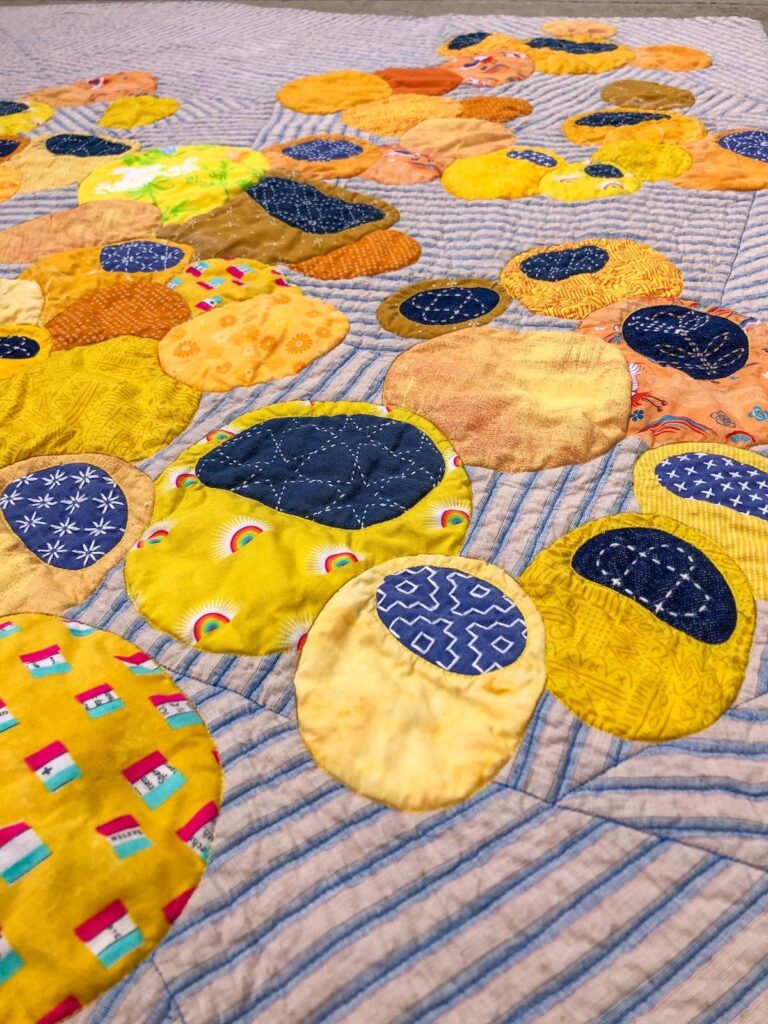
At the start, did you imagine this becoming such a big part of your life?
Absolutely not – I was having fun, learning, playing, being curious, and thought I’d keep a “digital diary” of sorts on Instagram.
I assumed I would always find a way to explore and express myself through art, but I didn’t believe that what I was making could be what it is today. I’m still surprised each time a quilt is hanging in a show or a gallery, or I’m asked to speak to other quilters and artists – I didn’t know these spaces could feel like home to me.
Where do you find inspiration for your pieces?
Sometimes the inspiration and ideas slam right into me, and sometimes they build slowly through collecting and testing other smaller ideas.
A pile of fabrics and scraps will turn into “bits and bobs” that start to talk to each other. Sometimes I see other art and wonder, “How would I turn this into something made with fabric? What kind of techniques would I use to emulate this in my own medium?” Here, the technical challenge inspires me.
Other times I find shapes out in the world and play with them in Procreate, changing size and orientation. I also like joining quilt challenges, which provide a container (and a deadline) to try something new or practice something I learned.
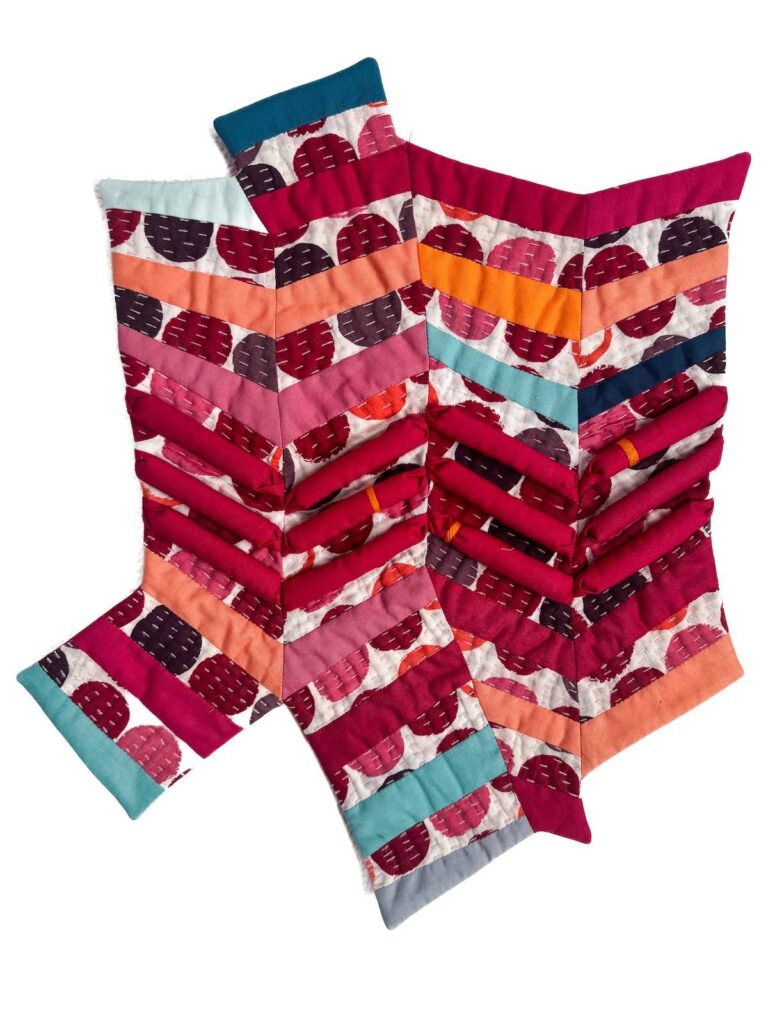
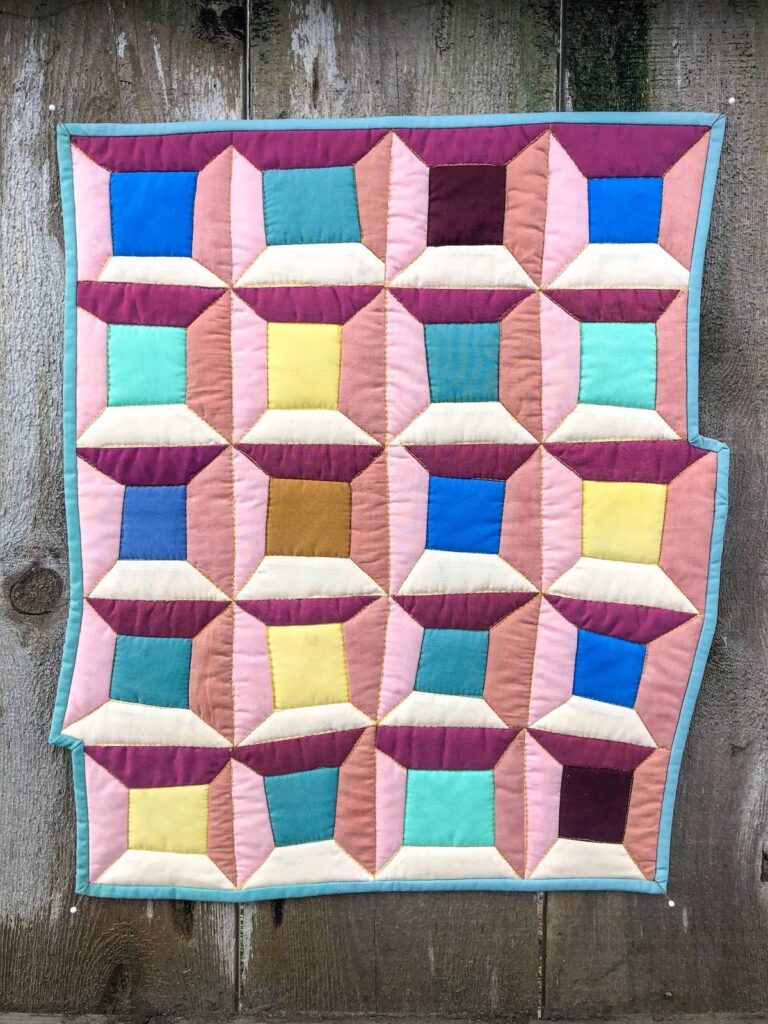
Are there certain colors you keep coming back to? Why those?
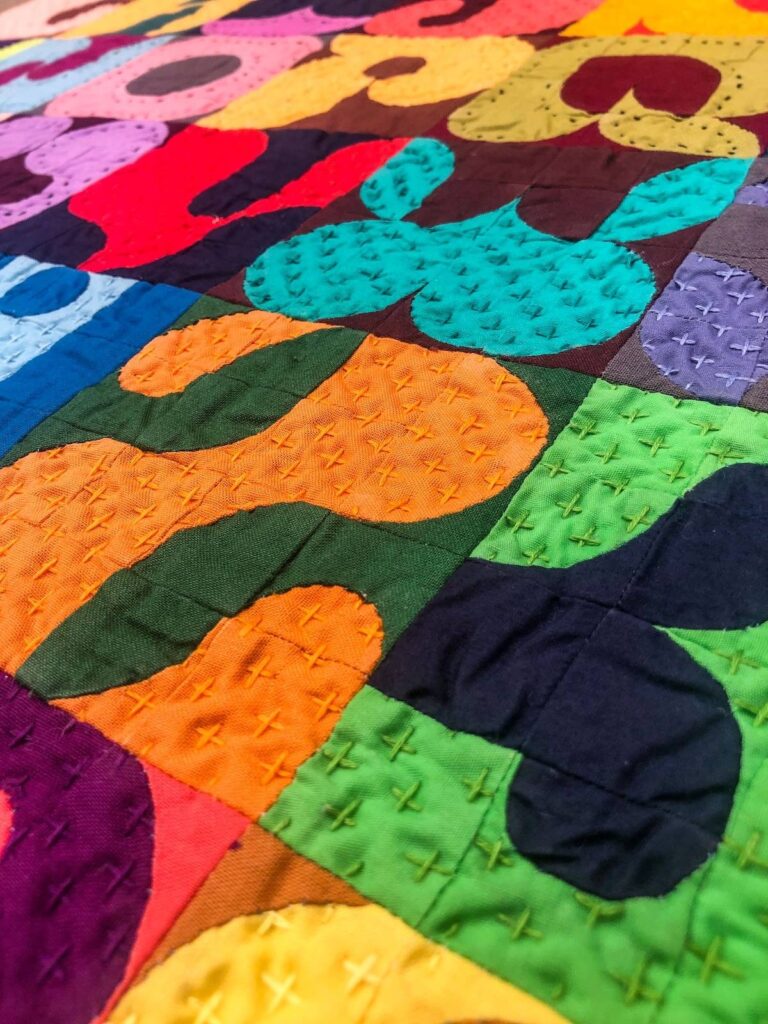
Color is amazing, and our eyes and brains play strange tricks when we use colors together in certain ways.
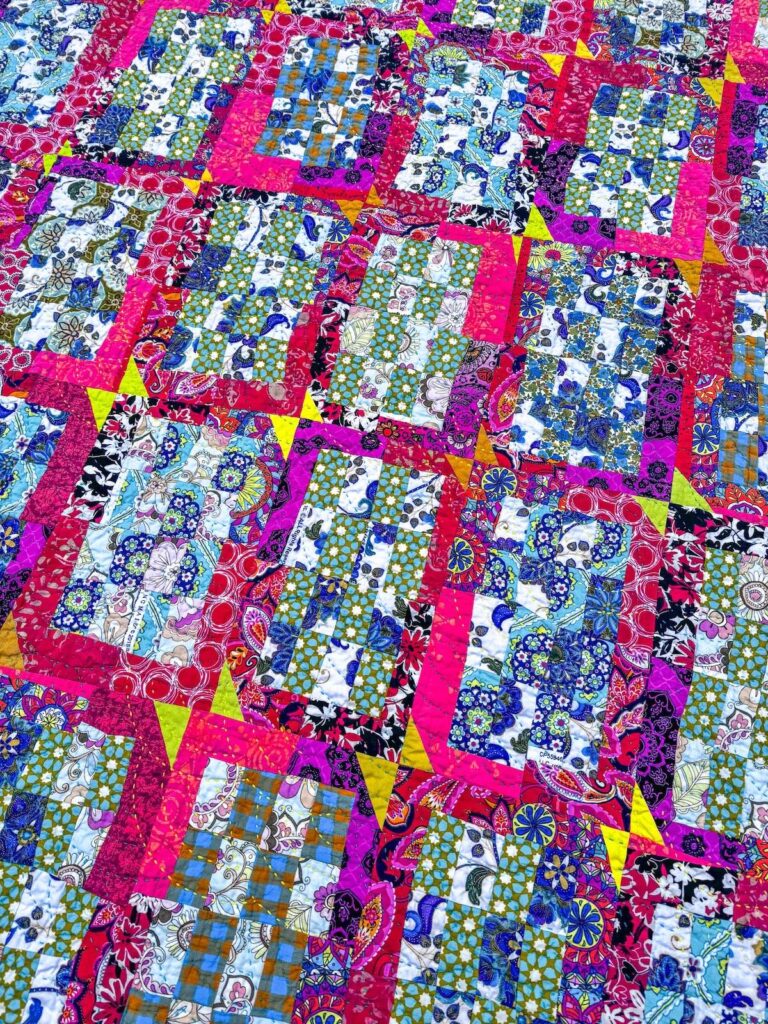
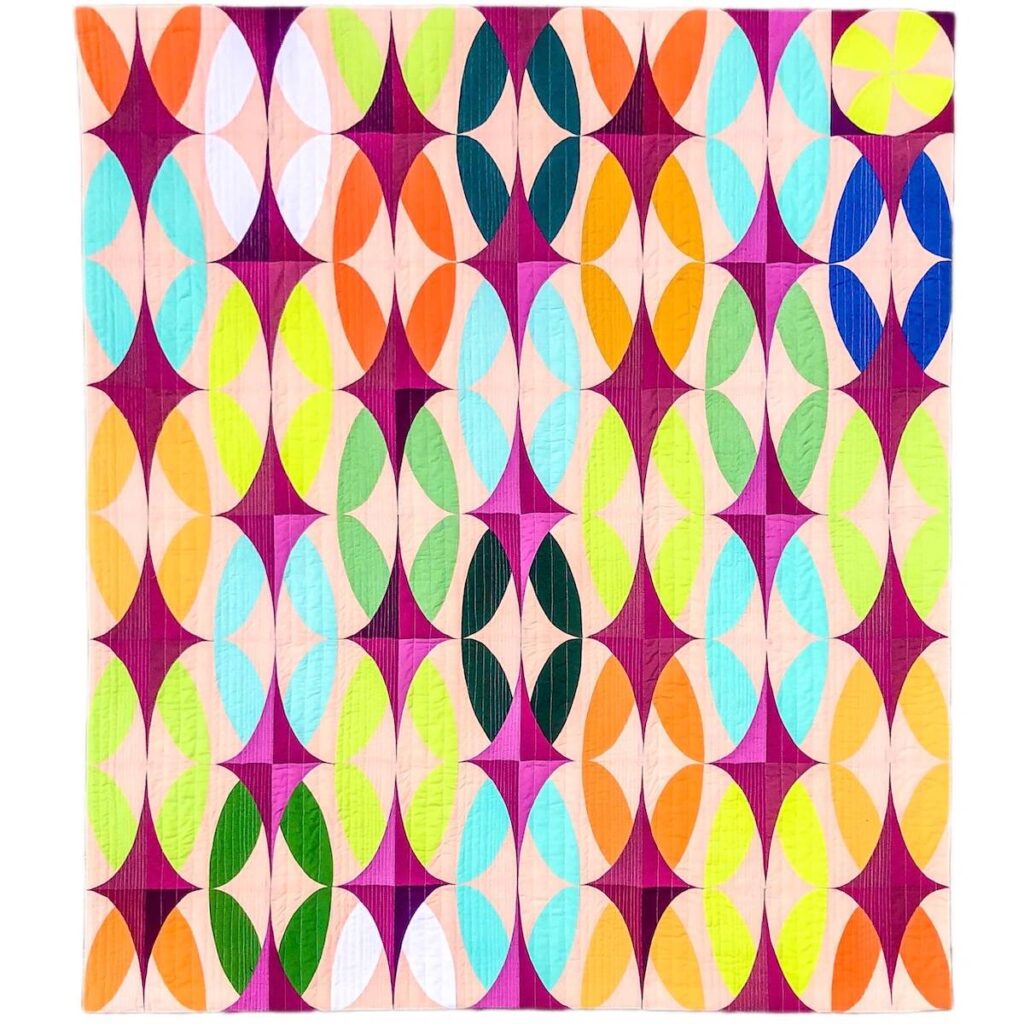
Experimenting with color to understand the tricks my brain likes has been an important part of my practice. My favorites are the transitional colors – the citron, chartreuse, yellow – greens, and the fuchsia, magenta, and red-violets.
I am fascinated by how these intermediate warm/cool colors read so differently depending on their neighbor – same fabric, different interpretation.
I also absolutely love the optical illusion of contrasting vibrant complementary colors and how the adjoining space seems to vibrate while your brain tries to make sense of reality. Like, there is a liminal space there which contains colors we weren’t built to understand – what do you think these colors feel like?
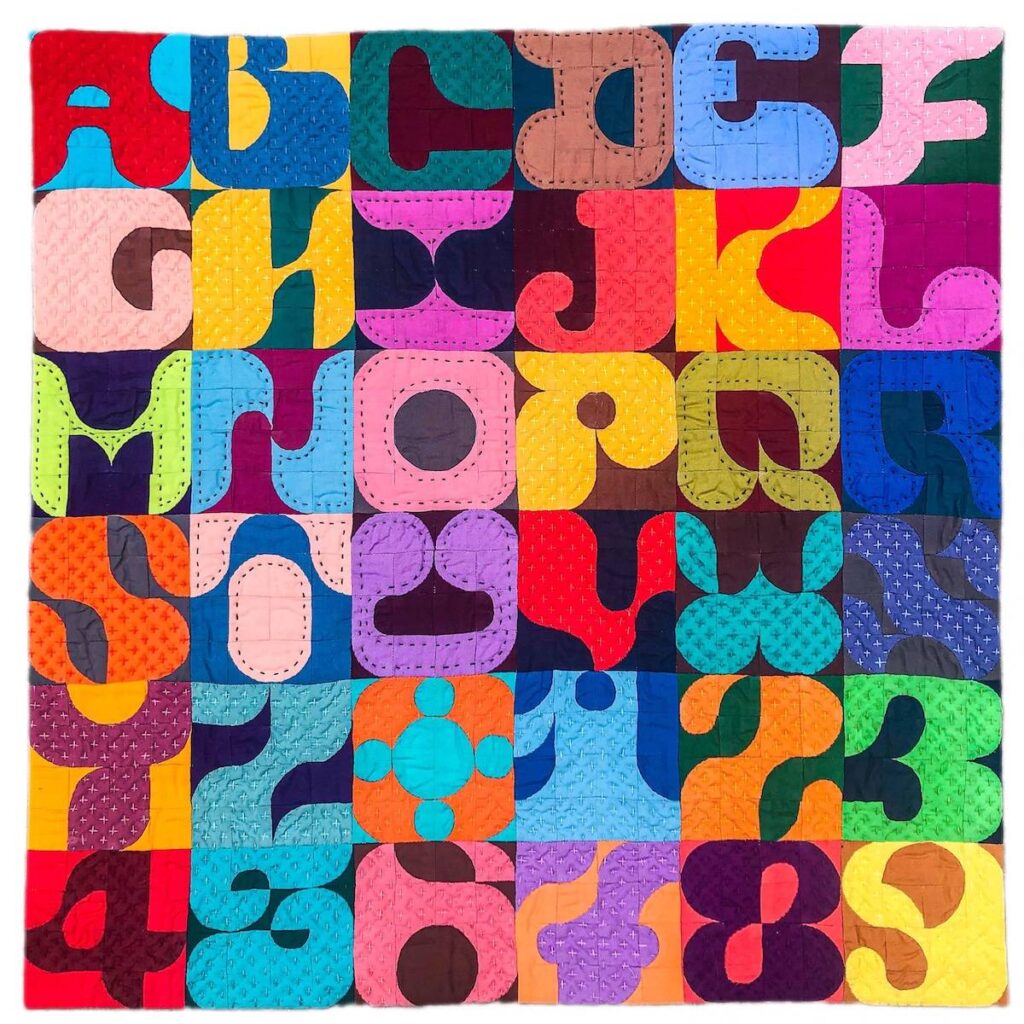
Do you start with a clear idea, or do your pieces grow as you go?
Usually, it’s more of an intuitive auditioning of materials and placement.
I may have a general idea of the overall message, theme, or materials when I start, but I’m an overthinker, so I don’t like to get too far ahead. When I’m too far in the future or bound to what I envision as the endpoint, I’ve found that fear creeps in and I try to convince myself there’s an unknown hurdle that I may not be able to overcome, or be disappointed my expectations aren’t met.
So it has helped me to stay in the present or only think a few steps ahead and watch the idea unfold. Most times, I get a good surprise out of it, too.
How do you choose your materials for a new piece?
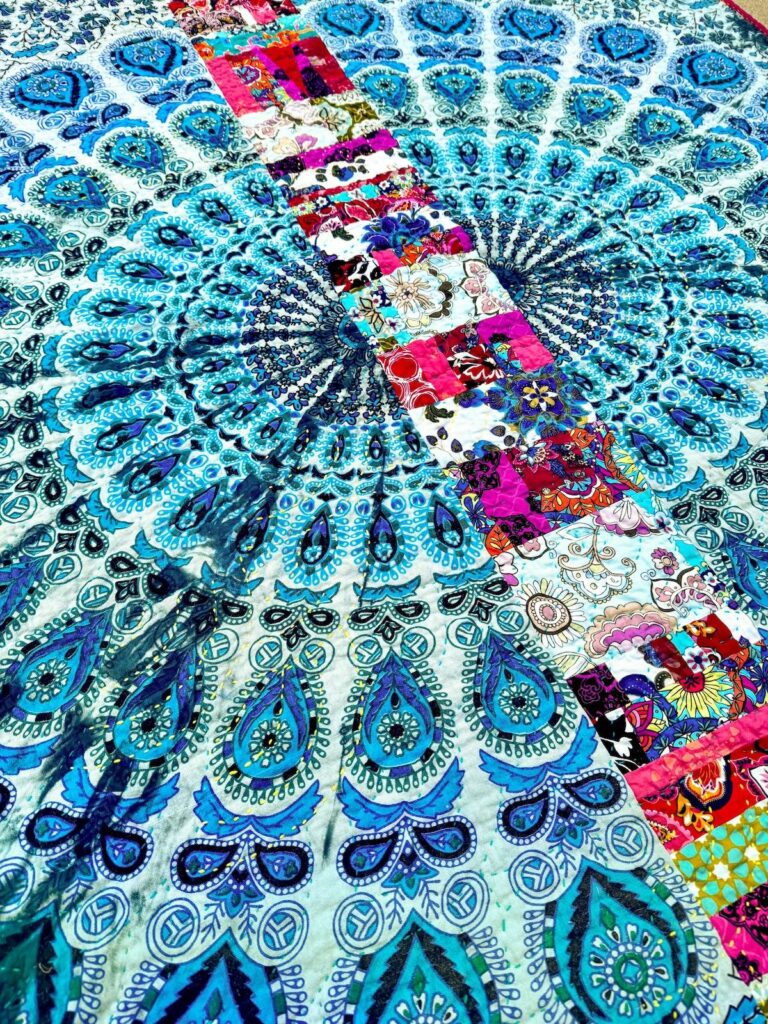
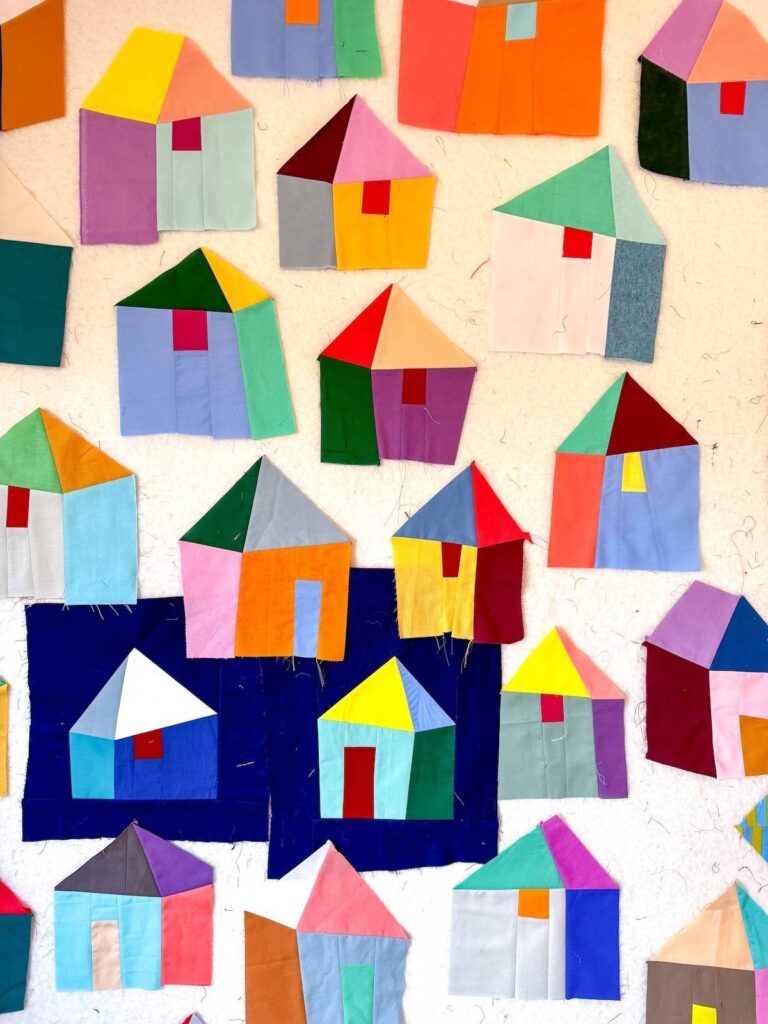
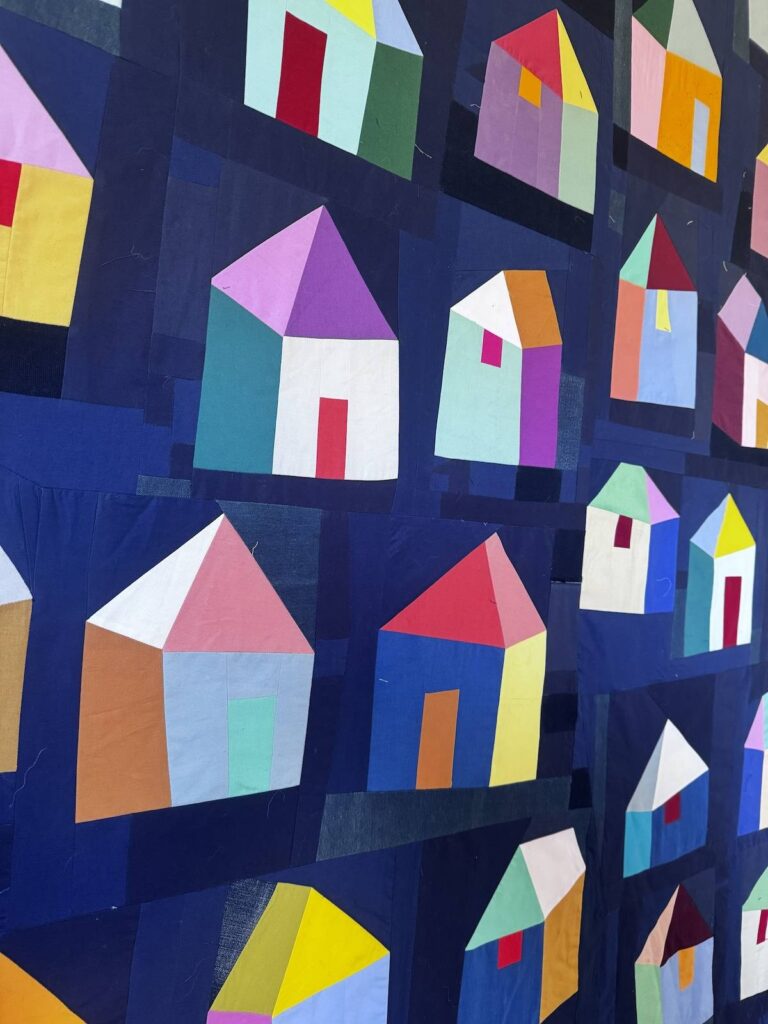
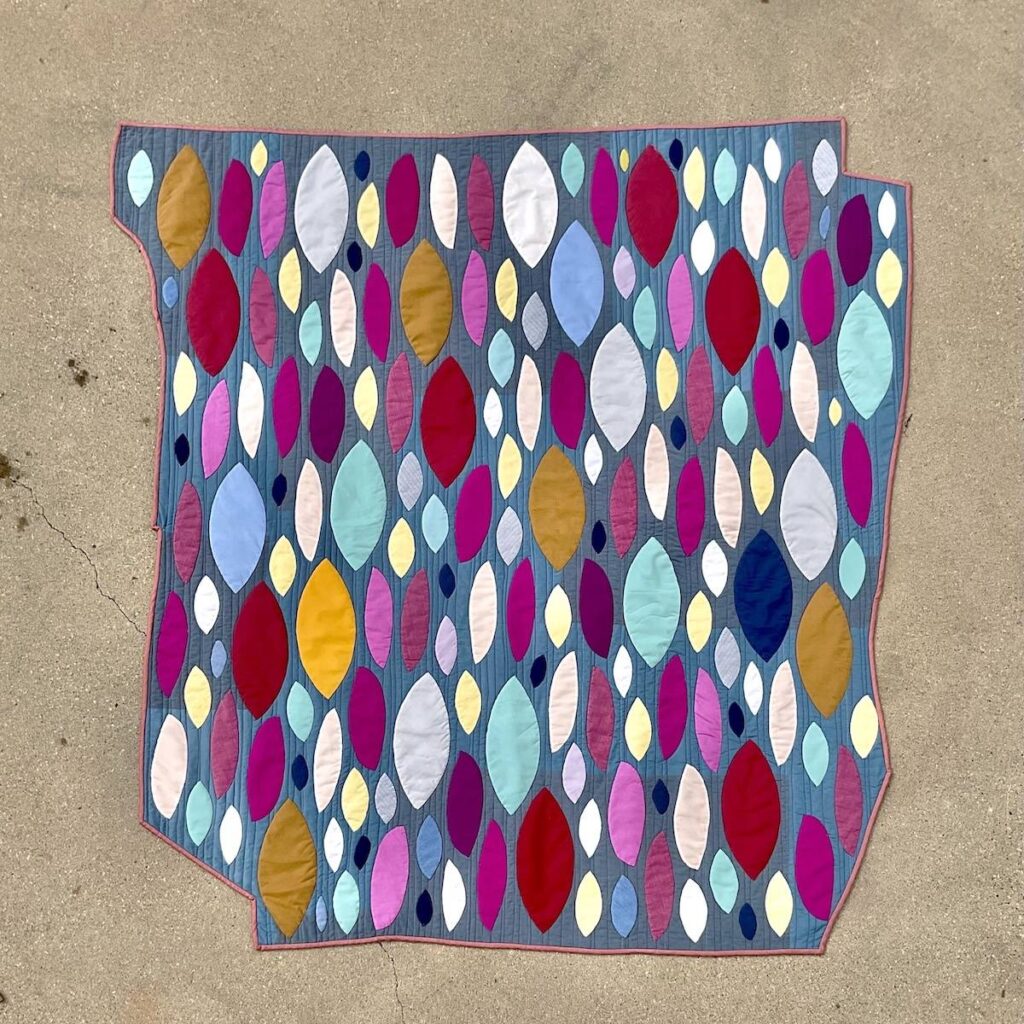
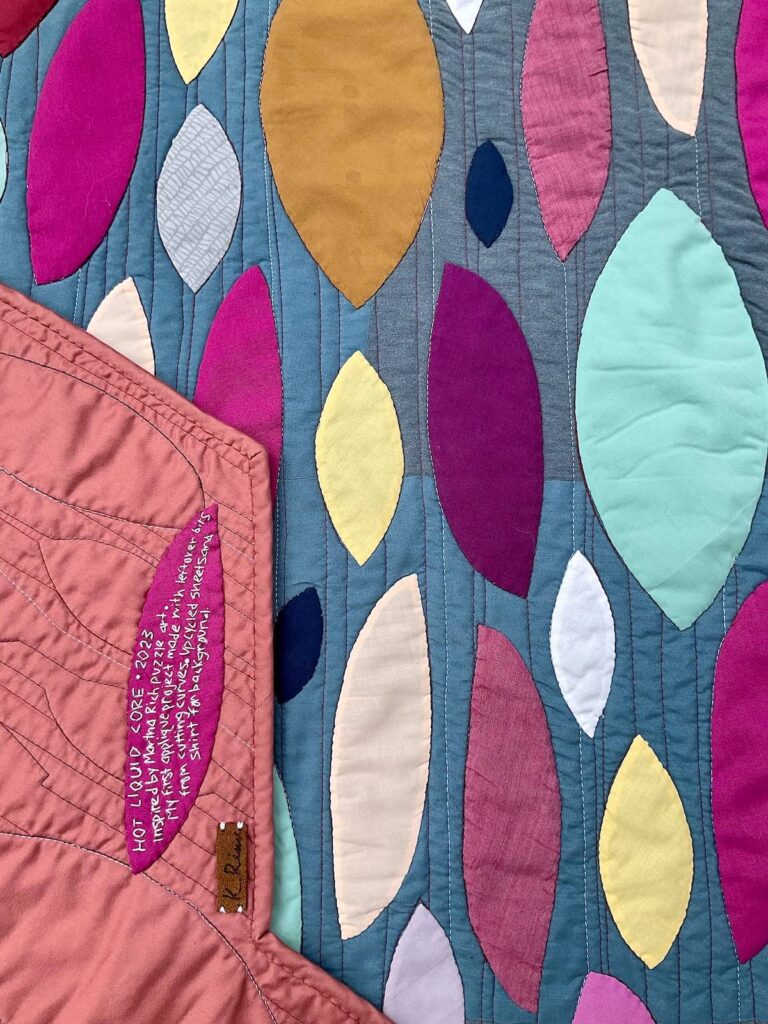
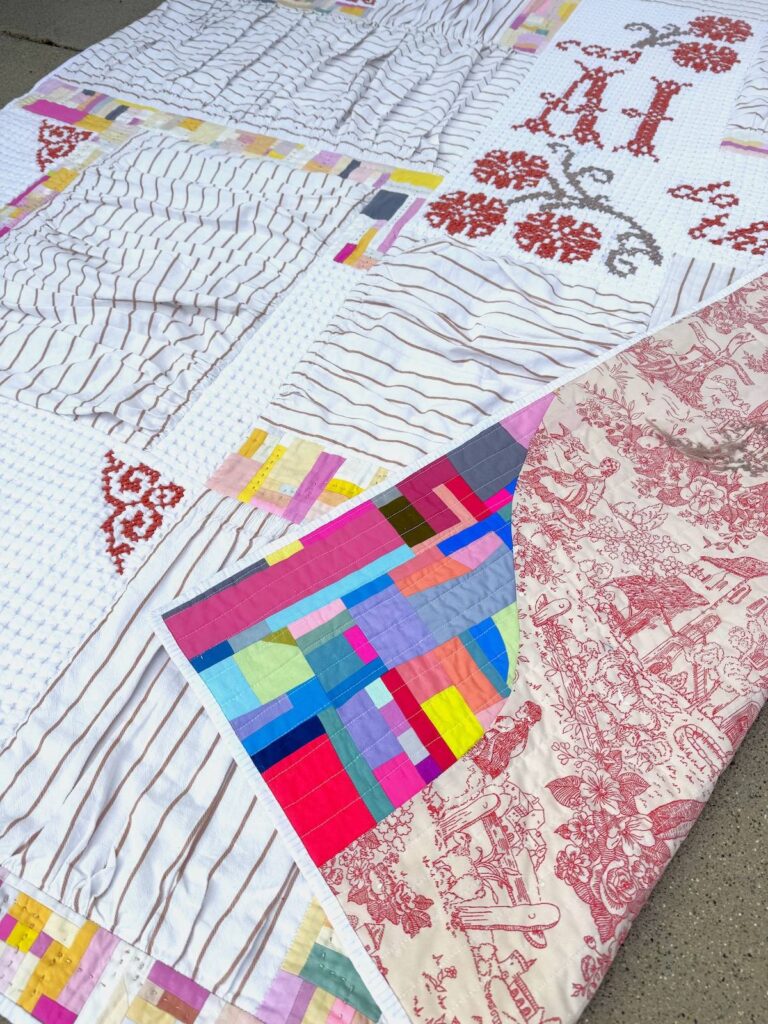
I’ve been working a lot with scraps and secondhand fabrics, pieces and pre-cuts, blocks, and other notions I find at the thrift or estate sales near me.
I think using materials from others is like a mirror: I have to find empathy and see myself in the materials from this unknown other person, the journey both they, this object, and I are on.
I find a collection of things I like and look for an underlying theme. Usually, there is a color story I can latch on to from a collection of blocks and bits, so I will arrange the details and fill in accordingly with yardage. I
’ll start to craft a story about these found objects, the narrative that is trying to come through either the pieces or my role in the creation of the work.
Is your workspace tidy and calm, or a little wild and full of ideas?
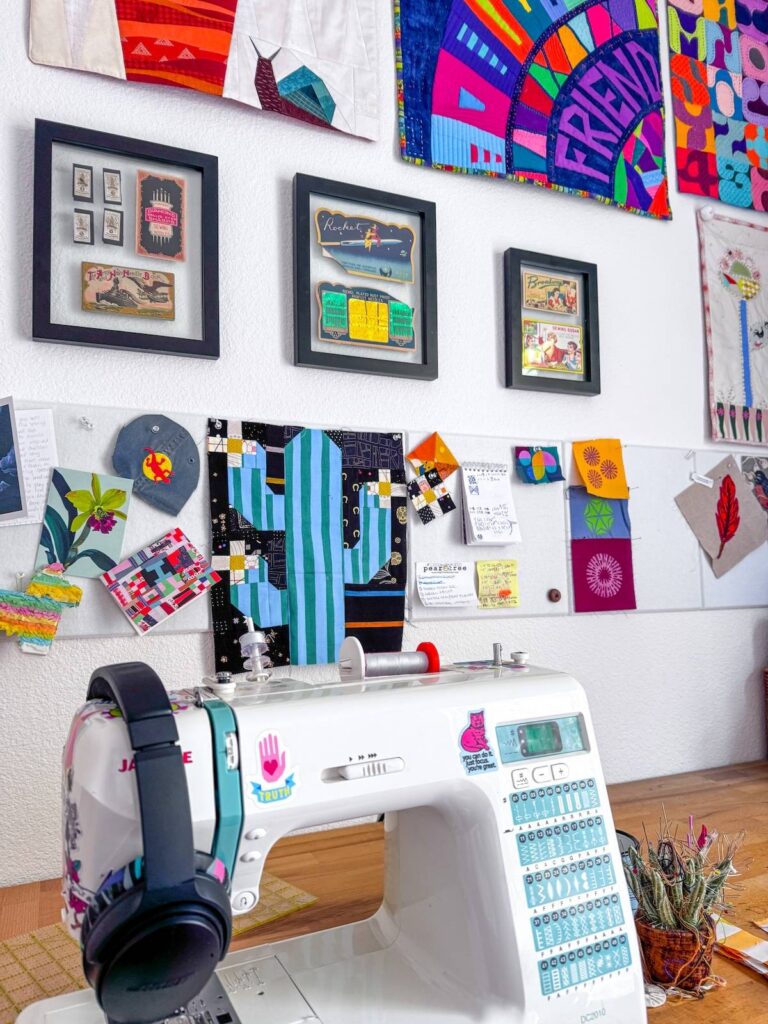
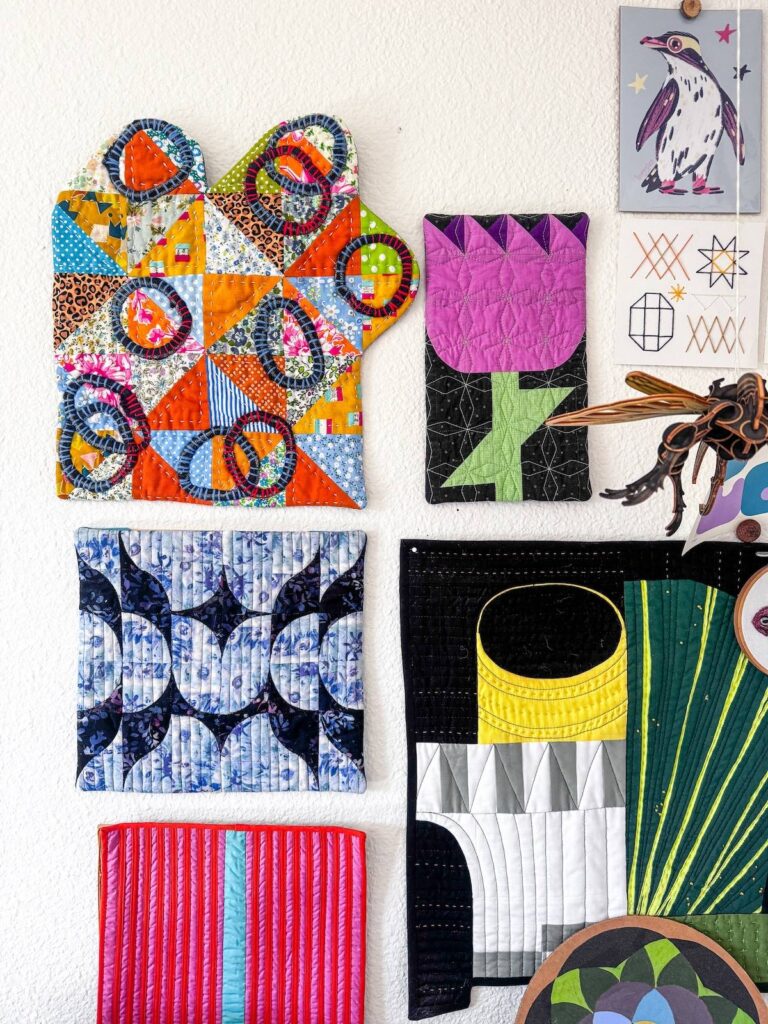
It’s a balanced mixture of the two. I want to be fully surrounded by my inspirations. The walls are covered in art, hand-written cards, photos, test swatches, and notes.
But my tabletop and floor stay organized and clear to jumpstart a project. Then it can get a little messy in the middle, though I try to spend time at the end of every day organizing my space and project so I know exactly where to start the next day.
What’s one studio habit that helps you stay creative?
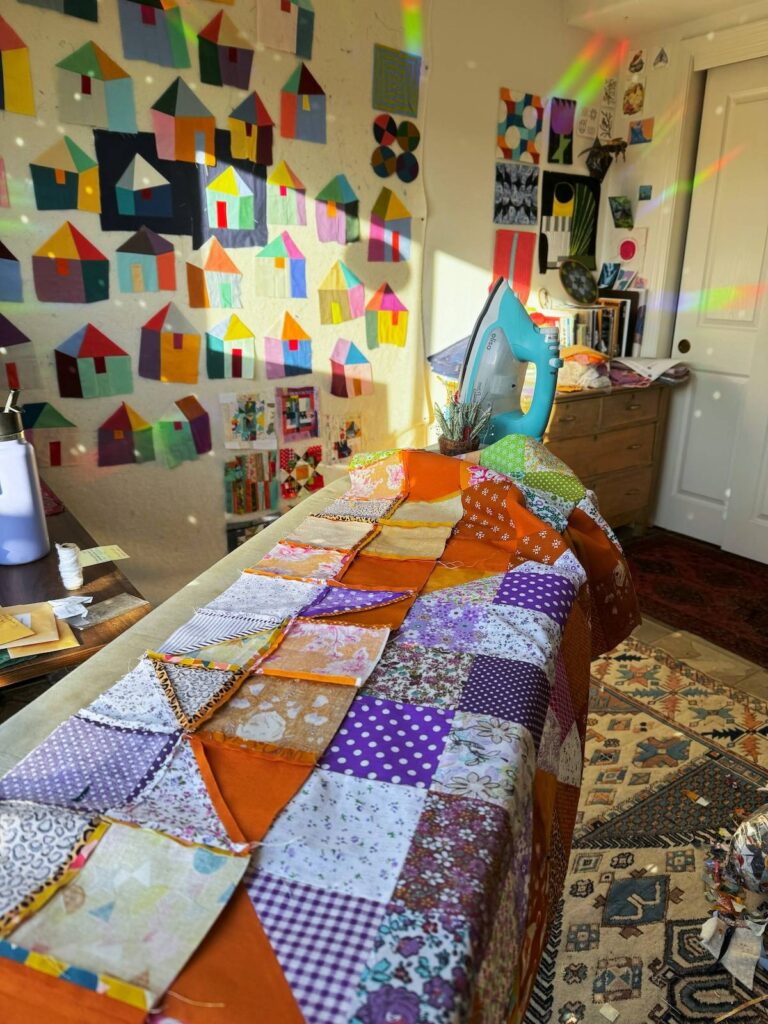
I’m a big champion of “the forever project” – the projects you can grab that already have some parameters or prepared pieces to work with.
This may go against all the rules about UFOs (unfinished objects), but I believe the process is worth more than the finishing, especially when I’m in a rut.
When I’m uninspired or between projects, I just want to play for however much time I have, and my forever projects are stashed away waiting for their moment. They may or may not have a pre-defined plan. The point is to get out of my head, go through the motions, and get back in touch with the process.
One day, maybe they will become a finished project, but that was never the goal.
Walk us through your process from idea to finished piece.
If I start with my “bits and bobs”, I find things that coordinate and arrange and rearrange again and again. I’ll pull more fabrics or bits to fill in, or I’ll make something extra that goes with my featured sections. Sometimes I have to deconstruct things and/or combine them with a new element to make them whole.
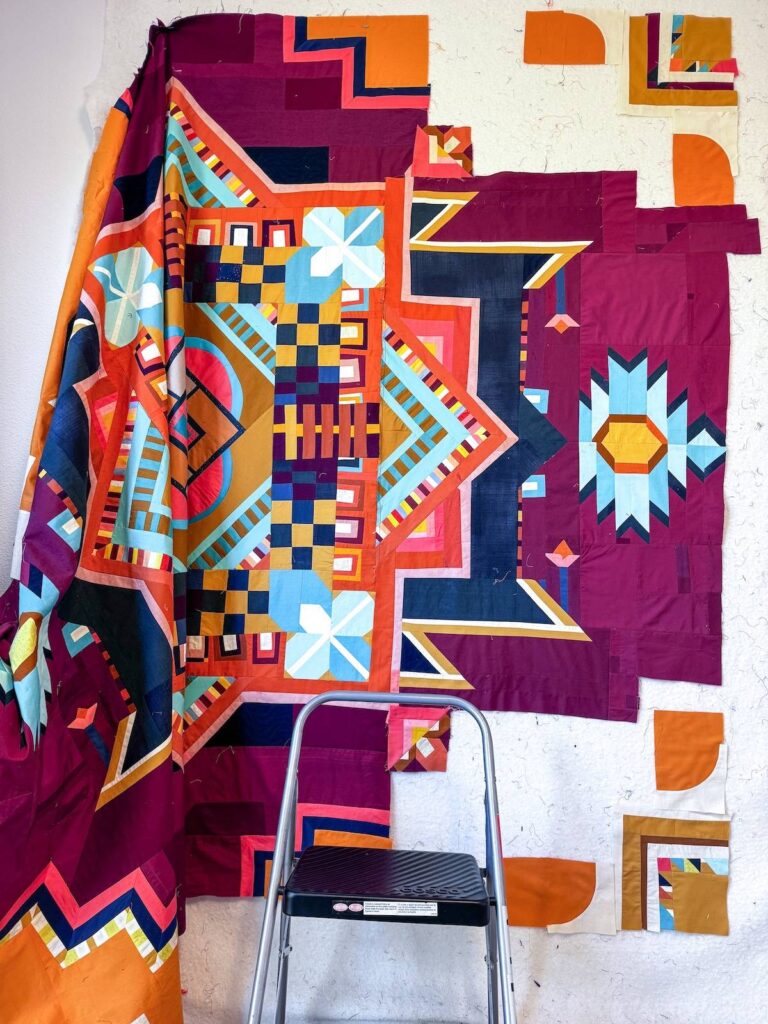
Throughout, I take lots of photos or sit with my design wall to look for areas that don’t “vibe”. I’m looking for visual balance and flow of color and value, where my eye wants to travel, where it gets stuck. I might let a design settle for a day or two – walking by and seeing if something stands out in a pleasing or unpleasing way – not adding or subtracting just listening.
At some point I know certain areas are ready to sew together so I’ll start sewing these. During this time other areas might be rearranged, or I might start to like them more, or I realize I need to fill in a section.
It’s a cycle of sewing + design wall + evaluating and looking until eventually it’s all sewn together. This top might even be a base for additional elements to appliqué on top.
Have you ever had a piece not turn out the way you planned? What did you do?
I’ve never been completely dissatisfied with the end result. There’s always something I am proud of and something I could learn from in a piece.
When something isn’t going well during a project, I’ll sit with the discomfort and try to pivot to a new plan. Sometimes that means taking a break for a few days or even a few months.
Learning new techniques through workshops and experiments has helped me gain the confidence and skills to make that pivot when needed.
How do you know when a piece is finished?
This is a tricky one because I think every artist would answer differently.
There’s definitely a sweet spot between complete and “this is too much”. I’ve gotten better at knowing what “finished” feels like for me, but it isn’t always easy.
Asking questions like “Does this support my message? Is this adding too much complexity to my message? Will this distract from the primary motif?”, helps me balance between final composition and chaos.
Sometimes I undershoot or overshoot the finish line, and that’s the learning part. The good thing about quilting is that you add a layer of stitched elements on top of the piecing, so something that feels incomplete at one stage can really come together later.
What has surprised you most about this creative journey?
I didn’t have any clue that I’d learn so much about myself through the process of creating – seeing my strengths and limitations laid bare before me to examine and evolve.
I found the parts that flowed easily, and I started to recognize the walls I put up for myself, question them, explore them, and in some cases, release them to find my own voice. That was and still is the most important and interesting part of this journey.
How do you balance making art with the rest of your life?
This might sound cliché, but making art happens all the time: cooking food, making coffee, arranging flowers, journaling, dancing, singing, appreciating, and really seeing the world around you.
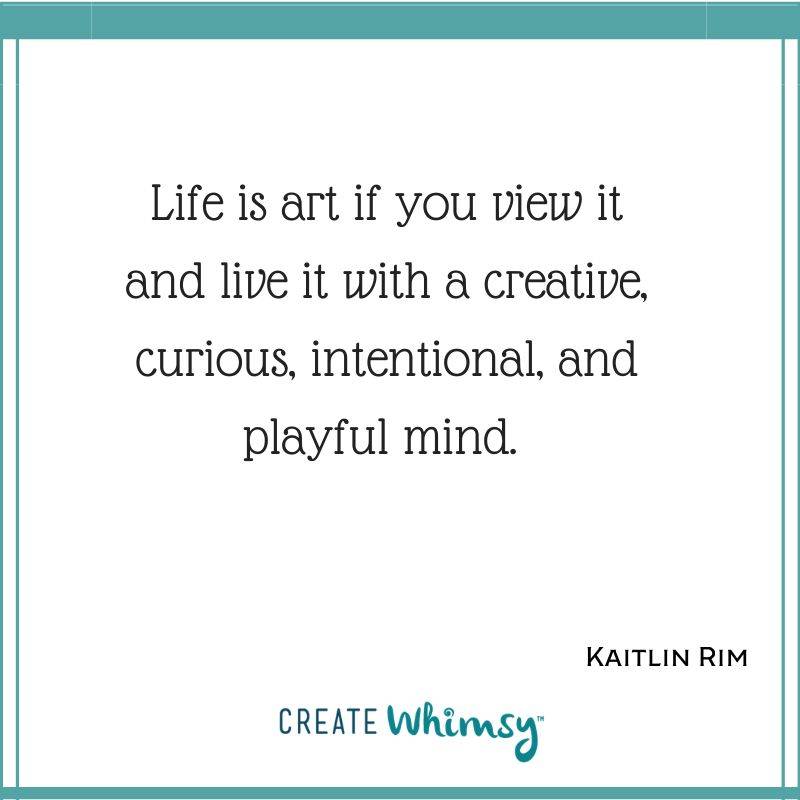
Life is art if you view it and live it with a creative, curious, intentional, and playful mind. Not everyday I do the art I share online, but every day I do something that feeds my creative soul. I find time, even a small bit of time, to be creative every day: to play, to pursue my interests (even the strange ones), and to keep learning in ways outside of my textile art practice that inspires and enriches my experience.
What advice would you give someone just starting with fiber art?
Play! Remember when you were a kid and you had no limitations and felt free to try (and “fail”) new things?
Don’t set too many rules for yourself and remember there’s absolutely no right or wrong (despite what some may say).
It’s also completely okay to set a project down, take a break if it doesn’t feel right, or you don’t have the skills yet – it’ll be there when you’re ready.
Where can people see your work?
My website freetimefibers.com or Instagram @freetimefibers will have my latest creations. If I have a piece in a show, I’ll usually announce this on Instagram. I love sharing my knowledge, so don’t be shy and reach out on my contact page or send a DM if you have a question!
Rapid Fire Fun:
Early bird or night owl? Early Bird – my brain turns to mush after lunchtime.
Favorite color right now? Anything sparkly!
One word to describe your work? Adventurous
A tool you can’t live without? My Brain (firstly). And always a glue stick.
One thing you wish you knew when you started? Believe in yourself and your own intuition with your whole heart.
Interview posted June 2026
Browse through more modern quilting inspiration on Create Whimsy.