
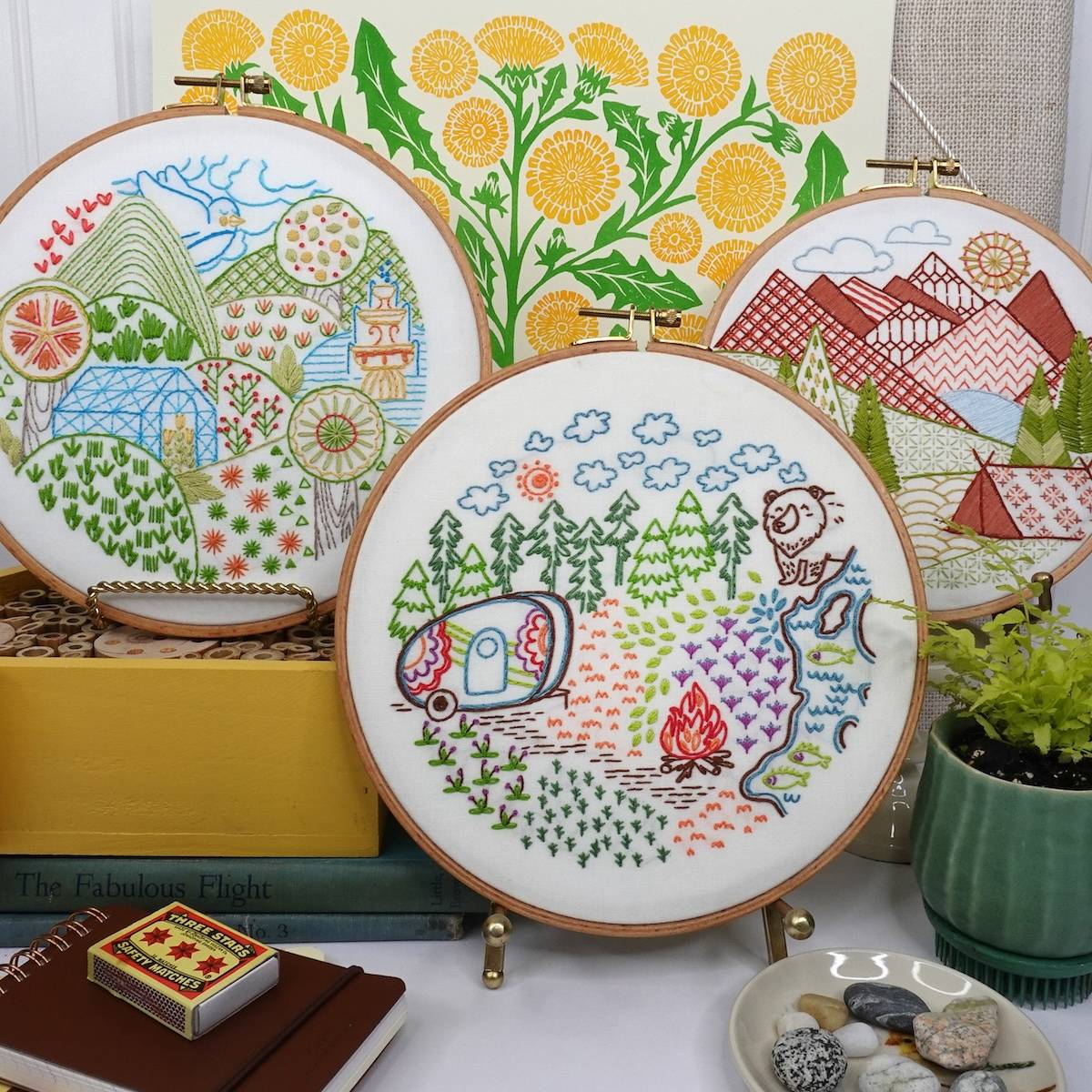
Debbie Hodge has been making things with her hands for as long as she can remember. From sewing and crochet as a child to writing, photography, and design as an adult, her creative path has taken many turns.
Today, she brings all of those experiences together in her embroidery work, creating charming designs that feel like tiny stories stitched in thread. With a love for simple stitches, thoughtful patterns, and a touch of folk-art style, Debbie invites others to trust the process and enjoy the joy of making.
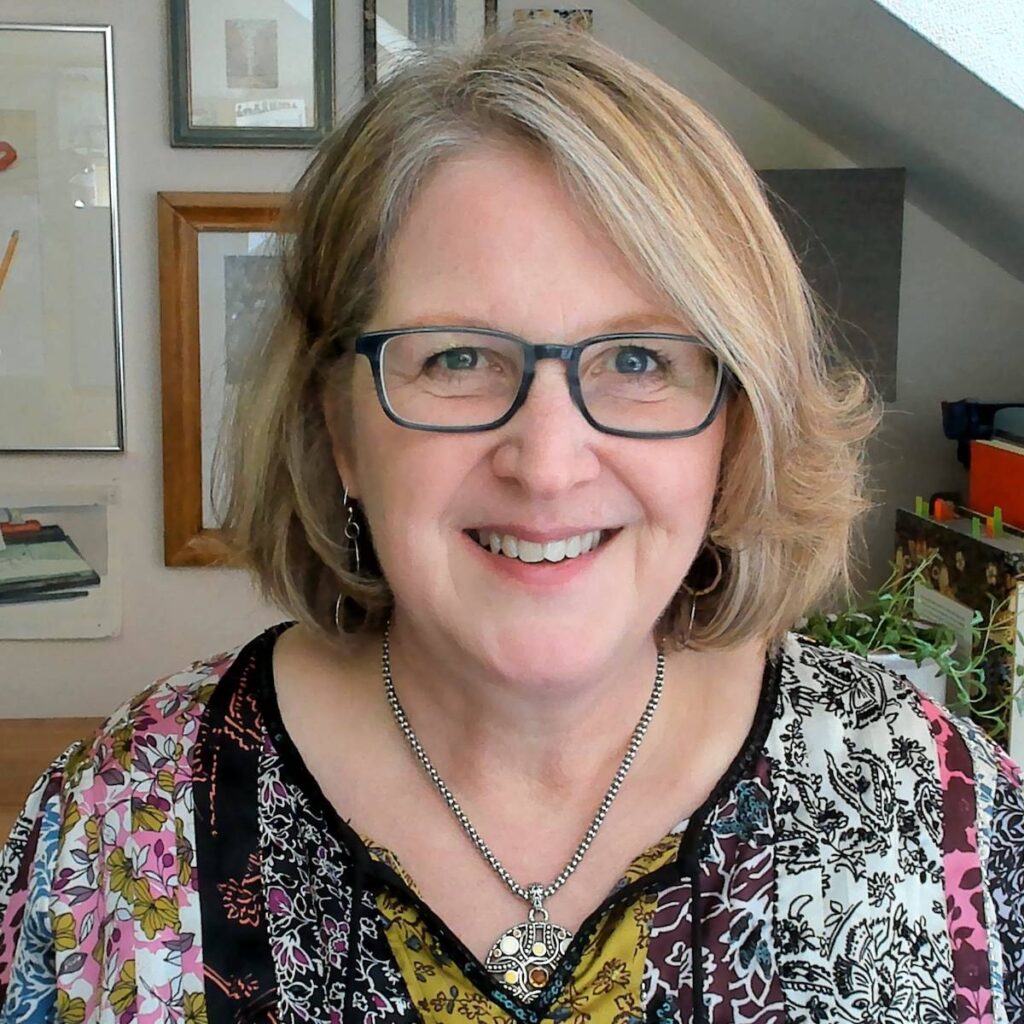
Can you take us back to the beginning—what first drew you to making things with your hands?
-I grew up with a crafty mom and grandmothers. Sewing, crochet, knitting, decoupage, and cross stitch were all given in my childhood.
You explored many creative paths before embroidery. How did those experiences shape who you are as a maker today?
As an Amazon Associate I earn from qualifying purchases. Read more about our affiliate linking policy.
Yes. I was a crafter at an early age and then in my 20s and 30s I did deep dives into fiction writing, photography, and graphic design.
The impact would be my belief that the best creating starts with this: faith that if you just write the first word or render the first image or choose the first color, your creative piece will emerge wonderfully. Much better to create this way than to have an endpoint already imagined.
What brought you back to embroidery after so many years away?
I’d been following stitchers on Instagram for a few years before COVID arrived, but I didn’t make time to choose a project and just start stitching. COVID, though, created that time.
How did the idea for Stitched Stories click into place? Was it a slow build or a lightning moment?
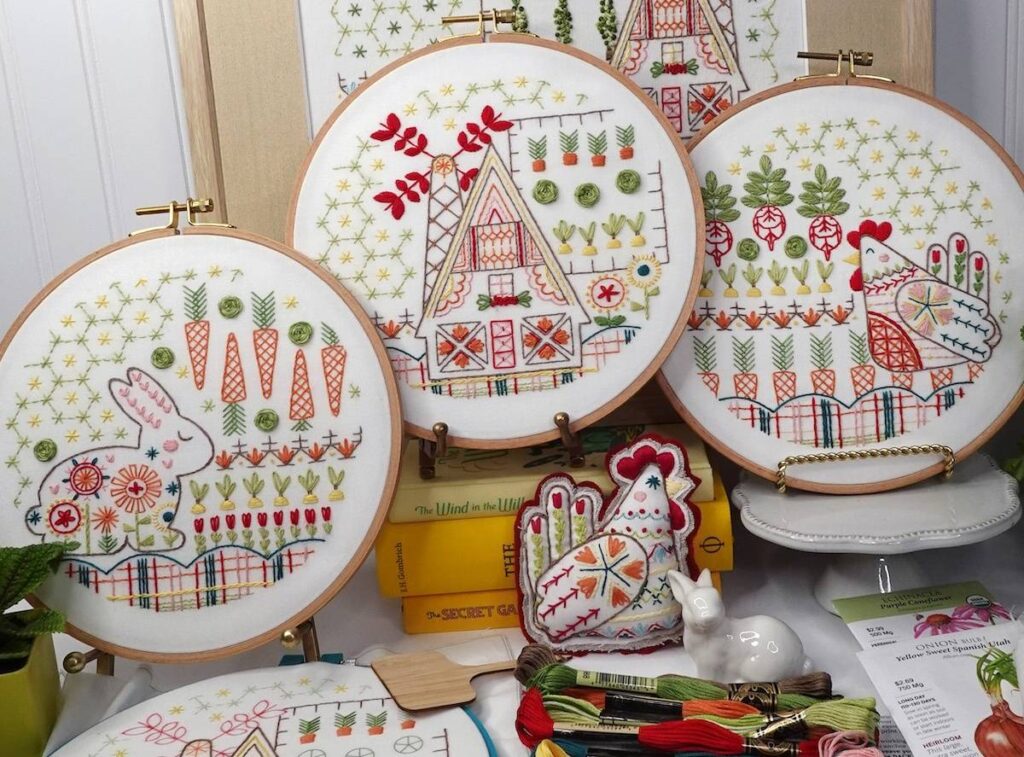
Within a few weeks of beginning to embroider, I was wanting designs with imagery and stitch combinations that I couldn’t find on the market. My digital scrapooking skills gave me a proficiency with Photoshop that I could use to start making my own designs.
At the same time, my husband had business students who’d lost their internships, and he suggested I create a little business to teach them branding and positioning along with digital marketing skills–just for the summer.
I started with 4 designs and didn’t know if I’d go beyond those — but once I started, I was hooked on stitching my own designs and getting them out to others.
Your work feels like a collection of little worlds. Where do your ideas usually start—image, color, or story? Do you gather inspiration intentionally, or does it sneak up on you during everyday life?
My projects usually start with a design challenge or design approach that I want to play with.
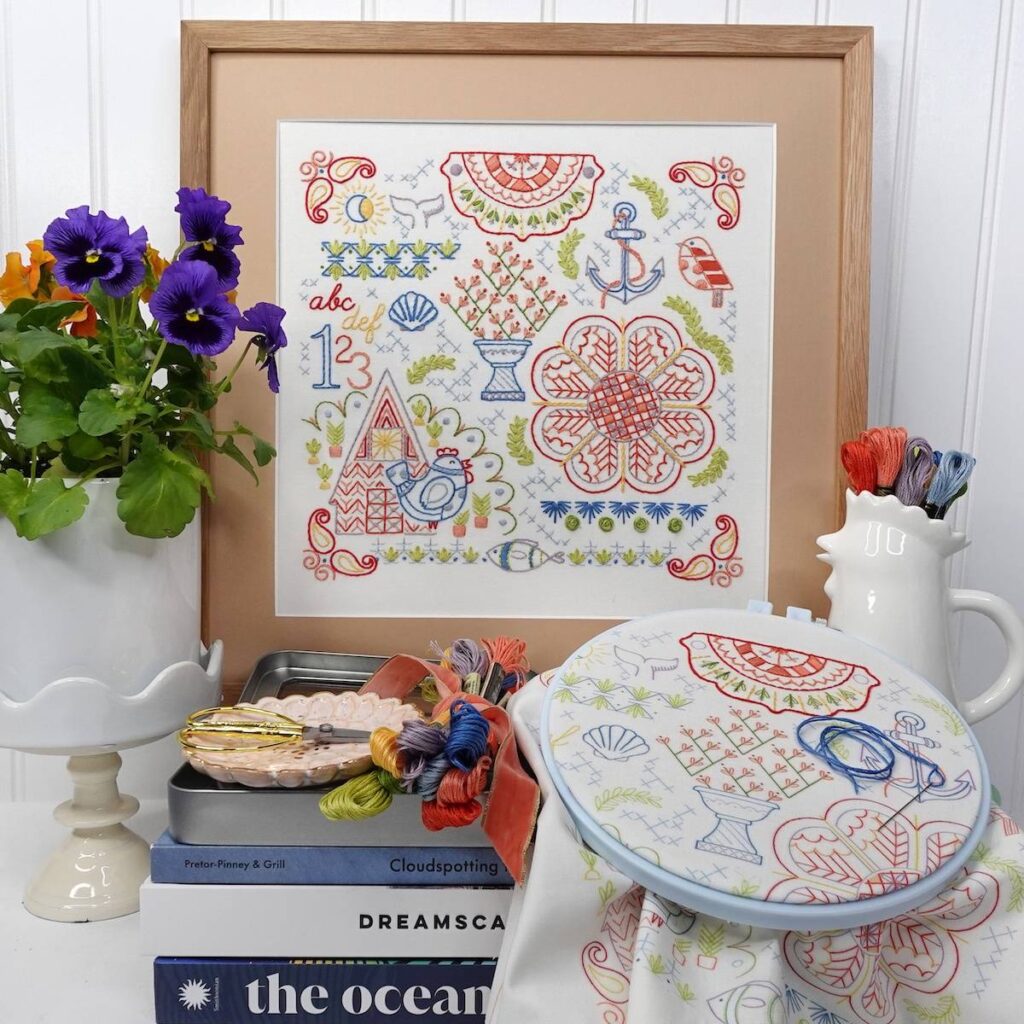
For example, a couple of months ago, I was interested in creating square samplers inspired by cross-stitch. I wanted them to combine themed motifs with decorative ornaments, to have patterned fills that weren’t Xs but kind of geometric, and I wanted corner ornaments.
That’s where it started and the result was Summer Motif Sampler which came out in May 2026, and now I’m almost finished with Christmas Motif Sampler, and I hope to have fall and winter designs in upcoming months.
The same thing happened for a while when I was creating home/room-inspired designs a few years ago. It resulted in a living room scene and a mudroom scene, and a bedroom scene and a Christmas mantle scene.
Another focus I’ve pursued is “band samplers.” These are rectangular and designed with rows that include themed motifs, repeating patterns, and text.
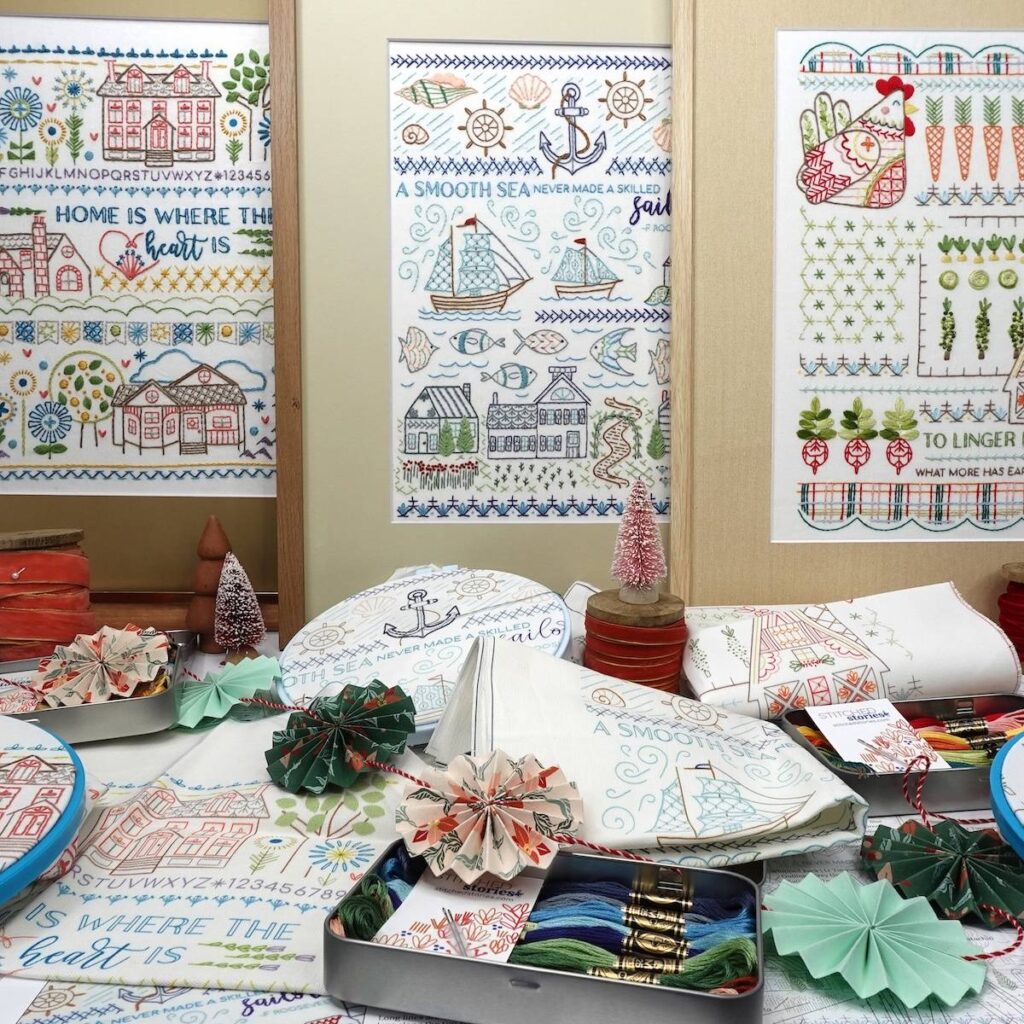
It’s a lot of fun for me to work on a composition over and over again.
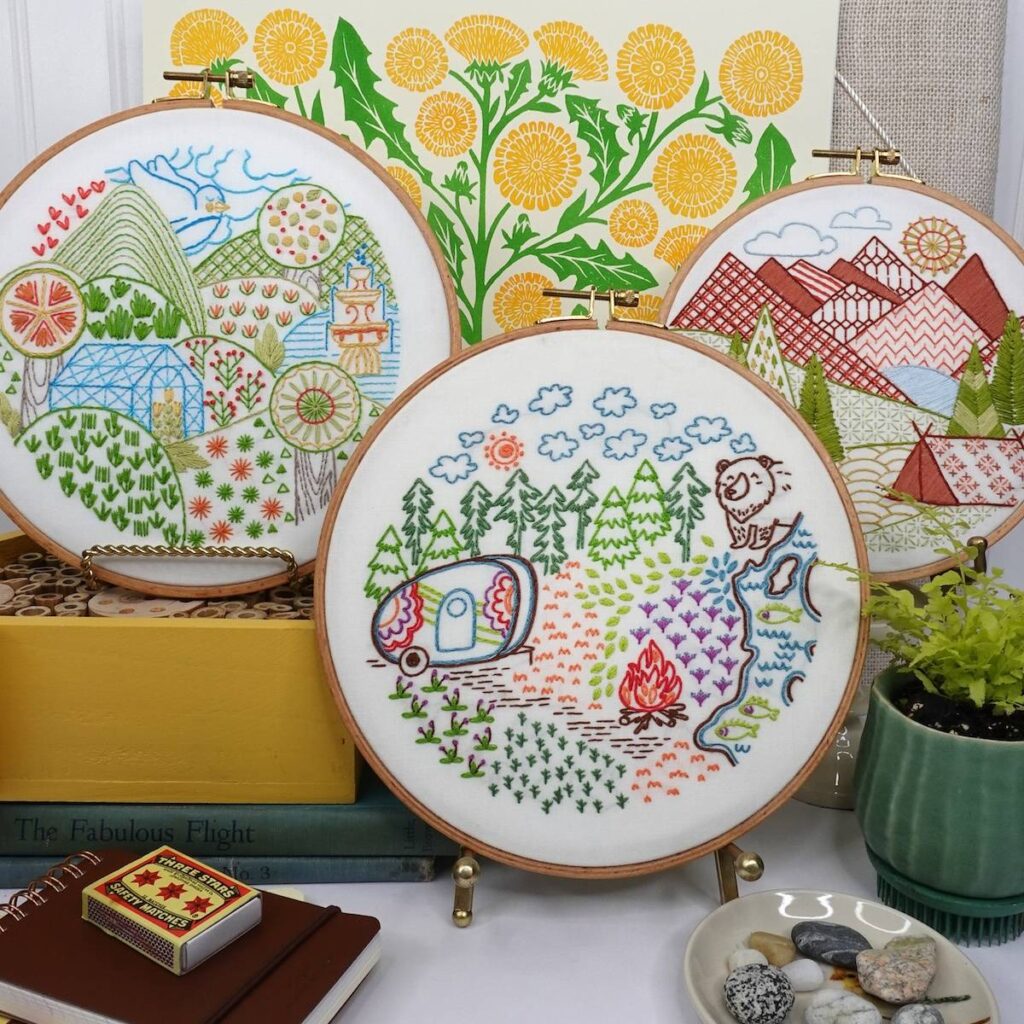
My designs are constrained by my use of REPRESENTATIONAL motifs rather than REALISTIC motifs. I get lots of requests from customers, but these aren’t always subjects that work with a folk-art, non-realistic approach.
When it comes to inspiration, I like to follow artists in related fields: illustration, painting, and ceramics are favorites. I also love following home decorators and stylists. When I see something I like, I want to understand: what’s the mood of the piece, what is it about the style that’s compelling me–and then journal around those aspects.
I also love trend reports and articles that look a season ahead, and I do use that to consider subjects that the market will appreciate.
Describe your creative space.
I work all over the house. My office is quite small and mostly taken up with my big desk and computer with two large montiors. There’s also a table and lights for photography behind it, and I spend quite a bit of time photographing pieces.
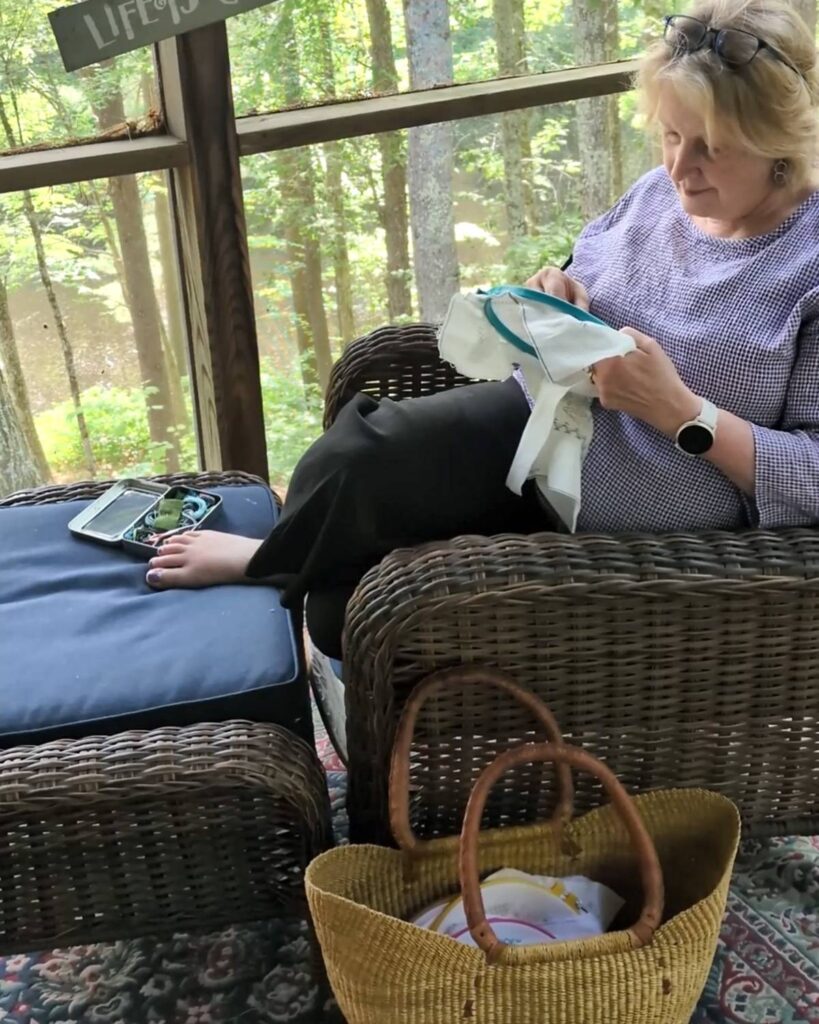
I do a lot of design work on my laptop or with a hoop in hand. I could be in bed with my view of trees and a river, or on the sofa next to big windows for choosing colors, or sitting on my screened porch where I set up a little sewing table workstation in the summer.
Production of kits and shipping them is all done in my basement.
Do you sketch your designs first, or build them as you go?
I spend a lot of time playing with elements in Photoshop, figuring out how I’ll render a motif in my folk-art style, developing repeating and geometric patterns, dragging pieces around the canvas, playing with scale and layering, and flow.
How do you decide which stitches to include in a design?
My favorite lesson in my course, Pattern Design Blueprint is “From Image to Stitches,” and it digs deeply into this.
I’m always looking for ways to use a variety of stitches to render motifs that are representational rather than realistic. I want the project to be engaging to stitch. That means I’m thinking about: whether a motif will be outlined, and whether it will have a fill that is solid, creative, or geometric.
I’m also always thinking about the canvas: options for background rendering and use of borders. Once I’ve got the basics in place, I think about how I can make the approach fresh for the process of stitching and how I can give it solid visual appeal when finished.
How do you test a design before it becomes a finished kit?
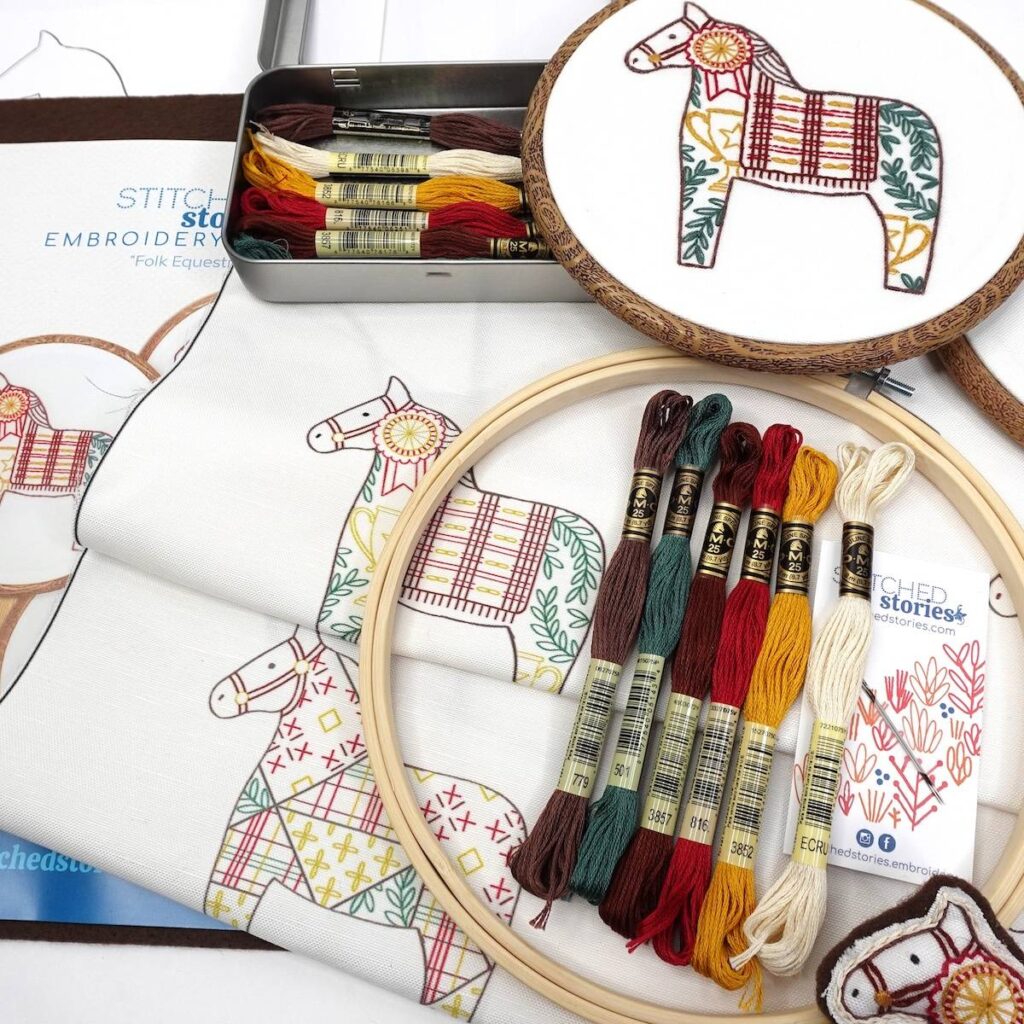
I’m initially designing in greyscale in Photoshop. Quite early in the process when things are rough, I print the design with the goal of looking at stitch scale. I’m looking at things like: will the lazy daisies stitch work well with two or three strands of floss.
This work takes a few days, and eventually, I print to fabric and start stitching, usually choosing colors during the early, quite messy, stitch-throughs.
I usually don’t know it’s not working until I start stitching. I start with a quick and messy stitch-through to see how things are rendering with floss. Designs look so much different in floss than they do simply printed to fabric.
When a design isn’t working, how do you figure out what needs to change?
Most problems in my designs have to do with visual imbalance. Specifically, either stitches and/or color are showing up in a way that’s visually too heavy or not heavy enough–and that’s throwing off balance and flow. And so I make changes and iterate.
I’m continually thinking through these aspects of design as the pattern emerges:
emphasis,
flow,
visual balance
and unity.
My go-to tools for using those design elements successfully are contrast, repetition, alignment, and color.
I also look to add some bit of tension in the piece.
How do you stay creatively fresh after designing so many patterns?
Because my style hasn’t really changed all that much, it’s the COMPOSITIONAL design challenges that help me keep things fresh. For example, the new square cross-stitch-inspired pieces are my newest focus.
You’ve shipped thousands of kits—how has that scale changed the way you design or think about your work?
I stay in my lane and serve my particular niche. The people who like my patterns like:
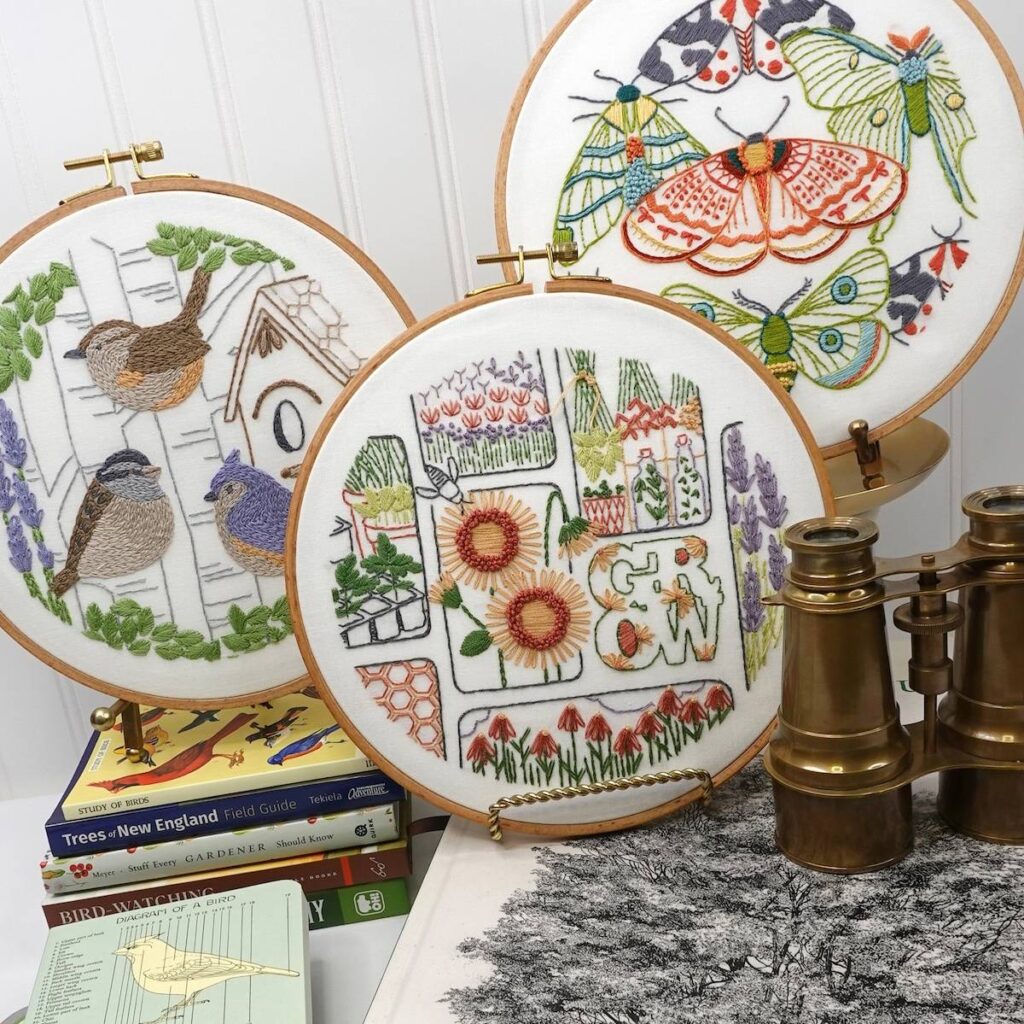
- representational motifs (over realistic thread-painted looks),
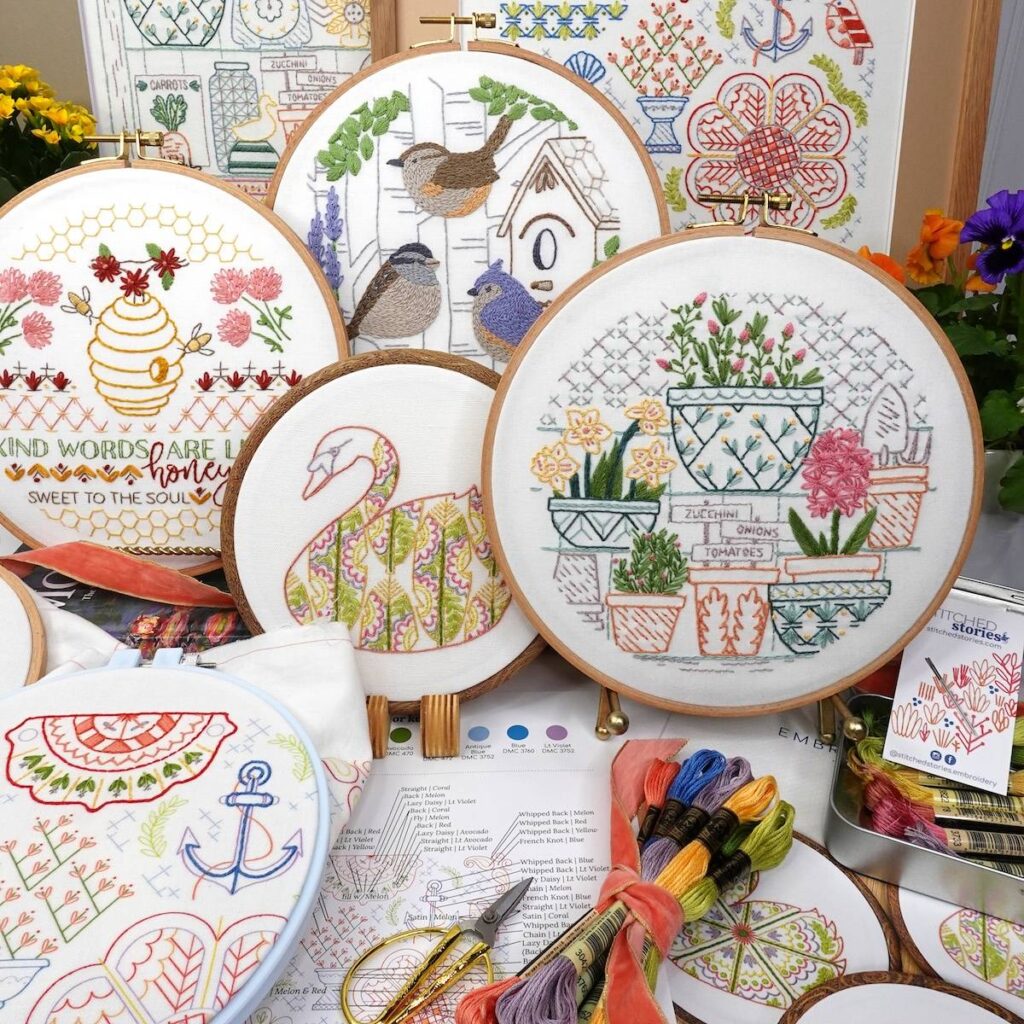
- a design with at least 9 different classic stitches (rather than simple outlines and satin fills)
- easier techniques (over advanced techniques like stumpwork)
Of course, there are those who will move on to more advanced designs and different designers and I’m cheering them on–while continuing to serve my niche.
In order to do the production at this scale and in order to maintain price points, I have guardrails like:
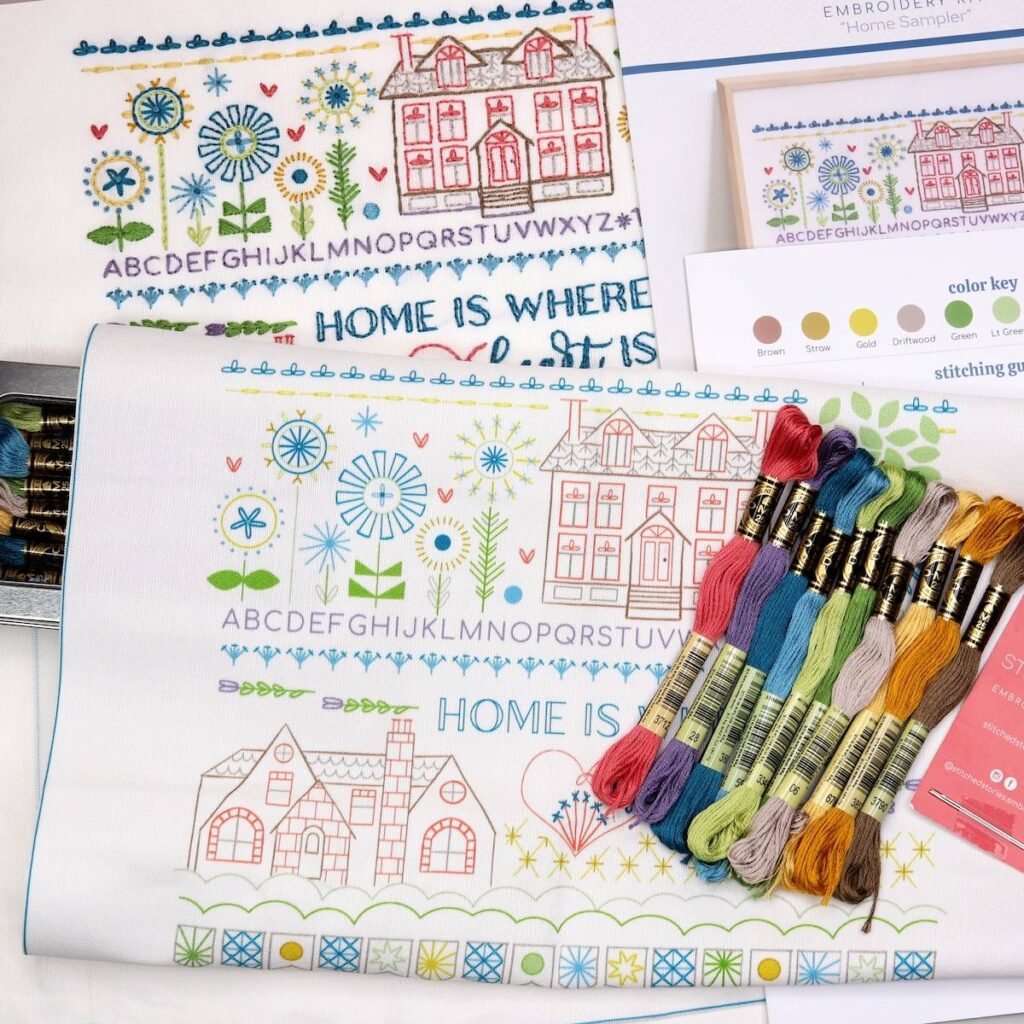
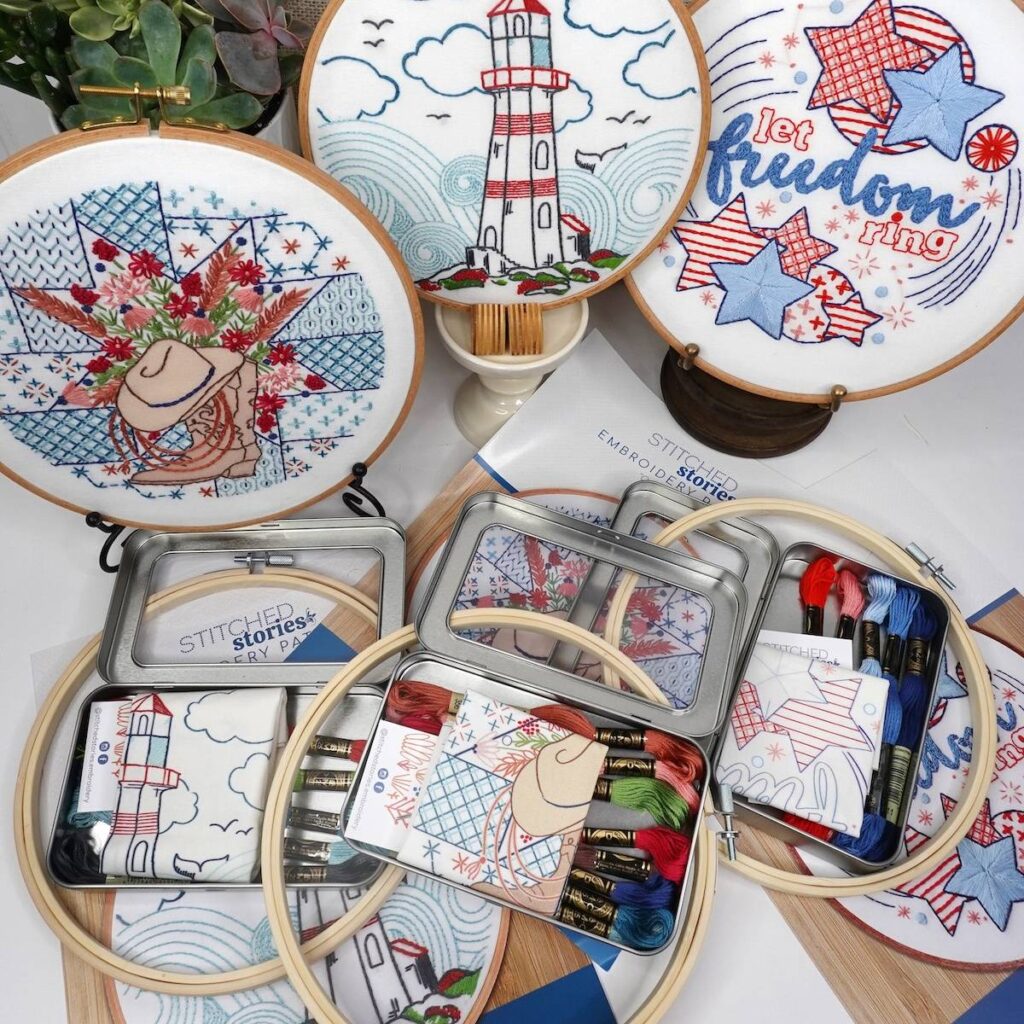
- the instructions need to fit in a 4-page booklet which is always 8.5″x11″ with a large full-color photo of the finished piece on the cover and a detailed diagram to the piece inside
- the floss for round designs is 8 skeins or less (and for larger samplers it’s 10 skeins or less)
- fabric patterns are sized to fit in the most economical way onto the two Spoonflower fabrics I use (42″ wide for cotton and 54″ wide for linen canvas)
- every kit gets packed with the custom branded tins that are a hallmark of my brand
How do you balance being both an artist and a business owner?
My concentration when I earned my MBA was operations management, and the work of inventory management and just-in-time production of over 80 designs is actually creative work to me. I enjoy it.
The same goes for writing emails, developing ads, and social media. These all push creative buttons for me.
That said, designing patterns is my favorite part of the work, and I’ve recently restructured my business to make more time for design.
The shop is now open for two weeks and then closed for about 6 weeks. This enables me to batch up kit production and shipping, and clear up my mind and time for more design work.
What would you say to someone who feels “not creative enough” to start stitching?
Have the faith that if you just start, if you just choose a project and start, you can do this. Especially with an all-in-one kit, you can simply follow the suggestions and end up with a great-looking finished piece.
What’s one small habit that can help someone build a creative practice?
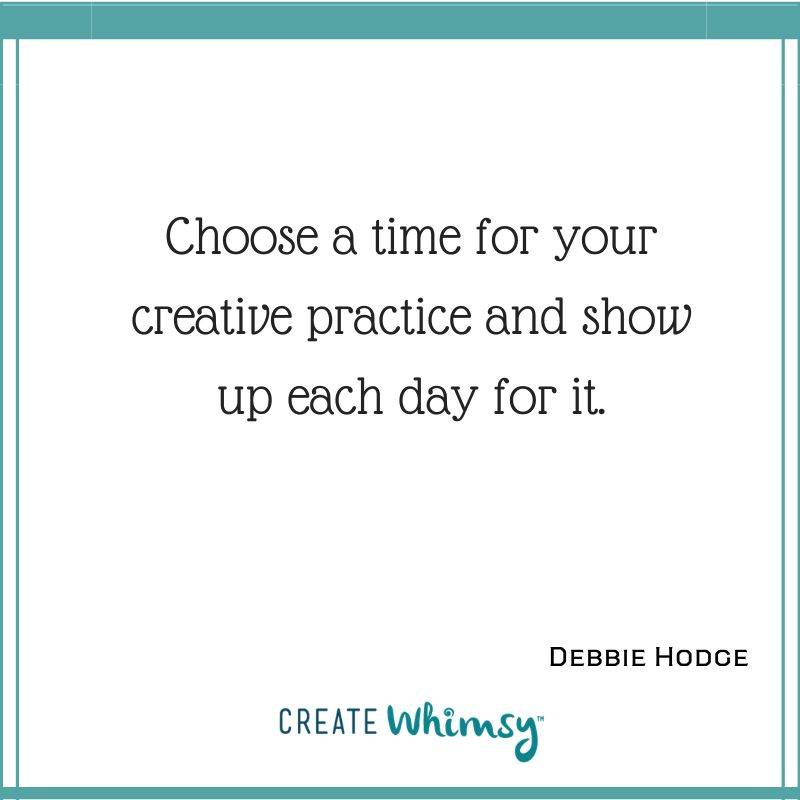
Choose a time for your creative practice and show up each day for it. You only have to render a few paint strokes, written words, or embroidery stitches, or photos when you start. Again: have faith that the process will unfold for you. You don’t have to predetermine the endpoint.
Where can people find your kits and more about you?
Sign up for my growing library of FREE embroidery patterns at StitchedStories.com/FREE — and follow me on Instagram at http://instagram.com/stitchedstories.embroidery
Rapid Fire Fun:
- Favorite stitch right now? Whipped Back
- A color you can’t live without? DMC Old Gold
- One word that describes your creative style? Folksy
- Biggest creative joy? Stitching a project that I’ve JUST designed
Interview posted June 2026
Explore more hand embroidery projects and inspiration on Create Whimsy.