
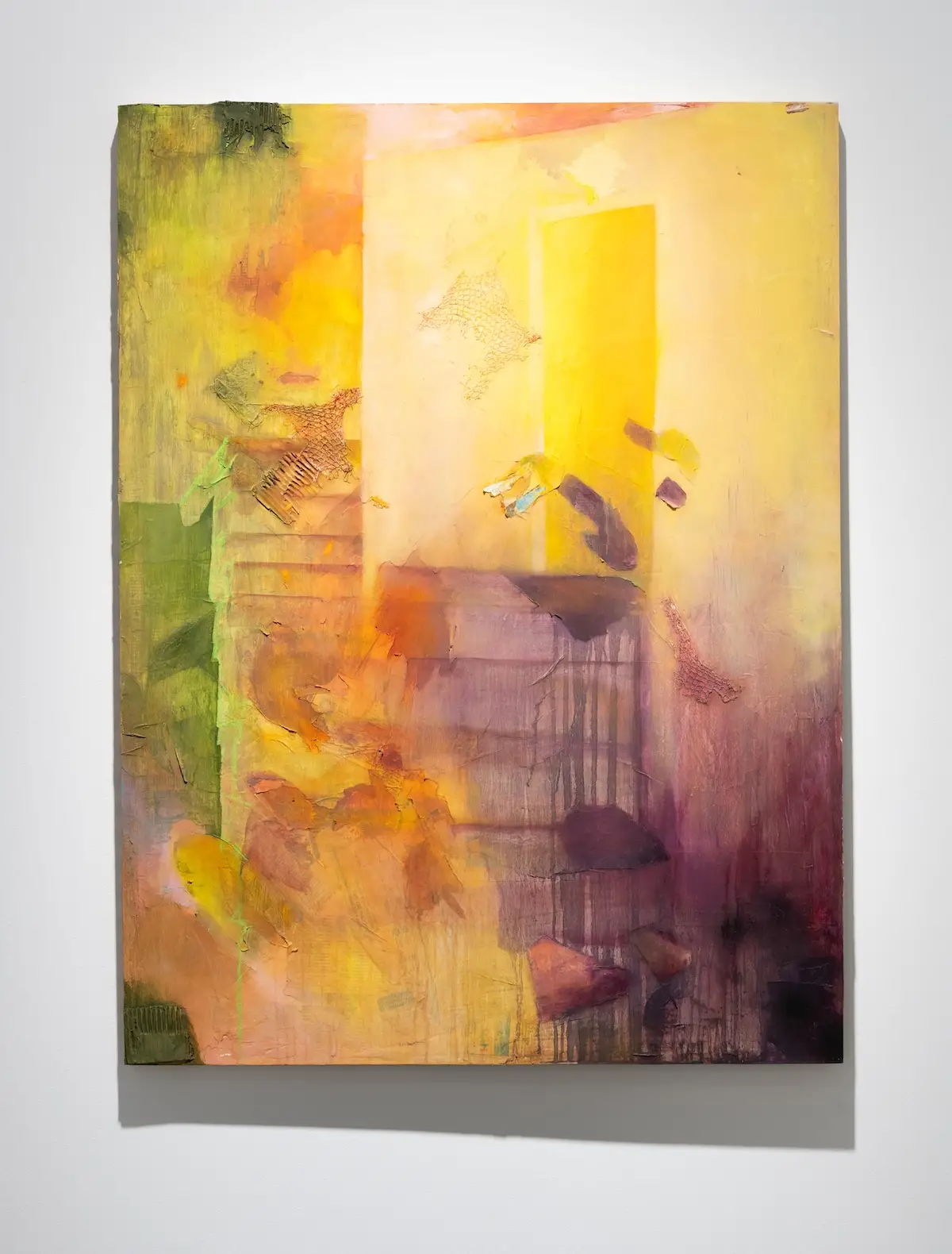
Chidinma Dureke creates paintings that tell stories about home, identity, and belonging. Growing up between the United States and Nigeria has shaped the way she sees the world, and she fills her layered mixed-media artwork with rich color, found materials, and beautiful light. In this interview, Chidinma shares how memory, travel, and curiosity help her build imaginative worlds that invite us to look a little closer.
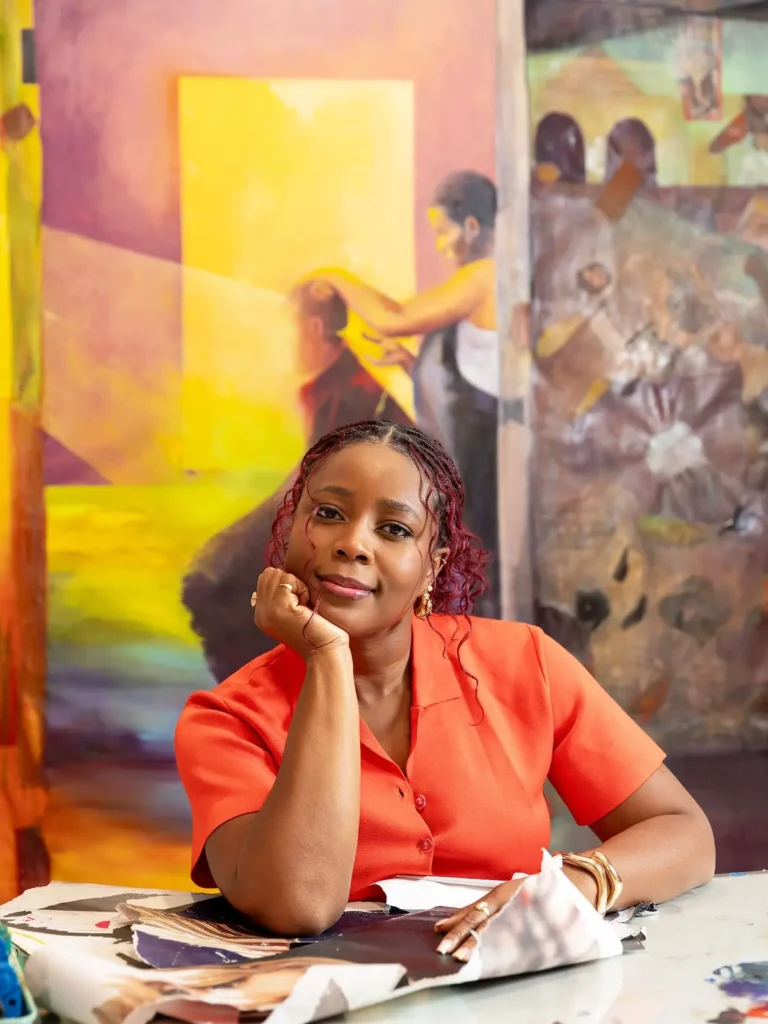
When you were young, what kinds of creative activities filled your days?
When I was young, the activities that filled my days were drawing, coloring, painting, and writing poetry.
I loved make-believe games, playing dress-up and pretend house, school, and superheroes with my Barbie dolls. Building elaborate worlds and creating stories for my dolls with my sister was my favorite part.
When I was in middle school, my sister and I co-authored a book called Arts, Poems, and Stories of the Heart. I believe I was thirteen years old at the time; it was a published children’s book filled with my drawings and illustrations, co-authored by my younger sister, who is also an artist, a filmmaker, writer, and director. While still in middle school, we collaborated to create something tangible together that we could share with the world.
As an Amazon Associate I earn from qualifying purchases. Read more about our affiliate linking policy.
Other creative activities included singing and dancing during summer camp with my friends and cousins. I remember one summer when we formed a girl group and signed up for a local dance competition to see if we could win a prize. We went as far as buying matching outfits and creating choreography for our group. Around the same time, I was part of my school choir, where I sang first soprano.
In high school, I would watch the Oscars for the red carpet looks and sketch various dress designs for fun. I also loved helping my mom design spaces in our home, since I’ve always had a passion for interior decoration, I enjoyed assembling furniture my parents brought home and arranging rugs, pillows, and other décor.
You grew up between the United States and Nigeria. What are some memories from each place that still find their way into your work today?
I have several fond memories from the United States to Nigeria that find their way into my work, where I am always trying to make connections between both places.
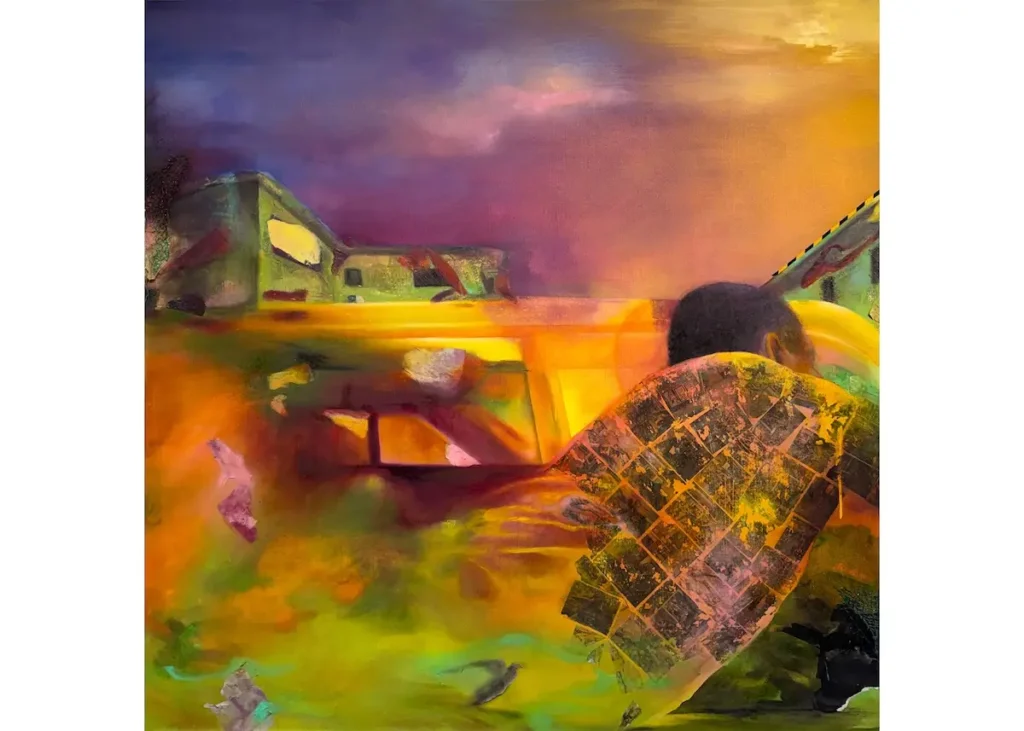
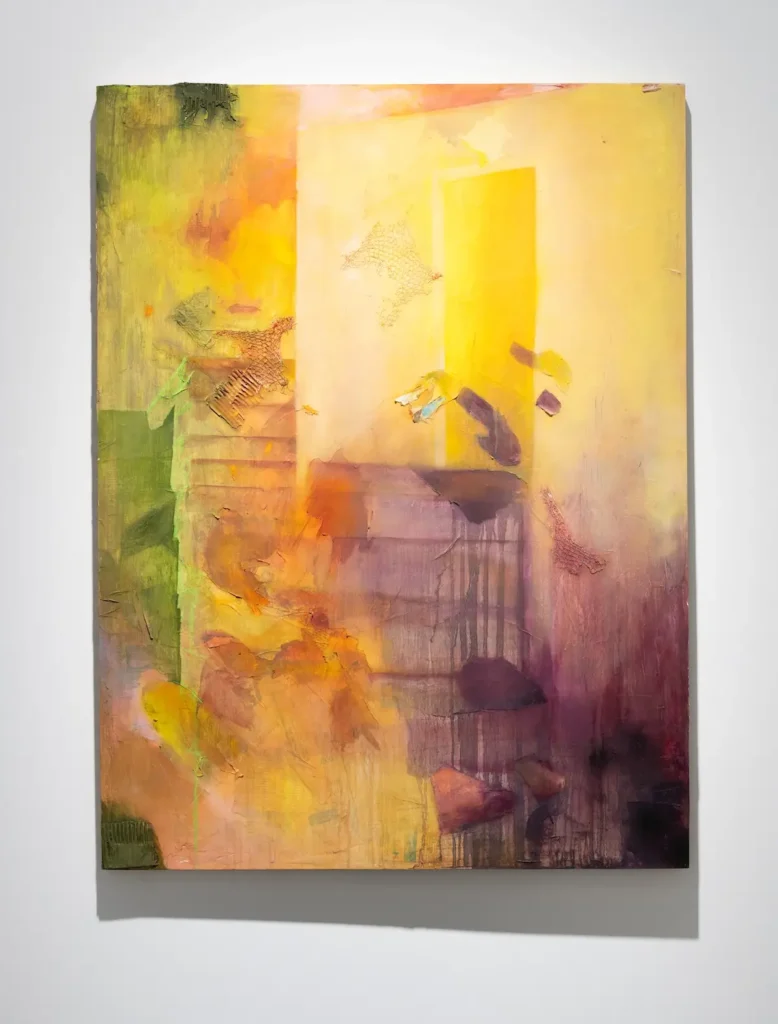
West African modernist architecture is a theme that has constantly been finding its way into my work. For example, there is a recurring climate-conscious weather design of spaces in my work that is inspired by my dual identity and liminality. I am constantly thinking about interior and exterior spaces that are affected by intense rainfall, flooding, heat and humidity, or threatened agriculture and climate change.
The most important memory for me that finds its way to my work is the magical and supernatural sunlight I have always experienced. I don’t know if my growing up Catholtic has anything to do with this spiritual light but I’ve been fasicnated with works by artist like Caspar David Friedrich and Richard Mayhew.
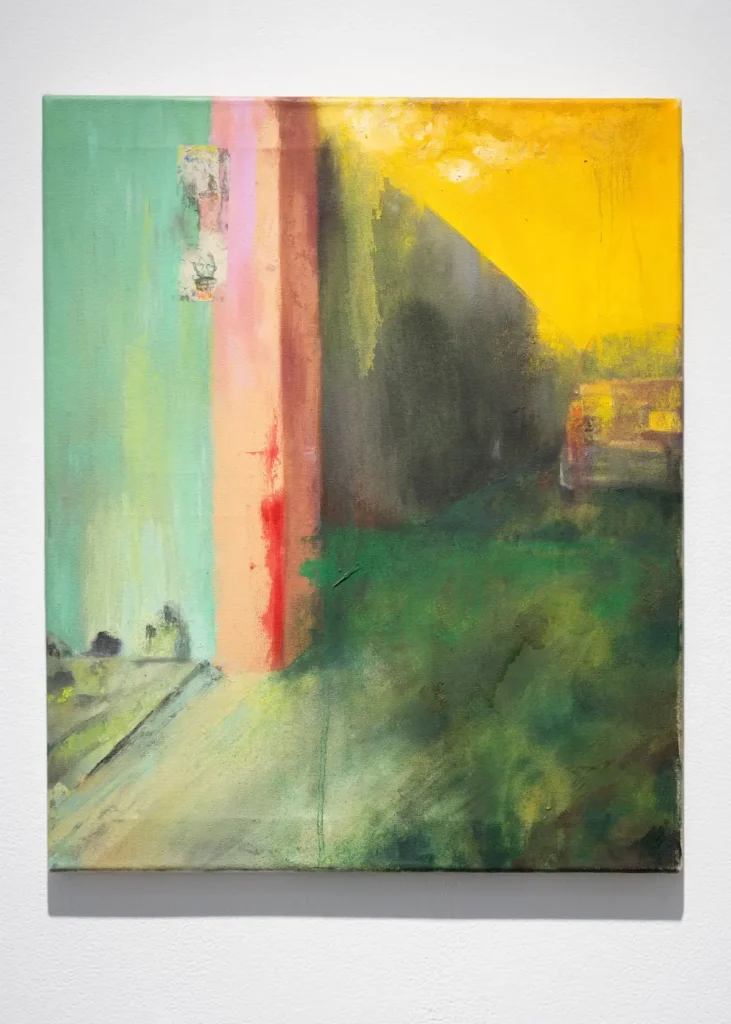
Anyone who has been to Africa will quickly notice that the sunsets and sunrises are spectacular. I have spent several years examining and documenting the way the light rises and falls in countries, cities, and towns I’ve traveled to (such as Enugu, Nigeria, Cannes, Mexico City, Montego Bay, Jamaica, Cuba, and London).
From my observations, I have noticed that the sunlight abroad holds this strong, orange-yellow, almost red-orange glow that takes us beyond ourselves, forcing us to focus on becoming more expansive, open, and aware of the big picture of what is going on in the world or what the future holds.
There is a unique atmospheric quality of daylight in Nigeria that takes me beyond the borders of America, bringing me back to Africa and leaving me feeling spiritually inspired and energized. I attempt to recreate this spiritual or magical light in my work, a light that exposes the interior self, which cannot be seen under the natural sunlight along the East Coast of the United States.
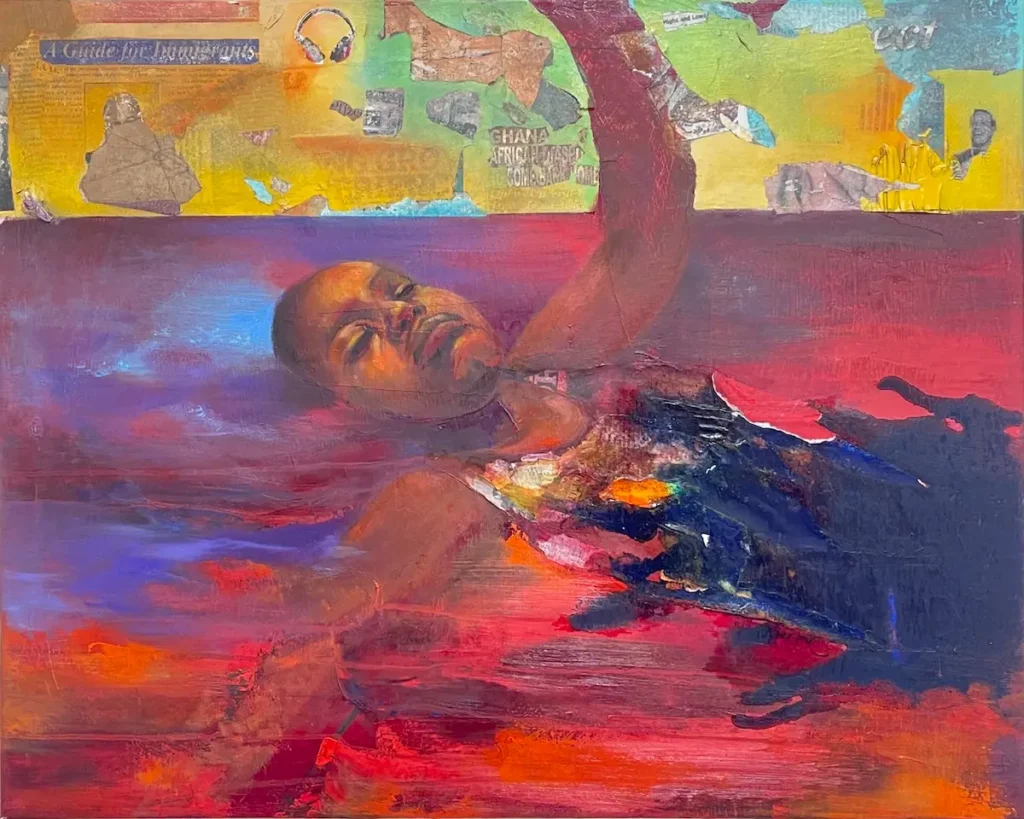
Your work has evolved from portraiture and graphic design into layered mixed media paintings and installations. What were some important turning points along that journey?
I believe that many of my recent works still carry elements of portraiture and graphic design. The major turning point for me was letting go of what I already knew about portraiture and graphic design while pursuing my MFA at the Maryland Institute College of Art.
One of my professors would often tell me, “The painting is not an illustration of an idea, but the idea itself.” This shifted how I thought about art and art-making completely. I began approaching my work intuitively, focusing on the feeling behind an idea and how I could materialize that feeling within the piece itself. That became my goal.
I started to let go of the categories I had used to define my art-making and leaned instead into the process of making.
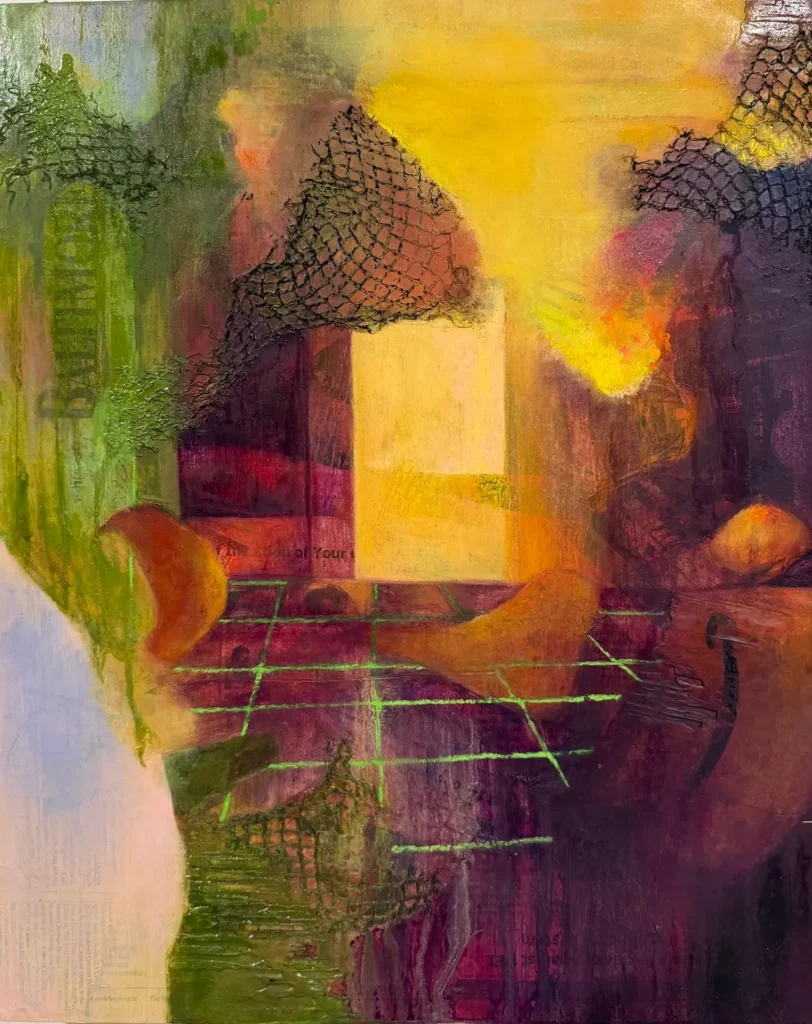
My thinking turned toward collective consciousness, toward the materials I could fold into a painting to address the relationship between man and self, and, in parallel, between man and earth, as filtered through my own lived experience. This multi-layered identity takes shape in mixed-media oil paintings that weave together everyday materials gathered from multiple geographies and metropolitan cities.
Today, my focus has shifted toward creating harmony between abstraction and figuration within each piece. And with every installation, I find myself asking the same question: how can a single painting transform the entire space around it?
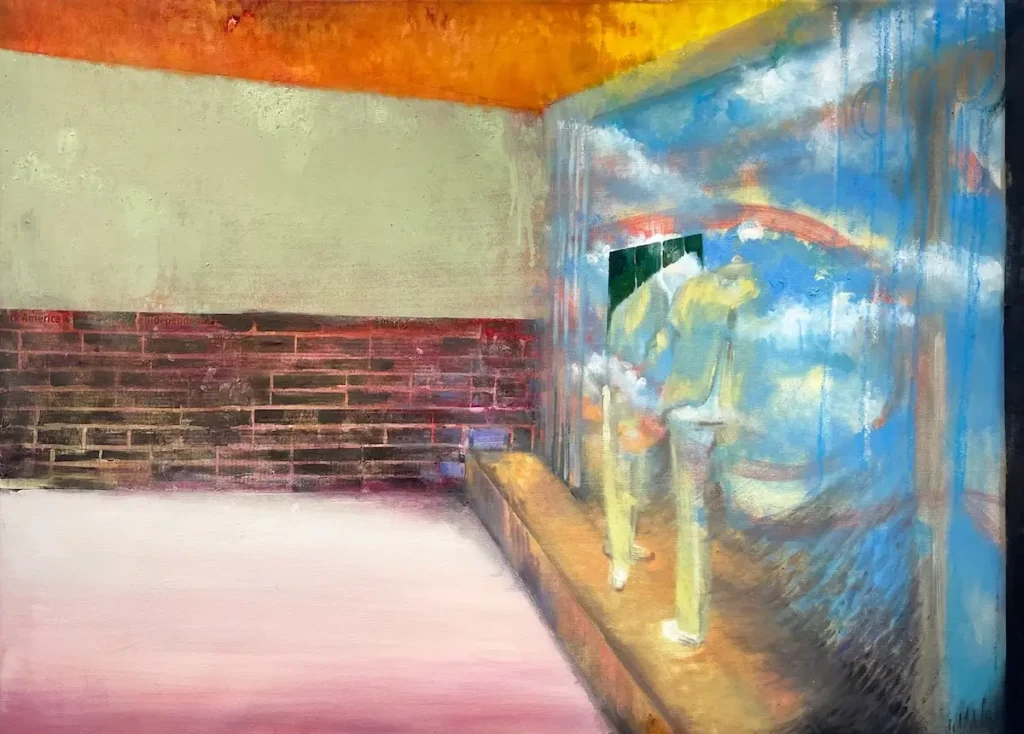
Was there a particular artwork or series that felt like a breakthrough moment?
I can’t point to a specific painting as my breakthrough moment, but I can say that writing about my work completely changed my practice. I took a creative writing course that required me to produce a series of prose pieces and short poems, and through that process, I began to find language for work that felt more abstract and otherworldly.
When I returned to the studio afterward to create a new series of paintings, I found I could no longer paint the way I had before. The work was no longer literal or linear; it had become a metaphor.
My focus shifted toward capturing mood and tone. Verbal and visual imagery emerged as a new characteristic in my work, and in some ways, it became a kind of superpower.
Rather than recreating the personal images I had initially set out to depict, turning inward toward the imaginative proved to be the greatest breakthrough of all.
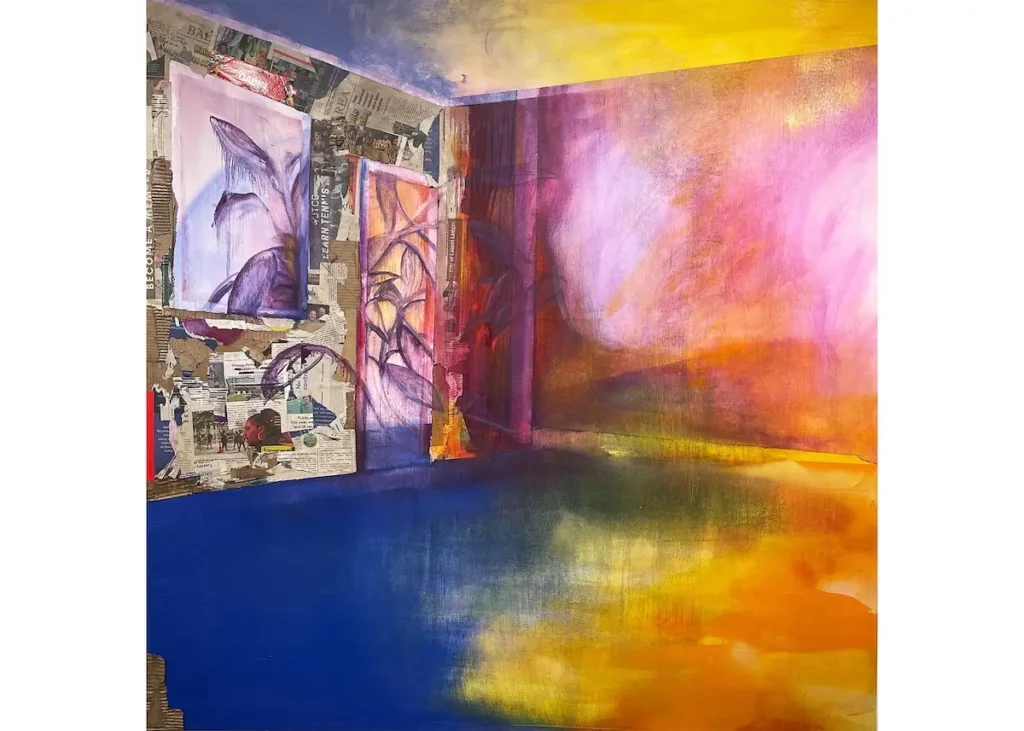
What parts of your earlier work still show up in your current practice?
Several of the colors, lines, shapes, and forms from my earlier works still appear in my current practice.
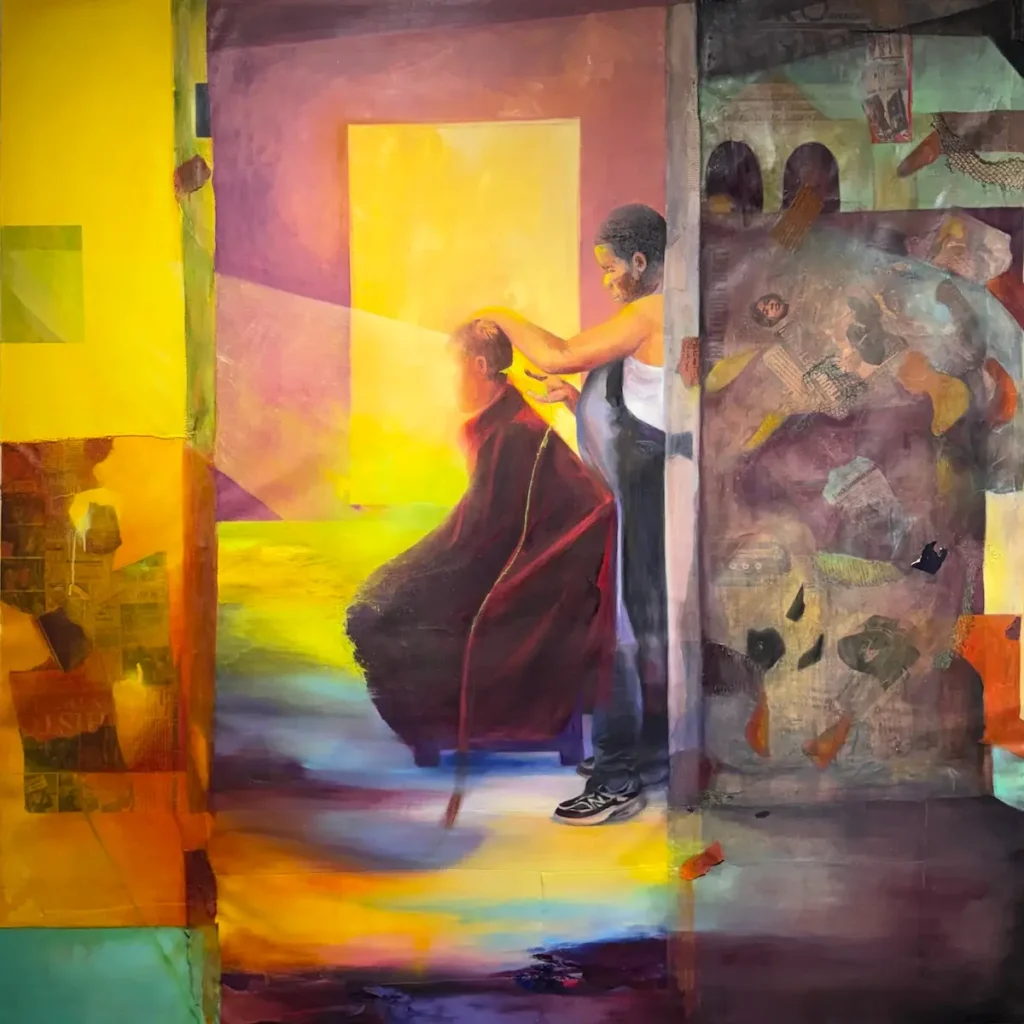
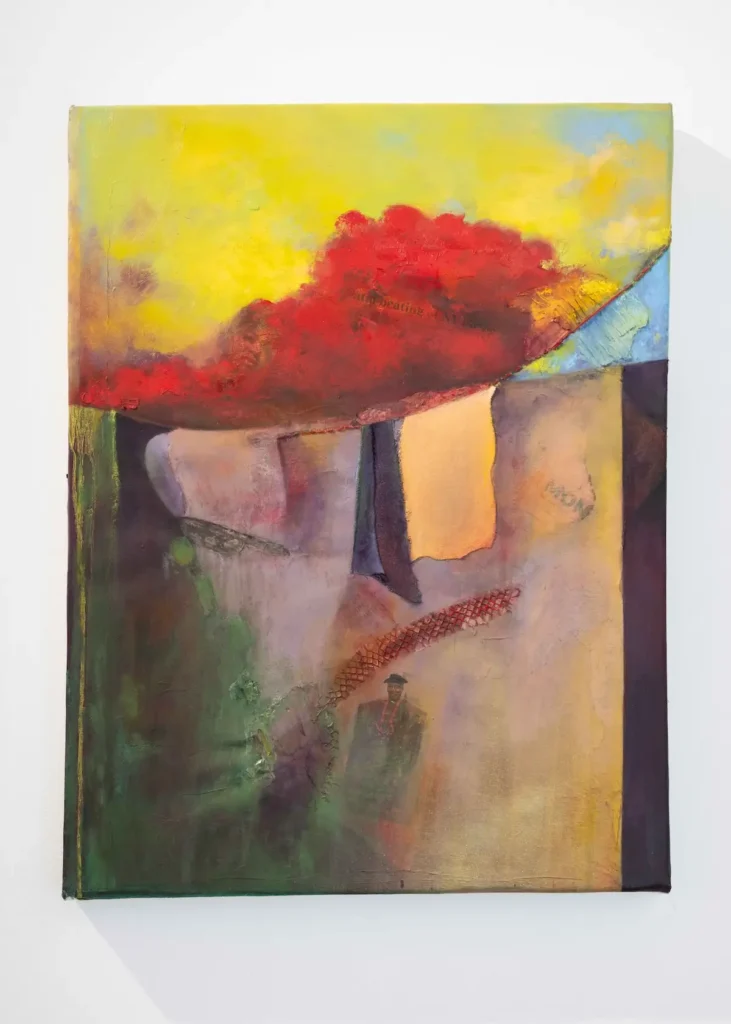
I originally began by painting literal portraits of the Black and Brown people who populate my Afropolitan world; now, I believe I am painting the figure’s world, or interior landscape.
My focus has shifted toward world-building, constructing the environments and fragments that make up a specific identity. I continue to draw on graphic design elements such as newspaper text, graphic photo transfers, or found cardboard.
I think carefully about which materials can introduce a sense of quirky humor or joy into a painting, offering relief from the doom, alienation, or oppression embedded in the subject matter.
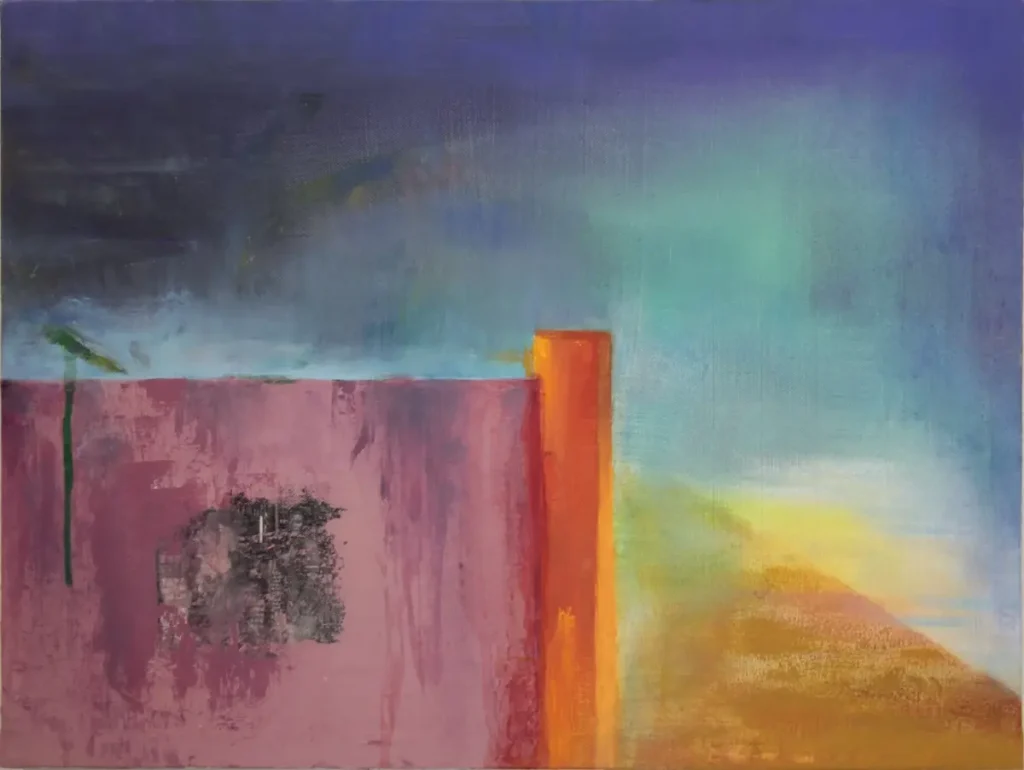
Much of your work explores what it means to live between cultures. How do you describe that experience in your own words?
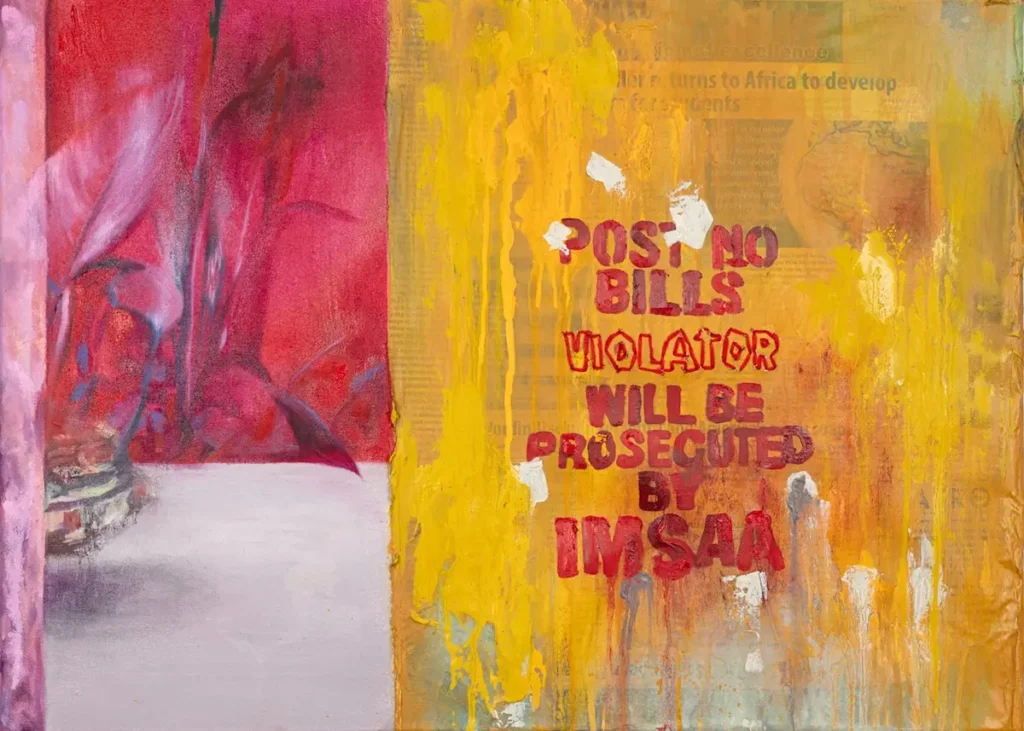
A significant amount of my work explores what it means to live between cultures. Spaces collide. Moments of differing locations melt into one another. Two spaces psychologically and physically become a third space, blurring the distinction between interior spaces.
The only way I can describe this feeling/experience is…” if this is not my home, why does the key fit the lock?”
Do you keep sketchbooks, journals, photographs, or collections of inspiration?
Yes, I keep several sketchbooks. I maintained a consistent sketchbook practice for years before I started working on larger paintings.
Today, I use my sketchbook as a visual diary or journal for potential paintings or sculptural installations.
If I hear an interesting phrase on a podcast or the radio, I write it down in my sketchbook; if I hear a song lyric that resonates with me, I jot that down too; and if I’m reading a book, I’ll take notes in my sketchbook as well.
Then, when I get back to my studio, I look through my sketchbook to see if there are any threads connecting all the random things I’ve been thinking about, and I create a series of work based on those ideas.
For visual inspiration and for reference, I also take photos, lots and lots of photos!
What role does color play in your storytelling?
Color plays a very significant role in my storytelling.
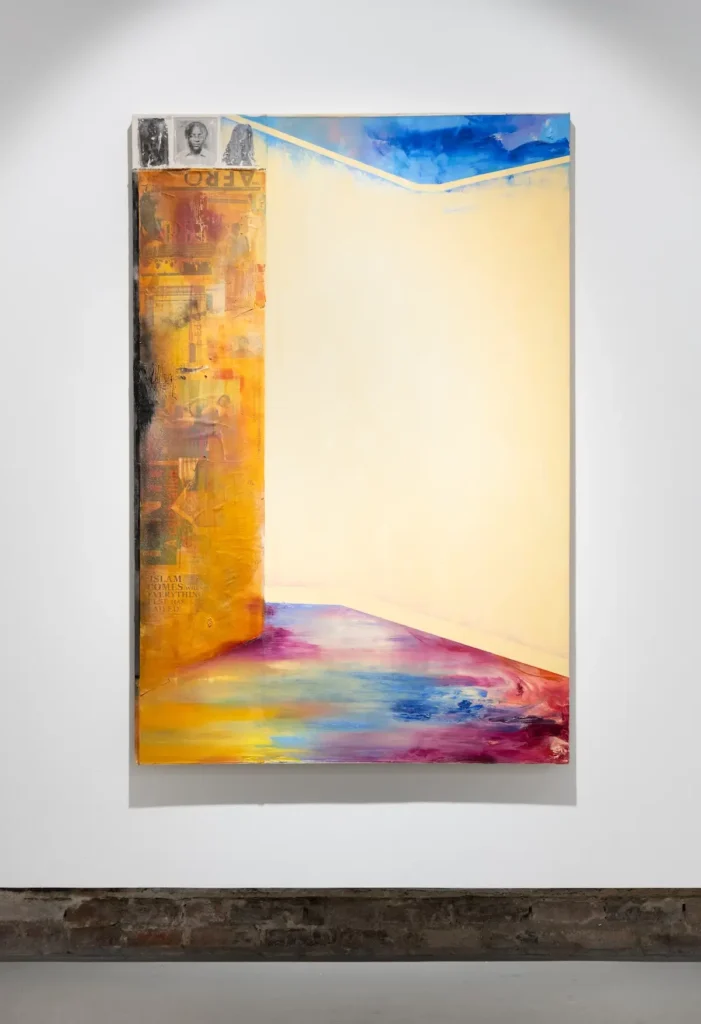
Color conveys symbolic power. Color reveals the distinct characteristics of each country, town, city, or place I call home.
By breaking down the boundaries between spiritual light overseas and natural sunlight in America, the sharp contrast in color shifts to reflect a complex identity. Under the luminous skies, our senses, memories, and moods mark the feeling of being everywhere and nowhere at the same time.
Shaped by both African and global influences, color marks the environment around and emotional or psychological states of the Afropolitian. A provocative color palette indulges in tantalizing flavors of the Diaspora and tempting tones vibrate across the canvas.
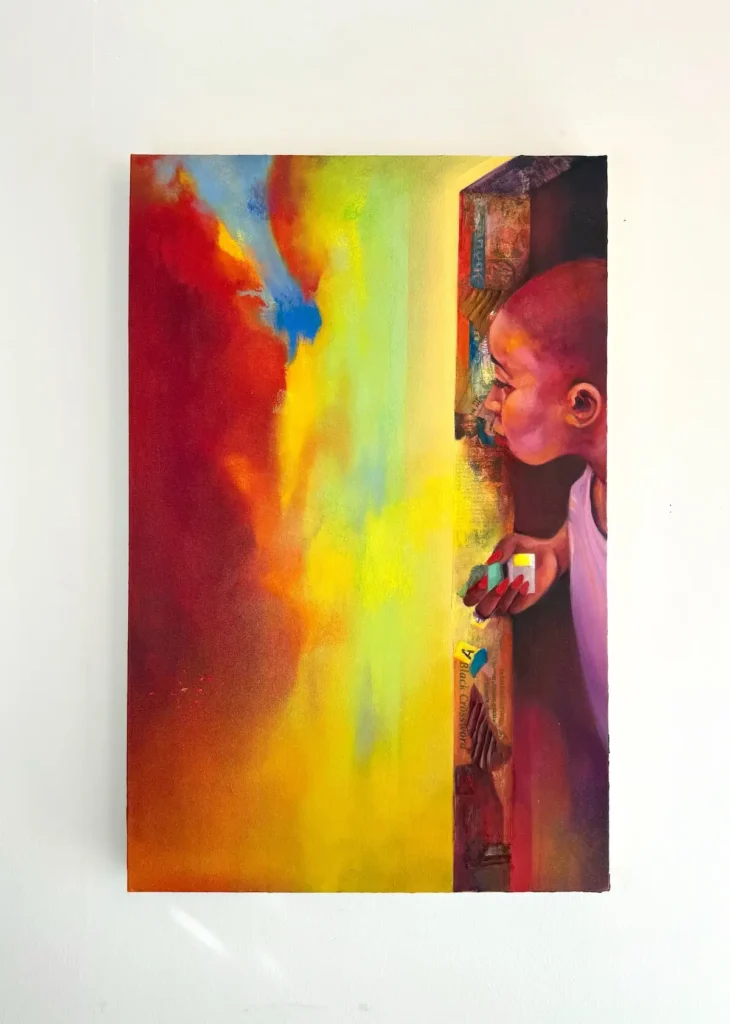
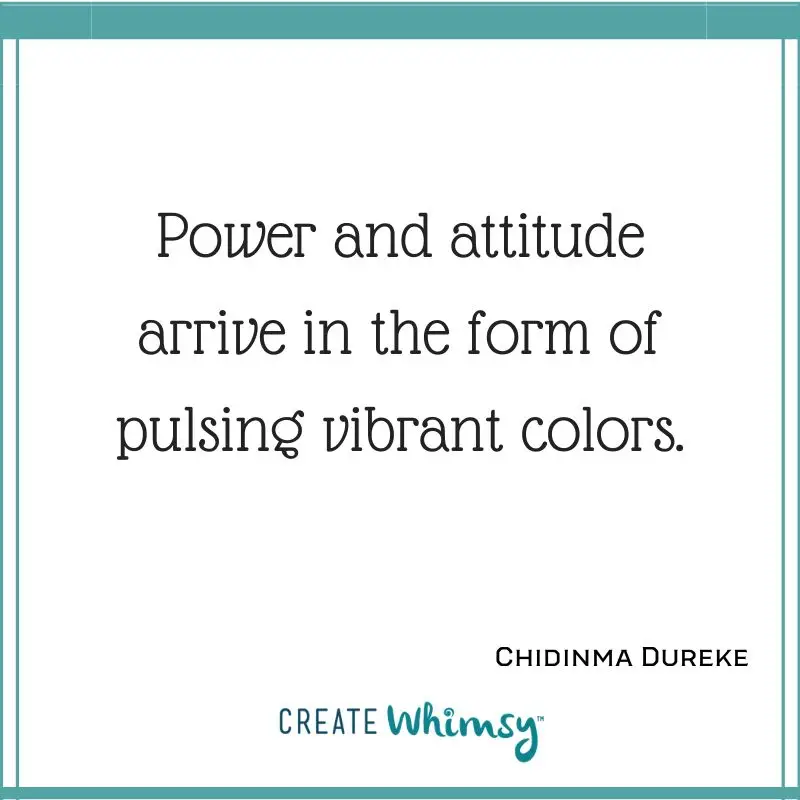
Bright colors cascade off a garment, across walls, inside contemplative figures, or on the surface of a beverage. Power and attitude arrive in the form of pulsing vibrant colors.
Have you ever had a piece that seemed determined not to work? What helped you find a way forward?
Yes, I have had several pieces that seemed determined not to work. To be sincere, I hate it when that happens with a painting or idea because I don’t know it’s not working in the moment. I only then realize that it didn’t work when I feel the piece is “done” or completely lose interest in it.
What has helped me find my way forward from the pieces that seemed determined not to work is, number one, don’t paint family members that you don’t have the best relationships with, and two, step back to assess what you learned from the bad painting and see what positive techniques you can bring into the next piece.
What does a fulfilling creative life look like to you?
For me, a fulfilling creative life would look like curiosity that doesn’t run out and staying inspired by everything.
Maintaining a hunger to learn new things, ways of being and seeing. Not just building towards some fixed moment or career goal, but staying in motion across all aspects of my life…professionally and personally.
What advice would you give to someone who is trying to build a creative practice while also balancing work, family, and everyday responsibilities?
Don’t give up! I would suggest reading the book Atomtic Habits by James Clear.. This book taught me to focus on creating systems first not goals…it’s changed my practice as an artist.
Where can people see your work?
If you’d like to see my artwork in person, I have a solo show coming up at the Hamiltonian Artists in Washington D.C. Fall 2027.
On my website at chidinma-dureke.com or on my Instagram. I also have an email newsletter that you can sign up for on my website. And if you would like to make a purchase inquiry on any of the paintings on my website, you can email me at hello@chidinma-dureke.com
Rapid Fire Fun:
A place that inspires you? Travel in general inspires me, but the place that inspires me most is Nigeria. Although I was born here, in the United States, both of my parents are from Nigeria. I don’t know how to describe it, but being on the soil of my ancestors energizes me. There is something magical and spiritually soothing about the experience that always makes me feel like I am home. Being out in nature, in the sunlight, and around family is a huge part of it. There is also something about the strength and resilience of Nigerian culture that inspires me…the sounds, the smells, the air…not to mention the fresh food, amazing music, and beautiful clothing and fashion.
What are you excited about right now? I am really excited about my life and journey. I am deeply excited about my current practice and spending more time making new work.
What do you hope your art leaves behind? I hope my art leaves behind a feeling of hope, spiritual light, joy, trickery, endless questions, and a renewed sense of belief in life and humanity.
One word that describes your studio right now? Curiosity
A material you never get tired of using? Rabbit skin glue
What brings you joy right now? Sisterhood, Family, Friendship, and Community. What brings me most joy right now is the quality of people I have in my life, not the quantity.
Interview posted August 2026
Explore more mixed media inspiration on Create Whimsy