
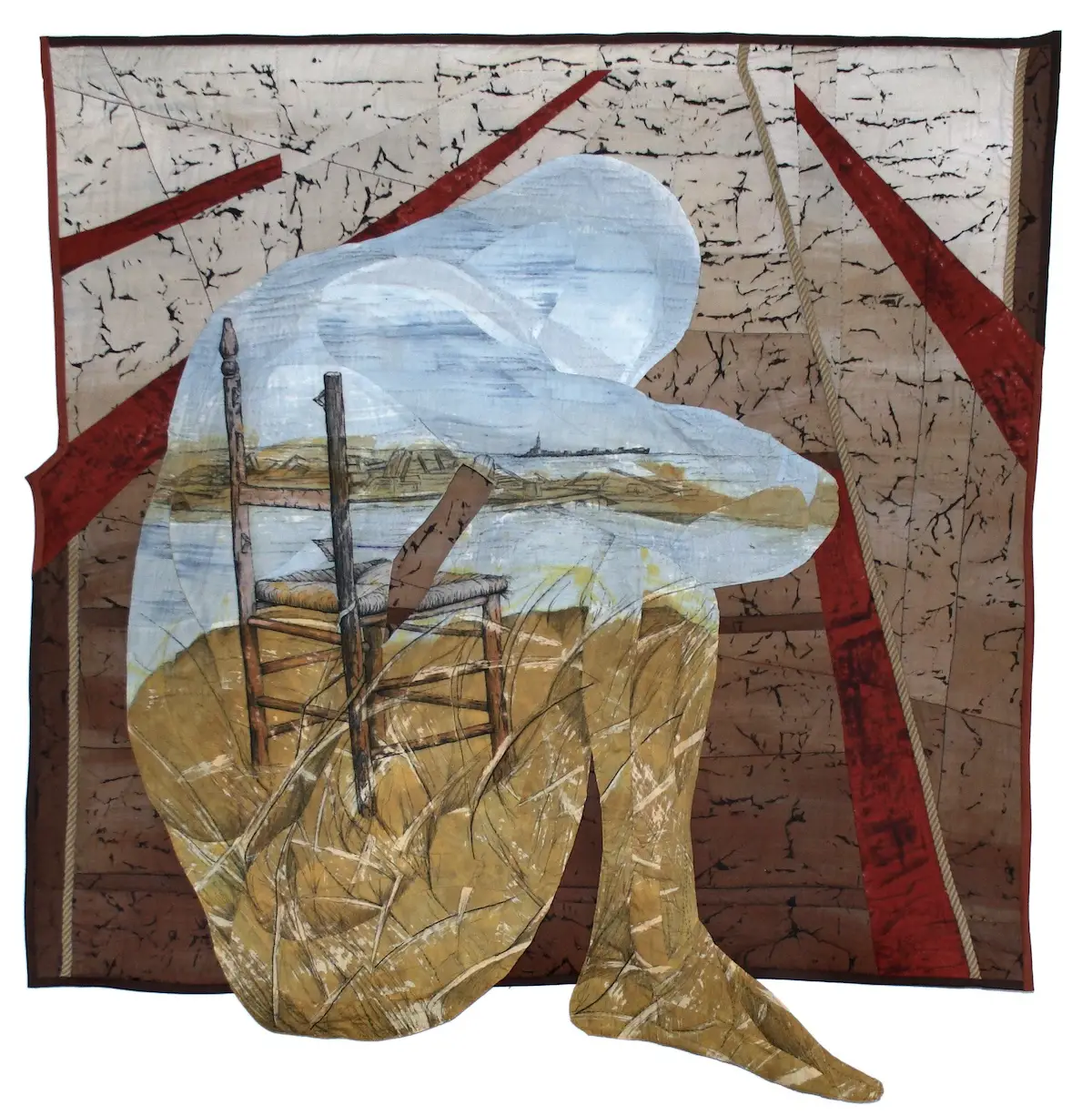
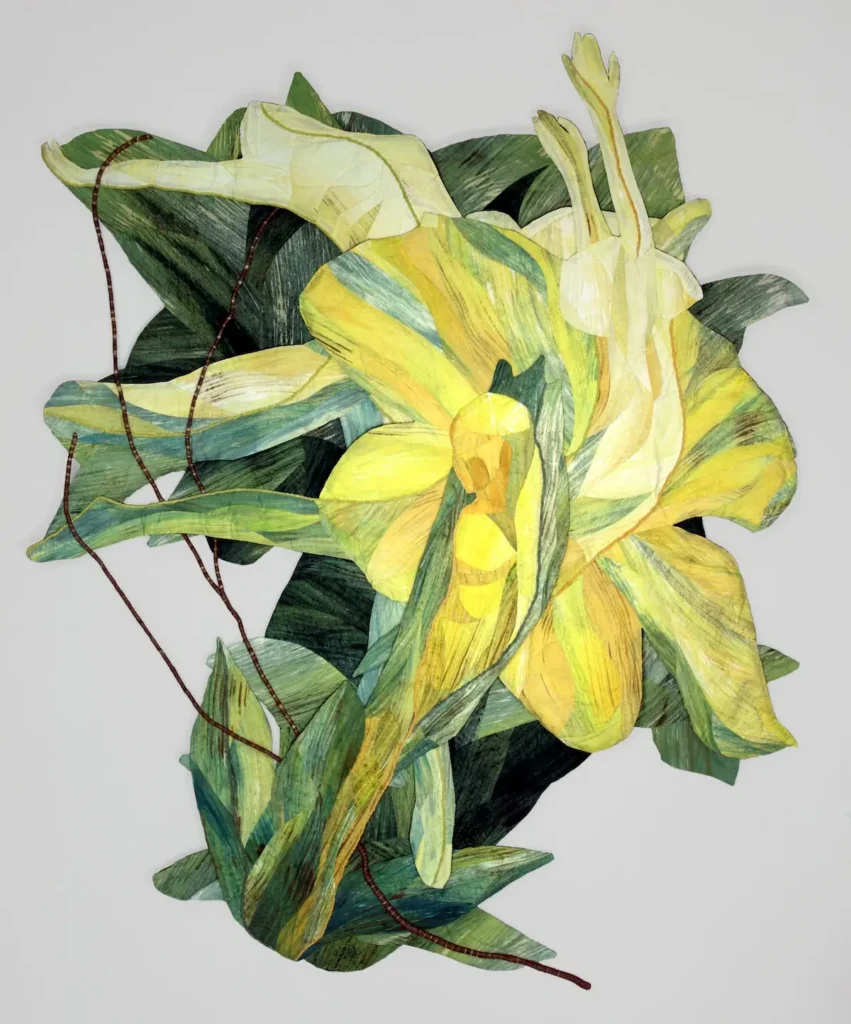
Brenda Bunten Schloesser’s work pulls you in with depth and movement, then surprises you when you realize it’s all fabric. Drawing from a deep family history of sewing and years of pushing boundaries, she creates quilted fiber sculptures and textile mosaics that explore resilience, memory, and everyday life.
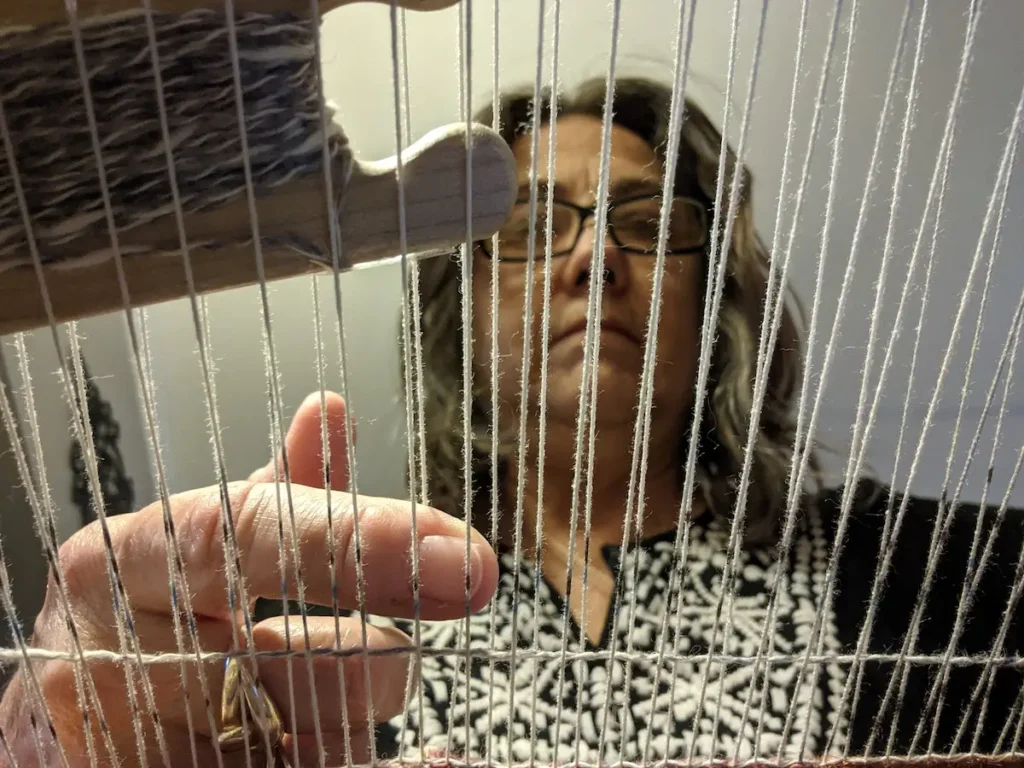
When did you first know you wanted to be an artist?
I have always been drawing or creating things for as long as I can remember
What drew you to fiber and textile art in particular?
I was raised in a family where the sewing machine was a main piece of furniture in the house. Grandmothers, Aunts, Mothers, passing down generations of information from seamstresses, quilters, weavers, embroidery to needlepoint. All this filled me with a strong foundation that led me into Fiber Art
As an Amazon Associate I earn from qualifying purchases. Read more about our affiliate linking policy.
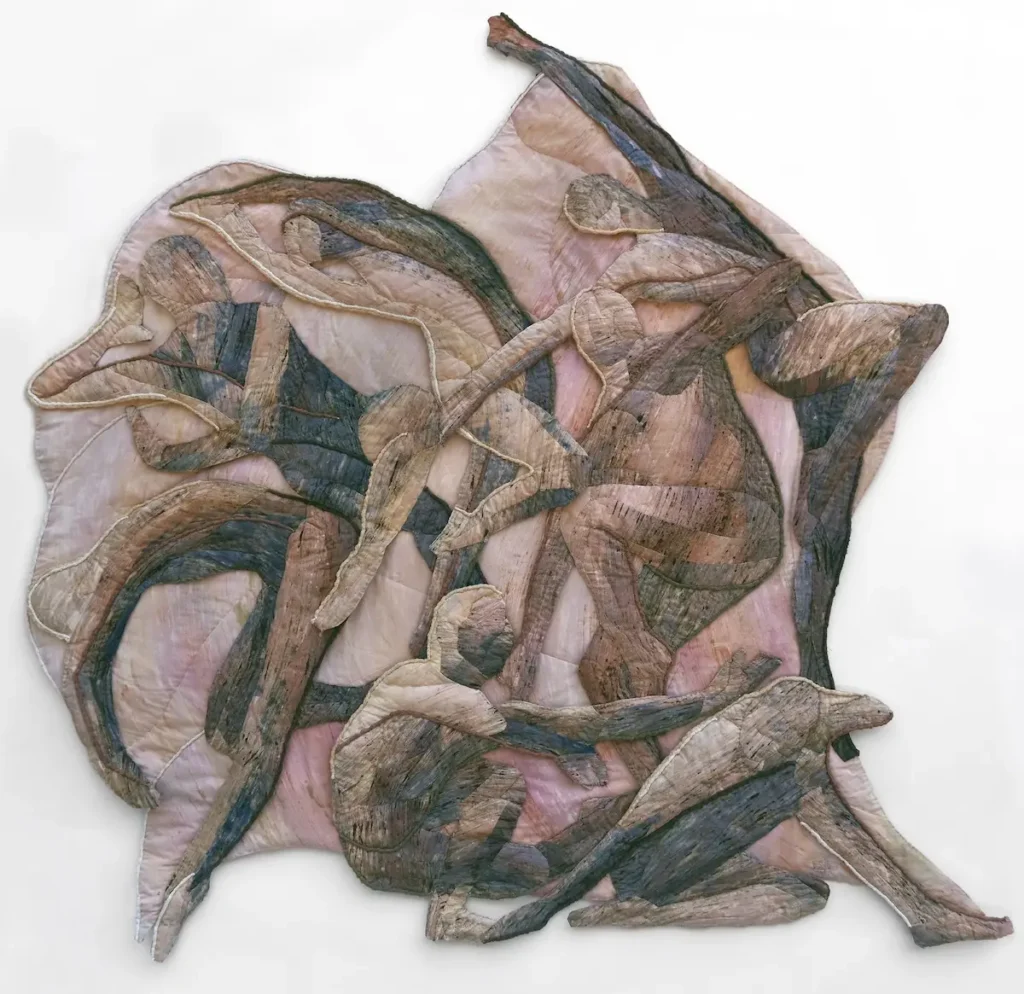
After a year of separation from friends, family and loved ones, remembering all and who we lost.
How did your time at the Kansas City Art Institute shape your creative pat?
At KCAI we were pushed to look at things from different angles. Create in ways we would have never thought of going, always pushing the bounders.
In 1975, my first year was the Foundations year. One day, while I was working on a drawing, my instructor, Steve Whitacre, came up and said I want you to draw this (it was a detail photo of a monkey) on this wall. He brought in a projector to shine the photo on this huge white blank wall. Then he said I want you to only use dots. During that year, we would not only learn different ways of seeing things, but we would have to learn everything from using the tools in the machine shop to the photo lab. Our final that year was to make a Second Self so real that our mother would feed it. These challenges would set the tone for the next 3 years, being pushed to the very edge and beyond.
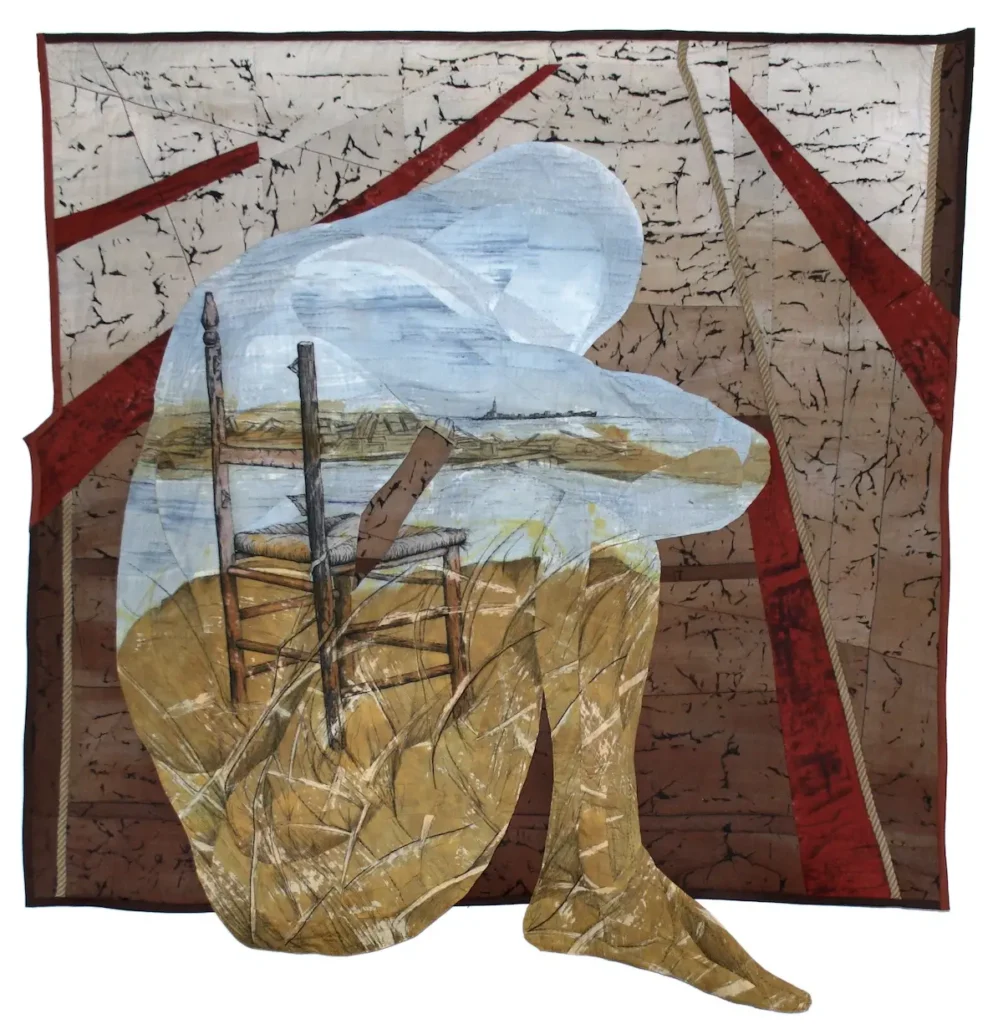
In the second year, I decided my major would be Fiber, following my family background. For the next 3 years, I studied under Joan Livingston, now Professor, Chair of Fiber and Material Studies at the Chicago Art Institute
After graduating from KCAI, I started working in the art department of a screen printing company, Artex Sportswear Division of Jostens, Lenexa KS. We later moved to WA, where I worked at a startup company, Color Graphic Screen Printing in Tumwater, WA. as their graphic artist, and helped build their art department.
Then we moved to TX where I freelance graphics and illustration for printers in the Galveston Bay area.
While still working my day job, my focus started turning back to my roots and fiber art: quilted wall sculpture, which moved into Textile Mosaics.
What’s a lesson you learned early on that still matters today?
Critique is important! Sometimes hard to hear, but they are most of the time right. Get feedback from trusted and respected people so you can continue to learn and grow.
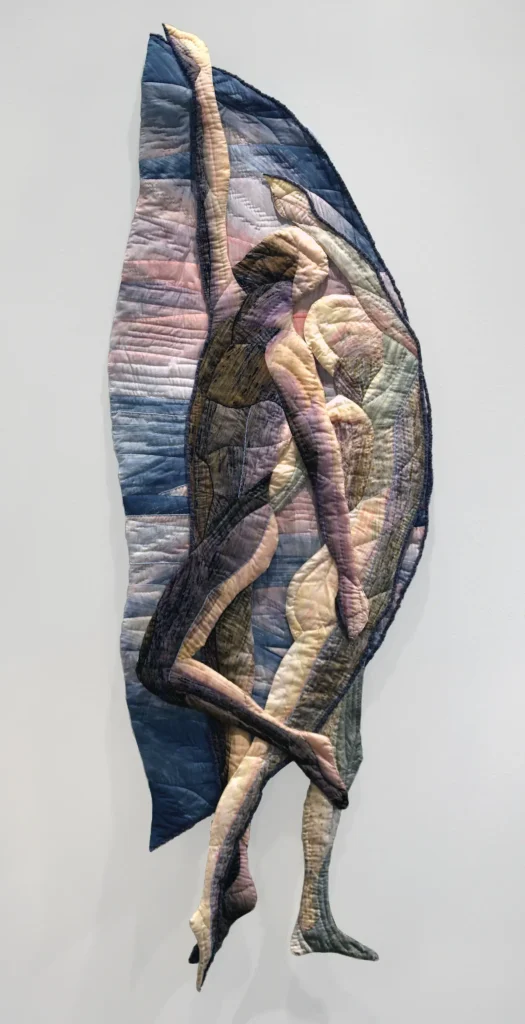
The waves of the sea were hushed, but the drama passed, now embracing recovery.
A response to Hurricane Ike
What does “the dance of everyday life” mean to you?
My work represents the influence of life’s events, showing how even the smallest elements of the world around us are interwoven into our story, impacting and changing our dance through life. Communicating a feeling of impactful emotions, or a moment of celebration.
Sometimes just stopping to witness the humbling yet beautiful dance of nature. Connecting with the movement, balance and harmony, without destroying its perfection.
Describe your creative space.
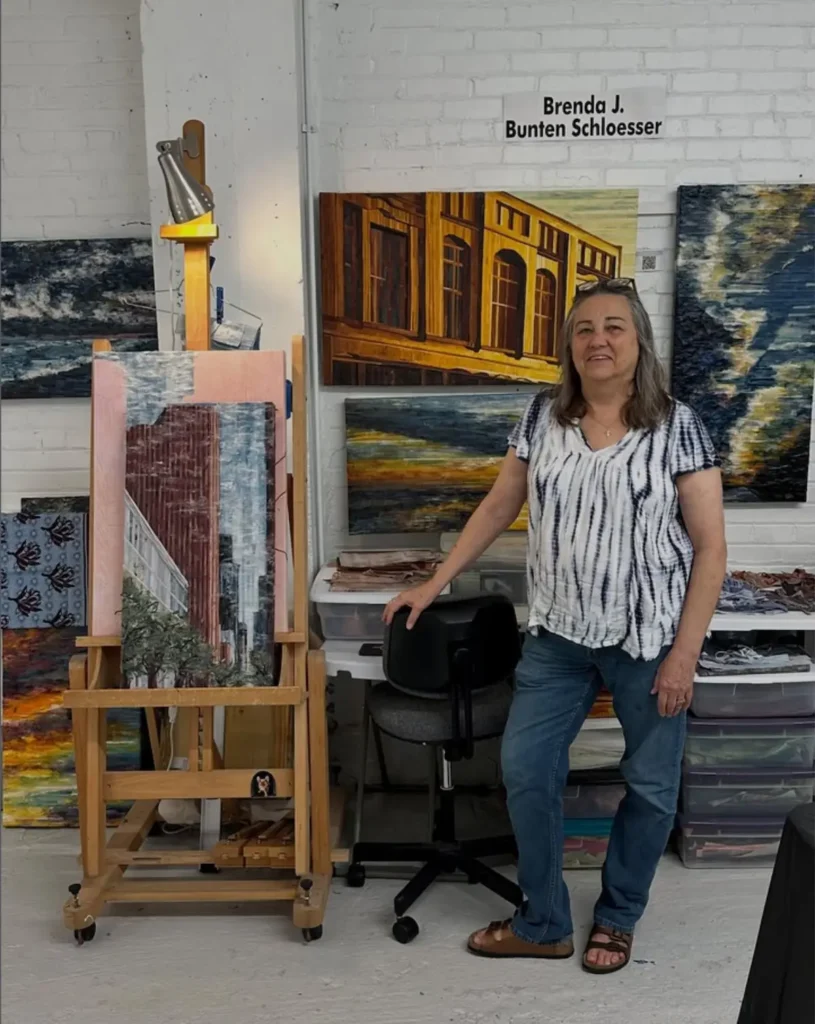
I work in 2 spaces. Winter Street Studios and a home studio.
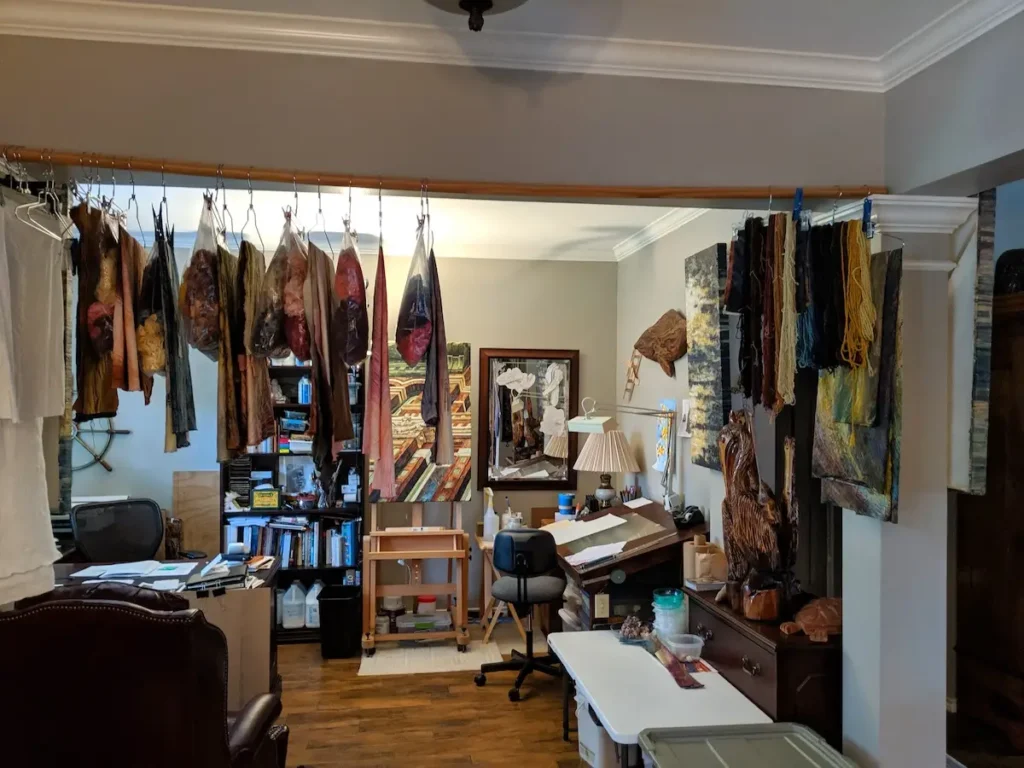
At Winter Street, I work mostly on the Textile Mosaics. The home studio is where I dye and paint fabrics and yarn. The floor loom, sewing machine, and drafting table are there as well as the larger table for clean work, quilting, and piecing the sculpted pieces.
How do you decide which materials to use in a piece?
My objective is to push traditional fiber techniques into a new direction using perspective to create the sensation of depth, luring the viewer into the image to discover it’s not what they thought, but it is fiber. Choosing from cotton broadcloth, cotton mop yarn, woven, needlepointed, or coiling cotton yard, cotton batting, and raw ginned cotton.
I choose cotton because of the appealing nature of cotton that draws you into each piece of art. It naturally breathes and is comfortably approachable. Soft, fluffy staple fiber that grows in a boll transformed to make you think you know what you are seeing until you come close and your perspective is changed.
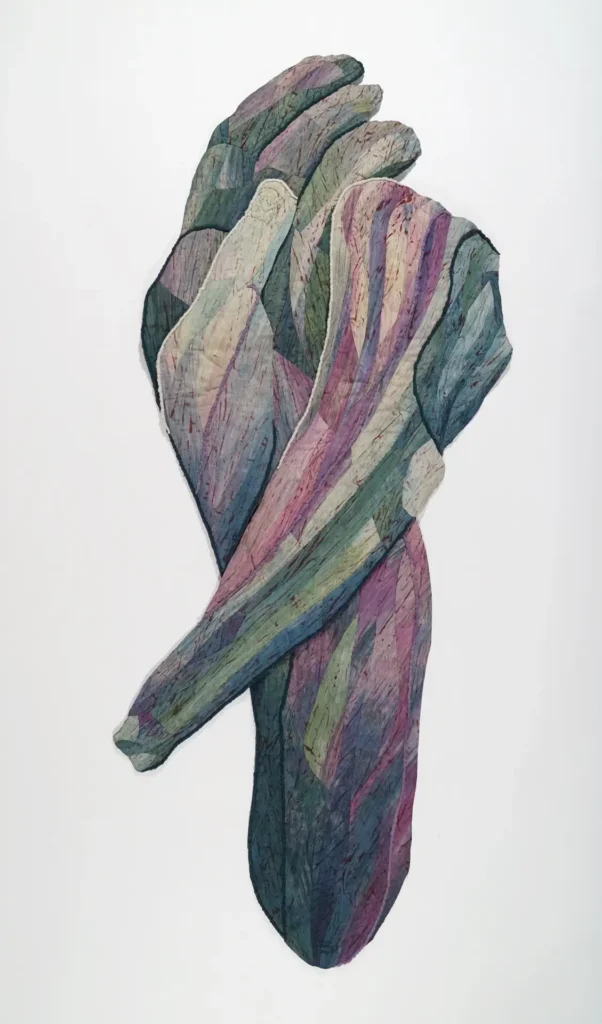
Age-worn and tired, but still hanging on.
What steps do you take from that idea to finished work?
The drawing process is time spent working through the details. Meditating on the story unfolding before us and preparing for want is coming. Always changing and evolving into the next step.
If the drawing is going to become a Quilted Fabric Sculpture a larger drawing cartoon/pattern is created and a color drawing for each piece of fabric to be painted.
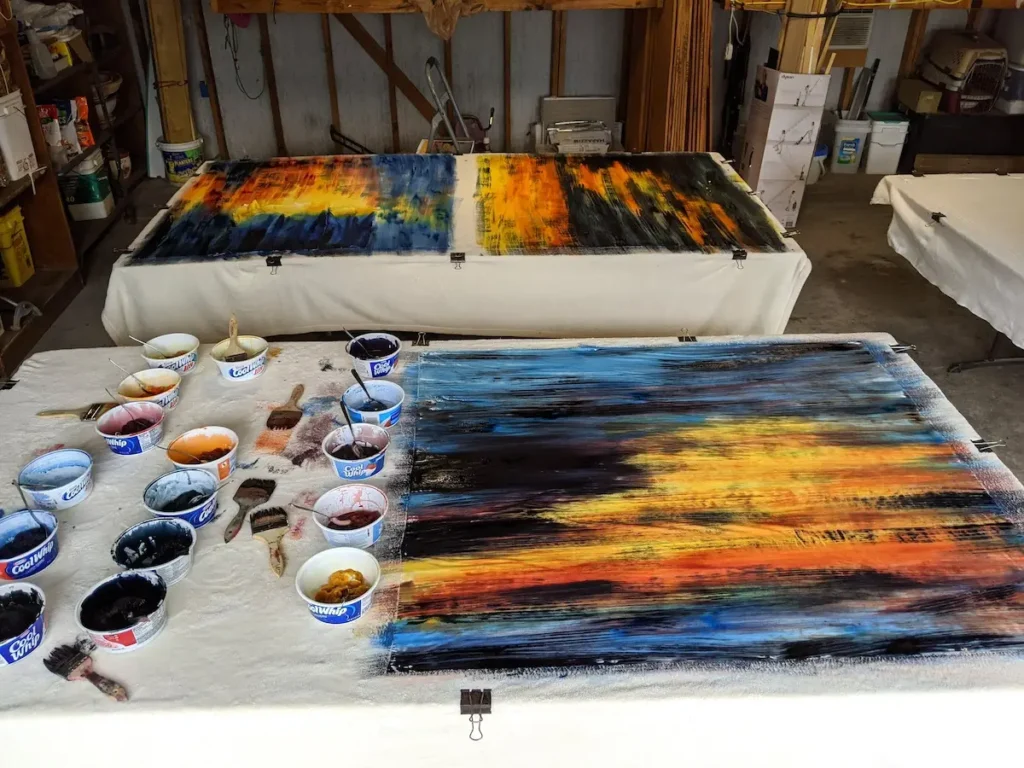
Dies are mixed into print paste; each piece of fabric is painted on larger tables (our hurricane boards) in the garage and driveway. Washed and repainted with dye multiple times until the desired image is completed. The fabric is then cut, machine pieced, and hand quilted. Each quilted wall sculpture is made up of multiple quilted layers, which are put together with upholstery thread.
An armature is made with aluminum rods to support the work on the wall. All leftover painted/dyed fabric is saved to be used in the Textile Mosaics.

How do you know a piece is done?
I will let a piece sit for a while, sometimes weeks, and just look at it, making changes and watching it some more. When I can’t find anything else wrong, I will finish it off.
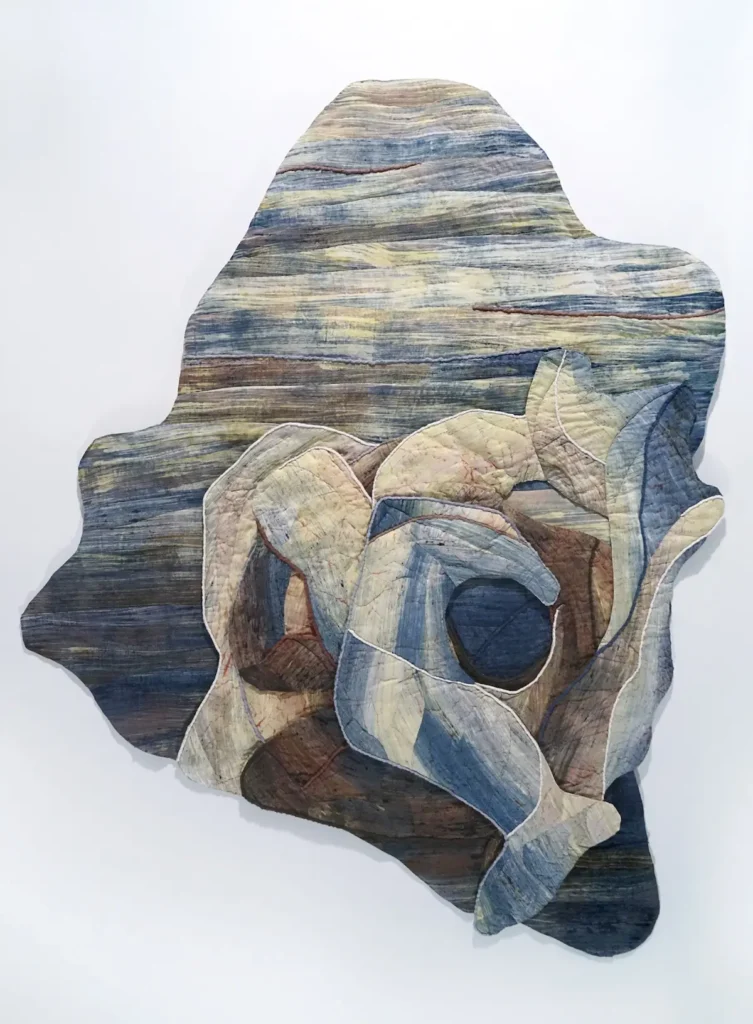
Hardships will come like waves and try to break you apart. When you are in the teeth of the storm, steer rather than get pushed. Pointing into the waves with forward momentum. If you are looking back you can’t move forward.
Have any of your biggest challenges turned into your favorite artwork?
There are many times that I stop and think, I am losing it on this piece. Especially on the Textile Mosaics, that is when I feel the most push and determined to figure out the balance between composition and technique.
Or when trying something new that I have never tried before, sometimes it is a happy surprise, and other times you stand back and say to yourself, Don’t want to do that again.
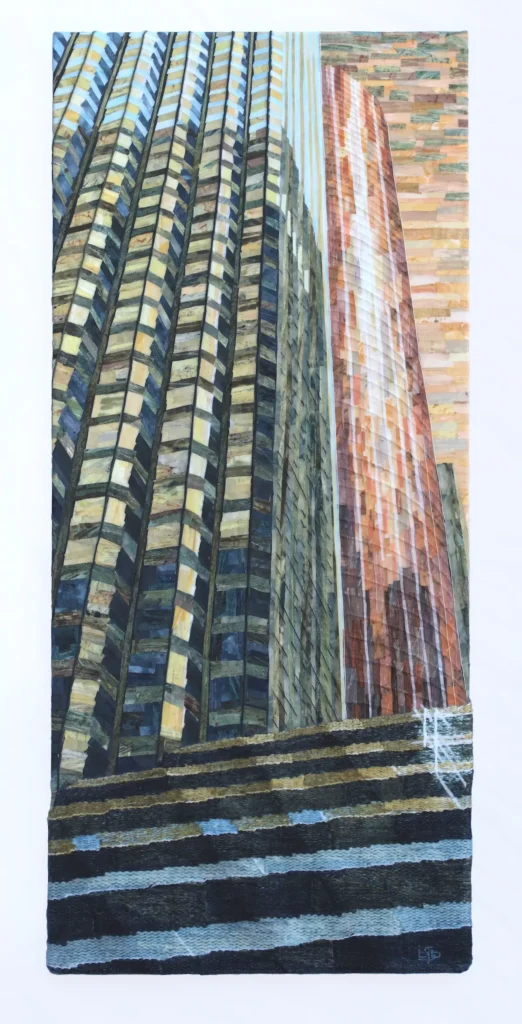
Looking back, how has your art changed over the years?
I have been through many changes, each step has become a part of who I am today, and can be seen in my work. Student, studying Fine Art and studio studies, Graphic Design and Illustration, Freelance Artist, and Fine Art.
Each step teaches you, building and growing you. I am constantly learning by doing and challenging myself to try new things.
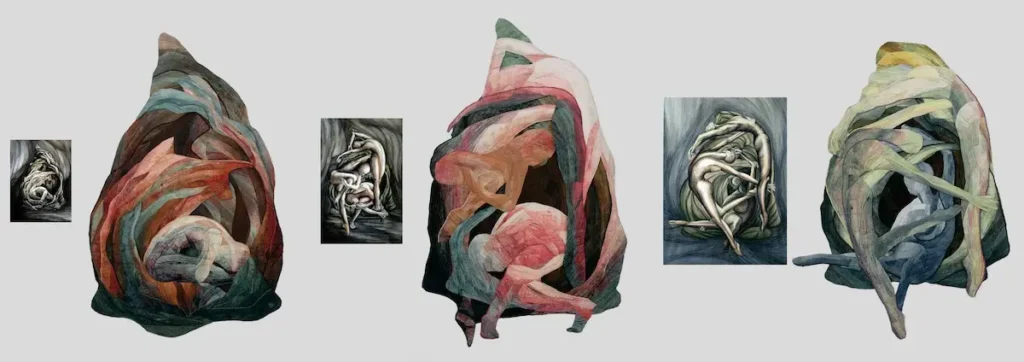
When all you can do is Breathe and trust, waiting patiently until you can Move Forward, believing you will reach A Light where you can inspire others in the journey.
(This work is 6 different pieces that create one larger work. When shown, this piece is 66 x 250.)
The individual works are:
TBI-1 Trust 15×11
TBI-2 Believe 22×15
TBI-3 Inspire 22×15
TBI-1 Breathe 62×41
TBI-2 Move Forward 66×43
TBI-3 A Light 63×47
What advice would you give to someone just discovering their creative voice?
Find good people to study under, and don’t be afraid to try something new.
Don’t be afraid to erase and start over, no matter how many hours you have in it.
I told my kids when they would ask How come your drawing looks better than mine. I tell them, “I have thrown away more drawings than you have done. Don’t be afraid to start over.”
You learn from each one; the more you do, the more you learn. Always be ready to change directions.

Graphite and Acrylic Mediums on Rag Paper

Clara Jeannette Goodman-Bunten & Edna Gail Wood-Shonkwiler
Betty Jo Shonkwiler-Bunten
Brenda Jean Bunten-Schloesser
What brings you the most joy in your work?
Watching people’s reaction when they walk up and find out it is not what they thought, but it’s fabric or oh look it’s quilted.

Where can people see your work?
On my website: https://www.bjbsart.com/
On Instagram @ brendabuntenschloesser
René Wiley Gallery 2128 Postoffice St, Galveston, TX 77550
Winter Street Studios. 2101 Winter Street, Houston, TX 77007
Interview posted December 2025
Browse through inspiring art quilts on Create Whimsy.