
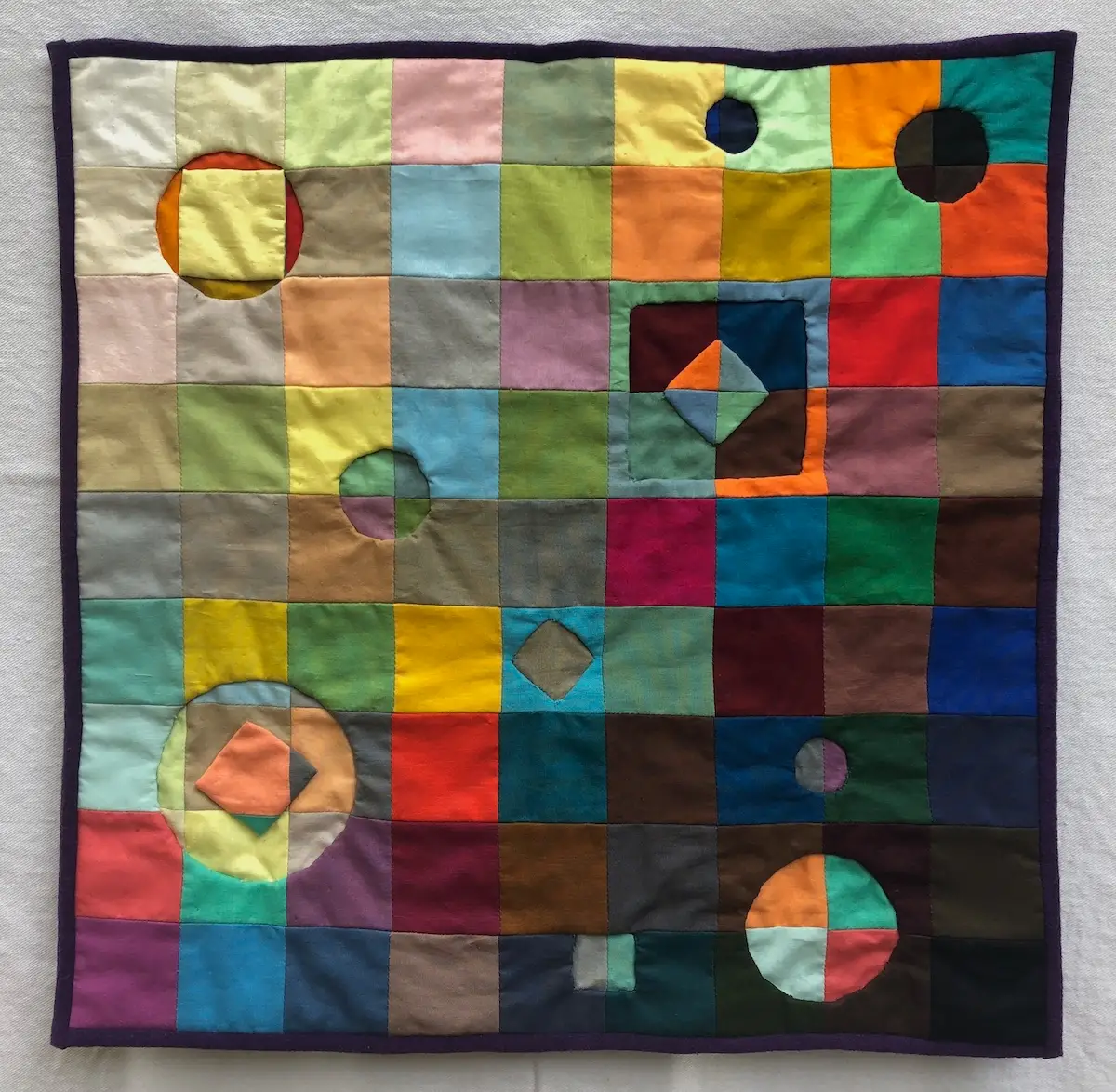
Ann Wasserman’s love for quilts started with childhood sewing lessons and a cardboard box of fabric scraps. Over the years, her passion for vintage textiles and quilt history has grown alongside her art quilts, blending storytelling, restoration, and creative exploration.
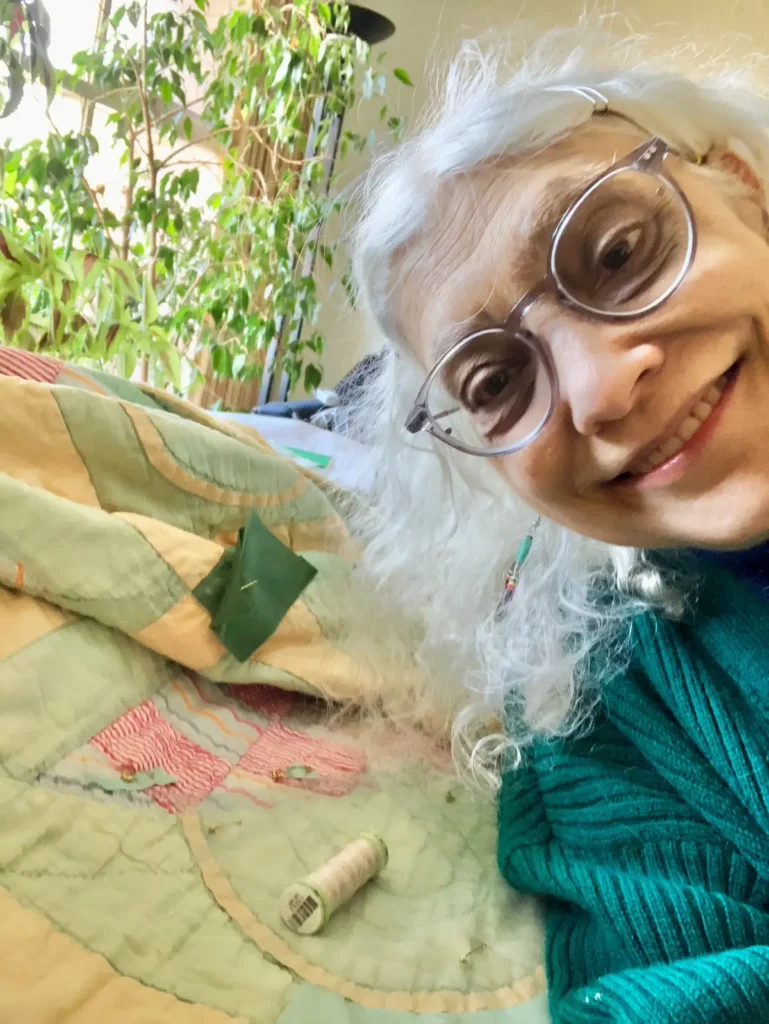
How did you get started quilting and finding a passion for vintage quilts and textiles?
My mom taught me to sew when I was maybe about ten. She saved scraps from our projects, clothing, and curtains, mostly, in a cardboard box, and kept saying, “Someday we’ll make a quilt.” We never did, but it put the idea in my mind.
I started quilting during my first job after college. I was entering field work data for one of the professors, and in those olden days, I had lots of downtime waiting for job turnaround on the big mainframe computer. I took a little quilting class in the university’s fun non-credit program to fill the wait time, and have been in love with quilts ever since.
Fun fact: The blurb for that little class was “Cuddle up in your own handmade guilt.” (Read that carefully….)
As an Amazon Associate I earn from qualifying purchases. Read more about our affiliate linking policy.
The focus on quilt history came about because of my college degree in anthropology and archaeology. I learned how the objects people make and use carry all sorts of history – customs, technologies, politics, etc.
The focus on restoration and conservation started up because I worked for several years in an antique quilt gallery. I learned so much by handling all those quilts! Customers would come in looking for people who could repair their quilts, and I started going to workshops and learning from books.
Is there one quilt that stands out with a story to tell? Why?
Well, there are two best stories.
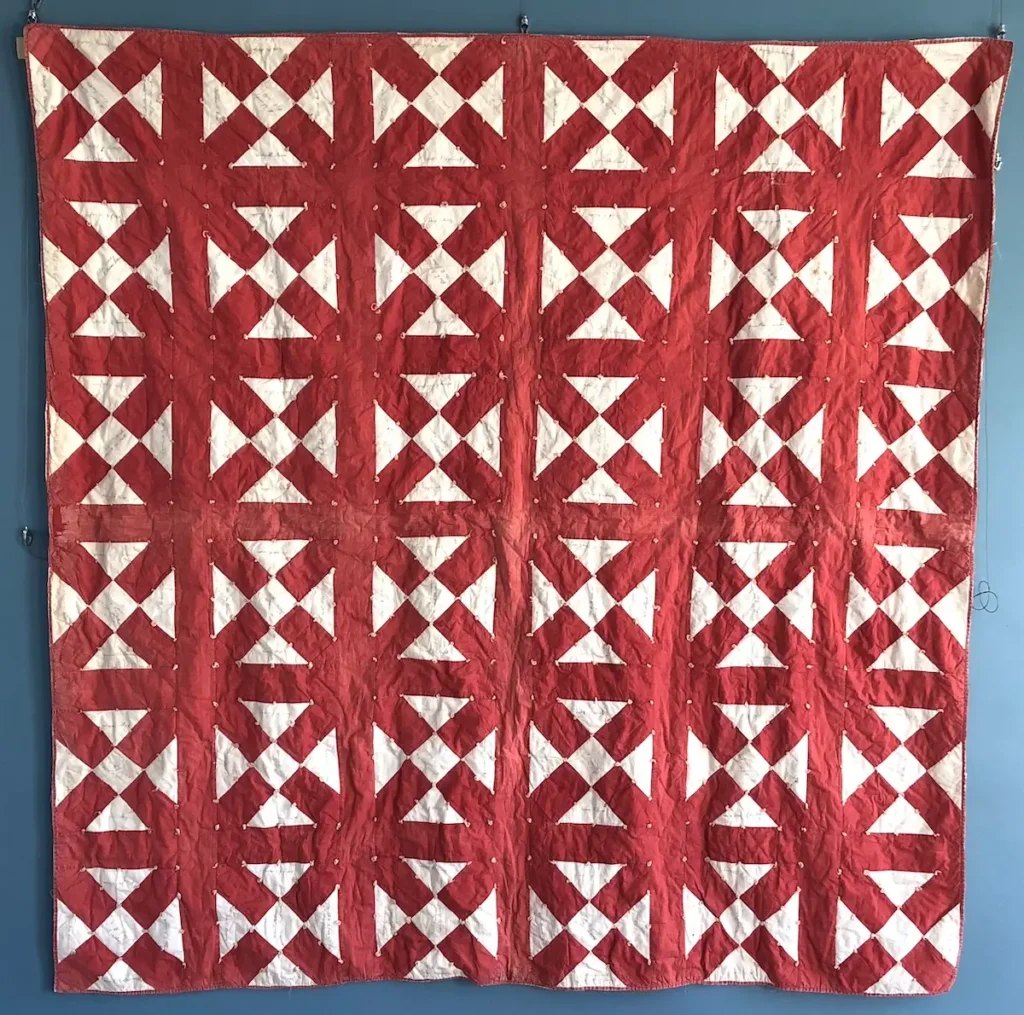
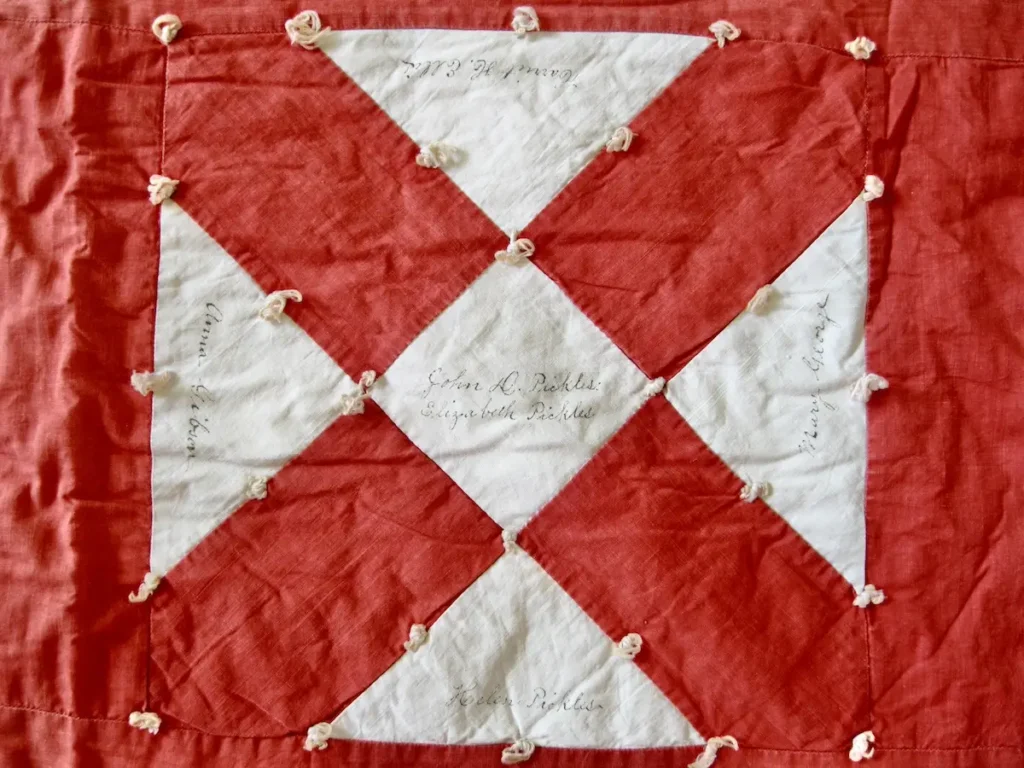
I was gifted a quilt with 227 names written on it, but no date or location. I researched the names and found the quilt in time and space. This eventually led to contacting descendants of some of the named people. Their stories and old photos were included in an exhibit and a lecture in the quilt’s hometown (Melrose, MA).
A multi-part story of the whole adventure starts here: https://annquiltsblog.blogspot.com/2015/07/history-comes-to-life-on-quilt-part-1.html
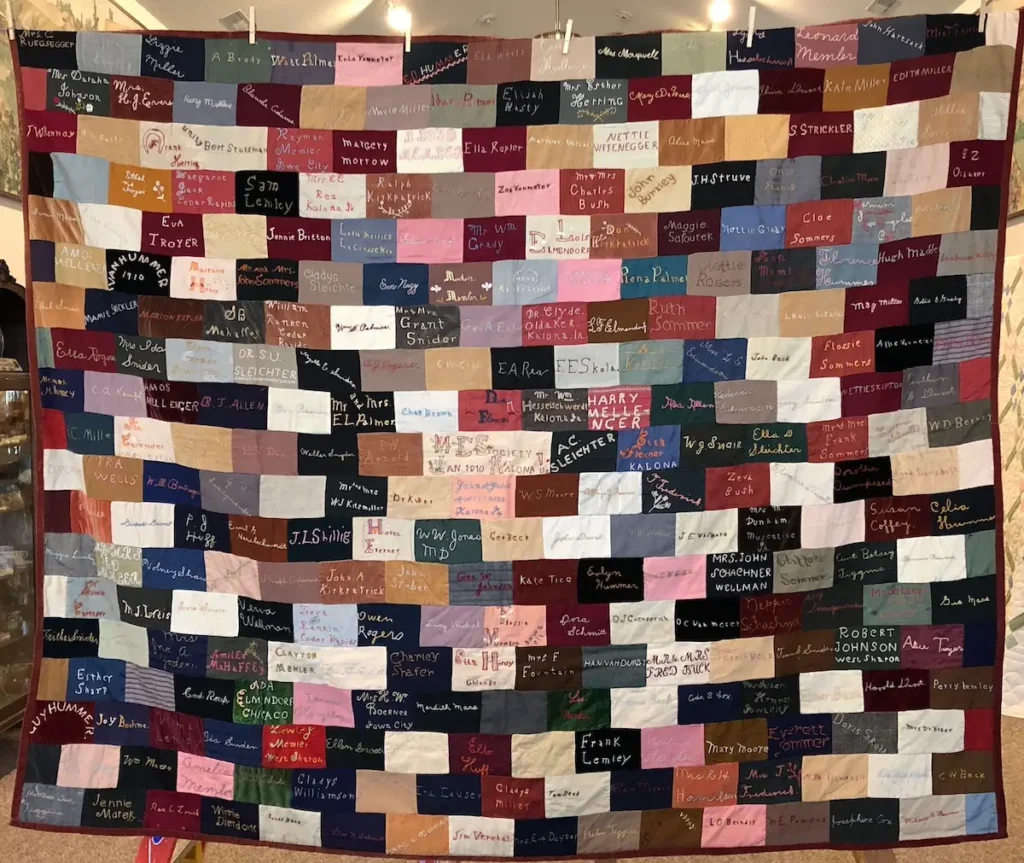
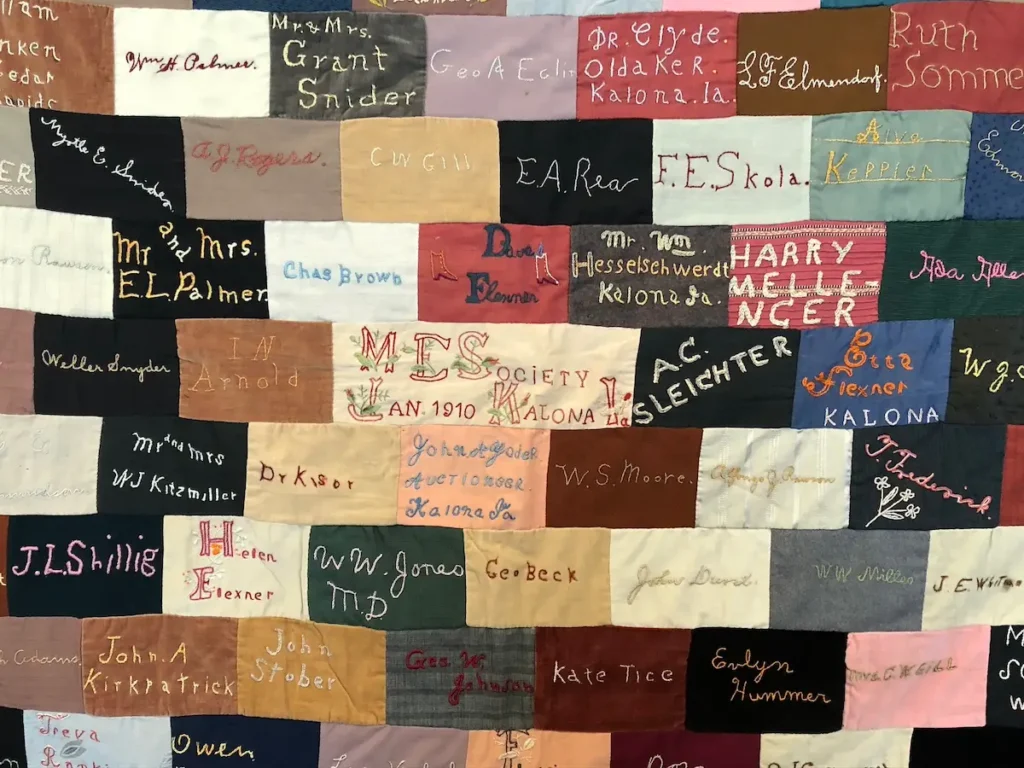
I found my mom’s maiden name embroidered on a quilt on display at a museum in Kalona, Iowa. This eventually led to learning about a new-to-us branch of my family, contact with new cousins, and a precious photo of my great-great-grandfather’s childhood home.
A three-part story starts here: https://annquiltsblog.blogspot.com/2018/04/family-names-on-signature-quilt.html
Do the vintage textiles and quilts influence your art quilt designs? Can you explain?
A bit, but not much. I like to say that I work at both ends of the time spectrum. I made some traditional quilts at first, but found art quilts much more fun. The outcome is always somewhat unknown, and that keeps the sewing interesting, too.
Describe your creative space.
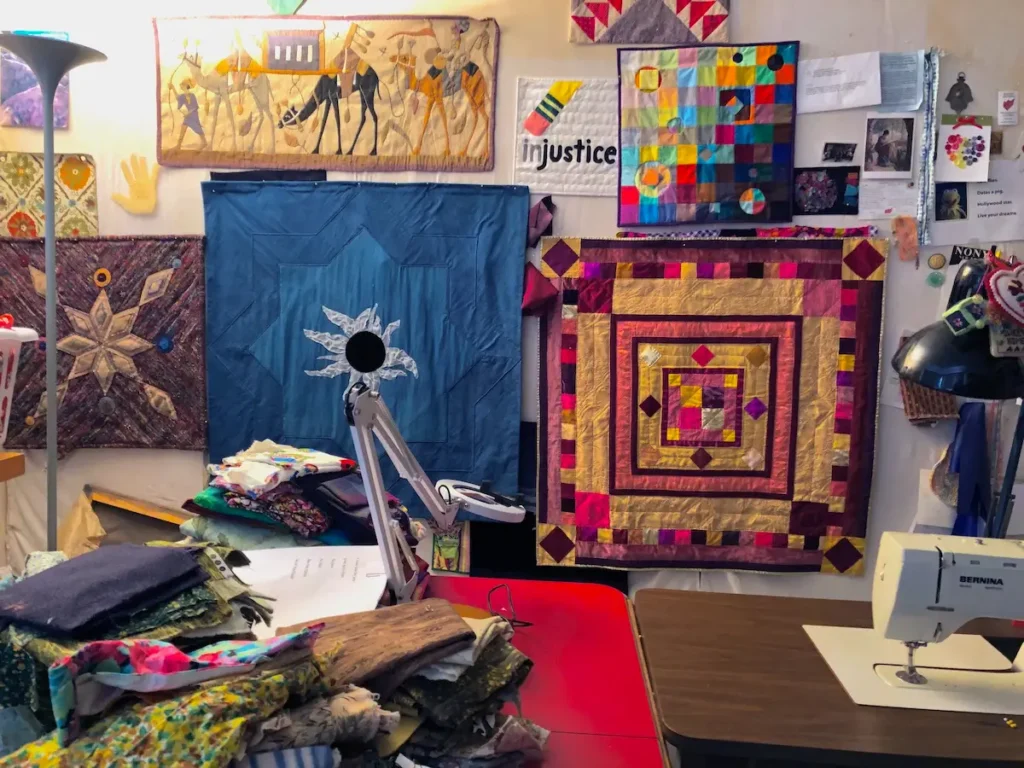
I have a room very full of fabrics and books. There’s a big design wall and my sewing machine in there. I do the hand sewing at a table in the living room that has the best light.
Since my kids are grown and gone, I’ve gradually taken over the rest of the house for storing my antique quilts, my art quilts, boxes of my book, etc.
What are the indispensable tools and materials in your studio? How do they improve your work?
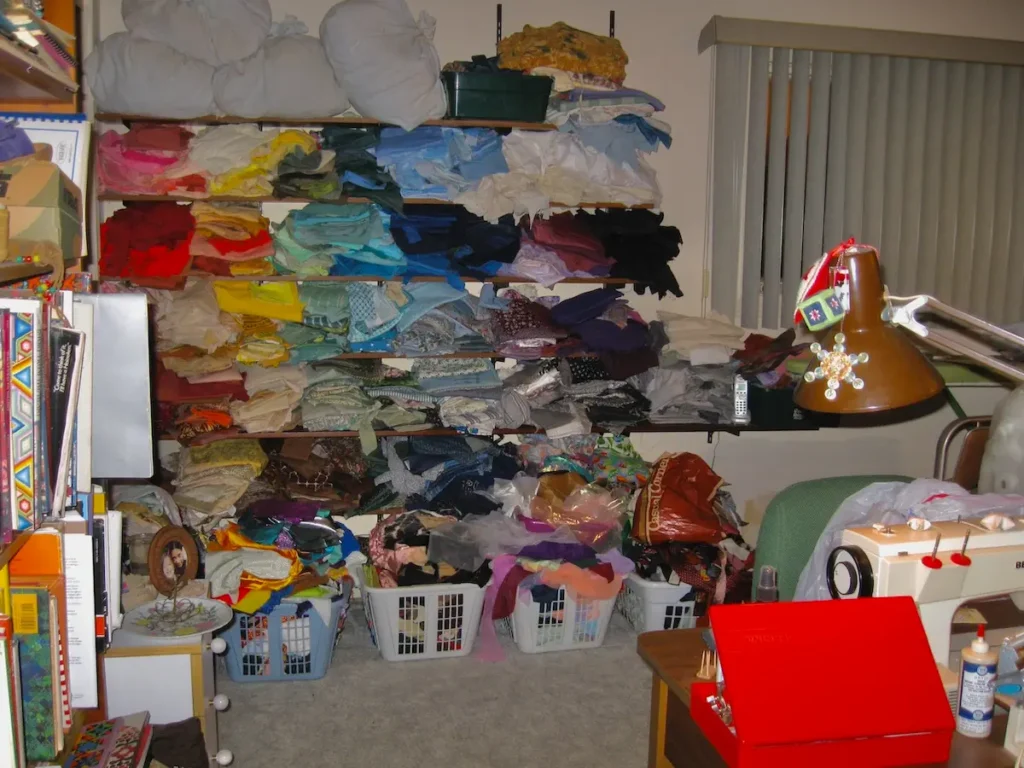
Probably the most indispensable thing is my large fabric collection.
I have picked up and been given antique and vintage fabrics and saved scraps from my own projects (many of which have become officially vintage over time).
For repair work, it lets me get pretty good matches for damaged areas, and for artwork, it lets me design quilts by “shopping” at my own fabric shelves.
My Bernina 830 is important, too. I even bought a second one a while ago.
How do you manage your creative time? Do you schedule start and stop times? Or work only when inspired?
I’m generally not a scheduled type of person.
Art quilts are all about following inspiration when and where it leads.
Working with the old quilts has been a business and needs to keep moving along, but even that waits for time and mood.
What plays in the background while you work? Silence? Music, audiobooks, podcasts, movies? If so, what kind?
Silence when I’m planning and setting up.
Podcasts when I’m hand sewing (about textiles and stitching, spirituality, archeology, humor, and lots of “other”), and sometimes videos or music.
I also have long phone calls with friends.
How often do you start a new project? Do you work actively on more than one project at a time?
New art quilts come when inspiration happens. It’s not unusual for me to have more than one in the works.
Repairs always have a waiting list, so I don’t have to decide which one to do next. I like to switch around from one thing to another.
Can you tell us about the inspiration and process of one of your works? How does a new work come about?
I’ve imagined quilts in a dream or meditation or musing about a topic or design I saw somewhere. Then I try to recreate what I saw in my mind’s eye in fabric.
Over the last few years, this seems to have become a longer and longer process, since I’m creating techniques to express dreamlike effects.
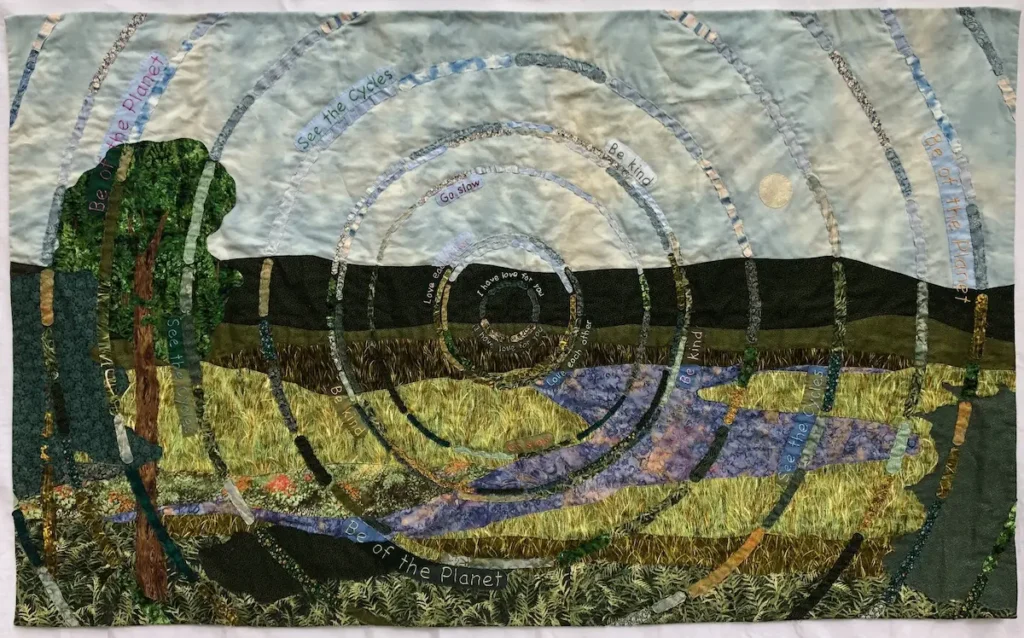
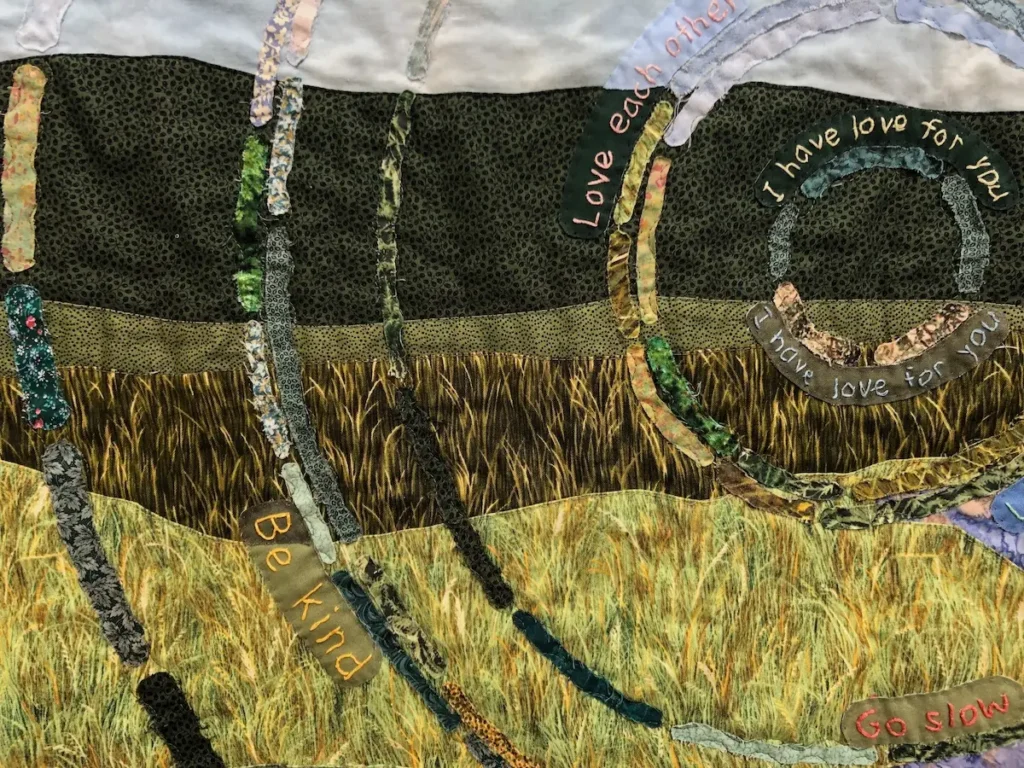
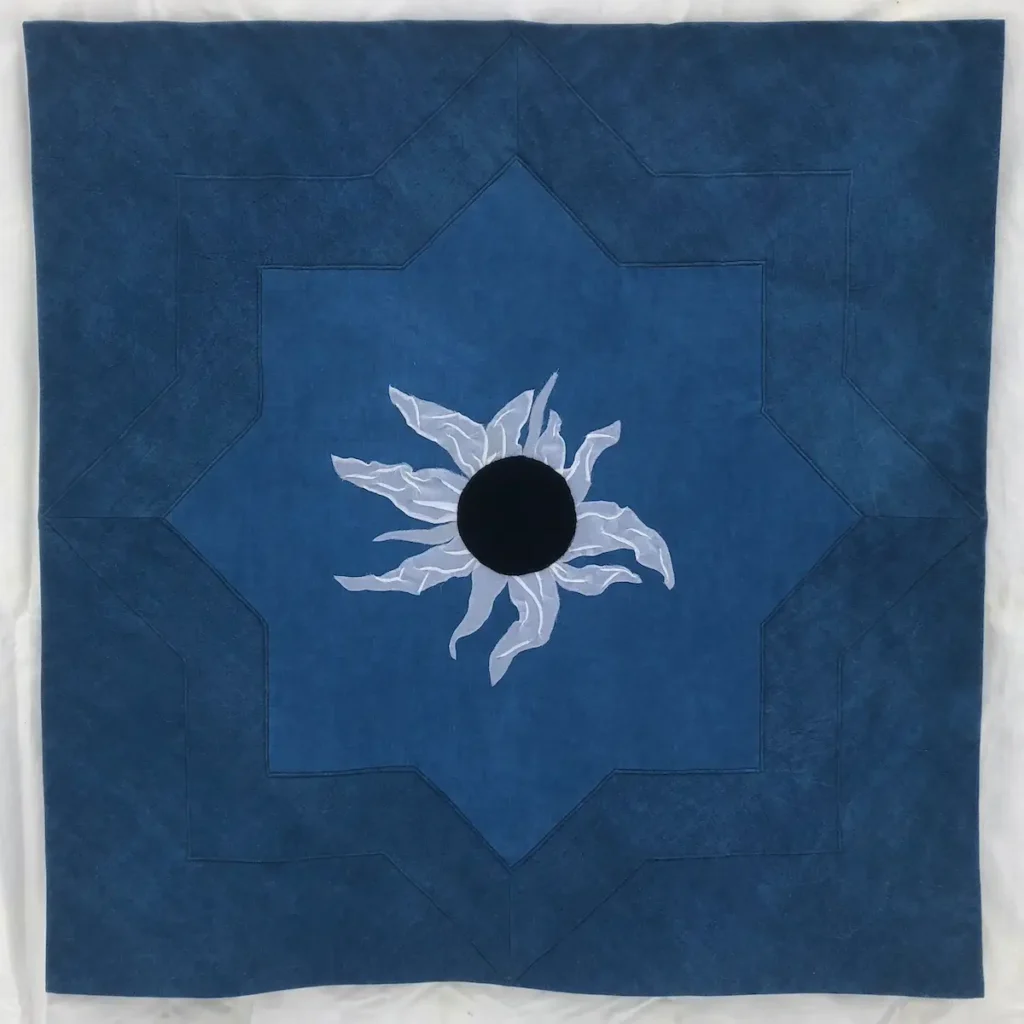
My most recently completed art quilt is Gaia Speaks. It expresses my concern for the environmental damage going on these days, and my sense of a message to us as we move forward and mend our ways. I posted on my blog about the inspiration and process.
Is there an overarching theme that connects all of your work?
I don’t think so. But I have had people tell me that when they see a quilt of mine, they immediately know it’s mine. They must be picking up on something I’m not aware of!
How has your work evolved over the years? Is there a common thread (pun intended!) across the years?
I think my quilts are getting more and more complex, in design and techniques.
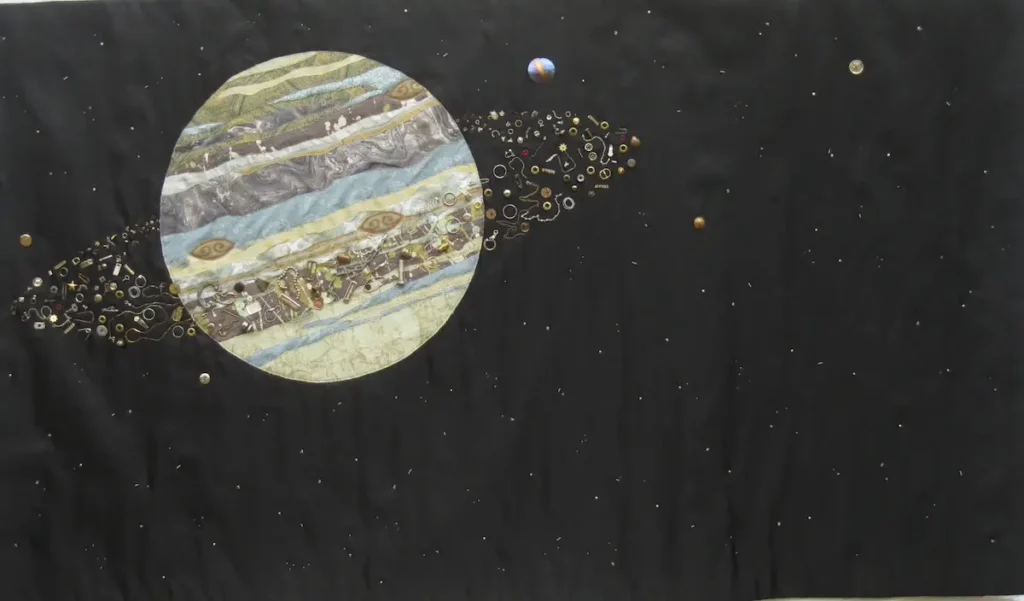
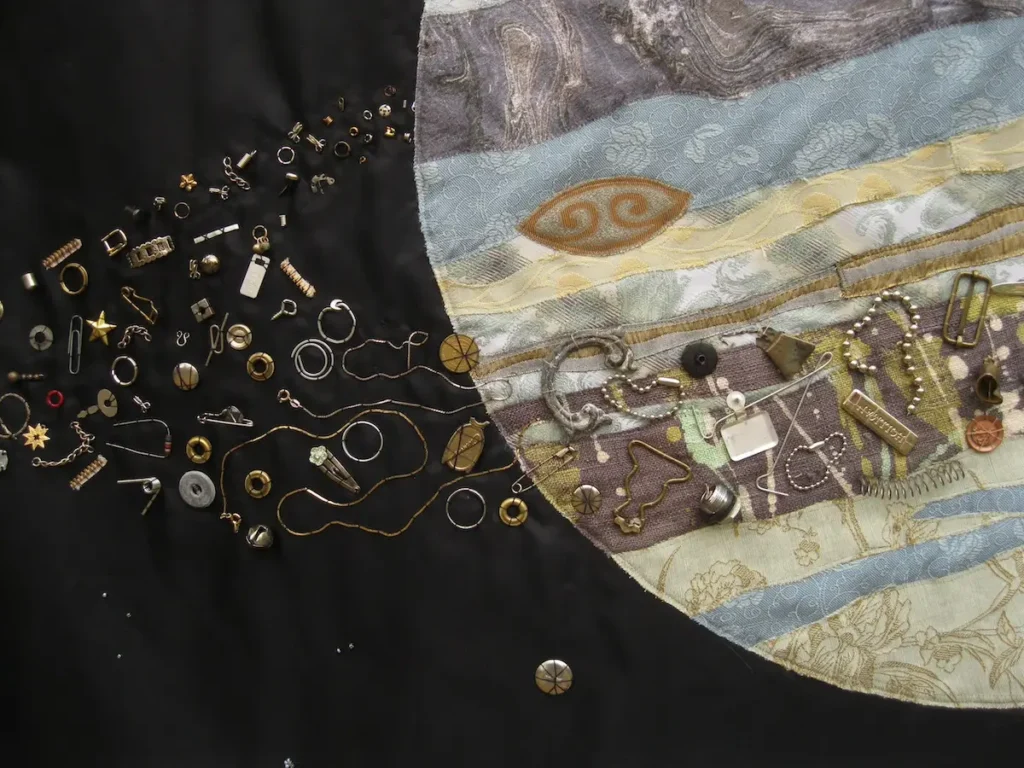
Sometimes I use more non-cotton fabrics, and add embroidery, buttons, and beads.
The common thread would just be that I follow inspirations. My quilts often have some inner meaning and message.
In my business life, I’m in the process of changing my focus. I’m no longer focusing on the repair sewing itself, and moving into doing more teaching and lecturing, and more time to make art.
Do you prefer the kind of project that is challenging and requires attention, or the kind where you get into your meditative zone and enjoy the process?
Both! The design process tends to be challenging, and often continues throughout the sewing period, so the challenge and meditation are intertwined.
What do you do to keep yourself motivated and interested in your work?
I’m pretty much always interested. The world of quilts can lead pretty much anywhere! Motivation comes and goes sometimes.
I attend lots of virtual quilt history lectures, and I teach virtually myself, both of which are inspiring. It’s true that teachers learn as much as the students. Being a teacher and an author has introduced me to new friends, which I’d totally not expected.
lessons and workshop – https://www.annquilts.com/quiltrepair%20clients.html
lectures – https://www.annquilts.com/lecturesandworkshops.html
book – https://www.annquilts.com/book.html
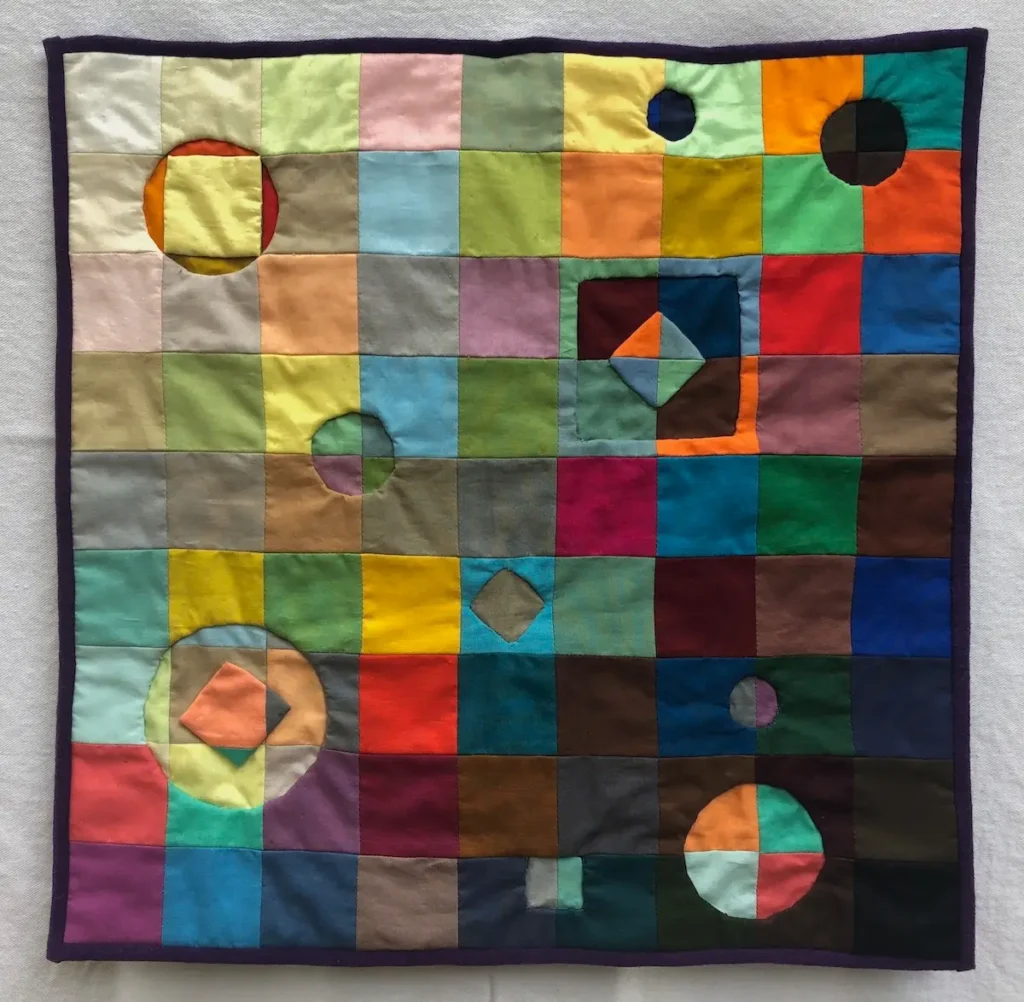
Read more about World Turned Upside Down.
When you have time to create for yourself, what kinds of projects do you make?
I’m grateful that the line between my profession and my fun is pretty blurry.
The art quilts are mostly just for me, although I have also done some commissions, and repairs are mostly for customers, though I continually need repair the first quilt I ever made because I use it.
Where can people see your work?
My website and blog are the best sources. I also just started a newsletter, which you can sign up for on my website. It’s easy to read – 2 posts a month, short, sweet, and fun!
website – https://www.annquilts.com/
blog – https://annquiltsblog.blogspot.com/
newsletter – https://www.annquilts.com/newsletter/newslettersignup.html
Interview posted October 2025
Browse through more inspiring art quilts on Create Whimsy.