

Madison May makes sewing feel like stepping into a story. From learning with her great-grandmother to building CUT/SEW, she helps beginners feel brave, curious, and ready to create. Her work is all about making sewing simple, fun, and full of possibilities.
You’ve shared that your great-grandmother helped inspire your love of sewing. What lessons from her still stay with you today?
I’m very lucky that I had my great-grandmother with me all the way into my late teens, and she was enthusiastically supportive of every step of my sewing journey – from cosplay to fashion school.
The first project I ever made was under her tutelage, and I still have that very cute (but wildly unwearable) polka dot skirt. She taught me how to use a pattern, and it’s a bit dizzying to think that a single afternoon when I was eleven or twelve turned into this career of making patterns.
I think the biggest thing about learning a tradition from an elder is that it gives you a very early glimpse into seeing your grandparents as real people with experiences vastly different from your own.
Learning that these somewhat obsolete techniques were such a part of her daily life growing up gave me a sense that I was a part of a much larger history. It creates a certain mystique around the ritual of handicrafts, but it also fosters a huge amount of empathy towards elders in this creative space.
It might be hard for modern stitchers to connect with the (primarily) older women who populate the sewing sphere, but I find it a very comforting experience, and I feel incredibly lucky that I’m able to carry on some of the traditions that made up such a huge part of their lives.
Sewing for me is a process of stepping through time and connecting – often viscerally through stitching – with those traditions.
As an Amazon Associate I earn from qualifying purchases. Read more about our affiliate linking policy.
Was there a specific costume, project, or convention experience that made you think, “This is what I want to do”?
Looking back on the way I absolutely devoured sewing projects as a teenager, I don’t think there was one specific moment that was the “a-ha” moment, but more of a slow transition into a space where I couldn’t see myself doing anything else.
I went to college for fashion design because I felt like, out of a lot of creative options I was interested in, it was strangely the most practical one. I felt like the skills I learned there could be used in marketing, merchandising, theatre, textile manufacturing, and so on.
Strangely, the moment when I felt 100% sure about what I was doing was fairly recently.
Roadtripping between two different pop-up shop events, my team had stopped at a historical re-enactment-style outdoor history museum in Ohio. There were two different sections devoted to fiber crafts – a huge floor loom, surrounded by wool you could card, and a hand stitching demonstration where a woman was padstitching a jacket.
I ended up having a very enthusiastic 20-minute conversation about stitching with that volunteer, and we geeked out about fiber and handwork techniques. Leaving that section, I had a moment of sudden self-awareness – it was like, “Oh yeah, this craft literally lights me up. I am meant to do this.”
How did studying fashion design shape the way you work now, even if your path eventually went in a different direction?
My college experience, to be diplomatic, had its ups and downs.
I was a whimsically stubborn kid interested in the narrative eccentricities of costumes, and I was surrounded by students and professors who struggled to understand where I was trying to take my ideas. I
t was a very runway-focused program, and it was extremely rigorous, and – for all of my struggles to find a sense of belonging – that truly set me up for success in navigating the organizational side of design.
I learned how to arrange ideas into cohesive plans, execute them, meet production deadlines, and multitask like no one’s business. Truly, the processes I learned in college are still at the forefront in how I run CUT/SEW.
Before starting CUT/SEW, you worked in theater, theme parks, cruise entertainment, and costume shops. What did those jobs teach you about craftsmanship and problem-solving?
More than anything, they taught me about egos!
I’m being a bit dramatic, but the real culture shock of professional costuming is finding ways to balance your technical skill set against the emotional labor of working in spaces that are populated by lots of creative people with lots of conflicting ideas.
Costuming taught me so much about working under tight deadlines, being flexible when plans change, and learning to pick your battles.
Working within costuming is a bit like being a ballerina meets a therapist – you need to know how to do precise pirouettes on demand, all while de-escalating whatever drama comes your way!
What made you realize there was a need for beginner-friendly cosplay sewing patterns?
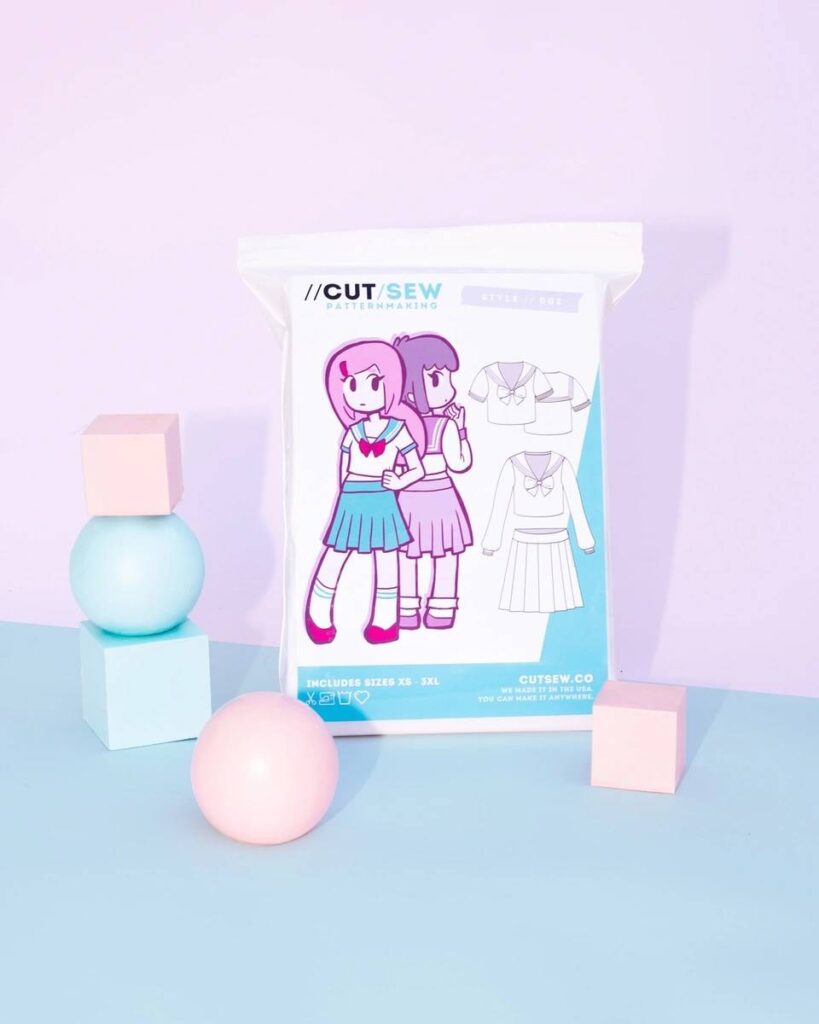
The short answer is: being a part of the cosplay community. I ostensibly really learned how to sew through cosplay, so I knew how it felt to struggle with the resources available within the mainstream and how – forgive me for saying so – utterly useless traditional sewing patterns are for true beginners.
I was coming up in the pre-YouTube era, so there are so many more tutorials available now as a supplement, but as I teach beginner classes all over the country, I now hear how folks feel overwhelmed by the wealth of resources rather than properly supported. There’s still so much room in this space for streamlining and curating for beginners.
Starting a creative business can feel like jumping onto a moving train while carrying scissors and coffee. What gave you the confidence to start CUT/SEW?
Confidence and folly are usually one and the same!
I was only 24 when I started CUT/SEW, and I was living hand-to-mouth in a teensy one bedroom apartment, working at a costume shop that was excruciatingly bad for my mental health.
I was actively taking side gigs in costuming, mostly designing for local theatre, but I had a small savings and felt like I had very little to lose. I quit my job as a pattern maker in December, spent the next five months emptying my savings and building out CUT/SEW, and somehow had ten patterns and a small brand ready to go by May.
I’m not sure I could do that same kind of mad-dash sprinting now – that kind of blind confidence is uniquely for twentysomethings.
Why was it important to you to make sewing feel welcoming and approachable for beginners?
I’m keenly aware that we’re losing our handicraft traditions as we lose the elders who carry them on. Without a new generation of folks excited about sewing, some of these practices may disappear entirely, and I don’t think it’s for lack of interest.
There are plenty of beginners out there who are curious about crafts but get deflated by the resources available or feel overwhelmed by them.
One bad experience in a fabric store or with an online tutorial can put people off of sewing for good, so there’s a lot of pressure to make sure what we offer is as beginner-friendly as possible.
I’ve also seen firsthand how powerful the act of dressing up can be – whether it’s in cosplay or in a handmade garment. There’s a magic there. People turn into the best parts of themselves, and sometimes they don’t even know those parts were there.
Opening the door for more people to experience that is a small but powerful grace I can offer.

How would you describe the mission of CUT/SEW in your own words?
Make sewing easier. Make sewing accessible. Make sewing fun. Keep sewing for everybody.
On the more personal side of things, the philosopher and poet Hakim Bey has a quote that I’ve had strung up in my workspace for a very long time. It’s about creating temporary, radical creative disturbances that leave folks with a sense of confusion but also wonder. That kind of feeling has been my personal vision for the inner workings of CUT/SEW: “Dress up. Leave a false name. Be legendary.”
Did you have a moment when you realized the business was truly working and connecting with people?
About a year after launching the company, I had a table in the “Artist Alley” section of a local cosplay convention, and a woman came up to me with her seven-year-old daughter, who was wearing a romper made from one of our patterns. They had worked on the project together, and it was her daughter’s first-ever sewing project. It was also my first time seeing one of my patterns out in the wild.
The surreality of that moment still sticks with me; it felt not only like I had done something positive for both of them as individuals, but I also had a sense of having passed the torch on to younger makers and empowered them in a way they maybe hadn’t felt before.
Since then, I see our patterns and products pretty regularly at cons, and my favorite is when folks come up with these wild costume builds that are unrecognizable from the original patterns of ours that they used. That, more than anything, tells me what I’m doing is working – the pattern isn’t the star itself, it’s a functional tool meant to blend into the background of the projects people really want to build.
What sewing skill do you think beginners should learn first, because it unlocks confidence?
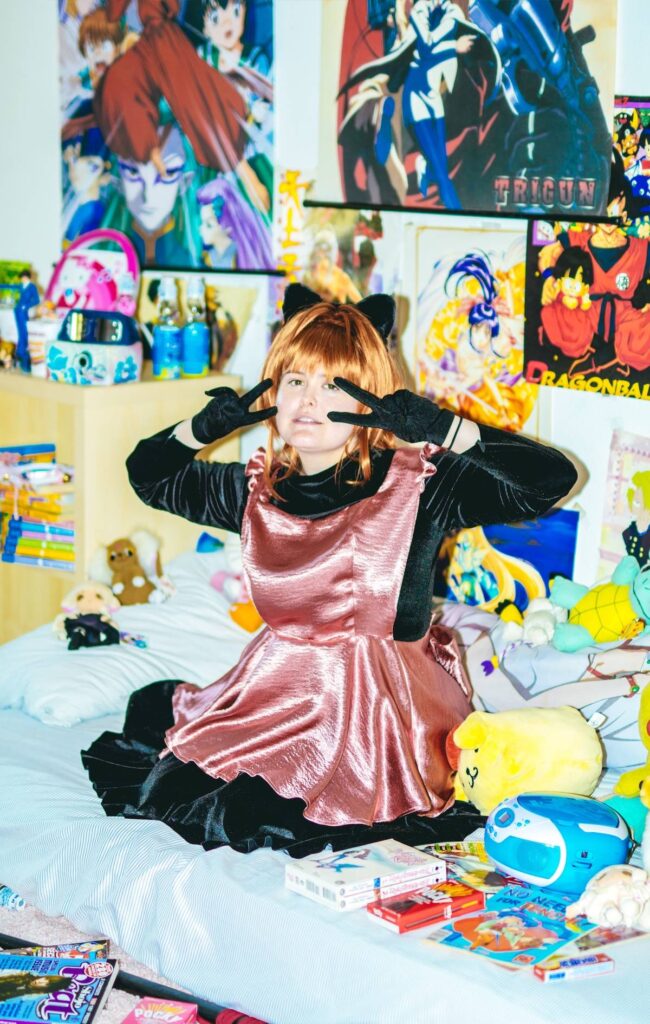
Make something with your hands. Anything. It doesn’t need to be cute, or practical, or even sewing, but finish it.
Hand sew felt pieces into a bookmark. Collage scraps of paper you have lying around. Sit around with your friends and make paper dolls. Completing a creative act will give you so much confidence, and keeping it low-pressure reminds you why it’s fun in the first place.
There’s a lot of pressure for perfection nowadays – make hot garbage instead, and have fun doing it.
Where do you usually find inspiration for new designs and pattern ideas?
Cosplay conventions!
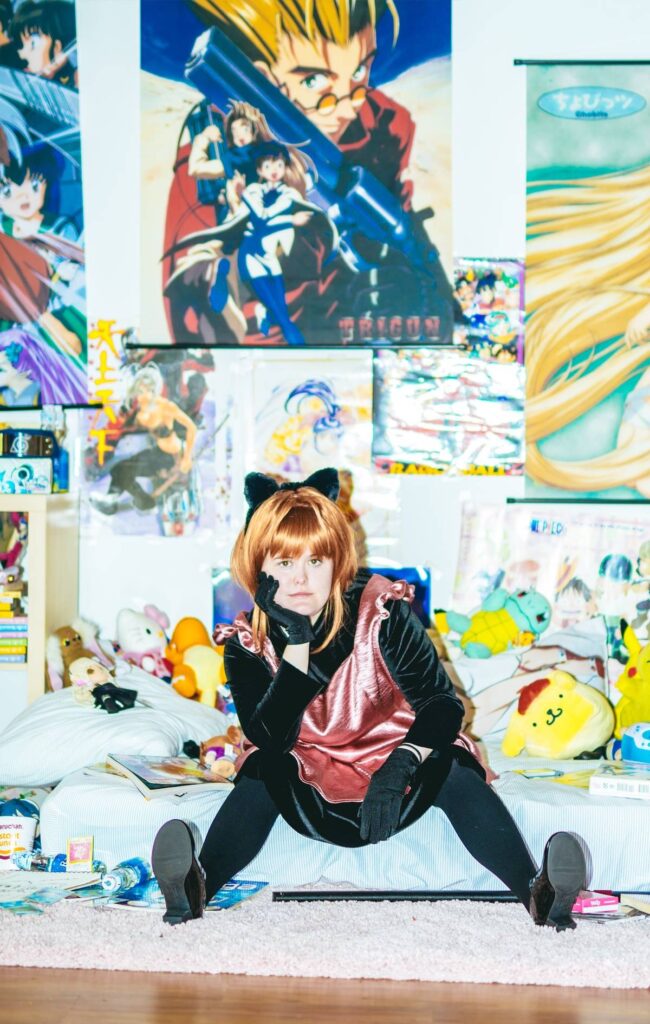
CUT/SEW is meant to be a bit of a feedback loop – we’re here to serve cosplayers and provide what they need, so I’m constantly looking around at cons and making note of what costumes are popular, what shapes folks struggle with, and what I hear is needed from cosplayers themselves.
I spend about half of my year at cons around the country, either vending or teaching workshops, so I’m constantly in data-gathering mode.
What do you think cosplay teaches people about creativity, confidence, and self-expression?
After my literal decades of being involved in cosplay, it’s genuinely so hard to explain to others how incredibly potent it is as a medium for confidence and self-expression.
Cosplay is a creative act that requires you to push yourself beyond what you think you can do – be a stitcher, a wig stylist, a photographer, and also a performer.
Not to mention all the little skills you pick up along the way – dyeing, embroidery, LEDs, armormaking. The list is literally endless. Being able to complete a project with all of those nascent skills and say “I did that” is so confidence-boosting.
But another side of it that doesn’t get mentioned enough is the play of cosplay. There’s no other word for what it is – silliness, joy, curiosity, experimentation. You’re playing with your sense of self, your gender, your self-expression, your capabilities.
Play is missing from so much of modern life, so to get 20,000 people in a convention hall all having a great time, embracing their weirdness, making new friends, and creating memories – that’s literally the most incredible thing.
When you look back at the person who first started CUT/SEW, what would you want to tell her now?
The serious answer: You know what you’re doing, and you know you know what you’re doing.
The less serious answer: Go to therapy.
Where can people find CUT/SEW patterns?
You can shop online through our website at cutsew.co or find us in a select few sewing stores around the country. We also host pop up shops and educational workshops at conventions all around the country.
Rapid Fire Fun:
One sewing tool you recommend to everyone? Famore’s EZ snips. Literally life changing.
Most underrated sewing skill? Back stitching!
A sewing mistake you still laugh about? I’m still using the same iron I “borrowed” from my mom when I was sixteen, and – even though I know so much better – I still regularly forget to clean it and leave traces of gunk on my personal projects.
One word that describes your creative style? Curious.
What brings you joy right now? Cleaning the house while listening to an audiobook. I’m not home that much anymore, so it’s the simple pleasures that do it for me.
Interview posted May 2026
Explore more sewing inspiration on Create Whimsy.