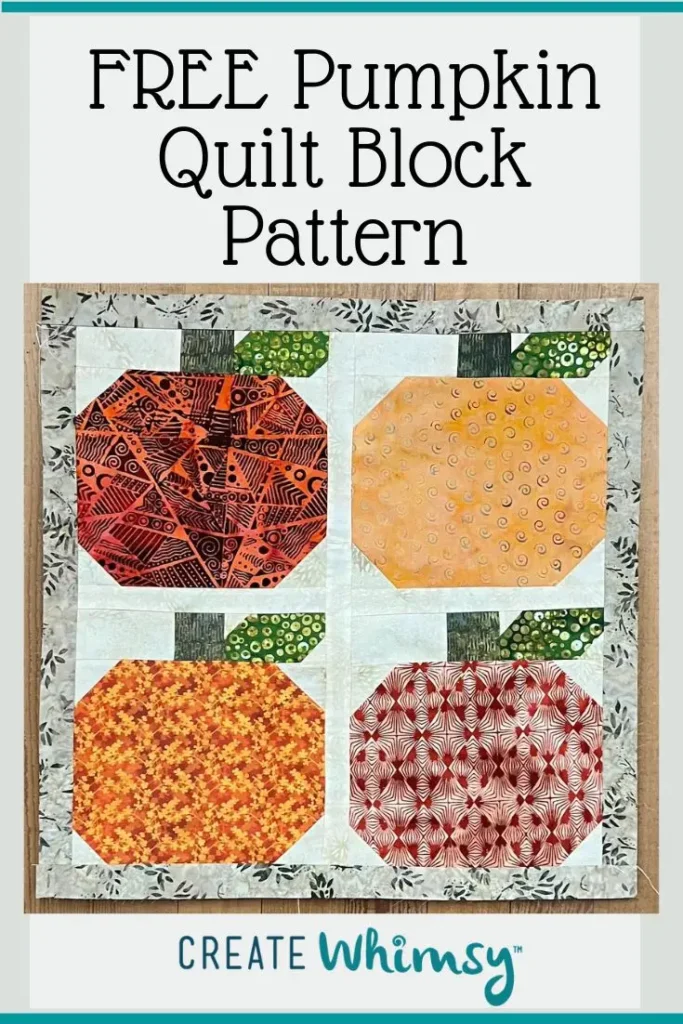
Want to make an easy pumpkin quilt block? This free pumpkin quilt block pattern includes three size options and step-by-step instructions to help you sew a pumpkin with just four fabrics. It’s a fun fall quilting project for beginners and experienced quilters alike!
Use orange fabric for a traditional pumpkin, dig into your scraps for a scrappy look, or choose your favorite fall prints. Make one pumpkin quilt block for a small seasonal project, line several up for a fall table runner, or sew a whole collection into a pumpkin quilt. You can even add a jack-o’-lantern face for Halloween!
How do you make a pumpkin quilt block? Sew the stem, leaf, pumpkin and background pieces, trim the corners, press the sections, and join them together.
Is this pumpkin quilt block beginner friendly? Yes! You’ll use basic piecing, straight seams and a quarter-inch seam allowance.
What size fabric pieces do you need? The cutting chart provides measurements for three pumpkin quilt block sizes, so choose your finished size before cutting.
As an Amazon Associate I earn from qualifying purchases. Read more about our affiliate linking policy.
What can you make with pumpkin quilt blocks? Turn your blocks into a fall table runner, wall hanging, seasonal quilt or pillow cover.
Ready to sew a pumpkin? Gather four coordinating fabrics, check the cutting chart, and follow the steps below to make your own pumpkin quilt block.
What you’ll learn
- How to choose four fabrics for a pumpkin quilt block.
- How to cut the pumpkin, stem, leaf and background pieces.
- How to sew diagonal corners to create the leaf and pumpkin shapes.
- How to trim and press your pieces for a flat, accurate block.
- How to assemble the finished pumpkin quilt block.
- How to turn your blocks into a fall table runner, wall hanging, quilt or pillow.
Quick start: make a pumpkin quilt block
Skill level: Beginner
Time: About 1 hour, including preparation
Fabric: Four fabrics for the pumpkin, stem, leaf and background
Techniques: Straight seams, diagonal corner piecing, trimming and pressing
You’ll need: Fabric, thread, sewing machine, rotary cutter, cutting mat, quilting ruler, fabric marker and iron.
- Choose one of the three block sizes in the cutting chart.
- Cut the pumpkin, stem, leaf and background fabrics.
- Sew the background pieces to the stem, leaf and pumpkin.
- Trim the extra fabric from the diagonal corners.
- Press the sections and sew them together.
- Press the finished block and trim if needed to make it square.
Before you cut: Check the measurements for your chosen block size and label your fabric pieces. This makes assembly much easier.
EXPLORE: Easy Quilt Blocks
Here is a chart that shows how to cut your fabrics to make the pumpkin quilt block in three different sizes.

No need to download any pdf patterns, or worry about keeping track of paper patterns. Our free pattern is a simple way to make a pumpkin block with just using four fabrics.
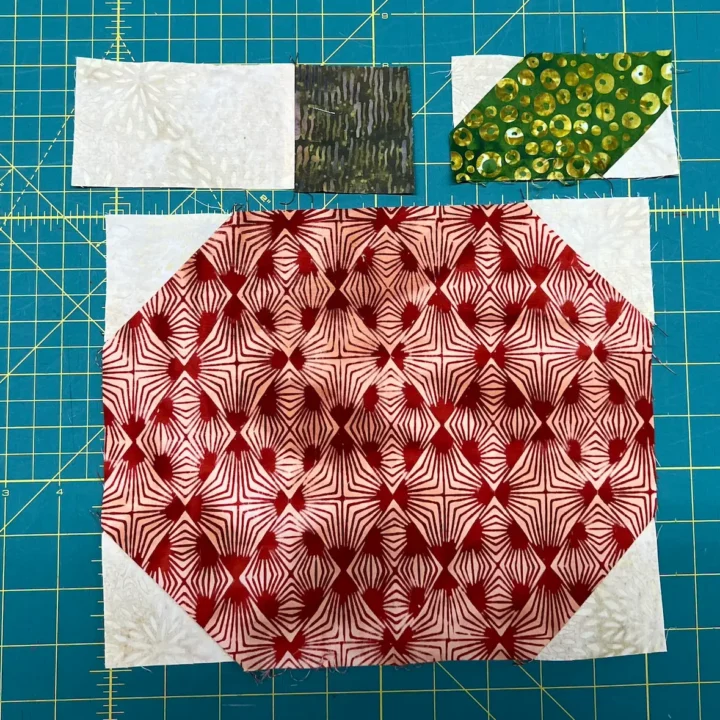
How to Make a Pumpkin Quilt Block
Learn how to make this fall-inspired pumpkin quilt block with our step-by-step instructions.
The pumpkin block comes together quickly. A table runner or small display quilt can easily be put together in an afternoon or two.
A perfect project for beginners, and a great scrap-busting project for quilters of all skill levels!
Materials
- Fat quarter or 10-1/2" square of fabric for the pumpkin
- Small pieces for stem, leaf and background fabrics
- Coordinating thread for sewing
Tools
- Sewing machine
- Rotary cutter
- Cutting mat
- Quilter's ruler
- Removable fabric marker; I used a Frixion pen
- Iron
- Pressing surface or ironing board
Instructions
Step 1: Choose and cut your fabrics
Choose four coordinating fabrics for the pumpkin, stem, leaf and background. Orange works beautifully for a traditional pumpkin, but batiks, prints and scraps are fun options, too.
Use the cutting chart above to select your block size and cut all the pieces to the listed measurements.
If you're making several pumpkin blocks, cut all your pieces before you begin sewing. Sort them into sets so each pumpkin has everything it needs. 
Step 2: Sew the stem section
Place the stem fabric and its background rectangle right sides together.
With right sides together, sew the stem and background together with a 1/4-inch seam allowance. 
Step 3: Make the leaf section
Take the leaf rectangle and the two small background fabric squares. Draw a diagonal line on the wrong side of each of the background pieces.
With right sides together, place one square in the upper left corner and the other in the lower right corner. 
If you'd like, you can pin these in place. I found they didn't shift much and I didn't need to pin them. Sew along the diagonal line to form the leaf, from the side of the leaf block to the top or bottom of the block. 
Here is the leaf block with the background fabrics sewn to it. 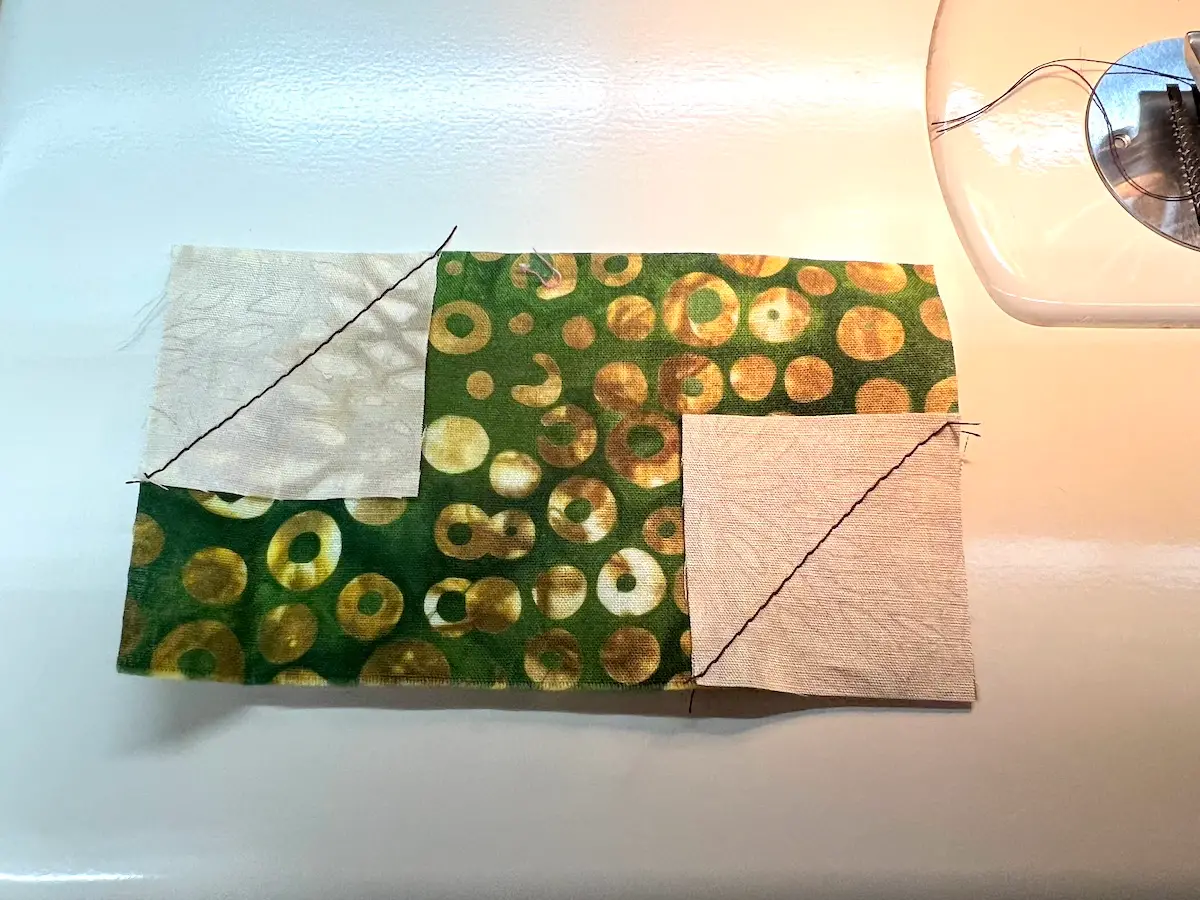
Step 4: Add the pumpkin corners
Now we are ready to sew the four (4) background squares to the pumpkin. We'll use the same technique we did for the leaf block, but add the squares to all four corners of the pumpkin.
Draw diagonal liines on the wrong side of each of the background squares
Place the four background squares right sides together on all four corners of the pumpkin fabric and sew diagonally from top/bottom to the side. 
Step 5: Trim and press the pumpkin
The main four pieces are made and ready for trimming and pressing! 
Let's start with trimming the leaf section. Using a quilter's ruler, line the 1/4-inch mark along the seam line you stitched diagonally. Using your rotary cutter, cut off the OUTSIDE triangle on both squares. 
Next, trim the OUTSIDE triangle to a 1/4-inch seam allowance on the pumpkins four background squares. 
Here are the four elements, ready to be pressed. Read our article on how to press seams for quilting. I pressed them all open, which is my preference most of the time. 
And, here are the four elements, in different fabrics, all pressed. 
Step 6: Sew the stem and leaf together
Sew the stem section to the leaf section, with right sides together and a 1/4-inch seam allowance. 
Step 7: Join the top to the pumpkin
Sew the stem and leaf section to the pumpkin section. And, your block is done! Here are my four pumpkins done!
Step 8: Make more pumpkin blocks
Repeat the steps to make as many pumpkins as your project needs. Try different orange fabrics, fall prints or a mix of colors for a scrappy look.
For a Halloween version, consider adding a jack-o’-lantern face with appliqué, embroidery or fabric shapes. Plan the placement before assembling your larger project.
Step 9: Arrange and finish your project
I thought they needed sashing and cut 1-1/2 inch strips to add between the blocks for a 1" finished sashing. Here I'm sewing the sashing to the blocks. 
Press blocks well. Here are the finished blocks, with sashing and an outside border. All ready for a piece of batting, backing fabric and the final quilting!
Once your quilt top is assembled, add batting and backing, quilt the layers together and finish the edges.
Recommended Products
As an Amazon Associate and member of other affiliate programs, I earn from qualifying purchases.
-
 OLFA 24" x 36" Double-Sided, Self-Healing Rotary Mat
-
 OHOCO Wool Pressing Mat for Quilting - 17" x 24" Extra Large Felt Ironing Pad 1/2" Thick, 100% New Zealand Wool for Ironing, Sewing, Cutting on Ironing Board, Tabletop, Dryer, Countertop
-
 PILOT FriXion Clicker Erasable, Refillable & Retractable Gel Ink Pens, Fine Point, Assorted Color Inks, 10-Pack Pouch (11336)
-
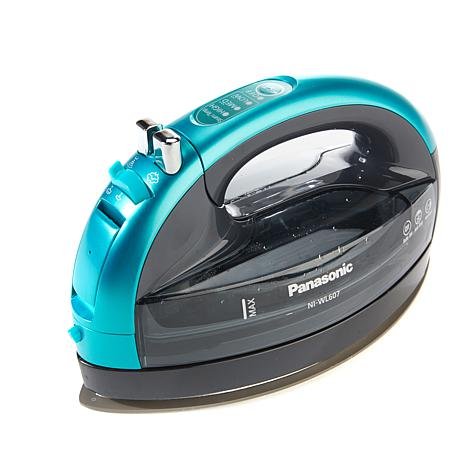 Panasonic 360º Freestyle Advanced Ceramic Cordless Iron, Pest Repeller v.57, Teal
-
 Omnigrid Non-Slip quilter's Ruler, 6" x 24", Neon Green
-
 45mm Rotary Cutter
Common pumpkin quilt block mistakes
Cutting the wrong fabric sizes
Choose your finished block size before cutting. Follow the matching column in the cutting chart, and keep the pieces for each block together.
Sewing the diagonal corners in the wrong direction
The diagonal seams create the leaf and pumpkin shapes. Check the placement in the tutorial photos before sewing each corner. It’s much easier to turn a piece around before stitching than to unpick it later.
Trimming too close to the seam
Leave a quarter-inch seam allowance beyond each diagonal stitching line. Cutting too close can weaken the seam or cause the fabric to fray.
Stretching the fabric while pressing
Diagonal seams can distort if you move the iron back and forth. Lift and lower the iron gently instead of dragging it across the block.
Forgetting to press between steps
Press each section as you go. This helps the pieces lie flat and makes it easier to line up the edges when joining the stem, leaf and pumpkin.
Skipping the final layout check
If you’re making several blocks, lay them out before sewing them together. Check the direction of the stems, the spacing between pumpkins and the placement of any sashing.
Adding sashing without checking the measurements
Decide whether you want narrow or wide sashing before cutting. Measure the strips carefully and check how they affect the overall size of your quilt top.
What can you make with pumpkin quilt blocks?
Once you’ve made your first pumpkin, it’s hard to stop at one! Here are a few ways to use your finished blocks.
Make a fall table runner
Sew four or five pumpkin blocks in a row for a seasonal table runner. Add sashing between the blocks and borders around the outside to create a finished look. Adjust the number of blocks to fit your table.
Sew a pumpkin quilt
Make several blocks using coordinating orange, rust, gold, brown and green fabrics. Arrange the pumpkins in rows or add background blocks between them. A scrappy pumpkin quilt is a wonderful way to use leftover fabric.
Create a fall wall hanging
One large pumpkin block or a small group of blocks can become a seasonal wall hanging. Add borders, batting and backing, then quilt and bind your project.
Make a pumpkin pillow
Turn a finished pumpkin block into a decorative pillow cover. Add a jack-o’-lantern face for Halloween, or keep it simple for a display that lasts throughout autumn.
RELATED: Learn how to make a pillow cover.
Try a scrappy pumpkin
Use different orange prints for each pumpkin, or experiment with unexpected colors. Cream, blue, pink and green fabrics can give this traditional fall motif a fresh look.
YOU MAY ALSO LIKE: Free witch quilt block pattern
Tips for choosing pumpkin quilt fabrics
You only need four fabric choices for this pumpkin quilt block, so it’s a good project for using what you already have.
- Pumpkin: Orange, rust, gold, red or a favorite novelty print.
- Stem: Brown, green or a contrasting print.
- Leaf: Green is traditional, but don’t be afraid to experiment.
- Background: Choose a fabric that lets the pumpkin stand out. Cream, white, gray and darker prints all create different effects.
If you’re making several blocks, repeat one background fabric throughout the project to help the pumpkins look connected. For a scrappier design, vary the pumpkin fabrics and keep the background consistent.
YOU MAY ALSO LIKE: Crazy quilted pumpkin
How to add a jack-o’-lantern face
Want to use your pumpkin quilt block for Halloween? Add eyes, a nose and a smiling mouth to create a jack-o’-lantern.
You can use fabric appliqué, embroidery or other decorative stitching. Plan the face before assembling the finished quilt top so you can work comfortably on the individual block.
For a washable quilt or pillow, choose materials and stitching that will hold up to regular use. Test any marking tools on a fabric scrap before using them on your finished block.
Frequently asked questions
Yes! The pumpkin quilt block uses basic piecing, straight seams and diagonal corner construction. Follow the cutting chart carefully and take your time with the trimming and pressing.
The pattern uses four fabric roles: pumpkin, stem, leaf and background. You can use four different fabrics or repeat a fabric in more than one section.
Yes. The tutorial provides a free pumpkin quilt block pattern with a cutting chart and step-by-step instructions. You can follow the instructions on the website without needing a separate downloadable pattern.
The cutting chart offers three block-size options. Choose the size that suits your project and use the measurements in the corresponding column.
Plan for about an hour per quilt block, including fabric preparation, cutting, sewing and pressing. Your time may vary depending on your experience and whether you’re making one block or several.
Use them to make a fall table runner, quilt, wall hanging or pillow cover. Add a jack-o’-lantern face for a Halloween project.
Absolutely! Pumpkin quilt blocks are a great scrap-busting project. Use different orange prints for the pumpkins and small scraps for the stems and leaves.
No. A quarter-inch foot can help you sew consistent seams, but you can also use a regular presser foot and a marked seam guide. The important thing is to keep your seam allowance consistent.
Either can work for this block. Choose the method that helps your pieces lie flat and makes the sections easy to assemble. See our guide to pressing quilt seams for more tips.
Of course! Try cream, blue, pink, purple or multicolored prints. The shape will still read as a pumpkin, and unexpected colors can make a seasonal quilt feel more modern.
Make a pumpkin quilt block for fall
This easy pumpkin quilt block is a fun way to use your favorite fabrics and make something seasonal. Start with one block to learn the steps, then make a few more for a fall table runner, wall hanging, pillow or quilt.
Choose your fabrics, follow the cutting chart and enjoy watching your pumpkin take shape. If you make one, share a photo on Instagram and tag @createwhimsy. We’d love to see the fabrics you choose!
Check out all of our free quilt patterns and free tutorials on Create Whimsy.