
Sara Lamb has spent 50 years turning thread, yarn, fabric scraps, and beads into beautiful things. From handwoven jackets and playful bags to colorful quilted coats inspired by birds, her curiosity keeps leading her down new creative paths.

What first drew you to weaving and working with fiber? Was there a particular moment when you thought, “This is something I want to learn”?
I started weaving in 1976 to learn to make cloth, having sewn for most of my life. I spent the first few years like any beginning weaver, learning how the loom works, what yarns made what fabrics, and how to sew with handwoven cloth.
The first 20 or so years of weaving, I made clothing and household textiles. Making cloth is still one of my favorite things to do, I almost always have a warp on the loom.
Most of the cloth I wove in those years was for shawls, scarves and a particular jacket I copied from an old Japanese Hanten, a type of kimono used by working people.
As an Amazon Associate I earn from qualifying purchases. Read more about our affiliate linking policy.
What do you remember about your very first weaving project? What did it teach you, even if it wasn’t exactly what you hoped it would be?
I purchased the original kimono at the Berkely Flea Market in 1980. It was used, well worn, and came already patched. I wore it for a few years and realized it would soon wear out completely; the cloth was getting thin, and the patches were fraying too, so I made a pattern from it, wove some cloth, and sewed the first copy as a cotton garment.

That garment was a success, so I made another, then another, and then many more over the years. It turns out that I do not crave variety, just abundance! It is a garment of few pieces, and those pieces are mostly rectangles, making it a perfect canvas for color exploration and playing with color placement.

At some point, having made so many jackets, I really did not need more clothing.

You eventually learned to spin because you wanted yarn for your weaving. What happened when you started making your own yarn instead of simply buying it?
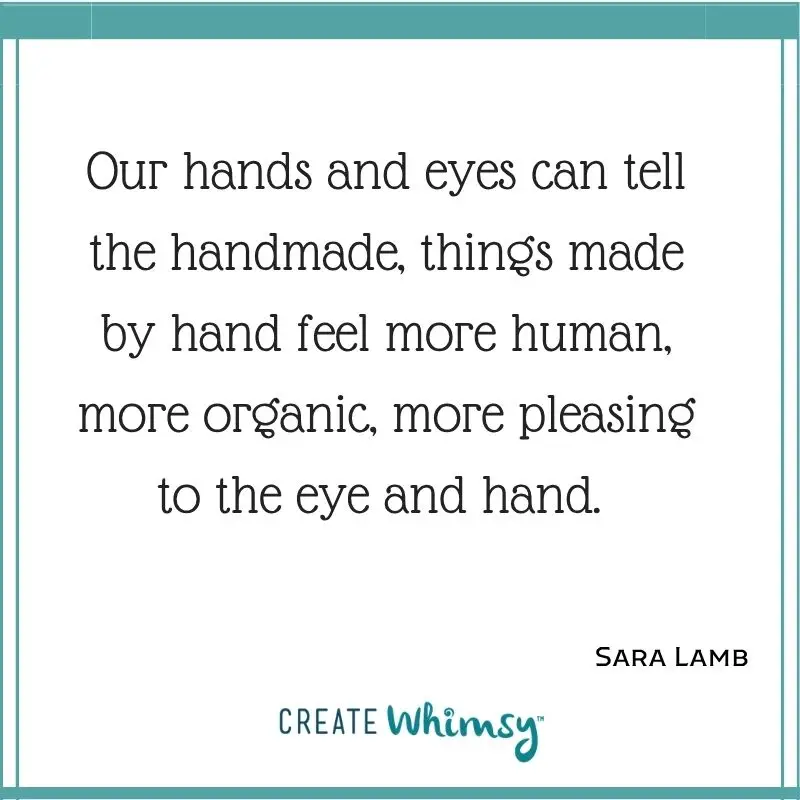
I learned to spin yarn about the same time as I learned to weave. Hand-spun yarn gives a certain quality or character to the fabric that commercial yarn cannot match, I liken it to the difference between hand thrown pottery and industrially made dishes. Our hands and eyes can tell the handmade, things made by hand feel more human, more organic, more pleasing to the eye and hand.

I started spinning with wool, then added silk, and finally cotton. I also learned to dye the yarns, both commercial yarns and hand spun, and still enjoy spinning yards and yards of white yarn while dreaming of the colors it will be. I used my handspun yarn for shawls, scarves, and eventually jackets.

After many years of weaving, I was piling up scraps and leftover fabrics. In the early 90’s, I tried making small bags with the leftover fabrics. I wove bands for ornamentation and as handles, and decorated the bags with beads. The first one, Coin Purse, has Peruvian pickup bands, Kumihimo braids trim, and flattened pennies as embellishments.

I had lots of scraps. I made lots of bags.
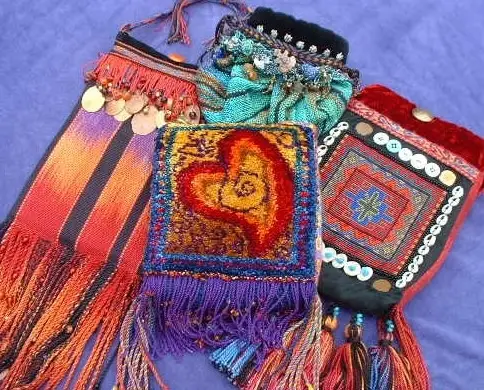
Many had themes, and increasingly I used bead techniques, until one day, I just wove with beads.

The bags that were puns, entertained me: Coin Purse, Handbag, Doggie Bag, Bag of Bones, Plastic Bag, Paper Bag, Evening Bag, Sandwich Bag.
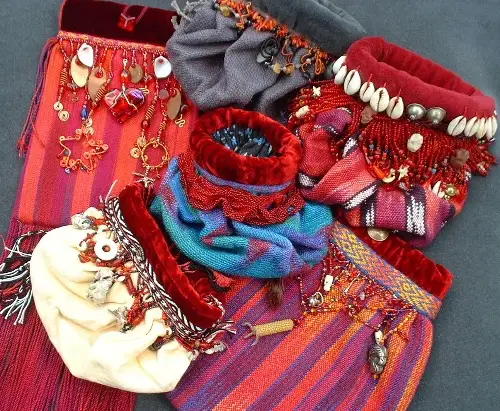
And, then I began a series dedicated to women in history, and literature, goddesses.

One day, inspired by a song, I wove an image that popped into my head in beads. I could not find the right colors in beads, so I came as close as I could using the beads I had on hand. I tried to think of ways to come up with the right colors in beads, like I could in dyeing yarns. If only I could use yarn instead of beads!
I knew a man who wove knotted pile, a rug technique, on an upright loom, Orlo Duker. Knotted pile is quite similar to bead weaving in that one can use a graphed pattern, each knot, like each bead, can be a different color, and the pattern grows knot by knot, row by row, like beadweaving. I called him and asked him if he would show me how to weave this technique, intending to buy some lumber to make a suitable upright loom to make a bag using dyed yarns.
Duke, as we knew him, told me to come next Wednesday. He showed me a small sample loom, and that morning we warped, and started weaving a small piece on it. When I got up to leave, he started packing up the tools and yarns to send home with me, and asked if I wanted to keep the loom: he was no longer using it. So of course, I said yes. I came home and finished that small sample, made it into a bag, and began planning my next knotted pile bag. Eventually I was able to turn that design I’d used in beadweaving into a bag in the colors I’d envisioned.

Knotted pile turned into a 10 year odyssey of weaving pile bags, in wool and silk, eventually teaching the technique to others, and finally writing my first book, Woven Treasures (Interweave Press, 2009). A few years later, I wrote my second book Spin to Weave (Interweave Press, 2013) and my third book fast on its heels, The Practical Spinner’s Guide to Silk (Interweave Press, 2014) part of a series of 4 spinning books with other authors writing the books on cotton, wool, and luxury fibers.

Eventually, to make the bags more durable for daily use, I learned to stitch leather, and use fabric or knotted pile as inserts in bags. Hand stitching leather was another rabbit hole I was not prepared for, who knew it could be so fun?


I was also traveling to teach. I started in the 80’s locally with spinning and dye classes, then band weaving classes, wire work and bead embellishment, knotted pile and silk spinning. Teaching took me all over the US and Canada to weaving conferences and bead conferences, and eventually to Britain, Scotland and Australia.
Most of my studio time during those years was used for making samples, class project examples, and more jackets to wear. There was very little time to experiment with new things, and no time at all to try and use up the piles and piles of extra fabric that built up over the years.
One day in 2016, a friend asked what size loom she should buy to weave fabric for clothing. I told her about the garment I made, it uses narrow fabrics, max about 15” wide. We discussed other garments, mostly based on those made worldwide by populations who, historically, utilized narrow looms to make everything they needed.
I used the example of the Turkish Coat pattern from Folkwear, which I had on hand. We measured each piece: the largest, the sleeve, was 20” wide. She asked me if I’d made the garment, since I’d had the pattern since 1975, and I said no. She told me it’s about time to make it or get rid of the pattern, why was I holding onto it?
Never one to back away from a challenge, I decided I would try to put some of those leftover fabrics to use into what would have been the most clown-appropriate garment I’d ever made. Clearly, I had to weave some new fabric for this garment, to pull together the scraps I wanted to use.
My first Turkish Coat followed the pattern in shape and construction techniques, stitching each section together separately as top, batting and lining, and then stitching all the sections together into the garment.

It was not an unqualified success.I did learn a lot and absolutely loved the hand of the fabrics stitched together. Quilting! Who knew? It was an eye-opener and sent me down the path I am on today. I did wear it once, and had a woman come up to me and tell me how to tuck and alter the garment so it would not be quite so …voluminous. I knew I could do better.
I wove some silk fabric for the second coat using commercial yarns, altered the pattern, and made it according to contemporary western garment construction techniques; I made the outside and a lining, put them together, stitched the layers together, and added the band.

Well, this was better. I don’t often have a need to wear long black silk coats, though, so I made another, this time out of handspun, handpainted wool on the outside, and handspun silk lining.

It was a bit bright to wear to the grocery store, so I made an “everyday” wool coat out of handpsun wool, with handspun cotton lining.

Then came Covid. Everything was cancelled, and I had the good luck to have a well stocked studio to keep me busy and away from crowds. Now was the time to start using up all those leftovers. I had yarn, fabric scraps, dyes, fibers, and a new pattern to play with, that took lots of time to weave, sew and quilt. I retired then and there from teaching, did not try to teach online classes, so now I had time.
I’d been trying for a few years to figure out how to weave a garment based on the Cardinal birds I have seen at a friend’s house in Wisconsin. That flash of red through the trees was charming. I did not think I’d wear a red coat. BUT! I would wear one if it were the colors of the female Cardinal on the outside, and who doesn’t like a red silk lining?


Thus began a series of quilted bird coats using this modified Turkish coat pattern, the “birds I have known” series; Cardinal, chicken, peacock, Phoenix (OK, well, mythical birds too), Owl, Stellar’s Jay and hummingbird, all with the female colors outside, and the male plumage colors in the lining. I have finished the first four, and am working on Owl now, spinning angora for the outside of the coat, and silk for the lining.
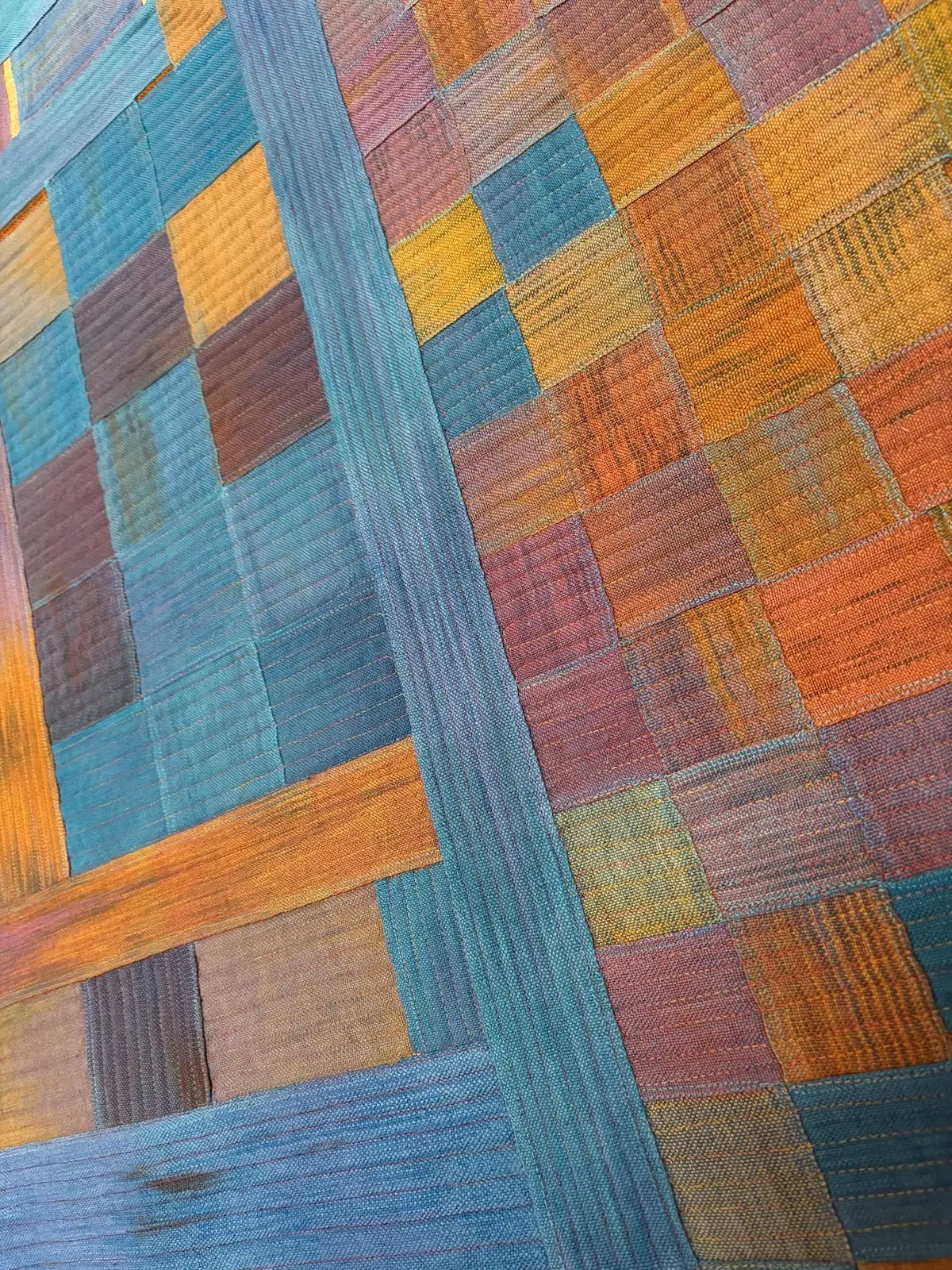
The idea quilted layered handwoven fabric also generated an interest in making handwoven quilts for the bed. I started with scraps (here we go again) and hand sewed blocks in a quilt-as-you-go manner, and put together a truly homely scrap quilt, one never to be revealed in public. It resides on the guest bed, and yes, keeps people warm, and, as long as it’s dark in there, no one has had nightmares (so far).

Once again, it looks as though I need to weave specific fabrics for whatever it is I am making. The second quilt was much more successful.

I have woven several quilts since then, and developed a method I like for using handwoven fabric that makes the finished quilt not bulky at the seams. This also might help in using up the cones and cones of cotton yarns I have amassed over the years for weaving.

The eventual goal, for me, is a handspun cotton quilt. I have the fiber, I have the tools, and I have the time. Now I just need to get busy.
Learn more about Sara on her website.
Interview posted September 2026
Explore more weaving inspiration on Create Whimsy.