
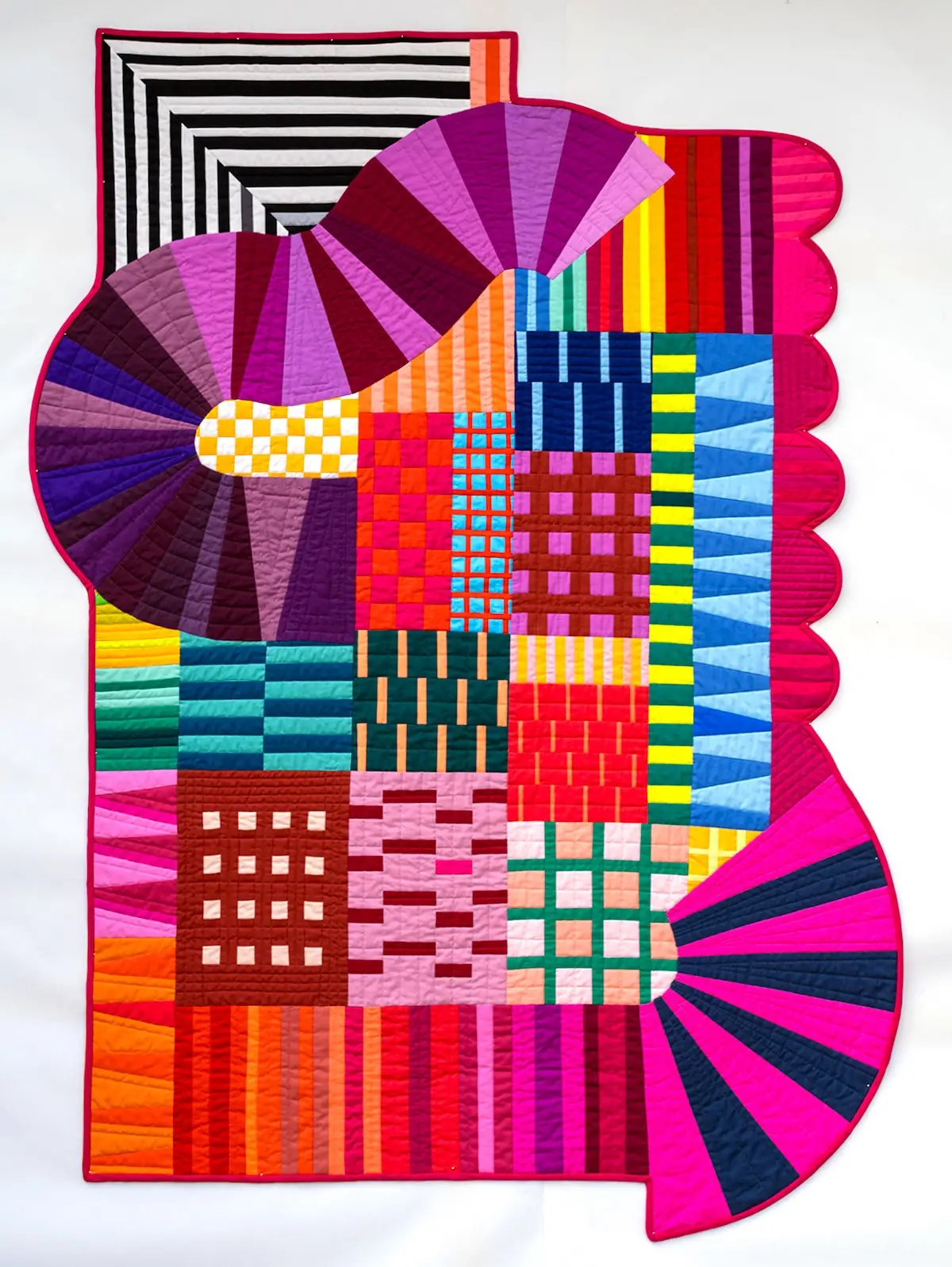
Quilting and computer science might seem like two very different worlds, but Mackenzie Leake brings them together in surprising ways. As a researcher and quiltmaker, she loves solving puzzles, exploring creativity, and finding new ways technology can help makers without taking away the joy of creating by hand.

Tell us a little about yourself. What first drew you to quilting?
My mom has been quilting for over 50 years, and she helped me make my first quilt when I was 7 years old. I went through phases of making clothes and bags, but I kept coming back to quilting. I really like the engineering challenge of making a quilt lie flat.
At what point did you realize quilting wasn’t just a hobby, but something that would stay with you?
Sewing has been in my life in some form over the years. Once I figured out how to make a 70 x 80 in quilt in a small shared dorm room in college, I realized I was on the path to making space in my life for this hobby long-term.
As an Amazon Associate I earn from qualifying purchases. Read more about our affiliate linking policy.


You also studied computer science and art. Did those interests grow together, or did they come together later?
I came into grad school thinking I would work in an AI lab, but gaining exposure to computer graphics opened my eyes to the possibility of building tools for creative domains and bringing more of my personal interests into my research.
You’re a Research Scientist at Adobe. For readers who may not know what that means, what kinds of problems do you spend your days trying to solve?
I am an industry research scientist, and I do a mix of pure and applied research in video editing and computational design. I collaborate with PhD students on research projects and mentor interns who publish papers at computer science venues.
I also work closely with product teams to translate some of our research into products. I both write code and talk to users, which has allowed me to learn from people working in many different creative fields.
Your research is all about helping people create. What first inspired you to study quilting as a research problem?
I had suspected that there were some really interesting geometry and computational design problems present in quilting. I worked with my PhD advisor, Maneesh Agrawala, and mentors Pat Hanrahan and Doug James at Stanford to connect these ideas to more general problems in computer science.
Many of the challenges we encounter in quilting, such as drafting a foundation paper piecing block and reducing fabric waste through better layouts, map really nicely to broader topics explored in computer science, such as graph algorithms and packing problems, that arise across many different domains.


Many people try to automate creative work. Your research seems to ask a different question: “How can computers support creativity without taking it away?” How did that philosophy develop?
Both of my parents were in creative professions. I saw how human their work was and that computational tools could only go so far in replicating that kind of decision-making. The fastest way is not always the best, and I believe deeply in art and craft and the value of attention to detail.
You have said that tools should help makers focus on the creative parts instead of the frustrating parts. What does that balance look like to you?
This is really challenging because there is a lot of personal preference in what people consider fun versus frustrating.
For example, I really like the final step of attaching the binding, but I know others find it tedious. I think leaving open the possibility that someone wants to take a less efficient path with a tool is important, as it allows users to choose how much automated assistance to receive for a given step.

How has becoming a researcher changed the way you quilt?
Doing research in this domain has helped me appreciate the complex engineering some quilters do not realize they are doing. It’s fun to be able to describe mathematically why doing something like ordering a foundation-paper piecing pattern feels difficult.
In my research, I typically work backward, starting with a user-defined problem and developing a reasonable representation of it that we can encode in our tools. I take a similar approach to quilting, working back from a visual goal to identify potential strategies for constructing such a design.


And how has quilting made you a better researcher?
Quilting teaches patience, attention to detail, and how to break down big problems into smaller ones. All of these are important lessons to keep in mind as a researcher.
You study creative workflows. Has researching creativity taught you anything surprising about yourself?
It is easy to think that the way you like to work is normal or the only way of working, but seeing the wide range of ways people approach each step of a creative process has shown me how much flexibility in tools is really required.
I also realize how much we lose when we only sew alone. I have learned a lot from watching how other people construct quilts using different techniques in classes.
Where do your best ideas begin? At your sewing machine, on your computer, during a walk, or somewhere else?
I will often have an idea or a concept in mind for weeks or months and sketch different versions of it. Often it takes a few tries to translate that sketch into fabric.

You spend a lot of time studying how people create. Has one maker’s process ever completely changed your thinking?
My two strongest influences have been my classes with Irene Roderick and Nancy Crow. Irene is the first person to encourage me to try improvisation and step away from preplanned patterns. Nancy got me to think about how carefully written constraints can guide the creative process in meaningful ways.
Can you describe your workspace? Is it more sewing studio, research lab, or a little of both?
I live in a small apartment in the San Francisco Bay Area. My room is split between an office and a small sewing setup. I am hoping to add a larger design wall and a cutting surface that is not my kitchen counter soon.
What tools couldn’t you live without, both digital and traditional?
I mostly work as a machine piecer, so a quarter-inch foot is a must-have. I do initial sketches on my iPad in Procreate and use Adobe Illustrator for translating rough sketches into full-size patterns.
I love my extra-large lint roller for flattening pieces on the design wall and for preparing quilts for photography.


You’ve developed tools for improvisational quilting. What has improvisation taught you about creativity?
I come from a more traditional quilting background, and I still, deep down, prefer to have a plan. Improvisation and creativity more broadly mean having a level of confidence that you are heading in a good design direction without getting overwhelmed by the open-ended possibilities.
Even though improvisation sounds totally freeform, I have learned that adding constraints, such as a completion time or a restriction to certain colors, values, or shapes, helps narrow the space of possibilities without being overly restrictive.
Overall, I find that just a few rules go a long way in improving the process and the outcome.
How do you know when something is “finished,” whether it’s a quilt or a research project?
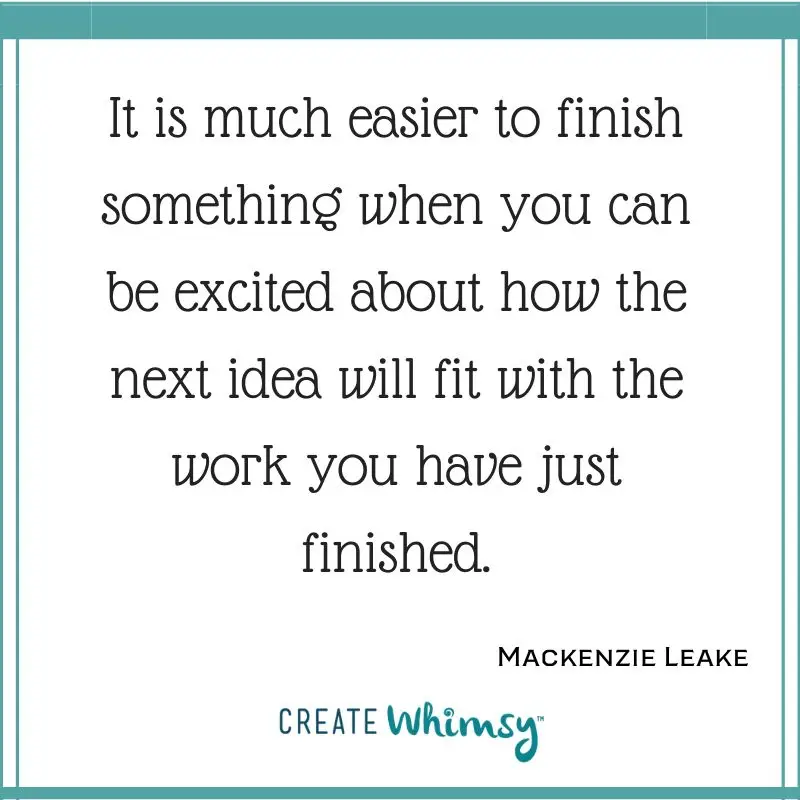
The idea of working in a series or publishing a few papers in an area helps me cut off each project. It is much easier to finish something when you can be excited about how the next idea will fit with the work you have just finished.

As AI becomes part of more creative tools, what do you hope it gives makers instead of taking away?
I am most excited about these technologies helping people explore new visual ideas in a lower-risk way. There are a lot of people who are scared to cut into their precious fabrics or who feel stuck working within a particular set of styles or colors.
Seeing different possibilities digitally without cutting into these fabrics could inspire new directions. Pattern verification, i.e., checking that sewing patterns are clear and accurate, and improving pattern layouts to reduce waste, also seem like great uses of technology for sewing more broadly.

Where can people see your work?
I post many of my quilts on my website (https://www.mackenzieleake.com/). One of my quilts is currently on a little trip around the world in the Modern Quilt Guild Selections from QuiltCon exhibit and will make a few more stops this year.
Rapid-Fire Fun:
Hand stitching or machine stitching? Machine
Favorite color to design with right now? Blue
One word that describes your quilts. Playful
Favorite Adobe app? Illustrator
What’s bringing you joy in your work right now? Working more with line and movement, particularly inspired by the way animals move
Interview posted August 2026
Explore more modern quilt projects and inspiration on Create Whimsy