
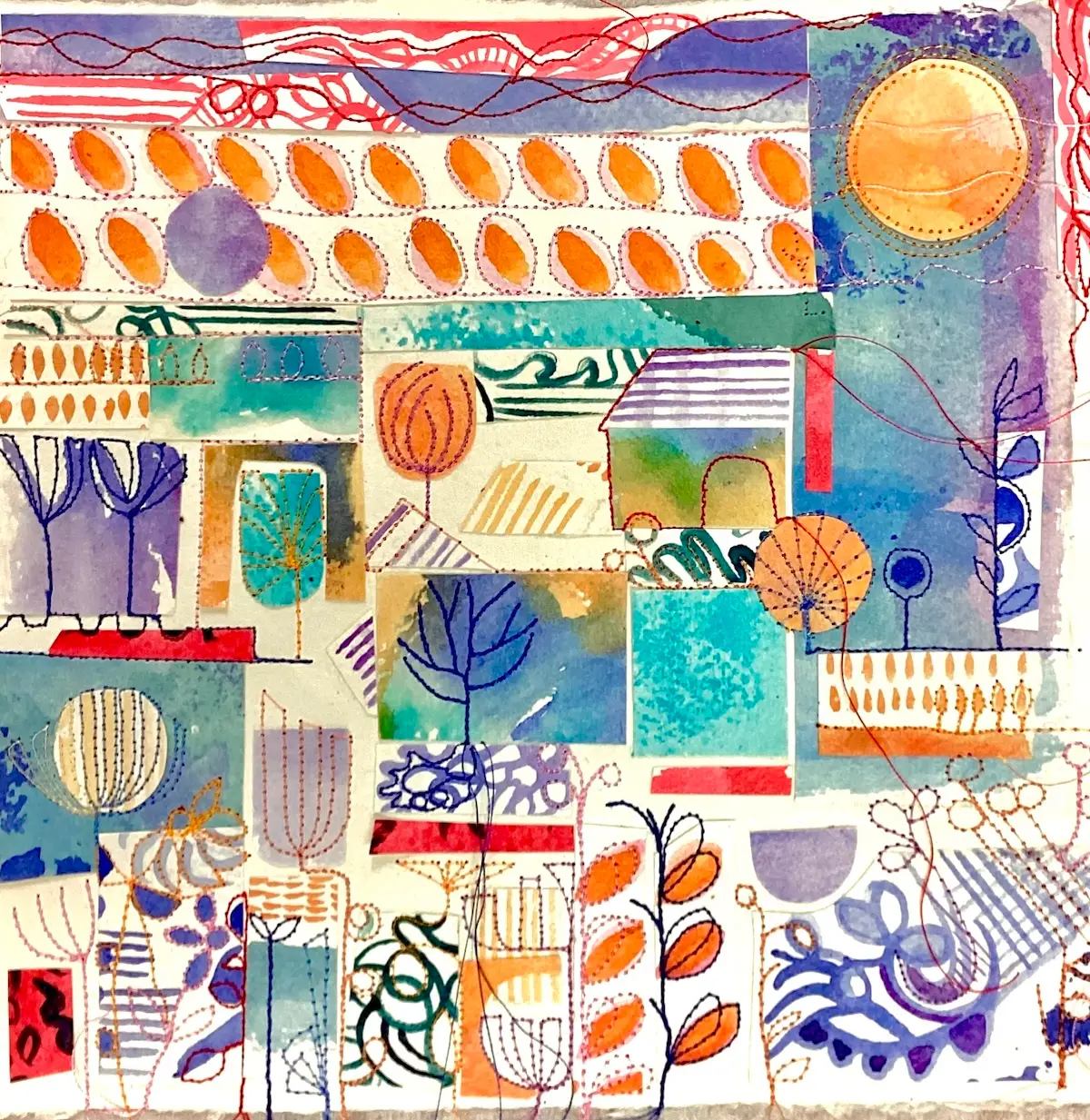
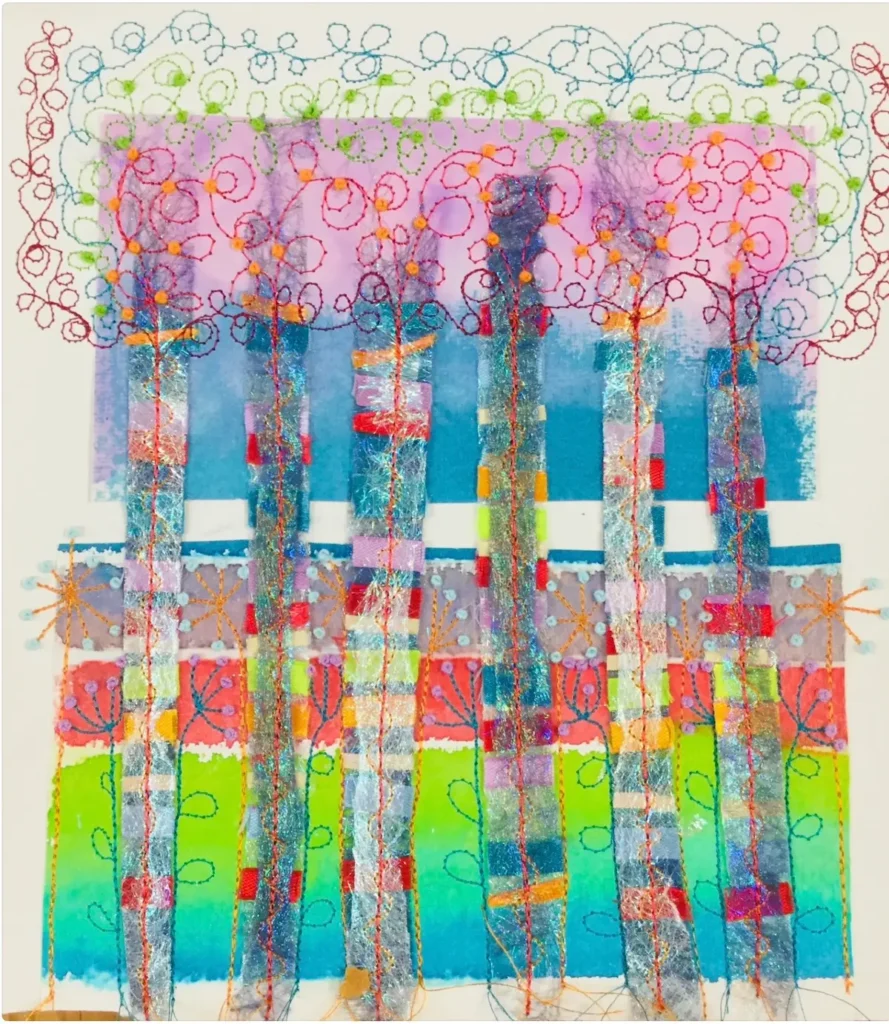
Some artists carefully plan every stitch, but Dot Ronaldson loves to see where the fabric and paper take her. Inspired by big skies, historic art, painted cloth, and a spirit of playful experimentation, she creates richly textured pieces that grow and change as she works. In this interview, Dot shares how curiosity, creativity, and a willingness to embrace surprises have shaped her journey as a mixed media artist.
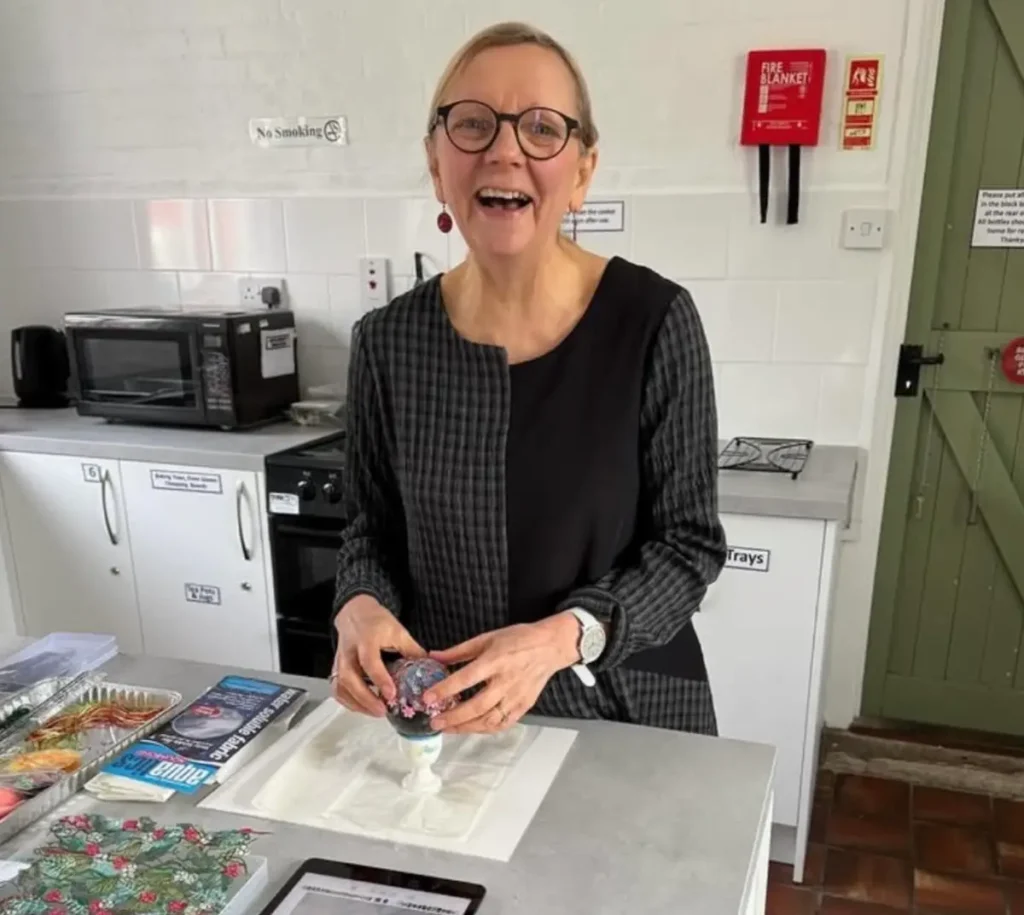
Looking back, were you always someone who made things with your hands, or did textiles find you later in life?
I always enjoyed drawing as a child and as a teenager I started to make my own clothes. Which I continued to do to a lesser extent but did sew for my children and grandchildren.
I was a food tech teacher for 35 years. Towards the end of that time I taught more general tech subjects. Some resistant materials and a little bit of textiles in schools.
I often did embroidery in the evening. Just letting a piece ramble and evolve.
As an Amazon Associate I earn from qualifying purchases. Read more about our affiliate linking policy.
I retired from teaching in schools in 2013, and I went on my first machine embroidery workshop with Alexandra Waylett. I then enrolled in a design for stitch course she was running. She invited me to be part of an exhibiting group and later to teach workshops in her studio. This was the starting point of what I do now.
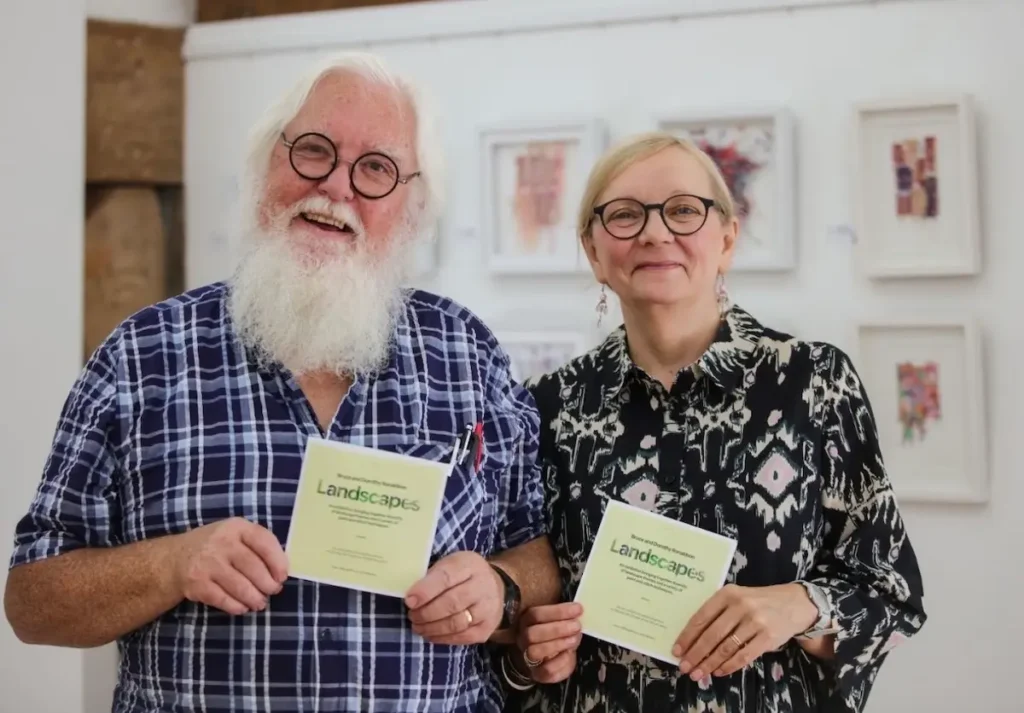
I am married to an artist. He’s also an Art historian so lots of art chat at home.
Do you remember the first piece you made that felt like your work instead of simply learning a technique?
This is a tricky one for me because I would be hopeless at following instructions and learning a technique. I just have to experiment with a technique. Therefore all pieces are my own but some might be a bit disastrous
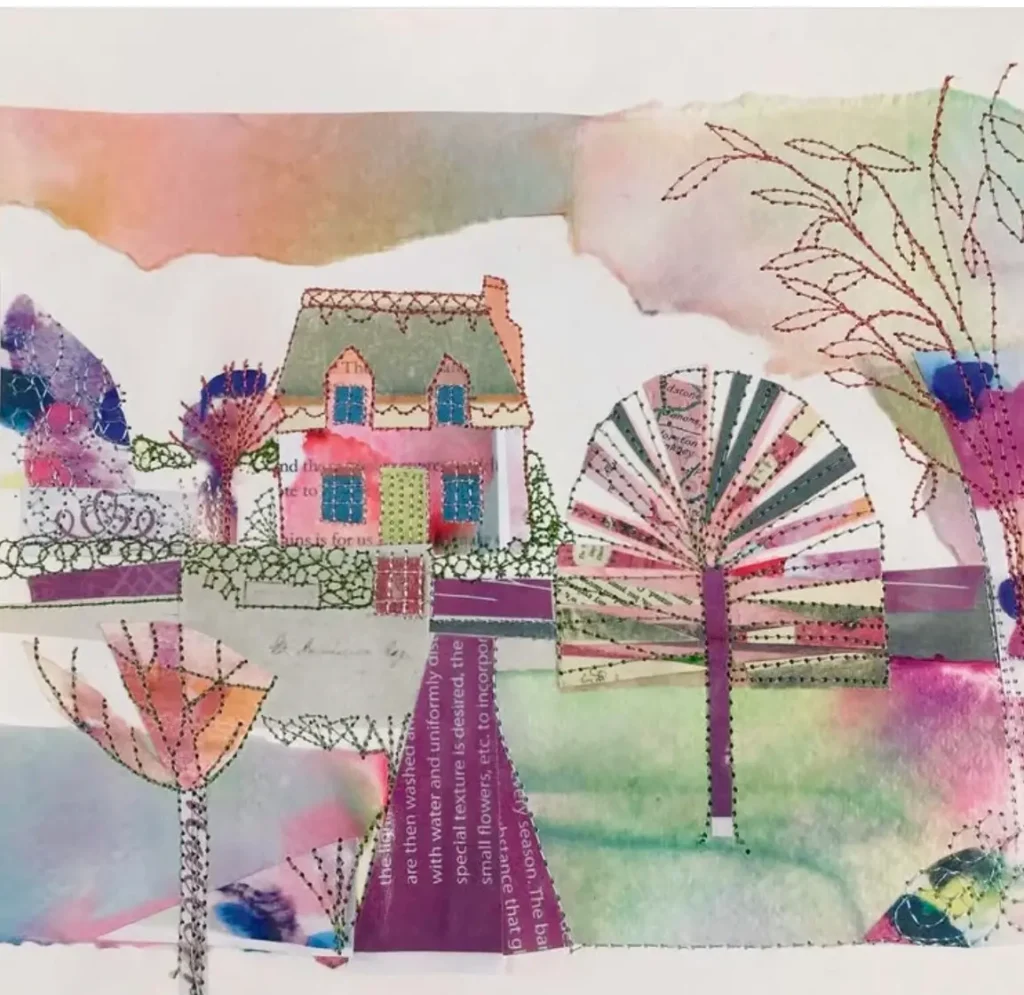
Your work has a beautiful sense of texture and story. Where do your ideas usually begin?
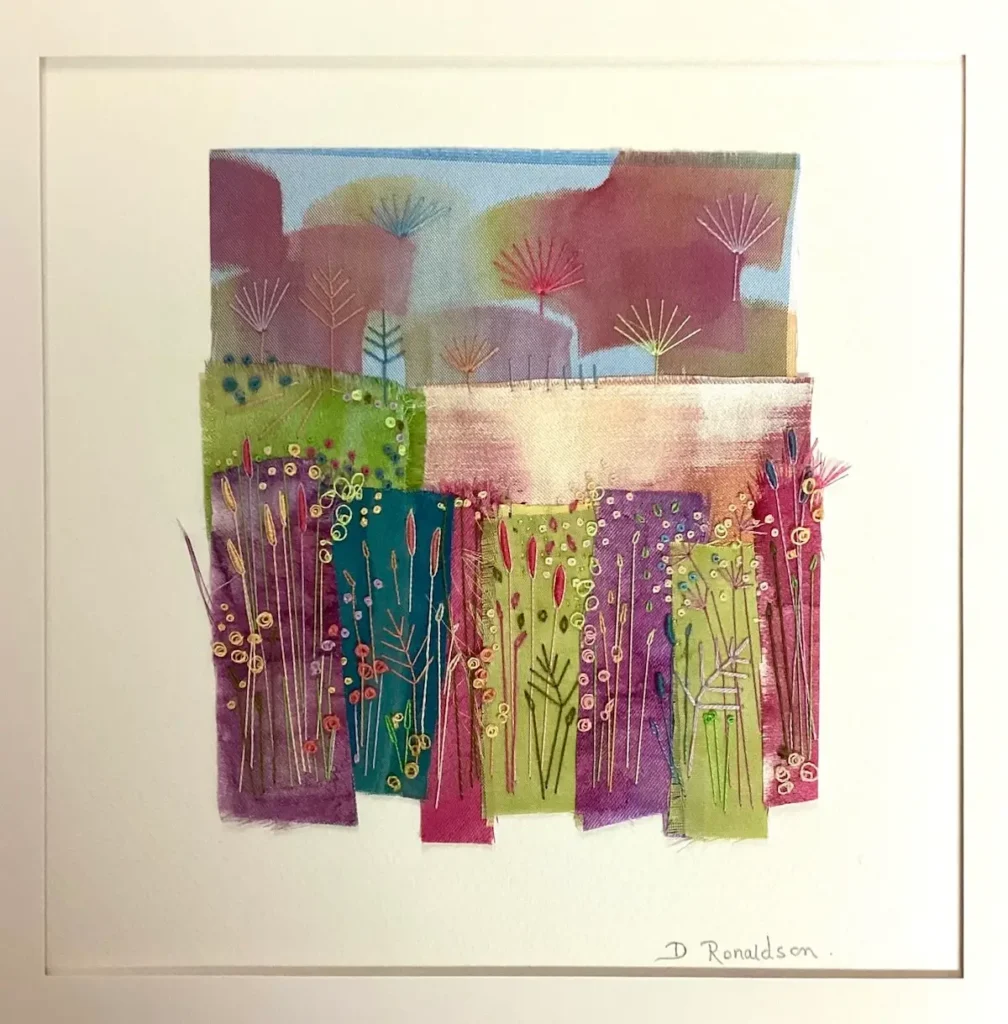
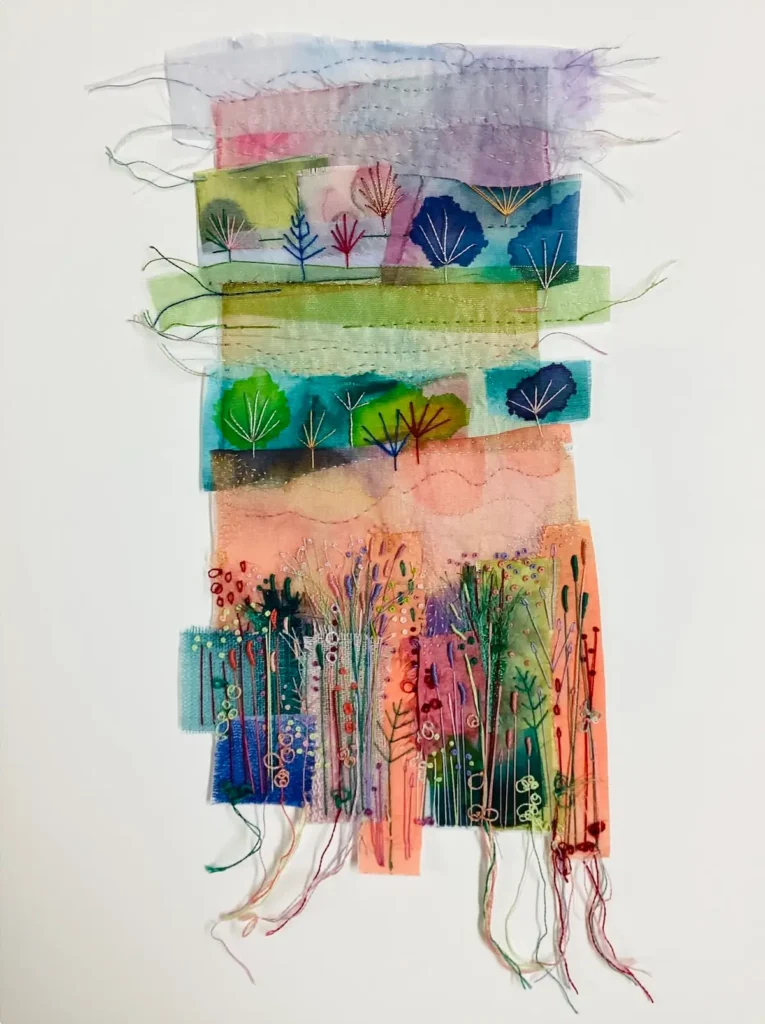
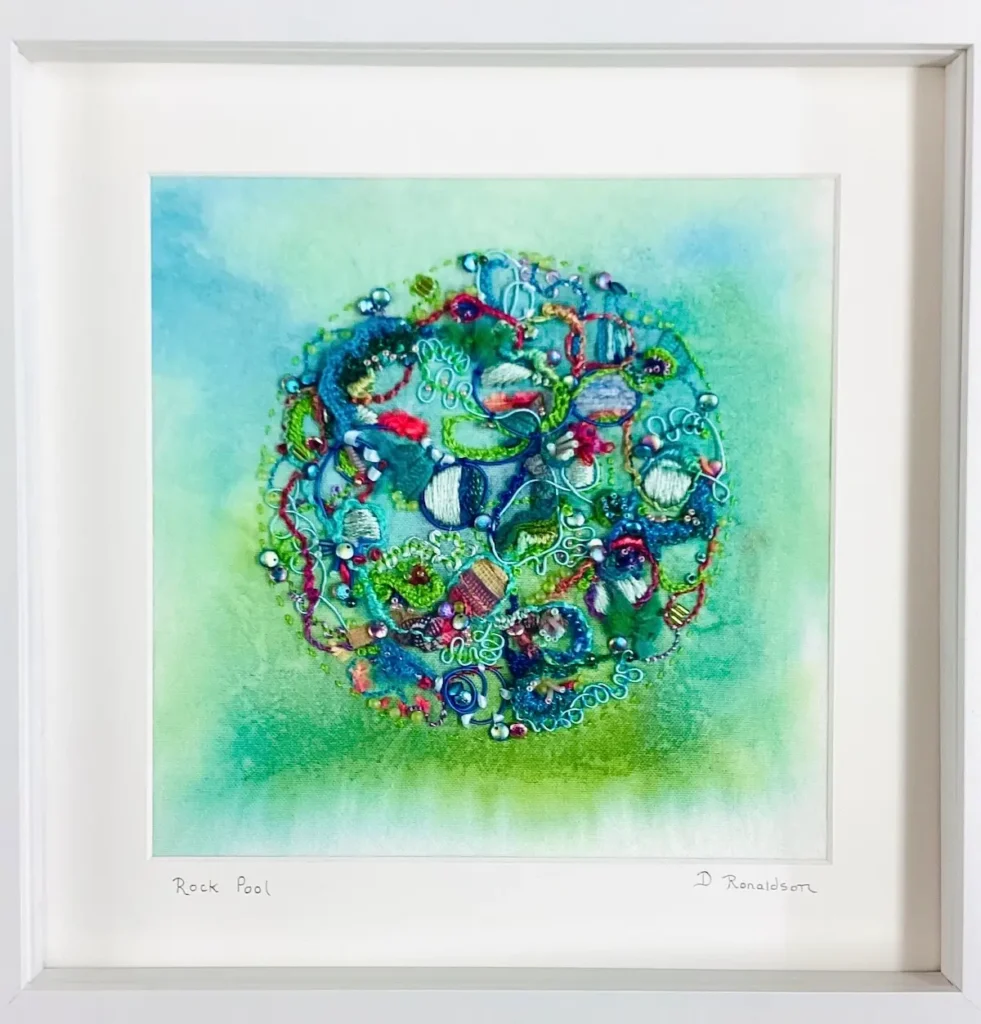
From everywhere. Lots of inspiration from the serendipity in painting on fabric. From the wonderful weave patterns in Sudbury silk. (I live near the silk mill shop) Looking at the garden, the landscape, and machinery.
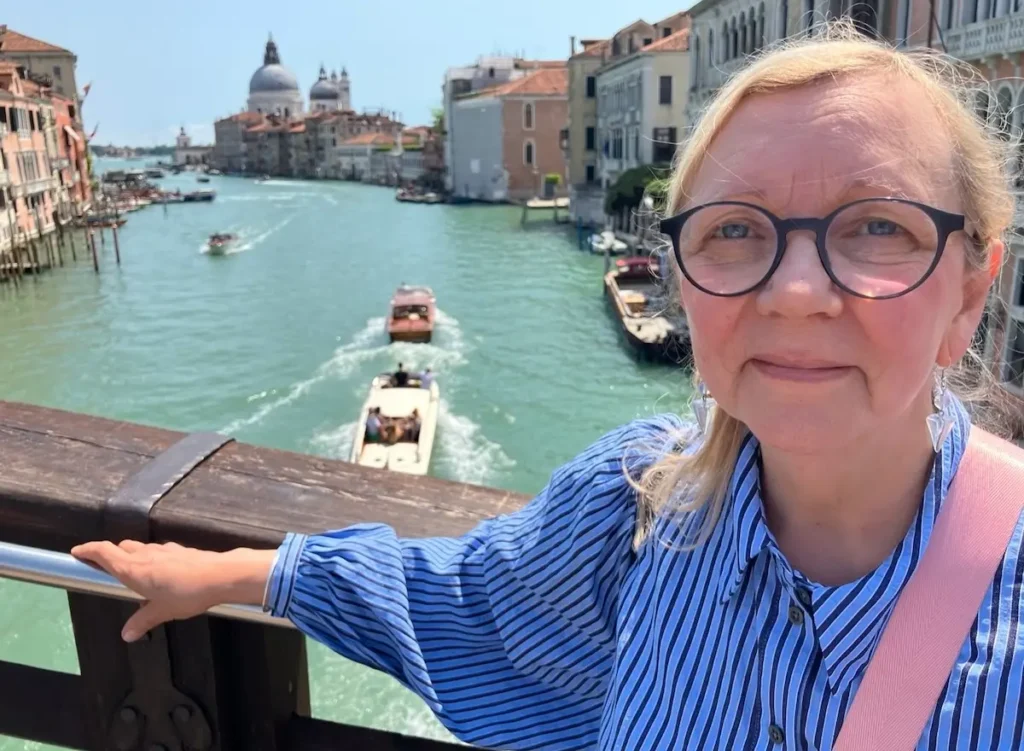
We visit Italy often, so some pieces are very inspired by Renaissance art. Also, we volunteer at a Gainsborough house, so we love a bit of fashion and fabric in an historic painting. This also encourages stitch research and experimentation.
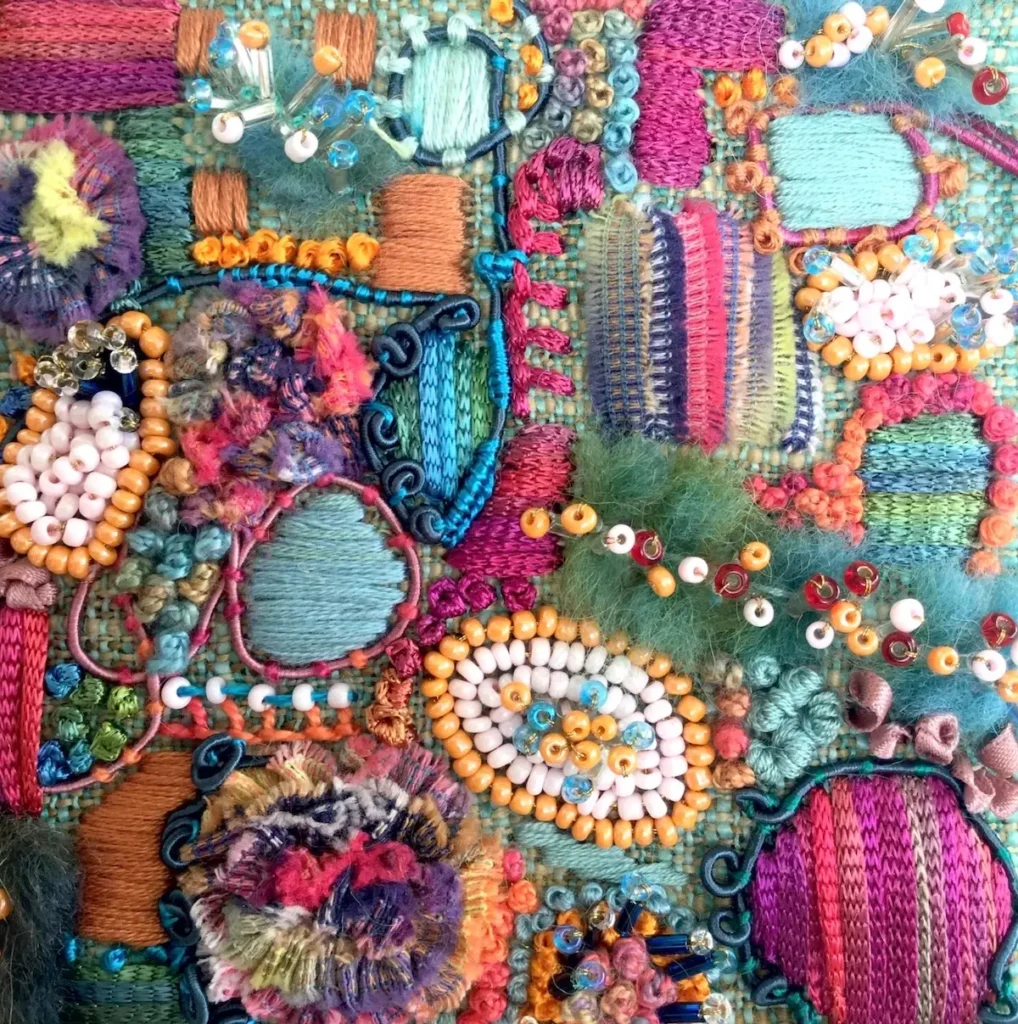
Currently I’m involved with a weaving exhibition at The Mill tye gallery Sudbury so including more needle weaving in my work.
I’m never really short of an idea just a bit short of time.
How much do nature, seasons, or the places where you live influence your work?
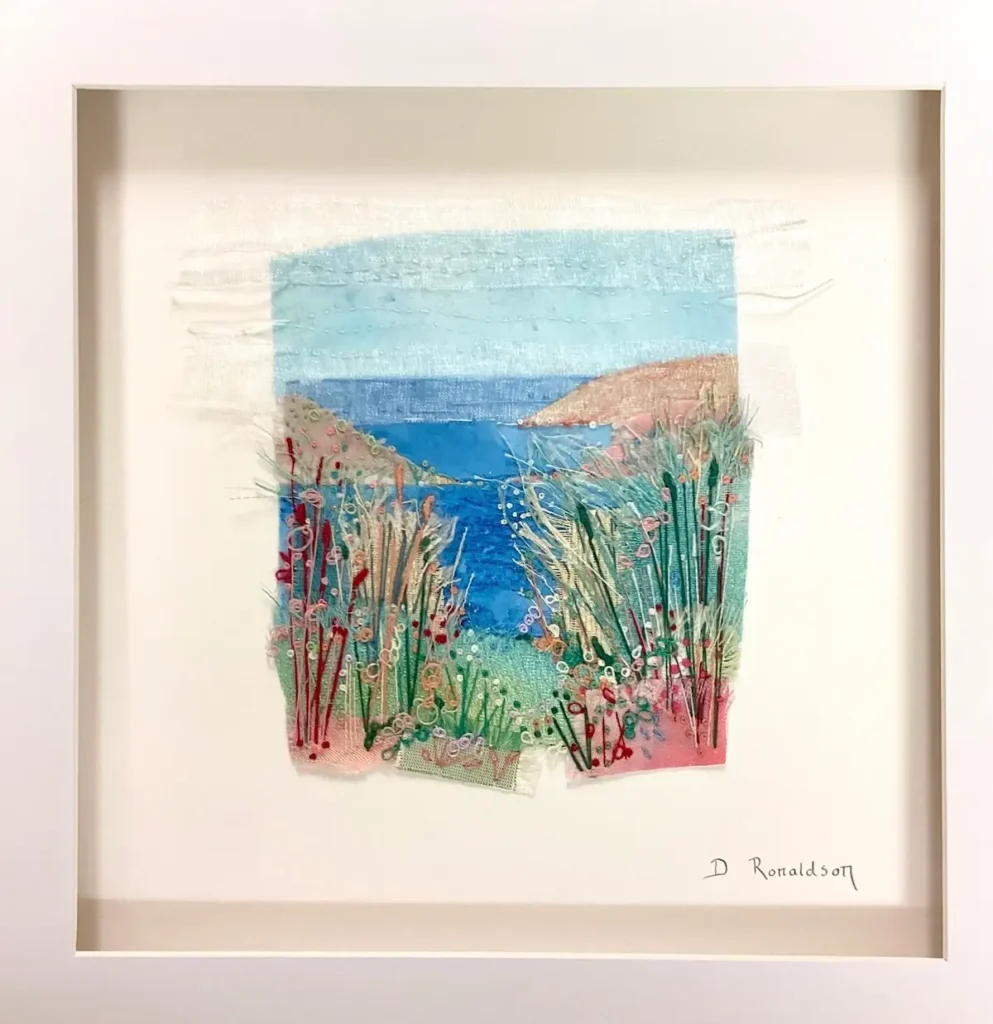
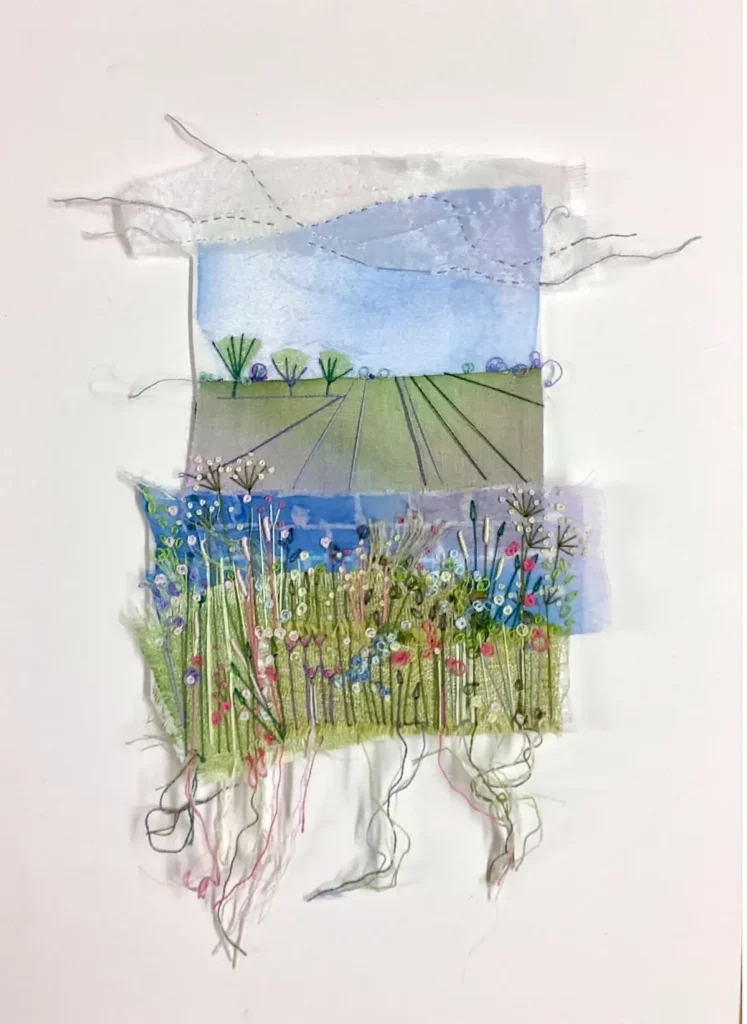
The place I live. The Essex-Suffolk border influences my landscapes I’m sure I love a water meadow and a big sky.
Do you keep sketchbooks, collections, photographs, or other ways of gathering inspiration?
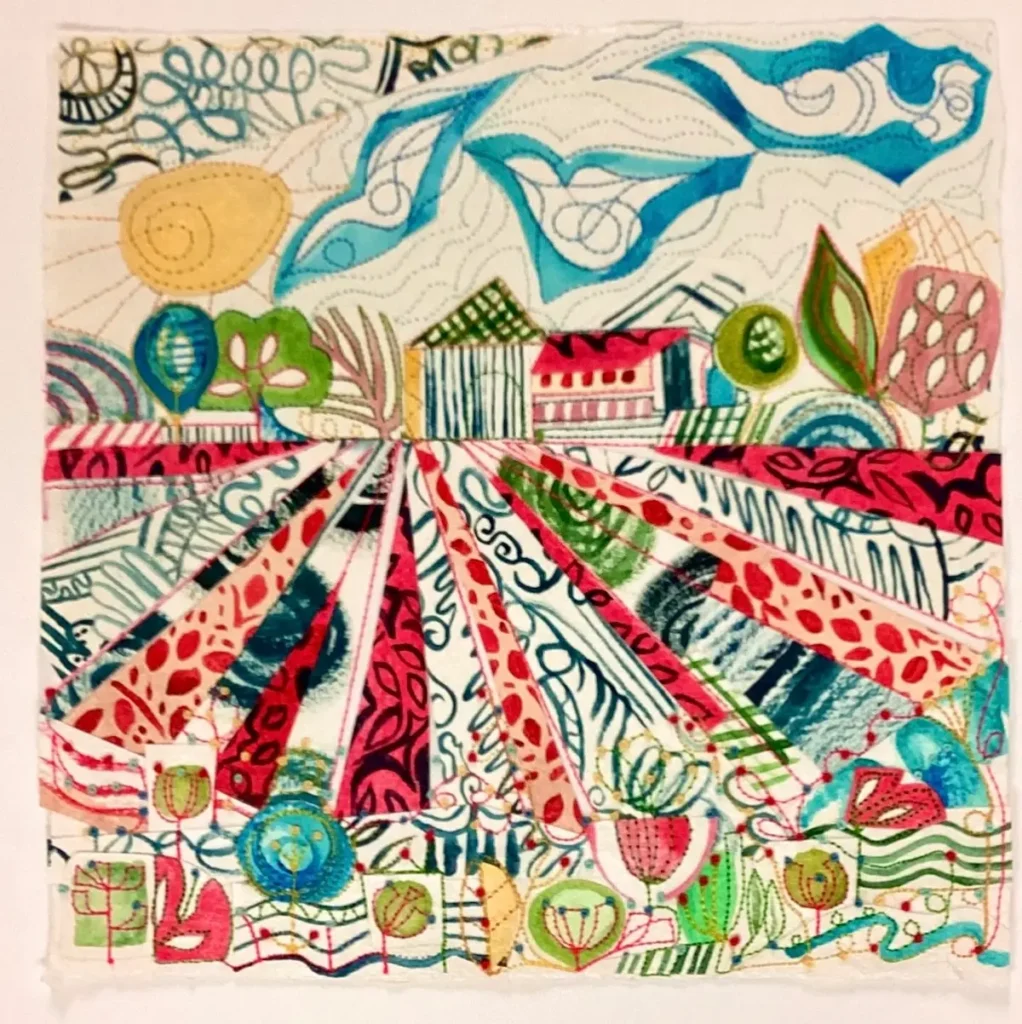
I don’t do sketchbooks. I do take photographs. I use Instagram to record my work, really and sometimes looking back at a previous piece sparks a new idea.
Can you describe your studio for us? What would we notice first if we stepped inside?
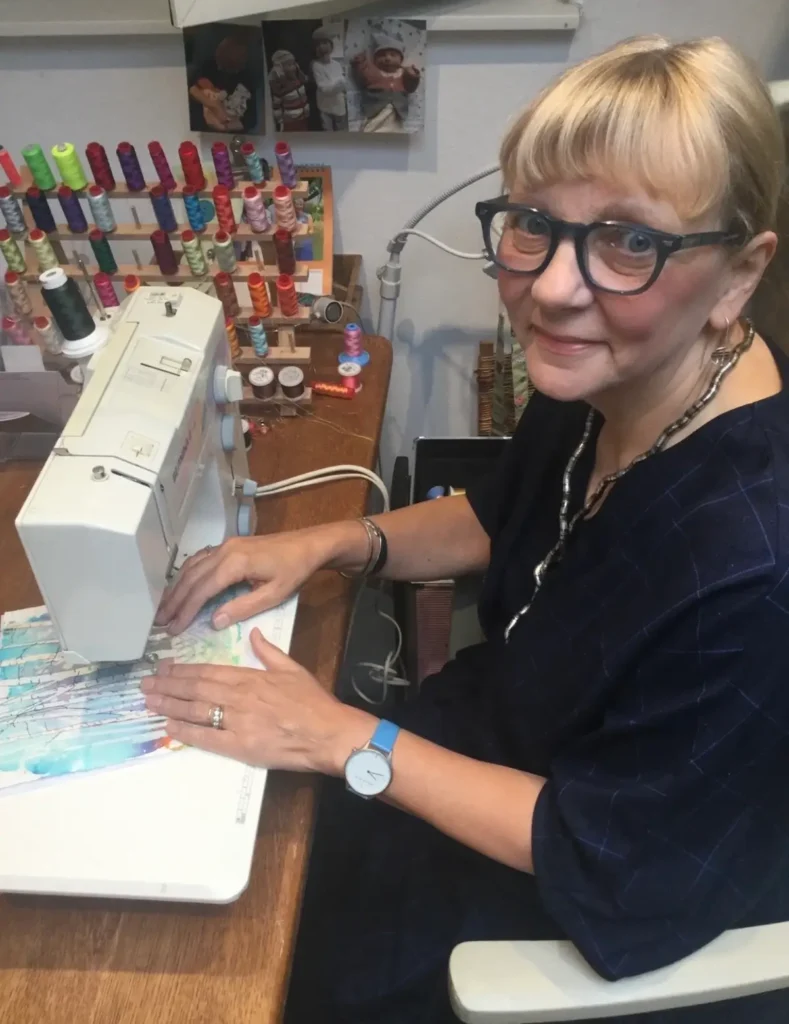
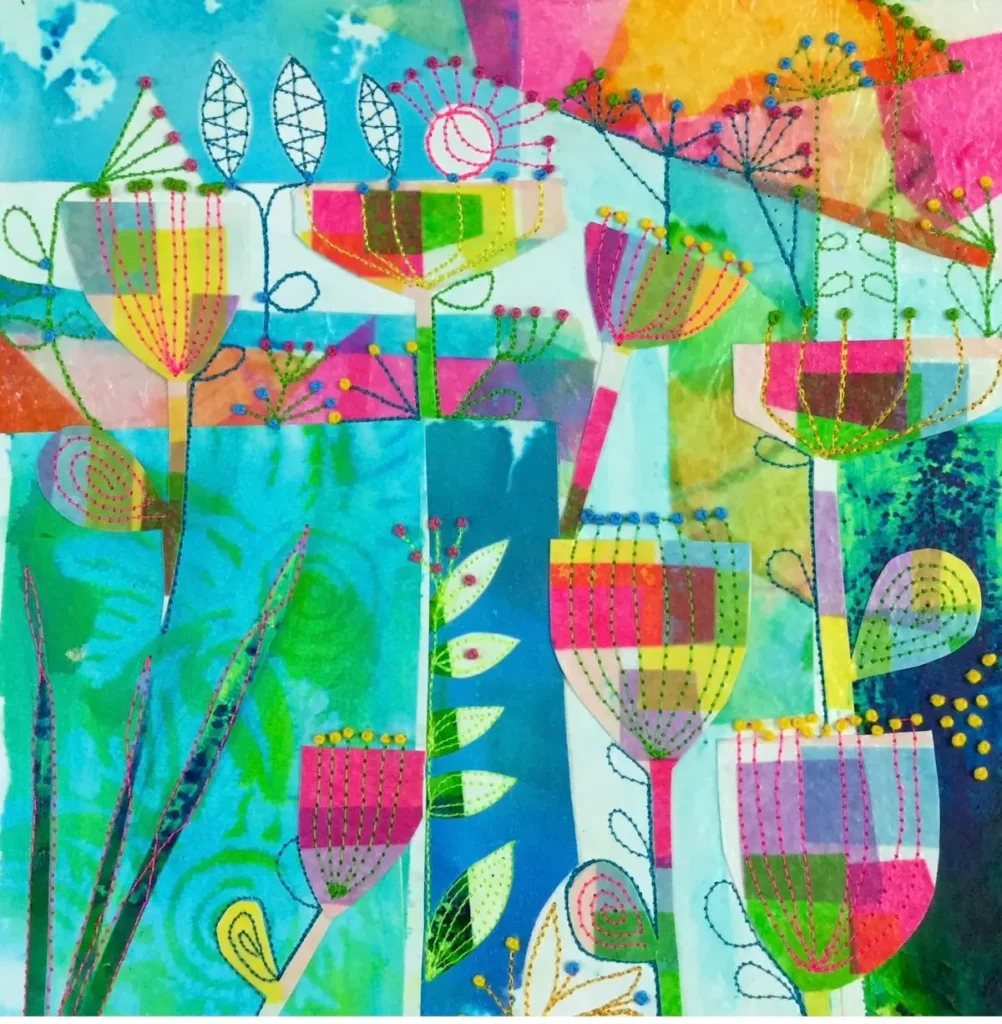
My studio is tiny and not at all designer. I’ve got an old pine dresser and a settle stuffed with resources. My machine is always set up and I work on my ironing board to make compositions. It’s not at all grand but it’s not too chaotic. I can usually find stuff.
Are you someone who likes a neat workspace or does creative chaos help you think?
Teaching workshops means you have to have systems to find and collate materials. I seem to spend a lot of time doing this.
When you begin a new piece, do you already know where you’re going, or do you discover it as you work?
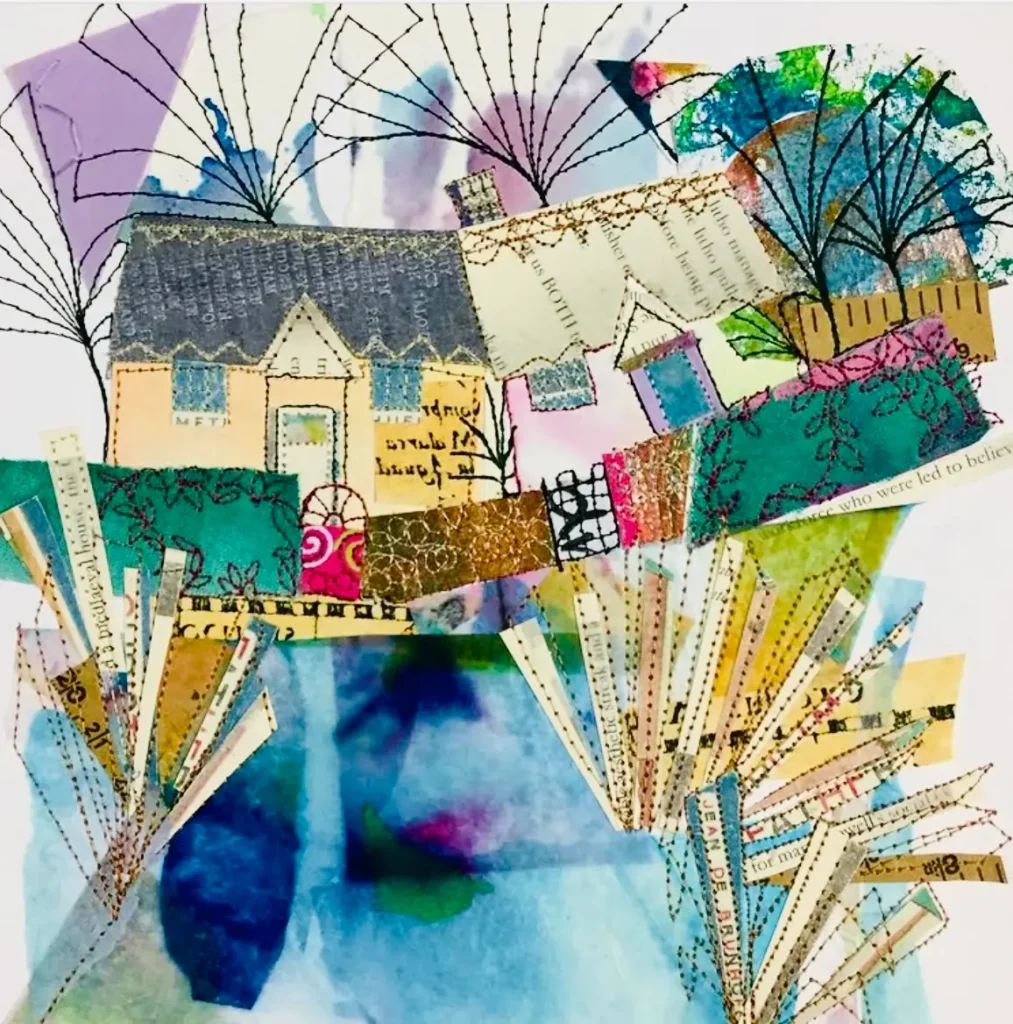
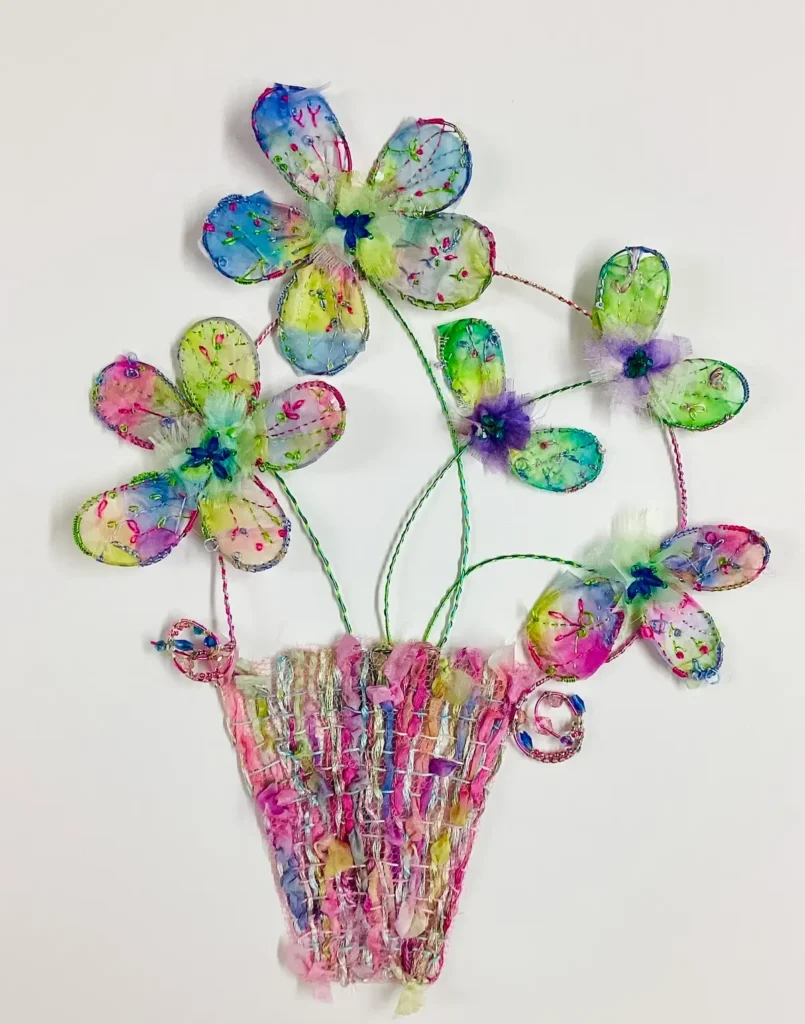
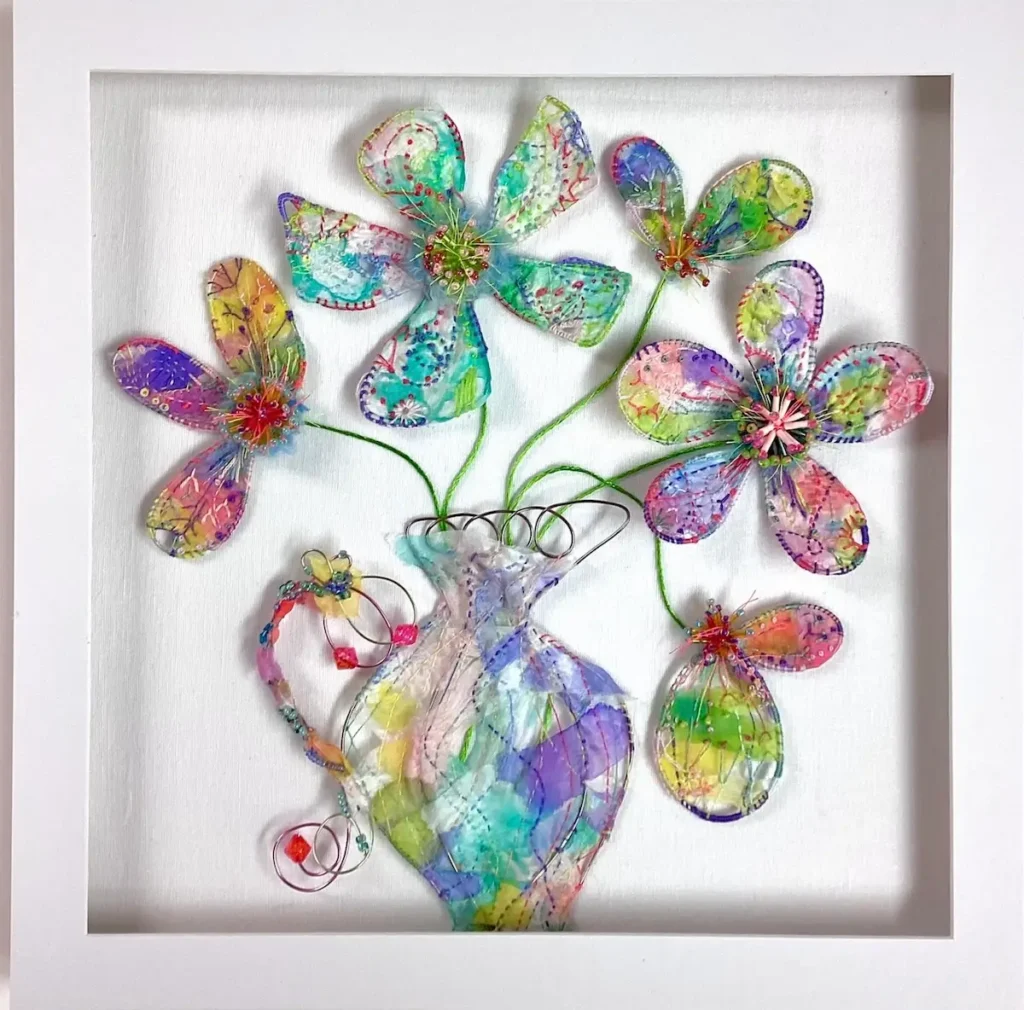
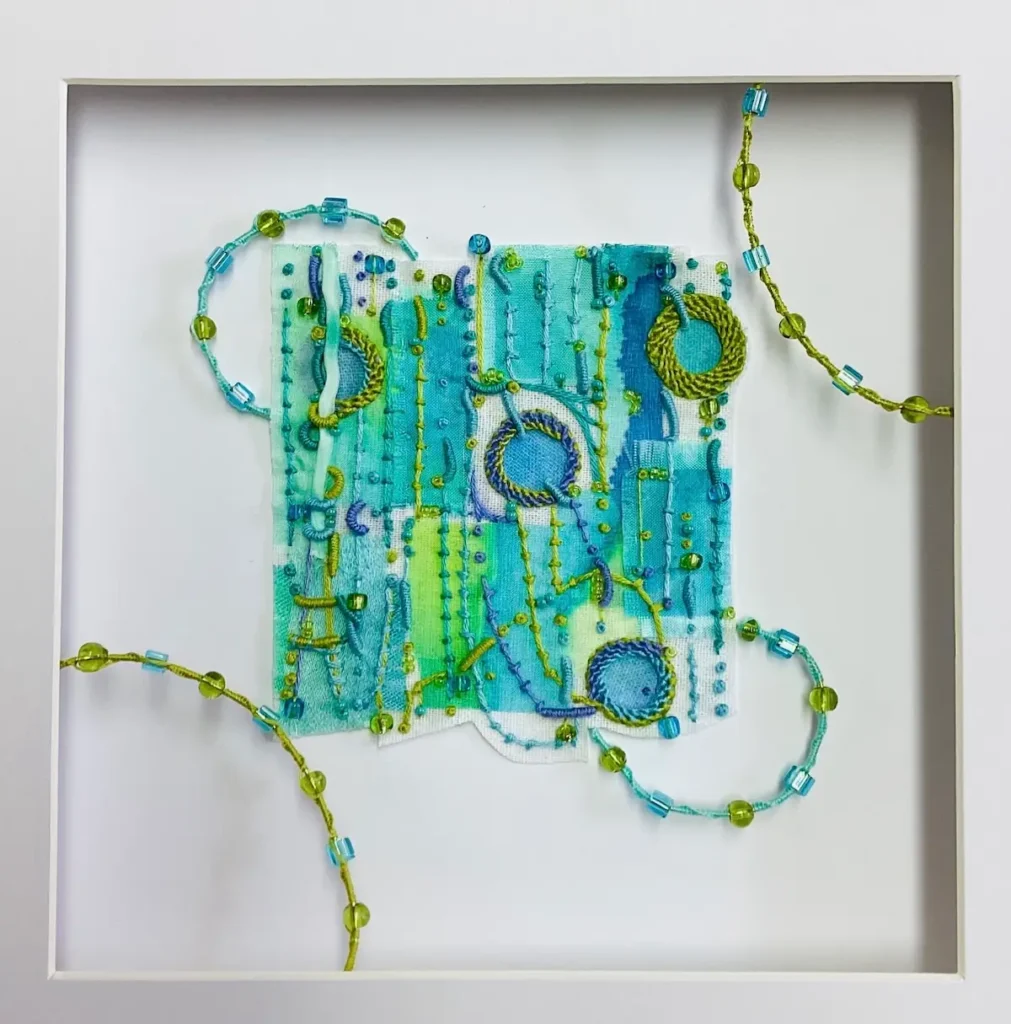
In terms of new pieces, these often come out of a particular request. For example, the weaving link required in the pieces I have at the Mill tye. I might start with an approach I know works, e.g., a silk paint and stitch landscape, and then think how can I include weaving. Pieces are not really planned. They evolve. I might set myself a challenge e.g., can I weave through wire?
What part of creating a piece brings you the most joy?
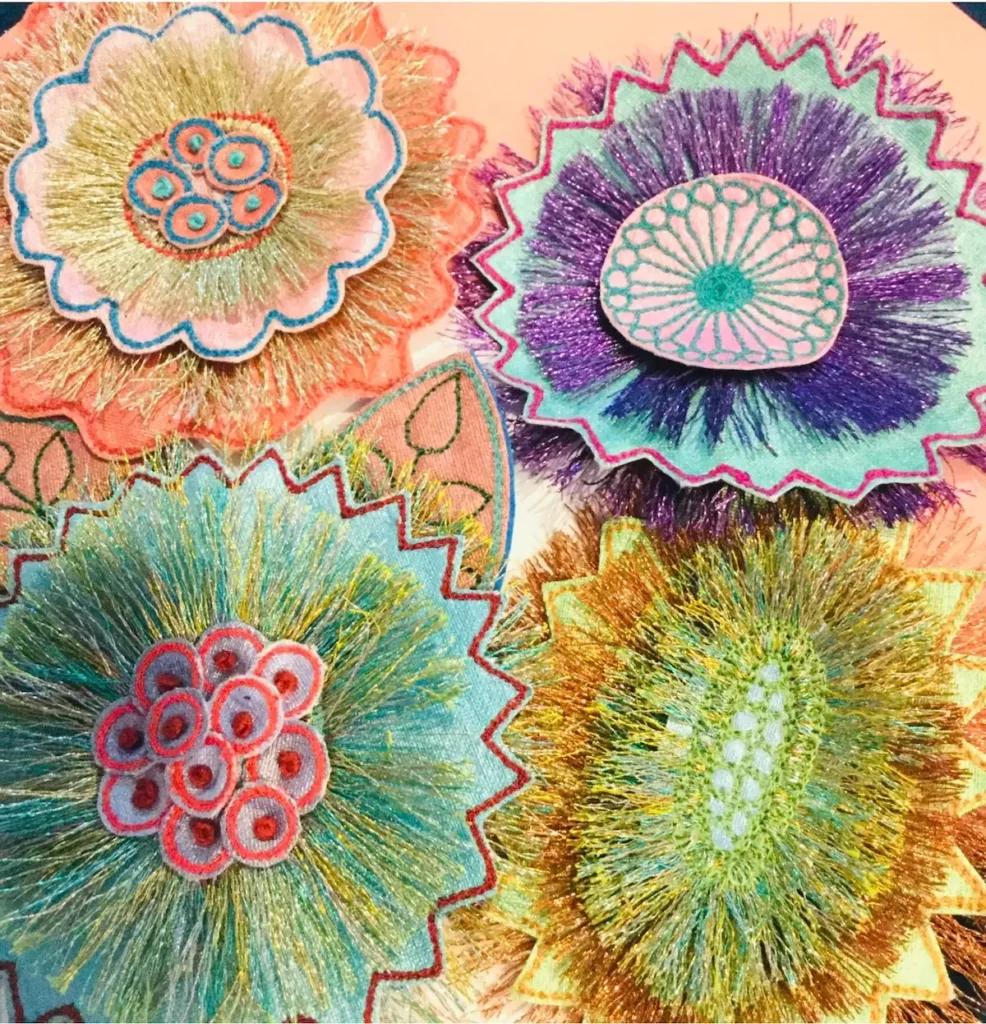
I love anything that requires imagination and creativity. I avoid anything repetitive. If I do this, I remain patient and mindful.
Have mistakes ever led you somewhere more interesting than your original plan?
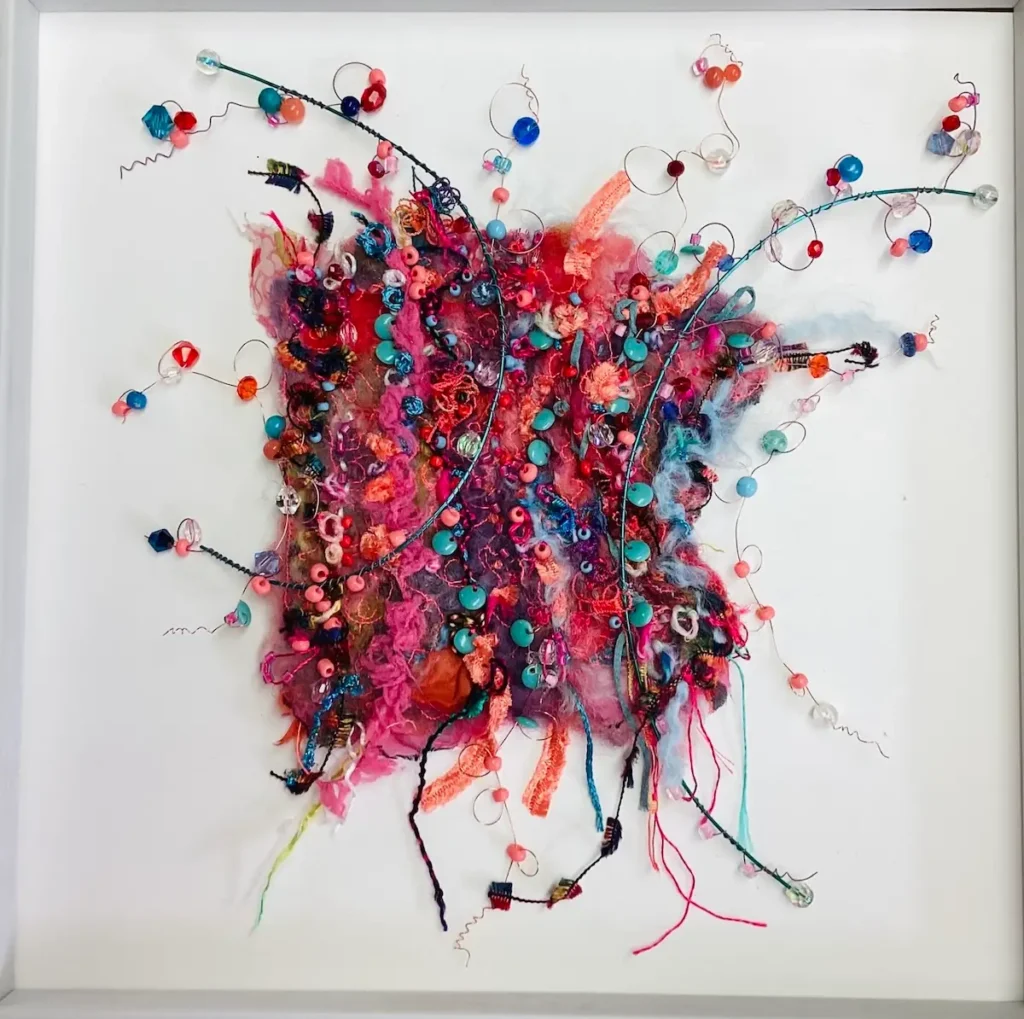
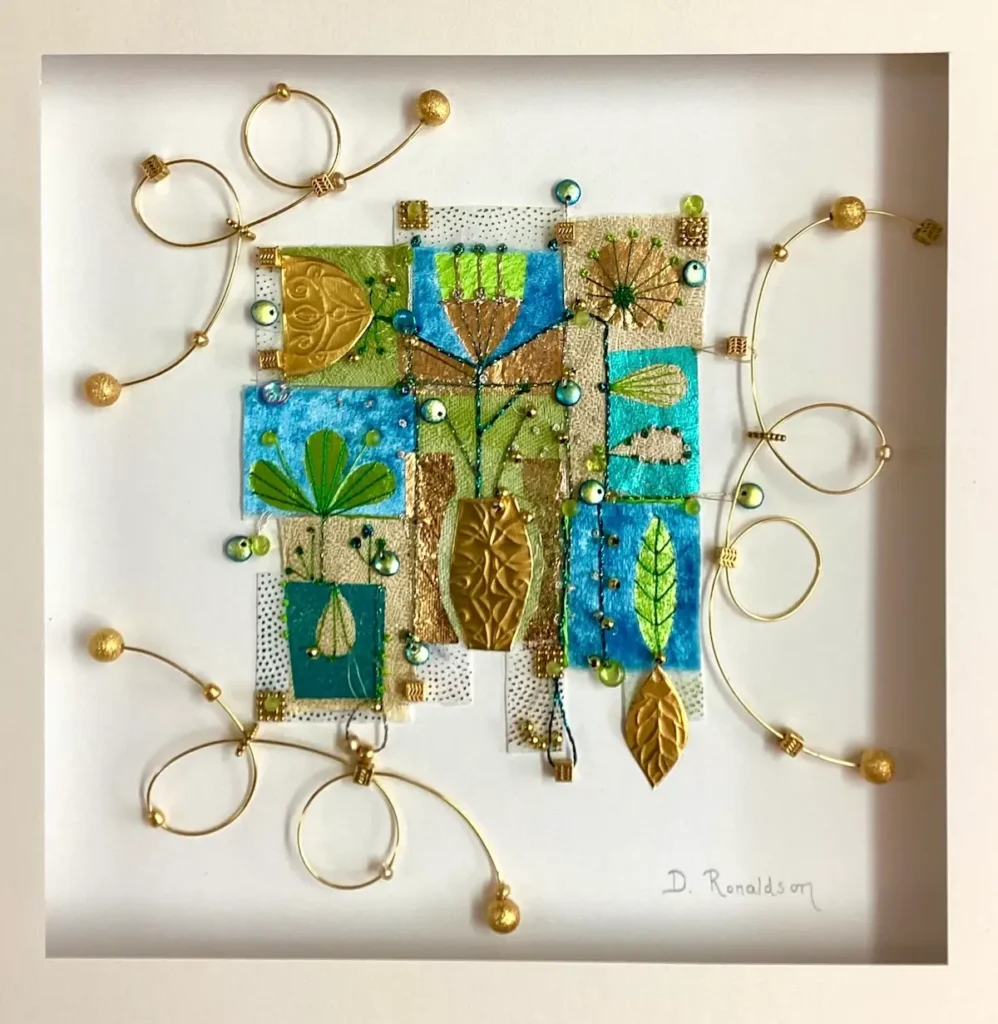
If I can’t get a piece to work. I generally chop it up. Rearrange. Play with how to make connections. This approach has led to a few interesting compositions. Or I use the sections to make a few cards.
How do you decide that a piece is truly finished?
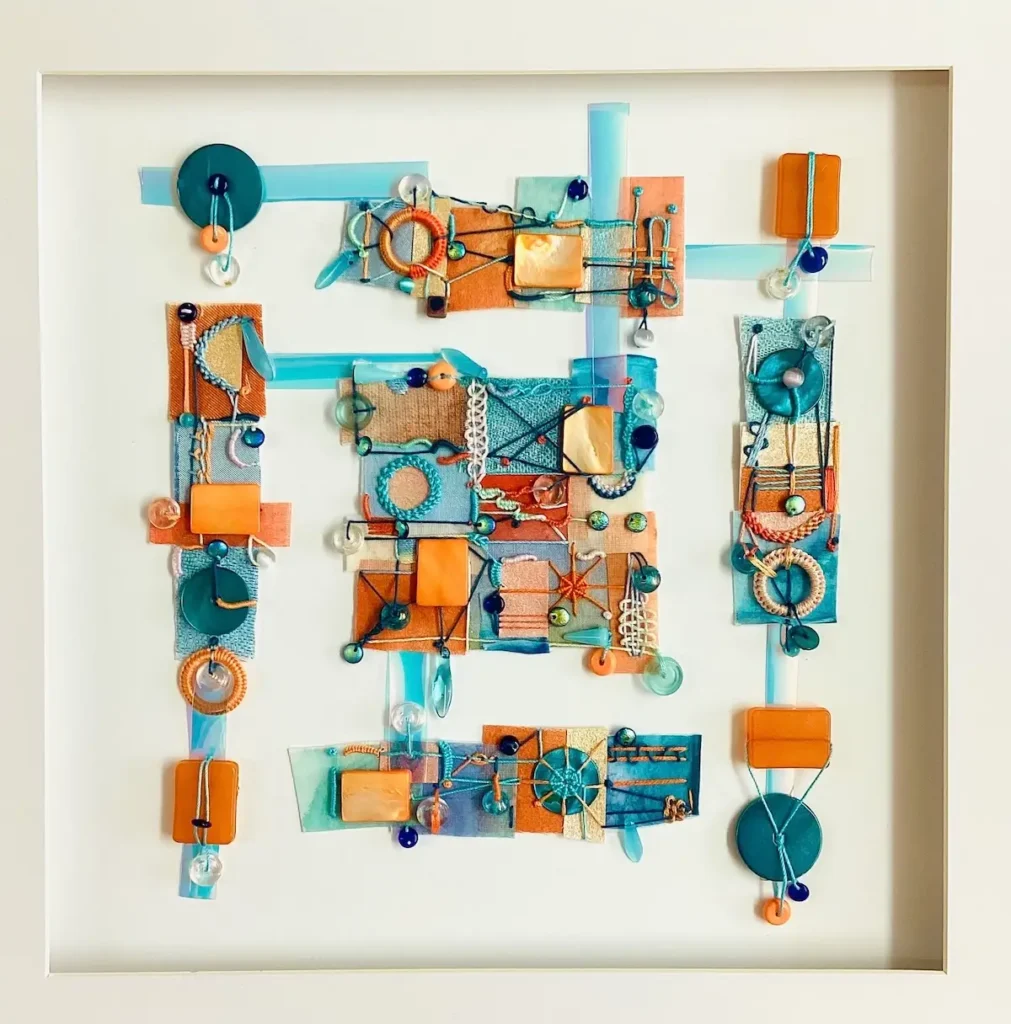
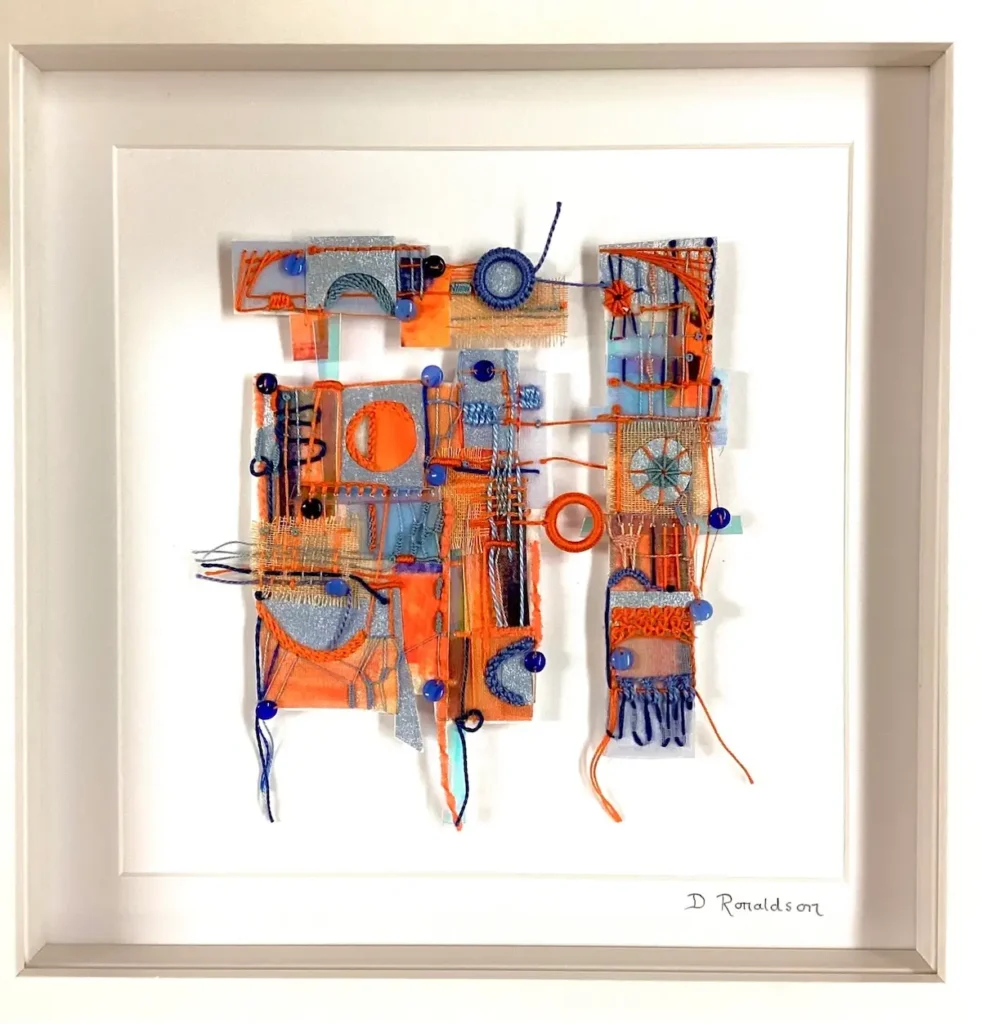
Making sure a piece is finished and not overworked is tricky. I leave it propped up for at least a day and keep giving it a sidewards glance. I ask the artist husband. I quite often disagree with him, but usually he makes a good point. I take a photo.
Looking at your work over the years, what changes make you the happiest?
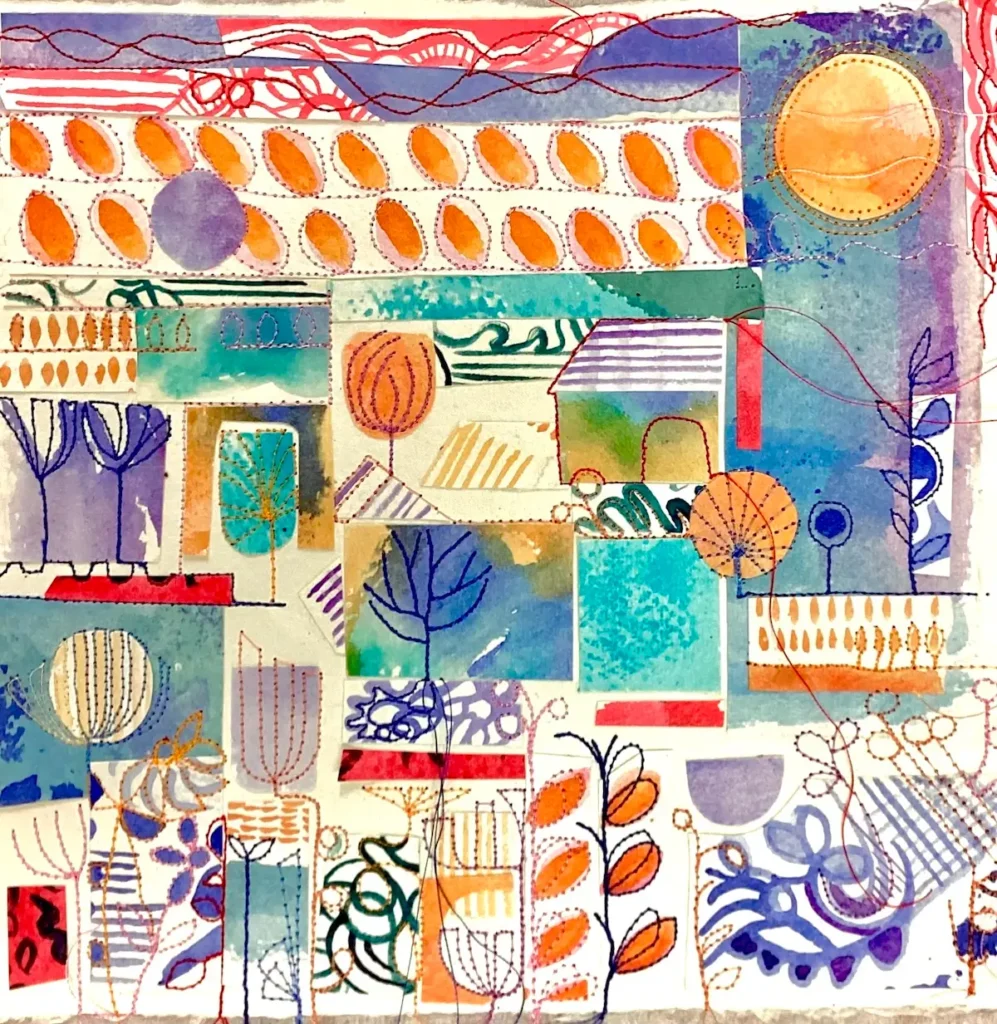
Looking back at work is good, but I think I had more time at various points. Now I seem to be more driven by workshops and little exhibitions. So perhaps not as much freedom. Although I’m thoroughly enjoying the mix.
What has being an artist taught you that carries into everyday life?
I do something creative every day. I sew on buses, trains, planes, waiting rooms. Domestic chores take a back seat, I’m afraid.
Where can people see your work?
You can see my work at The Mill tye gallery Sudbury Suffolk , and at The Wonky Wheel gallery. Castle Hedingham, at The handmade shop and Gallery Bury st Edmunds.
I also sell via Instagram, and folks can direct message me there.
Interview posted July 2026
Explore more inspiring interviews on Create Whimsy.