
Candace Ohm blends crochet, creativity, and technology in a fresh and thoughtful way. She sees patterns not just as instructions, but as ideas that can grow and change. In this interview, she shares how curiosity, problem-solving, and a love of making shape her work.
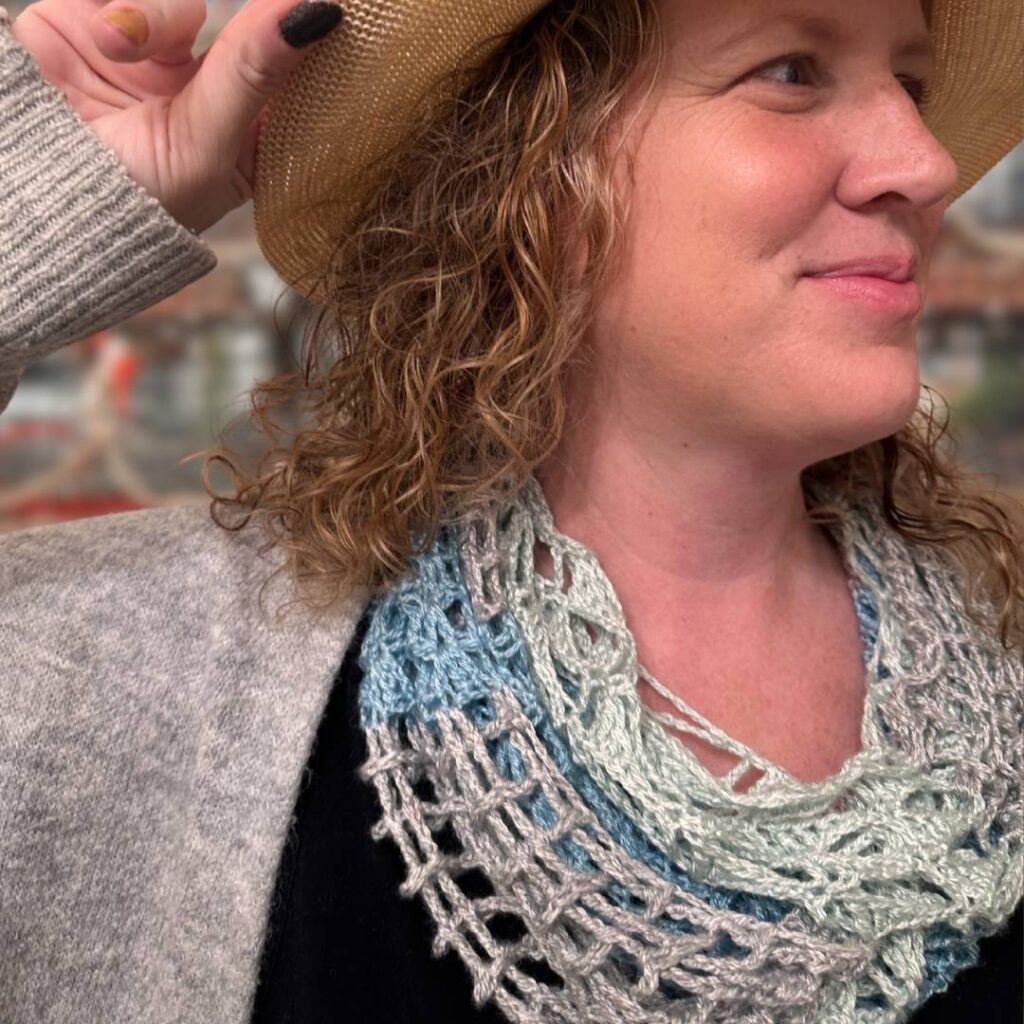
What first pulled you toward crochet, and what do you remember making in those early days?
I picked up a crochet hook during my move from Austin to Maine and taught myself in the car.
I remember working through a set of basic stitches and getting instantly hooked (pun intended).
From there, I started searching for beginner-friendly projects and used my new skills to make a few small items in preparation for the first real winter I was about to experience in decades.
As an Amazon Associate I earn from qualifying purchases. Read more about our affiliate linking policy.
Maybe it says something about me as a designer that my third project was already a stitch pattern I made up myself.
Was there a moment when crochet changed from a hobby into something deeper for you?
I was already at a point where I was ready for a career shift when I learned to crochet. Around the same time, I was struck by how quickly the hobby had grown during the pandemic-and how few digital tools existed to support it.
The turning point came in conversations with other crocheters, where I kept hearing the same thing: I don’t struggle with crochet itself, I struggle with reading patterns.
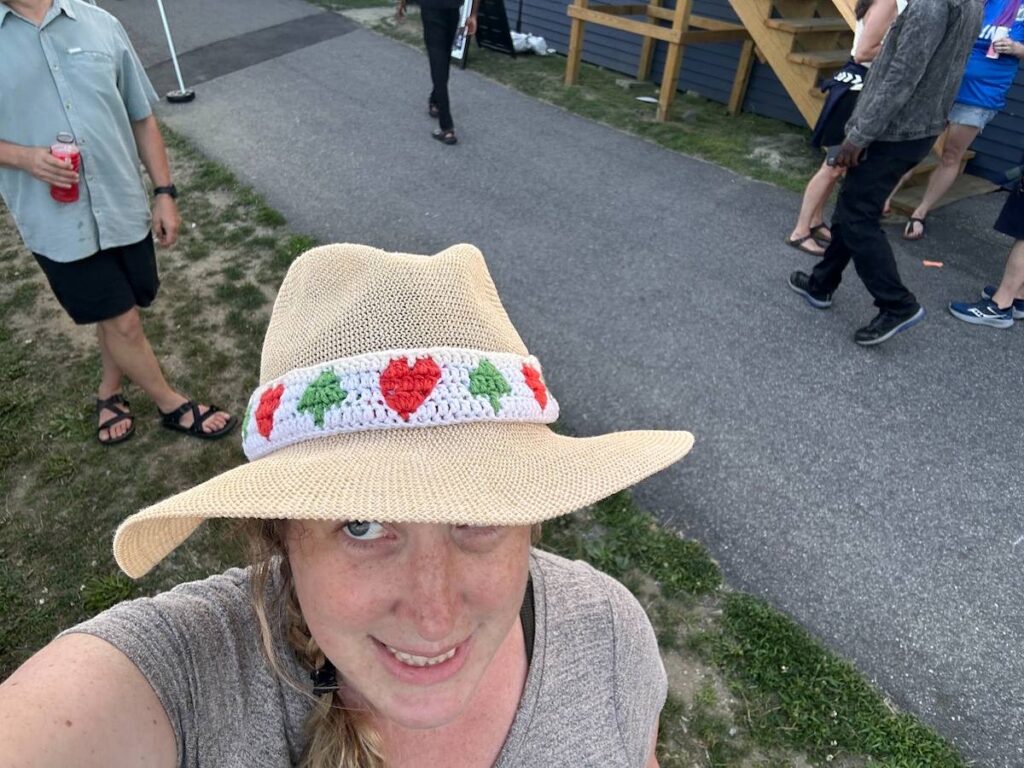
What inspired you to start Design Crochet?
I was inspired by a deep passion for both the arts and technology, and a desire to use my skills to help advance the craft itself.
I also wanted to push myself outside my comfort zone and see what I could build within a medium that has historically been underrepresented in digital tools and innovation.
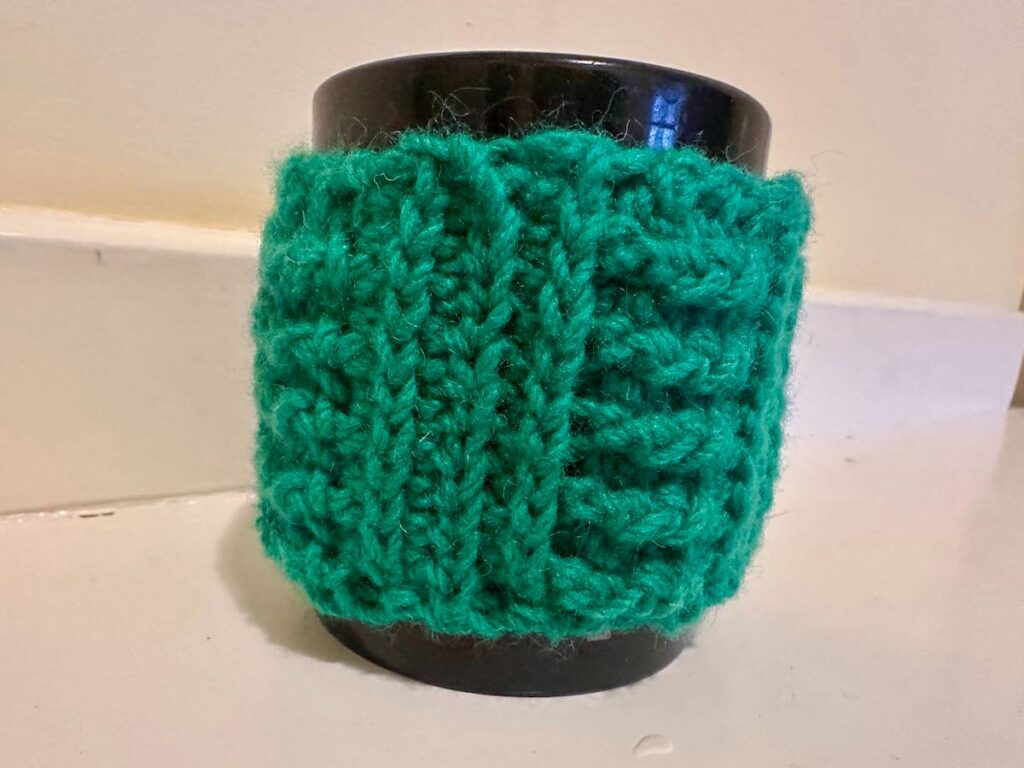
What were some of the biggest lessons you learned when you first started sharing your work online?
Oh gosh – so many.
The first version of my software was full of bugs, and I felt embarrassed every time I ran into something I hadn’t caught. But over time, I had to remind myself that I was solving a real need in the industry. The people engaging with it understood that it was early. They were excited anyway, and often willing to help me work through the rough edges.
That shift was important: realizing I didn’t have to be perfect to be useful, and that collaboration could actually be part of building something better for the craft.
Where do you find inspiration for new crochet designs and ideas?
My relationship with design tends to serve two directions.
At times, I’m driven by a feature I want to build, and the design emerges in service of that vision. Other times, I design from a place of empathy for other designers – trying to understand their process more deeply so I can build tools that support their needs.
In both cases, it comes back to the same motivation: designers do incredibly complex, thoughtful work, and I want to reduce the technical and repetitive friction so they can focus more fully on the craft itself.
Your designs feel thoughtful and carefully planned. What does good design mean to you?
I have a strong background in data visualization, and I care deeply about clarity and comprehension. For me, good design is about how well something can be understood—not just how it looks or what it produces.
I’m often less focused on the final item itself and more interested in how the underlying ideas translate into a system that can be reused across many patterns.
A lot of my work is really about abstraction: what can I learn from this design process, and how can it change the way we think about writing and reading crochet in a broader sense.
How do you know when an idea is worth exploring further?
Feedback is a big signal for me.
I tend to listen closely to what people are struggling with, and I pay attention to repeated friction points – especially things that feel like they’re quietly accepted as “just how it is.” Those gaps in the crochet space are often where the most meaningful ideas show up.
If something keeps coming up from different people, or I can clearly see a mismatch between what designers need and what existing tools support, that’s usually when I know it’s worth exploring further.
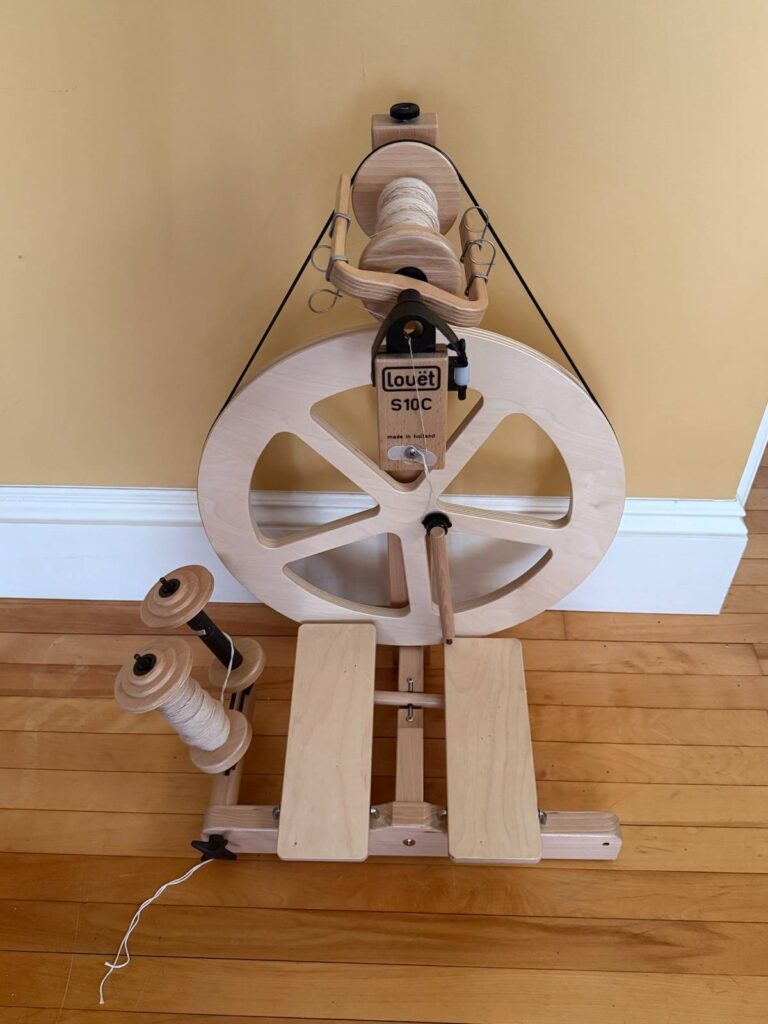
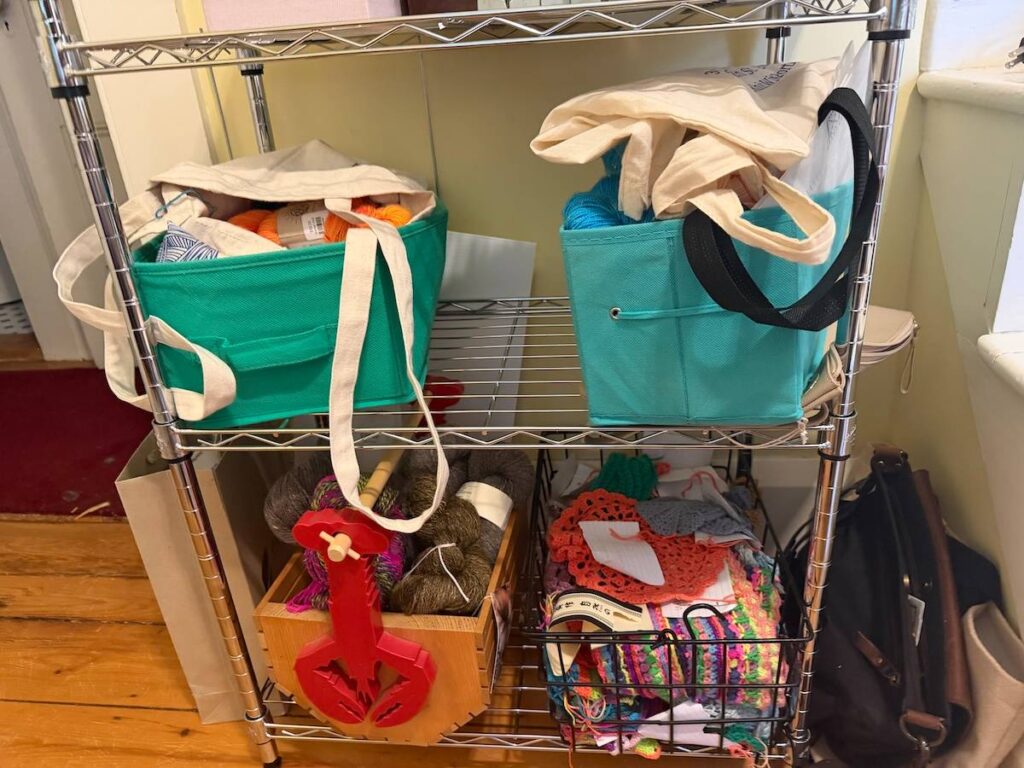
Describe your creative space. And, show us your yarn storage!
When I need a quiet moment to think, I’ll pull out my spinning wheel and settle into a slower rhythm of making. It’s where ideas tend to surface when I’m not forcing them.
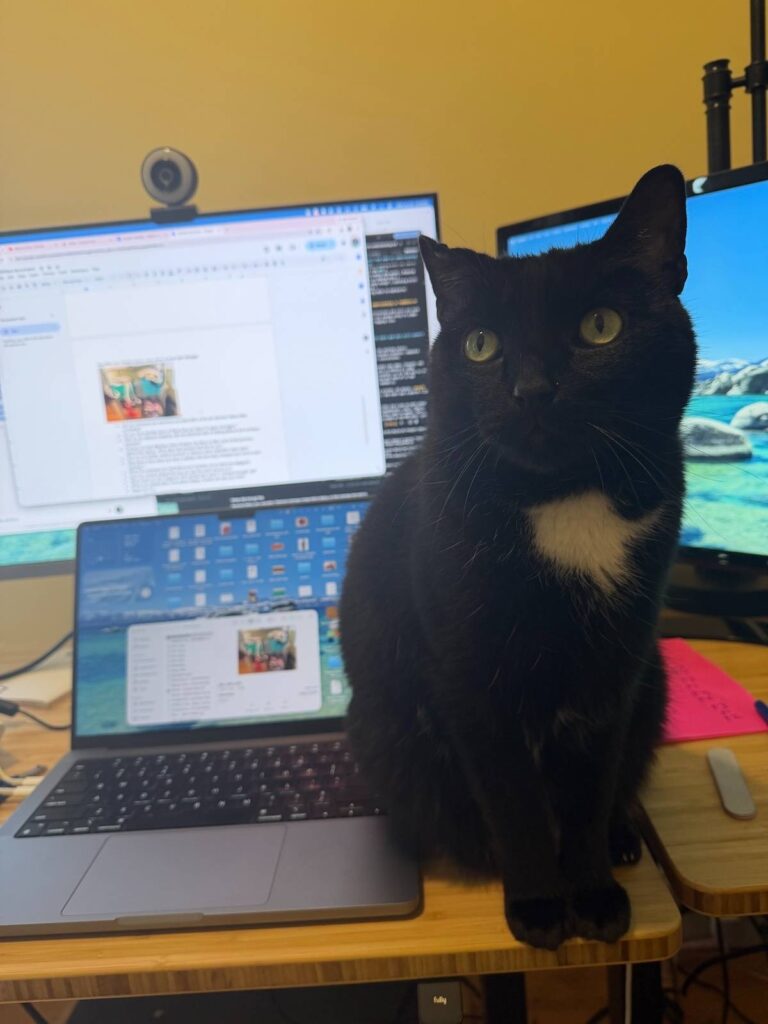
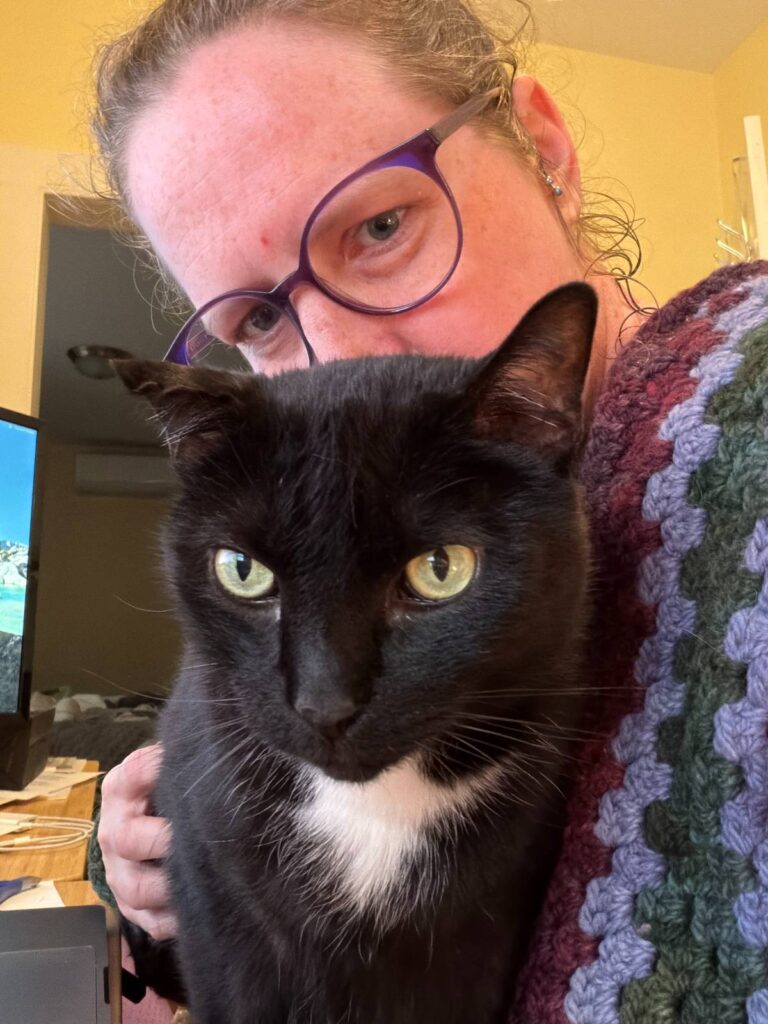
The rest of the time, my space is shared with a charming black tuxedo cat named Charlie – also known as my manager—who makes it his job to supervise everything and keep me (moderately) on task.
Are you someone who sketches and plans first, or do you discover ideas while crocheting?
I’m very much a hands-on, learn-by-doing kind of person.
I like the idea of planning, and I do occasionally try to impose a more structured approach on myself – but it doesn’t come naturally. Most of the time, the ideas really come through making, and I refine them as I go rather than working everything out in advance.
Do you have favorite yarns or fibers that you return to again and again?
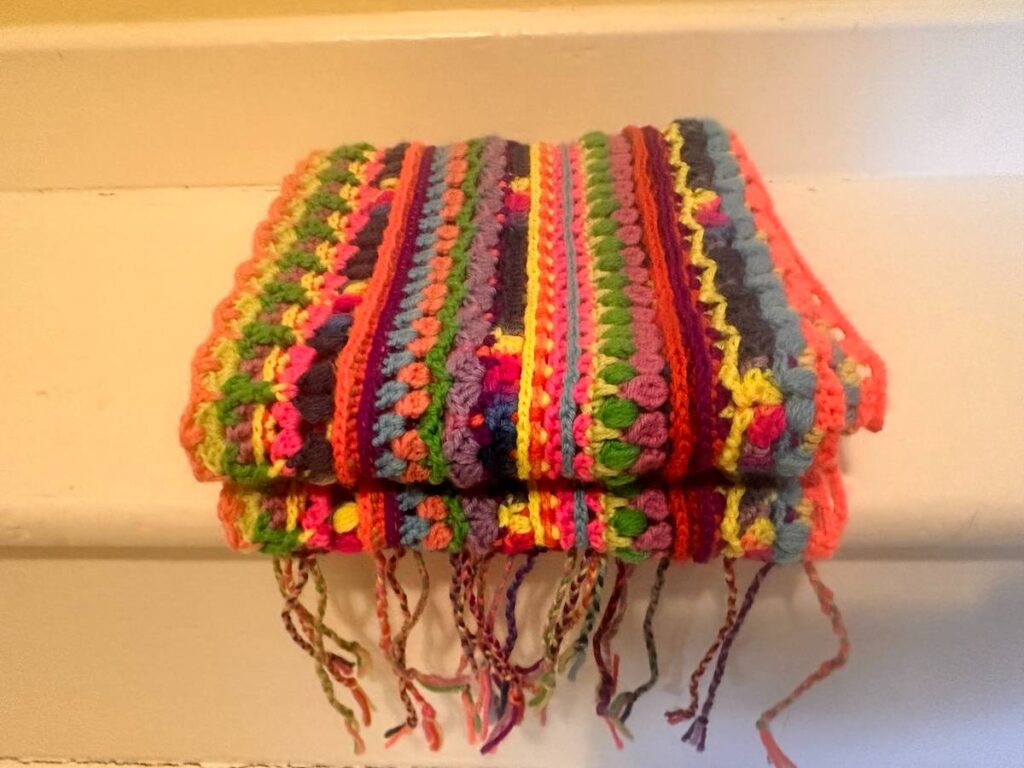
I’m a big fan of Four Hearts Farm Mainely Fiber, both for their beautiful colorways and their roving. Beyond that, I enjoy mixing things up and working with a wide range of fibers.
Part of the fun for me is learning the unique characteristics of each material: how it behaves, how it feels in the hands, and what it can teach me as a maker. Every fiber has its own personality, and I enjoy exploring those nuances.
How do you balance creativity with the technical side of writing patterns and running a business?
Balancing creativity with the technical side of pattern writing and running a business can be challenging, which is why spinning has become such an important creative outlet for me. It feels closely connected to crochet, so I still feel like I’m contributing to my work when I’m making yarn, but it also gives me permission to play.
Unlike product development or pattern design, spinning doesn’t need to have a specific business outcome. It’s a space where I can experiment, explore, and simply enjoy the process of making.
Crochet can look effortless when finished, but there is often a lot of trial and error behind the scenes. What does that process look like for you?
Yarn has a mind of its own.
There are plenty of times when I start a project with a clear vision, only to get halfway through and realize the yarn isn’t behaving the way I expected. The drape, texture, or stitch definition may lead the project in a completely different direction than I originally intended.
When that happens, I try to listen to what the material is telling me. Sometimes that means abandoning the original idea and letting the project become something else entirely. Other times, it means starting over with a better understanding of what the yarn needs in order to show off its best qualities. The trial and error can be frustrating, but it’s also where a lot of the learning – and often the most interesting discoveries – happen.
How do you handle creative burnout or seasons when inspiration feels quiet?
I try to be gentle with myself.
Running a business comes with a constant sense that there’s more to do and never quite enough hours in the day. That pressure doesn’t disappear, but I’ve learned that creativity can’t be forced indefinitely.
Sometimes the mind and body need space to process life events, rest, and recover. During those seasons, I think it’s important to honor what’s happening rather than fight against it. Inspiration tends to return when given room to breathe.
I try to approach those quieter periods with grace and accept whatever capacity I have to give in that moment, rather than judging myself for what I’m not able to do.
Was there a time when you took a creative risk that really changed your work or your business?
I think I’m living through that creative risk right now.
For decades, PDFs have been the standard way crochet patterns are shared, but I recently started asking a different question: what if patterns were designed for the way people actually use them today? What if following a pattern on a phone felt seamless, interactive, and even a little more fun?
That question has shaped much of my work over the last few months. I’ve been exploring what it would look like to move beyond static PDFs and create a more engaging experience for crocheters as they work through a pattern.
I’m now reaching the point where I’m ready to share those ideas publicly. I’m excited about the possibilities and hopeful that it will resonate with others, but there’s definitely some vulnerability in putting a new approach out into the world and waiting to see how people respond.
What has surprised you most about your evolution as an artist and designer?
The thing that has surprised me most is just how much mathematics is hidden inside crochet.
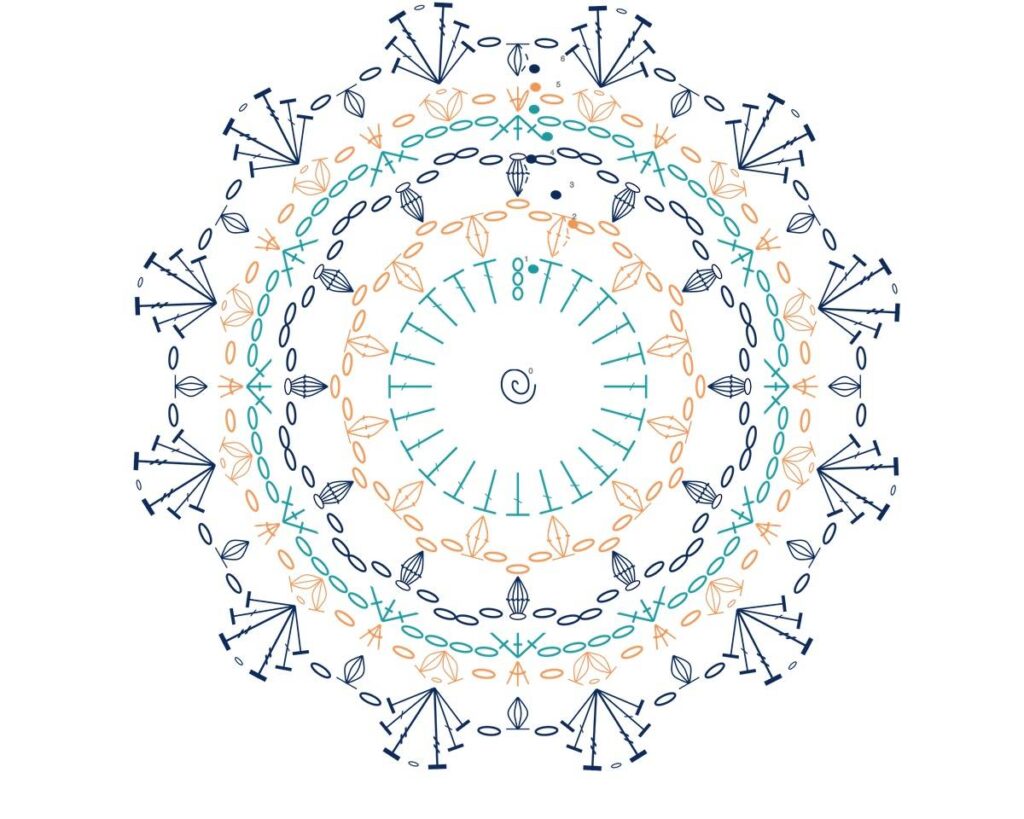
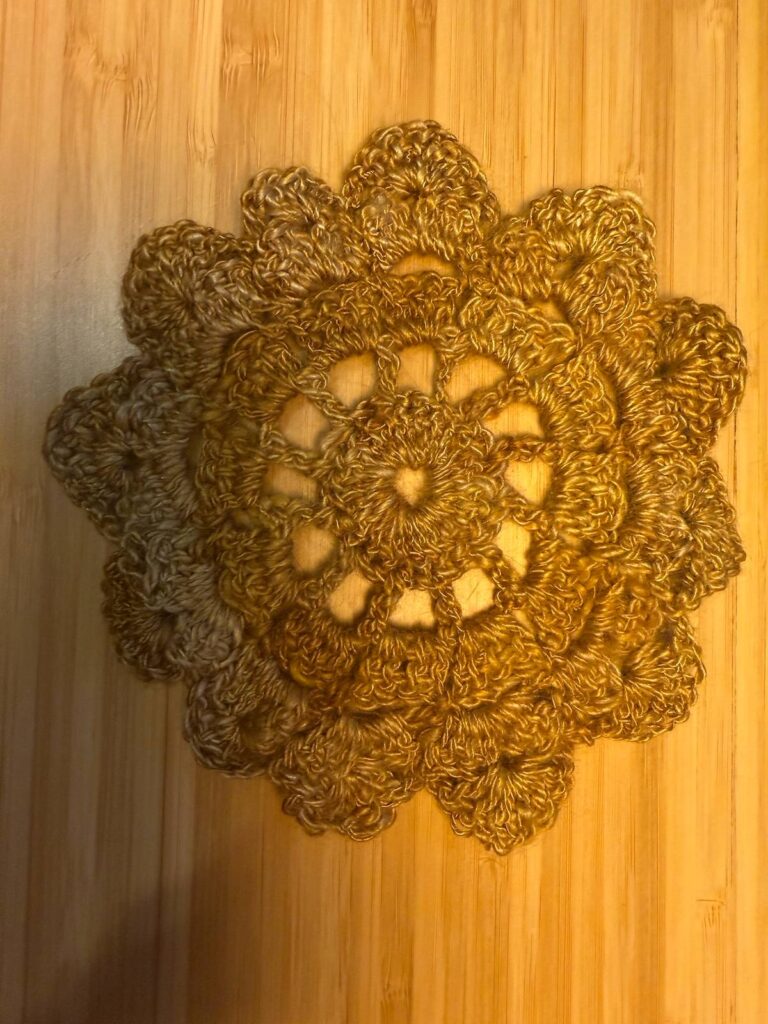
Last fall, I released a major software update that allows crocheters to create stitch diagrams in the round. I have a PhD in mathematics, and yet modeling crochet doilies and circular structures may be one of the most challenging problems I’ve encountered in my career.
The deeper I go, the more I realize that crochet is full of pattern recognition, geometry, and physics. Yarn doesn’t behave like a rigid material. It stretches, flows, and responds to tension in ways that are surprisingly complex. Crocheters intuitively understand this every time they pick up a hook, even if they don’t describe it in mathematical terms.
What excites me now is figuring out how to share those discoveries more broadly. I’d love to help people see that every crochet piece contains an incredible amount of hidden structure, problem-solving, and artistry.
How has crochet shaped the way you see the world around you?
Crochet has made me more aware of the stories that are passed from one person to another through making.
Artists create because they are trying to express something that can’t always be put into words. My grandmother taught me to crochet when I was young, and I didn’t fully appreciate at the time how much of herself she must have poured into the pieces she made. Looking back, I see crochet as a kind of oral tradition, except the stories are told through stitches, techniques, and patterns that are passed from generation to generation.
What has changed for me is recognizing how often this happens in everyday life. A pattern is shared, adapted, modified, and reinterpreted by someone new. Over time, it becomes a reflection of the maker. In that way, crochet isn’t just about creating objects, it’s about carrying ideas forward and leaving a piece of ourselves behind for the next person to discover.
What would you tell a beginner who worries their work is “not good enough” yet?
I would tell them that “not good enough” is often a mindset, not an objective measure of their work.
The truth is, you may always feel like your work isn’t quite where you want it to be. As your skills grow, your standards tend to grow right alongside them. The goal isn’t to eliminate that feeling entirely, it’s to keep creating anyway.
Let your work be imperfect. Let it be awkward, messy, or shaky for as long as it needs to be. Every maker starts there. Over time, you’ll look back and realize how much you’ve grown, and what once felt “not good enough” will become proof of how far you’ve come.
And then, perhaps, you’ll find yourself striving toward a whole new version of perfection. That’s part of the journey too.
Where can people learn more about Design Crochet and see your work?
The best place to learn more about my work is Design Crochet – designcrochet.com, where I share updates on the tools, patterns, and ideas I’m exploring. You’ll also find articles, experiments, and behind-the-scenes thoughts on the future of crochet design and technology.
I’m especially excited about the new interactive patterns I’ve been developing, which explore new ways of experiencing crochet beyond the traditional PDF format.
If you’d like to follow along, explore my work, or simply say hello, I’d love to hear from you. Email me at candace@designcrochet.com
Rapid Fire Fun
- Favorite crochet stitch? The half double crochet – though, as a mathematician, I have to admit I strongly dislike the name.
- One color you never get tired of? Orange
- Favorite yarn to work with right now? Handspun
- Handmade gift you still remember giving? A shawl for my aunt
- One word that describes your creative life today? Healing ♥️
Interview posted June 2026
Explore more crochet projects and inspiration on Create Whimsy.