
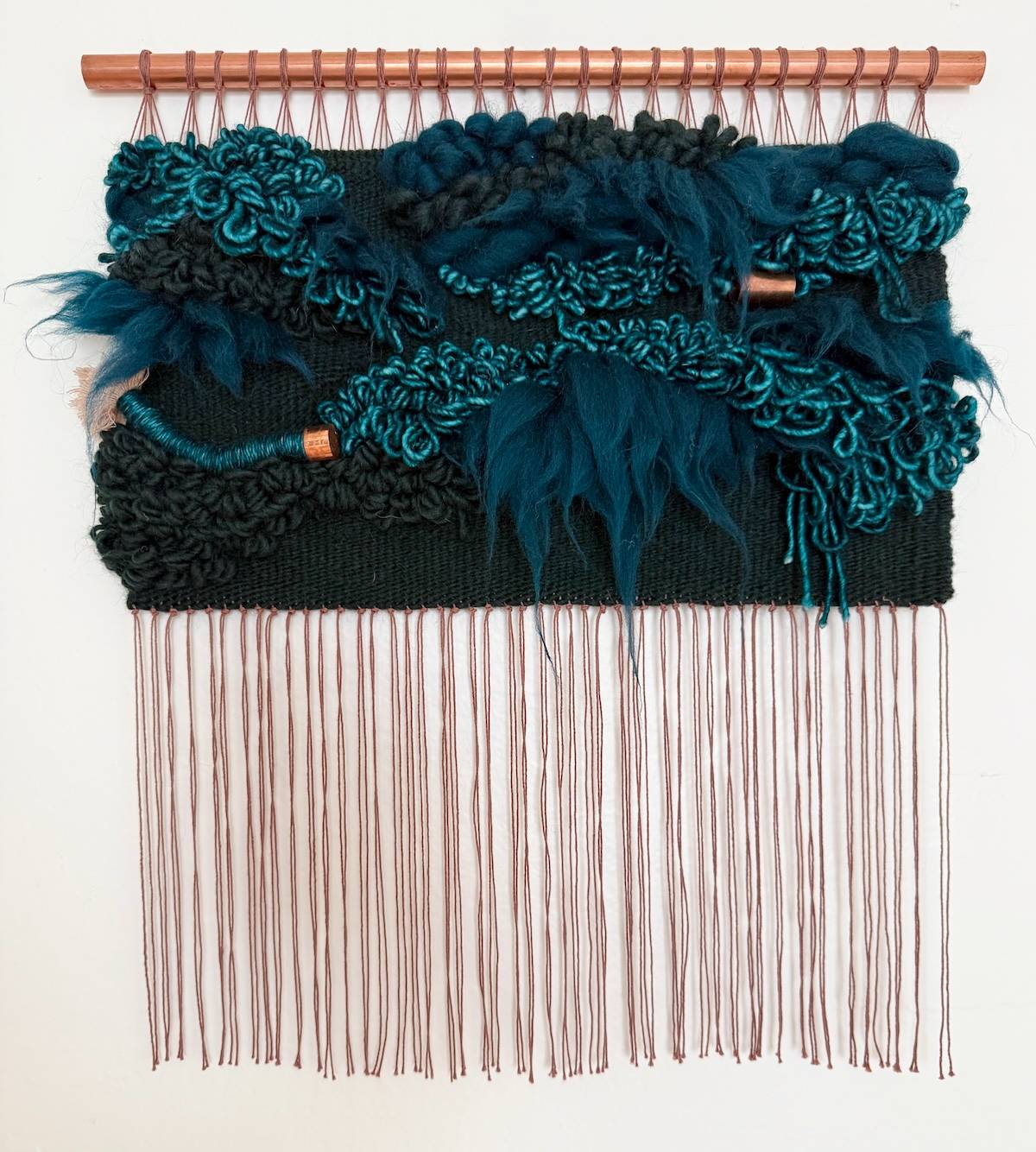
Adriene Busch turns memories of land and water into beautiful woven pieces. Inspired by foggy marshes, shifting light, and quiet moments in nature, her work blends texture, color, and feeling. In this interview, she shares how curiosity, experimentation, and a love of place shape every thread she weaves.
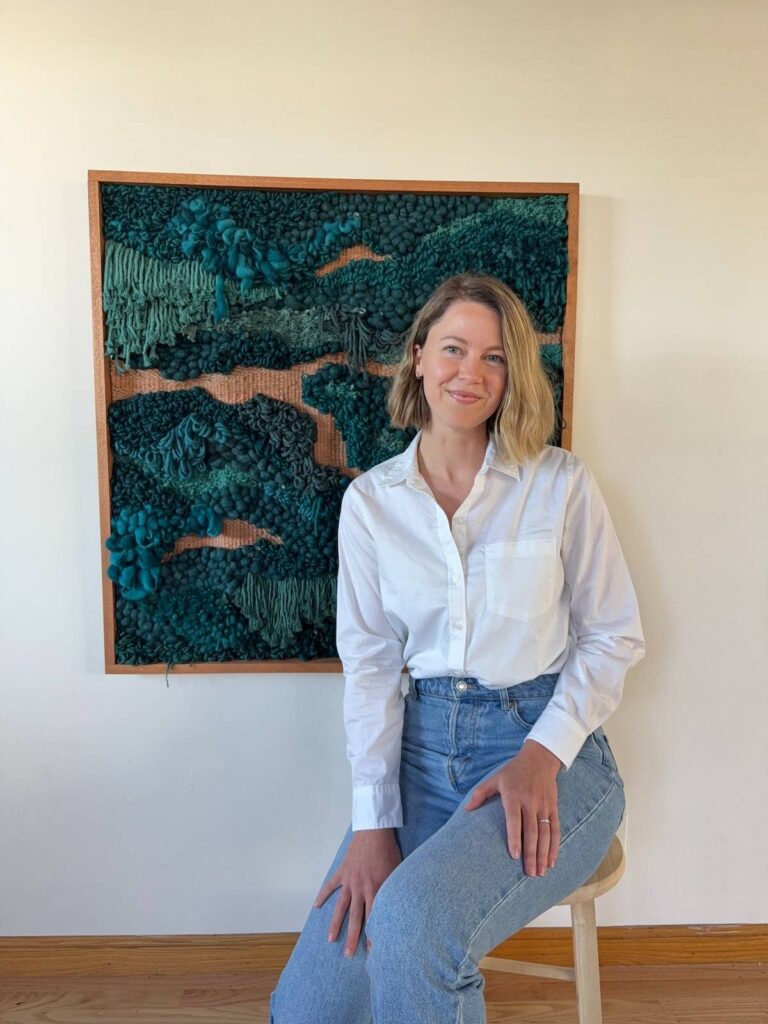
Can you take us back to the beginning? What are some of your earliest memories of making things with your hands?
I was into every form of arts and crafts as a kid. I had a dedicated area in our house where I stored all of my supplies, from glitter glue to glass jars of my grandma’s vintage buttons to paints.
I would escape the Arizona summer heat and spend hours inside painting and collaging. I loved being introduced to different mediums through art-related summer camps and classes in school.
Before weaving became your focus, you explored several other creative outlets. Tell us more about how those experiences shape your art today.
As an Amazon Associate I earn from qualifying purchases. Read more about our affiliate linking policy.
I’ve always been drawn to making things.
Before weaving, I spent time exploring painting, photography, and ceramics. I think all of those mediums taught me lessons in color, composition, and texture, and how those each interplay with one another to create the feeling of a piece of art.
Each medium brought me closer to finding my place within the fiber art world by exposing me to different aspects of the medium with which I would eventually connect. By the time I discovered weaving, I knew it was going to tick all the creative boxes for me.
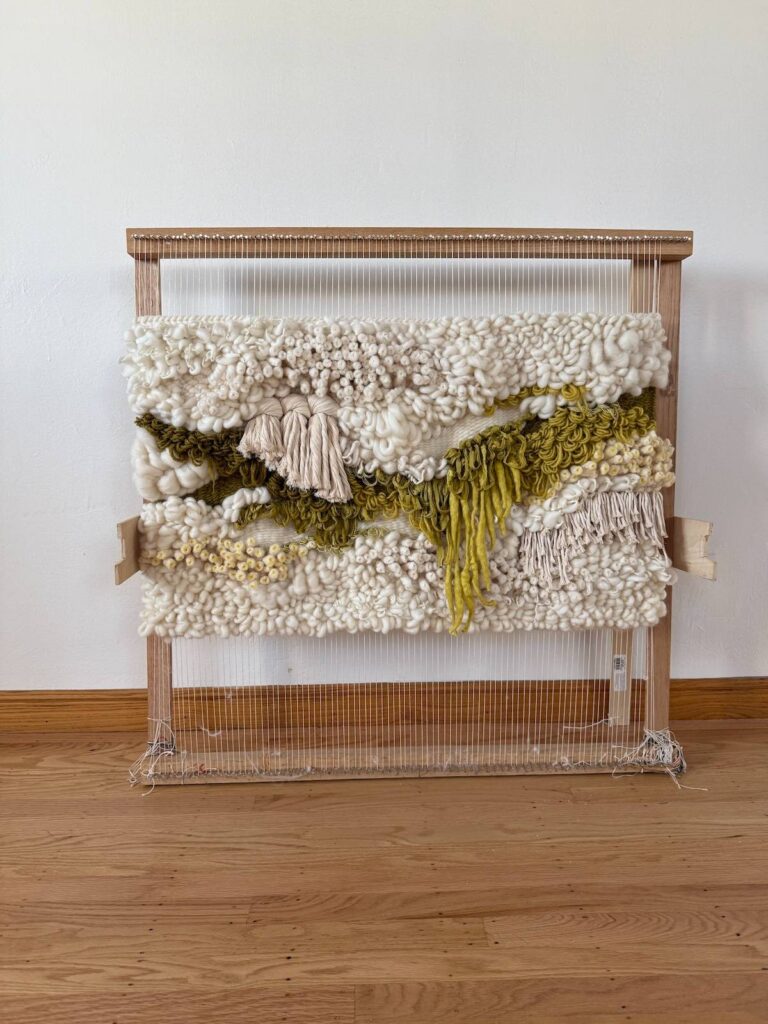
You are largely self-taught. What were some of the biggest lessons you learned during those early years at the loom?
The importance of experimentation.
Early on I realized that trying things out is a critical part of the process. Those are the times that I learned why some things work or don’t work, and figure out how to adjust accordingly.
Some of my favorite moments in weaving are the times when I have to problem-solve when something isn’t quite going to plan, and I have to tweak my approach.
The constant cycle of experiment/assess/adjust is why I think I learned the craft so quickly. You can read books and watch videos, but eventually you have to spend time at the loom and learn by doing.
It’s a very tactile art form, so that’s the only way to really understand the nuances of the techniques, the tension, and the textures.
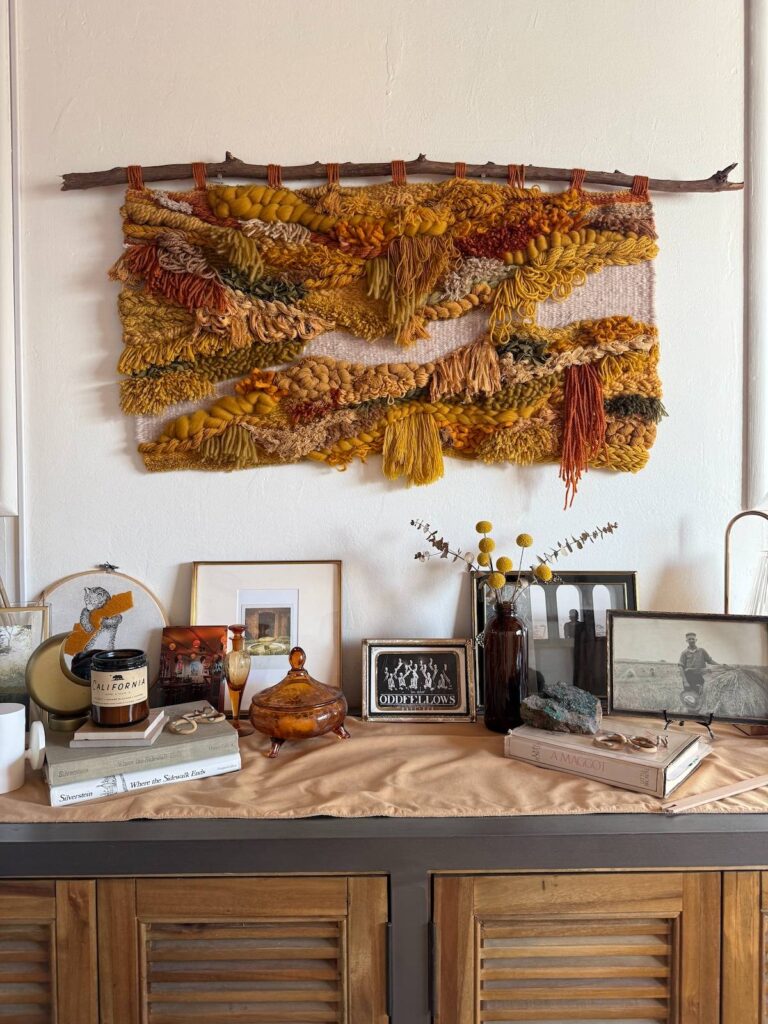
Looking back, what would surprise the version of yourself who was just starting out?
I think I’d be surprised by the opportunities weaving has brought to my life.
I remember the excitement of selling my first piece and my goal of vending at a craft fair, which was something I idolized growing up.
Back then, the idea of being in group shows or having my own solo gallery show or teaching weaving workshops or being interviewed for a podcast/newspaper/website or giving artist talks never crossed my mind as a legitimate possibility!
I do think about that often, how cool it is that I get to live my childhood artist dream. I am very grateful for the opportunities and experiences that weaving has created for me so far.
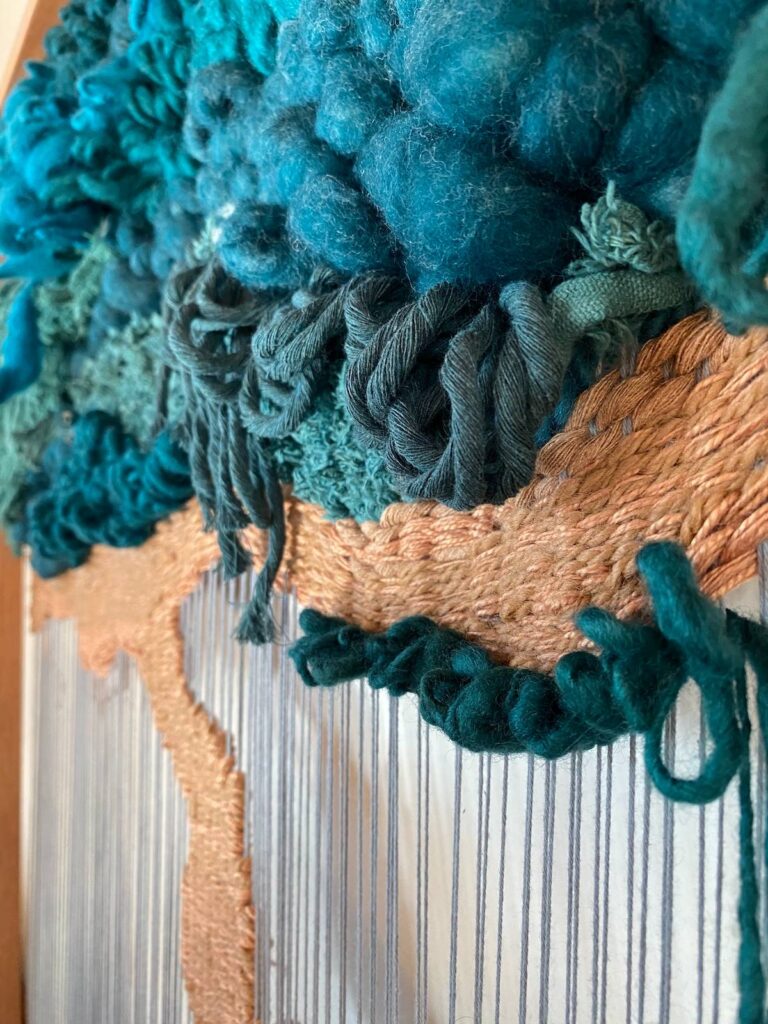
How has living near the marshes, water, and fog changed the way you see color and texture?
Living near the Bay and the surrounding marshland has made me much more aware of subtle changes in color.
The same landscape will look different depending on the weather, the time of day, or the season. The shifts and varieties of colors and textures then make their way into my work.
It’s also interesting because, while being around these colors and textures in nature inspires my work, I have also found that my weaving practice impacts the way I see colors and textures in the world around me.
When walking along the Bay Trail, I now see what looks like sections of a weaving to me. I like that when standing in front of one of my pieces, I see sections of the Bay Trail, and when walking the Bay Trail, I see snippets of a weaving. It’s like translating something from one medium to another.
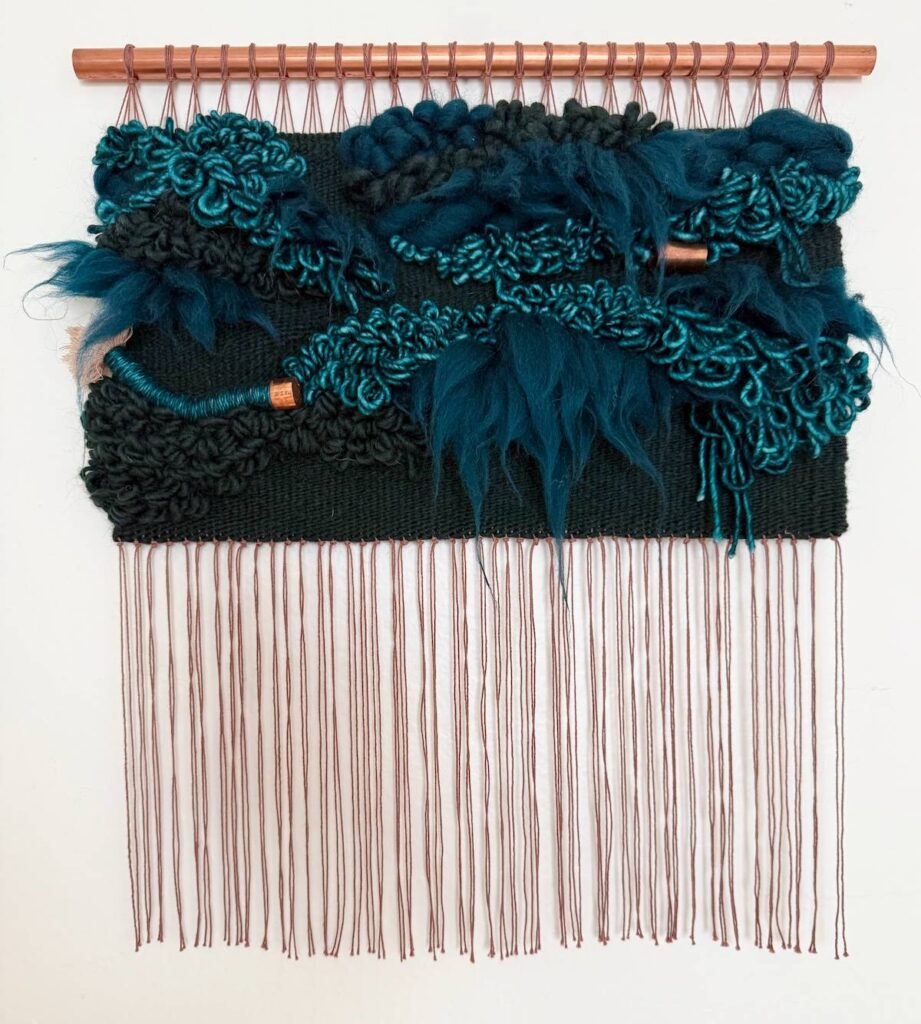
Your work captures both specific places and emotional experiences. How do you balance those two things?
The idea of “place” has always been important to me.
The emotional experience of a place is so tied to my memory of it, and the place can be as macro as Half Moon Bay State Beach or as micro as a very specific section of the Bay Trail that looks down on the tiny tributaries carved into the mud by the tide going in and out.
I can’t separate my experience of a place from the place itself, so my pieces are always a combination of both, even when some pieces represent more easily identifiable locations.
I expect that when someone recognizes a place that is captured in my work, they put their own emotional experiences onto it, which I always love to hear about.
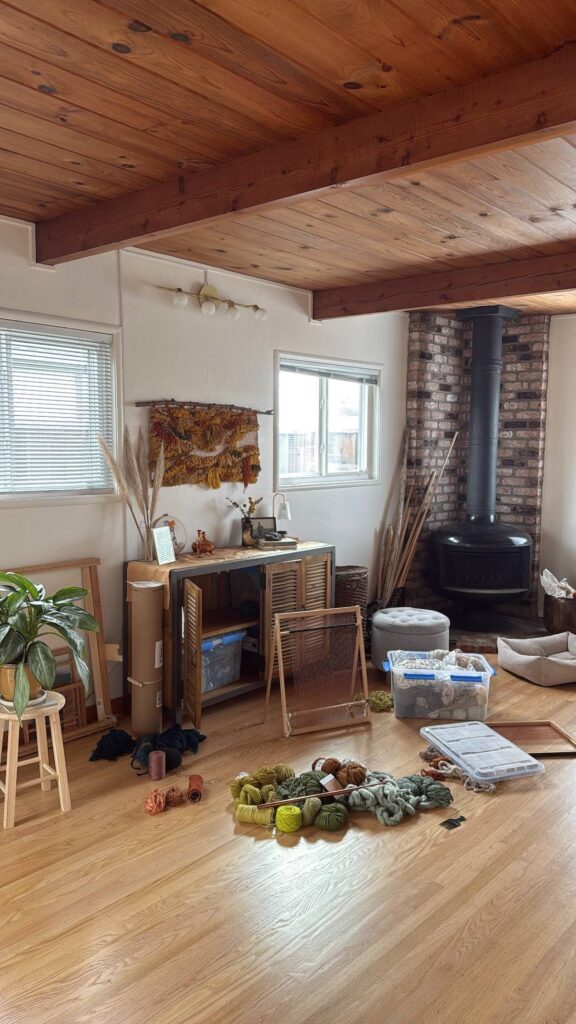
Describe your creative space.
My fibers are stored in bins organized by color.
Previously, I had a pegboard that stored much of my yarn stash, but, while a visually beautiful storage method, it was not conducive to my process. There are a few different ways I like to start my weaving process, but my favorite is taking all of the bins out of the cabinets they’re stored in and getting into my artist-zone headspace by laying out colors in different orders, swapping things out, and making multiple color palette heaps until one feels right. Luckily, my studio has the floor space for this method.
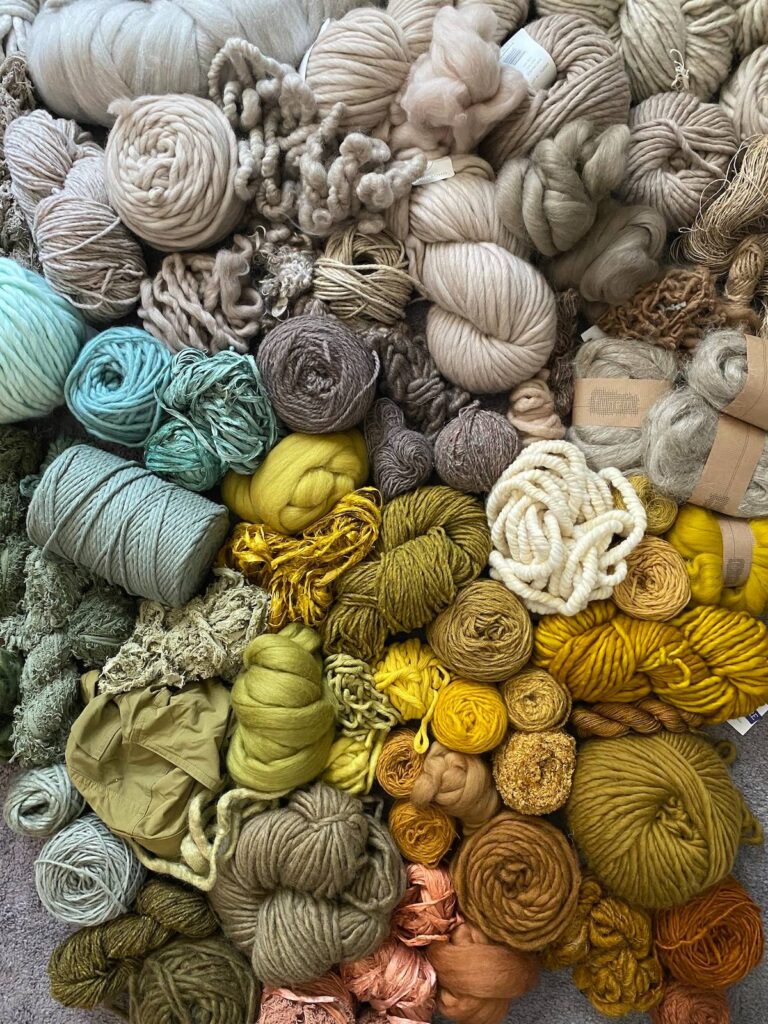
I also store my various tools (tapestry needles, shuttles, heddles, scissors, etc.) in the cabinets, plus a shelf or two of non-yarn materials that I sometimes weave into my pieces.
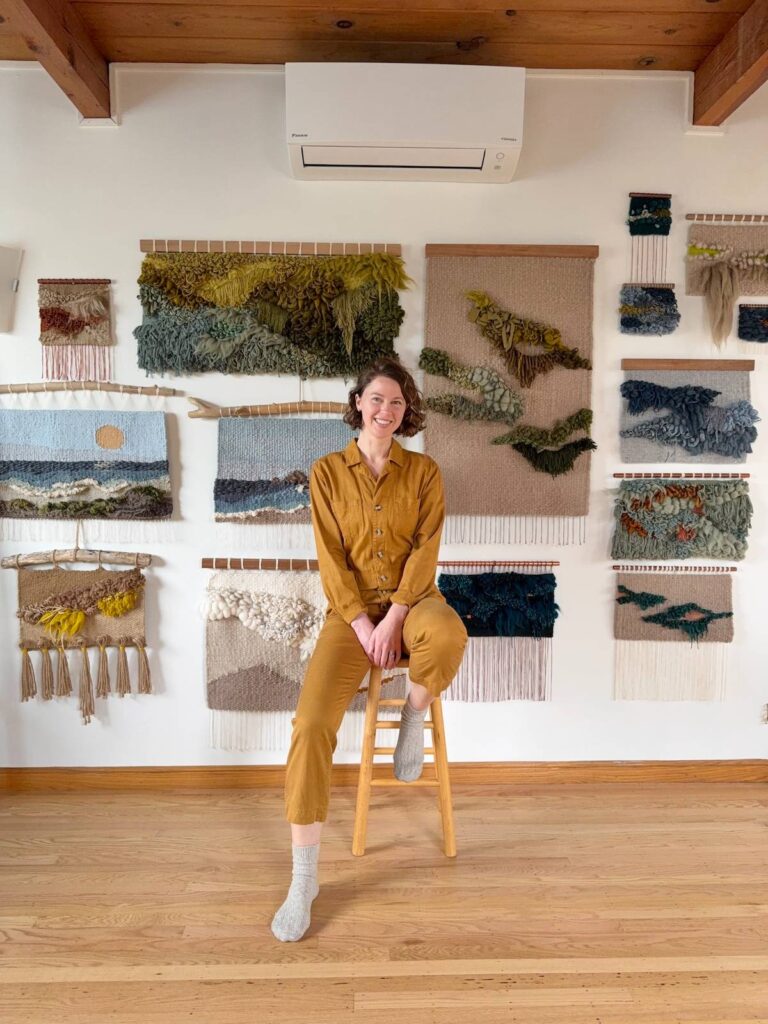
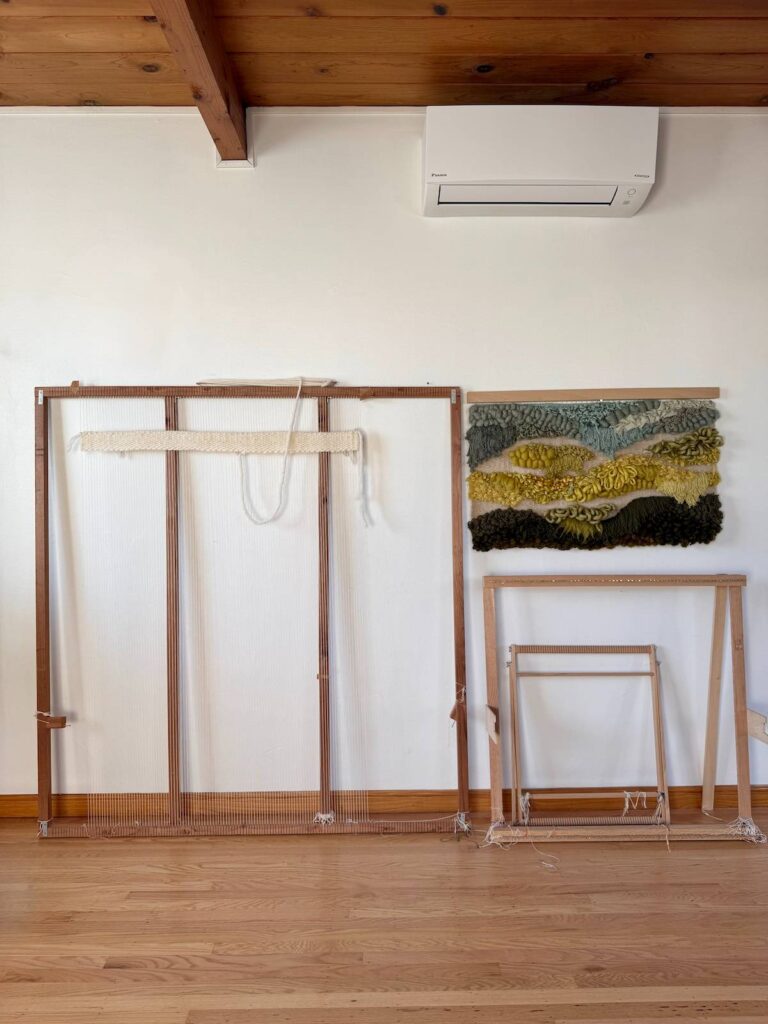
Finished works hang on my studio walls, and a supply of wood and copper dowels leans up against a corner. I have a 5 foot x 5 foot loom taking up half of one wall and five smaller looms stacked in between cabinets, as well as the smaller looms I use to teach weaving workshops.
There’s always notebooks of sketches for future pieces strewn around and fibers for my current work in progress pulled out. I have photos and mementos displayed from places that are dear to my heart and little bits of inspiration I’ve collected over time.
The studio gets great natural light but is also cozy, which is my ideal environment to work in. I can spend hours weaving in my studio and watching the light change throughout the day. I love the beautiful wood floors and exposed wood beams. Weaving in here with a cup of tea on a rainy day has almost turned me into a winter person.
What is the first thing you do before beginning a new piece?
I start each piece differently depending on how the idea for the piece originated. If it’s a commission, I will have a sketch of the piece that has been approved by the collector. I also will sketch a piece out first if it is a more representational landscape piece, or if I have a specific vision, but not all of my pieces fit into one of those categories.
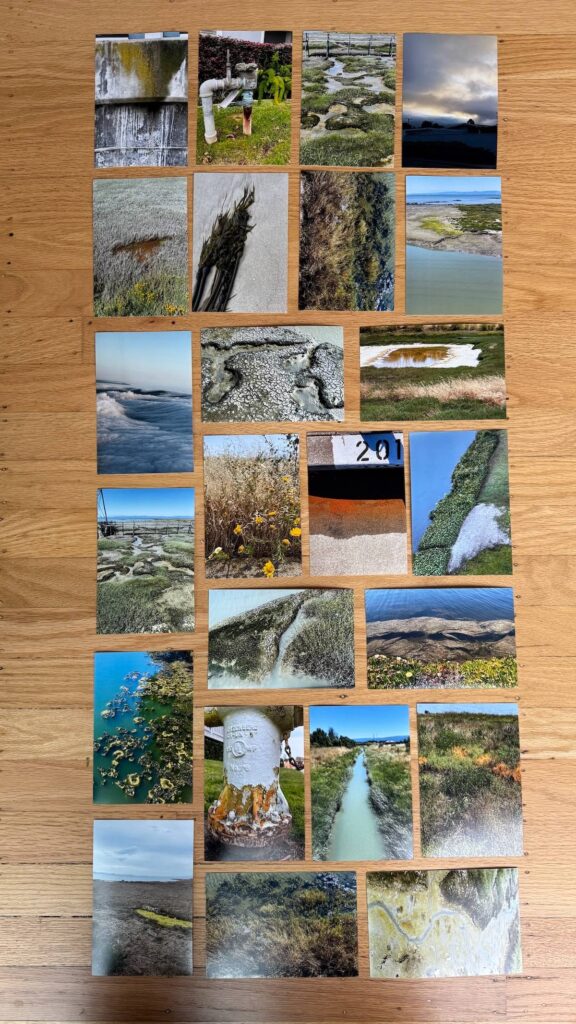
I often browse through my sketches for compositional ideas as well as reference photos I’ve taken throughout the years. The photos I take of my inspiration play a big role in my process. Taking a photo of whatever it is I’m moved by is how I commit the feeling to memory.
Your material choices seem very intentional. What do you look for when selecting fibers?
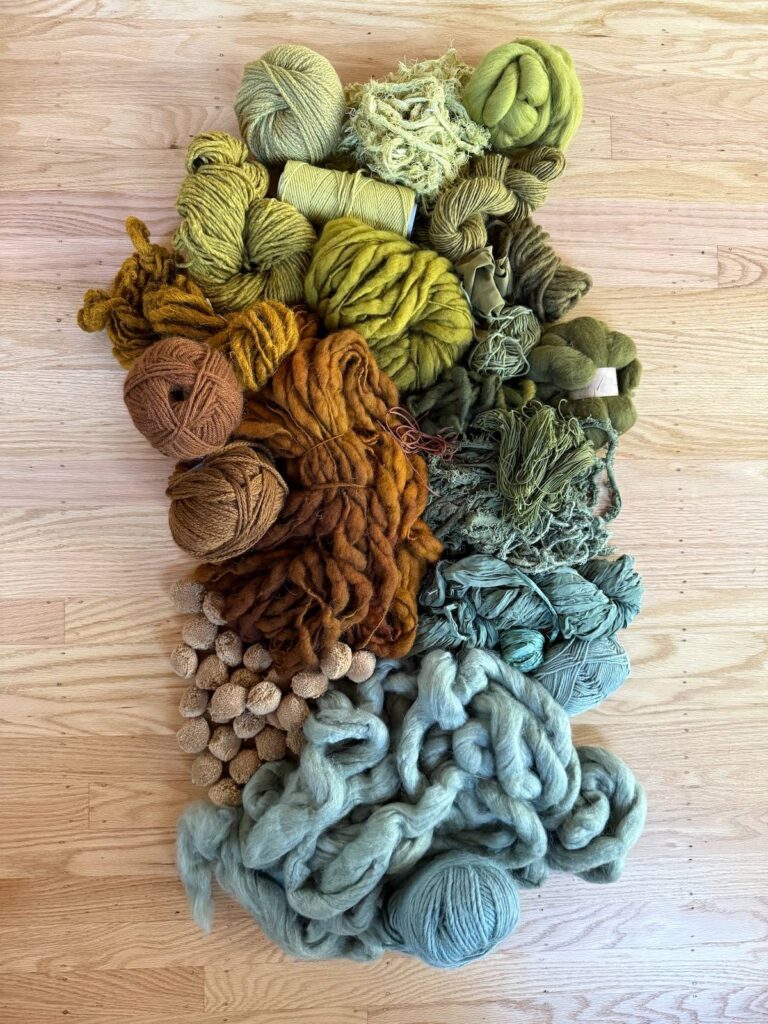
I’m drawn to fibers that have character or create interesting textures.
The same weaving technique can look completely different depending on the fiber’s texture and thickness, so I have to take color, texture, and the weaving stitch into consideration when choosing the right material.
For that reason, I like to have a robust fiber supply, otherwise I’d be sourcing material between the completion of every section of a weaving, and for my highly textured pieces, I need a lot of options.
Many artists have a favorite stage of the process. Which part of weaving brings you the most joy?
I go through such ups and downs within the process of creating each piece.
I’ll think a piece is the best thing ever and the worst thing ever, within completing eight inches of weaving.
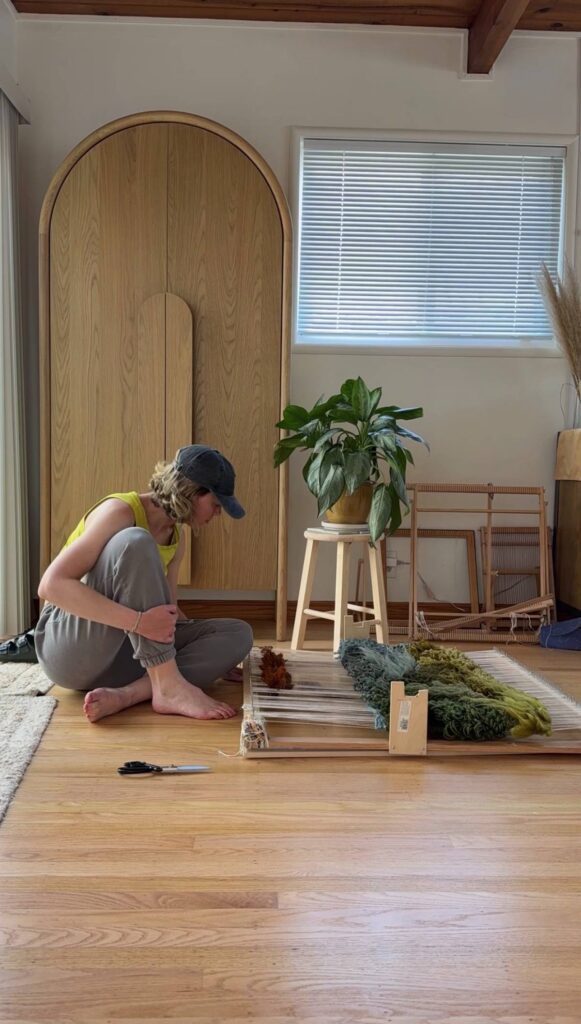
The part that brings me the most joy, though, is very specific—after finishing one section, it’s weaving the very first row of the next texture. The point where different textures meet is also one of my greatest inspirations from nature.
It’s where I get much of my compositional inspiration and why almost all of my pieces feature both flat and highly textured portions. That point where they meet is my favorite, both visually and technically.
How do you balance art-making with the other parts of your life?
Even though my preferred way to work is hours-long stretches when I’m feeling inspired, I don’t always have that time.
Small sessions of studio time still add up, so I will make time for 30-minute, 15-minute, or even 5-minute windows of weaving.
One of the many lovely things about the medium is that there is no prep or clean-up required that might otherwise make a 5-minute creative session feel not worth the time and effort.
Without paints to prep or brushes to clean, it only takes me a second to pick up where I last left off.
What advice would you give to someone who feels called to make art but worries they started too late?
It feels too easy to be true, but just make art.
Being an artist always felt like some mysterious alternate path that required elusive steps and life choices to get there, but it turns out the only actual prerequisite is to make the art, find what works and what you love, and then make some more.
Where can people see your work?
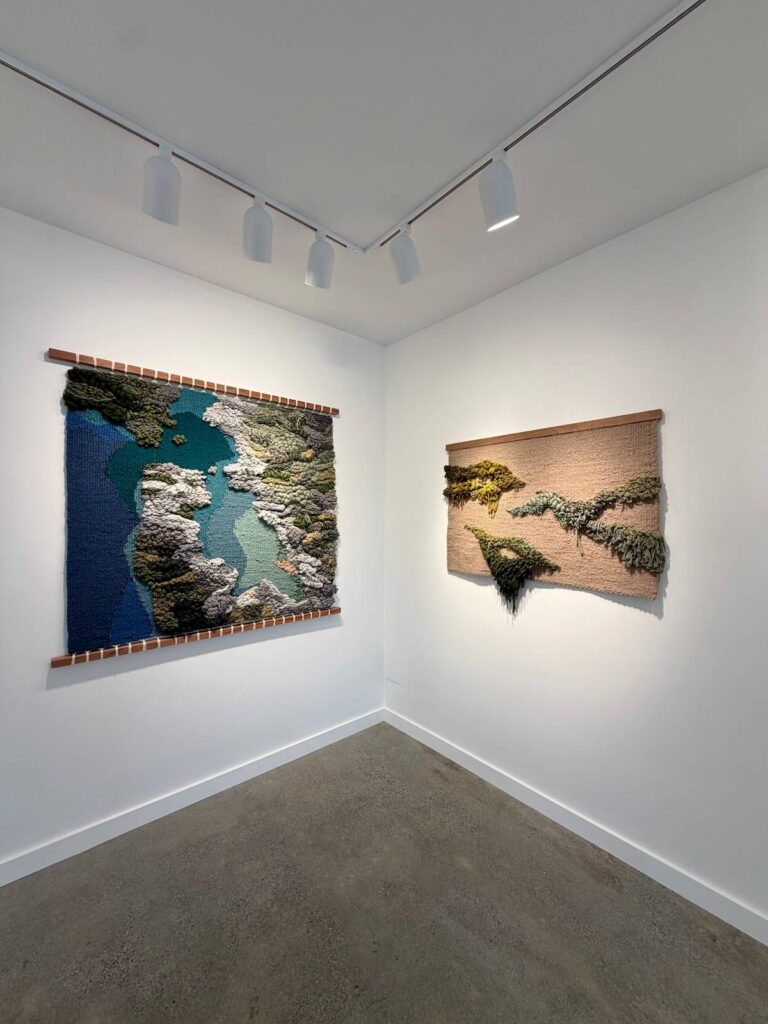
I had my first solo show with M Stark Gallery in Half Moon Bay earlier this year, so most of my available work can be found on their website (www.mstarkgallery.com/busch). I have another show with M Stark Gallery planned for 2028—details will be announced on my Instagram and website (www.westbayfiber.com). I’ll also have a piece in a group show this coming August in San Francisco. Otherwise, people can keep up with my work and future show announcements online through my Instagram account (@westbayfiber).
Rapid Fire Fun:
A place that always inspires you? The Pacific Ocean
One word that describes your studio today? Collected
One tool you would rescue first from the studio? The five-foot loom I built myself
Favorite fiber to work with? Wool
What’s bringing you joy these days? Longer summer days
Interview posted June 2026
Explore more weaving inspiration and projects on Create Whimsy.