
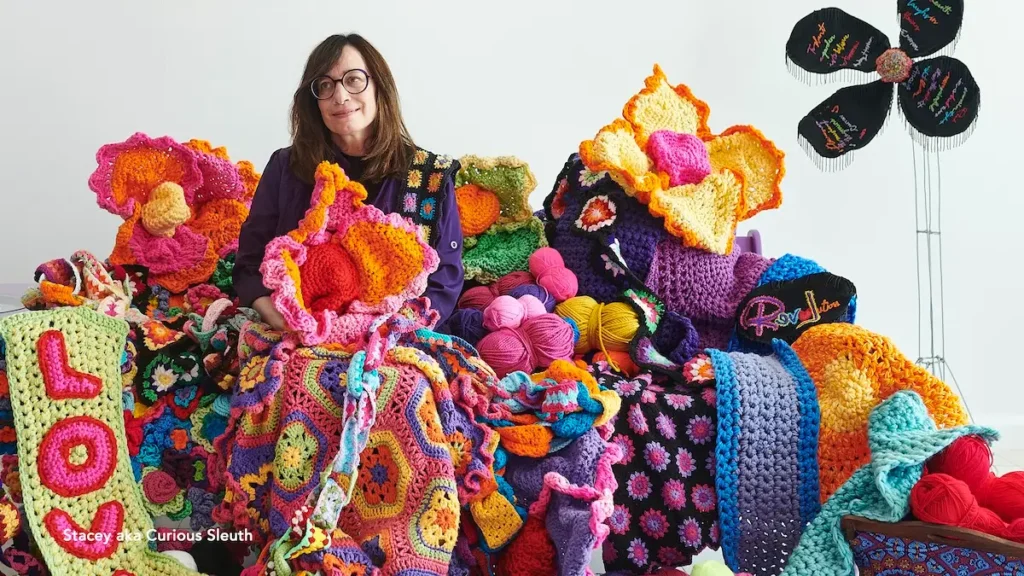
Stacey Rozen is a craftivist, story-threader, yarn graffitist, and digital artist. She is an avid crocheter and her subversive hook opposes conventional fibre handcrafting traditions as a catalyst for craftivism, dialogue, and healing.
How did you first discover the world of making with fibre and yarn?
The gentle rhythm of hands and needles introduced me to the world of fibre yarns as I sat next to a granny and copied her every move. I learnt to knit before I could write and when I learnt to crochet, I was hooked!
Many stories were handed to me through my family’s lineage as we made woolly items together. From an early age, I didn’t just learn to make things, I learned how making holds connection.
When was the moment you realised that you wanted to use your craft not just for fun but for something bigger?
As an Amazon Associate I earn from qualifying purchases. Read more about our affiliate linking policy.
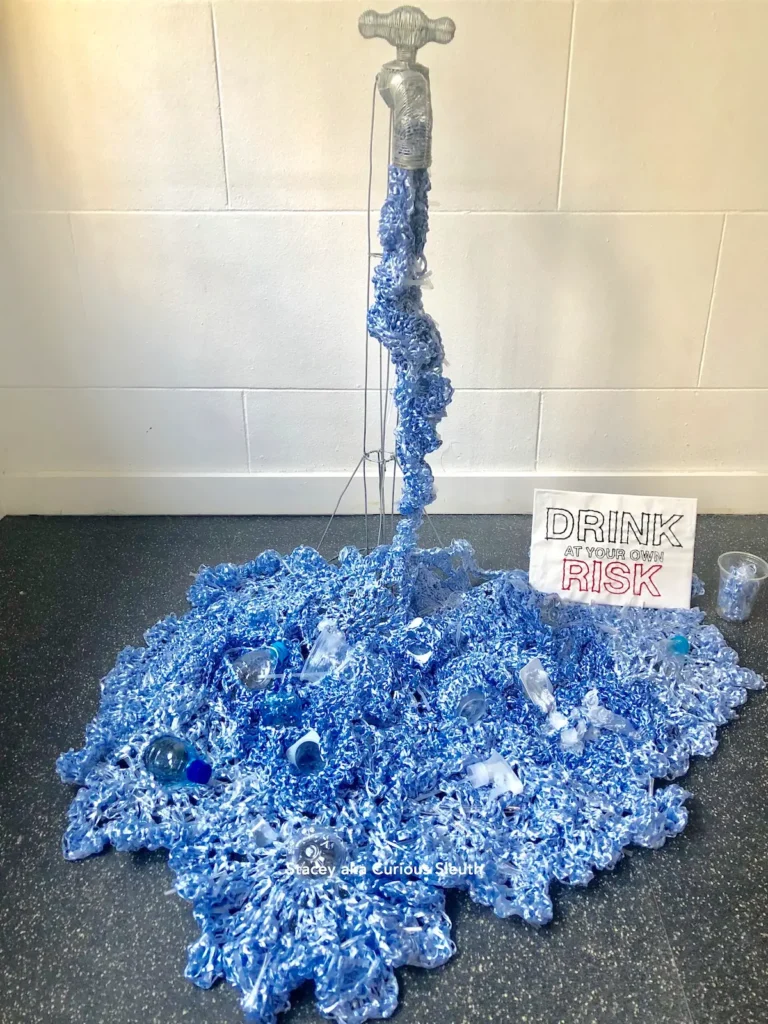
I was facilitating one of my first workshops and the process of craftivism confirmed that it was truly about personal and collective meaning-making.
I felt that a teenage girl entered the space carrying something heavy. I invited her to learn a simple handsewn running stitch and thread her story through mark-making that only she knew the meaning of. Eventually, she shared her story with fellow participants. The heaviness of the story didn’t disappear, but it no longer was only hers to hold. A decade later, she told me it was a moment she’ll never forget.
Where did the name “Curious Sleuth” come from and what does it mean to you?
Curious Sleuth is my tagger moniker as a yarn graffiti artist. I used to be an undercover sleuth doing unsolicited yarn bombing, so having a pseudonym was a fun way of hiding my identity. I’m not undercover anymore, but Curious Sleuth describes me better than any professional title in my bio ever could.
What was the very first craftivism or yarn graffiti installation you did? How did it feel opening up that side of your practice?
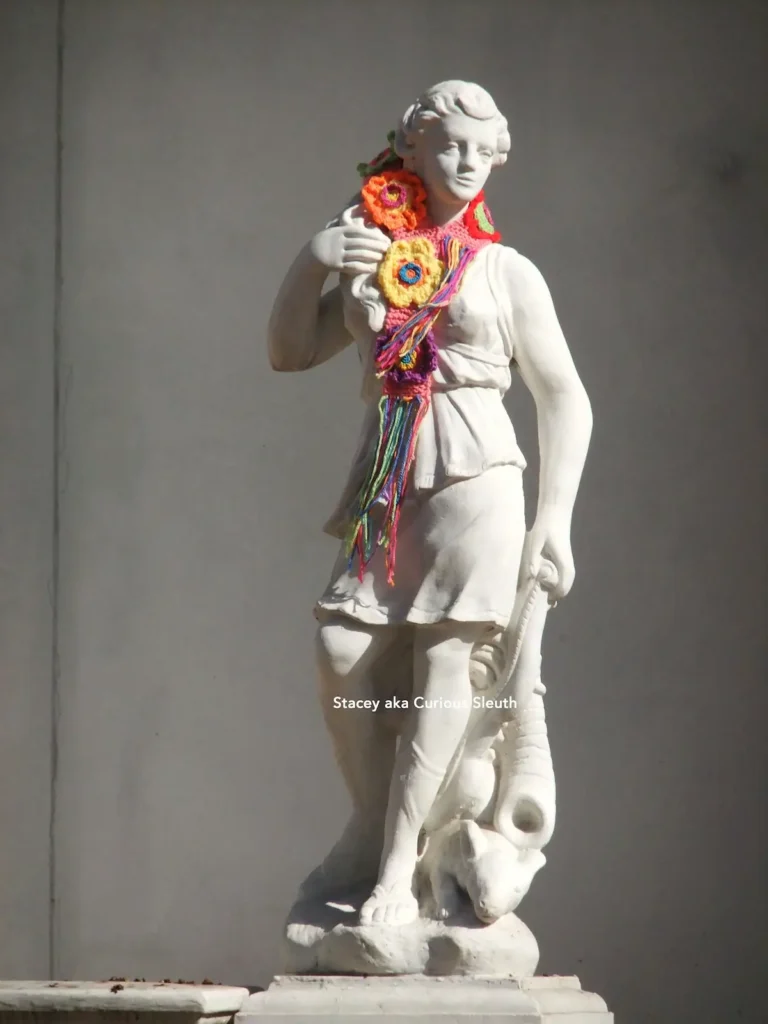
My first solo yarn graffiti installation as a craftivist was on concrete statues at an ostentatious house that everyone in that neighbourhood was astonished by. I crocheted flower scarves and draped them on the statues to soften their ugliness. It felt like I had done something on behalf of many by expressing our unified message of dissent.
How has living in South Africa influenced your work and what you make?
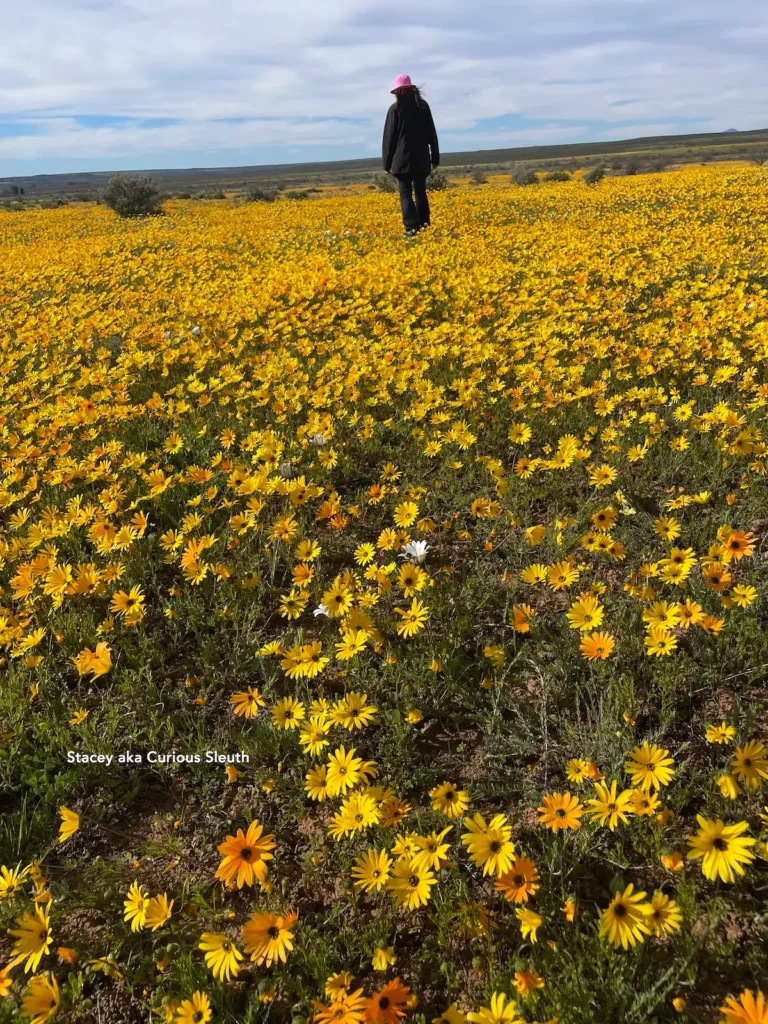
South Africa shapes my craftivism in ways no other country ever has or could. Our collective memory embodies deep emotions because of the history this country has lived through. It’s woven a complex fabric because of the intergenerational trauma held by the majority. Together, our work is richer, more layered, and more honest knowing that reparation is vital with every thread we stitch.
If you could go back and talk to “young Stacey” at the start of her craft-journey, what would you say?
“Stacey, I know you cannot envision it right now, but your life is going to be impacted by threads of yarn. You’re going to be surprised by their calling, unhinged by their messy awkwardness, and inspired by their possibility. Trust your capacity to grow with them.”
What kinds of stories are you drawn to sharing with yarn and fibre?
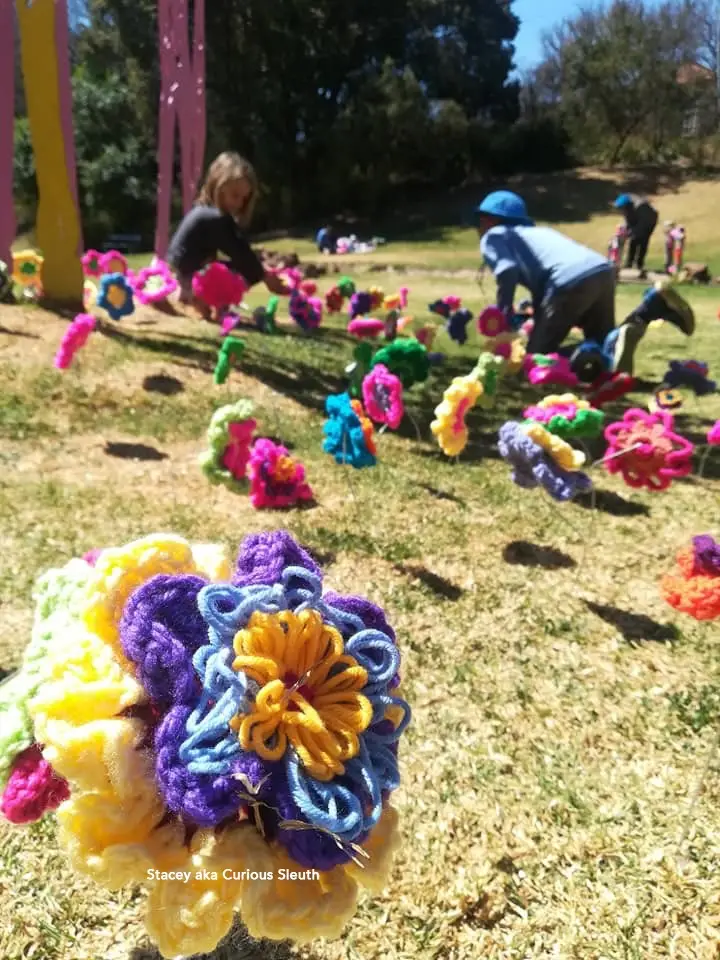
I’m drawn to everyday stories that capture the heart of our community, create awareness, and offer care. Stories that call for the softness of fibre yarns to engage hard truths.
How do you choose the themes you work on (gender-based violence, climate change, scarcity, conflict) in your practice?
Resonance and relevance. The themes choose me as I respond to what feels current, urgent, or invited by those around me. If an issue ruminates, it usually threads its way into my stitches to help me figure it out. My personal creative process transmutes into an offering for us all.
What have been some surprising or unconventional sources of inspiration in your creative life?
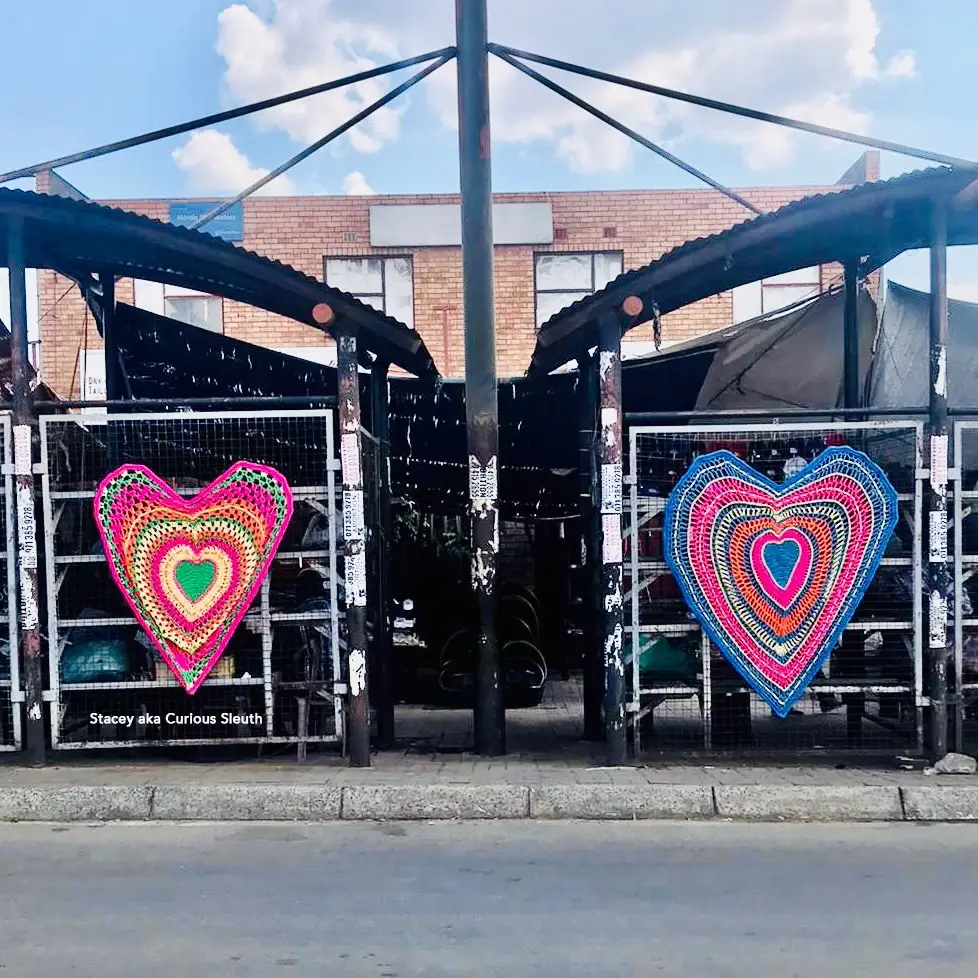
For a curious sleuth, every random moment carries potential for interestingness. There are multitudes of inspiring ideas as my mind wanders from the grocery isle to a text message to potholes to shapes in clouds to the dress of a passerby to shadows and glimpses of light.
When you feel stuck or uninspired, what do you do to get moving again?
I pause to stop seeking the creative impulse. I step away from trying to be productive… and rather just be present to hear my favourite playlist or go for a swim. The timeout lets me return to my hands, hooks, yarns and digital devices with a fresh mindset. Other times, I sit with the trouble trusting that an alternative thread will eventually reveal itself, and it usually does if I remain open to it. Stuckness may also become a temporary UFO (unfinished object – of which I have a few!) until I feel ready to return to it with newfound inspiration.
Can you share a bit about a project that was challenging in terms of materials or technique and how you solved it?
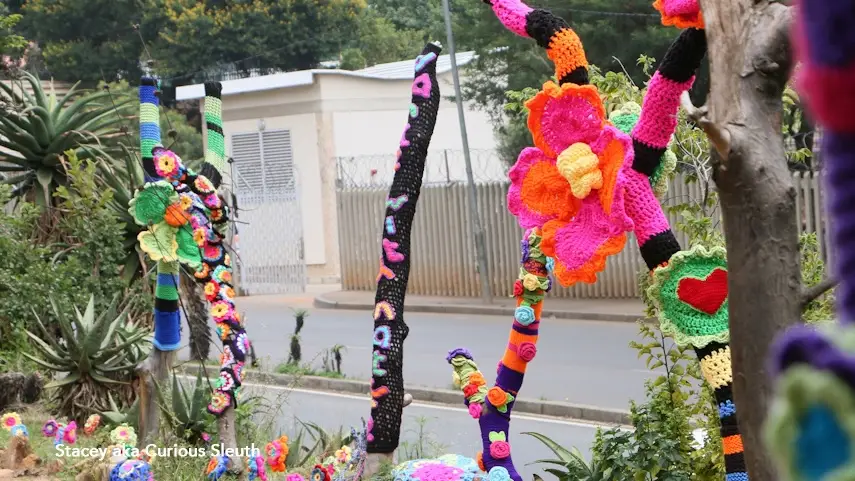
During the Covid pandemic, I gathered a collab remotely to create a yarn graffiti installation, Garden of Yarns. We never met in-person as we were homebound during lockdown. All our communication was through a text group amidst data and electricity scarcity, load-shedding and curfews.
Yarn was scarce so we used leftovers. Some of us caught Covid, lost relatives and friends. When we met in-person during the installation, we had to adhere to protocols and prevent a superspreader. Despite all the difficulties, each craftivist recalls this project embodying the hope we desperately needed. It was a gift for us and our community. I learnt that adaptability and pivoting becomes a creative practice. That learning guides me.
How do you consider “scale” in your work, big installations vs small intimate pieces, and how does that change your process?
Scale is dependent on the topic, the space, and whether the project is solo or collaborative. I adapt my ideas to suit the context. I’ve had moments where scale overwhelmed me, where a piece grew bigger than expected. At other times, the tininess was big enough.
Every maker hits bumps. What has been one of your biggest “uh oh” moments in a project, and what did you learn from it?
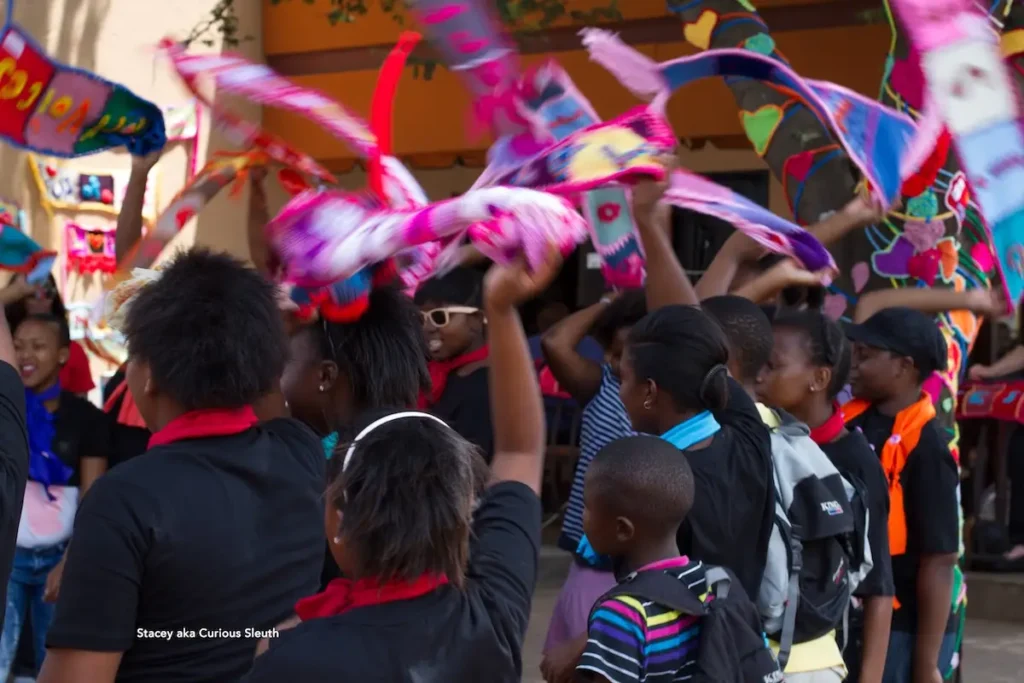
Realising mid-project that the conceptual form wasn’t saying what I thought it would – after spending countless hours making and creating – was an “uh oh” moment. I unravelled it literally and conceptually and learned that refinement is key.
Another “uh oh” resulted in me discovering a “plan B” and transforming it into a “beautiful oops!”
With socially engaged work, sometimes the outcomes aren’t purely aesthetic. How do you measure or reflect on success in your work?
In retrospective reflections on whether a project was successful, it’s not a quantitative equation but a qualitative perception. It’s about the trust built, the shift in perspective, the silence gently broken. Did someone feel safe enough to speak? Did a participant leave feeling seen? For me, it feels like an intuitive witnessing.
How do you set boundaries for yourself (time, materials, energy) when your work is so connected to emotion, activism, and story? What do you do to keep balanced?
I think of boundaries as containers. I create small rituals that help me step in and out of difficult containers where emotion and activism are woven tightly.
I make room for lightness by watching a romcom which usually offers me momentary relief from the heaviness of a topic.
Balance for me is knowing when to lean in and when to step back, and how to manage my time for each. I often forget to do this though, and compassion fatigue is a reminder.
Debriefing is an important part of my process and I go for psychotherapy to reflect on hard stories and difficult conversations, including my response to them. These therapeutic and reflective conversations are vital.
If you had unlimited time and budget, what dream project would you create and why?
A dream project would thread collective memory into a creative fabric that’s a living archive of us as humans. It would hold resilience and grow as it moves between diverse communities.
Where can people see your work?
Website: curioussleuth.com
Instagram: @curioussleuth
Substack: @curioussleuth / Thread Count
Interview posted February 2026
Browse through more crochet projects and inspiration on Create Whimsy.