
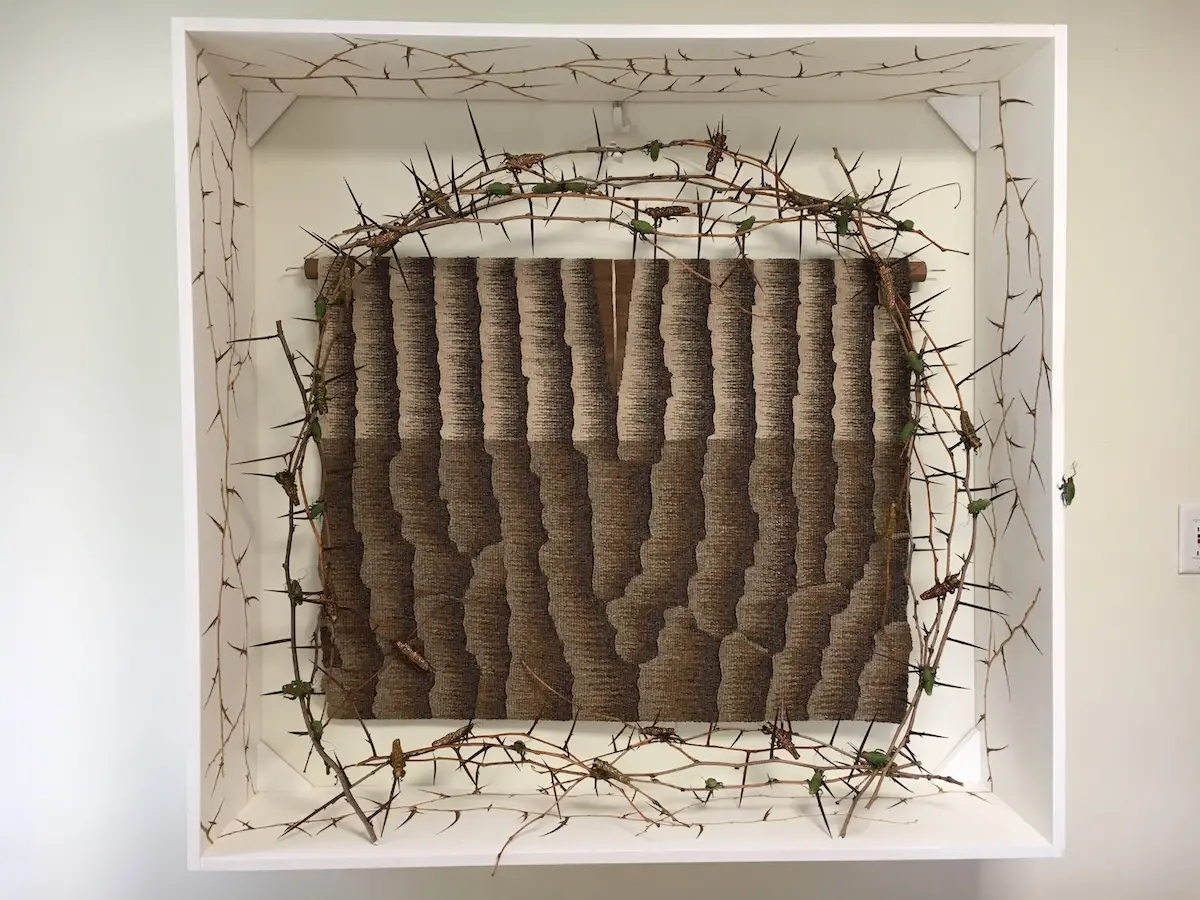
Susan Martin Maffei weaves stories the way some people keep journals, slowly, thoughtfully, and with layers of memory stitched into every thread. Her path into tapestry has been guided by curiosity and a deep love of the natural world.
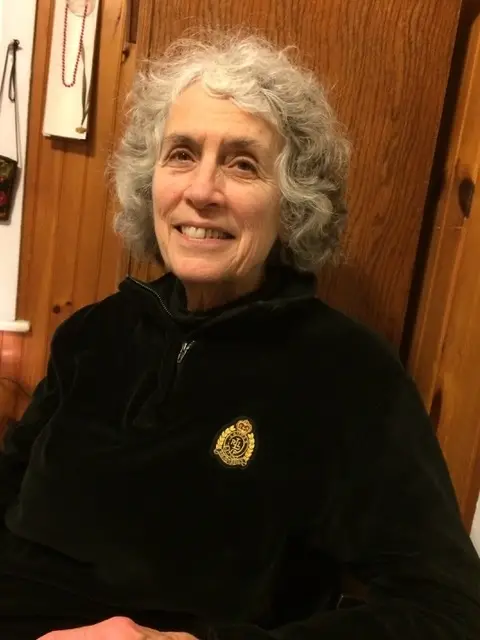
What was your first experience with fiber or textiles?
My first encounter with fiber was through my grandmother who I spent a lot of time with as a young child because of illness in the family. She was an active knitter, did crochet and was a good seamstress who taught me to be the same. I even had a miniature singer sewing machine back then that worked by hand crank.
Was there a moment when tapestry took over other art forms for you?
I had become interested in weaving in the 70’s and, for a while, did custom rugs for a designer. In the 80’s, I saw an opportunity to apply for an apprenticeship in a tapestry studio in NYC. Upon first try, I did not get it, but subsequently studied with a few known tapestry teachers and was recommended by one to the studio, and was taken.
As an Amazon Associate I earn from qualifying purchases. Read more about our affiliate linking policy.
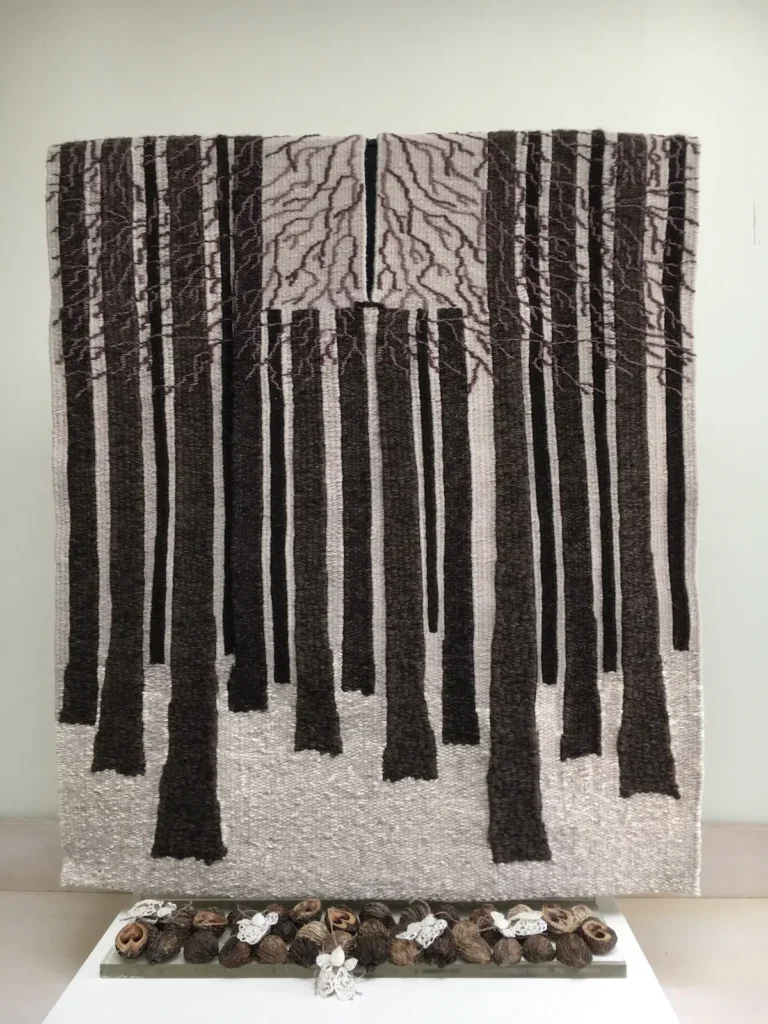
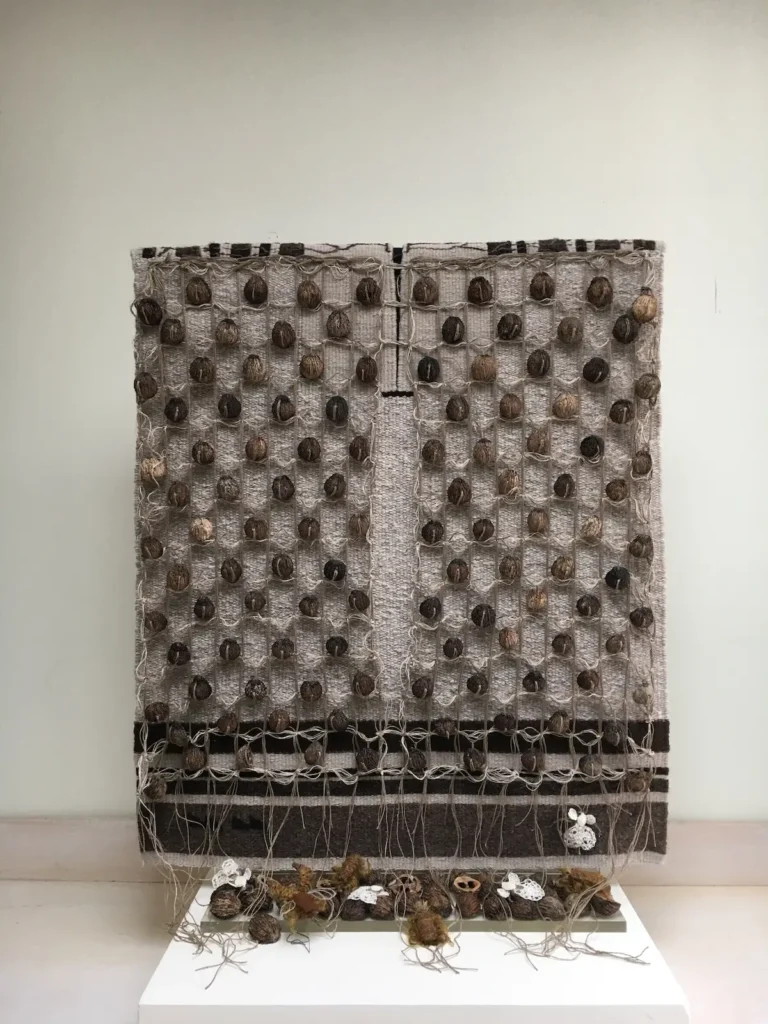
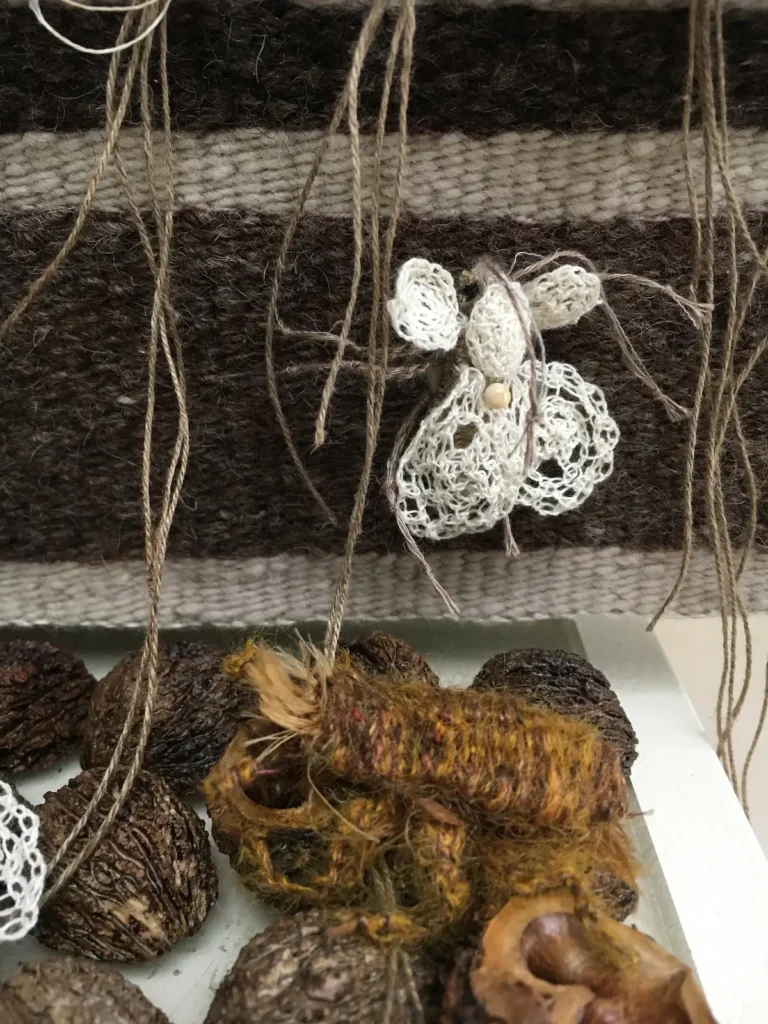
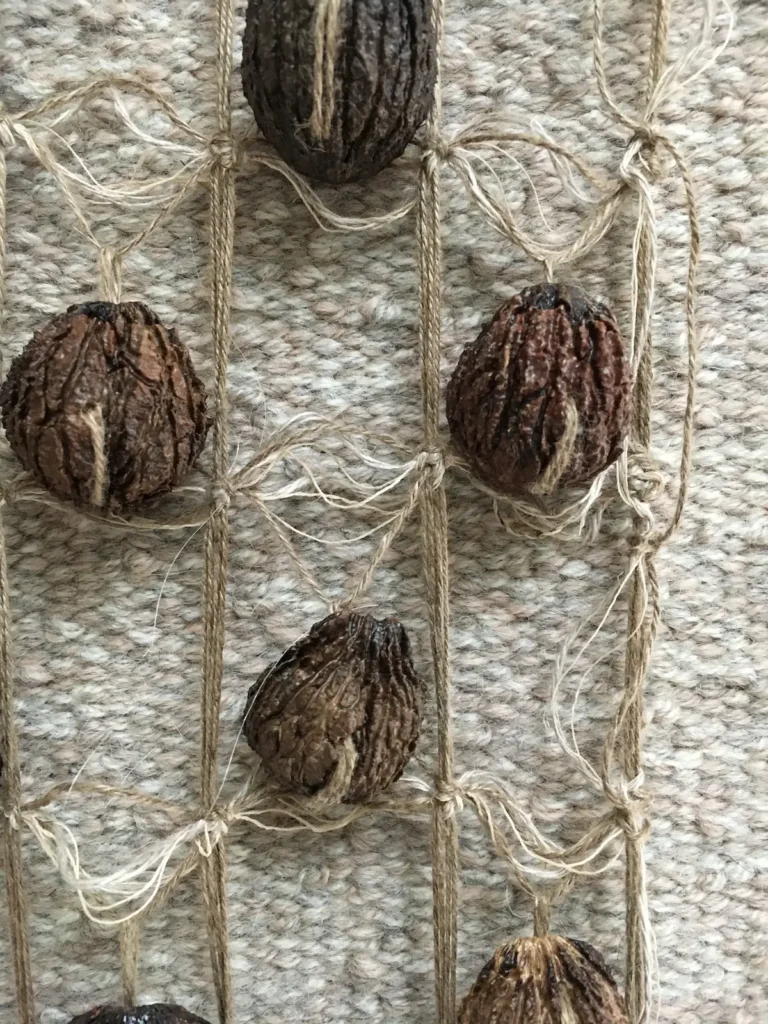
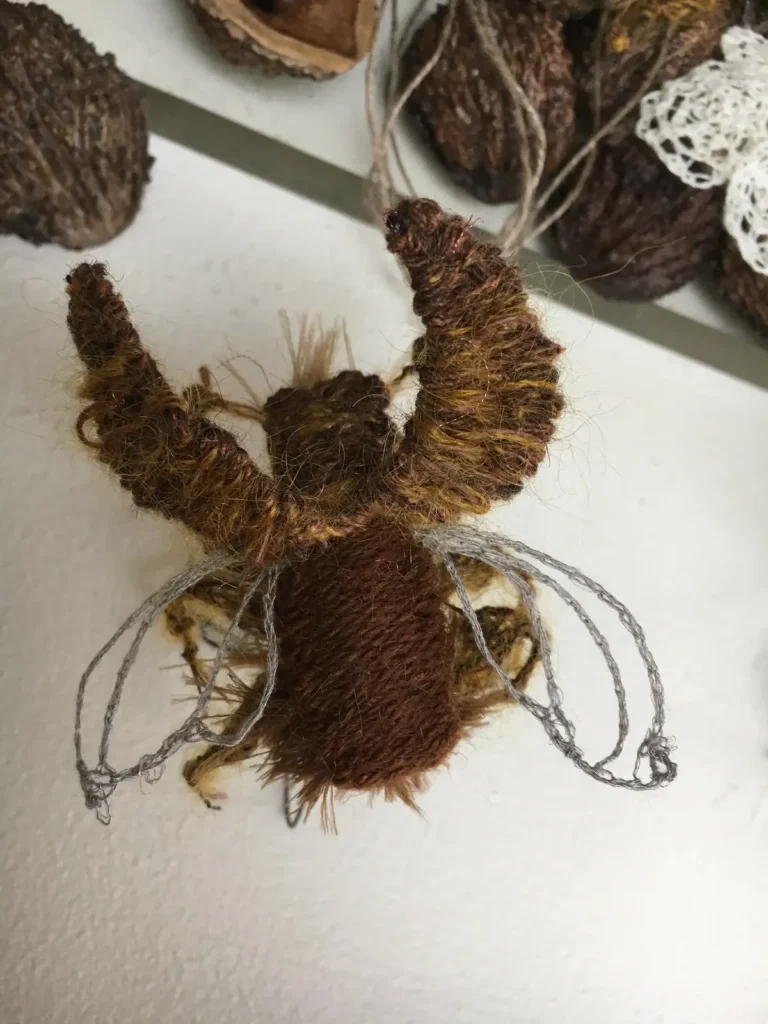
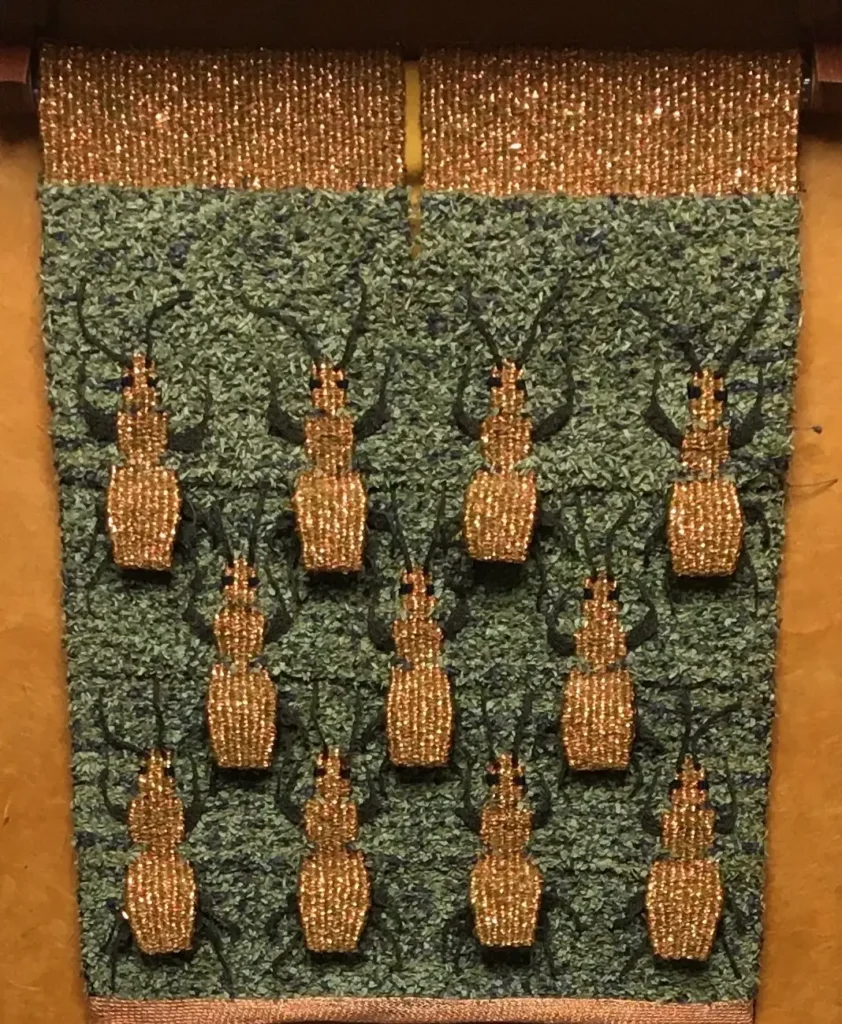
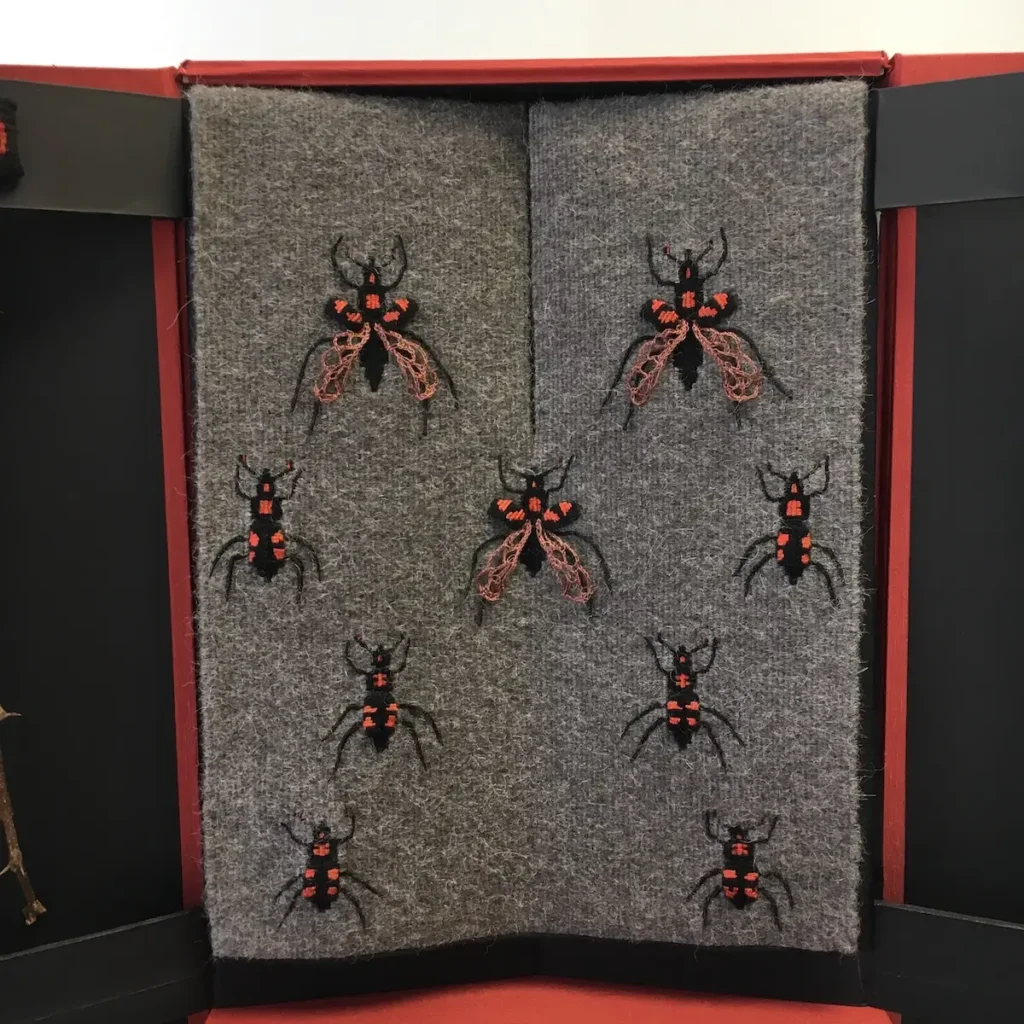
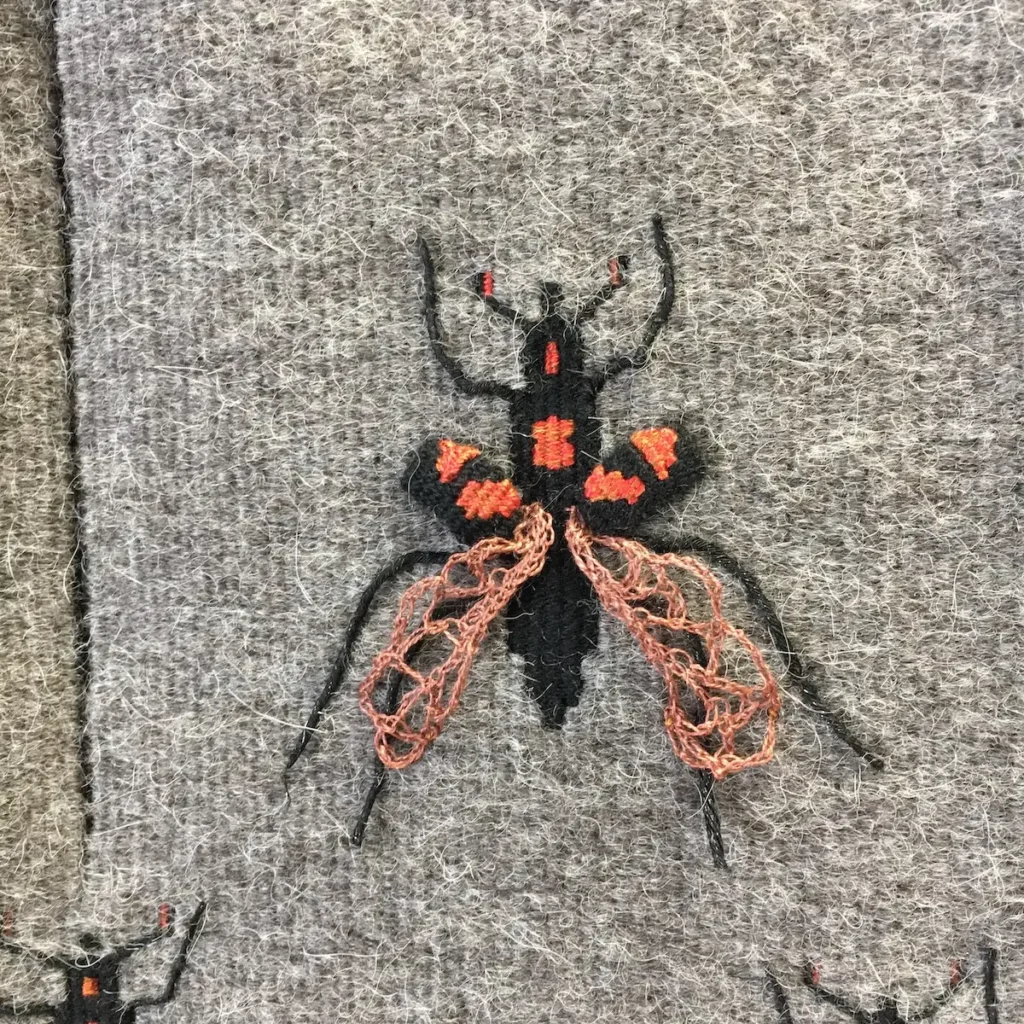
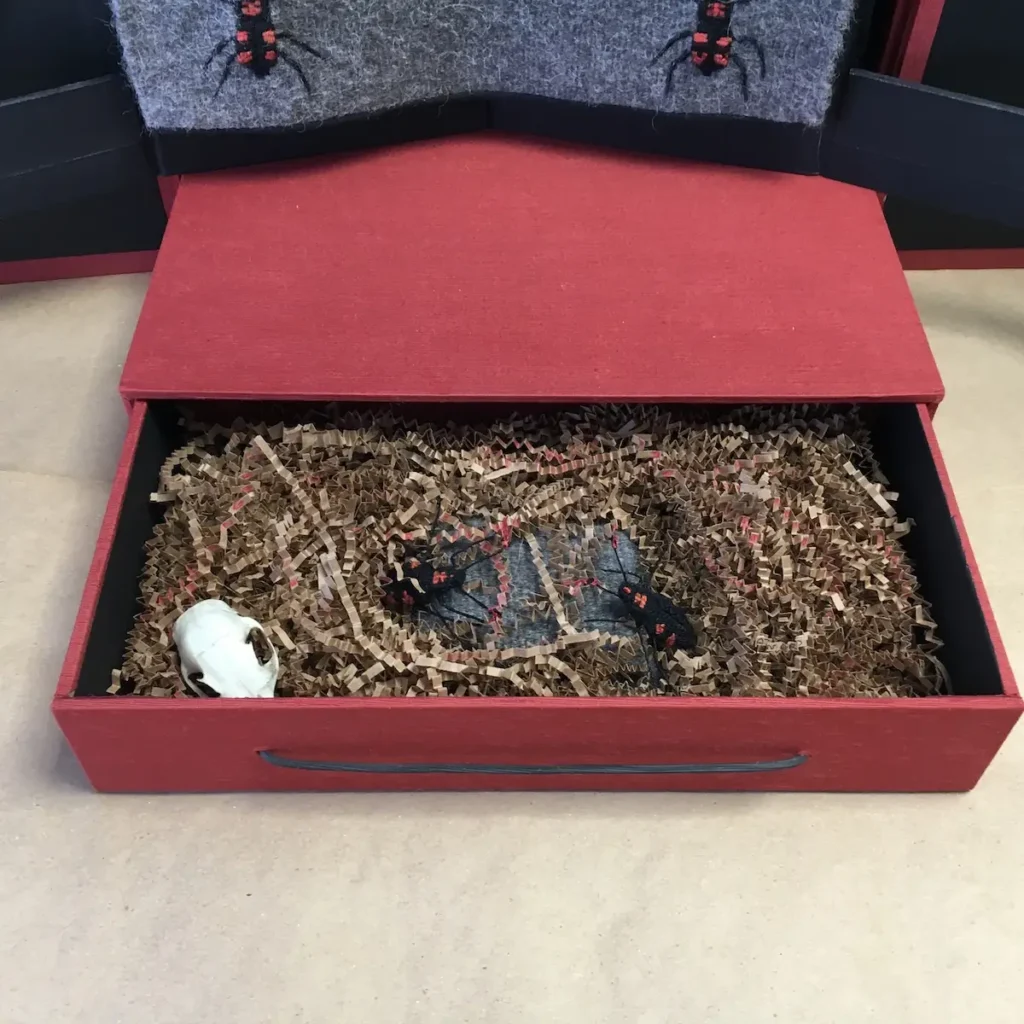
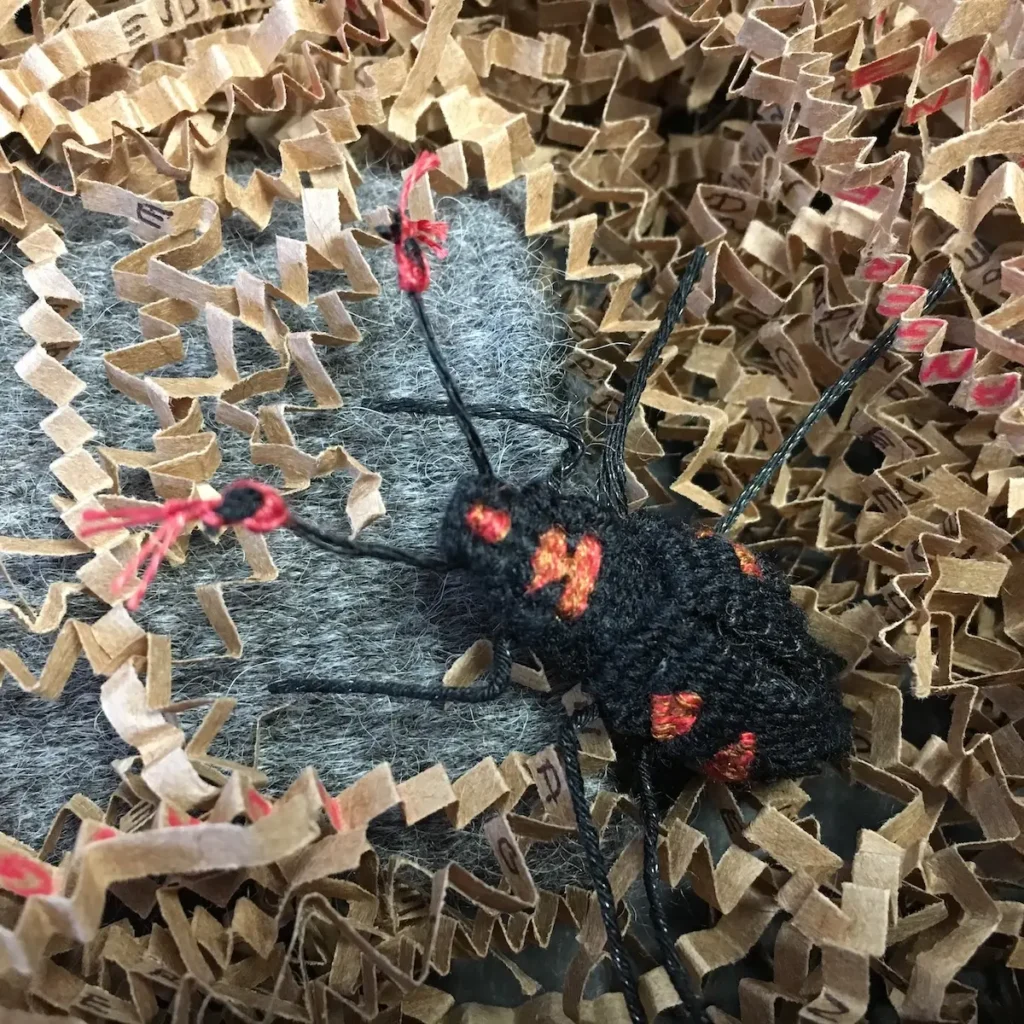
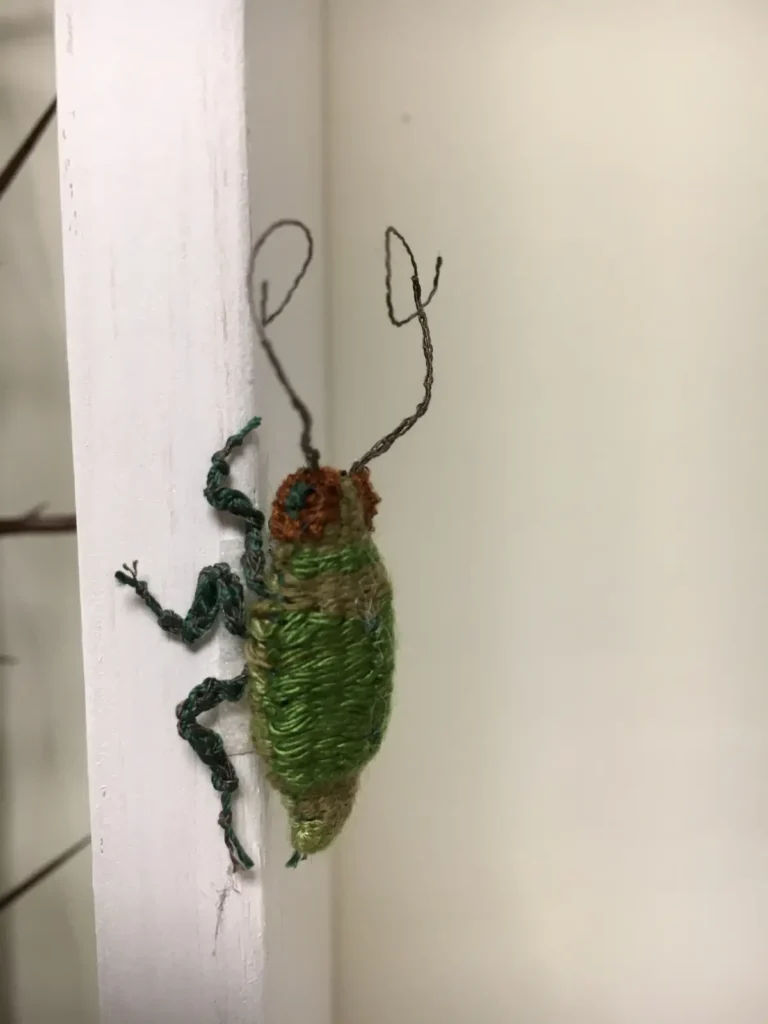
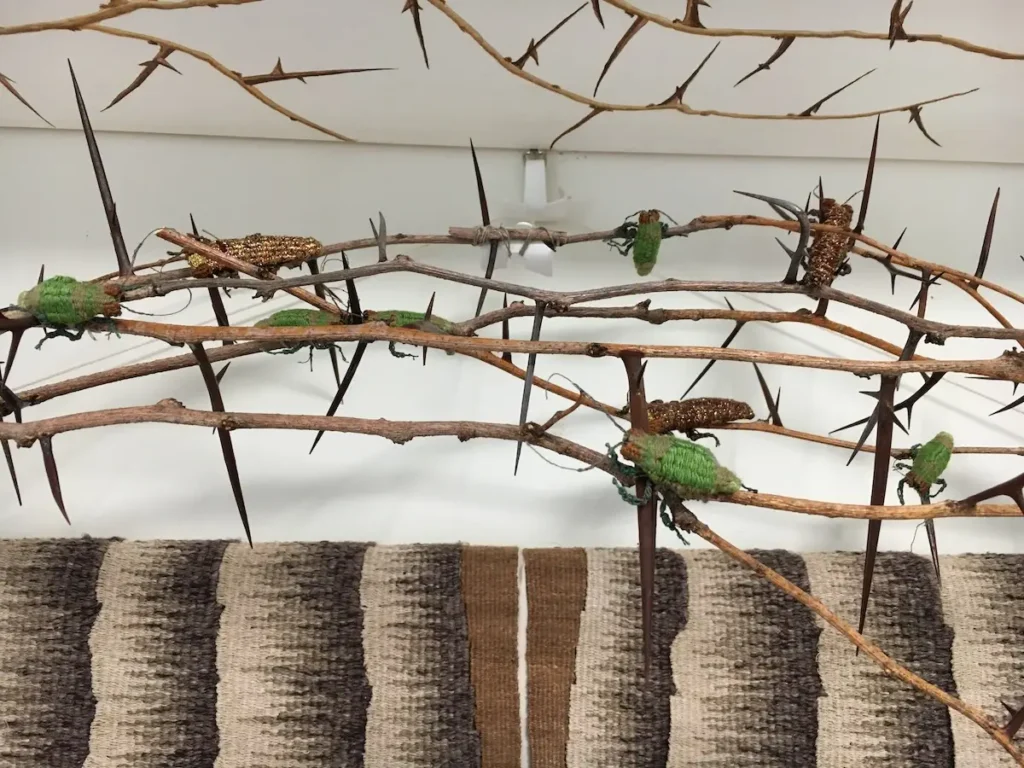
30″ x 25″ folded; Linen warp, wool and linen weft, rami & line knotted net, found walnut shells, cotton lining, plexiglass support pedestal. Walnut lace bug: body 1.5″ x .5″ x .25″. Stainless steel warp, rami weft, cotton wings, stainless steel and rami legs and antenna. Walnut Twigg beetle, body 1.5″ x .75″ x .25″, stainless steel warp, kid mohair, linen nylon, wool weft, silk wrapped stainless steel & kid mohair, linen, nylon legs and antenna.
How did your studies in New York and Paris help shape your approach?
Being able to practice every day at the NYC studio was the best possible training as well as sharing with and learning from other weavers.
I was taken on at the Gobelins in Paris for the study of perfection of technique, but learned so much more. History, contemporary art, and an acceptance of tapestry as art that did not exist here.
What draws you to stories of invasive, threatened, or endangered species?
My work has always been about the environment and so when I moved from the city to upstate NY so did my work. It moved from people and events to animals and nature.
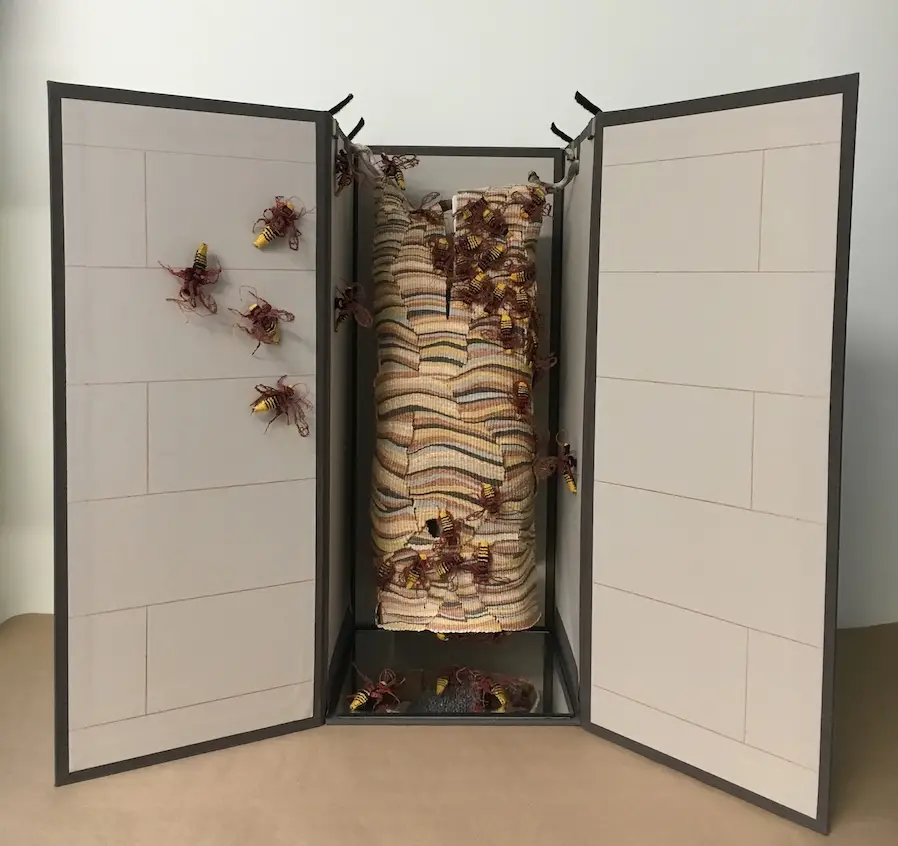
24″ x 31.5″ x 10.5″, Opened 24″ x 31.5″ x 10.5″;
Paper, hemp, rami, cotton, silk, book board, cloth, mirror, found branch, velcro
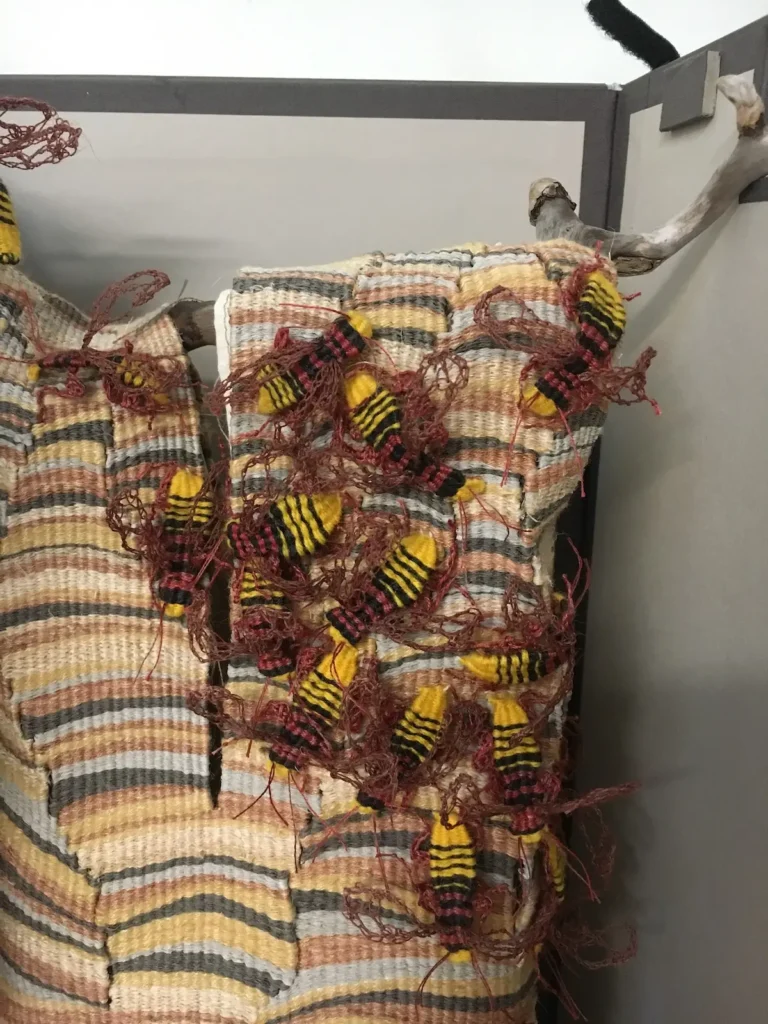
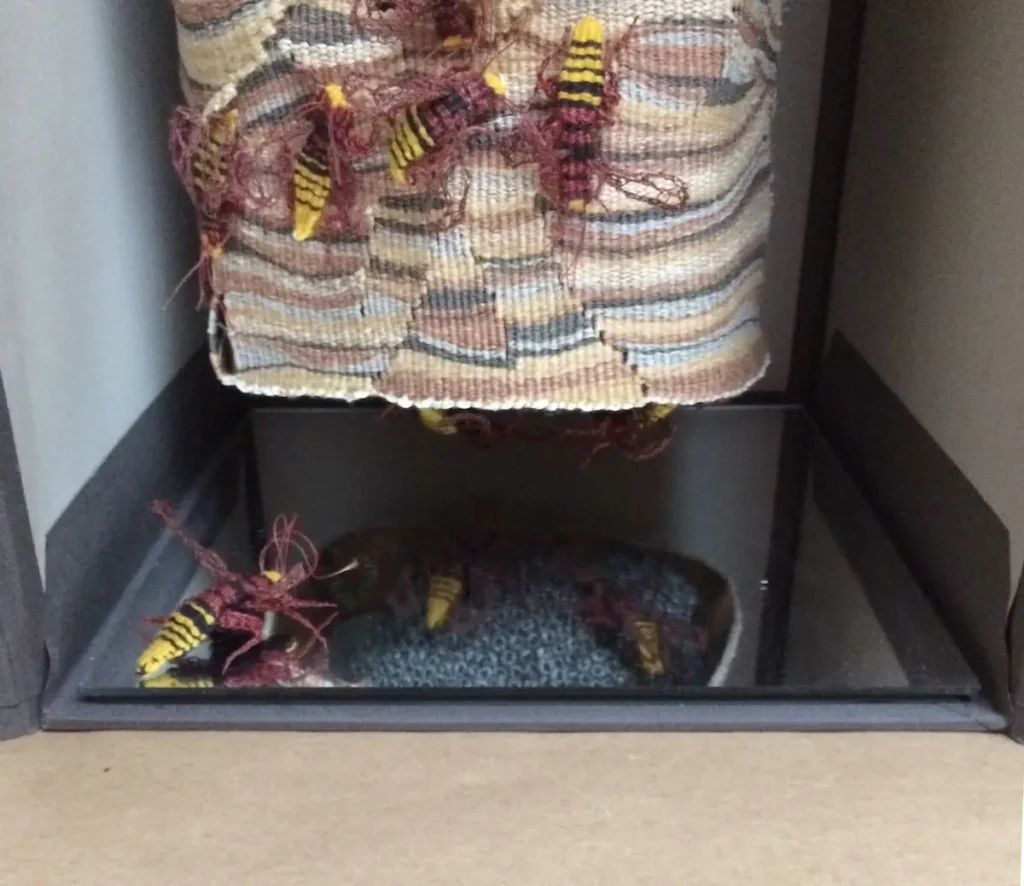
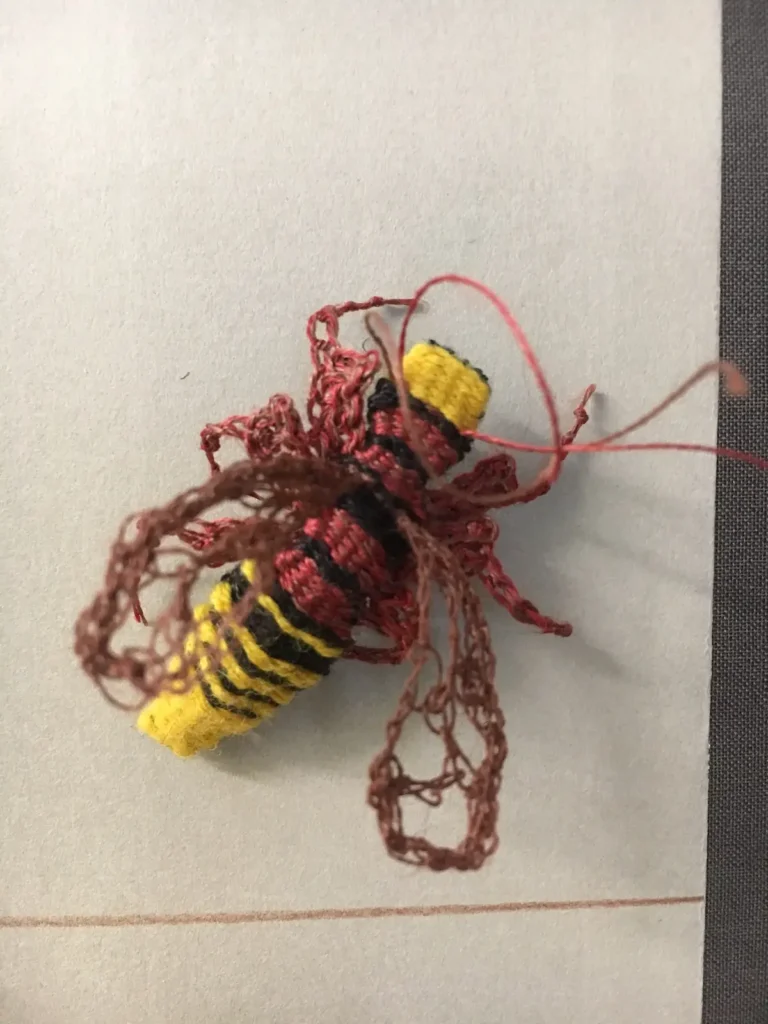
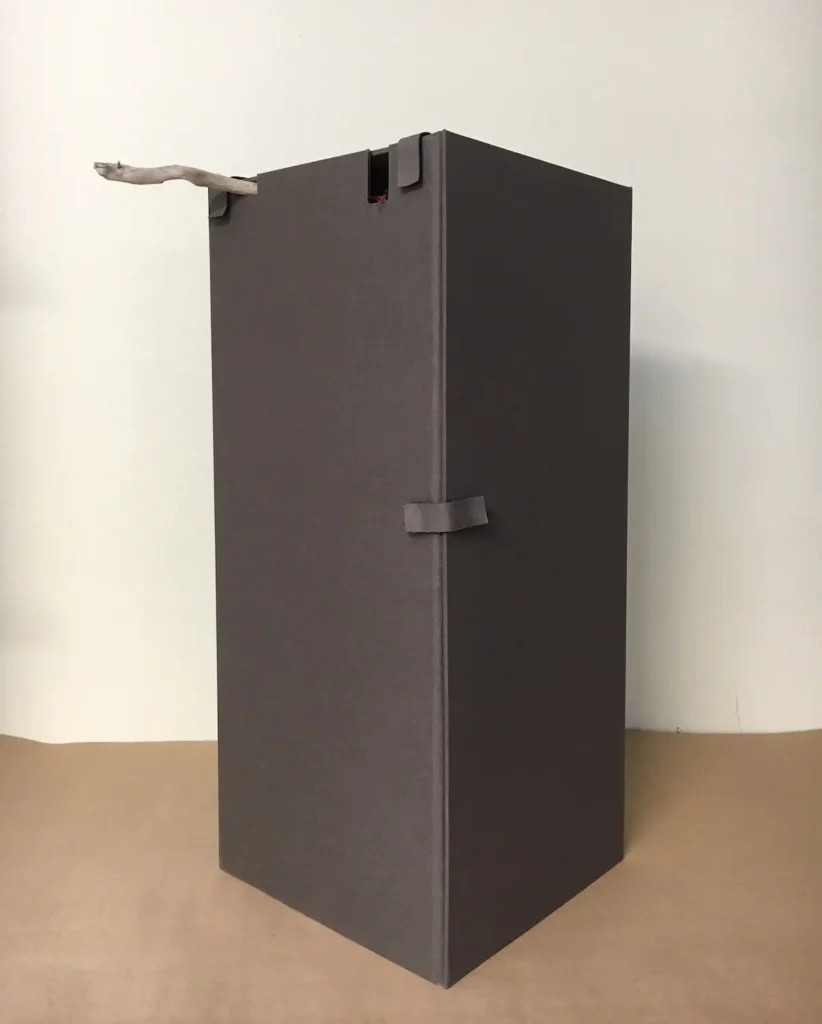
What role does memory or personal experience play in your tapestries?
My work has always been narrative, so it’s always been of personal interest and about telling a story. I do not normally use a cartoon but develop the images as I weave, and so memory and experiences remembered are so important for the story to grow into images.
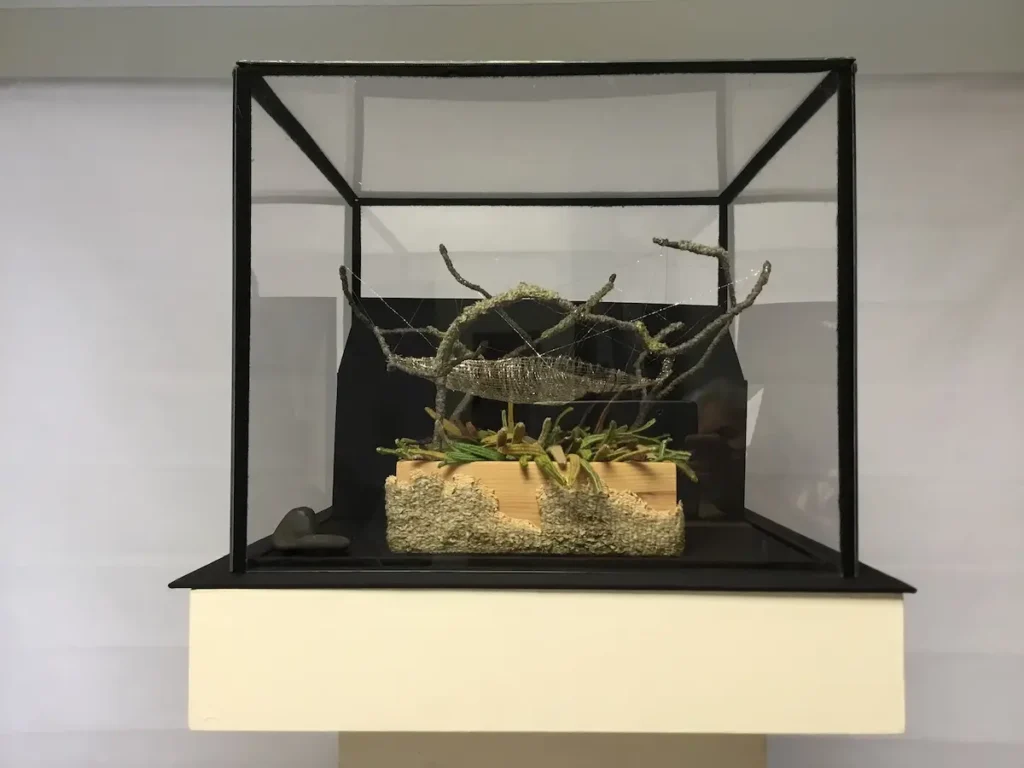
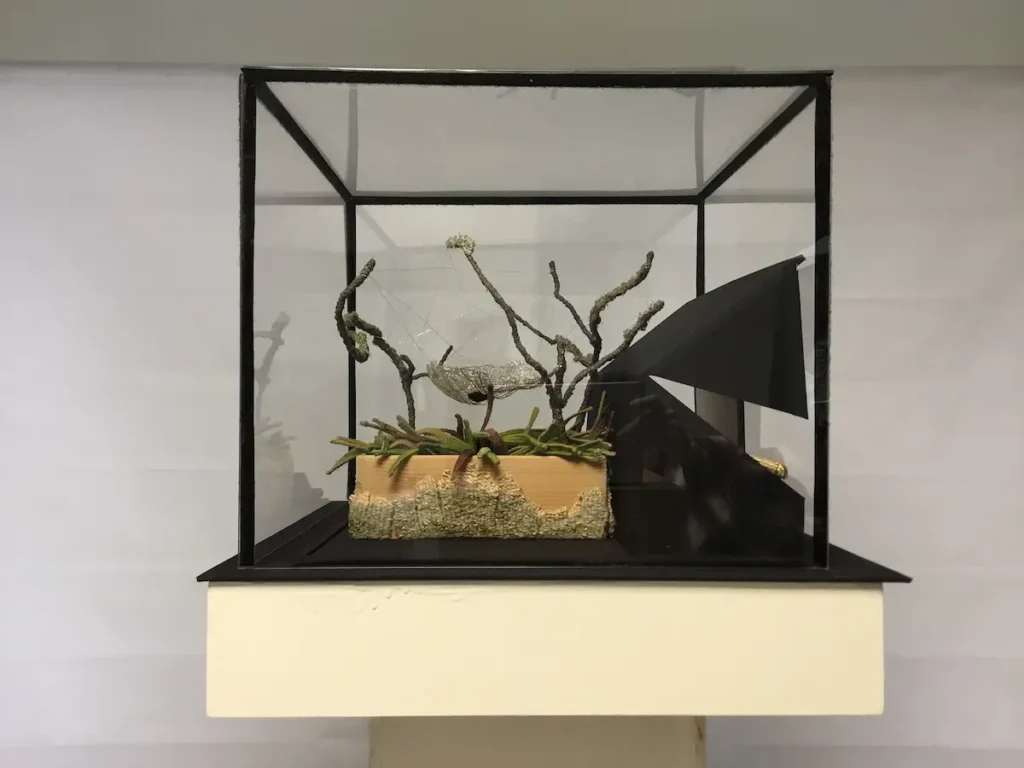
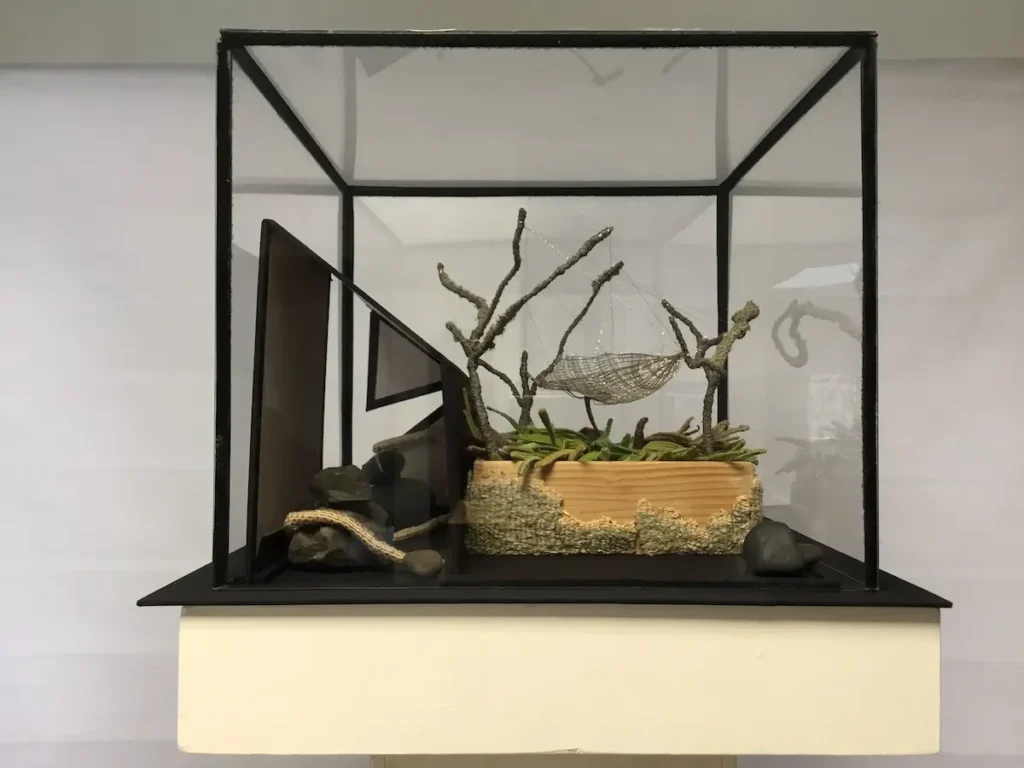
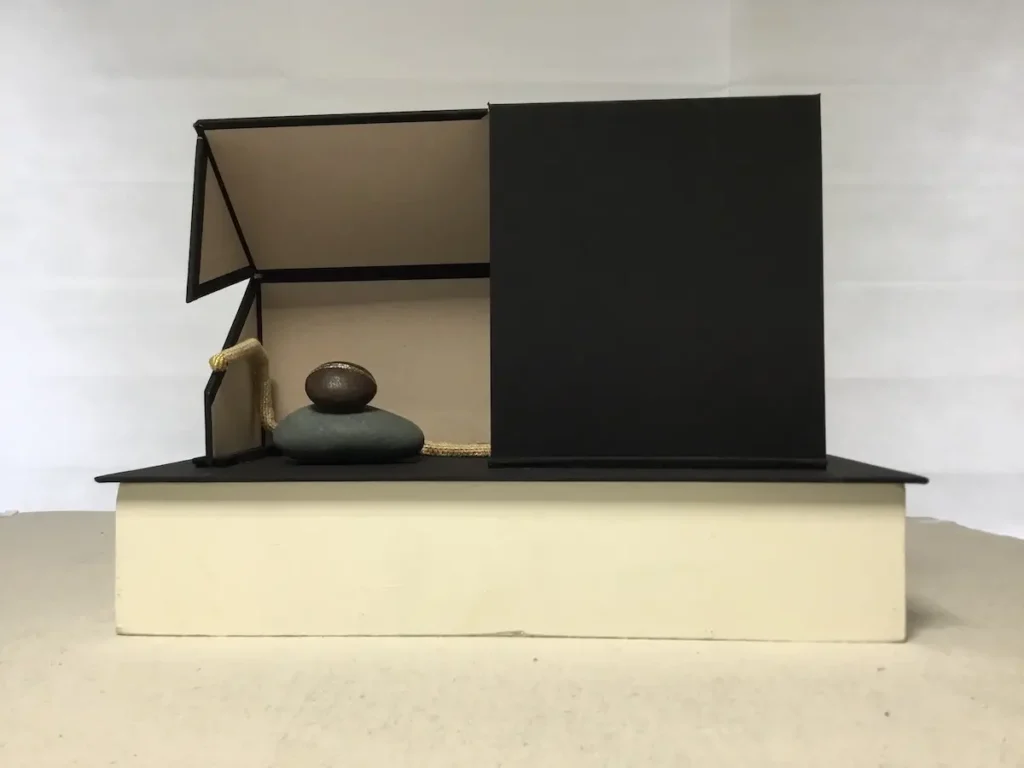
Base 21″ x 21″, Plexiglass box 18″ x 18″ x 16″;
Grasses: tapestry woven multi selvedge cotton warp, silk wrapped stainless steel and nylon, silk, and rami weft. Lichens: tapestry woven multi selvedge rami warp, paper moire, wool, and raffia weft. Spider: tapestry woven silk wraps steel warp, wool weft. Hammock web: woven multi selvedge god metallic thread warp and weft. Snak: tapestry woven line warp, rami, and gold metallic thread. Branches: crocheted linen paper wrapped around galvanized steel wire with crocheted wool moss. Recycled pine box, found rocks, book cloth on book board, velcroed plexiglass box.
Describe your creative space.
I live in a small house that consists of a footprint of under 600 square feet but has several floors.
The basement is for dying yarns and printing, the main floor for the kitchen, living room, and bedroom. The 3rd floor is the studio and is one mostly open space divided into 3 areas: one for weaving, one for drawing, and construction. The other space is storage and another bath.
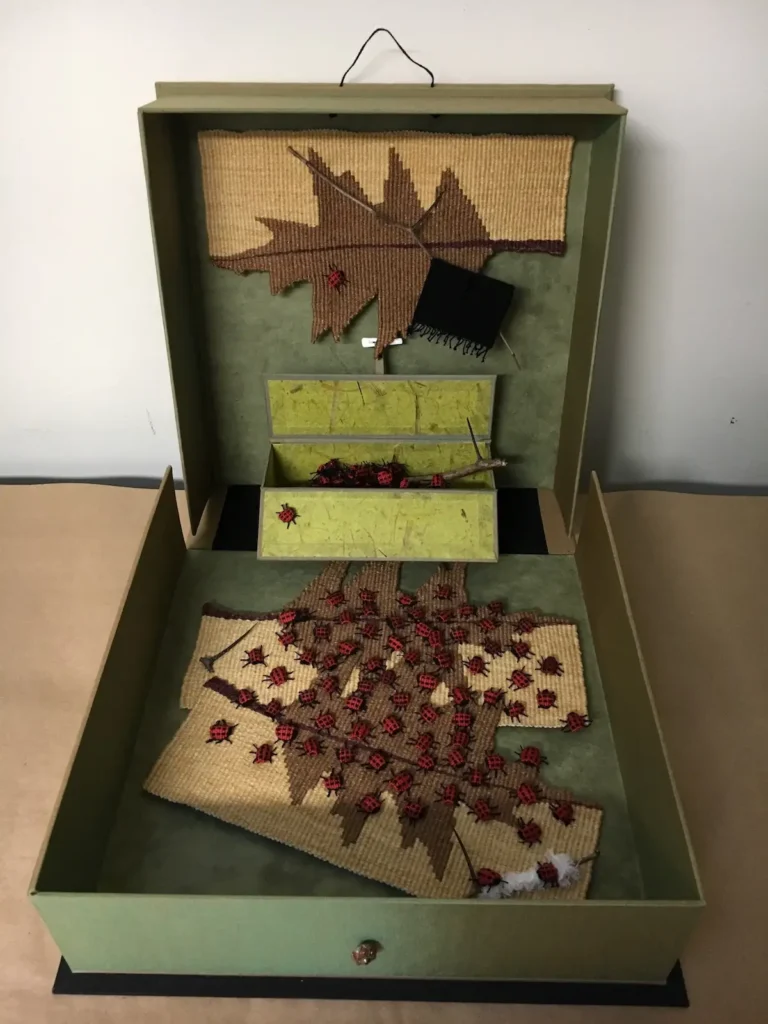
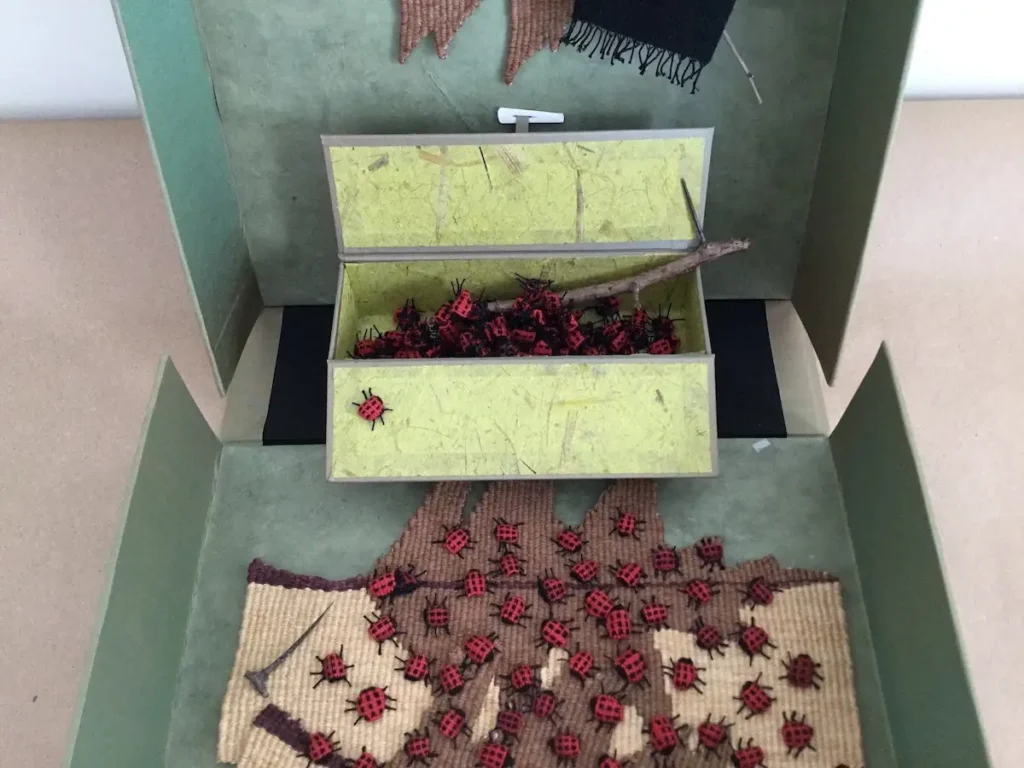
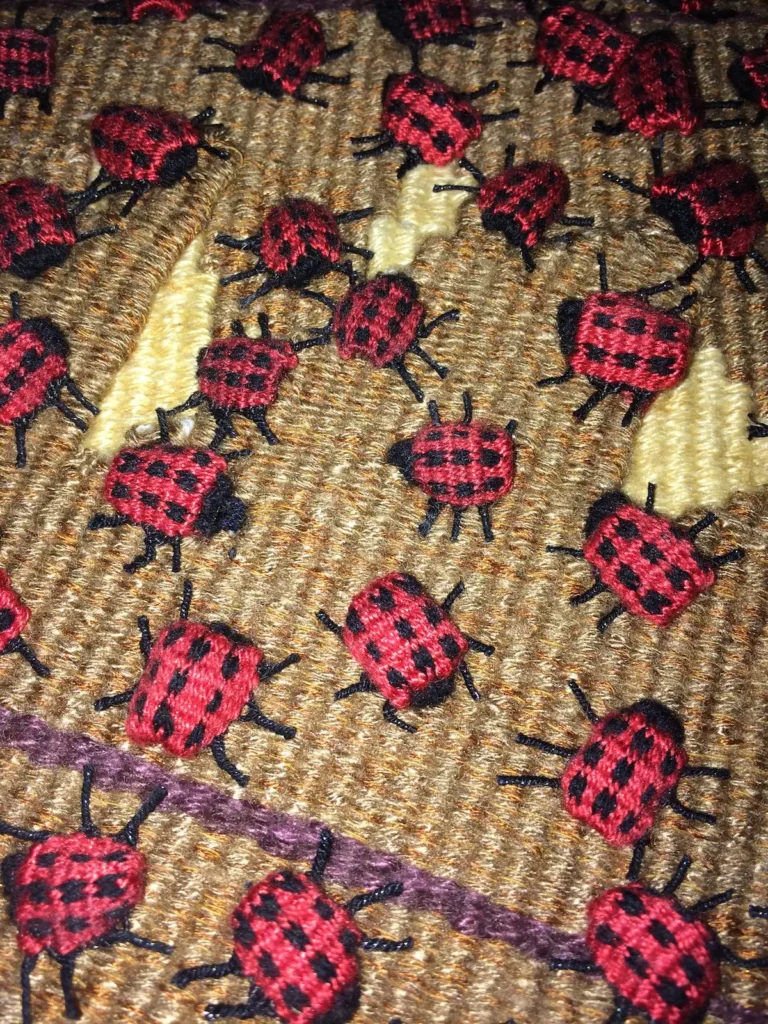
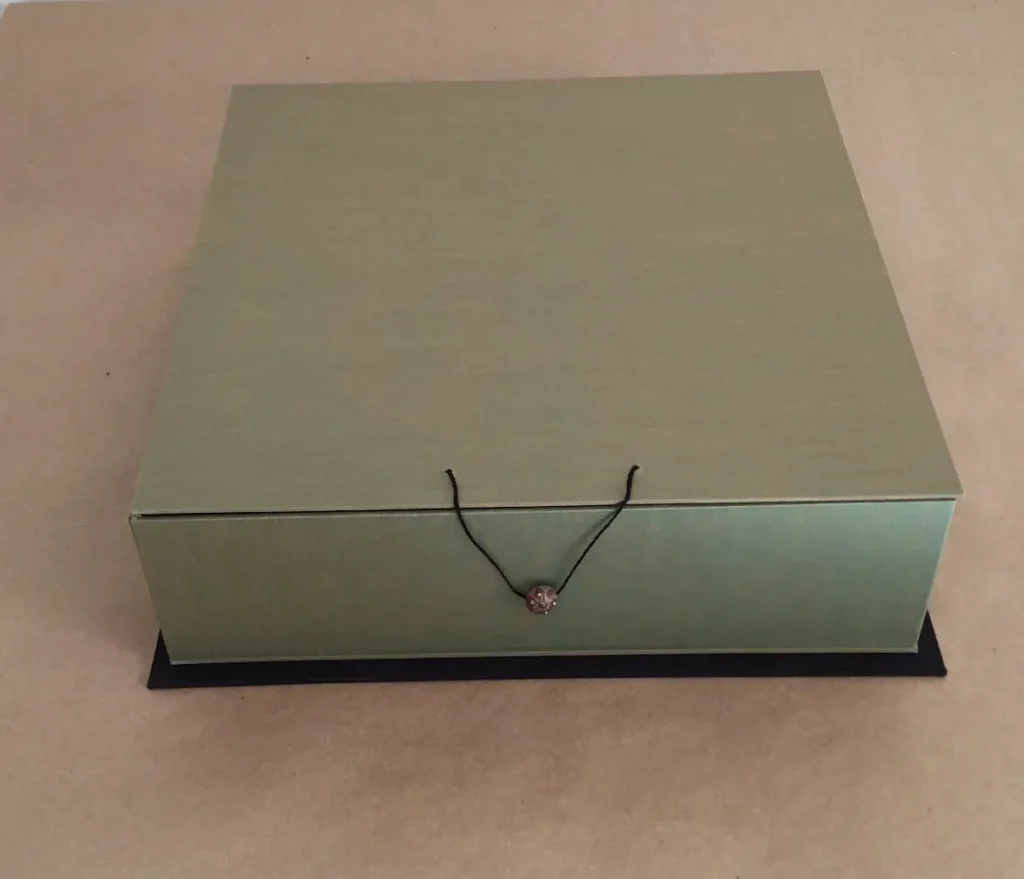
13″ x 13″ x 4″, Opened 13″ x 17″ x 13″;
Silk wrapped stainless steel, wool, silk, linen, rami, alpaca, paper, book board & cloth, button, found thorns
When you start a series, do you begin with a clear plan, or does each piece lead you to the next?
It starts with a curiosity of some discovery and/or happening and then grows from there. Nature is so full of things to wonder about and explore that there are always more than I can keep up with.
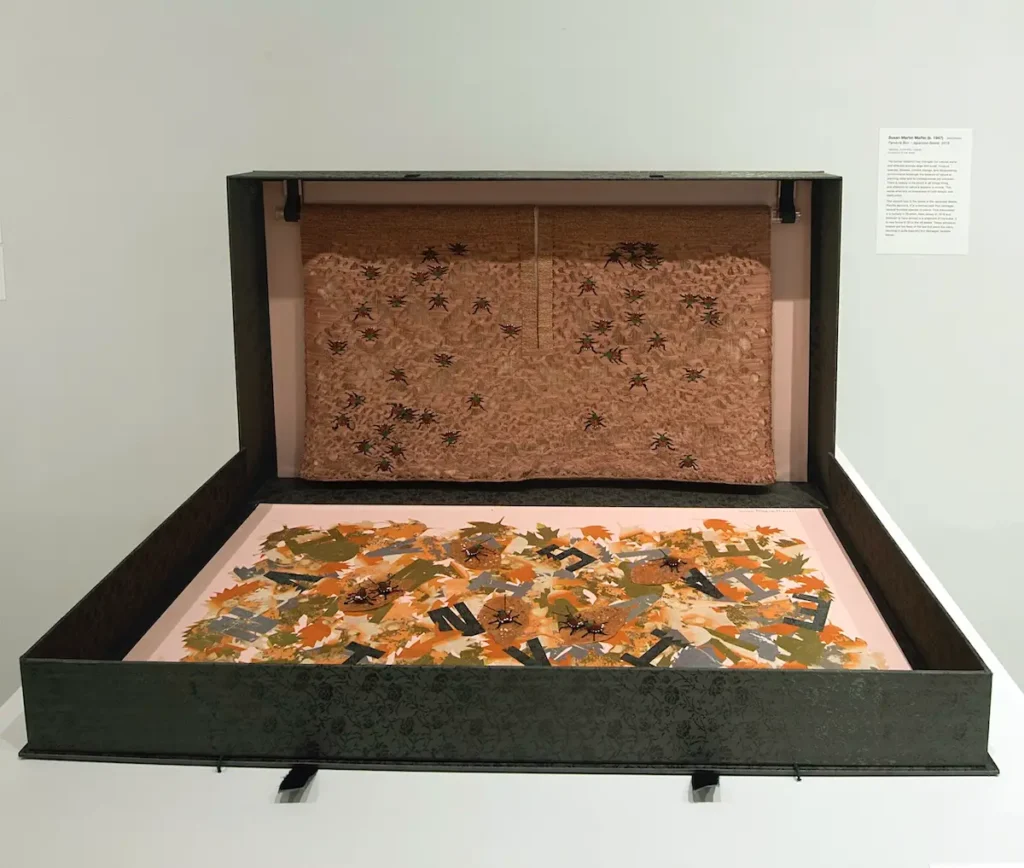
20″ x 34.5″ x 4.5″, Opened 24.5″ x 20″ x 34.5″;
Rami, silk, wool, gold leaf, paper, book board & cloth
How did the Pandora Box series first begin, and how did you know it needed more than one piece?
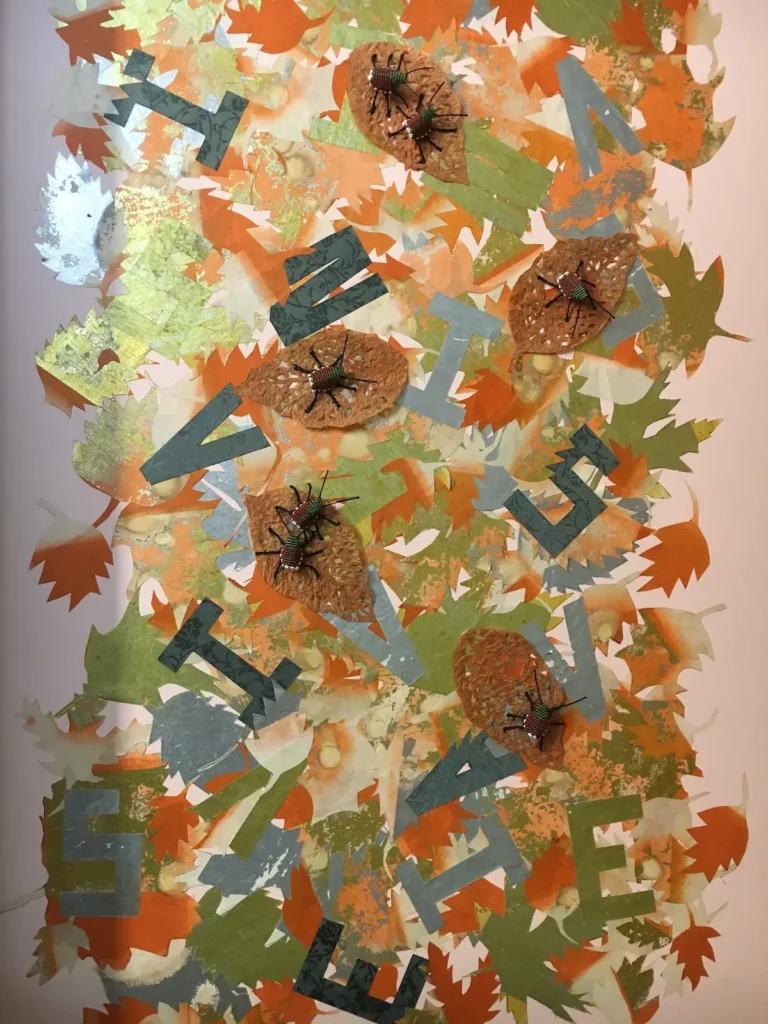
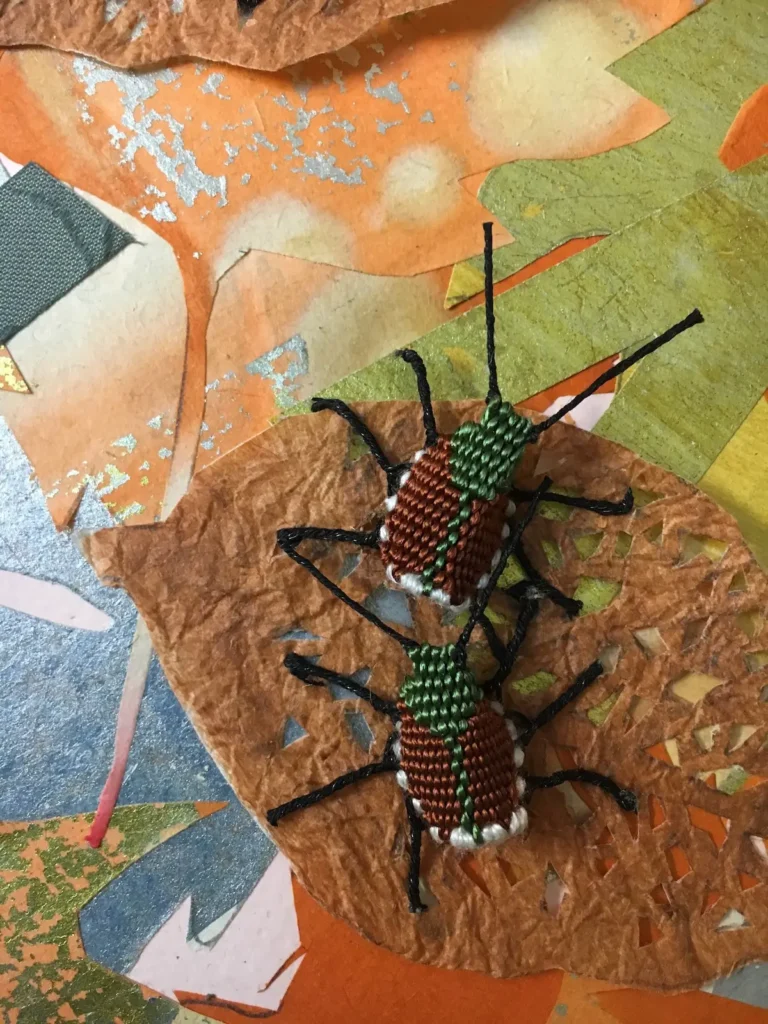
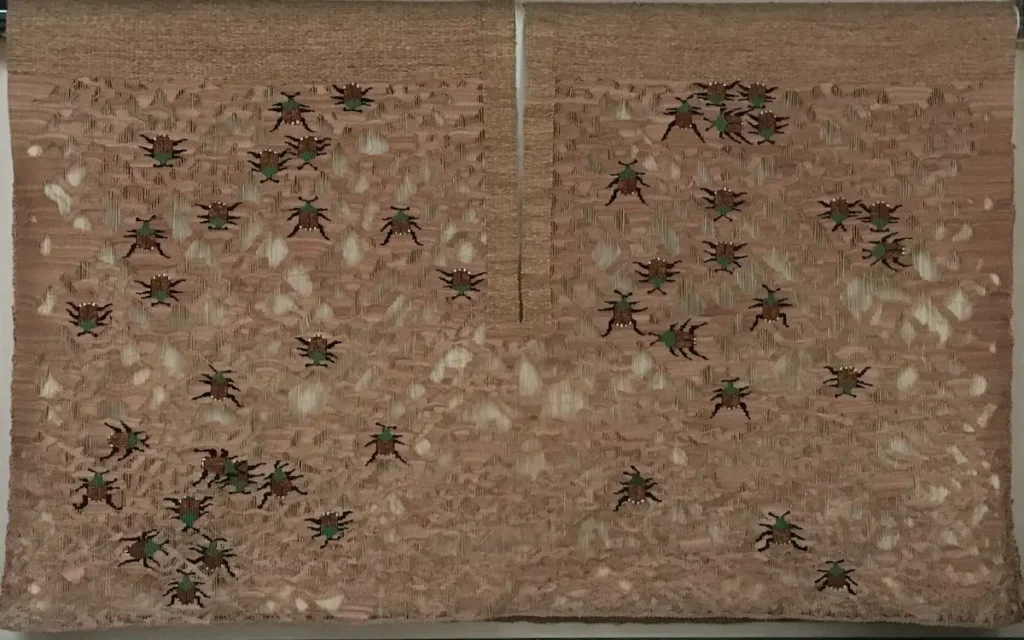
It started with issues in my garden. Beautiful Japanese beetles eating on my veggies. When I investigated, I found that they are an invasive species that started in NJ, which is where I grew up.
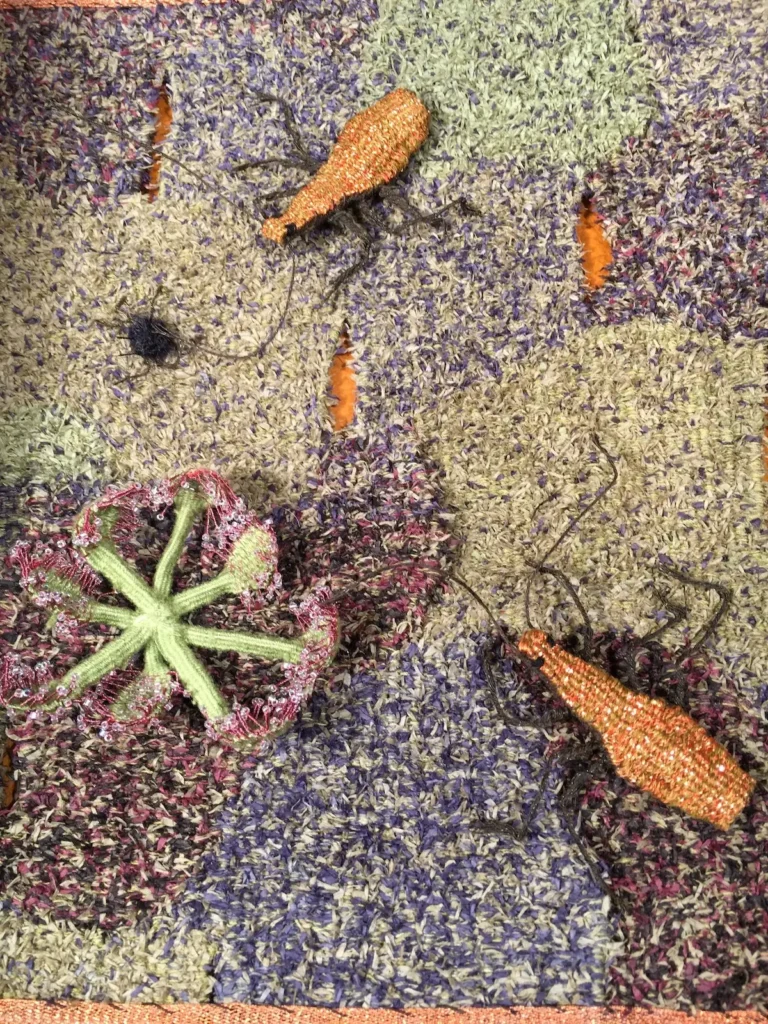
I found that what they did to the leaves of my crop was so beautiful as they were turned to lace because they only ate the flesh, not the veins, and so that was the beginning of finding many other curious animals in my garden and on my hikes.
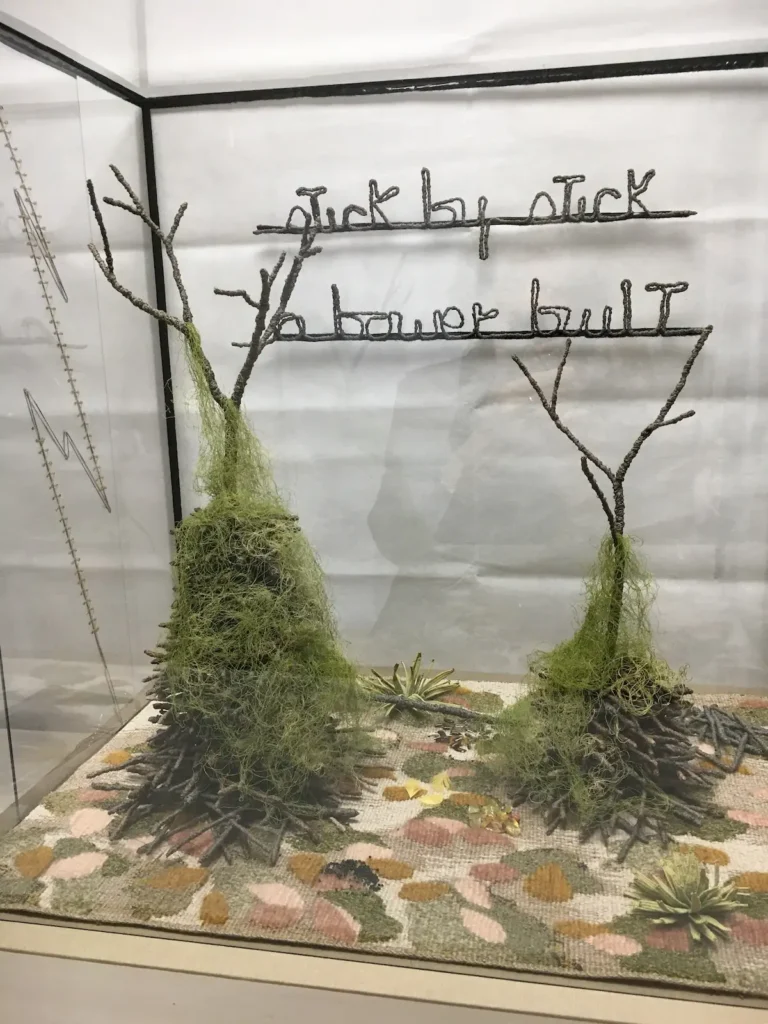
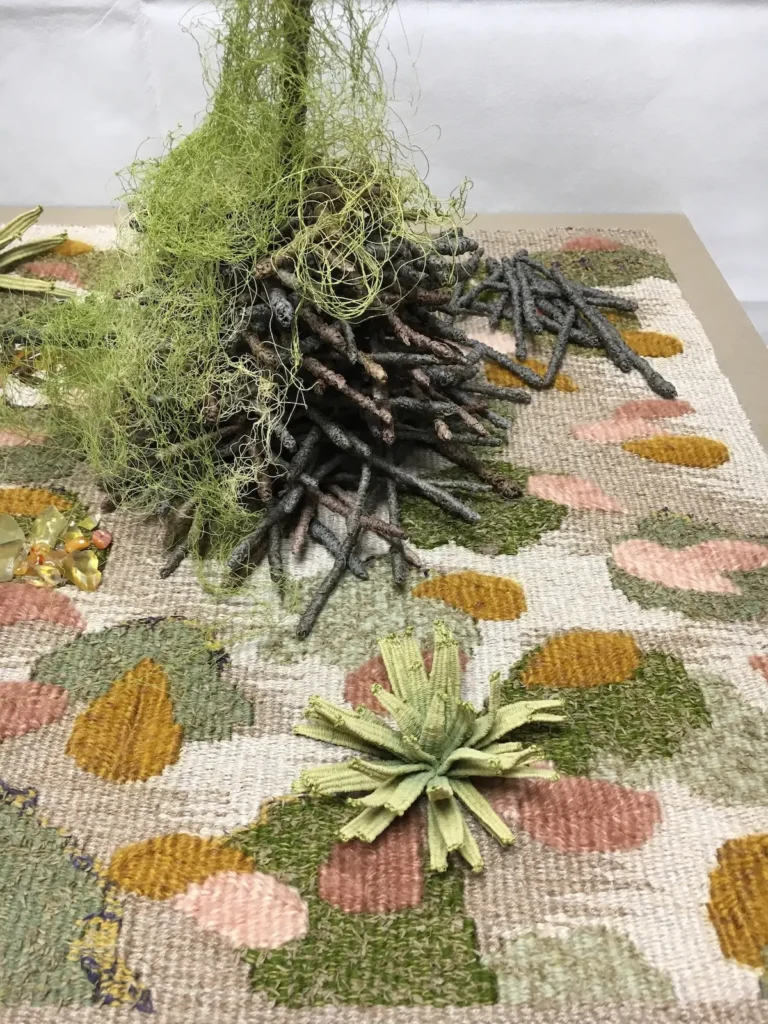
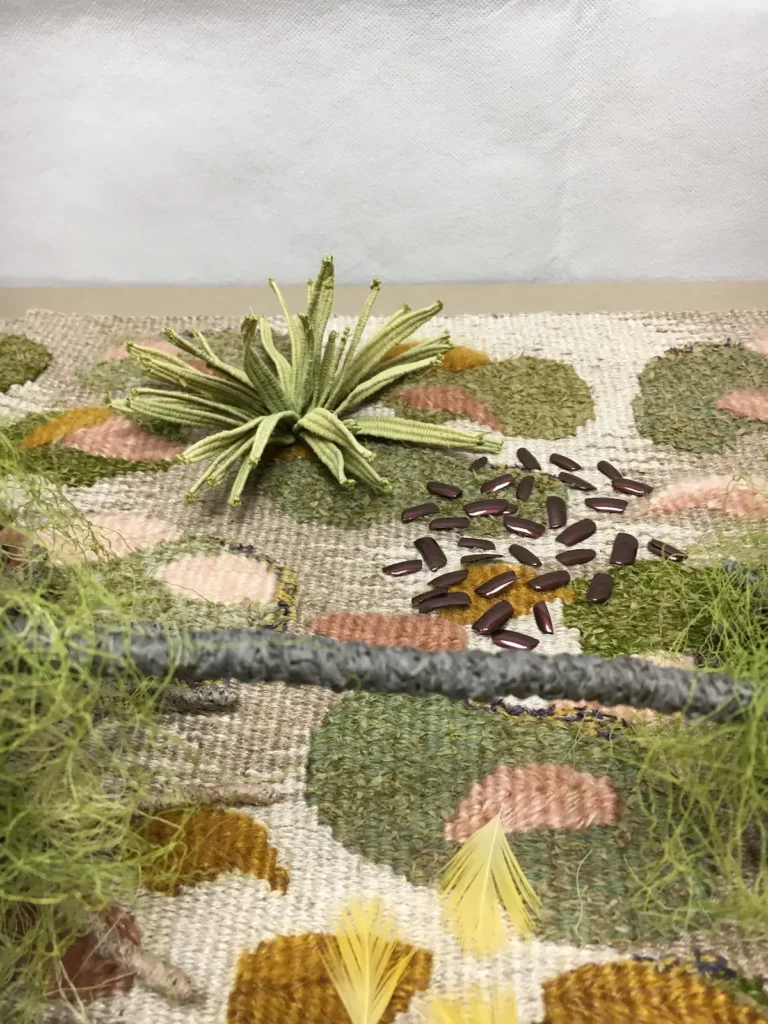
Tapestry woven ground: linen warp, rami, mohair, linen cotton, and linen paper moiré and woof weft. Three-dimensional grasses: silk wrapped stainless steel multi selvedge warp, fine linen paper weft. Bearded lichens: fine linen paper, Beetle wings: fake fingernails, Seeds: black seed beads, Amber: colored glass, Saplings and sticks: crocheted linen paper wrapped around galvanized wire, Velcroed plexiglass box: cracks on sides of gold and black yarn stitched with ochre cotton yarn
You sometimes weave without a cartoon — how does that change the way you weave?
It keeps its fresh and at the same time keeps its tapestry because of the limitations of technique and of inherent features that are particular to the medium.
It is not trying to reproduce some other media reproduced image, but built and sourced using only what is tapestry.
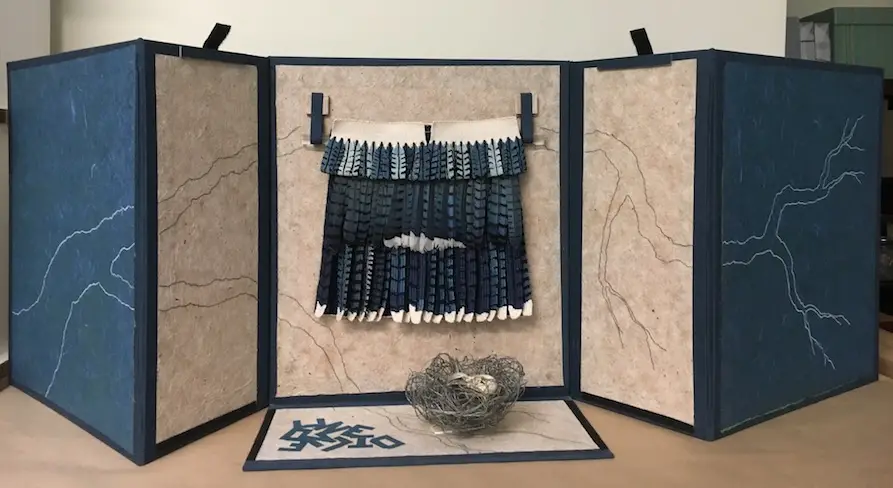
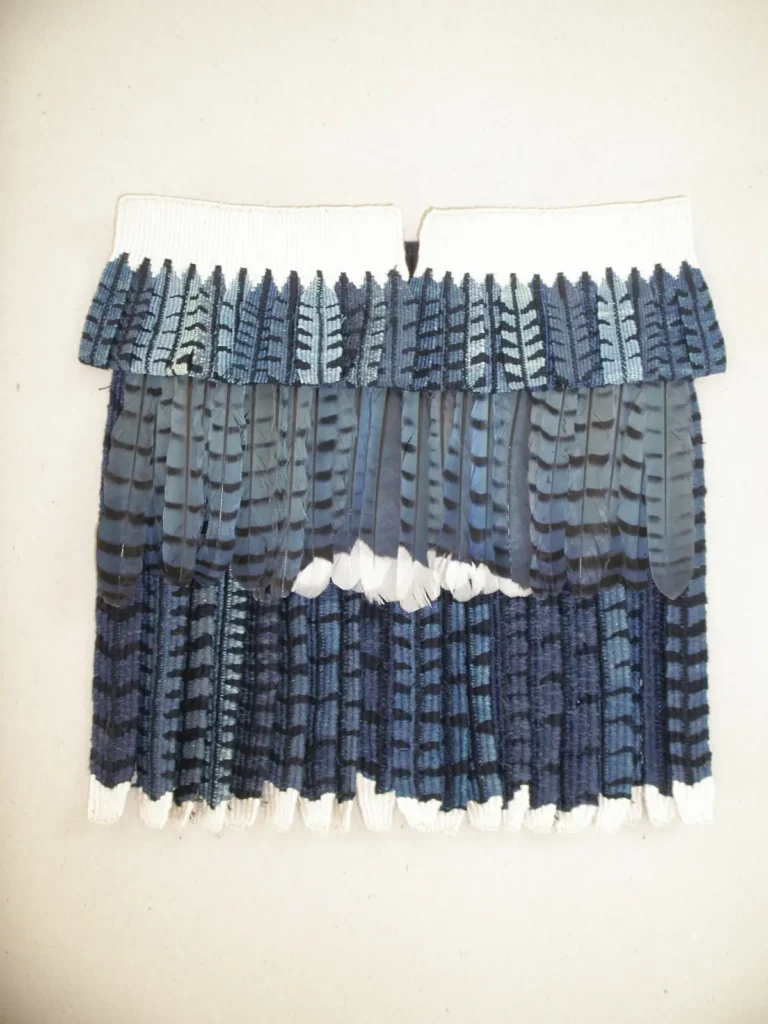
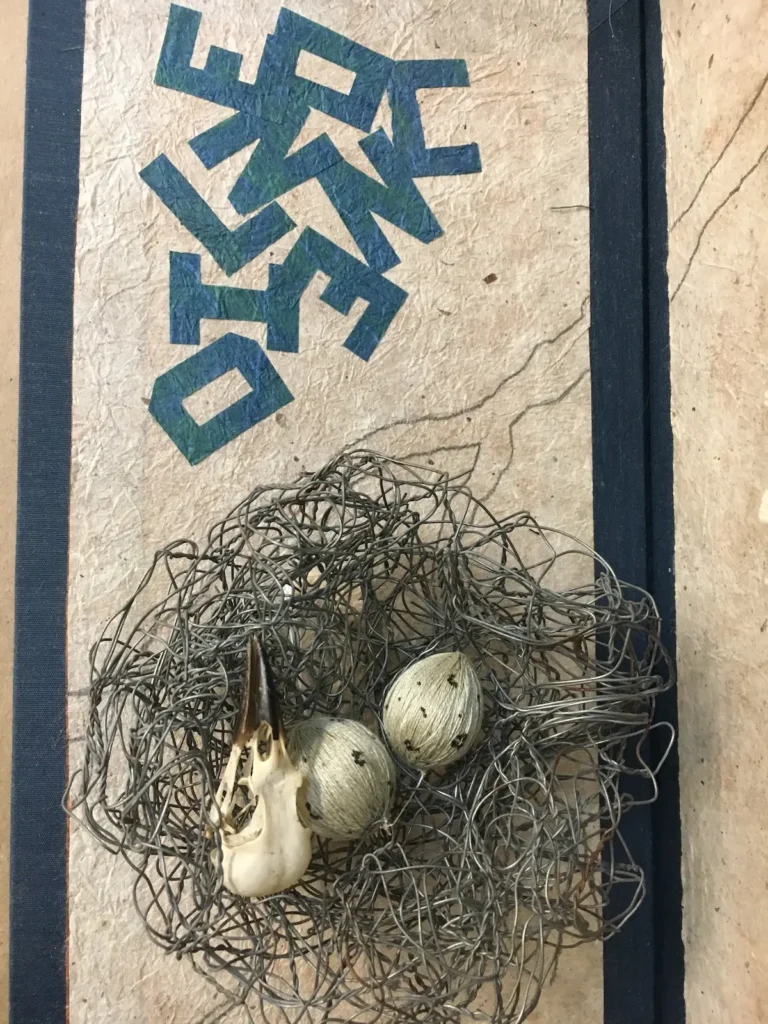
17″ x 15″ x 8″, Opened 17″ x 45″ x 8″;
Wool, silk, found feathers, paper, book board, and cloth, found skull. Wire, pencil, velcro
How do found objects or unexpected elements make their way into your work?
I see it as the best way often to handle the narrative of the story, and it adds another reality to the texture, which is something I hope to put forward in my work as one of those inherent characteristics
When inspiration strikes, what’s the first thing you do?
I chew on it for quite a while, I might fool with sketches of images, look for fibers that say the texture of what I am creating and I always do samples in tapestry.
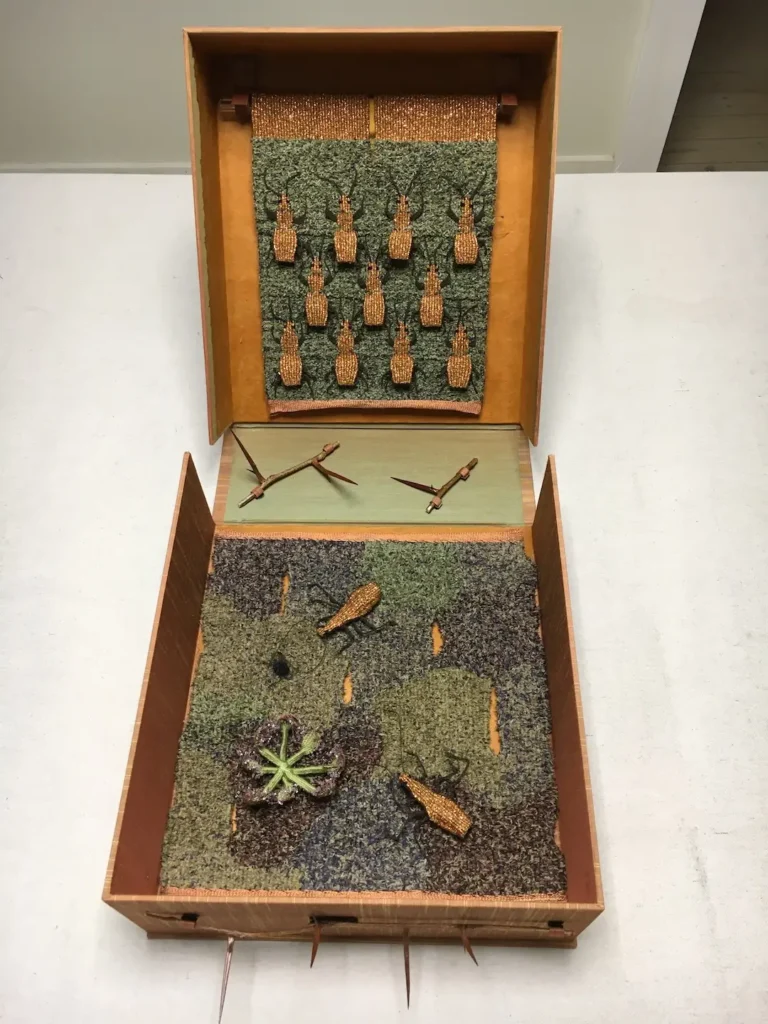
12.5″ x 14″ x 5″, Opened: 12.5″ x 14″ x 19″;
Metallic yarn, paper, paper moire, glass beads, wilk wrapped stainless steel, book board & cloth, button
Has a work ever taken you in a direction you didn’t expect?
Always. It is why perhaps I prefer to work in narratives and without planned cartoons.
How do you balance intuition and technical skill?
I have been weaving long enough now that I know when and how I can stretch things and still have it say tapestry. Samples are the answer.
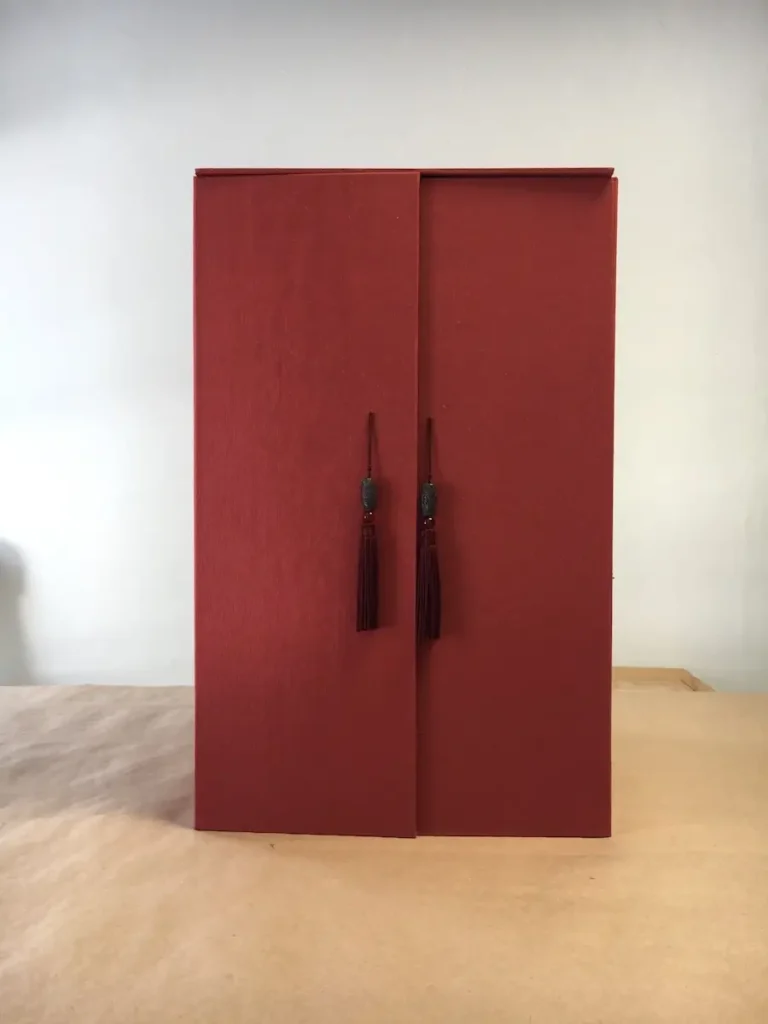
13″ x 13.5″ x 20″, 2019, Opened 34″ x 19″ x 20″;
Alpaca, silk wrapped stainless steel, linen, cotton, shredded paper, found skull, book board & cloth
What part of the creative process feels hardest?
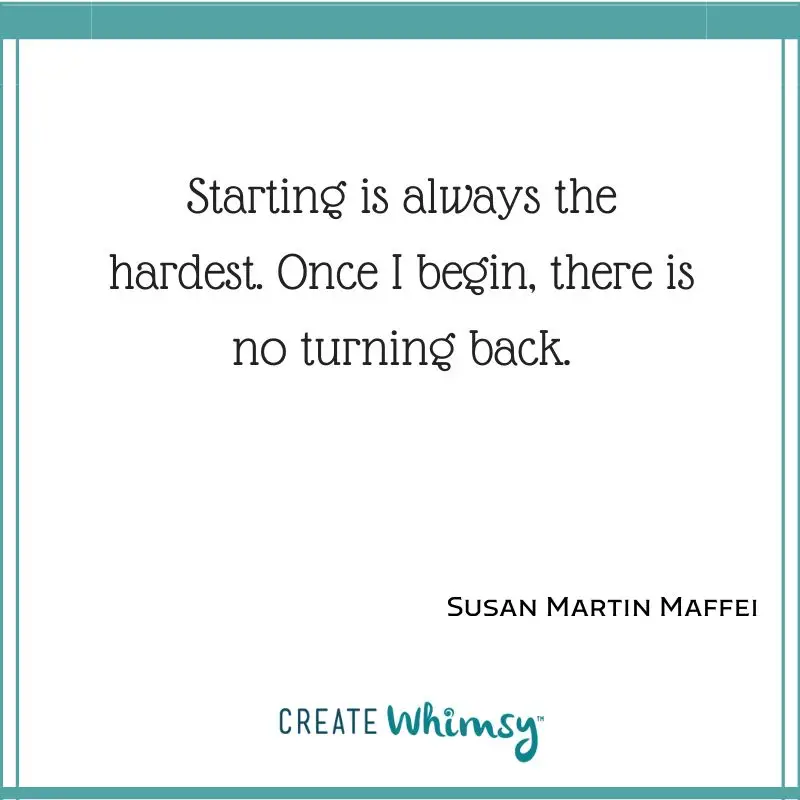
Starting is always the hardest. Once I begin, there is no turning back.
How do you know when a piece is “done”?
It is not when it comes off the loom or even when the presentation is set. It is usually after I have not looked at it in a while that I can determine if it is actually done or if there is still something missing.
There might be something I can add, or it can just go into the unsuccessful shoe box that I keep for work I am not happy with, and look at again at a much later point to see what failed.
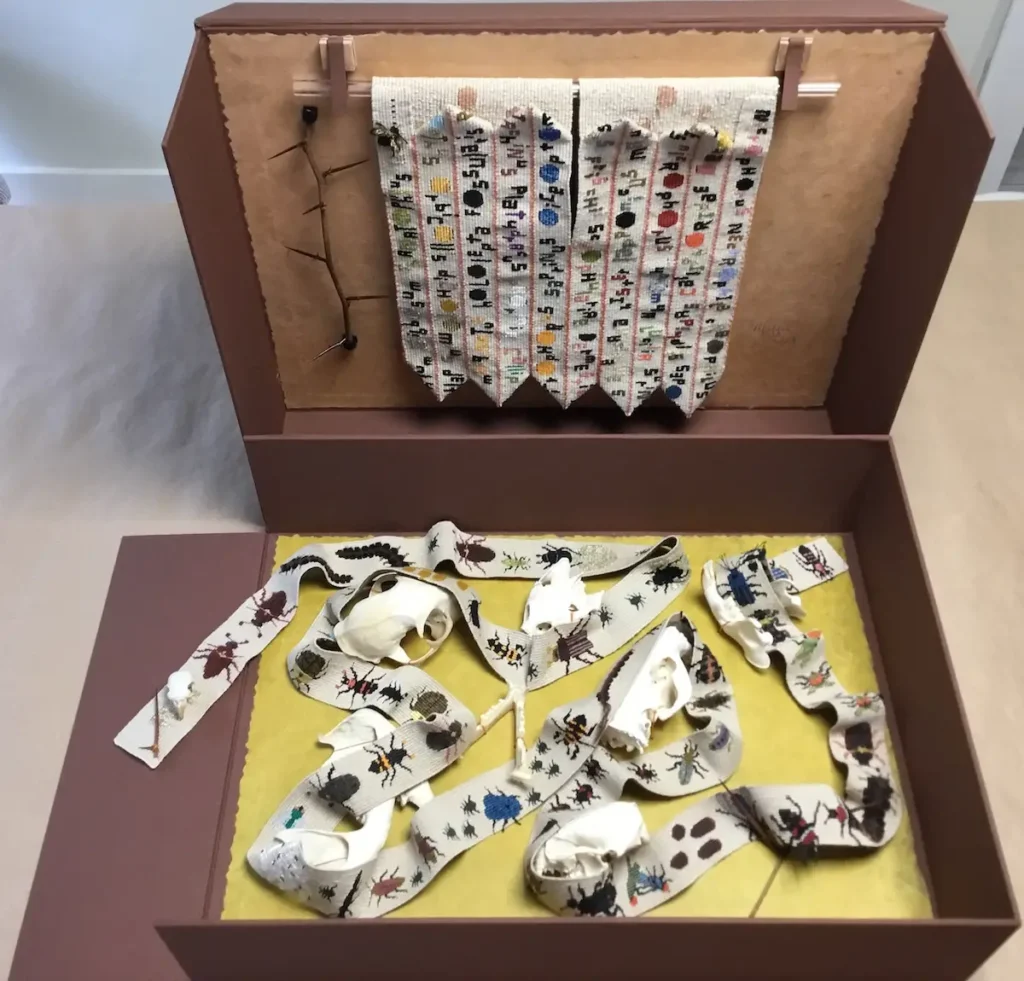
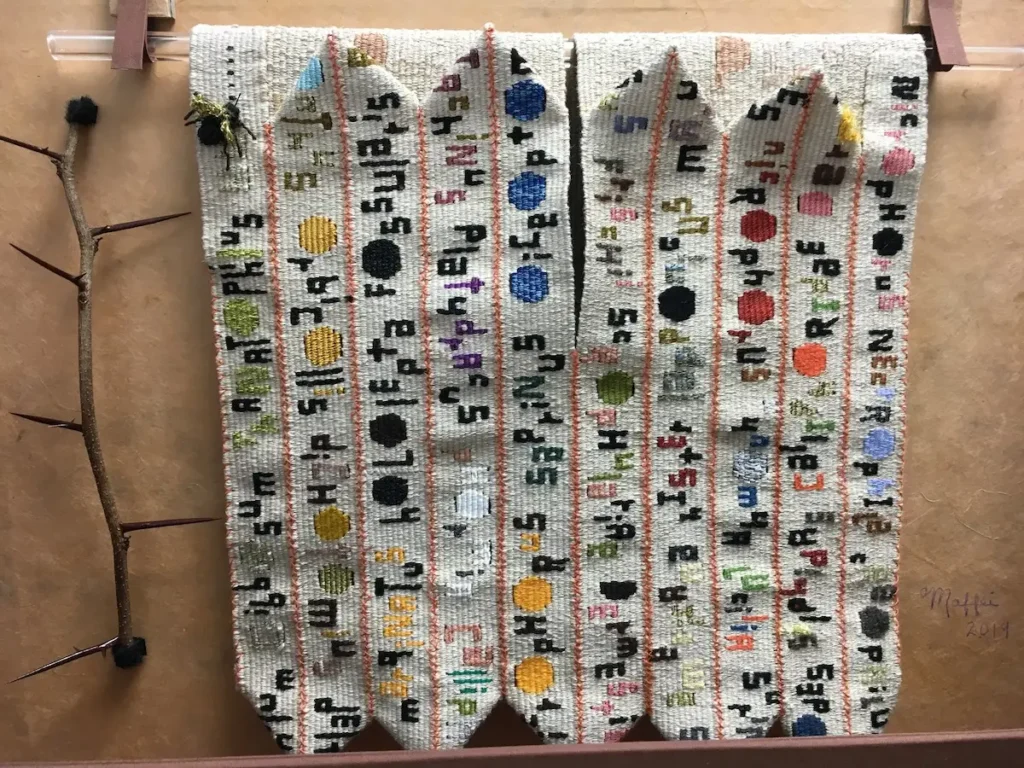
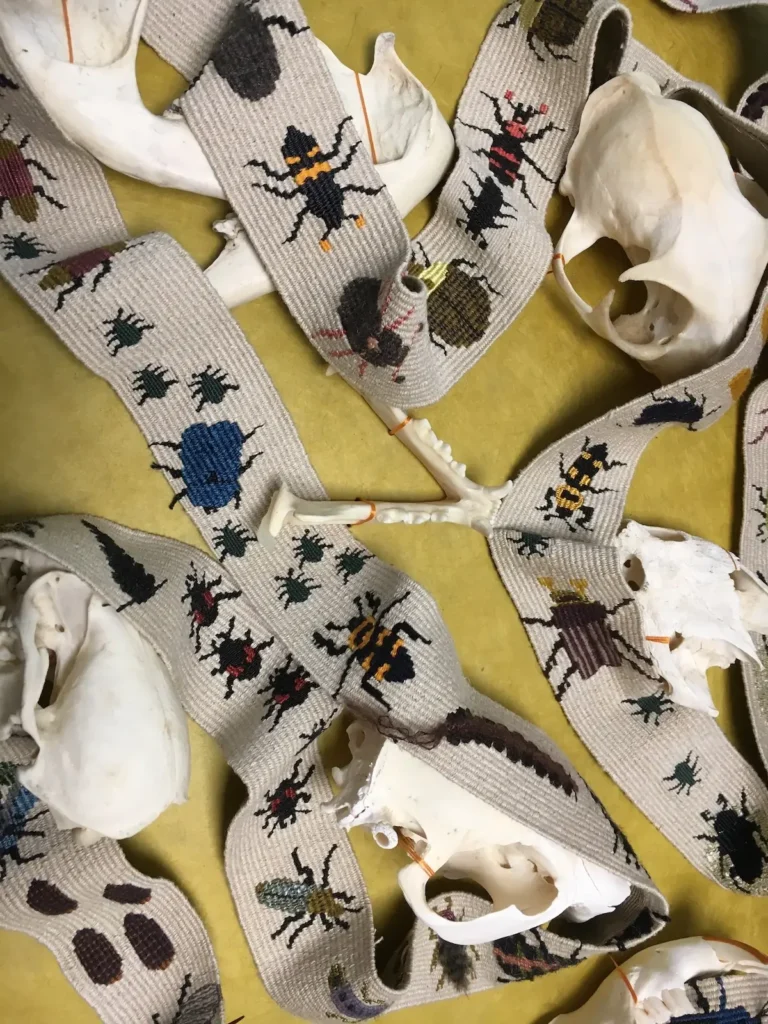
24″ x 18.25″ x 6.5″, Opened: 30.25″ x 18.25″ x 24.75″,
Cotton, linen, silk, wool, book board & cloth, found thorns and skulls
What challenges have defined your journey as an artist?
Probably the changing stability of the art or craft world. Finding venues, now always at a price. Having to order fibers online and not being able to handle them before for texture and color saturation. The inability of the digital images to pass on the important textures and feel of fiber art. To mention a few.
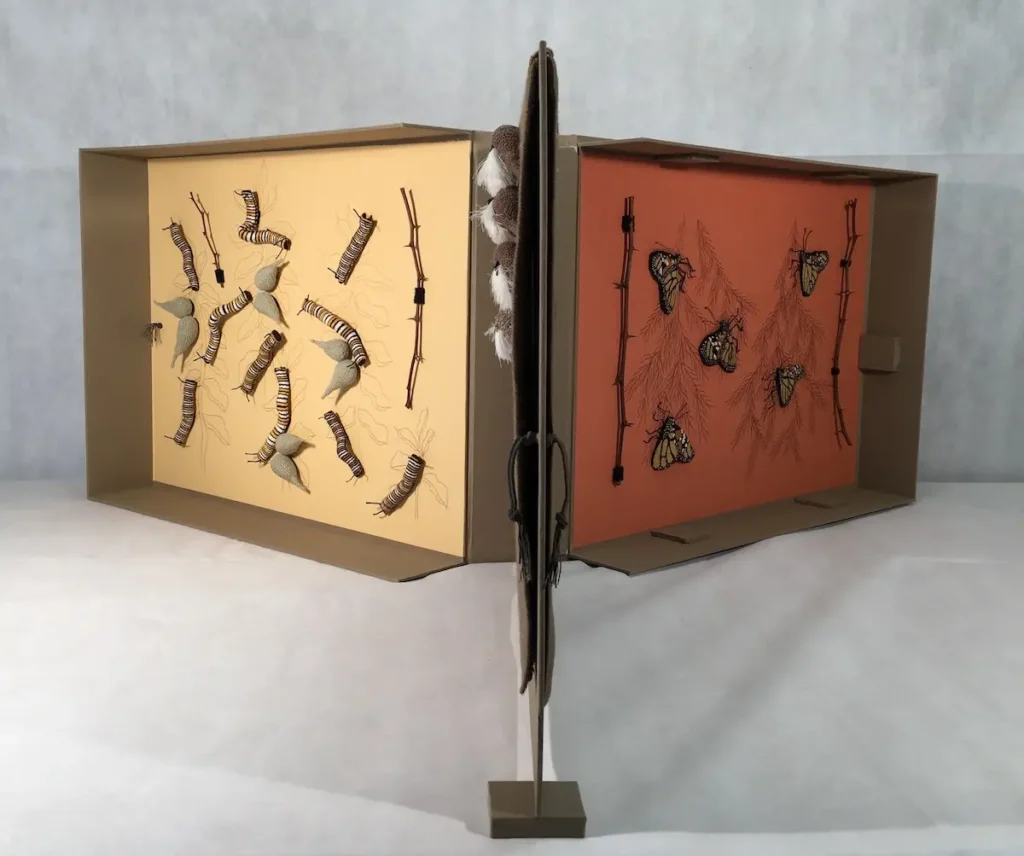
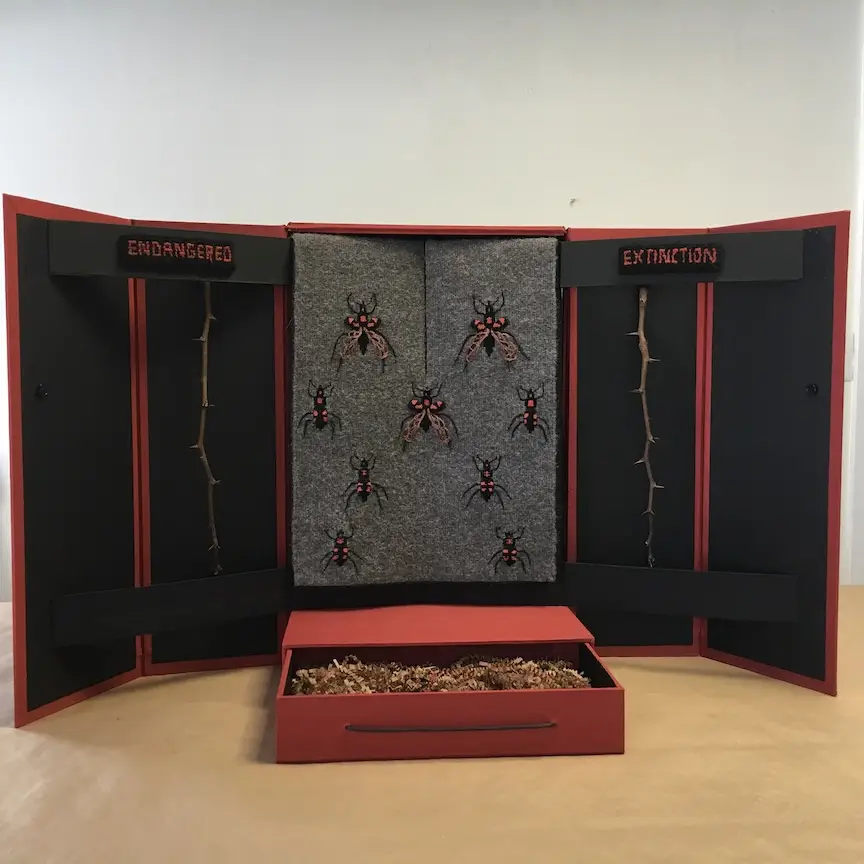
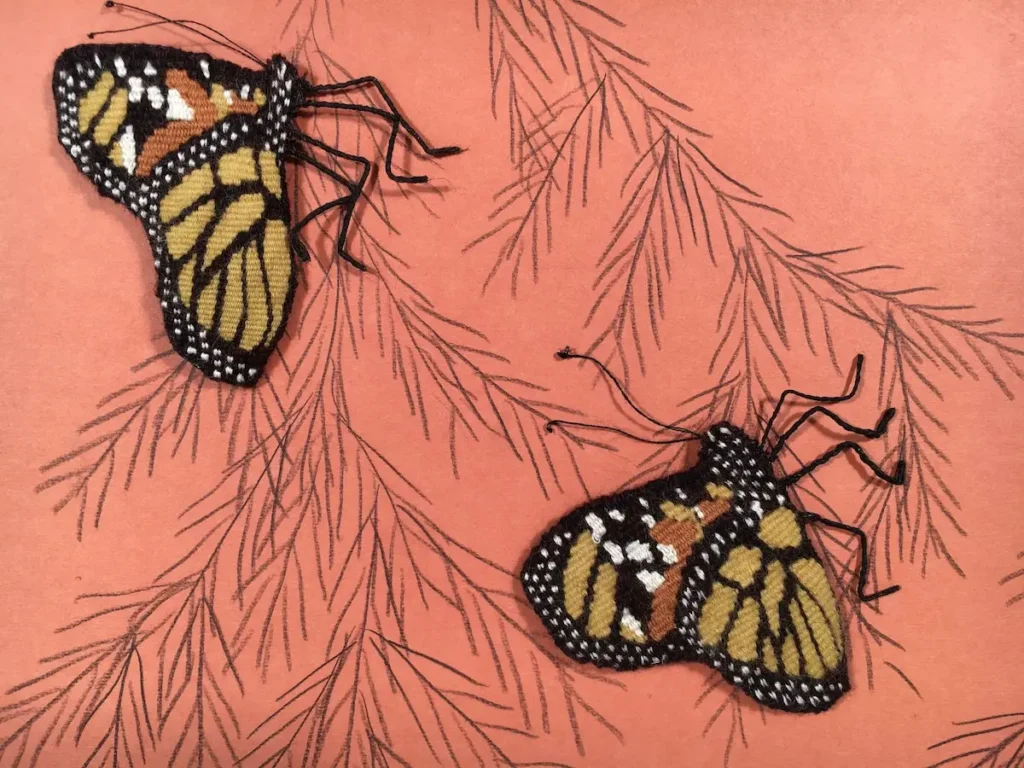
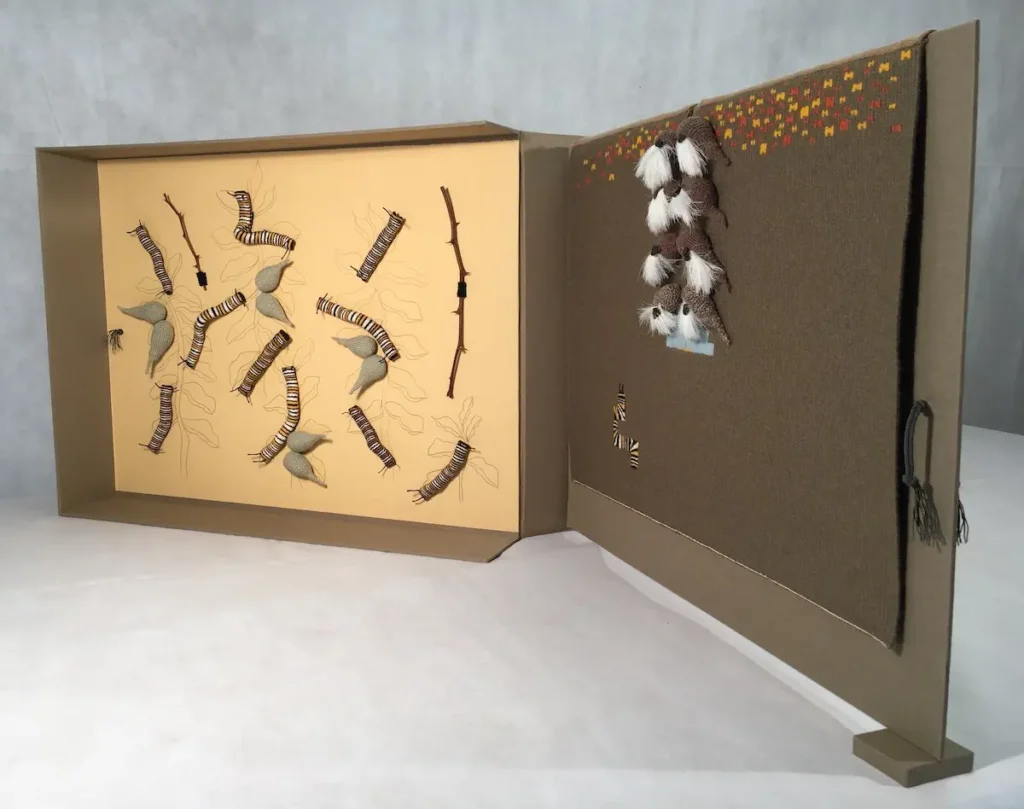
27.5″ x 21″ x 5″, Open flat: 60″ x 5″, Open 3 units: 60″ x 26″,
Cotton silk, wool, linen, silk wrapped stainless steel, book board & cloth, paper, found thorns, pencil, velcro
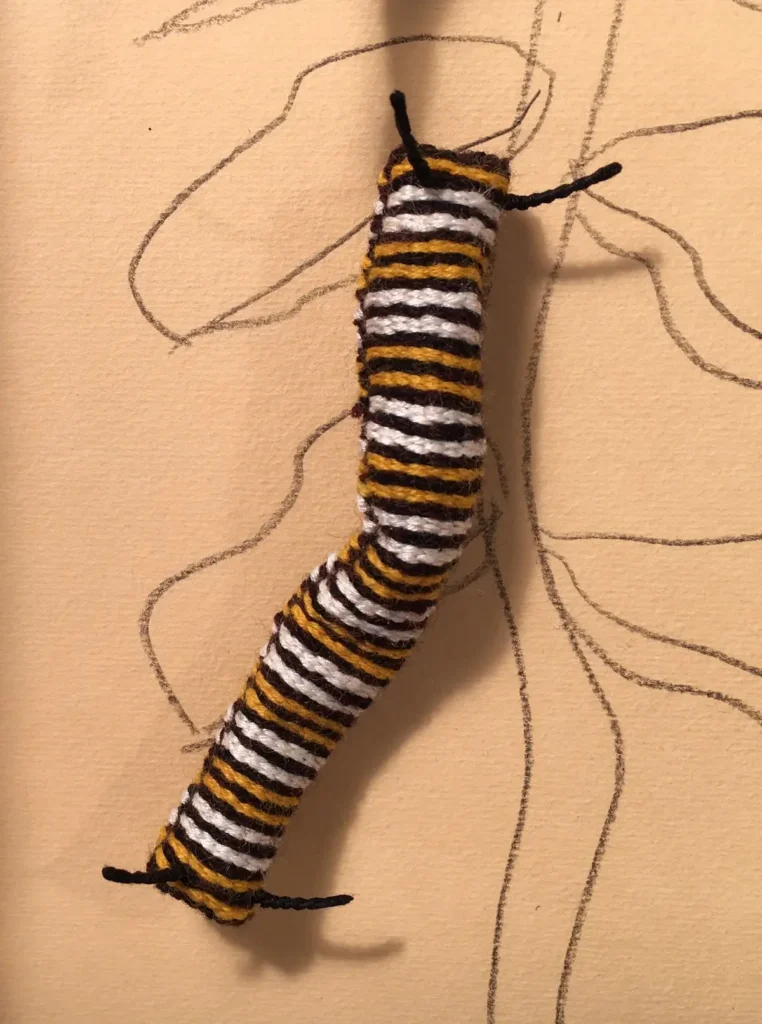
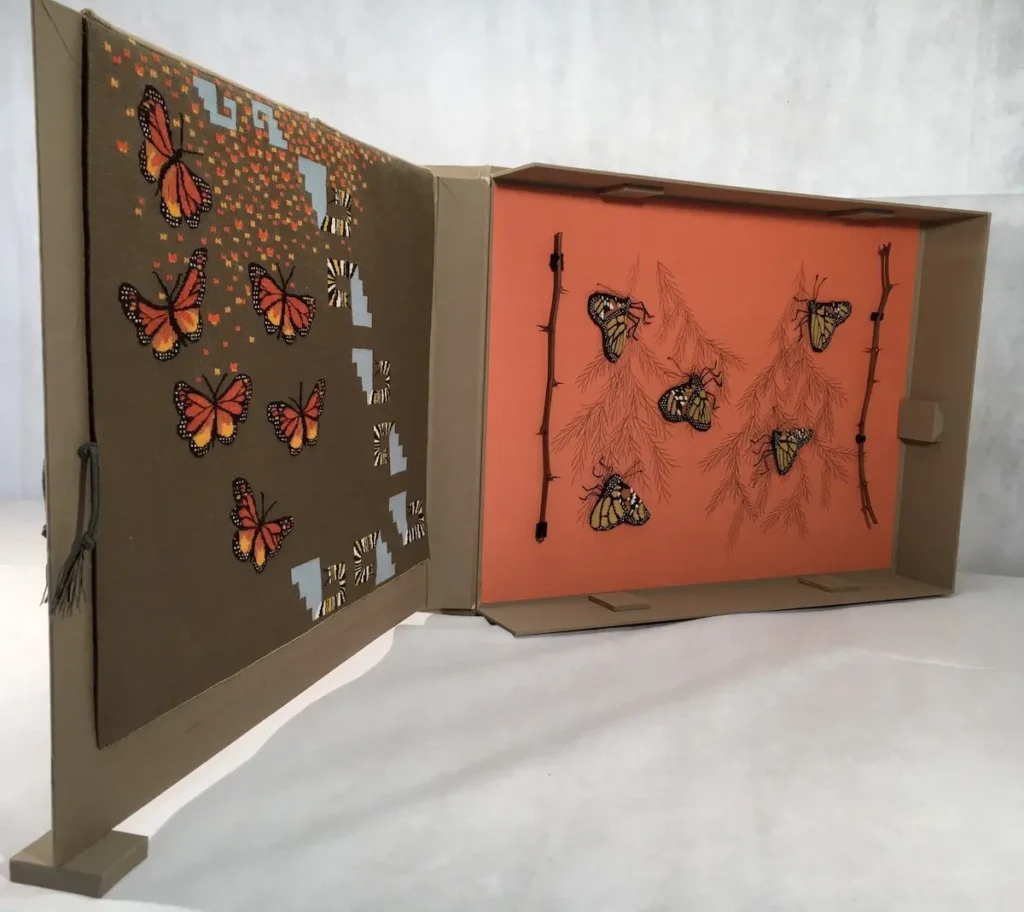
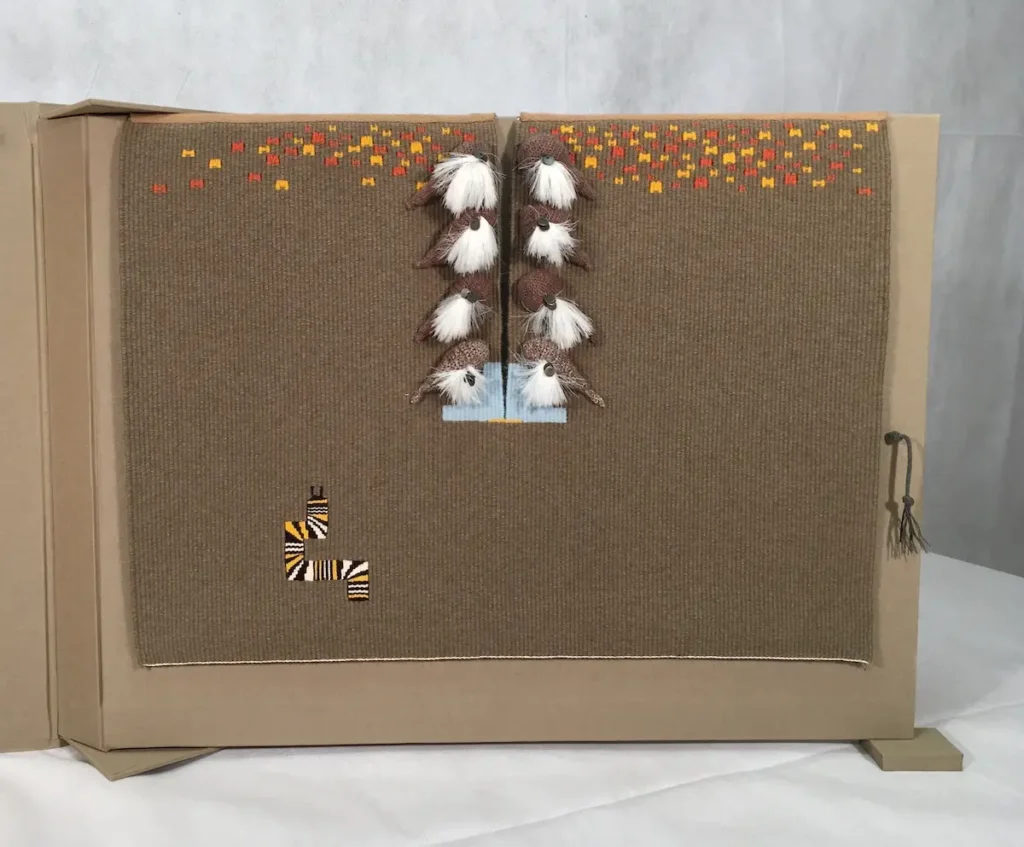
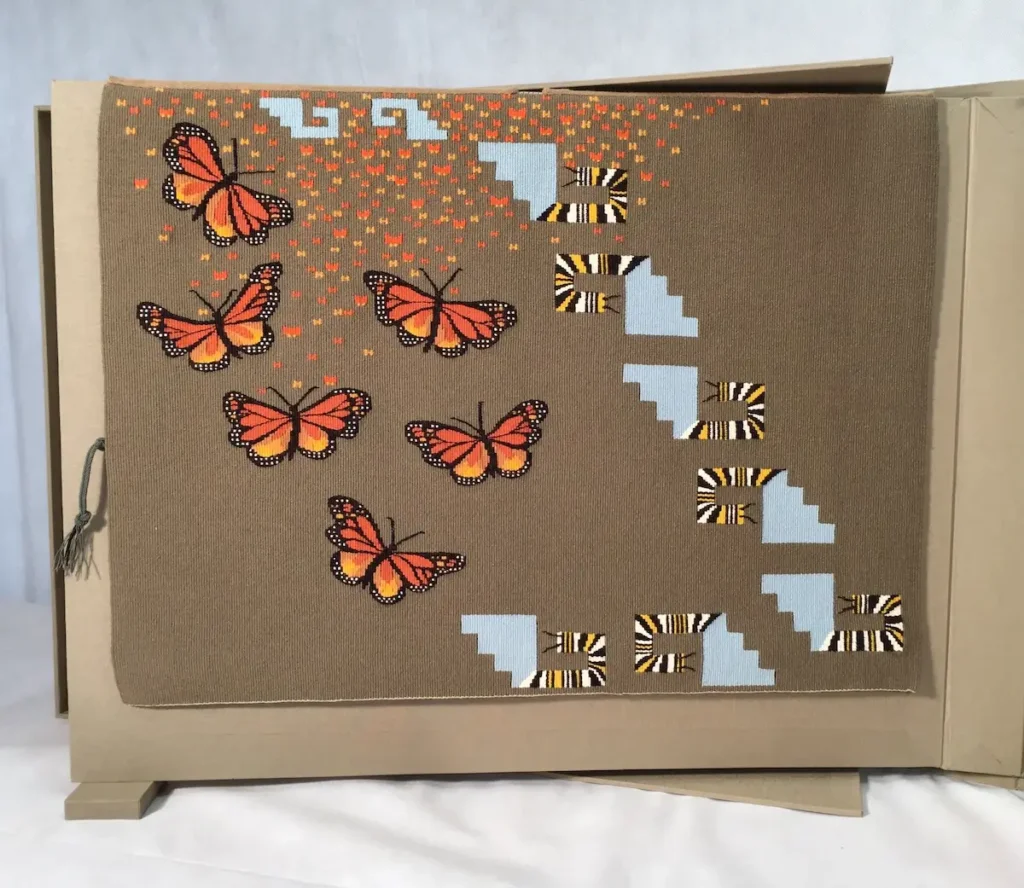
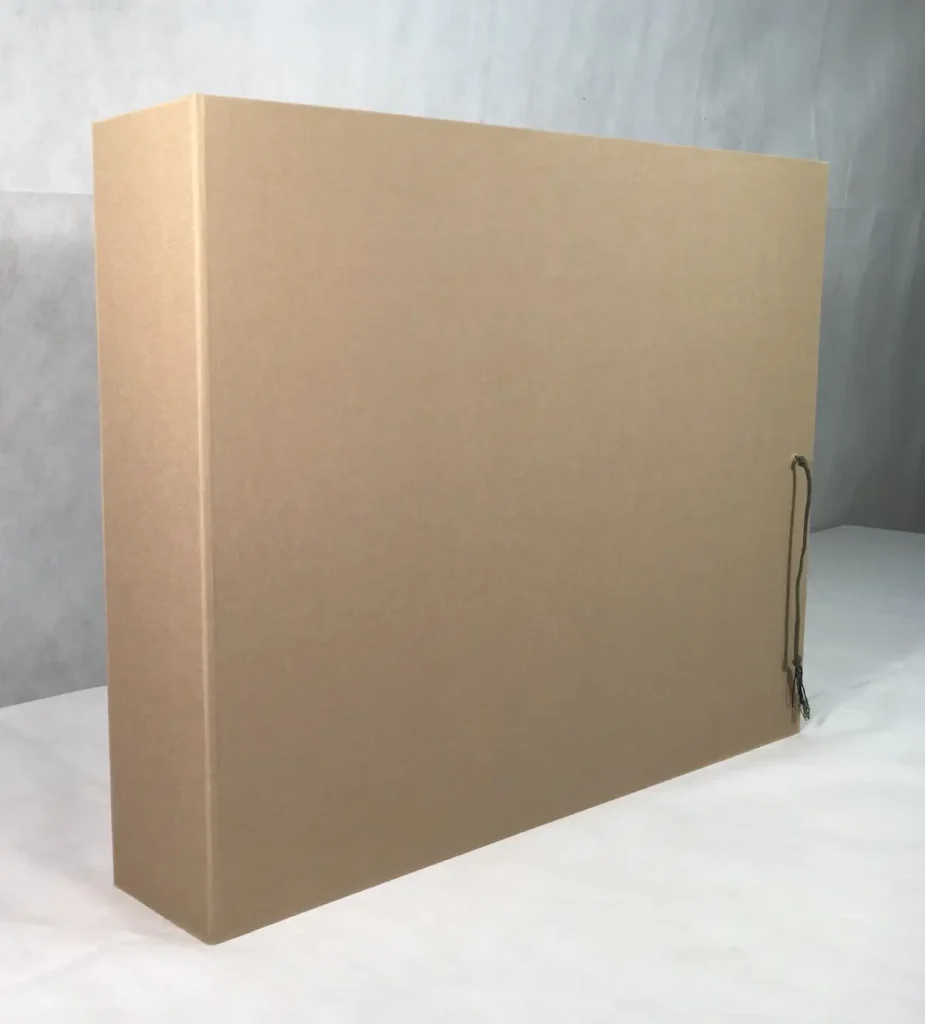
How do you keep going when something takes a long time to complete?
Tapestry has always been slow, and so time cannot really be considered if you choose this medium. Otherwise, you should probably take up another art. form
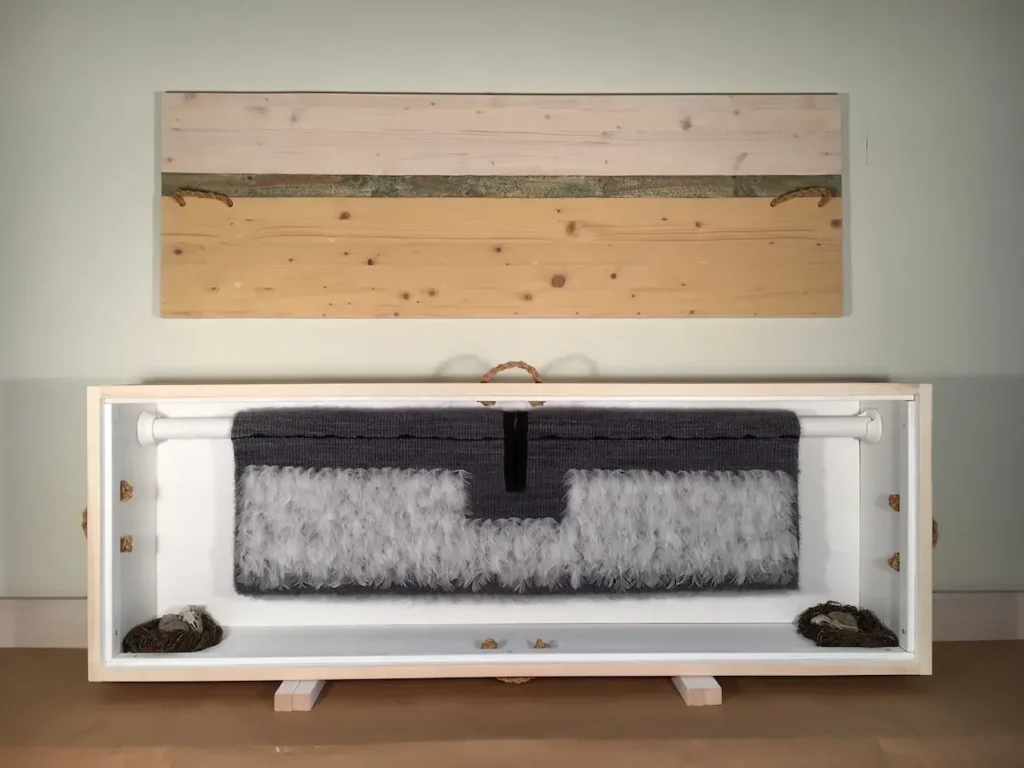
17″ x 49.5″ x 9″, Lid only: 15.5″ x 48″;
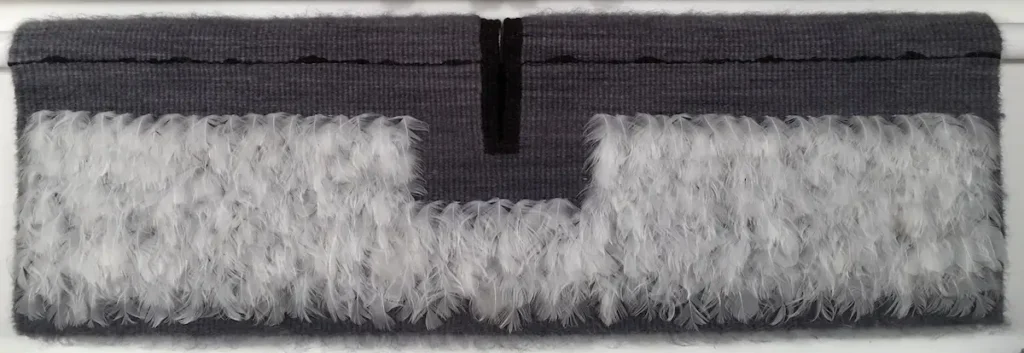
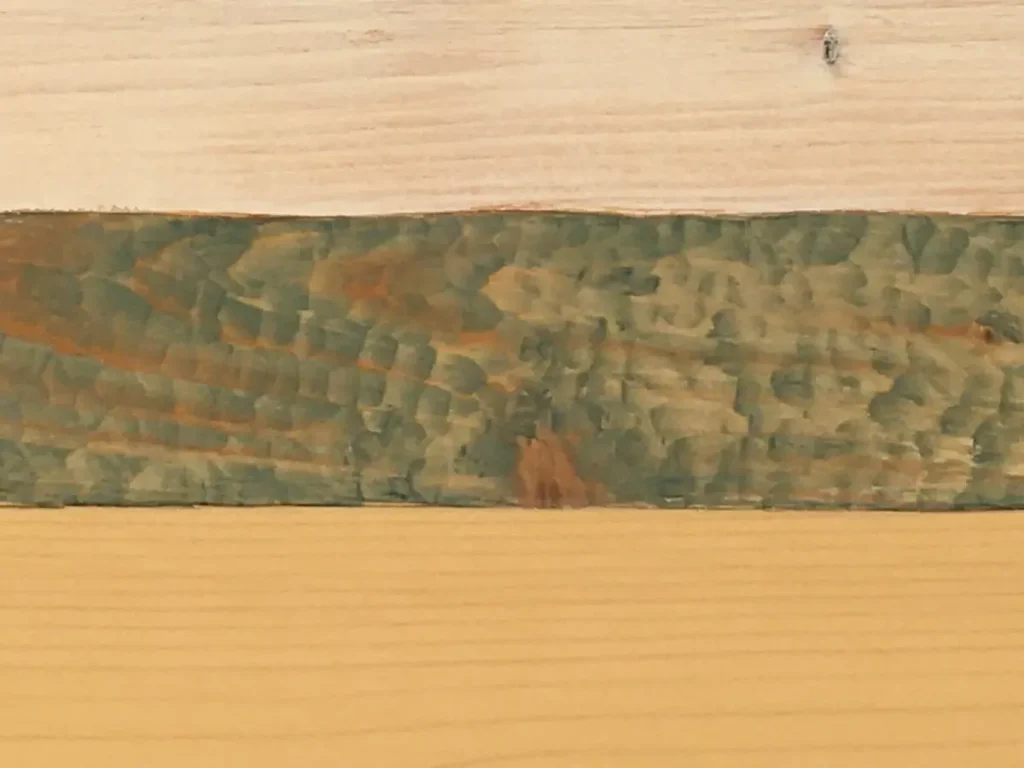
Kid mohair, found feathers, silk and cocoons, found skulls, wood planks, hemp, stained and carved.
What advice would you give young artists just starting out?
Start small and work up. Practice and look at others’ work if possible. Take as many classes as you can. There is no one way to weave tapestry, and so learn all the possibilities.
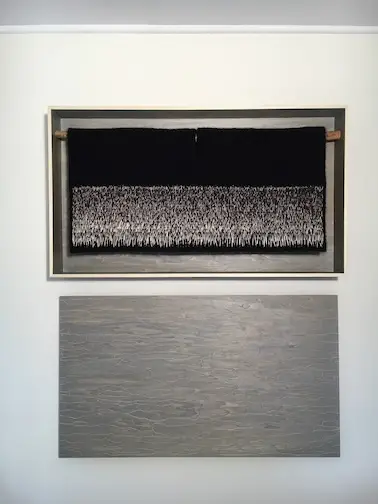
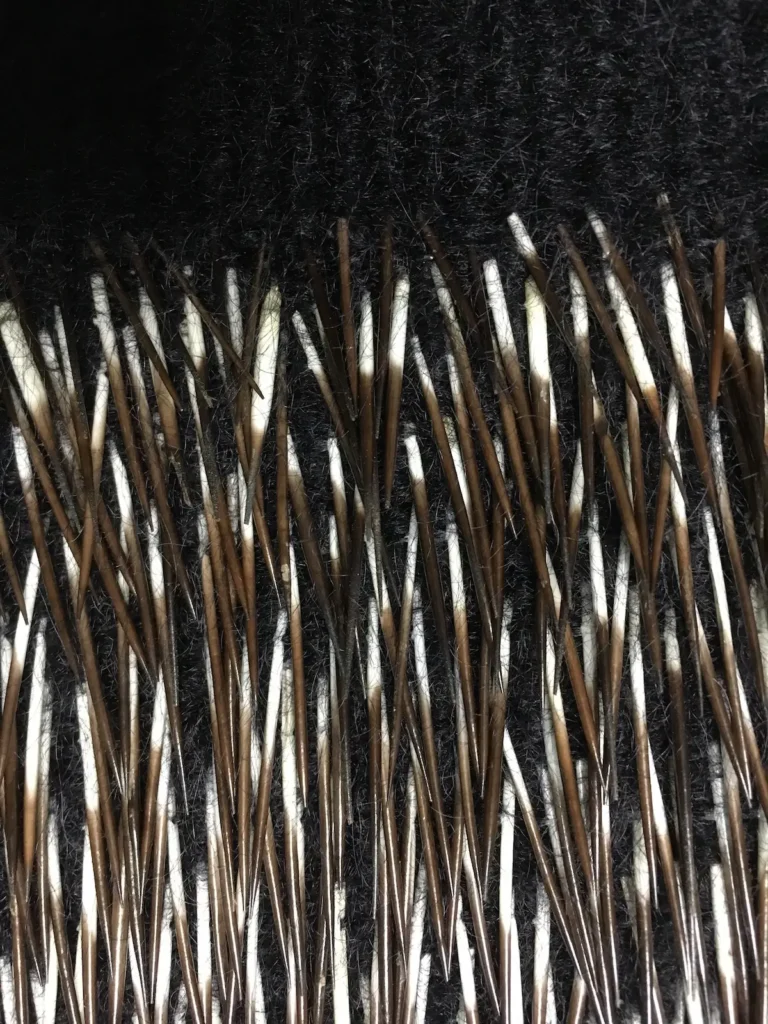
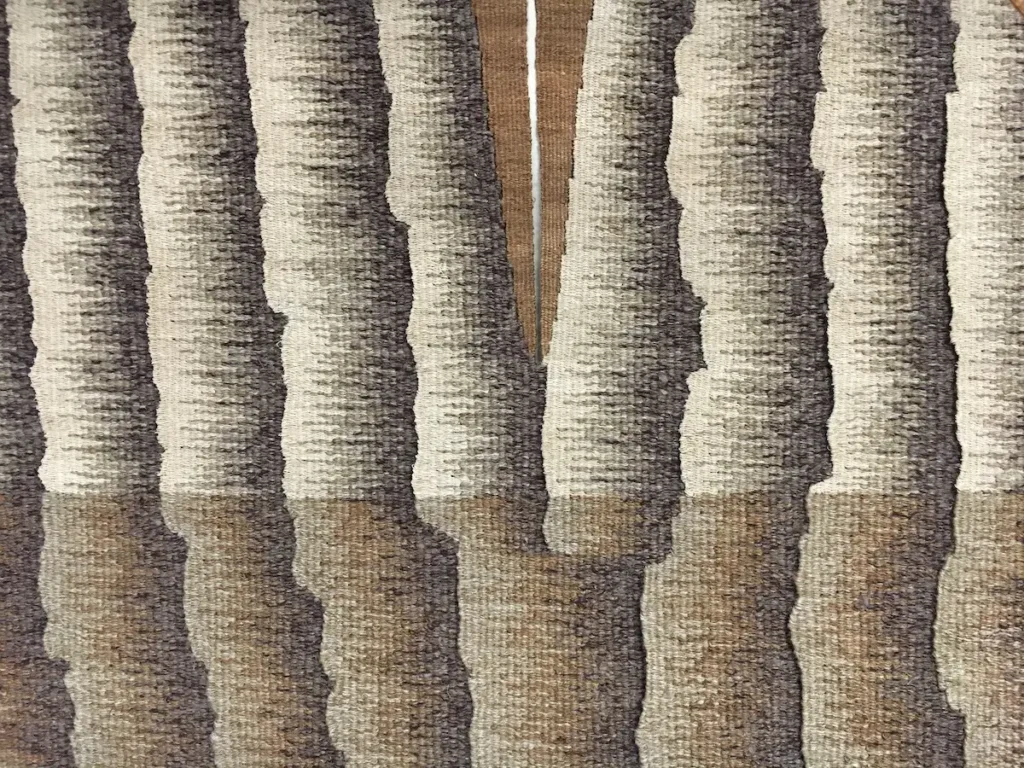
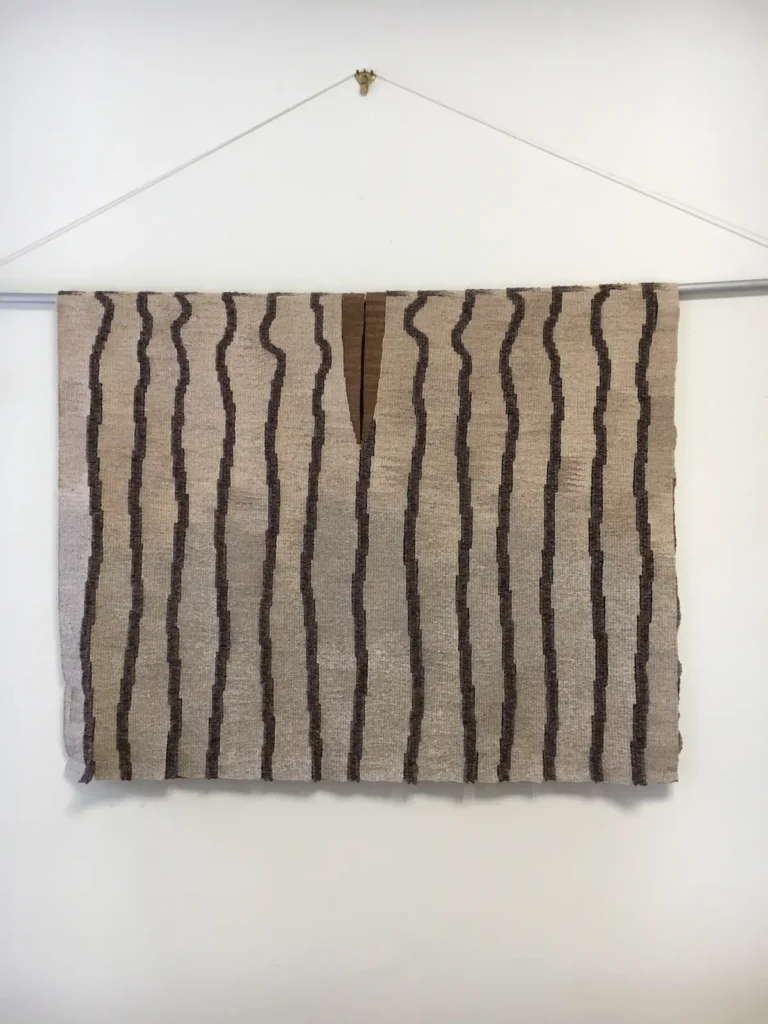
Box: 42″ x 24″ x 6″, Tunic: 36″ x 18″ folded;
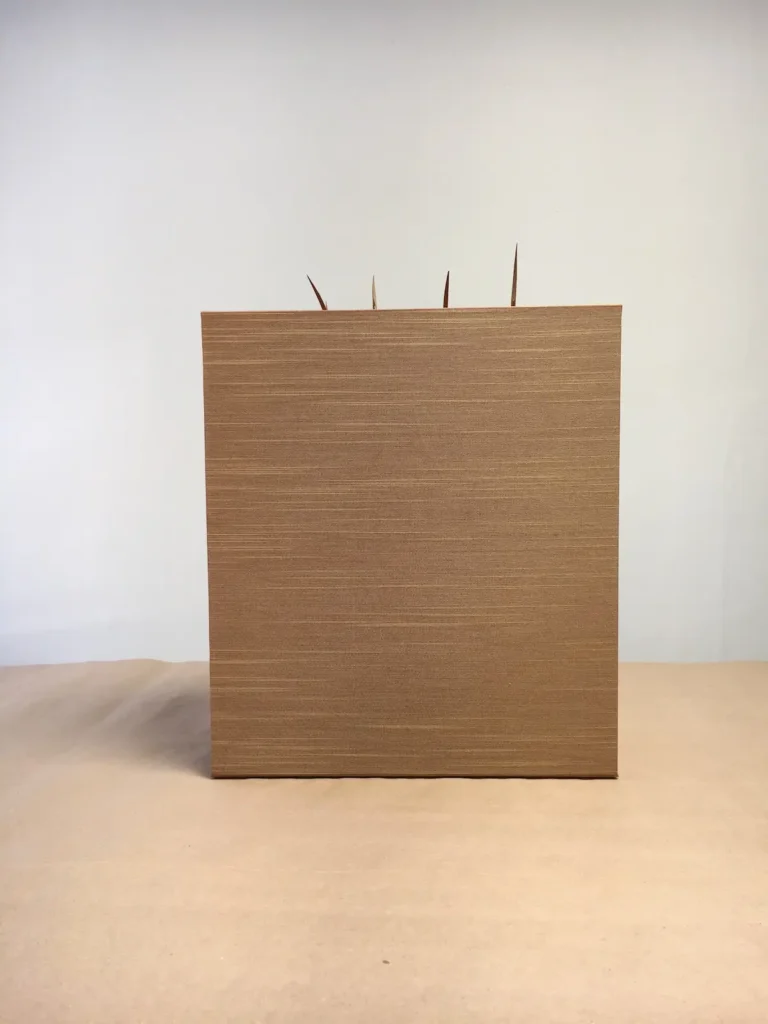
Materials: Box Poplar plywood, hickory pole, carved and stained, Tunic: kid mohair warp and weft, tapestry woven with approximately 4000 porcupine quills, added as woven
How important is experimentation in your work?
It is most important to be able to grow, but you need to know the basics in order to successfully experiment.
What helps you stay curious after all these years?
A love of wonder I suppose and old age.
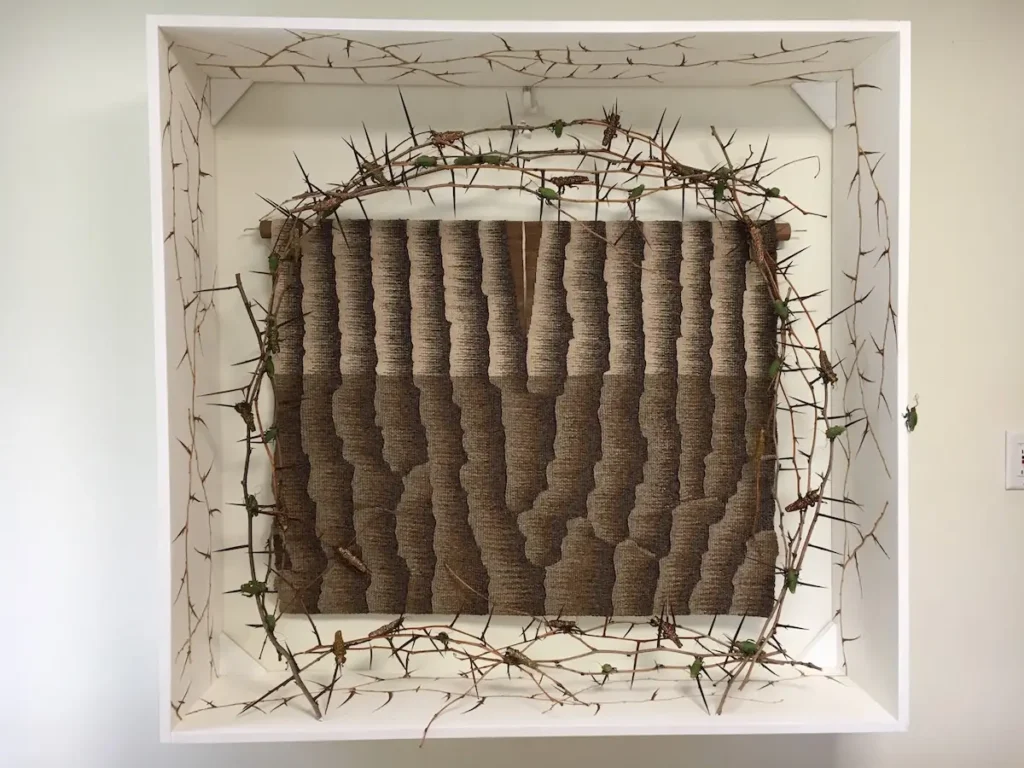
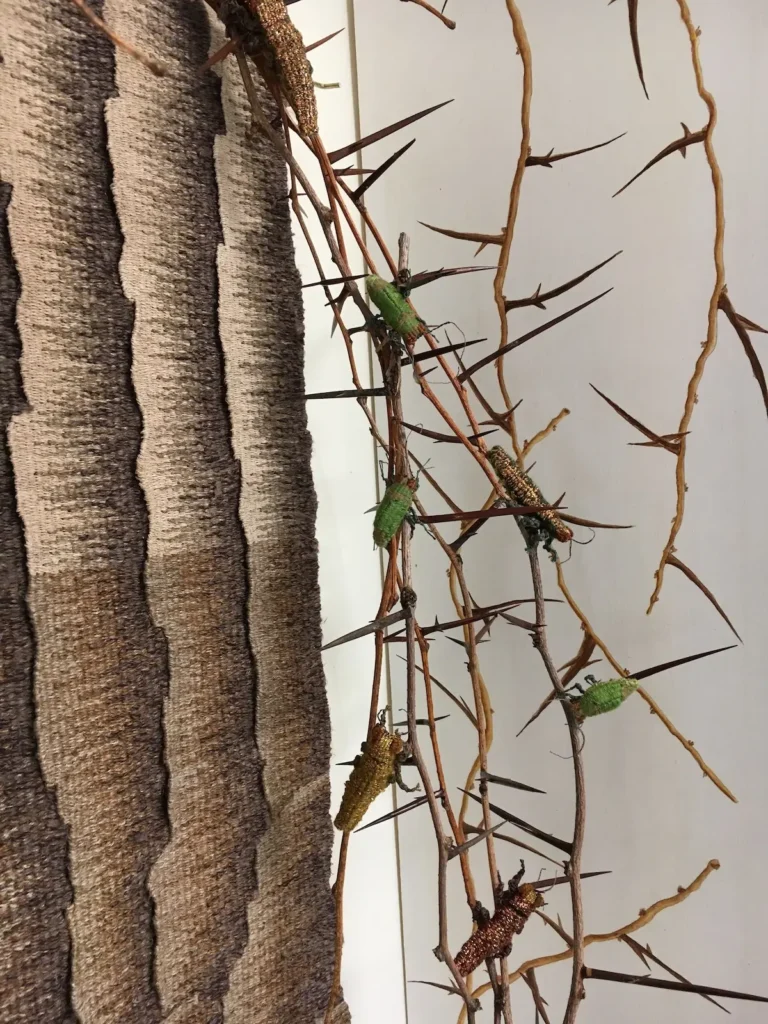
49.5″ x 58″ (with frame), 47″ x 45.5″ (inside frame);
Rami, linen, wool, silk wrapped stainless steel, silk, nylon, found thorns, wood frame, acrylic paint
l
Where can people see your work?
Just now my web site www.susanmartinmaffei.com has the most current series with changing details included. Shows that I participate in will be listed there and my Instagram account name of Susan Martin Maffei.
Rapid-fire fun:
- One word that sums up your studio vibe? Slow but focused
- Morning person or night owl? Morning
- One thing that makes you smile? My pet goat in nature’s surroundings
Interview posted February 2026
Browse through more weaving inspiration on Create Whimsy.