
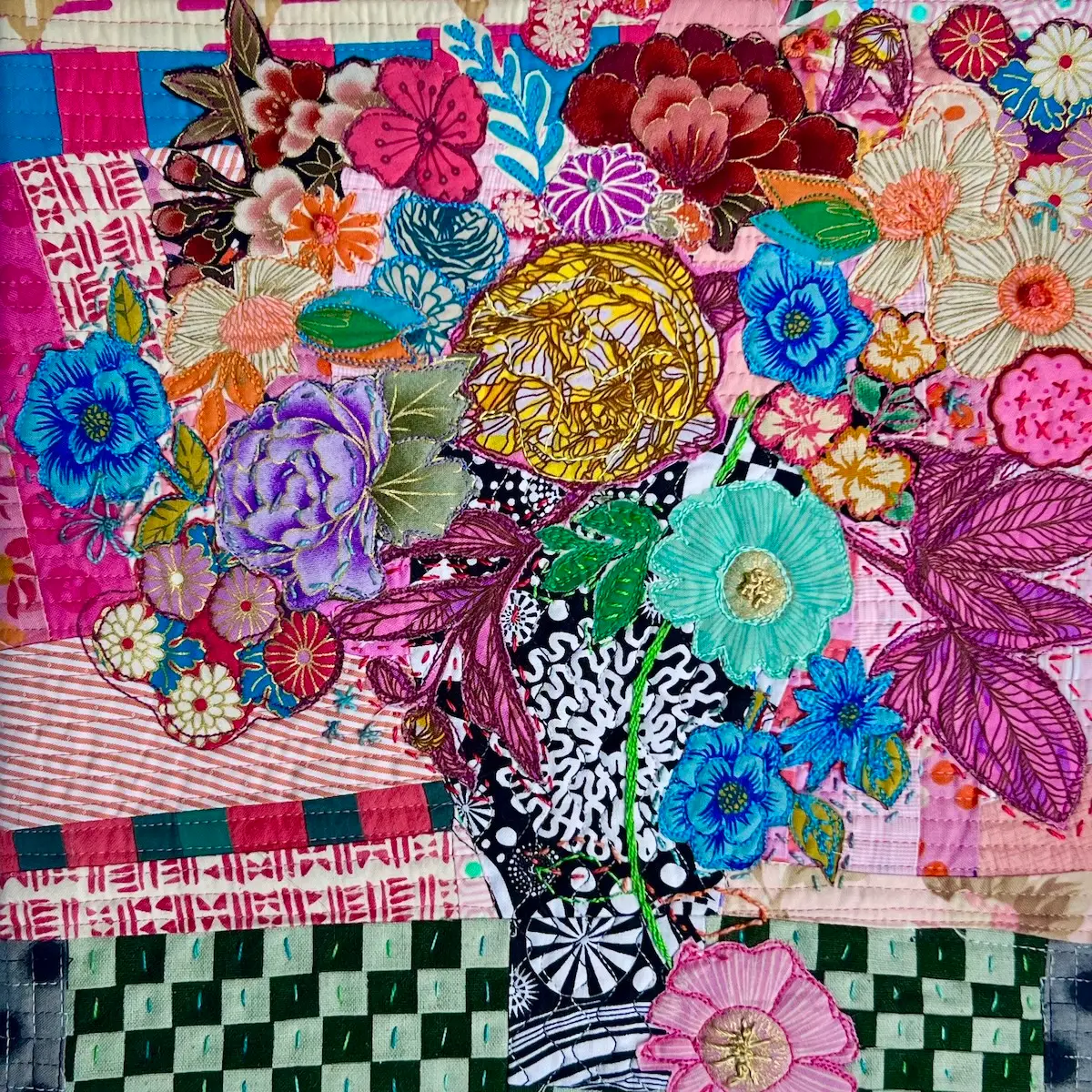
Margaret Grottenthaler creates quilts that are playful, thoughtful, and refreshingly free-spirited. In this interview, she talks about her path from corporate law to full-time textile artist, her love of colour and experimentation, and why following curiosity matters more than following the rules.
What first made you want to create things with your hands?
My mother refused to buy Barbie clothes, so I raided her scrap bin and stitched my own… “interpretations.” By ten, I was making my own clothes, embroidering everything (it was the 70s), and developing a lifelong obsession with textiles and colour.
Creativity came later — for most of my sewing life, I was a strict “follow the pattern” gal.
What’s the story behind the name Lawless Needle?
As an Amazon Associate I earn from qualifying purchases. Read more about our affiliate linking policy.
I spent 35 years as a corporate lawyer, which left very little time for sewing — other than several excellent Halloween costumes.
Eventually, I realized I was spending more time buying textile art books and on Pinterest boards than drafting legal opinions, so in 2019, I quit law cold turkey and threw myself into a creative life. My husband says I’m the only person who didn’t notice there was a pandemic lockdown.
The “lawless” part is about both the career change and my approach: I’ll try anything, but don’t ask me for perfect points or to follow a pattern.
Where do you go for creative inspiration?
While I am often inspired by other quilt artists, for me it’s important to look outside the quilting world to the work of painters, collage artists, and ceramicists.
I love studying still life compositions, diving into art or textile pattern books, and taking workshops. I’ve studied Klee and Hundertwasser with Rosalie Dace and found that a deep dive into a particular favourite artist is both educational and a great source of creative ideas. Imaintain many Pinterest Boards of work that appeals to me. You can check them out at https://pin.it/3Jeg6rUmN.
Describe your creative space.
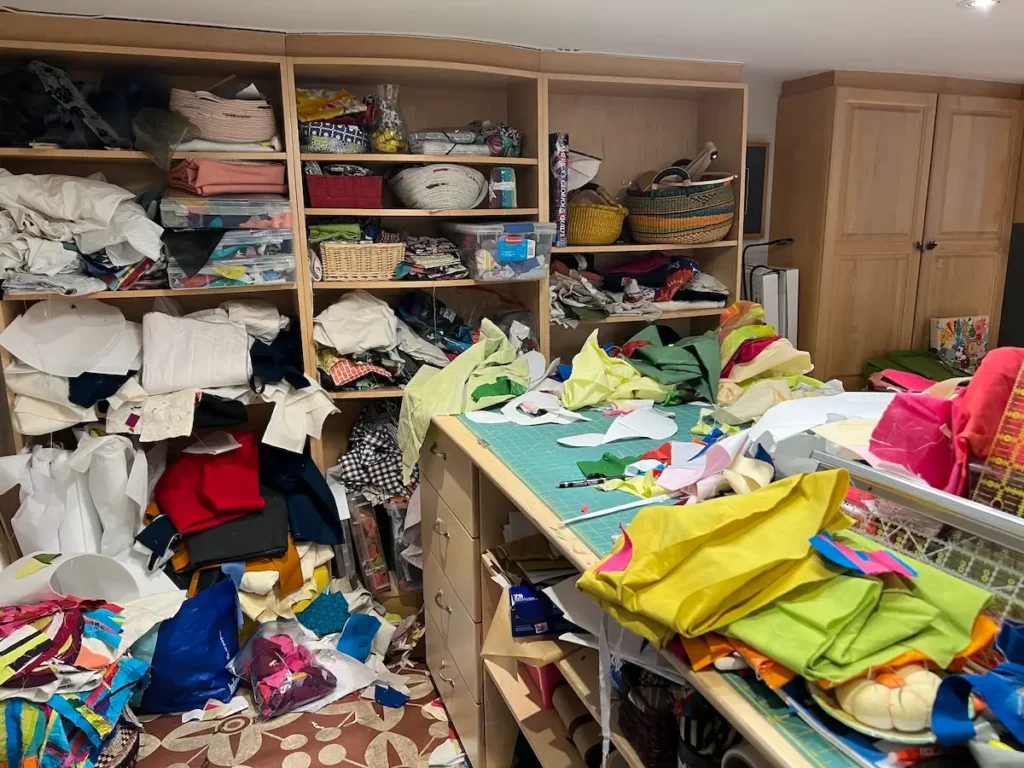
In Toronto, I have a chaotic basement studio with a bonus room for dyeing and painting. It has quietly expanded into nearby storage areas and is threatening to move upstairs.
I think visitors might wonder how I ever manage to produce anything among the mess. But there is still a lot you can do with 12” of free cutting space on the mat.
At our Lake Huron house, I take over the sunroom — less convenient, but the beachfront and garden views make up for it.
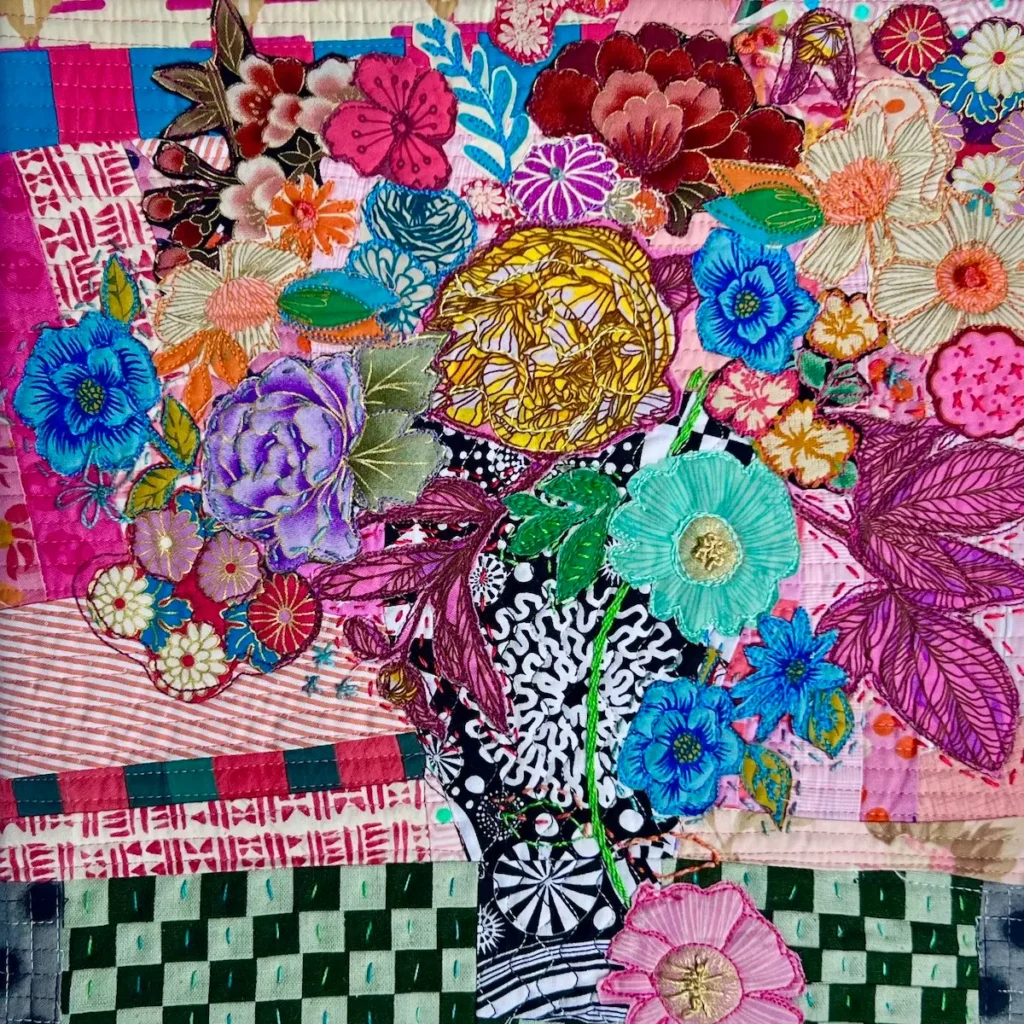
What tools or materials could you not live without?
Freezer paper, MistyFuse, glue sticks, a big rotary cutter, 12-weight threads, Procion MX dyes, Fosshape, and cutting mats the size of small countries.
I recently purchased a Baby Lock Sashiko machine and am looking forward to experimenting with it.
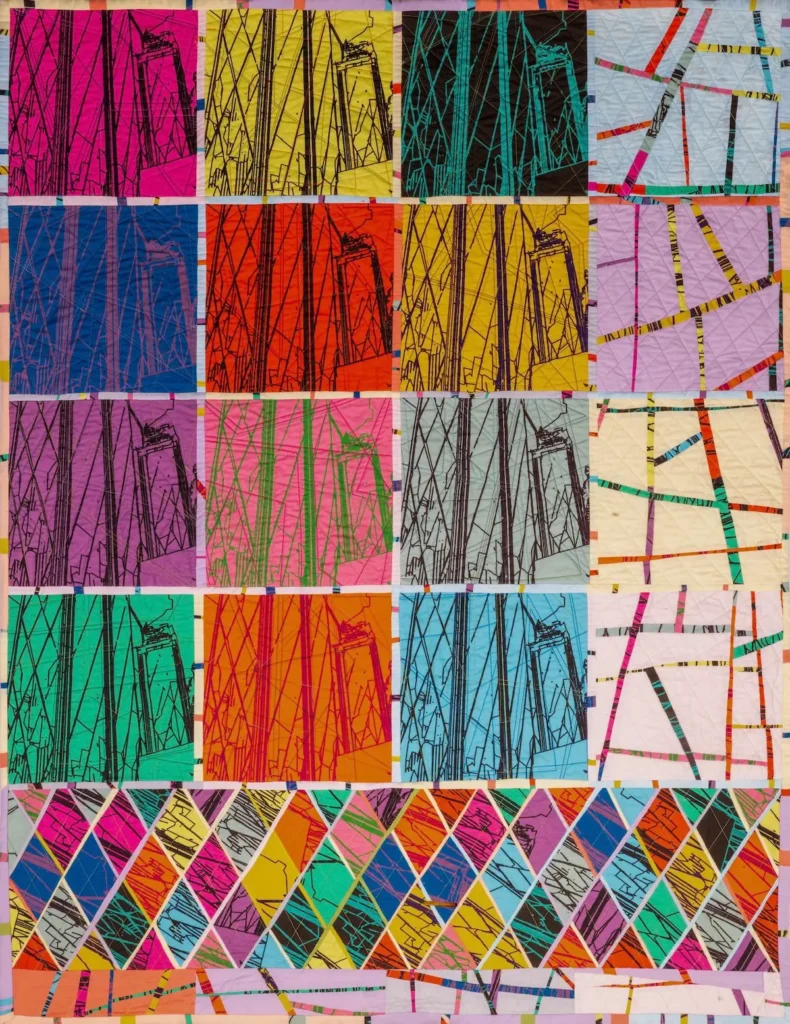
What does a new project start like for you?
The start depends on the type of project.
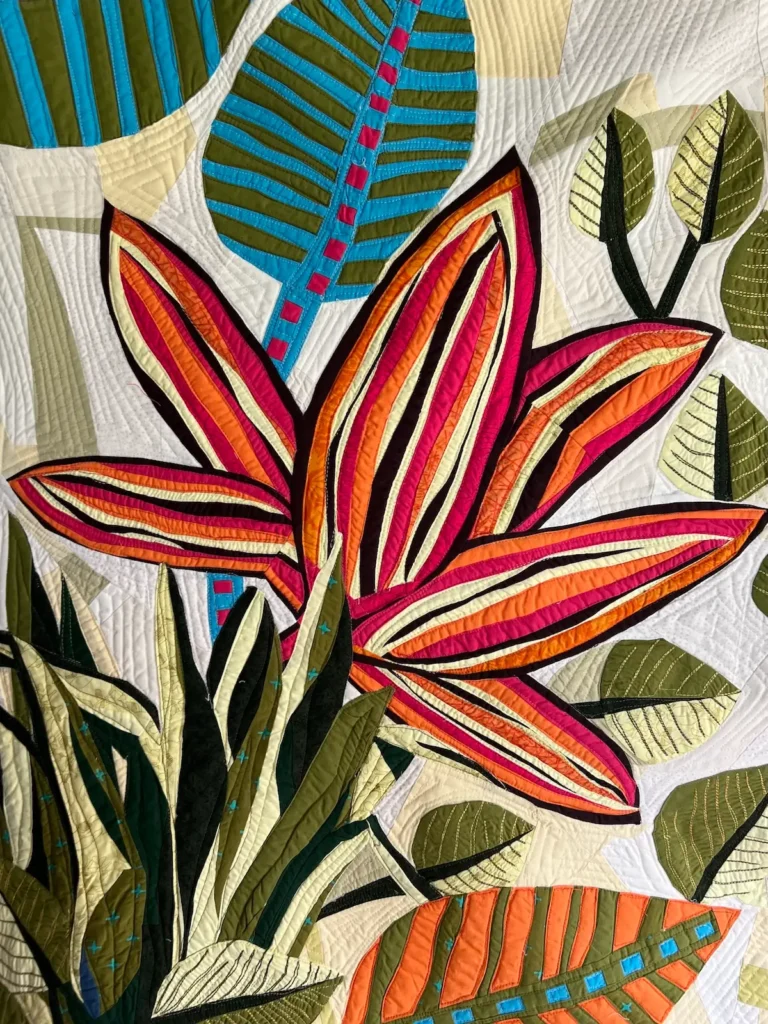
For something abstract or botanical, I begin with a very loose compositional idea that I may sketch out. I take a lot of photographs from my travels and around our lake house, and often I will choose one of those to render into a quilt project.
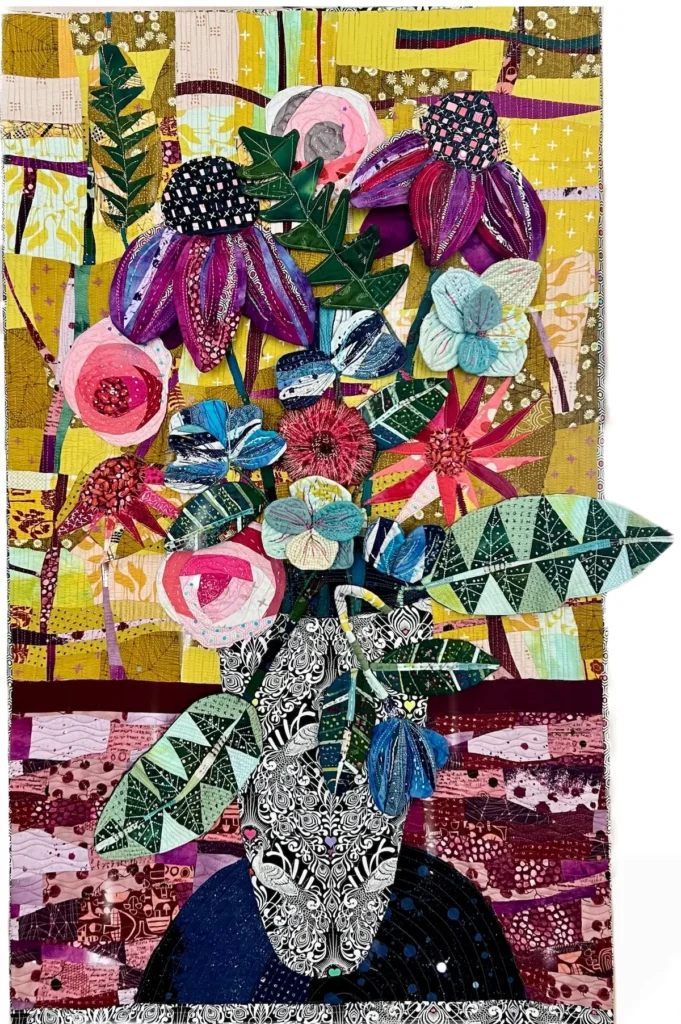
How do you know when an idea is worth exploring?
If the colours sing, I’m in. If they don’t, I start over.
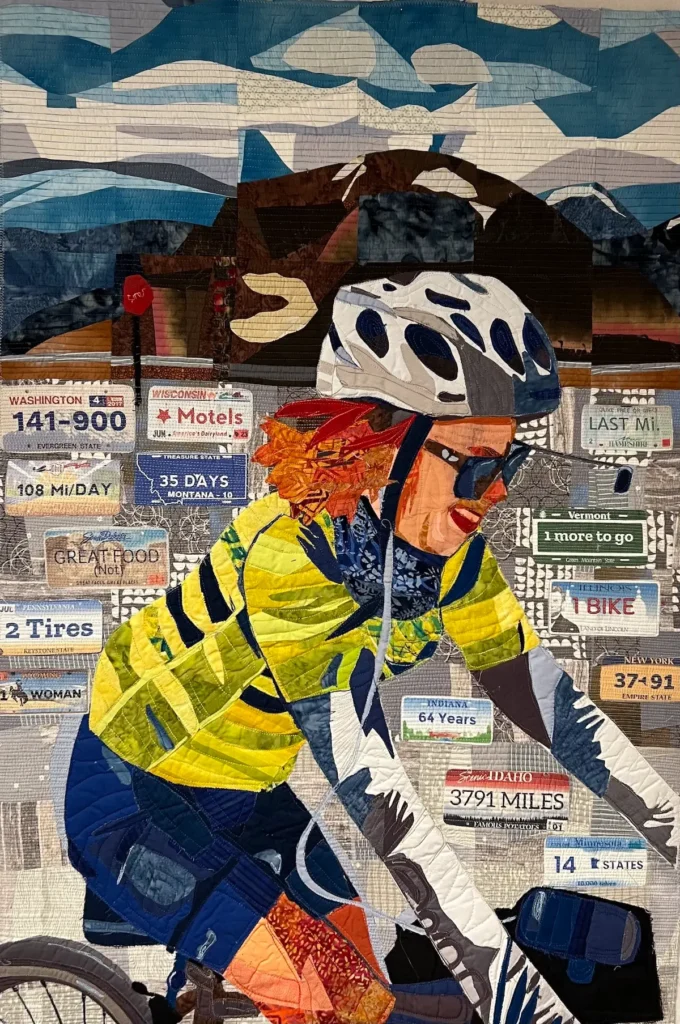
Do you sketch or plan before you make?
I can start with either a very loose plan, a rough sketch, for example, or an incredibly detailed pattern, or a bit of both.
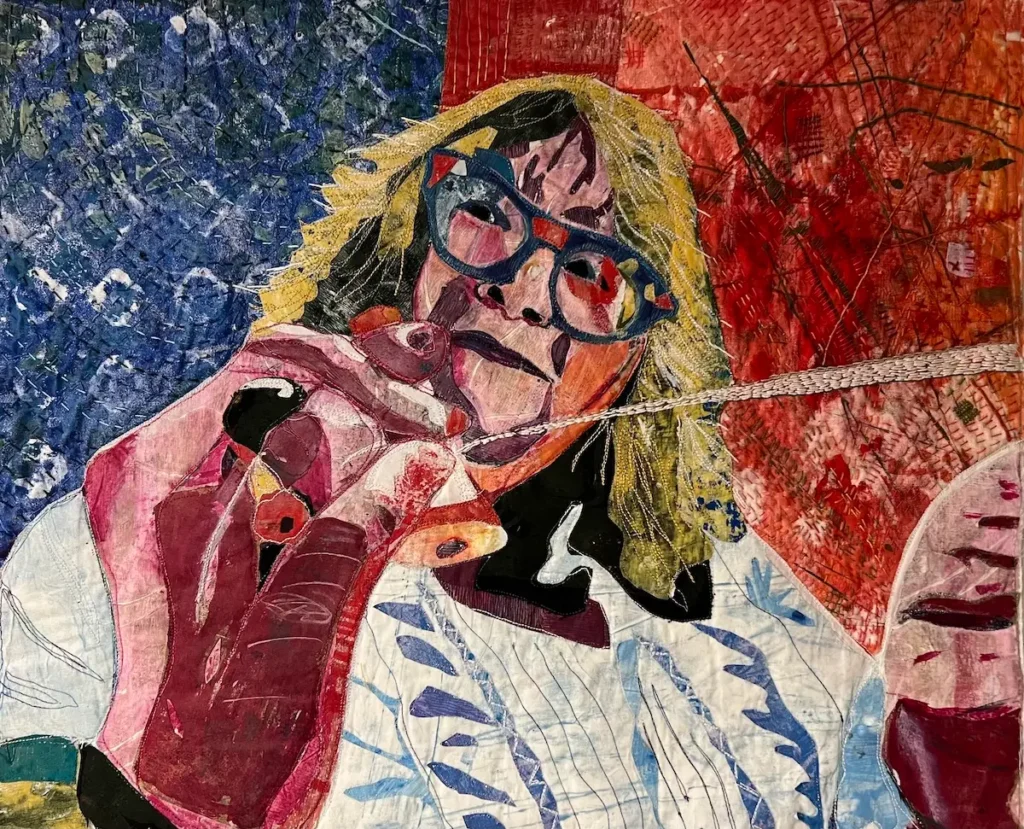
For One Incredible Woman, I made a detailed pattern for the figure, but improvised the background by simply examining my photo.
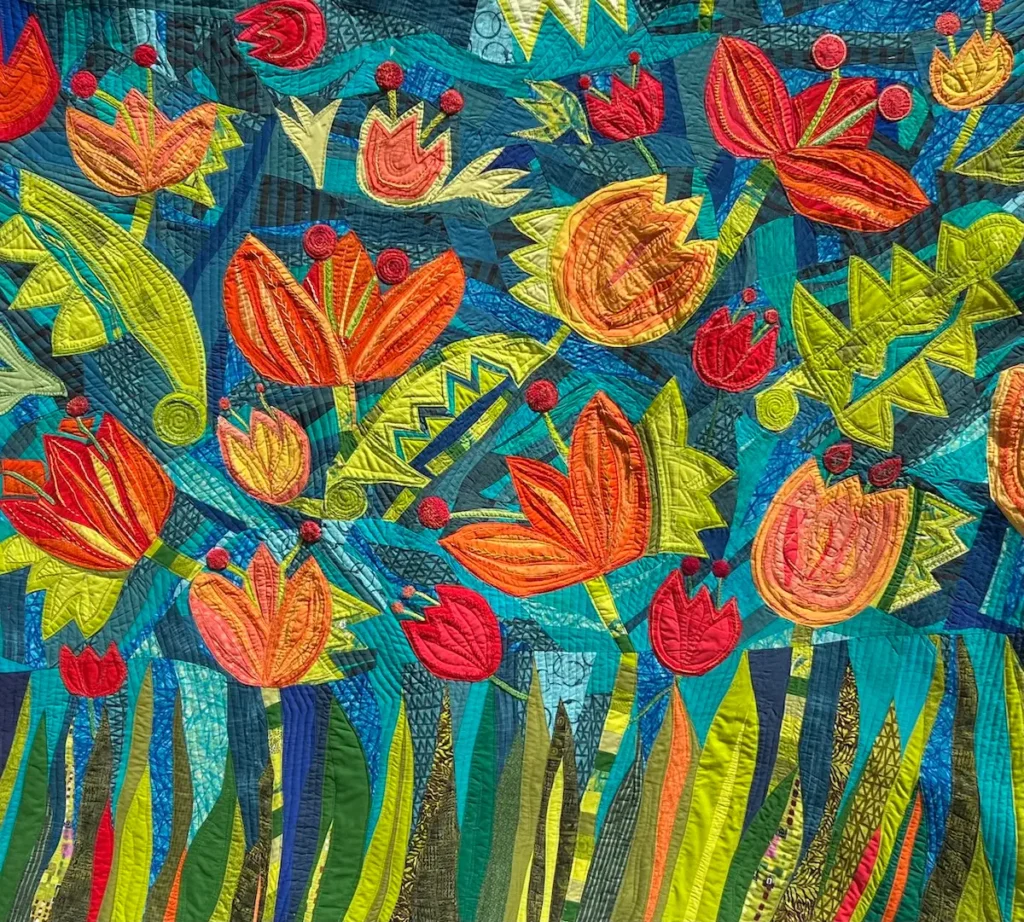
Tulips Take a Trip was based on a stencilled pattern that was the frieze in our main bathroom, so I roughly sketched the shapes and used them to guide what was essentially improvisational piecing.
The composition really develops on the design wall.
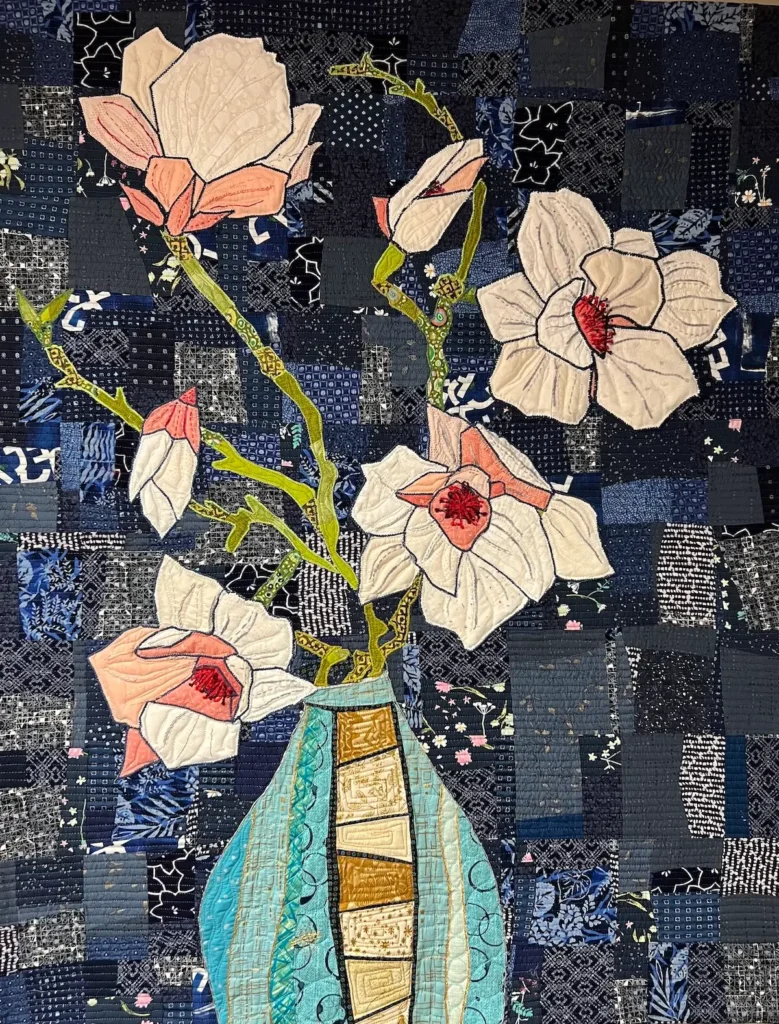
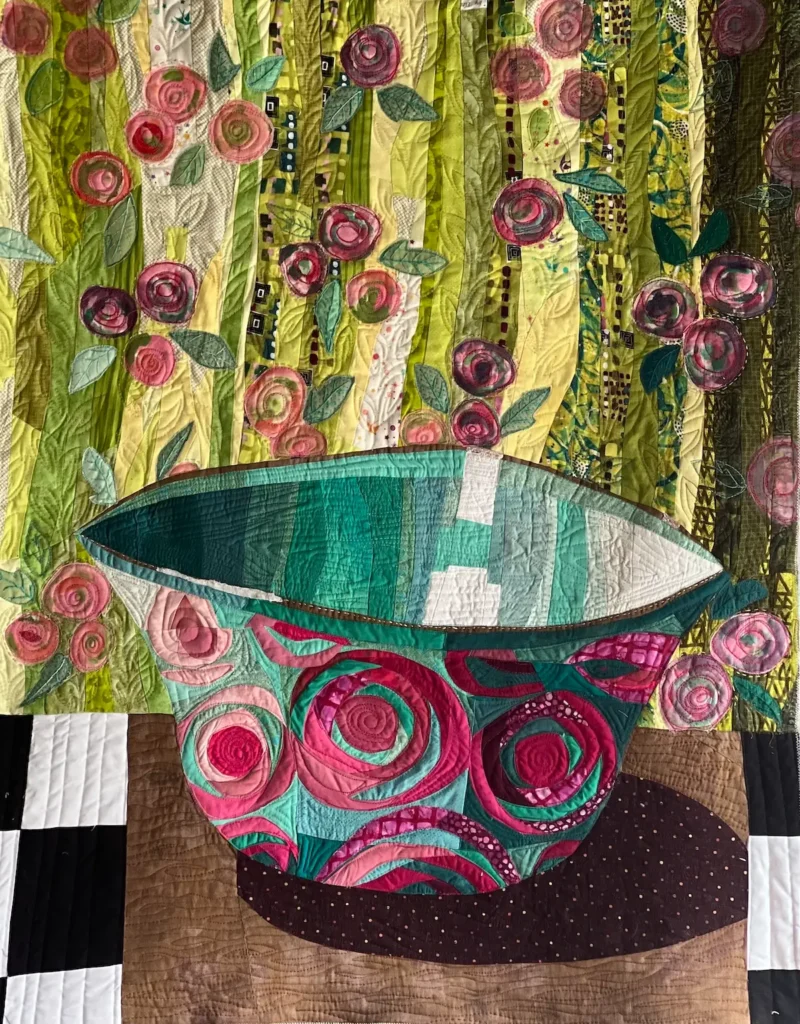
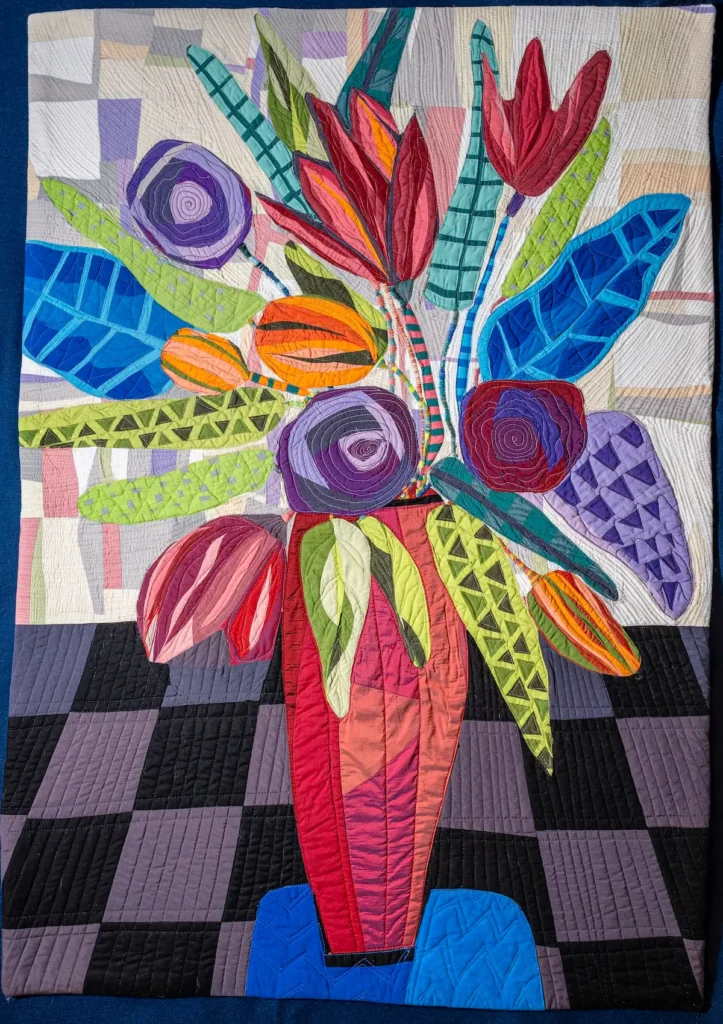
For abstract work, I will often start by sewing fabrics into patterns -dots, plaids, stripes, braided curves, circles- and cut them into shapes.
How has your style changed since you began?
Now that I have many more construction tools under my belt, I combine different techniques in one piece with a view to creating the overall image I want.
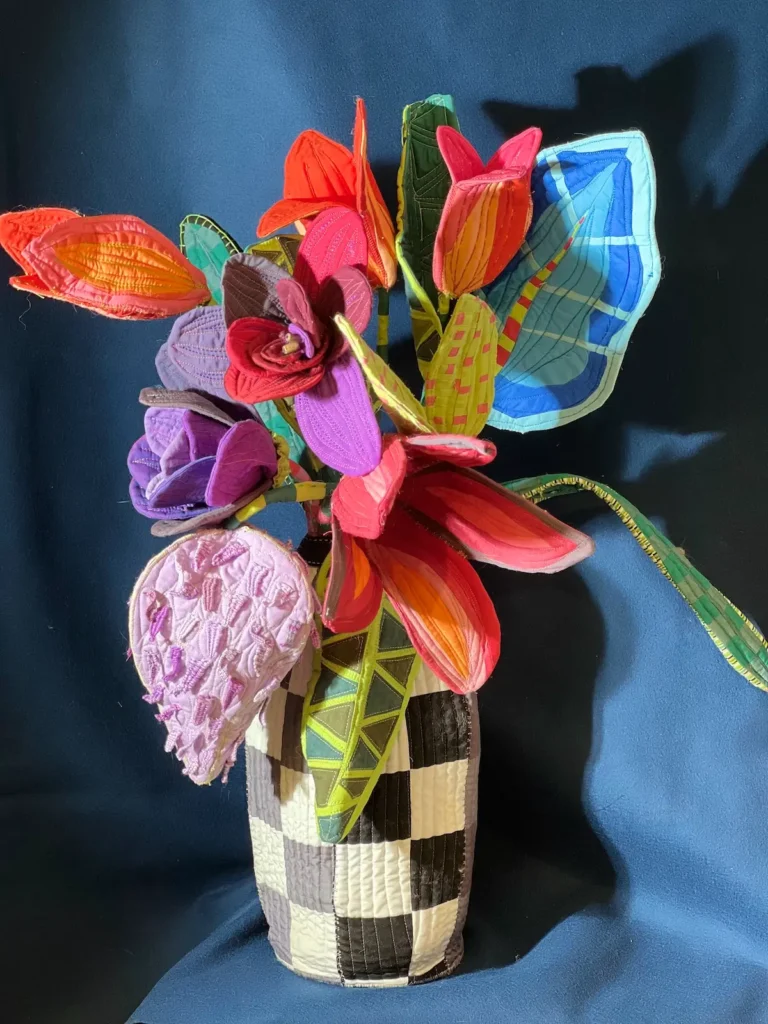
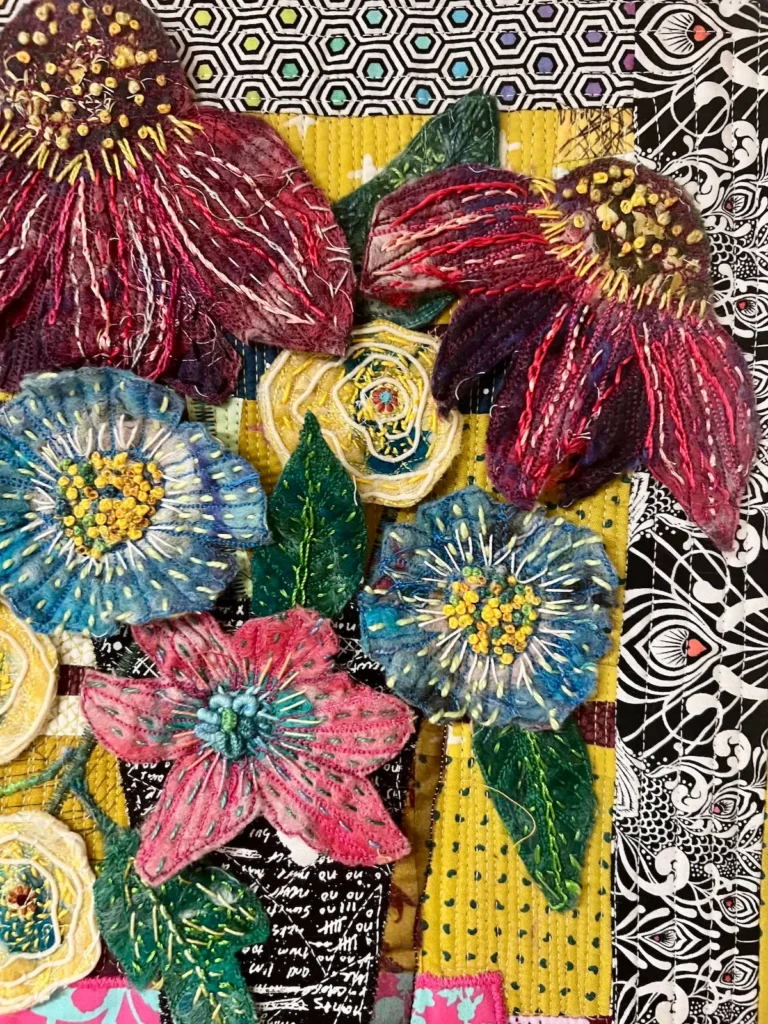
Complicated piecing, turned and raw-edge appliqué, painted fabrics mixed with commercial and hand-dyed ones, prints and solids, and hand-stitching may all make an appearance in a single work. I may even add some 3D elements.
I’ve been experimenting with making quilts from paper and using painted fabric, something I never would have contemplated at the beginning.
Command of the processes provides the confidence to tackle any composition.
What does a typical creative day look like?
Mid-morning to early evening in the studio, most days. Evening stitching if I have the energy and the show I’m streaming does not have subtitles.
What advice would you give to someone just beginning to make?
If you are interested in improvisational work, take as many workshops as you can afford from improv artists, learn lots of techniques (including painting and collage), finish what you start (it will teach you something), and study colour and composition.
I took an online art history course, and that was remarkably helpful.
Copy work you like. Your own style will emerge — even if the path is not straight.
What brings you the most joy in your work?
I enjoy the process, but nothing beats finishing.
It’s incredibly satisfying to create something that previously did not exist in the world, especially if it creates a feeling of happiness in the viewer – even if that viewer is only me!
Where can people see your work?
Instagram:@lawlessneedle
Website: lawlessneedle.com
And starting this summer: Oxtongue Craft Cabin in Dwight Ontario —
Rapid-Fire Fun:
Morning maker or night owl: Morning maker, but only after the NYT puzzles are complete.
Favourite colour right now: Deep Teal
One word to describe your creative life: Colourful
Interview posted February 2026
Browse through more inspiring art quilts on Create Whimsy.