
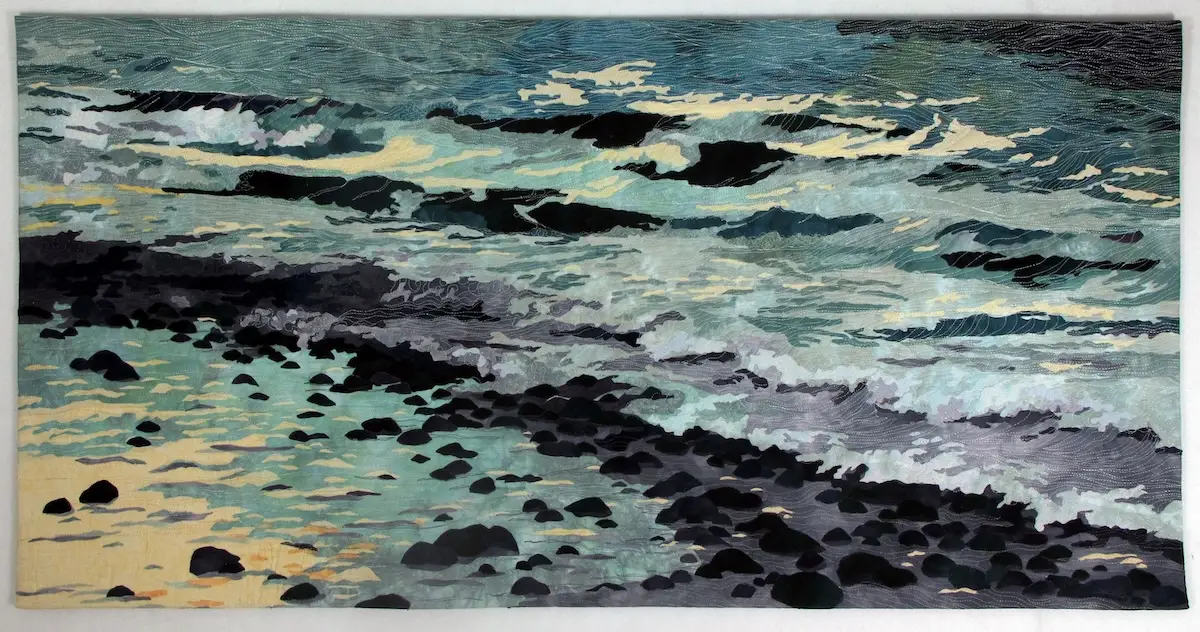
Donna Deaver’s creative life has always been stitched together with curiosity, from her early days of sewing and embroidery to her rich practice spanning textiles, sketching, and mixed media. In this interview, she talks about working in series, finding inspiration on the road and outdoors, and why persistence matters more than talent.
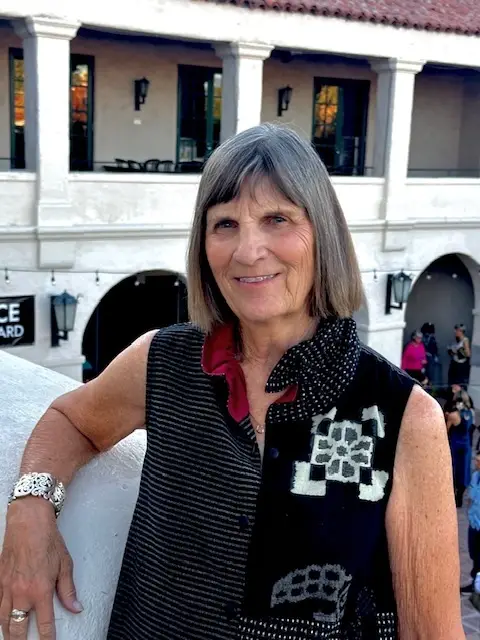
Can you tell us how you first found your way into making art?
I think I was born with paint on my hands and a needle between my teeth!
Seriously, I don’t remember the beginning, but I was raised in a very creative family and was taught early on to work with my hands in a creative way. I had a dad who was a freelance writer and photographer. My mother was always sewing, but I also remember her sitting at an easel, painting when she could find the time.
Though all of us were creative, we called my sister the “real artist” of the family, as she graduated from art school with a BFA in textiles, with a focus on tapestry weaving.
As an Amazon Associate I earn from qualifying purchases. Read more about our affiliate linking policy.
What drew you to textiles and mixed media in the beginning?
My mother spent a fair amount of time teaching us at young ages various crafts that she loved. I have fond memories of sitting with her and my sister, embroidering and hand-sewing small gifts throughout the year in preparation for Christmas.
We were a military family and traveled a lot, so small portable projects were a plus. When I was in 5th grade, I graduated to a sewing machine. I loved sitting with my mom at her Singer treadle machine, making clothes for myself.
Later, my parents gave me my own sewing machine for my high school graduation, and my uncle gave me a set of luggage, and I felt like I was set for life! I continued with both embroidery and sewing as a teenager and young adult, and added quilting to my repertoire when I was pregnant with my first child.
I continued to make clothes for myself and eventually my two daughters. I really honed my skills with fun, frilly dresses for the girls when they were little! Once they were older, I shifted my focus to painting, drawing, needlepoint, rug making, and basically anything that popped into my view that was interesting.
How has your art changed from your early days to now?
I began quilting again after my mother died – and I discovered the beautiful quilts she had made in the few years before. I made bed quilts for my daughters and eventually my grandchildren as each were born.
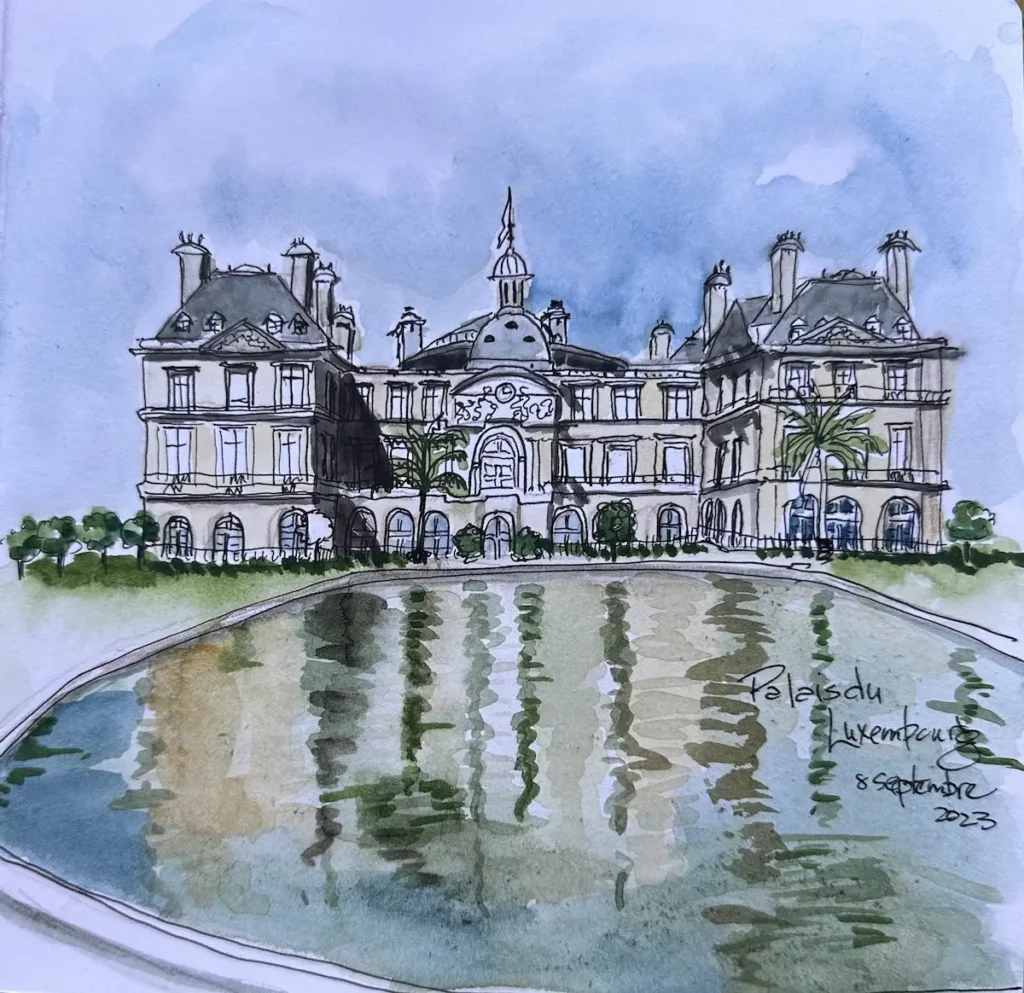
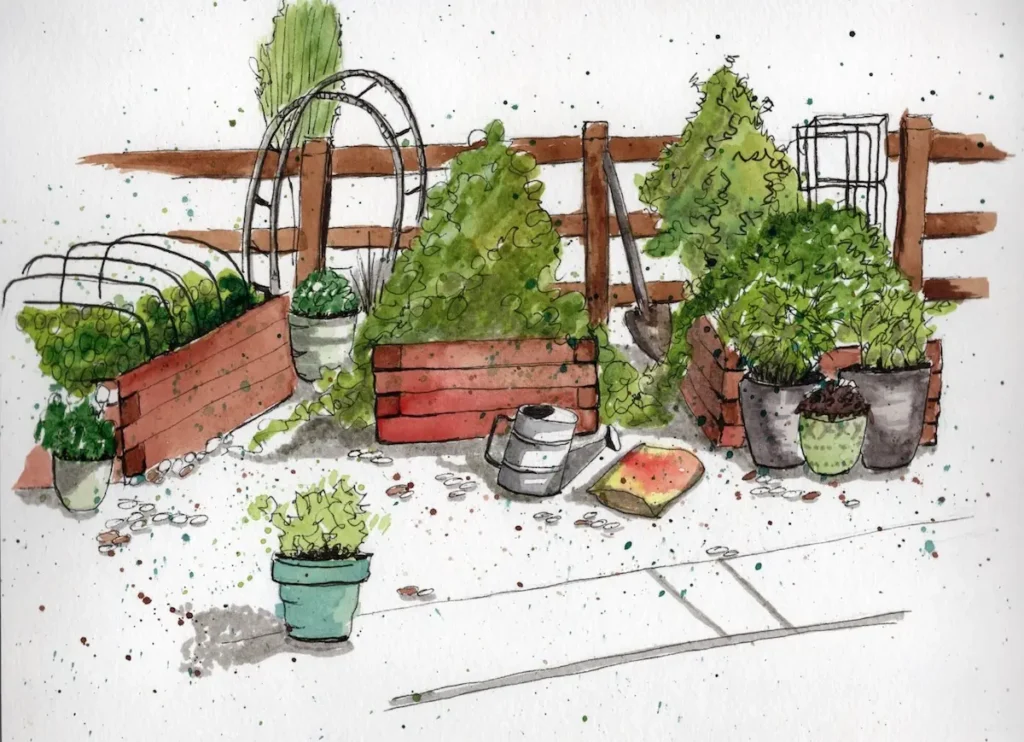
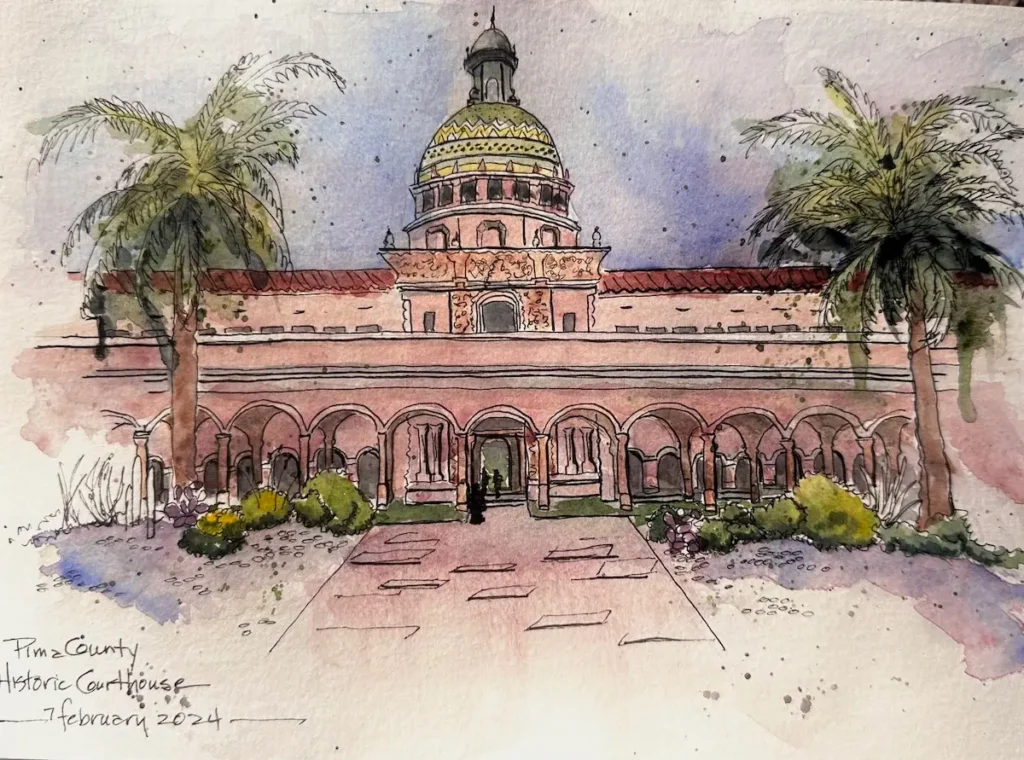
In 2008, I fell into the world of art quilting and moved in an exciting new direction. Around 2010, something really shifted for me—I started to see my work as more art than craft. I began working in series, which let me dive deeper into a theme and create a body of work that felt cohesive. My ink and watercolor pieces started out mostly as sketchbook art, but over time, those ideas found their way into my textile work and, more recently, have even made the leap out of the sketchbook and into matted original art, which I have recently begun selling.
How does the world around you show up in your art?
It’s really my biggest source of inspiration.
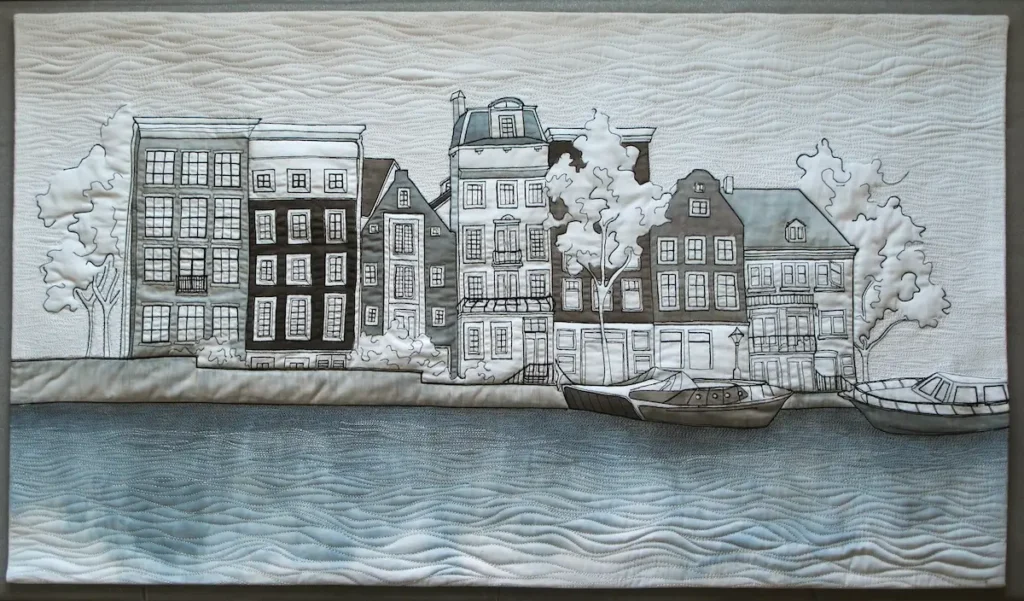
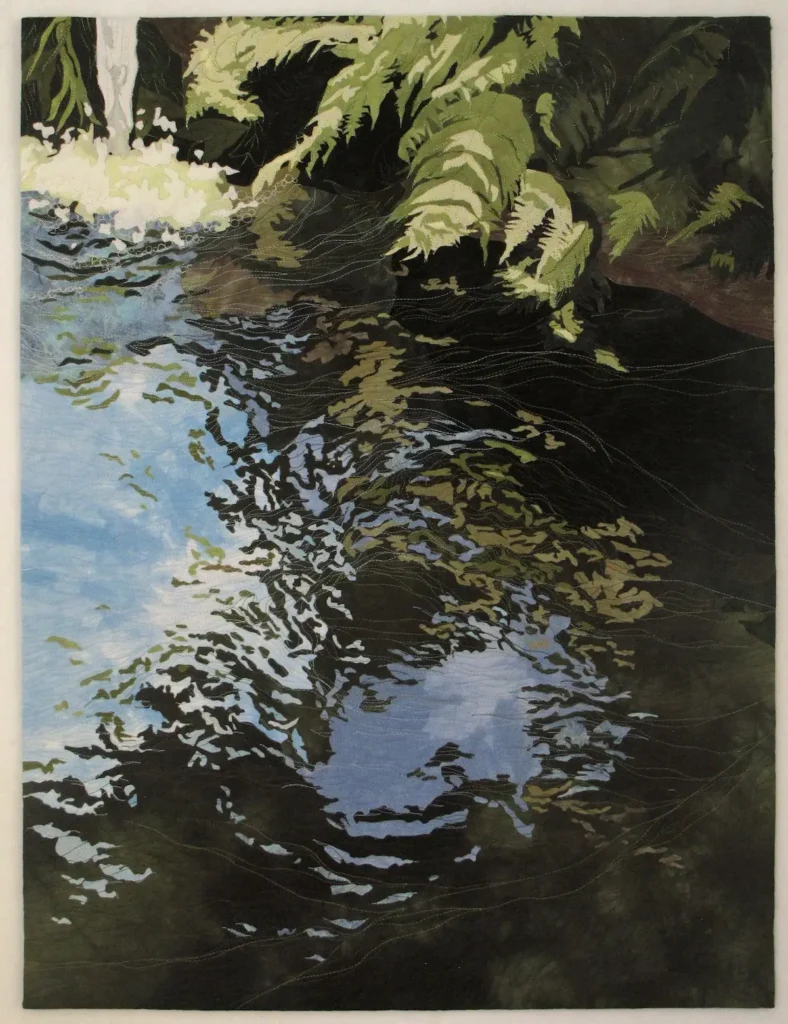
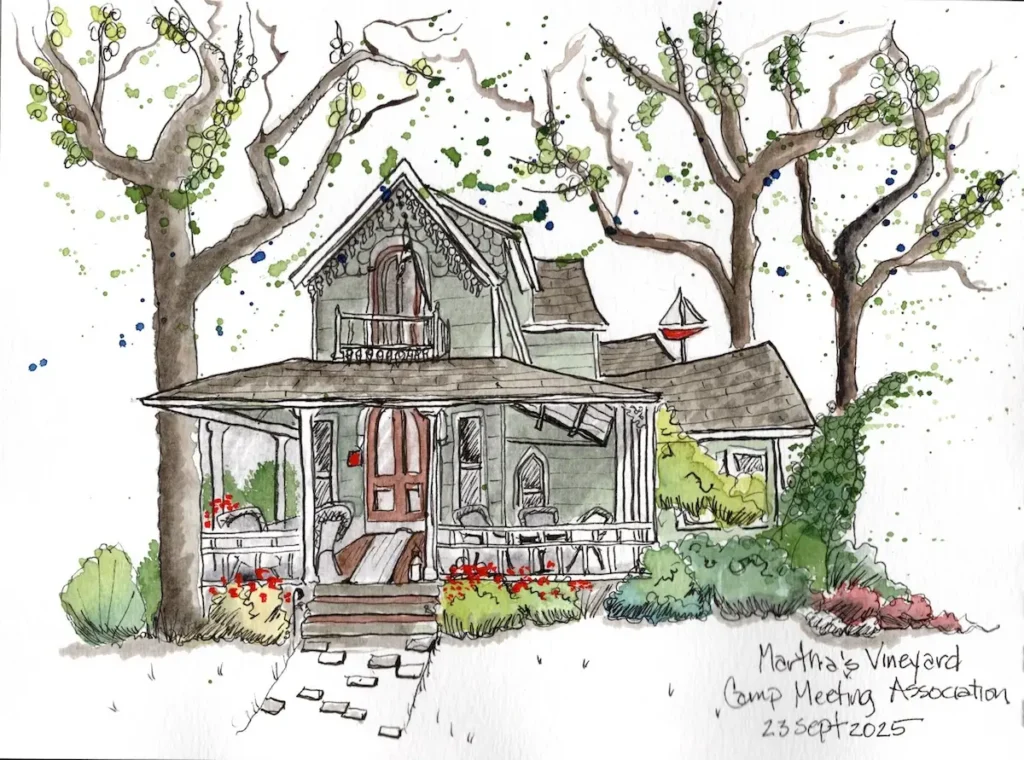
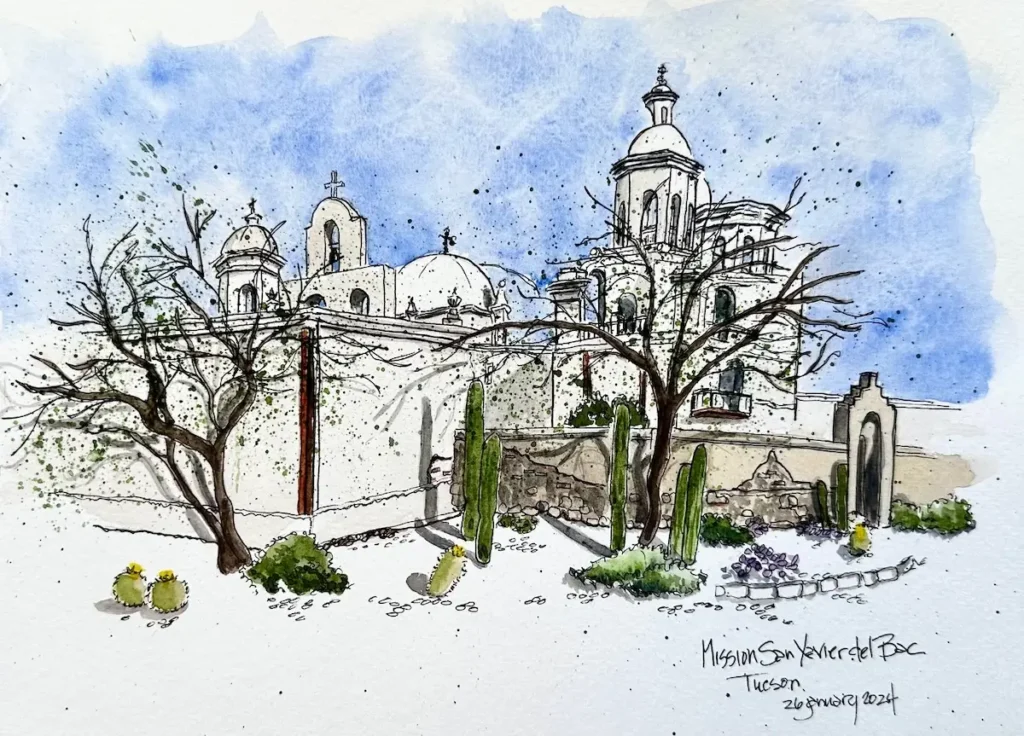
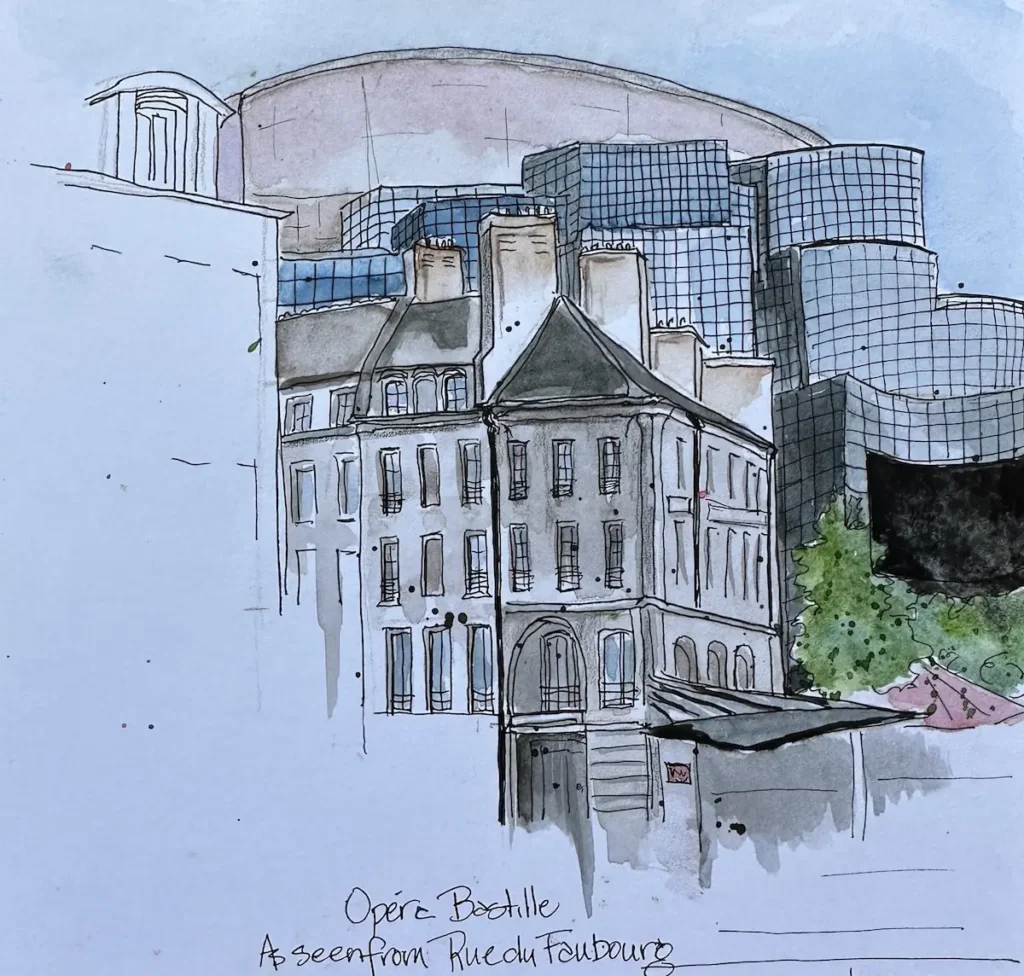
When sketching, I spend more time working in ink and watercolor outdoors than I do in my studio. I’m especially drawn to architecture and urban scenes, but I also love being out in nature—sometimes I’ll just sketch the natural landscape to give my eyes and mind a little break.
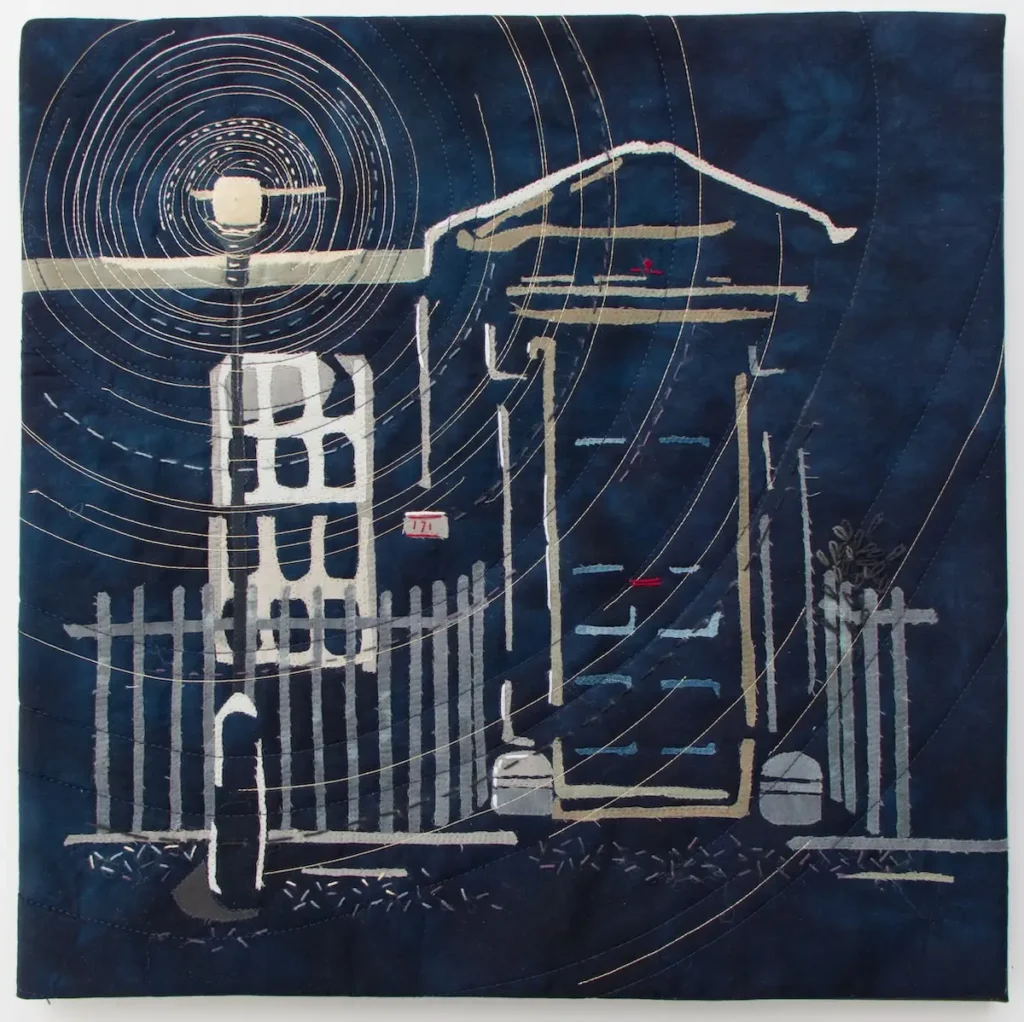
I’m always taking photos of things that catch my interest, and those images often spark ideas for new textile pieces, whether it’s a whole new series or just a single work I’m excited about. I’ve been lucky enough to travel quite a bit, so between sketching on location and taking tons of photos, I always come home with a head full of inspiration and new ideas to explore.
When you feel stuck, where do you go to spark new ideas?
I take my sketchbook and supplies on a “date”.
Sometimes that means heading somewhere new and other times it’s just a familiar spot I see every day. I prepare for walking a lot, to find interesting scenes, then take time to sit and really look at my surroundings before putting pen to paper.
During these dates, I often complete several small ink and watercolor paintings. Drawing, or even looking at my photos or old sketchbooks, gets me inspired for both watercolor work and textile art.
I get stuck when too many ideas make it hard to pick a starting point. Rarely is that stuck feeling because I lack inspiration.
You work with stitching, painting, paper, fabric, and layers—how did you come to work in so many media?
I discovered the world of art quilting around 2008, a few years after starting to quilt more traditionally again. I was bored with following patterns and began to discover that fabric could be an interesting medium for making wall art.
I focused solely on that for several years until 2013, when my husband and I were planning a trip to Italy. I thought that I would like to record memories in a sketchbook, so I took a basic sketching class and discovered using ink and watercolor. I packed a small kit for traveling and came home with a sketchbook full of wonderful memories which tell so many stories.
I have a very strong sense of curiosity and desire to learn new things, so I have explored various forms of media and how they fit, or not, into my work. Any medium or method that doesn’t resonate with me doesn’t make the cut, and I don’t invest the time to really explore it. Fabric and watercolors remain constant, however. I will still experiment with different media for my sketching practice, but ink and watercolor, as well as gouache, are the ones that I reach for the most.
With the internet, we are exposed to a vast number of techniques, materials, and tools, so it is easy to get distracted, especially by the trends that come and go, but I tend not to follow them unless it really feels like it will fit in my toolbox. The tools and techniques I adopted early on are still at the core of what I do today.
Do you ever start in one medium and end in another because the piece “asks” for it?
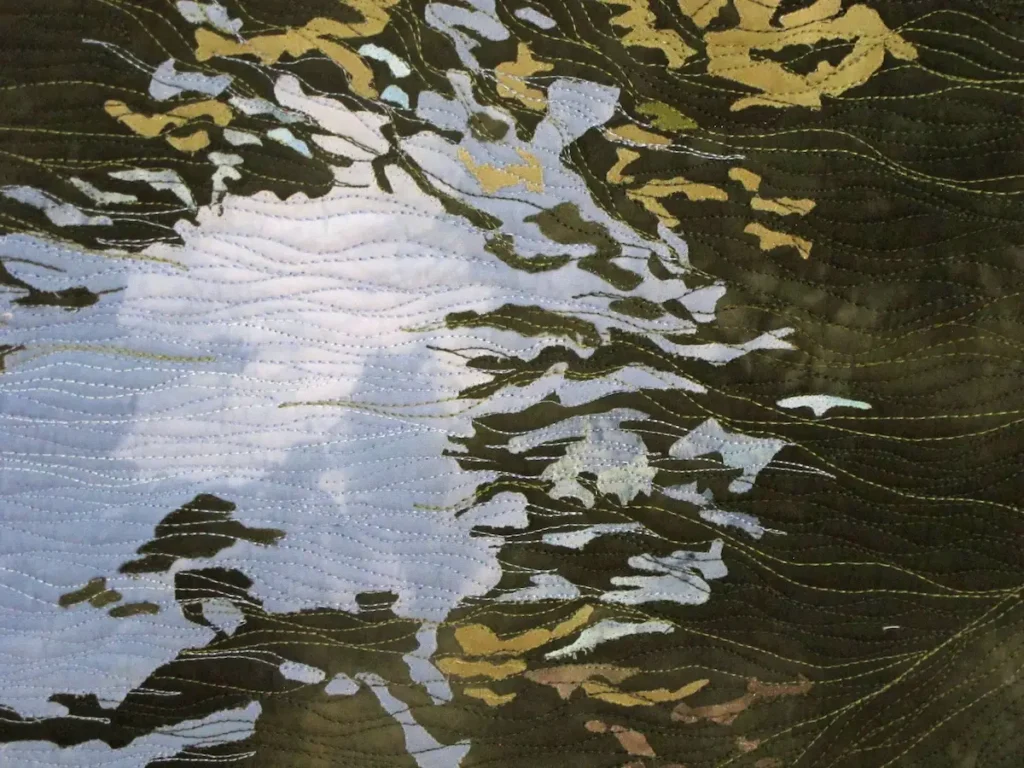
Not really! I usually keep each medium in its own lane—my textile pieces are a totally different experience from my sketch art, and I tend not to mix them. Each one has its own process and outcome, so I like to let them stand on their own.
Describe your creative space.
After moving from Idaho to Arizona in 2024, my studio space shrunk considerably.
What I lost in square footage, I gained in inspiration: I have a big window that looks out over the Sonoran Desert, and the natural light here is incredible all year round. This is where I do most of my fiber work and some painting.
Honestly, the world is my other studio. I spend so much time painting on location, both indoors and out, and that brings me into contact with all kinds of people, often curious strangers who want to see what I’m working on. I also love meeting up with other Urban Sketchers to draw as a group. That kind of creative energy is always inspiring.
Do you plan out pieces before you start, or do you let the work lead you?
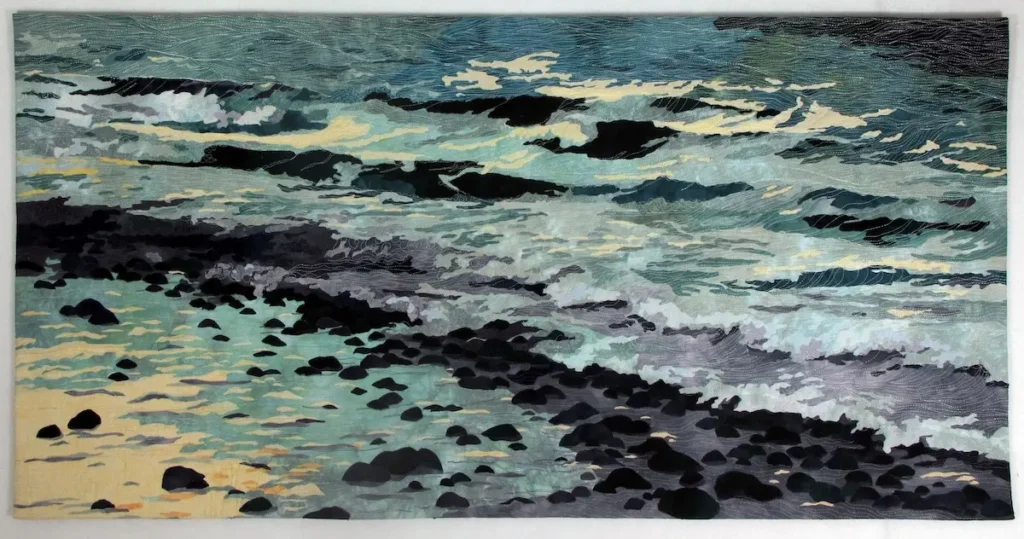
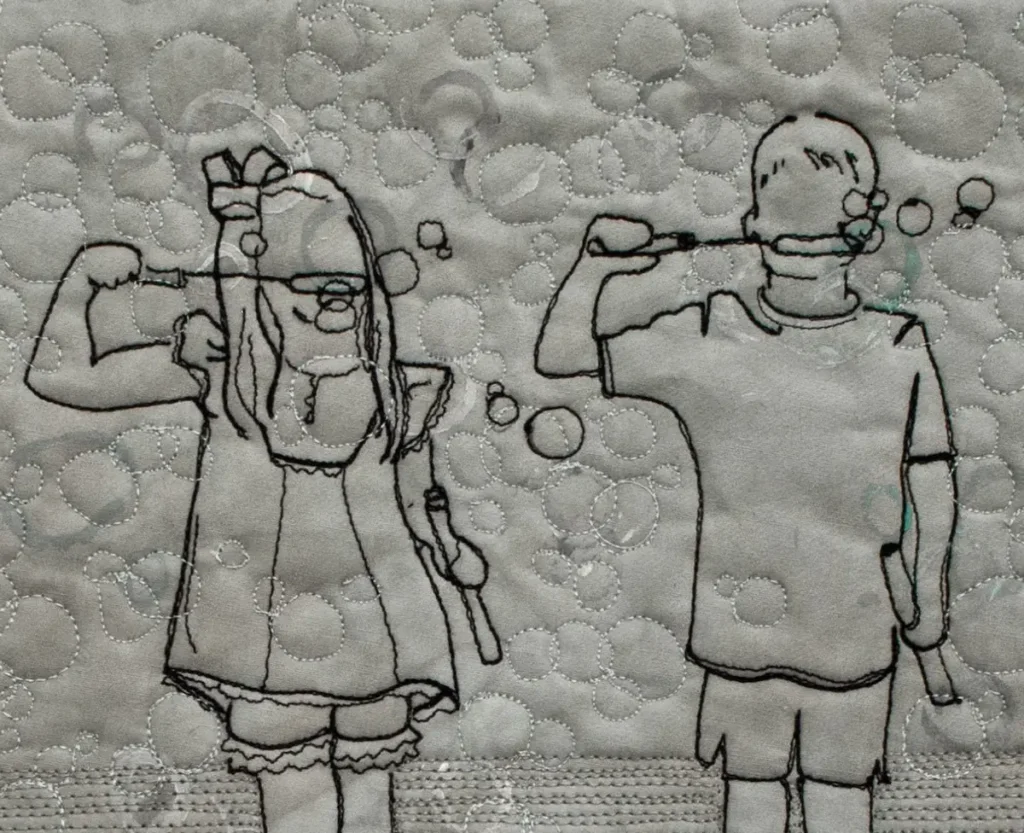
I do a bit of planning before I start a new textile piece. Usually, the first thing I do is sketch out a cartoon in the size I want to work, using my own photos and drawings as references. That helps me get the basic shapes up on my design wall, make sure the perspective is right, and lay a solid foundation. I can also confirm whether it is the right size for my idea. Once that’s in place, I feel free to be more spontaneous with the rest of the design.
What are the biggest challenges you face when creating?
Like many other creatives, time. I retired from a long health care career, where I really had to organize my time around work and family to create. I still struggle with time because I have so many interests, but I no longer have the need or energy to work late at night and into the early hours of the morning. I think that kind of schedule would kill me now!
How do you handle a piece that just won’t cooperate?
If a textile piece just isn’t working, I let it hang out on my design wall for as long as it takes to solve my dilemma or decide it’s just not meant to be. If I’ve given up on it, I will put it away in case any part of it can be repurposed later. I also cut up old drawings to use later for collage – I rarely throw anything away.
How does a series help you dig deeper into a theme or idea?
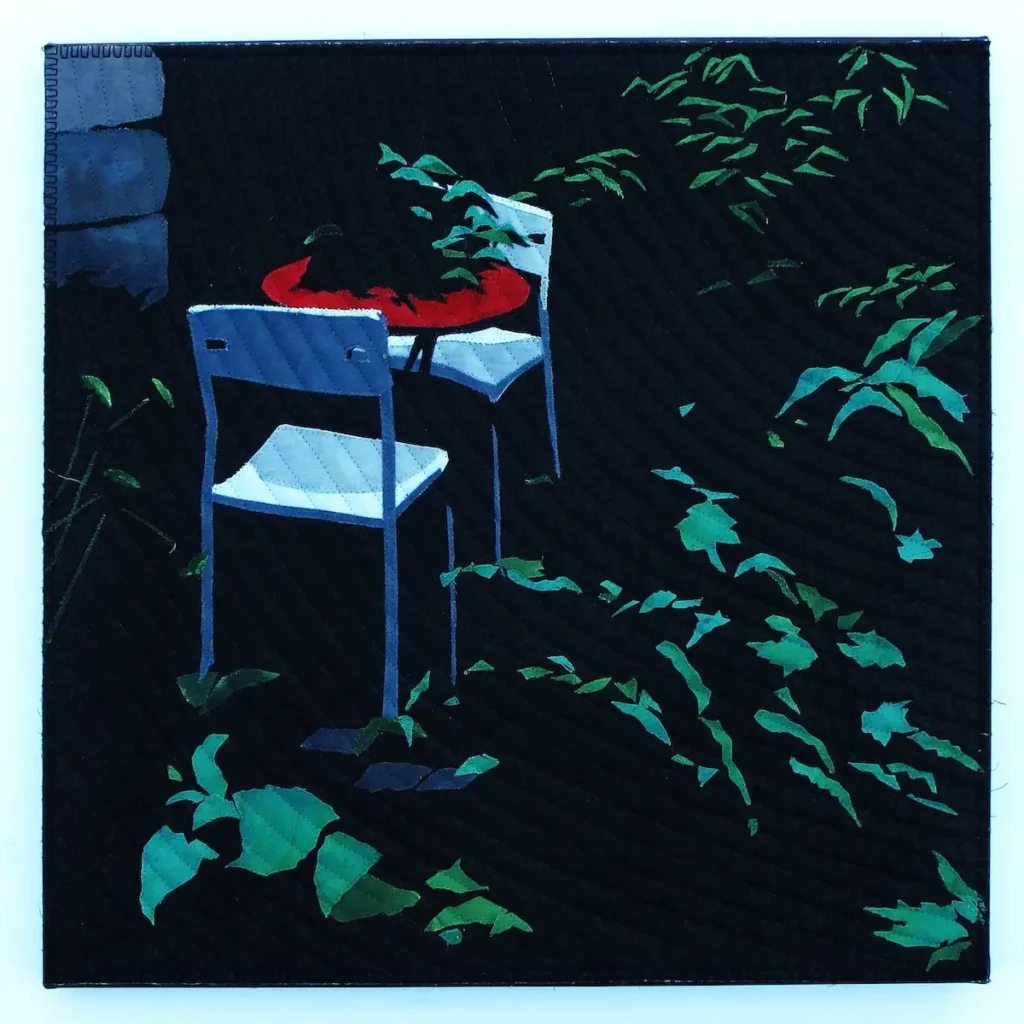
Working in a series is a lot like getting to know a new friend. At first, it’s just a casual coffee and some light conversation, but as you spend more time together, the relationship deepens—you start asking more questions and seeing things from different angles.
That’s how it feels when I’m exploring a theme through a series. Each piece builds on the last, and I’ll often carry forward something I loved or something I want to dig into even more. I’ve started using mind-mapping to help with this process, jotting down all the ideas and questions I want to explore about a theme and adding them to the list as I work. It’s turned out to be a useful tool for keeping track of those fleeting thoughts I don’t want to lose.
When does a series feel “done”?
When I have nothing further to say or just don’t want to participate in that conversation any longer. Once I feel done with it, I have usually started percolating ideas about other series, which is also a sign that it’s time to move on.
What has making art taught you about yourself?
I have learned that persistence and hours in the studio make the notion of “talent” less important than we all think. I will only see improvement with good amounts of repetition, time, and willingness to fail – all of which are doable. I no longer feel that I need to determine if I have enough talent to keep moving forward. My work is a result of effort.
What part of being an artist brings you the most joy?
The freedom to be curious, to explore, and to experiment.
I also really love encouraging others to tap into their own curiosity and creativity. For me, it’s all about persistence—improvement comes from sticking with it, however you define progress for yourself. That’s why I think it’s so important to fall in love with the process itself, without getting too caught up in expectations about the outcome.
Where can people see your work?
Website: https://donnadeaver.com
Facebook: https://www.facebook.com/donnadeavertextilereflections
Instagram: https://www.instagram.com/donnadeavertextileart
Pinterest: https://www.pinterest.com/texreflections/
Etsy: DonnaDeaverArt – Etsy (for my smaller textile works and matted watercolors)
Any current exhibitions can be found in the “News” Section of my website, which I keep up to date.
Interview posted January 2026
Browse through more art quilts and paintings on Create Whimsy.