

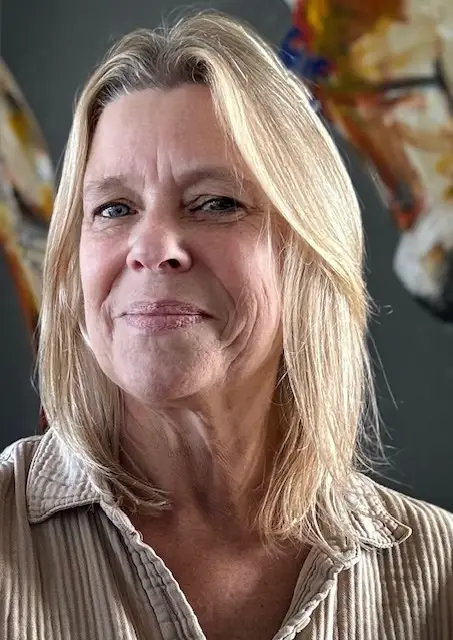
Growing up in a family where creativity was as natural as breathing, Irmgard Geul learned early that making was simply part of daily life. From couture sewing scraps in her mother’s studio to building projects alongside her siblings, her path as an artist was shaped by curiosity, discipline, and deep emotional connection. Today, her richly layered work blends paint and stitch to explore memory, landscape, and the enduring presence of nature.
What is your earliest memory of making something with your hands?
Probably when I was four or five years old. I come from a large, very creative family of nine children, and I am the baby. We were always making something.
My mother was a couture seamstress, and I loved watching her create the most beautiful dresses. I grew up seeing her sewing, applying embroidery, beads, and drawing patterns. She always gave me scraps, and I realized I could make things of my own.
My father was an electronic inventor and was also constantly working on new ideas. My older siblings were busy with engines or cars, building treehouses, remodeling houses, or building boats.
As an Amazon Associate I earn from qualifying purchases. Read more about our affiliate linking policy.
I was usually drawing, making collages, or hanging out with them. At school, teachers often told me I didn’t need to decorate all my homework with illustrations, but it never hurt my grades.
When did you first realize that creativity was going to be a big part of your life?
Because my whole family was creative, making things felt completely normal.
If my brothers wanted a sailboat, my parents would say, “Well, let’s build one.” First, they were allowed to just fix an old one, but that boat almost sank. Then my father taught them how to find a design, make drawings, and follow a plan.
If I wanted a dress, my mother would say, “Let’s design one together and make it.” I didn’t fully realize how special this upbringing was until much later, when I began writing artist statements and giving artist talks.
Was there a moment, or even a small comment, that made you think, “I’m an artist”?
My great-aunt and uncle were artists, and my mother took care of them in their later years. I often delivered meals with her and loved spending time in their studio, surrounded by their work. Even at a young age, I knew: this is me. I told everyone I was going to be an artist like them.
When I was 19, I attended art school (HKU in Utrecht), however, it was a real eye-opener. I felt like everyone there was an artist—except me—and it took time to find my confidence. Life also gets in the way; you need to make a living, and there isn’t always time to play.
Finally, after my first solo exhibition in the United States, I felt confident enough to say, “I am an artist.”
How did your creative path lead you from the Netherlands to the United States?
At the time, I was working as a designer for FILA/Benelux, and they attended sporting goods trade shows twice a year in the U.S., in Atlanta and Chicago.
It was actually my love for horses that brought me here, combined with a broken heart and the excitement of starting a new life in a different country.

How has living in different places shaped the way you see the world and make art?
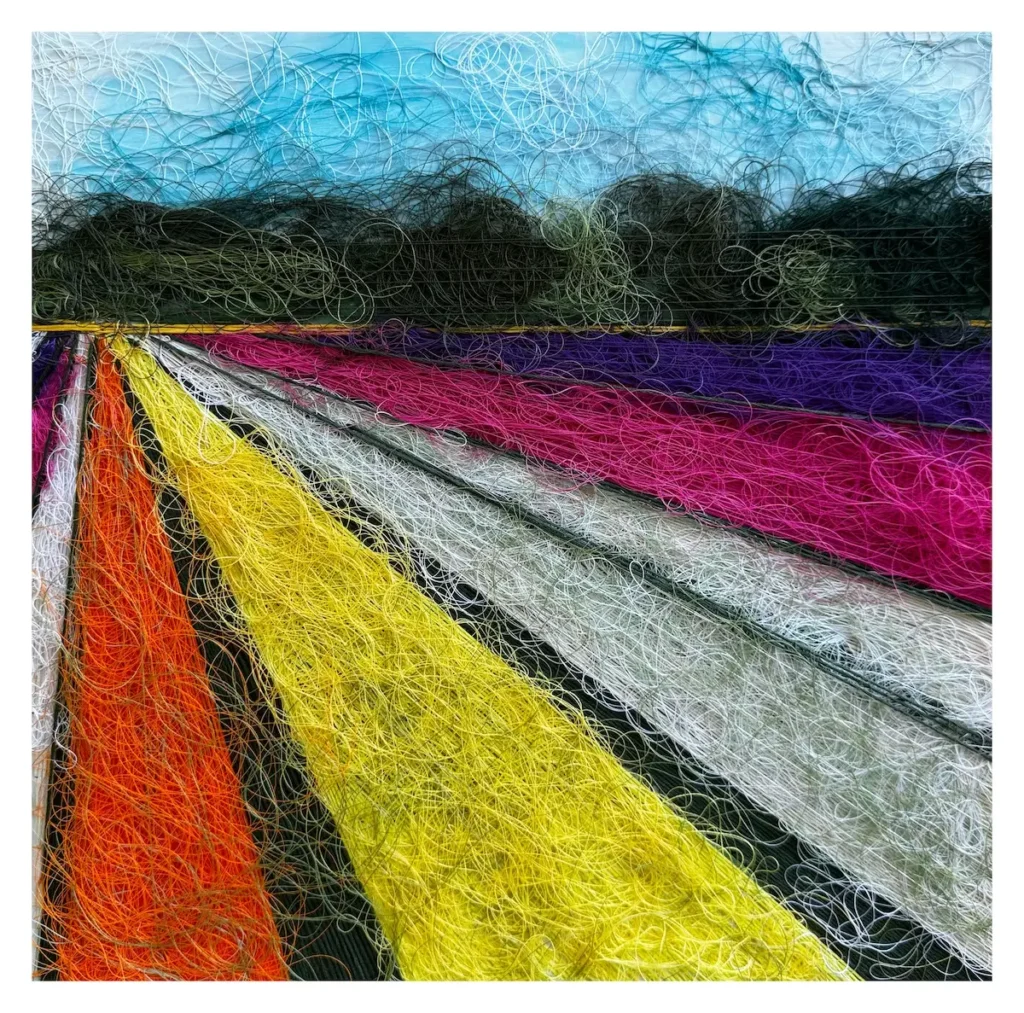
It has had a huge influence on how I see color. Every country has its own color palette, and before you know it, those colors carry the emotions of your travel experiences.
Living in different places also makes you more flexible—you learn that you can survive anywhere. I believe it is essential for artists to be exposed to different cultures; it makes you more worldly and confident.

Your work often feels connected to land, memory, and emotion. What inspires you most right now?
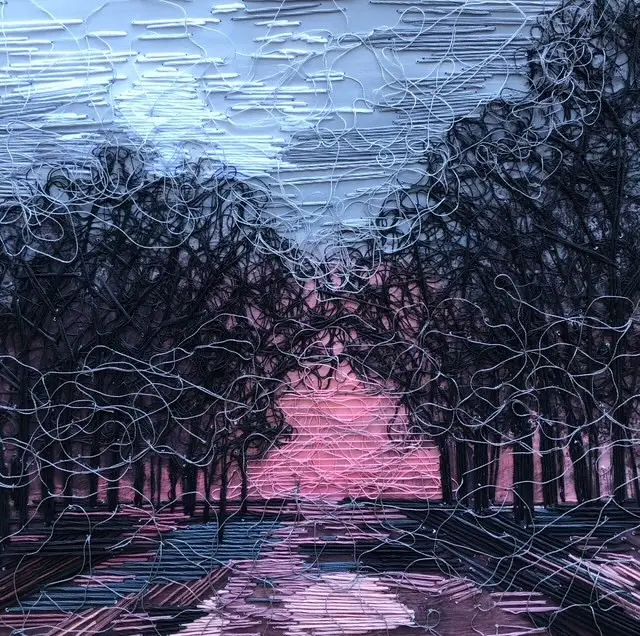
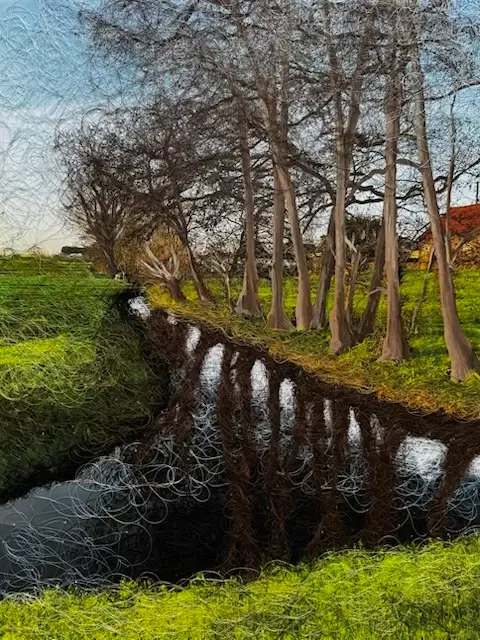
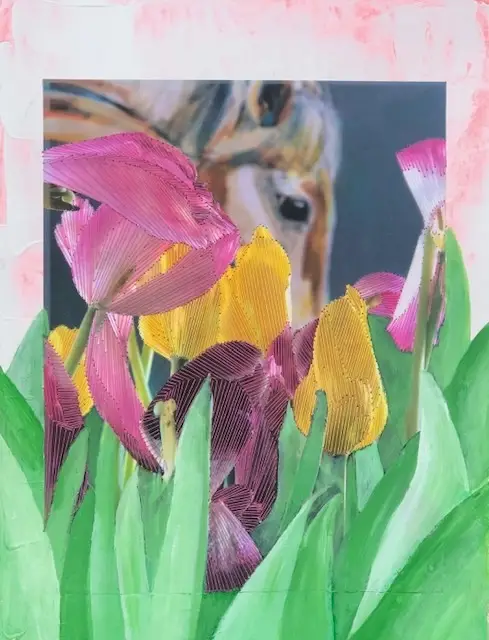
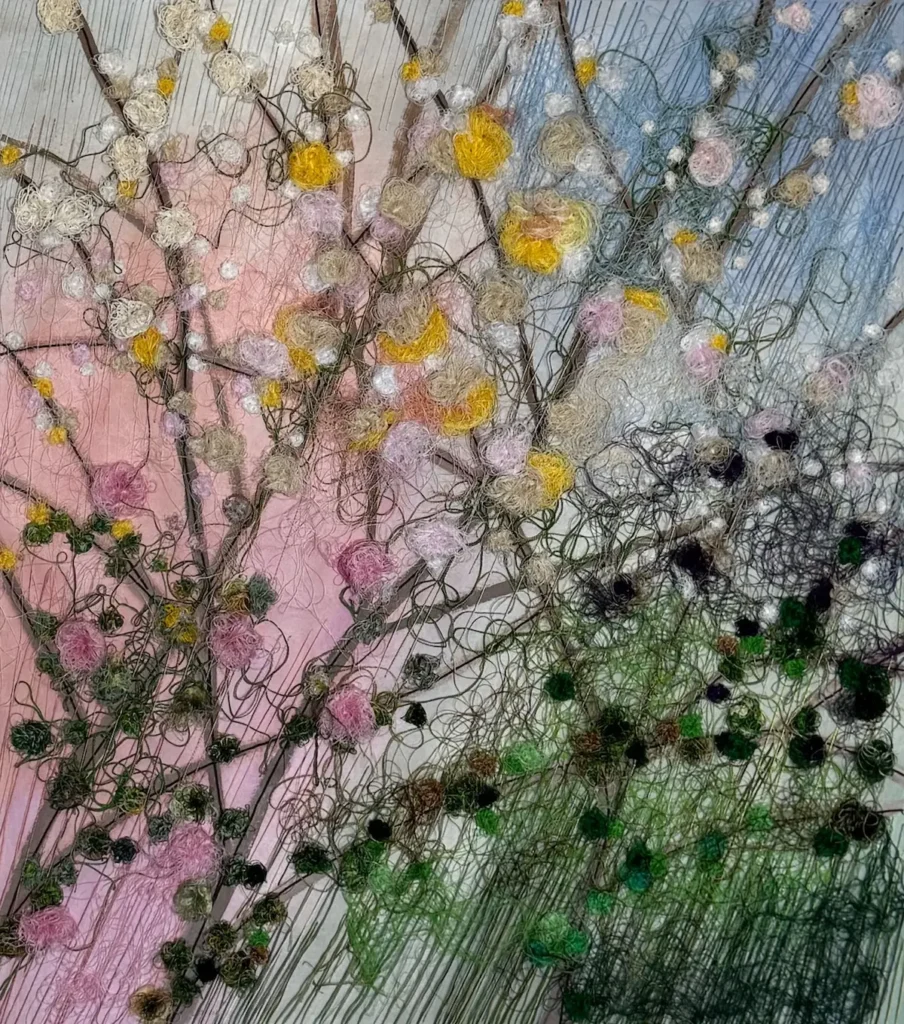
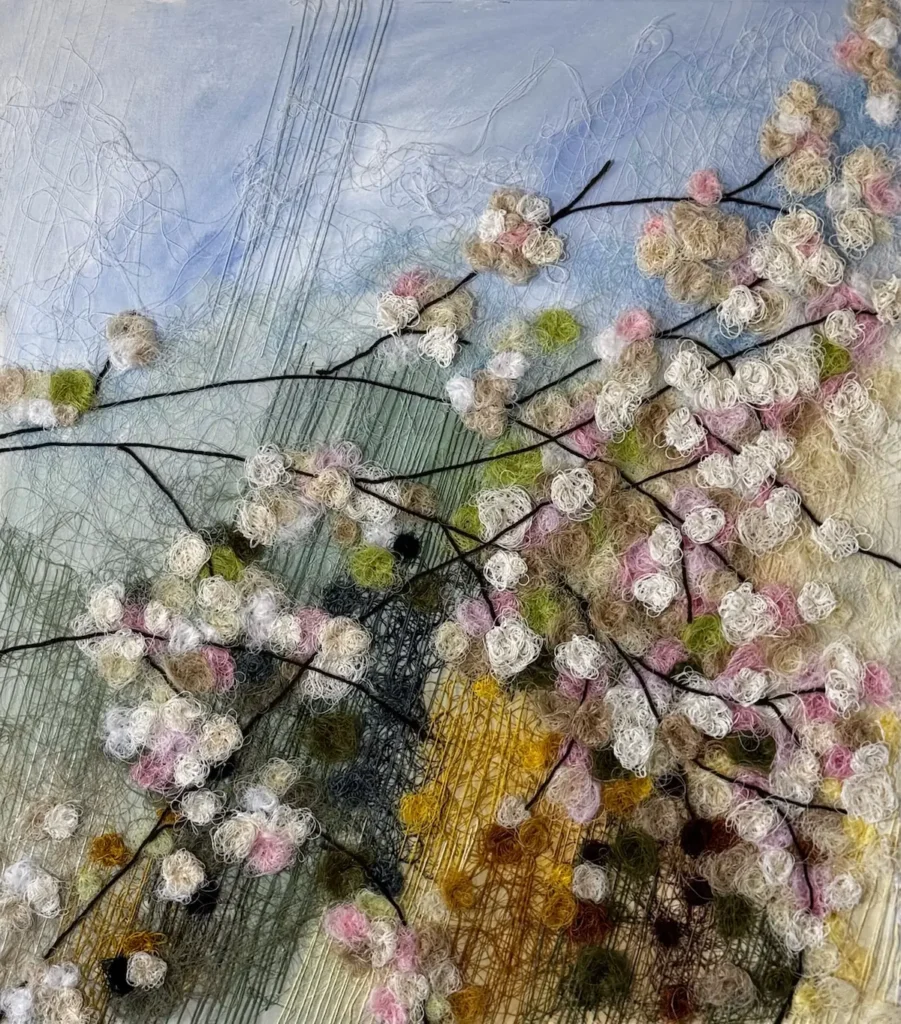
Nature is my biggest inspiration. It endures, evolves, and is never boring. I strongly believe that the earth does not need us as humans, it can thrive perfectly well without us.
How does your Dutch heritage show up in your work, even if quietly?
It’s always there, because I am Dutch—that’s my culture. I listen to Dutch radio, read Dutch books, and read a Dutch newspaper every day. I still live my life in the U.S. as a visitor.
Even in the grocery store, I’m always looking for products made in the Netherlands—I’m on constant “Dutch alert,” haha.
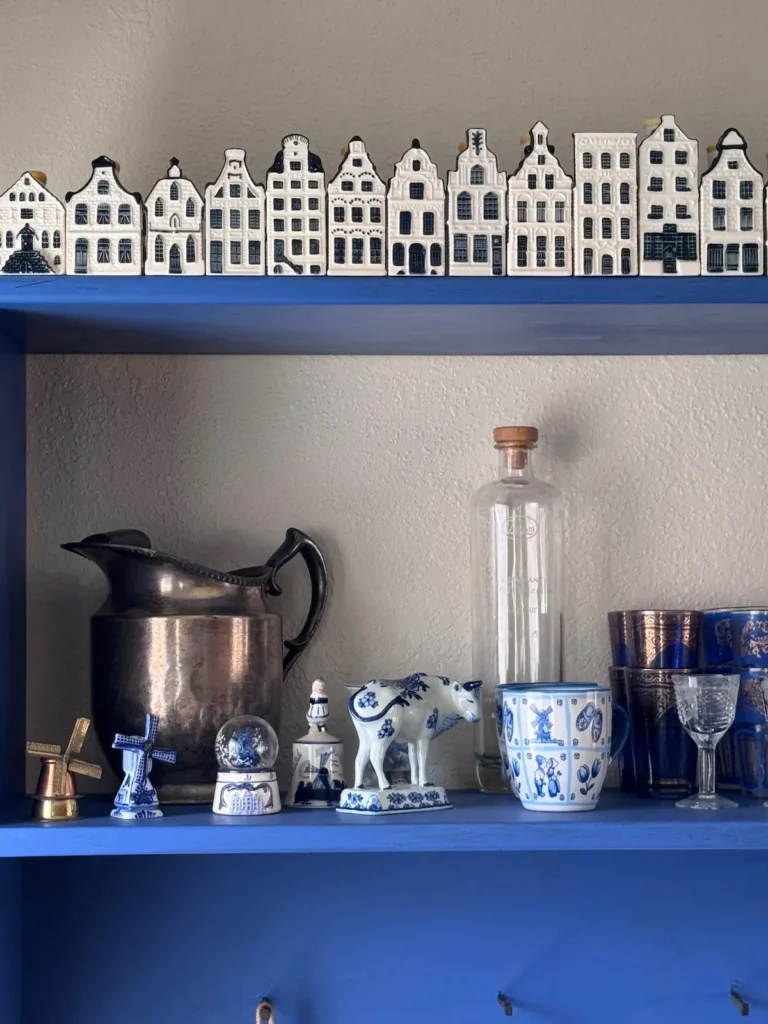
Dutch art history is incredibly rich: Rembrandt, Van Gogh, Vermeer, Delft Blue, tulips, windmills. All of this is somehow quietly intertwined in my work.
Do you keep an inspiration journal, photos, or sketches, or do you work more from intuition?
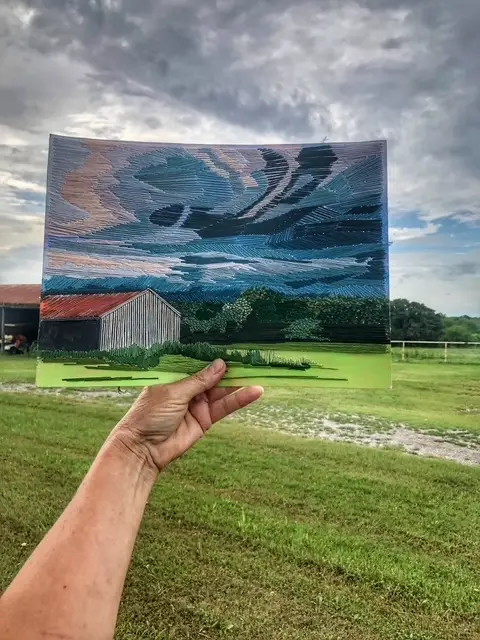
I usually begin with a vision that comes to me while dreaming, walking, or driving. I write it down in words and add a small sketch. That doesn’t mean I start working on it right away, each idea finds its moment when the time is right. I also visit many art exhibitions and museums, which are to me, very inspiring, in a way to execute my own work, such as framing, size of work, Artist statements, Art titles, and how it is curated.I also take lots of photos with my iPhone, sometimes as an inspiration tool but also as a verification of a certain composition, especially with my landscapes.
Describe your creative space.
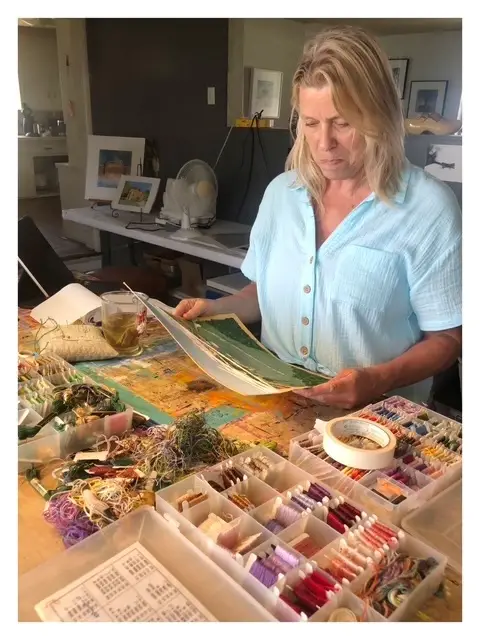
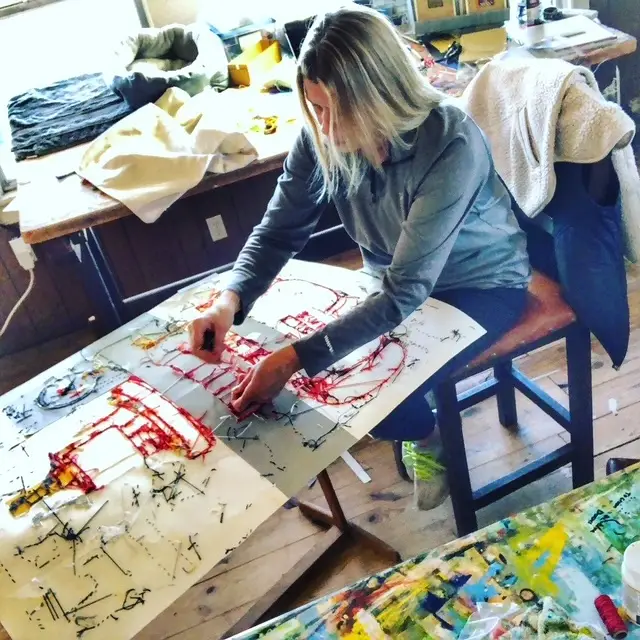
My studio has white walls and lots of tables so I can work on multiple projects at once. I used to work on the floor, but in recent years I prefer a higher drawing table where I can stand or sit on a tall chair.
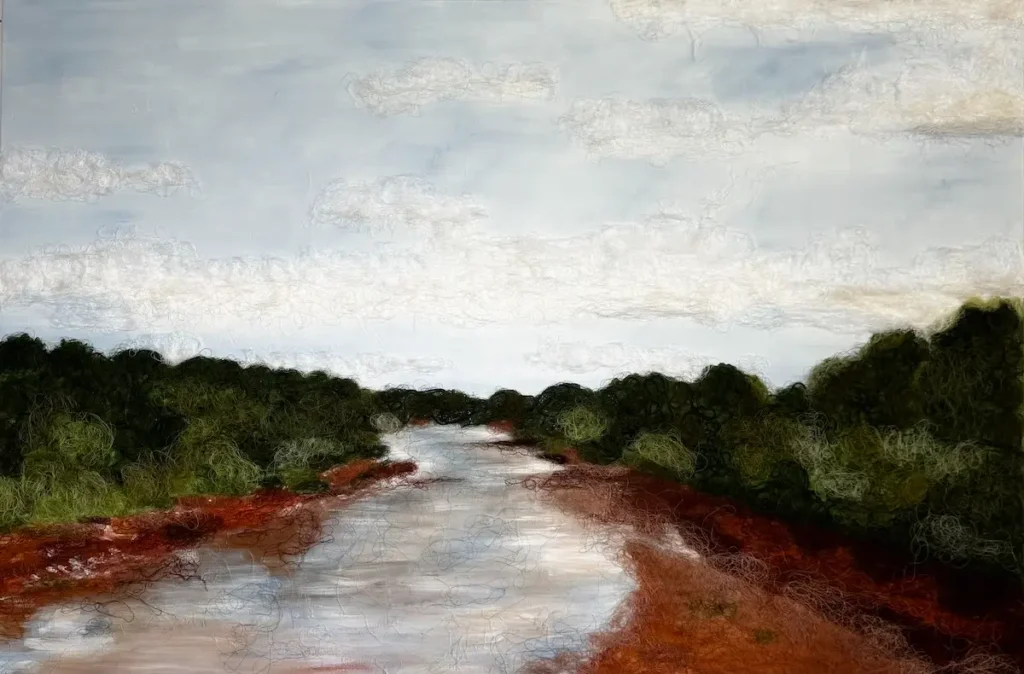
I have boxes full of fiber, wool, cotton, and embroidery thread, organized in a way that may not look neat but makes sense to me. Most of the materials come from garage sales or have been gifted to me, including the plastic tubs.
I also have many different types of paper organized in an old bookcase, so I can always see what’s available. The studio is filled with art books, a display of Dutch objects, mostly Delft Blue, pictures of my parents, wall-posters of my past exhibitions, and wall-posters of art exhibitions I have seen around the world from artists I have admired for a long time.
On the wall behind my desk, I have a physical monthly and yearly planner. Then I have one wall dedicated to artworks by dear artist friends. I also have 2 blank walls to hang the work I am currently working on. Sometimes they need rest in order to be finished.
What does a typical day in your studio look like?
I am extremely disciplined. I start at 10 a.m. and usually work until 6 p.m., six days a week. Sundays are for relaxing with my partner. If I have missed a couple of studio days, I get very anxious.
How did stitching become part of your painting practice?
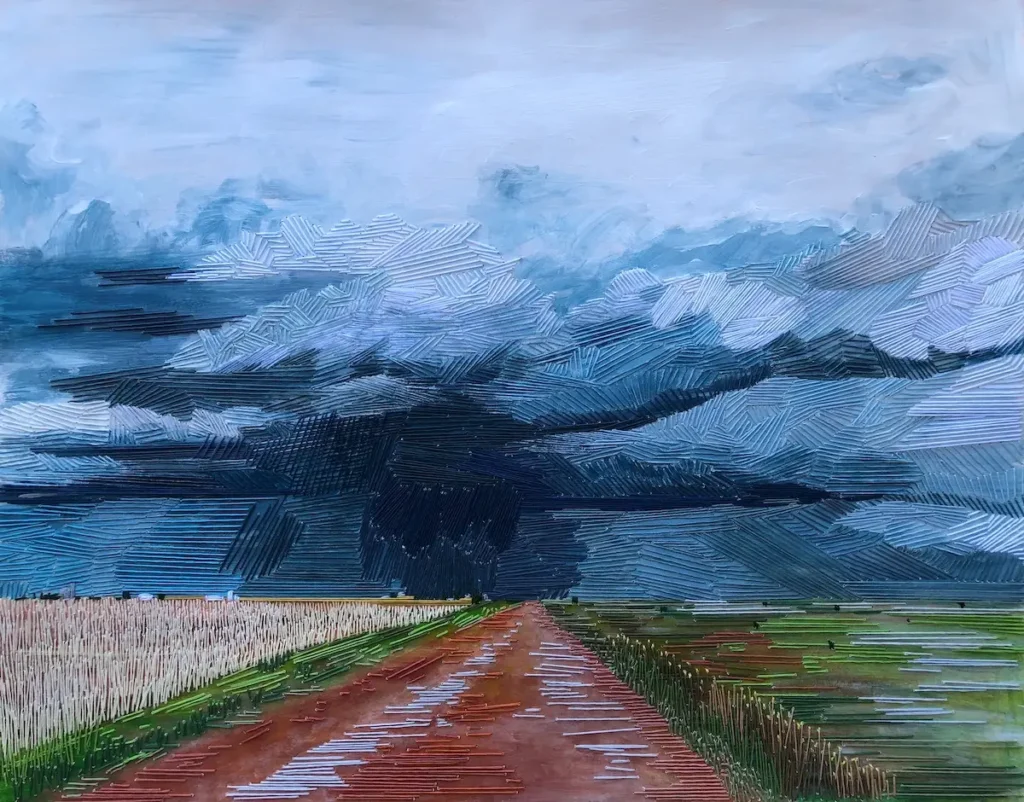
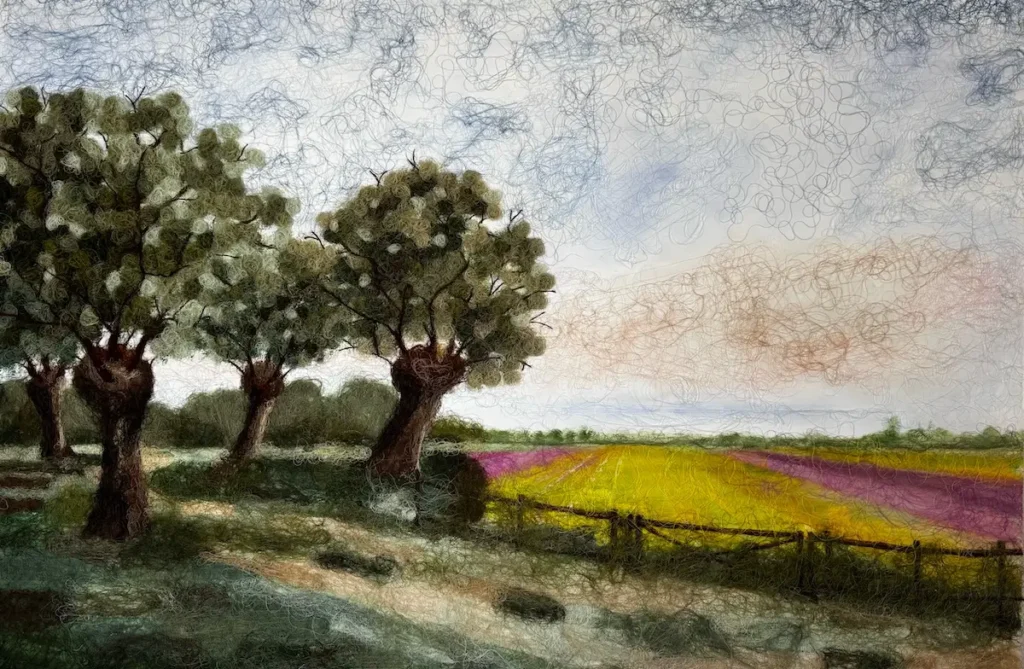
It all started during a Christmas visit back to the Netherlands. My sister gave me a box filled with materials from my (passed) mother’s sewing studio; her scissors, needles, threads, pincushion, fabrics, embroidery floss, buttons.
When I opened it, I became very emotional; the memories and even the smells were overwhelming. Back in the U.S., I was preparing for a large solo exhibition.
When at home, I opened the box again, and I instantly knew I had to do something with these materials and emotions. That was the first time I began using my mother’s sewing materials in my artwork.
Your work blends paint with thread. What does each medium give you that the other can’t?
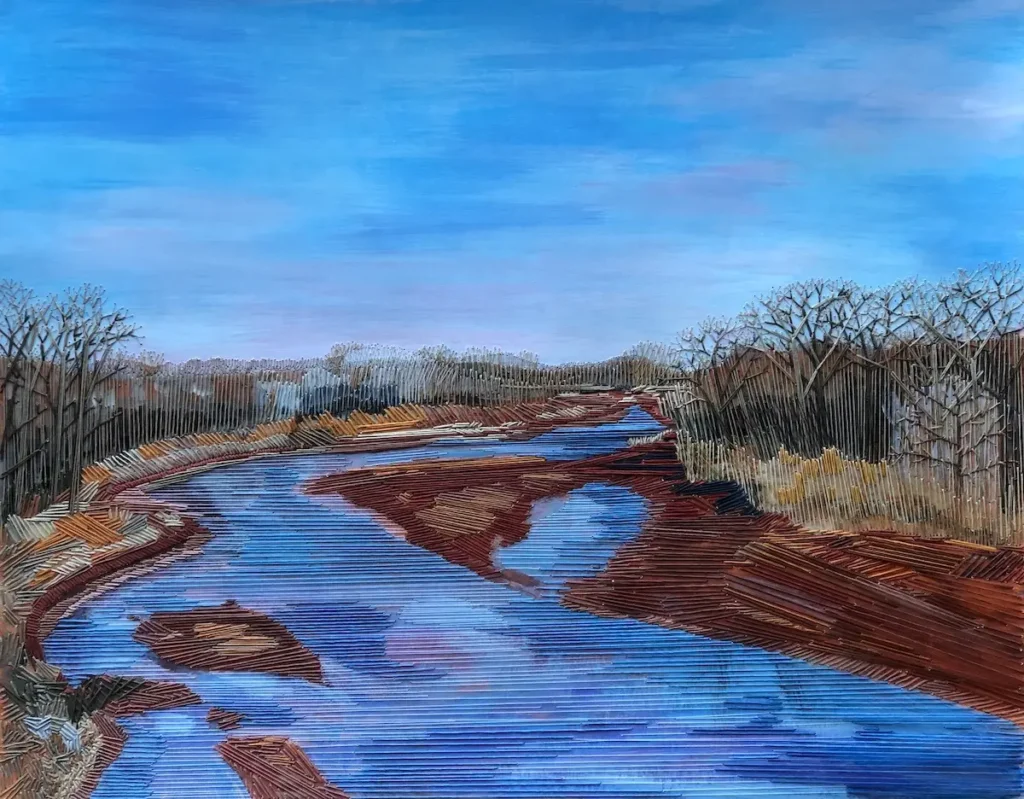
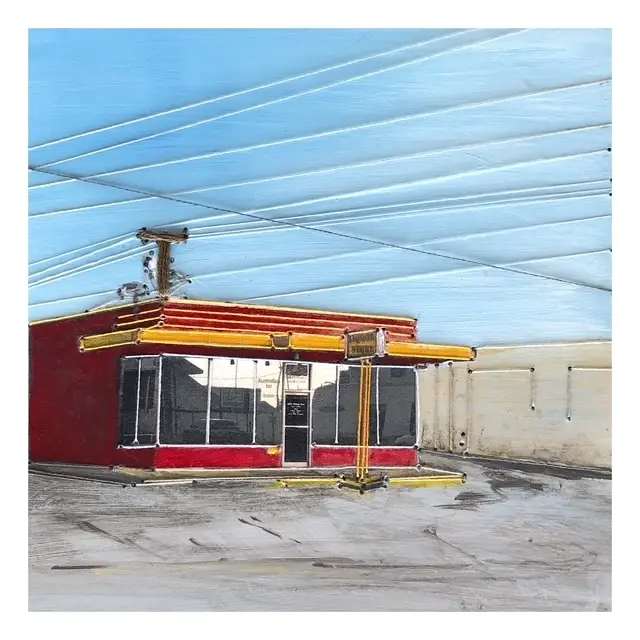
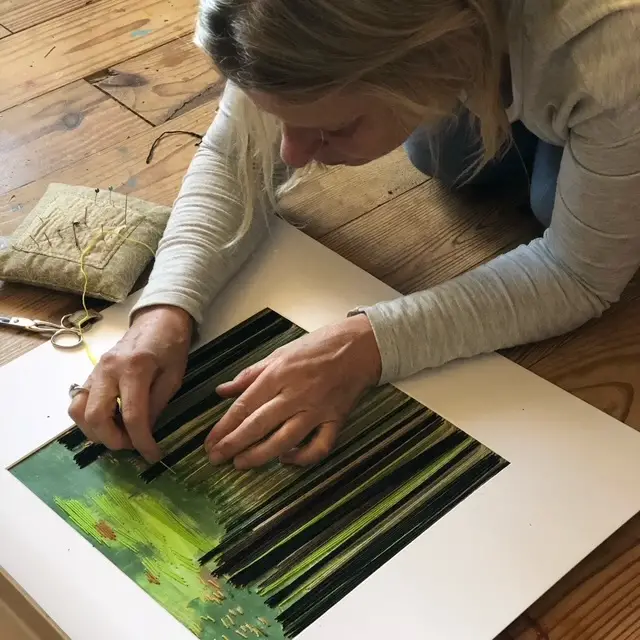
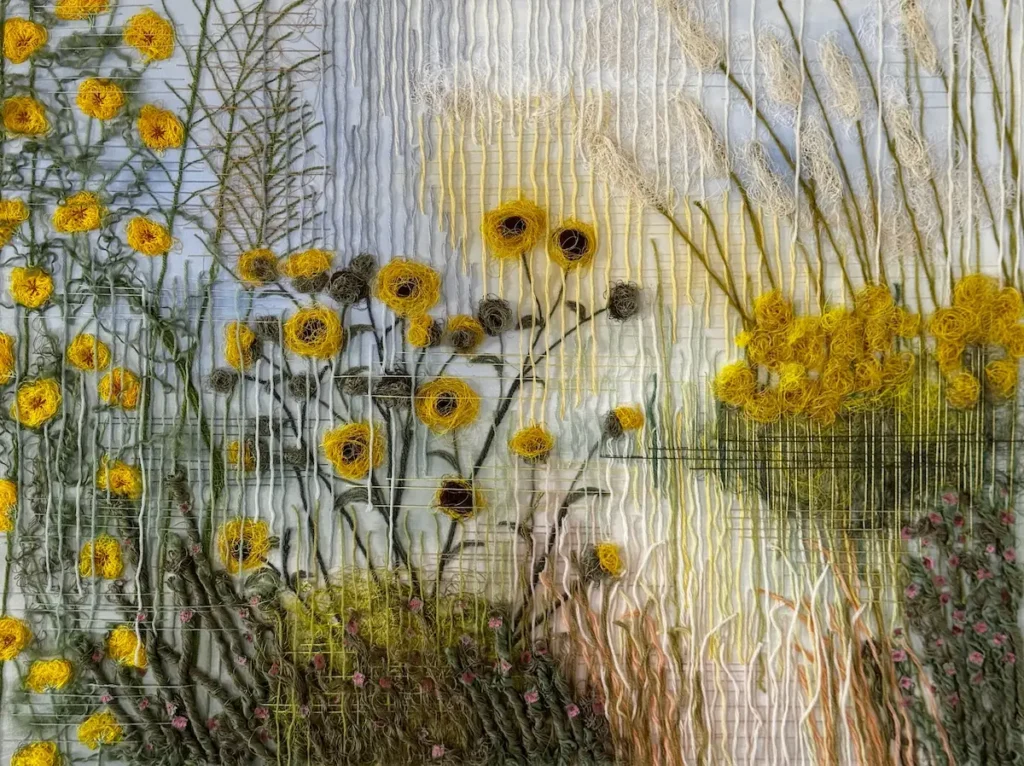
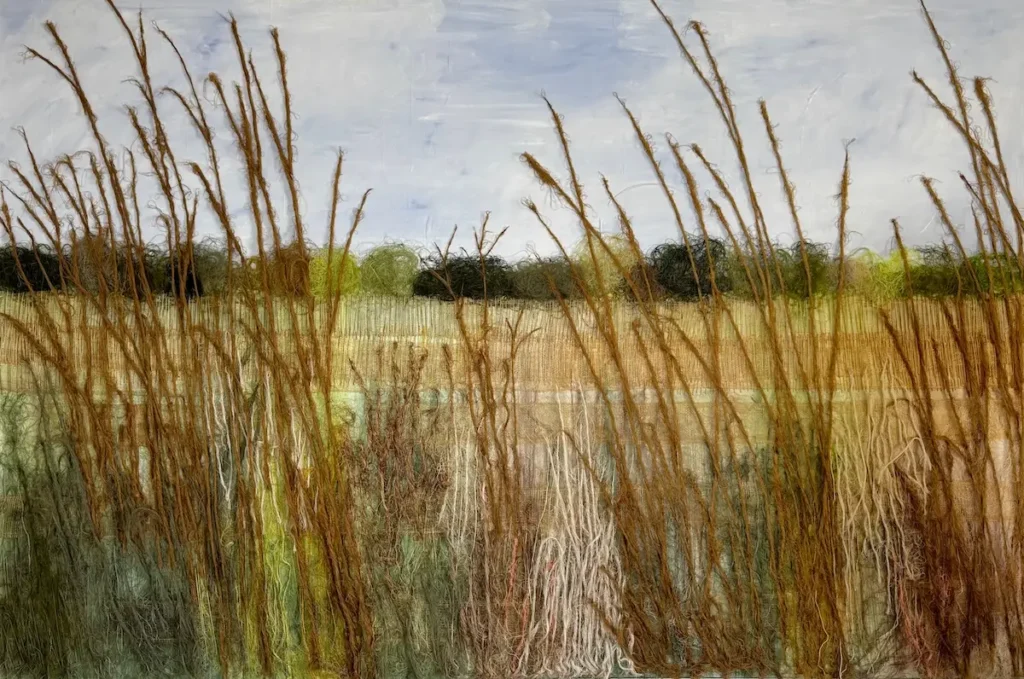
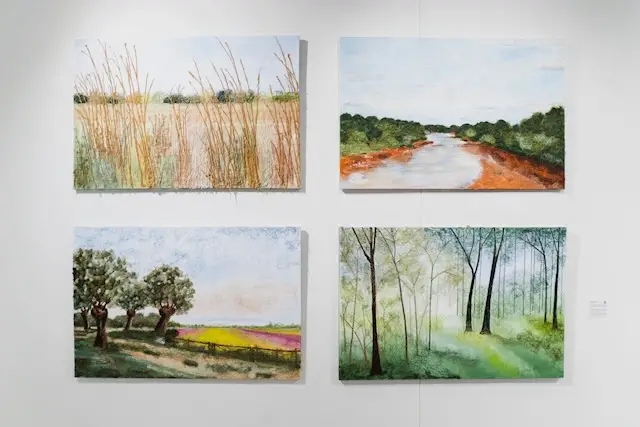
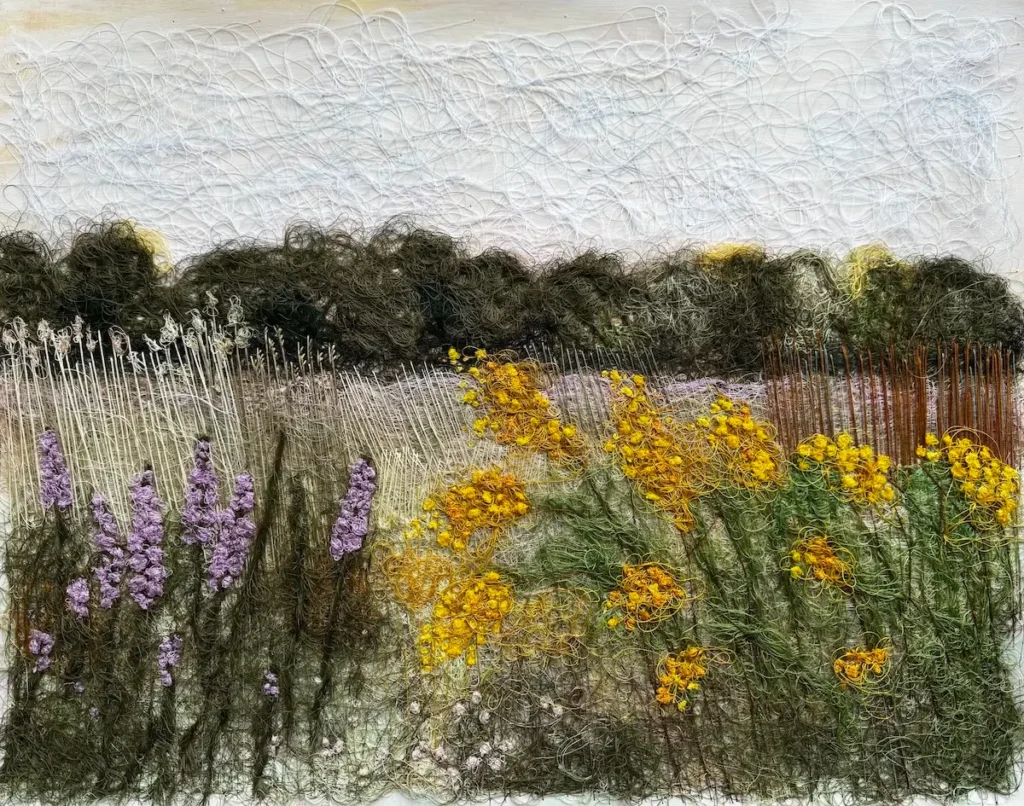
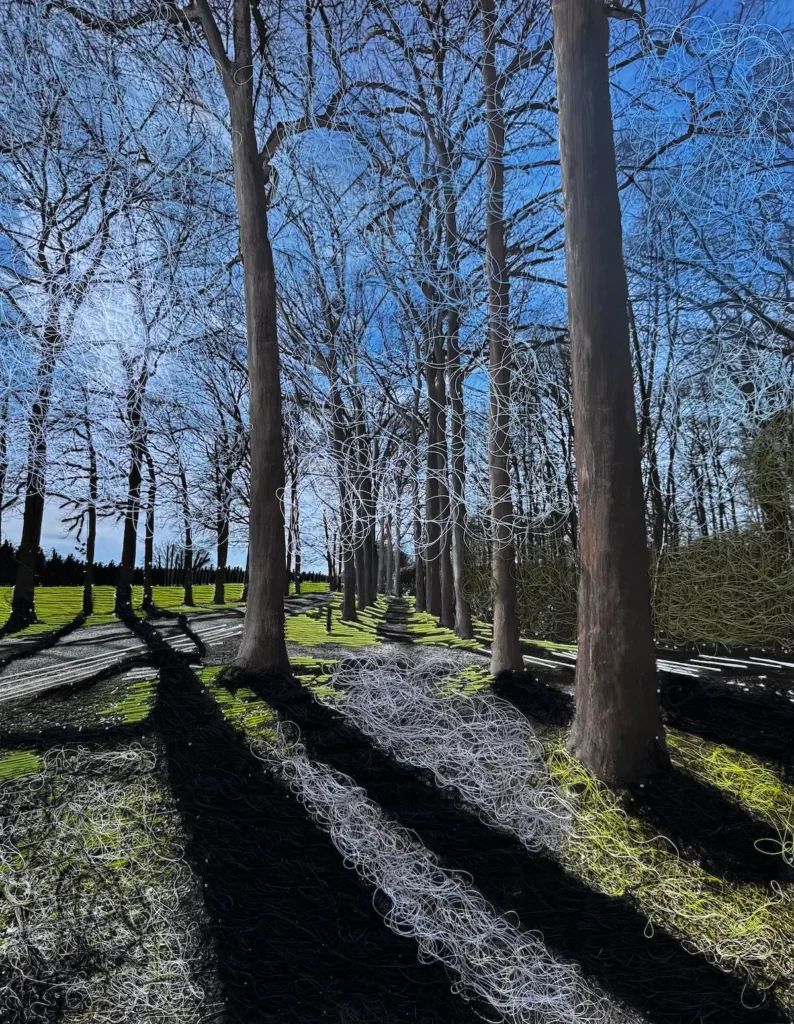
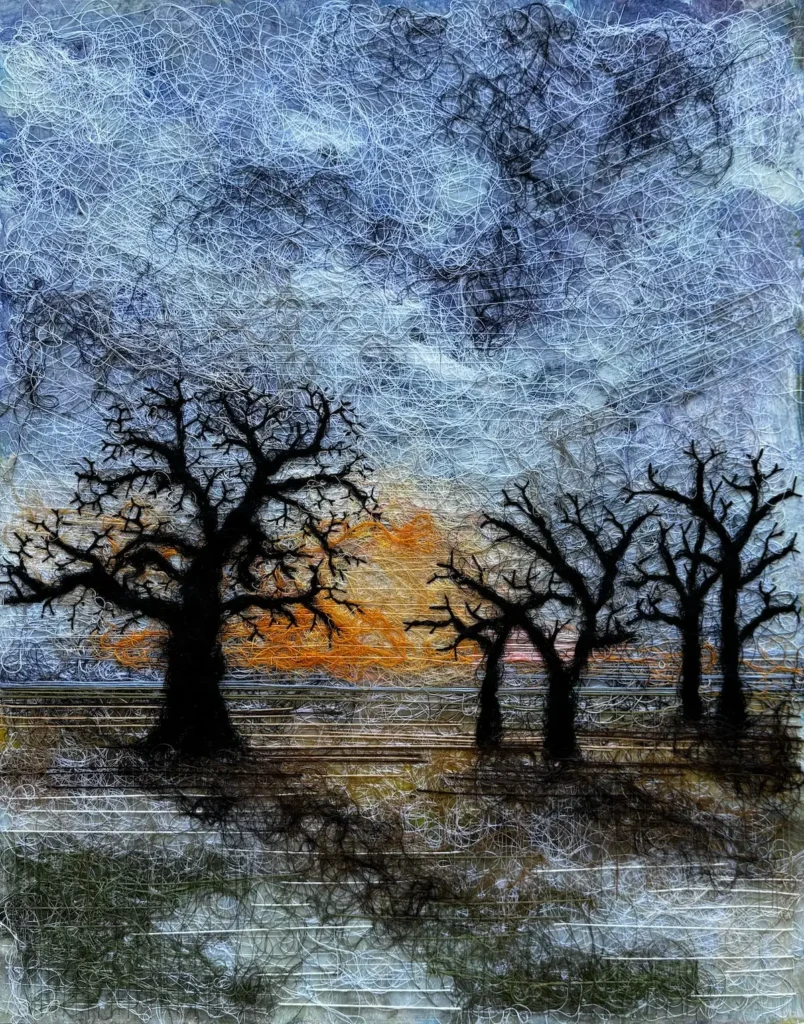
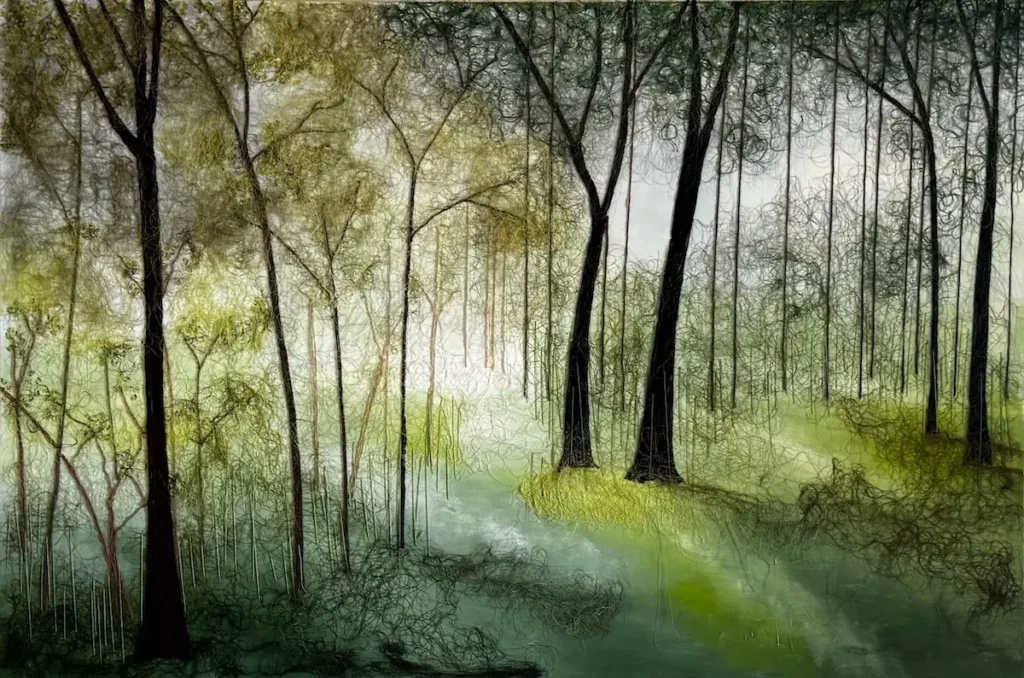
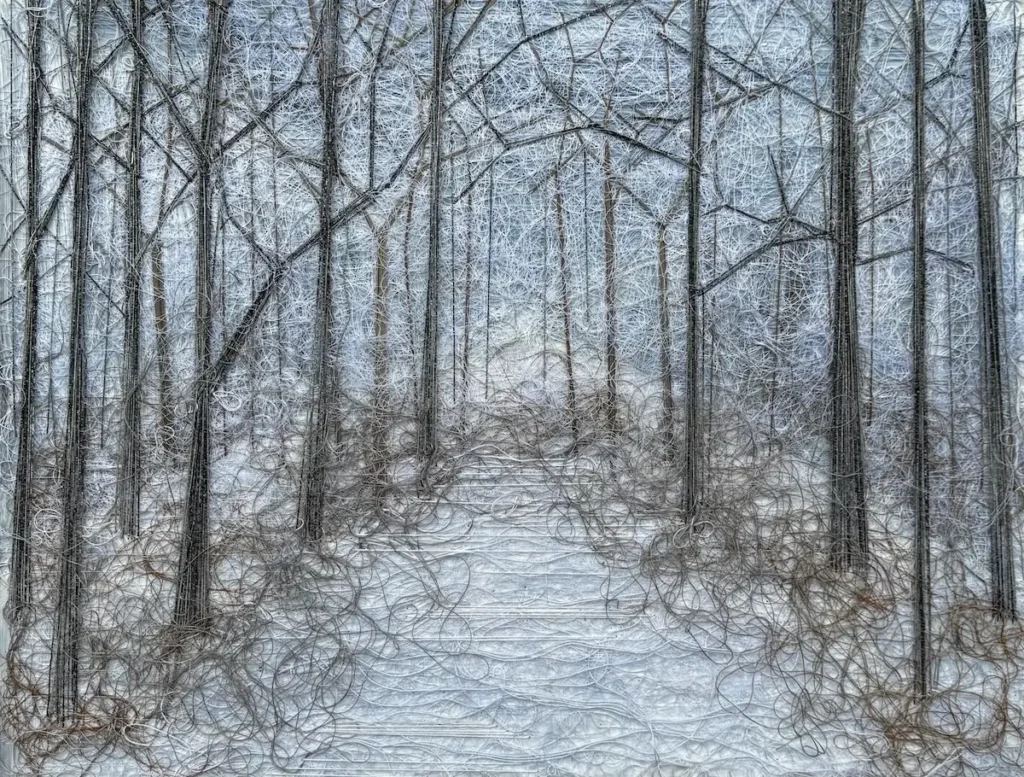
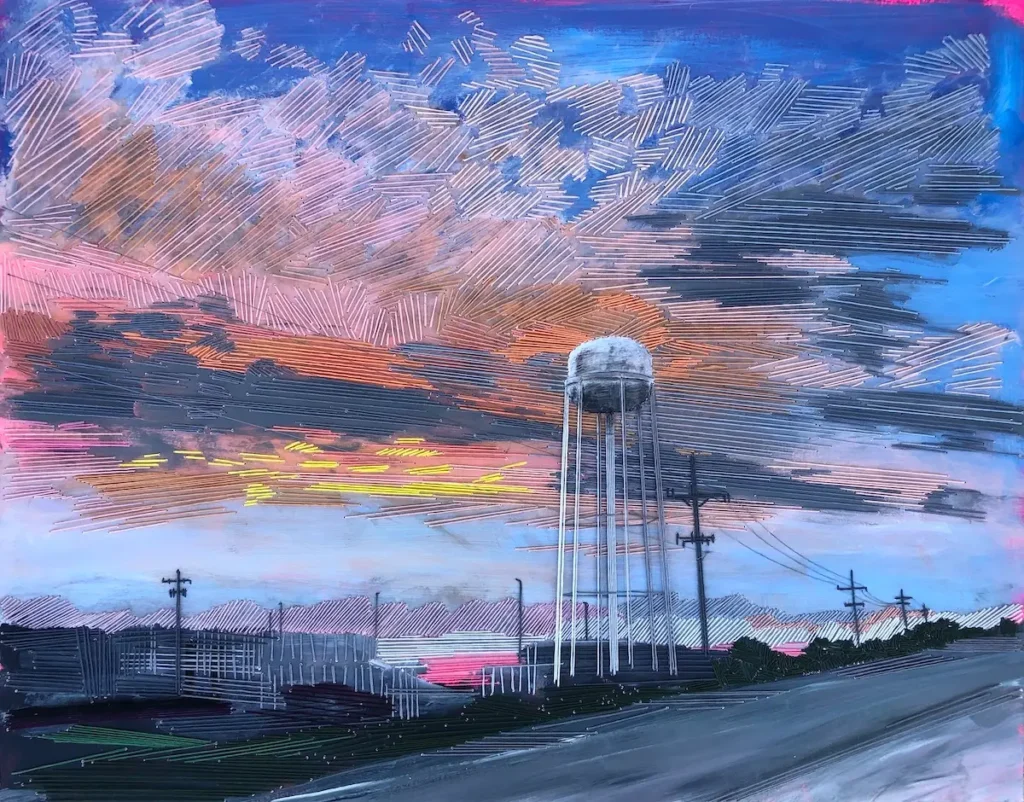
Painting alone never fully fulfilled my vision, I was always searching for more texture. When I started stitching over my paintings, the work and my vision truly came alive.

Is there a part of your process that feels almost meditative?
Definitely the stitching. I forget to drink, eat, and completely lose track of time.
How do you handle days when nothing seems to come together?
I force myself to create something everyday, sketching, writing, working with clay, or even using beads. It might not make any sense and it might end up in the trash but I accept those days, because you never know when they might lead to a new discovery.
How has your work changed over the years—slow shifts, sudden turns, or both?
It has changed organically.
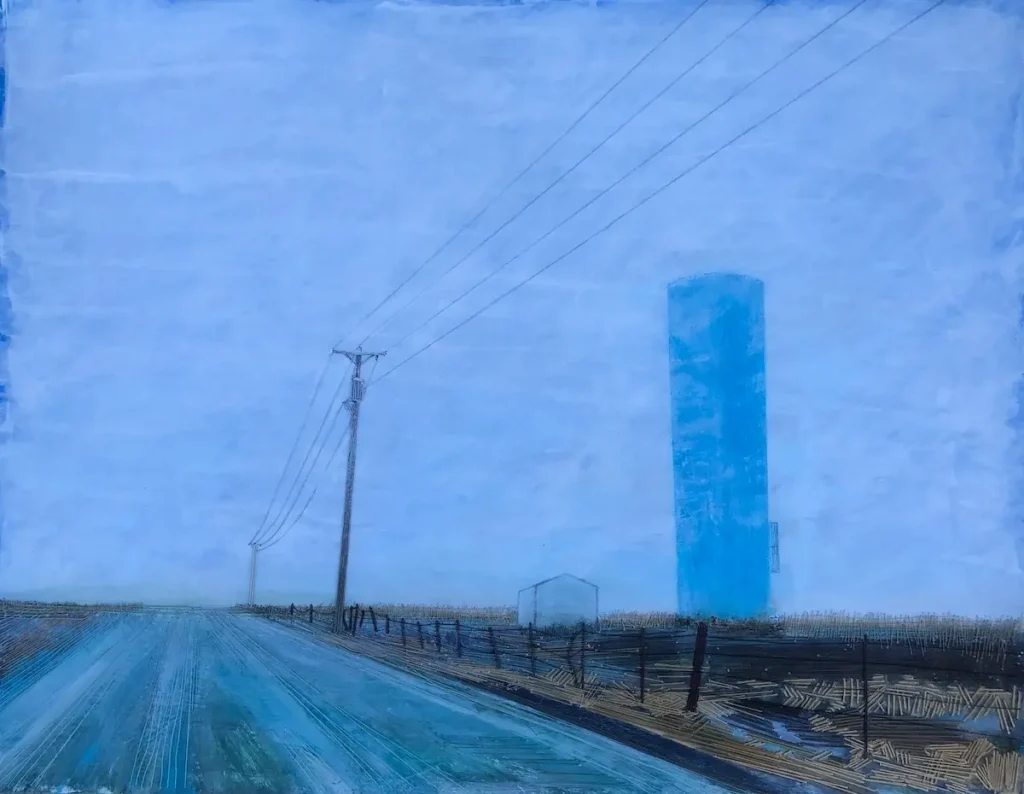
When I ran my horse business, I painted horses, barn cats and dogs, cowboys, and cows.
Over time, my work became more abstract, until I was painting only abstractions.
Gradually, landscapes began to emerge within them when I created more time to walk and hike. I would say I shift subjects or styles about every ten years.
What has surprised you most about choosing an art-centered life?
I simply love everything about art. My mother took me to the theater, opera, and museums from a young age. I grew up surrounded by art and never wanted to do anything else, except horseback riding.
What do you wish you could tell your younger creative self?
Be patient and trust your intuition!
Where can people see your work?
Website: www.irmgardgeul.com
Instagram: @irmgardgeul
Facebook: @IrmgardGeulArtist
Artwork Archive: https://www.artworkarchive.com/profile/irmgard-geul
Interview posted January 2026
Browse through more mixed media projects and inspiration on Create Whimsy.