

Eva Saunders of Gingerly Quilt Co brings her whole creative life full circle — from early days stitching beside her German grandmother to shaping bold, modern quilts that blend art, storytelling, and design. In this interview, she shares how quilting became both a grounding practice and a vibrant outlet for her visual imagination.
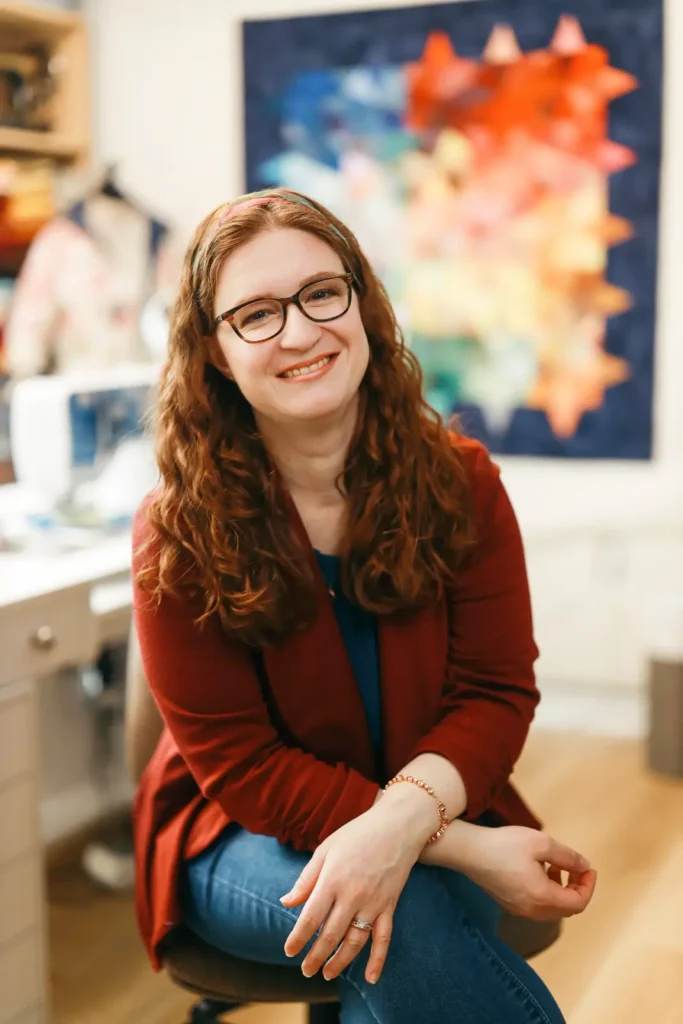
Tell us how you first discovered sewing. What are your earliest memories at the sewing machine?
My German grandmother was a seamstress by trade.
I was very young, somewhere between 3 and 5 years old, when I first stepped into her sewing room and was amazed. I watched her tailor clothes and sew curtains; she kept me busy by giving me buttons to play with and fabric scraps to organize until I liked their layout.
I don’t remember when she first let me use a sewing machine, but I do remember lots of hand appliqué and hand quilting with her when I visited her in the summer, sitting in her garden and just slowly sewing by hand.
As an Amazon Associate I earn from qualifying purchases. Read more about our affiliate linking policy.
It wasn’t until I was a teenager that I remember using her hand-me-down Pfaff machine to alter and sew clothes with her.
Was there a moment in your life when you decided, “I want to make quilting more than just a hobby”? How did you go from making a personal quilt to starting Gingerly Quilt Co?
After I had found my way back to sewing by making masks during the pandemic, I had so much fabric left over that I decided to make a quilt out of it.
I quickly got hooked on quilting again, during a time when I needed something to take my mind off things. I dove headfirst into modern quilting, and as a trained graphic designer, I quickly wanted to make my own patterns.
While I was making my third or so quilting project, my husband watched me cutting fabric and commented on my “pizza cutter”. I corrected him that it was, in fact, called a rotary cutter, but I saw the wheels in his mind were already turning. He really wanted me to make him a pizza quilt next.
I modified Slice of Pi Quilt’s famous “Exploding Heart” pattern (with her permission) to create an “Exploding Pizza” quilt. When I shared my finished quilt in a modern quilting Facebook group, a lot of people asked if I could write a pattern!
Using my graphic design skills and of course, the help of a tech editor, I got to work and published my first three pizza-themed patterns in 2022. A quilt, a tote bag, and décor items that all feature a yummy slice of pizza made with Half Square Triangles. This is how Gingerly Quilt Co. was born.
Shortly after, in February of 2023, I took Amber Elliot’s Pattern Writing Academy online class, which helped me streamline my pattern-making process. I love how I can combine my passion for graphic design with the joy of sewing!

How have your grandmother’s sewing traditions shaped your creative voice?
They absolutely have! I didn’t actually realize it until she passed away a few years ago.
I got a chance to go back to her sewing room in Germany, looking at all of her quilts one more time. I got chills when I noticed that a lot of them were colorful, modern, and geometric, just like the ones I like to make and create the most.
I saw a booklet about the Austrian artist “Hundertwasser” in her sewing room, who is known for his vibrant colors and modern aesthetic, so I believe she was inspired by that. My grandmother’s style was so different from what I see with traditional quilting in the US, more modern and colorful.
My favorite quilt of hers is one in which she masterfully arranged all the colors of the rainbow from what I’m guessing were her scraps. I saw it and thought: she was such an artist. It made me believe that I was an artist, too.
Quilting is an art form, and quilters should consider themselves artists. This was the first impulse for me to teach art quilting classes and spread that message.
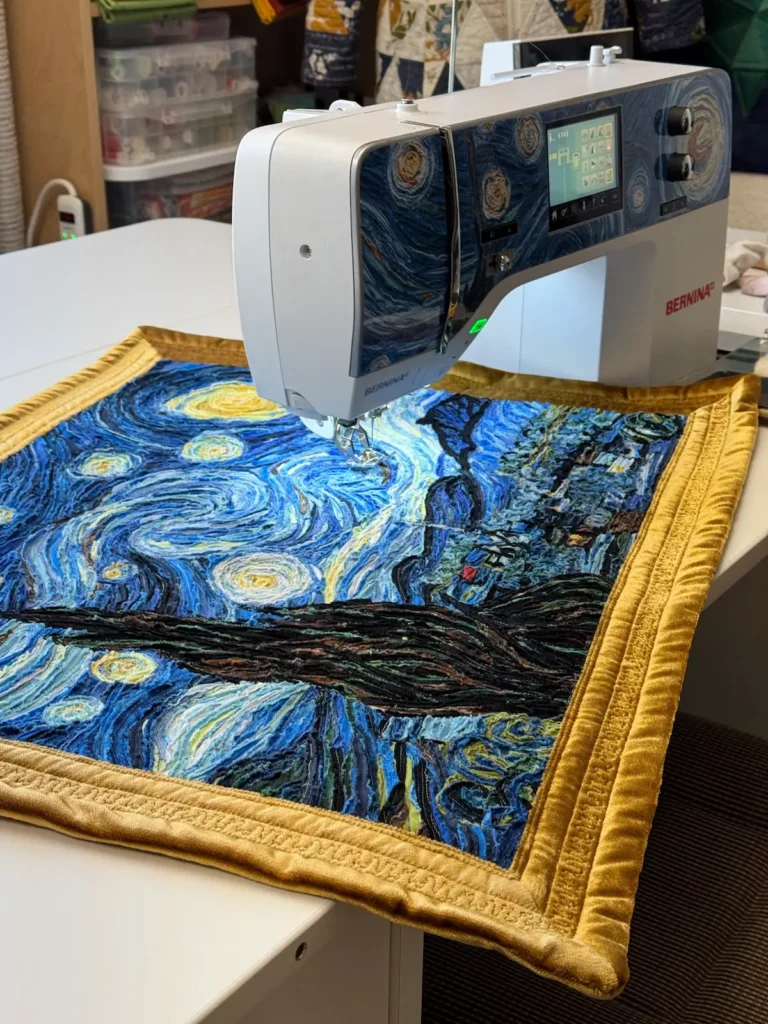
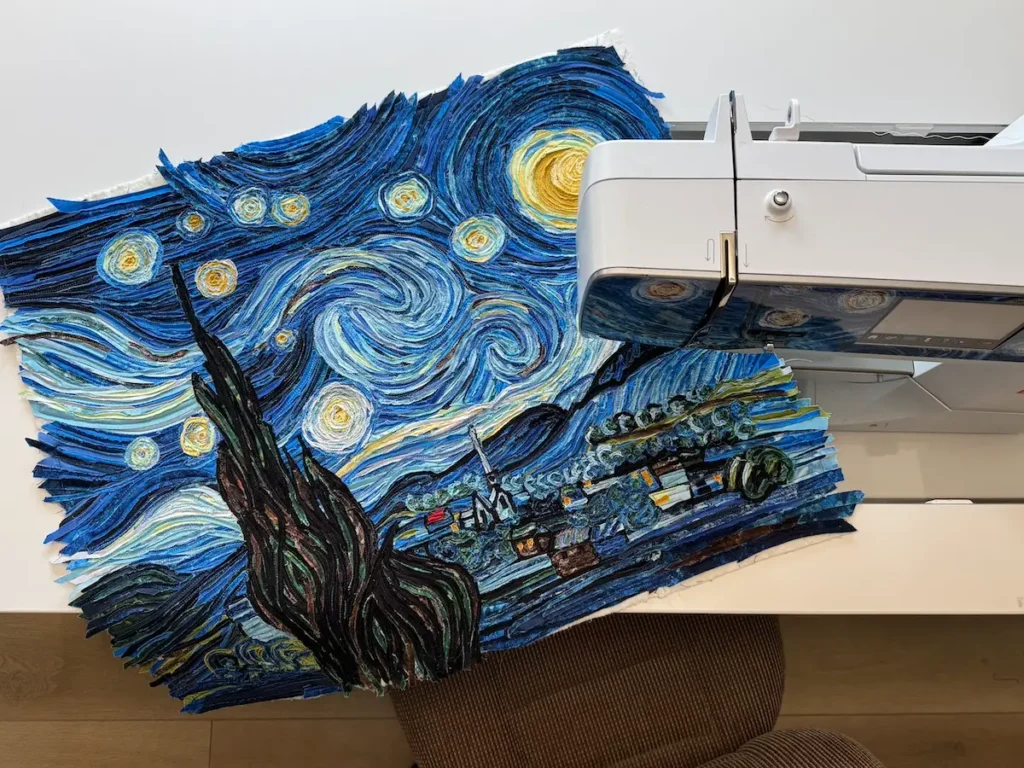
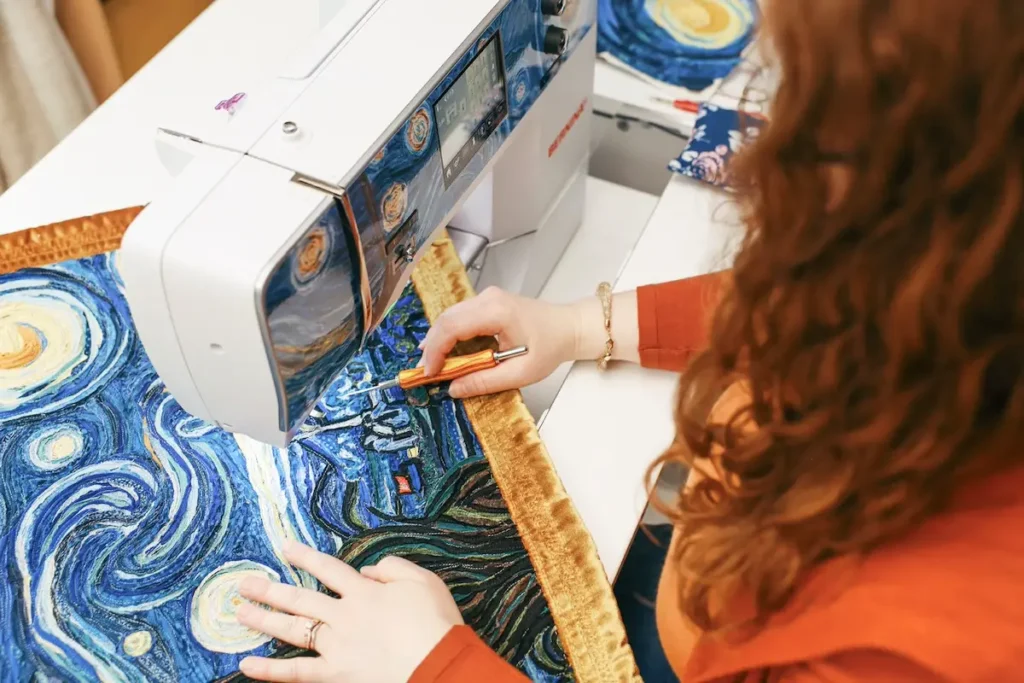
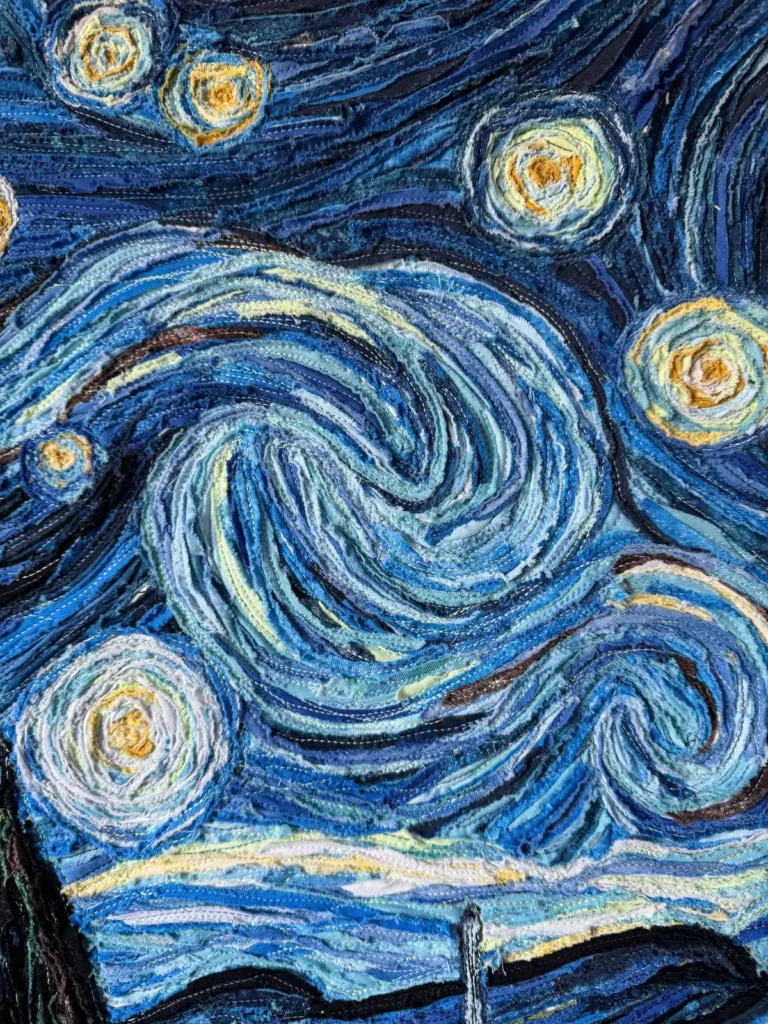
I had her quilt on my design wall during the filming of my first class, to remind myself of that first spark I had when I decided to create my “Starry Night” Masterclass. A class that teaches art principles and applies them to creating a Masterpiece based on Vincent Van Gogh’s painting.
When you design a quilt, do you ever think of it as visual storytelling? What story do you hope people feel when they make or see your quilts?
I have called myself a “visual storyteller” often, because throughout my life there has been an “invisible string” looping through my life and careers that boils down to visual storytelling.
I have loved writing stories since I was a child. I first studied photography and design for my undergraduate degree, then film and screenwriting afterwards – but nothing has been as fulfilling as weaving a feeling, moment, or story into a quilt with thread and fabric.
Every pattern I write is inspired by a moment in time or a story – like my pizza – which I think is true for many quilt pattern designers. Patterns usually boil down a feeling or story into a simple, geometric design.
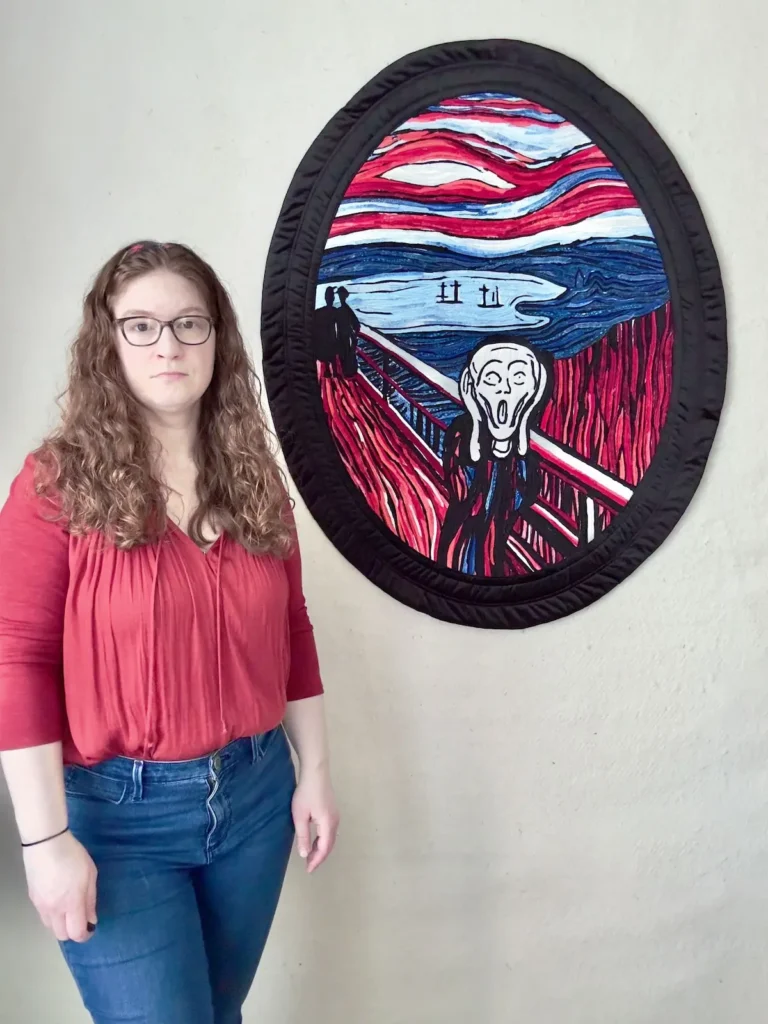
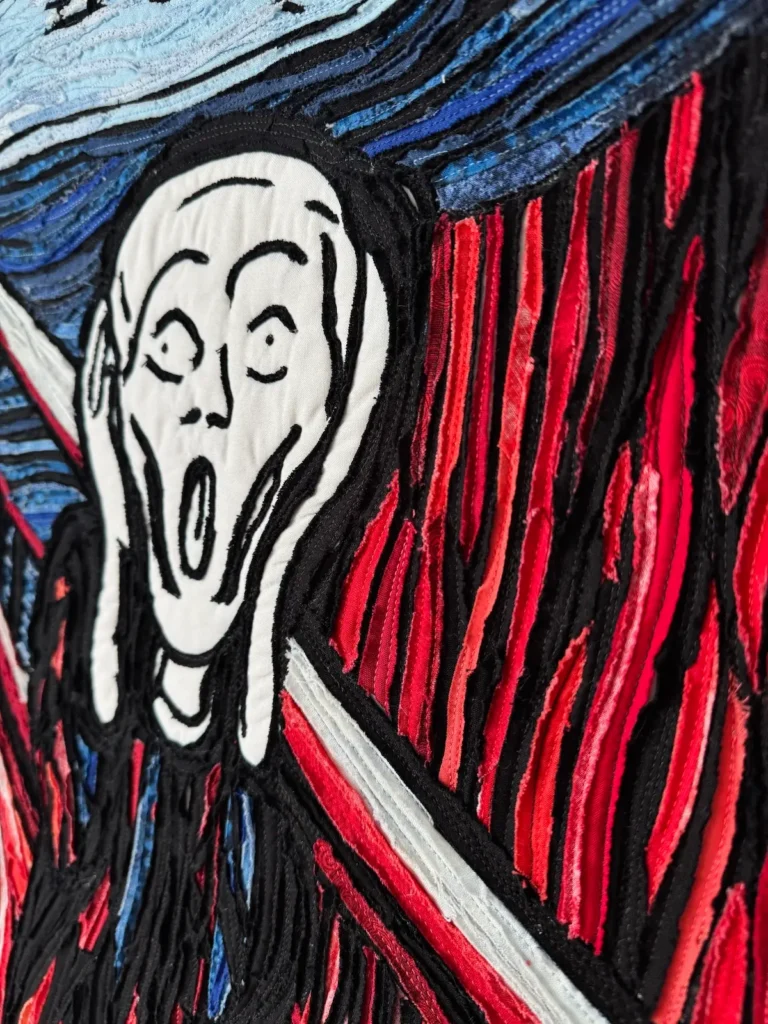
Quilters who make my patterns can add their own story to the patterns by using specific colors to create a mood or a memory. On the other hand, my more recent art quilting projects, like “The American Scream,” have been more story-heavy in that they are indeed more expressive and tell a specific story of my own.
I love inspiring quilters to create their own stories with my patterns, just as much as I like to invite them to stop and reflect when they see my art quilts.
How did your background in visual arts (before quilting) influence how you approach fabric, color, and composition?
My degree in design has given me a great foundation for making quilted art.
I think my biggest thing is to invite curiosity into my process. I love trying new things! I am so new to quilting as a medium (I have only gotten back into it for about 4 years) that I am still finding new favorite ways to use fabric and thread.
My “quilt painting” technique, where I appliqué fabric strips to mimic expressive oil paintings, is certainly one of my favorites, but may not be the last technique I try.
The same goes for quilting techniques – there is still so much for me to learn. I haven’t even gotten to trying different fabric substrates yet; I’m still trying all the different cotton fabric brands.
For color and composition, I’m relying mostly on my intuition for now, but I want to experiment more in the future. I specifically took on two fabric challenges this year to challenge myself more with my approach to color, and the results turned out so much better than I could have ever imagined!
There is so much to learn and try, and I’m sew excited to keep going!

Can you describe your studio setup? What does your workspace look like, and what makes it a creative home for you?
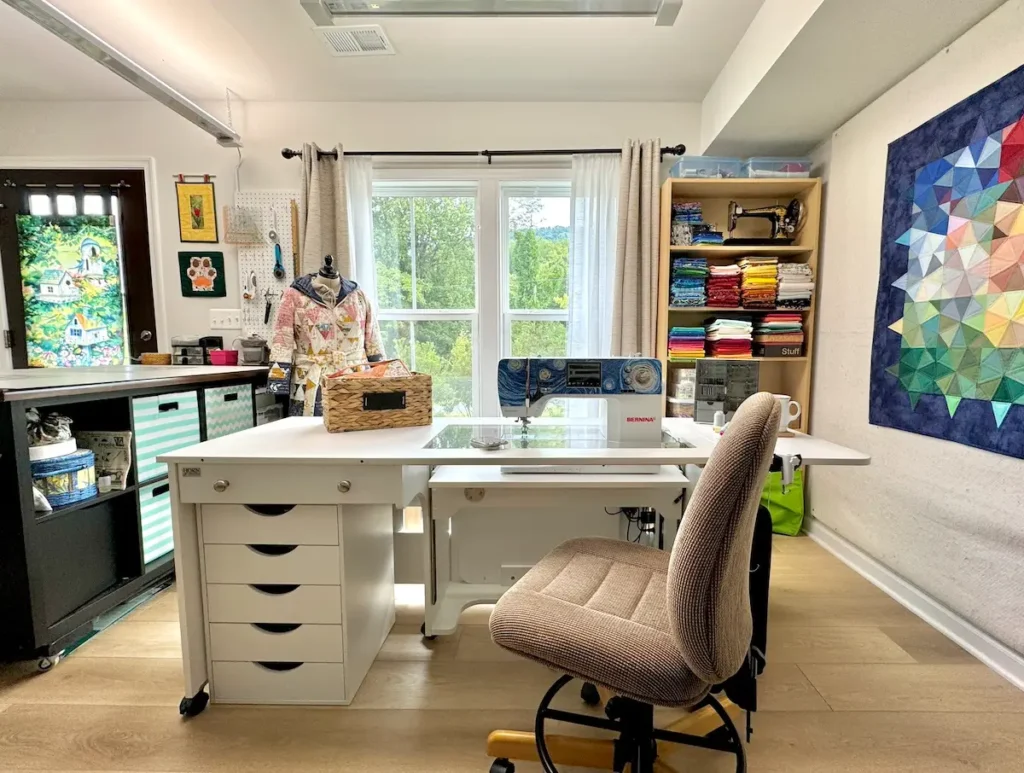
My studio setup is pretty simple – a cutting table, a large, ergonomic sewing table for ease of filming classes and a desk. Plus, lots of storage for fabric, thread, notions and other creative endeavors.
I like to keep it neat and organized, which my brain needs to function. I have a couple of Mini quilts on the few walls in my space that inspire me, including one my grandmother made.
I also love antique sewing machines, so some of those adorn my sewing room and remind me of the long history of sewing and its timeless creating process. I would say those antique machines and my art books probably make me feel most at home.
How do you organize your fabric stash — by color, texture, or something else?
I try to keep my stash small as to not overwhelm myself with possibility.
I love getting fabric from de-stashing or our local craft reuse center. Those fabrics are for guilt-free playing with new ideas. I organize those fabrics by size: Fat Eighths and Scraps in small containers, Fat Quarters in larger containers, and ½ yard to 3-yard cuts in the open, stacked on a shelf and sorted by color, so I can admire the rainbow. Those are all fabrics I can “play” with if testing out new patterns or making quilt paintings.
Cuts larger than 3 yards, reserved for backings, are stored in a file cabinet. Then there are a few fabric collections that I’m especially excited about, my “treasures”, which are stored in a tote away from light and get pet every once in a while. Those are for special personal projects or pattern samples – or just to inspire me.
For your “quilt painting” style, how do you choose and sort fabric to mimic brush strokes?
I always start with a picture or drawing of what I want to make and use that as a guide. For my first quilt painting, which I call “Scrappy Night”, I used my stash and scraps to approximate colors that are in the original Van Gogh painting. I wanted to get a feel for how different print sizes and textures work.
For my second quilt painting, the “Starry Night” class project, I actually picked more precise colors from the original and assembled a kit that would fit the colors very closely. Yes, that’s right – there are two Starry Night quilt paintings! After the first two, I now have a pretty good idea as to how many fabric strips I may need, so now I just cut a bit of every fabric I think I’ll need and go from there.
For “The American Scream”, I used fabrics completely from my fabric stash, which worked out really well. I now have leftover colors sorted in bins, kind of like a palette that I can choose from for future quilt paintings. It’s really fun to incorporate some unexpected leftover colors.
With oil painting, those would accidentally happen when mixing on the palette – but with fabric, I have to choose those more deliberately.
When planning a pattern, do you sketch first, or go straight to fabric?
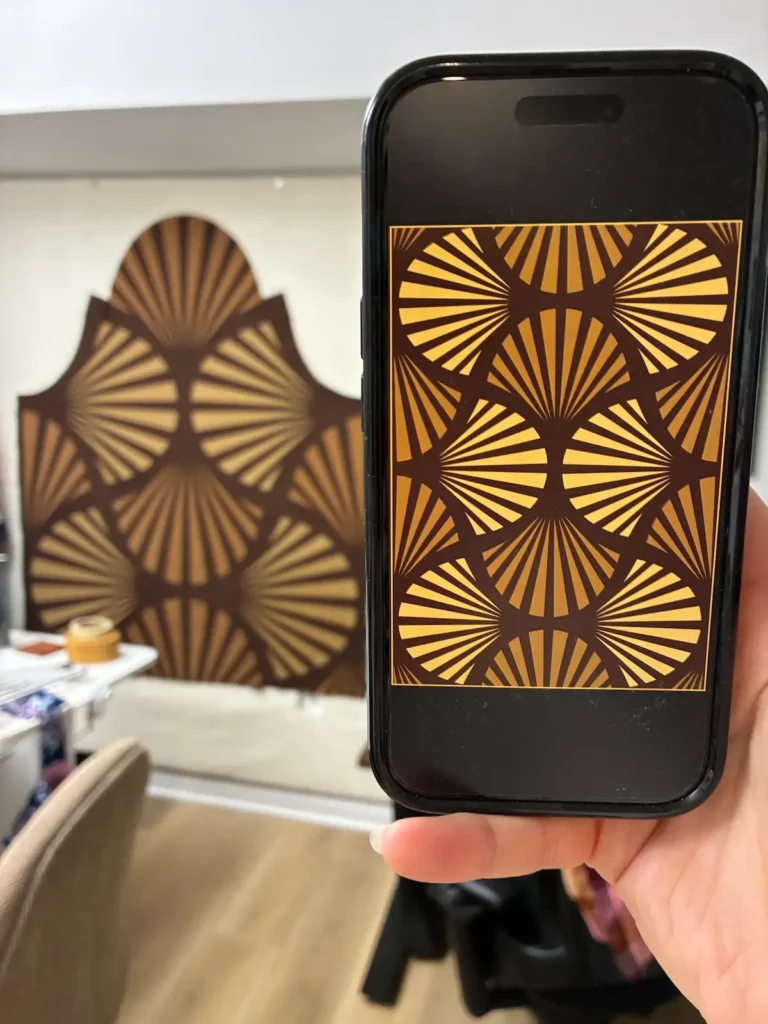
Most of my pattern ideas start with a very, very rough sketch on my phone, a napkin or a sketch pad. Just to get the idea out.
After that, it really depends on the pattern. Sometimes I have to sketch them first on graph paper, especially if it’s a pattern made with squares or triangles that have to fit a grid.
For free-form shapes that don’t fit into a grid, like in my patterns Zen Blossoms or Deco Glam, I work in Illustrator and create shapes until I’m happy with them.

What’s the biggest challenge you face when designing a new quilt pattern?
From a design standpoint, I often have to remind myself to trust the process. I may be really excited about an idea, put it to paper or sketch it in Illustrator, only to be disappointed that it’s not as great as it “felt” in my mind (yet).
It usually takes me a few months to refine it and get it to the point that matches the “feeling” I had when I started. It’s a peculiar process that I can’t really rush or control; I just have to keep playing with shapes, colors, and ideas until I’m happy.
A lot of times, I might still change things when I test my pattern or while I write it. New colorways emerge that are more efficient or make the pattern stand out more, or something feels off, and it takes me a while to figure out what it is.
I also like to show it to friends who can be brutally honest with me to make sure there are no obvious things that need improvement. Those little things can be the easiest ones to miss if you’ve looked at it too long!
Tell me about a time when a quilt didn’t go as planned — seams didn’t match, or colors felt off. How did you deal with it?
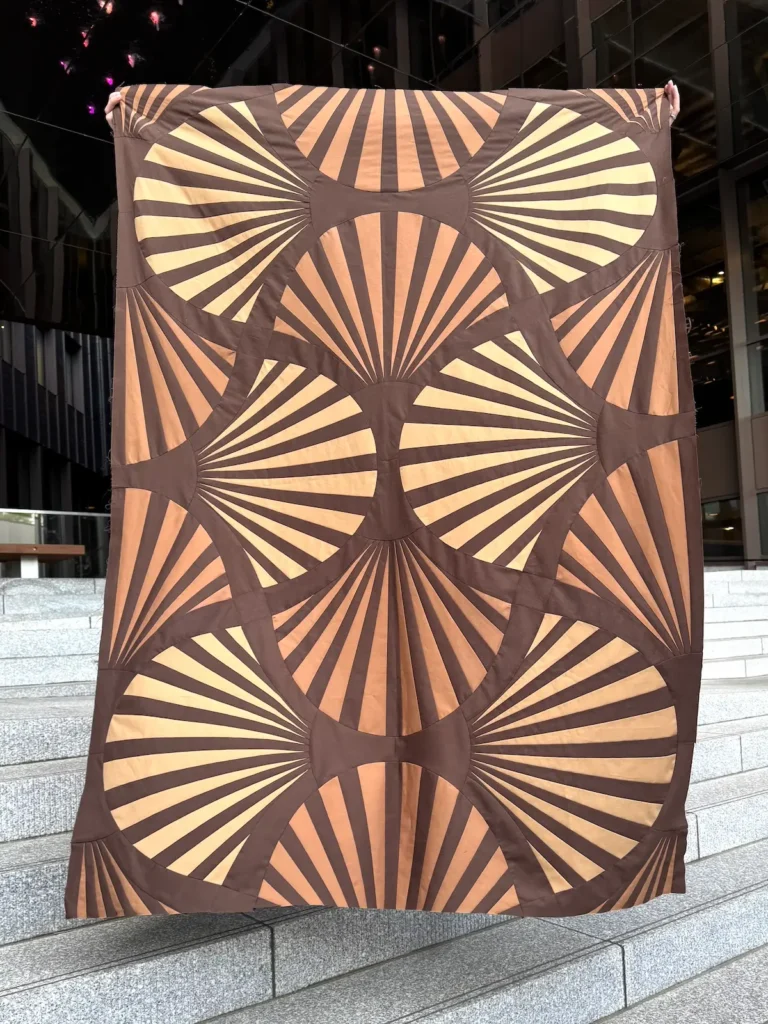
A great example of this is my “Mocha Glam” quilt that later inspired my “Deco Glam” pattern. I wanted to challenge myself with a design that I thought was too complicated for a pattern, something to try out just for me. My idea fit well into the 2025 Pantone Quilting Challenge, so I created the shapes, made myself templates and went for it.
The color to use was called “Mocha Mousse”, a light brown tone. I added a dark, espresso-toned fabric to create a contrasting two-tone design, but something just felt so off, a feeling I couldn’t shake. I showed it to some friends, still couldn’t figure it out.
I began sewing, trusting that it would come to me. It still felt off after I had assembled the first few blocks when I realized – the viewer’s eyes didn’t have a good place to rest in the pattern. It was too detailed and busy.
I decided to add a third brown tone to some of the blocks, and just like magic, it became balanced, understated, and just elegant and glamorous. Hence its name, “Mocha Glam”.
Fortunately, I had enough time to order more fabric and still finish it for the deadline. I was incredibly surprised when people loved it on my Socials, and it won first Prize amongst the “just quilt tops” that were submitted. I decided to make it a pattern after all, and it became a best seller. I’m so glad now that I trusted my gut and made the changes it needed.

How do you stay motivated during a long or demanding project?
I pivot to another project.
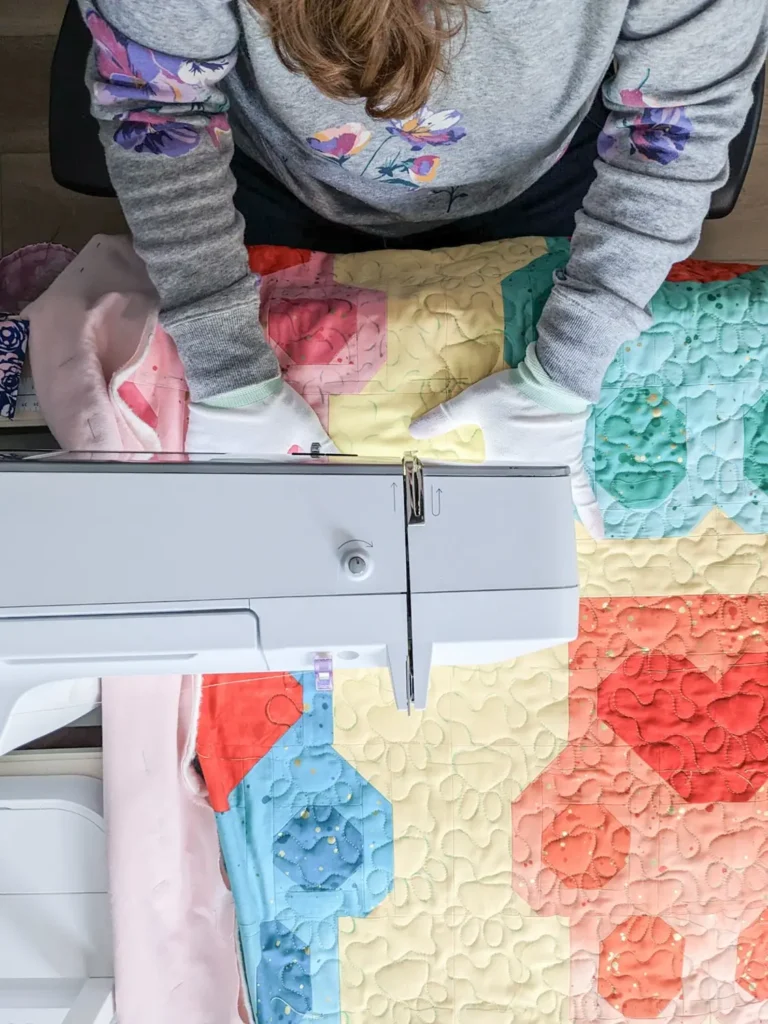
I often have two or three things going in different stages, so that when I get tired of cutting, I can jump to some piecing – or if I’m tired of quilting a large quilt on my machine, I can jump to some simple quilt painting or cutting.
Sometimes it helps me to use a different part of my brain for a bit before I go back and continue. Listening to audiobooks is also a big help for steps that are repetitive, like quilting.
How do you balance precision (like accurate seams) with the more free-form, artistic side of improv or “painting” quilts?
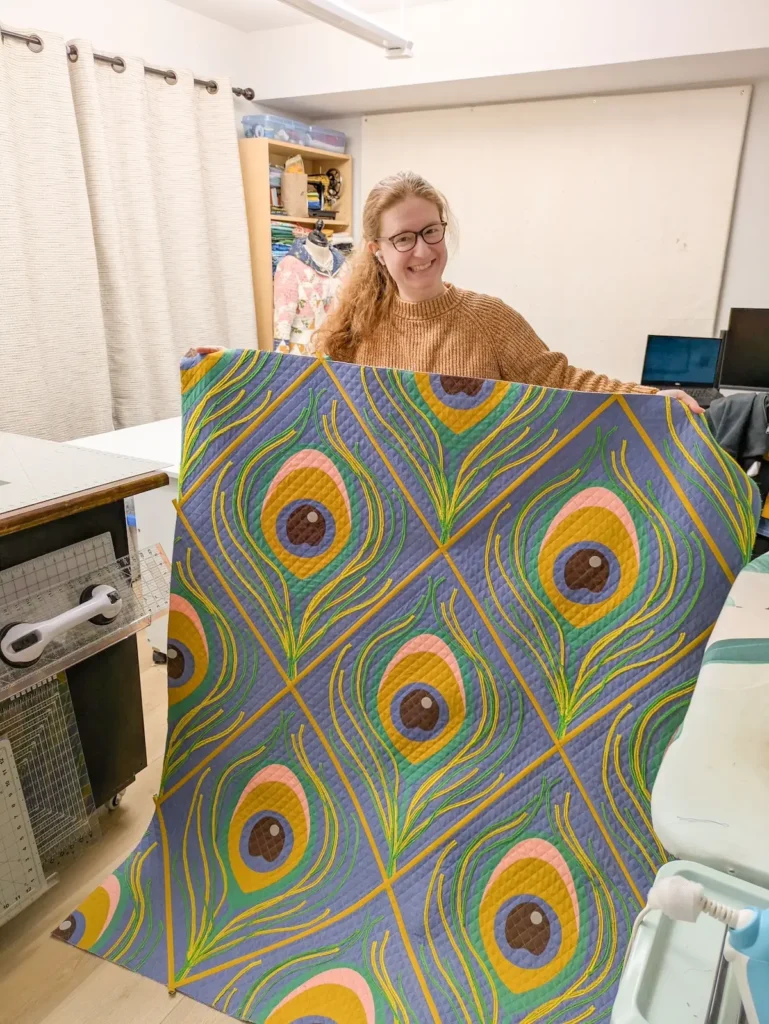
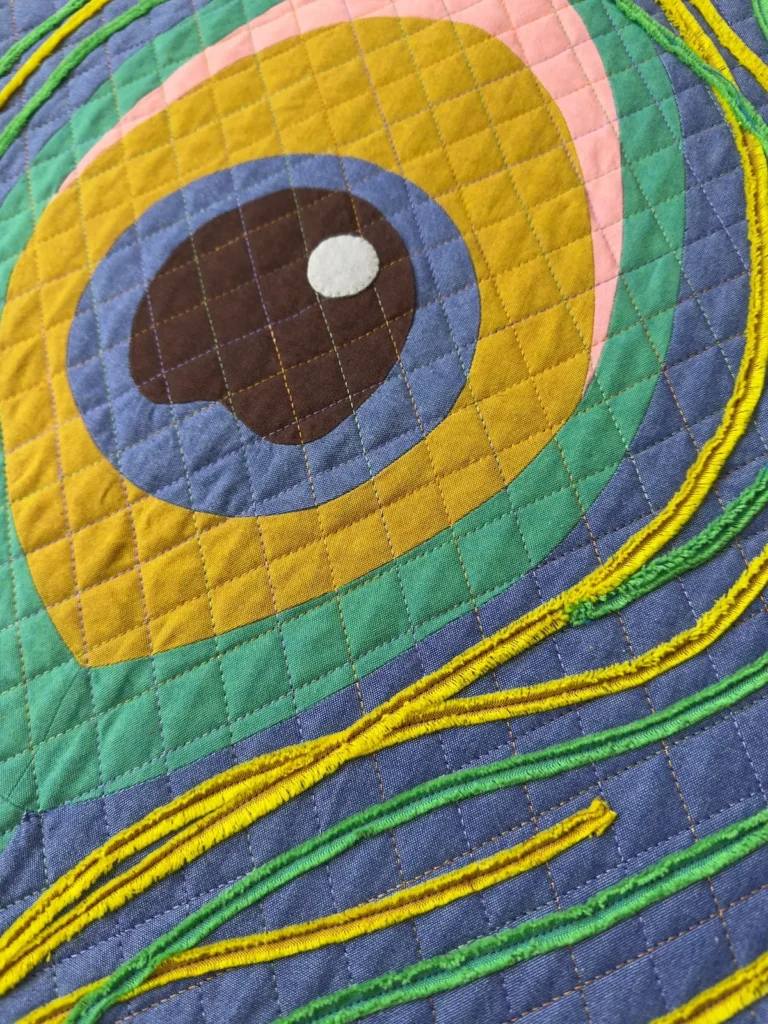
I think those can co-exist. In one of my most recent works “All Eyes On Me”, I have actually used both together.
It’s a combination of very precise curved piecing and free-form quilt painting. It creates an interesting tension between textures and techniques that I found really interesting. I do enjoy precise piecing, but don’t always love the confines of only using grid-based, geometric shapes.
I started quilt painting because I wanted to create more dynamic, flowing shapes – not because I hated precision. I love the free-form nature of quilt painting, but it is not done without planning either.
Quilt paintings are sketched beforehand, so there is some planning involved, but the great thing is, if you mess up, you can either add more layers (like with oil paint), or you can undo a few stitches and try again. Can’t do that in painting!
Quilting involves many steps — cutting, piecing, quilting, binding — which is your favorite part, and what is your least favorite part, and how do you push through?
My least favorite part is basting. Crawling on my knees to smooth out a quilt and roughly pin it together is really not my favorite thing to do. Especially not when my cat absolutely loves to jump on it, roll on it and stretch his paws on it, to mess it all up.
I have made it easier on myself by just adding a few safety pins on the floor and then transferring my quilt to the cutting table, where I can thread baste it in quadrants (when the cat is napping). That way, I can stand up or sit down and take my time.
It’s hard to pick a favorite part, but I love it when I can see something come together. The last few steps of piecing, seeing it come together on the design wall for the first time; the last few lines of quilting, seeing the final texture for the first time; and hand stitching the binding, admiring my almost-finished work. Those steps are my favorites.
Since founding Gingerly Quilt Co, how has your work changed or grown?
I think my patterns have grown with me as I have learned new skills. I often learn a new technique, write a pattern that uses it, then move on to learn a new technique.
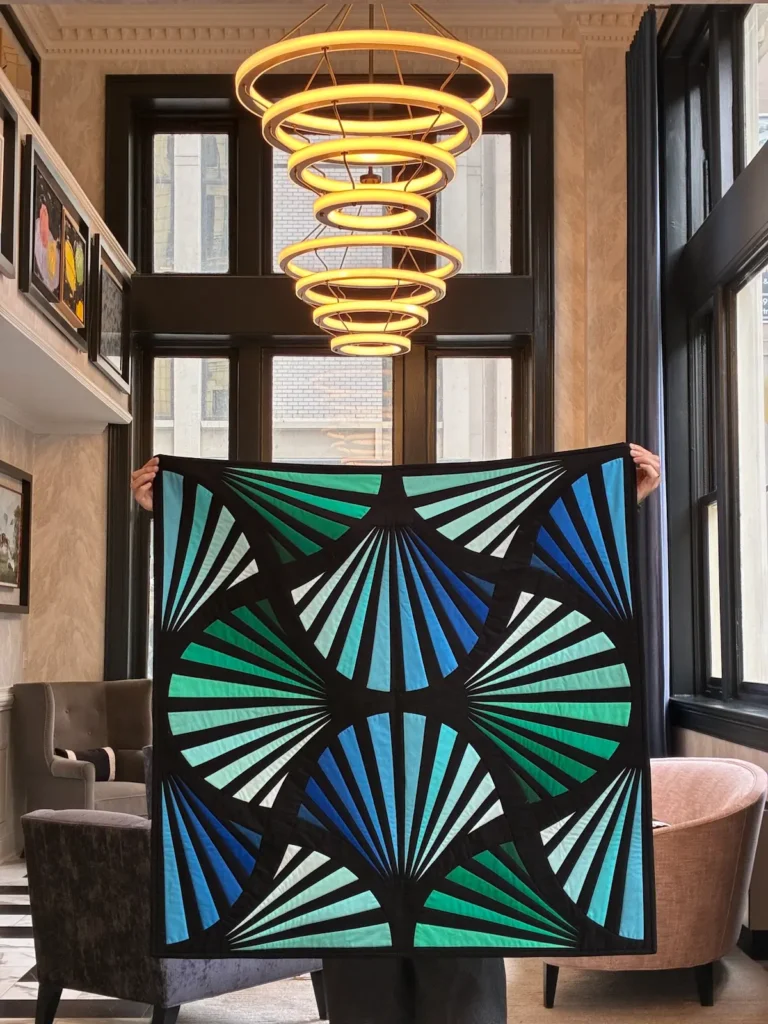
I can’t wait for the next new skills and patterns that are in store for me, but right now I’m on a huge roll with Art Deco. It’s one of my favorite Art Eras and there will likely be more patterns inspired by that in the future.
Rapid-fire: Morning quilter or night owl?
Definitely a night owl. I work best when it’s dark and quiet.

Rapid-fire: Favorite color or color combo right now?
I don’t have a favorite color. It’s too hard for me to pick one, I love them all. In terms of color combinations, this year I especially loved the color combinations in my Deco Glam quilt sample that was inspired by Taylor Swift’s Eras Tour: Yellow, Orange, Red, Pink and Purple together. It’s like a fruity summer cocktail.
Rapid-fire: What makes you feel “quilty proud”?
I felt really proud of my flat seams with complicated curved piecing in my “All Eyes On Me” quilt. I pinked the seam allowances and ironed them open. The sight of the back of the blocks was just *chef’s kiss*. Nothing everyone else will ever see, except for one video on my Instagram.

Where can people see your work?
I love sharing my work and process!
I frequently post on Instagram https://www.instagram.com/gingerlyquiltco .
My patterns and classes are available on my Website https://www.gingerlyquiltco.com (for US customers) and my patterns are available on Etsy https://www.etsy.com/shop/GingerlyQuiltCo?ref=dashboard-header for US and International customers.
I also write an art quilting column in Make Modern magazine https://transactions.sendowl.com/stores/7271/304123 (affiliate link) where I talk about art principles and my work and process.
My Art Quilting classes can be found on my regular website or directly on https://www.quilt-your-masterpiece.com.
And, I’m so excited that Mocha Glam and All Eyes on Me have both been accepted to QuiltCon 2026!
Interview posted December 2025
Browse through more inspiring modern quilts on Create Whimsy.