

With a desire to encourage children to smile and hug, Emma Varnam designs crocheted soft toys and cuddly critters that invite interactive play. Her animal patterns will inspire you to make a menagerie of woodland friends that get along so well they can even share their wardrobes! This all takes meticulous planning. But somehow, Emma finds the perfect balance between whimsy and engineering, and the result is a beautifully crafted toy with a playful personality.
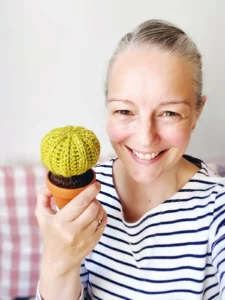
How did you find yourself on an artist’s path? Always there? Lightbulb moment? Dragged kicking and screaming? Evolving?
I have always made and created craft projects, but it was about 15 years ago that I started designing and making knitwear and crochet projects.
I was inspired by wanting to create cute things for my baby son… although now not a baby but a strapping lad.
What inspires you to create?
As an Amazon Associate I earn from qualifying purchases. Read more about our affiliate linking policy.
I am inspired to make toys and cute, cuddly creatures for the children I know. I think that some of the best creations are stimulated by love.
When you know a child, and they have a favourite animal, there is nothing better than creating a cuddly version for them to love, enjoy, and play with.

What do you love about crochet? Why do you think it has gained popularity in recent years?
I love that crochet is so adaptable.
You can make a really lacy fabric, which is wonderful for soft, drapey shawls, and yet on the other hand, you can work in the round and sculpt seamless and really robust 3-dimensional shapes.
It has a world of possibilities and always stimulates new ideas and creativity. I think it has gained popularity as people realise they can create loads of cute toys and homeware items.
Plus, crochet is really very fast. I love to knit and crochet, but I’ll be honest, when it comes to blankets or toys, I always turn to crochet.
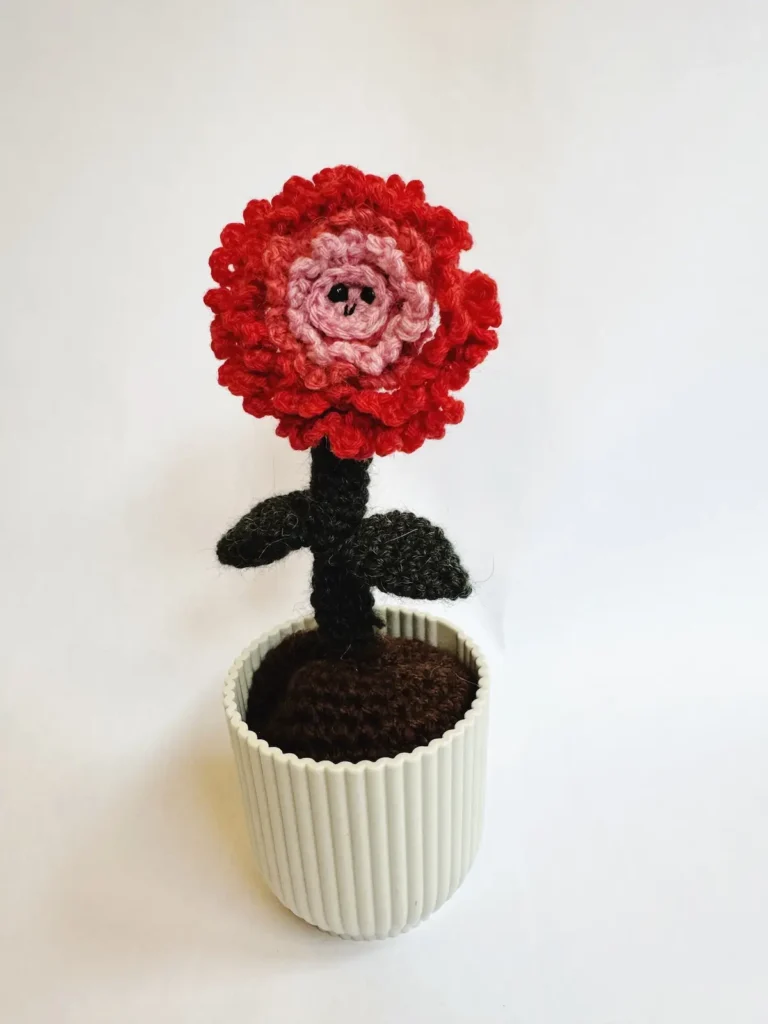
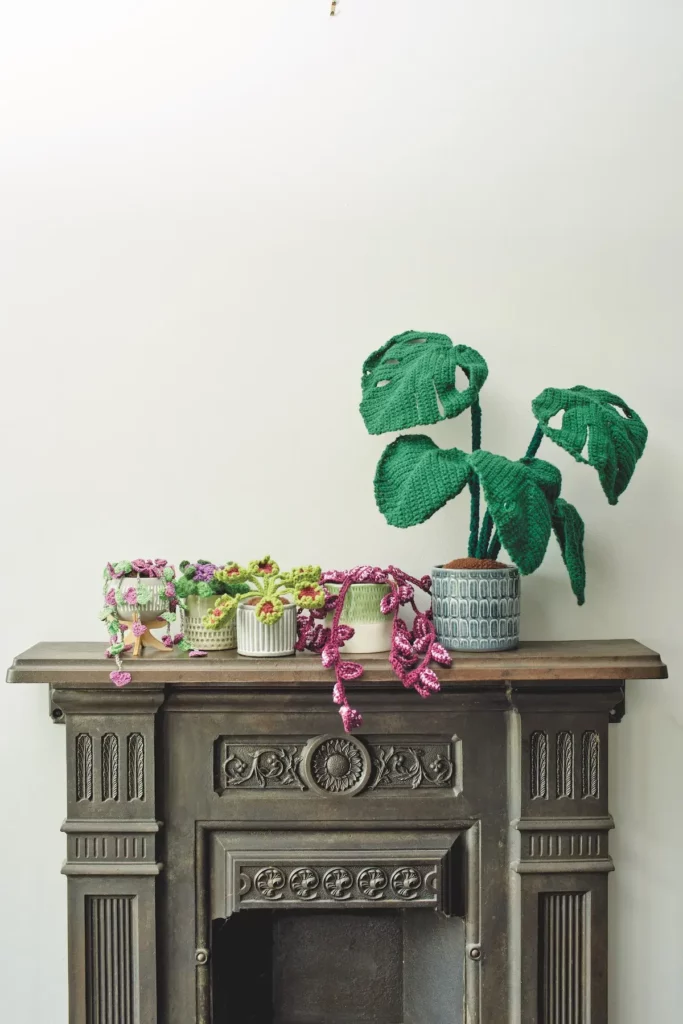
Your new book, Cute Crocheted Plants, brings personality to houseplants with charming details like embroidered faces. What inspired you to give plants such playful character?
Lots of the things I make are inspired by whimsy and just make me chuckle.
In the previous year, I created a book of Cute Crocheted Food. My favourite item was the burger and chips. Any teenager who came across them just loved the design. I then thought I could use some of the ideas I had for crocheted plants to make them into fun characters. There was no stopping me when I started.
Over the years, I have made a few presents for children I know, and so developing this style of cheeky soft plants is exactly the type of thing I would make as a gift.
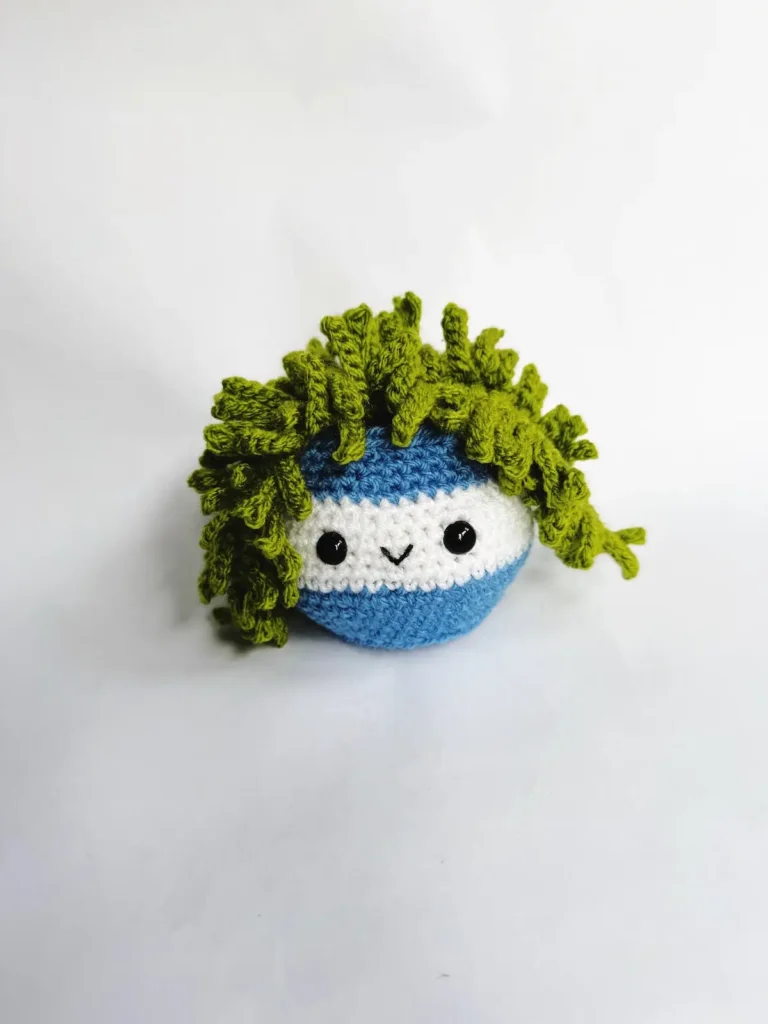
You’ve explored crocheted succulents, houseplants, and now these whimsical kawaii-inspired designs. How has your approach to designing crochet plants evolved?
Over the years, I have made a few presents for children I know, and so developing this style of cheeky soft plants is exactly the type of thing I would make as a gift. I am inspired by lots of different things, but my most successful designs are usually based on a person I know and thinking of how I can design the best thing for them.
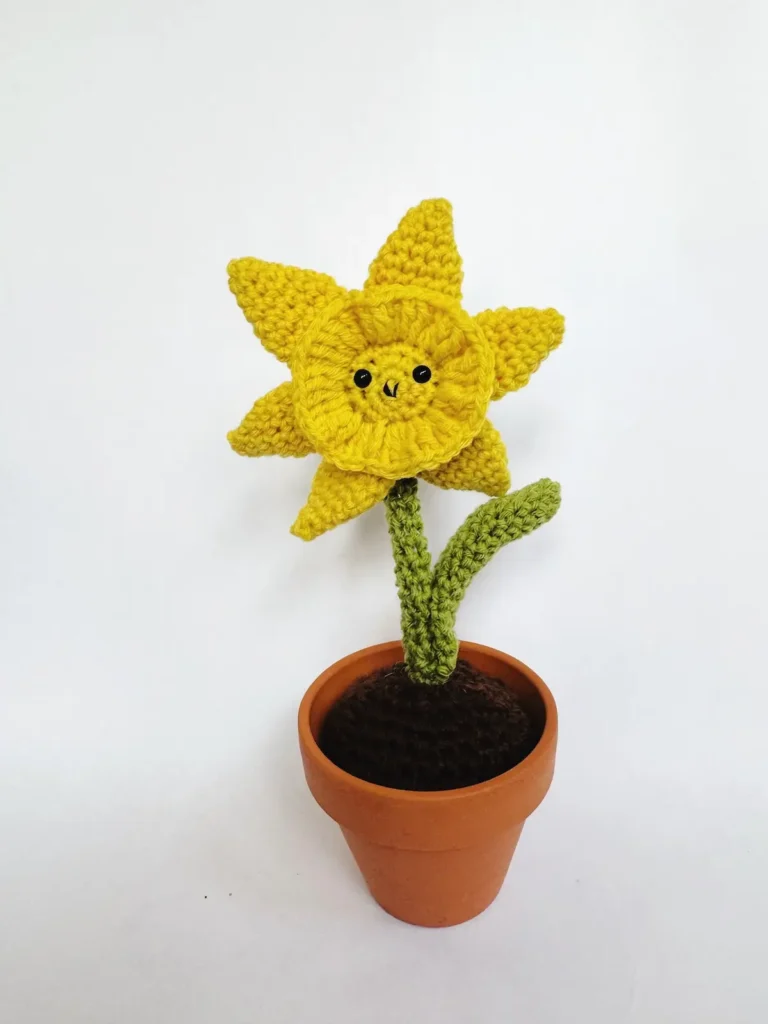
Do you have a favorite plant from the new book, or one that was especially fun or challenging to design?
Oh, that is too difficult. I do love the Montera Cheese plant, because I didn’t know how I was going to do it, and in the end, I really like the result. The Snake’s head plant is also brilliant fun. I have that on our bookshelf. Of the flowers, I think the daffodil is really charming. As you can see, it is difficult to choose.
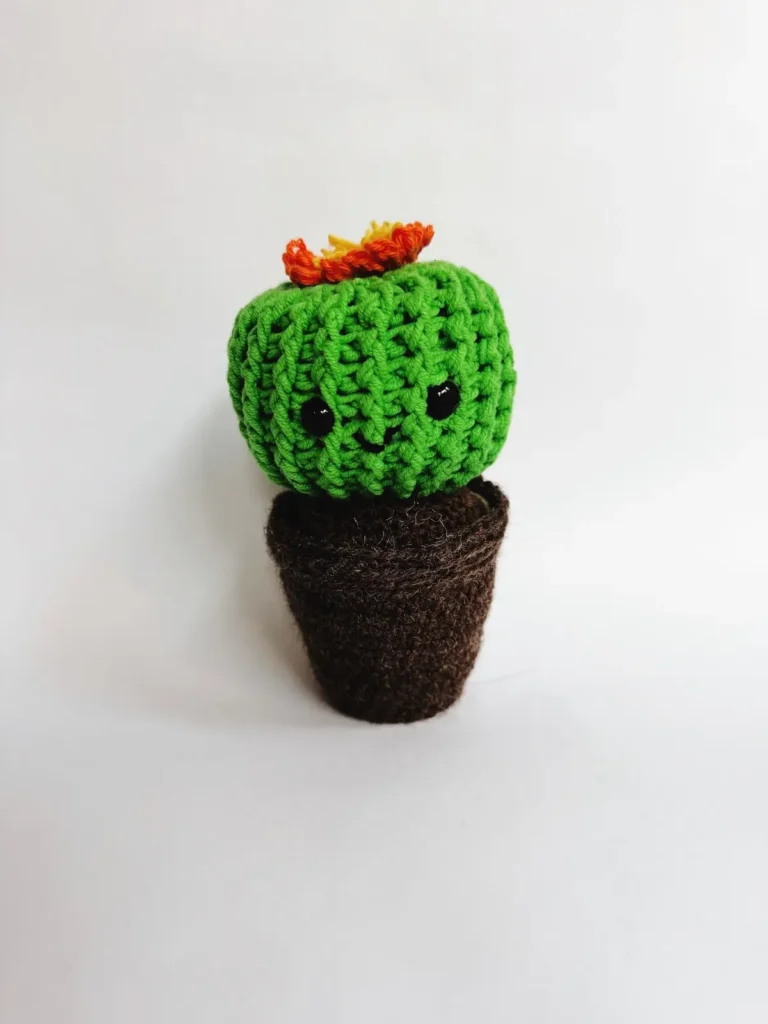
For readers who want to create their own yarn “plant collection,” do you have any tips for displaying crocheted plants in a home or studio?
So there are three top tips I would give.
Make sure you weigh down the soil at the base of the plant, so that it doesn’t fall over. There are instructions in the book. It really helps to keep them upright.
If the pot doesn’t have a face, then pop your crocheted plant in a real pot or teacup.
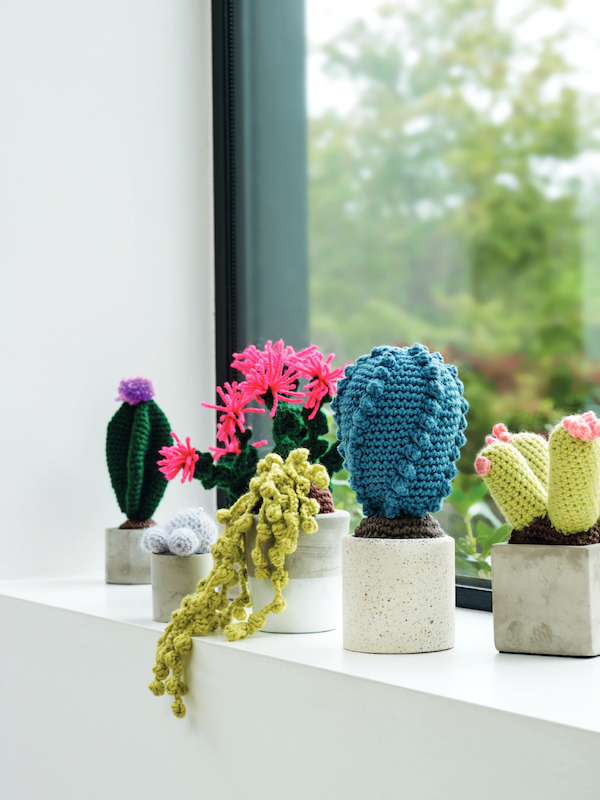
I also mix my crocheted plants with my real plants. It always surprises visitors to our house. They might look at the windowsill and then suddenly see that one plant is made out of yarn. It’s a lot of fun.


Tell us more about your book, Vintage Granny Squares: 20 Crochet Projects with a Retro Vibe. What inspired you to write this book?
I do a lot of designing and in recent years I have concentrated on my amigurumi and plant designs. When I am wanting to relax it is granny square or vintage crochet patterns which I like to make for myself.
It began to dawn on me that there were certain designs that I just kept going back to, the sort of thing which are perfect for gifts or special occasions. I had amassed quite a collection of go-to items and it seemed the perfect opportunity to share these ideas with my readers.

What is one tip for a beginner crocheter wanting to learn how to make granny squares?
Do you mind I give you two? Firstly, choose yarn colours that you love. When you are making something that really appeals to your visual senses you become more motivate to keep going with a project.
Secondly, learn how to block. Blocking is your secret weapon. Your granny squares will look neater, more professional and so much easier to join together.

Why do you think there is a resurgence of popularity for crocheting granny squares?
I think younger people are more and more conscious of ‘fast-fashion’ and many of them are wanting to learn to make their own clothes and accessories. The bo-ho look of granny squares goes back to the grounded 70’s where colour was really important.
Plus crochet is the best of the make-do-and reuse crafts. You can use up your yarn stash to make beautiful clashing accessories. There is a vibrancy which is so fun. The craft is fun, easy to pick up and really portable.

Describe your perfect winter afternoon with no plans. What would you do? Where would you be?
Honestly probably at home, having had a lovely family roast lunch. I would be curled up on my favourite chair. A coffee would be brewed. I would have a favourite crochet project on the go, listening to music and our dapper cat, Stanley by my side. I could spend many happy hours like that.


What inspired you to write your book Crocheted Houseplants: Beautiful Flora to Make for Your Home?
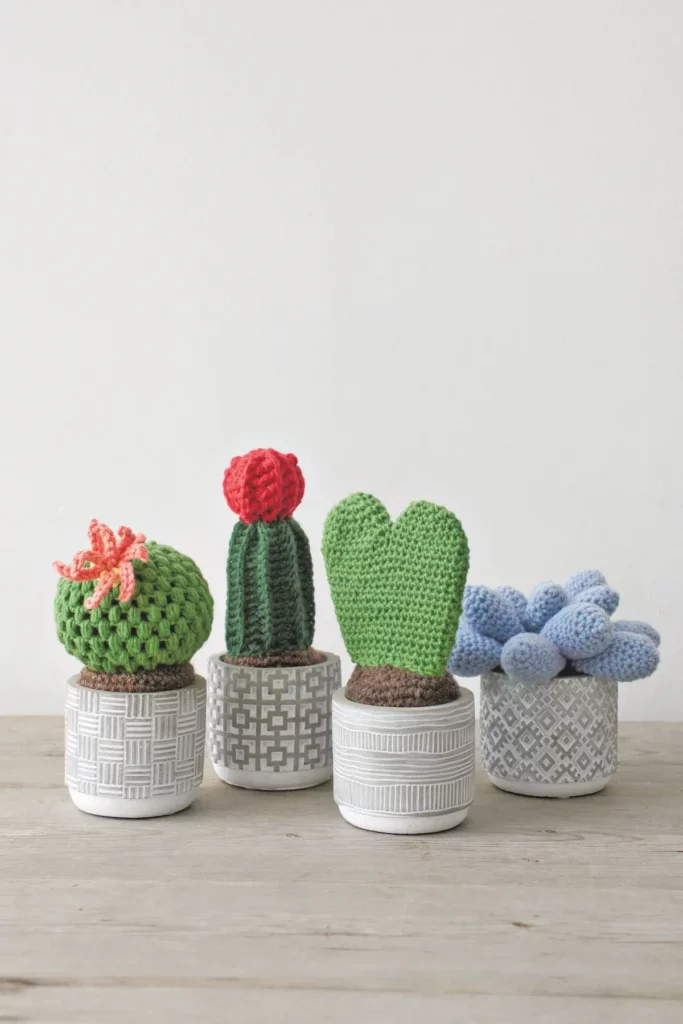
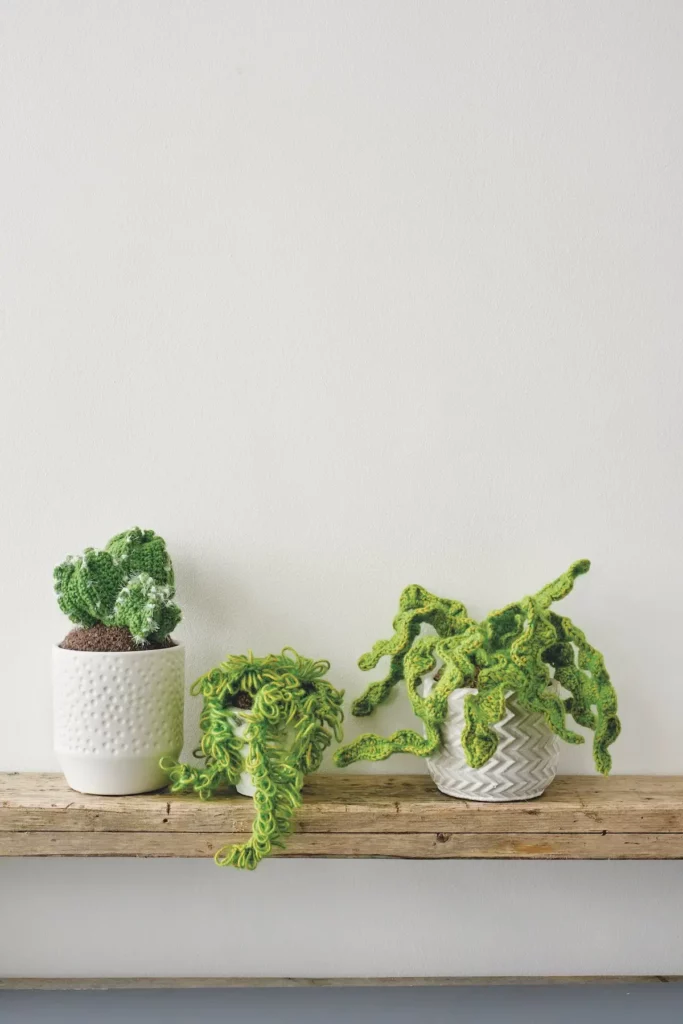
Ever since I created the cacti and succulents for my first plant book I would spot a plant in someone’s home or on social media and think, ‘Could I make that in Crochet?’
In the last few years succulent began to be popular and then that grew into houseplants, more and more exotic species. Especially due to lockdown people were keen to bring the outside into their home, to have beautiful greenery indoors. It is fun to play about with that idea and combine real houseplants with a crocheted version.
Do ideas for new books just come to you, or do you have a master plan?
Some come to me…like the Christmas Poinsettia. I have never been able to keep those alive and so making a crochet version seems the only solution. But then I do quite a bit of research.
I have bought and borrowed quite a few houseplant books to get ideas for new patterns and understand their structure. I know how many I need to design in the week, and I make a plan of how I will do it. There is always a bit of trial and error. My family really does worry when they see me ripping back some crochet, but it is important to get it right.
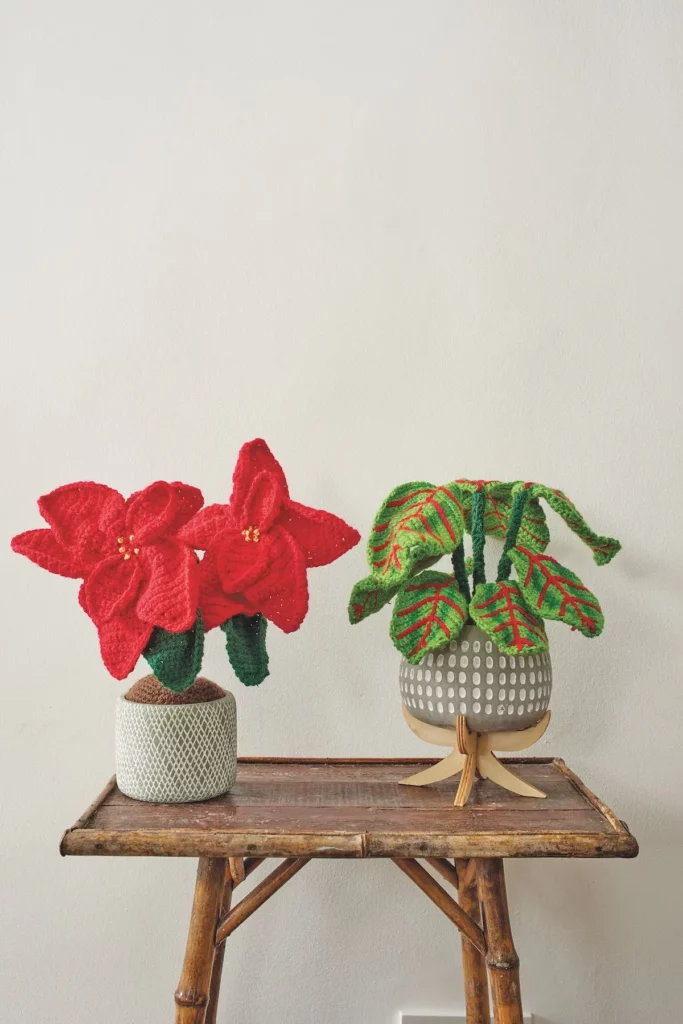
What are the challenges of designing a pattern based on a real three dimensional object?
Like real houseplants, leaves tend to need support. If you think about it, Monterra (Cheese Plants) or Orchids need a stake to support them. I have used wire and stakes in the construction of some of the plants. This means that you can position the leaves to look more life-like.
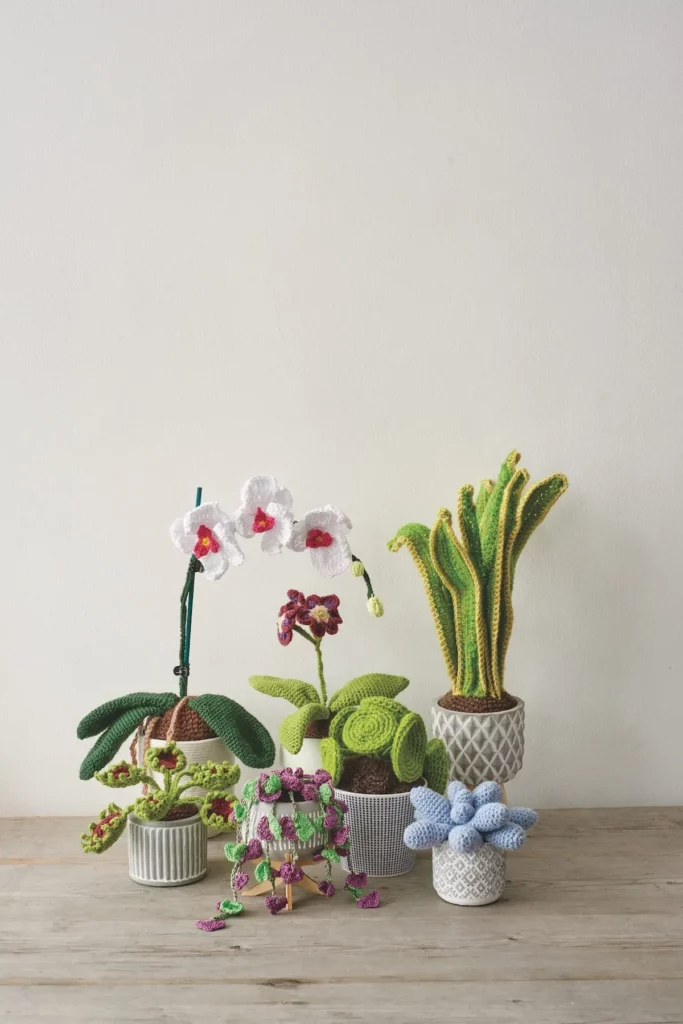
What stitches do I need to know to get started making these projects?
Most of the plants use the simplest of stitches, the double crochet stitch. It is just how you work that stitch that is important. The key thing is how to incorporate wire into your design. But the book gives you a number of ways to do that, so you can choose a technique that seems easiest to you.
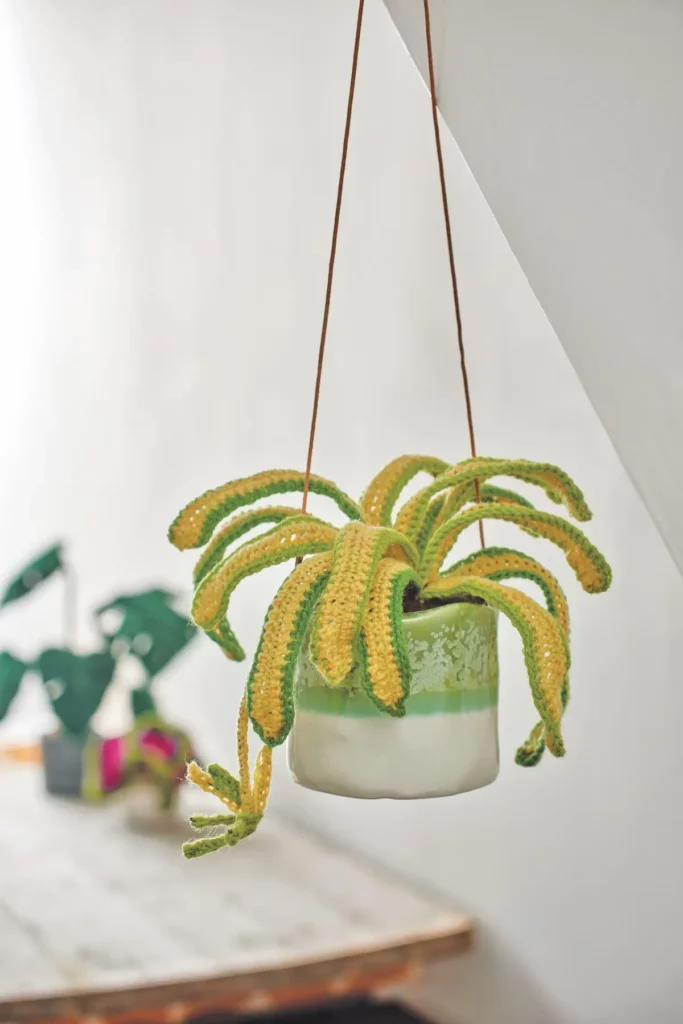
Your crocheted houseplants are amazingly realistic looking. Were you tempted at all to turn your imagination loose and invent some new kind of fanciful flora?
Well, I have thought about changing the colours sometimes, and it might be fun to create the plant from Little Shop of Horrors. However, nature has some pretty fanciful designs, and the fun for me is thinking about how I re-create that just using a hook and a strand of yarn.


How have other people supported or inspired you?
My family is very supportive, and they get excited to see what I create next. I also have two famous yarn blogger friends – Lucy from Attic 24 https://www.attic24.typepad.com/ and Christine from Winwick Mum https://www.winwickmum.co.uk
We encourage each other and share good advice. It is helpful to learn and share from folk who are in the same business.


What is the most important takeaway you want readers to gain from your books, especially your title, Cute Crocheted Woodland Creatures?
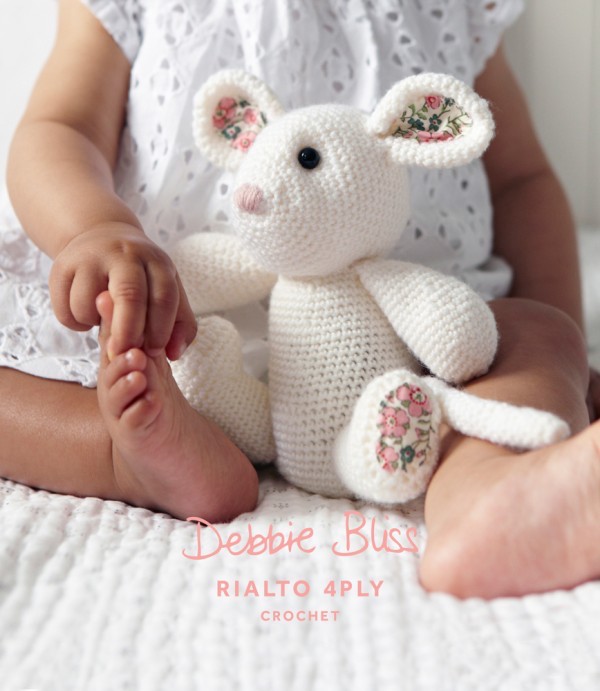
That you can make beautiful toys which become a key part of a child’s life – they are durable and ready to go on adventures. They are toys that you can make memories with.
Do you plan your work out ahead of time, or do you just dive in with your materials and start playing?
I tend to do an initial sketch. I think about the way they will sit, how their faces will look and the length of their limbs. These animals are designed to sit really nicely. They will have pride of place next to the pillow at bed time.

What do you do differently? What is your signature that makes your work stand out as yours?
I do a number of things. Incorporating the limbs into the crochet stitching of the body ensures longevity for the toy. I also signify where the ears will go, and this helps readers to get a good end product, with their animal looking more like my original. I also love designing clothes so that they look classic and are great fun to dress up in, and create an interchangeable wardrobe.

What do you believe is a key element in creating a successful crochet pattern?
It should be easy to understand and give the crafter a reliable end product.

Do you have a dedicated space for creating? If so, what does it look like?
I tend to write my patterns at my desk, which is at the top of our house. I have a great, crazy mood board that faces me and provides loads of inspiration. But I can crochet anywhere. That is the delight of the craft. I will crochet whilst watching TV with my family at the end of the day. But I make sure I have a notepad next to me to ensure I make a note of the pattern as I go along.

What are the indispensable tools and materials in your studio? How do they improve your work?
I use a Clover Soft Touch crochet hook, which is like an additional limb now. It is perfect for my crochet style and very quick. I also need endless pairs of very sharp, pointed scissors. Then my final top material would be black plastic safety eyes; they immediately give character and a little twinkle to any toy.

What plays in the background while you work? Silence? Music, audiobooks, podcasts, movies? If so, what kind?
I like to listen to classical music when I crochet – although I do love pop music. But I need the calm tones during crochet.
Then, when I write patterns, I need complete silence. The calculations and stitch counting require all my concentration.

When you travel, do you create while on planes and in waiting areas? What is in your creative travel kit?
Oh, yes, I crochet everywhere – if I am sitting – I am stitchin’!
I love the stares you get from other passengers. In my travel kit will be a crochet hook, a travel safe thread cutter, a notebook and pen, and a tape measure…and quite a bit of yarn. Because there is nothing worse than running out.

Tell us about your blog. What do you hope people will gain by visiting?
My blog is really about my design process and my current thinking – it often includes things I am doing outside crochet, including cooking, gardening, and embroidery.
Most people have many strings to their crafting bow, and I like to share what is inspiring me and stimulating my design at the time.
Do you think that creativity comes naturally to people, or do you think creativity is a skill that people can learn?
I actually think that every child is born with creativity and the desire to design, draw and make, then it sort of gets knocked out of them when other subjects and challenges become a priority.
However they key is if you enjoyed it as a child – make sure you pick it up again as an adult and don’t get embarrassed about having a go.
If you find time slipping away when you are absorbed in a project, then you know you are on to a good thing. Have fun, let your imagination flow, and don’t think that you have to be perfect. The process and the joy are the most important things.
What is the biggest challenge to being successful in a creative field?
It is hard for crafters to be paid well.
When people see something as a hobby, they seem to devalue the end product. The internet has been astounding in ensuring that we can share skills across the world. It has been revolutionary.
The downside is that lots of people expect patterns or tutorials for free. That is a shame in many ways because it makes it difficult for designers and makers to make a living from their work.
So we need to value the joy and talent of craft more.

What can we expect to see from you in the future?
I hope to add to my own Etsy Shop design house this year. I launched some downloadable toy and cacti patterns last year and really enjoyed connecting directly with customers. And I would like to write another book, but we will see what exciting ideas develop.
https://www.instagram.com/emmavarnam/
https://www.etsy.com/uk/shop/emmavarnam
Interview posted May 2021, updated January 2023
Emma’s books are published by GMC Publications. Visit their website https://www.gmcbooks.com/ and follow them on Instagram @gmcpublications to learn more.
Browse through more inspiring crochet projects and designers on Create Whimsy.