
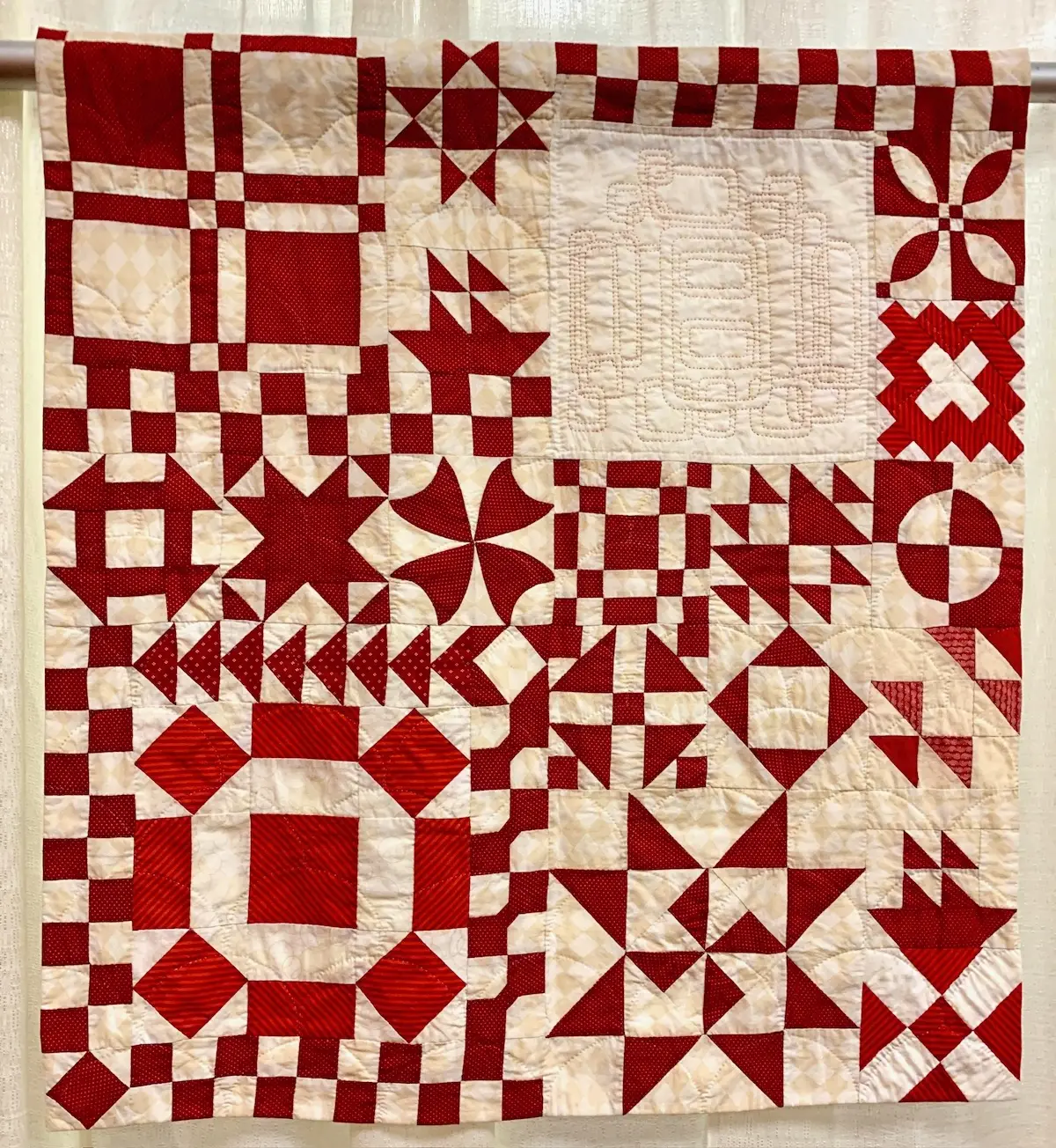
Pattie Klimek has been inspired by handwork since she was a little girl with an embroidery hoop and a love for stories like Anne of Green Gables. Today, she carries that same passion into her quilts, lectures, and teaching—reminding us of the beauty and meaning in slow stitching.
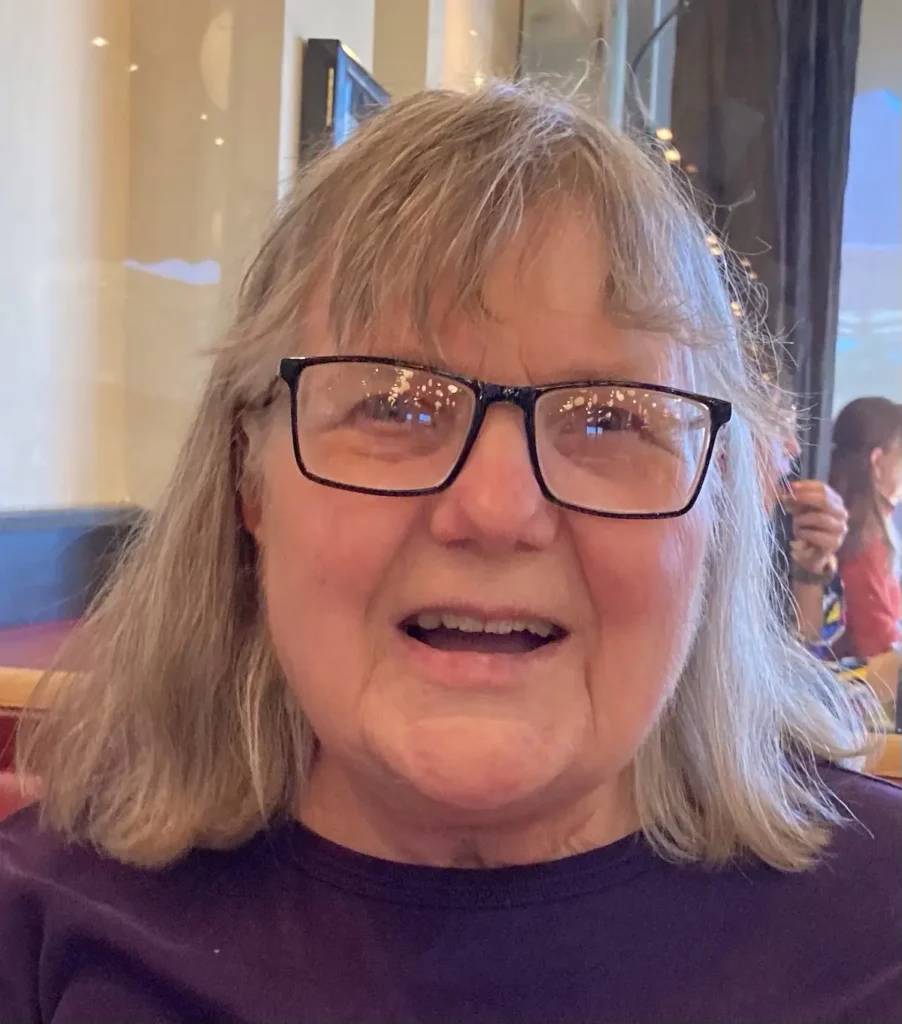
Can you tell us more about how hand piecing and hand quilting first captured your heart? Who in your life inspired your love for these techniques?
I grew up a very bookish girl. My favorite books were the serial books such as Anne of Green Gables, Little House on the Prairie, and the Little Women books by Lousia May Alcott.
All these girls had to sit down every afternoon and work on their samplers or quilt squares. One summer vacation, when I was 8 years old, I decided to do it too.
I took my babysitting money to J.C. Penney’s and bought an embroidery hoop, needles, embroidery floss and a prestamped pillowcase so I could teach myself embroidery. I was blessed with a very crafty mom who was busy with 5 kids and a tailoring business.
As an Amazon Associate I earn from qualifying purchases. Read more about our affiliate linking policy.
I went to the library and checked out an embroidery for beginners book (I think it was a Girl Scout book) and proceeded to teach myself the stitches. When I came across a difficult stitch, I consulted with my mom, who helped me through it.
That was also the summer I wore long skirts and aprons instead of pedal pushers and shorts. I don’t know how my family kept a straight face when they saw me spending time every afternoon stitching away in my costume.
I have to say L.M. Montgomery, Laura Ingalls Wilder, and Lousia May Alcott inspired me with the love of handwork with help from my mom.
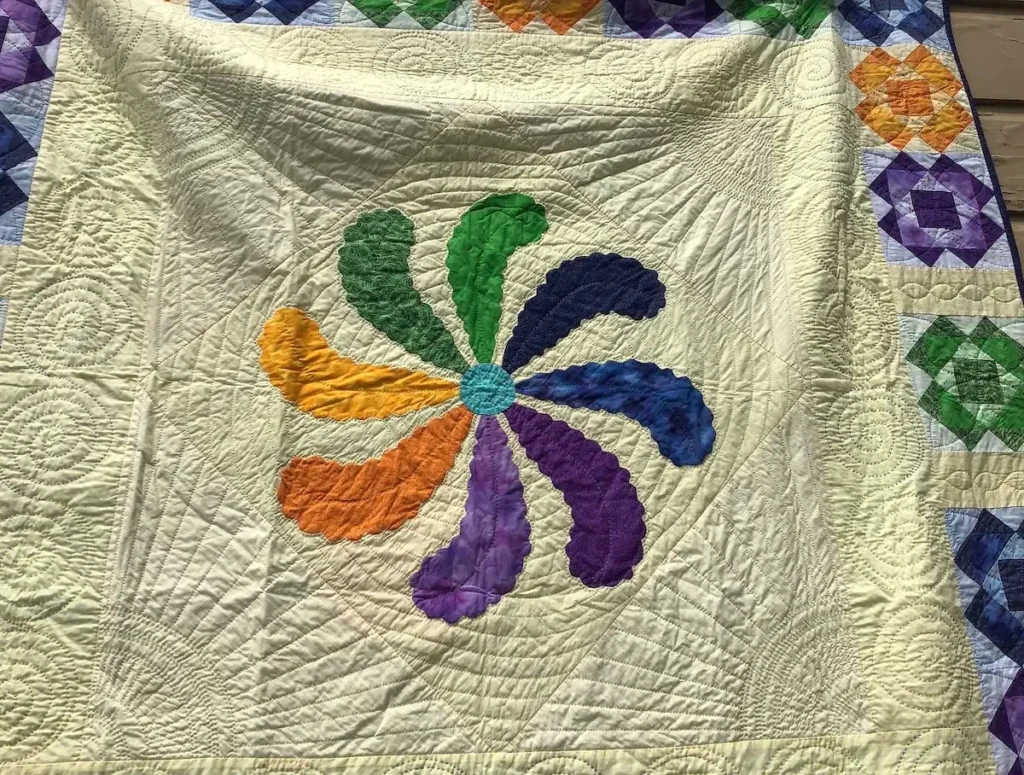
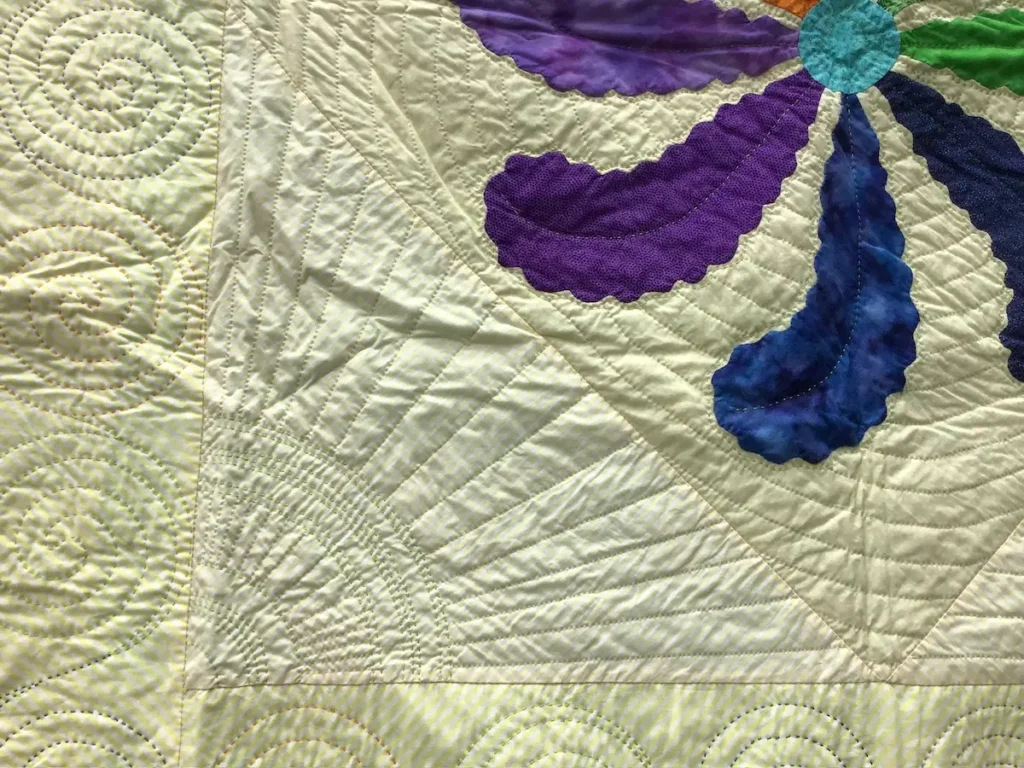
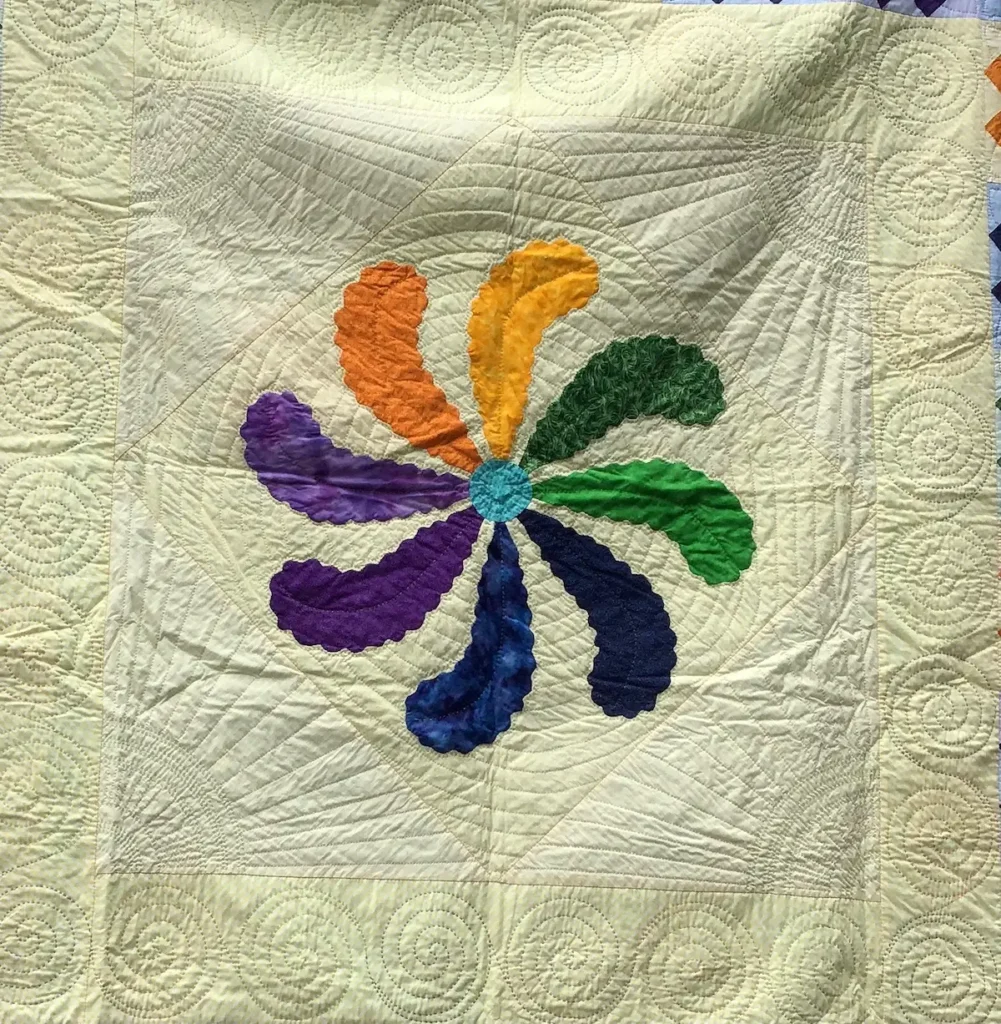
What does it mean to you to “put away the machines” and fully embrace slow stitching?
I really never “put away” machines. After my kids were old enough to be in school, the time came for me to take an actual quilting class at a quilt store.
I had an old Singer sewing machine that my mother bought me when I graduated high school. That machine refused to sew a ¼” seam after years of 5/8th inch garment seams. I didn’t have enough money to buy a new machine, so I switched to hand sewing the beginning blocks.
I did have good hand sewing skills due to my embroidery background, so I had no problem doing the sewing. As an adult, I was able to fulfill my desire to become a Victorian-era girl riding in a wagon train to the prairies. I just fell in love with it.
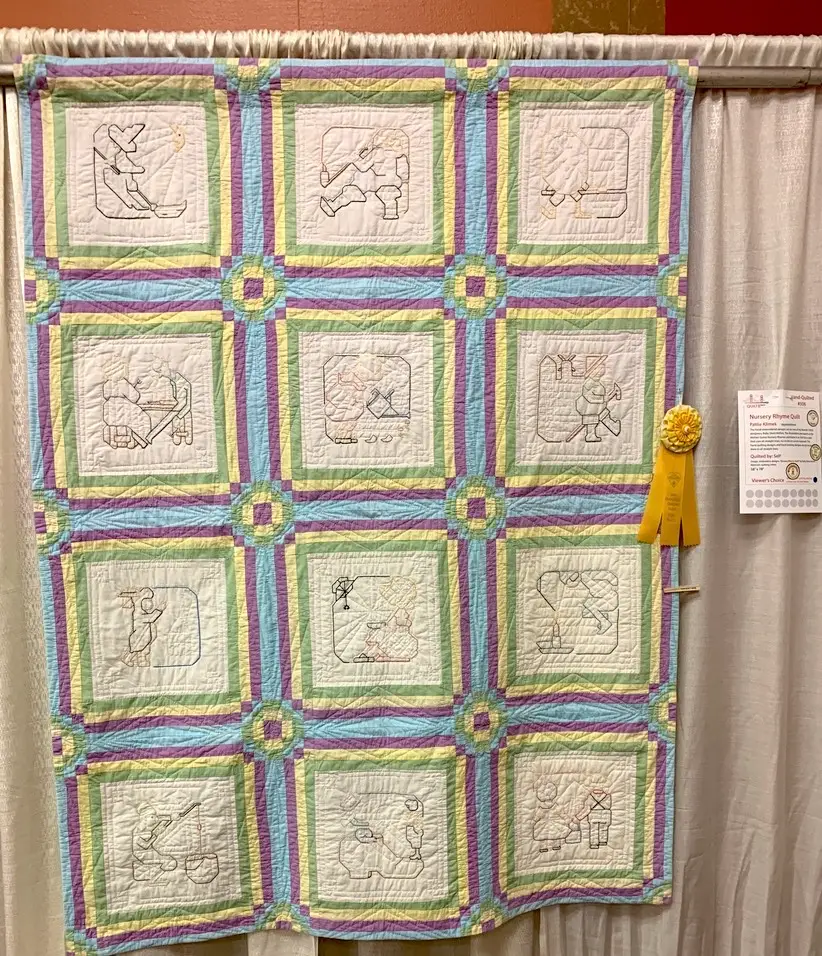
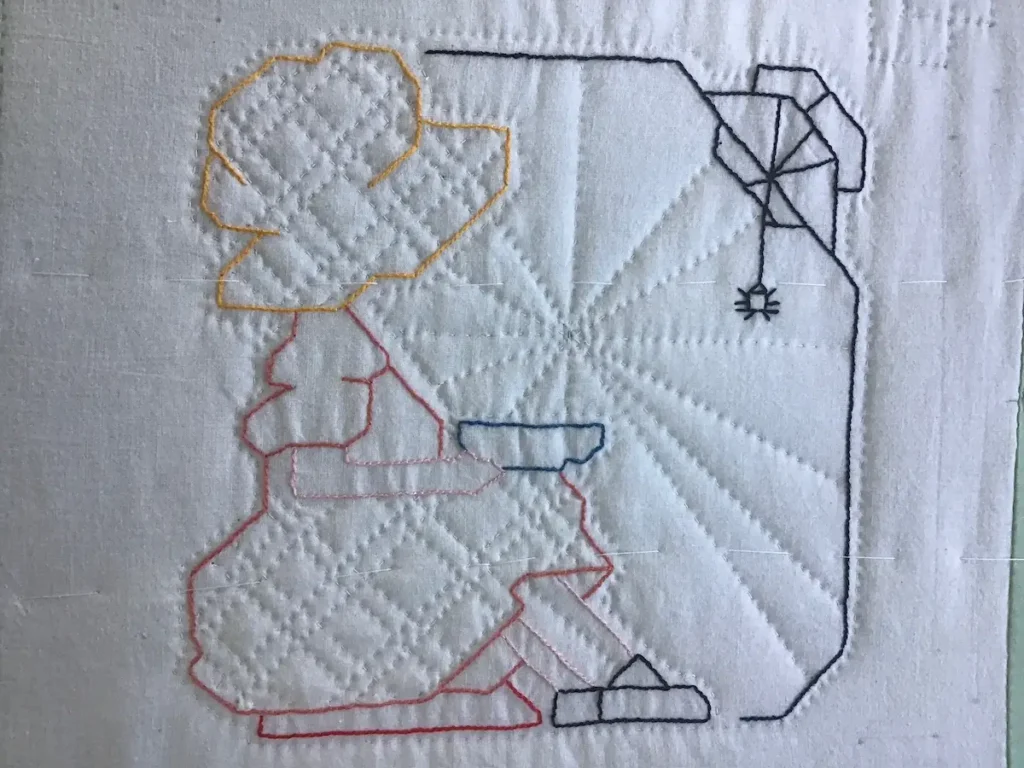
Was there a particular quilt or moment when you realized handwork wasn’t just a hobby but a way of life?
My handwork is really not a way of life, it is just how I make my quilts. I do have a teaching and lecture goal, to remind everyone that handmade quilts deserve recognition and admiration.
I had an unfortunate incident at a major quilt show when I entered one of my hand pieced, hand appliquéd, and hand quilted creations. I was lucky to have it displayed next to a Judge’s Choice winner so there was a lot of traffic in the area and I made a decision to eavesdrop on the comments made by passersby.
I got some rather negative feedback on the status of handwork amongst the quilting community. It seems that any type of handwork on quilts was frowned upon and openly scoffed at as being old-fashioned and time-wasting.
Quilters wanted fast machine work that would turn out a quilt in a few days and produce a picture-perfect quilt. After hearing that, I felt it was my mission to remind quilters of the beauty in a hand-quilted quilt. I hoped to remind them that any mismatched corners or cut-off points told the story of the quilt and its creator. I have to admit it has been a long slog.
Where do you find inspiration for your quilts – old quilt history? The materials? The meditative practice?
I have to confess to a love of the quilting designs of the 1930’s and my first quilts were copies of those designs. Now I use them as a jumping-off base for the quilts I do today.
1930’s reproduction fabrics are amongst my favorites, and I swoon over feedsack prints. However, my quilts don’t look like copies of my favorites when I get done with them. As I work on a quilt, my own style starts to show itself.
What is that style? I call it one foot in traditional styles and one foot in modern styles.
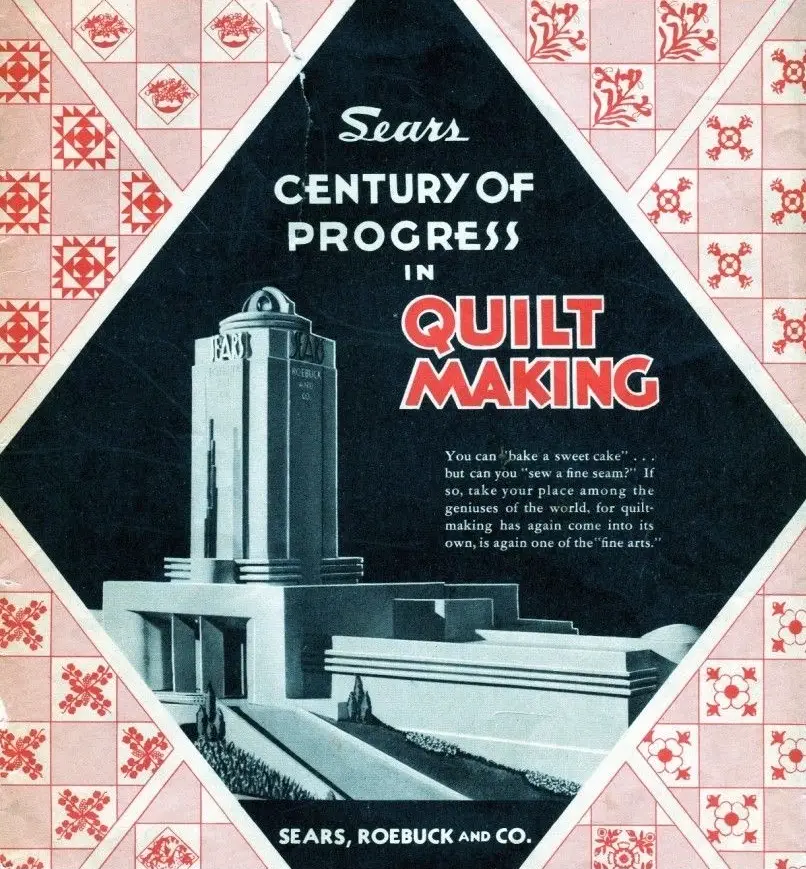
You lecture on quilt history and Depression-era contests like the Century of Progress quilt mystery. What fascinates you the most about that story?
The quilts grabbed me first. I found some photos in various books that showed the quilts entered into that contest and they astonished me with the combination of Art Deco and Art Noveau designs incorporated into traditional quilts. Some of the quilts could be juried into Quiltcon today.
After I delved into the contest itself, I discovered why the decisions by the judges were considered so controversial. Also understanding the historical setting of the Great Depression added another layer to the whole story.
The first prize winner would earn $1,000, which in the 1930s meant earning a whole year’s income if you won. Did you know 27,000 quilts were entered? Quiltcon had 2,300 entries in 2024.
How do you explain the benefits of mindful or slow stitching to newcomers?
I have found out the hard way that you cannot explain this to dedicated machine workers I don’t feel it is my lot to explain to them about the mindfulness of taking a slower approach to quilting.
Machine workers are fixated on the time frame factor and don’t want to try to slow down. However, some quilters are curious about handmade quilts, others remember making them years ago and would like to rediscover the skills they learned back then. Those are the students I see in my classes.
My hope is that quilters can embrace this design inspiration and possibly incorporate handwork with machine work on their quilts. I find this is a very attractive and eye catching combination.
To me, handmade quilts have a very different look as opposed to machine-made quilts and I can always pick out the hand-quilted quilt in a long line of quilts hanging at a show. However, each person choses their own mindful path.
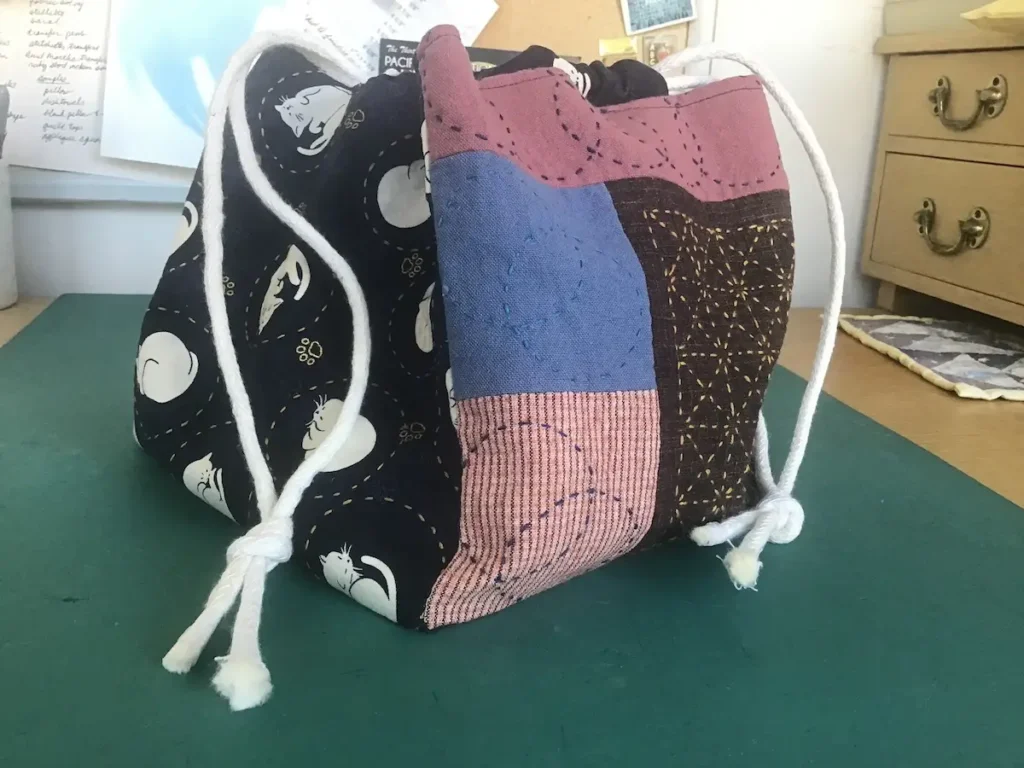
What does it look like (and how does it feel) when a student discovers joy in handwork for the first time in one of your classes?
When I teach, I focus on fostering creativity in my students.
One of my classes in particular (making Japanese Rice Bags called Komebukuro) seems to just bring it out. It is a two day class where I teach the basics one day and the construction the next day. When I see the results, I am just amazed. Every student has their own form of creativity and when it is expressed in those Rice Bags, it can be so surprising. I try to foster a class atmosphere that establishes a safety zone for their creativity to come out of hiding.
Why do you think quilting together, stitching side by side, remains so meaningful in our digital age?
Everyone needs a community, and quilters love to stitch together and gossip, I mean talk.
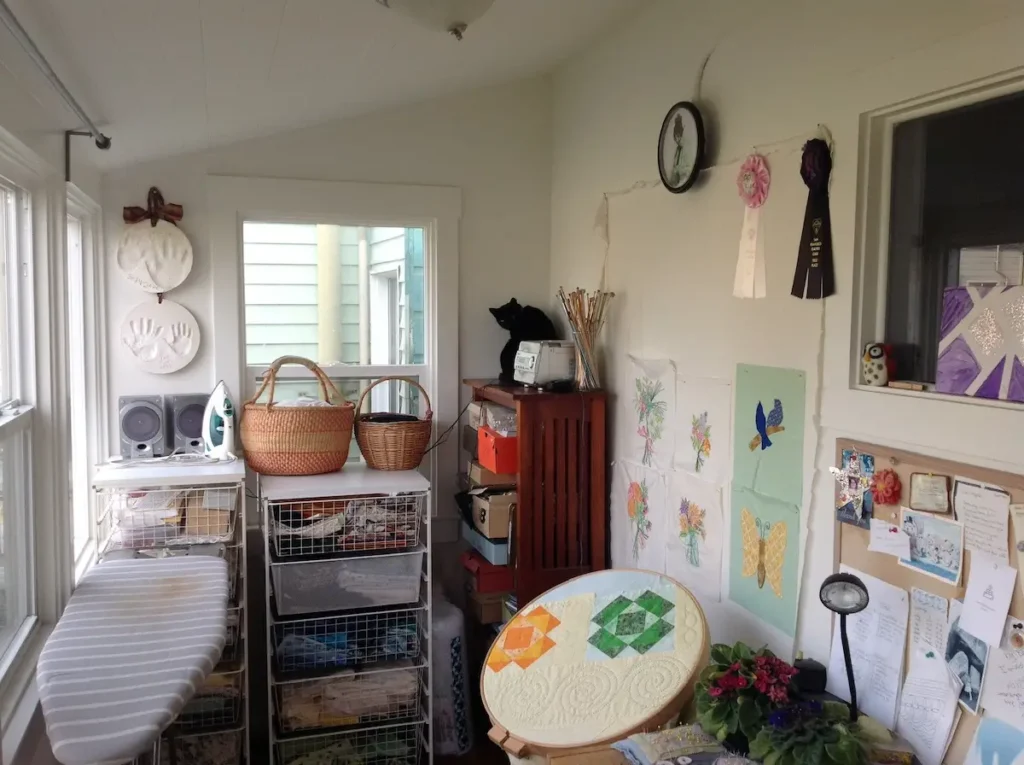
Describe your creative space.
I’m glad you didn’t ask me about my studio. I have a sewing room. It’s tiny but mighty. It is so small that if I stand in the middle and stretch out my arms, they hit the walls. But it has beautiful light and overlooks the neighbors’ backyards. Its size requires me to keep my supplies and fabric to a minimum, so if I can’t close my fabric drawers, I have to get rid of something. It also houses my Bookcase of Dreams, aka my UFOs.
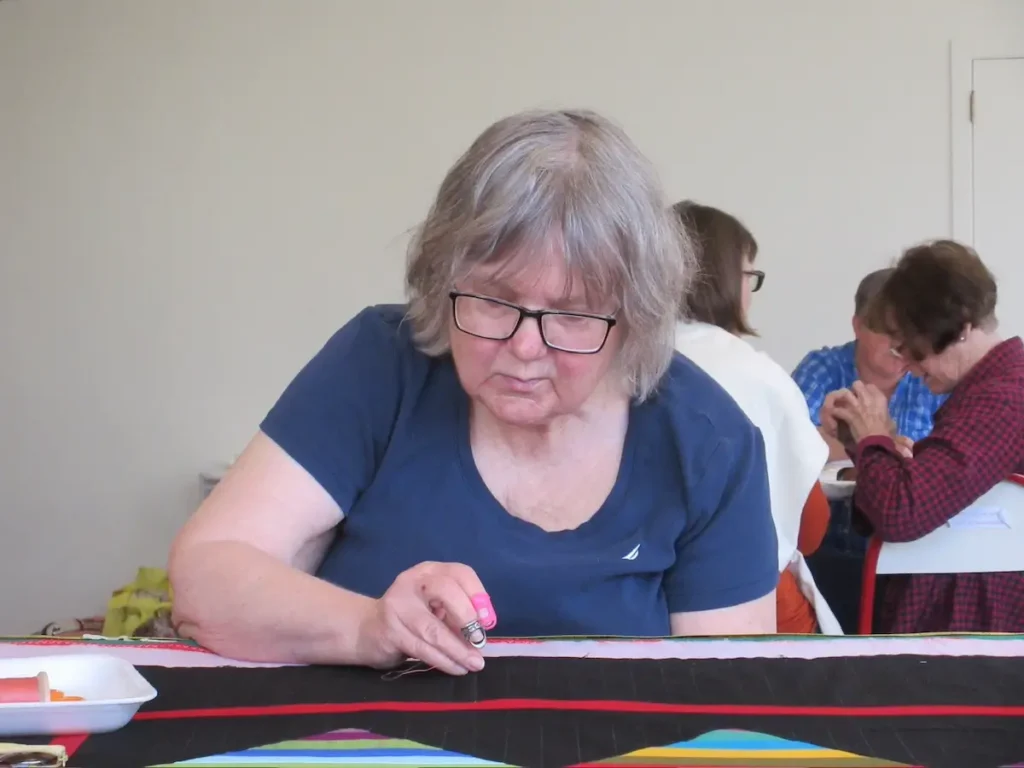
What tools or materials do you recommend to someone just beginning to hand quilt?
You really need to start with the proper supplies, quilters between needles, a flat top thimble, hand quilting thread (I use YLI hand quilting thread). Then use a batt that is recommended for hand quilting (Thermore by Hobbs is my favorite).
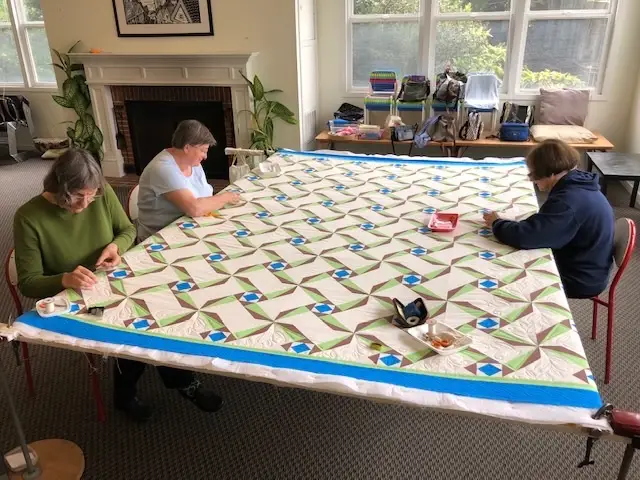
Also having a hand quilter show you the techniques of the rocking stitch is the best way to learn. However, I know from experience that it is hard to find. I am blessed to have my beloved Dorcas Hand Quilters. They taught me more than hand quilting. Those ladies helped guide me into my crone years.
How do you stay grounded if your quilt project drags on, or if you hit creative fatigue?
I seem to be going through that at the moment. Going back to my stack of 1930’s block patterns with no goal in mind and just hand piecing them seems to help. I’m trying to remain calm and hope this time will pass as it has in the past.
Do you have any tips for balancing precision with letting the handwork stay beautiful in its imperfections?
I’m not the person to ask about that.
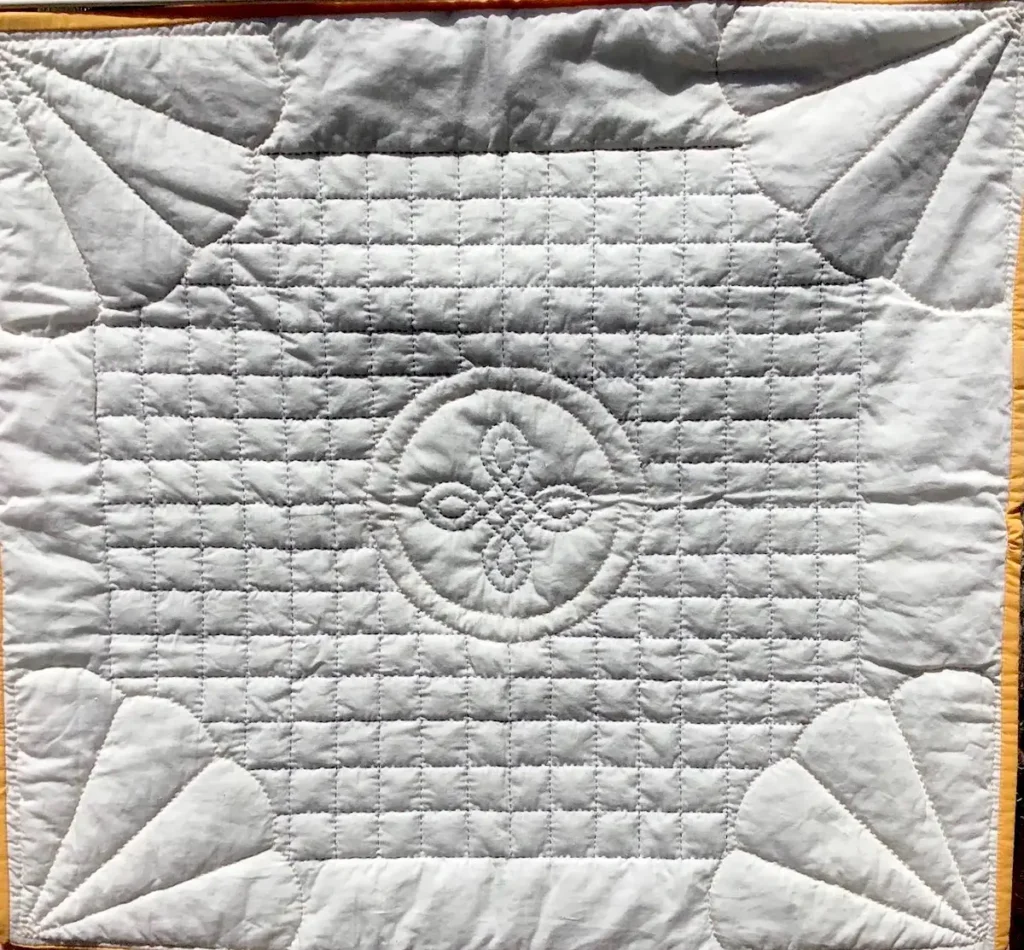
I seem to have some sort of aversion to ripping out stitches and redoing piecing. If I find a cut-off point or a mismatched seam, I press the bejesus out of it and bang it with the clapper. If that doesn’t do it, I try to bury it in a place that I hope the judges won’t notice.
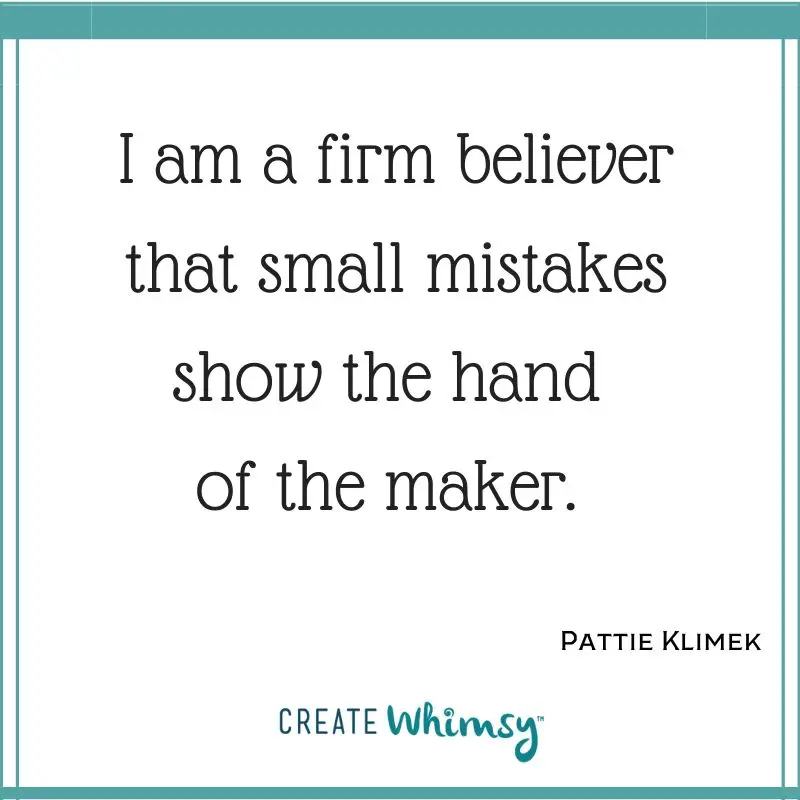
However, I am a firm believer that small mistakes show the hand of the maker. A perfectly made quilt looks pretty boring to me, and all it tells me about the maker is that she/he is a frustrated perfectionist because you cannot make perfection. This is from a member of a family full of perfectionists.
If you could give your younger self one piece of advice about creative work and community, what would it be?
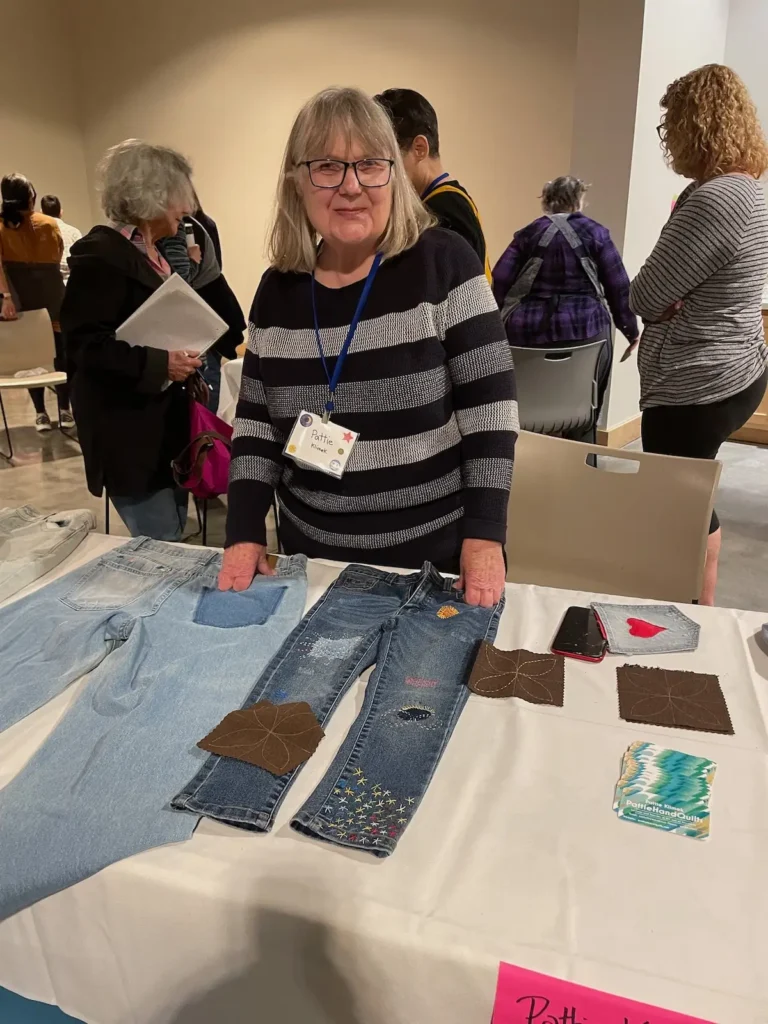
I don’t think my younger self needs advice about community. I have always understood the need to surround myself with like-minded makers and been able to find my people.
But I do want to give some advice about creativity. Everyone has their own individual quilting style. It is hard to find, but when you discover it, don’t give it up.
Always be yourself, even if you decide to enter shows and the judges don’t respond to it. Remember, judges just don’t understand your style yet, but they will eventually if you keep at it. Keep entering shows, and you will see them start to appreciate your quilts more and more.
Where can people see your work?
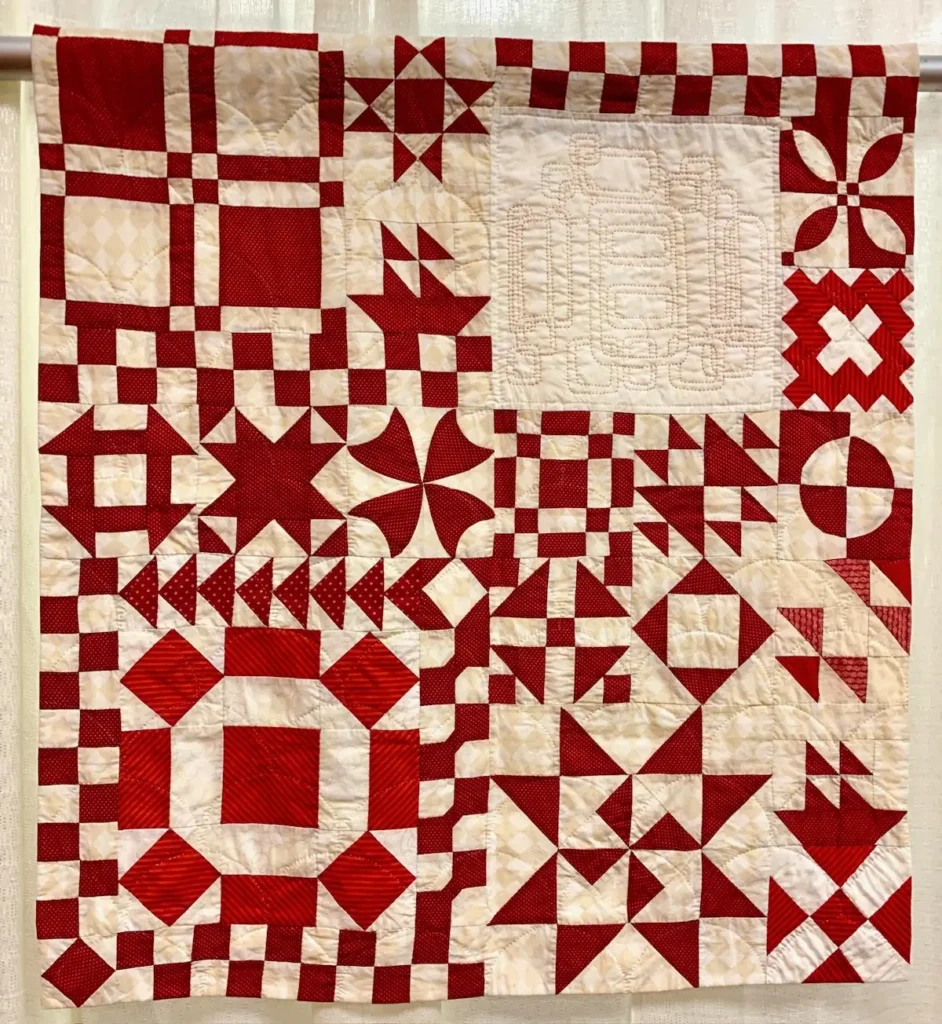
My website with information on my lectures and workshops is at pattiehandquilts.net along with photos of my creations. On Instagram you can find me at @pattieklimek.
I was recently chosen to present a workshop at the Empty Spools Seminars in Monterey, California. I will be teaching a whole week’s class in How to Make a Handmade Quilt. It is scheduled for May 16 to May 21 in 2027. More to come about that.
Also, you can sign up for my FREE newsletter that comes out every Sunday at pattiehandquilts.substack.com. That is where to look for my teaching schedule. But I want to warn you I do have opinions about the quilting and handwork community. Opinions are like noses, everyone has one, but sometimes noses need blowing, and that can be messy.
Interview posted August 2025
Browse through more hand quilting stories and projects on Create Whimsy.