
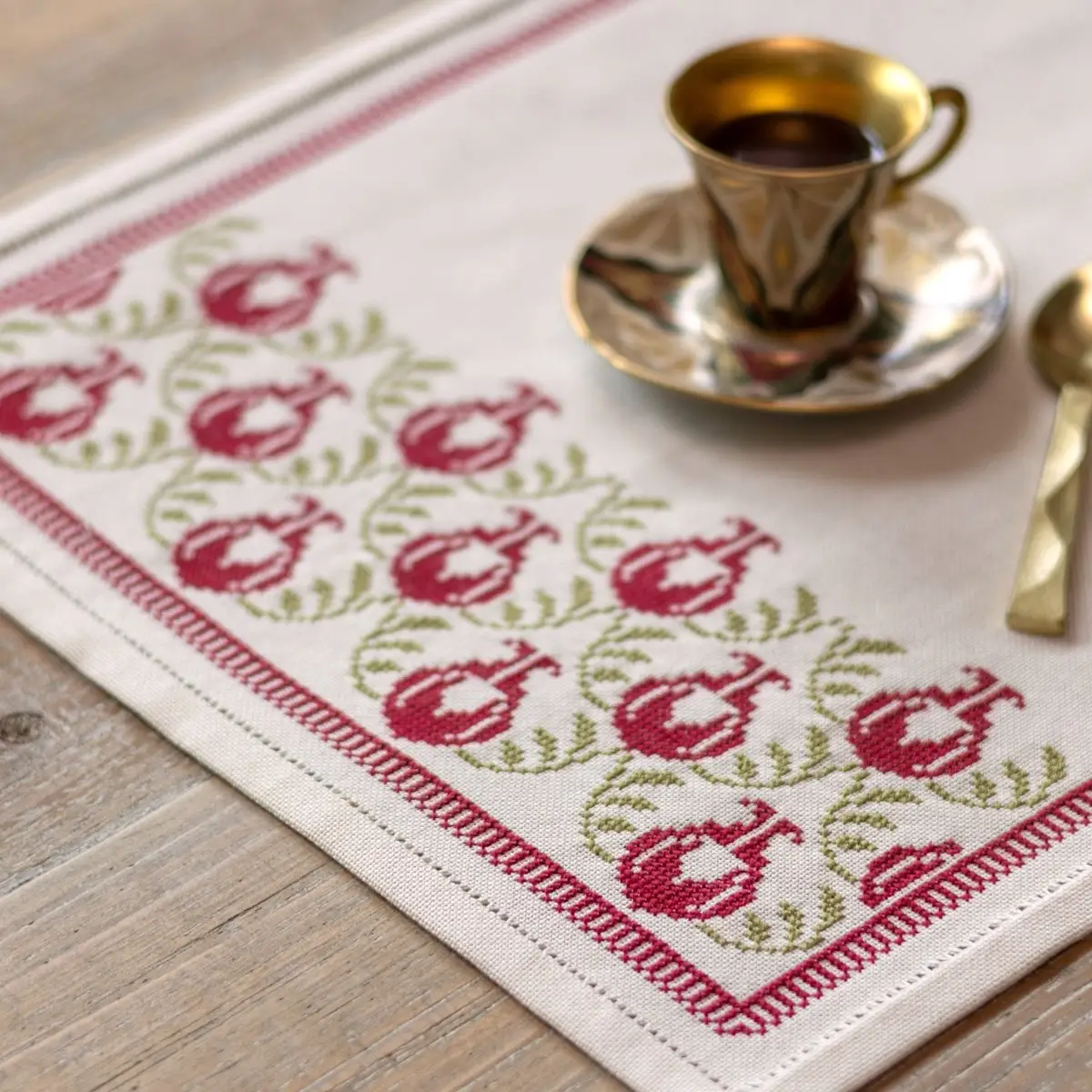
Embroidery designer Krista West has been stitching for as long as she can remember, turning a lifelong love of needle and thread into designs inspired by historic folk textiles. In this interview, she shares how early influences, travels to Greece, and a deep fascination with traditional motifs shape her creative process today.
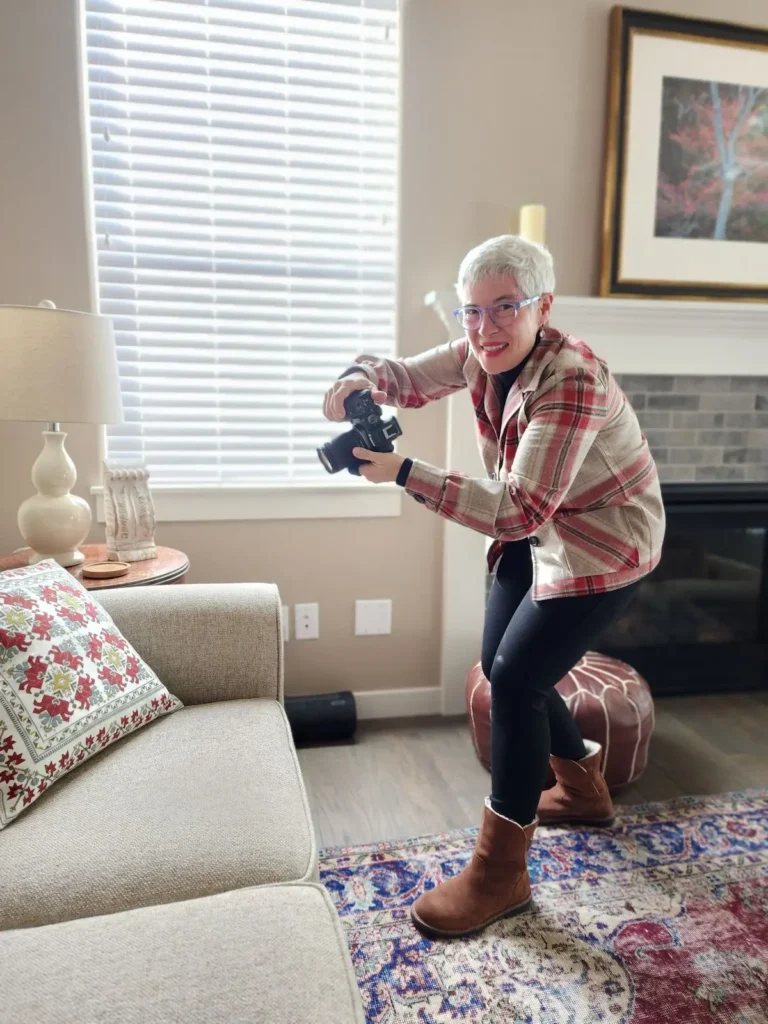
When did stitching first enter your life? Do you remember the first piece you ever made?
I’ve been stitching and crafting since early childhood, learning to hand-sew and crochet by age 5, and receiving my first sewing machine at age 8, so handwork has been a part of my life from my earliest memories.
I started really getting into embroidery in my late teens, and my first “real” embroideries were several Deerfield designs, which I discovered in an old book I bought at a garage sale. I would also go to the library and read old embroidery books for ideas.
What drew you to embroidery as your main creative language?
As an Amazon Associate I earn from qualifying purchases. Read more about our affiliate linking policy.
There’s just something about the intricacy yet paradoxical simplicity of needle and thread that really speaks to me—you use a few strands of floss and a tiny needle to make something visually stunning. I really love the granular-ness of it!
How did your early work look compared with what you make today?
Well, I began a tailoring apprenticeship when I was 25, and by the time I finished three years later, I was regularly working with real metal brocades and specialty finishings, so I could create some pretty impressive garments from early on in my career.
My earliest folk embroidery pieces, which I began stitching a few years later, tended to be larger because that’s what I wanted at the time for my home.
Once I started designing for other stitchers, I had to keep in mind things like the economic use of the fabric, if a design was too large or complex to appeal to the average stitcher and things like that, so it has changed the nature of my own stitching quite a bit, but I’ve ended up really enjoying this because it allows me to play around with a lot of designs and I love the variety.
Your work has a strong folk art feeling. What first sparked your interest in folk embroidery traditions?
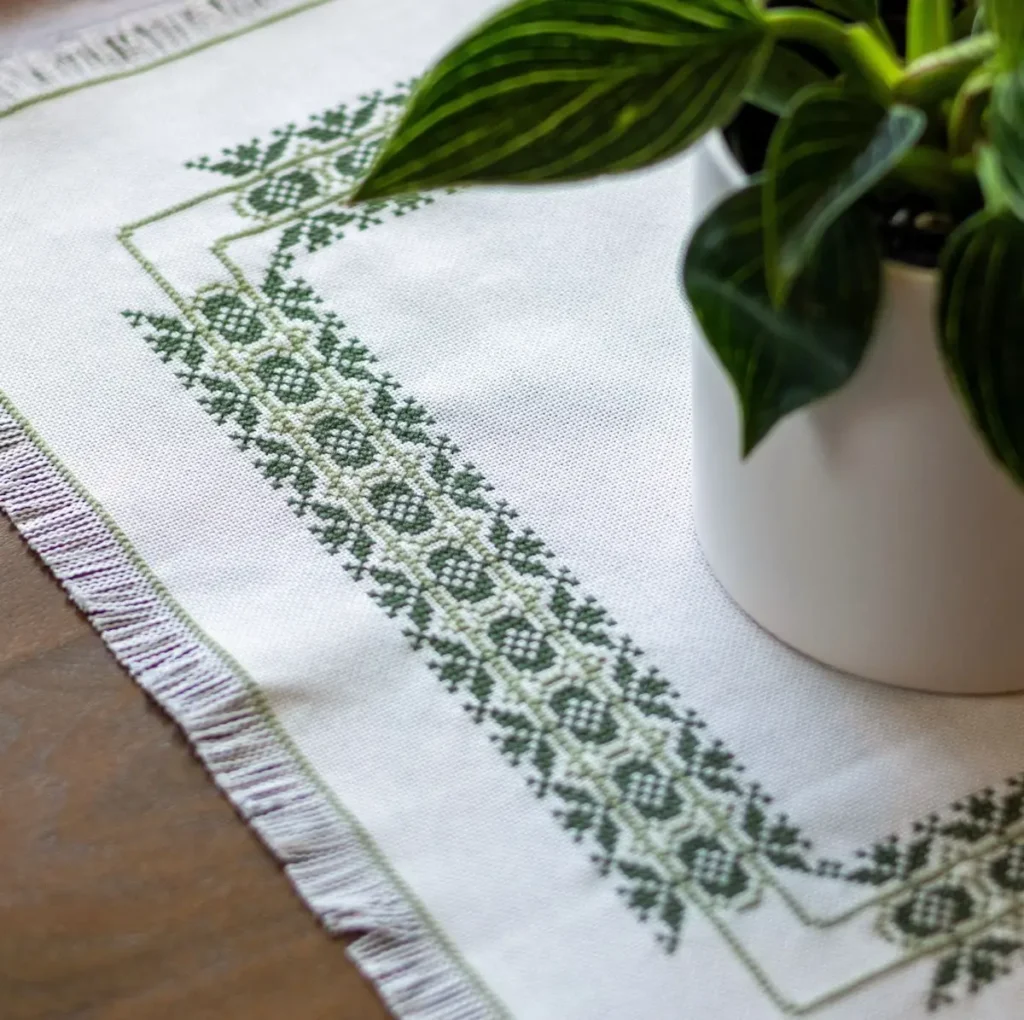
I’ve been drawn to folk and historical textiles since I was a teenager—if there was a technique or style with some kind of history, I wanted to understand it!
In my early twenties, I learned to knit and became really interested in Shetland knitting (which has a lot of the same motifs and designs I work with today). Around that same time, I picked up hand-quilting and immersed myself in Amish quilting followed by silk embroidery and then my tailoring apprenticeship.
So, I’ve always been a textile nerd, very interested in any kind of historic or folk aesthetic. As I progressed in my tailoring career and started researching Mediterranean aesthetics in depth, I was really drawn to how the traditional textiles had such affinity with other artistic media such as mosaics, wood carving, and stonework.
Where do you usually find ideas for new patterns or motifs?
So many places!
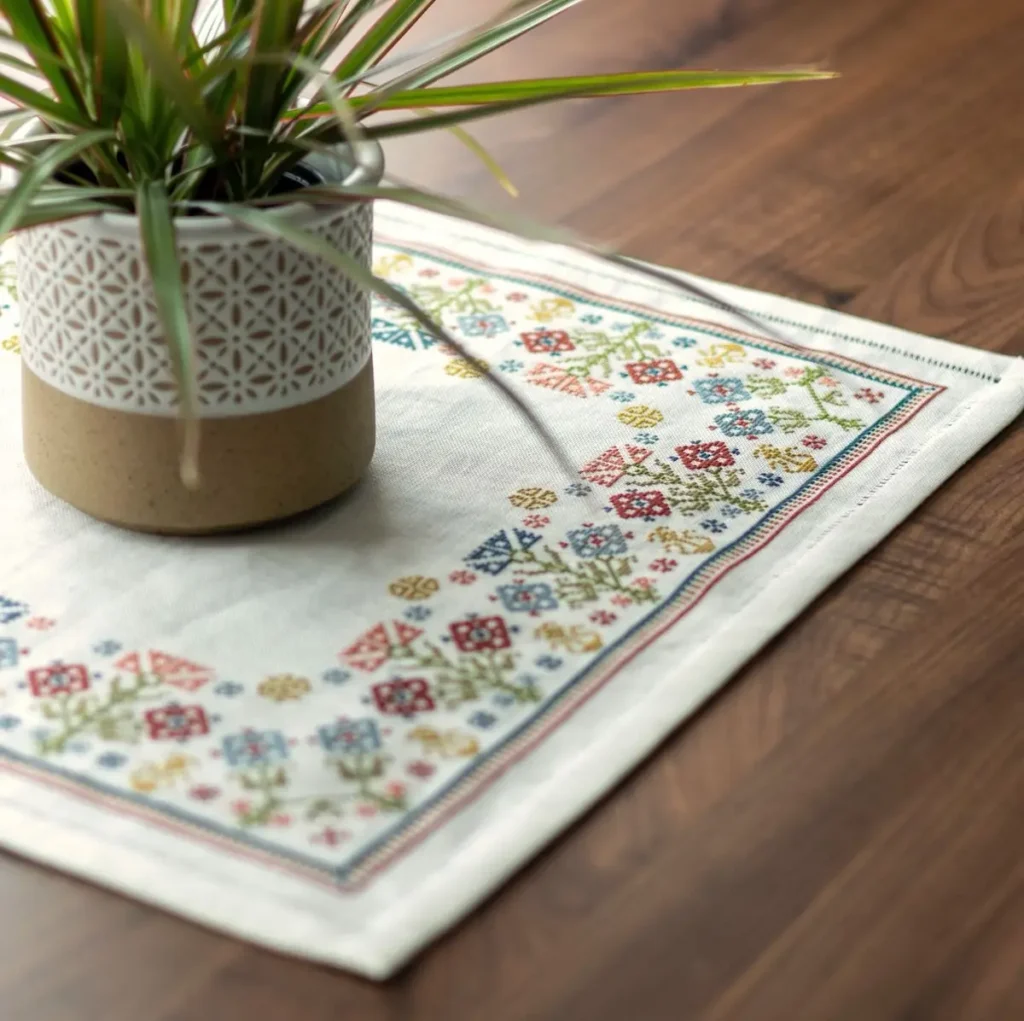
I take regular trips to Greece to study with my embroidery tutor and visit folk museums, and a lot of my inspiration comes from being in Greece, immersed in that aesthetic.
Additionally, I have been collecting vintage embroideries and needlework booklets for over a decade now and I love studying those.
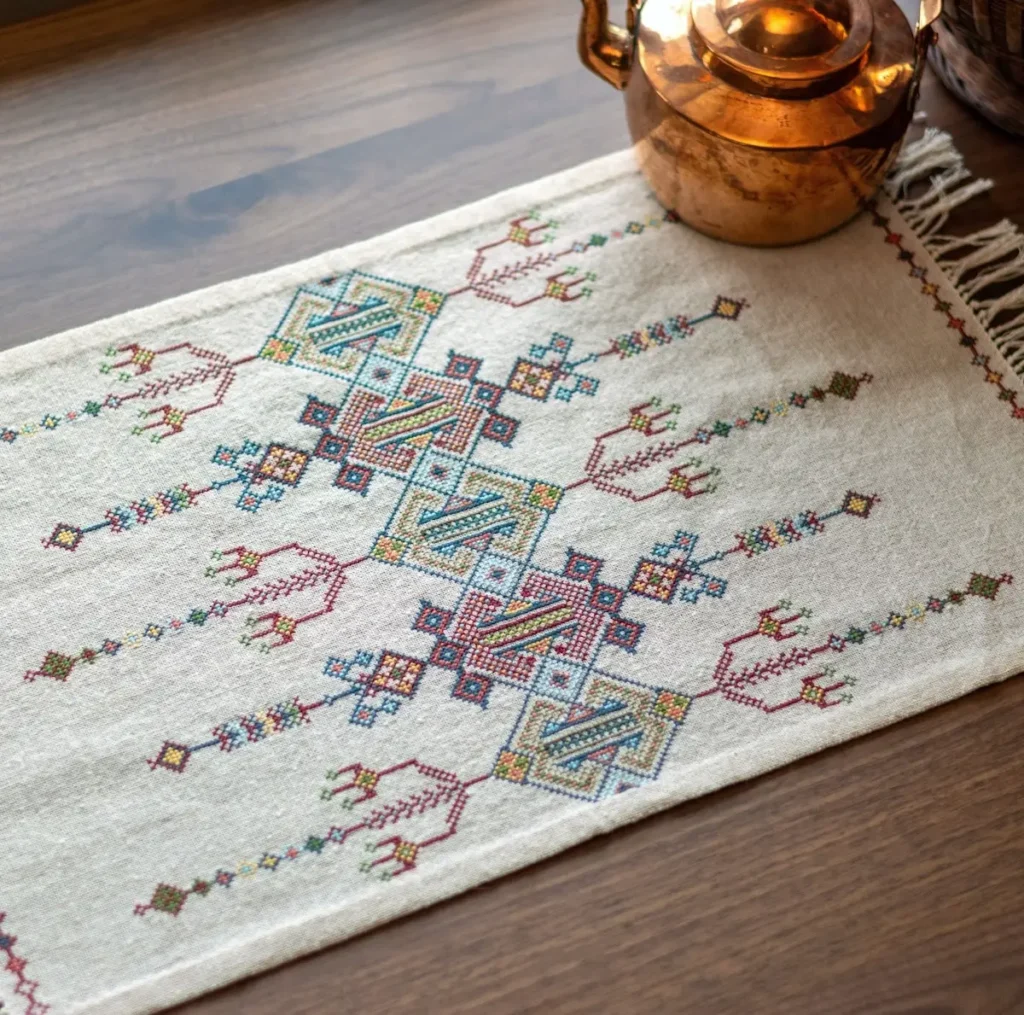
And, sometimes I’m just out walking and see something I want to interpret, like my Oak Park Diamonds table runner—it’s from an East Lake-era leaded glass window in a historic building in Salem, Oregon. I’ve kind of got a pattern “scanner” in my brain that seems to be always on!
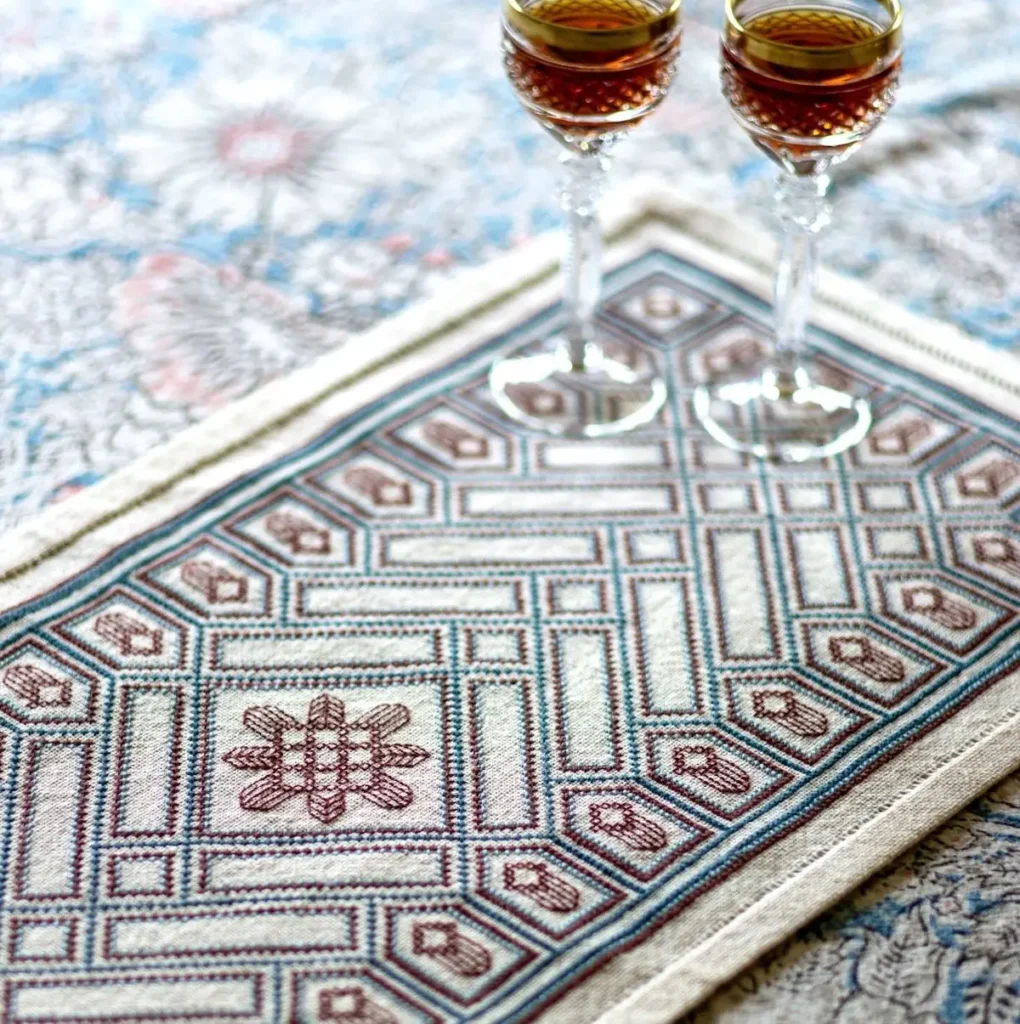
What does folk embroidery mean to you in a modern world of fast production?
This is such an important question!
I think it is a satisfying and rewarding way to reconnect to our haptic selves—our life in a body in a physical world, which is a contrast and an antidote to our increasingly virtual lives.
When you start stitching, you are suddenly living your life stitch by stitch, and you participate in the creative process in this slow, steady motion as your embroidery appears in your hoop. It slows everything way down, but afterwards gives you this incredible, restorative energy.
I think the pursuit of beauty and creativity are really important in the modern world. In a world that too often feels too fast-paced, slowing down and making something with your own hands, a bit of floss and fabric and a needle, just feels so ancient.
For me, it puts everything in perspective—I may be sitting in my chair, stitching away in the 21st century, and yet I’m doing the same thing other people have done before me for literally thousands of years.
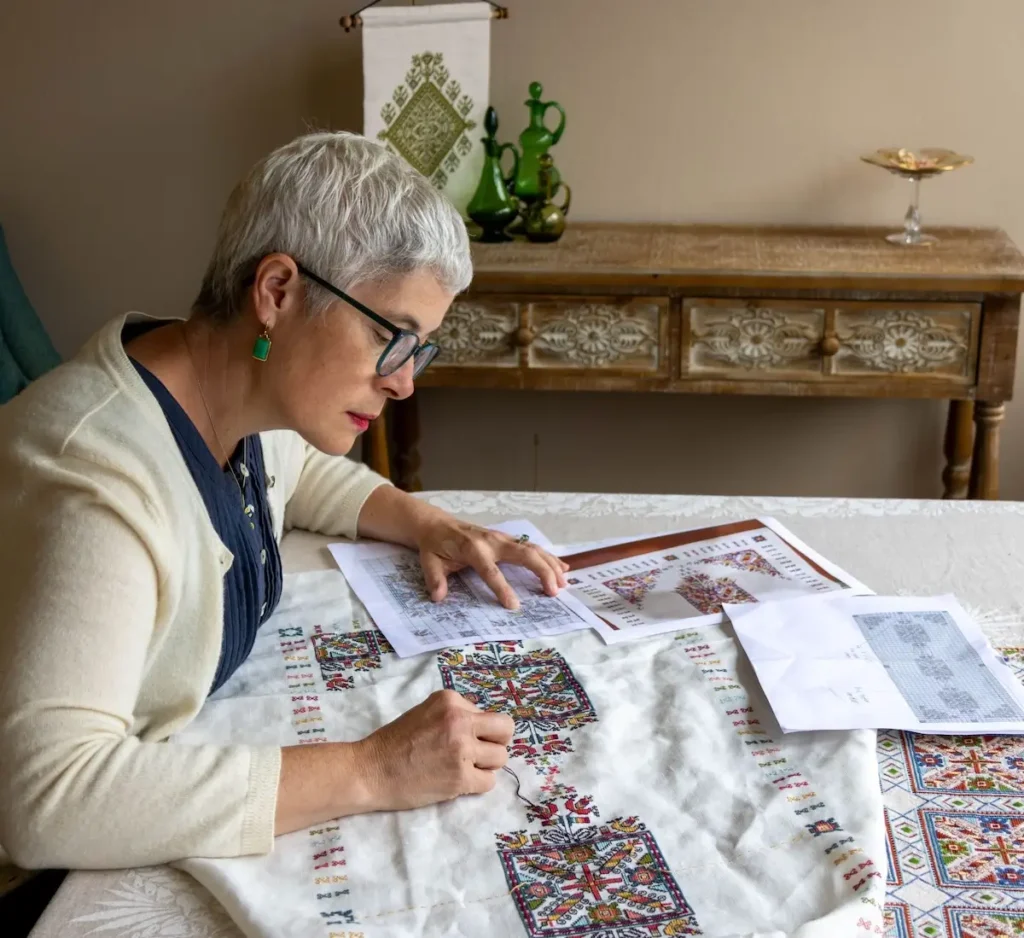
Describe your creative space.
Well, I’m really fortunate in my current creative space: we moved to Central Oregon a couple of years ago and I now have a small cottage as my studio. I absolutely love it!
I painted the walls terra cotta, moved my huge old cutting table in, and then added this beautiful carved shelf for all of my floss cones. I’ve got embroideries hanging everywhere (both vintage ones and ones I’ve stitched), and it’s just this wonderful little creative haven.
And when I want to think over something, I can walk outside my door and be in the forest in minutes.
What tools or materials are essential to your embroidery practice?
I’m really basic when it comes to tools—I like the simplicity of embroidery in that it can be done with a very small collection of tools.
I use either a 6” beechwood hoop or a Q-Snap, a pair of Gingher snips, my pretty little needle minders, and magnifying glasses. When I’m at home, I use a Q-Snap and my trusty Lowery workstand; when I’m traveling, I just use a 6” beechwood hoop.
For design work, I use WinStitch. I love the program—the customer service is fantastic, and it’s a really robust program that can do so much.
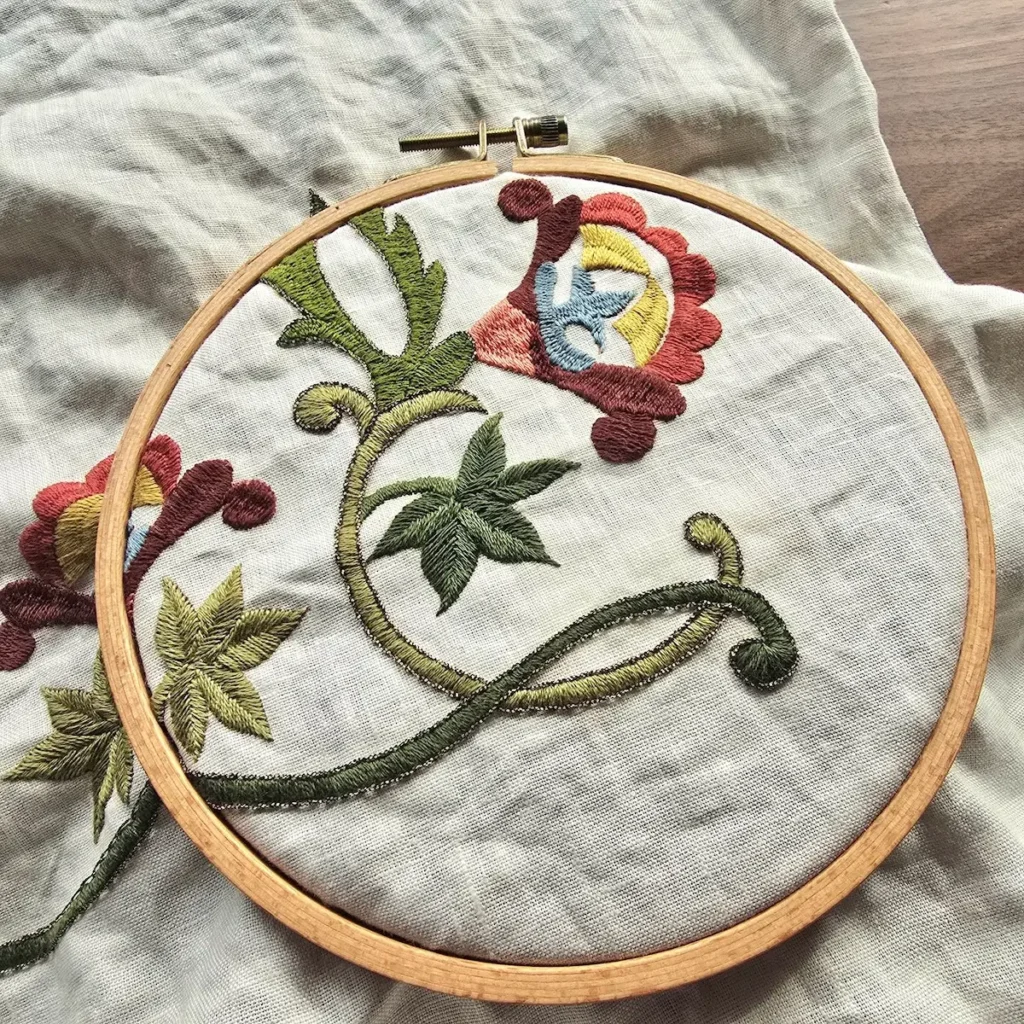
Are you someone who plans projects carefully, or do you let the stitches guide the process?
A little bit of both—I used to spend most of my time on the charting process and then adhere to that rigorously when stitching, but over the last year or two, I’ve really embraced playing around with the colors and fabric on every design.
And, I’ve begun to expand into surface embroidery, which is definitely much more of a “figure it out as you go” process. I try to narrow down a floss palette, but not too much, as I’m beginning to stitch a design—for example, I’ll have 3-4 greens at the ready so I can see which one I like best with the design.
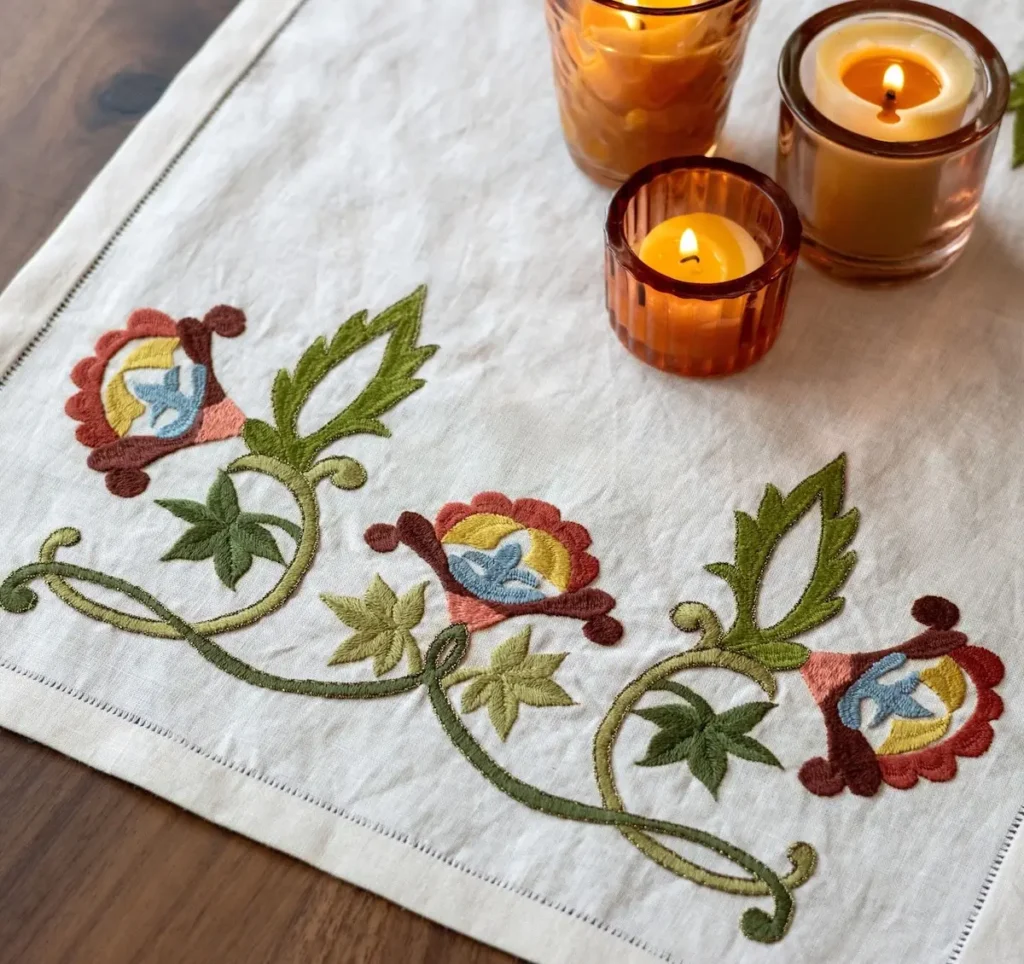
How does a new embroidery design begin for you?
Four times a year, I have a week-long Design Week in which I spend 10-12 hours/day working on new designs.
The inspiration is varied—sometimes it’s a snippet of an old design I saw, sometimes I might have just obtained a vintage textile, or sometimes, I even have customers who send me photos of a family heirloom that they would like kept alive. Other times, I may find myself sifting through my hundreds of photos from my trips to Greece.
It’s very creatively random—I just pull out all my stuff and start moving it from pile to pile and see what grabs me in that moment. It’s kind of surprising how many times I sift through and find a motif or a palette that just never grabbed me before, and suddenly I’m completely obsessed with it.
I try to remain really open during my Design Week and allow the universe to take me where I need to go. That probably sounds a little woo-woo, but it’s how my creative process has developed over the last few years, and I’m learning to trust it.
What part of the process is your favorite?
Definitely Design Week! I just absolutely adore going into what my family calls my “design bubble” where I’m designing and charting and sorting through my inspiration folders, and completely absorbed with color and pattern. I get so caught up in it, my husband has to text me to remind me to eat!
Also, I love the first few stitches of a new design—that magical “is it going to work? Ooooo, it is!” moment. I kind of live for that moment.
What part can be the most challenging?
I think keeping up with the never-ending tasks associated with having an online business—it can sometimes feel like a daily game of Whack-A-Mole to stay on top of social media, website stuff, email, and all of that.
But it seems whenever I get discouraged by any of that, someone sends me a really nice email about what my design meant to them, and those emails remind me that the admin is what helps keep folk embroidery alive for the next generation.
Every maker hits creative blocks. What do you do when inspiration feels far away?
Well, this might sound funny, but I’ve never hit a creative block. I’m on the autism spectrum, so my brain just hums along wanting to do patterns, color, motifs All. The. Time.
When I wake up, the first thing I think about is whatever design I’m currently stitching, then I think about stitching and fabric and designing pretty much all day, and when I go to bed, I’m thinking about all of the new things I want to design or experiment with, so my creative flow is constant and has been since late adolescence.
I remember reading about the flow state years ago and asking my husband to explain it to me because I didn’t understand the concept of “getting into” the flow state—I didn’t realize that people had to work to get into a flow state.
For me, it’s the reverse—I tend to hang out in a flow state most days, and my challenge is to remind myself to take breaks for regular life stuff like eating, working out, going to the grocery store, etc.
This might sound like kind of an ideal thing for an artist, but it definitely has its downsides. For example, I can be really snippy and unpleasant when someone interrupts me, and I struggle with being aware of certain sensations like thirst or pain when I’m working.
For example, a few years ago, I got a stress fracture in my foot because I was standing at my cutting table for so long without remembering to take breaks. I wasn’t diagnosed until midlife, and it was honestly just a relief to finally understand why I had these tendencies and to start learning some new skills for dealing with my hyper-focus. I’m really fortunate that my family has been incredibly supportive, and they help me focus on what I can do instead of what I can’t.
What does being a maker add to your everyday life?
It brings incredible meaning and purpose to my life. When I’m packaging kits, I still get kind of overcome thinking about all of the embroidery that’s going to happen because of my sharing my creativity.
What advice would you give someone who wants to start embroidery today?
Follow your joy!
Look around at different types of embroidery and listen for which styles or colors, or designs really make you go, “Oooooo, I want to do that!”
Then repeat the process as many times as you like! I think too often it’s easy to get focused on the product—what’s the final outcome? What did I make?—instead of focusing on the process, what did I learn? How did this move me along my creative journey?
So I really encourage those new to stitching to start anywhere and embrace the play and creativity to your heart’s content. Try something and don’t be afraid to set it down unfinished and go on to the next thing. Life is too short to get hung up about unfinished craft projects.
Where can people see your work?
All of my kits and PDF patterns are at my website. I also regularly post to Instagram, Facebook, and Pinterest. My book “Everyday Folk: over 175 folk embroidery designs for the home inspired by traditional textiles” is available from Amazon.
And, my kits are now carried in about 250 shops worldwide. And, I’m starting to do more in-person events, so you can check the Events page on the website to see where I’m going to pop up next.
Rapid-Fire Fun:
Hand-dyed threads or classic embroidery floss? Classic DMC every time!
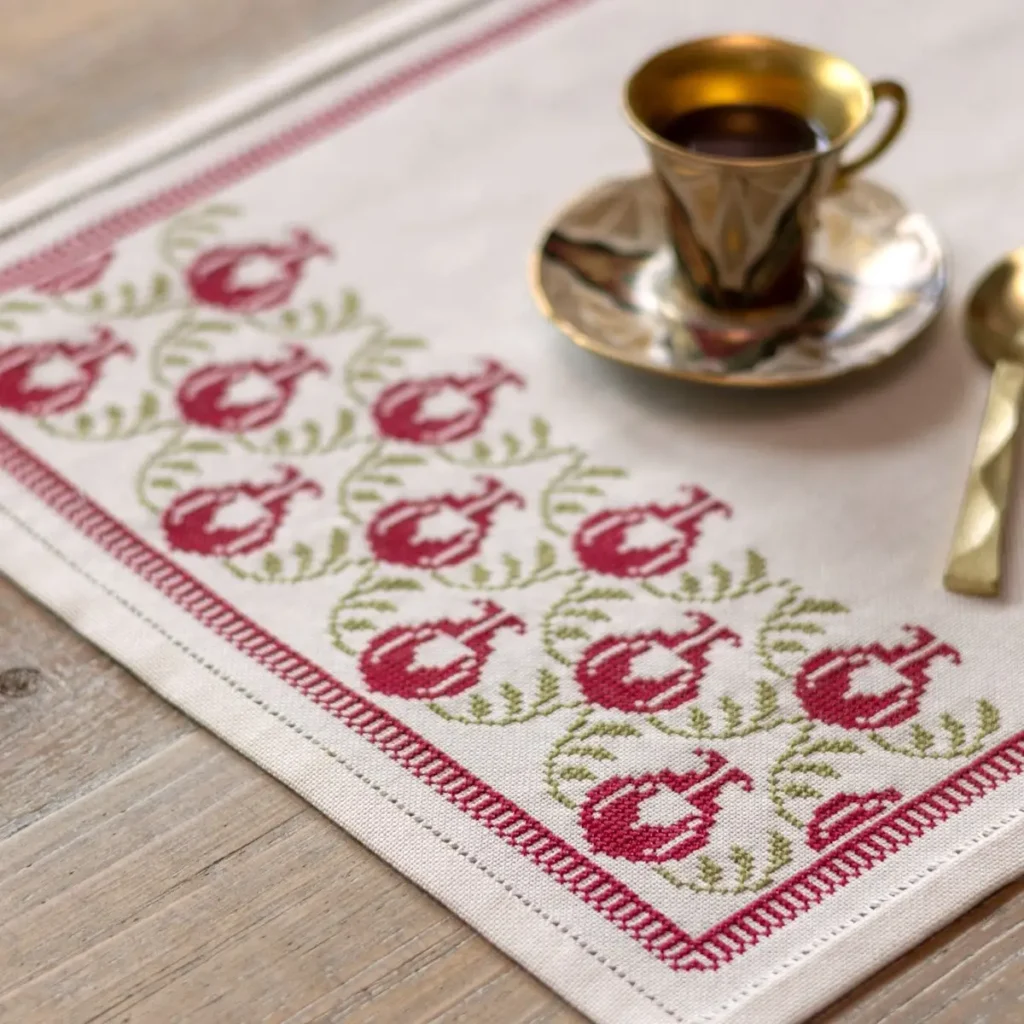
Favorite stitch? First, cross stitch, and then vyzantino (also known as Romanian couching)
Thread stash: neatly organized or creative chaos? All the DMC cones lined up according to historic color theory, please 😊
One word that describes how stitching makes you feel? Joyous!
Avlea Folk Embroidery www.avleafolkembroidery.com
Instagram: kristamwest
Facebook: kristamwest
Pinterest: kristawestavlea
YouTube: kristamwest
Interview posted March 2026
Browse through more hand embroidery inspiration and projects on Create Whimsy.