

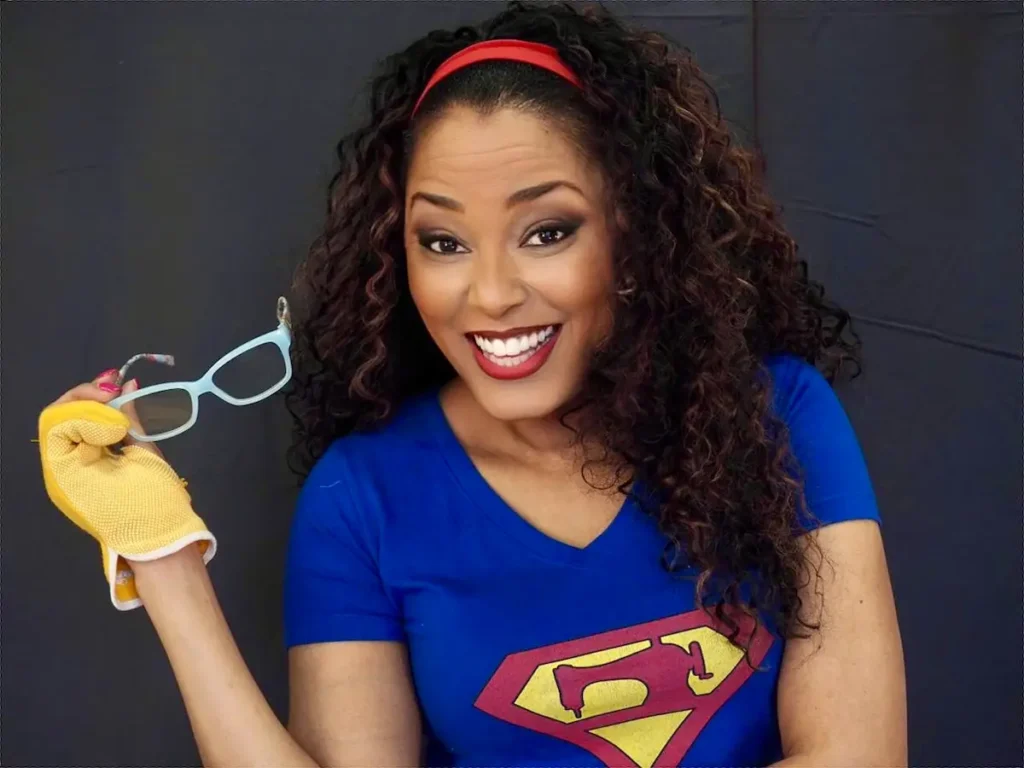
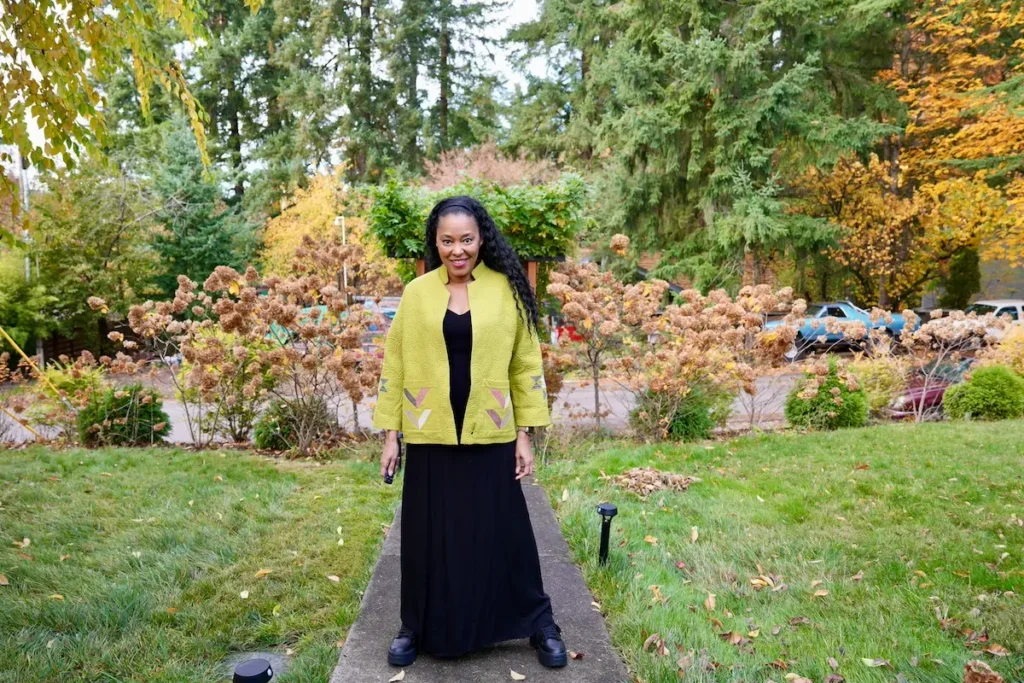
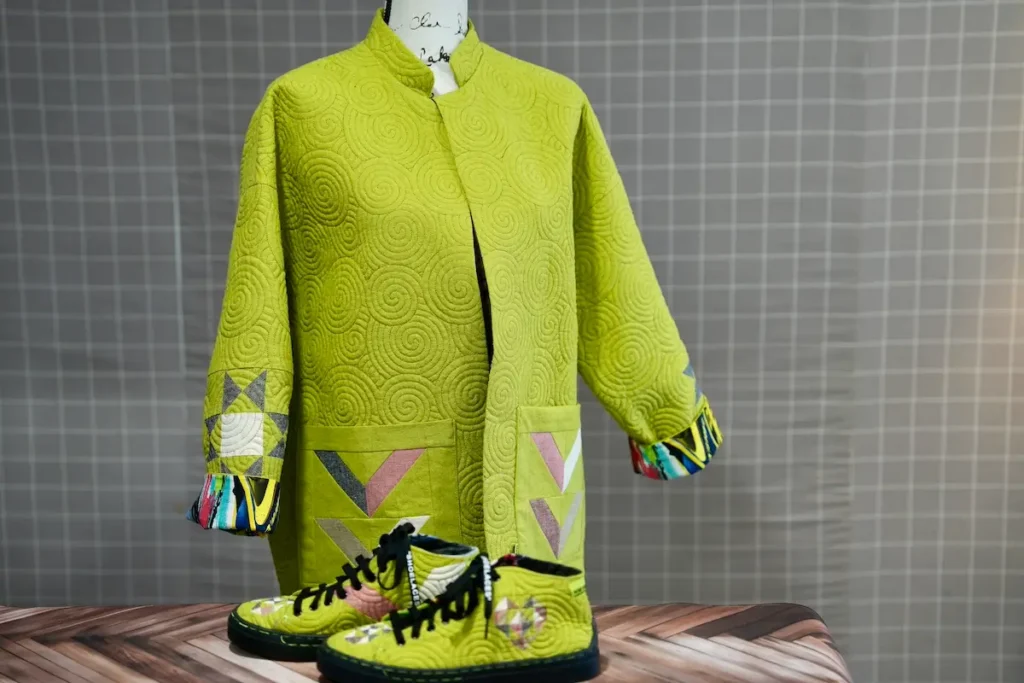
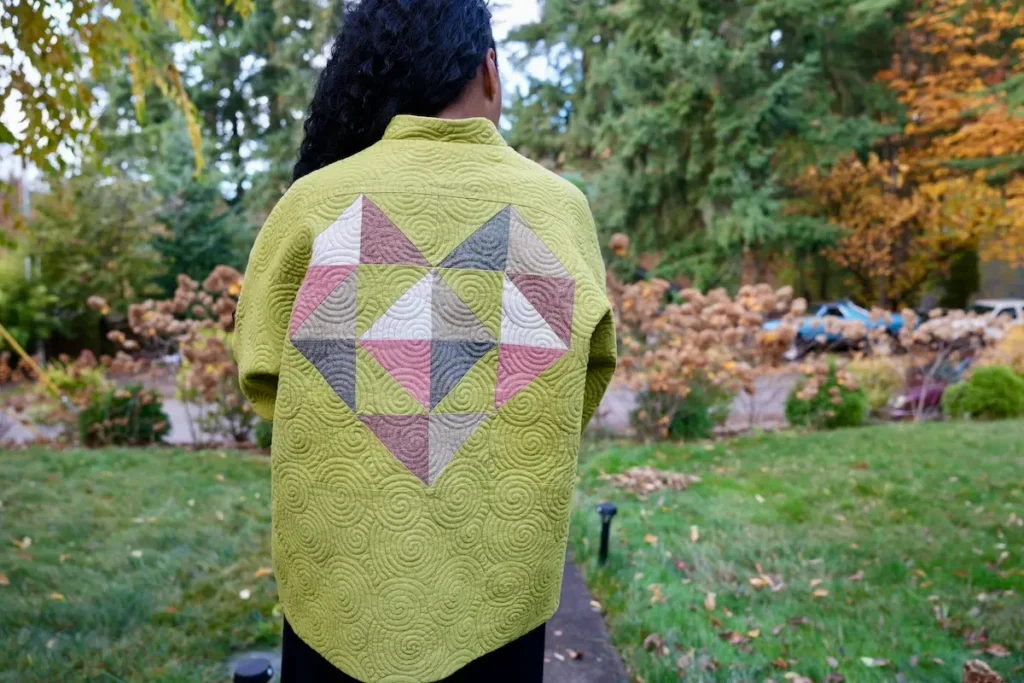
Kimberly Bennefield brings a designer’s curiosity to every stitch, shaping garments, quilts, and even custom sneakers with the same thoughtful approach. Her background in UX fuels the way she solves construction puzzles. Across mediums, she follows the spark, letting fabric, form, and function guide the evolution of each piece.
What first pulled you into sewing and quilting? Tell us your earliest memory.
Sewing, garment sewing specifically, was my first entry into this space. I have an aunt who used to sew garments, and I was probably 7 or 8 years old and remember watching her work with fabric and pattern tissue paper.
Also, memories of a family member who lived across the street from my maternal grandmother, and she would lay quilts over her bed and quilt them by hand. I have vivid memories of her holding a threaded needle and using a thimble as she rocked back and forth, making those stitches.
When you think back to the first time you finished a project and felt proud, what was it?
As an Amazon Associate I earn from qualifying purchases. Read more about our affiliate linking policy.
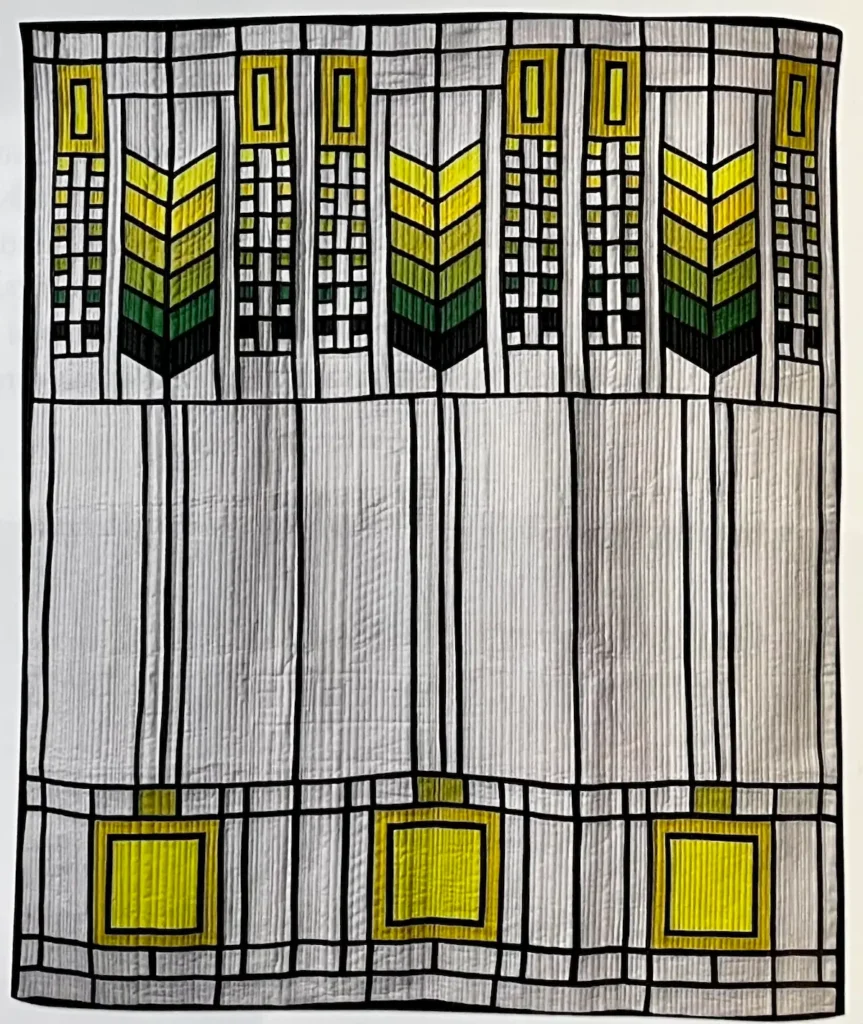
It was my 3rd quilt, which was a Bargello design. I chose colors to coordinate with my bedroom at the time, which as a teal color and a chocolate brown. At that point, I was learning more about fabric designers and Facebook quilt-related groups.
Early on, I gravitated toward prints by Kaffe Fassett and used those prints with a mixture of chocolate solids. I posted the quilt in a Kaffe group, and the response blew me away.
How does your background in web and UX influence your work with textiles?
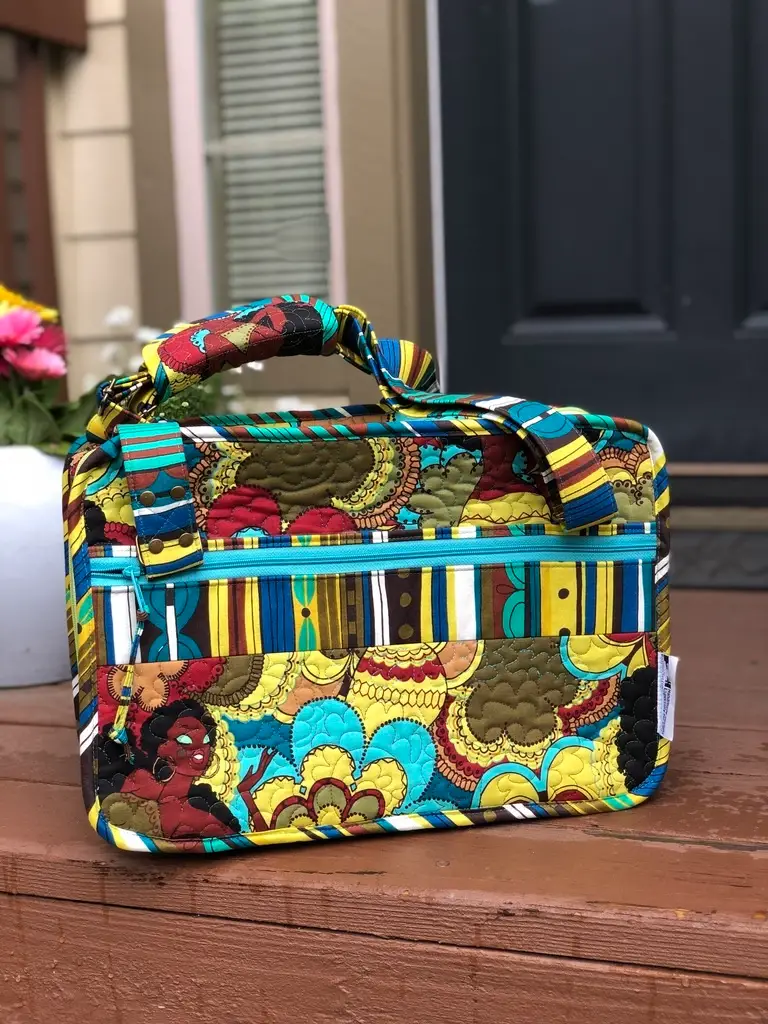
Design is a very heavy aspect of UX, I would say that my background in design definitely helped to see from the perspective of values, hues, color, etc.
Research and gaining a full understanding of the problem we are working to solve are also very important parts of UX, and I run into that frequently when assembling a garment. There is a lot of “why do they want me to do it this way” thoughts that end in, “ah!!! I see!!”
Web in general could encompass my previous work in web design as well as computer networking. These are all interconnected parts that come together to form something complete, which absolutely relates to work with textiles.
Inspiration can come from anywhere: street murals, music, nature. What non-textile sources are lighting you up right now?
Music always, and all kinds.
Movies and shows that interest me because of their styling. The most recent Marvel Fantastic Four movie has this futuristic/retro vibe that was so inspiring. Examples like this, I watch multiple times, pausing and zooming in on little things in the background.
People, like other artists, makers, or creators, can be inspiring in many ways. There are even, honestly, artists that I watch or listen to simply because there is something about their demeanor or the sound of their voice… yes, including Bob Ross.
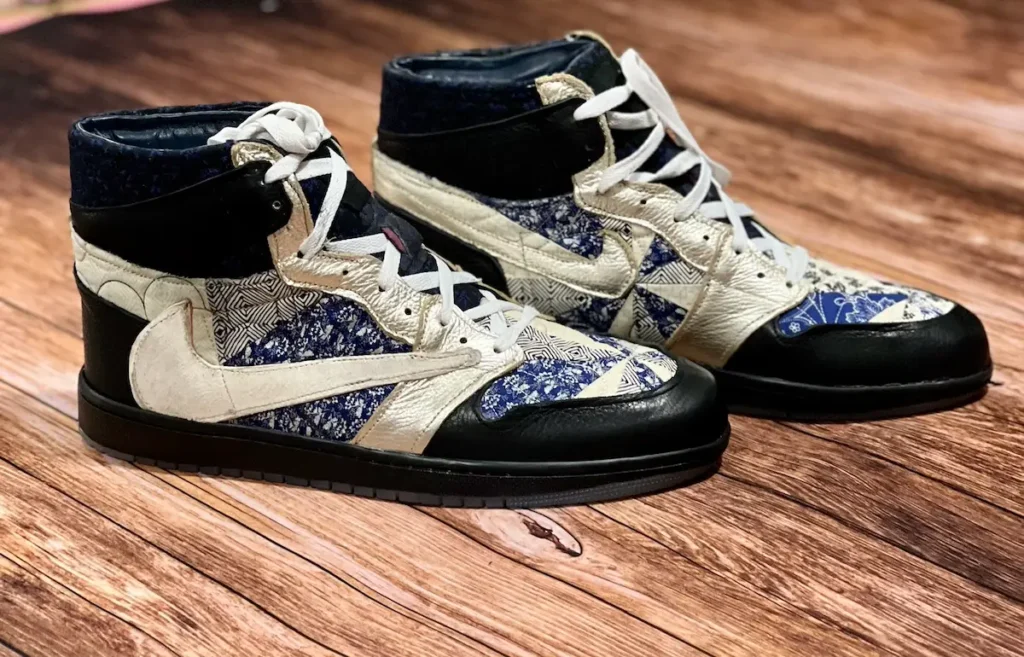
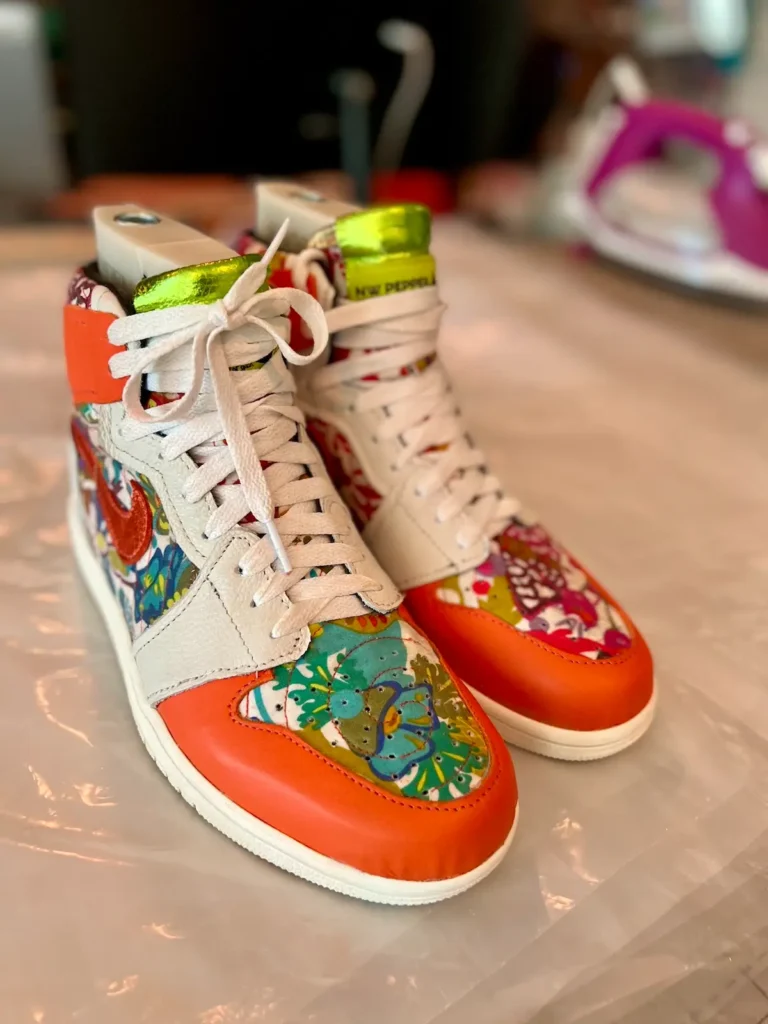
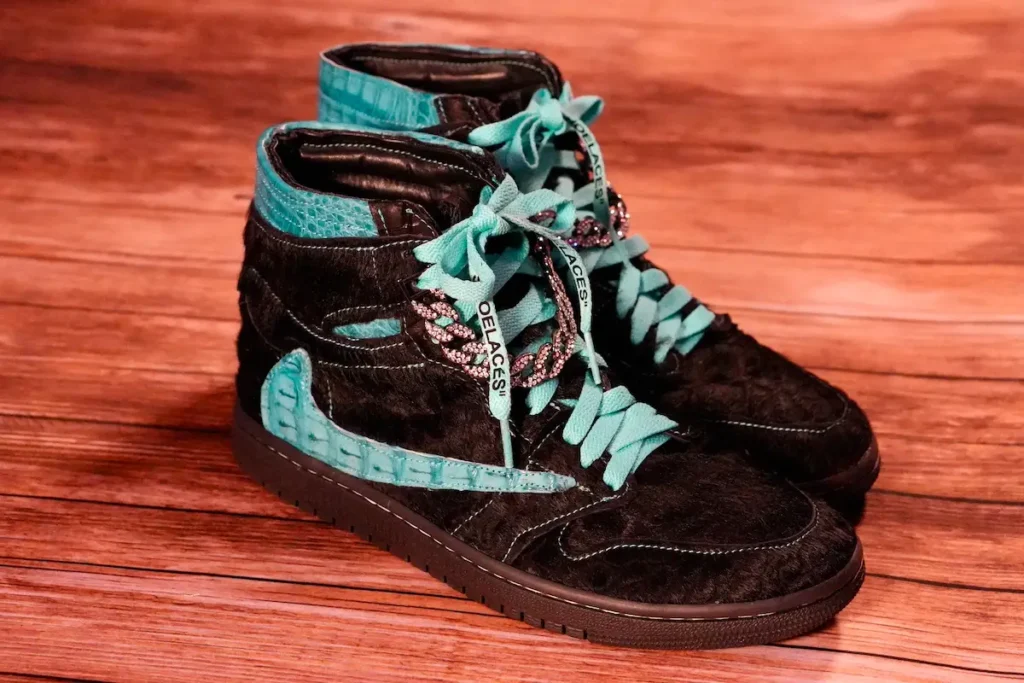
Tell us about your quilt to sneaker journey. What surprised you the most when you started making shoes?
I’ve been a lover of sneakers for quite a while. I wouldn’t actually call myself a sneaker head, because I know people who truly deserve that title and… Nope!
I was able to follow my now ex-husband from Texas to Oregon and get my foot in the door of Nike. For obvious reasons, I’d have to say this was the real start of my sneaker lover journey.
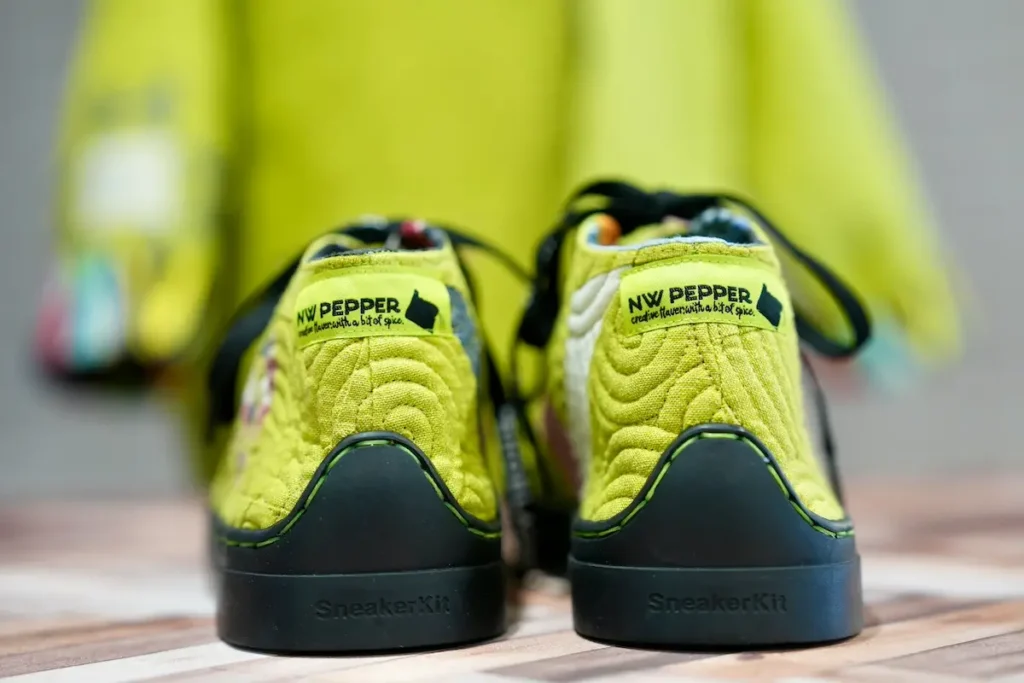
Ok, so fast forward into my quilting journey, and I kept seeing this guy online who customizes sneakers for celebrities. In 2020, I saw that there were courses being offered online, focused on one of my all time favorites, the Air Jordan 1. I was like, of course, I’m going to use quilted fabric!
The most surprising aspect of the shoe-making journey is how accessible it truly is. So many online or in-person classes and new kits and techniques that make it accessible to so many.
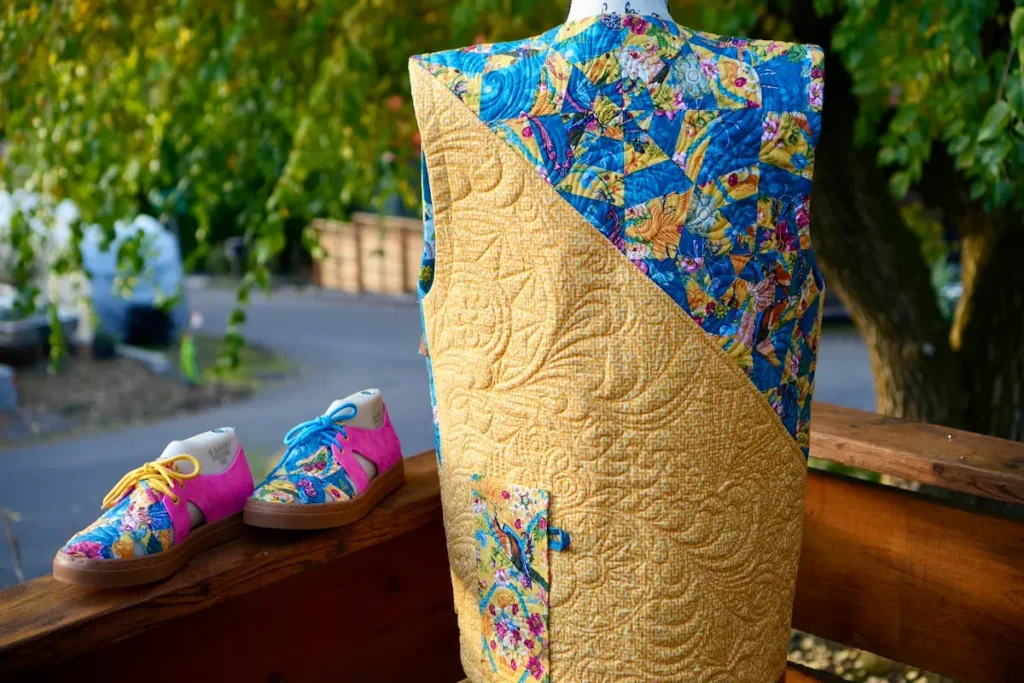
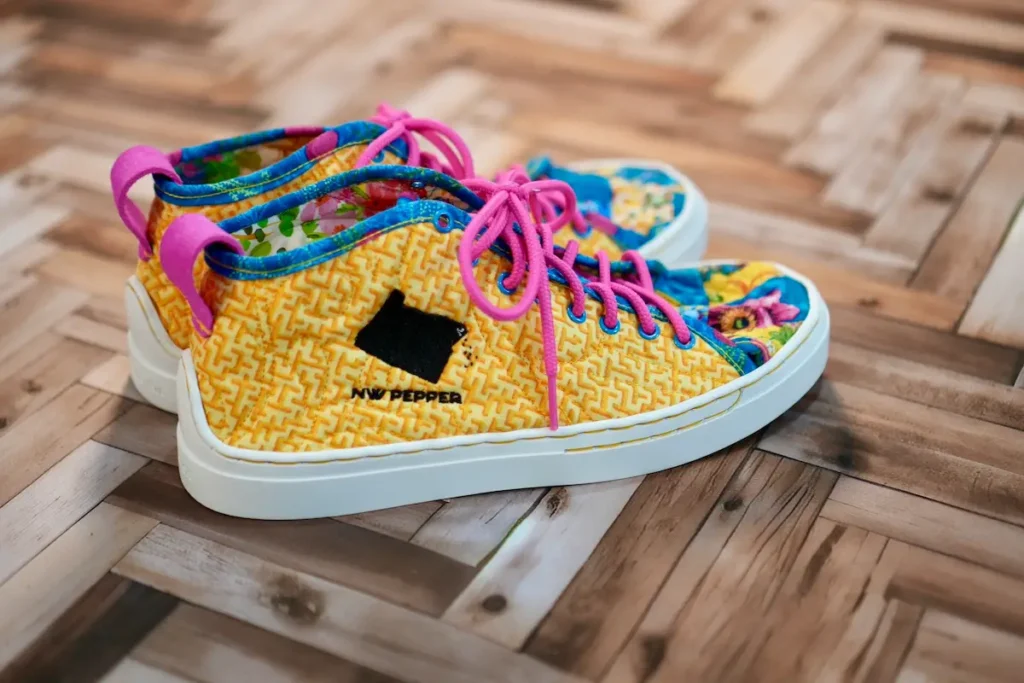
Quilts, garments, bags, and sneakers. How do you decide which medium a new idea wants to be?
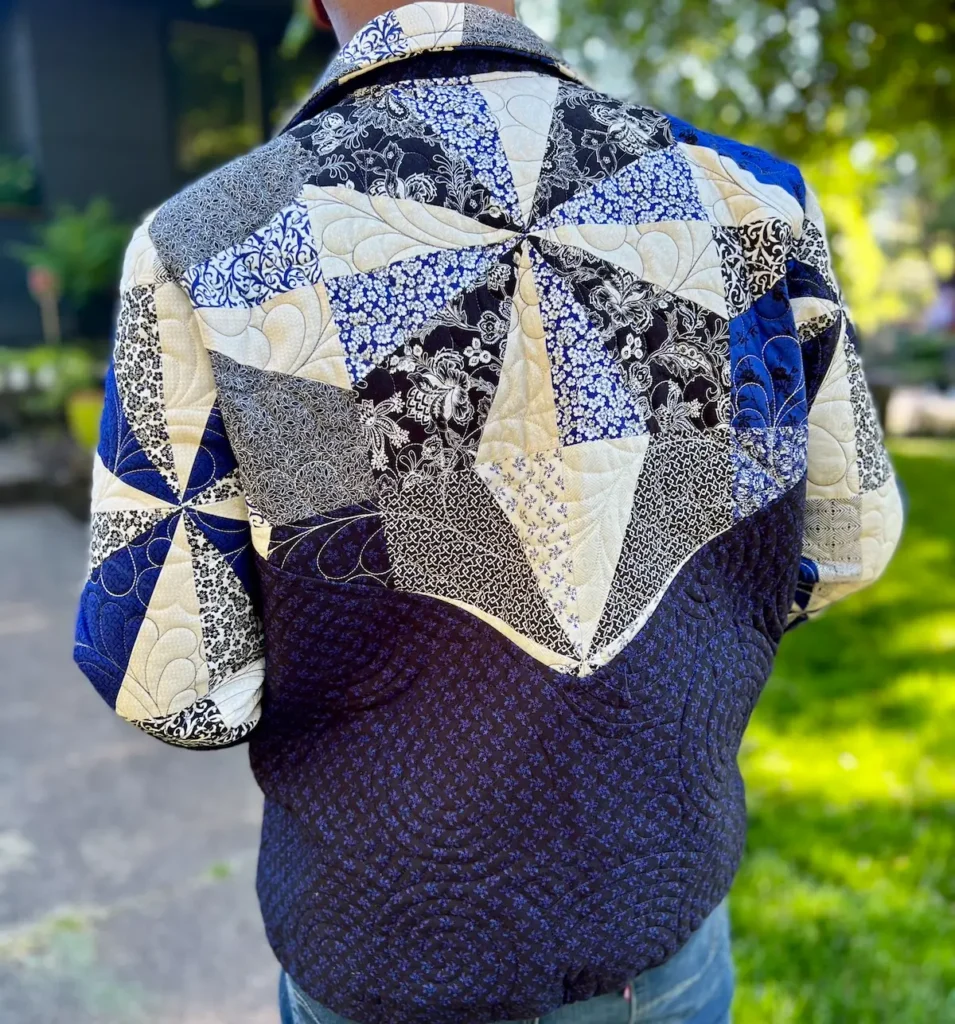
It typically depends on the project. Sometimes there is a spark, like a quilt coat project or a garment, or a quilt that can be rescued by recycling. Sometimes it is simply amazing fabric that I absolutely must find a way to use.
I keep a decent amount of patterns that may be great for quilted projects, and always consider if leftovers should become matching shoes.
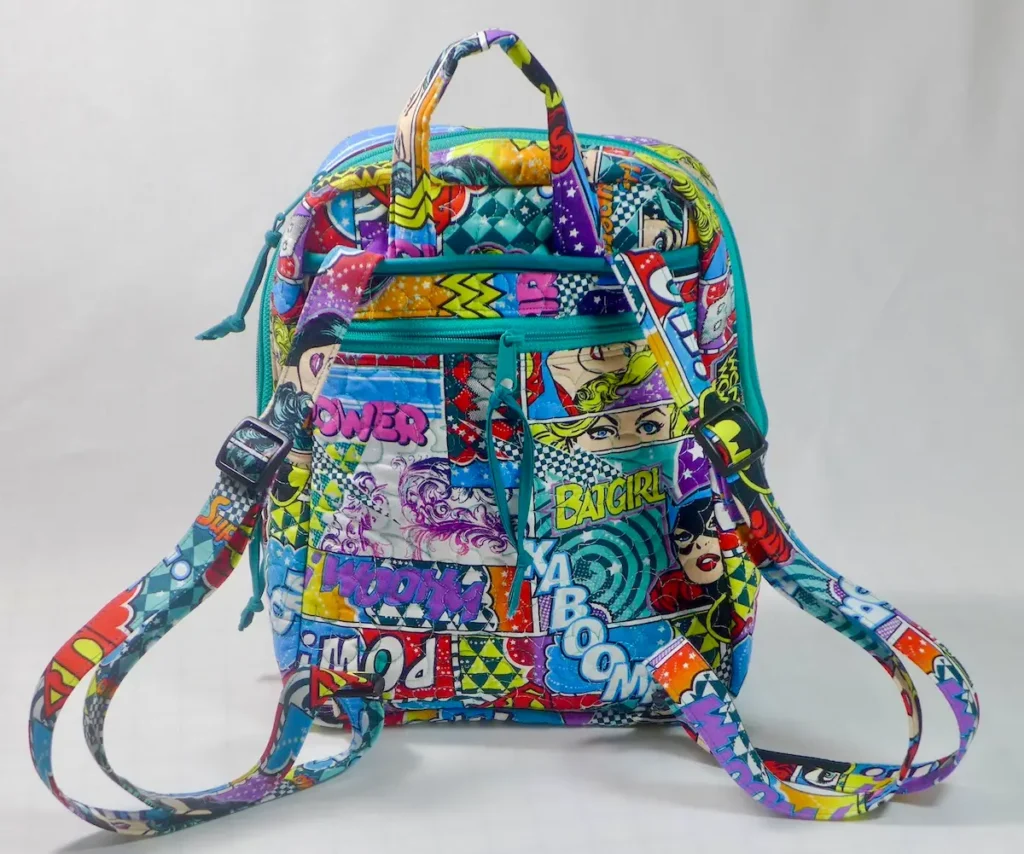
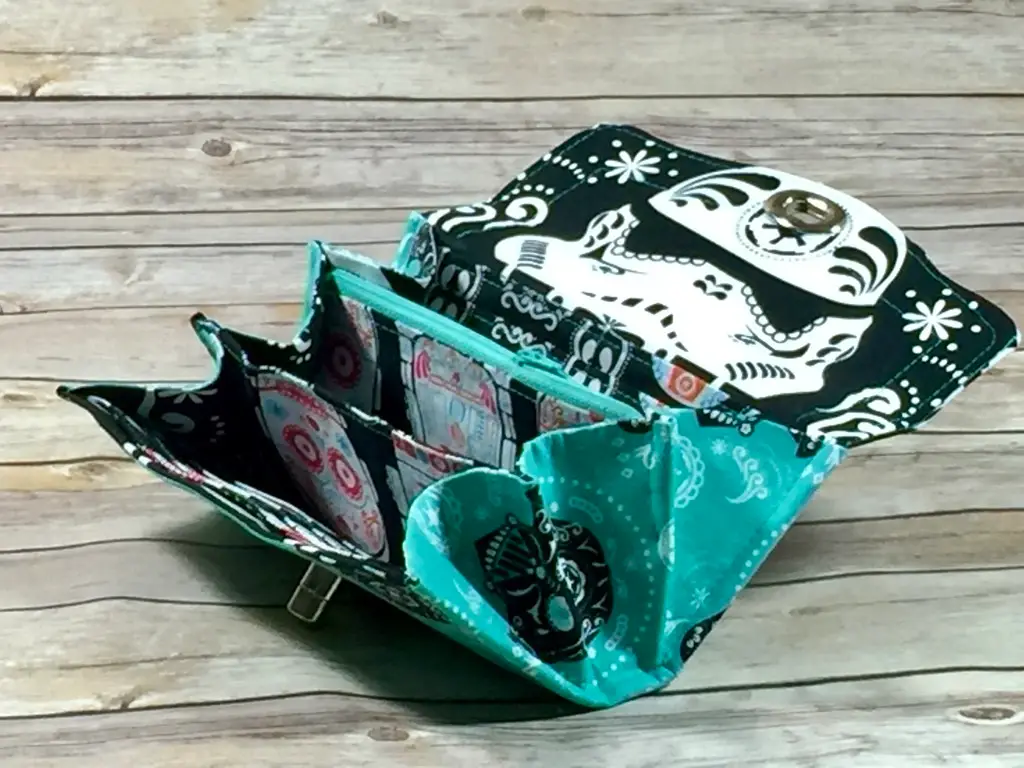
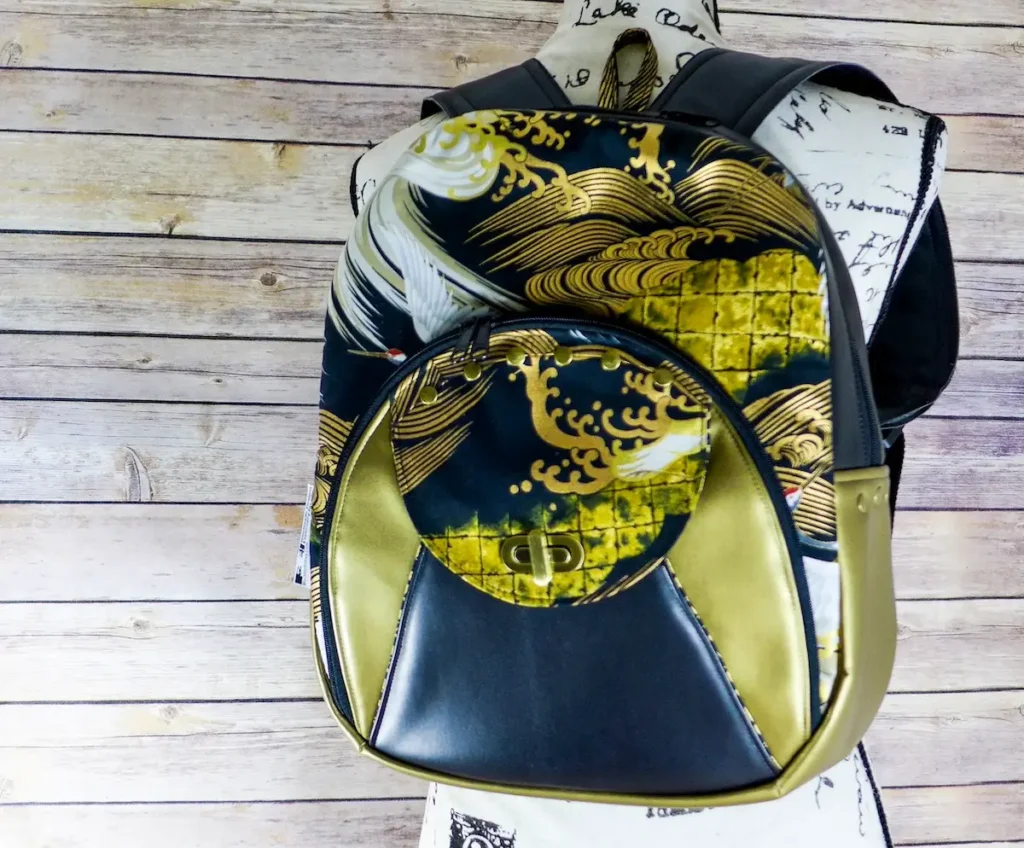
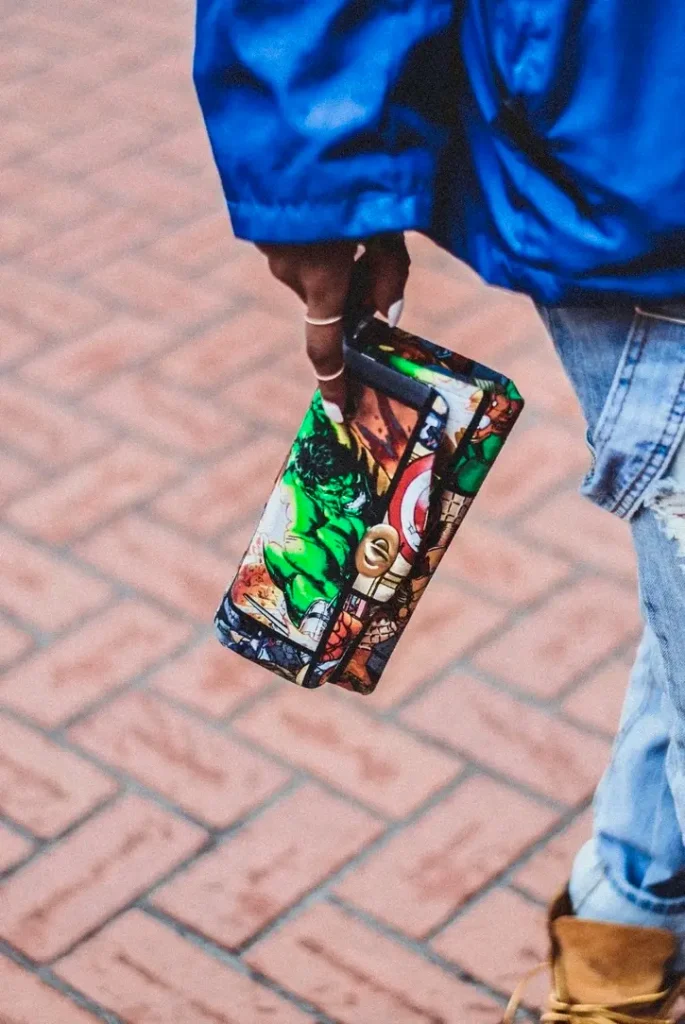
Bag making at this point is primarily based on need. When the grandkid’s toy collection became a bit much, it was time for a storage cube project. But at any point, a garment or shoe could be asking for a matching bag accessory.
Are you more of a planner or improviser? Is it the same across mediums?
I have come to understand that the way people plan and improvise is completely dependent on the person. Sometimes my planning process is more a visualization of the final ideal outcome, then tracing back the steps to get there, and determining whether that outcome remains feasible. Sometimes it starts with a list, which turns into an outline, that becomes a diagram and defines a design.
I find this to be true across mediums as well as things in my everyday life.
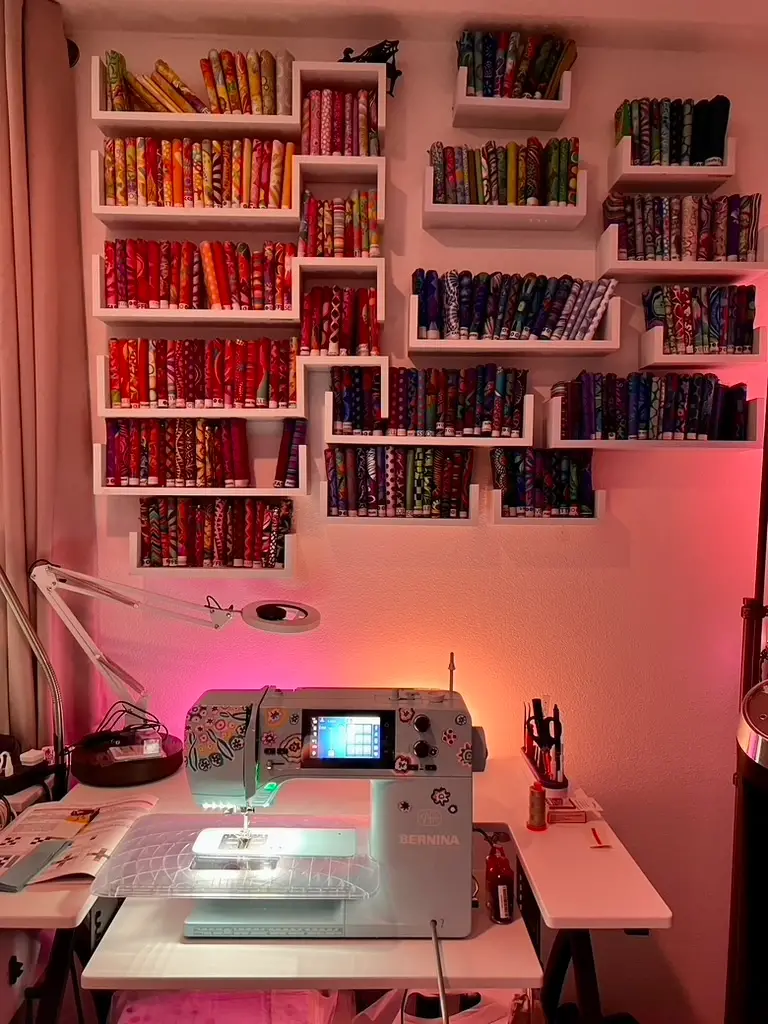
Describe your creative space.
My creative space is calming, like a nice, deep, slow inhale. Much of this is accomplished through smart lighting, pleasant fragrance, and calming sound.
My space serves as my creative space for the professional work that I do, as well as my creative space for the more personal work that balances me.
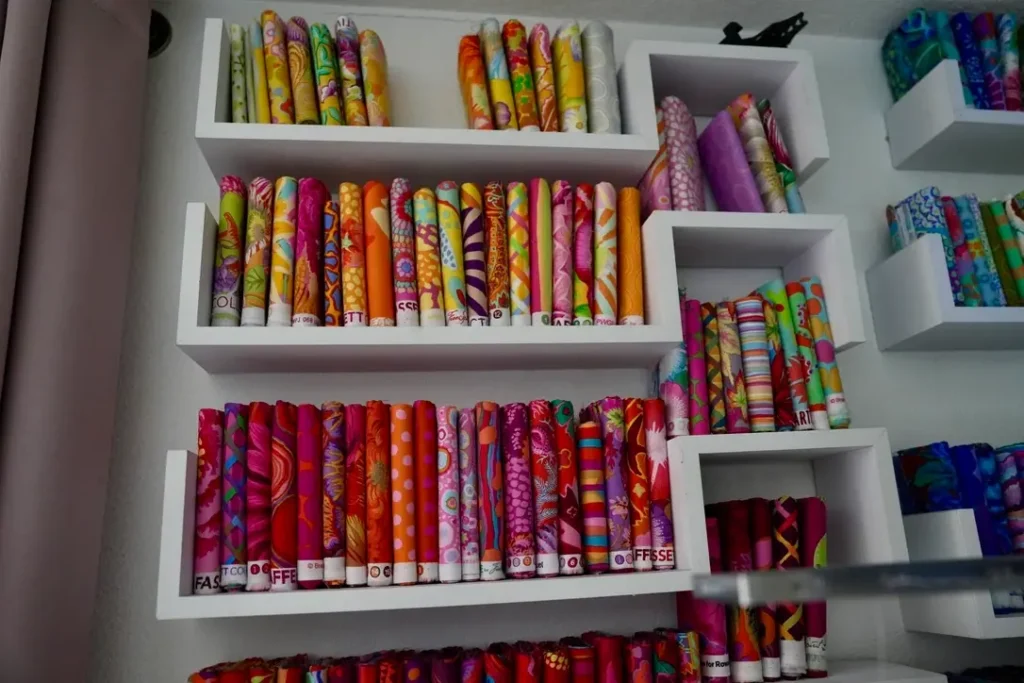
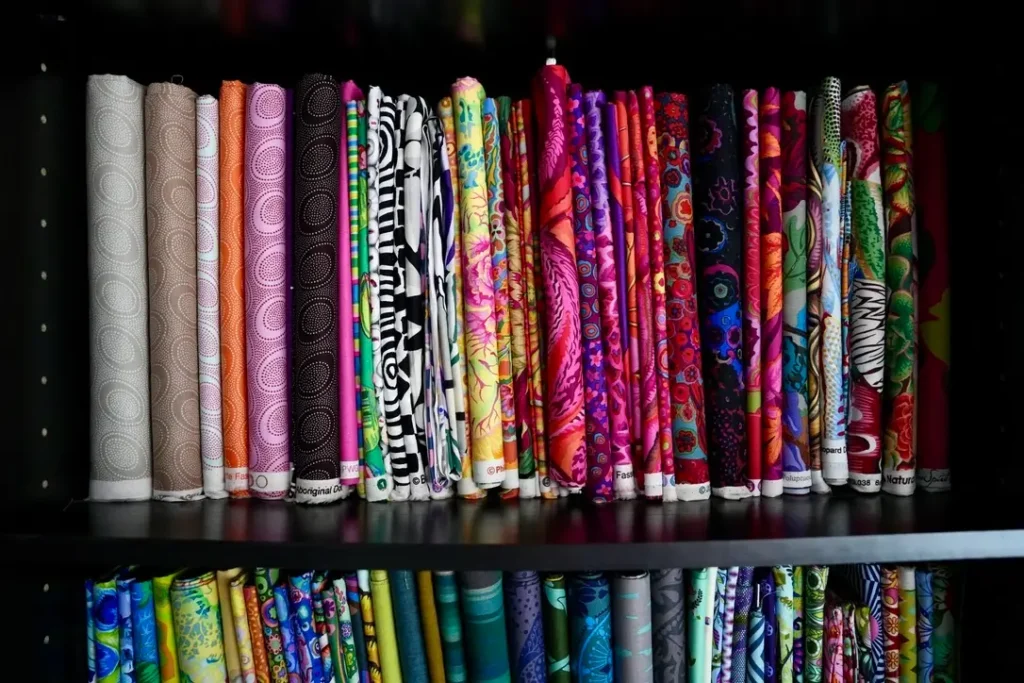
How is your creative space organized for all of your projects and activities?
I have my frequently used equipment out, but ensure there is adequate space to move between and especially to get back and forth to my desk.
I have fabric in my space wrapped on comic boards and organized on bookshelves by designer/type of fabric. Other equipment is organized in different ways, but definitely everything has it’s place, because I don’t have time to waste looking for the tools I need to complete the project.
My label maker is my good friend.
Scraps. Saver or toss ‘em?
It all depends on the fabric 🙂
When teaching workshops, what’s one mistake many beginners make, and how do you guide them to fix it?
Fear or hesitation.
The only reason I would label it as a mistake is that it only holds us back. The way to fix it is to start slowly and build your confidence. And of course, practice!
Can you describe a moment in a project when everything clicked — the moment you knew the piece was right?
Anytime a project is complete, even if I had to “unsew” a few seams, I experience that moment.
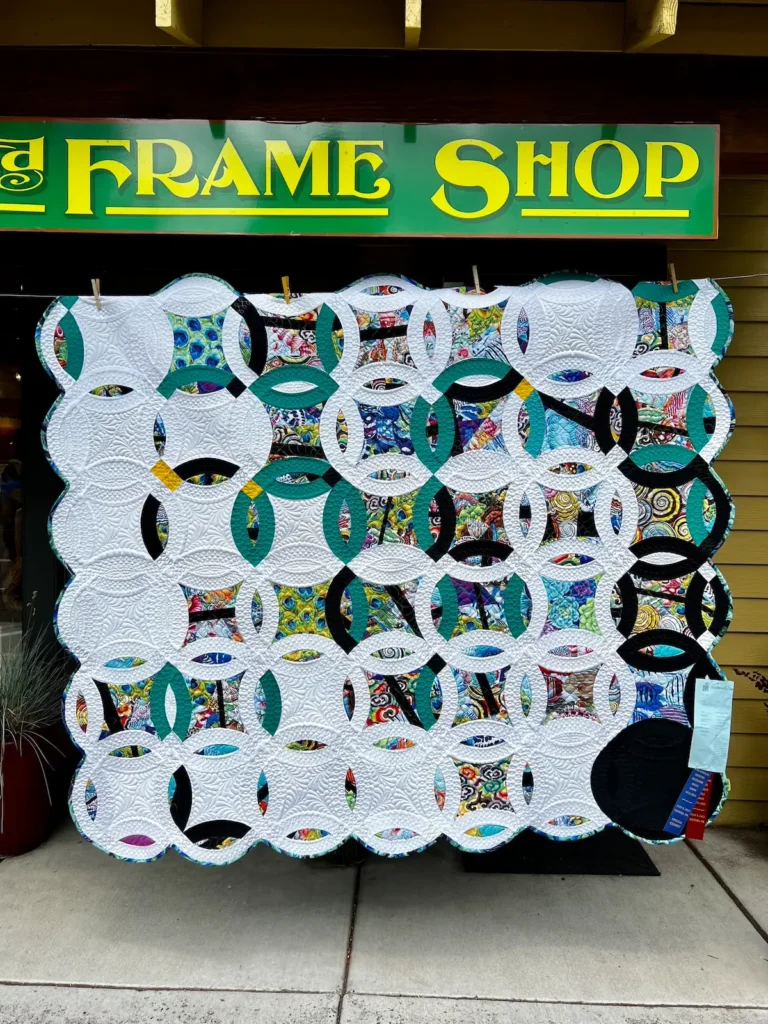
How does making public art feel different from private work? Like your Black Lives Matter flag commission.
This project will always have a special place in my heart because of the way the community came together during a difficult time and actually cared about what I had to say.
The project also taught me a lot because aside from the positive aspects of why it happened, I was able to work with and figure out completely different textiles that what I was accustomed to.
How do you balance making for joy versus making for shows, sales, or teaching?
Right now, I am blessed to be able to make primarily for joy. That joy is not the joy I receive from making, but the joy I get to experience from others whenever I can help them learn something new or to be an inspiration.
As I progress and ultimately am able to focus on joy-based work, I would say that it is always important to make sure you are working on projects which bring you joy, excite you, help you learn new techniques.
If you could give your younger maker-self one piece of advice, what would it be?
Push for that artistic side of yourself!! Don’t be forced into a law high school instead of a creative arts high school!
What does a “maker’s life” look like for you outside the studio
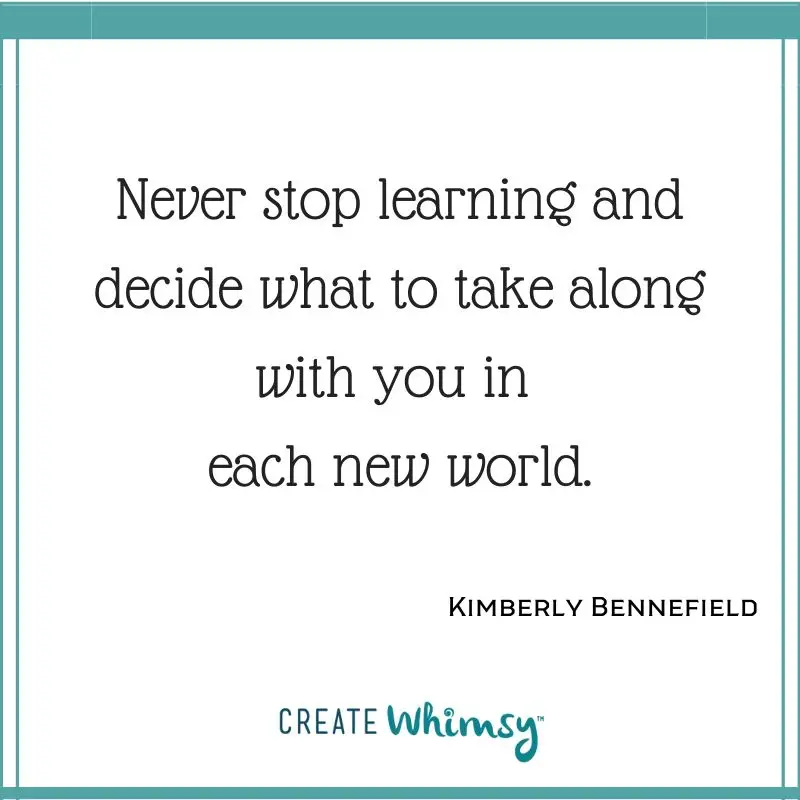
Learning new mediums, techniques, and outlets. Never stop learning and deciding what to take along with you in each new world.
What refreshes you, keeps you grounded?
My family of four adult children and six grandchildren (to date).
What makes you laugh while you’re sewing?
Sometimes a comedy or stand-up movie that I’ve seen before, and can multitask with my project. I find that when you’re not watching the screen, you hear little things that you perhaps didn’t hear the first time that will crack you up.
Where can people see your work?
Currently, the main space would be my instagram account @nwpepper.
I also have a website presence at nwpepper.com
Interview posted December 2025
Browse through more modern quilt inspiration on Create Whimsy.