
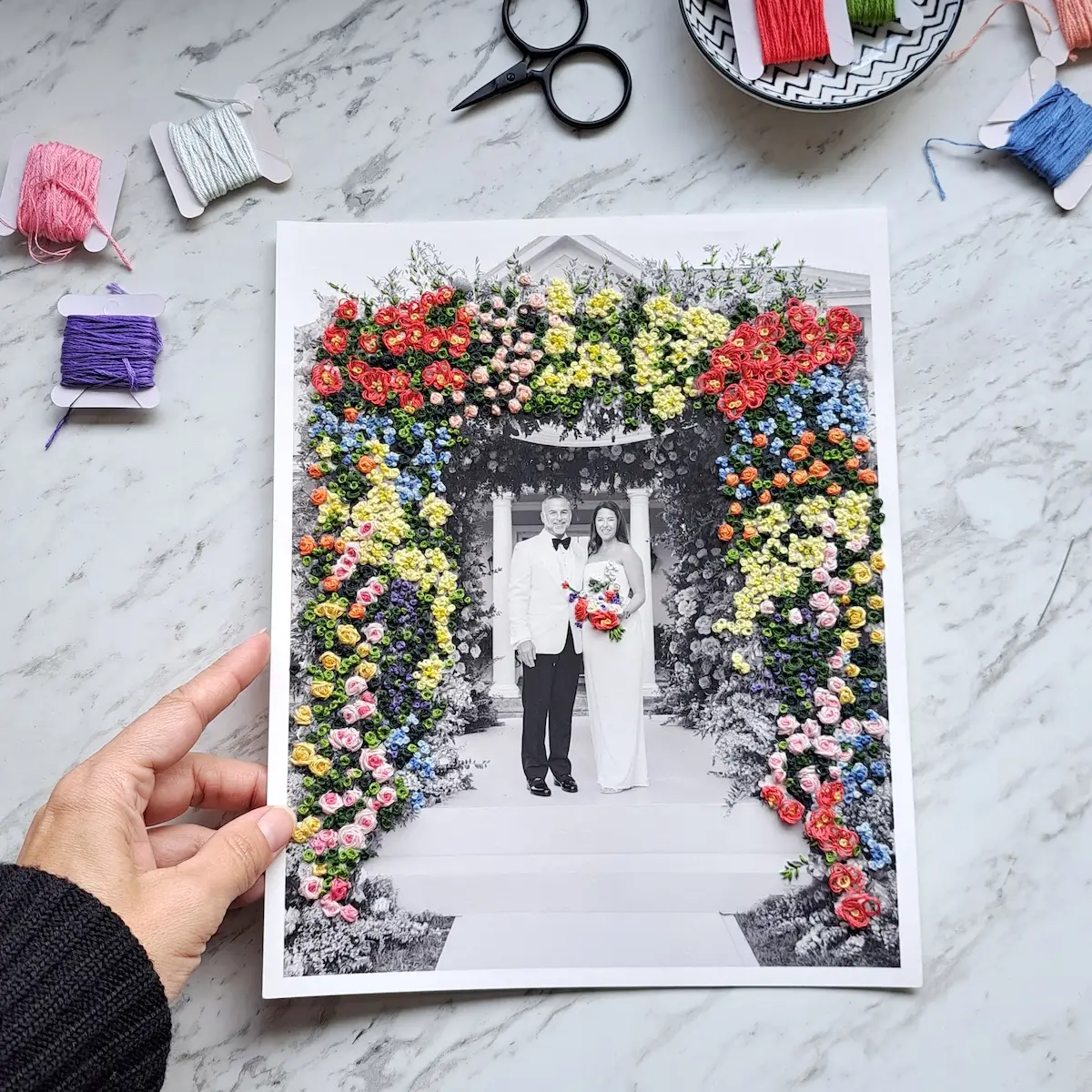
Katia Herrera’s work lives at the intersection of photography, embroidery, and quiet emotion. In this interview, she shares how curiosity, intuition, and her Mexican heritage guide a deeply meditative practice of stitching on paper. From first experiments to trusting the process, Katia reflects on building a creative life rooted in intention.
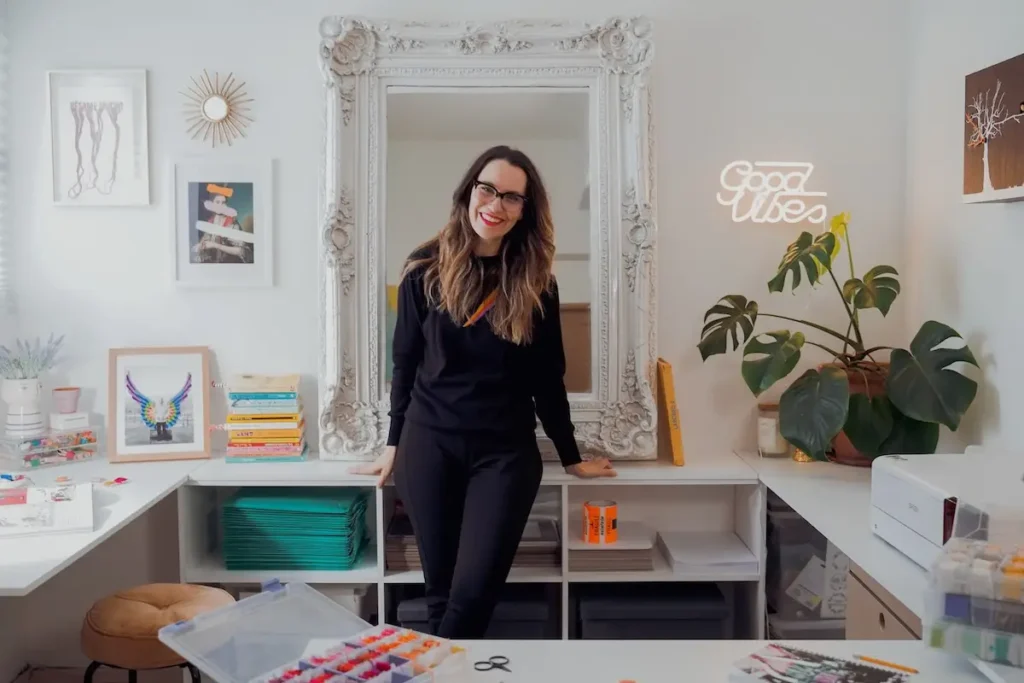
Where did your journey with art begin? What were the first moments you felt like a maker?
My journey with art began very organically. I’ve always been a maker…observing, experimenting, and creating with my hands long before I had a name for it. Over time, that curiosity naturally evolved into embroidery on paper.
What took longer was not the making itself, but recognizing its place in my life.
I learned that creativity can be both meaningful and professional, and that building a business around what you love is not only possible, but powerful.
As an Amazon Associate I earn from qualifying purchases. Read more about our affiliate linking policy.
Today, my work is defined by a balance of craft, storytelling, and intention, an evolving practice that grows with each piece and each moment of making.
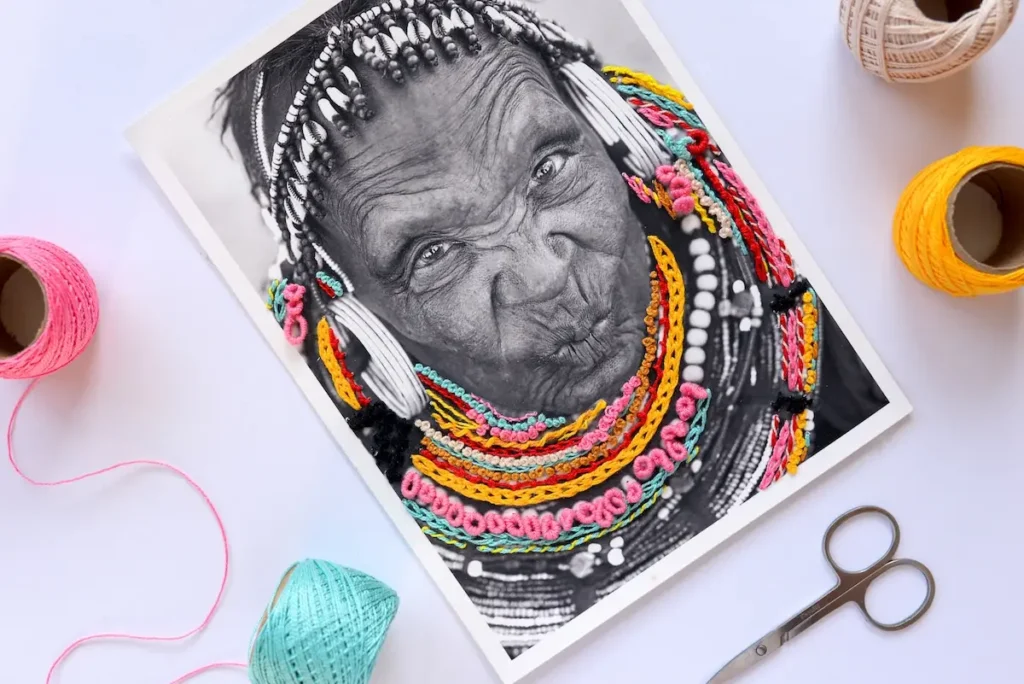
You originally trained as a photographer and designer. How did that early training shape your creative eye?
Absolutely. Being an industrial designer shaped who I am today more than I realized at the time. After graduating, I started my business as a photographer and never stopped. Photography trained me to observe, to frame, to understand light, composition, and emotion.
Later, adding video expanded that perspective even more. My background in industrial design gave me structure, problem-solving skills, and curiosity. It pushed me to constantly explore new techniques, materials, crafts, digital tools, editing, paper making, etc. That foundation is present in everything I create today.
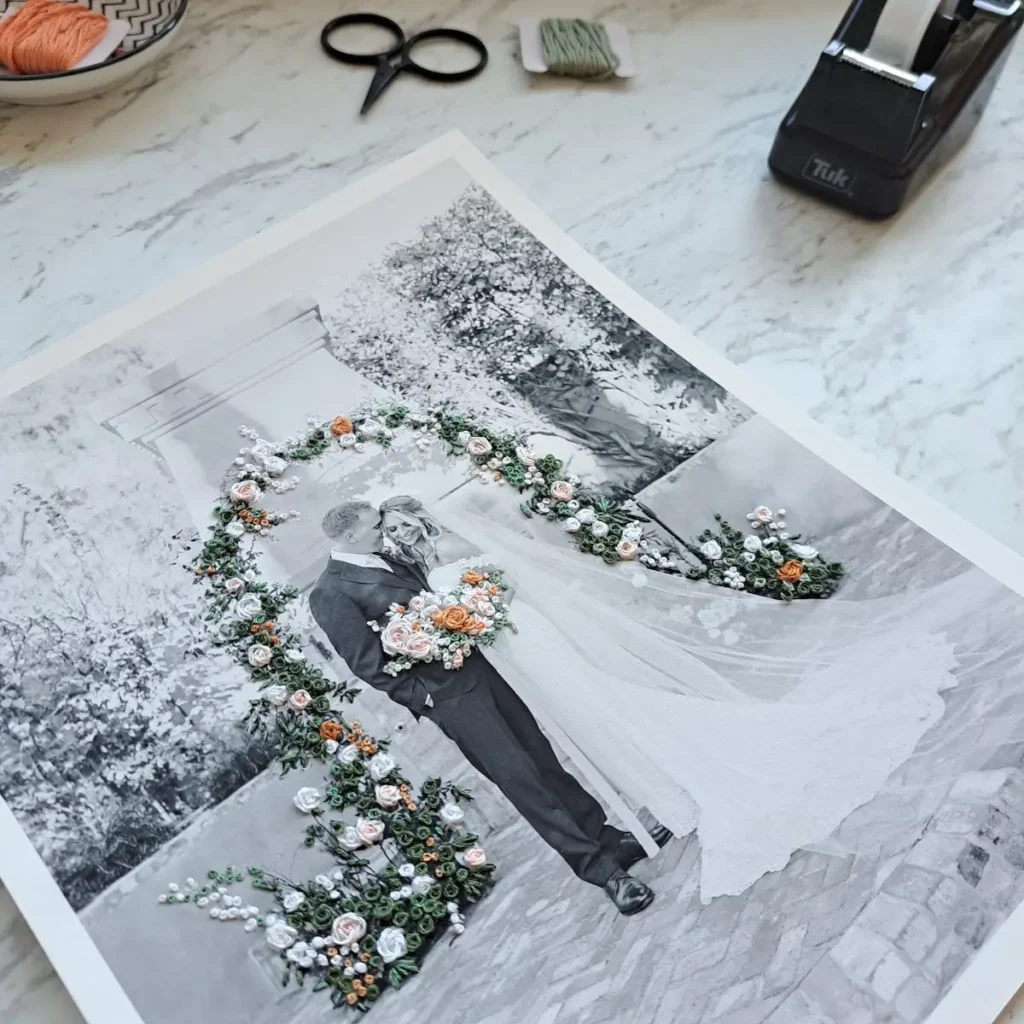
Can you remember the first time you embroidered on paper? What was that moment like?
I remember it perfectly. I embroidered an old postcard and used cross stitch, the simplest stitch I thought I could manage. At that moment, I knew absolutely nothing about embroidery. No rules, no references, no expectations.
Looking back, that lack of knowledge was a gift. It allowed me to experiment freely without fear or pressure, which later became a defining part of my process.
How did the pandemic change your creative focus or push you in a new direction?
The pandemic was, fortunately for me, a turning point, a completely new chapter in my life. I spent a lot of time with myself and my son, and I finally had the calmness to truly welcome creativity into my daily life.
I didn’t feel rushed. I felt like everyone was paused together. There was no pressure to compete or keep up. That shared stillness created empathy and connection. I helped many people with their businesses, and in that space of support, creativity found me naturally.
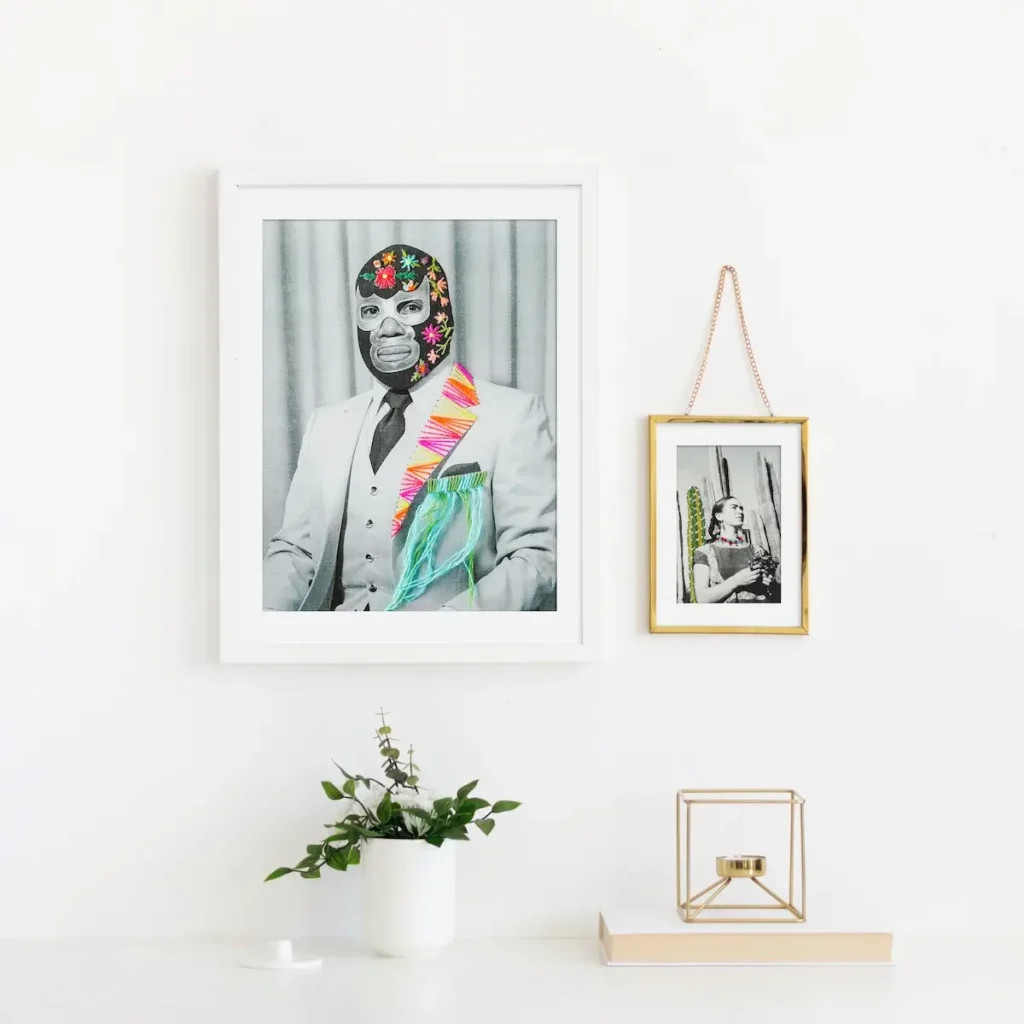
How does your Mexican heritage show up in your pieces?
My background is a fundamental part of my work, even when it’s not obvious at first glance. Mexico is warm in every sense, visually, emotionally, culturally. It’s color, music, people, kindness, smells, food, and the strength of family unity.
Our roots are deeply connected to color dyeing, textures, fabrics, embroidery, artisans, and traditional crafts like barro negro, talavera, textiles, alebrijes, telares de cintura, huipiles, and zarapes. Living here means being surrounded by visual culture every day. Simply walking outside feels like an ongoing lesson in history, color theory, and art.
When you look at a blank canvas or photo, what whispers to you first — texture, color, emotion, or something else?
Emotion always comes first. As a photographer, I learned to see images as a way to express ourselves and preserve a moment. When I look at a photo, I imagine the full experience, the surroundings, the smells, the weather, the feeling of that instant.
I’m a dreamer, so before I even stitch, I build a story in my head.
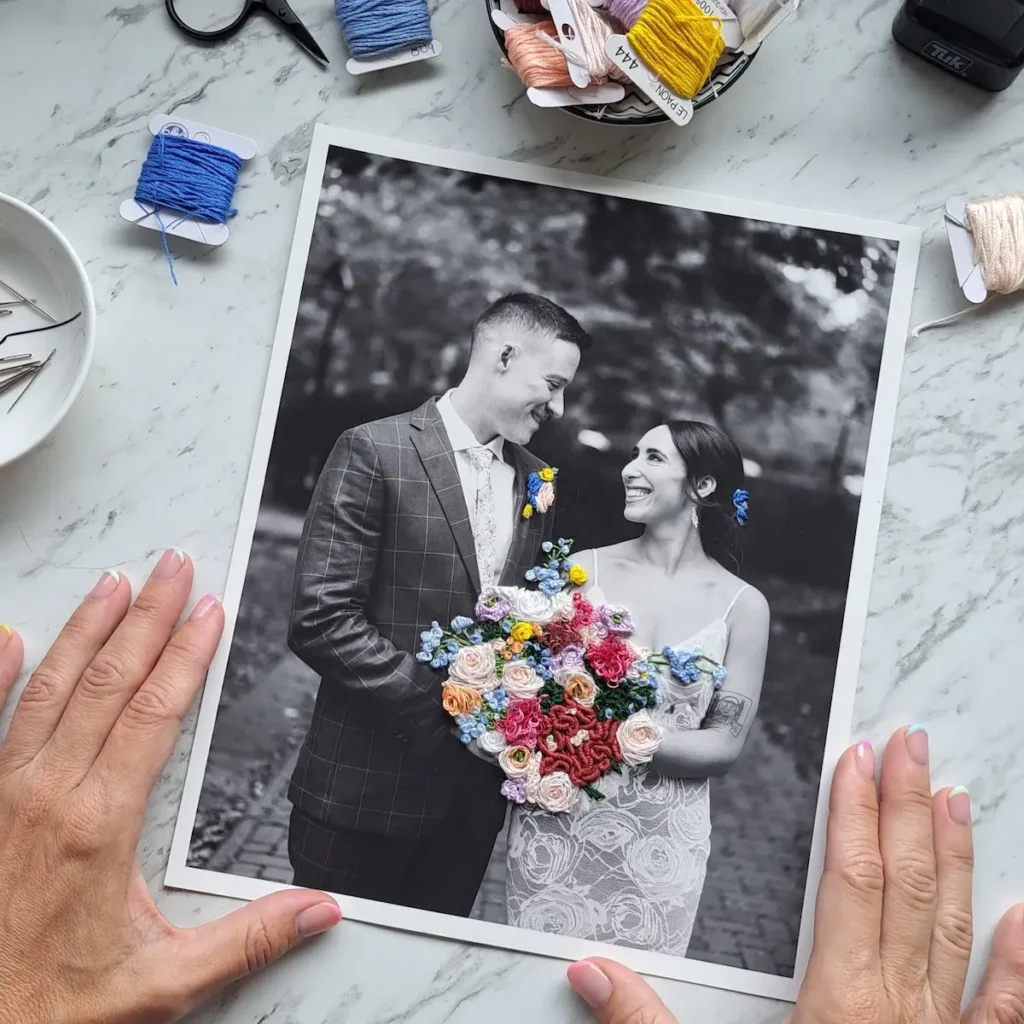
What role does mood play in choosing your threads and photos?
Mood is essential, just like when taking photographs. I often take breaks while embroidering. I can start, stop for a few days, and return when the moment feels right.
Even though embroidery is meditative, I still need emotional alignment. Most of the time, once I begin stitching, that calm and focused state naturally appears and carries me through the process.
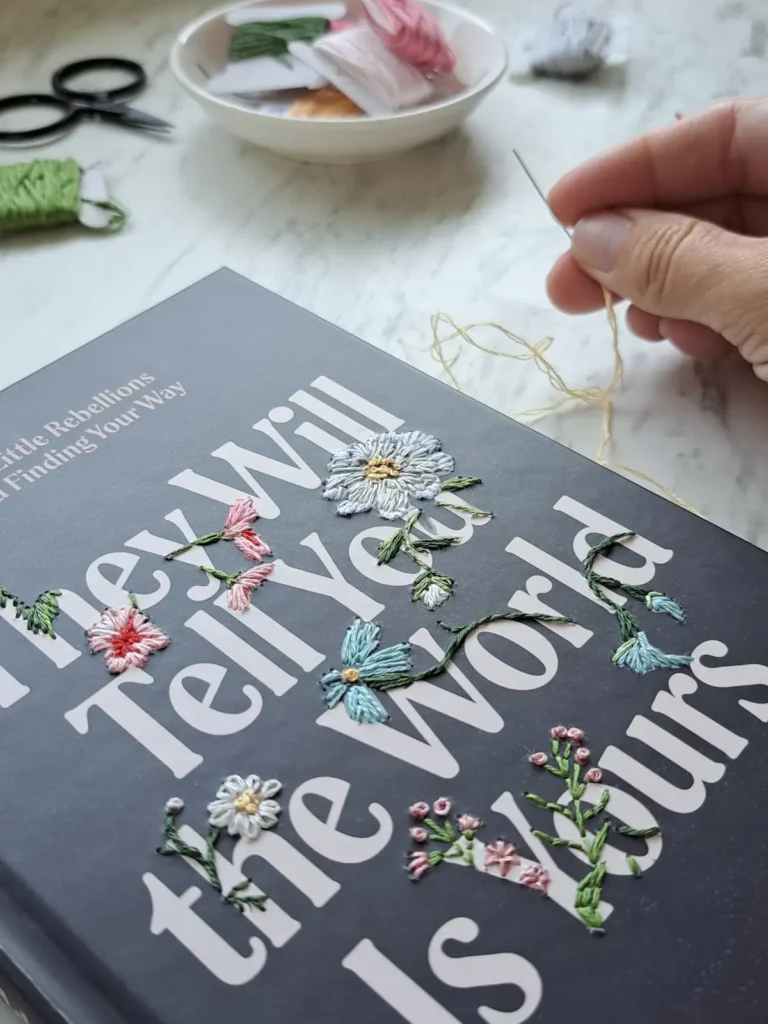
What does your workspace look like on a normal day?
I’m a Virgo, so organization is very important to me. I need my space to feel calm and intentional. I’m surrounded by colorful books, plants, threads, a large window with a view of the city, and always background sound, music, podcasts, or audiobooks (even if I’m only half listening while embroidering).
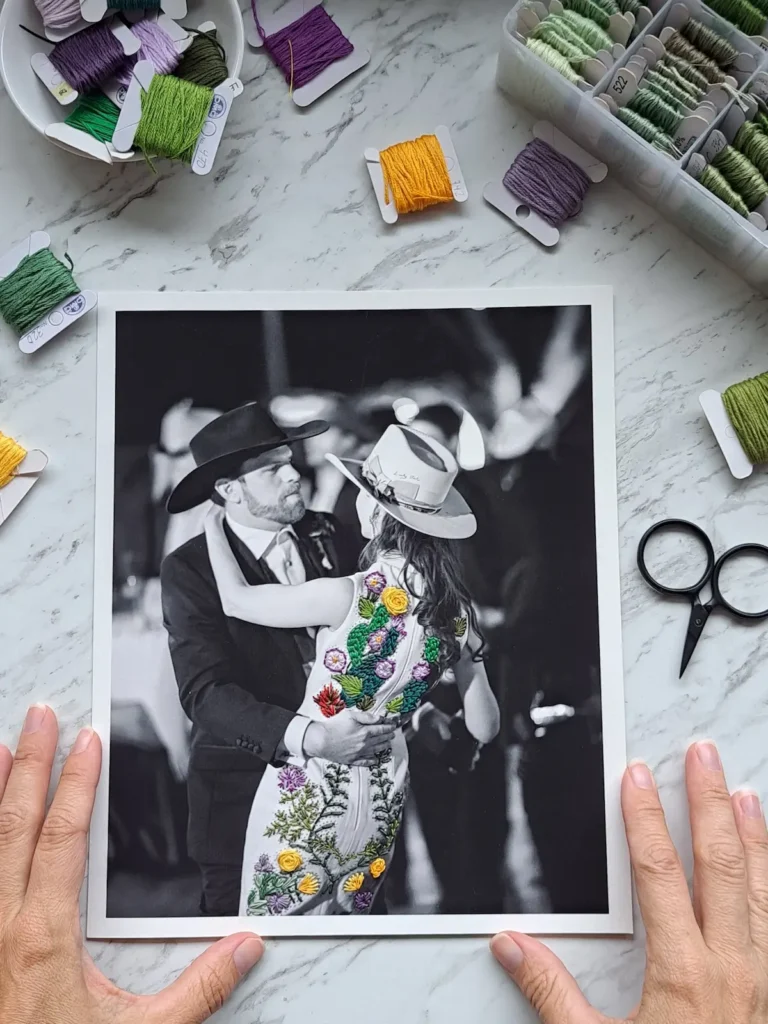
What materials do you always keep close at hand?
My threads organized by color, my scissors, my awl tool, and of course, a cup of coffee.
How do you choose which photo to embroider next?
It’s very intuitive and often random. Any photo can become a challenge. I analyze it many times before starting, stepping away and coming back, usually while preparing coffee. That back-and-forth is part of my process.
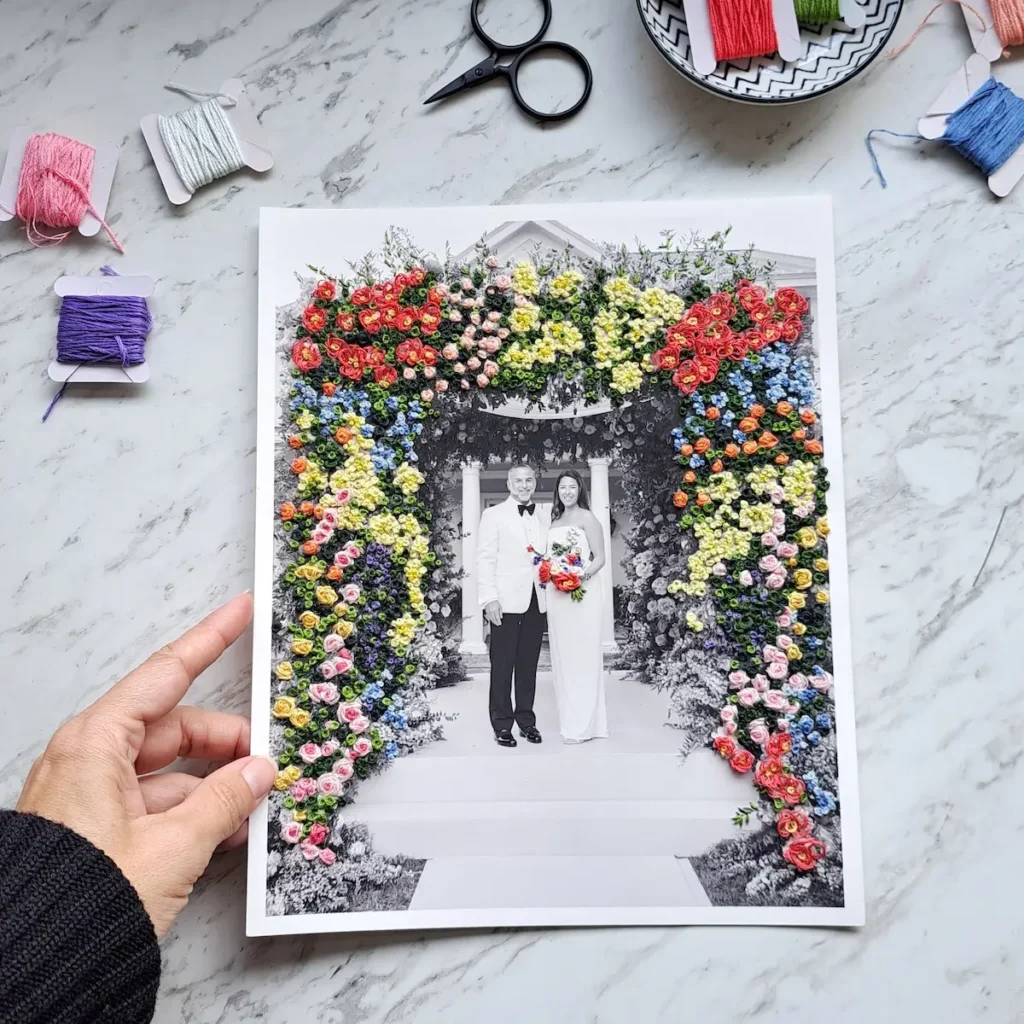
Do you sketch or plan your stitches before starting?
Sometimes, but much less than before.
At the beginning, I was very afraid of making mistakes, especially because once you make a hole in paper, there’s no undoing it. I would test everything beforehand.
Now, after years of experience and learning many stitches, I trust myself more. I start and let the piece guide me.
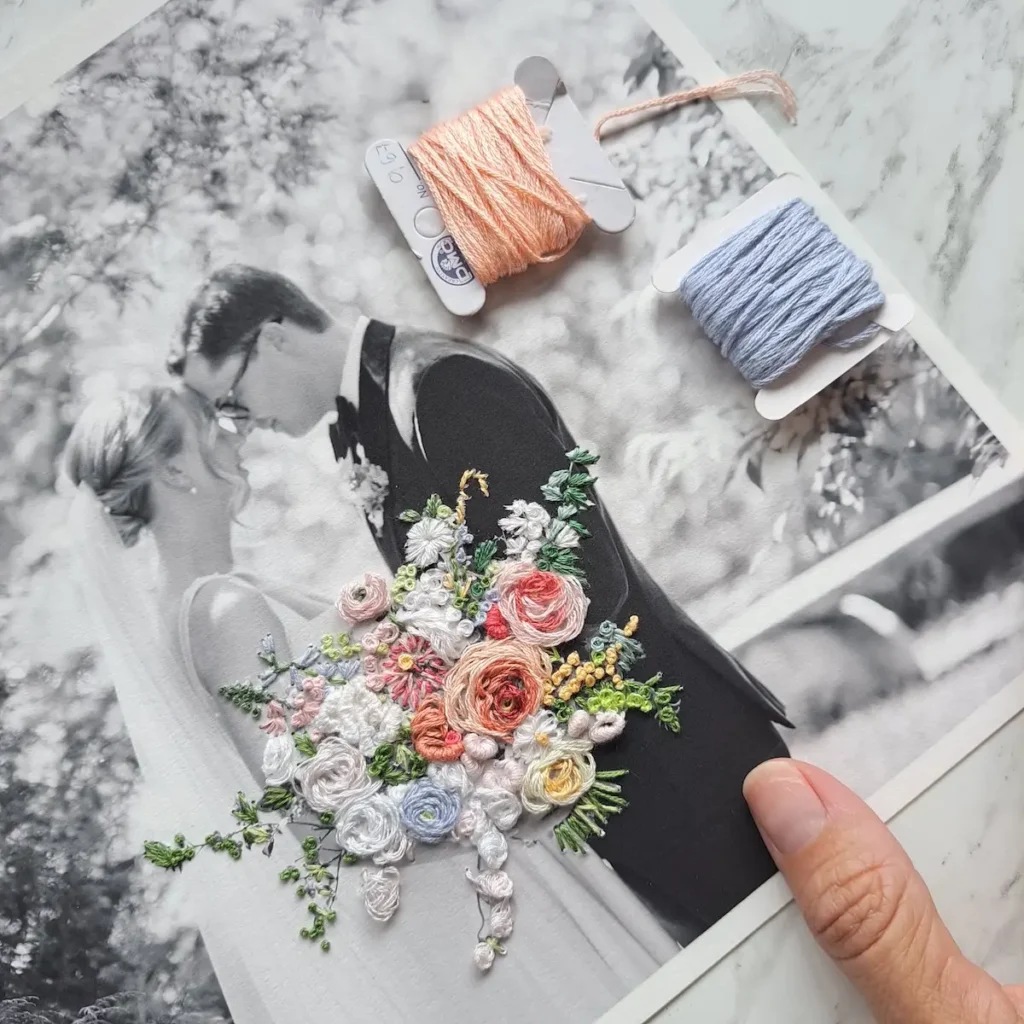
Can you walk us through your process from a photo to a finished embroidered piece?
First, I study the photo carefully… what makes sense to embroider and what doesn’t, because not every photo works for embroidery. I select my colors, knowing I’ll probably add more along the way.
Then I put on music, a podcast, or a TV show and make the first hole. From that point on, time disappears. I enter a meditative state where everything flows.
The hardest part is knowing when to stop. I always want to keep adding, but I remind myself: less is more.
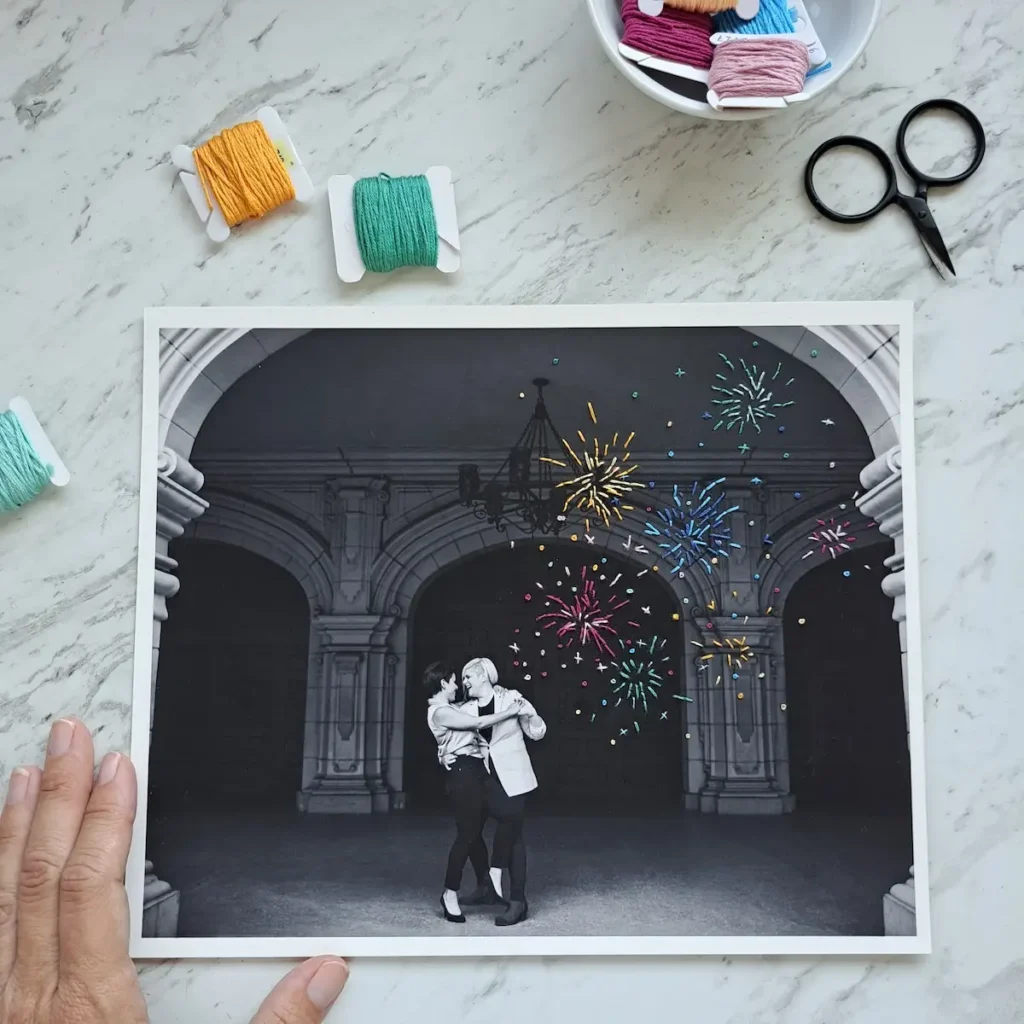
What have you learned about patience through your craft?
Patience is everything in embroidery. I don’t consider myself naturally patient. I’m energetic and always moving, but embroidery brings out patience, presence, and stillness in me. It balances who I am.
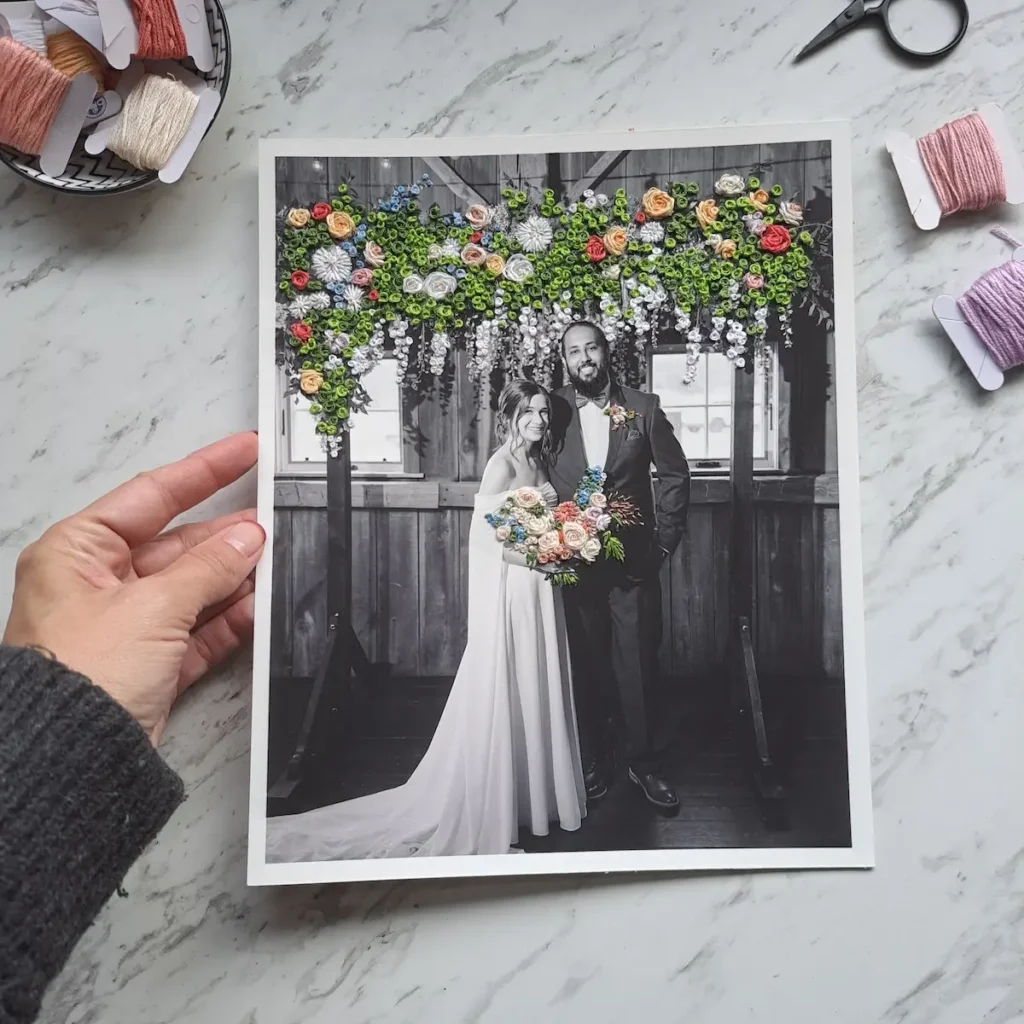
Have you ever had to start a piece over? What did that teach you?
Yes, especially at the beginning. Many times, during the first 20 minutes, I would dislike the piece and feel frustrated. Over time, I noticed this pattern and learned not to quit too early.
Those pieces often became my favorites. It taught me to trust the process and keep going.
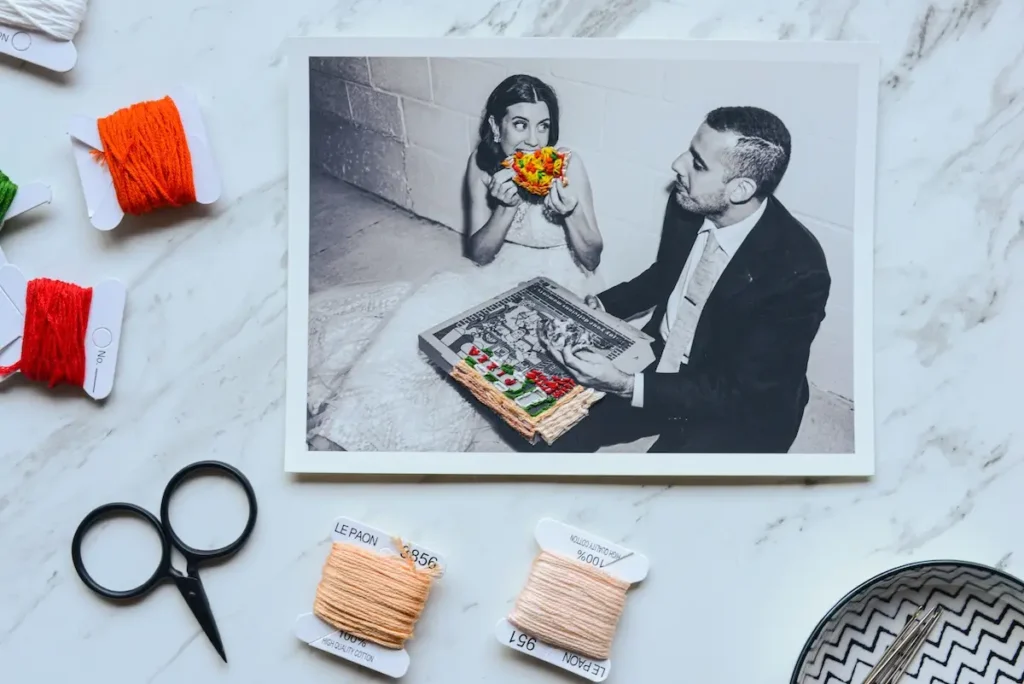
How do you know when a piece is done?
At first, this was one of the hardest parts. Now, after six years, it’s intuitive. I just know.
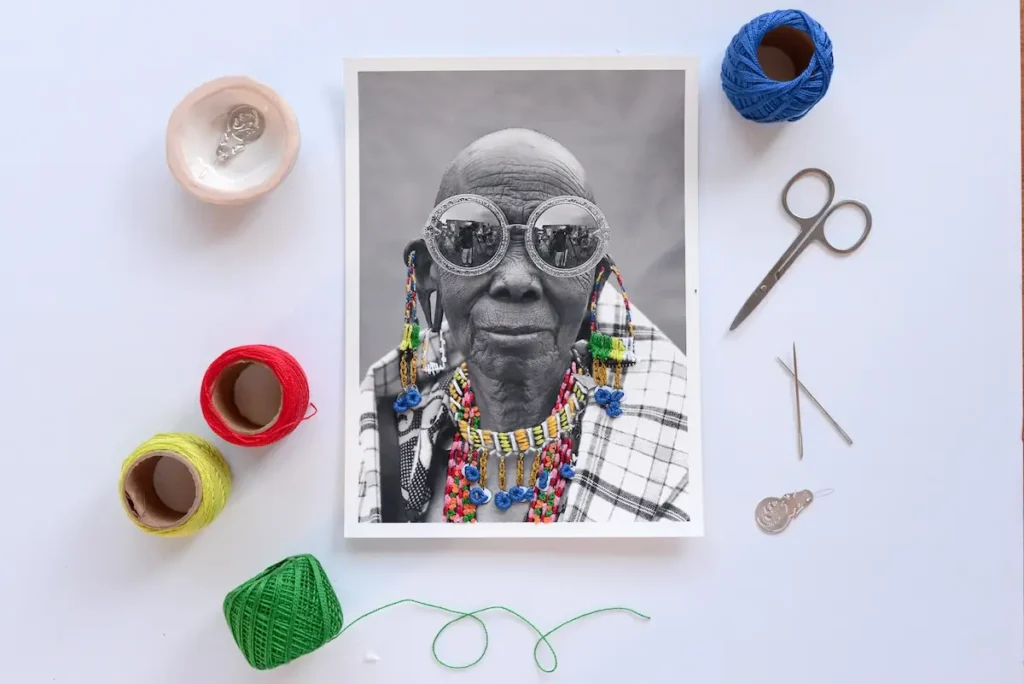
What is the most rewarding part of watching someone learn your craft?
Teaching is one of my greatest joys. Seeing someone experience embroidery the way I do is incredibly rewarding. For me, embroidery represents empathy, autonomy, independence, patience, creativity, and love. Sharing that is a privilege.
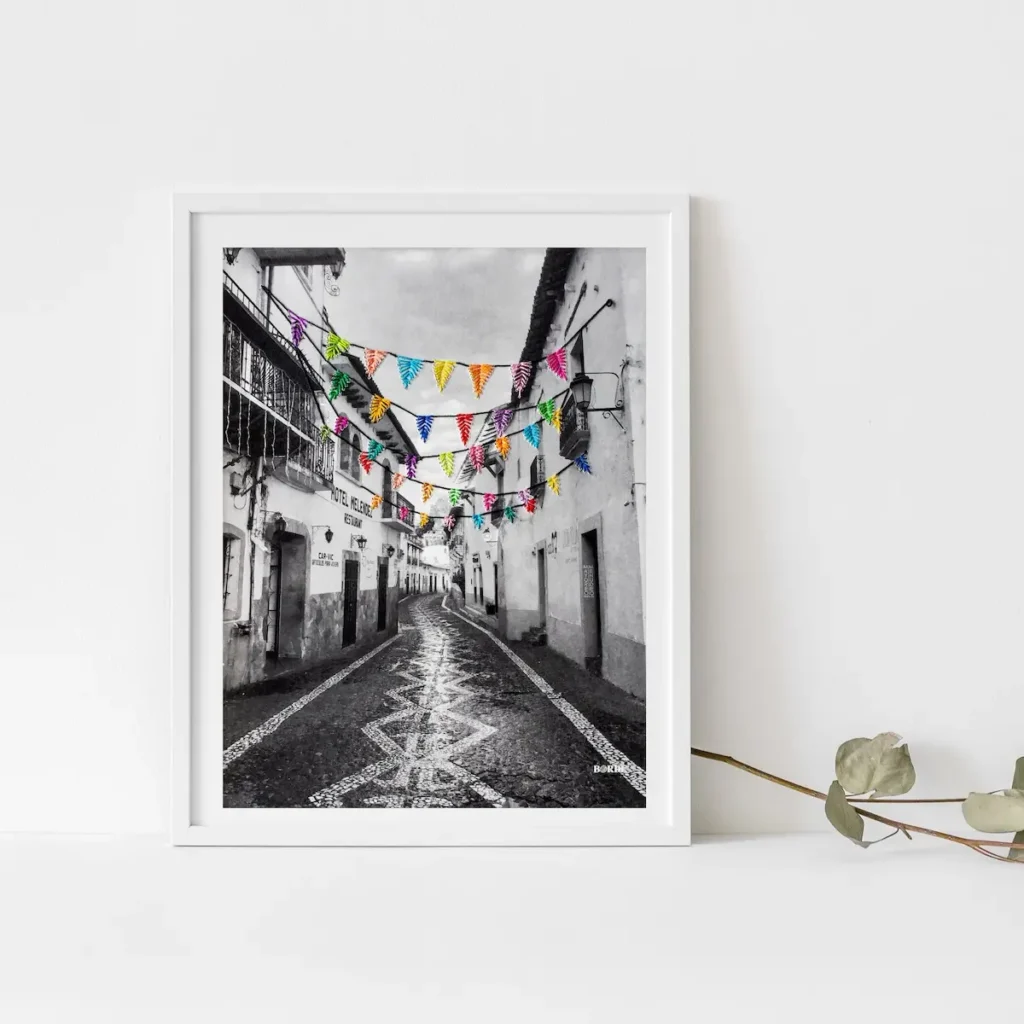

Where can people see your work?
On my social media and on my website.
@borde_mx IG (main)
@bordebykatia IG. (backup account)
www.bordebykatia.com
Rapid-fire Fun:
One word that describes your work: Meditative
What makes a day great for you? My family’s happiness
What advice would you give your younger self? Everything will turn out well. Trust yourself, don’t be afraid of what life brings, and remember that joy will find you along the way.
Interview posted January 2026
Browse through more embroidery projects and inspiration on Create Whimsy.