
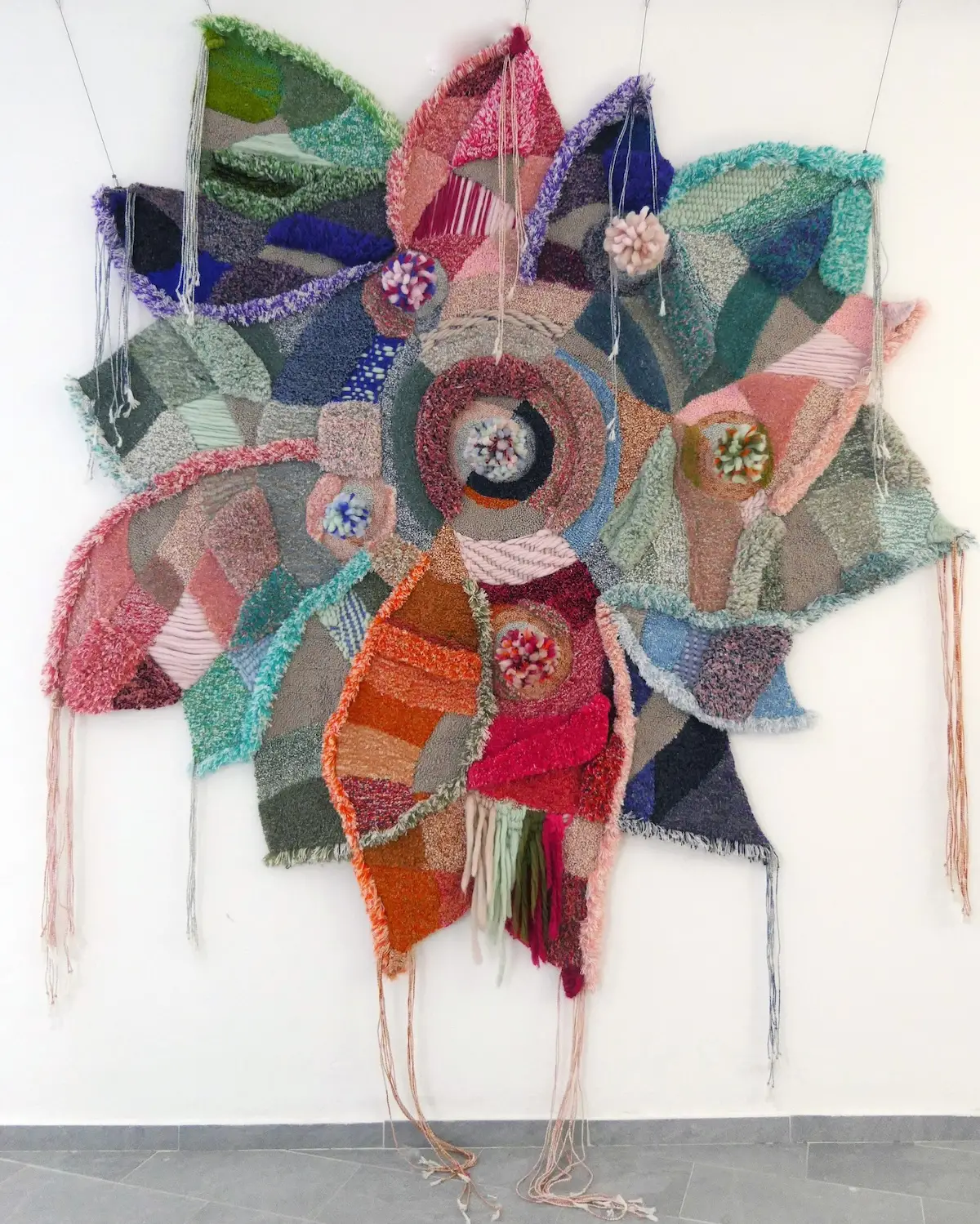
Jules Vissers creates richly textured works that explore color, movement, and the quiet power of fiber. Based in Florence, she draws inspiration from the natural beauty around her, weaving together techniques like embroidery, crochet, and weaving to create layered contemporary pieces.

When did you first realize you wanted to make art with textiles?
I realize that I could have chosen other art mediums besides textiles, as I am attracted to many forms of artistic expression. Before enrolling into the Florence Art Academy, I had been making textile accessories for several years. I made earrings, bracelets, necklaces, belts, and brooches for a few boutiques. This experience triggered my interest in the textile medium in the contemporary art world.
What was one of your earliest memories with fibre, yarn, or cloth?
I remember that as a small child, I used to sit and play on the kilim carpets in my home in the Netherlands. I would lie on the carpets and study the colors and patterns in the kilims, and I was deeply fascinated by them.
As an Amazon Associate I earn from qualifying purchases. Read more about our affiliate linking policy.

How did your life in the Netherlands shape your creative path?
The Netherlands is a beautiful country to grow up in; there is a deep sense of liberty and also an openness towards other cultures. I did my creative studies when I was older and already living in Italy, but I believe my Dutch roots have given me a special energy while creating my art pieces.

What made you decide to move to Italy and pursue textile art professionally?
I originally moved to Italy because I studied Italian Language and Literature at the University of Amsterdam. I took part in an exchange programme with the University of Milan, and here I met my future husband.
During my first years in Italy, I worked for the Dutch foreign office, and I took private art lessons in drawing, painting, photography etc. Later, I became interested in textile art and obtained a Master’s Degree in Textile Art at the Florence Art Academy.
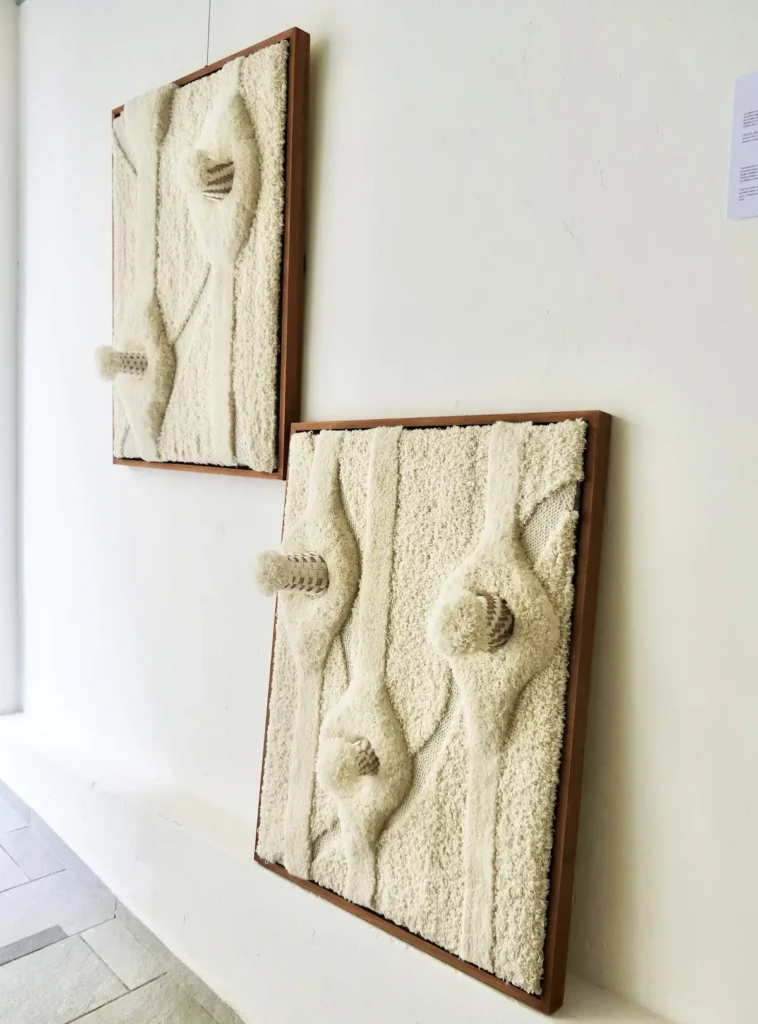
Was there a turning-point project or person that inspired your leap into a full-time maker life?
The Master in Textile Art at the Florence Art Academy (Accademia di Belle Arti)
When you think colour, texture, or form, what first comes to mind?
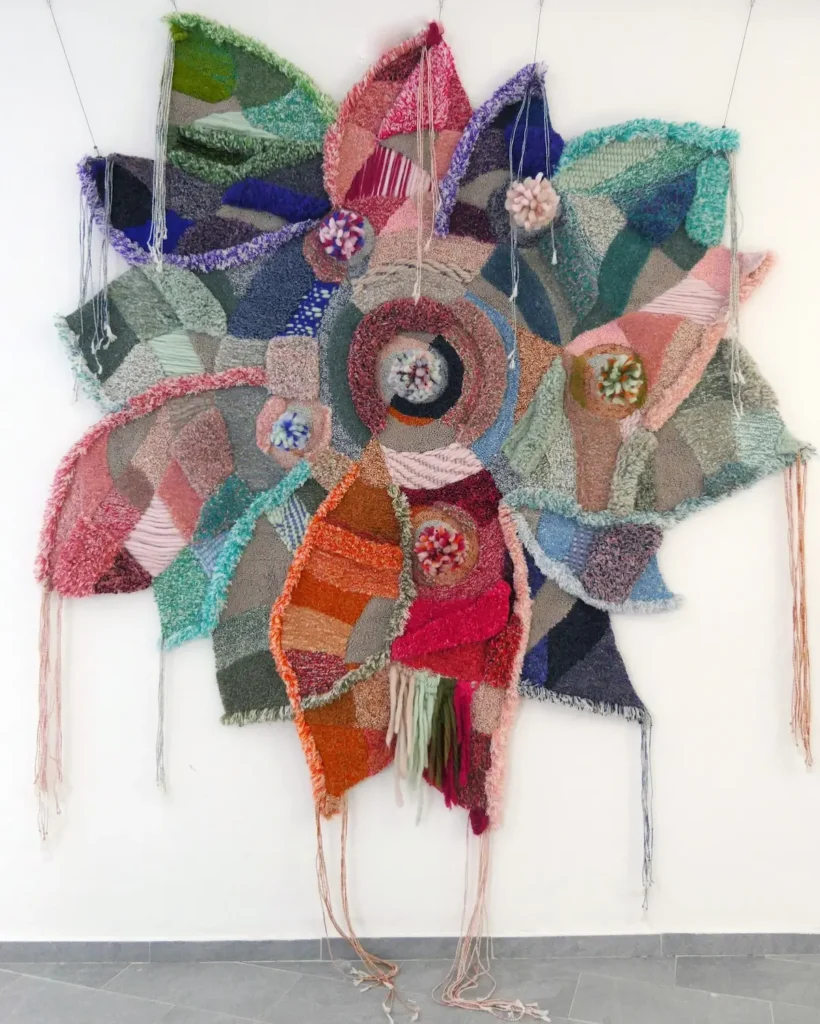
Colour! I am deeply interested in colour theory and the influence of colour in our lives, in our minds and moods.


Can you describe a place, artwork, or natural scene that always inspires you?
Talking about nature, the nature surrounding me in Florence is really magic. The hills around the city with their magnificent pine trees are a great source of inspiration. An artwork that inspires me in the painting Primavera by Botticelli that hangs in the Uffizi Museum in Florence.

Describe your creative space.
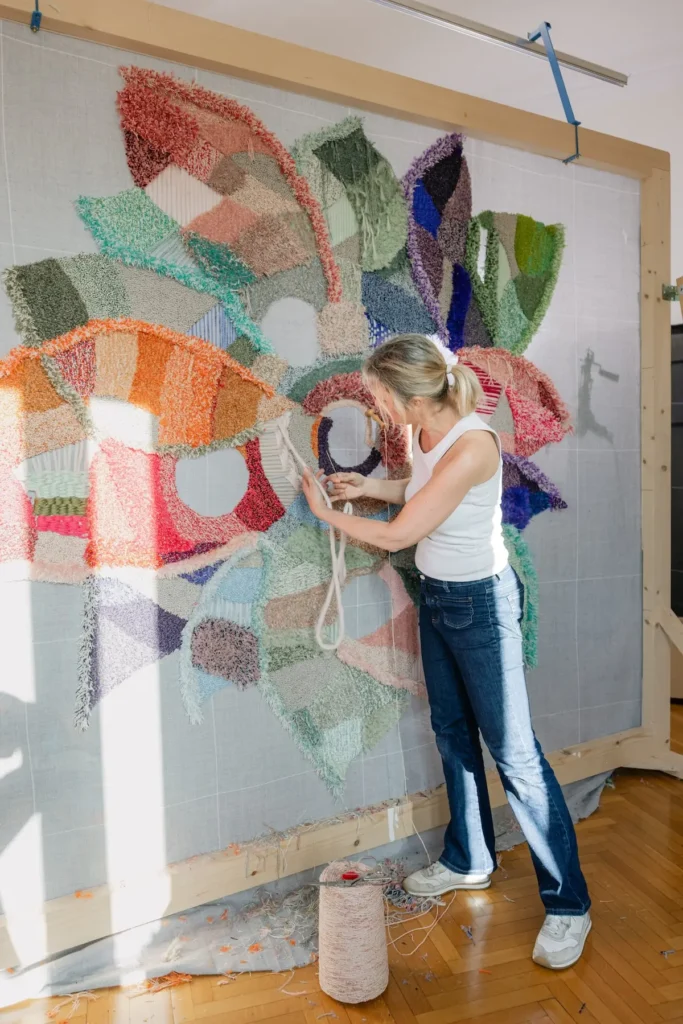
I use two large rooms in a separate part of my apartment. The first room contains my collection of yarns and the second room is my studio where I have several frames and my equipment for producing my art pieces.


Then, in front of my apartment, I have a large gallery space at street level on the opposite side of the road. Here I perform the final refinishing of my artworks, and I show a series of finished pieces.


Can you walk us through a day in your studio at Atelier Taftique?
I usually start by going through my email and taking a look at my social media.
Usually, I do the physical work of creating in the morning, and after lunch, I dedicate myself more to creating small textile elements that can be incorporated later into my art pieces, or I write, design, or go to see an exhibition.

How do embroidery, weaving, crochet, and other techniques enter your work?
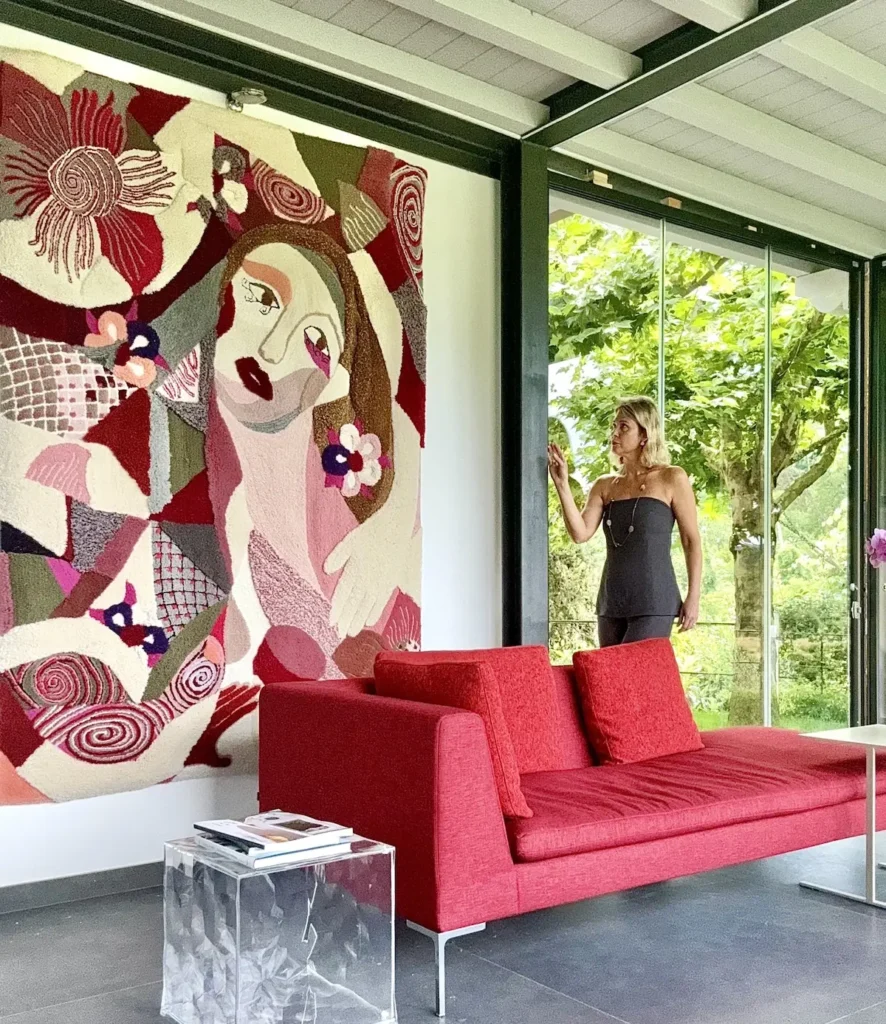
I love to create very differing textures in my pieces and therefore I like to use varying techniques. The same yarns look different when using a different technique so I believe it makes the work more interesting, surprising and also more personal.
Where does an idea begin — sketchbook, mood, a colour combo, a feeling?
Generally an idea begins by looking around in town, at natural elements or visiting art exhibitions. I get caught by the forms I see there and then I immediately associate the form with certain colour combinations.
How do you know when a piece is finished?
It’s a feeling that it’s alright.

What’s one problem-solving trick that always helps you focus?
Taking a few days of rest, meeting friends, going to the seaside, going to the cinema. After that, I’m focused again.
How do you stay curious when something feels stuck?
When something feels stuck, you need to leave it there. The solution comes by focusing on other things. At a certain moment, you get the right idea. And if you don’t get it, it probably wasn’t a good project in the first place.
How do you make room in your practice for play and experimentation?
I always plan days in which I don’t produce or create for sales but just to experiment. Every year I also make time to follow a course or work-shop at schools or research centers.

Has your art changed the way you look at everyday life?
I believe it makes me appreciate everyday life more. Art has deepened my sense of the fragility and preciousness of life.
What advice would you give your younger self when you were just starting?
I have started professionally only 5 years ago, as a middle-aged woman. In these 5 years I have learned a lot. Maybe the most important advice to give myself is to just enjoy the creative process and to focus on increasing my visibility.


Where can people see your work?
People can see my work at my gallery space in the centre of Florence (Via Bonifacio Lupi 9 R). Of course, I am not always working there, so if they want to be sure to find me, they need to send me a message first.
Federico Contini Art Gallery in Viareggio, Italy has a selection of my artworks on show, as well as Stephan Okker Art Gallery in Amsterdam and Chez Freddy Art & Design Gallery in Haarlem, the Netherlands.
Online my artworks are visible on my website www.taftique.com and on the platforms Artemest and Singulart.
Rapid-Fire Fun:
Favourite colour to tuft right now? Blue
Yarn you can’t live without? Merino wool
One word for your artistic philosophy? Movement
A feeling you want your work to give people? A sense of movement and the feeling of fragility as something powerful and deeply connected to life and nature.
For more information, read these art reviews of Jules’ work:
FINESTRE SULL’ARTE
https://www.finestresullarte.info/en/crafts/turning-the-avant-garde-into-tapestry-the-work-of-dutch-florentine-artist-jules-visser
https://www.finestresullarte.info/artisti/jules-vissers
ICAC ART CRITICS, LONDON UK
https://www.artcritics.co.uk/uncategorized/the-textile-alchemy-of-jules-vissers/
Interview posted March 2026
Browse through more inspiring interviews on Create Whimsy.