
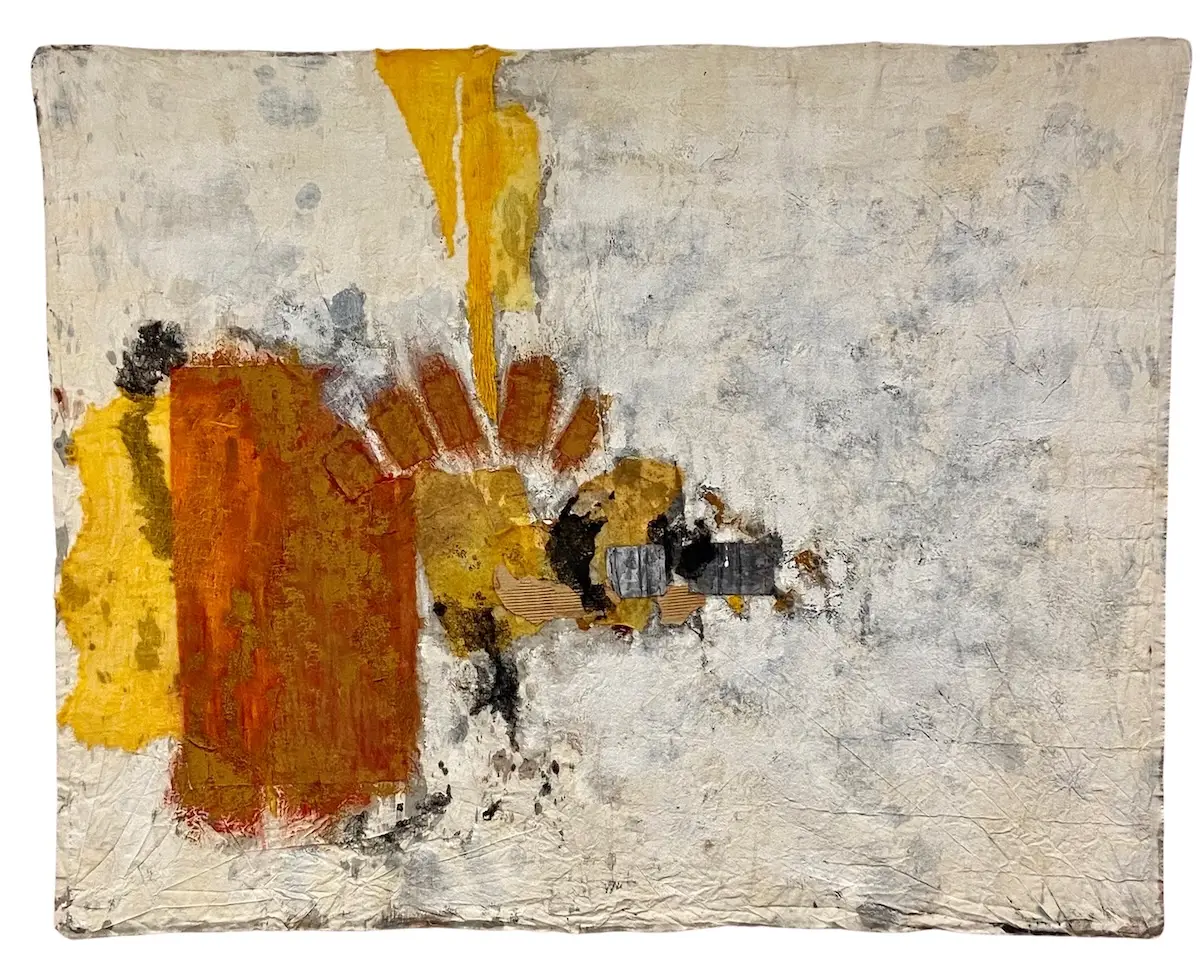
Fenella Davies is a hand-stitching storyteller, drawing on history, memory, and the quiet traces people leave behind. Working entirely by hand with aged and altered cloth, her process is intuitive, deeply tactile, and rooted in a lifelong relationship with fabric.
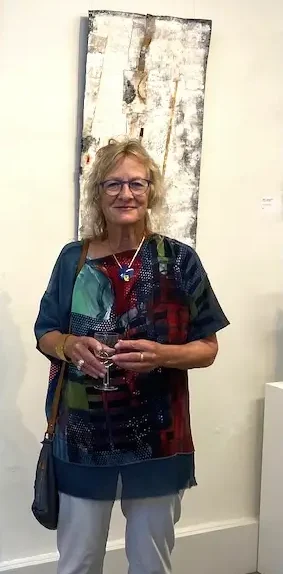
Can you tell us a little about where you grew up and what making looked like in your early life?
I grew up in a market town in the South East of England, in a time when it was normal to make your own clothes – off-the-peg fashion hadn’t really become available, and going out to buy a dress pattern and have it made by a seamstress – or yourself – was quite usual. The local art college ran Saturday art classes, and it was there that I started working with threads and fabrics.
Can you describe your studio space and how it supports your creative process?
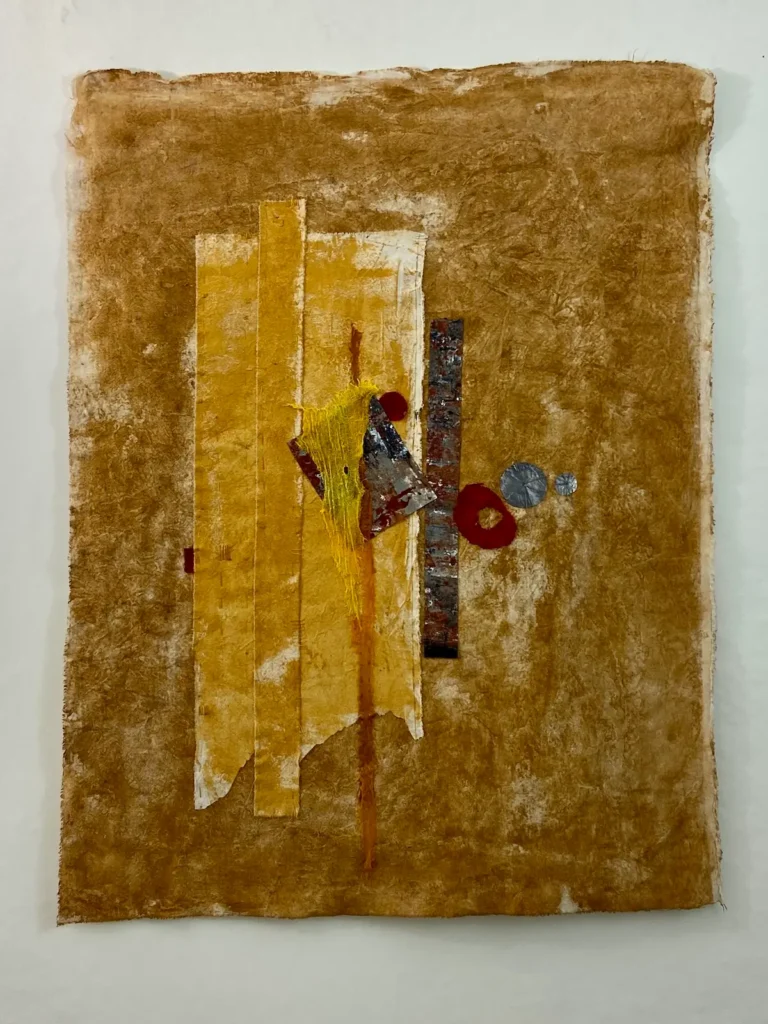
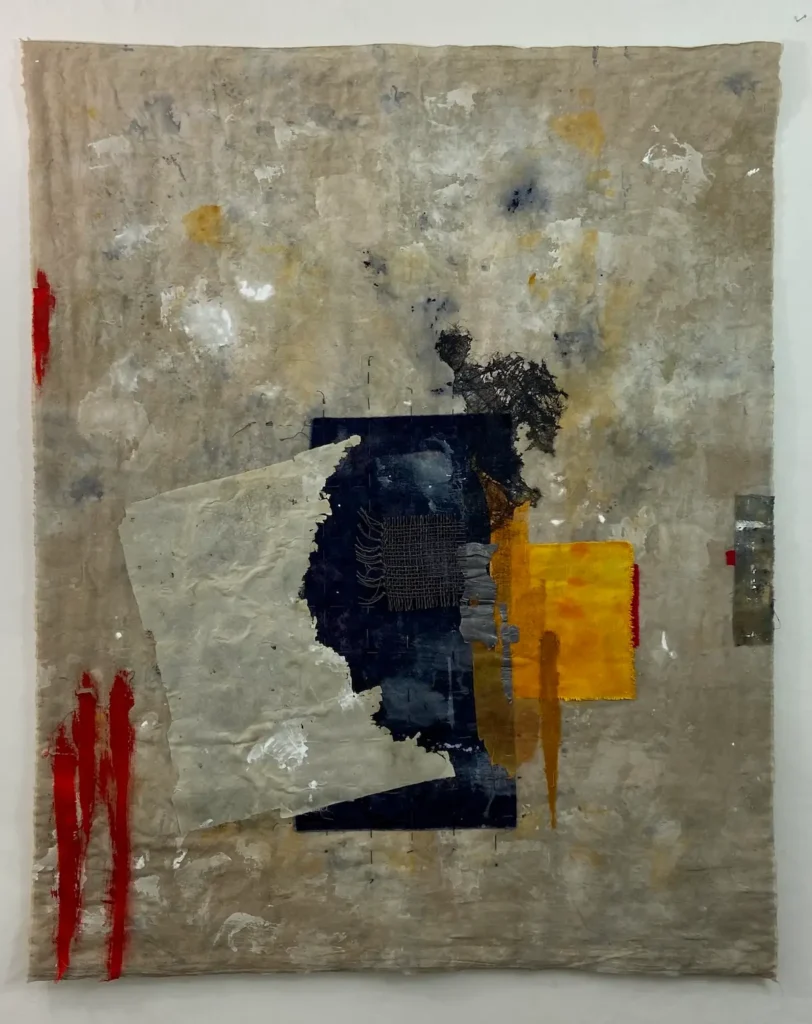
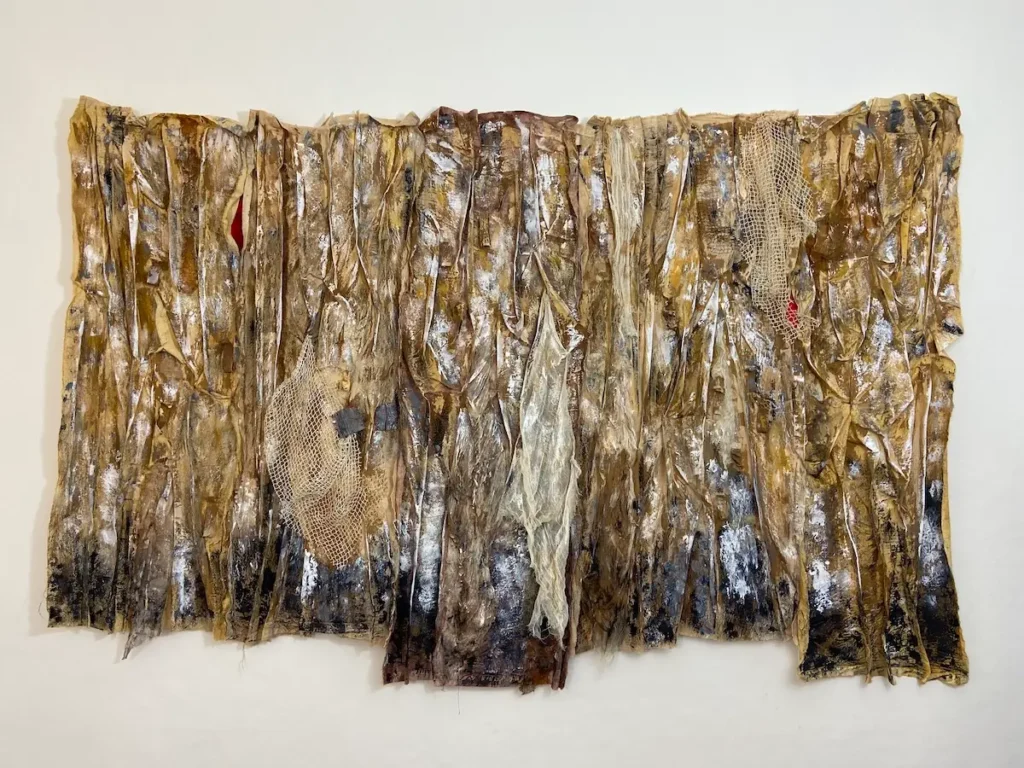
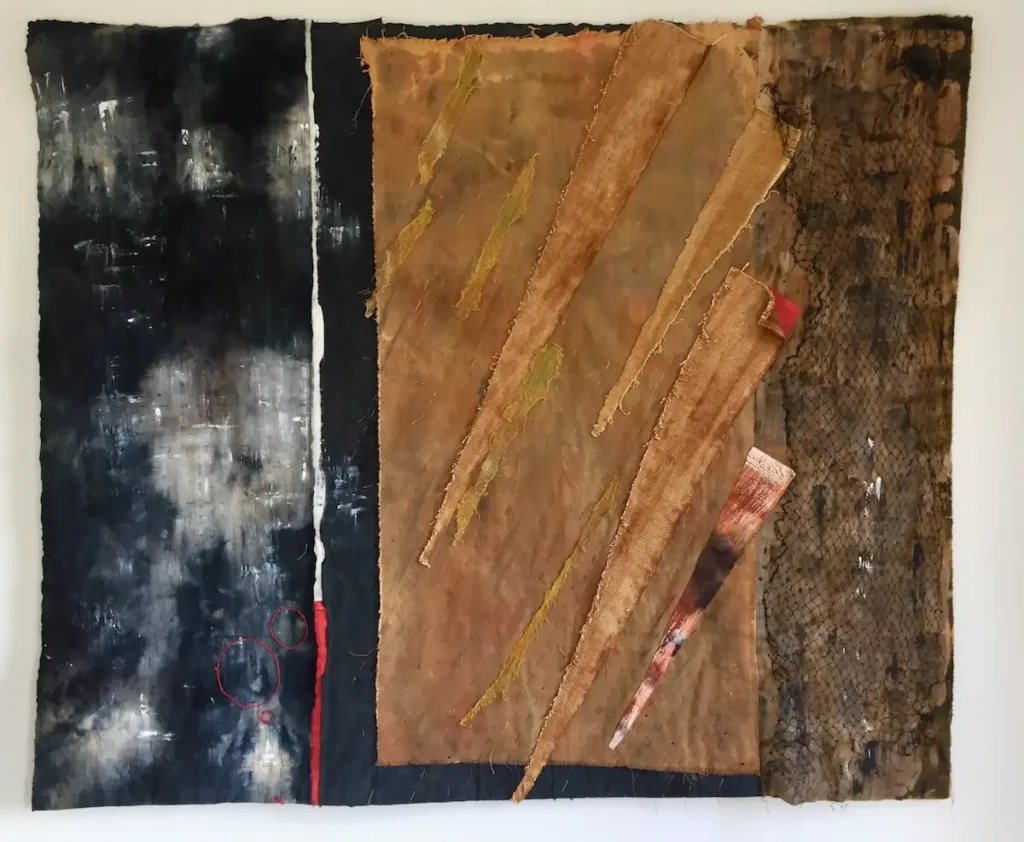
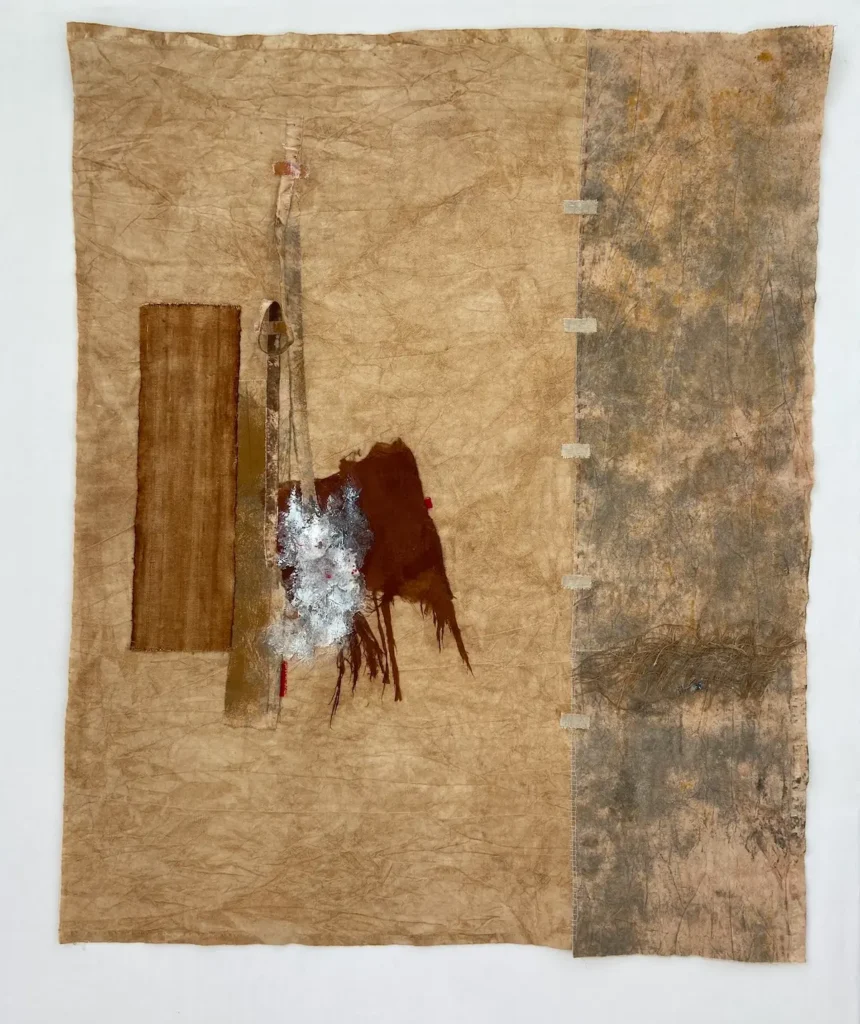
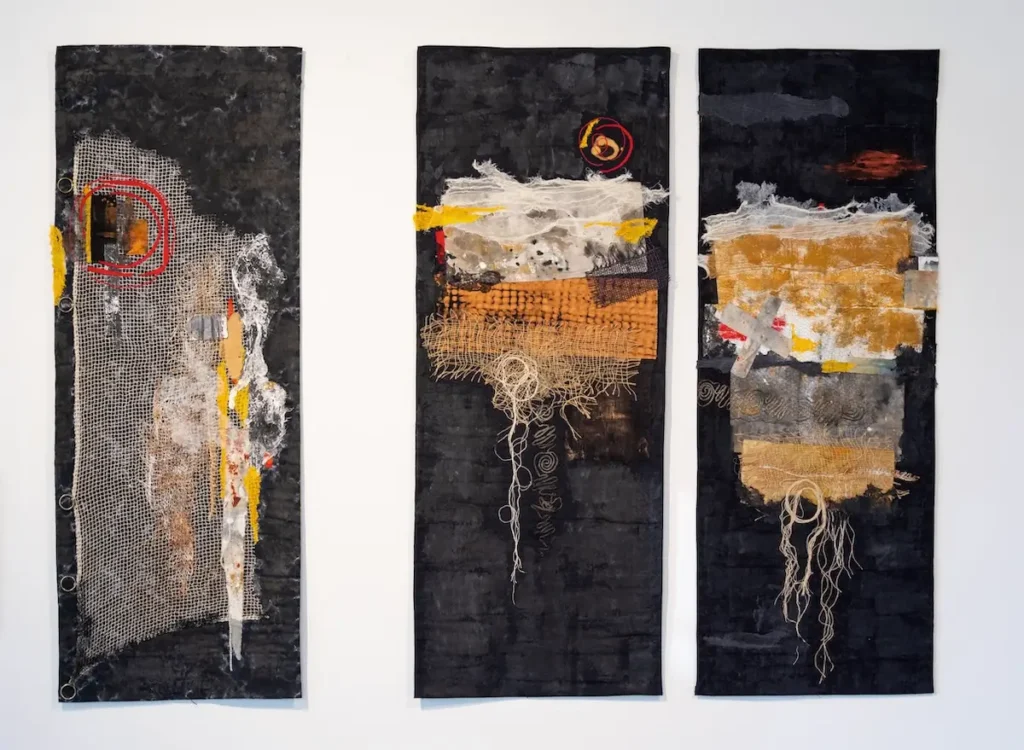
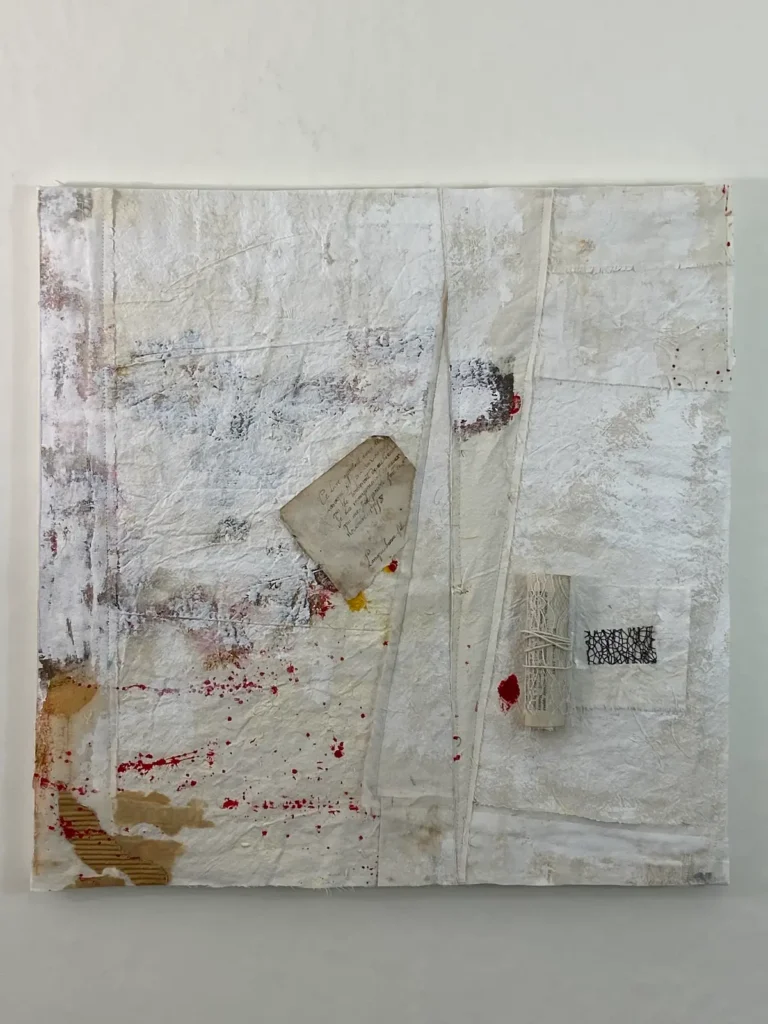
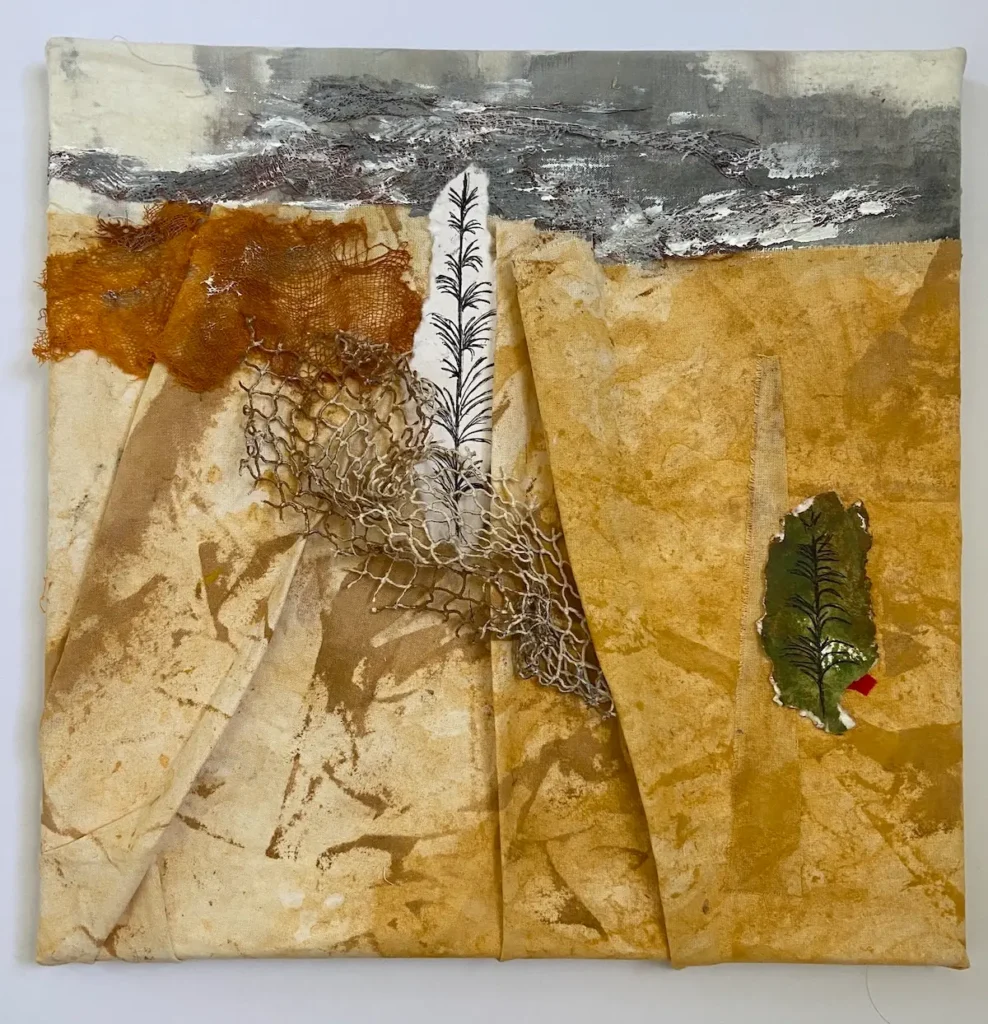
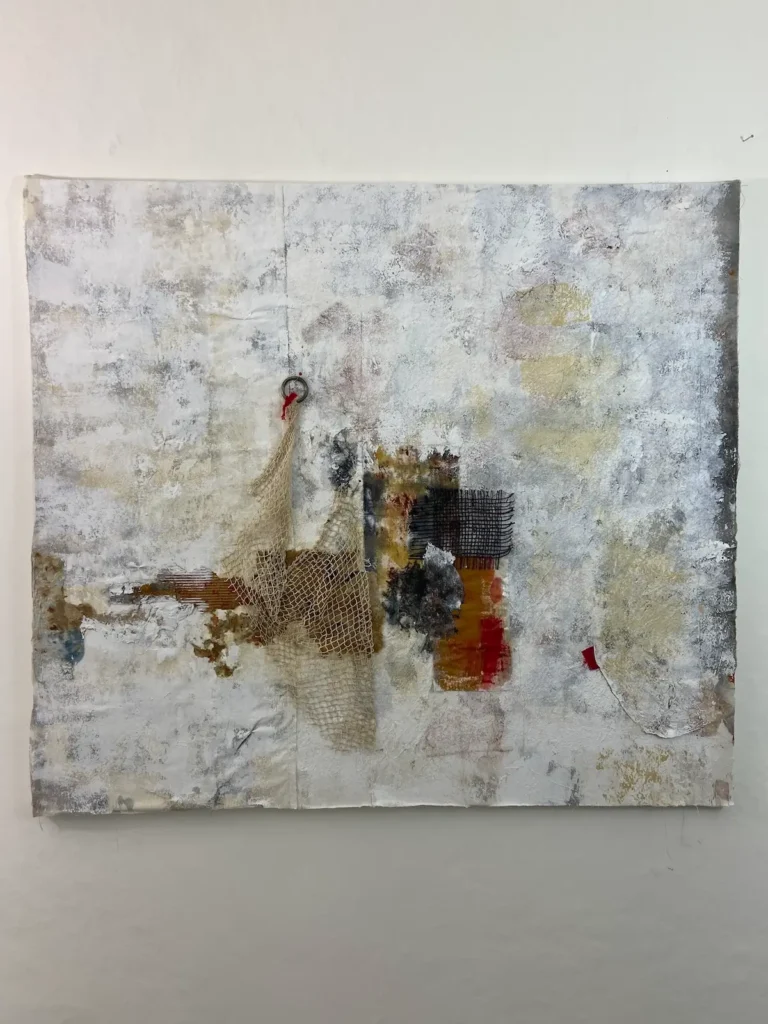
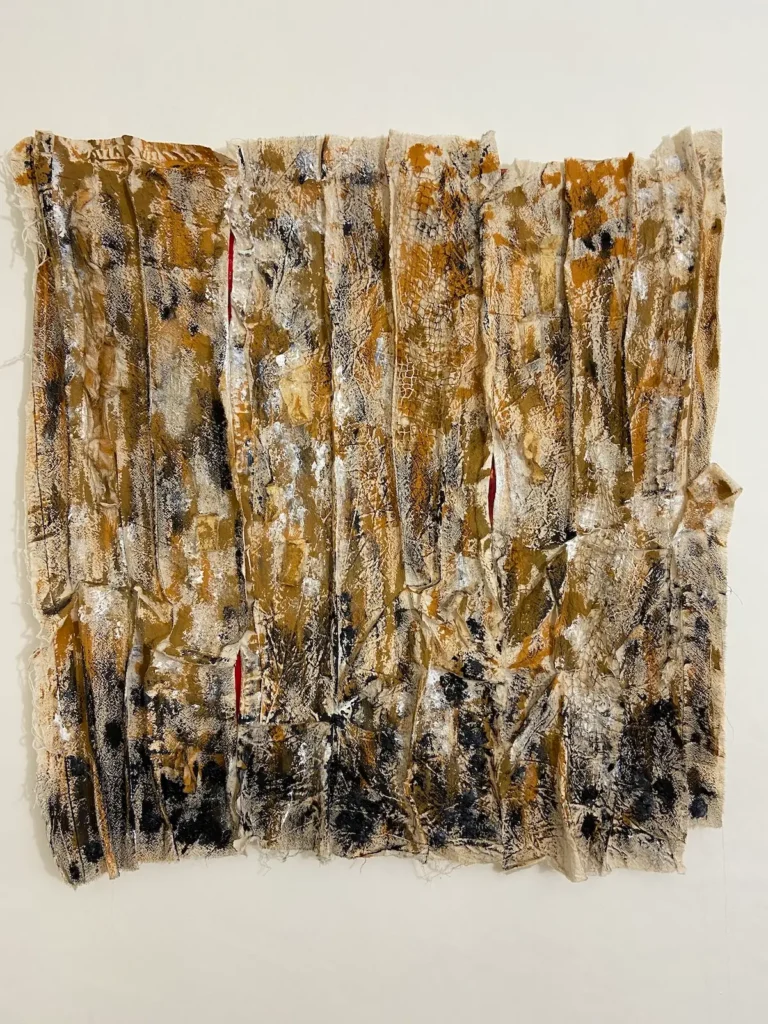
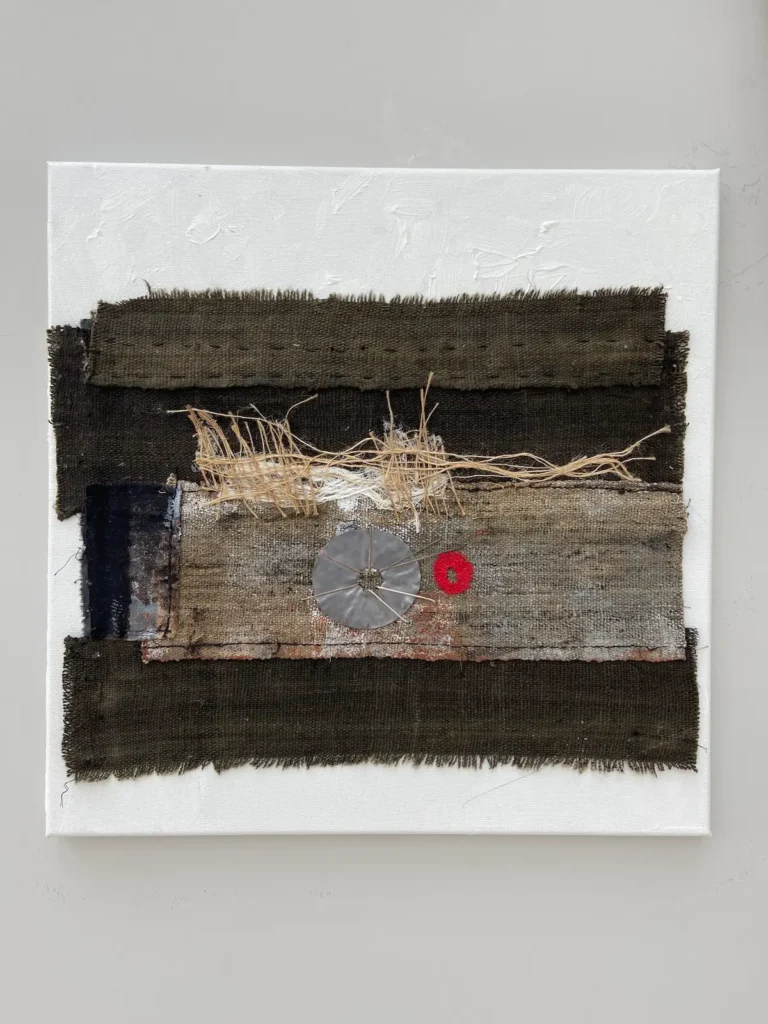
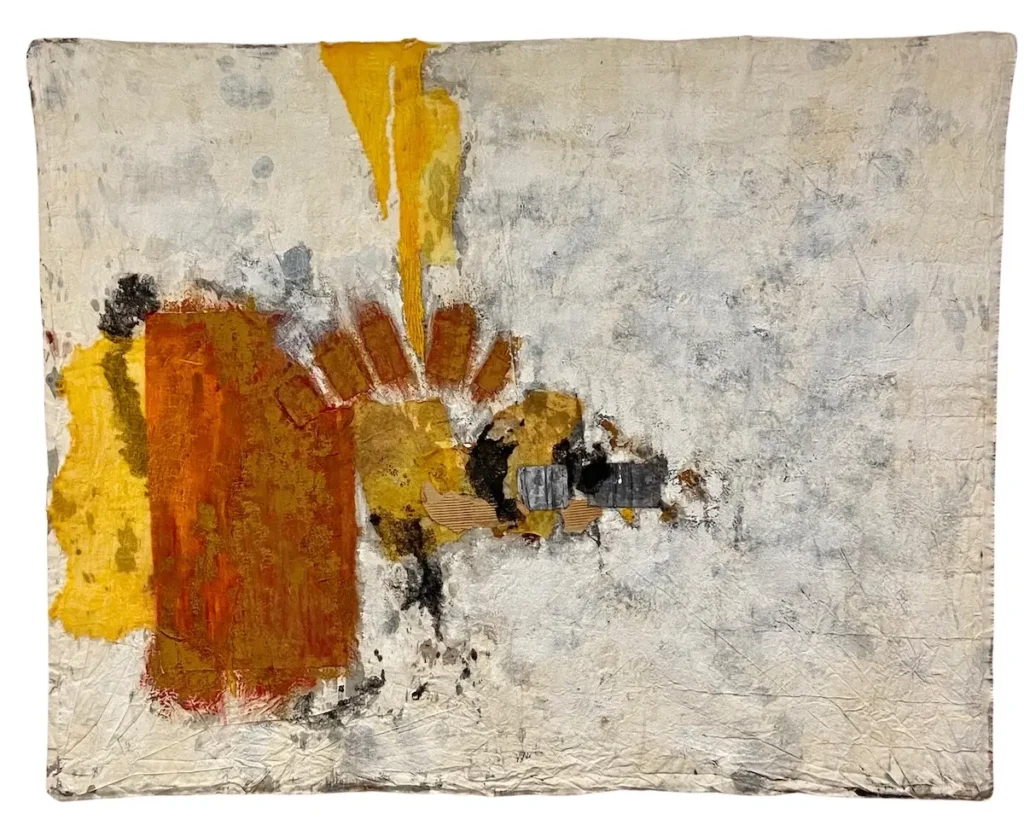
Nothing is planned ahead. There is a large ‘soft’ wall in my workroom, many boxes full of fabric, and I just go from there. Implications of the past are a recurring theme – the traces of people, their history, places, marks, and objects they leave behind all influence the work. I like to use recycled cloth, or cloth that I have changed myself via paint, dye, and mark-making.
As an Amazon Associate I earn from qualifying purchases. Read more about our affiliate linking policy.
You work with a wide range of materials. What draws you to the fabrics you choose?
The cloth used is hugely important to the work – I like the age and history of the fabric. Favourite material right now is mordanted soft calico, which has been prepared by a local charity. Unfortunately, after many years, they have stopped producing, so I am trying NOT TO PANIC! and looking for a new source. The cloth is really soft, takes paint brilliantly, and has a lovely quality.
What role does hand stitching play in slowing down and connecting to the work?
I never use a sewing machine. Everything is stitched by hand. That connection between the maker’s actual hand and the cloth is, for me, very important. Usually, the materials guide the story I want to tell – but as most of my work connects to the past, the use of old cloth is an obvious one.
Do you work on one piece at a time, or do several projects grow side by side?
I try to work on one piece at a time, but often some idea will hit off from that piece, and I’ll have ideas for the next one setting up.
How do you know when a piece is finished and ready to leave your hands?
The first thing I do when I wake up is go to my studio. And it’s that moment when I know if the piece is finished or not.
What parts of your process feel most challenging?
As my work usually travels – often between countries – it can be frustrating having to work out packaging, size, weight – all things that should not have to bear on the work, but do, to a small extent. (very small!)
How do you protect your creative energy in a busy world?
The more I make, the more creative energy I seem to have – the ideas just keep coming. But sometimes when I have had to have a break – family – moving house – that sort of thing, then it does take time to get it all flowing again.

Where can people see your work?
My work can currently be seen in the 9th European Quilt Triennale, Tampere Finland. The Fuga Gallery, Budapest, Hungary (Sept – Oct. 2026) Layers & Narratives – QuiltArt European travelling exhibition (see their website)
I also have work in museums and collections – see my website – fenelladavies.com
I think that anyone who is creative, in any way, is incredibly lucky. The total inner joy you feel when it finally works is beyond words – just so satisfying.
Interview posted January 2026
Browse through more inspiring interviews on Create Whimsy.