
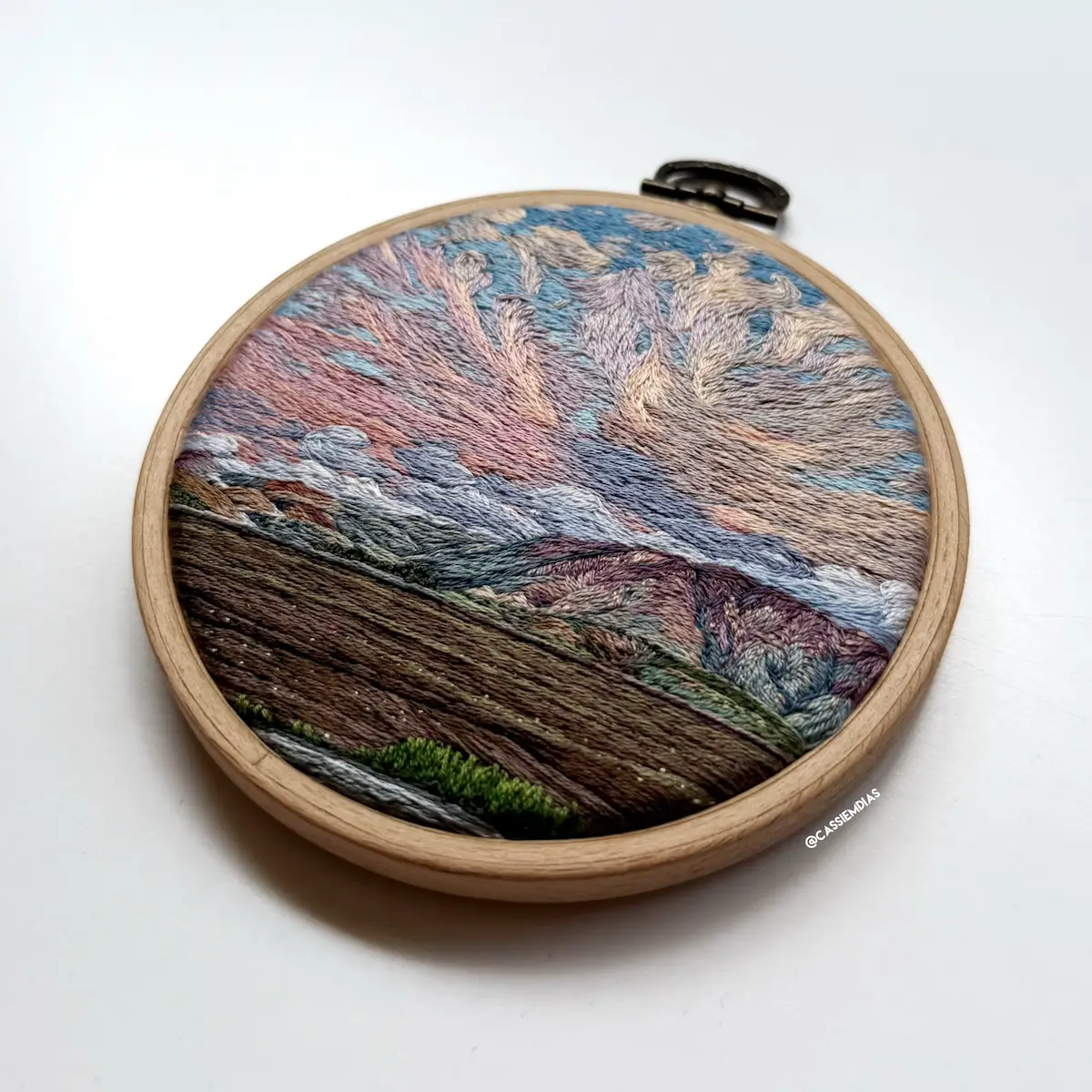
Cassandra Dias started embroidering in 2020 after finding an old bag of floss her aunt had given her. She finds inspiration from photos she takes on travels and online. Her work has evolved over the years, from satin stitching to thread painting her small works of art.
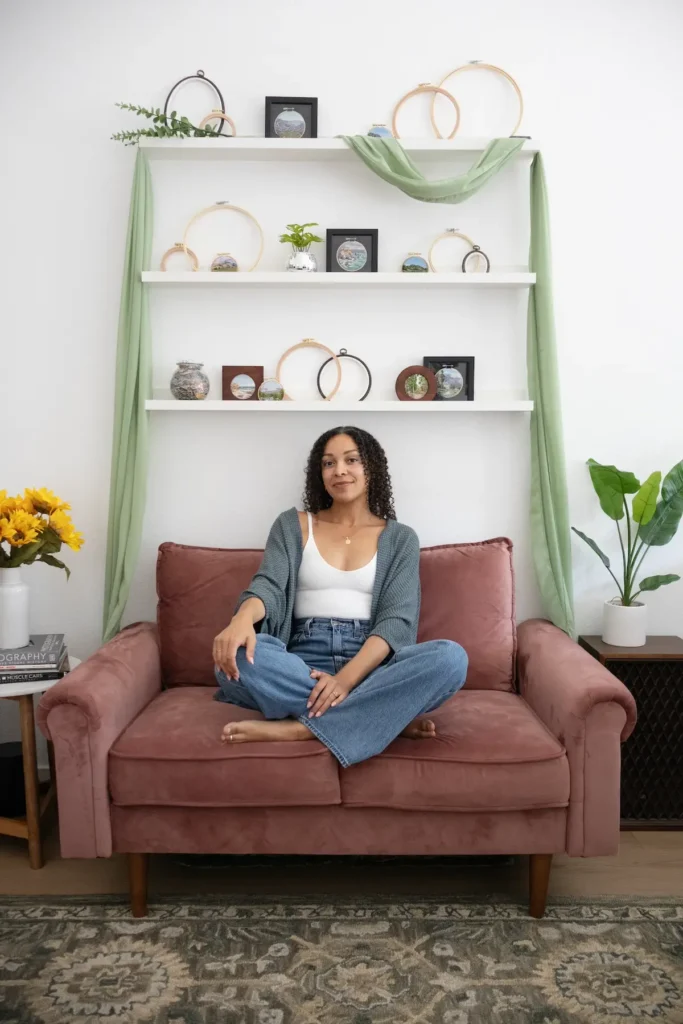
How did you find yourself on an artist’s path? Always there? Lightbulb moment? Dragged kicking and screaming? Evolving?
For me, it was a mix between “always there” and “lightbulb moment”.
I’ve been creating art of one kind or another ever since I was a kid, but in high school when I shared what I wanted to pursue, I was warned that becoming an artist wasn’t a viable profession.
Throughout my teens and twenties, I tried a variety of other job positions to see if they seemed like potential career paths, and lost interest in each within a year or two. In my thirties, I finally realized that nothing else has ever felt right, because I was meant to be creating art.
As an Amazon Associate I earn from qualifying purchases. Read more about our affiliate linking policy.
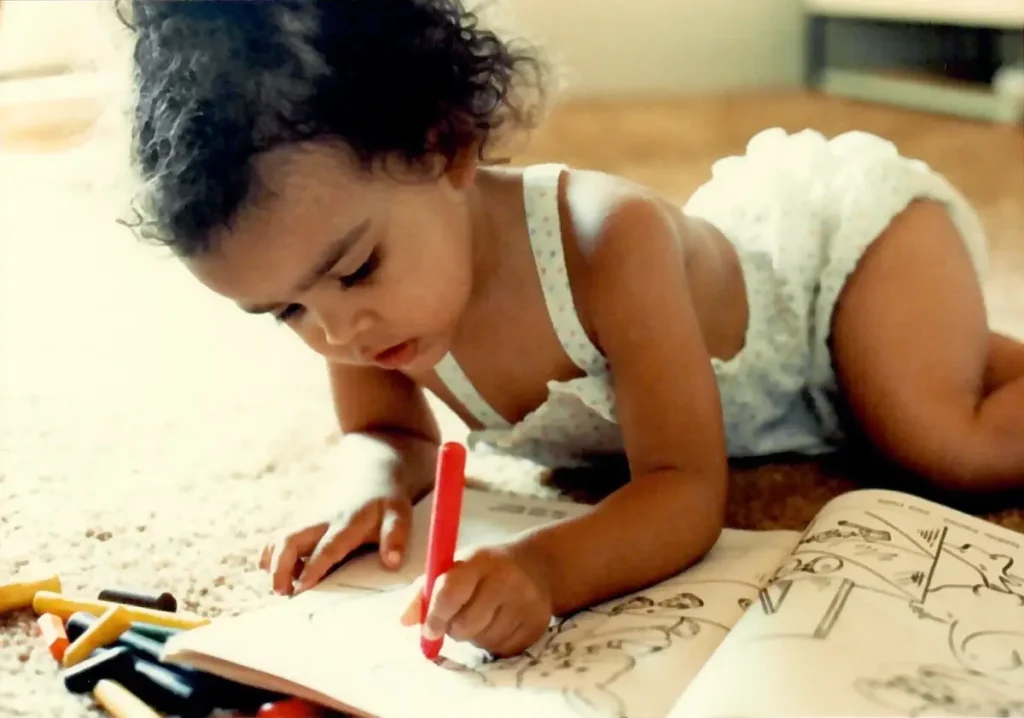
When did you first realize you are a creative person?
I think I’ve always known I was a creative person. I was introduced to art and a broad range of music at a very young age, and my appreciation for different types of creating (film editing, photography, etc.) was influenced by family and friends as I grew older.
What inspires you to create?
Browsing Instagram and the talented artists creating with their own mediums, traveling (especially during road trips when I can see, and take photos of, the scenery passing by), and movies or shows with epic landscape shots.
Why embroidery? How did you get started?
One of my aunts had sent me a bag of vintage DMC floss, which I set aside in a closet for years because I had nothing to do with it. (At that time, I’d never tried or even thought about trying embroidery.)
I eventually pulled it down in 2020 after being inspired by a couple different moms I followed on Instagram, to try to teach myself and create a little design on a jacket for my daughter. The pandemic hit shortly after, and I found real comfort in creating embroideries during that time, and have been stitching ever since.
But yeah, I’m not sure I ever would have picked up embroidery had my aunt not sent me that bag of floss in the first place.
Where do you find inspiration for your designs?
I’m inspired by traveling and finding the beauty in the nature that surrounds me at that moment. I try to take lots of photos while on vacation, because it makes it easy to come back to and recreate a scene later.
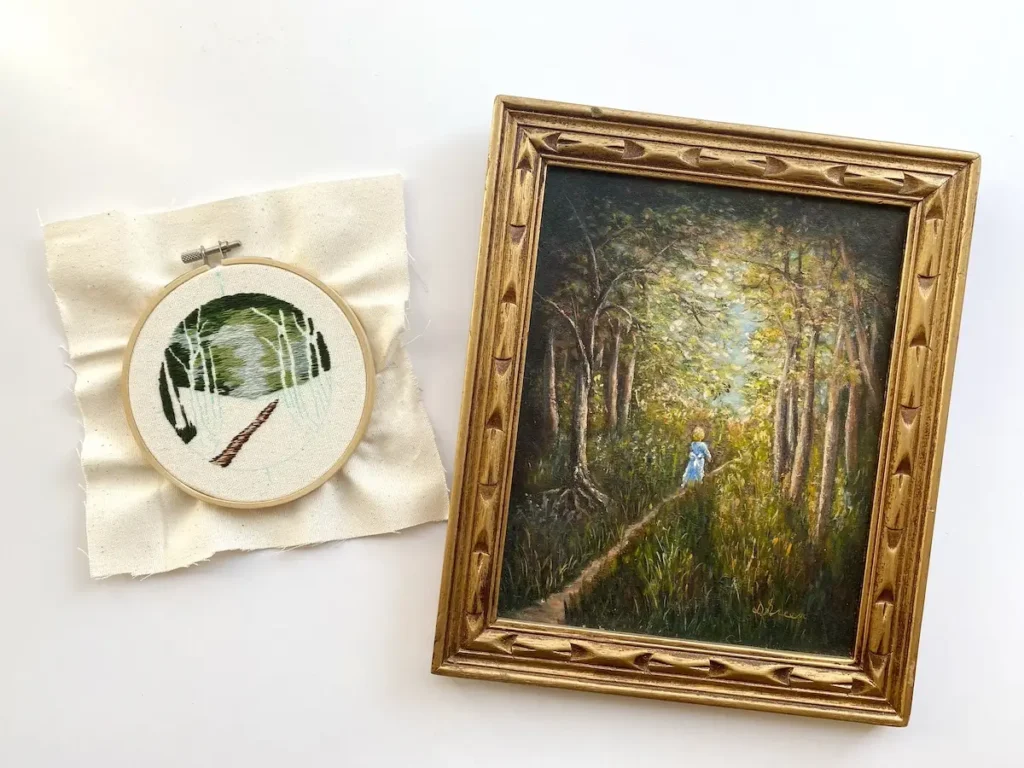
My work is also sometimes inspired by antique landscape oil paintings.
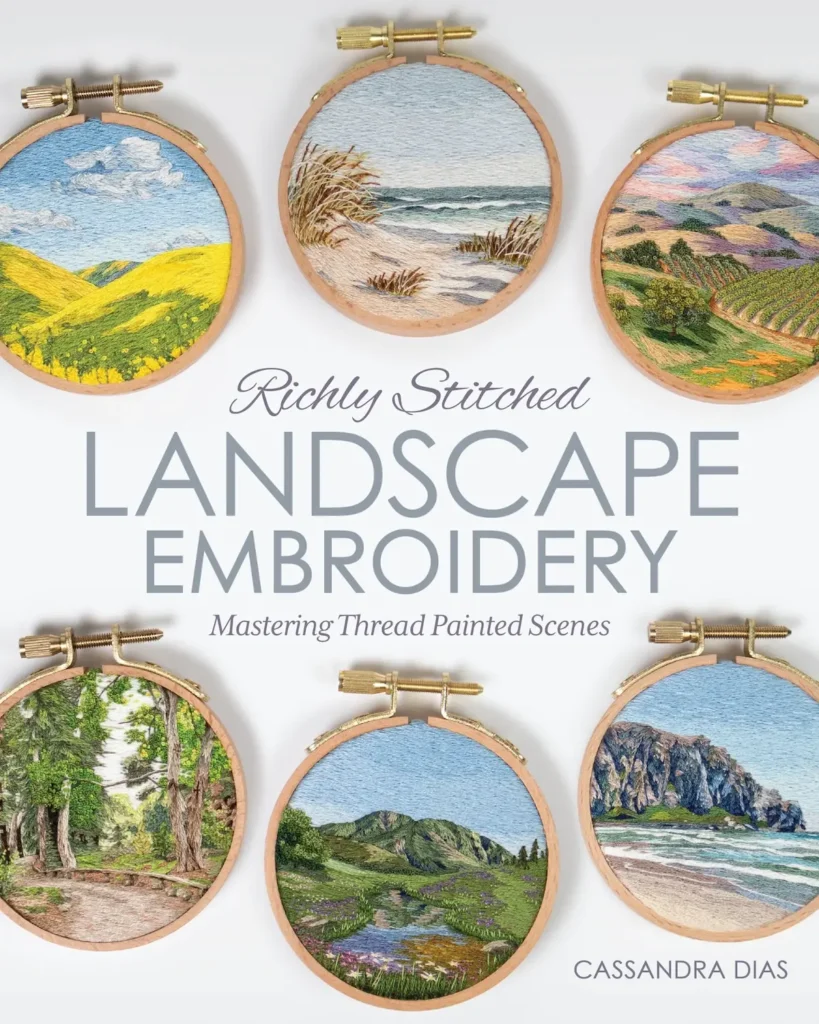
Congratulations on your new book, Richly Stitched Landscape Embroidery! What inspired you to turn your approach to landscape thread painting into a book? Was there a moment when you realized you had something you wanted to teach other stitchers?
Thanks so much! I was actually lucky enough to have been approached by the publisher! At the time–this was in January 2024–I was just enjoying making my art and posting content of it on my social pages, but my editor had come across my work and reached out to see if I was interested in making a book with C&T Publishing.
I knew it was going to be a huge undertaking, but the opportunity just came about so naturally that I felt like writing a book seemed like the right next step in my embroidery journey. So, I said yes and got started right away!
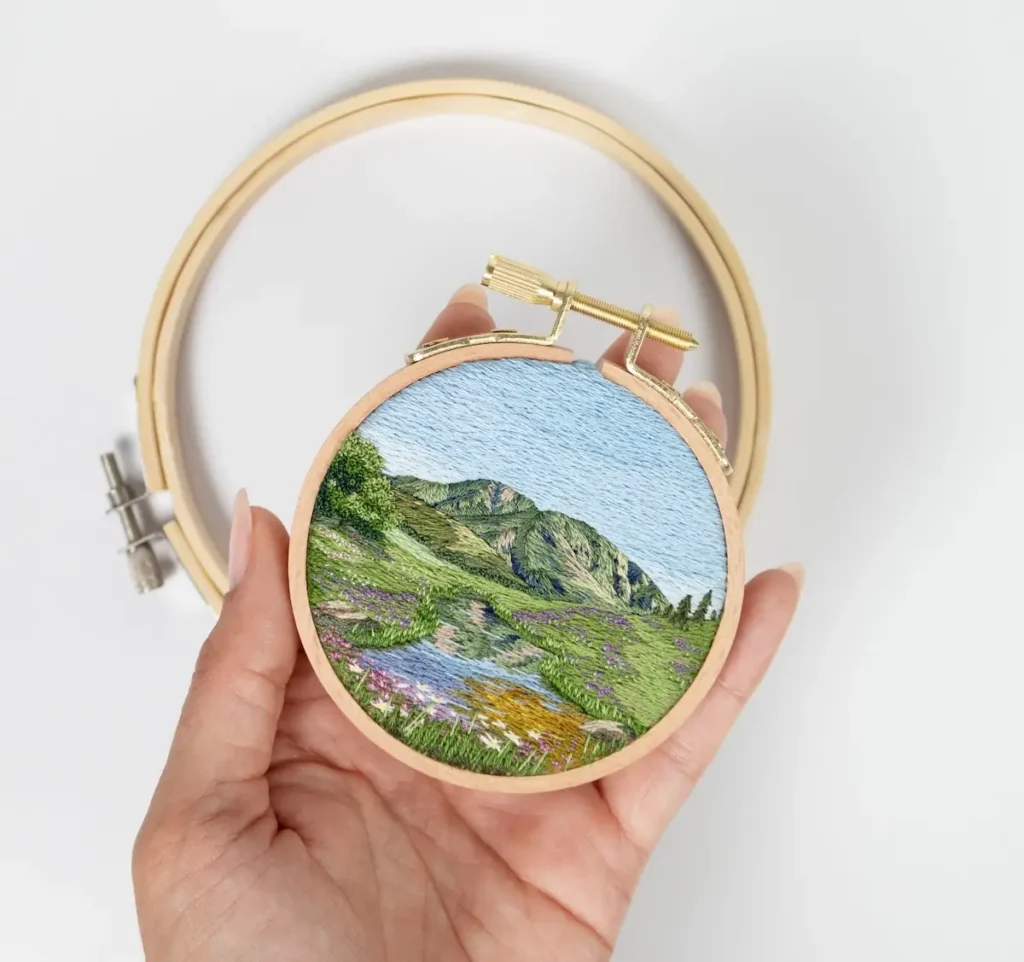
Your book takes readers from individual landscape elements, such as clouds, mountains, grasses, trees, and water, to complete landscape scenes. How did you decide which techniques and lessons needed to be included to help someone understand how you build a landscape with thread?
I thought about how I like to learn–in manageable, smaller lessons that develop skills needed to complete larger, more challenging tasks. I like progression when it comes to difficulty levels, and I also like in-depth verbal and visual explanations.
I wrote the book as if I were explaining the process of thread painting a landscape to myself. I also knew I wanted readers to be able to pick and choose which elements and stitches spoke to them. And, maybe most importantly, I wanted them to walk away with knowledge that made them confident in composing a design or working from their own reference photo, to create something beyond the patterns in the book.
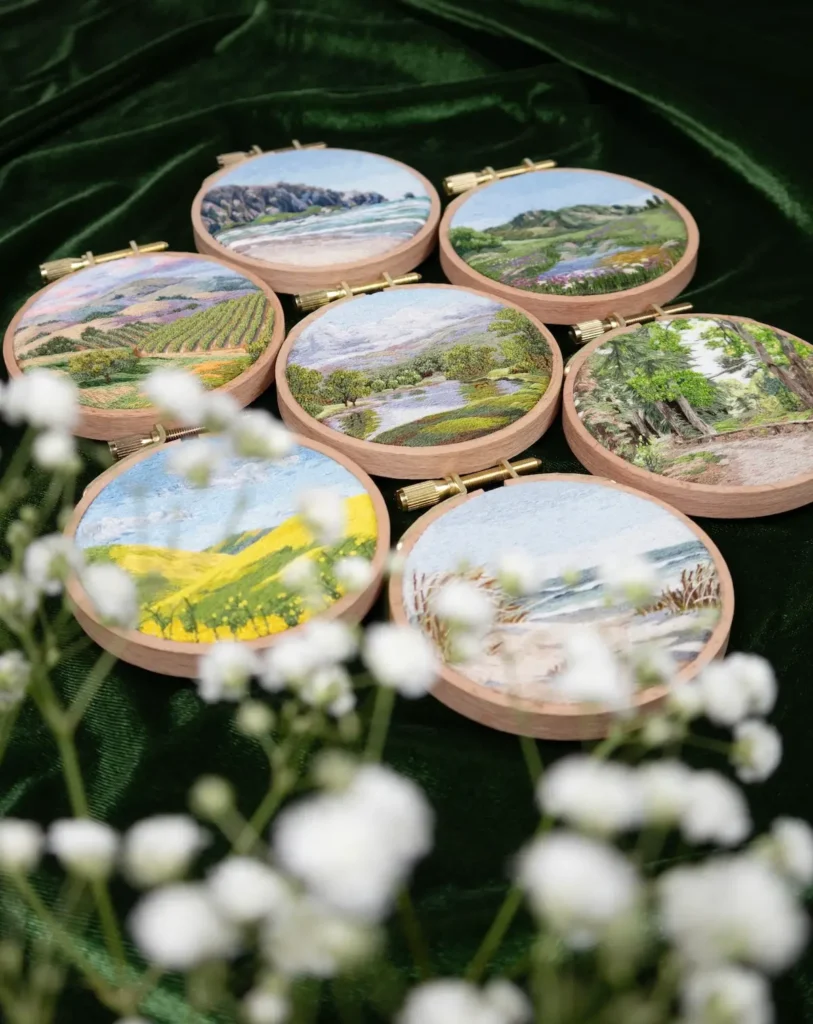
You created seven complete landscape projects for the book. How did you choose the landscapes you wanted to include? Were there particular places, memories, or photographs that you knew had to become part of the book?
It was important to me that readers would have a range of different types of landscapes to choose from.
When I was composing the designs, I thought about what types of landscapes I personally enjoyed creating, and I used a combination of my own photos, memories, and imagination as references.
While working on the designs, I made sure each landscape had multiple examples of the natural elements they would learn in the tutorials chapter, so that putting those skills into practice to complete a larger project would feel like a full-circle moment.
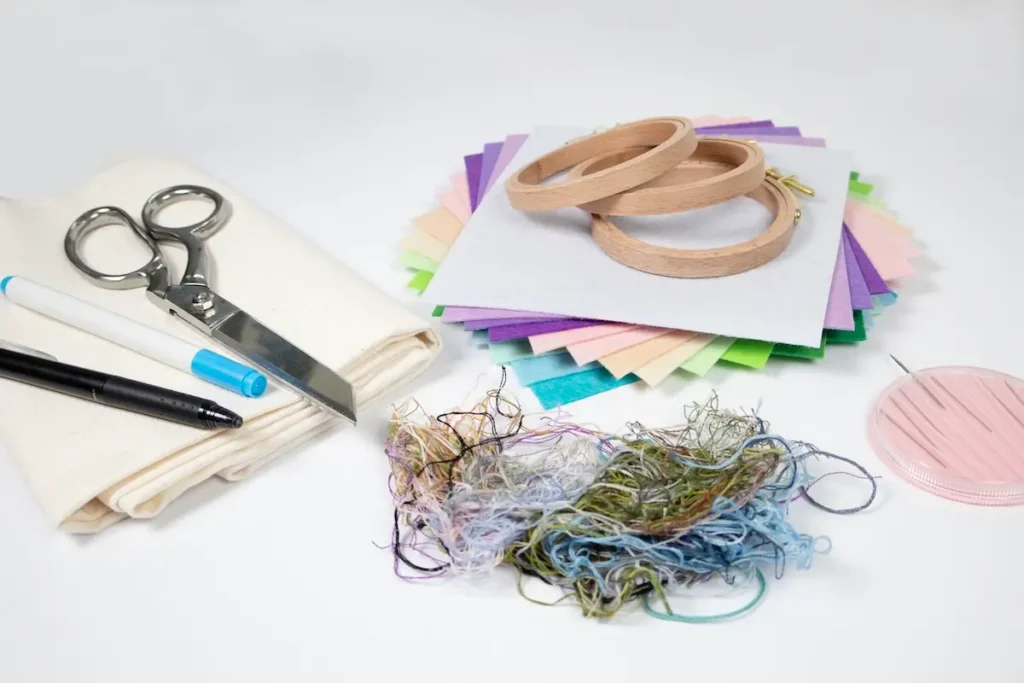
Landscape thread painting involves an incredible number of color and stitch decisions. Did writing the book change the way you think about color, texture, layering, or creating depth in your own work?
You’re right. Thread painting does involve lots of decisions when it comes to color selection and which types of stitches to use. I didn’t exactly realize just how many decisions I made until I was actually documenting each and every step.
Writing the book made me really appreciate all the work that goes into creating a piece.
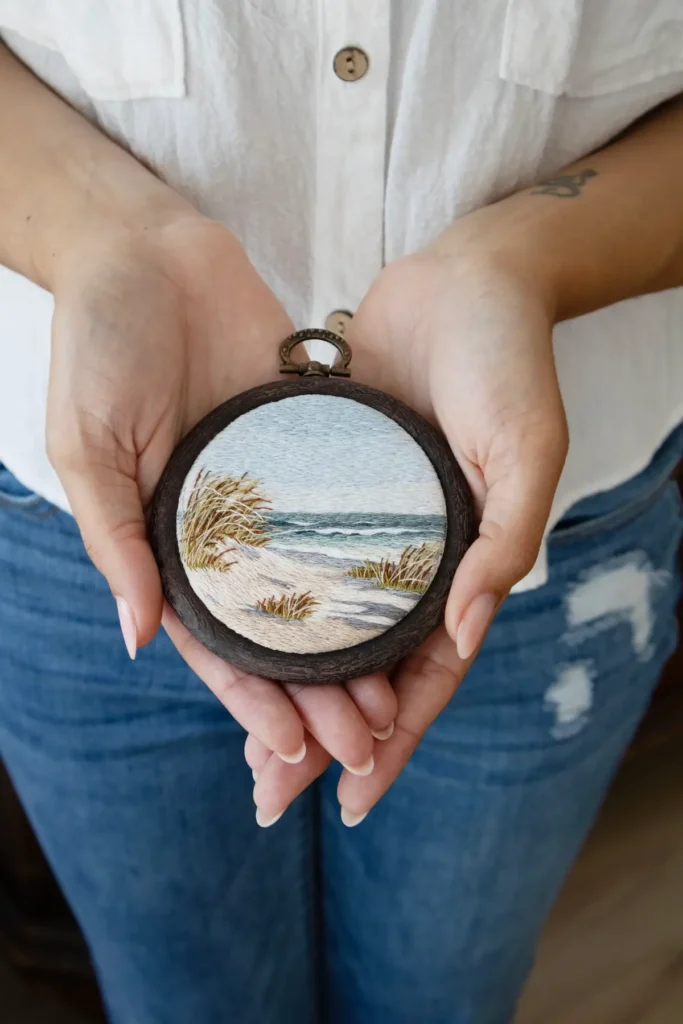
In the early stages of writing, I kept in mind that looking at a completed landscape thread painting without having an understanding of the process might be intimidating to a beginner.
Luckily, there are only a handful of basic embroidery stitches involved in the type of thread painting I do, and my hope was that with the practice obtained in my tutorials chapter, the decisions about stitch selection and placement would become intuitive by the time the reader reached the full landscape projects. But if not, I also included a color guide for each project, which cuts down on the guesswork.
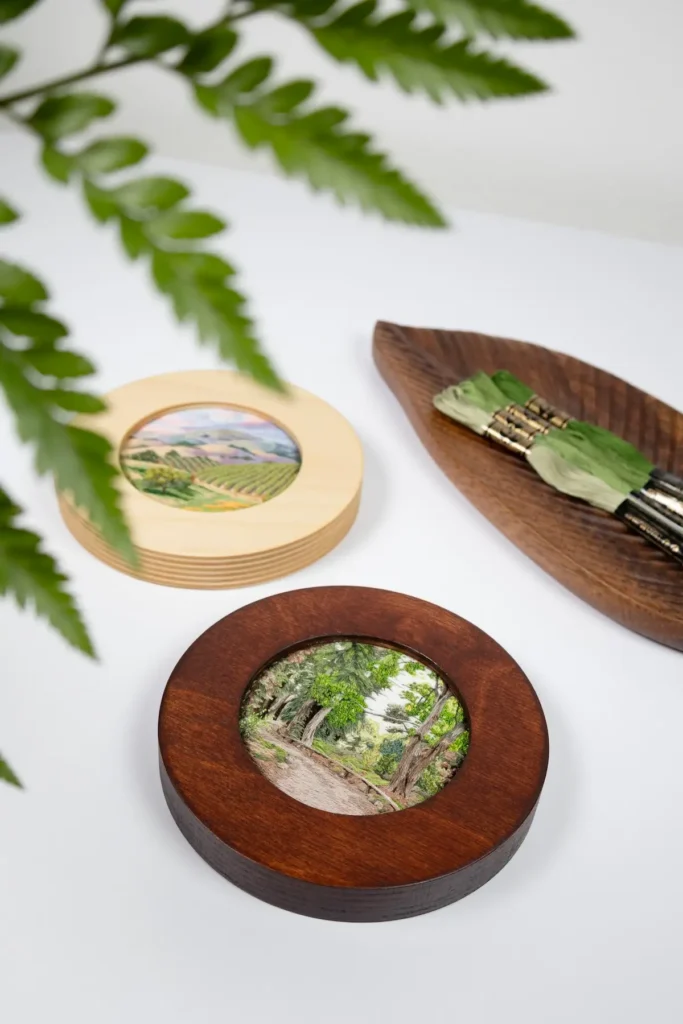
Now that you’ve finished your first book, how has the experience changed you as an artist? Has writing and teaching about thread painting changed what you want to explore next in your own work?
After the final round of edits to the text were made and the details of the design and layout were determined, I felt relieved I could finally loosen my grip on what I worked so hard on for so long to bring it to life, because my job was done and the rest was out of my hands.
I feel confident that, to the best of my ability, I’ve created a complete, comprehensive guide to landscape thread painting. Now that I’ve shared all my knowledge about landscapes, I’ve been thinking about exploring other types of subject matter.
I haven’t decided on anything yet, but I am looking forward to experimenting to figure out if anything else speaks to me like landscapes do.
Describe your creative space.
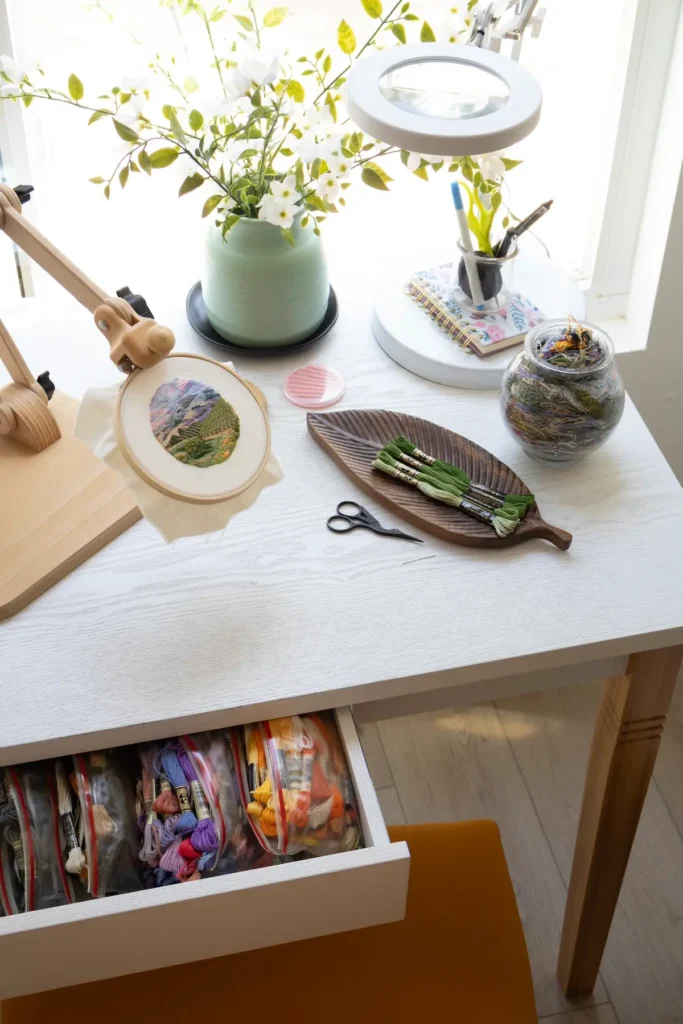
My work space is tucked into a corner of our house, with a small desk in front of a window looking out at our backyard. On my desk, I have my hoop stand, iPad, table lamp, ort jar, and a little catchall with various other tools I use when embroidering. It’s small, but it gets great light and I stay productive when sitting there.
What is your favorite tip on organizing your threads?
I don’t bother winding my floss on bobbins, but keep the skeins in several clear zippered bags (which are organized by color) inside my desk drawer.
I’m not sure if I have any tips on floss organization, as my method is starting to get a little out of control with the number of skeins I’ve accumulated. I will say, what makes it easier for me is to keep similar colors together.
Do you use a sketchbook, journal, or technology to plan or keep track of ideas? How does that help your work develop?
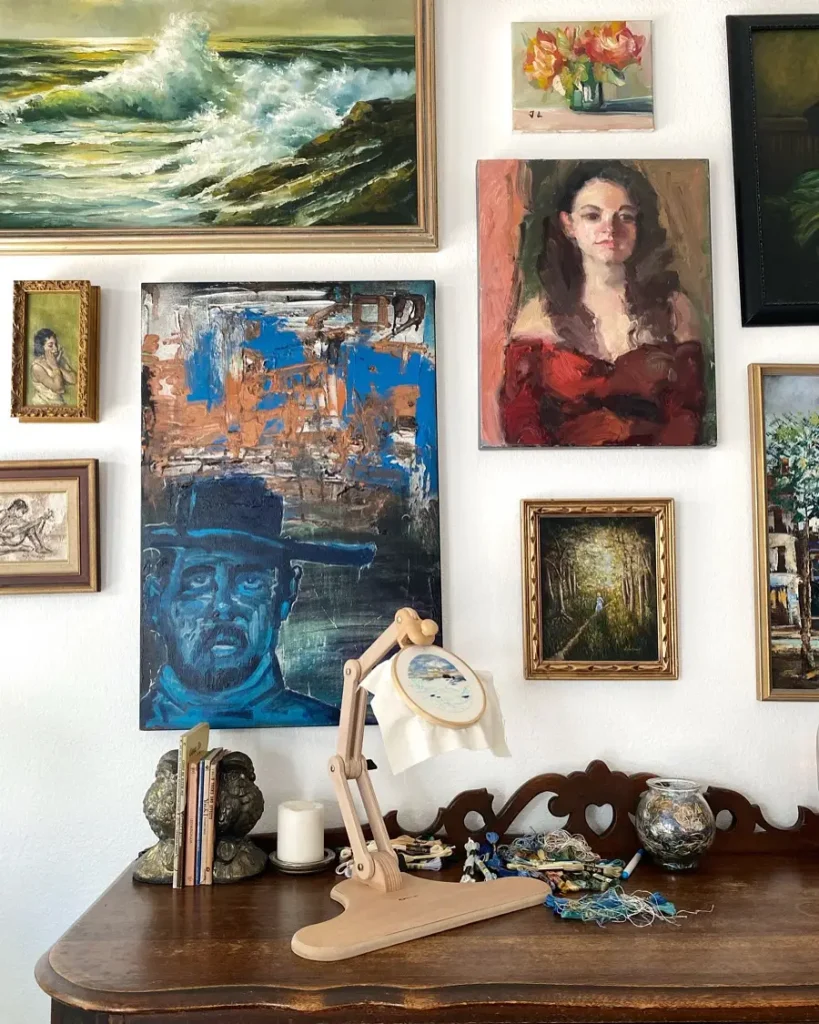
Yes, my iPad has become a tool that I really rely on when it comes to storing my inspiration photos, and developing sketches and patterns with Procreate. This app allows me to easily create line drawings for my projects, and pull samples of colors from my reference photos, which makes the design process so much easier.
What plays in the background while you work? Silence? Music, audiobooks, podcasts, movies? If so, what kind?
I either work in silence, or with music playing in the background. The station I choose depends on both my mood and what I’m working on.
If I’m typing and creating a pattern with instructions, I either need silence, or music without words like Beethoven or Spanish Guitar radio on Pandora. If I’m just stitching, I typically like upbeat music I can sing along with.
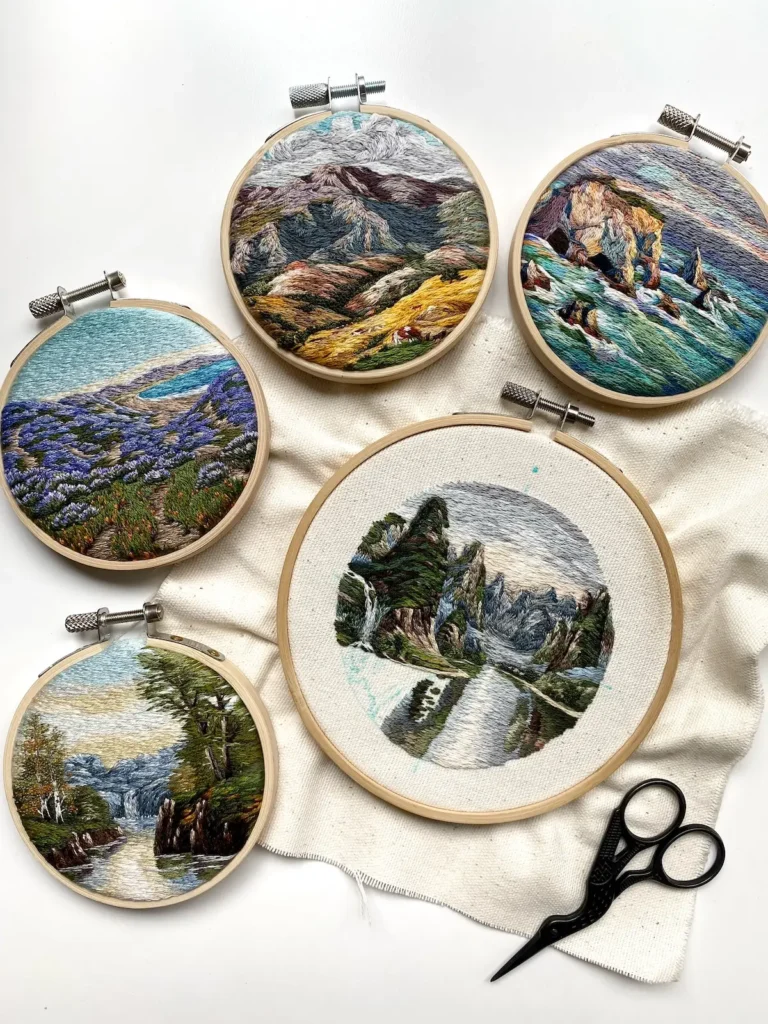
How often do you start a new project? Do you work actively on more than one project at a time?
If I have no other commitments going on, I am usually able to start a new embroidery every month or so. I used to work on multiple embroideries and switch back and forth between them, but nowadays I like to focus on one at a time and see it through until the end before I start a new piece.
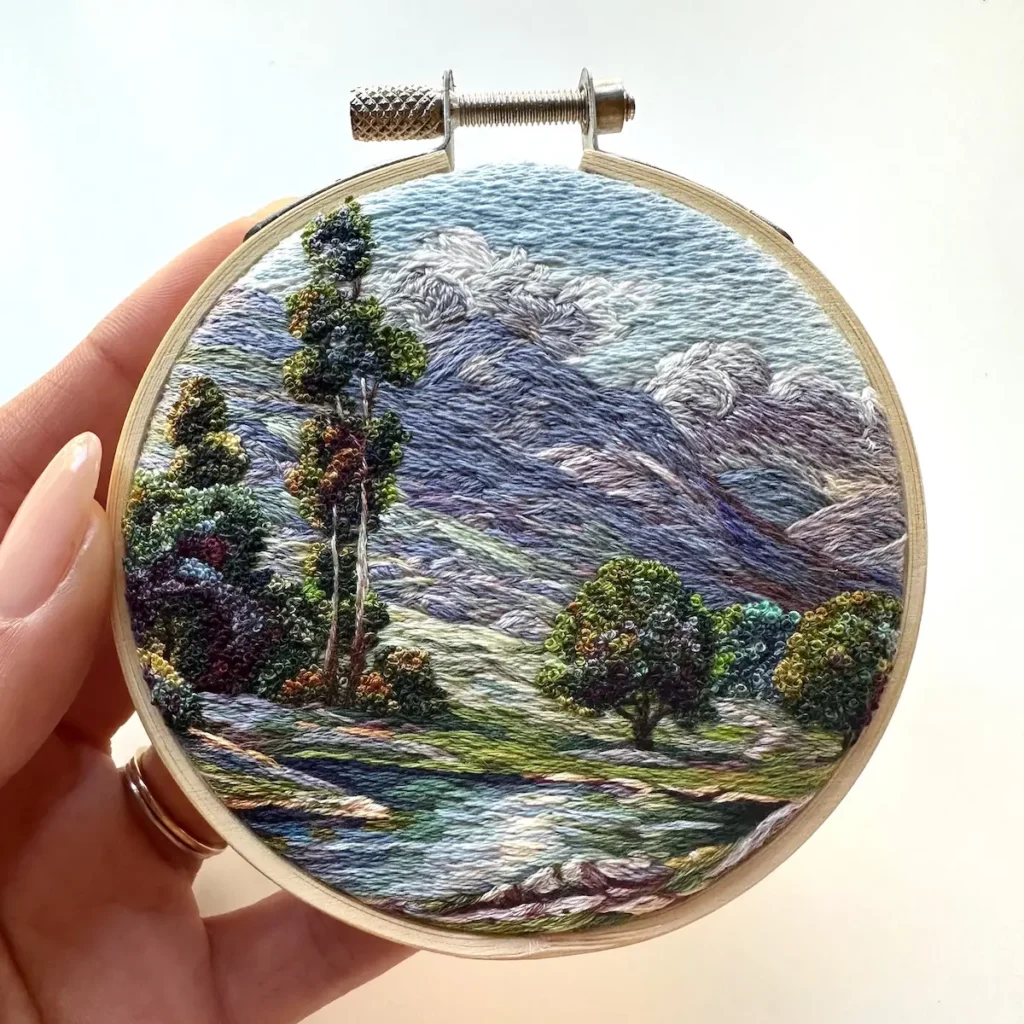
Can you tell us about the inspiration and process of one of your works? How does a new work come about?
This piece, which has become a part of my personal collection of embroideries I couldn’t part with, is titled “Sheltered Pool – Paul Grimm Repro” and was inspired by an original antique oil painting by artist Paul A. Grimm (1892-1974). He was a painter that lived in Southern California in the 1920’s until his death, and his works remind me of home.
Inspiration strikes me when I feel personally connected to visual beauty (like a painting), or by nature that evokes a sense of wonder. At the time, I wanted to try to recreate this piece because I just found it so pretty, and I also felt like it would be a great study in color and texture.
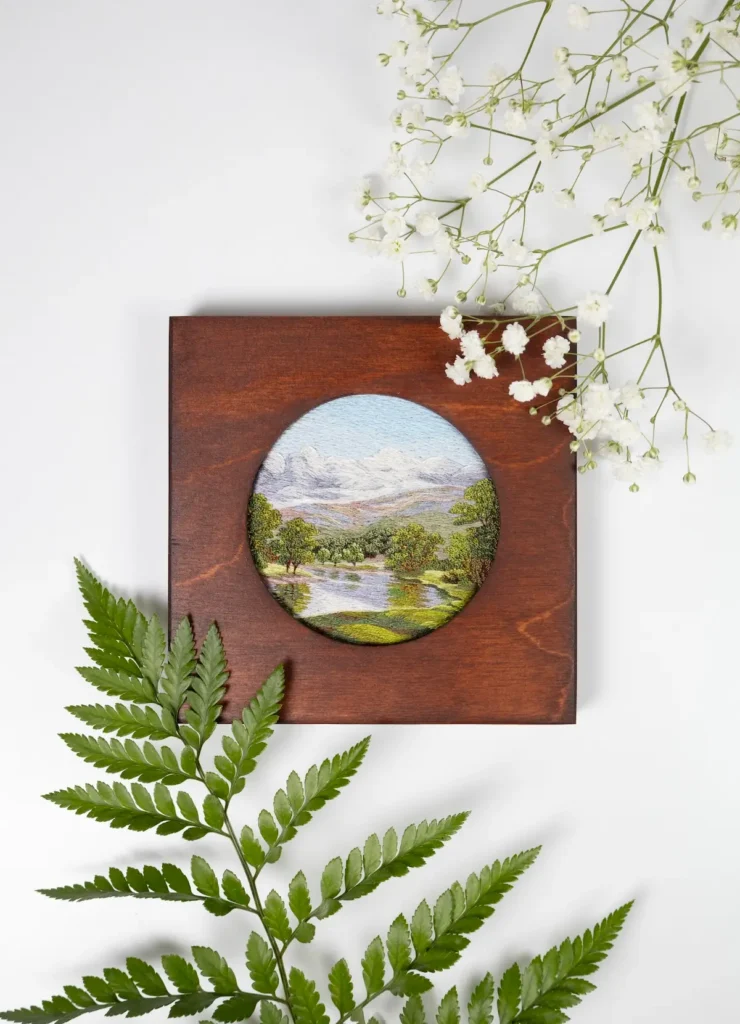
Which part of the design process is your favorite? Which part is a challenge for you?
My favorite part while I’m creating is getting to add the decorative stitches and small details that add depth and texture to a piece. I love making French knots and creating trees and bushes with them, and adding colorful flower patches on hills after the grass has been stablished is always fun.
I think the part I struggle with the most is knowing when enough is enough when it comes to my color selection – I always end up using so many more colors than I originally start out with because I tend to notice more and more colors in my reference photo while I’m stitching.
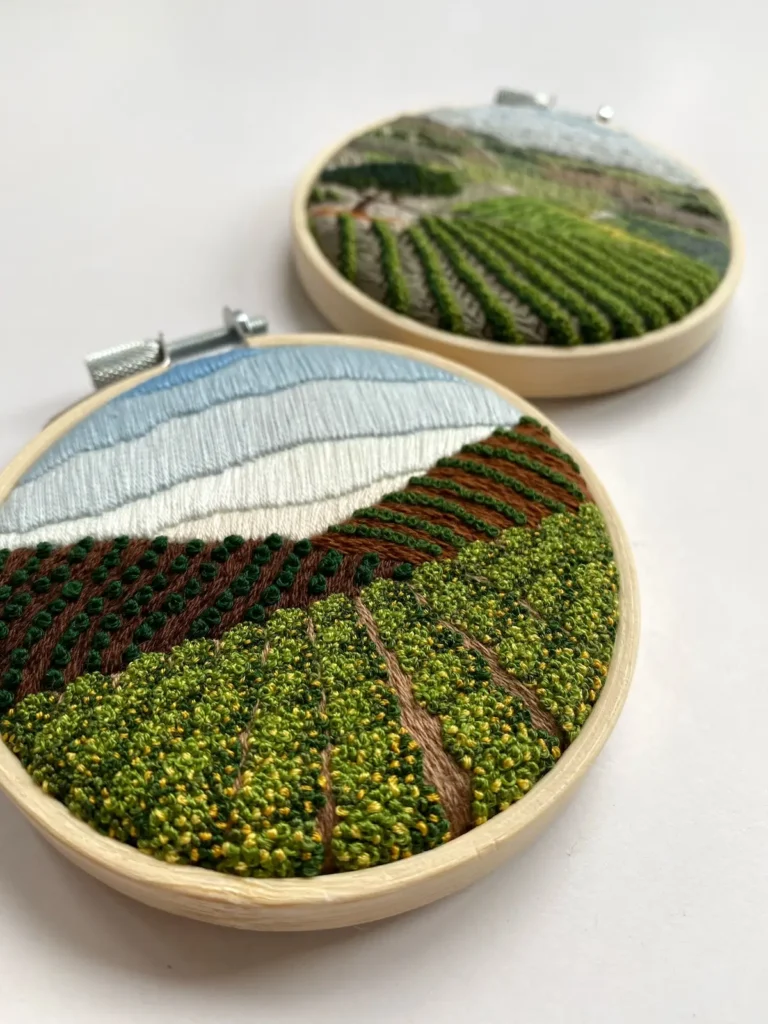
How has your work evolved over the years? Is there a common thread (pun intended!) across the years?
The evolution of my work can absolutely be seen when comparing my early works side by side with my more recent pieces.
When I first started out, I was really into using satin stitch and liked to try to get the stitches to lay as smoothly as possible. Eventually, I started wanting to add more detail in my pieces and slowly began incorporating the thread painting technique to achieve that. My pieces were half satin stitch and half thread painted areas for a while, before finally shifting to full thread paintings.
Is there one piece you are most proud of? Why?
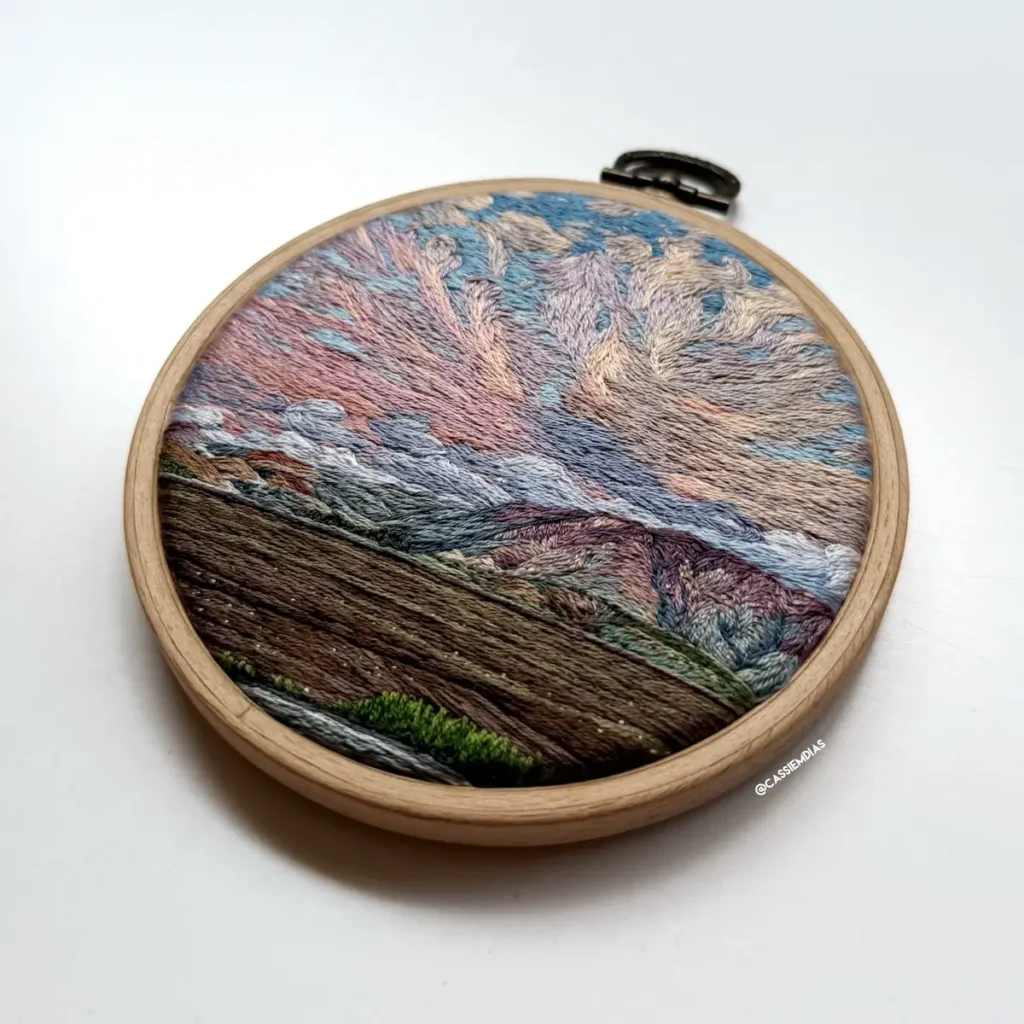
I recently created a piece titled, “Let This Stay”, which is based on a photo I took of the sky over Conejo Mountain in Camarillo, CA. It was near sunset and the clouds were stunning, and I knew I wanted to try to capture the scene, and the emotions I felt at the time, in a thread painting.
I’m really proud of this one because it’s slightly larger than my regular works, and I feel I was able to successfully translate the scene in my reference photo to thread. It was also recently selected to be included in an upcoming exhibition at a local art gallery, so I’m pretty excited about that!
Where can people see your work?
The piece I mentioned above (“Let This Stay”) will be included in an exhibition at Studio Channel Islands Art Center in Camarillo, CA! The show runs from August 2 – September 13, 2025. Aside from that, you can always visit my website www.cassandramdias.com, or follow along on my social pages (@cassiemdias) to see past and current works.
Interview posted July 2025
Browse through more inspiring hand embroidery projects and stories on Create Whimsy.