
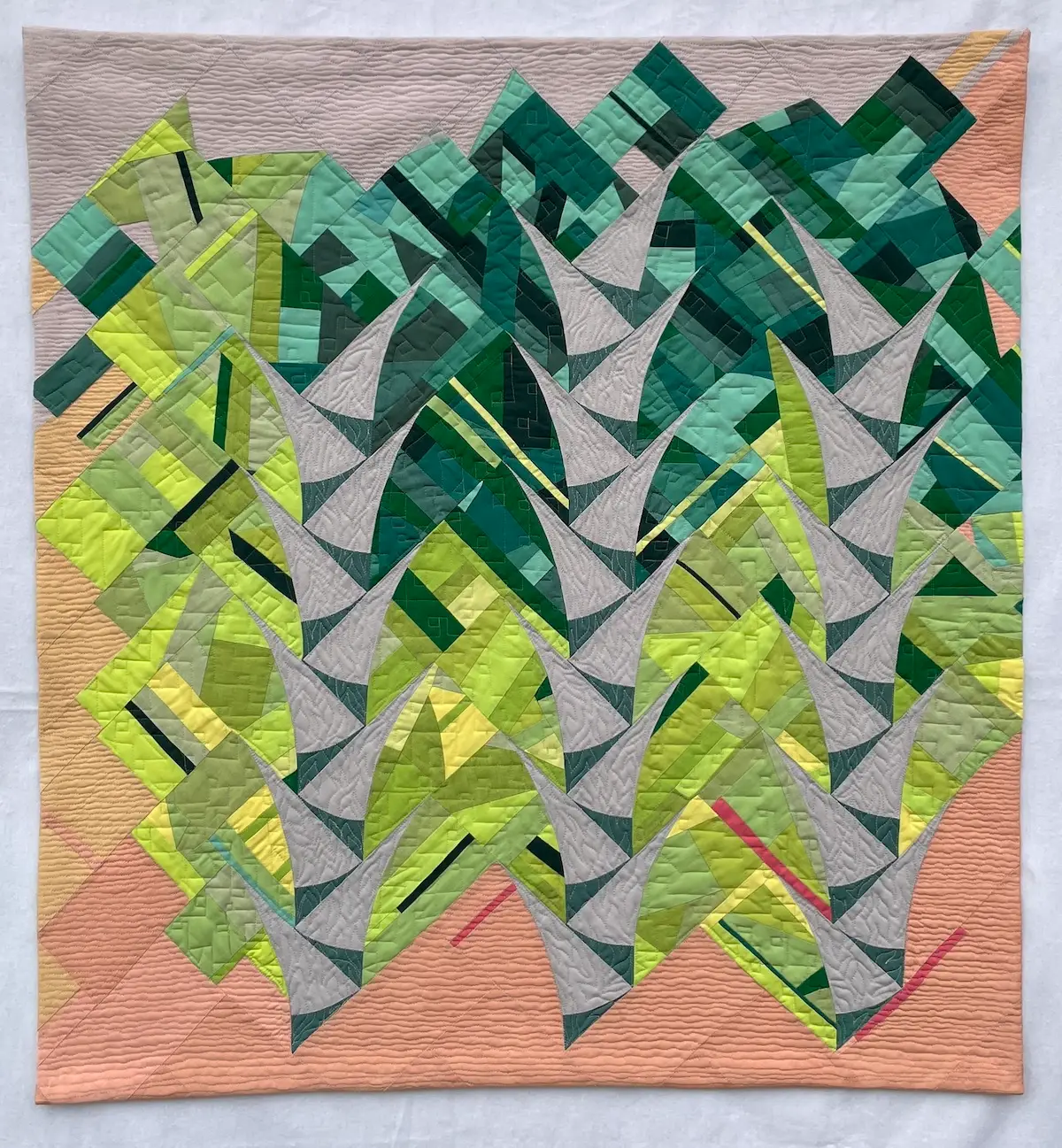
Birgitta Jadenfelt brings a sense of curiosity and play to everything she makes, from her earliest experiments with curved blocks to her bold, modern quilt designs. Her story shows what happens when creativity, persistence, and joy all meet at the sewing machine.
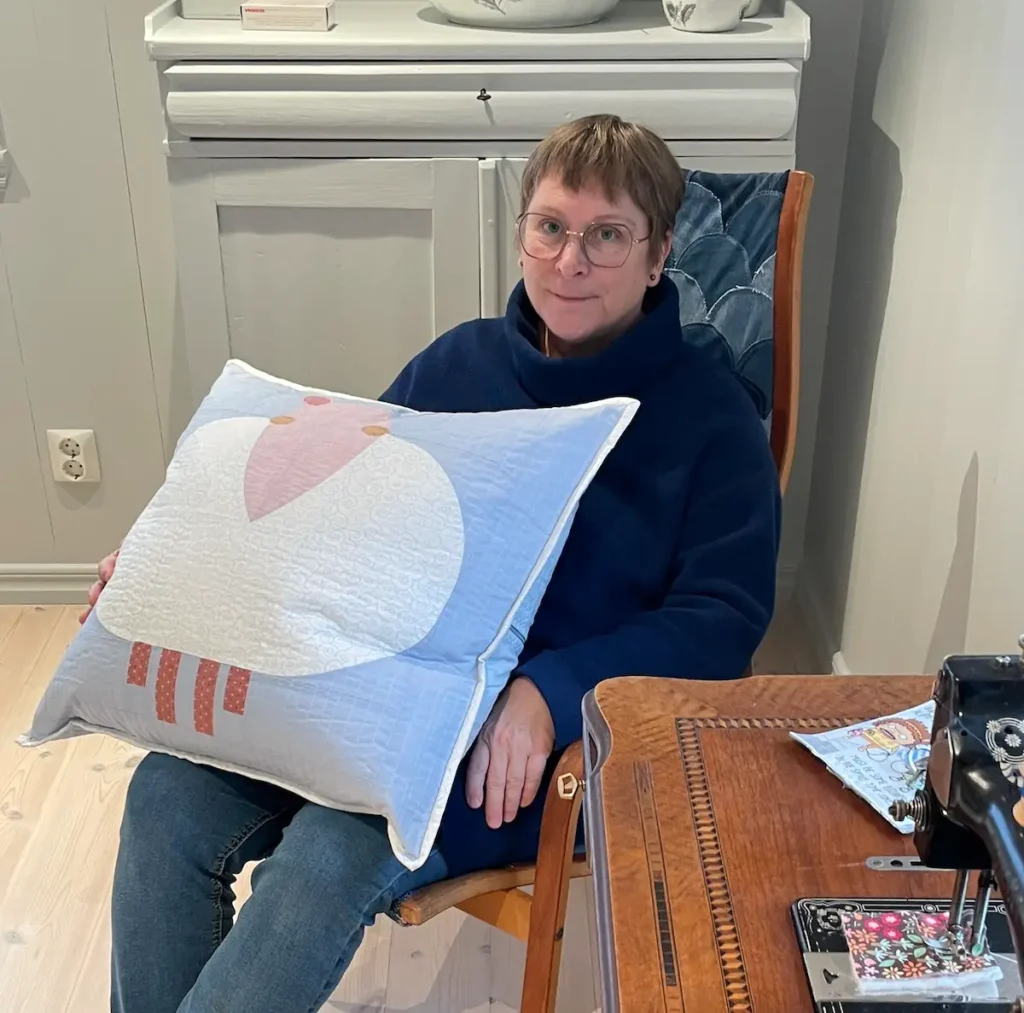
Tell me a little about how you first discovered quilting and designing quilt patterns.
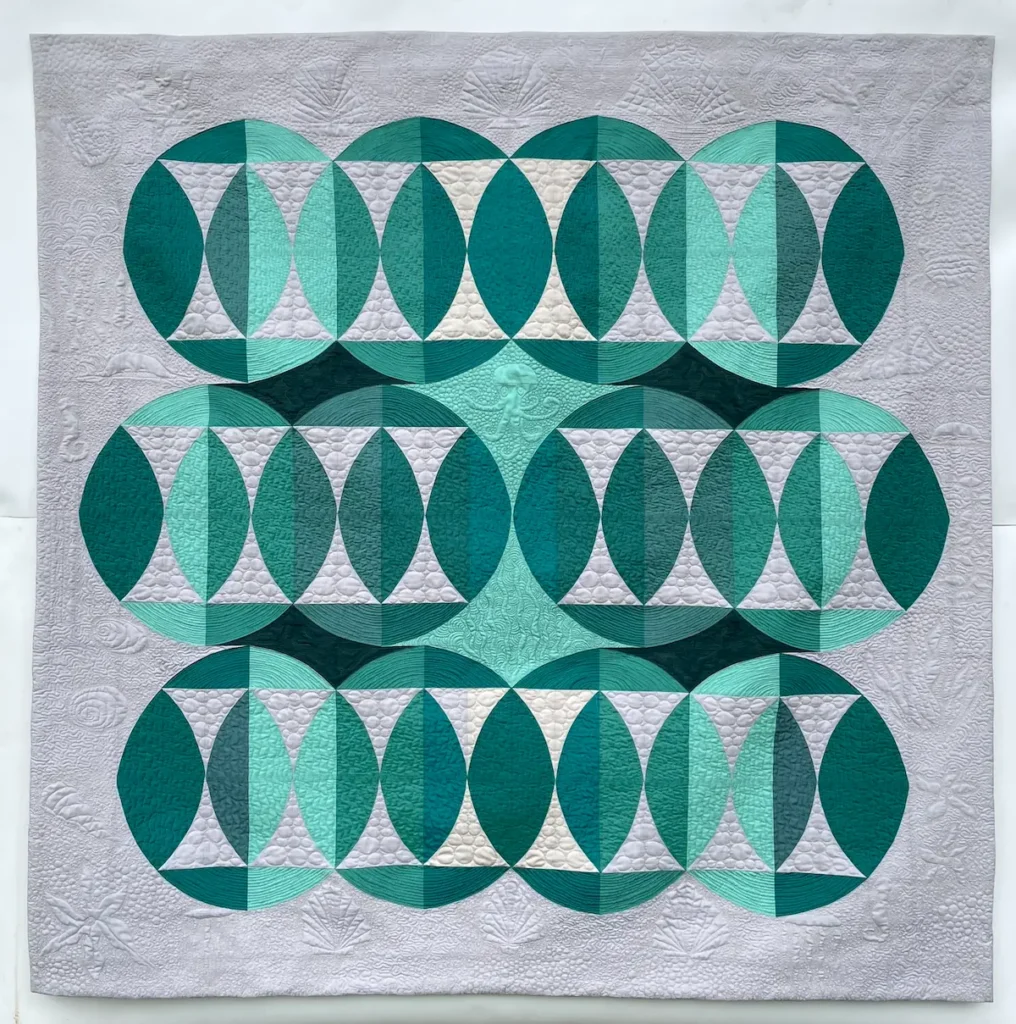
When I started out as a quilter, I made quilts from patterns in magazines. My favourite quilts were built from curved shapes, Drunkard Path blocks, or something similar.
The first magazine that I really took to was Simply Modern, which sadly does not exist anymore. There was a pattern in that magazine made from Daisy Aschehoeg, ”Lanterne rouge”, that I loved.
Shortly after finding that pattern, there was an event in Norway: Quilt Camp Norway, with lots of quilting celebrities. I chose the class with Daisy, and had the opportunity to chat with her about Lanterne rouge. She told me that the block in the quilt was a traditional block made with HSTs that she had translated into curves.
As an Amazon Associate I earn from qualifying purchases. Read more about our affiliate linking policy.
As a new quilter, this blew my mind. Of course! You could translate rectangles, triangles, and squares to curved shapes. Why had I not thought of that myself? I went home, took out my math paper, and started trying out different designs.
I had a favourite block at that time, a block from a sampler quilt made by Debbie Mum in the early nineties, I think it was called “Homecoming”. I translated it into a pattern made with DP blocks instead of the original blocks. My test, a small quilt, looked fine.
Shortly after I was visiting a friend from my quilt group, who had a longarm business and made patterns. When we were chatting away I showed her a photo of my test quilt. She looked at it and asked me if I would consider writing patterns for the Scandinavian quilt magazine ”Quiltemagasinet”?
It had never crossed my mind that I could submit anything to a quilt magazine. So once again, I went home and took out my math paper and a pencil. I submitted my first pattern for Quiltemagasinet in 2020, and they accepted it.
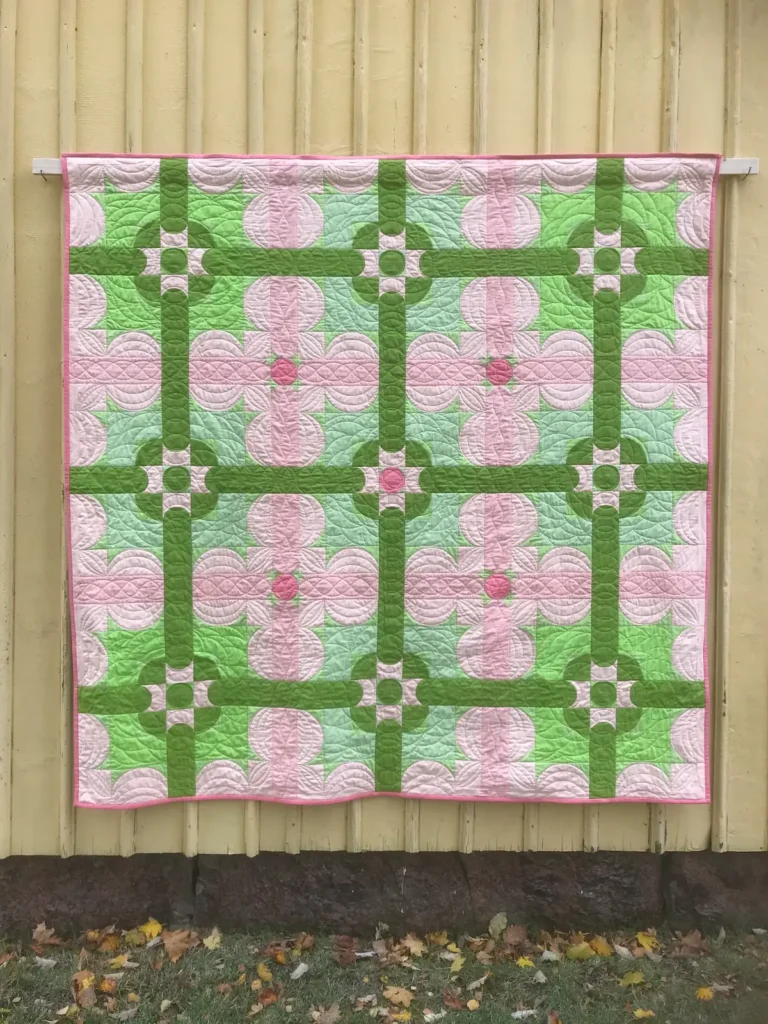
How did it feel the first time one of your patterns was published in a magazine?
My pattern drawn with pencil and paper and calculated with the help of math paper was now beautifully published, in a professional way with templates made in a computer program. The only thing I had to do myself was the photos. When published it looked so good and I felt really proud.
I was in the process of making more patterns for Quiltemagasinet, and continuing to make quilts when I, by a whim wrote to Mme Veillon at Quiltmania, who published my favourite magazine Simply Modern. I made a submission for a Christmas pattern, ”Julgåvor”. She accepted it. It felt surreal. Wow! It was a long wait. But at the end of 2021, there it was, a pattern of mine, in my favourite magazine!
Those two experiences, together with having a judges choice award and being shortlisted at the Festival of Quilts in the UK in 2021, was, I think, what made me believe in myself as a quilter and a pattern designer. If I had not had those experiences I might not have continued sending my quilts out in the world.
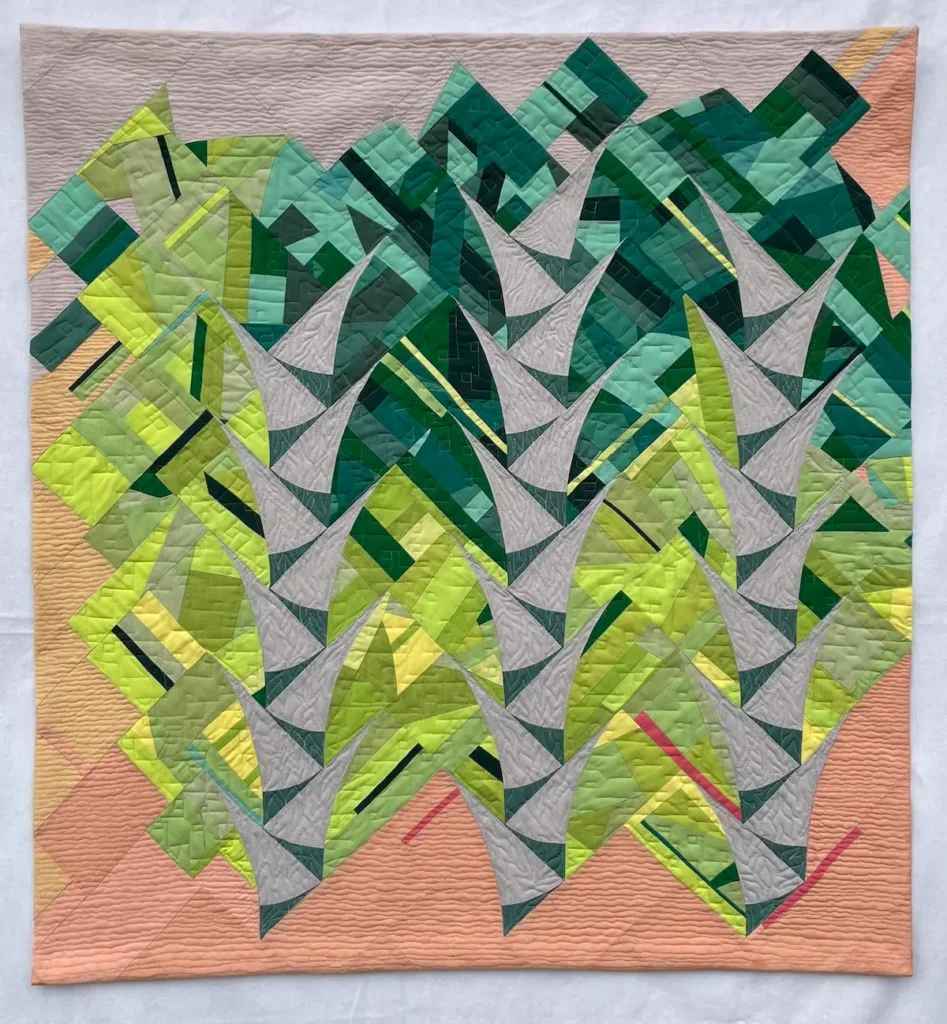
What happened to my first go with designing a pattern? I made a large quilt from it, titled ”Unfolding”.
I have had several patterns published in Simply Modern, and also in Make Modern, Quiltemagasinet, and the nordic guild magazines. I also was asked to make a block for the MQG sampler quilt in 2025.
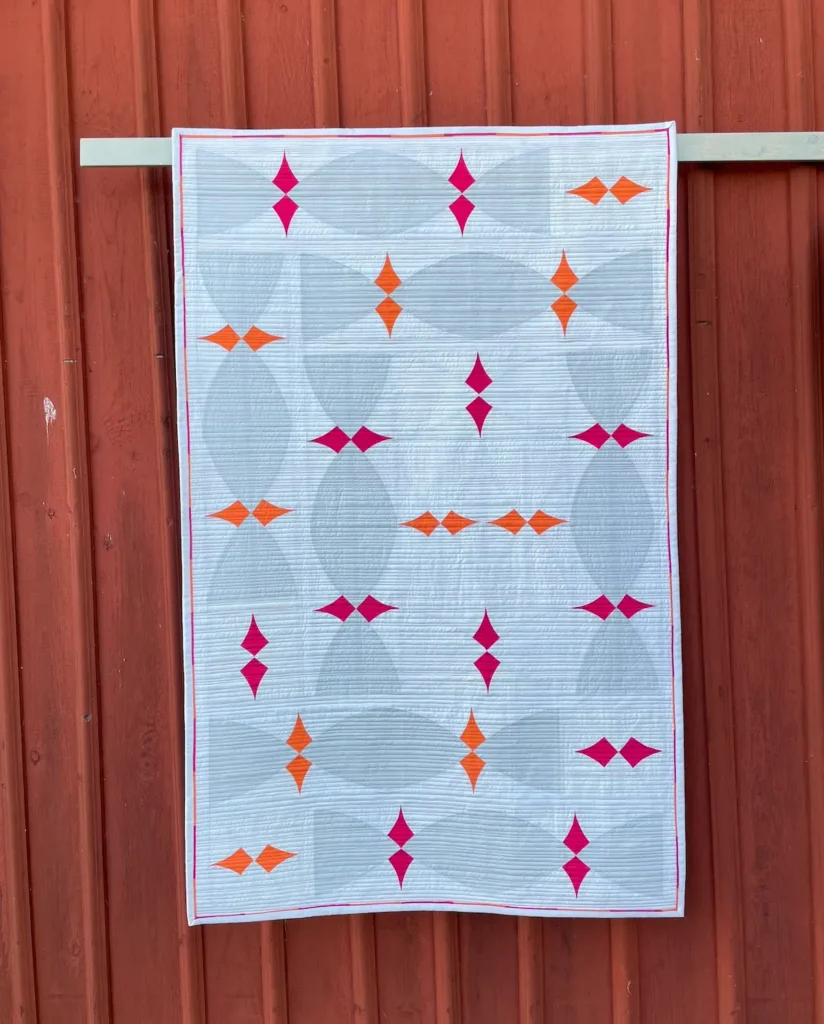
What inspires the patterns you design? Nature, memories, stories, emotions?
In the beginning my inspiration was the shape, and how I could use the shape to portray things from the world around me.
My restriction was my technical skills. I only drew patterns in a way that I knew I could piece. The Drunkard’s Path block was in pretty much everything, but I added what was needed from HSTs, rectangles, and squares. After having come up with ”my block,” which will be described further down, it is this particular shape that has been the inspiration itself.
When you started, did you expect to have a style that people recognize as “yours”?
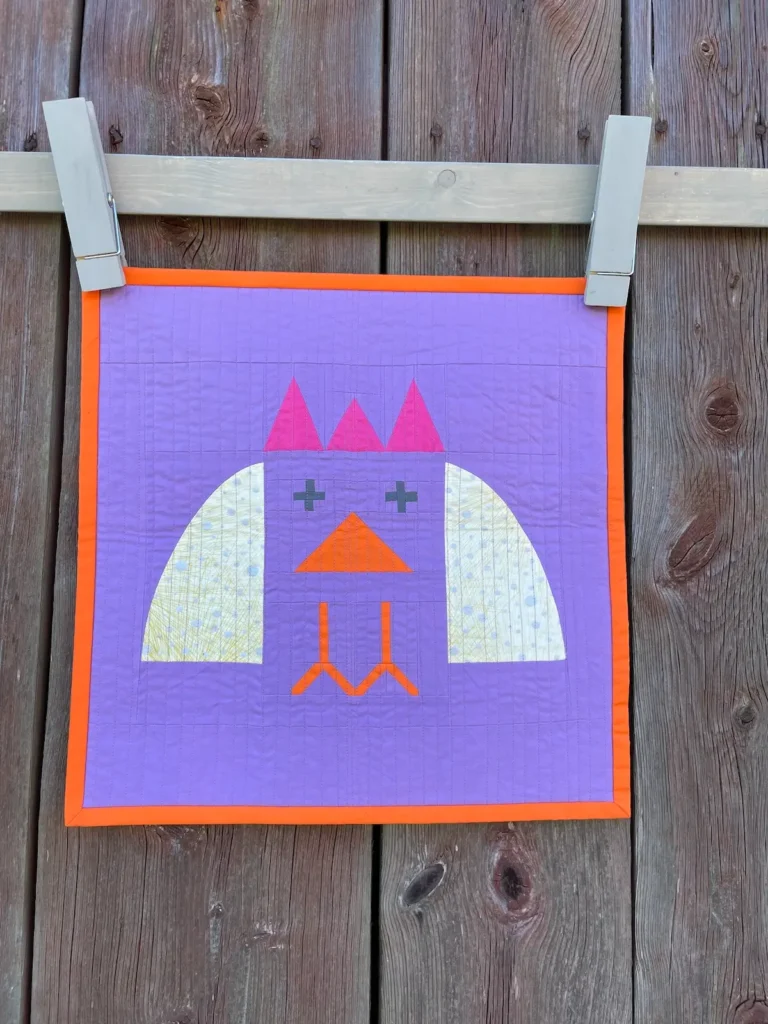
I never thought of what was my style, in fact I did and still do have difficulties knowing what is my style. I was pushed to think about my style, and express it when I started my webshop, to sell my patterns as downloadable PDF files.
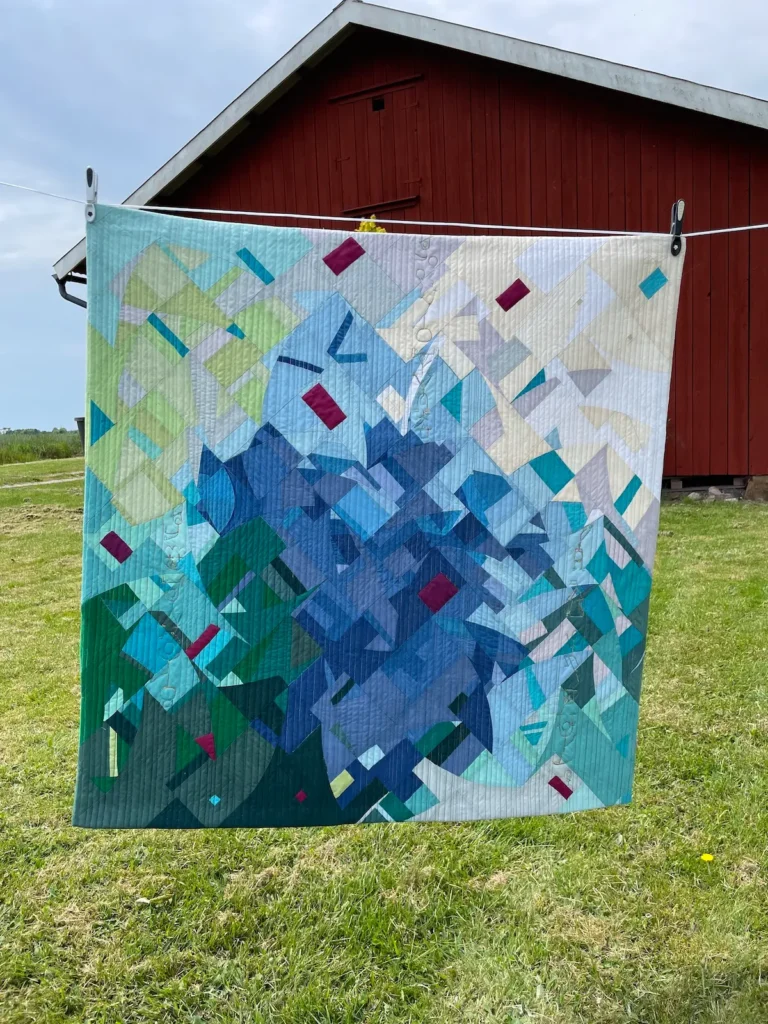
At the time, the quilts were mostly made of solids, and did not have many colours. That style was stripped down, abstract, naive, and a bit whimsical.
How do you choose fabrics for a new pattern?
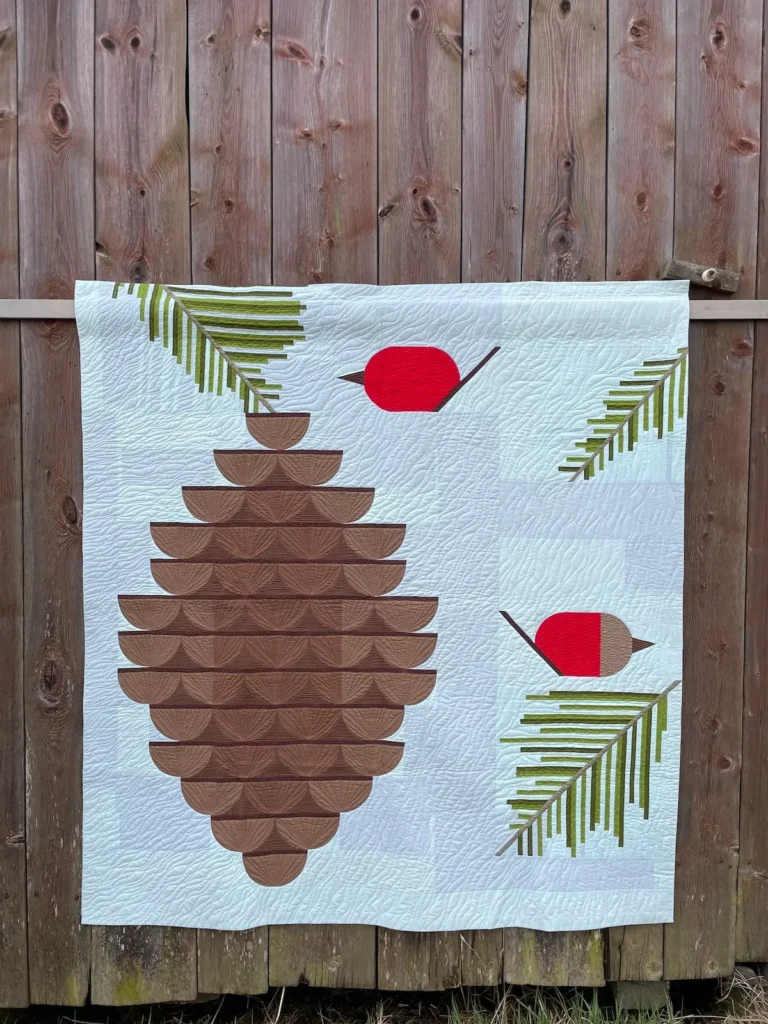
I live in a rural area. There are quilt shops, but they do not carry solid fabric. So in the beginning, I mostly had to rely on web shops on the internet to buy fabric. It was always a surprise when the fabric arrived, since you cannot always tell the proper colour from a photo on a screen.
Since I was also economical, I often ended up with too little fabric. When ordering again, the fabric was not always from the same dye, which is why you can spot colour differences in my earlier quilts if you are attentive.
I had, for a brief time, a collaboration with the Oakshott fabric company. The shop closed in the summer of 2024, which was a huge loss since we can no longer buy this wonderful fabric. I accumulated quite a volume of their fabric, which I have then since used in nearly all of my quilts.
When you sketch a pattern, do you use pencil and paper, digital tools, or both?
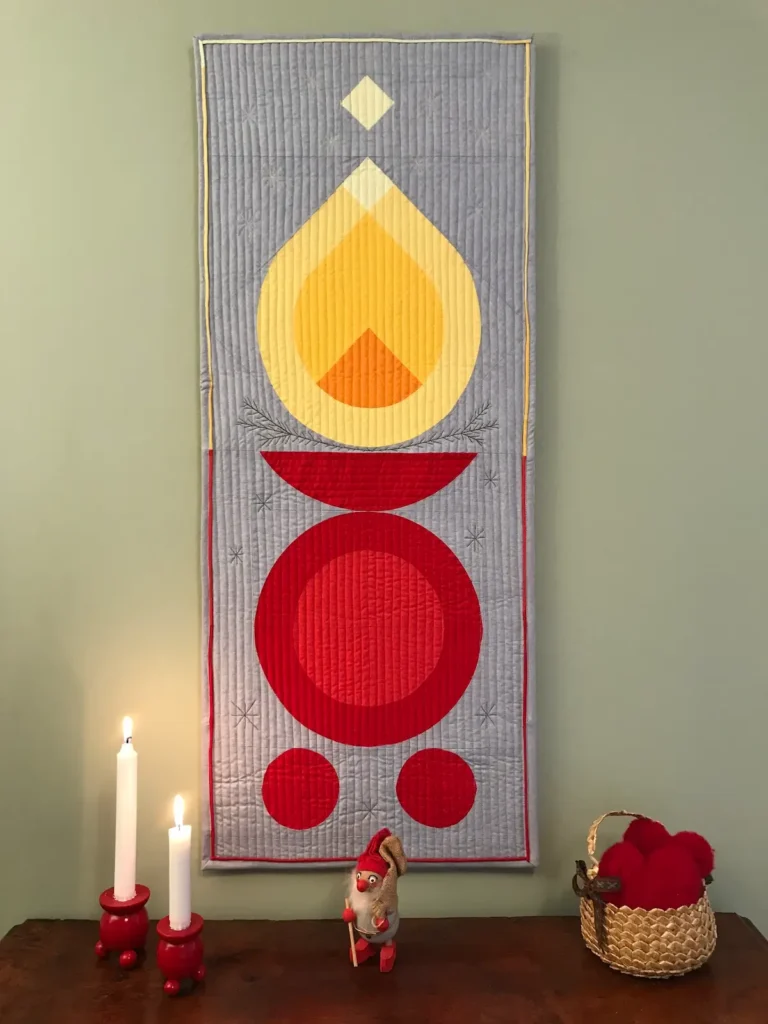
I had only made a few patterns when I needed a certain shape. I wanted to portray a traditional Christmas candle holder. I had to rely on a ruler with slots to make the shape.
The templates were drawn with pencil and paper. I loved this shape, but I needed proper templates since it did not seem very professional to make a sketch to send to a magazine.
I had two sessions with Daisy Aschehoeg to learn how to use Adobe Illustrator as a quilter. Not only did I learn to make my own templates, but I also learned how to use Illustrator in many ways. That helped me a lot when writing or trying out new patterns, the quilt math especially, but also being able to try out many ideas without wasting too much fabric. Also, the block I made for the Christmas candle holder detail has been my companion ever since.
The ideas I have come up with have been a combination of moving shapes around digitally or moving them around the design wall. I have found good ideas both ways.
How do you choose colors?
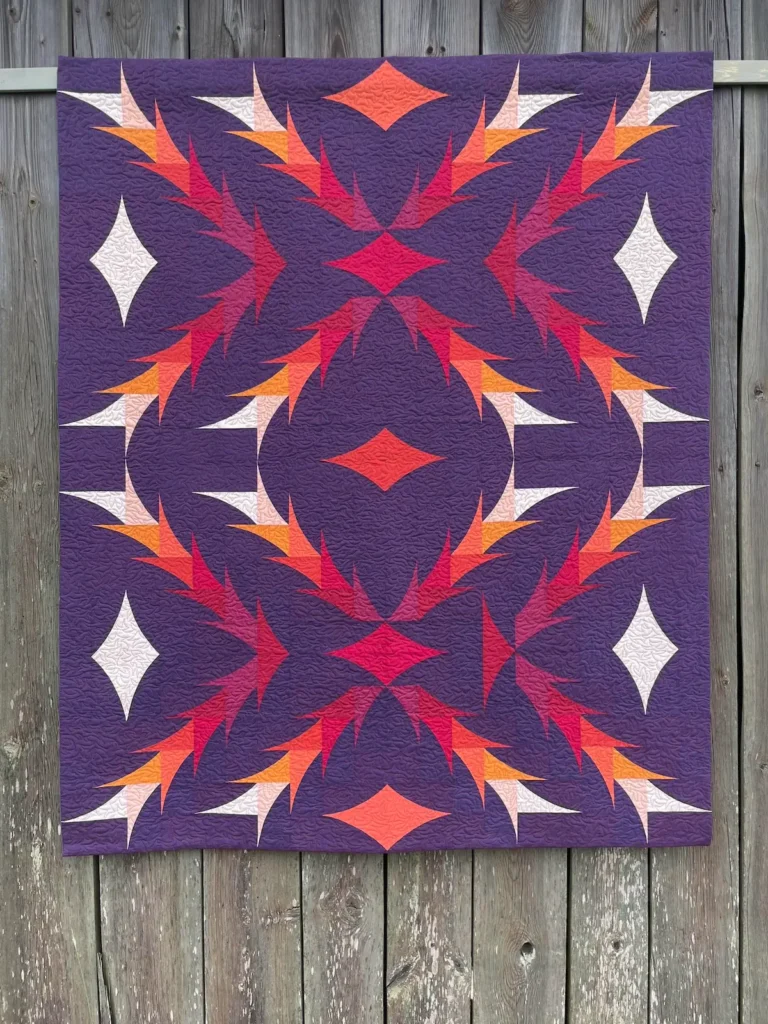
Many times I have kept the colour choice I made in the first place when drawing the pattern digitally, the difficulty has been finding the fabric.
I cannot tell why I make the colour choices that I do. That is very intuitive, and I want it to stay that way. Rather than read about or taking a class in colour theory, I put the fabrics on the design wall and see how they look together, or I try it on the computer.
Why have you not made any patterns lately?
I have not written any patterns since 2024. I have made lots of quilts, but they have not been translated into patterns.
I do not have the energy or right mindset to make pattern writing profitable.
I have come to understand that I am more of an artist than an entrepreneur.
It is the making of the quilts that bring me joy, not the business side to it. I will therefore shut down my store selling downloadable PDF patterns in January. I plan on having another website, to show my art and hopefully build a community.
Since I have 21 patterns as PDF files, of course they can still be purchased.
Does working with children and their families affect what you design or how you think about your patterns?
My day job as a psychologist has in an unexpected way, affected how I think and talk about my designs. Making quilts has always been a way for me to stay happy and sane; it has been both a refuge and a sanctuary.
In my job, I use emotions and intuition a lot, but there is also much verbal processing. Listening, talking, assessing, judging, diagnosing, advising, explaining, and so forth. I get tired of words and verbal communication, more and more so the older I get. This is maybe why I do not tell stories with my quilts, and why I do not make statements with them.
Working with children and being in a creative process do have one thing in common though, the joy of playing!
The need to keep my quilting practice wordless has been challenged since I started submitting quilts for contests and exhibitions. I then have to make artist statements. They, of course, include a lot of words. The bare truth is that I often make the quilt, and then afterwards I have to come up with something to say about it. Sometimes I can see something in it that can be highlighted or explained, other times I just make something up.
Do you ever “get stuck”? How do you overcome that?
I have never been out of inspiration. I often have several projects going at the same time, and some in my head. I keep the projects apart, in plastic boxes and take them out one at a time. It needs to be organised since I do not have much space to work.
I never force myself to the creative work. Some days or weeks there is just not enough energy. But I do like to start my days, just after breakfast, with a quick visit to my sewing space. I might do some piecing, or prepare for sewing in some way, or I just look around at my fabrics and my space. That makes me happy and is a great way to start the day.
Describe your creative space.
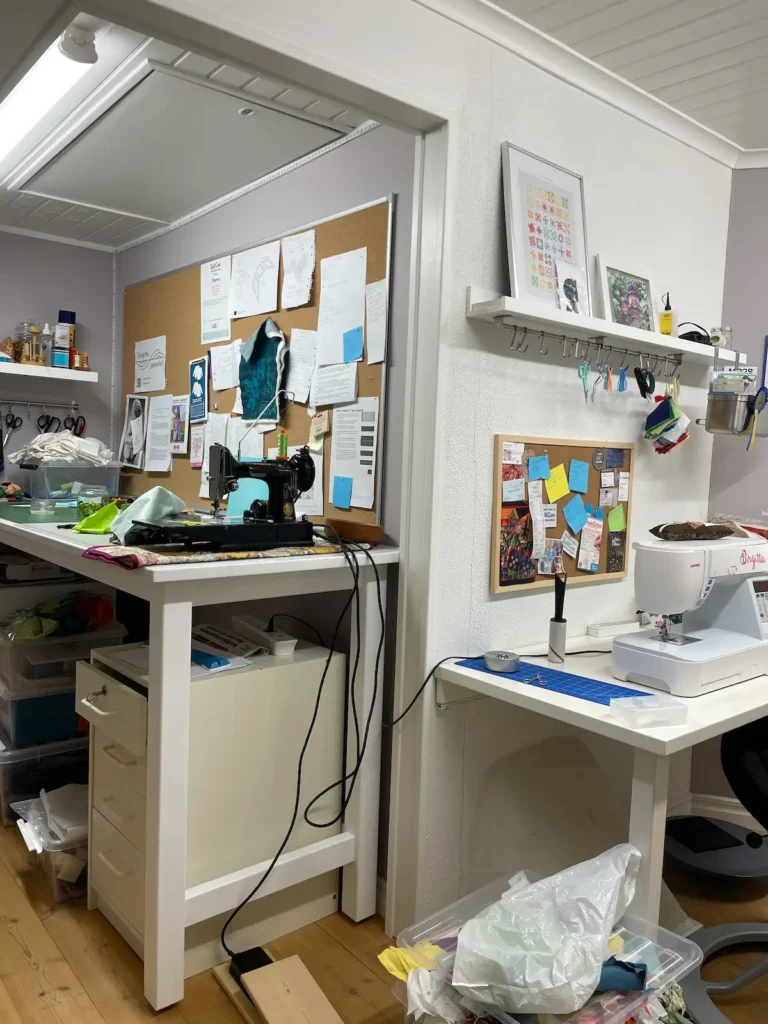
The room that used to be my daughter´s is where I keep the tools, the sewing machines and the fabric. The room that used to be my son´s is where I keep the finished quilts and other quilted objects. My creative space is divided between my sewing space, my computer and my longarm cabin. It is a small cabin that was once intended to be a guest house.
I need the longarm more days than we need the guest space, so now the guests have to be content with a sleeping loft in the cabin, and use all other facilities in our house.
What’s your favorite color these days?
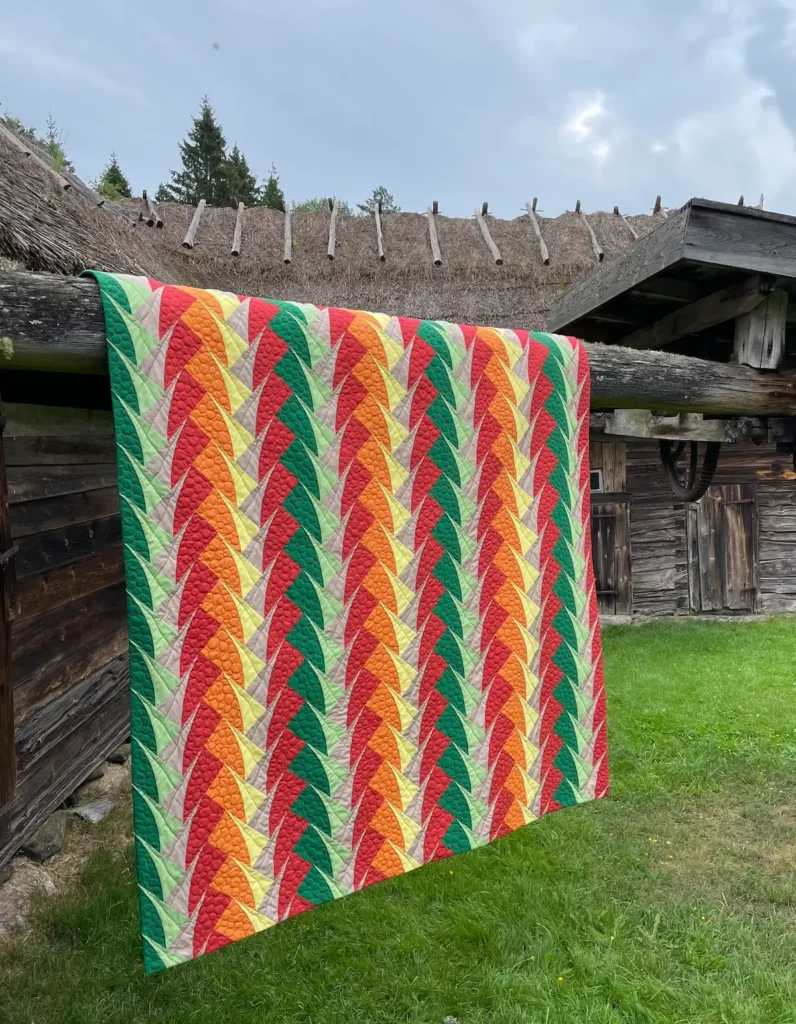
I love all colours except for black, which I never use in anything. If I need a real dark colour I use dark blue, grey or brown. This has always been the case. If you love basically every colour, you stick to that.
Before you started designing your own quilts, did you do other kinds of creative work or crafts?
I have always been creative. I tried to make clothes for my Barbies as a child, I did freehand embroidery and knitting in my youth, and I have an exam in film and theatre make-up from a private school in Paris from the eighties. I have always been creative around the house, especially when the kids lived with us, and there is a fair amount of creativity in the work as a psychologist.
Morning person or night owl when you create?
I am a morning person, so that goes for the creative work as well.
What makes you smile when you think about your work?
Everything! from the flow I have alone in my sewing space, to the rush of excitement when one of my quilts is sent out into the world to be shown somewhere.
Where can people see your work?
My work is on Instagram @sybiggan
Depending on when this is published my webpage may be functioning birgittajadenfelt.com if not, hopefully another website will be up and running soon after with the same name.
Interview posted December 2025
Browse through more inspiring modern quilts on Create Whimsy.