
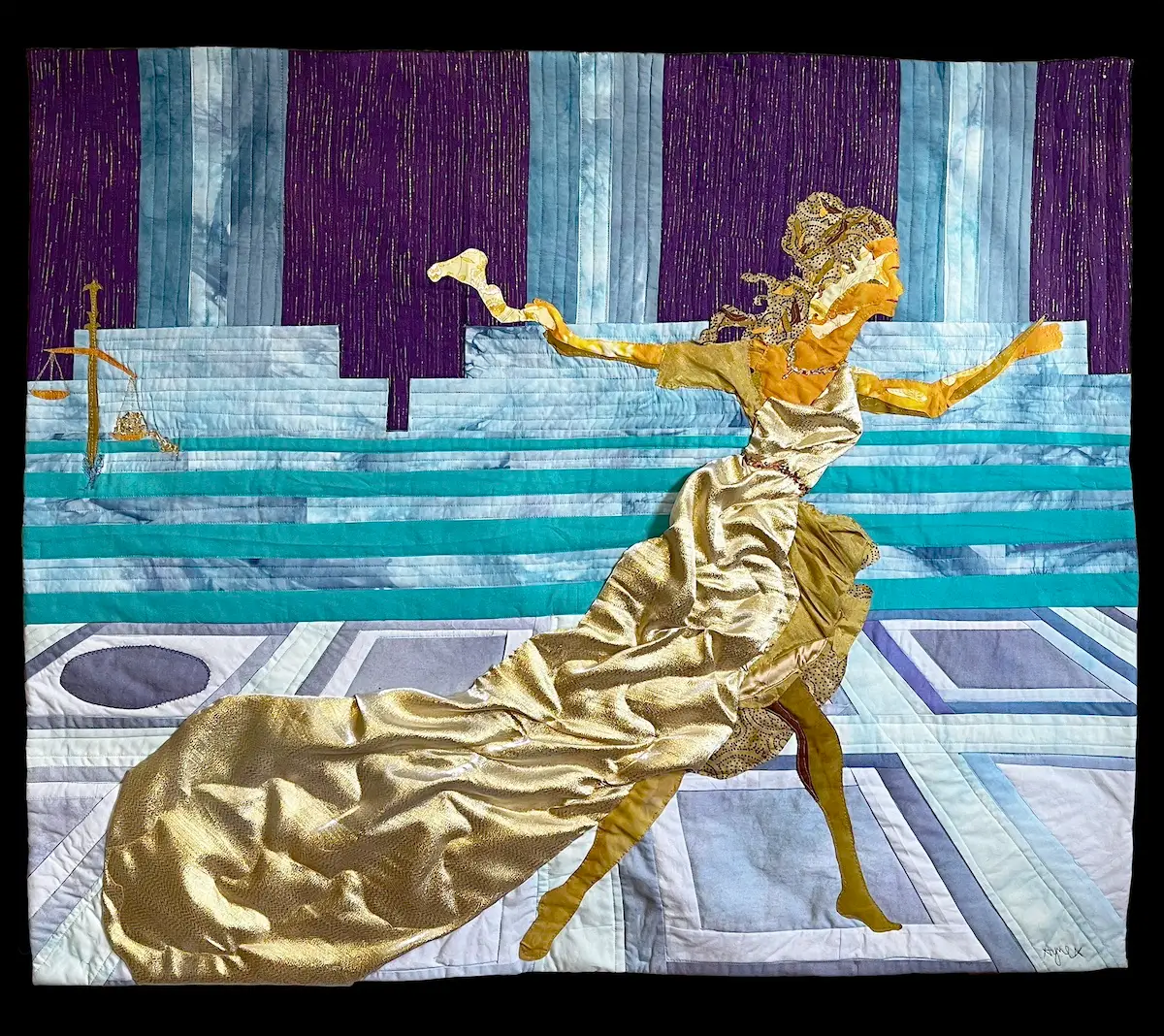
From her first quilt made during recovery from a life-changing accident to her bold series exploring politics and society, Aynex Mercado stitches stories that make us think and feel. With roots in Puerto Rico and a passion for turning fabric into art, she proves that creativity can heal, challenge, and inspire.
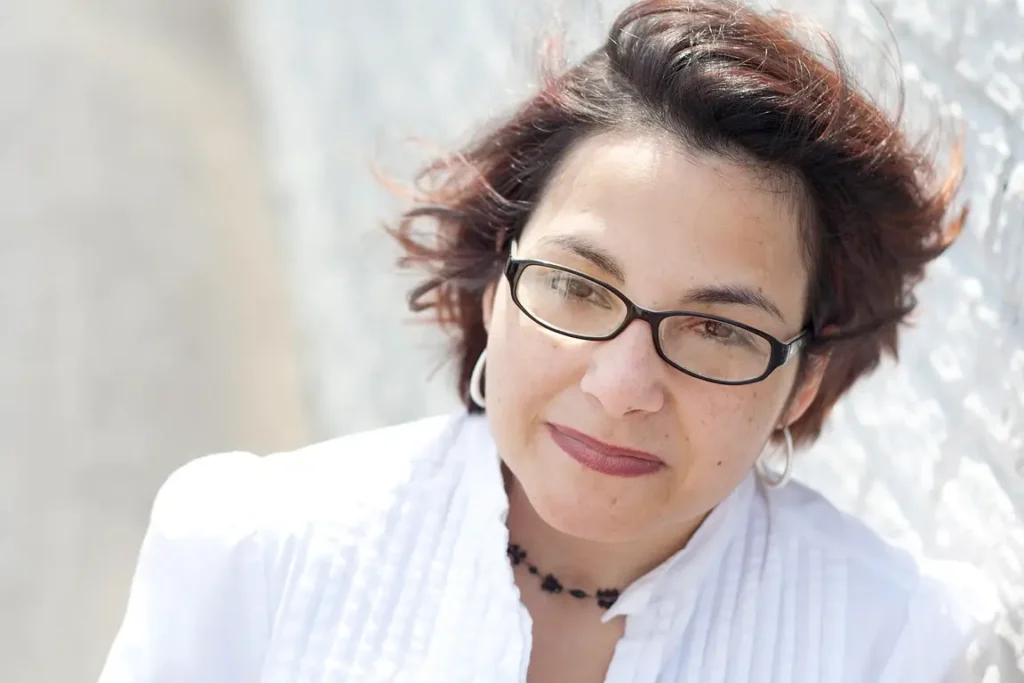
What’s the very first quilt you remember making, and how did it make you feel?
The first quilt I made was a small sampler. I didn’t know anything about quilts.
I’m from Puerto Rico and quilting there is not a thing. I had moved to Massachusetts to go to college and someone mentioned quilts and I bought “The Idiots Guide to Quilting” and made a quilt.
I was going through a very hard time in my life. I had a car accident and suffered a spinal cord injury. I was in a wheelchair and slowly learning to walk again with lots of physical therapy.
As an Amazon Associate I earn from qualifying purchases. Read more about our affiliate linking policy.
What that little quilt did saved my life. It showed me that I could still create some beauty in this world. I could make things that people admired, and living wasn’t a waste of time. I gave the quilt away, and now I only have a bad photo of it. I wish I still had it, and I could see how far I have come.
If you are a new quilter, always keep your first quilt.
Did you try other kinds of art when you were young? How did quilting win your heart?
I was crafty when I was little. I remember doing scrapbooking and decorating baskets with lace and fabric flowers.
My mom was a florist, and I used to make little flower arrangements with the flowers she discarded. Nothing serious.
My creative outlet when I was young was dancing. I learned to make clothes when I was a senior in high school. I wasn’t very good at it because getting the right fit is hard, but it was fun to do.
When I discovered quilting, I was in love. I could sew with no need to fit anything! I haven’t stopped in 25 years!
When did you stop following patterns and start trusting your own ideas?
It was very early in my quilting journey. Maybe my third quilt was an original design. I entered in the local fair and it won a ribbon! It was very rewarding to get praise for something that I created from a picture I saw in my head.
Today, there are times that I see a pattern I like and I start to make it, but always halfway through I have to change it up and add my own twist. I can’t follow patterns!

Was there a single piece early on that changed how you thought about your work? Tell me about it.
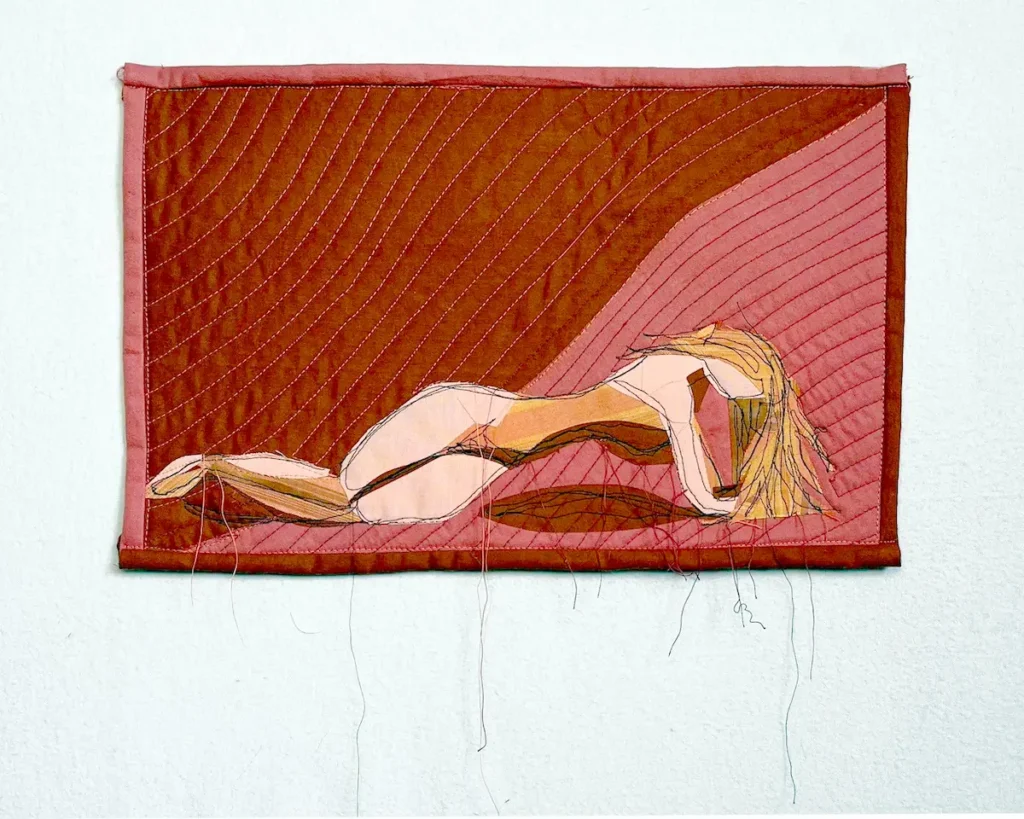
In 2004 I moved to Paducah, KY as part of the Artist Relocation Program. It was a program to incentivize artists to move to Paducah and revitalize a historic part of town. I had only been quilting for a few years and had no big accomplishments or art degrees.
Here I was in a group of really talented artists. There was going to be group shows. People were going to see my quilts next to their art and I had a bad case of imposter syndrome.
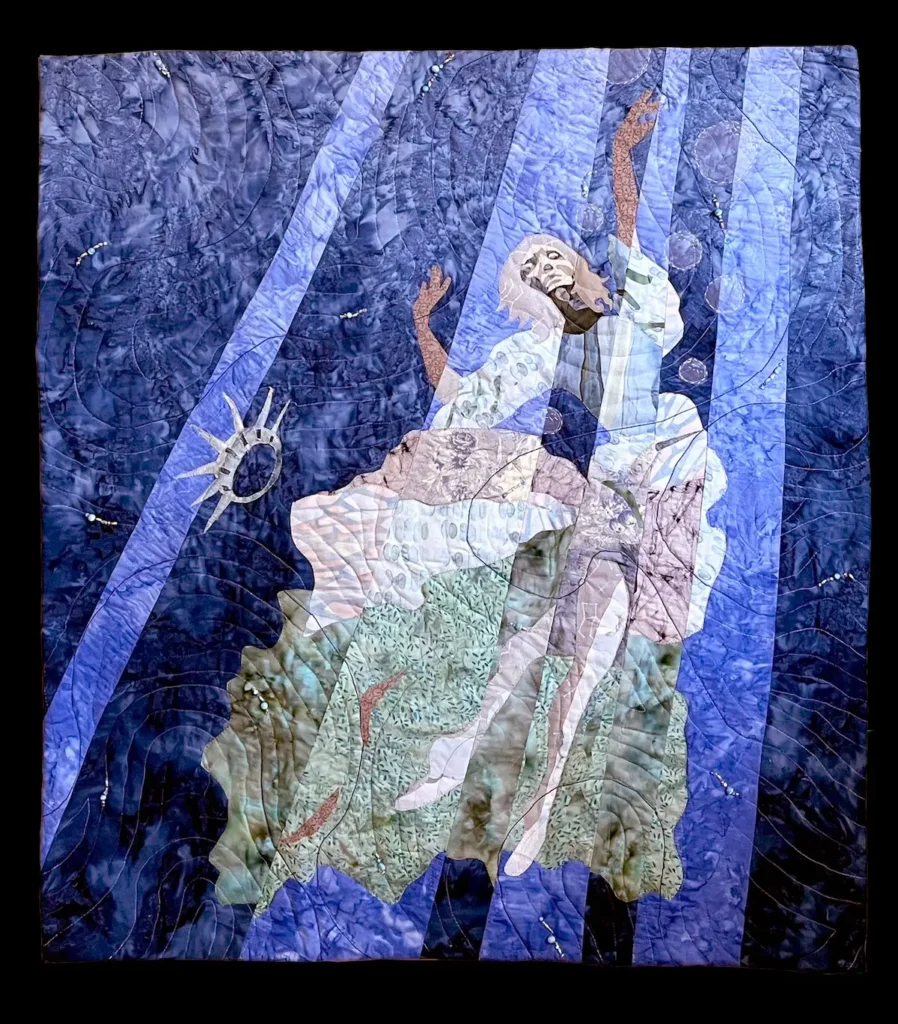
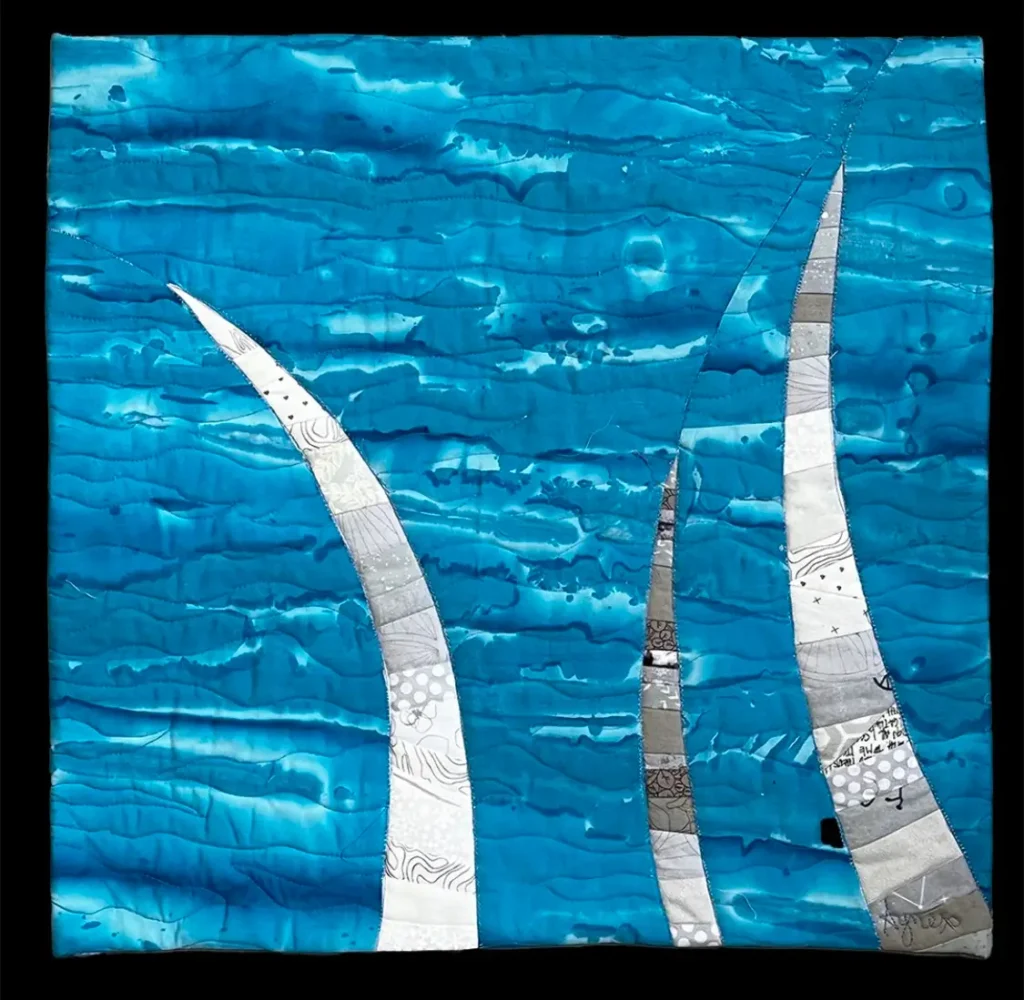
When creating this quilt, I really pushed myself to not create a quilt but create art that could be shown next to any other artist’s work, and I would be proud to have my name next to it.
When I finished this quilt, I realized that in fabric anything is possible, and to this day, whatever picture I see in my head, I never think “oh, but I can’t do that in fabric”. It is always “how can I do that in fabric?”
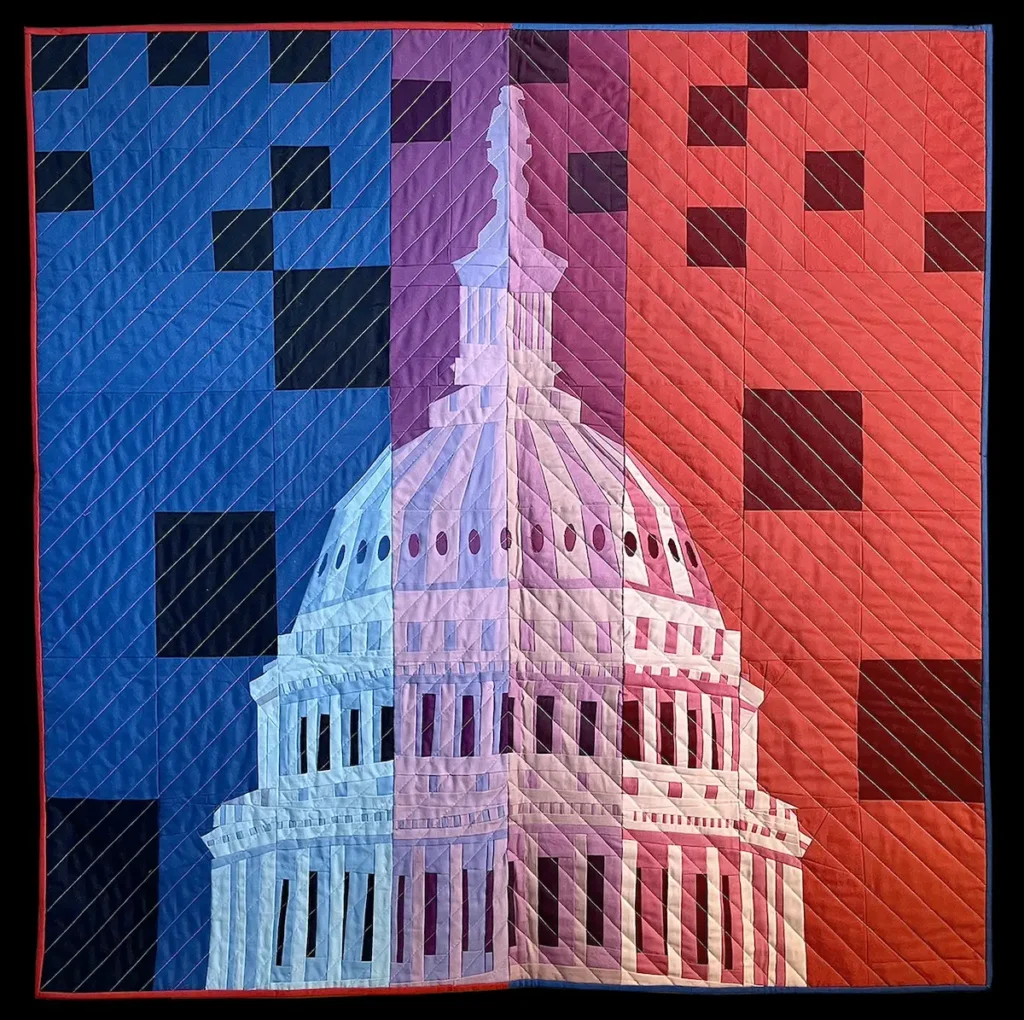
Your work often feels like a place or a story. Do you start with a story or with an image?
I have two bodies of work.
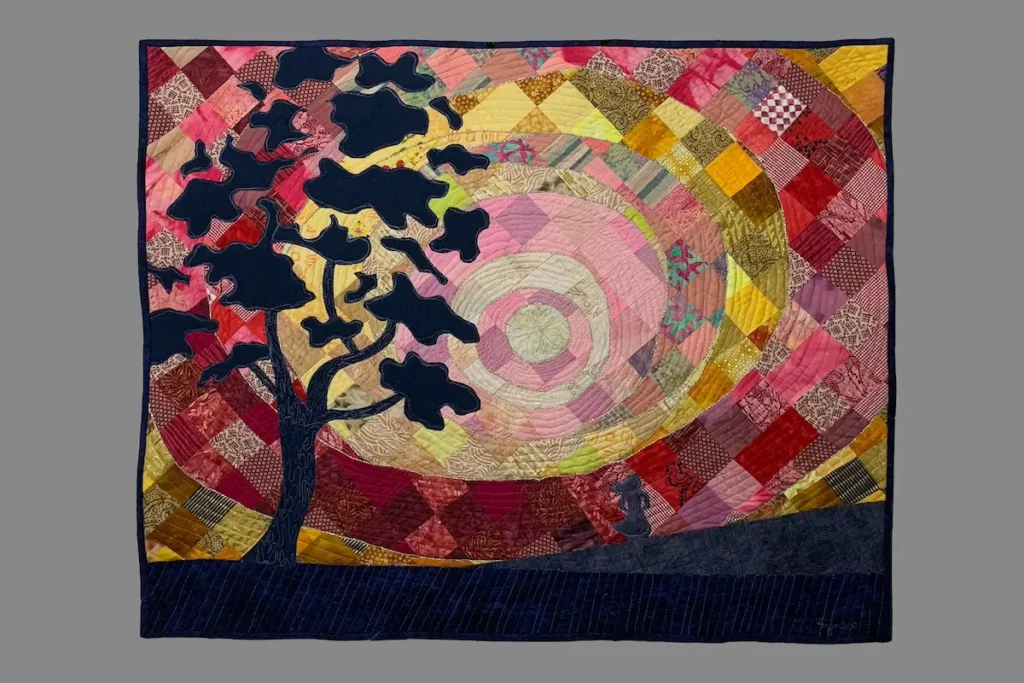
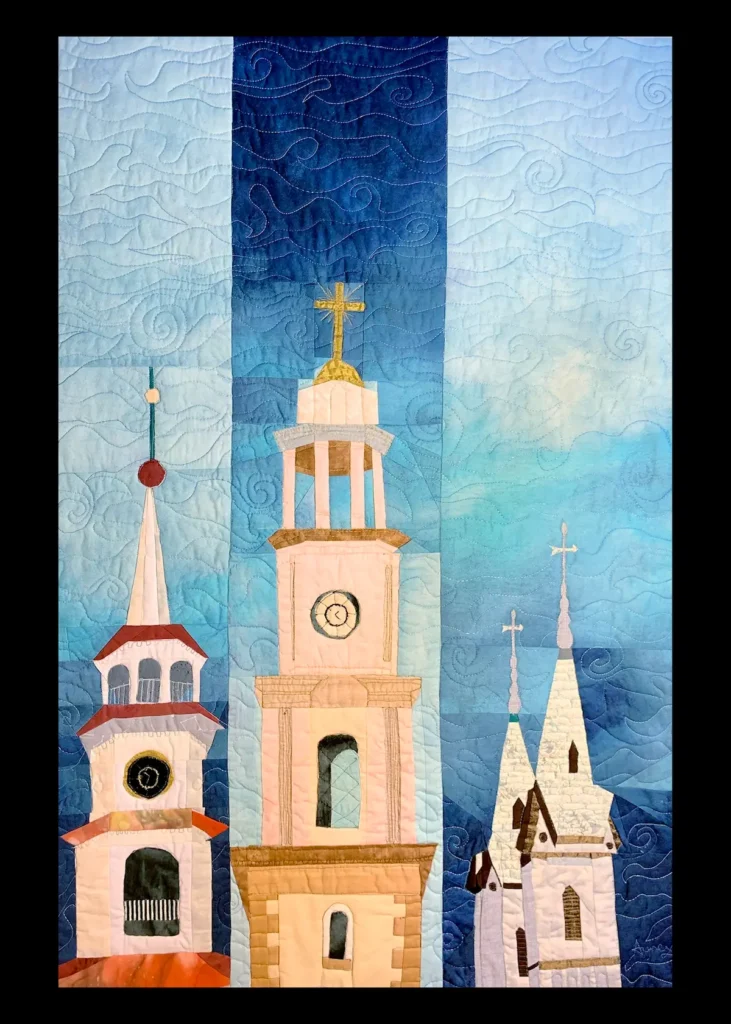
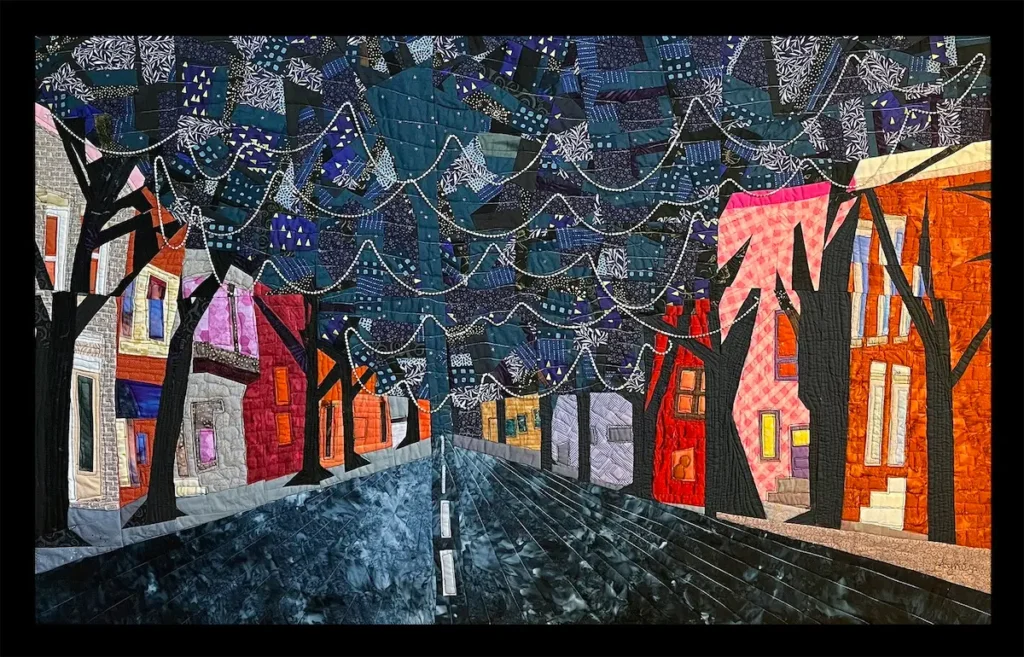
One is my architecture quilts. Those always start with an image, mostly of the places I live in or visit. I see an interesting building and think “how can I do that in fabric?” It is paying homage to the beauty that is all around us and sometimes we don’t notice it.
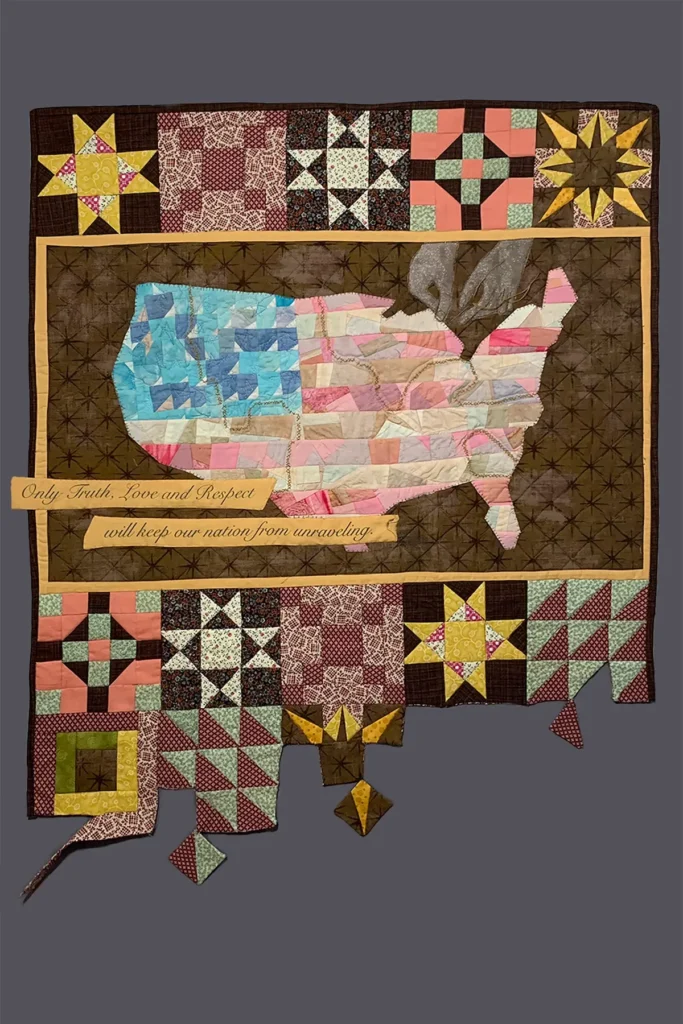
My other body of work is more political social commentary and that definitely starts with a story. The series I’m working on is called Not What I Taught You. It is based on the icons and monuments that society has created that represent an ideal that we say we value but the reality is different.
Every time I create a quilt in the series, I think of one problem in our society that is bothering me, and I want people to think about. From there, I start thinking about what is a statue or historical person that speaks to that issue, and go from there.
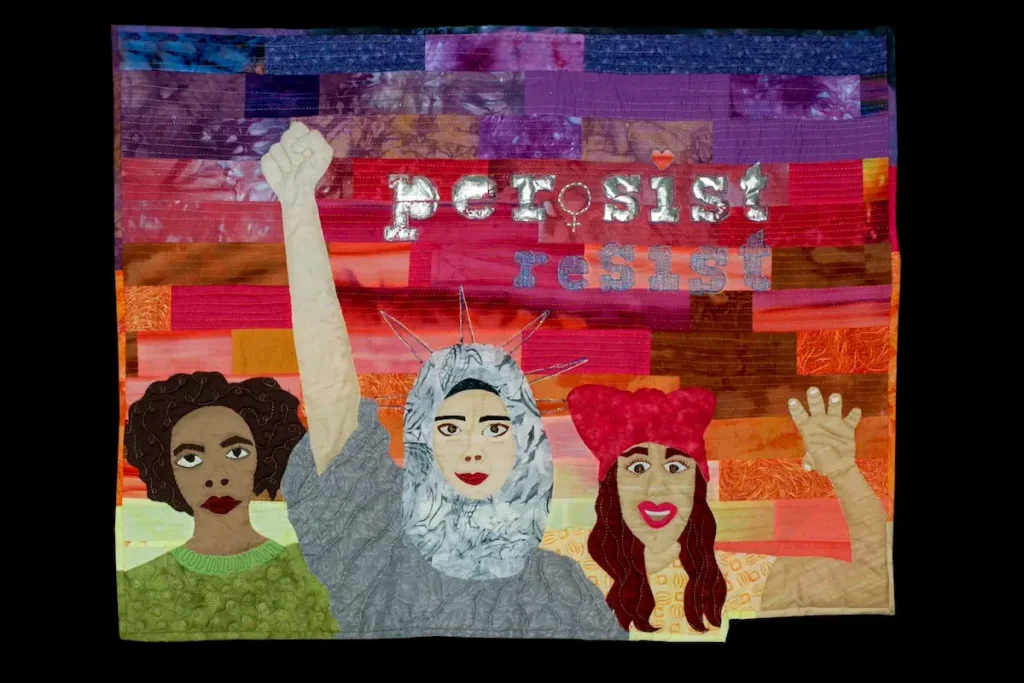
What does the series title “Not What I Taught You” mean to you? How did that idea begin?
The idea began during that period around 2016 where people were protesting Civil War statues.
An idea popped up in my head. We are judging the people represented in the statues by our values today. What if those people were alive and judged us by the values of their time? They would probably be horrified!
That idea of statues coming to life kept running around in my head. I decided I had to make a series of what would statues think of what we have become.

Do you feel a responsibility when you make work about politics or history? How do you hold that responsibility?
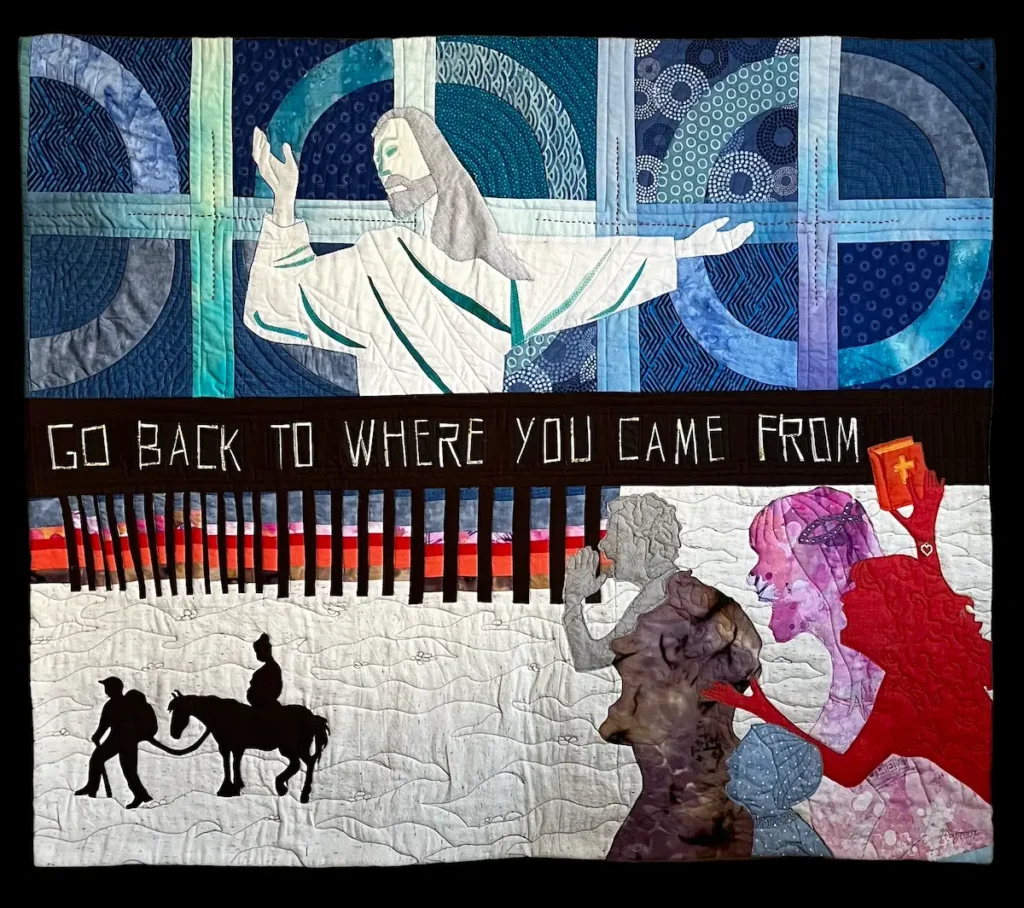
I admit it is a little intimidating sometimes to show or talk about my quilts because I don’t like confrontation. They always say don’t talk about politics or religion and I managed to do both in my quilt Go Home.
Every time I talk about this series, I start with a disclaimer that I am an artist and artists express their points of view in their art. My opinion may not be the same opinion of some in the audience, but we are all free to express ourselves, and as long as we are respectful to one another, we can have a civil, interesting, and maybe even enlightening conversation. I have never had any pushback or negative comments so far, but I do live in a very liberal area.
I wouldn’t say I feel a responsibility, but I feel that the purpose of this series is to make people think about whether their values are guiding their actions. Contrary to my architectural series, this artwork is not just a pretty thing on the wall.
Do you sketch first, or do you improvise directly on fabric? Can you show us how a design starts?
My artwork is usually very much planned, especially my architecture quilts. I sketch the pattern on the computer, and I know what it will look like before I cut any fabric.
The technique I use for my architecture quilt is foundation paper piecing, which means that I design the pattern in the computer, print it out at the finished size, and sew directly on the paper printout.
The most surprising and creative part of the process is selecting the fabric. I don’t use a lot of solid fabric.The print always adds interest and texture that I can’t get with solids. It is my favorite part.
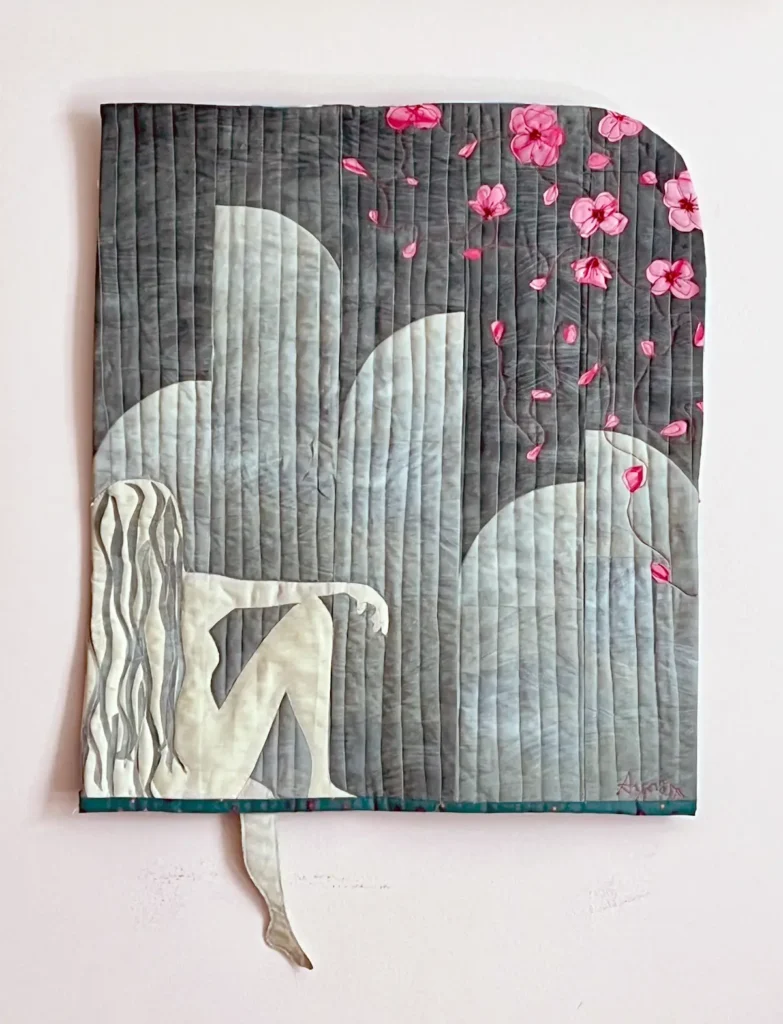
When a piece feels stuck or “not working,” what do you do to get it moving again?
Usually, I just need a break from it. Close the studio for the day or work on a different piece. That magical time when I am about to fall asleep or just waking up is when new ideas pop up in my head, and I find the solution to the problem.
How do you decide when a quilt is finished and when it still needs something?
As my quilts are very much planned in advance, I usually know when a quilt is finished. Sometimes things don’t go according to plan and the finished quilt is not what I had envisioned.
Did I pick the wrong fabric for that piece? Is there not enough value contrast? Can I add something? Can I remove something? It is a very subjective opinion sometimes.
Sometimes, If I’m not totally happy with it, I put it away and come back to it later. Looking at it with fresh eyes could give me a different idea. Sometimes I let it be what it wants to be. Sometimes people like things that you don’t like.
Do you work on more than one piece at a time? Why or why not?
I work on one piece at a time, and I am a finisher.
I am proud to say that I don’t have any UFO’s (unfinished objects). When I start something, I finish it or decide that I don’t want to finish it. There is always other quilters that are happy to play around with those pieces I did not want to finish.
When you make a series (like the political series or city quilts), how do you keep each piece fresh while keeping the series coherent?
Before I worked in series, I had a big problem with developing a coherent body of work. I had no voice and all my quilts looked different. I wanted to try it all!
What has worked for me is that whenever I see a new technique I want to try, or a cool fabric I saw at the store or a color combination I have never used, always bring it back to my series. How can I use this techique/color/fabric… in my series? Not make something completely unrelated because it looks fun.
This works great in my statues series because there is not one technique or color that ties it all together. It is the message that makes it a series. I also try to make them around the same size.
The architecture quilts all use the same construction technique, which keeps the series coherent. They all have the same “look”. What keeps it interesting is that when I see an interesting building, it is a fun challenge to see how I can represent it in fabric.
What do commissions teach you that your personal work doesn’t, and how do you protect your voice when you’re working for someone else?
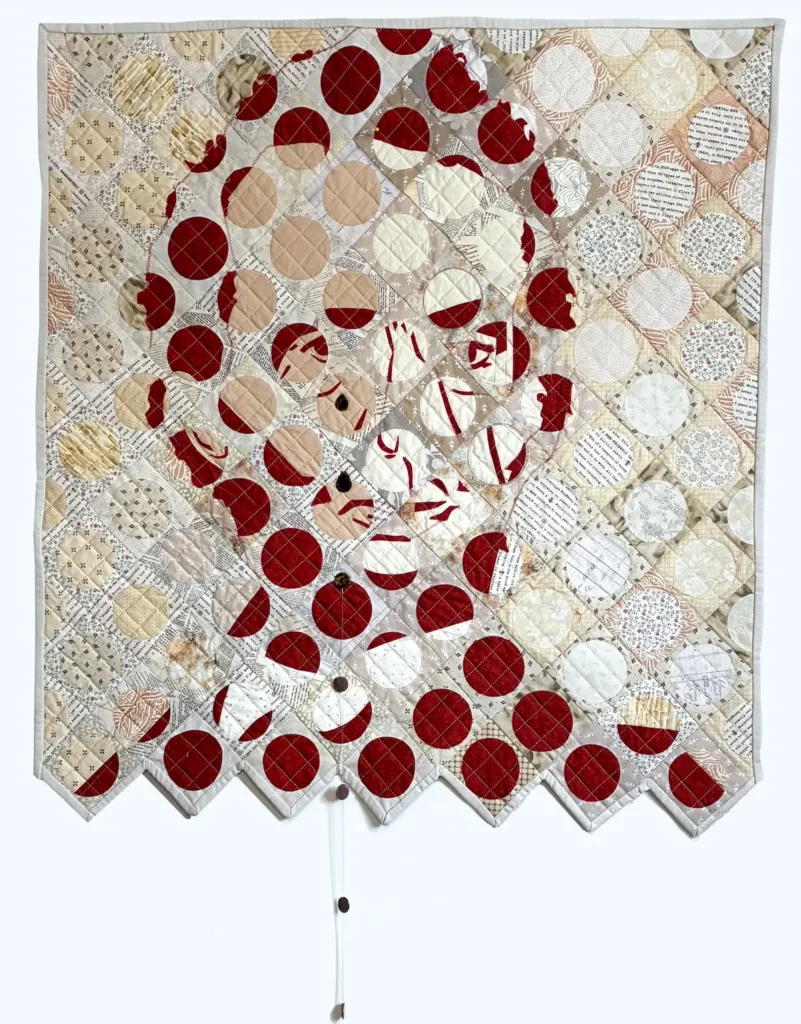
Maintaining my voice while working on commissions is a challenge or maybe is the way I do my commissions.
I am a professional graphic/web designer, and the way we work is that we do a design, show it to the client, and make changes until we arrive at a consensus.
Therefore, commissions sometimes feel like I’m doing what someone else tells me to do. I still like making them because it is always very satisfying when the client gets the final piece and sees how that little drawing they saw in the computer is now a beautiful artwork they can hang on their wall.

What’s one small habit that has made a big difference to your productivity or happiness as an artist?
One time, I read The Artist Way (like every artist), and one of the things she says is to find that thing that is a little spark that brings you joy. Don’t make it an expensive thing. I have found that having fresh flowers in my house is that thing. Also drinking my morning coffee out of a handmade mug.
What are you working on next?
In terms of my quilts, I’m working on a quilt about the standstill in congress and just like them, I am on a standstill at the moment.
Career-wise, I am working on smaller works that I can sell at lower prices. I have started giving lectures about my quilts and art making, and I’m really enjoying it. For the near future, I am thinking about offering web and graphic design services for artists, and maybe workshops and a book. So many possibilities!
If your quilts could whisper one thing to people who see them, what would you hope they whisper?
Buy me! 🙂
Where can people see your work?
My work is on my website at https://aynexquilts.com. I am on Instagram at @aynexquilts and on Facebook at Aynex Quilts.
Interview posted October 2025
Browse through more inspiring art quilts on Create Whimsy.